MY SPIRIT HOUSE

Bangkok, 15 February, 2015

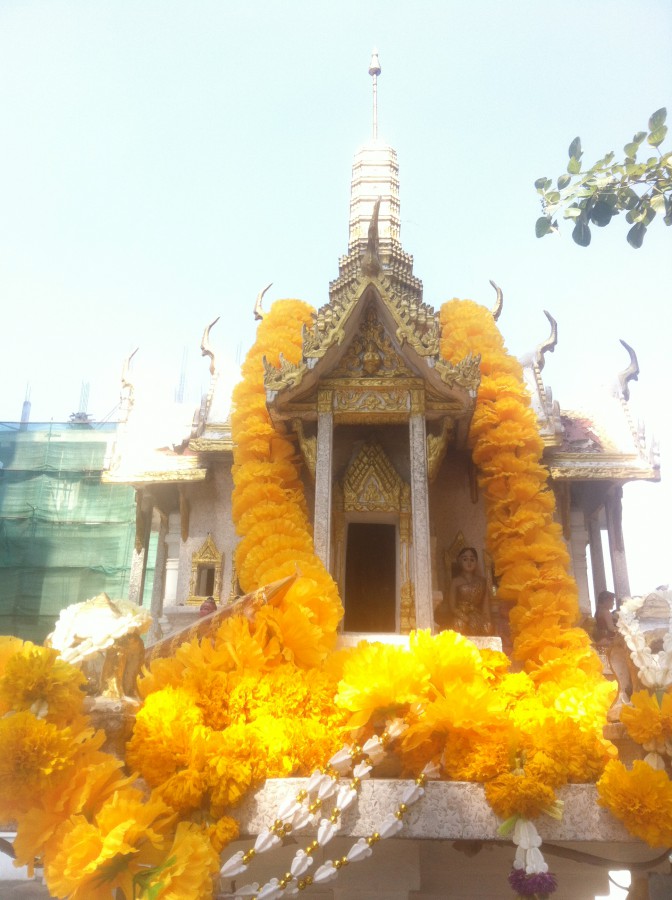
Anyone who has been in Thailand for more than half an hour begins to notice that every building, residential, commercial, governmental, whatever it happens to be, has one or more doll-like houses standing outside it in some corner of the property. To be very visible to one and all, they are set either on a tall pillar or on four somewhat smaller stilts. These, for instance, are the two which grace a corner of the parking lot at our apartment block.
spirit houses-general view-1
spirit house big

spirit house small

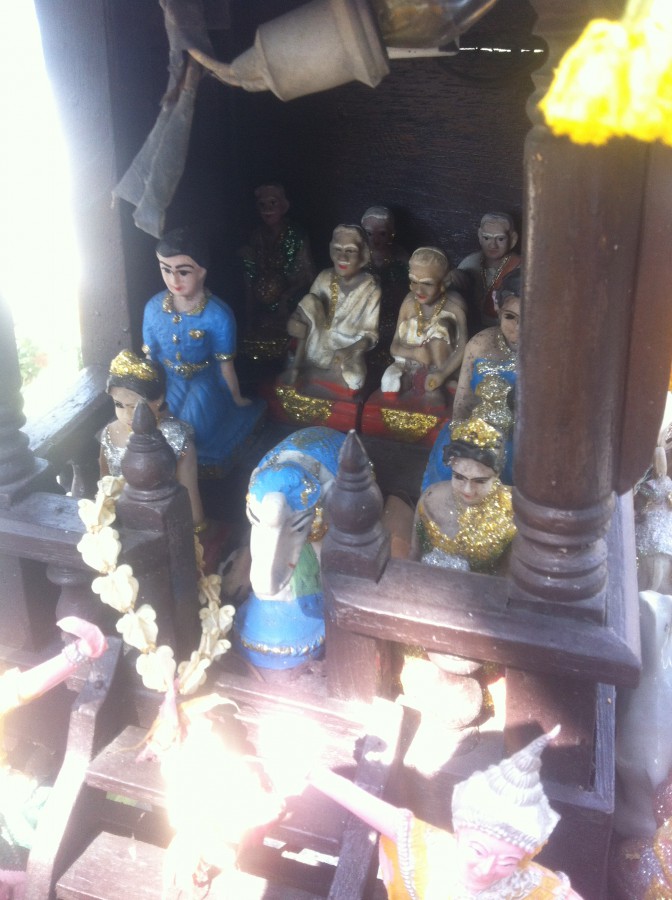
And if, finally rendered curious by constantly coming across them, one decides to have a closer look, you will find that they hold little figurines – old people, dancers, horses, elephants, cars, sometimes a Buddha. This, for instance, is a catalogue of what the bigger of our apartment block’s two little houses contains.

spirit house big-horses
spirit house big-elephants
They will often have votive offerings of food and drink as well as burning incense sticks set out in front of them along with fresh flowers

spirit houses-flowers and incense

many of them will have flower garlands draped over them

spirit house big-garland

and – at night – candles are set out or strings of lights turned on to light them up.

spirit house big-night

Quite charming. In fact, when my wife and I came to Bangkok for the first time some seven years ago, we were quite taken by these little houses and considered buying a DIY kit of one, to put up on the landing in front of the door of our then-apartment in Vienna, to house a small ivory Buddha which I had bought a few years before in Sri Lanka. But it was really too bulky, so we abandoned the idea.

But actually, why are these little houses there in the first place? I should have asked myself that the first time I saw them, before seriously considering putting one in front of my door.

A little bit of reading has informed me these houses are put up to propitiate the spirits of the land. This is a core belief of animism, that spirits reside in all the material manifestations of this world – the land, its streams, rivers, lakes, waterfalls, its trees and other plants, all animals, everything really, even man-made objects like bridges. Animism has deep, deep roots in Thailand – actually, in the whole of South-East Asia, from Myanmar down to Indonesia and across to the Philippines; the tradition of spirit houses, for instance, is found throughout the region apart possibly from the Philippines. The arrival of more rational, complex, sophisticated religions like Hinduism, Buddhism, Islam, or Christianity (or ethical systems like Confucianism in Vietnam), did not make the earlier animistic beliefs disappear, although I’m sure the leaders of these new religions tried hard to stamp them out (and at least in Thailand are still trying to, according to what I’ve read) or to absorb them (which is certainly what Buddhism has tried to do).

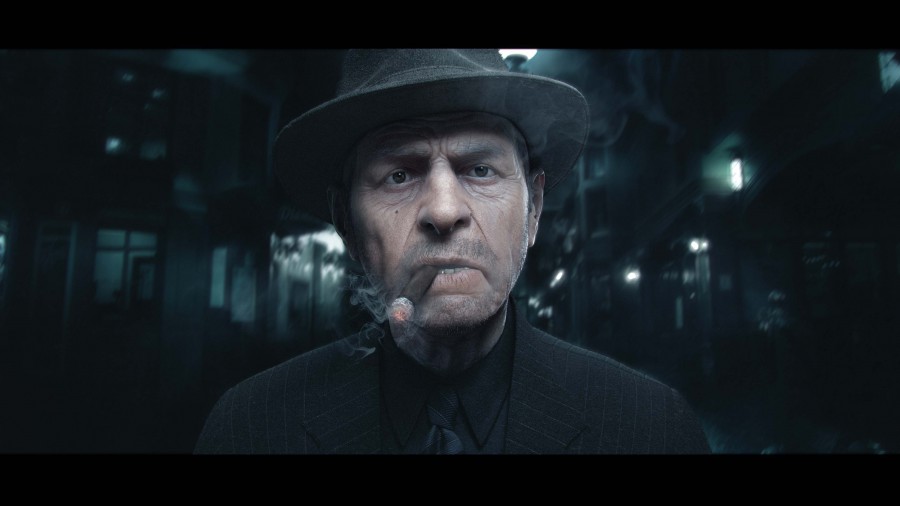
The sad thing is that these spirits are not nice beings. The purpose of those cute little houses is actually to make sure that the spirits of the land don’t get mad at you because you’re using their land and decide to burn down your house or give you a heart attack or bring Lord knows what other calamity down on your head. So in the house you’ll put figurines of servants to tend to the local land spirit’s every whim,  you’ll put figurines of dancing girls (geishas might be a better descriptor) to keep him happy, you’ll put horses and elephants (and cars for the more sophisticated urbanized spirits) to make sure he can go for a ride whenever he gets bored of sitting at home and watching the dancing girls gyrate, you’ll give him food and drink to make sure he doesn’t go hungry … Reading all this, it occurs to me that these spirits are really just like the mafia in Sicily: if you don’t pay this man the requested pizzo, or protection money
mafia-man

then unfortunately this will happen to your shop.
burning shop
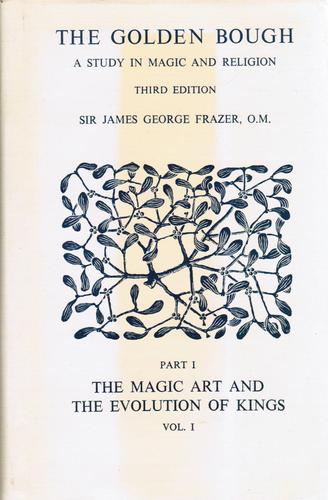
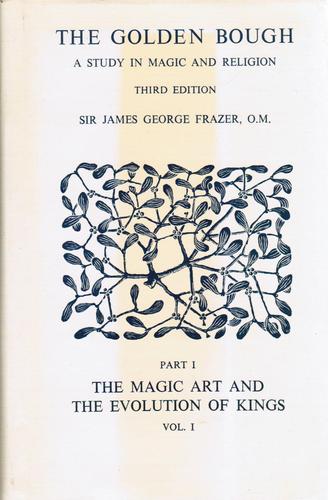
So, these pretty little houses are actually the reflection of a deep existential fear, that all around you are naughty, nasty little spirits who will hurt you if you’re not nice to them. These reflections moved me to dip into “The Golden Bough: A Study in Magic and Religion” by the Scotsman James George Frazer.
Golden_Bough
The book, first published in 1890 and republished several times thereafter, attempts to define the shared elements of religious beliefs, discussing fertility rites, human sacrifice, the “dying god”, the “scapegoat”, and many other symbols and practices. Its thesis is that old religions were fertility cults that revolved around the worship and periodic sacrifice of a sacred king (among other places, his ideas take a central role in T.S. Elliot’s poem, “The Wasteland”, which I have had cause to mention 100 posts ago and which was the reason why I originally read “The Golden Bough”). I’m sure modern anthropologists would dispute Frazer’s basic thesis, but in writing the book Frazer collected accounts from around the world of magical, animistic beliefs, which are fascinating in themselves. Here are three excerpts which he cites from other sources on the belief in spirits in South-East Asia.

“Thus the life of the Thay seems regulated down to its smallest details by custom founded on his belief in the spirits. Spirits perpetually watch him, ready to punish for his negligences, and he is afraid. Fear is for him not only the beginning of wisdom, it is the whole of his wisdom. Love has only a very moderate place in it. Even the respect in which he holds his dead, and the honours which he pays them on various occasions, seem to be dominated by a superstitious fear. It seems that the sacrifices which he offers to them aim rather at averting from himself the evils which he dreads than at honouring worthily the memory of his deceased kinsfolk and at paying them the tribute of his affection and gratitude.”

“Independently of the demons who are in hell, the Siamese recognize another sort of devils diffused in the air: they call them phi; they are, they say, the demons who do harm to men and who appear sometimes in horrible shapes. They put down to these malign spirits all the calamities which happen in this world. If the mother has lost a child, it is the phi who has done the ill turn; if a sick man is given over, it is a phi that is at the bottom of it. To appease him, they invoke him and make him offerings which they hang in desert places.”

“The desire to propitiate the good spirits and exorcise the bad ones is the prevailing influence upon the life of the Laotians. With phis to the right of him, to the left of him, in front of him, behind him, all round him, his mind is haunted with a perpetual desire to make terms with them, and to ensure the assistance of the great Buddha, so that he may preserve both body and soul from the hands of the spirit.”

The first two excerpts, written in 1907 and 1831 respectively, come from books written by French missionaries, the third from a book written by an Englishman in 1884. The first two no doubt had religious axes to grind, wishing to show how the Thai (Siamese being the old name for the Thai) were poor, benighted folk in need of Christian redemption. But even accounting for a certain amount of exaggeration, the picture which these excerpts paint is bleak indeed: a constant, haunting fear at every step.

Of course, before we shake our heads and smile and take another sip of our coffee, we should remind ourselves (as Frazer reminds us in his book) that Europe, just to take my part of the world, was also the home of naughty, nasty little spirits. Anyone like me who had to suffer through Latin and Greek in their education will remember the Roman and Greek nymphs who haunted the sacred groves and streams, and who had to be propitiated. And what about all those leprechauns, and trolls, and sprites, and ogres, who populate children’s books and popular stories? Remember Rumplestiltskin, that nasty little imp who saves the miller’s daughter from the wrath of the king by spinning straw into gold for her, but on condition that she give him her first-born child?
rumplestiltskin
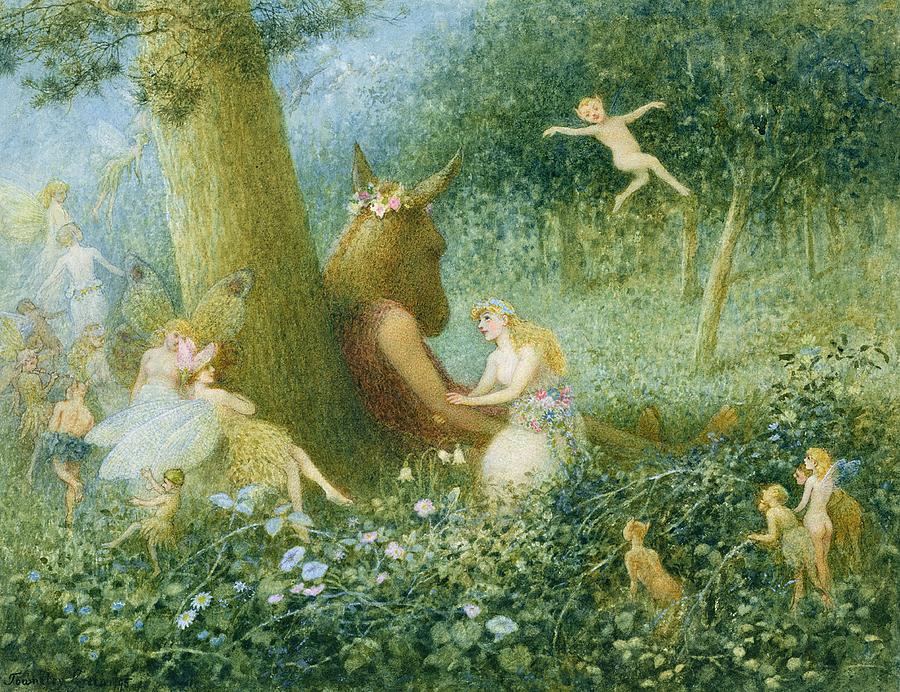
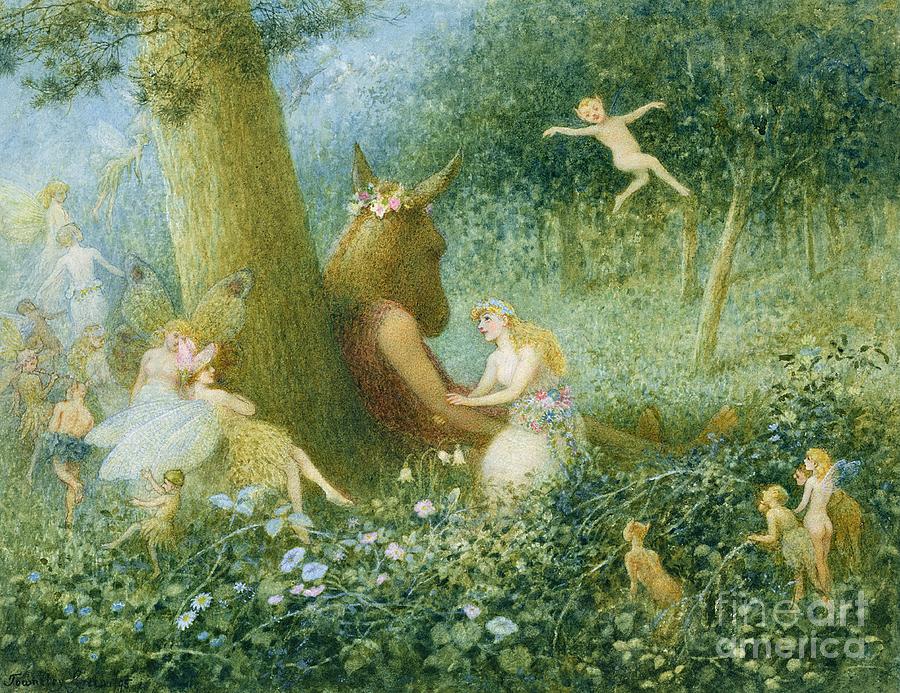
Or that “shrewd and knavish sprite” Puck in Shakespeare’s “A Midsummer Night’s Dream”, who at the behest of his master Oberon, King of the fairies, wreaks mayhem in the Athenian woods?
puck

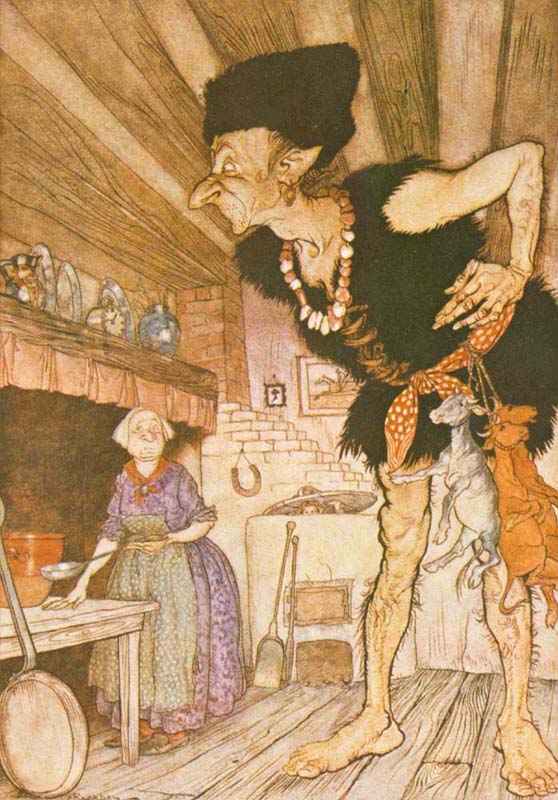
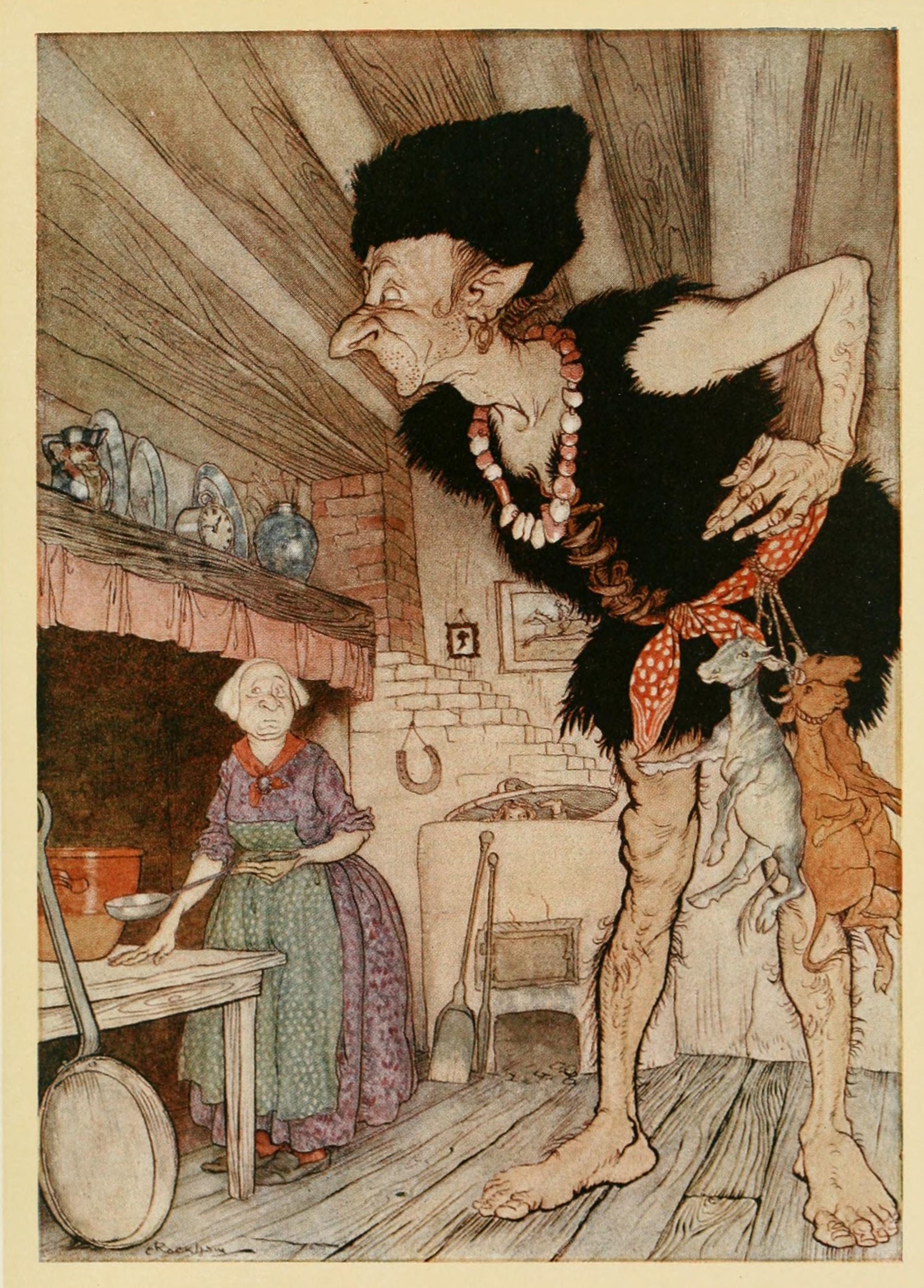
Or the ogre in Jack and the Beanstalk, who on sensing that little Jack is hiding in his house, intones

“Fee-fi-fo-fum!
I smell the blood of an Englishman,
Be he alive, or be he dead,
I’ll grind his bones to make my bread.”
ogre jack and the beanstalk

Even Tinkerbell in Disney’s sucrose version of “Peter Pan” is not a particularly nice person.
tinkerbell
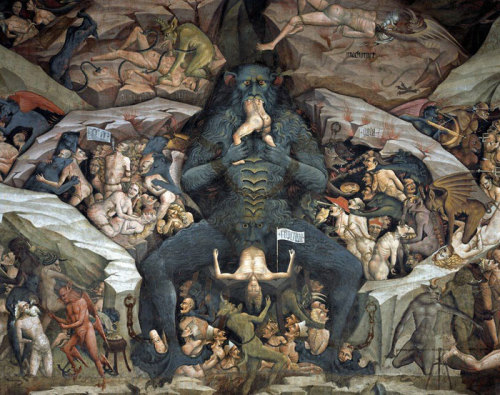
I suppose Christianity managed to reduce the strength of animistic beliefs in Europe – I won’t say stamp out, because otherwise we wouldn’t have the children’s stories – but only to replace them by another existential fear, that of suffering in hell for ever and ever.
hell
Luckily, science has come to the rescue and driven out all the religious claptrap. There is no supernatural world, it tells us, only the natural world around us. And with that, all those spirits disappear in a flash.

But now that I know all this, would I still buy a spirit house kit to assemble on the landing in front of my apartment door in Europe? Do I want to be seen, if only to myself, to believe in naughty, nasty spirits? After giving some thought to the matter, I have concluded that yes, I would, but for a very different reason. One of the houses whose photo I give at the beginning of the post is the house of the ancestral spirits of the place, the spirits – or ghosts I suppose – of the people who lived there before you. In fact this house contains figurines of old people.
spirit house small-old people
Unfortunately, these spirits also require propitiation in Thailand, since they too can turn nasty (jeez louise, what a world view!). But I would use the house differently. I would use it to house the memory of my parents and my wife’s parents. For my parents, I would have a very tall figurine stand in for my father and a very small figurine for my mother, for that indeed is how they were; one of my abiding memories of them is the two dancing together, he very tall, she very small, slowly circling the dance floor. For my wife’s parents, I would have a large figurine stand in for my mother-in-law, for she was indeed of a stout disposition. For my father-in-law, I’m not sure, I hardly knew him. I’ve mentioned before his fondness for wearing a Basque beret, so perhaps a figurine of a man with such a beret would do? But I would leave this for my wife to decide. And I would move the house into the apartment, so that their memory could be with us, rather than left out in the dark like the dog. I feel that this would be a better way of remembering them, of keeping their memory alive, than going on infrequent visits to the graveyard, and a useful complement to looking at old photos and reminiscing. And I would hope that one day my children would also have a spirit house to which they could add little figurines of us once that day arrives. As it surely will.

____________________

Spirit houses: my pictures
Mafia man: https://solo3d.files.wordpress.com/2012/09/mafia-man-by-siamak-roshani-1.jpg (in https://solo3d.wordpress.com/scenes/portraits/mafia-man/)
Burning shop: http://www.newsbiscuit.com/images/845.jpg (in http://www.newsbiscuit.com/2007/09/05/fire-brigade-turned-up-late-to-burning-pizza-shop-as-satirical-statement/)
“The Golden Bough” cover: http://3.bp.blogspot.com/-KNKUm2qVFeo/URmCSeqWMuI/AAAAAAAAMKQ/YNPwXF5oY7s/s1600/The_Golden_Bough.jpg (in http://38is.blogspot.com/2013_02_01_archive.html)
Rumplestitskin: http://www.artsycraftsy.com/goble/wg_rumplestiltskin.jpg (in http://www.artsycraftsy.com/goble/goble_rumplestiltskin.html)
Puck: http://images.fineartamerica.com/images-medium-large/a-midsummer-nights-dream-ht-green.jpg (in http://fineartamerica.com/featured/a-midsummer-nights-dream-ht-green.html)
Ogre in Jack and the Beanstalk: http://upload.wikimedia.org/wikipedia/commons/4/4c/Jack_and_the_Beanstalk_Giant_-_Project_Gutenberg_eText_17034.jpg (in http://en.wikipedia.org/wiki/Jack_and_the_Beanstalk)
Tinkerbell: http://cdn.hellogiggles.com/wp-content/uploads/2015/01/22/Walt-Disney-Screencaps-Peter-Pan-Wendy-Darling-Tinker-Bell-walt-disney-characters-34385876-4326-3237.jpg (in http://hellogiggles.com/real-life-disney-romance/walt-disney-screencaps-peter-pan-wendy-darling-tinker-bell-walt-disney-characters-34385876-4326-3237)
Hell: https://36.media.tumblr.com/20721aba85e8475adb529816d4e40a10/tumblr_n1kmegRkqx1qm5yeno1_500.jpg (in https://www.tumblr.com/search/art%20history%20hell)

MEXICO: PAINTED SIGNS

Bangkok, 13 January 2015

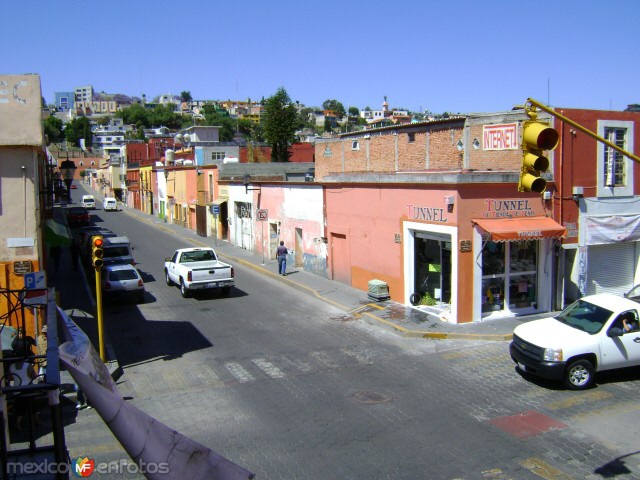
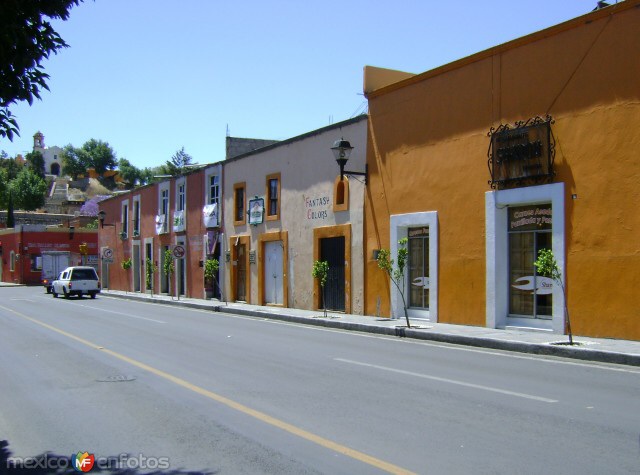
It was at Tlaxcala that I began to notice it.

We’d taken a bus from Mexico City to visit this small town, since it was described as a nice example of colonial Mexican architecture and town planning. It certainly was pleasant enough, as were Chiapas de Corzo and San Cristóbal de las Casas, two other colonial-era towns which we visited later. The latter two have been declared “pueblos magicos”, magic towns, a slogan dreamed up by the Mexican tourism authorities (clever branding, although I do feel duty-bound to whisper that the pueblos in Tuscany, for instance, or any number of pueblos which my wife and I have visited in Spain, are more magico than Tlaxcala and the two official pueblos magicos that we visited).

In any event, my point in mentioning the visit to Tlaxcala is another. What I began to notice as we walked around the town was the lack of modern signage on the shops. To understand what I mean, let me insert here a picture of the shopping street in Vienna, the Graben, where we often went for a stroll and coffee when we lived there.
image
Notice the abundant use of neon shop signs, tacked onto the shop fronts. For better or for worse (and in my opinion for worse; it drives me crazy in this age of climate change to see all those illuminated shop signs blazing out into the night), this is now the accepted and expected type of design for shop signs.

So it was with great interest that I saw in Tlaxcala that shop signs tended to be of the old-fashioned type, painted by hand
image
image
Alerted to this phenomenon, I made sure to get some close-ups of such signs in San Cristóbal
image
image

I began to notice that advertisements were often painted too. The following style of painted advertisement was definitely my favorite, with this particular example coming from San Lorenzo Zinacantán.
image
These types of advertisements, to be found on otherwise bare walls, seem always to be announcing some upcoming event. Notice the large, rounded, friendly, inviting font, but placed at a slight angle denoting future excitement, and with a very pleasing colour scheme which starts with a dark colour and shades off into a lighter one. I throw in here some other signs of this genre that I spotted from buses or trains flashing by.
image
image

It would seem that the honorable profession of sign painter is alive and well in Mexico! (this reminds me of a wonderful novel from India, another country with a great sign painting tradition, “The Painter of Signs”, by R.K. Narayan; great novelist, by the way, I highly recommend him to my readers).

Of course, painting on walls has a long and noble tradition in Mexico. This art form must have reached its apogee with the great Mexican muralists Diego Rivera, José Orozco, and David Siqueiros. Already 35 years ago, when we first visited Mexico, we had reverently visited a number of the murals by these artists. This time around, we visited Rivera’s murals in the Secretaría de Educación Pública, just behind the cathedral on the Zocalo in Mexico City. As was his style, they are very political, very “leftie”; they made me and my wife smile as they brought back memories of the excited discussions of our youth. These two murals, “The Capitalist’s Dinner” and “Death of the Capitalist”, epitomize them all.
image
image
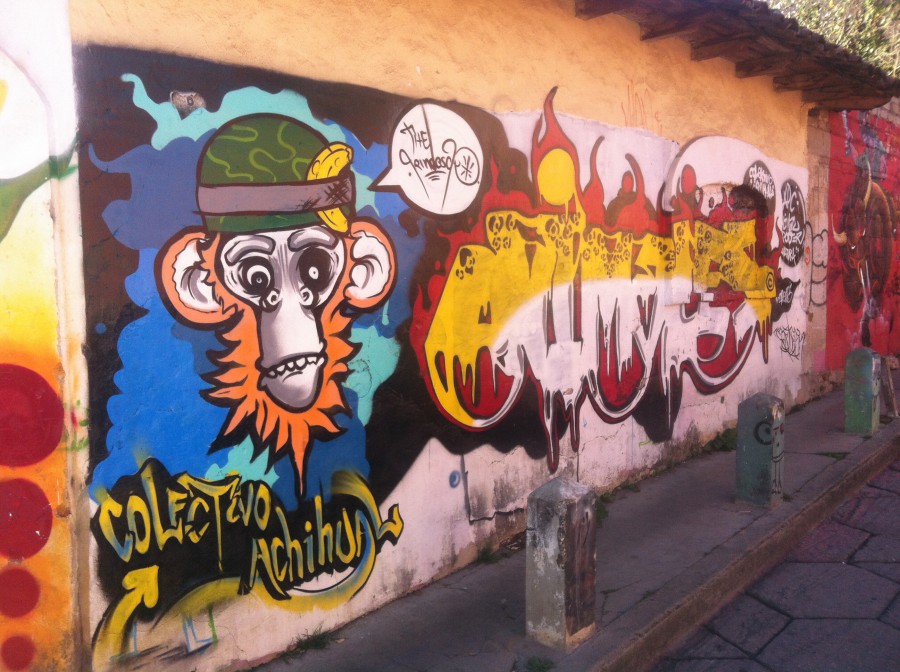
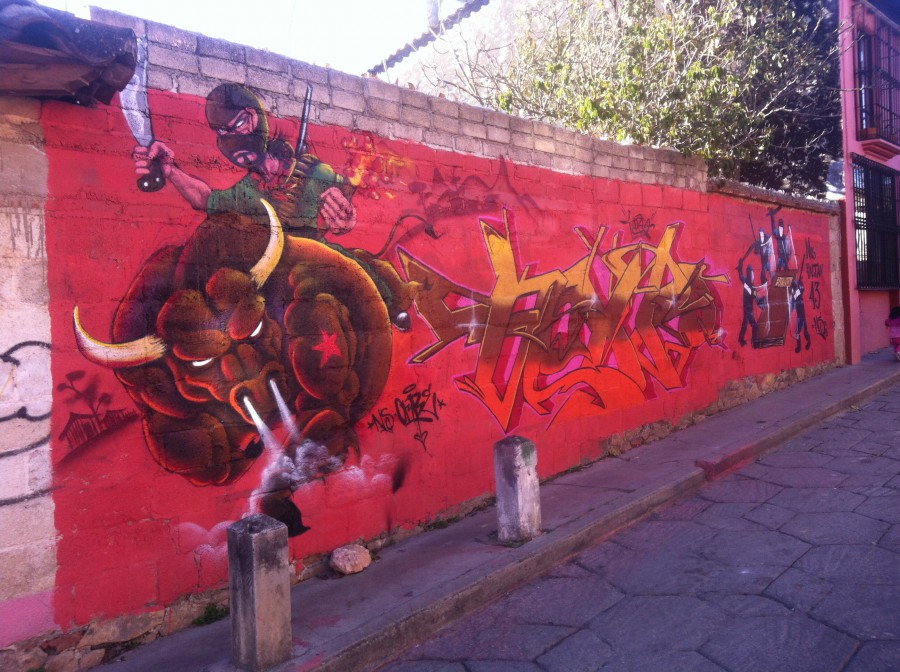
In San Cristobal, up some back streets, I saw what I fear are today’s inheritors of Rivera, Orozco, and Siqueiros
image
image
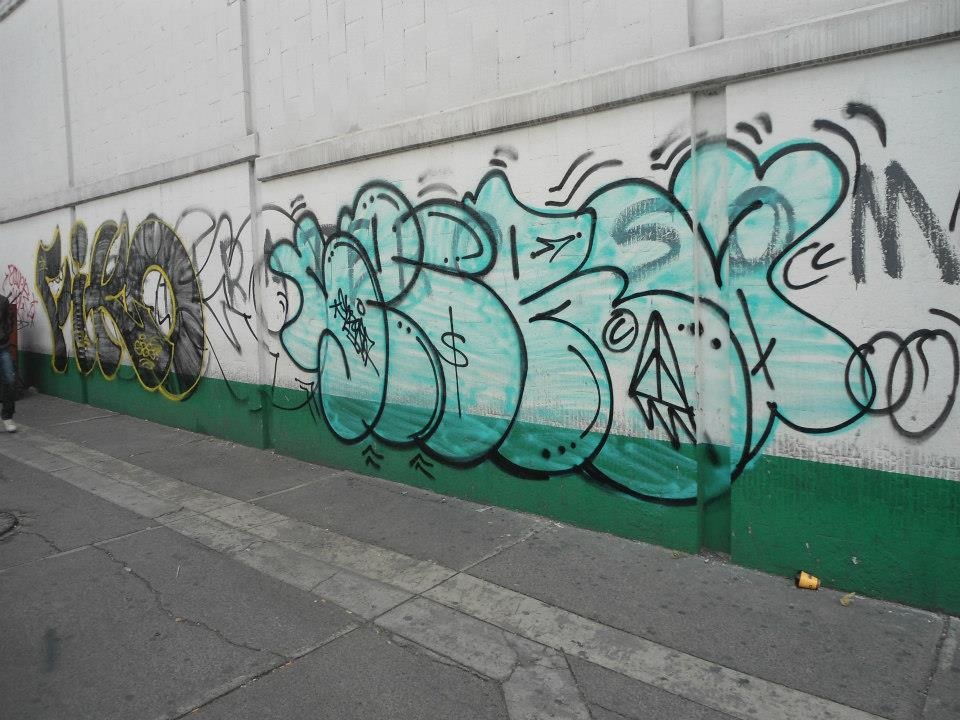
It’s sad really. All that grand, elevated talk of our youth has degenerated into the childish babble of these cartoons. But the rot doesn’t finish there, for Mexico suffers from the same mindless graffiti which defaces so many of our cities

image
“Fuck you. I exist”

What are our civilizations reduced to?

__________________

Mariahilfestrasse 1: http://austriacazare.ro/wp-content/uploads/2012/10/mariahilfer-strasse.jpg (in http://austriacazare.ro/shopping/mariahilferstrasse/#photoGallery%5Bgallery-503%5D/3/)
Calle 20 de noviembre , Tlaxcala: http://www.mexicoenfotos.com/estados/tlaxcala/tlaxcala/MX13379190432534&album=01&province=tlaxcala&city=tlaxcala&pagina=6
Avenida Vicente Guerro, Tlaxcala: http://www.mexicoenfotos.com/estados/tlaxcala/tlaxcala/MX13362760603306&album=01&province=tlaxcala&city=tlaxcala&pagina=6
Shop signs, San Cristobal: my photos
Painted advertisement signs: my photos
Cartoon wall paintings, San Cristobal: my photos
Graffiti, Mexico City: http://3.bp.blogspot.com/-hsTD7FnkGKs/UIEueVASNkI/AAAAAAAAAQs/PJ0N-K0omig/s1600/150559_545018925524744_786800387_n.jpg (in http://thevilgang.blogspot.com/2012/10/el-graffiti-de-la-ciudad-de-mexico.html)

MEXICO: MUSEO DE ARTE POPULAR

Bangkok, 10 January, 2015

While in Mexico City over the Christmas break, my wife and I visited two museums, the Palacio de Bellas Artes and the Museo de Arte Popular. The Bellas Artes is the more Worthy of the two, having vast panels by Great Mexican Painters such as Diego Rivera, David Siqueiros, José Orozco, and others. When we visited, it also had some Worthy exhibitions, one of these being on modern art from cubism onwards, which mixed global titans like Picasso and Pollock with Mexicans. I have mentioned in a previous post how so much of the world looks the same everywhere nowadays, especially where clothes are concerned: everyone, everywhere, dresses the same, particularly the young. I was struck by the same sensation in this exhibition of modern art. Everyone’s modern art was the same everywhere: Diego Rivera’s cubism looked just like Braque’s, Frida Kahlo’s surrealism was indistinguishable from Magritte’s, Gunther Gerzso’s abstract expressionism is no different from Willem de Kooning’s or Mark Rothko’s. In a word, there was nothing particularly Mexican about any of the art on show from Mexican artists. Another, depressing, effect of globalization.

So you can imagine my relief when we visited the Museo de Arte Popular (which I think we can translate as the Museum of Folk Art) and saw pieces which were quite typically Mexican, pieces I would not find in a museum of folk or other art in Europe or the US or Japan or even Thailand where we currently live. (In truth, I’m sure I would find similar pieces in the other Latin American countries, but that’s OK; these countries do after all share a fair amount of cultural history, Hispanic and pre-Hispanic).

So it is with pleasure that I can share with readers photos of some of the pieces I most liked. I hope I will be excused their generally poor quality. They are all taken with my iPhone, and in many instances through the glass of the exhibition cases which often created irritating problems of reflections.

I start with that typical form of folk art, ceramics. Here are some pots and a plate I particularly fancied:
image
image
image
with this one being my favorite of the genre
image
There was also a lot of woven rattan and similar objects. I’m not a big fan of this art form, but I do add here a picture of a container made with a mix of bark and fibres, which had a certain attraction
image
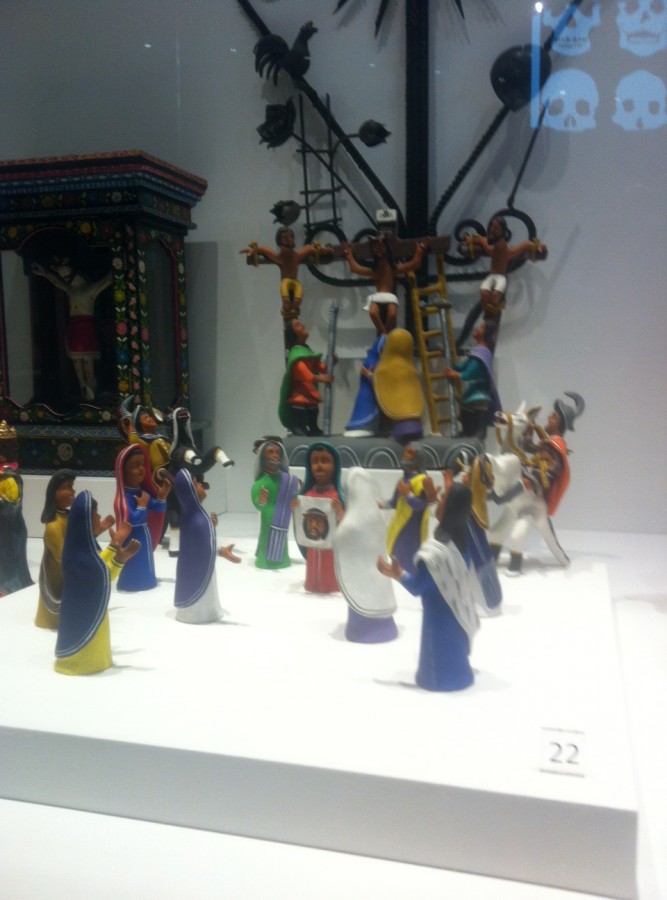
Not particularly Mexican all this, you might argue, so let me continue with a subject very close to the average Mexican’s heart, religion. In the museum collection, it was captured for the most part with that typically Mexican (or perhaps Latin American) fondness for little set scenes. So we have a crucifixion
image
a last supper – but why are they eating watermelon??
image
and a last judgement
image
while the Tree of Life was a very popular motif, made into a lovely candelabra in this example
image
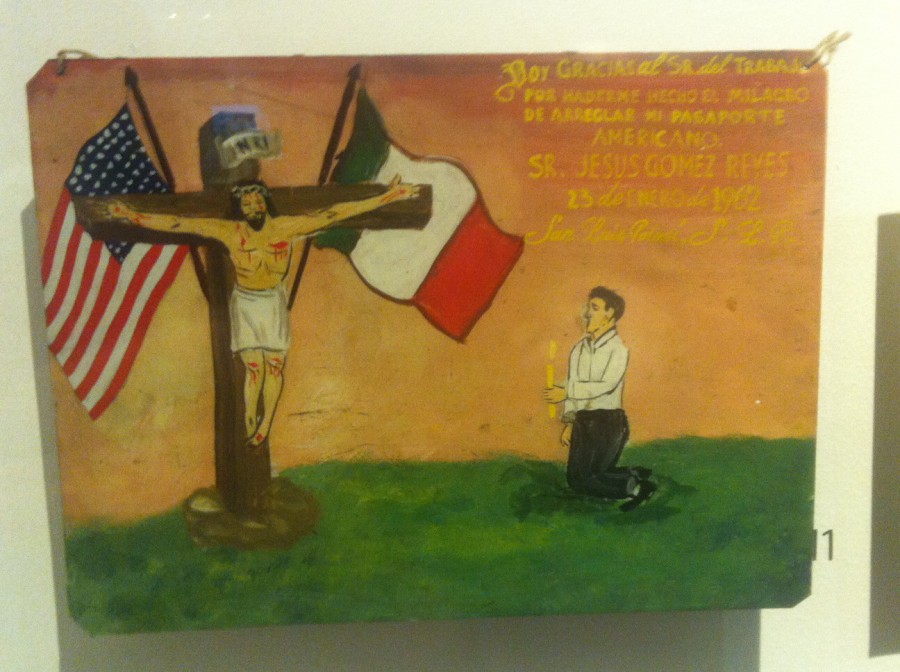
Then there were several examples of ex-votos, that exceedingly popular genre of folk religious painting (and not just in Mexico; Italian churches are littered with them, as are churches in Austria and probably every other Catholic country). Normally, they record a person being saved from some catastrophe or illness, but in this particular case a certain Mr. Jesus Gomez Reyez was thanking the Good Lord for getting his American passport regularized back in 1962, a touching commentary on so many Mexicans’ yearnings to escape to America
image
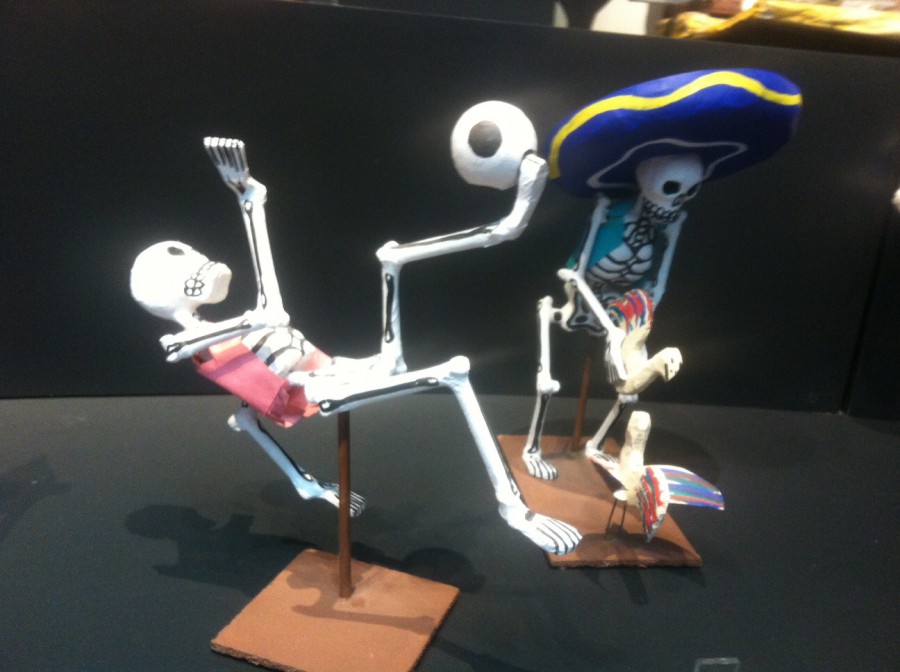
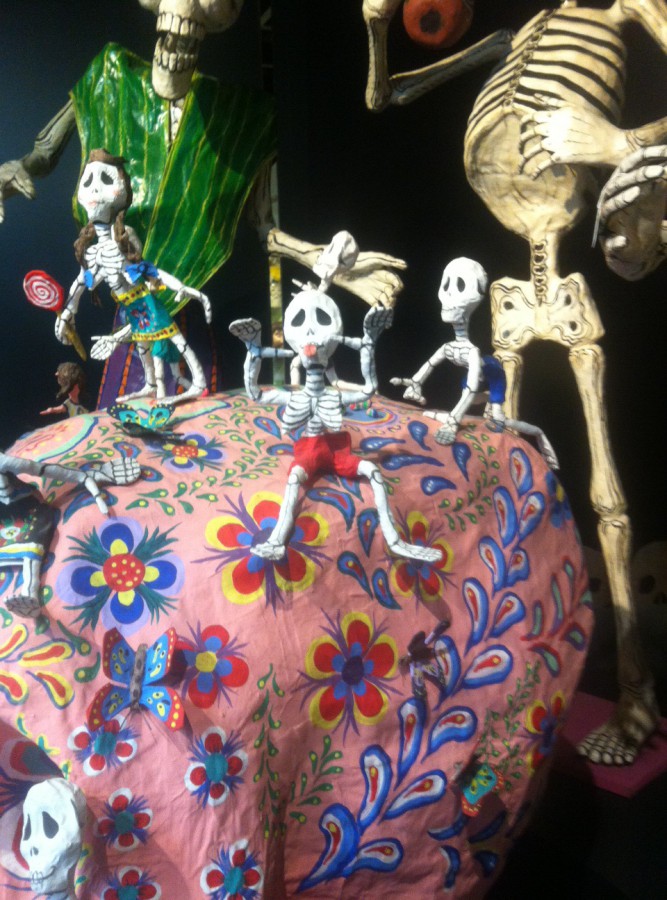
Religion has much to do with death, and the Mexicans have turned death into a high art, especially that most striking vision of the death which awaits us all, the skeleton. The museum has a particularly rich collection of this art form, of which I show a small selection, starting with this wonderful variation on that insipid form of religious art, the statues of saints in churches
image
I must say, despite the grimness of the topic these skeletons are always remarkably cheerful. Here we have a bunch of skeletons thoroughly enjoying a huge meal – echoes of the last supper?
image
another happily kicking a football around
image
yet another, a child’s skeleton, blowing us a raspberry
image

while here we have an earnest swain declaring his undying love to a simpering and blushing maiden
image
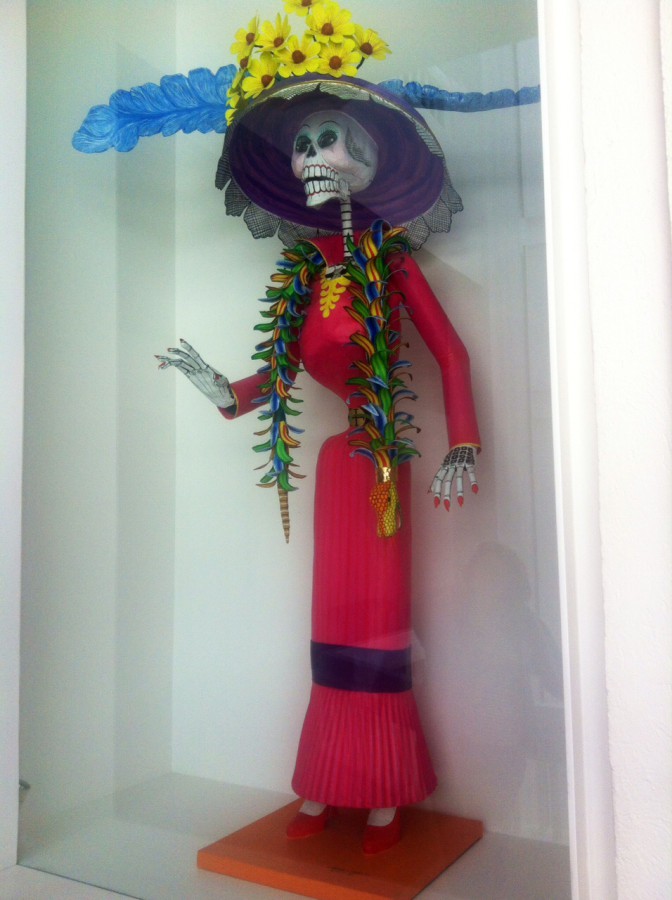
and finally, a very popular character in the skeleton cast of characters, a “Catrina”, a female skeleton dressed to the nines in a 19th Century style
image
We loved these Catrinas so much that we bought a ceramic version and carried it back to Bangkok, where it now stands on our dressing room table.

Keeping to the broad religious theme, devils are also a popular topic. I include three, one blowing a raspberry, something which I have never particularly associated with devils (but a common theme it would seem; does blowing raspberries have some deeper meaning in Mexico?)
image
another showing a bunch of devils taking part in a last-supper type of meal – eating watermelon again! (what’s with this business of watermelon?)
image
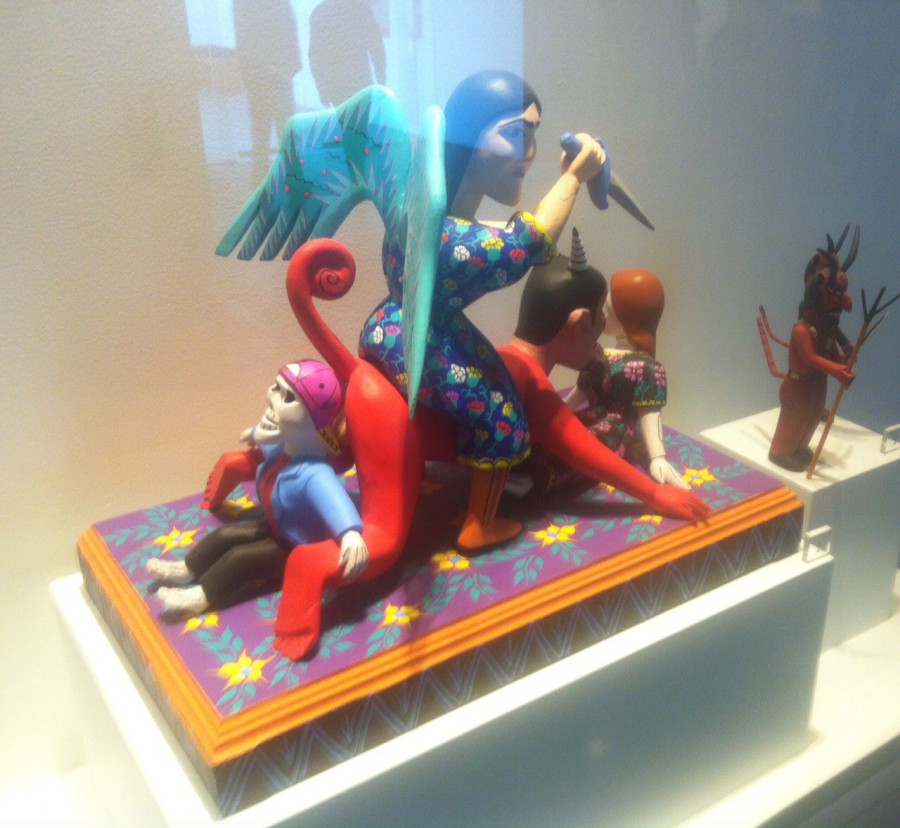
and a grimmer scene, a devil rapist (I suppose rape is as bad a problem in Mexico as anywhere else).
image

The little scenes which seem such a popular subject spill over into normal, day-to-day life. We have here a seller in the market (watermelon-eating again …)

image

Fairgrounds seem a popular topic, especially Ferris wheels

image
while here we have a grimmer scene from life, a fire. Many escape from the doors of these towers but one person has had to throw himself off the top.
image
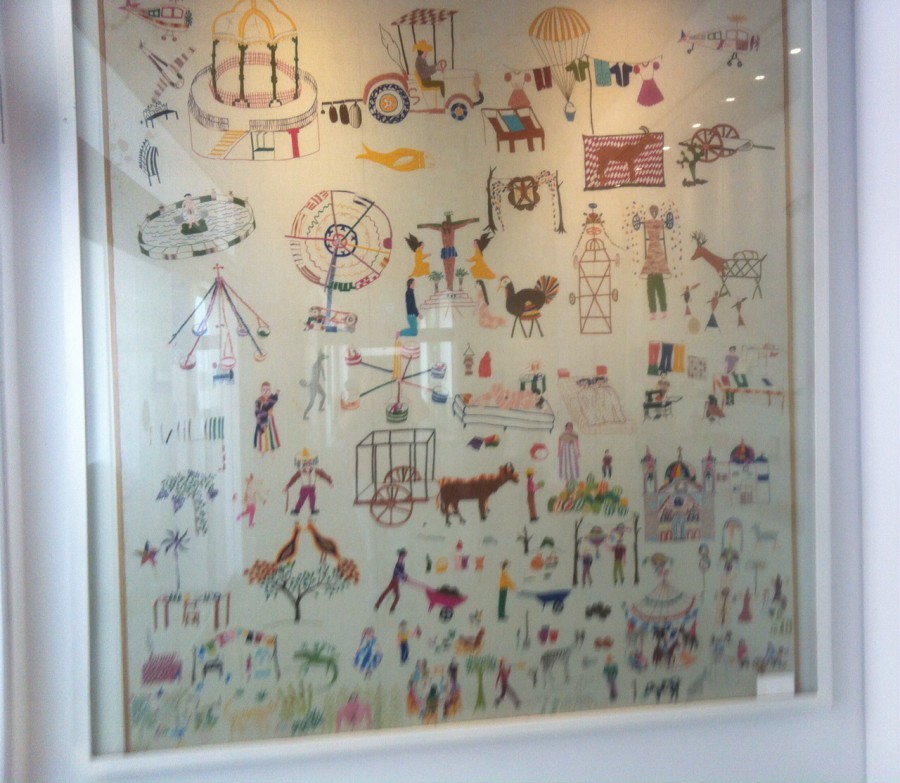
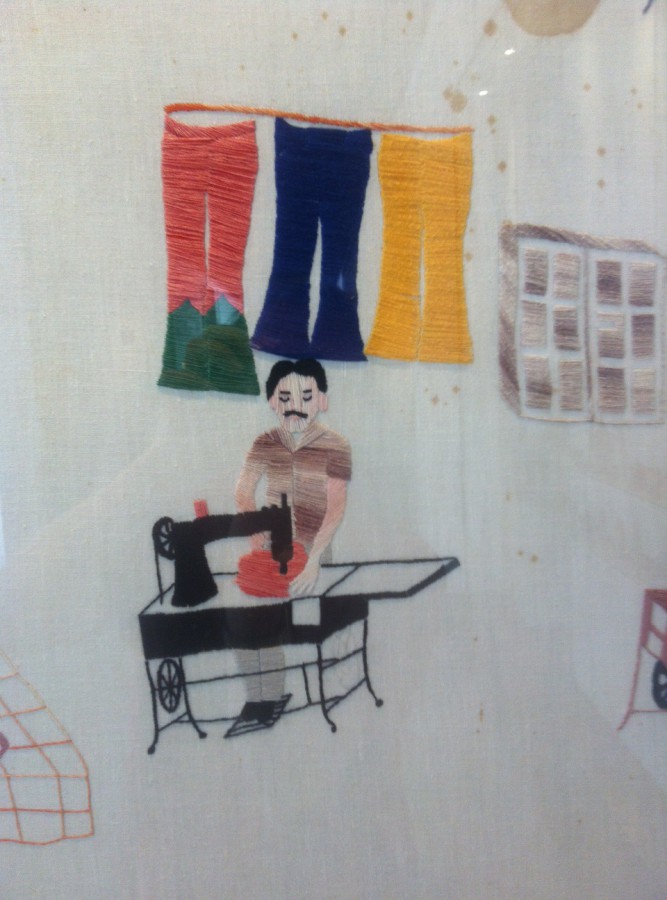
This large needlework piece wonderfully captures the myriad activities of daily life
image
I add one close-up of the many scenes on this piece
image

The final theme is animals, which are a popular subject for folk artists. I feel I should start with a turkey, which was first domesticated in pre-Hispanic Mexico.
image
I continue with a cat, because my wife reminded me that when we were last in Mexico 35 years ago we bought a ceramic cat, which currently faithfully sits in storage in Vienna waiting for our return to Europe.
image
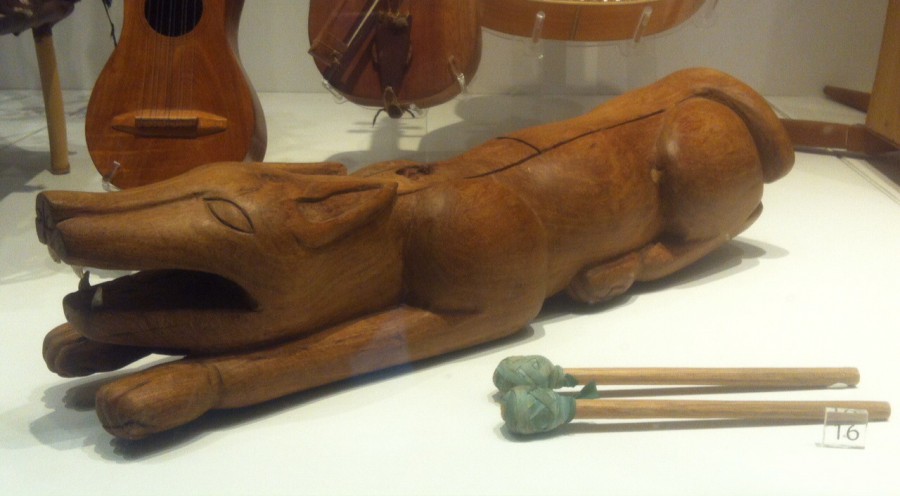
But I also add a dog, in this case in the form of a teponatzle (a type of musical instrument),
image
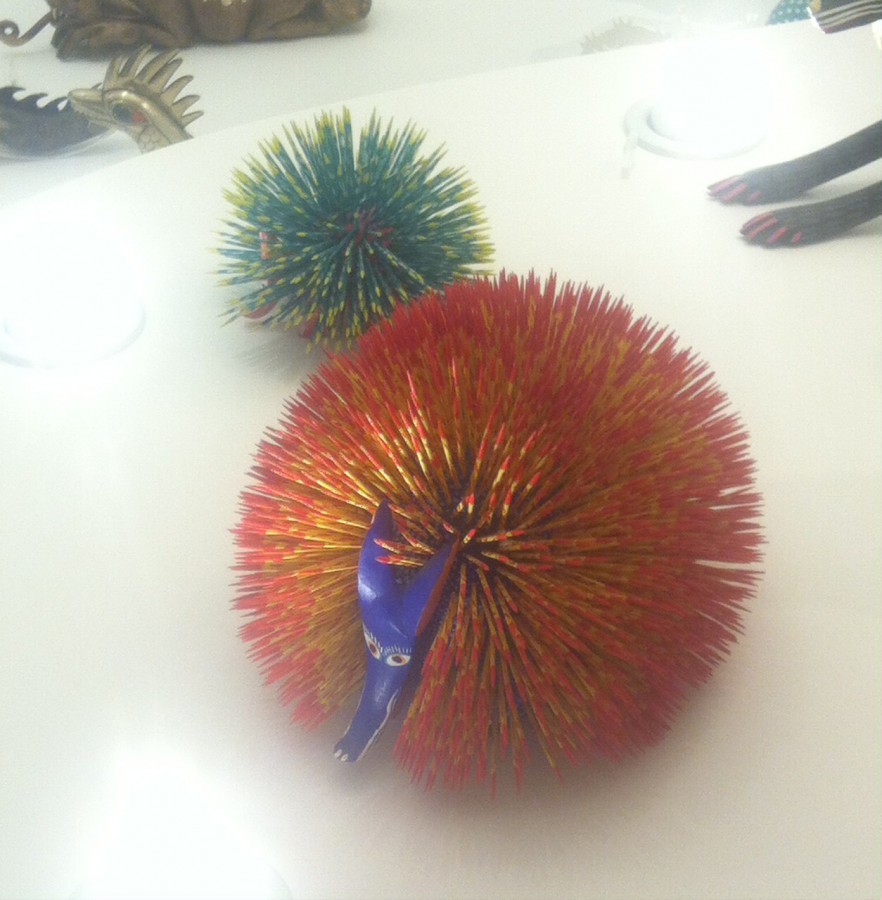
continue with what appears to be a brightly coloured hedgehog
image
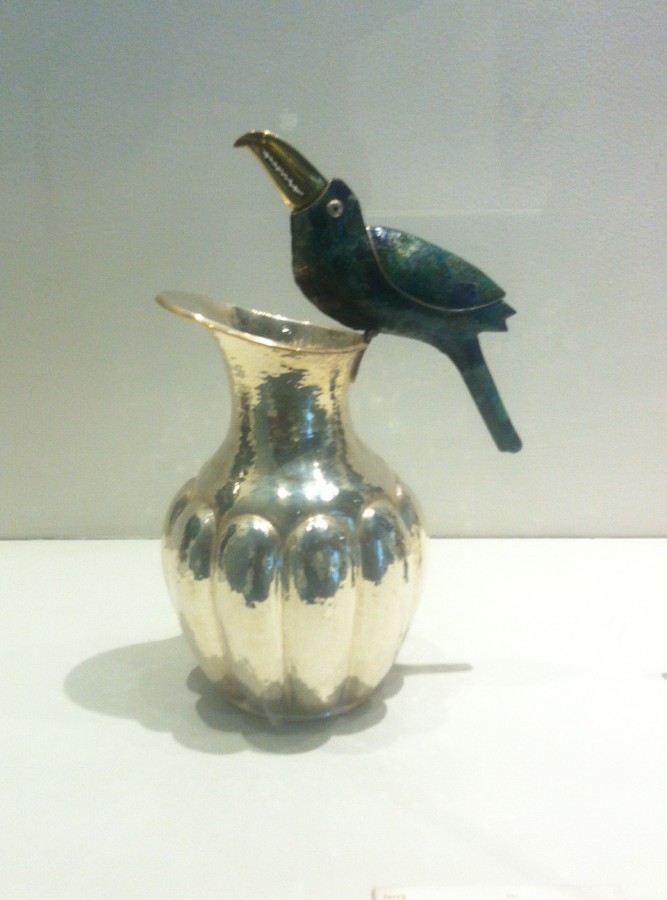
and finish with a couple of birds: what looks like a macaw, fashioned as a handle of a jug
image
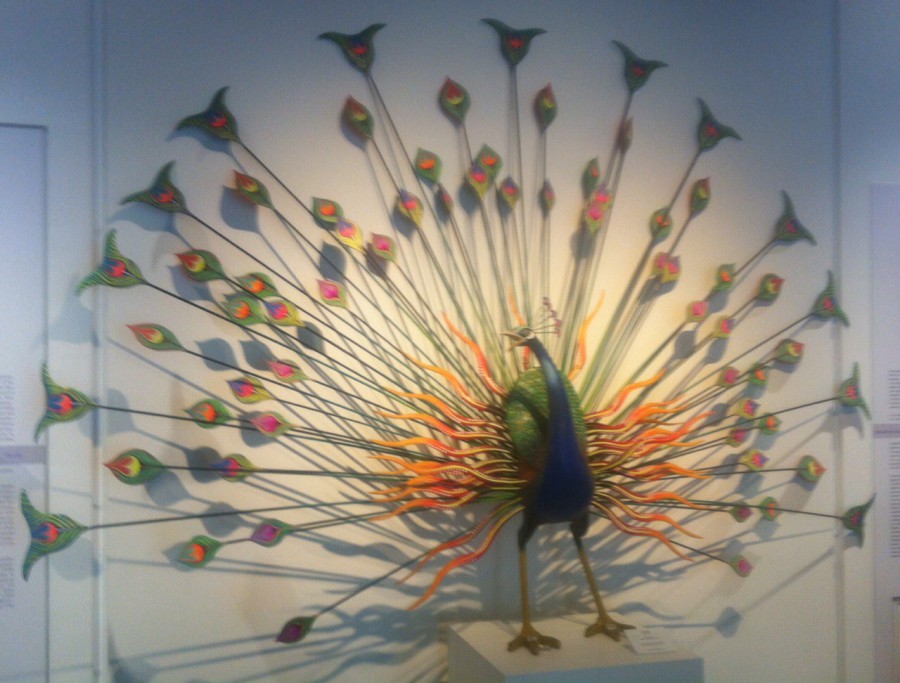
and this truly magnificent peacock
image
On the topic of animals, I feel I have to include a picture of this monster
image
The Mexicans seem to have a great fondness of such monsters, which we saw in a number of places, on a much larger scale, being used as floats of some sort.

Well, I don’t want to give everything away about this museum. I hope I’ve persuaded some readers to visit it if they happen to be in Mexico City: Calle Revillagigedo 11, Cuauhtémoc, very central; open every day except Monday.

___________

pictures: all mine

MEXICO: BASHING THE PIÑATA

Mexico City, 4 January, 2015

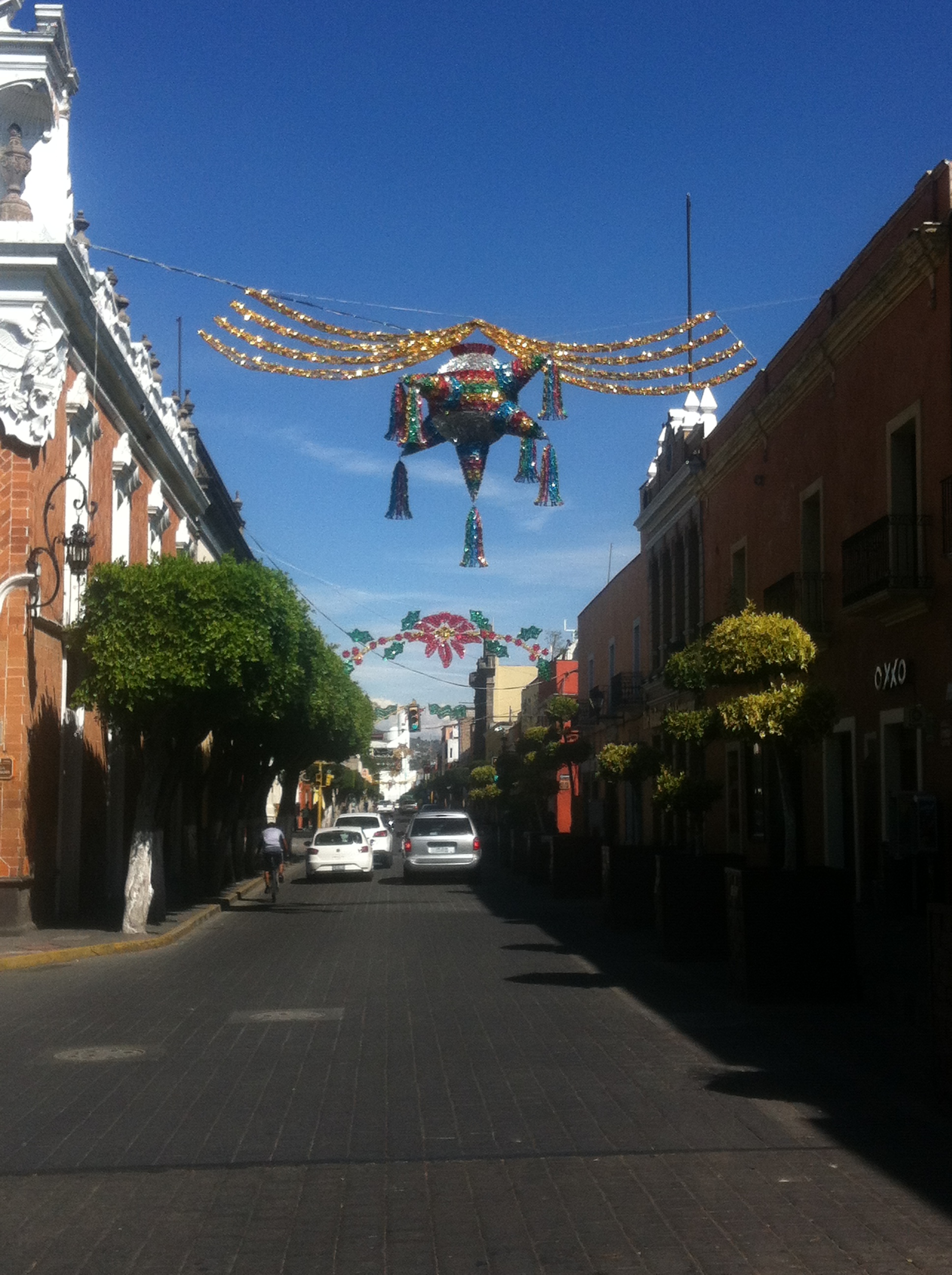
As my wife and I wandered around Mexico City this last week, we were struck by these strange ornaments which we saw hanging in many places. This particular one, for instance, was hanging in a street somewhere

pinata 002

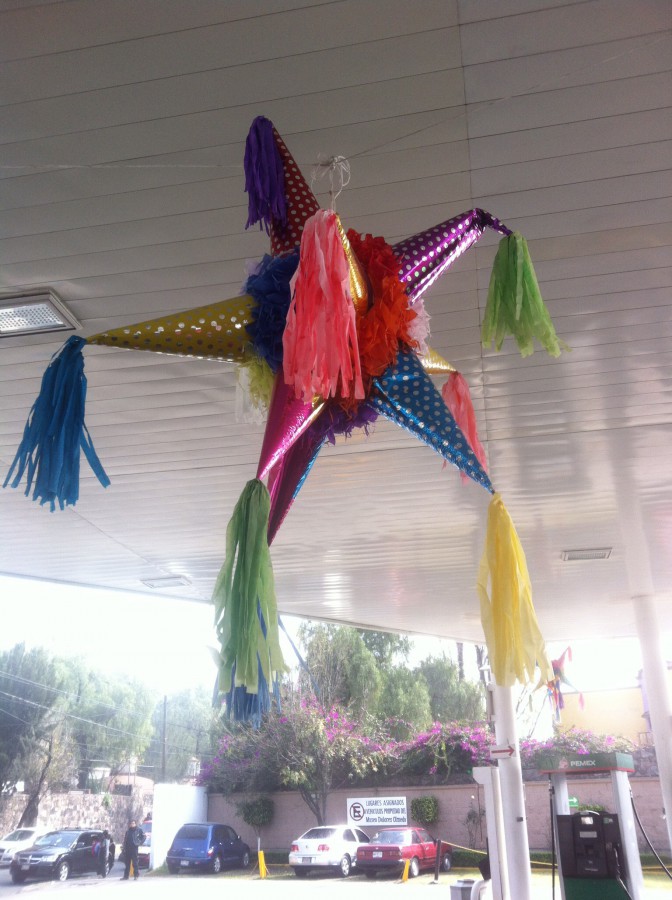
while this one, somewhat incongruously, swung over the cars in a gas station.

image

Intrigued, I asked our son what they were. Piñata, he told us.

Ah. I had never heard of them.

Undeterred, I rolled up my sleeves and did some research (i.e., browsed the web). I am now ready to report my findings.

What we have here is an example of the strategy used by the Catholic church in the early years of the Spanish conquest of Mexico to christianize the local populations. The church adopted, with the necessary adaptations, those local religious traditions which happened to have similarities with Catholic traditions. The thinking was that this would make Catholicism more familiar, more “user friendly” for the local populations, who would therefore convert more readily (and if necessary, a little gentle pressure from the sharp end of a sword could no doubt be used to help along in the decision-making process).

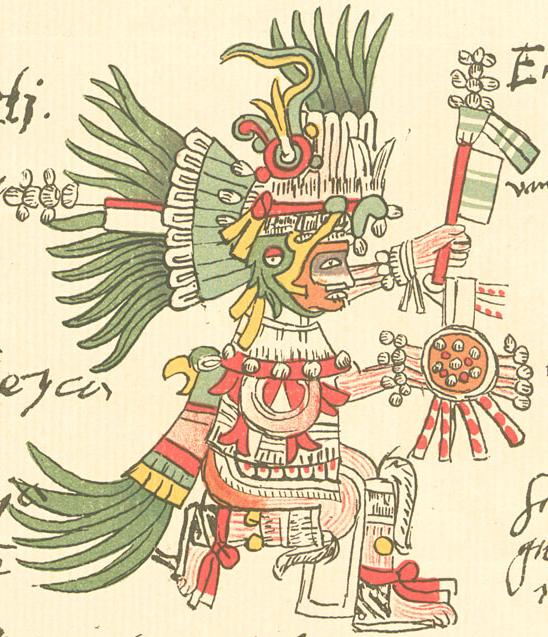
In the case of the piñata, the local religious tradition in question was part of the Aztec festival for their patron god Huitzilopochtli, sun god, god of war, and god of human sacrifice.
image
The whole of the Aztec month of Panquetzaliztli, which ran from 7 to 26 December in today’s calendar, was dedicated to this festival. The people decorated their homes and trees with paper flags, there were ritual races, processions, dances, songs, prayers, and to top it all off there were human sacrifices.

Only one of the festival’s activities is of interest us here. In it, priests would place a clay pot on a pole in front of the statue of the god. The pot was filled with tiny treasures inside and decorated with colorful feathers outside. The pot would be ritually broken with a stick or club, and the treasures would fall to the feet of the statue as an offering.

It so happened that the Spaniards had a very similar custom, the Dance of the Piñata, which took place during Lent. There, too, a decorated clay pot, the piñata, was suspended and during some kind of dance routine got broken with a stick. Quite what the religious significance of this was is unclear to me, nor do I know if there was anything in the pot.

The canny Franciscan monks who were spearheading the conversion efforts in Mexico (along with Dominicans) figured that they could harness this Lenten custom from Old Spain to a new Christmas custom in New Spain and in so doing help to draw away the indigenous people from their old, “pagan”, “idolatrous”, “devil-worshipping”, etc. religion. They also borrowed from a superficially similar Mayan custom. The Mayans had a game rather like blind man’s buff, where a player was blindfolded, perhaps spun around to disorient him, and then left to try and hit and break a suspended clay pot. No doubt his blundering misses made spectators roar with laughter. Again, I don’t know if there was anything in the pot.

The Franciscans used all these threads to weave together a new, fun custom which the indigenous people were encouraged to practice, in the church grounds no doubt, in the run-up to Christmas. A clay pot, filled with sweets and other goodies, and decorated on the outside, was suspended. The “players” were blindfolded, and guided by the onlookers, would try and bash the pot and release the goodies. If successful, everyone would throw themselves on the goodies. But of course the Franciscans gave the whole thing a religious twist, using the new piñata “game” to inculcate in the locals some Christian catechism. Thus, the clay pot represented Satan, with the outer decorations now transmuted into seven colorful cones or horns representing the seven deadly sins (for those of my readers who have momentarily forgotten which these are, we have, in alphabetical order: envy, gluttony, greed, lust, pride, sloth, and wrath). The outside was made beautiful to remind the viewer that evil is tempting, and the goodies inside the pot represented the temptations of wealth and earthly pleasures. Once the game started, it became a morality play for demonstrating the three theological virtues of Faith, Hope, and Charity. The blindfolded players represented Blind Faith, groping their way towards salvation. The piñata now represented Hope. The onlookers looking up at the hanging piñata were actually gazing towards Heaven, yearning for the salvation that would come from the smashing the pot and the triumph of Faith over Evil. The sweets and other goodies that showered forth now suddenly became the rewards of maintaining the Faith. But everyone shared in the goodies, thus symbolizing Charity. After this dose of religion, it seems to me only correct to include this statue of a Franciscan monk having a bash at a piñata.

image

If any of the players impatiently waiting to have a go at smashing the pot understood any of these theological subtleties I take my hat off to them. If my own youthful experience of catechism is anything to go by, I would guess that they quietly let the priest blather on about whatever he wanted to blather on about and then they got down to the serious business of having some fun. These two photos, which I took in the Museo de Arte Popular (about which more later in a future post), capture nicely the fun aspect of this religious game.

image

image

I’m sure it is the jolliness of smashing something and scrambling around for goodies that makes older Mexicans remember piñata with fondness rather than the catalogue of the seven deadly sins and the triumph of Faith over Evil. In fact, at some point it seems to me that the piñata lost much of its religious connotations and simply became a game to play at parties, and at the same time there was a switch from a ceramic pot to hold the goodies to one made of papier-mâché or cardboard – no doubt fond mothers were worried about having their dear ones and those of their neighbors showered with pottery shards during the children’s parties they organized.
image
Indeed, I have this vague memory of a similar game being played at the birthday party of one of my son’s friends years ago in Italy. By the way, for those of you who like me are fond of useless facts, the Spaniards borrowed the piñata from the Italians, where it was called pignatta. And it seems that the ultimate source of the custom was China, although how it got from the Middle Kingdom to Italy is a bit of a mystery to me (my sources suggest Marco Polo, but he gets mentioned whenever no-one has a good idea how things got transmitted from China to Europe).

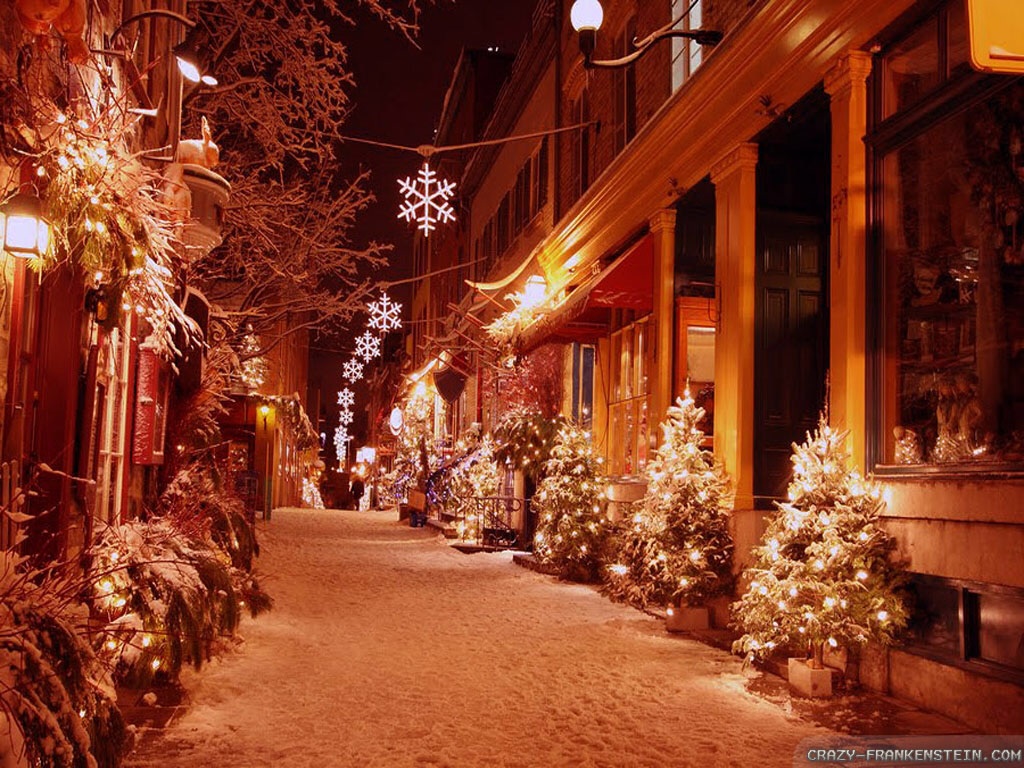
In any event, it now looks like the piñata is morphing into a simple Christmas decoration. I certainly don’t think that all the piñatas we’ve seen hung up are there to be bashed vigorously with a stick. In this new identity they have become the equivalent of those stars which seem such a popular Christmas street decoration.
image
Soon, they will morph once more, becoming tame Christmas tree decorations. Indeed, if this Christmas tree at one of Mexico City’s bus stations is anything to go by, the morphing has started already.
image
From reverent offering to the sun god to cheesy decoration on a Christmas tree, the fall has been long and hard.

_____________

Piñata: my photo
Huitzilpochtli: http://upload.wikimedia.org/wikipedia/commons/c/cb/Huitzilopochtli_telleriano.jpg (in http://en.m.wikipedia.org/wiki/Huitzilopochtli)
Franciscan monk hitting piñata: http://en.m.wikipedia.org/wiki/Piñata#/image/File:MonkPiñataAcolman1.JPG (in http://en.m.wikipedia.org/wiki/Piñata)
pix from the museo de arte popular: mine
Children hitting a piñata: http://en.m.wikipedia.org/wiki/Las_Posadas#/image/File:Las_Posadas_Pinata.jpg (in http://en.m.wikipedia.org/wiki/Las_Posadas)
Christmas street decorations: http://wallpaperest.com/wallpapers/street-outdoor-christmas-decorations_074228.jpg (in http://toplowridersites.com/iphone-5-38528-christmas-christmas-street-decoration-jpg/)
piñata on Christmas tree: my picture

A STREET PHOTOGRAPHER

Bangkok, 21 December, 2014

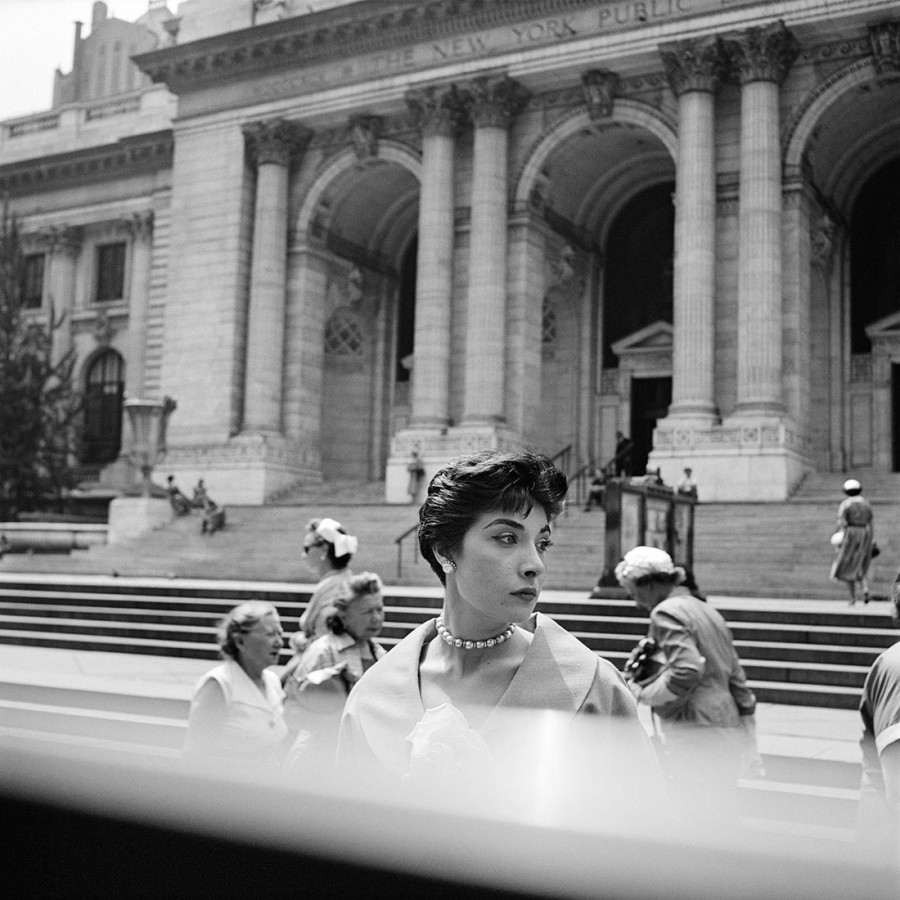
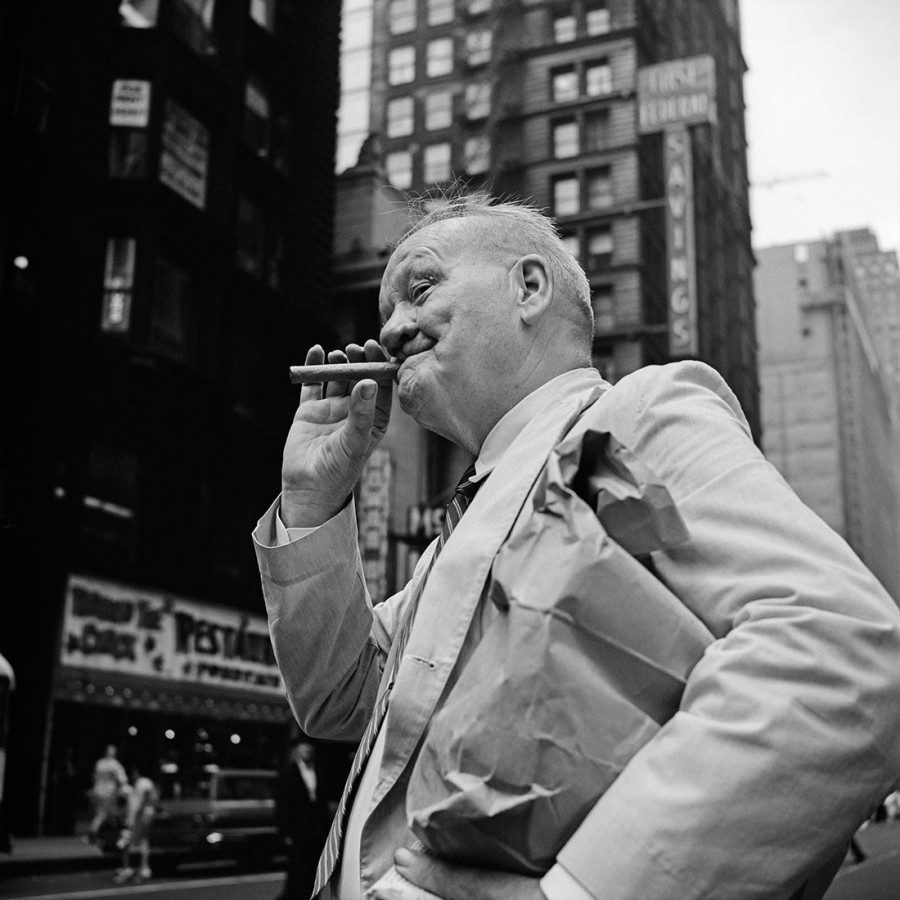
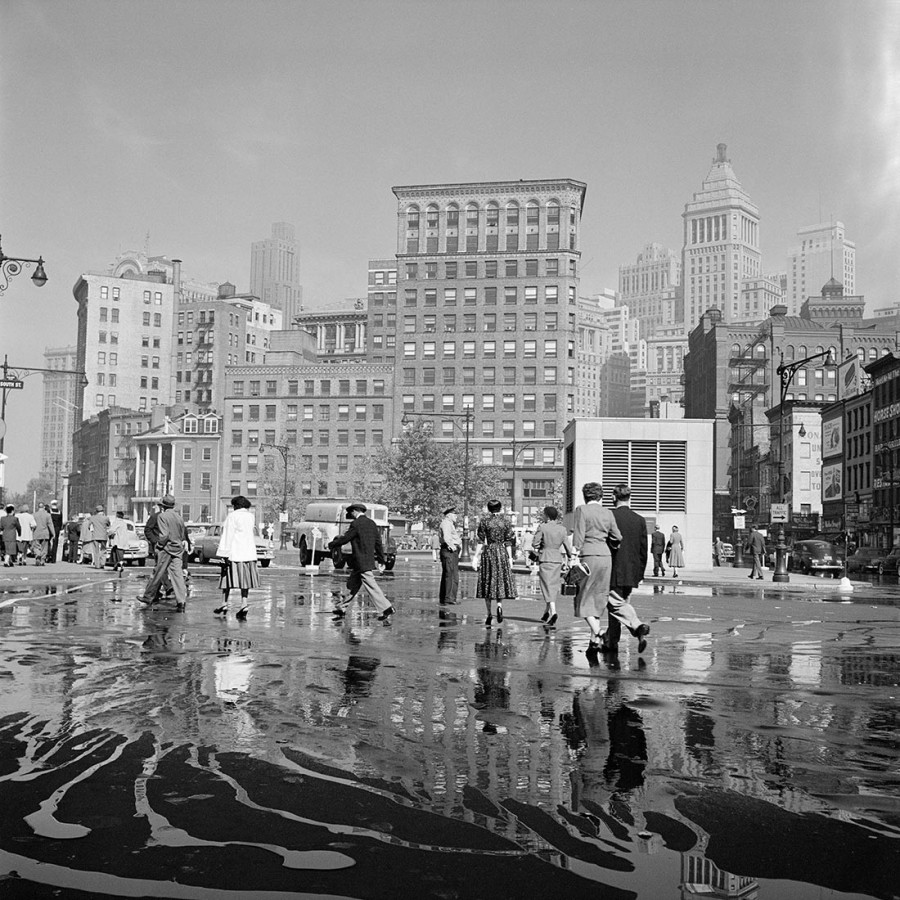
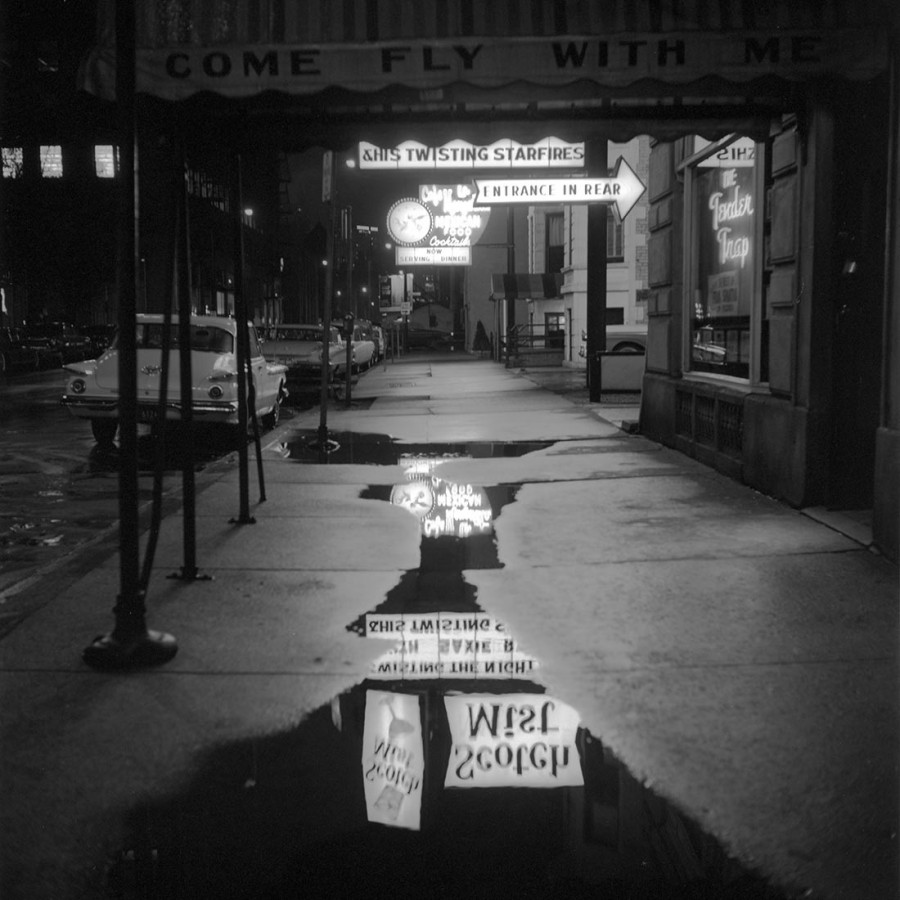
Her name was Vivian Maier. She died not long ago, in 2009, at the age of 83, a spinster and childless, and penniless. She had spent some forty years, from the mid-1950s on, being a nanny for various well-off families in the Chicago area.

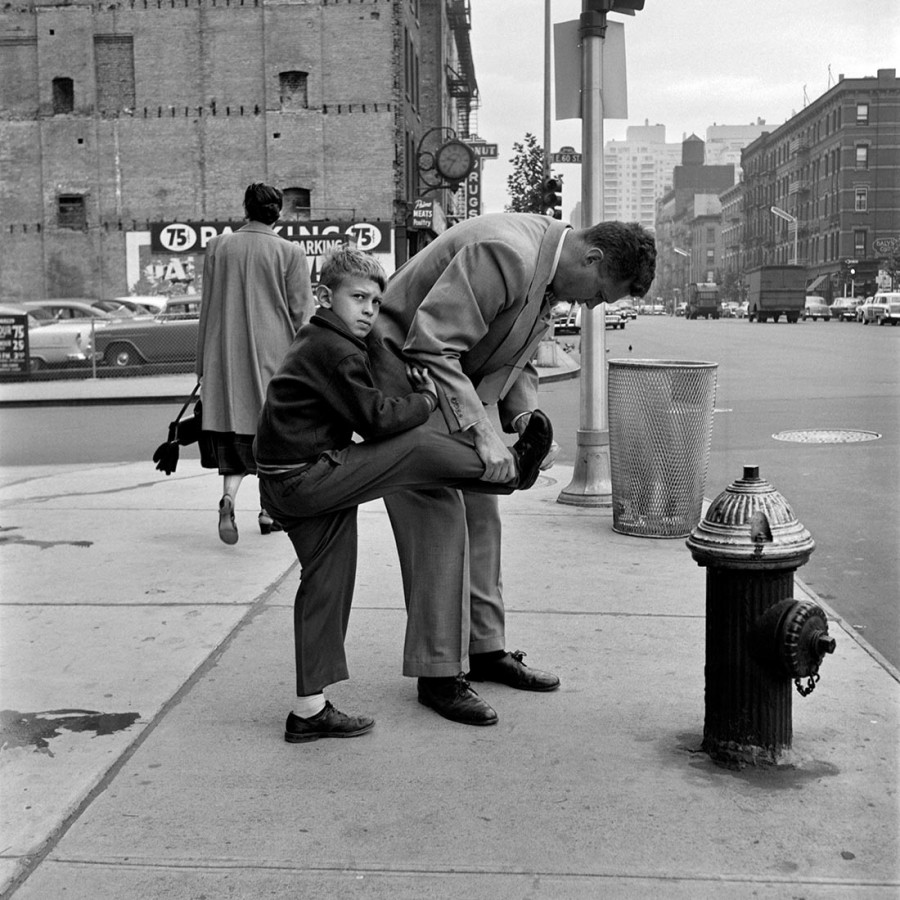
And she was a gifted photographer of the streets, mainly those of Chicago and New York.

She spent every possible minute that she could taking photos: in all her free time, but also when she was taking her charges for walks or to the playgrounds, as well as on her one big trip around the world, which she made in the early sixties. She took hundreds of thousands of photos. But hardly any of these made it past the stage of negatives, and many didn’t even get that far; they just stayed as rolls of unprocessed film.

She was a compulsive hoarder. She kept all the negatives and all the film rolls, and the 8 mm films she made, and the audio tapes she recorded, and just about everything else she had ever owned or collected, in cardboard boxes, old suitcases, and other containers. As she moved from one nannying job to another, she offloaded her accumulating stuff into a commercial storage space. In 2007, after she failed to keep up with her payments, the storage company auctioned her stuff off.

It looked like her work was about to disappear. But a number of photo collectors bought at the auction. They recognized a spark of genius in her photos and started trying to publicize them. A first attempt by Ron Slattery in 2008, who posted some of her photos on the internet, failed to generate much interest. Then in October 2009, six months after she died, another of the collectors, John Maloof, put some of his trove of her photos on Flickr, linked them to his blog, and the results went viral (this is a very modern story). Things snowballed from there, and her work is now beginning to garner a fair amount of critical and popular praise.

Would Vivian Maier have wanted this recognition? That is one of the questions touched upon in a fascinating documentary which John Maloof put together entitled “Finding Vivian Maier”. He tells the story of how after his initial purchase of her stuff he went on a voyage of discovery of who she was and what she did – quite a detective story – and he interviews a number of the children she nannied and their parents to try to understand what kind of person she was. It was seeing this film that moved me to write this post. I highly recommend my readers to see it if they have not done so already. And, by the way, according to the people who had known her, the answer to the question with which I started this paragraph is, probably yes for her work, but she would have intensely disliked to have the light of publicity shone on her; she was a very private person.

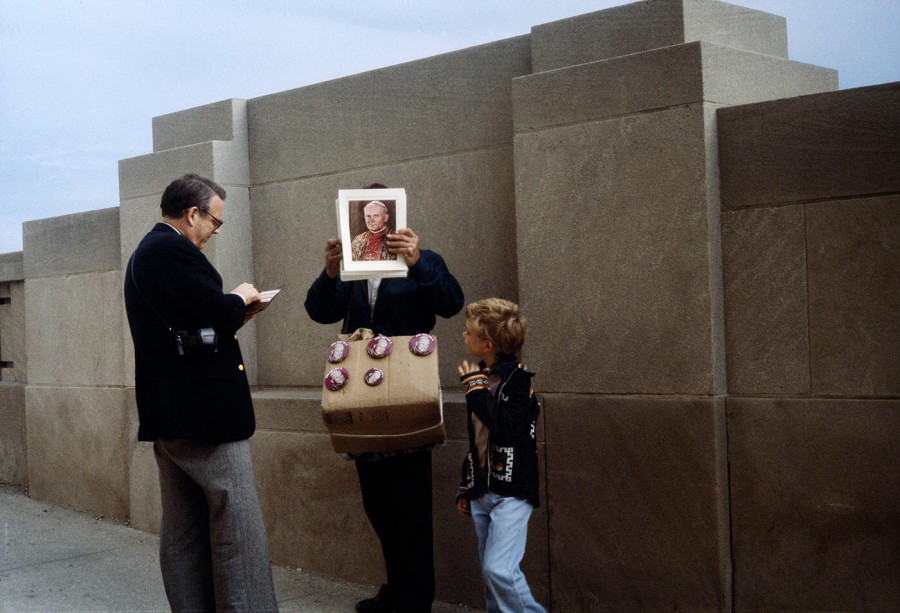
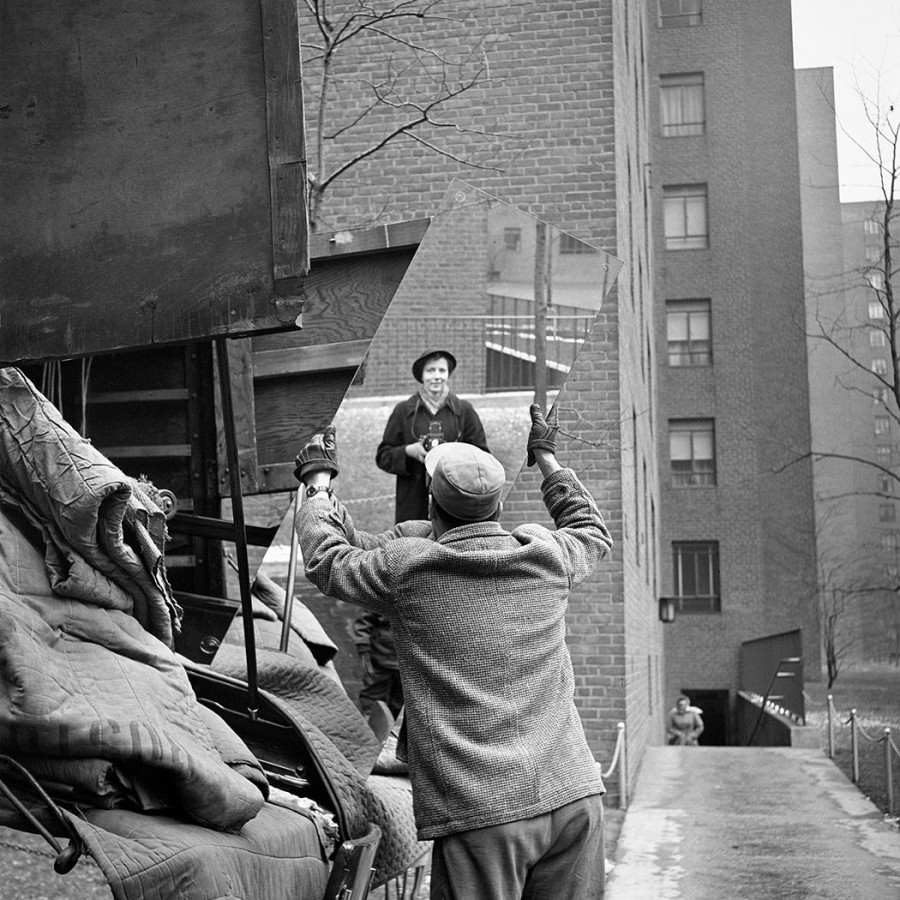
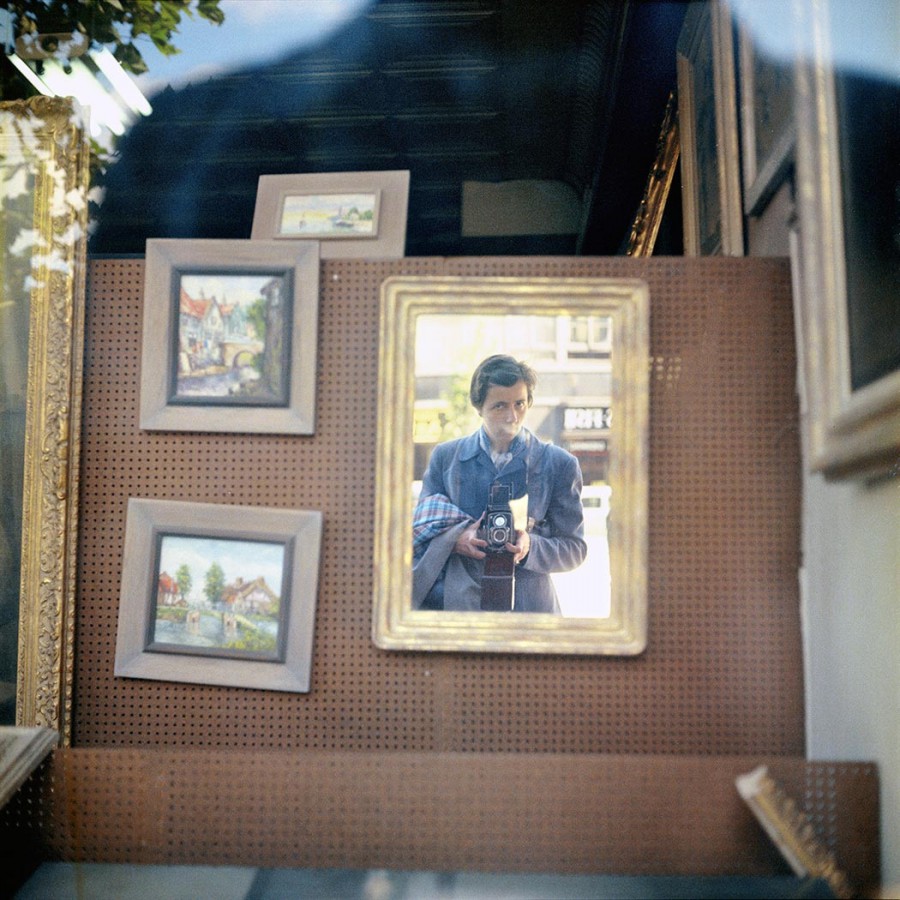
For those readers who want to get a taste of her work, I suggest you visit the site http://www.vivianmaier.com. I add here, from that same site, some of her photos which most struck me, to whet your appetite.
image

image

image

image

image

image

image

image

I prefer her black-and-white photos, but I add a few of her colour photos
image

image

image

That last one, with her shadow, leads naturally to a few of her self-portraits. She took a lot of photos of herself.
image

image


image

In a sad postscriptum, I have just read that Vivian Maier’s estate has got entangled in a challenge about who owns the copyright to her photos. The result is that it will be probably harder to see her works for the next several years. If my readers get a chance to see an exhibition, on no account miss it. It might be a long time before you get another chance.


COLOURING POLITICS

Bangkok, 9 December 2014

We have just finished celebrating H.M. the King’s birthday here in Bangkok. Truth to tell, “celebrating” may be a little of an overstatement. My wife and I found it quite a muted affair. For instance, the fireworks in the evening were really quite brief and modest, while a drive-by of high officials, which we just happened to find ourselves witnesses to, was greeted with silence by the folk lining the road side. What was out in full force, though, were the yellow shirts. They had already been popping up with greater and greater insistence in the days running up to the great day. But on the birthday itself the pavements were a sea of yellow.
image
Many were wearing yellow T-shirts made specifically for the purpose, but many others (who didn’t get included in the official photos) gave the impression of having grabbed the first yellow, or near-yellow, shirt or blouse they could find in their wardrobe. So the palette of yellows went all the way from pastel yellow through to citrine. Given the recent history of Thailand, one began to wonder if the choice of hue was a political statement of some sort. That man with the orange shirt, for instance, was it just the closest thing he had to yellow in his drawer, or was it actually the closest he dared get to the dreaded colour red? Or that woman over there with the pastel yellow blouse, had she simply been caught short without anything really yellow in her closet, or was she actually signalling her lack of enthusiasm for the whole exercise? Or what about the few people without yellow shirts? What, if anything, was their message? That student, for example, with the green shirt, what was he trying to tell us?

Thus are the seeds of paranoia sown ….

(By the way, for those of you who may be interested, the King’s colour is yellow because he was born on a Monday. Based on Hindu mythology, Thai (and Khmer) tradition assigns different colours to each day. For those of you who may be fascinated by this arcane point, I recommend you visit the following site on Wikipedia)

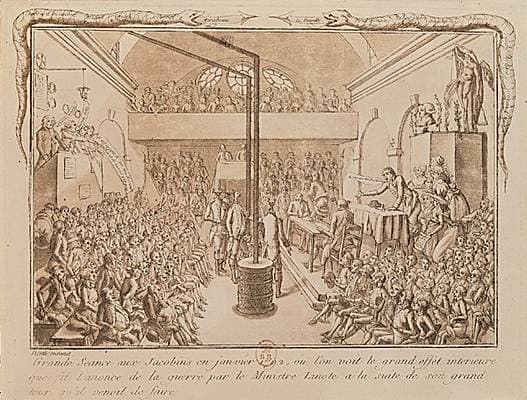
Colours have been recruited to support political quarrels since time immemorial. When I was young, red was the colour of Marxism in all its forms (Social-Democratic, Socialist, Marxist-Leninist, Maoist, Vietminh, Khmer Rouge, …). We have the French Jacobins
image
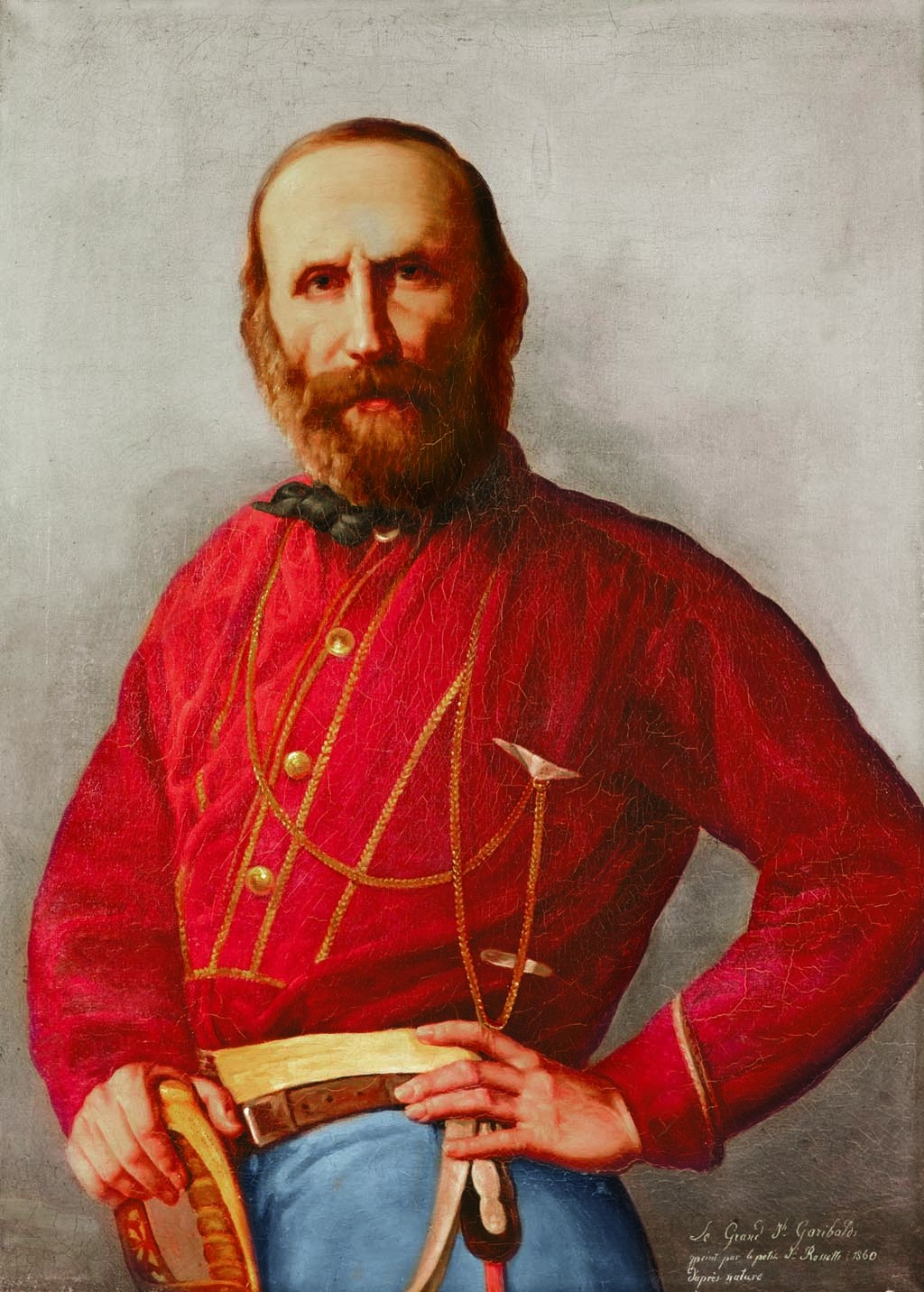
to thank for this association of red with the left of the political spectrum. For reasons which are too complicated to explain here, the Jacobins adopted the red flag as their own during the French Revolution, and the tradition continued in the European Left thereafter. I suppose we are all aware of the red symbols of the Left: the flags, the official art, the scarves, the buttons. But my preferred symbol of redness are the Garibaldini, those 1,000 or so red-shirted volunteers who, led by Giuseppe Garibaldi, sailed away in 1860 from Genoa to Sicily and in a few short months of fighting completed the unification of Italy.
image
I have to add here a painting of the Great Man himself, whose statue graces at least one square, and whose name graces at least one street, in every village, town, and city of Italy.

image

I like Garibaldi, I’ve liked him ever since as a teenager I studied the unification of Italy for my O level History. By way of introduction to Garibaldi, our teacher told us about his earlier exploits in South America. The only thing that sticks in my mind about these worthy endeavors is our teacher’s description of how Garibaldi met his wife. He was on a boat on the Río de la Plata, where he was inspecting something or other through a telescope. He noticed his future wife on the bank, washing clothes or some such. After one look at her, he said (and here the teacher put on a thick Italian accent and struck an operatic pose), “Brring me to herr!”

But back to colours and politics. In the interwar years the red of the Socialists and Communists was violently opposed by various other colours. It was the black-shirted Fascists in Italy, seen here in the March on Rome in 1922
image
and the black-shirted Fascists in Spain, seen here jubilating at the fall of Irun during the Spanish Civil War.
image
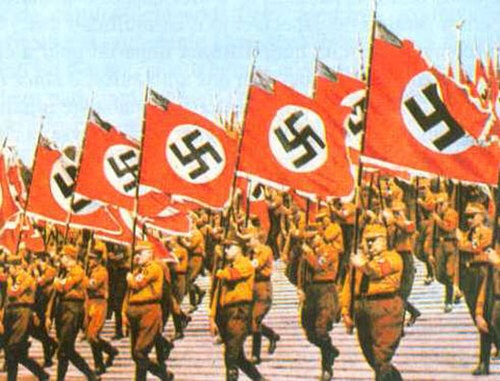
In Germany, it was the brown-shirted Nazis.
image
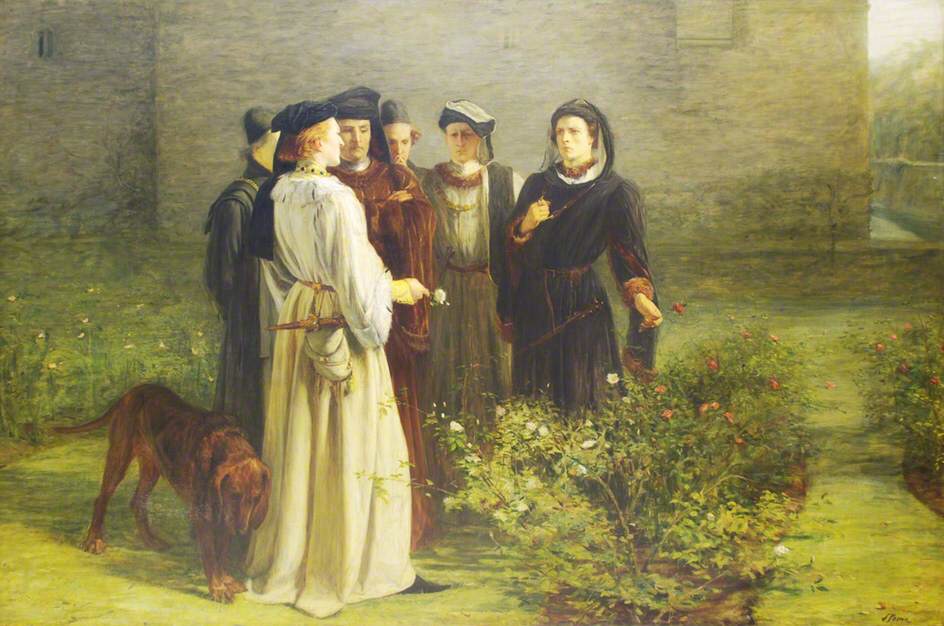
From here my memory leaves coloured shirts and vaults back some 500 years or so to the gardens at the Inner Temple in London, where – at least, according to Shakespeare in Henry VI, Part I – the Lords of Court chose which side to be on in the upcoming War of the Roses, by plucking either a white rose (the Yorkists) or a red rose (the Lancastrians) from rose bushes growing in the garden. Colours again, defining which side you would be taking in the looming political struggle. The scene is caught in this much romanticized painting from the 1870s.

image
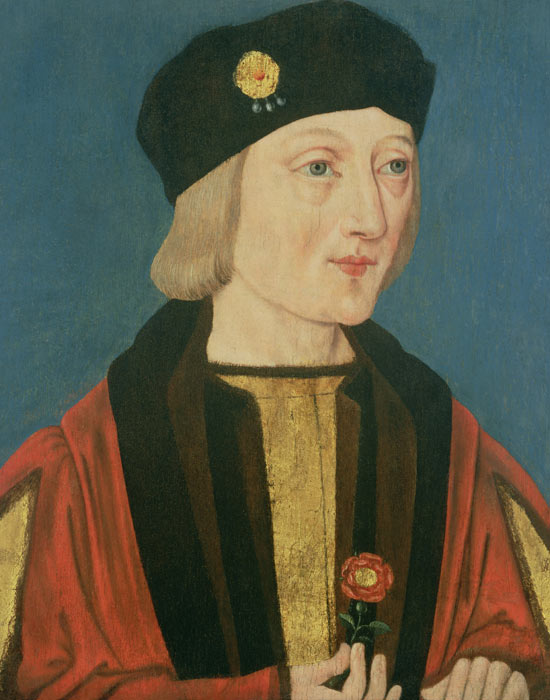
The Lancastrian Red Roses and the Yorkist White Roses fought it out for 30 years until Richard III was unhorsed and killed at the Battle of Bosworth Field, and Henry VII was crowned in his place. As a symbol of a once-more unified country, Henry devised a new badge for his dynasty, a mixed red-and-white rose now called the Tudor Rose.
image
A very clever piece of political manipulation through colour …

Talking of using colours for political purposes, we can fast-forward 300 years to the French Revolution and watch the storming of the Bastille.
image
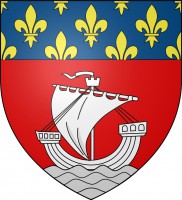
The Paris militia played a prominent role in the attack. To distinguish themselves from other groups taking part, they wore a blue and red cockade in their hats, Paris’s traditional colours.

image

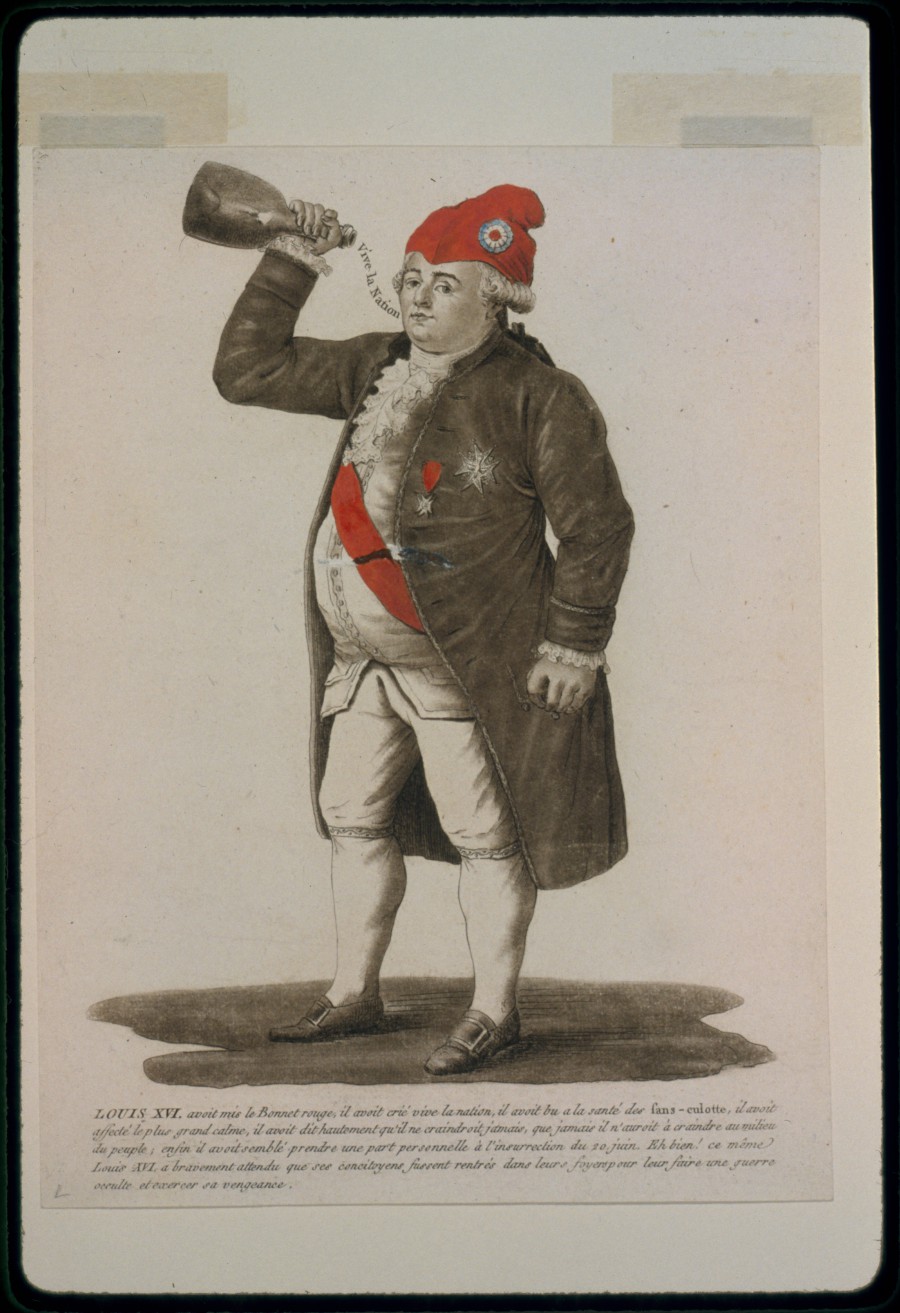
The people of Paris were elated by this victory. But the more moderate – more aristocratic – elements of the revolutionary camp were alarmed by what they saw as rampaging – and armed – mobs. It was decided to create a National Guard out of the Paris militia under the command of the Marquis de Lafayette, a moderate revolutionary with military experience (gained during the American Revolution) and with the trust of King Louis XVI. Lafayette proposed to add white to the militia’s blue and red cockade. His argument was that this would turn what was mainly a Parisian militia into a national force: white was then the national colour.
imageBut in a political system where all things national were the King’s, this was also a way of saying “revolutionaries yes, but still loyal to the King”. Well, things didn’t quite work out that way, but thus was born the red, white, and blue cockade, which even King Louis gracefully accepted to wear – at least for a little while.

image

The cockade morphed into the flag, which became a symbol of hope for some

image
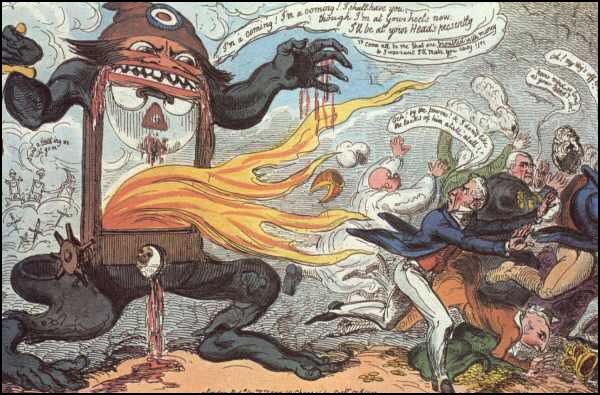
and the dread of many more as French troops unfurled like a tsunami over much of Europe.

image

Rampaging mobs makes my mind spin back more than a thousand years to Constantinople and to its hippodrome, home of the city’s chariot races. Chariot racing was to the Romans and the Byzantines what soccer is today to many people the world over, a mania, a fixation. All over the Roman world, there were four factions, the Greens, the Blues, the Whites, and the Reds, and all chariots in a race belonged to one of these four factions. The charioteers, as well as the fans, wore the colours of their faction, like in this mosaic in Lyon.

image

Like soccer players today, charioteers could and did change faction, but like soccer fans today the fans never did. If you chose to follow the Greens, you were a Green for life. Like soccer today, the enthusiasm of the fans inside the hippodrome often turned into hooliganism and gang warfare outside it. Like soccer today in some parts of the world where there is no recognized outlet for political and social frustrations, factional fighting became a way to vent political anger and score political points.

So it was in Constantinople in 532 AD, when Justinian I was Emperor. By now, there were only really two chariot factions that counted, the Blues and the Greens. Justinian supported the Blues so his enemies at court naturally supported the Greens. Justinian was in the midst of negotiating a badly-needed peace settlement with the Persians, and he had to have peace on the home front. But the people of Constantinople were angry: taxes were crushingly high. There had been politically motivated rioting after some earlier chariot races and a number of rioters had been hanged. But this did not calm excited spirits. For some strange reason, Justinian thought another day of chariot races would pour oil over troubled waters. The races started alright, with Blues and Greens vociferously supporting their teams, even though they also hurled insults at the Emperor, sitting – no doubt a bit nervously – in the imperial box. By the end, though, the two factions united in a common roar of “Nika! Conquer!” With that, the spectators burst out of the hippodrome and assaulted the palace, which conveniently abutted the hippodrome. For the next five days, they laid siege to it, demanding reductions in taxes and the dismissal of the prefect responsible for collecting the taxes and the quaestor responsible for rewriting the tax code. For good measure, they declared Justinian deposed and raised a new Emperor in his place. In the resulting mayhem, fires broke out which eventually burned down half the city.

Initially, Justinian panicked and was looking to scarper. But his wife Theodora was made of sterner stuff and stiffened his spine. Once his funk had passed, Justinian reverted to a true-and-tried method: gold. He got his eunuch Narses to go into the hippodrome, where the Greens and Blues were about to crown the new Emperor, with a large bag of gold. Narses quietly joined the heads of the Blue faction. He reminded them that Justinian was a Blue and that he had always supported them, he pointed out that the new Emperor was a Green and they could surely imagine what would happen to them under him, and then he distributed the gold. The faction leaders held a quiet conference, then spread the word among their followers. In the middle of the coronation, the Blues suddenly all stormed out of the hippodrome, leaving the Greens sitting stunned in their seats. At which point, imperial troops under trusted generals burst into the hippodrome and massacred all and sundry. It is reported that thirty thousand people died that day.
All in the name of colours …

Colours have been hitched to the wagon of many other political causes. Green has morphed from the colour of Byzantine charioteering factions to the colour of modern environmental factions, and we now hear of Deep Green and Light Green factions, each trading barbed – and not so barbed – insults about the depth of their commitment to the cause. We have Hindu fanatics cladding themselves in the colour saffron, a colour with deep religious connotations in Hinduism, and going on rampages against non-Hindus. And on and on … Readers who are interested in the topic can do no worse than go to this Wikipedia site.

But, misquoting Elton John, all I want to say is “Don’t shoot me, I’m only a colour”.

_______________
Yellow-shirts celebrating the King’s birthday: http://www.bangkokpost.com/multimedia/photo/447447/king-birthday
Meeting of a Jacobin club: http://www.larousse.fr/encyclopedie/data/images/1004994-Club_des_Jacobins.jpg (in http://www.larousse.fr/encyclopedie/divers/club_des_Jacobins/125450)
Garibaldini fighting: http://www.ondadelsud.it/wp-content/uploads/2011/04/Marsala-1860-Sbarco-dei-Mille.jpg (in http://www.ondadelsud.it/?p=4664)
Garibaldi: http://www.museotorino.it/images/86/94/ce/b0/8694ceb03de848108691d55482fd1c40-1.jpg?VSCL=100 (in http://www.museotorino.it/view/s/238dcc0376d444d2b6decf0378c13e6c)
The March on Rome: http://www.history.com/news/wp-content/uploads/2012/10/mussolini-march-on-rome.jpg (in http://www.history.com/news/9-things-you-may-not-know-about-mussolini)
Spanish fascists in Irun: http://pix.avaxnews.com/avaxnews/6a/1d/00001d6a_medium.jpeg (in http://avaxnews.net/educative/Spanish_Civil_War_2.html)
Brown shirts marching: http://img2.blog.zdn.vn/37516513.jpg (in http://me.zing.vn/zb/dt/toyotasolara/17039283?from=my)
Scene in the Temple Garden: http://ichef.bbci.co.uk/arts/yourpaintings/images/paintings/warg/large/nml_warg_wag_2712_large.jpg (in http://www.bbc.co.uk/arts/yourpaintings/paintings/scene-in-the-temple-garden-98909)
Henry VII and Tudor rose: http://static.guim.co.uk/sys-images/Admin/BkFill/Default_image_group/2012/3/1/1330616510280/Henry-VII-001.jpg (in http://www.theguardian.com/books/2012/mar/02/tudors-henry-vii-wars-roses)
Storming of the Bastille: http://media-1.web.britannica.com/eb-media/98/90498-004-CEB880DC.jpg (in http://global.britannica.com/EBchecked/topic/55622/Bastille)
Arms of Paris: http://upload.wikimedia.org/wikipedia/commons/thumb/c/ca/Blason_paris_75.svg/931px-Blason_paris_75.svg.png ( in http://en.m.wikipedia.org/wiki/File:Blason_paris_75.svg)
Royal standard of France: http://en.m.wikipedia.org/wiki/Royal_Standard_of_France#/image/File:Pavillon_royal_de_France.svg (in http://en.m.wikipedia.org/wiki/Royal_Standard_of_France#Middle_Ages)
Louis XVI: http://upload.wikimedia.org/wikipedia/commons/7/74/Louis_le_dernier.jpg (in http://commons.m.wikimedia.org/wiki/File:Louis_le_dernier.jpg)
Liberty guiding the People: http://upload.wikimedia.org/wikipedia/commons/thumb/c/cc/Eugène_Delacroix_-_La_liberté_guidant_le_peuple-2.jpg/967px-Eugène_Delacroix_-_La_liberté_guidant_le_peuple-2.jpg (in http://commons.m.wikimedia.org/wiki/File:Eugène_Delacroix_-_La_liberté_guidant_le_peuple-2.jpg)
Revolution as ogre: http://goodcomics.comicbookresources.com/wp-content/uploads/2008/10/cruikshank14.jpg (in http://pixgood.com/french-revolution-political-cartoon.html)
Mosaic of chariot race: http://travellingman.jalbum.net/Lyon%202011/slides/P1120092.JPG (in http://travellingman.jalbum.net/Lyon%202011/slides/P1120092.html)

FOUR FACES

Bangkok, 5 December 2014

I’ve just come back from a trip to Phnom Penh. My wife accompanied me, so for a couple of days, while I was doing the official rounds and meeting the official people, she was nosing around the city enjoying herself. She regaled me every evening with her discoveries, making me green with jealousy. But we had decided that I would take a day off at the end of my official rounds and spend a long weekend together being tourists, so I told myself to be patient and bide my time. On Friday, Andy (not his real name, but tour guides in this part of the world will often adopt a Western name to make it easier for us dumb Westerners), Andy as I say, was waiting for for us at the door of the hotel with his tuk-tuk

image

in which he swept us off (well, “swept off” may be exaggerated, given the venerable speed at which tuk-tuks go) for a visit to Oudong, Cambodia’s capital prior to Phnom Penh. After puttering across the flat plain surrounding Phnom Penh for a while, we finally sighted in the distance the phnom (“hill” in Khmer) which had been the centre of Oudong.
image
After some more puttering, we arrived at the base of this hill, and were immediately surrounded by a cloud of boys shouting greetings, asking us where we came from, and directing us to the loo (after nearly two hours of puttering, we were both more than ready to answer calls of nature).

Following this pit stop, we made for the steps which would carry us to the top of the phnom. We huffed and we puffed slowly up the steps – all 509 of themimage
accompanied by a charming little boy, one of the cloud, who went by the name of Monette. His English was approximate, but he used it bravely to explain to us the sights we passed, the first of which was some exceedingly cheeky monkeys who hung around the steps like a pack of bad boys, ready to snatch lotus flowers from the unwary passer-by and snack on their stamens (or do I mean their pistils?)

image

One did just that to a group of young women in front of us, who came running back down the stairs screaming and clutching at each other. I moved forward bravely towards the insolent monkey as he sat on the steps munching the stamens (or do I mean pistils?). He looked me in the eye, and calmly walked off into the surrounding bushes holding his booty and showing me his bum. I mustered as much of my dignity as I could and Carried On.

With one final heaving huff and one further ragged puff, we staggered to the top. With the excuse of admiring the view

image
we took a break. But soon we turned around and took in the first of five stupas which crown the hill.

image

After walking around it, we wended our way along the crest, from one stupa to the next, with Monette scampering along and giving us fractured, splintered explanations, until we got to the last, a stupa with four faces.

image

Well! This was a pleasant discovery! Those four faces staring benevolently out to the four cardinal points were intriguing indeed.

image

I must confess, my first – wholly irreverent – thought was that they reminded me of Thomas the Tank Engine of my youth.
image

But then another memory floated to the surface, from several years ago when my wife and I visited Angkor Wat, several hundred kilometers upriver from where we were currently standing, on the edges of Tonle Sap lake: Prasat Bayon, the shrine to Mahayana Buddhism, the temple of the 200 faces of Lokesvara, the bodhisattva of compassion. Yes, this must have been the model of the stupa before me.

image

image

image

Ah, what a lovely, lovely temple is Prasat Bayon! The bodhisattva who embodies the compassion of all Buddhas smiling at you wherever you stand, wherever you look. A thousand rays of compassion sweeping us visitors and what had been the surrounding city.

But King Jayavarman VII, who built the temple and who replaced the Khmers’ state religion of Hinduism with Mahayana Buddhism (and whose face, many think, was the model of the bodhisattvas at Prasat Bayon)

image

merely copied from a previous model for his design, that of Brahma, the Hindu god of creation. Brahma is very often represented with four heads, each reading one of the four Vedas. Temples dedicated to him are rare, but there was one close to Angkor Wat, on Phnom Bok. The quadruple-headed bust below, from that temple, is now in the Musée Guimet in Paris, no doubt “taken in for its protection” (or do I mean filched?) by the-then French colonial masters.

image

There is also a regionally famous Brahma-derived statue here in Bangkok, down the road (as it were) from where we live: Phra Phrom (a Thai rendition of Brahma).

image

He is considered the deity of good fortune and protection. Since he has a solid following among the Chinese of Singapore, Hong Kong and Taiwan, and knowing the proclivity of the Chinese to gamble, I rather suspect that Brahma has gone from being the god of creation to the god of gamblers. How the mighty have fallen …

And on this melancholy note, it was time to leave my reveries and move on. My wife and I made our way back down the hill, at the bottom of which we gave Monette 10 dollars for his services, enjoining him to use it for his schooling (he had informed us that he was going to a paying school) but fearing that it might end up instead in the pockets of his “minders”. We picked our way past the rubbish left by previous visitors and a monkey snacking on the boiled rice thrown away by one of them, we climbed into Andy’s tuk-tuk, and we puttered our way back to Phnom Penh.

____________________
Andy’ tuk-tuk: https://www.facebook.com/AndyFriendlyTukTukPhnomPenh/photos/pcb.290625764427281/290625417760649/?type=1&theater (in https://www.facebook.com/AndyFriendlyTukTukPhnomPenh)
Oudong from a distance: http://static.panoramio.com/photos/large/32298005.jpg (in http://www.panoramio.com/m/photo/32298005)
Stairs at Oudong: http://farm3.staticflickr.com/2825/10724616273_e3e9cf04b7_z.jpg (in http://iwandered.net/2013/11/07/day-trip-to-oudong-cambodia/)
Monkey: https://c2.staticflickr.com/8/7420/8993459951_7619376cd4_b.jpg (in https://www.flickr.com/photos/kamimura4401/8993459951/)
View from the top: http://1.bp.blogspot.com/-Yk57J-xzt4Y/UFLx1bIbIrI/AAAAAAAABPA/Mdq0Z5_DBuM/s1600/Oudong6.png (in http://www.camtravel.info/2012/09/oudong-mountain-cambodia.html#.VIB9hGIaySM)
First stupa: http://upload.wikimedia.org/wikipedia/commons/3/30/Sanchak_Mony_Chedei.jpg (in http://en.m.wikipedia.org/wiki/Oudong)
Stupa with faces: https://c2.staticflickr.com/4/3018/3087092115_26ee767788_b.jpg (in https://www.flickr.com/photos/zapata_k/3087092115/)
Stupa with faces – close up: http://1.bp.blogspot.com/-aAJEmmCf6h8/Um5lWw9rdxI/AAAAAAAAxbg/FBPq3MXQ0_U/s1600/23+Close+Up+of+Four-faced+Top+Cambodia+Oudong+Temple+Cycling-358.jpg (in http://jotarofootsteps.blogspot.com/2013/10/sites-oudong-temple-cambodia.html)
Thomas the tank engine: http://3.bp.blogspot.com/-KiFNIBZmqPI/TxKoxis-FrI/AAAAAAAAAJY/sVCzG4VTLd0/s1600/ThomastheTankEngine.jpg (in http://latestnewsfromtpandt.blogspot.com/2012/01/thomas-tank-engine-review.html)
Bayon temple-1: http://www.rickmann-uk.com/wp-content/uploads/Bayon-three-faces.jpg (in http://www.rickmann-uk.com/index.php/2007/06/05/angkor-temples-cambodia/)
Bayon temple-2: http://jcinnamonphotography.files.wordpress.com/2011/10/bayon-temple-faces-2.jpg (in http://jcinnamonphotography.wordpress.com)
Bayon temple-3: http://en.m.wikipedia.org/wiki/Bayon#/image/File:Das_Lächeln_von_Angkor.jpg (in http://en.m.wikipedia.org/wiki/Bayon)
King Jayavarman VII: http://en.m.wikipedia.org/wiki/Bayon#/image/File:JayavarmanVII.jpg (in http://en.m.wikipedia.org/wiki/Bayon)
Brahma: http://en.m.wikipedia.org/wiki/Brahma#/image/File:Brahma_Musée_Guimet_1197_1.jpg (in http://en.m.wikipedia.org/wiki/Brahma#Temples)
Phra Phrom: http://en.m.wikipedia.org/wiki/Brahma#/image/File:Thai_4_Buddies.jpg (in http://en.m.wikipedia.org/wiki/Brahma#Temples)

KEEP IT SIMPLE

Bangkok, 19 November, 2014

I was in Myanmar last week for the first time in my life, with a team of colleagues. Unfortunately, our trip coincided with an ASEAN Summit in the new capital Nay Pyi Taw, which was attended by sundry political worthies, including President Obama and Premier Li Keqiang. We seemed to have spent most of the week fleeing from these worthies. We hurriedly visited various government Ministries in Nay Pyi Taw in the two days before the Summit started and rode out of town to Yangon the night the politicos started arriving. We were congratulating ourselves on having missed the craziness which usually accompanies the presence of political heavyweights, but we had not reckoned on President Obama following us down to Yangon. His motorcading around the city to meet with Aung San Suu Kyi and do various other things like visit a church snarled Yangon’s already chronically congested traffic and made our lives a misery as we threaded our way through back roads to arrive more or less on time at our various meetings.

But actually this post has nothing to do with President Obama or any other Big Cheese. It has to do with a stop we made somewhere in all this threading, at a market. One member of the team had made promises to his wife to bring a little something back to her, and the other team members thought this was an ideal occasion to pick up some Burmese bibelots. Unwillingly, I tagged along. As I feared, the market was a tourist trap: store after store of rubbish and store keepers hovering ready to pounce. But I preferred to walk around grouchily than sit in the van grouchily.

I had a faint glimmer of hope when I came across a store which sold lacquerware from Bagan. I’d read about the ancient Burmese king who had conquered his way through northern Thailand, Laos and over to Yunnan, and brought back skilled lacquerware craftsmen in his baggage train, using them to create a new luxury industry in his capital Pagan. Might I find something worth contemplating in the store?

Alas not. For one thing, I cannot stand places which look like this.

image

All that stuff pressing claustrophobically in on you! The feeling of being the proverbial elephant in a china shop, bumping into something and bringing mounds of breakables crashing down around your ears! My immediate reaction is to run out of such places. But I controlled my urge to run and looked. And liked not what I saw. This picture shows the typical designs being offered for sale.
image
Too much, too much! Too – damned – much! All those dense, dense designs. It makes me think of Australian Aboriginal art, which I wrote about in an earlier post. In art, in design, the KISS principle applies (Keep It Simple, Stupid!). Now it could just be that modern makers of Bagan lacquerware use these designs because tourists have shown a preference for them, and he who pays the piper calls the tune. But a look at older designs suggests that the Burmese kings and their aristocracy also liked busy designs, although this is a good deal better than the modern stuff.
image
No, give me Japanese lacquerware any day. Look at this bento box in the maki-e style
image
Or this box in the Aizu style
image
Or this tray in the Negoro style (where the upper red layers of lacquer are intended to gradually wear away with use, revealing the black lacquer underneath).
image
These are old fashioned if not antiques. Modern Japanese lacquerware is just as lovely. Look at this:
image
Or if you find that this has strayed too far from lacquerware, how about this vase?
image
Or if you find the design too modern, how about this?
image
Beauty is in simplicity of form and of pattern.

I have spoken.

_____________________________

Myanmar lacquerware store: https://c1.staticflickr.com/5/4106/4989036093_92231568aa_z.jpg (in https://www.flickr.com/photos/kelvinlls/4989036093/)
Typical modern Bagan lacquerware: http://www.travelwireasia.com/wp-content/uploads/2012/06/IMG_6223.jpg (in http://www.travelwireasia.com/2012/07/5-great-arts-and-crafts-to-buy-in-burma/)
Yun lacqerware tray: http://image0-rubylane.s3.amazonaws.com/shops/owensantiques/263.1L.jpg (in http://www.rubylane.com/item/197251-263/Burmese-Red-Lacquer-Tray-Court-Scenes)
Maki-e bento box: http://image0-rubylane.s3.amazonaws.com/shops/781325/ju7.1L.jpg (in http://www.rubylane.com/item/781325-ju7/Japanese-Traditional-Laquer-Maki-e-Bento)
Aizu box: http://www.swarthmore.edu/library/exhibitions/japan/gallery/images/lacquer-box-2f.jpg (in http://www.swarthmore.edu/library/exhibitions/japan/gallery/lacquer-box.php)
Negoro tray: http://content.ngv.vic.gov.au/col-images/xl/EPUB000495.jpg (in http://publications.ngv.vic.gov.au/essays/negoro-lacquer-the-refined-beauty-and-rustic-ambience-of-medieval-japan/#.VGyipmIaySM)
Modern Japanese lacquerware-1: http://www.materialtimes.com/files/files/2014/03brezen/uru.jpg (in http://www.materialtimes.com/vsimame-si/jedovata-kraska.html)
Modern Japanese lacquerware-2: http://www.orientaltreasurebox.com/item.php?id=1601&cat_id=8 (in http://www.orientaltreasurebox.com/category.php?page=3&cat_id=8)
Modern Japanese lacquerware-3: http://toku-art.up.n.seesaa.net/toku-art/image/mutsumi20104.jpg?d=a75 (in http://toku-art.seesaa.net/archives/200709-1.html)

THEY HAVE TOO MANY SEEDS

Beijing, 26 August 2014

Suddenly, there are vendors on every street corner of Beijing hawking pomegranate juice.

pomegranate pressers 004

As certainly as the appearance of vendors selling pineapples on Beijing’s streets is a signal that Spring is coming, so this new apparition is a sign that Summer is drawing to a close, with the pomegranate trees now heavy with fruit.

pomegranate orchard

My wife and I have bought our cup of pomegranate juice. Peering down into that dark red liquid

pommegranate-juice

I have as usual begun to ask myself questions about this fruit. It’s not from my basket of inherited foods. I never remember eating it as a child. Which is not surprising, really. It doesn’t grow well in the UK or France – certainly, my French grandmother had no pomegranate trees in her garden; peaches, plums, apples and pears, but no pomegranates. I have never eaten them in Italy either, even though they were brought to Italy during Roman times; their cultivation is limited to the far south.

That’s the thing, pomegranates are not a European fruit. I thought for a moment – given my previous discoveries – that they originated in China. But actually their historical tap root is sunk in Persia (today’s Iran), and the Himalayan foothills of the Indian subcontinent.
It’s been cultivated as a fruit for an awfully long time; they say it’s probably one of the very first fruits which we humans cultivated. And it caught on, being carried enthusiastically along the ancient trade routes. It was already being eaten in Jericho in 3,000 BC or thereabouts and in Cyprus some while later (in both cases, archaeologists found remains of the fruit in the cities’ ancient garbage dumps).

From the Middle East, it was but a hop, skip and a jump to bring the pomegranate to Greece in one direction and to Egypt in the other. This piece of fresco from a tomb painting in Egypt shows the delights of a private garden, with a pomegranate tree tucked away in one corner, no doubt a prelude of the delights which awaited Nebamun, the owner of this particular tomb, in the after-life.

Egyptian wall painting 'Pond_in_a_Garden'

Meanwhile, from their base in Lebanon, the Phoenicians carried the fruit to their overseas territories, notably Carthage. And it was from Carthage that the pomegranate arrived in Rome. Everything comes full circle in this picture, where a mosaic in the Roman style, laid down in the city of Caesarea in Rome’s near eastern province of Judaea (in what is now Israel)

Roman Bird-Mosaic-in-Caesarea

depicts among other delights a pomegranate tree.

Roman Bird-Mosaic-detail

For their part, having welcomed the pomegranate into the homeland – the delights of the pomegranate are mentioned no less than three times in the Quran – the Arabs carried the pomegranate with them in their conquests of North Africa. Later on, the Muslimised Berbers of North Africa brought it to Spain. And it is in their palace of Alhambra in the city of Grenada, the last Muslim stronghold in Spain, that we find, weaved into the intricate designs on the walls, this pomegranate

alhambra-detail

To be found in the palace’s Golden chamber.

alhambra-cuarto dorado

Perhaps it comes as no surprise to know that Spain is now Europe’s biggest producer of pomegranates.

Meanwhile, the pomegranate also travelled east from Persia, along the fabled Silk Road, through Central Asia and finally entered China through Xinjian. But after becoming one of the three blessed fruits of Buddhism, it also tumbled off the Himalayas and travelled into the heart of India, and probably from there it sailed, via the Maritime Silk Route, to south China and Southeast Asia. And from China it was but another hop, skip, and a jump for the pomegranate to be carried to Japan and Korea, where in truth it was appreciated more as a good candidate for bonsai-ism than for its fruit.

bonsai pomegranate

In passing, we should acknowledge that the pomegranate tree does have beautiful flowers

OLYMPUS DIGITAL CAMERA

another reason that the ancients loved the tree, as evidenced by this other wall painting from Egypt

Egyptian wall painting pomegranate in flower

To be honest, I’m not sure I understand what all the enthusiasm is about. I mean, the juice is OK, but what I really like about a fruit is to sink my teeth into it. And all those seeds in the pomegranate

pomegranate-seeds

make that an unpleasant experience – bits of seeds getting stuck in my teeth, a sort of gritty munching experience, that sort of thing … I know the seeds are edible, but psychologically I’m not ready to crunch my way through a whole bunch of seeds. I’ll pick up a peach instead, thank you.

In my opinion, though, it’s precisely those seeds that made it so popular in the old days and encouraged its dissemination out of its Persian-Himalayan homeland. Not, I should clarify, because people liked to crunch their way through a pile of seeds 5,000 years ago (although maybe they did), but because those seeds were a potent symbol of fertility to those eaters. Remember one of the cardinal principles of sympathetic magic, which was potent then: if I eat something (or spread it on my skin, or wear it), I will absorb its powers. Clearly, all those seeds meant that the pomegranate was suffused with fertility. So it would be good to eat it, for instance, if I wanted to have lots of children. This old, old idea has been continued as a quaint custom played out in Greek and Armenian weddings

greek wedding

where at some point the bride breaks open a pomegranate and the seeds spill out (I’m sure I do not need to explain the symbolism of this). But this wish for fertility can be more generalized, and in this guise the pomegranate tree has been cast in the role of Tree of Life. Here, for instance, on this ancient Assyrian seal we see priests standing before a pomegranate as the tree of life, with the sun – another symbol of life – gently beaming down

Assyrian priests with pomegranate tree

And here we see the same symbolism woven into this carpet, made several thousand years later and several thousand kilometres away in the southern corner of the Chinese province of Xinjian.

Khotan carpet

Good ideas have staying power.

The fertility attributed to the pomegranate led to even more abstruse symbolism. Already in Egypt the pomegranate’s fertility transmuted it into a symbol of life after death: eternal fertility – which is why they liked having it represented in their tombs. Somehow, somewhere along the line, the pomegranate took on a similar symbolism for Christians, becoming a representation of Christ’s resurrection and promise of life after death. So here we have a pomegranate along with Christ in a Roman mosaic (again) from the 4th Century AD, from, of all places, a small village in Dorset.

Christian mosaic hinton st mary-detail

Christian mosaic hinton st mary

And here we have an incomparably more beautiful version from 1487 by Sandro Botticelli

Botticelli

Botticelli-detail

Botticelli is telling us that both the Madonna and her child know of the suffering to come, but the pomegranate tells us that it will not have been in vain.
All of this doesn’t change the fact that pomegranates have too many seeds in them to make them a nice eat.

________________

Pomegranate presser: my picture
Pomegranate orchard: http://www.agritay.com/pomegranate2.JPG [in http://www.agritay.com/ie3.htm%5D
Pomegranate juice: http://www.simplecomfortfood.com/wp-content/uploads/2011/12/fresh-pommegranite-juice.jpg [in http://www.simplecomfortfood.com/2011/12/04/fresh-pomegranate-juice/%5D
Egyptian wall painting “Pond in a garden”: http://upload.wikimedia.org/wikipedia/commons/5/51/”Pond_in_a_Garden”_(fresco_from_the_Tomb_of_Nebamun).jpg [in http://en.wikipedia.org/wiki/Gardens_of_ancient_Egypt%5D (fresco from the Tomb of Nebamun, Thebes, 18th Dynasty).jpg
Roman bird mosaic: http://www.mapah.co.il/wp-content/uploads/2013/01/Bird-Mosaic-in-Caesarea-DSC-3039.jpg
Roman bird mosaic-pomegranate: http://1.bp.blogspot.com/_V0EJcthPaew/TPtykNgTYNI/AAAAAAAAHtM/FDksj7TzZA0/s1600/DSC00340.JPG [in http://pazzapazza2.blogspot.com/2010/12/bird-mosaic.html%5D
Alhambra-detail: https://c2.staticflickr.com/6/5178/5533757498_c68f320ab9_z.jpg [in https://www.flickr.com/photos/psulibscollections/5533757498/%5D (Alhambra: Cuarto Dorado, detail of stucco decoration, Date: 14th century, Alhambra: Cuarto Dorado (Golden Chamber), detail of carved stucco decoration with pomegranate motifs, 14th century, Nasrid period.)
Alhambra-cuarto dorado: http://myspanishadventures.com/wp-content/uploads/2012/08/IMG_4741.jpg [in http://myspanishadventures.com/the-alhambra/%5D
Bonsai pomegranate: http://1.bp.blogspot.com/_nruXh-jwU5o/S_nWTS_IdSI/AAAAAAAAWB8/L1sJwhwiWVA/s1600/pomegranate5222010.jpg [in http://bonsaibeginnings.blogspot.com/2011_07_01_archive.html%5D
Pomegranate flower: http://ladyofthecakes.files.wordpress.com/2013/06/p1010002.jpg [in http://ladyofthecakes.wordpress.com/2013/06/22/pomegranates-in-the-making/%5D
Egyptian wall painting pomegranate tree in flower: http://www.vashsad.ua/downloads/image/7396/main3.jpg [in http://www.vashsad.ua/landscape-design/styles/articles/show/7396/%5D
Pomegranate seeds: http://m.cdn.blog.hu/ga/gasztrobakancslista/image/pomegranate-photos-5111.jpg [in http://gasztrobakancslista.blog.hu/2014/02/27/20_granatalma%5D
Greek wedding: http://simerini.com.cy/files/imagecache/full_image/files/node_images/6/5/5/329655/1_______________________________________.JPG [in http://www.simerini.com.cy/simerini/politismos/agenda/329655%5D
Assyrian priests with pomegranate tree: http://tabloidenoticias.files.wordpress.com/2014/02/sumerio.jpg [in http://tabloidenoticias.wordpress.com/%5D
Khotan carpet: http://www.metropolitancarpet.com/assets/images/Khotan7.jpg [in http://www.metropolitancarpet.com/html/body_pomegranate__antique_oriental_rugs.html%5D
Christian mosaic Hinton St Mary: http://upload.wikimedia.org/wikipedia/commons/6/60/Mosaic2_-_plw.jpg [in http://en.wikipedia.org/wiki/Hinton_St_Mary_Mosaic%5D
Christian mosaic Hinton St Mary-detail: http://www.vanderbilt.edu/AnS/Classics/roman_provinces/britain/hintonst.marymosiac.JPG [in http://www.vanderbilt.edu/AnS/Classics/roman_provinces/britain/image16.htm%5D
Botticelli: http://4.bp.blogspot.com/-b-2sXs3aQeo/T-Yv5SWbaEI/AAAAAAAAAc4/tLnT8Advf0c/s1600/Botticelli.jpg [in http://aggiehorticulturegoestoitaly.blogspot.com/2012_06_01_archive.html%5D
Botticelli-detail: http://www.backtoclassics.com/images/pics/sandrobotticelli/sandrobotticelli_madonnaofthepomegranatedetail.jpg [in http://www.backtoclassics.com/gallery/sandrobotticelli/madonnaofthepomegranatedetail/%5D

SMOOTH ROUND GEMS

Beijing, 14 August 2014

There was a board game I used to play when I was young, I forget its name, but it had to do with pirates and their treasure. I suspect that the game was loosely based on Robert Louis Stevenson’s Treasure Island, which the boys of my generation had all read.

Treasure.Island frank godwin 1925

“Harr, me hearties, pull strong, pull straight! Yohoho an’ a bottle o’ rum!” etc.

The purpose of the game was to capture the treasure, and like all good board games it had miniature treasure – miniature gold bars, miniature rubies, miniature diamonds, and so on. You stockpiled your treasure on islands, and you attacked each other to lay your grubby hands on everyone else’s treasure. I was fascinated by all that miniature treasure. I most lusted after the rubies. “Get in thar, lads, and grab t’ treajaye!”

This fascination of small boys like me with pirates and treasure was brilliantly tapped into by Hergé, the author of Tintin, who in two volumes caught the whole buccaneering spirit

Le-Secret-de-La-Licorne

and the subsequent hunt for buried treasure

Le_Tresor_de_Rackham_le_Rouge

Ah, look how that evil pirate Rackham the Red shows off his treasure to Captain Haddock!

rackham montre le tresor

And look how his great-great-great etc. grandson Captain Haddock’s head is sent spinning when he finally finds this treasure!

Capt Haddock trouve le tresor de Rackham le rouge

All that glinting gold! All those sparkling gems!

But I grew up, and grew more sensible, and found that I didn’t actually like sparkling gems (I still like gold, though …). I’m told that gemstones are cut and faceted to bring out their sparkle – or to use the correct language, their brilliance and their fire. Some fellow called Marcel Tolkowsky even went so far as to work out mathematically the best faceting to give gems so as to use the light’s reflection and refraction to maximize their fire and brilliance. But when I now look at my once-favourite rubies

WellsFargoInsertRuby, July

or sapphires

sapphires-blueor emeraldsemeraldsor diamonds

diamonds

I see nothing but cold, hard precision, stuff for the Rich Bitch.

This was forcefully brought home to me last Christmas when my wife and I visited the Metropolitan Museum of Art during what has become our annual visit to our daughter in New York. The museum happened to be holding an exhibition of the medieval treasures from the Cathedral of Hildesheim in Germany. At that time – we are talking the 1100s – people didn’t know how to facet stones, so gems were mainly polished and rounded into cabochons. Take a look at these photos to see what I mean.

Here is a bible cover.

photo 012

This is a cross.

photo 004

This a reliquary.

photo 010

This a liturgical fan.

photo 007

The rounded shape in a gem is so much more simpatico, I feel, warmer, more approachable, so much more like us. I mean, we’re sort of round – more round than faceted. OK, it’s all a bit fanciful, but it is true that cabochons are much more like all those rounded, smooth, coloured pebbles that I’m sure we all picked up as kids on the beach and dreamily turned over and over in our hands.

boy on beach

I was certainly an assiduous pebble collector, a habit which I have kept up all my life. Everywhere I have gone, I have collected stones smoothed by the passage of water. I am always looking for interesting colours, striking striations, or curious shapes. Every time I find myself on a beach, my eyes will automatically drop and scour the sand or pebbles for interesting stones (or shells, or any curious flotsam thrown up by the sea). Even here in Beijing, far away from any beach, I have my collection of smooth stones, collected here and there.

So you can understand that in my sensible adulthood I have not been so interested in Rich Bitch jewelry like this

emerald necklace elizabeth-taylorpreferring “ethnic jewelry” like this.

ethnic necklace

(there is also a small matter of the price tag, but we’ll put that aside for the time being)

I insert here a photo of a wonderful necklace I bought my wife some five years ago. It’s a string of red agate stones. Very pebble-like, don’t you think? You see it here gracing her wonderful neck. I bought it in a little shop in Vienna which specializes in Asian ethnic jewelry.

my wifes necklace 001

In these preferences I feel a bond with my faraway ancestors. But back, back we have to go, beyond the Romans

Roman necklace

and the Greeks

Helenistic gem and gold necklace

where too much gold intrudes.

Beyond even the Egyptians, where silver gets in the way

Egyptian Electrum Cowrie Shell Necklace

We have to go back to the Celts two Centuries before Christ.

celtic necklace 2nd C BC Switzerlandand even further back to our prehistoric ancestors, 4,000 BC in this case

Late Prehistoric Beadsand 2,600 BC in this case

Late Prehistoric Beads-2

I’ve always felt myself to be a bit of a Cro-Magnon man. I think my wife sometimes agrees …

___________________

Treasure Island book cover: http://1.bp.blogspot.com/-LJJbNTjjGqQ/ThSexvsS_4I/AAAAAAAACC4/fKhA1cFGaFo/s1600/Treasure.Island+frank+godwin+1925.jpg [in http://inkspiredmusings.blogspot.com/2011/07/happy-birthday-party-for-peter.html%5D
Le Secret de la Licorne: http://images.ya-too.com/art/mou/mou-22100.jpg [in http://www.ya-too.com/fr-bd-Affiche-Tintin-Le-Secret-de-La-Licorne_68582.php%5D
Le Trésor de Rackham le Rouge: http://media.senscritique.com/media/000000024931/source_big/Le_Tresor_de_Rackham_le_Rouge_Les_Aventures_de_Tintin_tome_1.jpg [in http://www.senscritique.com/bd/Objectif_Lune_Les_Aventures_de_Tintin_tome_16/203208%5D
Rackham shows Haddock the treasure: http://fr.tintin.com/images/journal/journal/00697/C10%2021%20D3COLOR.jpg [in http://fr.tintin.com/news/index/rub/100/id/3825/0/james-bond-est-il-le-nouveau-rackham-le-rouge%5D
Capt. Haddock finds the treasure: http://3.bp.blogspot.com/-Nv7QFVzGXBM/UNCiRtR2VJI/AAAAAAAArZM/rEF0fZDSSCI/s320/Capt+-tresor+de+Rackham+le+rouge.PNG [in http://pasidupes.blogspot.com/2012/12/le-nouveau-site-de-lelysee-fait-une.html%5D
Rubies: http://tomshanesworld.com/wp-content/uploads/2011/07/The-Incomparable-Beauty-of-Natural-Rubies.jpg [in http://www.pixmule.com/blog-archive-the/11/%5D
Sapphires-blue: http://www.whatismybirthstone.com/wp-content/uploads/2013/04/Tanzanite-1024×737.jpg [in http://www.whatismybirthstone.com/emerald-birthstones-may%5D
Emeralds: http://eh-zhiznya.ru/091/izumrud_kamen-7.jpg [in http://eh-zhiznya.ru/index/izumrud_opisanie_i_foto/0-177%5D
Diamonds: http://www.aisource.com/images/default-source/default-album/diamonds.jpg?sfvrsn=0 [in http://www.aisource.com/managed-futures/news/aisource-news/2013/09/27/why-arent-diamonds-an-exchange-traded-commodity-%5D
The Hildesheim treasures: my photos
Boy on beach: http://4.bp.blogspot.com/_3mACnZBMOnA/TDlO_MugAII/AAAAAAAAAw8/_vT-Z9OMwWA/s1600/IMG_1391.JPG [in http://www.squidalicious.com/2010_07_01_archive.html%5D
Emerald necklace (Elizabeth Taylor): http://www.agentiadepresamondena.com/wp-content/uploads/2013/10/elizabeth-taylor-bijuterii-expozitie1.jpg [in http://www.agentiadepresamondena.com/expozitie-bulgari-bijuterii-elizabeth-taylor/%5D
Ethnic necklace: http://ornamento.files.wordpress.com/2008/12/n.jpg [in http://ornamento.wordpress.com/2008/12/05/make-your-own-clasps/%5D
Necklace on my wife: my pic.
Roman necklace: http://1.bp.blogspot.com/-YhPDENmZiN0/TjKcLenlDPI/AAAAAAAAB6k/n9NLLGciOZc/s1600/britmuseum4.jpg [in http://historicalclothinganduniforms.blogspot.com/2011/07/classical-influence.html%5D
Hellenistic necklace: http://www.langantiques.com/university/images/c/cb/Helenistic_gem_and_gold_necklace.jpg [in http://www.langantiques.com/university/index.php/Necklaces%5D
Egyptian electrum and beads necklace: http://www.langantiques.com/university/images/5/50/Egyptian_Electrum_Cowrie_Shell_Necklace.jpg [in in http://www.langantiques.com/university/index.php/Necklaces%5D
Celtic necklace 2nd C BC Switzerland: http://www.langantiques.com/university/images/6/65/Halsschmuck_Molinazzo_d_Arbedo(1).jpg [in http://www.langantiques.com/university/index.php/Ancient_Jewelry%5D
Late prehistoric necklace: http://www.langantiques.com/university/images/thumb/d/da/Late_Prehistoric_Beads.jpg/704px-Late_Prehistoric_Beads.jpg [in http://www.langantiques.com/university/index.php/Necklaces%5D
Late prehistoric beads-2: http://www.langantiques.com/university/images/e/e5/Lapis_Beads_Ur.jpg [in http://www.langantiques.com/university/index.php/Necklaces%5D