VIENNA, “WORTH THE TRIP”

Phnom Penh, 7 December 2015

My wife and I have just come back from a trip to Vienna. I had to be there for work, but luckily we also got to stay over a weekend. This allowed us to taste once more the artistic delights of the city. Wonderful, truly wonderful … Enough to give one heart palpitations.

We had first tasted the artistic glories of the city back in March of 1985 (I am certain of the date, because I was in Vienna to witness the signing of the Vienna Convention for the Protection of the Ozone Layer). That time too we had had a weekend to ourselves, which we used to first visit the Kunsthistorisches Museum, Austria’s national Museum of Fine Arts. I have to tell you, we were gobsmacked – that’s the only word – as we walked from room to room and saw one marvel after another hanging on the walls. It was one of those cases of “Really? They have this painting here? Wow …” I just can’t stop myself from showing you some of my favourites; there are many, many more, for all tastes.

Here’s Raphael’s “Madonna del Prato”
image
Lotto’s “Portrait of a Young Man with a Lamp”
image
Arcimboldo’s “Summer”
image
Canaletto’s “Vienna, seen from the Belvedere”
image
A whole slew of Titians, most of which are of disagreeably sucrose blondes, but which also include this powerful portrait of Johann Frederich, Elector of Saxony
image
Caravaggio’s “Madonna of the Rosary”
image
as well as one of his several versions of “David with the head of Goliath” (another of which I’ve mentioned in an earlier post)
image
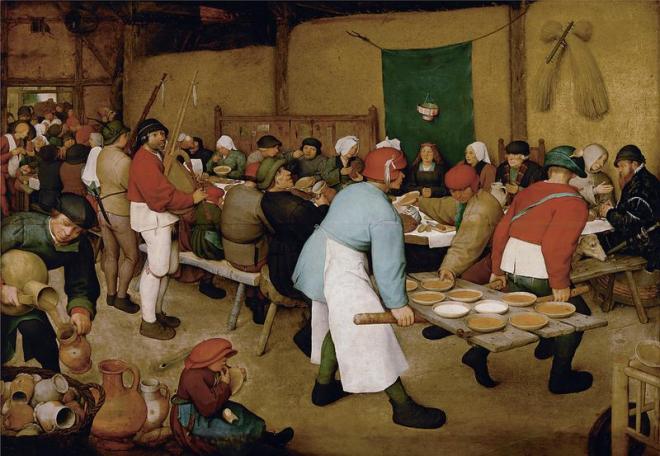
A wondrous collection of Peter Bruegel the Elder, of which I throw in only his “Hunters in the Snow (Winter)”

image

and his “Peasant Wedding”

image

A magisterial self-portrait by Rembrandt
image
Vermeer’s “The Art of Painting”
image
Cranach the Elder’s “Judith with the Head of Holophernes” (although I still prefer the same scene which I came across years ago in the Queen’s Gallery in London)
image
Dürer’s “Kaiser Maximilian I”
image
as well his “Portrait of a Venetian Lady”
image
I stop, otherwise I will bore my readers. But, without wanting to sound too much like an advert for Vienna, I would really urge any of them who are lovers of art but have somehow never made it to Vienna to hurry on over, if only to visit the Kunsthistorisches Museum. As the Michelin Guides would say, it alone “is worth the trip”.

But Vienna has much, much more. That same weekend back in 1985 we discovered Egon Schiele. We saw an exhibition of his paintings somewhere in the Grinzing area of Vienna, and I was just blown away. This particular painting of his, “The Embrace”, has remained imprinted in my memory ever since.
image
The most extensive collection in the world of Egon Schiele’s work is in the Leopold Museum, part of Vienna’s Museums Quartier, MQ. MQ opened when we were living in Vienna, some 20 years after our first visit. Along with the Leopold Museum, MQ houses MUMOK, the Museum Moderner Kunst Stiftung Ludwig Wien. Personally, I always preferred the Leopold Museum; MUMOK was a little too aggressively modern for my tastes. So I suppose it comes as no surprise to hear that after visiting the Kunsthistorisches Museum last week we visited the Leopold. The Egon Schieles are wonderful. This one painting of his, “Seated Male Nude”, can stand in for the whole collection.
image
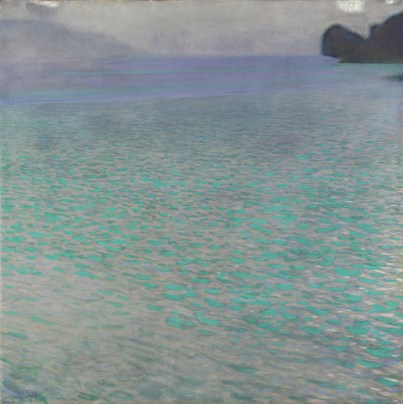
You cannot go to the Leopold just for the Schieles, wonderful as they are. You must visit the whole collection. This is where I discovered a host of Austrian artists from the late 1800s up to World War II: Gustav Klimt of course, but also Richard Gerstl, Koloman Moser, Oskar Kokoschka, Albin Egger-Lienz, Anton Kolig, and many others. The Leopold holds the painting of Gustav Klimt which I adopted as my gravatar for this blog. Those who are interested to see it can visit my Home Page. Here, I will insert another of his paintings in the museum’s collection, a beautiful painting of early morning on Lake Attersee
image
and I add to this, as a stand-in for all the others, a painting by Richard Gerstl, “Semi-Nude Self-Portrait” with its hypnotic eyes.
image
It’s not finished! Vienna also has the Belvedere Museum. We wanted to visit it too last week – they were holding an Exhibition on “The Women of Klimt, Schiele and Kokoschka”, which included Schiele’s “Embrace” – but we ran out of time. The Belvedere has a collection which stretches all the way from the Middle Ages to the present day. It competes strongly with the Ludwig Museum, having an excellent collection of paintings from the late 19th Century to the Second World War (the Klimts and Schieles are not to be missed), but it also has interesting paintings from the Baroque to the Biedermeier period. I will not show any of these, however. Instead, I will throw in a picture of a piece from its Medieval collection, a statue of St. Leonhard, from South Tyrol.
image
I chose this picture because the Belvedere has some beautiful pieces of that most Germanic of art forms, religious sculpture made of wood, originally painted in bright polychrome. The picture also gives me an excuse to cycle back to the Kunsthistorisches Museum. Because that museum is more, much more, than a gallery of paintings! There’s the collection of arms and armour, which one has to visit simply to gawp at the brilliant metalworking skills of past armourers. There’s the collection of historical musical instruments, which my mother-in-law, a lover of music, frothed at the mouth about. And then there’s the collection of sculpture and decorative arts, a disparate collection of artifacts, ranging from the seriously bling to the exquisite. Probably the most well-known piece in this collection is Benvenuto Cellini’s salt cellar, currently famous because it was recently stolen dramatically, only to dramatically reappear, unharmed, a few years later.
image
I prefer, though, this “Vanitas”, made, like St. Leonhard above, of wood and beautifully polychromed.
image
It reminds us that while we may be beautiful now, and well-toned, one day we will be old and sag in all directions (in my case, I’m already at that point, so I suppose the piece reminds me regretfully of what I once was).

I like these two ivory pieces even more. The first shows Gregory the Great feverishly scribbling away (he was a very prolific writer, this Pope), with scribes below him feverishly joining in.
image
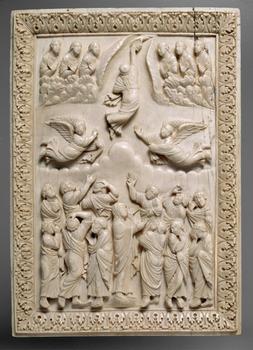
The second shows the Ascension of Jesus, with the disciples weeping bitterly below. But rather than having Jesus levitate, which is the way this scene is normally depicted, Jesus is being swept up by God (note His hand), rather like a gymnast being elegantly swept up by a trapeze artist.
image
If readers were to think that it finishes there, they would be wrong! The Kunsthistorisches also runs the Imperial Treasury, another smorgasbord of golden baubles smothered in precious stones. Because of my fondness of cabochon stones, I only show here the Crown of the Holy Roman Emperor, of the 10th-11th Centuries
image
and St. Stephan’s  Purse, actually a reliquary, from the 9th Century.
image
Along with various other items, these were taken in the early 1800s from Aachen, Charlemagne’s original Imperial capital, to keep them from falling into the hands of the revolutionary French, and somehow they never made it back.

I suspect that my readers’ attention might be beginning to drift, so I quickly throw in two other wonders to be found in Vienna. One, located in the Museum für Völkerkunde or the Museum of Ethnology, is the so-called headdress of Montezuma, an exquisite piece from Mexico made of the feathers of quetzals and other birds mounted in a base of gold studded with precious stones.
image
As we once heard from Austria’s Ambassador to Mexico (whose apartment we were renting at the time), the piece is a source of continuing friction between the two countries, Mexico claiming that it was somehow stolen and Austria claiming that it was legitimately purchased (by the Archduke Ferdinand of Austria in at least 1575 and maybe before, i.e., no more than 90 years after Columbus discovered America – how did our good Archduke lay his hands on it?).

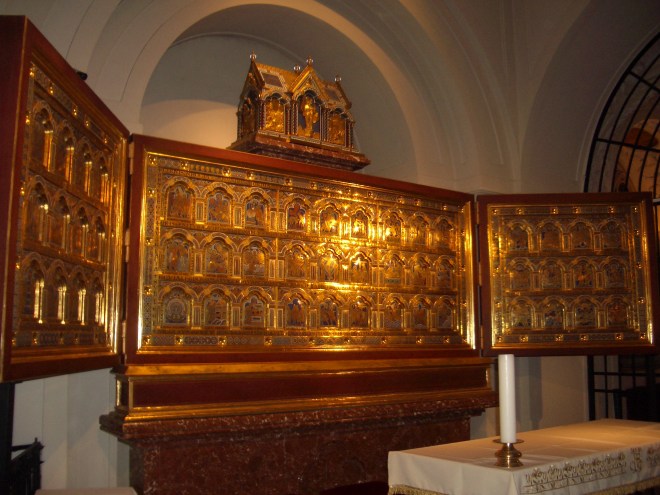
The second piece is actually to be found a little outside Vienna, in the imperial abbey of Klosteneuburg. It is the 12th Century Verdun altar, so called because it was made by Nicholas of Verdun, one of the most famous goldsmiths and enamelists of the Middle Ages.

image

The altar consists of 45 beautifully enameled panels, telling the biblical story. This one, for instance, relates the kiss of Judas (a theme I have mentioned in a previous post, in this case in a painting by Caravaggio).
image
If any of my readers have finished visiting the altar and still feel ready for more, they can always consider visiting the Samlung Essl, a museum of (very) modern art in Klosteneuburg, which, like the MQ, opened while we were living in Vienna. On the other hand, if like me they find this museum’s art too aggressively modern, or if they are simply too tired, they can just head back into town and with a bit of luck they will sight a most interesting piece of art, the municipal incinerator of Spittelau, decorated by the Austrian artist Hundertwasser.
image
I’ve seen many municipal incinerators in my time, and I must say this is definitely one of the prettiest; it certainly helped to gain its acceptance by the local population.

There’s more, much more art to visit in Vienna, but I’ll leave it at that. Like I’ve already said, I don’t want to sound like an advert for Vienna, but really it’s a wonderful destination for lovers of art.

And don’t get me started on the music …

____________
Paintings in the Kunsthistorisches Museum: http://www.khm.at/en/visit/collections/picture-gallery/selected-masterpieces/
Egon Schiele “The Embrace”: http://www.wikiart.org/en/egon-schiele/the-embrace-1917
Egon Schiele “Seated Male Nude”: http://www.leopoldmuseum.org/en/leopoldcollection/masterpieces/35
Gustav Klimt, “Attersee”: http://www.leopoldmuseum.org/en/leopoldcollection/focus/Klimt
Richard Gerstl “Semi-Nude Self-Portrait”: https://commons.m.wikimedia.org/wiki/File:Richard_Gerstl_-_Semi-Nude_Self-Portrait_-_Google_Art_Project.jpg
St. Leonhard, Belvedere: https://www.belvedere.at/en/sammlungen/belvedere
KHM, Collection of Sculpture and Decorative Arts: http://bilddatenbank.khm.at/
Imperial Treasury: http://www.kaiserliche-schatzkammer.at/en/visit/collections/secular-treasury/selected-masterpieces/
Moctezuma’s crown: https://en.m.wikipedia.org/wiki/Montezuma%27s_headdress#/media/File%3AFeather_headdress_Moctezuma_II.JPG (in https://en.m.wikipedia.org/wiki/Montezuma%27s_headdress#)
Verdun altar: https://en.m.wikipedia.org/wiki/Klosterneuburg_Monastery
Verdun altar – detail: http://armourinart.com/248/397/
Spittelau Incinerator: http://www.epd.gov.hk/epd/english/environmentinhk/waste/prob_solutions/WFdev_overseas.html

SALT AND SWEET

Bangkok, 5 February, 2015

A few weeks ago, I visited a couple of electric arc furnaces which were recycling scrap steel. It was a very interesting visit, the first time I had seen this type of furnace in action.

EAF

They are a nice example of a vital step in what the Chinese call a “circular economy”, an economy in which the materials we use do not simply get thrown away after we’ve finished with them, but are collected, recovered, and reused.

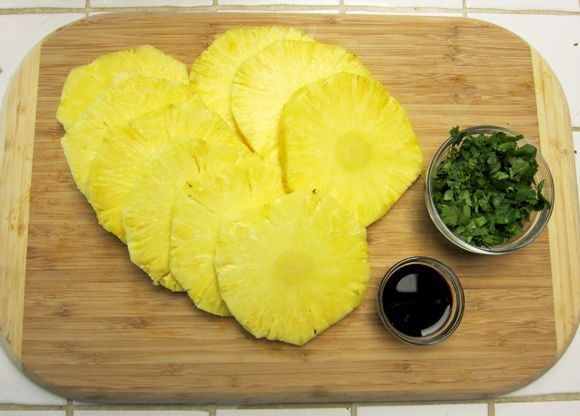
But actually, what I want to focus on in this post is the dinner we were served during the visit, or rather on one course of that dinner. I should explain that since these furnaces work on electricity and since electricity is expensive in Thailand during the day, the furnaces are run at night. So the visit of the furnaces started at 8 o’clock in the evening, and the first company we visited kindly offered us dinner to fortify us for the hot and dusty visit which awaited us. Since this was a Chinese-owned company, we were served a Chinese-style dinner which, after my five years spent in China, brought a nostalgic mist to my eye. As is usual in China, the dinner ended with fresh fruit. But this fruit course had an interesting twist. We were served fresh pineapple with a soy sauce dip. Soy sauce! That is not something I had ever thought of combining with pineapple. But actually it was delicious.

Pineapple and Soy Sauce

This is the only photo I could find on the (English-language) web which in any way resembled what we found before us at dessert time, but even this is for a recipe where the pineapple is fried, which explains the presence in the photo of the coriander (to be used as a final garnish). I take this lack of photos to be an indicator that I may be one of the few in the English-speaking world who has tried this particular combination of sweet and salt. But readers are free to disabuse me of my belief.

In any event, as I let my taste buds deal with this interesting sweet-salt combination, I remembered a conversation we had had around the Christmas lunch table about precisely this issue: the mixing of salt and sweet. Our son had maintained that it was not natural to mix sweet and salt, and more generally that different flavours should be kept separate. Our daughter maintained that there were many dishes where salt and sweet were combined, which suggested that actually it was quite natural to mix sweet and salt. I was torn. As my long-suffering wife knows only too well, I object to mixing things on my plate: the vegetables are to be kept neatly separated from the meat and from each other, the dressing from the salad should not be allowed to leak over to the meat, etc. So on these grounds, I also feel that sweet and salt should not mix. Yet I have to acknowledge that there are dishes where the sweet and salt combination is exceedingly pleasing. After the pineapple and soy sauce dip experience, I resolved to do some research (a.k.a. web browsing) on the topic.

I’ve now done the research and am ready to report back, although I must confess to not having much to report. All agree that “common sense” suggests that salt and sweet do not mix, yet all agree that actually many of us do like to mix the two. Why is this? As far as I can make out, no-one has really figured it out. One possible answer is biochemical. The sodium ions of salt somehow enhance all taste buds: “there’s evidence that applying a sodium-channel blocker (TTX) can dramatically inhibit the activity of all taste receptors, suggesting that sodium plays a key role in the cellular detection of every taste (and not just the taste of salty things) … This would explain why food without any salt is so hopelessly boring: it might be literally harder for our various taste receptors to get excited.” So mixing salt with sweet enhances sweet because of a biochemical pathway we are born with. Just to make the whole discussion sound even more scientific, I throw in here a close-up of a taste bud on a tongue, which is what sodium ions seem to be enhancing.

tongue-taste-bud

But why would we have evolved to have that biochemical pathway? One possible answer is that because we humans are omnivores, we’re wired to desire many different foods and tastes. It’s bad for us to eat just one thing, so our sense of taste has evolved to give us greater gratification if we mix tastes. My wife will be very pleased to hear that there is a scientific underpinning to her insistence on mixing foods and tastes.

Let me celebrate this new understanding on my part of my biological processes by sharing with readers some of the wonderful sweet-salt dishes which I have stumbled across in my life. Where to start? Well, at the beginning, I guess, with the first such dish I ever remember trying, lamb with mint sauce. My English grandmother had taken me to visit an uncle and aunt and assorted cousins, and my aunt served us lamb with mint sauce for lunch.

lamb and mint

She served it with two veg, as is de rigeur for any English meat dish. In this case, I remember distinctly that the veg in question were that most English of combinations, peas and potatoes (she also made a magnificent apple crumble, by the way; no apple crumble I have ever eaten since has tasted so good).

Mint sauce is really easy to make, by the way, about as easy as lamb chops. I give an executive-summary recipe at the end of the post for those readers who are interested. What I think is important to point out here is that the recipe calls for a mix of sugar and vinegar. In my humble opinion the best combination is actually sweet, salt, and acid or tartness. To my mind, that’s what made the pineapple and soy sauce so good, the fact that the pineapple is also tart. Dragon fruit, a much milder fruit, was being served along with the pineapple. When I asked if that too should be dipped in the soy sauce, our hosts pursed their lips and gave it as their considered opinion that it wouldn’t work.

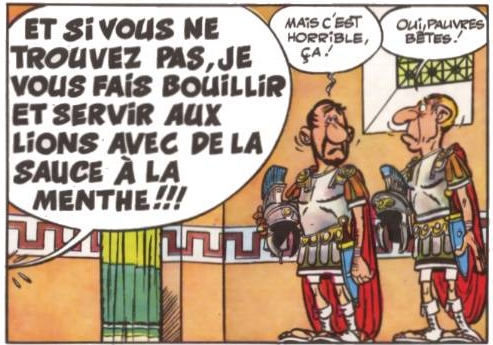
Lamb with mint sauce is incredibly English (and I mean English. I don’t think the Scots or the Welsh eat it). It is so English that the French made fun of Les Anglais because of it – the French consider the use of mint sauce to be beyond the cooking pale. Our friends Goscinny and Uderzo, who wrote the Asterix and Obelix stories, had mint sauce play a major role in our heroes’ adventures in Britain, with the governor of province at one point shouting that if his men did not find the pair (who had just disappeared from prison) he would have his commanders boiled and served with mint sauce to the lions. To which the commanders commented how horrible that would be – for the lions.

asterix sauce a la menthe

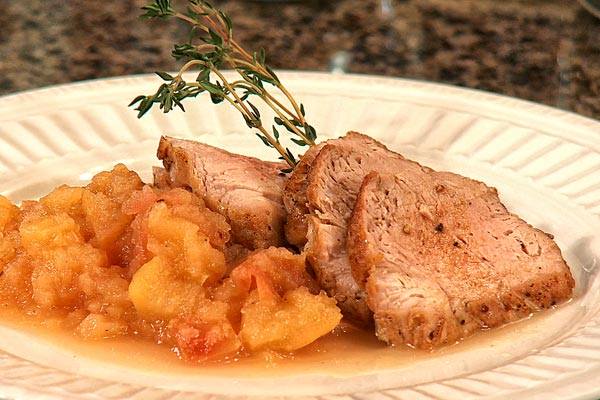
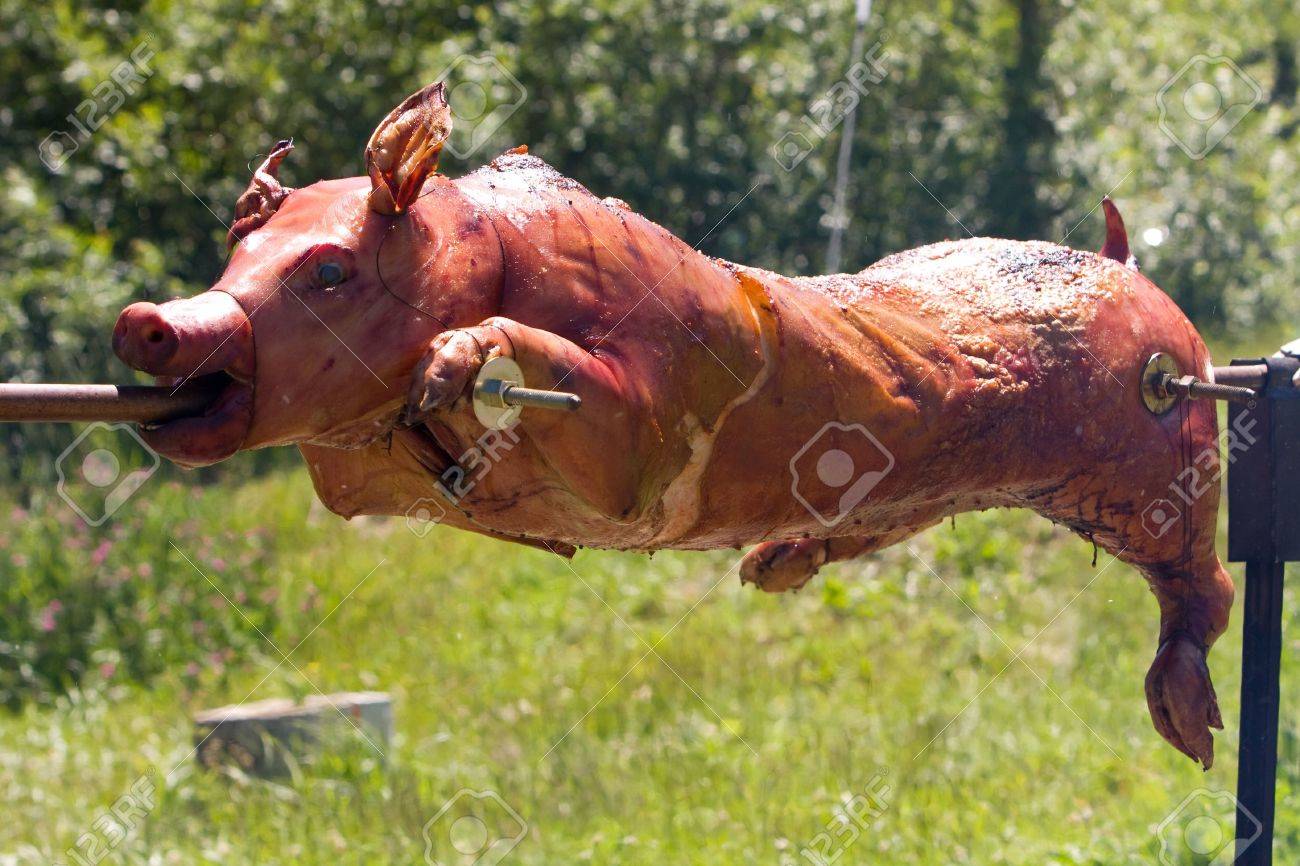
The French loved it, lapping up the fun being poked at English cuisine. But I will ignore the smirking French and concentrate on another great example of English cuisine which is also a sweet-salt dish, roast pork and apple sauce. I first had this delicious dish as a boy scout. It was summer, the end of the school year, that time in the calendar when England can often be bathed in golden light rather than be grey and sodden.  For our last outing of the year, the scout master had the brilliant idea of buying a whole pig and roasting it on a spit in the woods. I have this crystal clear memory of sitting around the spit, listening to the fat crackle, breathing in the smell of cooking meat, watching the scout master sharpen the large carving knife, while the sunlight dappled the ground all around us. It’s the closest I have ever felt to being a Cro-Magnon man.

roasted pig

And then there was the discovery of the exquisite taste of roast pork and apple sauce, a large dollop of which was dumped onto our metal field plates along with a big slab of pork meat and crackling.

roast pork and apple sauce

Those readers interested in knowing how to make this sauce should scroll down to the end of the post. I just want to note that cooking apples should be used. They are tarter than eating apples. It’s the tartness thing again. One can also add lemon zest, presumably to add yet more tartness.

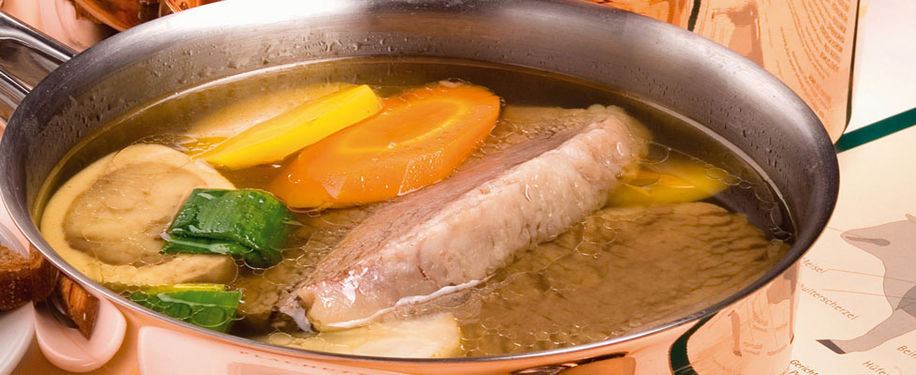
Of course, the English do not have a monopoly in Europe on sweet-salt dishes. Allow me to introduce here a dish I discovered and came to love when we moved to Vienna: Tafelspitz. There is a venerable ritual to cooking Tafelspitz, but when you reduce it to its essentials it is beef meat (topside or top round) boiled slowly over many hours with a medley of root vegetables – carrot, celeriac, parsnip and the like – and a piece of marrow bone. It is normally served like this:

tafelspitz

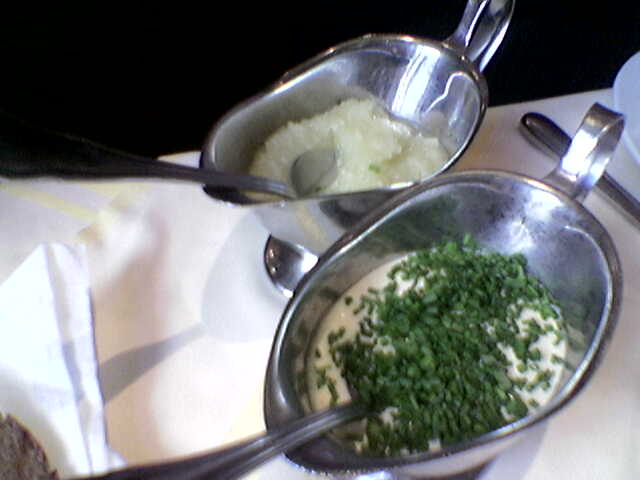
You can start with a cup of the broth which is engendered by the boiling of the meat, just to whet your appetite. You can then turn your attention to the meat proper, which you will eat with the vegetables, possibly some fried grated potatoes, and – to spice up what is otherwise a rather bland dish – two types of sauce, a cream-based chive sauce and apple-horseradish sauce.

tafelspitz sauces

My earnest suggestion is that you ignore the chive sauce in the front of the photo and go with the apple-horseradish sauce behind it. It is just a variant of the apple sauce I described earlier; you simply add grated horseradish. If you make this sauce at home, my further suggestion is to be generous with the amount of horseradish you add. The best Tafelspitz I ever had was served with an apple-horseradish sauce that made my eyes water slightly. I don’t want to sound like a broken record, endlessly repeating myself, but tartness really helps appreciation of the sweet-salt taste.

Both the French and the Italians have a similar dish of boiled meat, pot-au-feu in the first case and bollito misto in the second. My French grandmother made an excellent pot-au-feu and I am very fond of it, but since it is normally eaten with mustard I will drop it from this discussion. We shall focus instead on bollito misto, a dish which is very popular in northern Italy and (as the name suggests) consists of a variety of boiled meats: cuts of beef and veal, cotechino (a pork-based sausage), and sections of hen or capon.

bollito misto

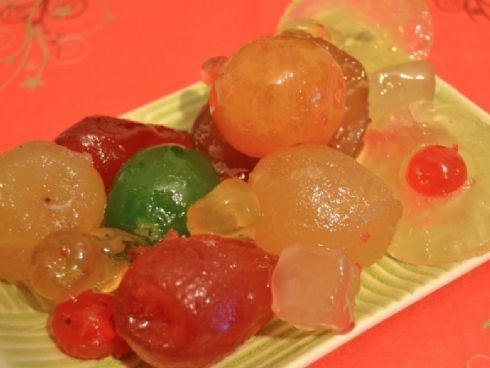
My wife reminisces from time to time that her father was very fond of bollito misto, eating it like most northern Italians do with a sauce called mostardaactually, mostarda di Cremona. In a country known for the fierce independence of its cities, it will come as no surprise to the readers that probably every city in northern Italy has its own variety of mostarda. Despite its name, the sauce has only a little to do with mustard. It is really a mix of candied fruit which is given a kick by the addition of mustard powder (that tartness thing again…). Those slices of fruit in the photo above are the mostarda, but I give here a more direct picture.

mostarda di cremona

My wife confesses to never having liked mostarda; she can’t even stand the smell. Personally, I have never tried it, but a number of sites do support my wife’s assertion, mentioning that the taste of mostarda is an “acquired taste”. This is normally code for saying that something tastes revolting the first several/many times you try it. In any event, if my wife says it’s not nice, then that’s good enough for me! No spoonful of it shall ever pass my lips. For those readers who will ignore these warnings and wish to try it, though, I give a brief recipe at the end of the post.

I feel that I cannot move away from mostarda without mentioning the somewhat similar chutney sauce one finds in the UK, or at least one found when I was a boy. Although “chutney” as a word has Indian roots, what I ate as a boy was several removes from things Indian. The most popular brand back then was a mango chutney which went by the name of Major Grey’s Chutney and was sold by Crosse & Blackwell. The story went that a certain Major Grey, a British officer in India, had surveyed the local Indian chutneys and then invented his own, more British, chutney, which he proceeded to bring back to the motherland when he retired, to remind him of the Good Old Days. When I was a boy I rather imagined this Major Grey to look like this

British soldier India-1

fighting heroically against savage natives on the Northwest frontier and getting a VC for his –quite literal – pains. But alas! this appears to be pure legend. It seems that something similar to mostarda, some sort of fruit conserve, existed already in the UK and the Brits in India took the idea with them and adapted it to local ingredients. So what this chutney will usually have as ingredients is mangoes, raisins, vinegar, onions, sugar, and spices. Crosse & Blackwell also include lime juice and tamarind juice. As you can imagine from the ingredients, this chutney is both sweet and tart. Again, for heroic readers who want to make this sauce from scratch, scroll to the end of the post.

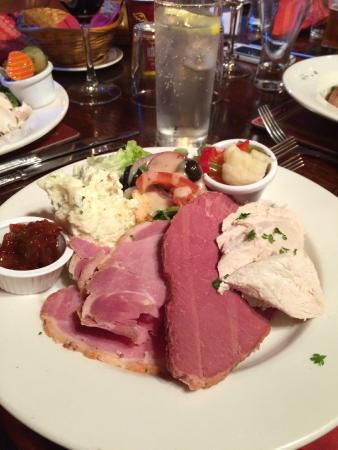
I haven’t eaten this kind of chutney in many decades, but when I was young my favourite way of eating it was with slices of cold meat (the chutney is in the round bowl to the left of the photo below).

cold meat and chutney

This was an especially popular dish in pubs, where this photo was taken. Sitting here in Thailand, I feel a sudden nostalgia for the English country pubs whose bars I propped up in my youth, so I am moved to throw in a photo of a nice country pub.

Bridge Inn

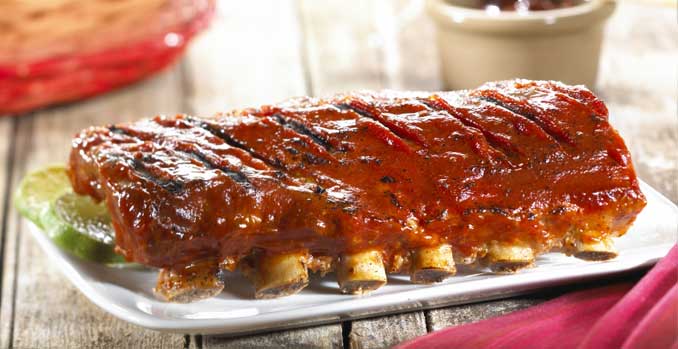
Like Superman, I now vault over to the US and alight somewhere in the open ranges of the Midwest, for no better reason than having this feeling that my next salt-sweet sauce – barbecue sauce – was invented around there somewhere. That being said, my wife and I didn’t try it there. We were just discussing this point and we reckon that it was somewhere between Boston and Washington in the early 1980s. Wherever it was, we stared open-mouthed at these large racks of ribs smothered in this dark reddish brown sauce.

ribs and barbecue sauce

But very soon we were closing our mouths over those ribs. Ah, that sauce! … But I should say: those sauces. In this little research I’ve done I have discovered that there are dozens of different barbecue sauces. I thought the Italian quarrels about where the best mostarda is made were fierce, but boy! the arguments about what place in the US makes the best barbecue sauce are right up there. I’m going to keep my head low without backing any particular sauce. I’m merely going to say that wherever the sauces are made they all seem to have sugar (preferably brown), tomato ketchup, vinegar, and some salt, to which various spices are added in varying levels and in different combinations (Worcestershire sauce, pepper, paprika, mustard, chili, cayenne, and on and on). That combination of sweet and tart again, to challenge the salt of the meat. Readers can look at the end of a post for condensed recipe of an excellent sauce from Kansas City (but don’t tell anyone I said it).

Deary me, I seem to have gone on for quite a while here, and I’m sure I haven’t covered one-hundredth of the sweet-salt dishes enjoyed around the world. On top of it, I’ve only mentioned meat dishes; it makes me sound a total carnivore, red in tooth and claw. But there was that fish dish in Shanghai … and there are all those sweet salad sauces to pour on vegetables … But I have to stop. I’ll just add two final combinations of salt and sweet which show that meat (or fish) is not the only food the delight of which is heightened by the salt-sweet experience: one which probably every person on the planet has enjoyed by now, what with the prevalence of fast food joints, french fries and ketchup

french fries and ketchup

and one which I’ve mentioned in an earlier post, chocolate and French baguette

chocolate and baguette

Mmm, so good!

So give your taste buds a whirl and douse them with sugar and salt – and a dash of vinegar, or horseradish, or something tart. Enjoy!

-o0o-

Mint sauce: Strip the leaves off a bunch of mint, sprinkle them with a pinch of salt, and chop finely. Place the result in a bowl, add 1 level tablespoon of caster sugar and pour over the mix 4 tablespoons of boiling water. Stir and leave to cool. Stir in 4 tablespoons of vinegar. Add more water or vinegar to suit your taste.

Apple sauce: Take a number of cooking apples, peel them, core them, and chop them up. Put the apples in a saucepan and add water. Once can also add lemon zest. Cover and cook over a low heat until the apples have gone soft and mushy. At which point take off the heat and beat in a knob of butter and a teaspoon of sugar. Cool.

Mostarda di Cremona: Begin by washing the various fruit: pears, quinces, cherries, apricots, figs, and peaches (although I’m sure you can vary the fruit as you wish). Cut the apricots and peaches into halves or quarters (depending on their size) and remove their stones, peel. Core and quarter the pears and quinces. Dry all the fruit after preparation. Add the sugar – a lot of sugar! half a kilo for every kilo of fruit, more if you want your mostarda sweet (but for reasons suggested above, I would go easy on the sweetness and maybe go heavier on the mustard powder). Pour some squeezed orange juice over it. Let the whole rest for 24 hours, gently turning the pieces a couple of times. By the end of this time the sugar will have dissolved. Drain the fruit well – without losing the syrup! Bring the syrup slowly to a boil, and let it boil gently until its volume is reduced by half. Pour the remaining syrup back over the fruit. The sugar in the now-concentrated syrup will extract more moisture from the fruit, which will begin to shrink and firm up. Concentrate the syrup again and steep the fruit in it overnight again. Dissolve several tablespoons of mustard powder in some white wine vinegar. Bring the mixture gently to a boil and let it bubble for a few minutes. In the meantime, drain the fruit again, and concentrate the syrup again. Put the candied fruit into jars, add the mustard powder infusion, and then add the hot syrup. The amount of infusion you add will determine of course how much of a kick your mostarda will have. Cover the jars and put them on a cool dark shelf. The mostarda will be ready to eat in two weeks’ time.

Major Grey’s chutney: (this is one of many recipes for this kind of chutney) Combine 4 cups of 5-6 medium-sized chopped mangoes, 1 cup of brown sugar, half a cup of molasses, 1 cup of vinegar, 1 cup of coarsely chopped onions, three-quarters of a cup of golden raisins, half a cup of seeded and chopped limes, half a cup of peeled, seeded and chopped orange, a quarter of a cup of peeled, seeded and chopped lemon, and finally a bunch of spices: half a cup of grated ginger root , 3 cloves of minced garlic, 1 tablespoon of mustard seed, 1 tablespoon of dried red pepper flakes. Cook for about 30 minutes, stirring often. Add 2 tablespoons finely chopped fresh cilantro, 1 teaspoon of ground cinnamon, a quarter of a teaspoon of ground cloves, a quarter of a teaspoon of ground allspice. Cook for another 10 minutes or so, until chutney starts to thicken. Ladle chutney into a jar and close it air-tight.

Barbecue sauce: (from Kansas City) In a saucepan over medium heat, stir together ½ cup of ketchup, 2 tablespoons of brown sugar, 1 tablespoon of cider vinegar, 2 tablespoons of Worcestershire sauce, ¼ teaspoon of salt, ¼ teaspoon of mustard powder, 1 teaspoon of garlic powder, and a dash of hot pepper sauce. Bring to a simmer, then remove from heat and allow to cool.

_________________

Electric arc furnace: http://ih.constantcontact.com/fs163/1101151826392/img/505.jpg (in http://ricorant.blogspot.com/2014/11/fwd-dominance-of-steel-111114.html)
Pineapple and soy sauce: http://static.squarespace.com/static/51107688e4b0e3b888c1183b/t/519f0a2ee4b0bb6d74d9bdcf/1369377327493/Grilled+Soy-Sauce+Pineapple (in http://larkspurcompany.com/blog/2013/5/20/grilled-soy-sauce-pineapple)
Taste bud closeup: http://cdn1-www.webecoist.momtastic.com/assets/uploads/2010/01/tongue-taste-bud1.jpg (in http://webecoist.momtastic.com/2010/01/11/biological-photography-magnificent-microscopic-ultraminiature-photos/)
Lamb and mint sauce: http://www.thetimes.co.uk/tto/multimedia/archive/00050/table_townsend_74217_50069c.jpg (in http://www.thetimes.co.uk/tto/life/food/recipes/article2701689.ece)
Asterix sauce a la menthe: http://www.prise2tete.fr/upload/NickoGecko-Saucementhe.jpg (in
Roasted pig: http://previews.123rf.com/images/azlightning/azlightning0908/azlightning090800003/5315340-whole-golden-roasted-pig-on-a-spit-spit-roasting-is-a-traditional-hawaiian-luau-method-of-cooking-a-.jpg (in http://www.123rf.com/photo_5315340_whole-golden-roasted-pig-on-a-spit-spit-roasting-is-a-traditional-hawaiian-luau-method-of-cooking-a-.html)
Roast pork and apple sauce: http://www.growingagreenerworld.com/wp-content/uploads/2010/10/123-dishAppleSauce_Pork.jpg (in http://www.growingagreenerworld.com/pork-tenderloin-spiced-applesauce-recipe/)
Tafelspitz: http://www.plachutta.at/typo3temp/pics/1115b4ecd0.jpg (in http://www.plachutta.at/en/about/)
Tafelspitz sauces: http://thepassionatecook.typepad.com/sauces.jpg (in http://thepassionatecook.typepad.com/thepassionatecook/traditional_austrian_food/page/2/)
Bollito misto: http://www.buonissimo.org/archive/borg/XRqDUZ2JX8O3MtcV7PuMgNvG9IvTytvNm6Rhlcw8yOzcxGV4vWA1kg%253D%253D (in http://www.buonissimo.org/lericette/5685_Bollito_misto)
Mostarda di Cremona: http://www.cremonacitta.it/intranet/immagini/_resized/1/scheda/58/w/490x/Prodotti_De_Co_di_Cremona_la_Mostarda_cremonese-img58-01-1.jpg (in http://www.cremonacitta.it/it/gusto_e_sapori_a_cremona/prodotti_de_co_a_cremona_mostarda_tradizionale_sc_58.htm)
Cold meat and chutney: http://media-cdn.tripadvisor.com/media/photo-s/07/0d/d8/5a/blairs-inn.jpg (in http://www.tripadvisor.ie/LocationPhotoDirectLink-g186599-d2014376-i118347866-Blairs_Inn-Blarney_County_Cork.html)
Bridge Inn: http://www.hallflatfarm.co.uk/IMAGES/The%20local%20-%20the%20Bridge%20Inn.jpg (in http://www.hallflatfarm.co.uk/location.html)
British officer in India: http://i80.photobucket.com/albums/j199/matteaston/Afghan1.jpg (in http://www.fioredeiliberi.org/victorian/)
Ribs and sauce: http://www.cooldeals.es/Images/deal-images/eef5c31f-f992-46a5-8993-db0198715a35/20140818133044604.jpg (in http://www.cooldeals.es/Deals/Marbella-Estepona/9fd8ffad-612a-42de-8755-55153751c9e6)
French fries and ketchup: http://scms.machteamsoft.ro/uploads/photos/652×450/652x450_7b63084e7d5012a126811947191414.jpeg (in http://stiri.acasa.ro/social-125/afla-ce-alimente-ascund-sute-de-kilocalorii-110745.html)
Baguette with chocolate: http://a142.idata.over-blog.com/600×449/2/90/63/97/Autrefois-./Chocolat/Le-Bon-Chocolat–13-.JPG

MAGNOLIA

Beijing, 4 April 2014

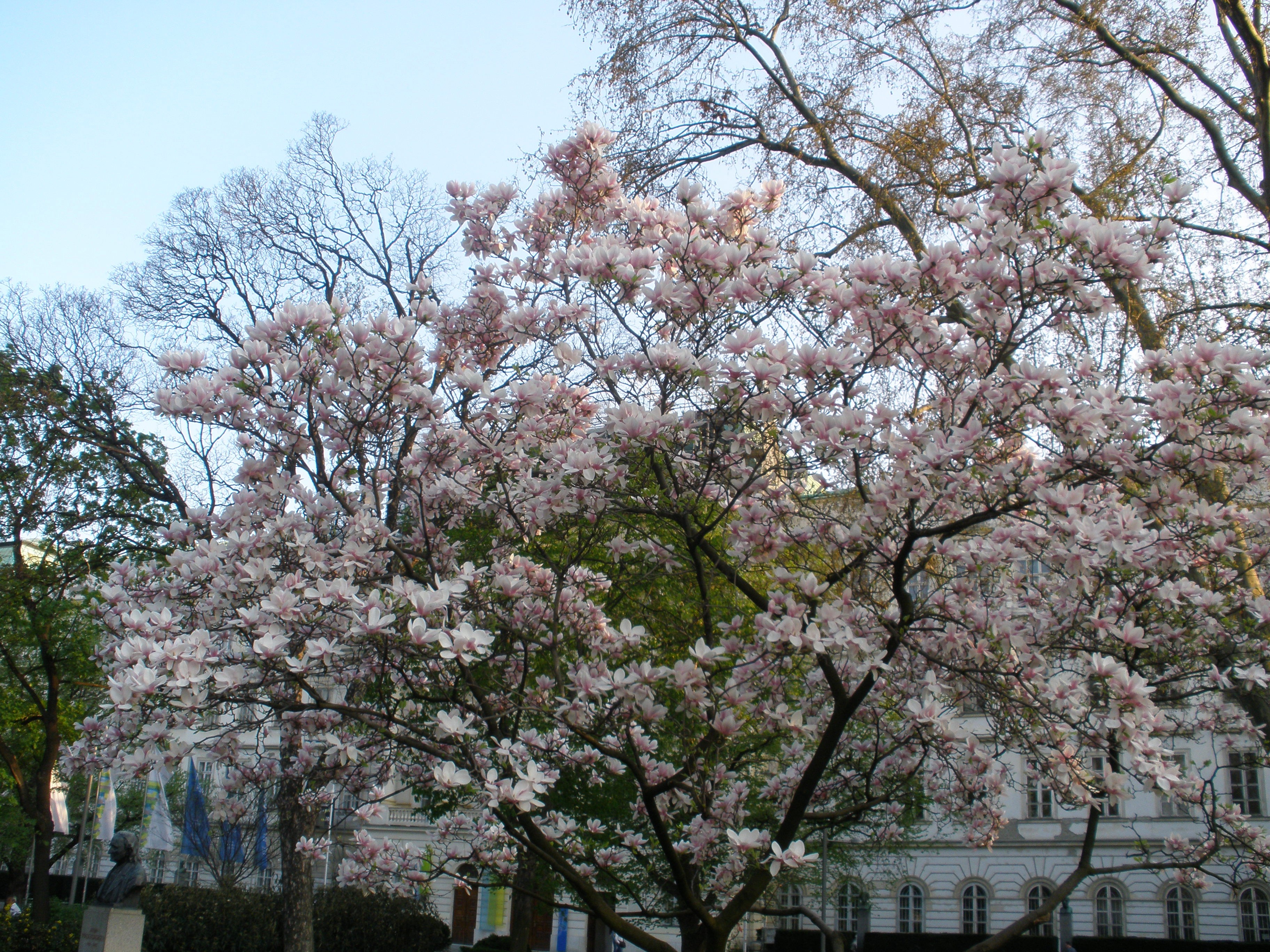
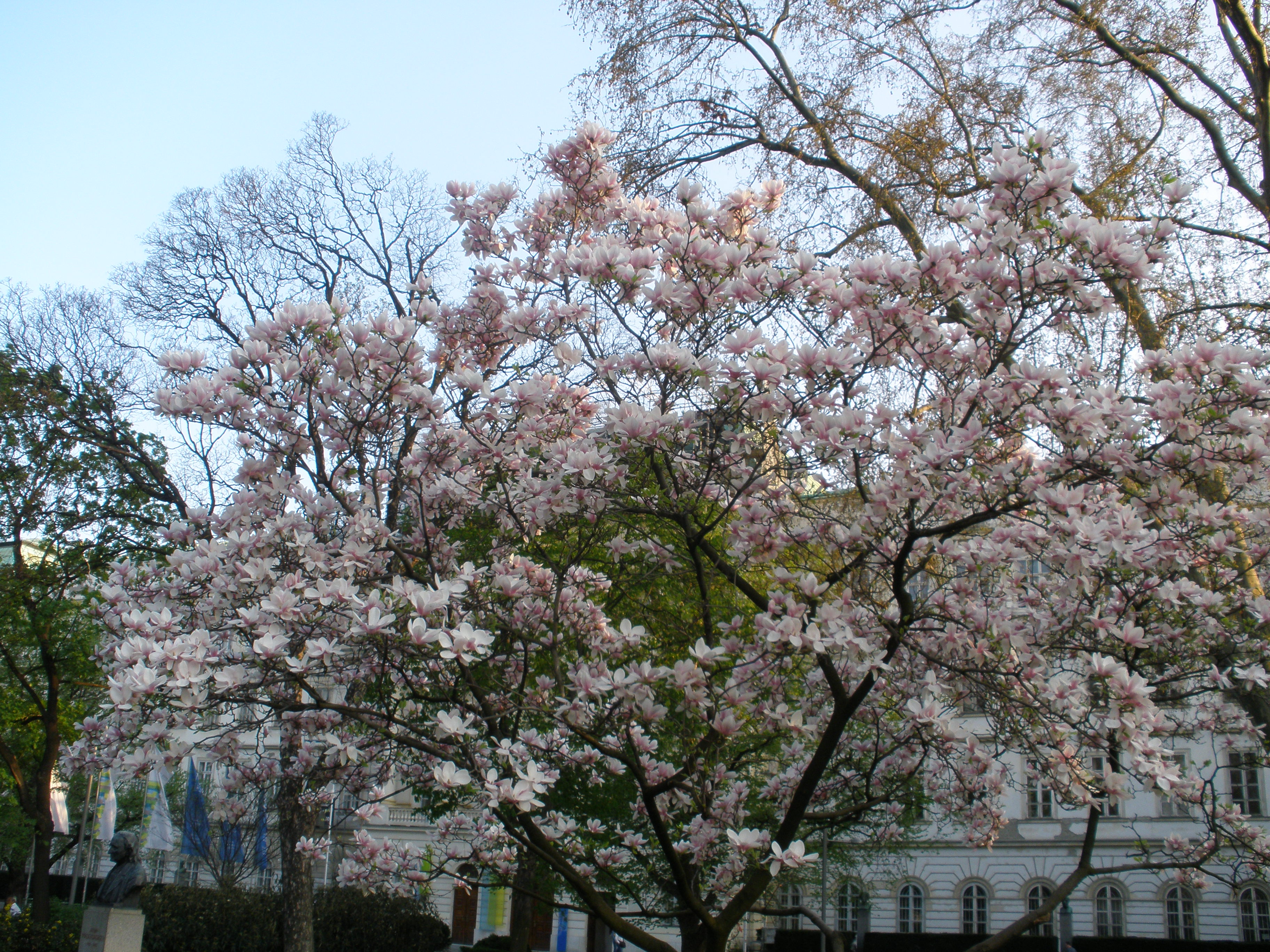
One of my abiding memories of Vienna is the magnolias in flower. I suppose it’s always the case that the first months you spend in a new place imprint themselves more forcefully on your brain’s virtual retina than the remaining years. We arrived in Vienna in February, two months later the magnolias were in bloom. It seemed that every garden and every park had its magnolia tree.
OLYMPUS DIGITAL CAMERA
We would pass one particularly magnificent specimen as we drove the children up to school every day. It was like living in a multiple exposure photo. Every day, as we swept by, we would note its progress, as the buds opened fully, and then the decay, as the flowers wilted and scattered their petals over the pavement.

A month or so later, it was the turn of the city’s multitude of lilac bushes to bloom, another fond memory which I have of Vienna and one about which I have had cause to write an earlier post.

Yes, they were good times.

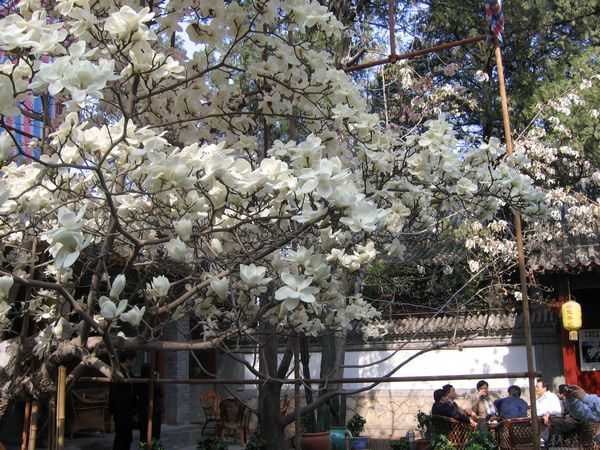
And then, when my wife and I came to Beijing, we found our friends the magnolia trees here, waiting to greet us with their blooms after we emerged from our first Chinese winter. A sight for sore eyes, let me tell you, after all that grey dryness of a Beijing winter. There was a pure white variety
magnolia trees dajue western temple
as well as a pinker type which we were familiar with from Vienna.
Tanzhe western Temple
Then, with the passage of time, I discovered that this tree, which I had, without really thinking about it, assumed was European, was actually Chinese! Actually, it’s a bit more complicated than that. There are nearly hundred different types of magnolia native to China (out of 200-plus native to Asia). The beautiful white magnolia pictured above, which comes from central and eastern China, grabbed the Chinese headlines early on. With its flower rightly regarded as a symbol of purity, it was planted in Buddhist temple gardens and the gardens of the emperors from as early as 600 AD during the Tang dynasty. It is called the Yulan, or jade lily, magnolia; I presume the name refers to the jade-like glossy smoothness of the magnolia’s petals and the sometimes lily-like look of the flower.

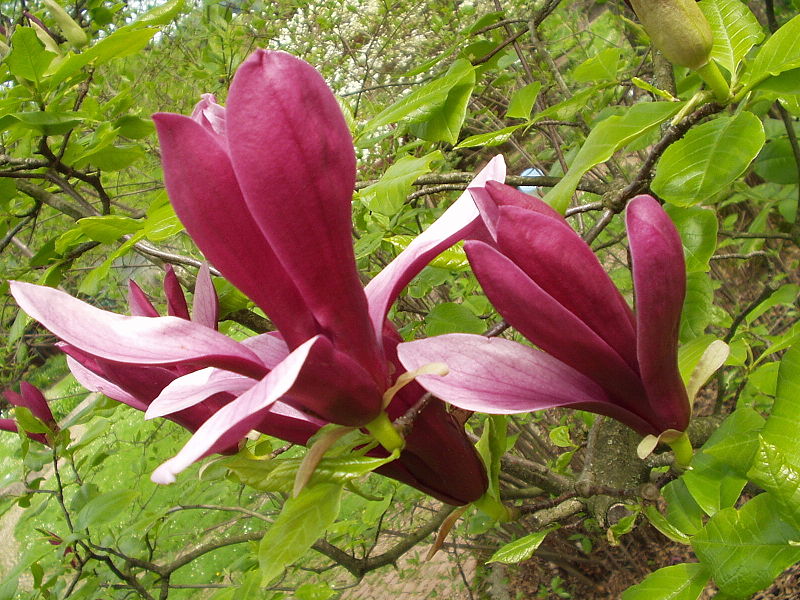
A second magnolia which has also been very popular in China for centuries is the Mulan magnolia which comes from Sichuan and Yunnan provinces.
magnolia lillliflora
Magnolias of course became favourite subjects of the poets, seeing as they spent hours haunting such gardens.

???

Here is the poem Magnolia Slope by Wang Wei, who lived in the 700s AD and is considered “the consummate master of the short imagistic landscape poem that came to typify classical Chinese poetry” (in the words of David Hinton, who made the admirable translation below).

Lotus blossoms adrift out across treetops
flaunt crimson calyces among mountains.

At home beside this stream, quiet, no one
here. Scattered. Scattered open and falling.

As with many things Chinese which were considered the nec plus ultra by the East Asian fashionistas and trend followers of yesteryear, the cultivation of these magnolias was taken up with enthusiasm by the Japanese, from whence – like the Chinese ginkgo tree of which I have written earlier – it made its way to Europe. And there, in 1820, in the grounds of his château of Fromont near Paris, an ex-cavalry officer turned plantsman, Étienne Soulange-Bodin, crossed the Yulan with the Mulan and created the hybrid saucer magnolia.
OLYMPUS DIGITAL CAMERA
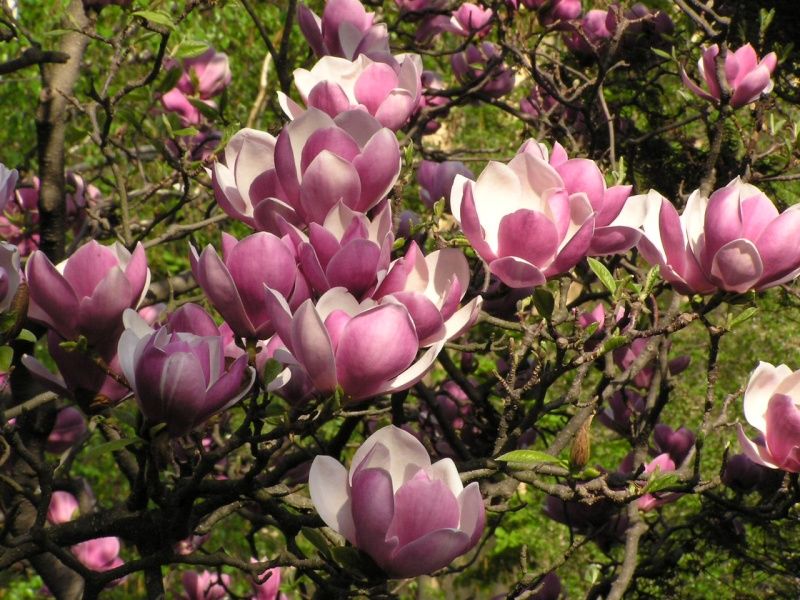
With its large, early-blooming flowers in various shades of white, pink, and purple, this cultivar became immensely popular and spread around Europe (including Austria, no doubt, because I’m sure the Viennese magnolia I described above is one of these), the US, and eventually – I suspect – China, in hundreds of different cultivars as plant breeders continued to play with its gene pool.

Here I have to pause, to consider that other great reservoir of magnolias, the Americas. I said earlier that Asia boasts 200 or more types of magnolias. The Americas are host to another 90 or so. In fact, it was in the Americas, in the Caribbean island of Martinique to be exact, that in the 1690s a French botanist by the name of Charles Plumier discovered and named – in the modern scientific nomenclature; of course it already had a native name, the talauma – the magnolia, after yet another French botanist Pierre Magnol (a lot of French botanists in this story …). I haven’t found a picture of his original drawing of the magnolia which he came across but this one will do as a substitute.
talauma
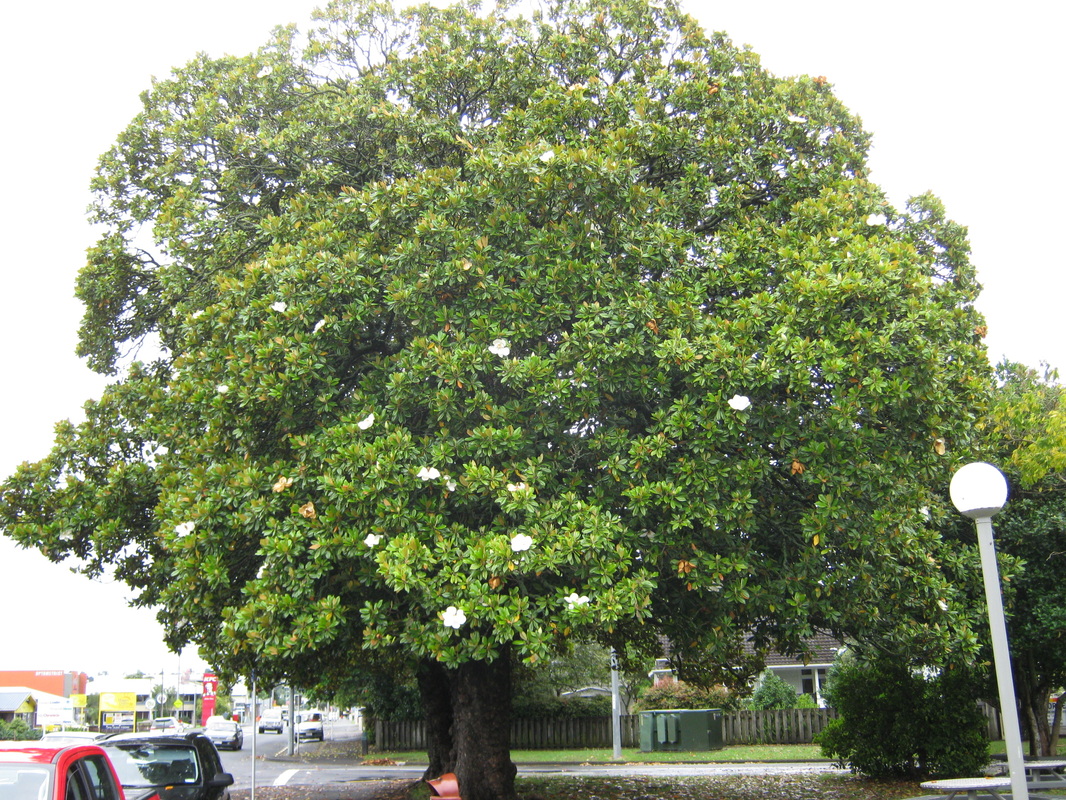
This picture, with its flower surrounded by a thick crown of leaves, sums up nicely a perplexity I had until I did some reading for this post. When we had been in the US, we had come across the southern magnolia, which looked something like this specimen, that is to say, a tree with very thick foliage and a few flowers sprinkled over the whole.
southern magnolia
Very beautiful flowers, by the way.
southern magnolia-flower
I couldn’t relate all this to the magnolias like those above, which are first completely covered with flowers and only get their leaves after the flowers have fallen. Well, the fact is, they are – botanically speaking – part of the same family. It’s just that it’s a very large family (some 300 members all told), and like in all large families distant cousins don’t necessarily resemble each other very much.

Which brings me to my final coda. The magnolia cousins have drifted so far apart because it is an old – very old – genus. It branched off the main tree of trees, if you get my drift, 100 million years or so ago. Fossils of plants identifiably belonging to the Magnoliaceae have been found dating back to 95 million years ago, while a 20 million year-old fossil has been found of the cucumber magnolia, which is native to the Eastern US and has this small flower with lovely yellow hues (in fact, these yellow hues as well as the tree’s cold hardiness have been exploited to create new yellow-flowered hybrid magnolias).
magnolia acuminata
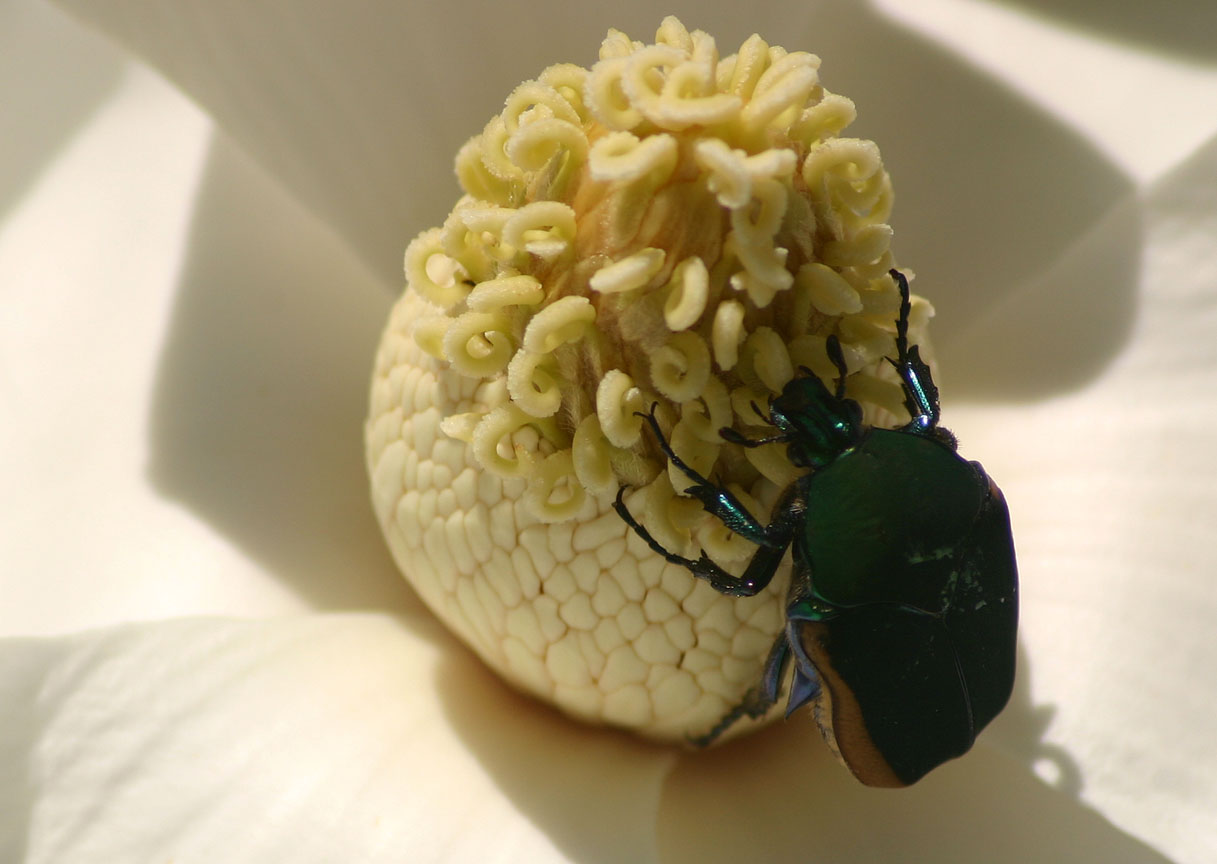
Magnolias are so ancient that they came on the scene as flowering plants before bees, or butterflies, or moths, existed to help along with pollination. So magnolias have evolved to use for pollination the only insects which were around at the time, beetles or flies.
beetle in magnolia-1
And this co-existence with beetles explains the rather leathery petals magnolias have. Compared to bees, beetles are clumsy insects, clomping around all over the flower and with a tendency to snack on the petals as well as the nectar. The leathery petals protect the flowers from these lumbering but necessary partners in the act of procreation.

Oh, and by the way, magnolia flowers don’t actually have petals, they have tepals. And that’s because the flowers are quite primitive, so their sepals and petals are not distinct and differentiated (no idea what that really means, but it sounds impressive).

__________________
Magnolia in Vienna: http://farm3.staticflickr.com/2542/3753020942_3f6c39bb5f_o.jpg [in https://www.flickr.com/%5D
Yulan Magnolia tree in Dajue western temple: http://www.beijingrelocation.com/blog/wp-content/uploads/2013/03/magnolia.jpg [in http://www.beijingrelocation.com/blog/beijing-trees/%5D
Magnolia tree in Tanzhe temple: http://www.travelchina.gov.cn/picture/0/1403261604282295162.png [in http://www.travelchina.gov.cn/art/2014/3/26/art_15_1202.html%5D
Mulan Magnolia: http://upload.wikimedia.org/wikipedia/commons/thumb/d/d6/Magnolienbluete_freiburg.jpg/800px-Magnolienbluete_freiburg.jpg [in http://en.wikipedia.org/wiki/Magnolia_liliiflora%5D
Poet in garden: http://upload.wikimedia.org/wikipedia/commons/1/1a/Wang_Xizhi_by_Qian_Xuan.jpg [in http://en.wikipedia.org/wiki/Chinese_garden%5D
Magnolia soulangeana: http://upload.wikimedia.org/wikipedia/commons/3/3e/Magnolia_x_soulangeana.jpg [in http://en.wikipedia.org/wiki/Saucer_magnolia%5D
Talauma: http://www.plantillustrations.org/illustration.php?id_illustration=90190 [in http://www.plantillustrations.org/epithet.php?epithet=plumieri&lay_out=1&hd=0%5D
Southern magnolia: http://whangareiflora.weebly.com/uploads/8/4/3/9/8439522/6466041_orig.jpg [in http://whangareiflora.weebly.com/exotic-trees.html%5D
Southern magnolia-flower: http://www.magnoliasociety.org/resources/Pictures/images/cultivars/msieboldi8422.JPG [in http://www.magnoliasociety.org/MagnoliaResources%5D
Magnolia acuminata: http://1.bp.blogspot.com/-yf82eYSuRd4/T6gSQGfe2bI/AAAAAAAAAnI/6SgLRh0exIY/s1600/DSCF7584.JPG [in http://welkinweir.blogspot.com/2012/05/may-flowers.html%5D
Beetle in a magnolia: http://blogging.la/wp-content/uploads/2009/06/gjb.jpg [in http://blogging.la/2009/06/28/it-caught-my-eye-the-beetle-the-blossom/%5D

SNOWY MOUNTAINS

Beijing, 8 February 2014

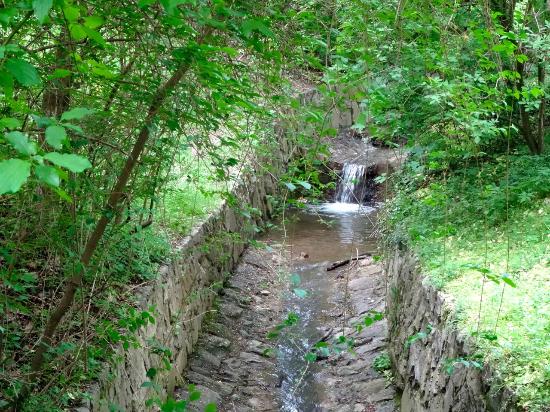
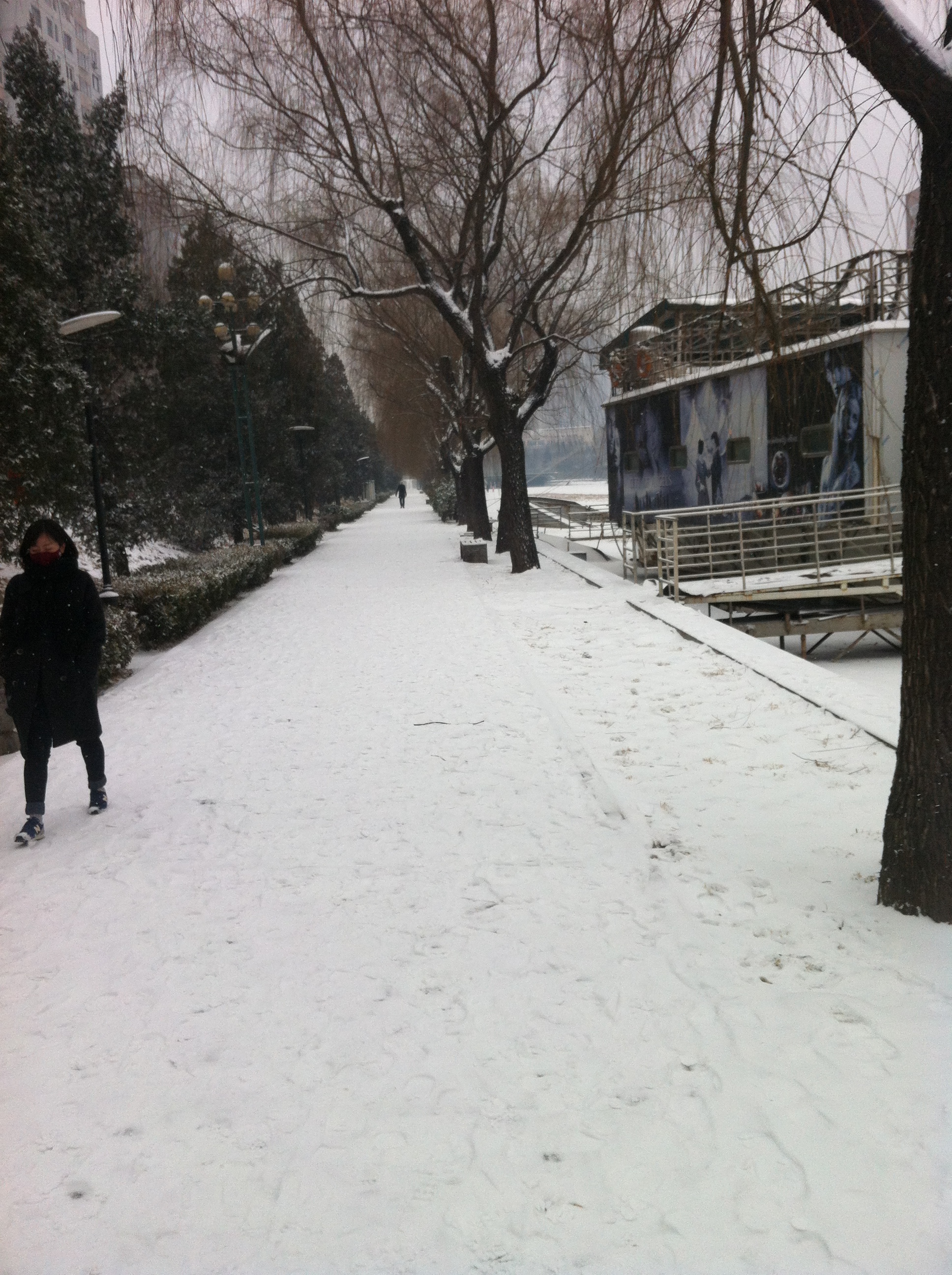
It was snowing when we got up yesterday, the first snowfall of the season – in fact, the first time there has been any precipitation, rain or snow, in the last four months in Beijing. The city was still quiet after the Chinese New Year, so it was with pleasure that I crunched my way to work through the deserted streets and along my piece of canal, with the small, grainy snowflakes floating down around me.
canal-before
And dimly through the flakes and mist, I perceived a man on the other bank of the canal slowly going through the balletic moves of tai-chi. Magic …

It kept snowing fitfully all day and into the evening, becoming greyer and foggier by the hour. So I just hurried home after work, looking forward to a welcoming wife, a cheerfully lit apartment, a glass of wine, and a plate of pasta. We closed out the world and enjoyed two French detective thrillers before retiring to bed.

This morning, the clouds had been chased away along with the fog, and the sun shone down brightly. How different the world looked! There is nothing like a coating of snow under a bright sun and a clear blue sky to make even the most squalid cityscape look inviting. On our way to morning coffee and lunch, I took a couple of photos of the canal to record the event.
canal-after 004
OK, let’s not get carried away here. Quite soon, all that fresh snow will turn into muddy slush, making a misery for us pedestrians as we pick our way round large puddles, warily avoid being splashed by passing cars, and stay ever alert for a hidden piece of ice under our feet . And even when the snow is still fresh, the view simply cannot beat a snowscape in the mountains. My wife is a good and enthusiastic skier, and when the children were young she liked to take them skiing in the Alps. I, on the other hand, dislike skiing, so it was always with a certain grouchiness that I accompanied them on these skiing expeditions. The traffic jams to get there! The crowds at the shop to hire the gear! The astronomic cost of the ski passes! The kilometric lines to get on the ski lifts! All those peacocks parading their latest ski gear! The morons who skied far too fast down the crowded slopes! The icy wind turning my face into a piece of numb codfish! But even grouchy old me could not avoid a smile when suddenly confronted at the turning of a path with vistas of virgin white snow softly pillowing rocky hill and dale and gathering protectively around the pine trees, while the mountains glittered behind against a backdrop of a deep blue sky.

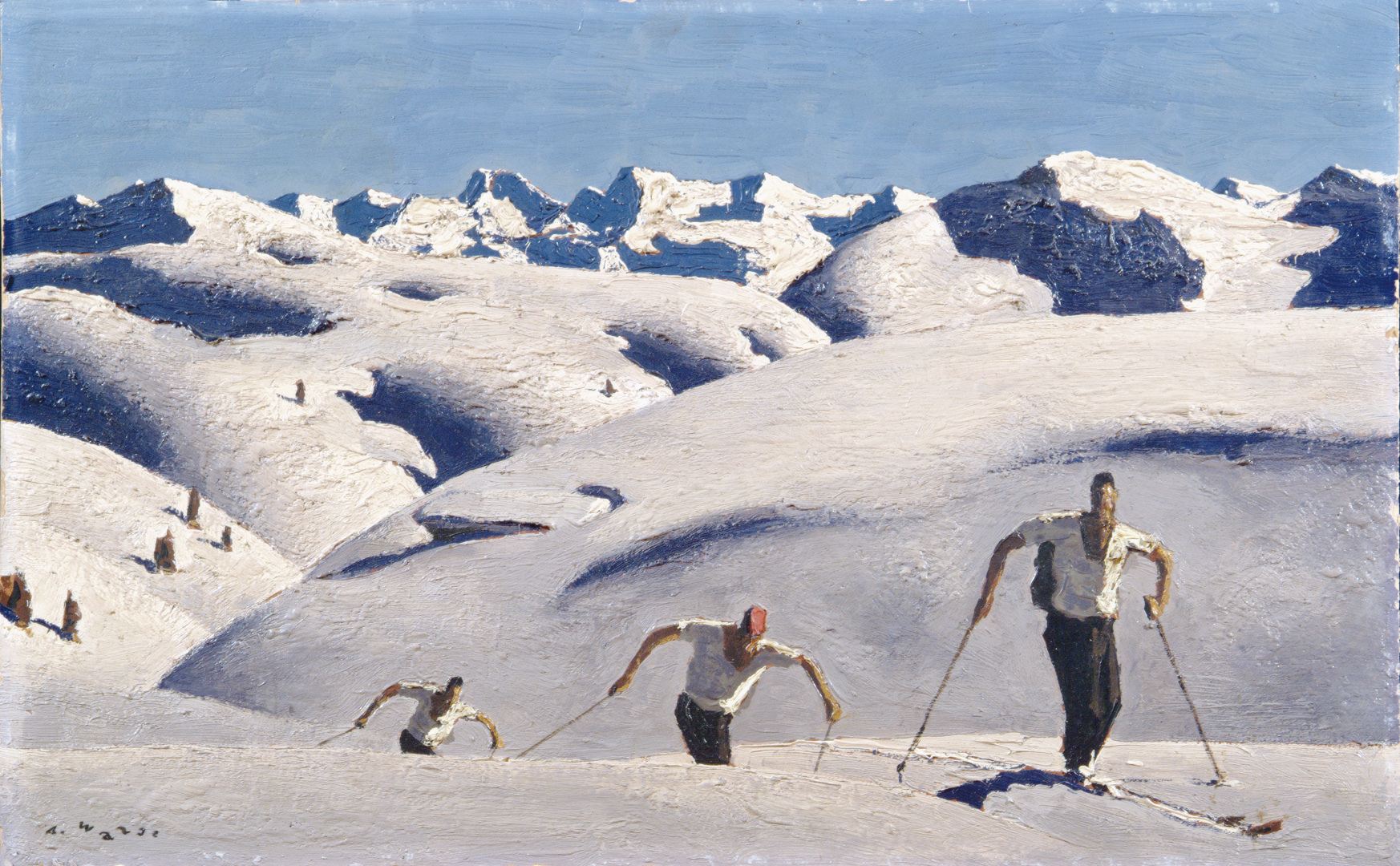
The only artist I know who has ever captured the beauty of mountains in the winter is the Austrian painter Alfons Walde. Walde was from Kitzbühel in the Tyrol, so he knew the Alps well.  From the mid 1920s onwards, he painted a series of pictures of the Tyrolian Alps during winter. I show here a selection, starting with the first of his paintings I ever came across, in the form of a poster advertising a show of his works in Vienna. I still have that poster somewhere. It is his “Ascent of the Skiers”, 1931

alfons walde-Der Aufstieg der Schifahrer-1931

Here we have “Steinbergkogel”, 1926

Alfons Walde-Steinbergkogel-1926

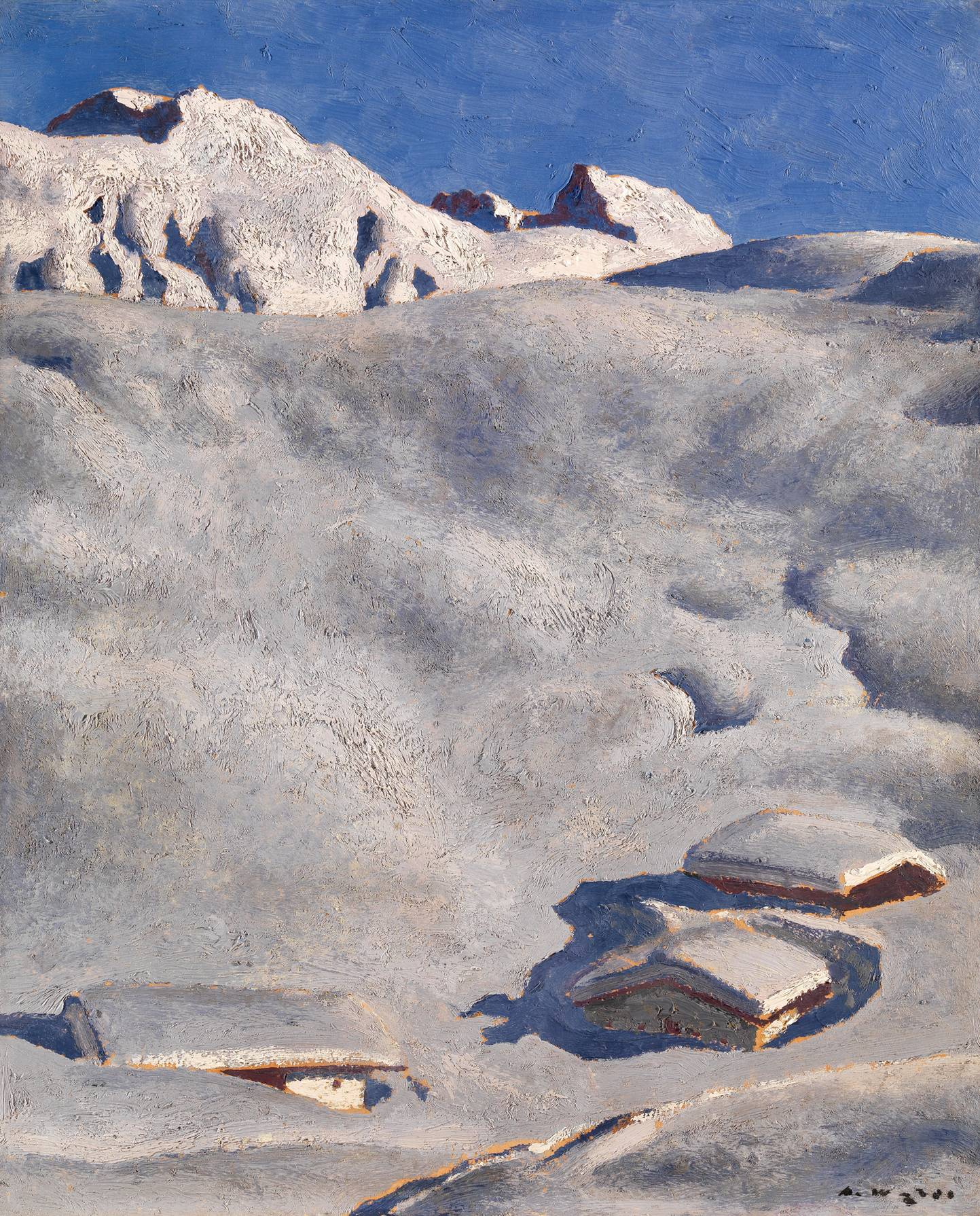
And here his “Meadows under Snow”, 1926

alfons walde-Almen im Schnee-1926

Walde also liked to paint the inhabitants of the Tyrolian villages. They still wore their traditional costumes back then. There’s still a faint echo of this in Austria’s traditional jackets for men and the dirndls the women wear. This is his “Auracher Church”, 1927-30

Alfons Walde-Auracher Kircherl-1927-30

And this is his “Meeting”, about 1924

Alfons Walde-begegnung

I will be frank. I wouldn’t mind owning one of Walde’s paintings.  But I’m not a millionaire. The best I’ve managed is a print by another Austrian artist

general photos 008

But hope springs eternal. You never know, I may find a Walde in my attic one day.

______________________

pix in Beijing: mine
“Ascent of the Skiers”: Alfons Walde- Der Aufstieg der Schifahrer-1931: http://shop.alfonswalde.com/WebRoot/Store/Shops/es268867/50B4/8486/F7AD/8B37/3A2E/50ED/8962/9095/Aufstieg_der_Schifahrer_1080.jpg [in http://shop.alfonswalde.com/epages/es268867.sf/de_DE/?ObjectPath=/Shops/es268867/Products/PLW35%5D
“Steinbergkogel”:  http://shop.alfonswalde.com/WebRoot/Store/Shops/es268867/50B4/CA47/6775/F975/A744/50ED/8962/CB5B/PLWT36-Steinbergkogel_1080.jpg [in http://shop.alfonswalde.com/epages/es268867.sf/de_DE/?ObjectPath=/Shops/es268867/Products/PLW36%5D
“Meadows under Snow”: Alfons Walde- Almen im Schnee: https://myartmap.com/sites/default/files/walde_2.png [in https://myartmap.com/user/5189/shop%5D
“Aucherl Church”: Alfons Walder-Auracher Kircherl-1927-30: http://www.austrianfineart.at/images/largeorig/Walde-Auracher%20Kircherl-Kat.%202001.jpg [in http://www.austrianfineart.at/detailtest.php?cid=297&lang=%5D
“Meeting”: Alfons Walde-begegnung: http://alfonswalde.com/cms/wp-content/uploads/2013/05/begegnung_1080_WZ.jpg [in http://alfonswalde.com/cms/?cat=16%5D
pic of the barn in the snow: mine

MY AUSTRIAN JACKET

Beijing, 21 December 2013

I was 13 when I started wearing jackets. They were part of our school uniform. I shucked them off when I went to University, along with many other habits both material and spiritual, but in the case of jackets it was a brief reprieve. Once I entered the workforce, it was back to wearing jackets. I suffered at first but now I don’t mind anymore. Whenever I see my wife rummaging around in her bag muttering under her breath that she could swear she put it in (“it” being any number of things) and where on earth was it?, I thank Fate that men wear jackets. Because to me jackets have become the equivalent of a handbag, except that contrary to handbags the pockets are all handily separated. This makes it so much easier to retrieve my stuff: mobile phone in the left-hand external pocket, packet of paper handkerchiefs in the right-hand external pocket, glasses and computer stick (you never know when you might need to copy a document) in the inside left-hand pocket, passport and pens in the inside right-hand pocket, clip-ons in the breast pocket, business cards in that little inside pocket down towards the left, from which you can fish out a card and present it to your interlocutor in one smooth, fluid, business-like movement.

This close relationship in my mind between the handbag and the jacket has meant that I am relatively insensitive to the sartorial aspects of jacket wearing. Frankly, I would just keep wearing the same jacket for ever if I could – such a nuisance to have to shift everything to the pockets of the new jacket! And having to make choices in the morning about what new jacket to wear, when really all I want to do is to go back to bed, is very tough. But luckily my wife is at hand to firmly guide me through the relatively frequent decision-making process of jacket-changing.

At this point, you would be excused if you thought that I am completely uninterested in jackets as fashion statements. But actually from time to time I have been able to appreciate a style in jackets. This happened, for instance, when we moved to Vienna. I noticed with great interest that many men wore jackets like this

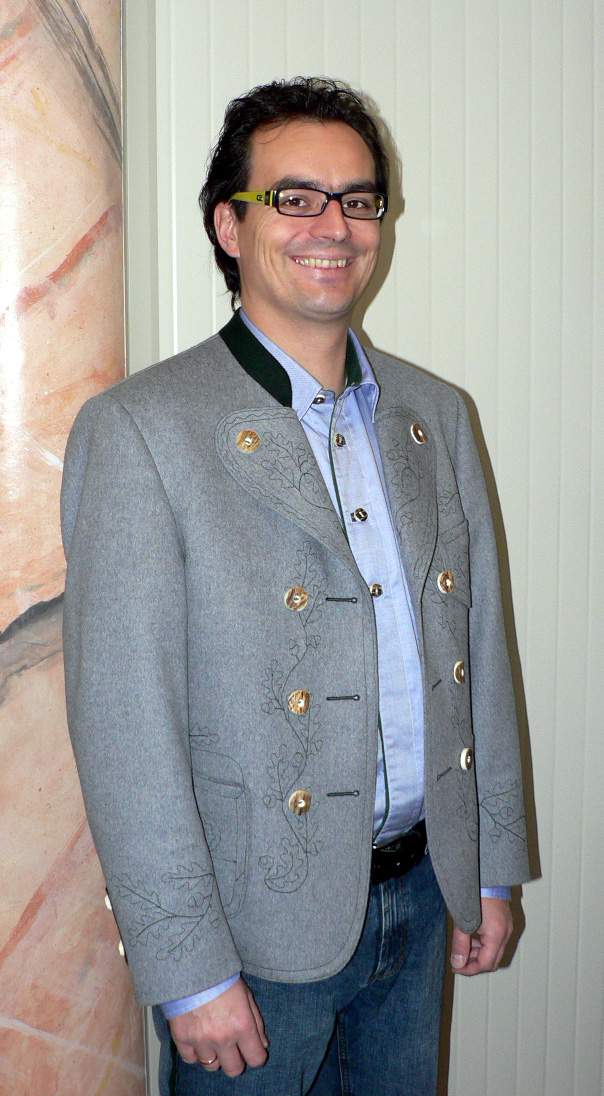
Trachten jacket

Commonly called a Styrian jacket, its cut is a cross between the traditional gear which hunters wore in the Alpine valleys of the Austrian province of Styria

Styrian_Hunter

and early 19th Century military uniforms, which we see here (for reasons which will soon become apparent) being shown off by Archduke Johann of Austria, 13th child (no less) of Emperor Leopold II.

Archduke Johann

To my mind, the collar is what makes the Styrian jacket very distinctive, although as the last photo shows it has been reduced considerably compared to its military forebear.

Unfortunately, wearers of this type of jacket in Austria are normally making a strong social statement. They are usually advertising their conservative credentials, which is why many wearers are of the older generation:

old fogey

Although its distant roots are in the Styrian peasantry, the jacket’s recent pedigree is very aristocratic. It was brought from the Styrian farms to Vienna’s imperial court in the early 19th Century by the same Archduke Johann I just mentioned. Initially considered with suspicion by Crown and aristocracy (Archduke Johann was a tad too close to the people for them), it eventually caught on and was popularized (if that’s the word) by the Austrian upper classes and their hangers-on in the middle classes. Which is no doubt why Christopher Plummer’s Captain von Trapp  is shown wearing one in The Sound of Music

Christopher Plummer-sound of music

Wearing the jacket can also have strong political overtones, declaring the wearer’s oh-so Austrian credentials, a rampart against the sea of dubious Eastern European influence lapping up against the edges of the country’s pristine Alpine ranges. Which is why Jörg Haider, the far Right governor of the province of Carinthia, liked being seen in the Carinthian version of this jacket (the earth tones, the “good earth of Carinthia” is what makes the jacket specifically Carinthian).

Haider

But actually you don’t have to belong to the huntin’-and-shootin’ set, or want to make a political statement about smelly foreigners, to wear this jacket. To my mind, it works brilliantly well in more casual “modern” settings

steireranzug

where the somewhat militaristic cut of the jacket contrasts pleasingly with the relaxed style of the rest of the outfit.

I have one such Styrian jacket, a light summer one, but I left that behind in Vienna. I have another winter jacket with me in Beijing, which is actually a Bavarian Miesbacher jacket (so I suppose strictly speaking the title of this piece is wrong – but the Bavarians and the Austrians are very similar, even in their sartorial preferences, sharing as they do the same Alpine history).

miesbacher-jacket-2

The Chinese look at me curiously when I wear the jacket, and sometimes they ask me what it is. I explain, but I don’t think they really appreciate; I suppose you need to have seen an Alpine valley or two.

The interesting thing is that the Chinese, or rather the Manchu of the Qing imperial court, created a style which was a precursor for a similar jacket in the UK, where the collar is often called the Mandarin collar. This picture of Qing dignitaries nicely shows the collar in its original setting:

Manchu men

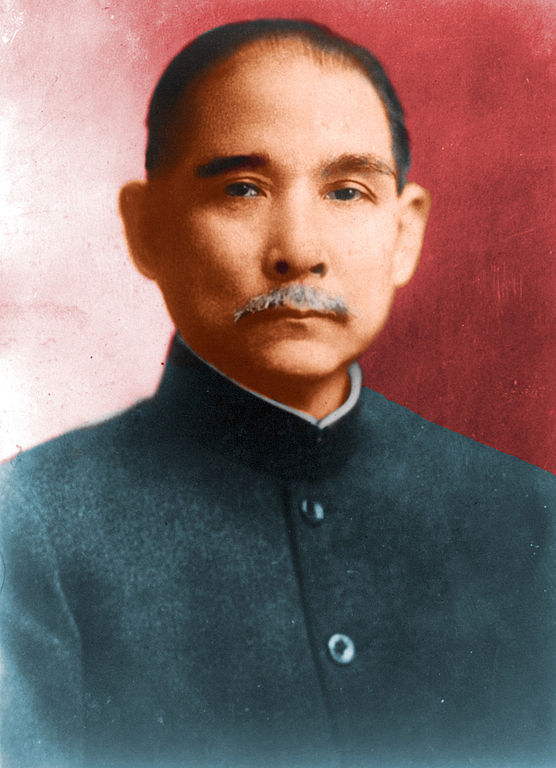
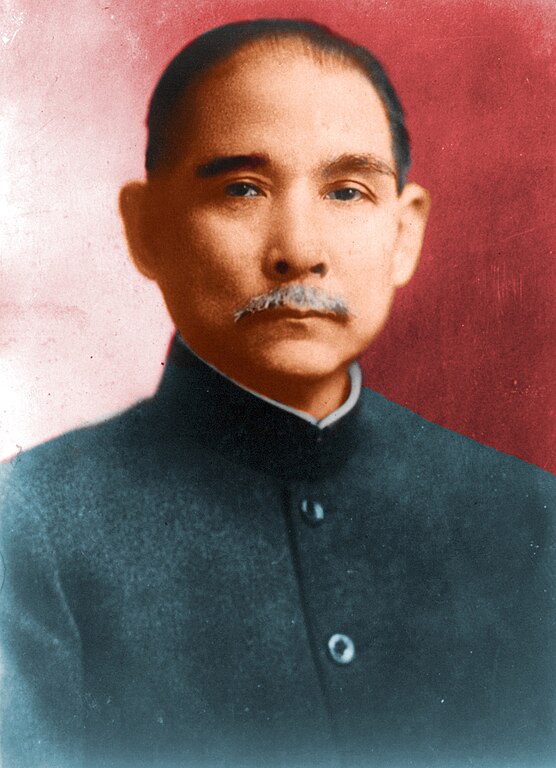
After the collision of East and West in China, with the West coming out on top, this traditional dress morphed into a jacket, in response to the “modern” forms of Western wear invading China. It is commonly thought that Mao Zedong popularized the new style – and in fact the collar is often referred to as a Mao collar – but actually it is to Sun Yat Sen, the first President of modern China and founder of the Kuomintang, that this honour should go:

Sun Yat Sen

(which, as a trivial aside, I suppose must be the model for the jacket worn by Dr. No, the arch-evil adversary of James Bond in the 1962 film of the same name.)

Dr-No

This sartorial strand is somehow mixed up with another strand emanating from India. There, during the 1940s the Indians developed the Band Gale Ka Coat, Urdu for “Closed Neck Coat”, an apt name indeed.  This coat became a global star thanks to another leader, Jawaharlal Nehru, the first prime minister of modern, post-colonial India, who was often seen wearing a version of it.

Nehru-and-Jackie-Kennedy

All of this gave rise to the British variant of the “closed neck” jacket, the so-called Nehru jacket:

Nehru-Jacket

The interesting thing is that while the Austrian version of the jacket tends to be favoured by the right-wing elements of society, in its heyday – the Swinging Sixties – the British version was favoured by the left-wing elements, or at least the cooler, hipper set. Taking rock bands as a good indicator of all things cool, we have here a photo of The Who, where you will notice Roger Daltry wearing a Nehru jacket

The Who

while in this photo, we have – gasp! shriek! tearing of hair! – John and Paul of the Fab Four sporting Nehru jackets during a concert

The Beatles

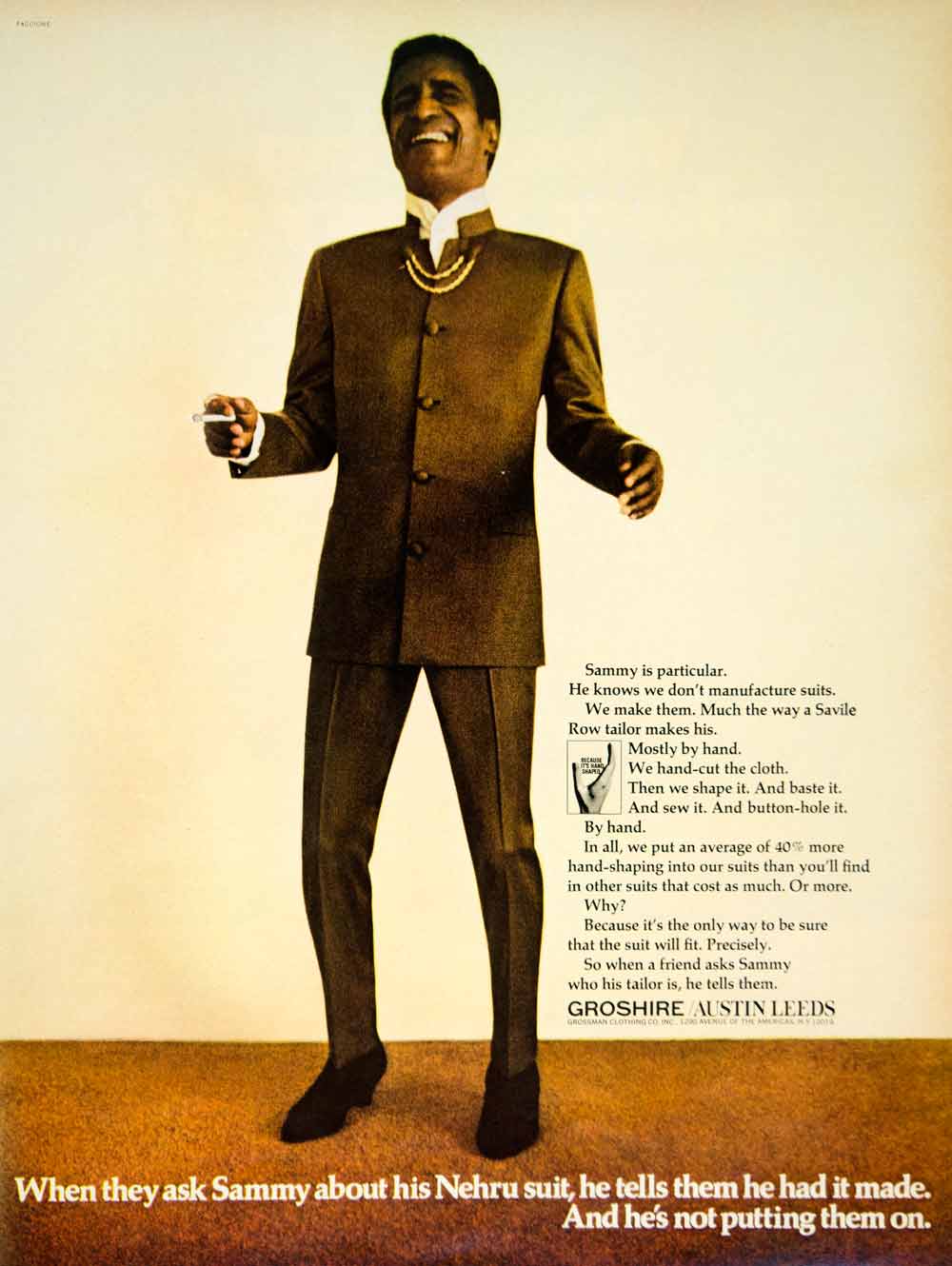
Why, even in the US the Nehru jacket made its appearance among the modish set, as this ad with Sammy Davis Jr attests!

Sammy Davis Jr

So with such stellar support I don’t suppose I can be very far off the mark in thinking that the closed neck style for a jacket is kinda nice. Nowadays, though, in the UK the style seems to be more in the purview of women, as shown by this photo from last year of Catherine Ashton at one of the many meetings she held with the-then Iranian negotiator on nuclear issues, Saeed Jalili:

European Union foreign policy chief Ashton and Iran's chief negotiator Jalili pose for the media before their meeting in Baghdad

No matter. I will continue to beat my lonely path with my Bavarian jacket in China.

And I need to look into the shirt which Jalili is wearing. It’s pretty nifty, eliminating as it does the need for a tie, which is no bad thing. Another piece of clothing which I was required to start wearing, along with jackets, when I was 13 …

___________________________
Trachten jacket: http://www.oktoberfest-dirndl-shop.co.uk/images/articles/Trachtenjacke_Stachus_anthrazit_v1_894.jpg [in http://www.oktoberfest-dirndl-shop.co.uk/men/trachten-jackets/138/traditional-jacket-stachus-anthracite%5D
Styrian hunter: http://upload.wikimedia.org/wikipedia/commons/b/b7/Styrian_Hunter.jpg [in http://commons.wikimedia.org/wiki/File:Styrian_Hunter.jpg%5D
Archduke Johann: http://upload.wikimedia.org/wikipedia/de/0/0d/1782_Johann-1.JPG [in http://de.wikipedia.org/wiki/Johann_von_Österreich%5D
Old fogey: http://www.alpen-lifestyle.de/shopimages/t_240x/lf_oberoesterr_anzug_gr.jpg [in http://www.alpen-lifestyle.de/24.html%5D
Christopher Plummer-Sound of Music: http://d1w7nqlfxfj094.cloudfront.net/wp-content/uploads/2013/05/Chris-Plummer3.jpg [in http://www.actclassy.com/2013/05/lets-start-at-the-very-beginning-ten-reasons-the-sound-of-music-should-never-be-remade/%5D
Haider: http://static.guim.co.uk/sys-images/Guardian/Pix/red/blue_pics/2008/10/23/Haider1.jpg [in http://www.theguardian.com/world/2008/oct/23/jorge%5D
Steireranzug: http://www.heuundstroh.com/media/catalog/product/cache/1/thumbnail/9df78eab33525d08d6e5fb8d27136e95/_/m/_mg_0155.jpg [in http://www.heuundstroh.com/trachtenanzug-innsbruck%5D
Miesbacher jacket: http://www.country-online.com/images/product_images/original_images/931_0.jpg [in http://stadtfuhrer22.bloggum.com/post/miesbacher-trachten-jacke.html%5D
Manchu men: http://store.tidbitstrinkets.com/blog/wp-content/uploads/2009/08/Manchumen-LC-USZ62-56123.jpg [in http://www.asiafinest.com/forum/lofiversion/index.php/t275297.html%5D
Sun Yat Sen: http://upload.wikimedia.org/wikipedia/commons/thumb/3/36/Sunyatsen1.jpg/556px-Sunyatsen1.jpg [in http://en.wikipedia.org/wiki/Sun_Yat-sen%5D
Dr. No: http://1.bp.blogspot.com/-YsnLPzQA9o8/UHeA4lcPgXI/AAAAAAAACe0/m78FM-vE0LU/s1600/Dr%252520No%2525207.jpg [in http://silent-volume.blogspot.com/2012/10/according-to-wikipedia-quarter-of.html%5D
Nehru and Jackie Kennedy: http://www.gentlemansgazette.com/wp-content/uploads/2013/05/Nehru-and-Jackie-Kennedy.jpg [in http://www.gentlemansgazette.com/nehru-jacket-guide-mao-suit/%5D
Nehru jacket: http://www.gentlemansgazette.com/wp-content/uploads/2013/05/Nehru-Jacket-in-grey-with-pocket-square.jpg [in http://www.gentlemansgazette.com/nehru-jacket-guide-mao-suit/%5D
The Who: http://24.media.tumblr.com/26974fed8aa5c8fe98df29ffdda9b503/tumblr_mjkb5uMlx51rvno3ho1_500.jpg [in http://dandyinaspic.blogspot.com/2013_07_01_archive.html%5D
The Beatles: http://static.ibnlive.in.com/pix/slideshow/05-2013/jumpsuits-lbd-platform/nehru-jacket-may-9.jpg [in http://ibnlive.in.com/photogallery/13406.html%5D
Sammy Davis Jr: http://c590298.r98.cf2.rackcdn.com/YMM6_062.JPG [in http://www.ebay.com/itm/1968-Ad-Nehru-Suit-Sammy-Davis-Jr-Groshire-Austin-Leeds-Tailor-Men-60s-Fashion-/301019399979%5D
Ashton and Jalili: http://backchannel.al-monitor.com/wp-content/uploads/2012/09/ashtonjalili.jpg [in http://backchannel.al-monitor.com/index.php/2012/09/2148/report-iran-eu-nuclear-negotiators-to-meet-in-istanbul/%5D

FLYING FLUFF

Beijing, 1 May 2013

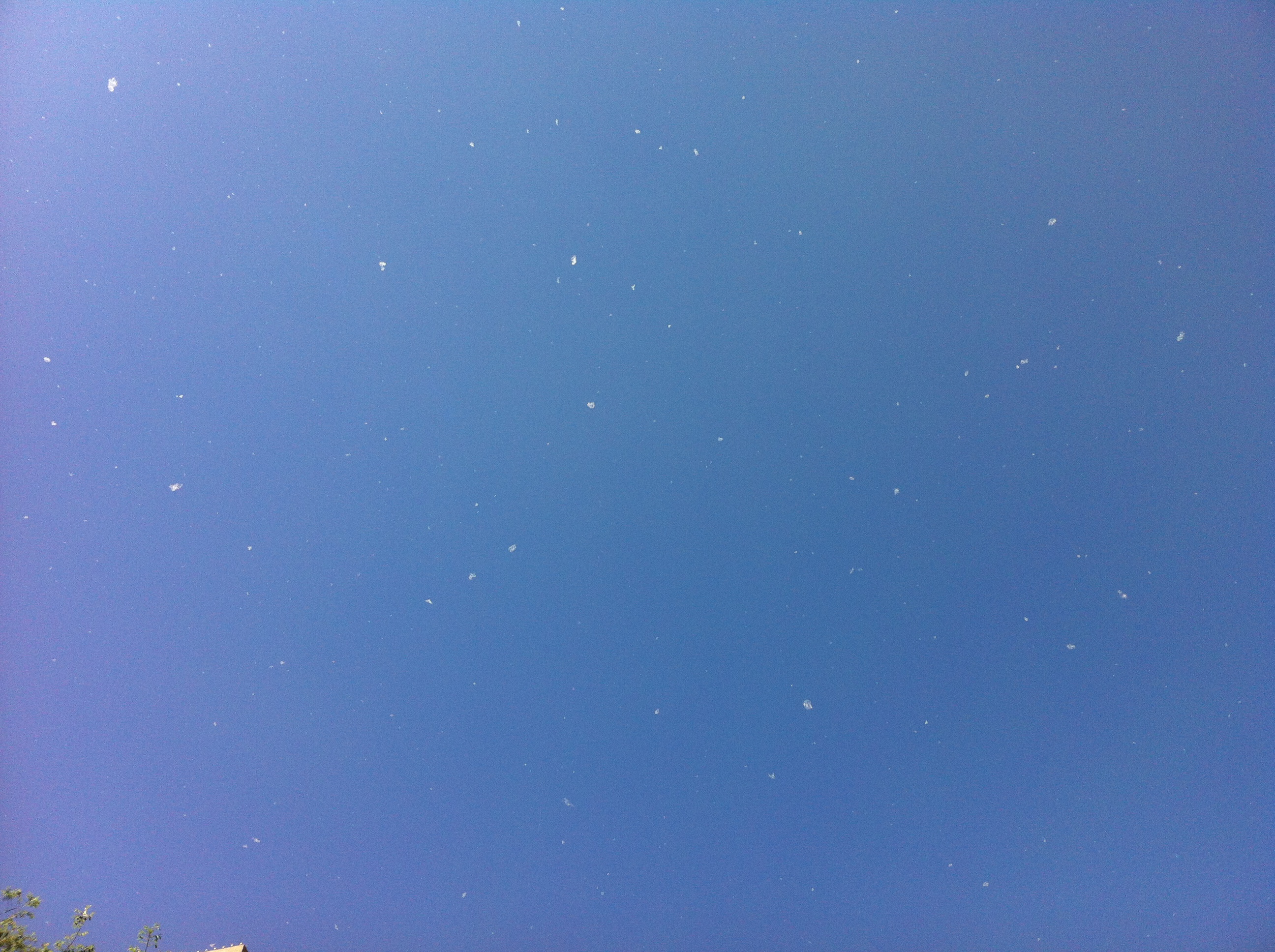
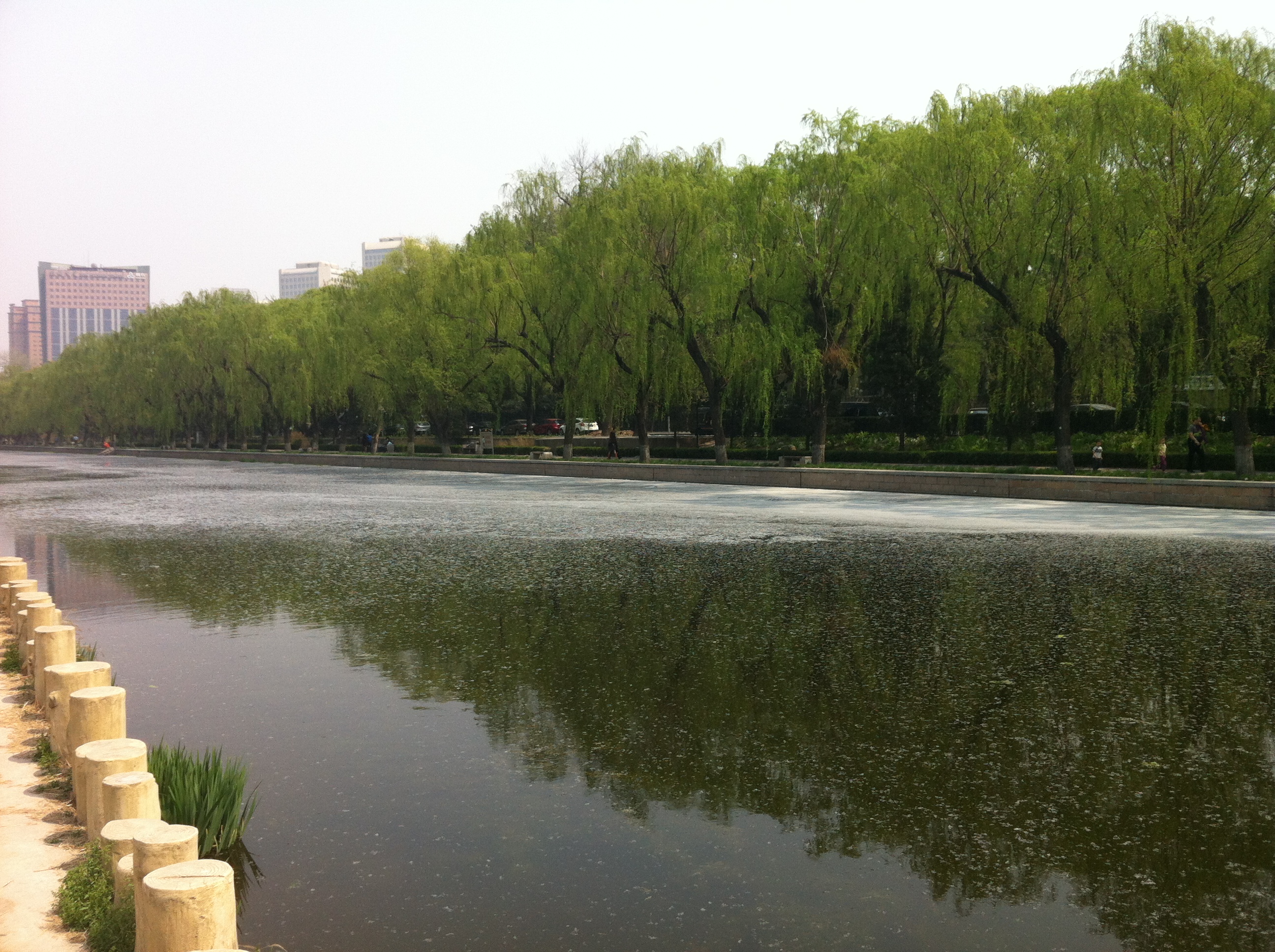
These last few days we have been suffering from an unpleasant side-effect of Spring: airborne white fluff, which trees around here are shedding in huge quantities in their eagerness to mate and to seed. The fluff drifts down, floats along on the breeze, is whirled about by passing cars, eddies in big clumps around your feet, and – most disagreeably – gets into your eyes, nose and mouth. Yesterday morning, it was so thick that looking up into the sky it seemed to be snowing.

pollen 008

while a few days ago currents in the canal and wind interacted to create a thick layer of fluff along the far bank.

pollen on canal 002

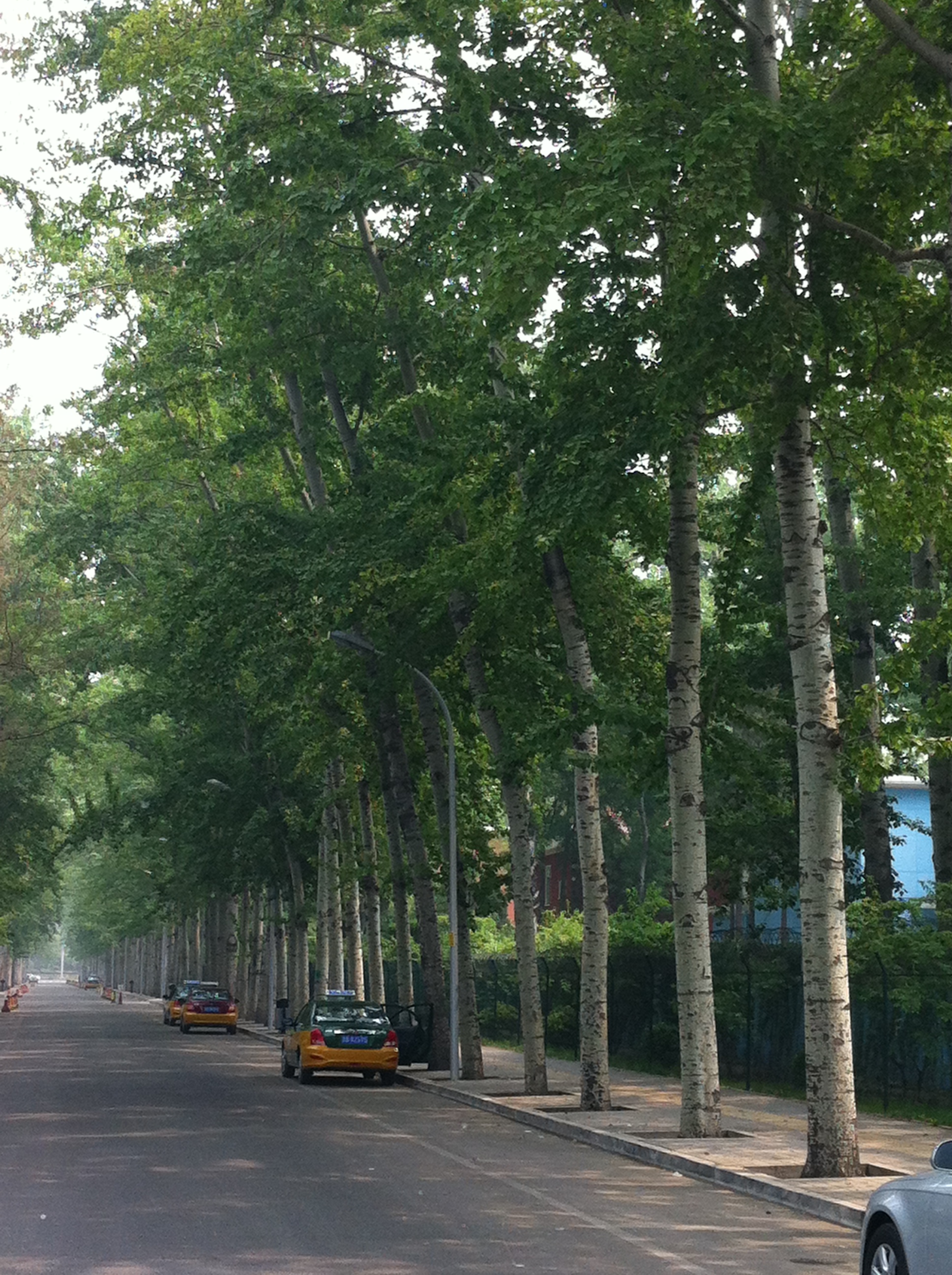
This is the offending tree, photographed in a quiet side street

poplars-Beijing 011

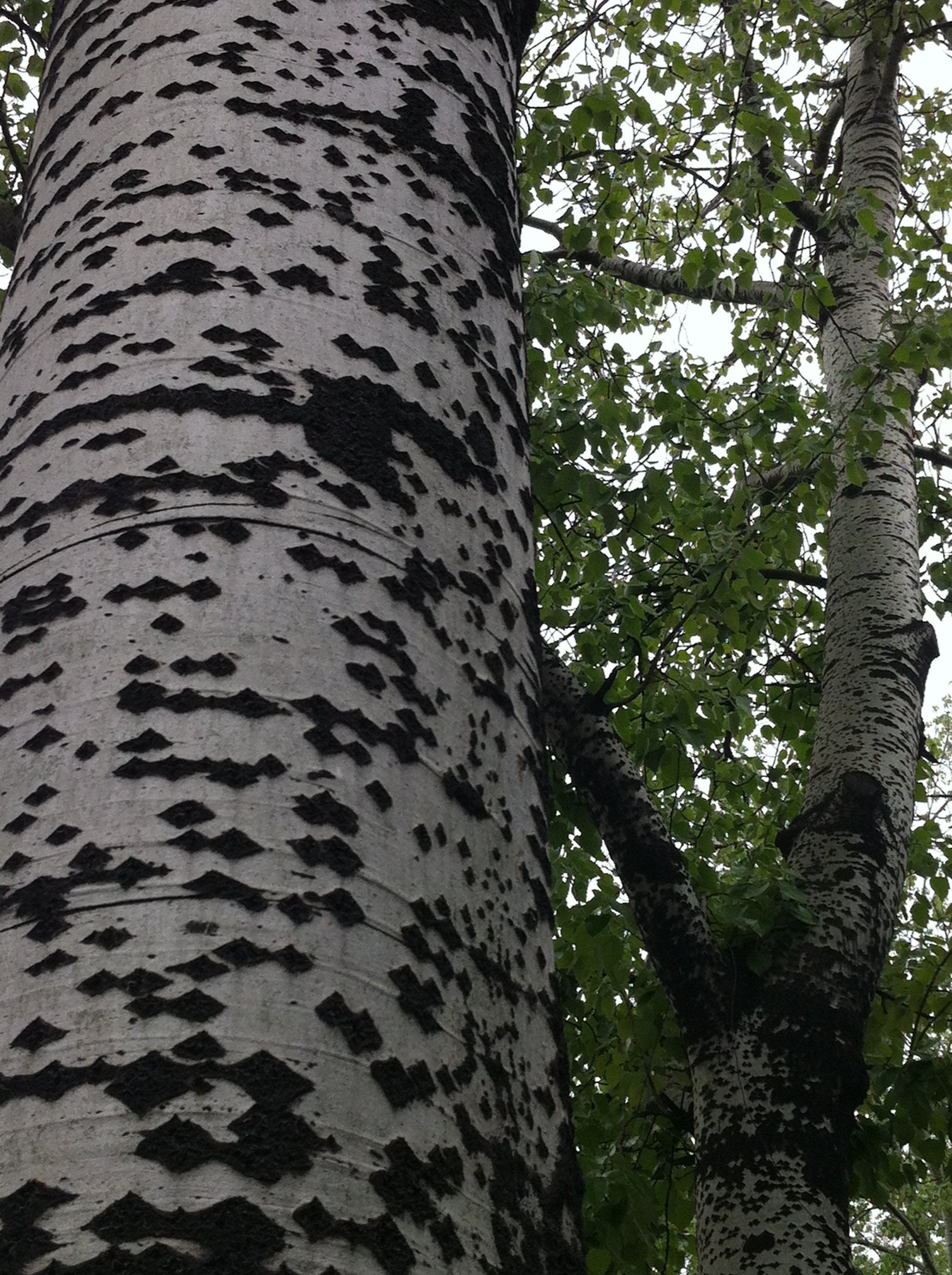
a poplar, a member of the aptly-named cottonwoods, whose more mature specimens carry these very distinctive diamond shapes on their lower bark.

pollen 013

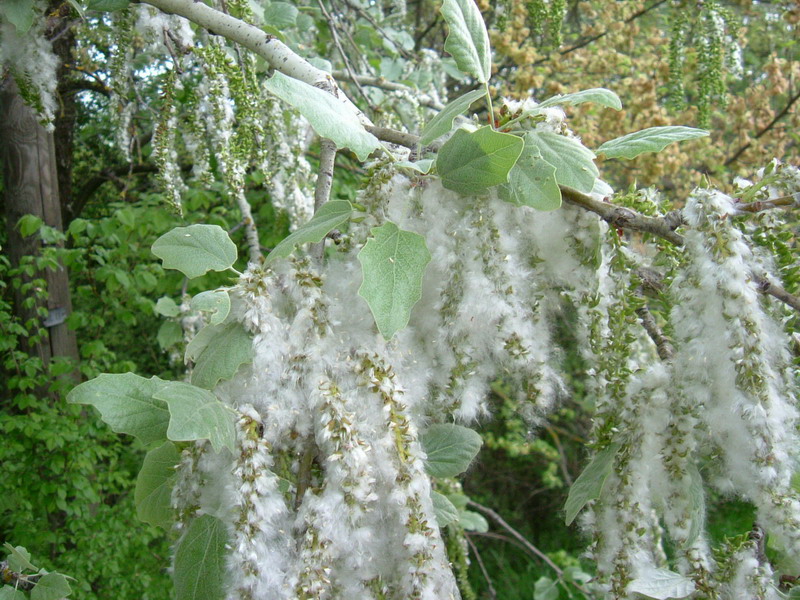
And this is where the fluff is from:

cotton on tree-1

I first became aware of this tree in Vienna, not so much because of white fluff flying around, of which there was a fair amount at this time of the year, but because of some really magnificent specimens growing in the gardens of the posher, greener parts of town. So posh and so exclusive that I have found no photos on the web.

But actually, where the tree really came into its own was down by the Danube, in the last vestiges of the river’s wetlands which land use planners and river engineers of the 19th Century had left alone.

poplars on the Danube-1

Not surprising, really. The tree loves a wet, marshy soil. Which explains why there are so many poplars around Milan and in the Po River plain generally, which is a pretty soggy place. And in Milan, the problem of flying white fluff was truly awful. These pictures are not from Milan but are from that part of the country and give a good sense of the horror of it.

Italian-image-1

Italian-image-3

It’s the poplar’s love of wet soil that makes me wonder what it’s doing here in Beijing. I mean, this city is semi-desertic; lack of water is a constant and growing problem. Yet, there are huge plantations of the tree around the city, part of the reforestation campaigns that the government is so fond of as a way of minimizing the dust storms to which this city is periodically subject. Wise policies no doubt, but surely they could have found a more suitable tree?

____________________________

pix of sky, canal, and poplar tree: mine
Fluff on tree: http://www.naturamediterraneo.com/Public/data7/ciuppy/5.jpg_200941622240_5.jpg
Poplars on the Danube: http://www.quax.at/sites/default/files/images/nationalpark_donau_auen_976_Donauufer2_Baumgartner.jpg
Italian-image-1: http://upload.wikimedia.org/wikipedia/commons/thumb/9/9f/Fioritura_pioppi.JPG/1280px-Fioritura_pioppi.JPG
Italian-image-2: http://www.parmatoday.it/~media/base/19828483952093/curiosita-fioritura-pioppi-1.jpg

LILAC ON EARTH DAY

Beijing, 22 April 2013

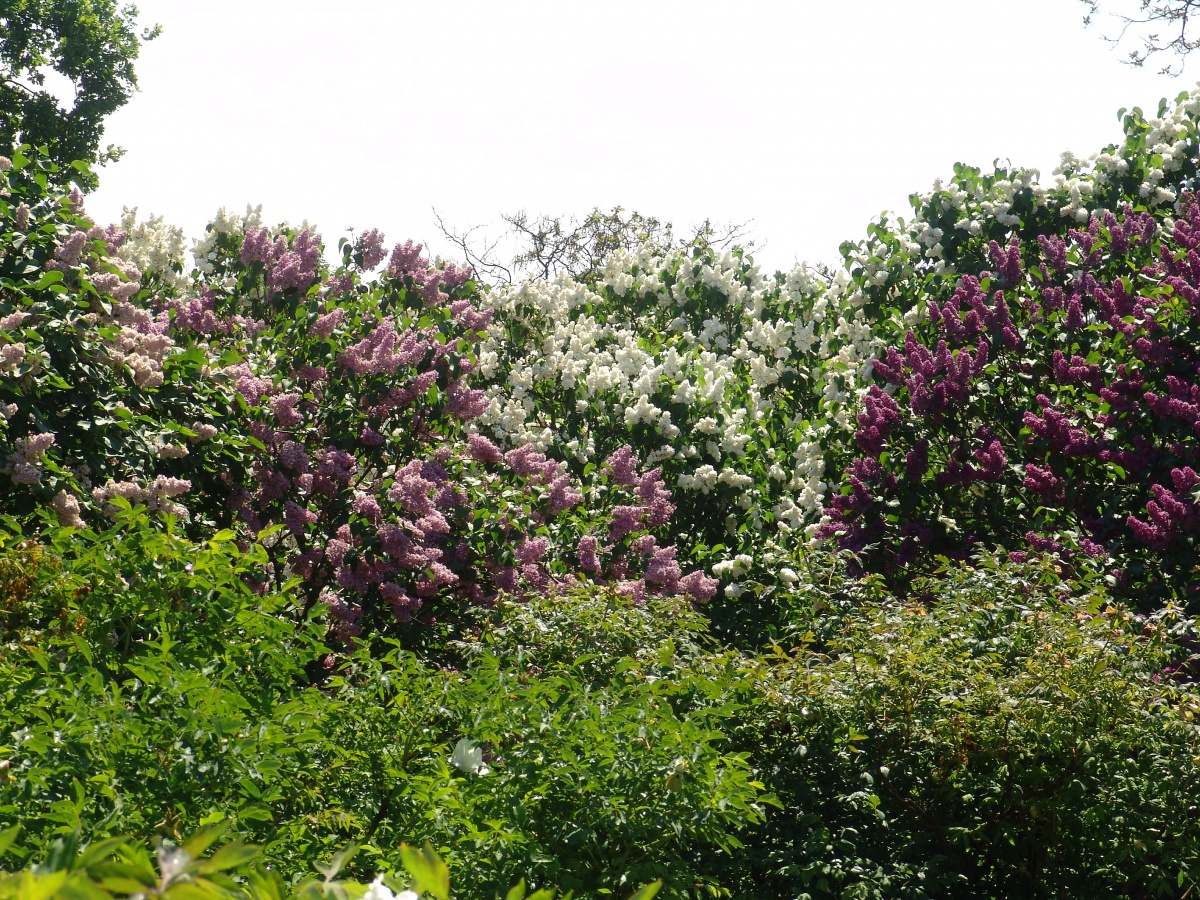
I mentioned in an earlier post that when I was young I would sometimes spend Easter with my French grandmother. One of my memories of those visits – apart from collecting coal in the cellar – is the lilac bushes in the garden in flower. Normally, we went to stay with my grandmother during the summer, when the bushes were just boring green leaves separating the proper, formal garden in front of the house from the vegetable garden. But at Easter time, these dull green bushes would come alive with pale purple and white – and would smell heavenly. They looked something like this (my grandmother’s garden was a bit of a jungle):

Lilas buissons

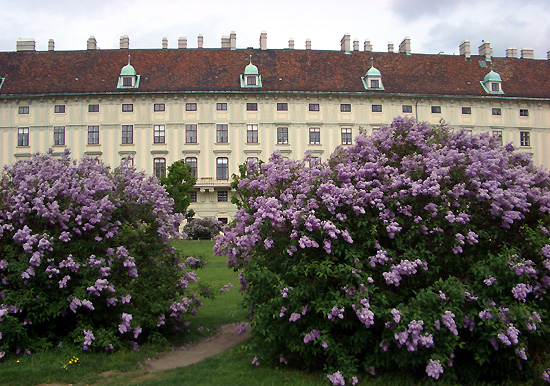
Lilac must also grow in the UK but I have absolutely no memory of any lilacs there. The next time lilacs crossed my radar screen was in Vienna, where it was a very popular bush all over town, from the public gardens in front of the Hofburg, the imperial palace in the centre of town:

lilacs in Vienna-3

To just humble streets nowhere in particular:

lilacs in Vienna-4

During the flowering period, my wife would arm herself with a big pair of scissors and we would go around surreptitiously snipping off a few flowering branches to have in the apartment. For a few days, the house would be filled with the wonderfully delicate scent of lilac.

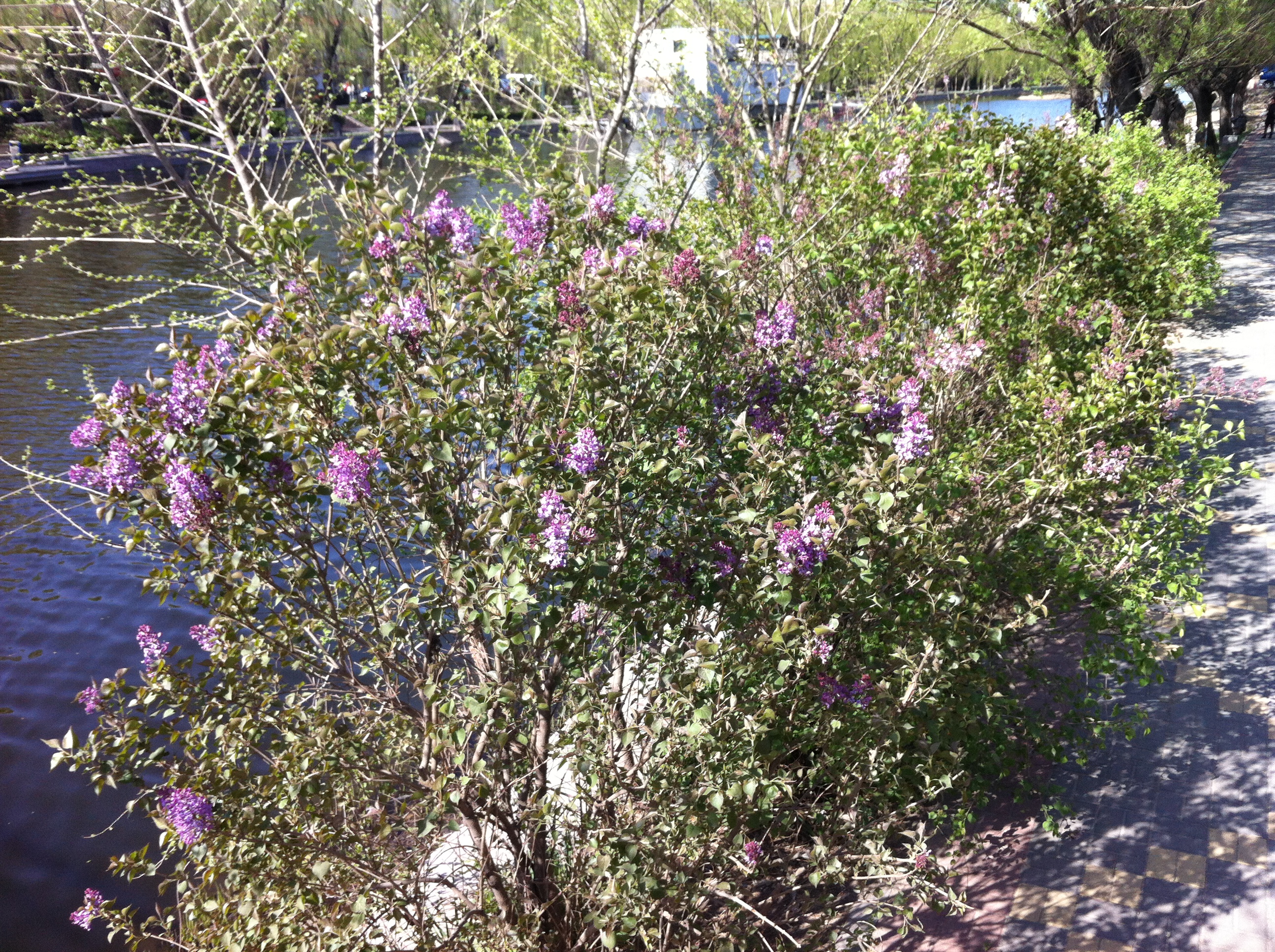
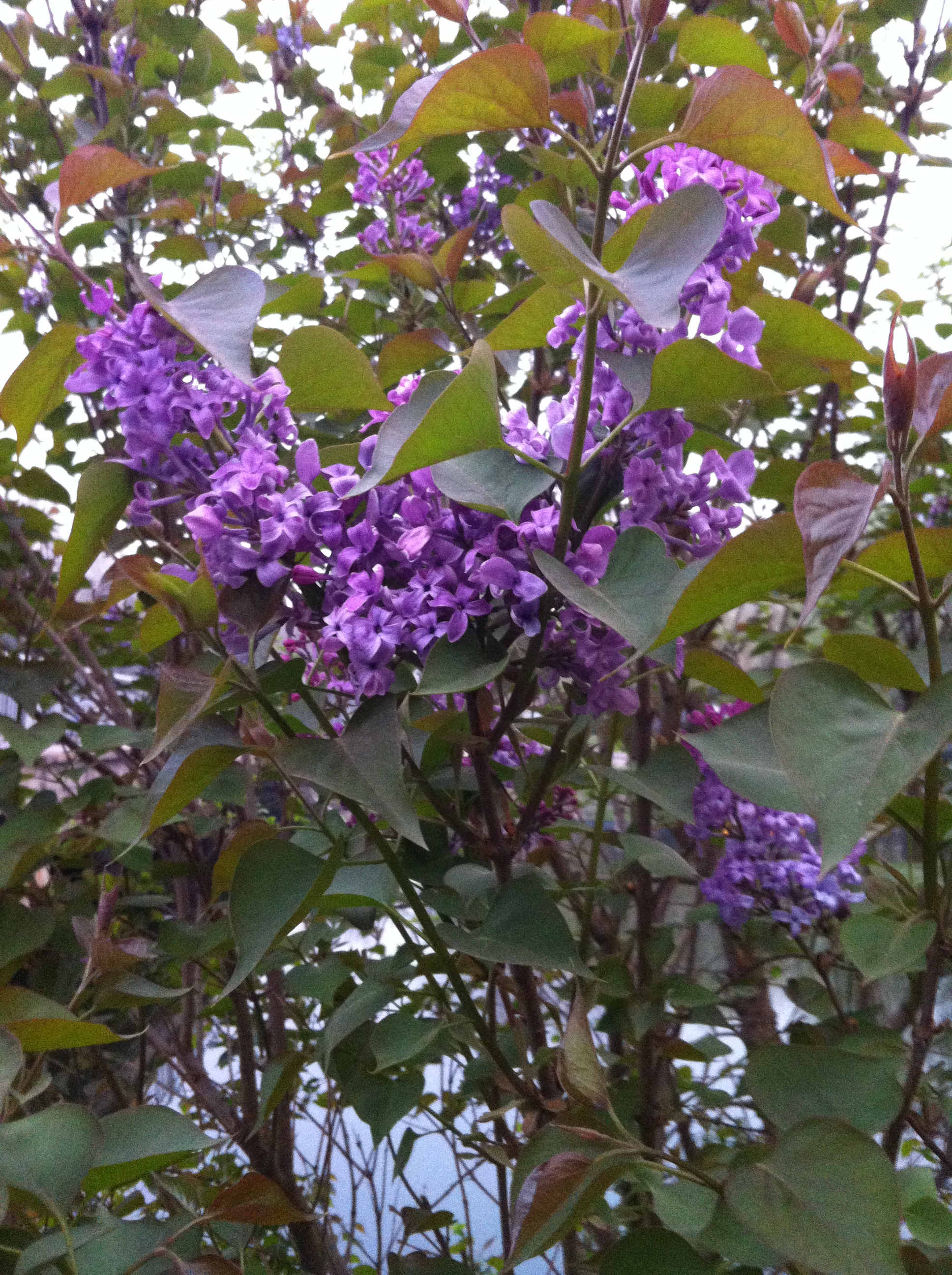
So it was with pleasure that I noted during our first Spring here, down by my piece of canal about which I have written several times, some lilac bushes coming into flower. At least, they seemed to be lilacs. The scent was quite similar, and there was definitely a family resemblance if you closed your eyes a bit and cocked your head to one side. Yet there was something not quite right. The flowers didn’t look quite the same, and the leaves were definitely smaller and darker.

lilacs by the canal 001

lilacs by the canal 003

I decided to do a little bit of research (well, web-surfing really) and discovered that what was growing in my grandmother’s garden and in Vienna was the common lilac, syringa vulgaris, whereas the lilac growing here was in all likelihood the Yunnanese lilac, Syringa yunnanensis. The photos I found of the Yuannese variety showed a definite similarity:

Yunnan lilac-4

and it makes sense to have a lilac from Yunnan in Beijing.

During my research, I also learned a bit about the common lilac. It was not, as I had thought in that casually cultural-centric way we Europeans suffer from, a European flower. It was actually introduced into European gardens at the end of the sixteenth century from Ottoman gardens. That certainly makes sense since “lilac” derives from the Arabic “lilak”, which in turn derives from the Persian “nilak” meaning bluish. Since I am currently reading a history of Iran/Persia and have just finished the part covering the Arab invasion, in my mind’s eye I can see the beauty of the flower captivating Arabs when they arrived in Persia and their carrying it back with them west of the Tigris and Euphrates; later, when the Ottomans conquered the Arab lands, I can well imagine them in turn falling in love with the flower and carrying it off to their gardens. From whence it came to our European gardens and, after a pause, to the gardens in North America.

Fanciful and probably wrong, but on this day when we celebrate Earth Day a narrative I would like to believe in, seeing as it suggests a certain universal appreciation of the beauty of nature.

Happy Earth Day.

________________________

Lilac in France: http://www.torange-fr.com/photo/5/13/Lilas-buissons-1268053127_24.jpg
Lilac in Vienna-1: http://www.viennatouristguide.at/Quiz/Bezirke/13%20Schoenbrunn/hofb_flieder.jpg
Lilac in Vienna-2: http://www.zeitgedanken.com/weblog/wp-content/uploads/2009/04/flieder-im-april09-01.jpeg
Lilac in Beijing: my pix
Yunnanese lilac: http://static1.plantdatabase.info/plant_imgs/size2/syringa_yunnanensis_var_rosea_I21172P95642.jpg