I’m in South Korea at the moment, giving a training on green industry. It is Spring here. In Bangkok, I’ve forgotten what Spring is like and the delights it brings to the heart of the first signs of new growth. There are wonderful, wonderful cherry trees in bloom just outside the training room, which makes it difficult for me to focus on my presentations.
But I don’t want to talk about any of that. I want to talk about kimchi, which I was confronted with last night at an otherwise perfectly respectable Korean meal. For those readers who have not heard of this foodstuff, it is without doubt the national dish of Korea – both Koreas, actually, North and South (on this deeply divided peninsula, there are two things that unite its peoples: their love of kimchi, and their deep dislike of the Japanese). South Koreans eat it at breakfast, lunch, and dinner (as I’m sure would the North Koreans had they any kimchi to eat and any rice to eat it with). There is a museum of kimchi in Seoul. It has been listed with UNESCO as an intangible cultural heritage, by both North and South Korea – separately, of course. It is said – but I wonder if this is not an urban legend – that during the Vietnam War, the-then South Korean President begged President Johnson to urgently help get kimchi to the South Korean troops who were fighting alongside their American comrades; without it, their morale was sagging badly. More believably, when the SARS crisis hit in 2003, kimchi sales in South Korea soared 40%, on the back of people’s belief that it would surely help ward off the evil disease.
As one might expect from a dish which is the subject of such national adulation, there are many regional variations and no doubt noisy arguments about which variant is the best. That being said, the most common type of kimchi – and certainly the one I have seen in Korean restaurants and eateries – is based on cabbage, napa cabbage to be precise. To make this kimchi is very easy, and if I’m not mistaken any self-respecting Korean housewife (not housespouse; this is still a very male dominated society) can make her own. Take the cabbage, cut it in pieces, thoroughly coat the pieces with salt, let them stand in their own briny juice for several hours, pressing them down from time to time. In the meantime, chop up some Asian radish and scallions, and prepare a paste of finely chopped garlic and ginger with fish sauce or salted shrimp and crushed dried paprika (this is the basic paste recipe, to which I’m sure can be added other ingredients whose identity are the jealously guarded secrets of individual kimchi makers). Thoroughly rinse the cabbage pieces of their brine, mix them well with the radish and scallions, and coat the whole with the paste. Let this mixture stand in some suitable container for several days at a cool temperature – in the old days, Korean housewives used beautiful pots like these and buried them in the earth during winter.
What is happening behind all these manipulations is that the cabbage is being subjected to fermentation by lactobacillus bacteria. The results look like this.
Depending on tastes and needs, the kimchi can be eaten “fresh” or left to continue to ferment and eaten months later.
It is sad to report that while the Korean populations love this stuff, I hate it. Well, “hate” may be a strong word: “thoroughly dislike it” may be the better term. During my first-ever trip to South Korea, while my credit with my hosts soared after I ate dog and declared it to be most delicious (and I wasn’t being polite), it crashed when I made it also very clear that kimchi was revolting. What to do, the perils of cultural exchanges.
It’s actually puzzling that I don’t like kimchi, because I looooove sauerkraut or, to give it its French name under which I first got to know it decades and decades ago, choucroute. Aah, those most magnificent choucroutes garnies of my youth, sauerkraut served with pork chops and various sausages, with boiled potatoes on the side!
If I close my eyes, I can still remember, still taste in my mouth, a truly wonderful sauerkraut which I had on a German ferry boat carrying a bunch of us from school to Germany (we were on our way to do two weeks of “military service”, required of all of us by our high school, with a British tank regiment stationed near Hannover; but I digress, these fond memories being triggered no doubt by the lingering taste of that truly epochal sauerkraut).
As I say, it is indeed puzzling that I don’t like kimchi, because sauerkraut is also cabbage-based and is subjected to exactly the same procedure of brining followed by a fermentation at the hands (as it were) of lactobacilli. What is going on here?
After some thought, I have concluded that the paste is to blame. Actually, I think this is a no-brainer. I mean, what else is different between the two? My problem with kimchi has to reside in the paste. My first thought was that the paprika was the culprit. As I have written in no uncertain terms in an earlier post, I can’t stand hot spices, and the paprika in the kimchi certainly doesn’t endear me to the dish. But my problem with kimchi goes deeper than the burnt-out mouth it gives me. Below that lurks another problem, a problem of bitterness. One or more of the other ingredients in the kimchi is changing the taste from the sour of sauerkraut to the bitter of kimchi. I’m afraid I will never know which it is until I do some scientific experiments in the kitchen, making fermented cabbage and varying the ingredients it is pasted with. I can therefore cheerfully add sauerkraut/kimchi to the list of foodstuffs which I will try making when I have retired, and I will report back if and when I find the solution.
In the meantime, all this writing about sauerkraut has given me a serious desire to eat some. I need to send an urgent message to my wife, who is excellent at searching the Internet, asking her to identify a restaurant where we can eat a half-decent choucroute garnie in Bangkok.
Bangkok, 19 March 2016
updated Vienna, 5 February 2025
In the recent trip which my wife and I made to Italy, we managed to squeeze in a visit to our apartment near Genoa, where I was particularly delighted to see so many lemon trees in fruit. It’s wonderful to see trees heavy with lemons peeping over a wall or hanging over a garden fence.
Once back in Bangkok, I decided to do some research on the lemon and its history: how did this lovely yellow fruit end up in Liguria? But delving into the lemon’s history inevitably dragged me into the history of the citrus family. It turns out that the lemon does not have a long or distinguished pedigree. It is the citrus equivalent to a mutt, a fairly recent hybrid. In fact, most citrus fruits with which we are familiar are fairly recent hybrids. It seems that the members of this family love to hybridize, and of course humans – being intrusive busybodies by nature – have been only too willing to assist them. The result is a family tree of bewildering complexity.
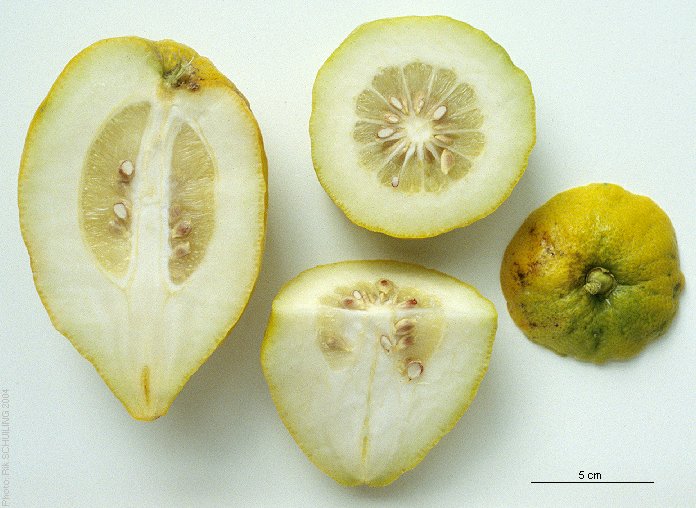
As I tried to make sense of all this, my attention was diverted by something I read about the citron. I think I need to insert here a few words about the citron, since I’m sure there are many readers who are not familiar with this citrus fruit. It is relatively difficult to find these days since it has little use – except for one very special one, which I will come to in a minute. It looks like a large, warty, lemon.
Coming to what I read, it seems that during a ceremony in the Temple of Jerusalem marking the Feast of the Tabernacles, or Sukkot, in one of the years around 100 BC, the Jews pelted the High Priest with citrons and got massacred for doing so. Now that was something worth finding more about! How I would have loved to use citrons, rotten tomatoes, eggs, dog-eared hymn books – anything, really – to pelt the priests with for subjecting me to excruciatingly boring sermons during the Sunday Masses of my childhood! It turns out, though, that the Jews were not horribly bored with what the High Priest was saying, but horrified by what he was doing. It is reported that he deliberately poured the water of libation over his feet rather than over the sacrificial animals. I can’t say that I can get quite as excited about this action as the Jews did, but the fact is that they did, and satisfyingly peppered the High Priest with citrons.
Of course, it does come spontaneously to ask oneself why on earth the Jews were carrying citrons around in the Temple in the first place. It’s certainly not the item that would immediately come to my mind as expecting to see in the hands of Jews within the sacred precincts of the Temple. It turns out that the citron plays an extremely important role in the ceremonies of Sukkot. Every morning of this seven-day Feast, Jews are required to ceremoniously wave the “four species”. Citron is one of these, the other three being the date palm, the myrtle, and the willow. We see here the Tosher Rabbi of Montreal waving the four species.
One can therefore assume that the Jews were carrying their four species when the High Priest poured the water of libation over his feet, and in the horror of the moment they blindly grabbed their citrons and threw them at the impious prelate. It seems that they must have also thrown something harder – stones, no doubt – since it is reported that the stone altar was damaged. I can’t really see citrons doing damage to a stone altar.
It’s a bit of a mystery to me why the citron ever became one of the four species, because it is not native to the Near East, whereas the other three species are. The citron, like all the original citrus fruits, originated somewhere in the region of South-East Asia-Yunnan in southern China-the Himalayan slopes of India. So how did it end up in the Near East? There is general agreement that the fruit was first cultivated in northern India. From there, it migrated, presumably along trade routes, to Persia. What happened next is a hotly debated issue – at least, in certain circles. One hypothesis has the citron migrating to Egypt, where its essential oils were used in embalming, and from whence the Jews brought it with them to the Promised Land when they escaped from bondage in Egypt. A second hypothesis has the citron being carried from Persia to the Mediterranean basin in the baggage of Alexander the Great’s returning soldiers, who somewhere along the way dropped it off in the Levant. Yet another hypothesis has the citron migrating from Persia to Babylonia, where the Jews came across it during their Babylonian captivity and brought it with them when they came back to Israel.
These are all suppositions, with no real evidence to back them up. A very clever piece of archaeological sleuthing suggests a more concrete hypothesis. We need to first recall that after the Persians defeated the Babylonians and allowed the exiled Jews to return home, Israel was a Persian province for several hundred years. Israeli archaeologists have been excavating a site quite close to Jerusalem which turns out to have been a Persian palace with an extensive garden around it. Here is a reconstruction of the site.
The archaeologists wanted to see if they could find evidence of what was planted in this garden. They therefore looked for traces of ancient pollen. None could be found in the earth of the garden – whatever had been there had decomposed long ago. So they decided to try their luck in the plaster with which the walls of an ancient pool in the garden had been coated. The thinking was that pollen grains could have got stuck in the plaster while it was drying and been preserved. They were right – and one of the types of pollen they found was that of the citron. From the other types of pollen found – a number from species not present in Israel – the archaeologists deduced that this was a garden planted with rare plants, designed to show off the wealth and power of the palace’s resident, either a Persian satrap or a Babylonian Jew close to the Persians and sent there to keep an eye on the locals. Perhaps it was here that the Jerusalem Temple elites, coming to pay their respects to the Palace’s resident, first saw the citron and admired this strange and exotic fruit. Maybe it became the rage to have a citron tree in one’s garden in emulation of the Persian masters.
Assuming this is somewhere near correct, how did the chicness of the citron eventually segue into its strong religious symbolism? Here, I shall hazard an explanation which I found written nowhere but which satisfies my fertile imagination. One has to know that the adoption by the Jews of the four species in the rituals of Sukkot derives from a text in the Book of Leviticus, where it is said (in the English translation):
“And you shall take on the first day the fruit of beautiful trees, branches of palm trees and boughs of leafy trees and willows of the brook, and you shall rejoice before the Lord your God for seven days.”
The text specifically names two of the plants: the palm tree and the willow. For the other two, though, it is quite vague. Talmudic tradition eventually settled on the citron as the “fruit of beautiful trees” and on myrtle as “boughs of leafy trees”.
The choice of myrtle makes sense to me – it is satisfyingly leafy.
But the choice of citron as the fruit of a beautiful tree? That is really quite odd. In no way can the citron tree be considered a beautiful tree. It is low and scrubby, more bush-like.
It seems, though, that the Hebrew text is grammatically ambiguous. Although the phrase in Leviticus is typically translated as “fruit of a beautiful tree”, it can also be rendered as “a beautiful fruit of a tree.” At first sight, this doesn’t seem to fit the citron either. As the picture above shows only too well, it is warty and knobbly, really quite ungraceful. But beauty, as they say, is in the eye of the beholder. The citron’s name in Persian, turunj, derives from the Sanskrit suranga, “beautifully coloured”. In today’s world, our lives are so saturated in bright colours that it is difficult for us to appreciate the impact on our ancestors of the few naturally brightly coloured things. As the photo above also reveals, the citron does indeed have a lovely yellow colour, and there really aren’t that many fruits that are so beautifully yellow (lemons come to mind, but that doesn’t count because they are a hybrid of the citron). Maybe the Persians, and the Indians before them, and the Jews after them, found the citron’s colour captivating.
If that explanation doesn’t satisfy my readers, let me suggest another reason. Under proper conditions, the citron is the only tree that can flower and bear fruit throughout the year. Even more distinctively, it can retain its fruit from one year to the next. So the citron tree can have buds, blossoms, and mature fruit all at the same time. This is a unique property, and one which may have aroused awe and reverence in our ancestors.
If that explanation doesn’t satisfy my readers, how about this one? Both the Greek philosopher, Theophrastos, and the Roman natural philosopher, Pliny the Elder, mention the citron in their botanical writings. And both stress the fact that the citron, fruit and leaves, has a very strong scent, that typical scent which you also get from the zest of the lemon. It is so strong, they say, that if the fruit is put among clothes it acts as a moth-repellent. This seems a little weak as a reason for nominating the citron as a “beautiful fruit”, although as every woman knows scent can be an important ingredient in beauty. And maybe the elites of India, Persia, and Israel were particularly receptive to the idea that their magnificent – and expensive – clothes could be protected from those pesky moths by the citron.
Either one of these explanations, or all three, must explain not only why the Jews adopted the citron as a religious symbol but also why anyone bothered to cultivate the citron in the first place and then bothered to carry it along to different parts of the world. From a utilitarian point of view, and our ancestors were nothing if not supremely utilitarian when it came to their natural environment, the citron really does seem a singularly useless plant. As I’ve said, the tree is low, scrubby, and bush-like, so it cannot be used as a shade tree. It is sickly and prone to disease, so is difficult to cultivate. The wood is no good for timber. Even the fruit is not much good to eat. It is mostly pith with hardly any flesh, and what flesh there is, is dry with relatively little juice.
Whatever the reason, by the time the High Priest poured the water of libation over his feet (no doubt with a sneer on his lips) the practice of using the citron as one of the four species in the ceremonies of Sukkot was fixed.
It was this deliberately offensive act at the altar of the Temple which set me off on this quest to know more about the citron. But I can’t stop here, because the continuing history of the citron is equally fascinating. So I hope my readers will bear with me if I take them on a journey into the fruit’s more recent history.
From the fall of Jerusalem in AD 70, the European history of the citron has been indissolubly bound up with that of the Jewish communities in Europe, so let me switch to using its Hebrew name, etrog (which, by the way, derives from the citron’s Persian name, turunj, via Aramaic, strengthening the idea that somehow it was the Persians who brought it into the lives of the Jews). The Romans’ destruction of Jerusalem, which ended Temple-centred worship for the Jews, meant that the feast of Sukkot began to be celebrated wherever the Jews happened to live. Since the citron was now indispensable in the celebrations of Sukkot, it followed the Jewish diaspora as the latter spread out through the Roman Empire into Greece, Italy, and Spain. With time, more and more attention was given to ensuring that the etrogim used in Sukkot were the most beautiful: after all, they were offerings to the Lord our God and nothing but the most beautiful should be offered. Detailed guidelines were issued about what constituted a “perfect” etrog, and considerable sums of money were paid for the most perfect ones.
All was under control until the Diaspora began to move northwards into parts of Europe where the climate was too cool for the citron to grow. These more northerly Jewish communities therefore urgently needed etrogim to be brought to them from lands further to the south – no other fruit would do since the four species had been prescribed in the Talmud. This brings us back to where this post started, Genoa. Because of its climate, but also presumably because of its flourishing, and ancient, Jewish community, there were citron orchards around Genoa. It also happened to be a dynamic trading port, so it wasn’t long before Genoa dominated the trade in etrogim to northern Europe. With time, Genoa seems to have gotten out of the business of actually growing etrogim. Instead, it picked up etrogim as far south as Calabria, still a source of etrogim for some Jewish communities, and all points in between, as well as in Corsica, a Genoese colony, and shipped them north. Here we have a painting by Chagall from 1914, of a rabbi, presumably from Vitebsk in Bielorussia, where Chagall grew up, carrying his etrog to the synagogue (and clutching what looks like the local version of myrtle).
my photo
Genoa’s monopoly on the etrog trade began to be undermined when the Sephardic Jews, expelled from Spain, filtered eastward across the Mediterranean to Italy, Greece, and Turkey, and discovered the etrogim being grown in Corfu and other Ionian islands, presumably for the very ancient Jewish communities of Greece. These were very beautiful as defined by the guidelines on etrog beauty, and they began to seriously compete with the Genoese etrogim. At first, there was resistance in some of the Ashkenazic communities in northern Europe. To explain why, I have to go back to what started me on this post initially, the lemon. The first substantial cultivation of the lemon in Europe only occurred in the mid-15th Century, in Genoa – Genoa again (the sour or bitter orange arrived earlier, in the 11th Century, while the sweet orange arrived somewhat later, in the early 16th Century). European growers of citrons discovered – or maybe they picked it up from the Arabs – that grafting citrons onto lemon stock gave plants which were much hardier than pure citron trees. But grafting created an enormous problem for the Jews because the mixing of species was non-kosher, and etrogim used in a religious Feast had to be kosher. We now know that grafting doesn’t actually lead to a mixing of genes, or hybridization, although 400 years ago it was quite easy to think that it did; after all, everyone knew that if you crossed a horse and a donkey, you got a hybrid, the mule. Many in the Ashkenazic communities suspected that the Greek etrogim were actually so beautiful because they were grafted onto lemon trees. Various rabbis were prepared to certify that they were not, and anyway the Napoleonic wars cut off the traditional supply of etrogim from Genoa. And the Greek etrogim really were so very beautiful …
So the Greek etrog triumphed and trade from Corfu flourished. Eventually, this got the Greek farmers greedy. They calculated that they had the Jewish communities over a barrel – they needed beautiful etrogim, the etrogim from Corfu were the most beautiful, hence they would pay whatever it took to get them. In 1875, they therefore created a cartel and jacked up the price. They turned out to be wrong. The Jewish communities reacted vigorously and successfully boycotted the Greek etrogim. They bought from Calabria, from Corsica, and more importantly from Israel, to where we now turn.
As more and more European Jews immigrated to Palestine in the 1800s, they discovered a local variety of etrogim. They surmised that these must be descended from the etrogim used in Temple worship before the Temple’s destruction. A number of rabbis therefore decided to promote these etrogim from Palestine, which were surely more authentic than etrogim grown elsewhere. They also thought it would help the poverty-stricken economy of Palestine to be able to export high-priced etrogim to Jewish communities in Europe. The problem was that although these etrogim might be more authentic they weren’t nearly as beautiful as the Greek etrogim. On top of it, Sephardic communities which had immigrated to Palestine brought in seeds of Greek citron trees and started planting orchards of the beautiful Greek etrog there. The stand-off with Corfu helped boost sales in Palestine, both of the original as well as of the Greek etrogim transferred there. However, authentic Palestinian etrogim were suffering from the competition.
Coming back to Corfu, the Greek farmers eventually backed down and brought their prices down again. But they didn’t forget or forgive. Some 15 years later, when the body of an unknown woman was found just outside the Jewish quarter in Corfu, the local etrog growers claimed that the woman had been murdered by Jews. This sparked off a pogrom against the local Jewish community, which left 139 people dead. And then it was discovered that the dead woman was actually Jewish. That finished off the etrogim trade from Corfu.
Meanwhile, back in Palestine, the transplanted Greek etrog was pushing the local variety off the market. Eventually, the Greek etrog, which did not adapt very well to the climate in Israel, began to be grafted onto stock of the original etrog, a graft which is kosher. This was a marriage made in heaven: the beautiful Greek etrog with the original, Temple-era etrog. It is this variety which now dominates the modern etrog market, and is no doubt the one being intensely studied by these Orthodox Jews prior to an eventual purchase.
I cannot finish my story of the citron without mentioning the one way of usefully consuming it that was eventually discovered. For this, I have to back up a little and say a few words about the history of cane sugar. Cane sugar, brought west from India by, once again, Alexander the Great’s troops (they seem to have been great collectors of plants …), was first exploited in the Near East. It was the Crusaders, who came across caravans of this “sweet salt”, and who brought sugar to the attention of Europe. Until then, Europeans had only had honey as a sweetener. Genoa’s fiercest rival, Venice, was the first to make sugar available in Europe. It also brought another Arab invention, candying of fruit, to Europe. Not to be outdone by its hated rivals, the Genoese also finally got into the candying business. Somewhere along the line, someone had the idea of candying the citron, or rather its pith, of which there is so much, as the photo above shows. Leghorn (Livorno) became the centre of production: citrons from the south all the way to Sicily, from Corfu and the other Ionian islands in the east, and from Corsica in the west, were sent, de-pulped and brined, to Leghorn. There, the citron pith was de-brined and steeped in progressively more concentrated solutions of cane sugar. Once dried and chopped into small pieces, it was shipped, no doubt in Genoese ships, all over Europe to be added to cakes, sweet bread loaves, and other patisseries. I have a particular reason to mention all this because the panettone, that glory of my wife’s home town, Milan, was originally made with candied citron pith (as well as candied orange and sultana raisins).
More humbly, the original recipes of the English plum pudding of my youth also called for candied citron from Leghorn.
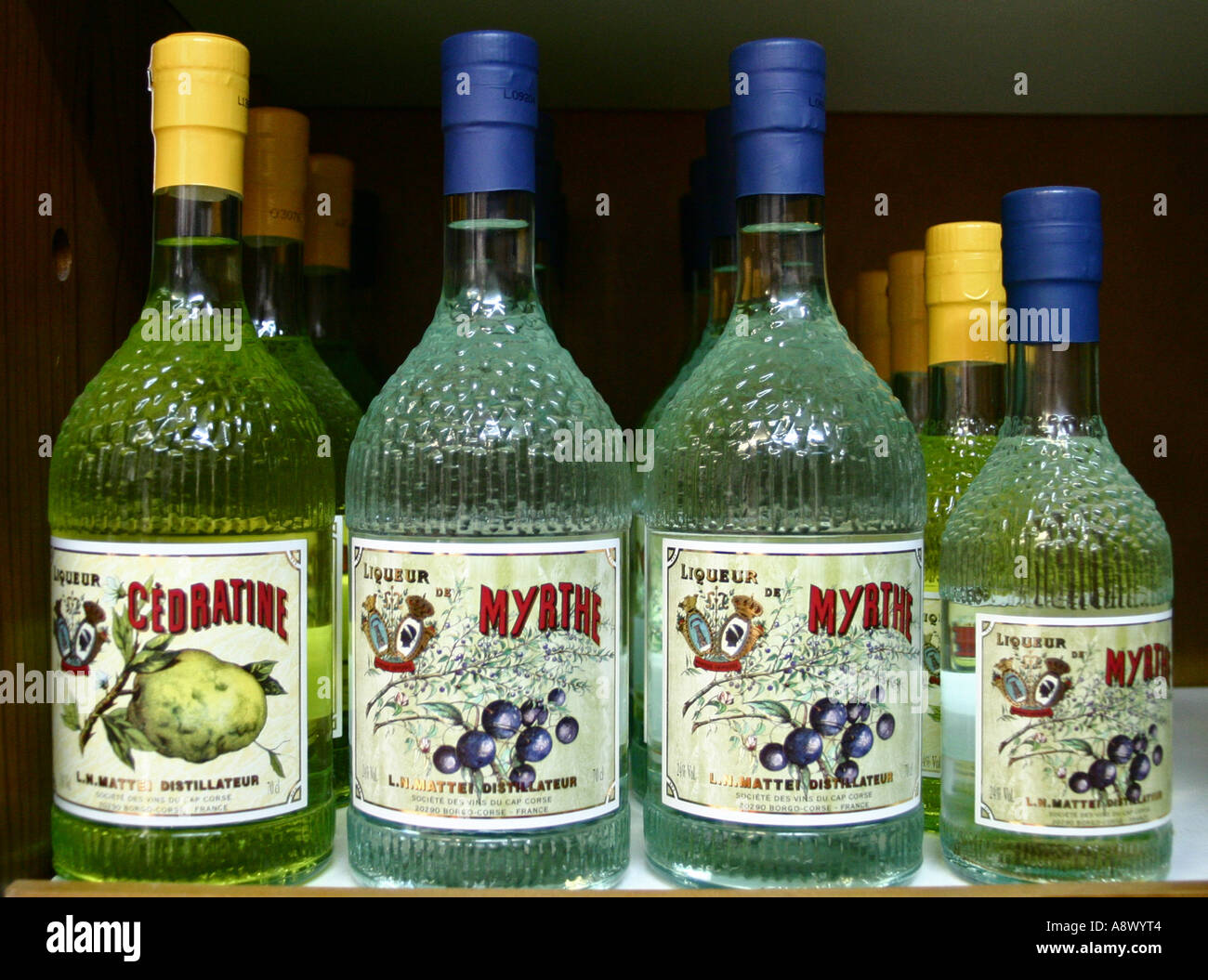
Alas! I believe this market has declined drastically – or perhaps citrons from elsewhere have cornered the candying market. The fact is, Leghorn is no longer a centre for candied citron production, the Calabrian citron hangs on by managing to keep a foot in the etrog market, while the Corsican and Corfu citron production is down almost to nothing; the few which are grown there are only used to make a local liqueur. Here’s the Corsican variety. Somehow, it seems apt that the bottle stands next to one made with myrtle, another of the four species.
Let’s lift a glass to the citron a.k.a. the etrog! Cin-Cin!
After reading my last post, my wife asked me a very simple but very penetrating question: “But why are jeans blue?”
One can of course be nit-picking and respond that actually not all jeans are blue. This is undoubtedly true but let’s face it, the huge majority of jeans are dyed some shade of blue. Jeans are not called blue jeans for nothing.
One can also give the trivial answer “because blue dye is used”, which rightfully elicits the riposte “Ha-ha, very funny”. But actually, an interesting tale does hang on the dye used, which I learned while preparing the previous post and which I can’t resist recounting here.
We have to go to Europe for an answer to my wife’s question, because it was from there that the denim material used for blue jeans came to America. So what is the history of blue dye in Europe?
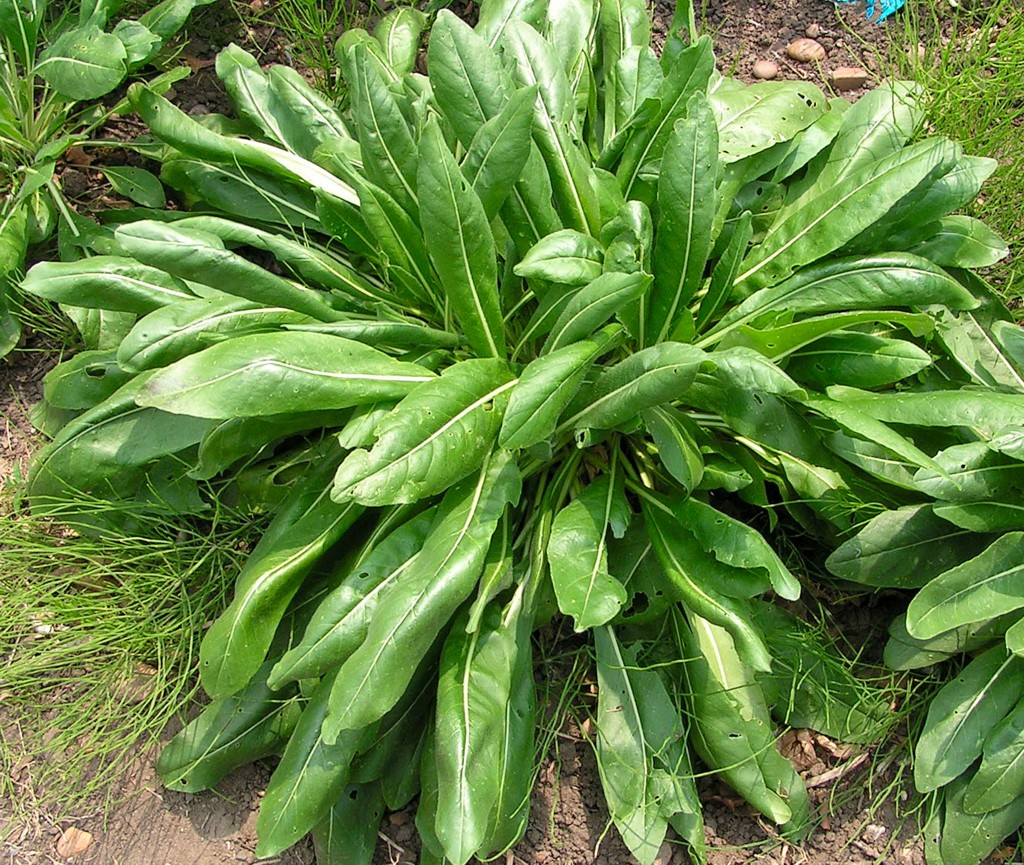
I was delighted to learn that the original blue dye of choice in Europe was extracted from woad. For those – I’m sure many – readers who have no idea what woad is, it is a plant native to many parts of Europe from whose leaves indigo dye can be extracted. I throw in a picture here in case any of my readers might wish to go searching for it.
Personally, I must admit that I only knew woad as the stuff which Julius Caesar, in his De Bello Gallico, tells us the Britons smeared themselves with: “Omnes vero se Britanni vitro inficiunt, quod caeruleum efficit colorem, atque hoc horridiores sunt in pugna aspectu”, “In truth, all the Britons stain themselves with woad that occasions a bluish colour, and thereby they have a more terrible appearance in battle”. But I prefer the way it is put in that sublime history of Great Britain, 1066 And All That: “Julius Caesar advanced energetically, throwing his cavalry several thousand paces over the River Flumen; but the Ancient Britons, although all well over military age, painted themselves true blue, or woad, and fought heroically under their dashing queen, Woadicea, as they did later in thin red lines under their good queen, Victoria.” Mel Gibson in Braveheart shows us how it should be done.
Trivia aside, woad was actually economically a very important crop in many parts of Medieval Europe and made some communities very wealthy. In France, for instance, the trade in the dye from woad built many of the more beautiful buildings in Toulouse
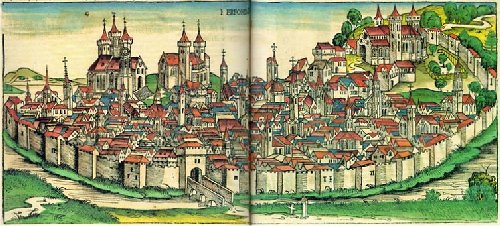
while in Germany woad paid for the University of Erfurt, established back in 1389.
The indigo from woad coloured the best of medieval tapestries.
In sum, all seemed to be going swimmingly for the woad sector!
But there was a worm in the rose: the same indigo dye, but extracted from the leaves of another plant, in much larger quantities per leaf, in India.
This stuff was already arriving in small and very costly amounts onto Greek, and later Roman, markets, along those same trade routes which I’ve had cause to mention in earlier posts. Because it was so expensive it was used primarily as a pigment in paint and not as a dye of fabrics. The Greeks called it indikon, the Indian dye. The Romans latinized this to indicum, which eventually gave us our indigo. Once the Europeans rounded the Cape of Good Hope and made it safely across the Indian Ocean, they could buy the stuff directly from the producers and cut out all the middle men. Nice packets like this began to arrive in Europe in the hold of European ships.
The price in the European market places duly dropped, woad producers saw their livelihoods threatened, and they resorted to the classic weapons of getting pliant governments to forbid its use (it’s called anti-dumping these days) and putting around rumours that using indigo from India severely affected the quality of the fabric. All to no avail. The higher transportation costs from India were more than offset by the much higher productivity of the Indian plant. Transportation and production costs were then further slashed when the Spaniards started growing the Indian plant in their Latin American colonies and the British in their southern American colonies (Carolina and Georgia), both with slave labour.
The British then went on to use their early stranglehold on Bengal to create vast indigo estates, turning the local farmers into de facto slaves in the process, which further reduced costs.
Woad was doomed and disappeared from the scene.
But at this moment of triumph for Asian indigo, there was another worm in the rose, this time in the form of the nascent organic chemical industry. In the early 1800s, when woad was fighting its final rearguard actions against Asian indigo, Europe and North America were starting to adopt town gas to light and later heat homes and businesses. Town gas was produced from coal.
Its production also created various very nasty wastes, some of which I have stumbled across in my professional career buried in old gasworks sites. One of these wastes was coal tar, a nasty, gooey, stinking waste which looks like this.
Chemists started dabbling with coal tar to see what they could extract from it. The breakthrough occurred in 1856 when a young British chemist by the name of Henry Perkin, while trying to make quinine from coal tar, serendipitously produced a purple dye that he later commercialized under the name mauveine.
It must have been so thrilling, almost magic, for Mr. Perkin to extract this beautiful colour from that horrible, nasty black gunk. For sure, in the chemistry lab as a boy I found those moments when the liquid in my test tube turned a beautiful colour to be the most memorable. But perhaps Mr. Perkins only saw the commercial possibilities in this lovely mauve.
In any event, the race was on! Chemists piled in to see what other dyes (and later other organic products) they could make by fiddling around with coal tar. The Germans soon dominated the field, accounting for almost 90% of synthetic dye production at the outbreak of World War I. It took a while for synthetic indigo to be produced, because coal tar didn’t contain a suitable “carbon skeleton”. Finally, in the late 1870s, early 1880s, the German chemist Adolf Baeyer managed to find several routes to synthetic indigo. His Nobel Prize for chemistry in 1905 was partially based on this work. Chemists at the Badische Anilin und Soda-Fabrick (better known to us as BASF) came up with yet another, commercially more viable, route, and BASF marketed its first synthetic indigo in 1897. By the way, just to close the circle, BASF was created in 1865 by one Friedrich Engelhorn, who had established the gasworks for the town of Mannheim in 1861 and saw in Perkin’s discovery of mauveine a way of turning this damned coal tar waste into something useful. As BASF’s name suggests, the company initially focused on aniline-based dyes. This is the original BASF plant at Ludwigshafen in 1866.
Natural indigo was doomed. Synthetic indigo’s better quality, the greater reliability of its supplies, and its lower cost all drove natural indigo off the market, despite the usual attempts, which we’ve seen already with woad, by sympathetic governments to try and block the use of synthetic indigo by fair means or foul. In 1897, the year that synthetic indigo first came onto the market, 19,000 tons of natural indigo were produced. By 1914, this had plummeted to 1,000 tons and the free fall was not over. Asian indigo followed woad-based indigo into oblivion.
At this moment of triumph for synthetic indigo, there lurked yet another worm ready to devour the rose’s heart: other blue synthetic dyes. Indanthrene Blue RS was patented in 1901, Hydron Blue was developed in 1908, and maybe there were others – the world of textile dyes is bewilderingly complex. I’m not quite sure how these various dyes fought it out for the denim market, but in the 1950s BASF and other indigo producers seriously considered promoting other blue dyes for denim because of indigo’s poor fastness properties. This is jargon for meaning that textiles dyed with indigo tend to fade rather easily. What stopped them was the fact that this very property of fading was what was so earnestly desired by the young owners of blue jeans, the product in which indigo was most used. So indigo was saved and the worm crawled off to devour other roses. Because of the popularity of jeans, indigo is in fact king of the heap. It is the textile dye with the highest production volumes in the world, some 30,000 tons a year (when you think that most of it is used to dye jeans and that it only takes 10 grams of indigo to dye one pair of jeans, readers with good mathematical skills will quickly figure out that literally billions of jeans must be made every year).
But after that tour through the world of dyes and its cut-throat competition, I am afraid to say that I still haven’t properly answered my wife’s question: “why are jeans blue?” Why are they not red or green or black or yellow? Well I think we have established why they are blue today: because of indigo’s quirk of fading in interesting patterns. But why did the Amoskeag Mills in New Hampshire, which initially supplied Levi Strauss with his denim, use indigo dye? Despite my best efforts, I have not been able to find a satisfactory answer. I suspect it was because by the 1860s, when the mill started supplying Mr. Strauss with his denim, this particular fabric had “always” been dyed with indigo or woad or some other blue dye. “Always” seems to mean at least since the 16th Century. One article I came across says that it was at this time that blue in the UK became the poor’s colour of choice for their clothing. Judging by the paintings of the Master of the Blue Jeans, it was the colour of choice for the poor in Europe more generally.
Why? I don’t know. I have to assume that cost was a factor, but it could also have been simply a fashion trend.
So I’m afraid that I have failed to answer my wife’s question at the deepest level. But I shall keep an eye out, and maybe one day I will come across the answer and be able to update this post. Any leads will be welcome. In the meantime, I invite my readers to enjoy some blue.
In a previous post, I sketched out a rough agenda for my retirement. I think my wife was pleased with it. But she does have certain anxieties about this upcoming event. She has recently been reading about some Japanese syndrome called Retired Husbands Syndrome which attacks Japanese housewives. Suddenly, this guy whom you’ve hardly seen in the last 40 years – being a good Salaryman, he’s been leaving the house at 6 am and not getting home till midnight – is now constantly hanging around, getting in your way, messing up your routines, and expecting you to do things for him. Not unnaturally, the stress levels rocket up. While we’ve maintained a more balanced lifestyle, she does have fears of me moping around the house, lounging around on the sofa, eating natchos and watching TV all day. This dystopian view of hers is not helped by a number of films we’ve seen recently, describing exactly this situation. Nor is it helped by my fondness (my wife thinks more obsession) for playing Spider Solitaire on my iPad. She’s afraid that come retirement all I’ll do all day is compulsively play Spider Solitaire, with a little Freecell on the side.
It is true that I tend to play the game whenever I have a spare moment. I do admit that it can get a little out of hand. But I’m sure it’s good for my aging brain to carefully plot my strategy for getting the cards out. And those little electronic cards, with their glossy black spades and clubs and glowing red diamonds and hearts, and kingly Kings and queenly Queens and knavish Jacks, are really very pretty.
I was thinking about their prettiness the other day during a Spider Solitaire game, and when it became clear that I was dribbling towards defeat I decided to quit and do a little research on the history of playing cards, principally to understand where the suit design of hearts, diamonds, spades, and clubs originally came from. I was very pleased that I did so, because I discovered that what we have here is yet another example of the Great East-West Exchange which took place along the Silk Road and other trade routes that once criss-crossed the Eurasian continent. Of course, most of what was exchanged was traditional goods, but ideas also flowed along these routes. So did less obvious things, like the the willow tree and the pomegranate, both of which I’ve had occasion to write about in the past. Now I can with pleasure write about a third such item, playing cards.
Our story starts in China. Some time in the Tang Dynasty, around the 7th-8th Century, it seems that someone in the Imperial Court came up with the idea of a pack of playing cards, divided into four suits. The suits were Coins, Strings of (1,000) coins, Myriads of strings (10,000), and Tens of myriads. Like our modern cards, each suit contained cards with different numbers of pips. Here we have a Three of Coins and a Three of Strings-of-coins.
These packs also included face cards, like this one from the Ming dynasty.
These ‘chi-pai’, which is Chinese for playing cards, are still in use. This next photo shows the cards from a three-suited variant. Note how the design of the suits became highly stylized – this is important for our story.
I’ve no idea what games exactly were played with these cards back in Tang Dynasty times, I’m not sure anyone knows, and actually it’s not important for our story. What is important is that the use of cards spread westward. This could have happened through trade; I can imagine Chinese merchants whipping out a pack of cards to while away their down time in the caravanserai that dotted the Silk Road.
Alternatively, it could have happened through conquest, with conquering soldiers picking up new habits from the conquered. In this case, the Mongols, who conquered China in the 13th Century, seem a very good candidate. At its height, the Mongol Empire stretched from Korea to Ukraine.
Any new fads picked up by Mongol troops in China could have spread, through many an evening around soldiers’ camp fires, all the way to Kiev.
I don’t think the two diffusion mechanisms are necessarily exclusive. I could imagine that the Mongol conquest also amplified diffusion of card playing through trade. The two maps above superimpose quite well, and in fact the period of the Mongol Empire brought political stability to Asia which in turn encouraged a surge of trade along the Silk Road.
Whichever way, Chinese playing cards diffused westward. Some time in the 13th-14th Century, maybe earlier, so-called Ganjifa playing cards started being used in Persia. The etymology of the word Ganjifa is uncertain. Some see its root in the Persian word gunj, which connotes treasure, treasury, or money, and suggest that this connects them to the money-suited Chinese playing cards. Others see a more elaborate etymology, proposing that Ganjifa is actually a corruption of ‘han-chi-pai’, or ‘Chinese playing cards’. In this case, there would be a very clear line of descent from China. In any event, variants of Ganjifa playing cards began to be used throughout the Muslim world, as well as in India (brought there in the saddle bags of the Mughal conquerors). What interests us most is the variant used by the Mamluk in Egypt.
The Egyptian Mamluk were an interesting bunch of people. Initially, they were slave soldiers recruited by the Ayyubid dynasty. For the most part, they were drawn from the Cumans-Kipchaks, a nomadic group who controlled the steppes north of the Black Sea. They were conquered by the Mongols and then absorbed into the Mongol Empire as the Golden Horde. Some time in the 13th Century, the Mamluk slave-soldiers kicked the Ayyubids out and reigned in their place. This happy state of affairs continued until they were in turn defeated by the Ottomans and their territories subsumed into the Ottoman Empire. Luckily for them, the Ottomans kept them on as governors of Egypt.
Perhaps because of their Mongol connection, or in some other way, the Mamluk picked up this new fad of card playing and brought it to Egypt some time in the 14th Century. What is of interest to us here is the fact that Mamluk packs of cards had four suits: Coins, Polo-sticks (the Mamluks were great polo players), Cups, and Swords. In addition, each suit had three face cards, the king, the first vizir, and the second vizir. Some clever people, who know more about the history of playing cards than I do, see a link between these four suits and those used in Chinese playing cards. Their thinking goes as follows. There is no problem in seeing the Mamluk Coin suit being derived from the Chinese Coin suit, that’s an easy equivalence to envisage. After that, it gets trickier. The clever people propose that the Chinese String-of-coins suit was transformed into the Mamluk Polo-stick suit, on the grounds that a String-of-coins pip could easily be misinterpreted as a stick to those unfamiliar with this very Chinese way of dealing with coins. It is true that the String-of-coins suit in the photo of Chinese playing cards above has been so stylized as to look stick-like. Then the clever people suggest that the Chinese Myriad-of-strings suit became the Mamluk cup suit, on the grounds that the Chinese character for myriad, 万, which was often used as a sort of pip, was simply inverted by the Mamluks, at which point it does indeed look cup-like. Finally, the clever people suggest that the Chinese Tens-of-myriads suit, where the Chinese numeral for ten, 十, was often used as the pip, was simply interpreted as a sword by the Mamluk and so gave rise to their suit of Swords. The ice over which we have been scrabbling these last few sentences is indeed thin, but the romantic in me is willing to believe this wonderful story of Central Asians scratching their heads over these strange-looking cards which had come all the way from China and giving their own interpretations to the drawings on them. To enliven all this text, I throw in here a photo of one of the rare Mamluk playing cards to have survived, a Six of Coins, found in Istanbul’s Topkapi palace.
The next leg of our journey is somewhat easier to envisage, the transit of the Mamluk playing cards to Italy. I’m guessing that Venice was the entry point, although there could have been more than one. Until the Portuguese rounded the Cape of Good Hope and made for the Spice Islands, most of the spices which Europeans lusted for entered Europe through Venice, which in turn picked them up in Egypt. In addition to picking up spices, I can imagine Venetian sailors and merchants picking up packs of Mamluk playing cards to while away the long journeys back to Venice. Once in Italy, the use of playing cards spread rapidly, with each region having its own particularities. Here, for instance, is a pack of cards from Bergamo.
Italian playing cards basically adopted the Mamluk suits, except that they changed Polo-sticks to Clubs – the game of polo was unknown in Europe at that time and I suppose the polo-sticks looked club-like to the Italians. They also adopted the idea of three face cards per suit but Europeanized them into king, upper marshal, and lower marshal.
There followed a fairly rapid diffusion of playing cards throughout Europe as the craze for card playing caught on. The Southern Europeans – Spain and Portugal – kept to the Italian design for their suits, with some minor modifications. The Northern Europeans instead experimented with a lot of different suit designs. Given the aristocratic background of many players, the suits were often hunting-themed like this pack from Flanders.
Through the newfangled technology of printing, in which they were leaders, and through which they were the first to produce cheap packs of cards, the German lands popularized the use of the following suits:
Personally, I don’t see much connection between these suits and the Italian versions. I think the Germans just used their fantasy. In any event, here are some old German playing cards with suits of Bells and of Acorns.
Not to be outdone, the French came up with a somewhat different set of suits.
The Hearts suit was taken as-is from the German suits. The Spades suit seems to be a slight modification of the German Leaf suit. The Clubs suit could be considered a geometric transformation of the Acorns suit – the sides of the acorn shell pulled out, the acorn itself shortened. The circular Bells suit of the Germans was replaced by a different shape, the diamond. As the cards above show, the French also introduced Queens, who displaced the upper marshal.
The French suits have since become those most used worldwide. Why that should be is not completely clear to me. I think it probably has something to do with the fact that the French suits are easier to read; I would have got really confused using those German cards I show above – “wait, is that an Eight of Acorns I have in my hand, or a Nine?” Or perhaps it was because the French were the arbiters of good taste in Europe until World War I. Or perhaps it was because the British adopted the French suits and happened to become the most powerful country in the world with the biggest colonial Empire, which allowed them to impose their choice of card suits and card games on their colonial subjects. Or perhaps it was because the Americans, who took over the title of the most powerful nation, followed the British in choosing French suits for their playing cards. For any or all of these reasons, or maybe others again, French suits now stare up at me from my games of Spider Solitaire and Freecell.
Well, now that I’ve figured all that out, I can go back to what I was doing and actually win my Spider Solitaire game.
One of the interesting side-effects of living in Bangkok is that I can carry out a comprehensive study of feet. The climate here is such that the wearing of open footwear is exceedingly widespread, so I can examine – surreptitiously, of course – a very large number of feet as I walk around, sit in public places, or – as was the case when I started this post – sit in buses stuck in Bangkok’s perennially dreadful traffic. Since so many foreigners come to Bangkok, the study is very cross-cultural: I study not only the feet of the Thai, but also – judging from the shards of phrases I overhear as the foreigners walk by – Australians, Europeans of all stripes, North Americans, some Latin Americans, quite a number of Middle Easterners, a sprinkling of Africans, and of course Asians from every corner of Asia. I am now ready to report back on the findings of my study.
Let us first set the benchmark against which I can compare the feet I see. This would be a foot in its natural state, that is to say a foot that is perennially shoeless. This photo, which I’ve used before, gives an excellent example. What we have here is a band of Amazonian Indians who are coming into contact with the modern world for the first time. Their astonished and somewhat fearful faces upturned towards the helicopter (I guess) are fascinating, but I would invite the reader to focus on their feet, feet which have never been shod.
As the readers will quickly agree, these feet are in the state that most human feet have been in for 99.99% of the time we have inhabited this planet.
I throw in here an older photo, taken – no doubt by some amateur anthropologist – to deliberately show a natural foot. And of course it has to be an old photo, because wearing shoes is probably now the norm rather than the exception. Finding a foot nowadays which has never been shod must indeed be hard.
Note the way the toes in the natural foot, especially the big toe, are splayed out. A minute’s thought will show that of course this is the way it should be. By spreading out like that, toes are giving the foot a wider footprint and therefore making it easier for the person on top of those feet to balance.
In this photo of a baby’s feet, the reader will notice that they naturally take this splayed form
Only later, through imprisonment in shoes, do the toes come closer together
sometimes too close together.
I am reminded of TS Eliot’s poem Animula, which tracks the evolution of a person’s soul from birth to adulthood, but which actually describes very well the fate of our feet: “‘Issues from the hand of God, the simple soul’ …Issues from the hand of time, the simple soul … misshapen, lame, unable to fare forward …”.
But back to the matter in hand. Having set the benchmark, I can now report the results of my pseudo-sociological field experiment in the streets and other public spaces of Bangkok.
Generally speaking, the feet of Thai people look in considerably better shape than those of foreigners from “civilized” countries. A good number have quite splayed toes, fruit no doubt of hardly ever wearing shoes at home. In fact, it’s quite common to see their little toes falling off their flip-flops or sandals. Clearly, the basic “chassis design”, if I can put it that way, adopted by shoe manufacturers simply ignores the natural form of the foot with splayed toes. Shoe manufacturers take as their starting point an already somewhat malformed foot. Well they would, wouldn’t they? After all, it is their products which have malformed out feet in the first place. Other Thais have moderately straightened toes, fruit of some level of constriction by shoes.
I detect a social element here. It is clear from their dress and occupation that the Thai owners of feet whose toes are splayed come from the poorer strata of society, while those with feet with straight toes come from the richer ones. And I also detect a gender element. Young Thai women show more evidence of constricted toes than do the men. I will come back to this in a minute.
As for the feet of the foreigners, those of people from more developed, richer, more “civilized” countries show toes much more tightly squeezed together
along with more extreme signs of foot distress: bunions
hammer toes
calluses and corns.
Like in the case of the Thai, women’s feet seem more malformed than men’s. Which gets us of course to the cause of all these foot problems: canons of accepted (feminine) beauty.
Let’s face it, for hundreds if not thousands of years, there has been this insidious idea that those members of society who are more civilized, more refined – and richer – have delicate (for women) or well proportioned (for men) limbs and features. Hands, of course, have always been a particular object of this odious social creed, because having big hands, and especially having big fingers, meant that you were poor and so did a lot of manual labour.
If you were rich, on the other hand, you could pay people to do your manual labour for you, leaving your hands and fingers slim.
With feet, it must have been a little different. Like grand clothes, the fact that you wore shoes showed that you had money to burn, not like that bum on the street who had to run around in his bare feet all day. And of course, slim, petite, shoes (that is to say, narrow, horribly constricting, shoes) showed (or pretended to show, since your feet were actually squashed into the shoe) that you had slim, petite, feet, not broad feet like that bum on the street etc.
This last pair of shoes, with their modest heels, allows me to segue smoothly into that terrible habit of wearing high-heeled shoes. As we all know, it’s mostly women who wear them, but men do too, depending on the state of fashion. I am ready to reveal at this time that when I was young and foolish I went through a phase of wearing platform boots, one black pair and one brown, which looked like this.
Apart from feeling pretty cool as I walked around Uni, I found a most satisfying side-effect to be that I was taller. No doubt that’s one reason why women do this to their feet
which when you strip away the shoe looks like this.
Modest heels I could understand. I mean, I fell for them. But why subject yourself to the pain of excessively high heels, not only a pain that comes today but also a pain that dogs you for years to come? Because men still rule the world, and they like to see the accentuated swish in a woman’s gait caused by walking in high heels, or maybe they like the fact that her legs look longer, or that her feet look smaller, or her toes shorter, when wearing heels. Or maybe it makes women take smaller steps, to avoid falling over (my wife still remembers her father exhorting her to take small steps, because that was more ladylike and refined). Or maybe because it makes men feel strong to see women tottering around on heels, not able to walk very far before complaining of sore feet and needing help.
Fanciful? Perhaps. But consider this. For nearly one thousand years, from early in the Song dynasty, about 1000 AD, to the early 20th Century, many Chinese women were subjected to the unbearably painful process of foot binding. To appreciate the full horror of this practice, let me give the readers a quick summary of what girls were subjected to. The process was started when girls were between the ages of 4 and 9, that is, before the arches of their feet had had a chance to develop fully. First, after softening the feet and cutting back the toenails, the toes of each foot were curled under and then pressed with great force into the sole of the foot until – the – toes – broke. But it didn’t finish there. While the broken toes were held tightly against the sole of the foot, the arch of the foot was also broken so that the foot could be drawn down straight with the leg. So you basically smashed the little girl’s feet. Then you started the binding. The idea was to pull the ball of the foot ever closer to the heel, causing the broken foot to fold at the arch, and pressing the toes underneath the sole.
As the readers can imagine, a girl’s broken feet required a great deal of care and attention if she was not to die from this process; it is estimated that 10% of girls died from gangrene and other infections due to foot binding. So their feet were regularly unbound, they were washed, the toes unfolded and checked for injury, and the nails carefully trimmed. The broken feet were also kneaded to soften them and the soles of the girl’s feet beaten to make the joints and broken bones more flexible. Then the poor girl’s broken toes were folded back under and the feet rebound. Every time the feet were rebound, the bindings were pulled even tighter. The ideal was to end up with a “foot” no more than 10 cm long.
The Chinese are nothing if not eminently practical. Recognizing that mothers might well be too sympathetic to their daughters’ pain, it was generally an older female member of the family or a professional foot binder who carried all this out. Oh, and the process was usually started during the winter time since girls’ feet were more likely to be numb from the cold, and therefore the pain would not be as extreme. How nice of them.
This was the result:
Of course, no-one except the persons caring for the feet ever saw this. What they saw was this, these oh-so dainty little shoes.
And why were Chinese women subjected to this horrible procedure for a thousand years? For beauty, of course. Men ruled China (they still do), and crazy as it might sound to the modern reader, men considered bound feet to enhance a woman’s beauty by making her movements more dainty and “ladylike”. As readers can imagine, it was difficult to walk on broken feet. Women with bound feet tended to walk predominantly on their heels. As a result, they walked with a cautious, unsteady gait, taking tiny, swaying steps. And, of course, that most important thing where women were concerned, well bound feet helped her parents contract a good marriage for her. It could also be that it was found to be an effective way of forcing women to be housebound and completely reliant on men. In this view, traditional societies forbid women from leaving the house; the Chinese simply broke their feet.
So what is the moral of all this? Look after your feet! Stop obsessing about narrow, dainty feet. Celebrate splayed toes. Go to the office in flip-flops and take off your shoes the moment you sit at your desk (which is what most Thais do). Put on sandals until the dead of winter; our feet can tolerate quite a lot of cold. Throw away all your high-heeled shoes. And if a man ever asks you to wear high heels, cut him mercilessly out of your life; he is clearly a swine.
A little while back, my wife, bored with the usual round of cooking in the tiny, stuffy, hot kitchen of our apartment and longing to spice things up a bit with some change, espied a fresh herb in the vegetable section of our local supermarket which turned out to be mint. She brought it back and for several weeks now, we have been trying chicken à la mint, pork à la mint, fresh mint in green salad, and – the subject of this post – mint in tomato-based sauce for pasta.
Let me interject here that a basic difference between me and my wife is that she is adventurous, ready to try new things, and I am timorous, fearful of the new and comfortable with the true and the tried. This is as true for food as it is for any other sphere of life. I therefore approached these experiments in our usual cuisine with some diffidence if not suspicion. Actually, apart from the fresh mint in green salad, which I forcefully suggested we not try again, it worked rather well. In the case of mint in tomato-based sauce for pasta, it worked really well. The mint added a sweet overtone to the acidity of the tomato which did wonders to the palate. I have graciously allowed this variation on a theme to be added to our culinary repertoire. It’s very easy to prepare, by the way: replace basil leaves with mint, et voilà! (or you can just add the mint to the basil leaves)
A quick whip around the internet shows me that my wife is not the only one to have stumbled onto this use of mint. Martha Stewart, no less, offers a recipe where the tomato sauce contains mint. I throw in a picture from another recipe – readers are going to have to take it on faith that the little green bits in the sauce are finely chopped mint leaves.
One thread in these posts of mine has been to salute the humbler ingredients in our food, those which never get much publicity but are actually the ones that make each of our dishes so special. I’ve written on lemongrass recently, and capers and anise a while back (and, at the other end of the spectrum, I’ve written very disapprovingly about the use of hot spices). So I will use this occasion to also sing the praises of mint, reviewing some of its better uses in food.
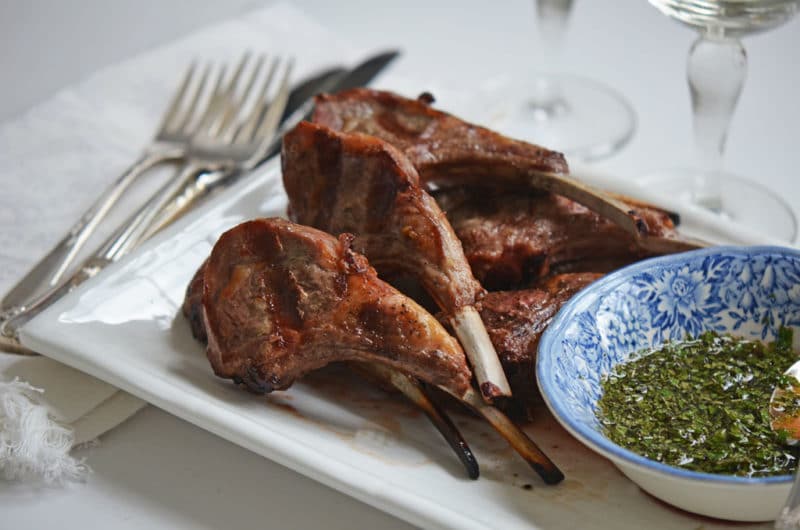
As I usually do, I began surfing around the internet to see what I could find. I was surprised to not come across a huge use of mint, at least in my part of Europe (Western Europe, to use the Cold War parlance). Of course, there is that most English of dishes, mint sauce, a wonderful, wonderful sauce to put on lamb chops. But this dish has already been the subject (or one of the subjects) of a previous post, in which I sing the praises of the sweet-and-salt combination, so I don’t feel I can go on about it again. I will leave readers to refer to that post and move on – but not before throwing in a picture of mint sauce with lamb chops.
In my electronic wanderings, I stumbled across the following dish, which also seems incredibly English – at least, it involves peas, and since peas are in my mind as English as Big Ben or HM the Queen (one of the veggies in every meat and two veggies which I had in my youth seemed to be peas), I include it. We are talking of pea soup with mint (I give thumbnail recipes for this and other dishes that I mention at the end of the post).
I have a feeling that this soup would be good chilled, like gazpacho.
I also want to add here another dish that I came across as I went around raising electronic rocks to see what was hidden below them. It’s actually an eggplant dish from 16th Century Italy. I add it because I think it’s kind of cool to look at what our ancestors were eating. But it’s also an intriguing dish because it looks to be an ancestor of the modern dish we know as eggplant parmigiana. The big difference between the two is the absence of a tomato-based sauce in the old recipe. I suppose this difference reflects the fact that tomatoes were not yet current in Italian cuisine in the 16th Century. Instead, a mix of herbs (mint, sweet marjoram, salad Burnet, parsley, fresh fennel tips), crushed garlic, a couple of spices (cinnamon and cloves), pepper, and salt, are spread over the eggplant, and the whole is splashed with verjuice (I will let readers look that one up, as I had to) and sprinkled with sugar. Then, like eggplant parmigiana, cheese is spread over the whole. Here’s what it looks like, and the thumbnail recipe is at the end.
It was at this point that luck came to the rescue. As I was surfing disconsolately around the internet, I came across an interesting article entitled “Mints in Ethnic Cuisines”, written by two ladies from Texas, Madalene Hill and Gwen Barclay. I am indebted to them for much of what follows. It was they, for instance, who taught me that Greek cuisine bucks the (modern?) European trend of using little mint. It seems that Greeks use mint with wild abandon in their cuisine. The two authors mention several dishes in particular: keftedes meatballs, the yoghurt-based tzatziki sauce, the bean stew gigantes plaki, dolmas (stuffed grape vine leaves), hortopita, which is a vegetable and rice pie; even that best known of Greek dishes, moussaka, has mint in it! I give thumbnail recipes of all these dishes at the end, but here I will only post pictures of keftedes meatballs
which can be served with the yoghurt-based tzatziki sauce as a dip
I chose to put pictures of these two dishes with the hope that my wife (and I) can try to make them …
I now leave Europe behind, skimming over the waves of the Aegean Sea to the land of Lebanon, because I want to raise a cheer for that most Lebanese of dishes, tabouleh.
I have very fond memories of eating tabouleh in Beijing – yes, Beijing. There was a little Lebanese restaurant down the road from where we lived, run by a small, tubby Lebanese man with a twinkle in his eye. When Spring came rolling round, it was incredibly pleasant for my wife and I to sit outside the restaurant, under the barely budding trees, in the tepid heat of the midday sun, slowly working our way through a plate of tabouleh. I must say, though, I’m a little surprised that not only chopped parsley but also chopped mint is added. I’m not sure that our tubby Lebanese restaurateur was putting mint in his tabouleh. I will need to hunt down a restaurant which serves tabouleh with both mint and parsley. While I’m at it, I will also see if it serves Arab or Middle-East salad.
Lemon segments, diced cucumber and tomatoes, the whole mixed with chopped onions, mint, and parsley. Sounds sooooo good …
I now want to arc over to the Indian subcontinent, but not before pausing for a minute in modern-day Iraq. I’m actually stopping here for Iraq’s Babylonian past. Like any self-respecting university, Yale University has a collection of cuneiform tablets, some of which, like this one, list recipes.
These have been translated by a Frenchman, Jean Botéro (this immediately makes me think of the Egyptologist, Professor Philémon Siclone, in the Tintin album “Les Cigares du Pharaön”
but I digress).
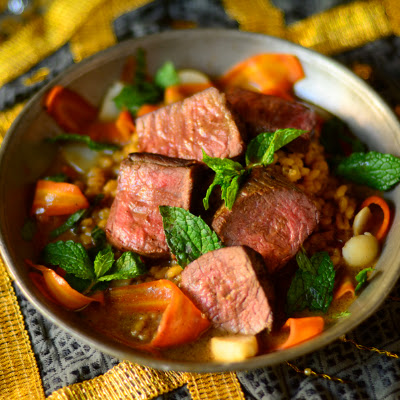
One of these, Recipe XXIII, contains mint, to whit: “Leg (of mutton) (?) meat is used. Prepare water; [add] fat […] samidu, coriander (?), cumin (?), and kanašû. Assemble (all the ingredients in the cooking vessel) and sprinkle with crushed garlic. (After cooking,) blend into the pot šuhutinnû and mint […]” As you can see, words are missing, the translation of some of the ingredients is unknown, and to make matters worse the recipe is exceedingly brief compared to our modern ones, leaving much to the skill – and imagination – of the cook. Nevertheless, Laura Kelley and a band of hardy cooks have been piecing together these telegraphic recipes from 4,000 years ago and trying them out. Many of the results are described on the web site “The Silk Road Gourmet” I post here the picture of a modern take on Recipe XXIII, after someone concluded that šuhutinnû is probably carrot or possibly parsnip, and samidu is barley:
I have added the modern version of the recipe to the thumbnail recipes below, for those who might want to try connecting gastronomically with our remote Babylonian ancestors.
After that pit stop in the fertile crescent, we go on to the Indian subcontinent, the land of chutneys – not so much the fruit-based chutneys which the colonial Brits brought back to the UK, but more vegetable-based chutneys. Here is a chutney, mint-coriander chutney, where mint takes pride of place.
One of the recipes I perused helpfully informs the reader that this chutney can be served with pakoras, samosas, chaat, chole, or even potato chips.
This chutney allows me to segue smoothly into another popular dish from that part of the world, raita, a cold yogurt condiment served to cut the heat of spicy dishes. And here I will throw in a picture of a cucumber-mint raita (with thumbnail recipe at the end).
Being based on yoghurt (or strictly speaking curds) and looking at how raitas are made, I have to think that they are (perhaps not so) distant cousins of the Greek tzatziki (which itself is part of a broader family of yoghurt-based dishes to be found from the Balkans to the Caucasus). Maybe one day I should write a post on yoghurt …
After this, I soar over the Bay of Bengal back to Thailand. Madalene Hill and Gwen Barclay say that mint is a very popular ingredient in Thai cuisine and in South-East Asian cuisine more generally. Certainly, I recently had a taste of a common use of mint here, where it joins a number of fresh vegetables being served as a side dish to be added to noodle dishes or just eaten along with other main dishes.
We were saying bye-bye to a colleague and had lunch together in the office. The food was ordered from outside. My Thai colleagues informed me that most of the dishes I was trying were from the north of the country. I found it interesting to eat fresh mint leaves with some of the spicier dishes. This side dish of fresh vegetables is also common in Vietnam, and I suspect throughout South-East Asia.
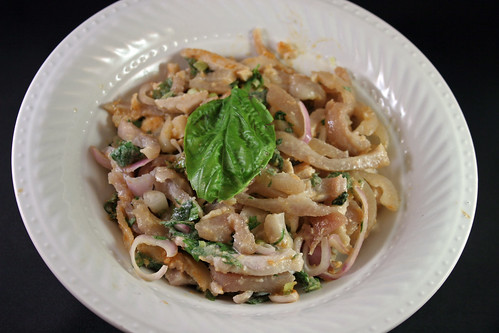
I’ll finish with a dish from Thailand, yam nang mu (pork skin salad). This is actually one of many Thai “salads” in which various cuts of meat or offal are sliced small, seasoned with spicy/sour/sweet sauces, and then mixed with herbs of one variety or another. In this particular case, you season boiled, defatted pork skin (there is a cousin to this dish using pig’s ears) with fish and shrimp sauce, lime juice, sugar, and mix it all with a large amount of mint leaves, some lemongrass, some roasted rice, and a number of other ingredients (thumbnail recipe at the end).
Well, that brings me to the end of my world tour following the trace of mint. There are a lot of dishes which use mint that I’ve not mentioned. I’ve also not touched on the use mint in drinks, for instance Moroccan mint tea with its spectacular pouring technique
or the somewhat more alcoholic mint julep, a favourite of the Kentucky Derby.
But I’ll leave these for another day. Right now, my wife is looking at her watch and at the door. Time to go.
THUMBNAIL RECIPES
Pea and mint soup: Soften some onions in a heavy pot over medium heat. Add broth and bring to a boil. Add peas, reduce heat, and simmer gently until tender. Add chopped mint leaves (and parsley if you want). Add more broth. Purée in a blender until smooth. Season with salt and pepper.
Pomi sdegnosi, or braised eggplant: Slice the eggplant lengthwise and let them steep in in lukewarm water for 30 minutes. Rinse. Submerge the eggplant slices in boiling water for about 8 minutes. Remove and drain. Dredge the eggplant slices in flour and layer the bottom of an oiled dish. Chop all of the herbs – fresh mint, marjoram, parsley, salad Burnet, fennel tips – and mix them with minced garlic, spices – cinnamon, cloves, pepper – salt, sugar, and verjuice (for which lemon juice can be substituted). Cover the eggplant with breadcrumbs, drizzle with olive oil, cover with herb/spice mixture and then with provatura cheese (mozzarella, another pulled cheese, can be substituted). Repeat for each layer of eggplant. Bake in the oven for 30 minutes. (Adapted from http://atasteofhistorywithjoycewhite.blogspot.com/2014/08/to-braise-eggplant-historic-food.html)
Keftedes: Combine ground beef, bread dunked in milk, minced onion, minced garlic, finely chopped mint and oregano, some vinegar, some beaten eggs, a small amount of grated nutmeg, salt, and pepper, and mix well. Roll the mixture into balls. Dust the balls with flour. Put them in hot oil in a pan. Brown on all sides.
Tzatziki: Peel cucumbers and dice. To draw out their water, sprinkle them with salt and let them sit for 30 minutes. Drain well. Put them in a blender, along with minced garlic, some lemon juice, some chopped mint (and some chopped dill if you wish), and a little ground black pepper. Process until well blended. Stir the result into Greek yogurt. Salt to taste. Let it stand for at least two hours before serving so flavours can blend.
Gigantes Plaki: Soak gigantes beans (giant butter beans) overnight. Cover with fresh water and bring to the boil. Simmer for a couple of hours until the beans are just tender. In parallel, gently soften chopped onions and garlic for a few minutes. Then stir in some sweet paprika, tinned tomatoes, 100ml water. Salt and pepper. Bring to the boil, then simmer for half an hour. Stir in sea kale or dandelion leaves (or chard as an alternative). Mix the cooked beans with the sauce, adding some more olive oil and chopped mint and parsley. Transfer to a casserole pan, and bake for half an hour or so until the beans are tender and the sauce thickened and bubbling. Can be served hot, warm or at room temperature.
Dolmas: In a little broth, mix ground beef and lamb with uncooked rice, minced onion and garlic, some pine nuts, chopped mint and parsley. Place rinsed grape leaves on a work surface. Place a dollop of the mixture at the center of each leaf. Tuck in the ends and roll tightly toward the leaf point. Layer the wrapped leaves in a large saucepan Cover them with broth mixed with lemon juice. Cook over low heat for three-quarters of an hour.
Moussaka: Place minced lamb, minced onions, crushed garlic, chopped mint and oregano, a couple of bay leaves and a cinnamon stick in a large frying pan and cook over a medium heat for a quarter of an hour. Stir in some flour. Add a glass of wine, canned tomatoes, some tomato purée, and bring to a simmer. Cook for half an hour, until the lamb is tender and the sauce has thickened. Season with salt and freshly ground black pepper to taste. Set aside this meat sauce. Fry eggplant slices for a couple of minutes. Set them aside. Cook potatoes in boiling water for five minutes, then cool under running water. Prepare a white sauce as follows. Melt butter in a saucepan, stir in some flour. Cook for a few seconds, then gradually stir in milk. Add some grated parmesan and grated nutmeg. Simmer the sauce gently for 5 minutes. Season to taste with salt and pepper. Remove from the heat and stir in a beaten egg. Spoon some of the meat sauce into a shallow dish. Cover with a layer of potatoes and a layer of eggplant. Repeat the layers twice more, finishing with the eggplant. Pour over the white sauce to cover the whole in a thick, even layer. Sprinkle with a bit more parmesan. Bake in the oven until deep golden-brown and bubbling.
Hortopita: Peel, seed, and shred some pumpkin. Weight it to drain its liquid. Cook it in a skillet until it wilts and most or all of its liquid has evaporated. Transfer to a bowl. Cook in the same skillet a chopped leek and onion until also wilted. Transfer to the bowl with the pumpkin. Cook chopped chard and spinach until wilted; add to the bowl. Add the herbs – mint, sorrel, hartwort, chervil, dill, fennel leaves, parsley, and oregano – to the bowl. Season to taste with salt and pepper. Roll out a first phyllo dough ball and place it inside an oiled roasting pan. Brush with olive oil. Repeat with the second piece of dough. Spread the filling evenly over the dough. Repeat with a third sheet of dough, placing it over the filling. Brush with olive oil. Roll out the last piece of dough to a slightly smaller piece, and place it over the surface of the pie. Join the bottom and top layers of dough. Brush the top of the pie generously with olive oil. Bake until the pastry is golden and crisp. Remove and serve warm or at room temperature.
Tabouleh: Stir together some bulgur and olive oil. Pour boiling water over, and let stand for a quarter of an hour. Drain well. Toss with finely chopped mint and parsley, a couple of chopped tomatoes, half a cucumber, several tablespoons of lemon and of olive oil. Season with salt and pepper.
Arab salad: Cut segments from half of lemon free from membranes and transfer segments to a cutting board, then squeeze juice from the remaining half a lemon into bowl. Put a couple of tablespoons of lemon juice in a bowl. Add finely chopped segments of lemon. Add salt, pepper, and several tablespoons of olive oil. Whisk to combine. Stir in the remaining ingredients: diced cucumber and tomatoes, finely chopped onion, finely chopped mint and parsley.
Babylonian lamb with barley and mint: Marinate lamb steaks in soy sauce for half an hour. Sauté in oil, along with the trimmings. Remove, leaving the trimmings in the pan. Stir barley into the oil and toast for a few moments. Add cumin, coriander, and chopped garlic. Simmer until the barley is cooked. Place the lamb steaks in the pan and cook the desired degree. Add finely sliced carrots and chopped mint for a few minutes. Remove the lamb and slice. Place the carrots in a serving dish, spoon the barley over carrots, add the sliced lamb, and spoon over with the sauce. (adapted from http://lostpastremembered.blogspot.com/2011/07/onions-onions-everywhere.html)
Mint-coriander chutney: In a blender, grind together chopped mint leaves, chopped coriander, a chopped green chili (personally, I would cut out the chili, but can it be Indian without it?), a piece of ginger, a small amount of cumin, and some lemon juice, until smooth, using a little water if necessary. Salt to taste.
Cucumber-mint raita: Coarsely grate a cucumber. Squeeze dry. Whisk curds (yogurt can substitute), chopped mint, a little cumin, even less cayenne pepper in medium bowl to blend. Add cucumbers and mix well. Season to taste with salt and pepper.
Yam nang mu (Pork skin salad): Boil pork skin until soft. Cool. Remove any fat from the skin. Slice the skin into thin, short slices. Mix well with a large handful of chopped mint leaves, finely minced lemongrass, lime juice, fish sauce, palm sugar, and ground roasted rice.

Last weekend, my wife informed me excitedly that she had discovered a restaurant downtown which claimed to serve Reuben and pastrami sandwiches. Goodness me, we chirruped to each other, it had been years since we’d eaten either. We had to go back to the late 1980s, when we lived in New York for a while, for our last Reuben and pastrami sandwiches. The seminal initiation event was in a small deli to the south of Central Park, one of those places with booths where you slide into your seat (although unfortunately it didn’t have the really cool little juke box that you can see in this picture).
We had actually gone in there because we happened to be in the neighbourhood and it happened to be lunch time. Since it also happened to be a Jewish deli, we found ourselves scanning a menu listing Jewish delicacies. After some rumination, we plumped for this thing called a Reuben sandwich and this other thing called a hot pastrami sandwich. What an experience! The deli owner looked on amusedly as we oohed and aahed over our two sandwiches. Thereafter, we ate them regularly during the rest of our stay in New York.
So even though we had had a traumatizing experience two months ago with coq au vin, we decided to risk it. This time, we were not disappointed. We were served very creditable Reuben and pastrami sandwiches. I have a picture of the Reuben sandwich we ate.
But in our haste to devour the pastrami sandwich we forgot to take a photo of it. Which is a pity, because if I have to choose between the two, I would plump for the pastrami sandwich, and in fact the rest of this post is about pastrami.
No matter, I can throw in here a photo of a pastrami sandwich from Katz’s Deli.
This deli, which is on Houston Street in New York, is claimed in certain quarters of the internet to be “the keeper of the Jewish culinary flame” in the city.
Strong claim indeed! Never having been to the establishment myself, I can’t tell you if this claim is reasonable (although I will note that my daughter has been there and was not that impressed by their pastrami sandwich – but then, she doesn’t much care for pastrami in the first place).
Before I get into rival claims, of which there are many in this field, let me quickly review the making of pastrami (something which I’d always vaguely asked myself about but had never bothered to check until I decided to write this post). Start with a cut of beef from around the animal’s navel, the so-called plate cut (you can also use brisket – more of this choice in a minute). Cure it with salt and saltpeter and let it dry for several weeks (you can also throw some herbs into the curing mix). Once cured, rub and coat your meat with a mix of herbs (as you can imagine, the precise make-up of this coating is a trade secret, jealously guarded by rival delis, but onion, garlic, black pepper, coriander seed, possibly sugar, all seem to be common ingredients). Once nicely coated, smoke it at low heat for several days (the precise wood used for the smoke being again a closely guarded trade secret).
So far, so good. This is no different from the preparation of many dried, cured meats around the world, and before the advent of refrigeration these methods had been used by human beings in one combination or another for thousands of years to preserve meat. It’s the next steps where it gets interesting. After smoking, you first boil the meat to cook it, and then steam it for some 15 minutes. These last steps seem to have to do with the cut of beef used. Initially, pastrami was a poor man’s dish. People used the plate and brisket cuts because they were the cheapest, and they were the cheapest because they are fatty and gristly. Boiling and steaming was used to soften both the meat and all those difficult-to-chew parts in the meat.
Then you serve it, fresh from the steamer, on rye bread; actually, it’s a wheat-rye bread, of a kind that the not-too-poor people used to eat in Europe (wheat bread was only eaten by the rich, while the poorest people ate horsebread, so called because it was made of the cheaper grains fed to rich men’s horses). The sandwich should always be served with a pickle (or two or three) on the side. To me, this is capital; the sharp astringency of the pickle offsets nicely the fattiness of the pastrami. It’s often served with coleslaw, but frankly that can be left out, at least the kind of commercial gooey coleslaw that tends to be served nowadays. It adds no real value to the dish that I can see.
The alert reader may have noted a stress in the last couple of paragraphs on poverty. This allows me to segue smoothly into a discussion of pastrami’s history. Pastrami researchers have concluded that its roots are to be found in New York’s community of Romanian Jews, who emigrated to the States in the late 1800s. They were escaping from Romania’s increasingly organized and ethnically-tainted anti-Semitism as well as looking for better economic opportunities. Like millions of other people, they would have transited through Ellis Island
and then been sucked into the slums of New York.
There, like all immigrants everywhere and at all times, they would have tried to maintain their culinary traditions, and one of these was a dried, cured meat called pastramă (in the early days, New York’s version was called pastrama, which was then changed to pastrami so that it could rhyme with salami, the idea being that this would help people remember it – an early form of the marketing jingle). But as is also often the case, they would have had to modify it to fit the ingredients they could find in their new homeland. And here the change was radical. In Romania, pastramă tended to be made with mutton or goose or even veal (but that must have been a rich man’s version; poor people didn’t eat veal). But what Romanians found in New York was beef (pork also, but that was non-kosher), so beef-based their pastramă became. And because they were poorer than poor, they used the cheapest cuts of beef, the plate and brisket. I suppose it was the fact that pastramă made this way was really chewy that led them to take the extra steps of boiling and steaming. The common Romanian way of eating pastramă is grilled. In fact, pastramă sounds to me like the Romanian version of bacon. Bacon, which is also a cured and dried meat (pork in this case), is also grilled before eating, and it is often eaten with eggs, as is grilled pastramă.
Or was it maybe this gentleman (at the back with the white headgear) who introduced the boiling and steaming steps?
This gentleman is Sussman Volk, an Orthodox Jew of Lithuanian ancestry. He is credited with having introduced pastrami to New York, and through New York to the rest of the world. He had emigrated to the States and had eventually opened a small butcher’s shop on Delancey Street. One day, so the story goes, a Romanian Jew came in and asked if he could store a trunk in the shop’s basement while he went back to Romania. Rab Volk agreed, and in return he got the recipe for pastrami. So Rab Volk started making pastrami, and then people wanted it on a slice of bread, and then he put chairs and tables in, and suddenly he was running a delicatessen. And the rest is history, as they say (just to close the circle, the following year Katz’s Deli opened). It could be that the recipe given to Rab Volk already included the boiling and steaming steps, or it could be that Rab Volk – reaching back into his Lithuanian culinary roots, or maybe other immigrant culinary roots – introduced the boiling and steaming steps himself.
Who knows? In the end, it doesn’t matter. This is the way pastrami is made, and that’s that.
If readers were to think that the story ends here, they would be wrong. Because Romanian Jews also emigrated to Canada, settling in Montreal. And there they also introduced Montrealers to another son-of pastramă, in this case just called smoked meat. The two – relatively small – differences between the two products are the cut of beef used (smoked meat tends to use more brisket) and the mix of herbs used to rub and coat the meat (the fact that both boil/steam the meat suggests to me that these were introduced by the Romanian émigrés rather than by Rab Volk). Schwartz’s Deli in Montreal seems to be a good candidate for “the keeper of the Jewish culinary flame” in Montreal, so I’ll throw in a photo of the deli.
And here is the product
Mmm, that looks gooood!
And now the Montrealers have boldly brought the fight to New York. A Canadian couple has set up a new Jewish deli in New York, the Mile-End deli. They’ve opened one shop in Brooklyn and another in Manhattan, in Bond Street.
Well, the next time my wife and I go to New York, we (or at least I) will forget about visiting the Metropolitan Museum or any other worthy institution. First stop will be Katz’s Deli and then Mile End Deli. To compare and contrast the two products.
I get many invitations to diplomatic dos. I almost always bin them, but when I received one from the Embassy of Portugal to celebrate the country’s National Day, I hesitated. They do have the most wonderful Embassy here, right on the Chaophraya River.
My wife and I pass it very time we take the water bus down to Sathorn, and as we pass I always feel a twinge of nostalgia, to see this lovely villa from the 1870s, with its lawn sweeping down to the river, squeezed now between modern buildings of concrete, glass and steel. Ah, the Bangkok that once was …
It was decided. I would accept the Ambassador’s invitation, to give us a chance to see this wonderful property up close.
So it was that last night, as dusk was falling, we joined a line of guests to shake the Ambassador warmly by the hand, and then were left free to wander around the lawn, with a white wine in hand. We walked over to the river, turned around, and admired the scene.
As we stood there, sipping our wine, from under the flame tree came the unmistakable lilting lament of fado. Song after song floated across the lawn
É meu e vosso este fado
destino que nos amarra
por mais que seja negado
às cordas de uma guitarra
Sempre que se ouve um gemido
duma guitarra a cantar
fica-se logo perdido
com vontade de chorar
Ó gente da minha terra
agora é que eu percebi
esta tristeza que trago
foi de vós que a recebi
E pareceria ternura
se eu me deixasse embalar
era maior a amargura
menos triste o meu cantar
Ó gente da minha terra
This fado is mine and yours,
A destiny that binds us,
No matter how much denied,
To the strings of a guitar
When we hear the lament
Of a guitar in song
We are instantly lost
In a desire to weep
Oh people of my land,
Now is it that I understand
This sadness which I carry.
I received it from you
And it would seem a tenderness
To allow myself to be soothed.
The bitterness would be greater
My singing less sad.
Oh people of my land
And so filled with saudade, that indefinable existential melancholy which we are told pervades the Portuguese soul, as well as with several glasses of excellent Portuguese wine, we slowly made our way inside the villa, to eat bacalhau à Gomes de Sá.
Anyone who has been in Thailand for more than half an hour begins to notice that every building, residential, commercial, governmental, whatever it happens to be, has one or more doll-like houses standing outside it in some corner of the property. To be very visible to one and all, they are set either on a tall pillar or on four somewhat smaller stilts. These, for instance, are the two which grace a corner of the parking lot at our apartment block.
And if, finally rendered curious by constantly coming across them, one decides to have a closer look, you will find that they hold little figurines – old people, dancers, horses, elephants, cars, sometimes a Buddha. This, for instance, is a catalogue of what the bigger of our apartment block’s two little houses contains.
They will often have votive offerings of food and drink as well as burning incense sticks set out in front of them along with fresh flowers
many of them will have flower garlands draped over them
and – at night – candles are set out or strings of lights turned on to light them up.
Quite charming. In fact, when my wife and I came to Bangkok for the first time some seven years ago, we were quite taken by these little houses and considered buying a DIY kit of one, to put up on the landing in front of the door of our then-apartment in Vienna, to house a small ivory Buddha which I had bought a few years before in Sri Lanka. But it was really too bulky, so we abandoned the idea.
But actually, why are these little houses there in the first place? I should have asked myself that the first time I saw them, before seriously considering putting one in front of my door.
A little bit of reading has informed me these houses are put up to propitiate the spirits of the land. This is a core belief of animism, that spirits reside in all the material manifestations of this world – the land, its streams, rivers, lakes, waterfalls, its trees and other plants, all animals, everything really, even man-made objects like bridges. Animism has deep, deep roots in Thailand – actually, in the whole of South-East Asia, from Myanmar down to Indonesia and across to the Philippines; the tradition of spirit houses, for instance, is found throughout the region apart possibly from the Philippines. The arrival of more rational, complex, sophisticated religions like Hinduism, Buddhism, Islam, or Christianity (or ethical systems like Confucianism in Vietnam), did not make the earlier animistic beliefs disappear, although I’m sure the leaders of these new religions tried hard to stamp them out (and at least in Thailand are still trying to, according to what I’ve read) or to absorb them (which is certainly what Buddhism has tried to do).
The sad thing is that these spirits are not nice beings. The purpose of those cute little houses is actually to make sure that the spirits of the land don’t get mad at you because you’re using their land and decide to burn down your house or give you a heart attack or bring Lord knows what other calamity down on your head. So in the house you’ll put figurines of servants to tend to the local land spirit’s every whim, you’ll put figurines of dancing girls (geishas might be a better descriptor) to keep him happy, you’ll put horses and elephants (and cars for the more sophisticated urbanized spirits) to make sure he can go for a ride whenever he gets bored of sitting at home and watching the dancing girls gyrate, you’ll give him food and drink to make sure he doesn’t go hungry … Reading all this, it occurs to me that these spirits are really just like the mafia in Sicily: if you don’t pay this man the requested pizzo, or protection money
then unfortunately this will happen to your shop.
So, these pretty little houses are actually the reflection of a deep existential fear, that all around you are naughty, nasty little spirits who will hurt you if you’re not nice to them. These reflections moved me to dip into “The Golden Bough: A Study in Magic and Religion” by the Scotsman James George Frazer.
The book, first published in 1890 and republished several times thereafter, attempts to define the shared elements of religious beliefs, discussing fertility rites, human sacrifice, the “dying god”, the “scapegoat”, and many other symbols and practices. Its thesis is that old religions were fertility cults that revolved around the worship and periodic sacrifice of a sacred king (among other places, his ideas take a central role in T.S. Elliot’s poem, “The Wasteland”, which I have had cause to mention 100 posts ago and which was the reason why I originally read “The Golden Bough”). I’m sure modern anthropologists would dispute Frazer’s basic thesis, but in writing the book Frazer collected accounts from around the world of magical, animistic beliefs, which are fascinating in themselves. Here are three excerpts which he cites from other sources on the belief in spirits in South-East Asia.
“Thus the life of the Thay seems regulated down to its smallest details by custom founded on his belief in the spirits. Spirits perpetually watch him, ready to punish for his negligences, and he is afraid. Fear is for him not only the beginning of wisdom, it is the whole of his wisdom. Love has only a very moderate place in it. Even the respect in which he holds his dead, and the honours which he pays them on various occasions, seem to be dominated by a superstitious fear. It seems that the sacrifices which he offers to them aim rather at averting from himself the evils which he dreads than at honouring worthily the memory of his deceased kinsfolk and at paying them the tribute of his affection and gratitude.”
“Independently of the demons who are in hell, the Siamese recognize another sort of devils diffused in the air: they call them phi; they are, they say, the demons who do harm to men and who appear sometimes in horrible shapes. They put down to these malign spirits all the calamities which happen in this world. If the mother has lost a child, it is the phi who has done the ill turn; if a sick man is given over, it is a phi that is at the bottom of it. To appease him, they invoke him and make him offerings which they hang in desert places.”
“The desire to propitiate the good spirits and exorcise the bad ones is the prevailing influence upon the life of the Laotians. With phis to the right of him, to the left of him, in front of him, behind him, all round him, his mind is haunted with a perpetual desire to make terms with them, and to ensure the assistance of the great Buddha, so that he may preserve both body and soul from the hands of the spirit.”
The first two excerpts, written in 1907 and 1831 respectively, come from books written by French missionaries, the third from a book written by an Englishman in 1884. The first two no doubt had religious axes to grind, wishing to show how the Thai (Siamese being the old name for the Thai) were poor, benighted folk in need of Christian redemption. But even accounting for a certain amount of exaggeration, the picture which these excerpts paint is bleak indeed: a constant, haunting fear at every step.
Of course, before we shake our heads and smile and take another sip of our coffee, we should remind ourselves (as Frazer reminds us in his book) that Europe, just to take my part of the world, was also the home of naughty, nasty little spirits. Anyone like me who had to suffer through Latin and Greek in their education will remember the Roman and Greek nymphs who haunted the sacred groves and streams, and who had to be propitiated. And what about all those leprechauns, and trolls, and sprites, and ogres, who populate children’s books and popular stories? Remember Rumplestiltskin, that nasty little imp who saves the miller’s daughter from the wrath of the king by spinning straw into gold for her, but on condition that she give him her first-born child?
Or that “shrewd and knavish sprite” Puck in Shakespeare’s “A Midsummer Night’s Dream”, who at the behest of his master Oberon, King of the fairies, wreaks mayhem in the Athenian woods?
Or the ogre in Jack and the Beanstalk, who on sensing that little Jack is hiding in his house, intones
“Fee-fi-fo-fum!
I smell the blood of an Englishman,
Be he alive, or be he dead,
I’ll grind his bones to make my bread.”
Even Tinkerbell in Disney’s sucrose version of “Peter Pan” is not a particularly nice person.
I suppose Christianity managed to reduce the strength of animistic beliefs in Europe – I won’t say stamp out, because otherwise we wouldn’t have the children’s stories – but only to replace them by another existential fear, that of suffering in hell for ever and ever.
Luckily, science has come to the rescue and driven out all the religious claptrap. There is no supernatural world, it tells us, only the natural world around us. And with that, all those spirits disappear in a flash.
But now that I know all this, would I still buy a spirit house kit to assemble on the landing in front of my apartment door in Europe? Do I want to be seen, if only to myself, to believe in naughty, nasty spirits? After giving some thought to the matter, I have concluded that yes, I would, but for a very different reason. One of the houses whose photo I give at the beginning of the post is the house of the ancestral spirits of the place, the spirits – or ghosts I suppose – of the people who lived there before you. In fact this house contains figurines of old people.
Unfortunately, these spirits also require propitiation in Thailand, since they too can turn nasty (jeez louise, what a world view!). But I would use the house differently. I would use it to house the memory of my parents and my wife’s parents. For my parents, I would have a very tall figurine stand in for my father and a very small figurine for my mother, for that indeed is how they were; one of my abiding memories of them is the two dancing together, he very tall, she very small, slowly circling the dance floor. For my wife’s parents, I would have a large figurine stand in for my mother-in-law, for she was indeed of a stout disposition. For my father-in-law, I’m not sure, I hardly knew him. I’ve mentioned before his fondness for wearing a Basque beret, so perhaps a figurine of a man with such a beret would do? But I would leave this for my wife to decide. And I would move the house into the apartment, so that their memory could be with us, rather than left out in the dark like the dog. I feel that this would be a better way of remembering them, of keeping their memory alive, than going on infrequent visits to the graveyard, and a useful complement to looking at old photos and reminiscing. And I would hope that one day my children would also have a spirit house to which they could add little figurines of us once that day arrives. As it surely will.
As I mentioned in the postscript to my previous posting, I was in Budapest these last few days. One evening, in search of a restaurant, I came across this fountain:
As the pictures suggest, the fountain consists of a sheet of water moving as if it were the page of a book being turned. I rather like that idea. I didn’t notice it at the time, but I have since discovered that two venerable Hungarian universities, Eötvös Loránd University and Péter Pázmány Catholic University, both of whose foundations reach back to the 1600’s, are located across the street from the fountain. I would guess that the fountain is linked to them: aren’t Universities places which revere books? Maybe the fountain is telling us that books water our intellectual life. But that’s a bit too fanciful, perhaps.
My curiosity piqued, I started looking around for pictures of other sculptures where books play the lead role. And of course someone has already helpfully put together a gallery of such photos! It’s on a site called Book Riot, which promotes reading of book reading and writing about them, my kind of site. I have shamelessly lifted a number of their photos to put here. Most of them have obvious connections to book-related institutions.
Stacking books is clearly a popular design motif. Here’s a fairly straightforward stack in a sculpture in front of the Nashville public library
Here is another, a little bit more untidy and making the connection between books and children (which perhaps explains the untidiness of the stacking?). It adorns the public library in Coshocton, which is (and I had to look this up on Google Maps) in Ohio. The sculpture is composed of 100 books, each one representing one year of the library’s service to the community.
Here is another stack of books, this time from Berlin.
This particular sculpture no longer exists, alas. It was part of a set of six sculptures celebrating the football World Cup of 2006. After a few months, they were taken away, who knows where to. This particular sculpture, set up in Bebelplatz opposite Humboldt University, celebrated Johannes Gutenberg who invented the modern letterpress in the German city of Mainz in around 1450.
The stacking motif continues with this sculpture, although a spiraling twist has been given to the whole.
The sculpture is in front of Beijing’s Xinhua bookstore, although I must confess to never having noticed it.
Here, the stacking has turned into a triumphal arch, located in Atlanta, at Georgia State University.
This is a very obviously symbolic statue. It was created by the sculpture students at the University and is entitled “No Goal Is Too High If We Climb With Care And Confidence”. A visual metaphor dear to the hearts of many a University Professor, I’m sure.
This one, from Charlotte North Carolina, is quite different. Like the sculpture in Coshocton, it makes a connection between books and children, but here it becomes equivalent to playground equipment, showing books as something for children to play with, on, in.
As for Kansas City library, it dispenses with sculptures altogether and has just built the books right into its façade
Another approach to book-sculptures is to consider the book a brick to be used to build structures. The Czech-Slovak artist Matej Kren has created a number of such structures, a couple of which I have photos for. The first is in the Prague municipal library
I’ve not seen it, but I read that if you look inside you get the impression of an infinite tower. It seems that Kren has made clever use of mirrors to get this optical effect.
I don’t know where the structures in these other two photos are to be found
The last could easily be an old farm house in southern Europe somewhere. The following site shows a couple more such structures made with books by Kren and other artists.
This last photo brings me to another structure made with books, but of an altogether darker tenor. It is the Holocaust memorial in Judenplatz, Vienna, a memorial to the more than 65,000 Austrian Jews killed by the Nazis before and during World War II. On my way back from Budapest to Beijing through Vienna, and with the book fountain still fresh in my mind, I decided on the spur of the moment to quickly revisit the memorial before boarding the bus for the airport.
From far away, it looks like one of those squat, windowless blockhouses which dotted the battlefields of World War II. But when you get closer, you see something else.
You see that the walls of this blockhouse are made of shelves of books. But the books are facing outwards rather than inwards as would normally be the case on a shelf. So unlike the sculpture pictured above in Berlin’s Bebelplatz, we know neither the author nor the title of any of the books. The shelves of the memorial simply appear to hold endless copies of the same book, which can stand for the vast array of faceless victims. The choice of books as the design motif perhaps alludes to the idea of the Jews being a “People of the Book”. Fittingly, another name for this memorial is the Nameless Library. Around the edges of the structure are carved the names of the camps where Austrian Jews died
At the other end of Judenplatz is a statue of the writer Lessing, staring so it seems at the Holocaust memorial.
This is the same Lessing whose name appears on one of the spines of the sculpted stack of books in Berlin’s Bebelplatz, a photo of which I included earlier. A connection which allows me to segue into my next memorial, in that same Bebelplatz, a memorial to the campaign of book burnings, orchestrated by the German Student Union, which took place there and in 34 other German university towns in May 1933, shortly after the Nazis had taken power. The purpose was to ceremonially burn books by classical liberal, anarchist, socialist, pacifist, communist, Jewish, and other German and non-German authors whose writings were viewed as subversive to the new regime. Many came from Humboldt University’s libraries. The students first marched in torchlight parades “against the un-German spirit”. Some 40,000 people then gathered in Bebelplatz to hear Joseph Goebbels deliver a fiery address:
“The era of extreme Jewish intellectualism is now at an end. The breakthrough of the German revolution has again cleared the way on the German path…The future German man will not just be a man of books, but a man of character. It is to this end that we want to educate you. As a young person, to already have the courage to face the pitiless glare, to overcome the fear of death, and to regain respect for death – this is the task of this young generation. And thus you do well in this midnight hour to commit to the flames the evil spirit of the past. This is a strong, great and symbolic deed – a deed which should document the following for the world to know – Here the intellectual foundation of the November Republic is sinking to the ground, but from this wreckage the phoenix of a new spirit will triumphantly rise.
Then the students joyfully threw the books onto the pyre, with band-playing, songs, “fire oaths”, and incantations.
In Berlin, some 20,000 books were burned. Looking back at the stack of books which make up the sculpture put in this same square 83 years later, Heinrich Heine’s books were burned, as were those of Anna Seghers, Karl Marx, Heinrich Mann, and Bertolt Brecht. In all, the works of some 60 German authors and 25 non-German authors were consigned to the flames.
The memorial to this shameful episode consists simply of a glass plate set into the square’s cobble stones, below which are visible empty bookcases, enough of them to hold the total of the 20,000 burned books.
Next to it is a plaque, with a line from Heinrich Heine’s 1821 play Almansor: “That was only a prelude; where they burn books, they will in the end also burn people.” Heine was referring to the burning of the Muslim Quran by the Christian Inquisition in Spain. But looking back at the Holocaust memorial in Vienna’s Judenplatz, how prescient is that line! And the book burnings haven’t stopped, as a Wikipedia article eloquently shows.


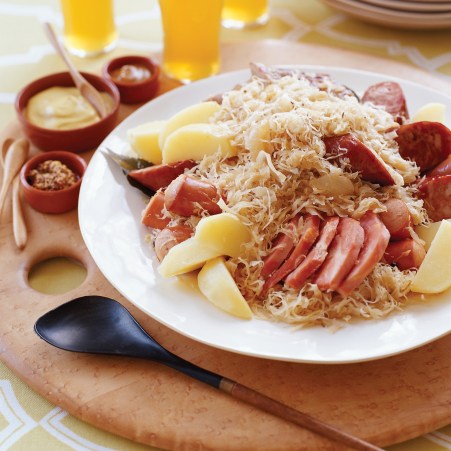
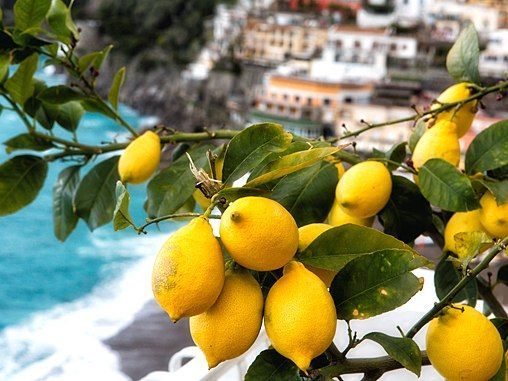
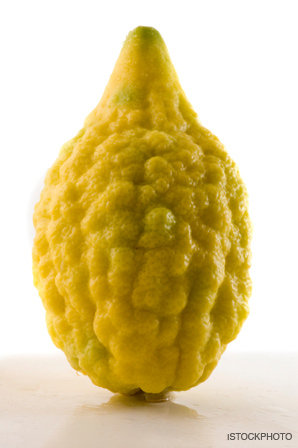
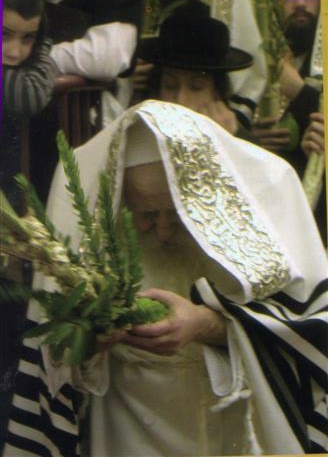


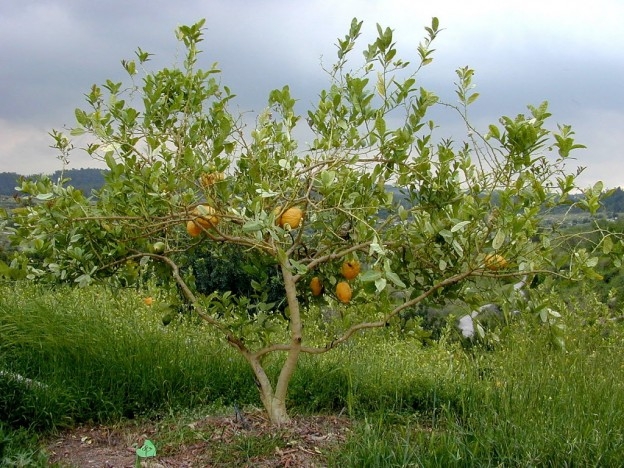

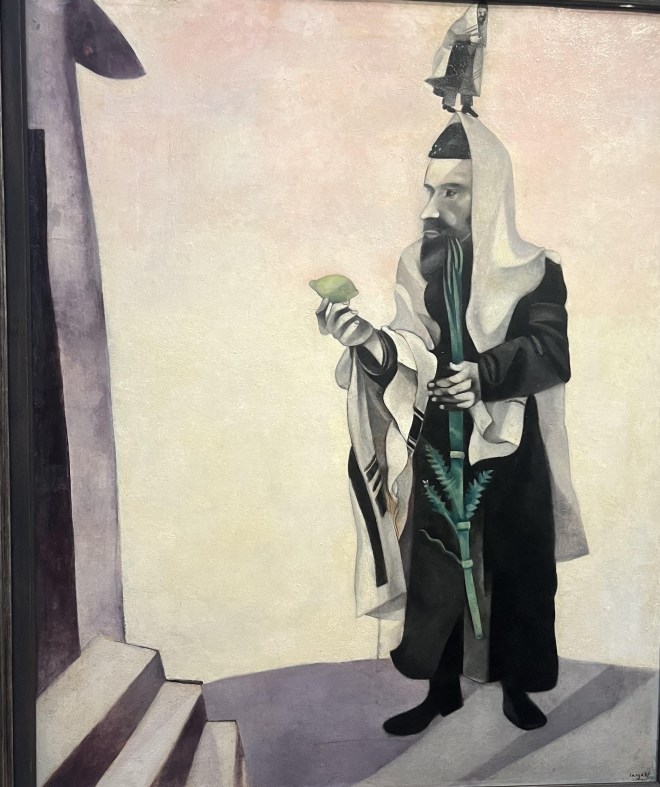
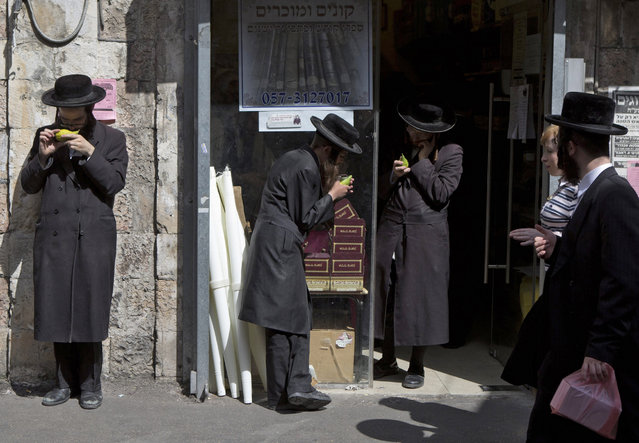
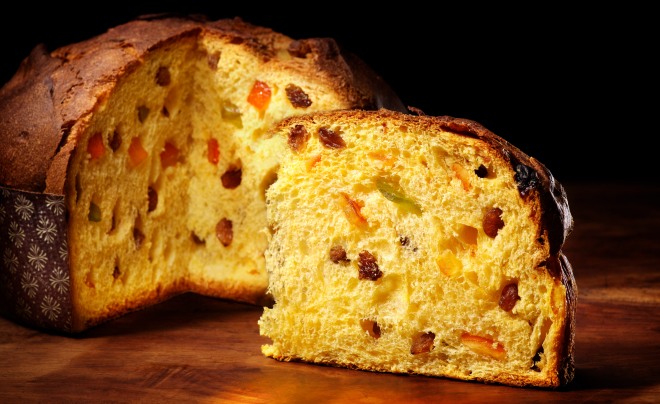
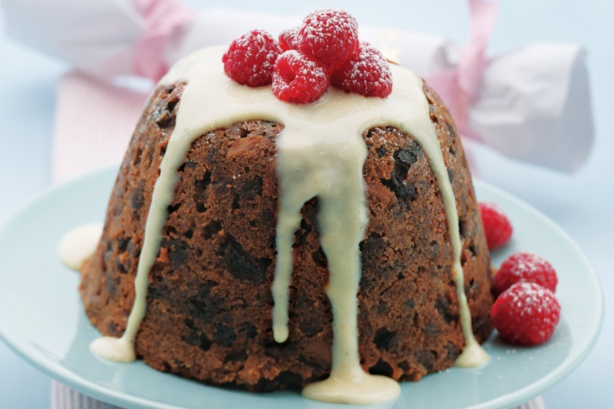
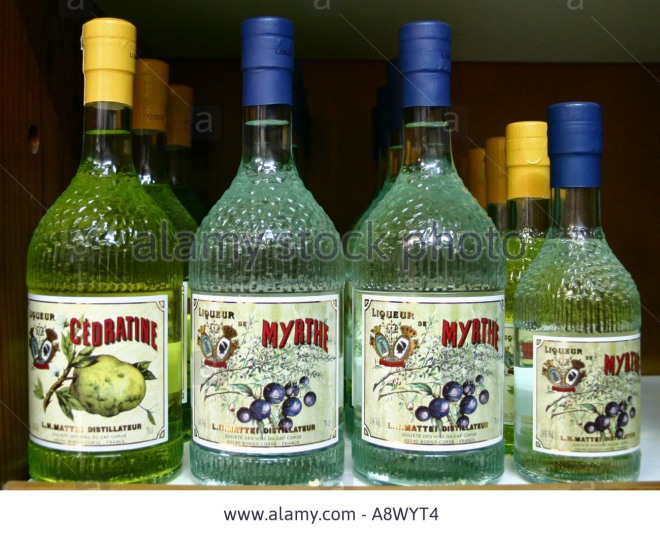



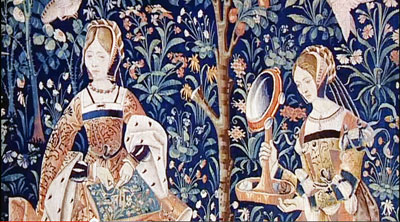

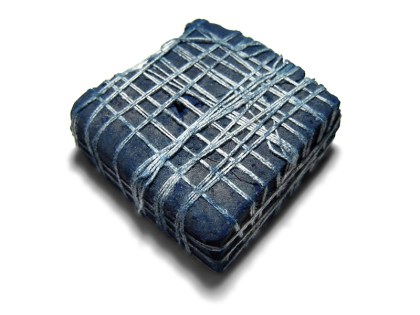



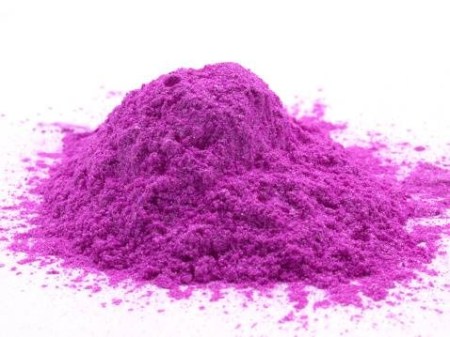

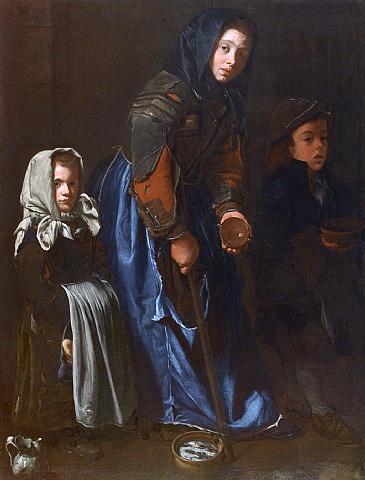



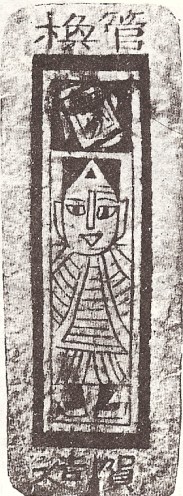






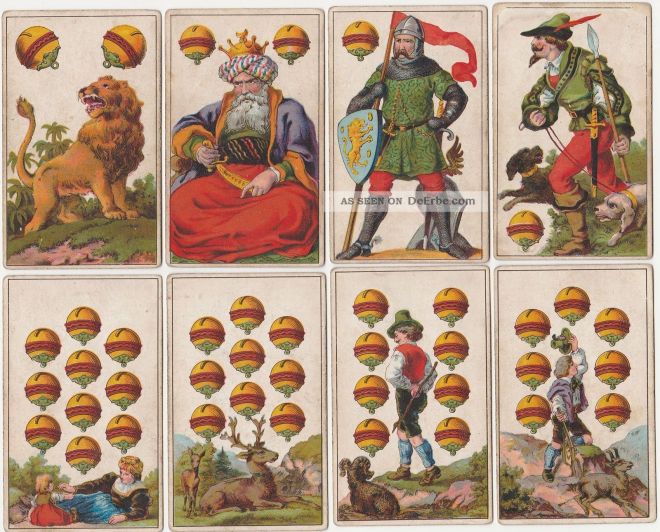
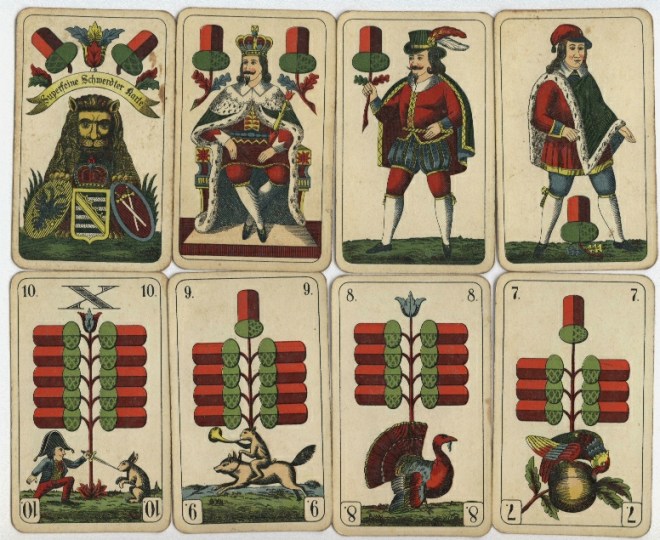


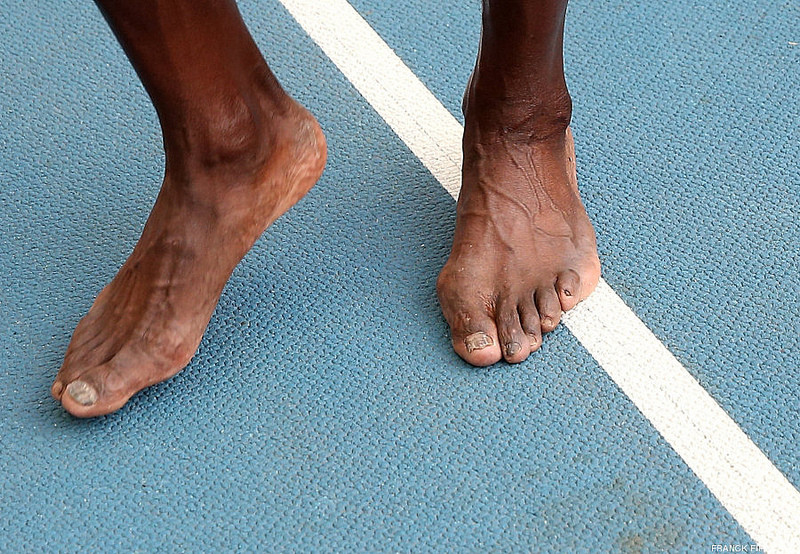




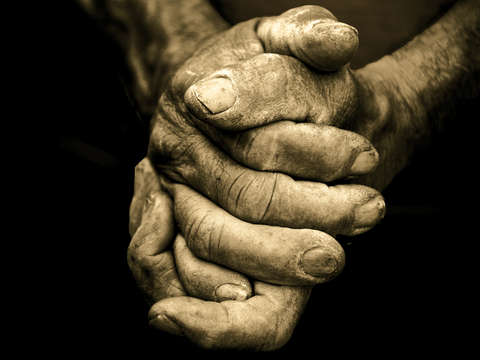



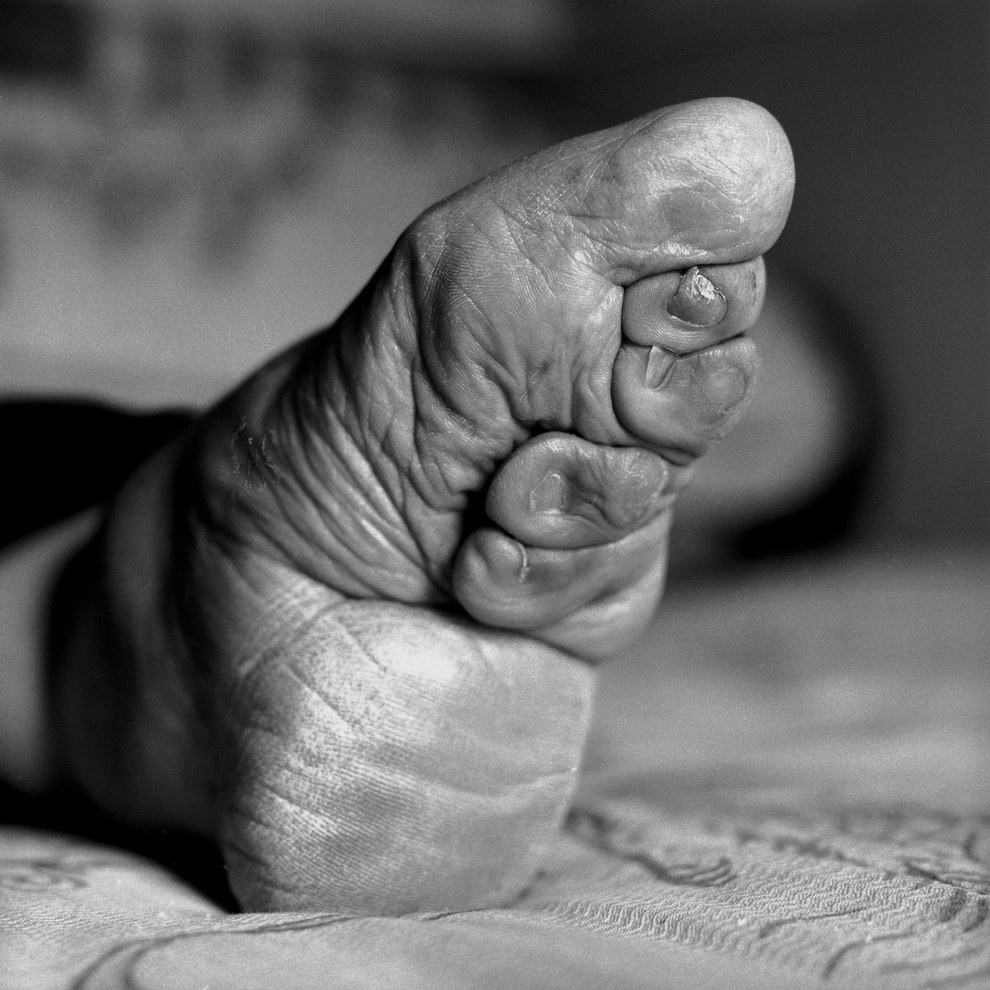

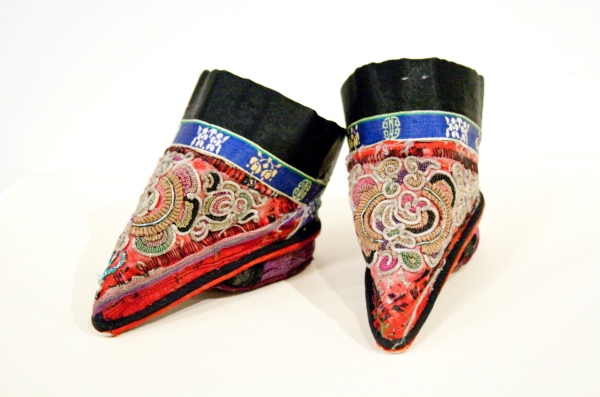

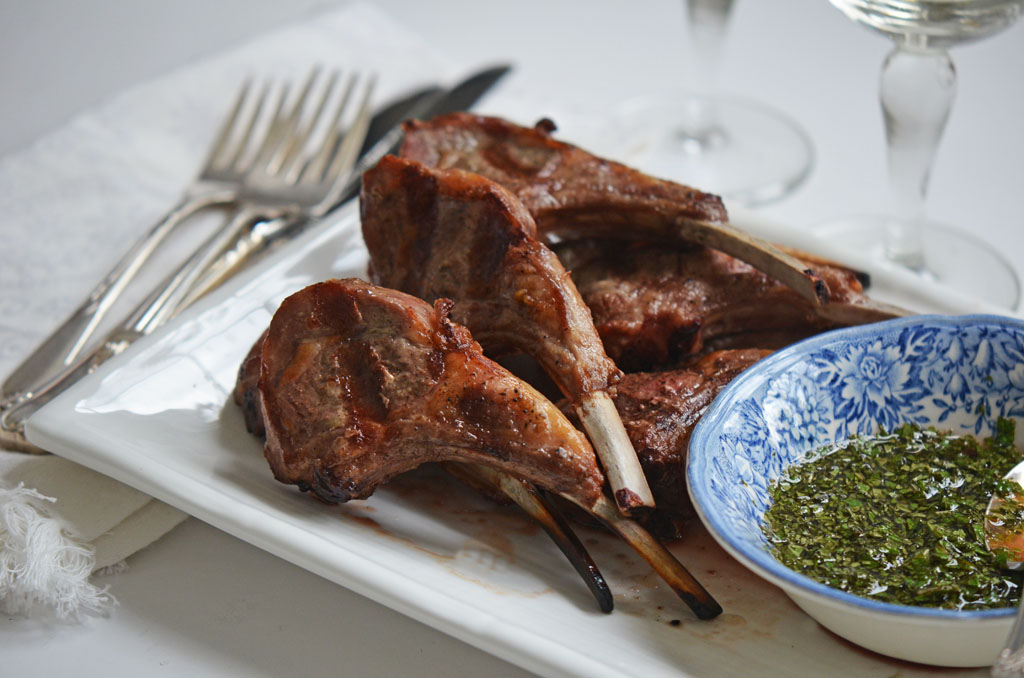


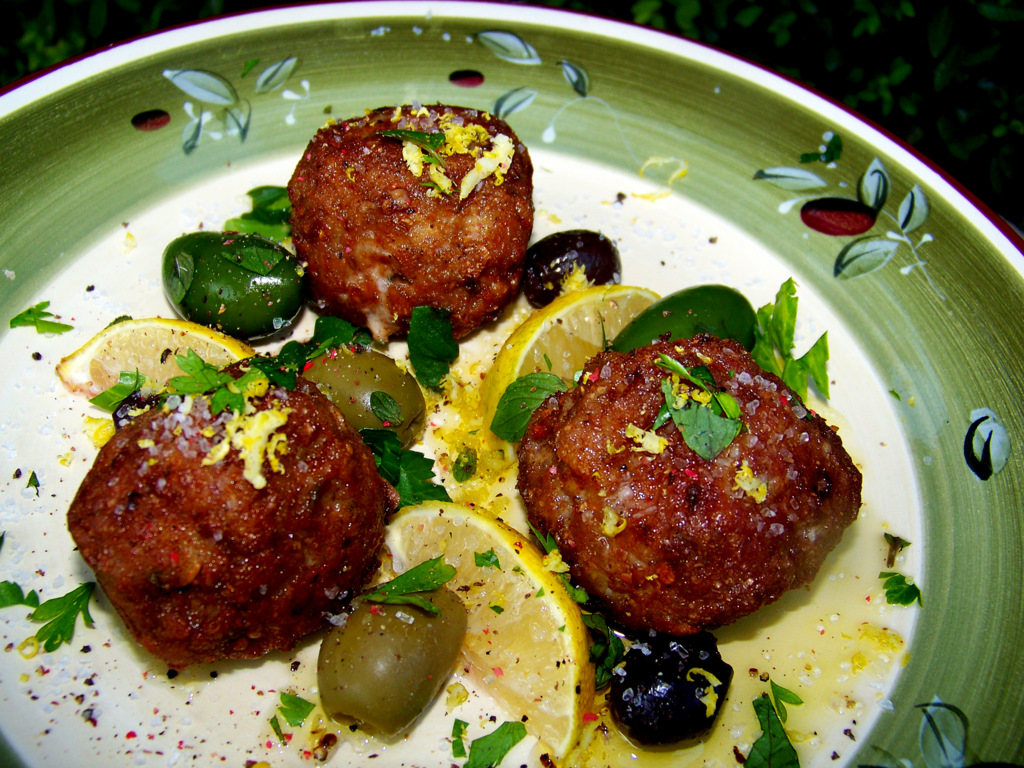
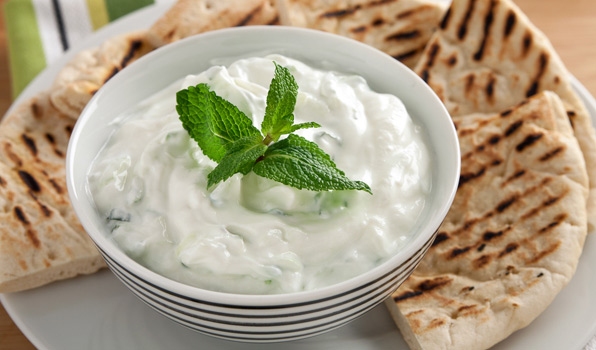

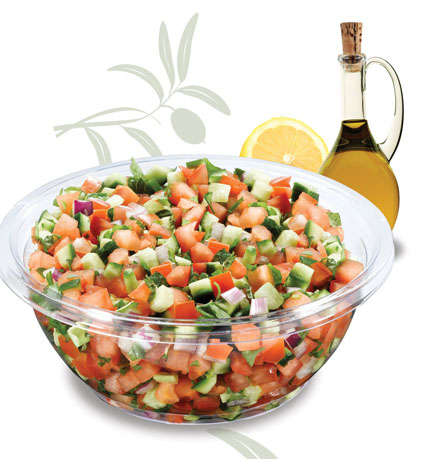




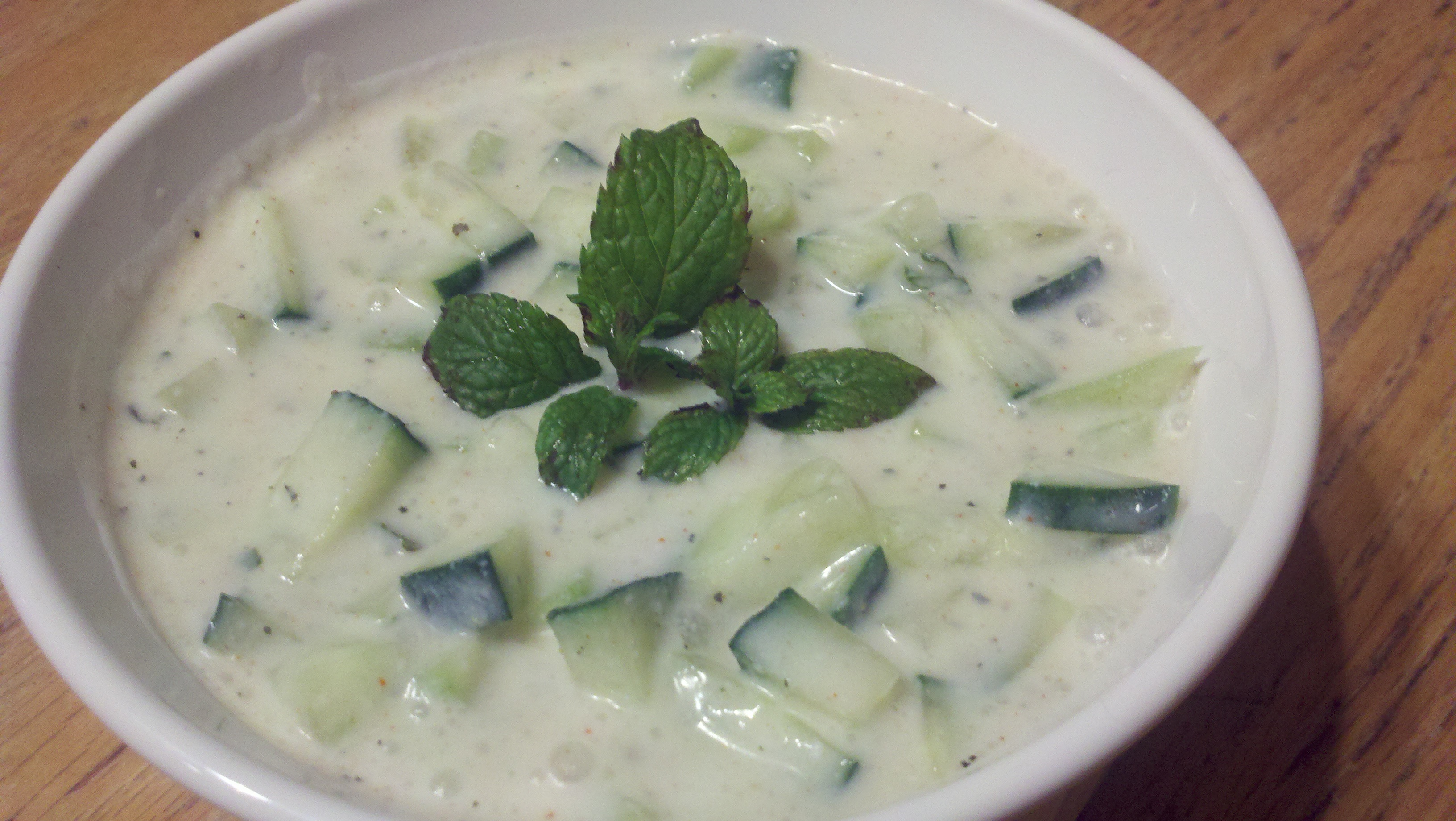
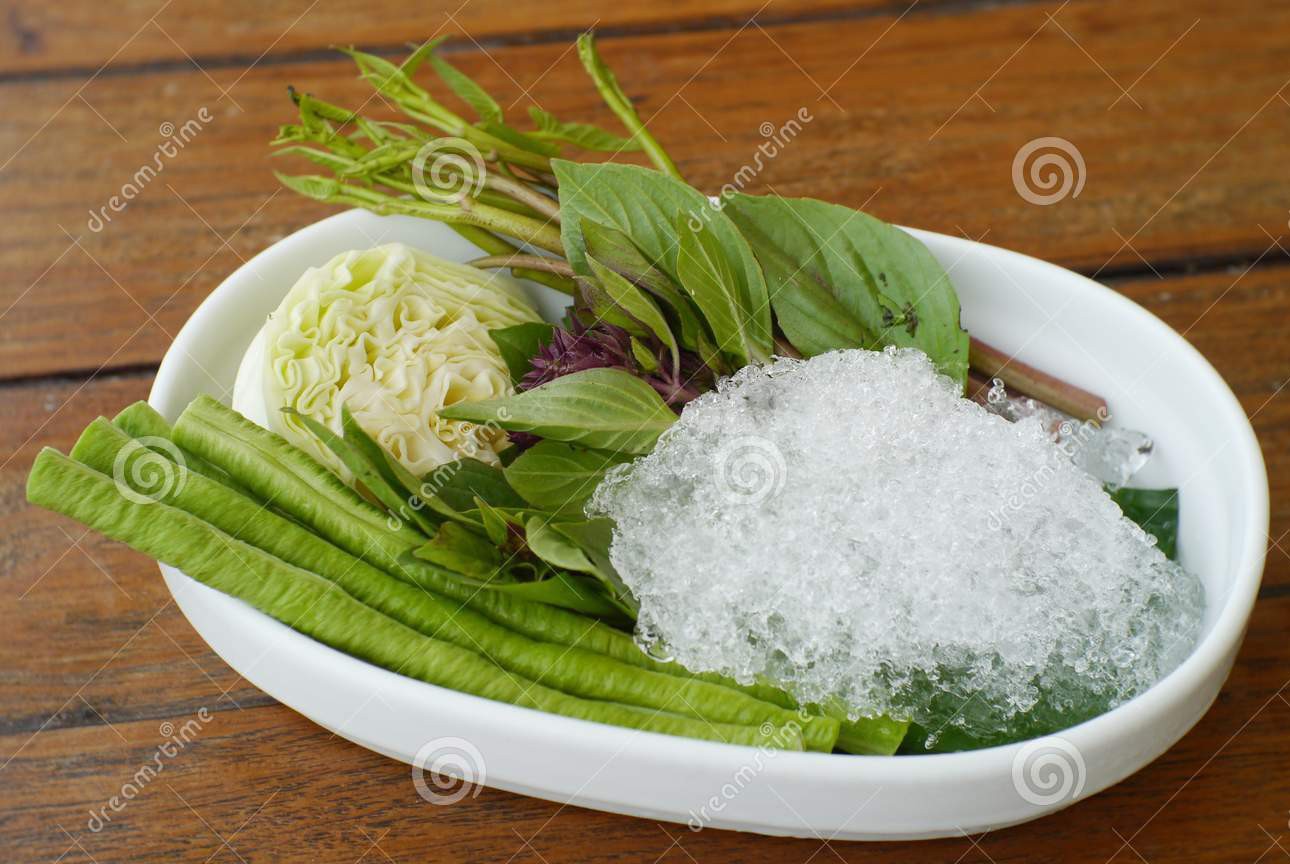

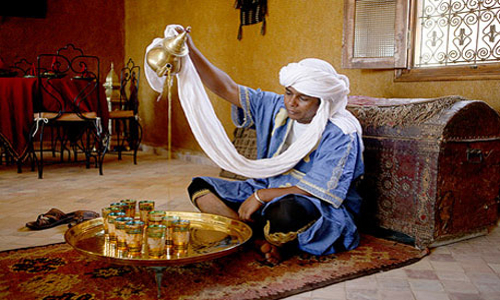


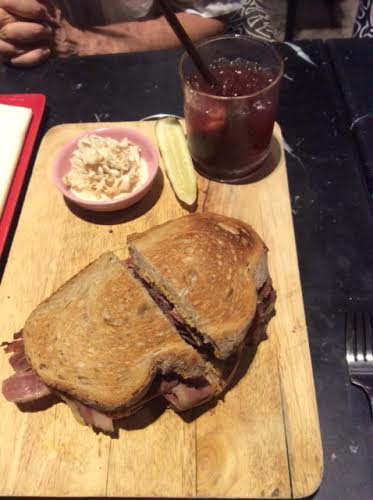


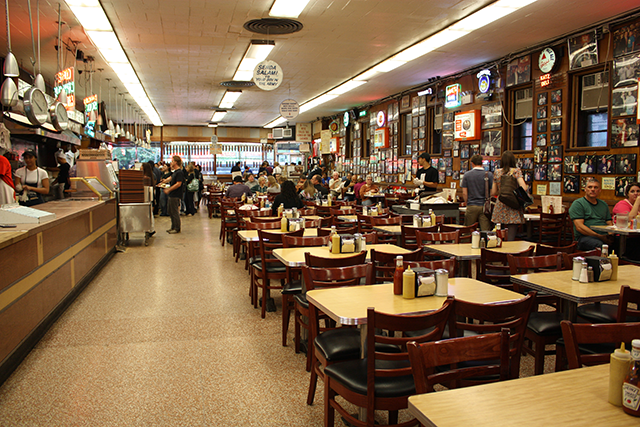


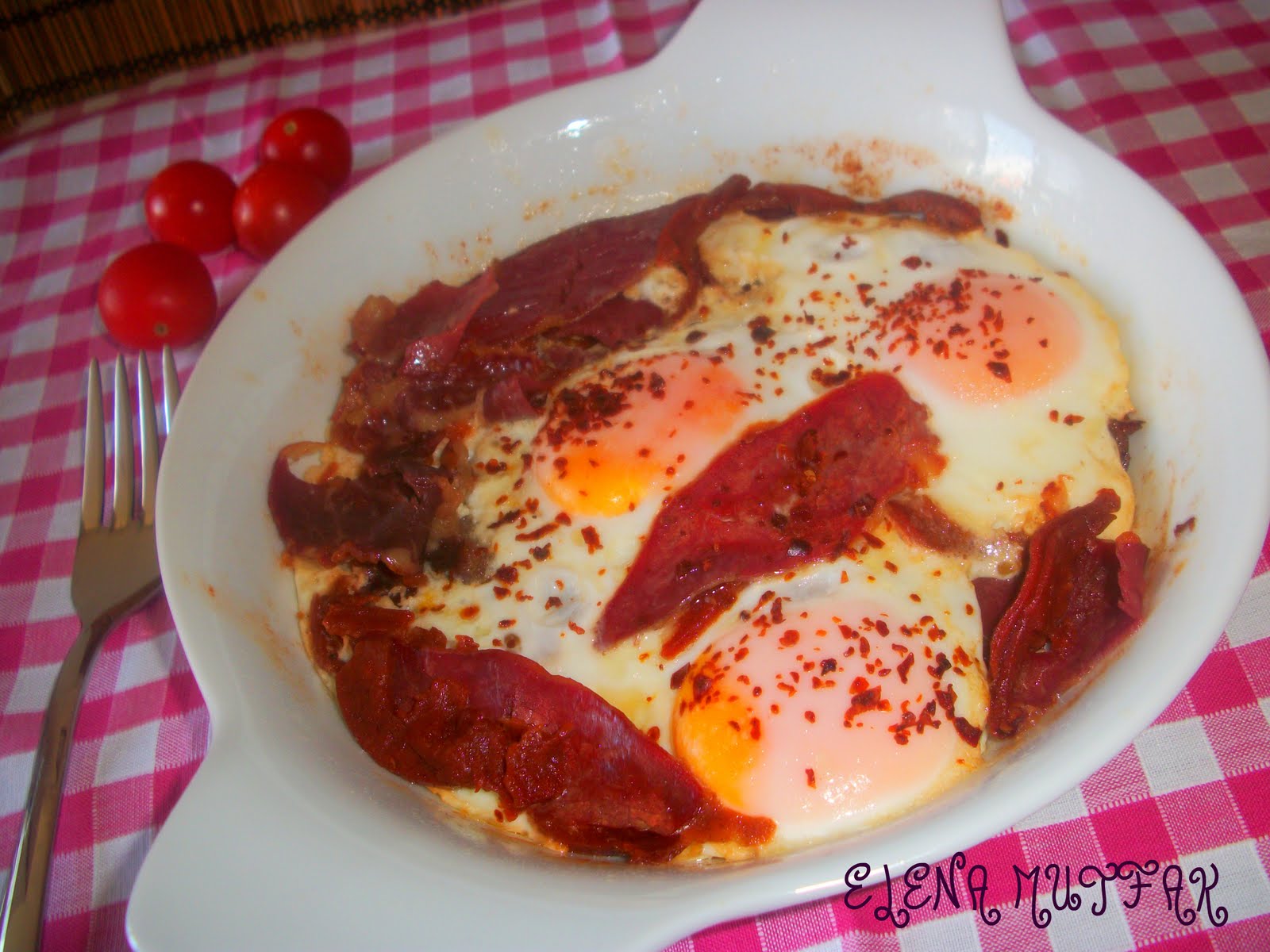
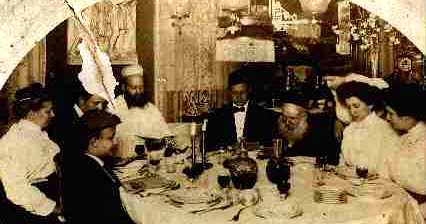
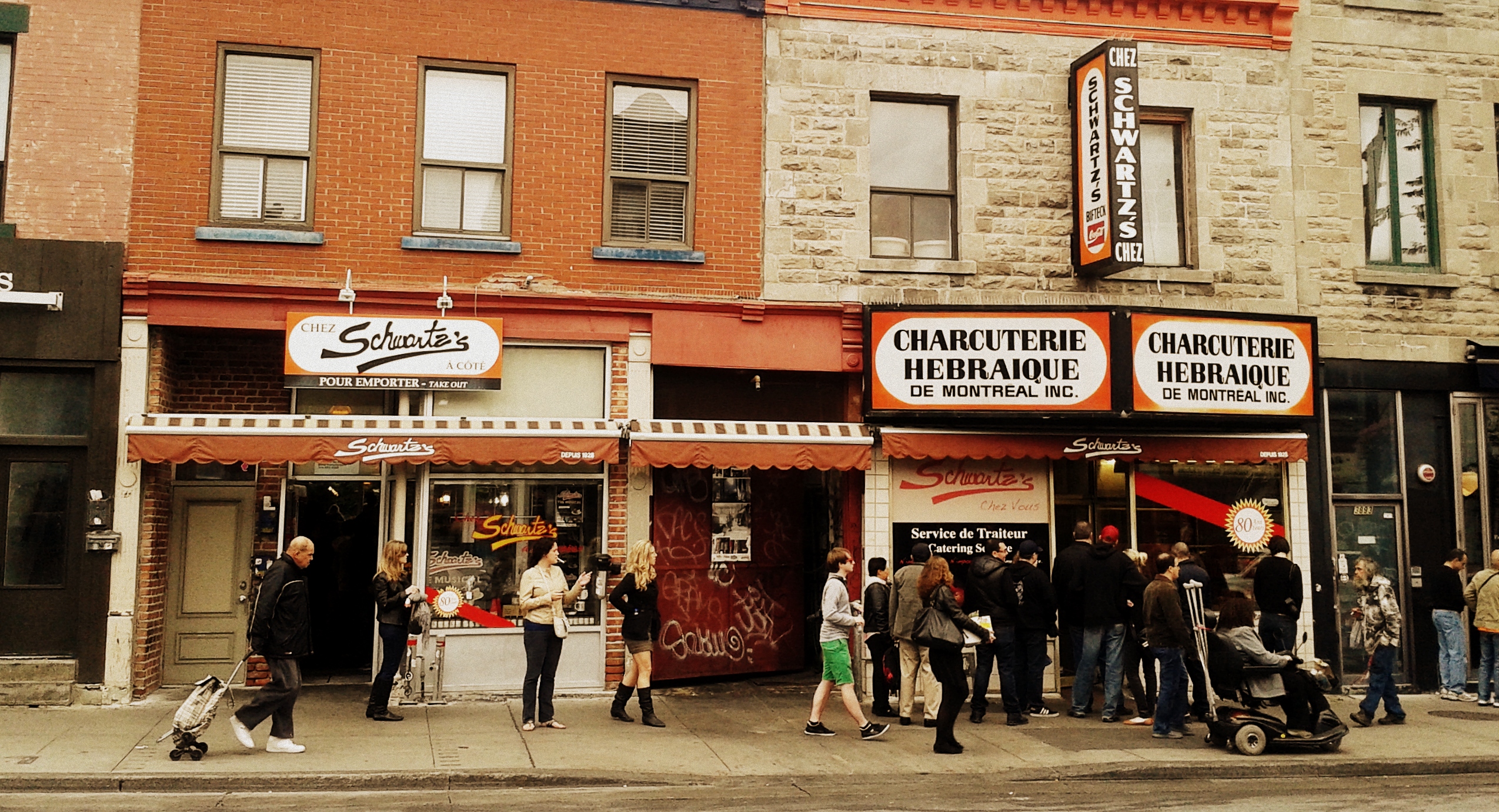













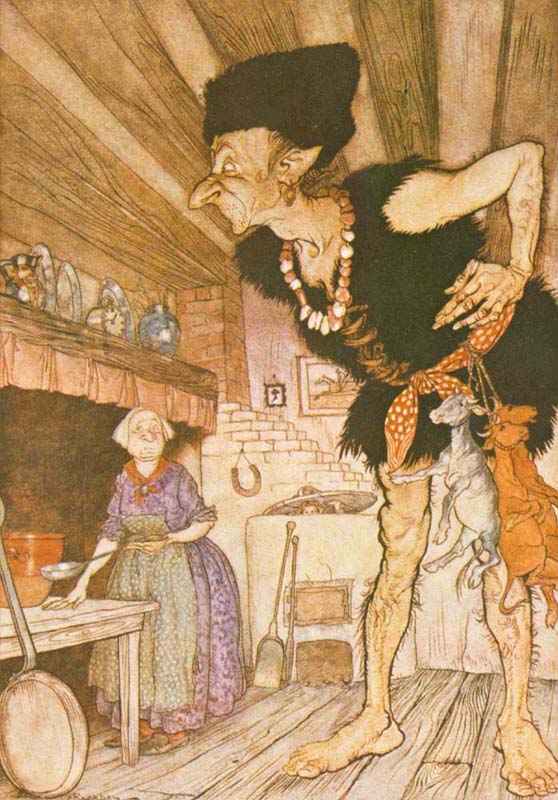










 the heart thrills