PÉTANQUE

Bangkok, 29 August 2015

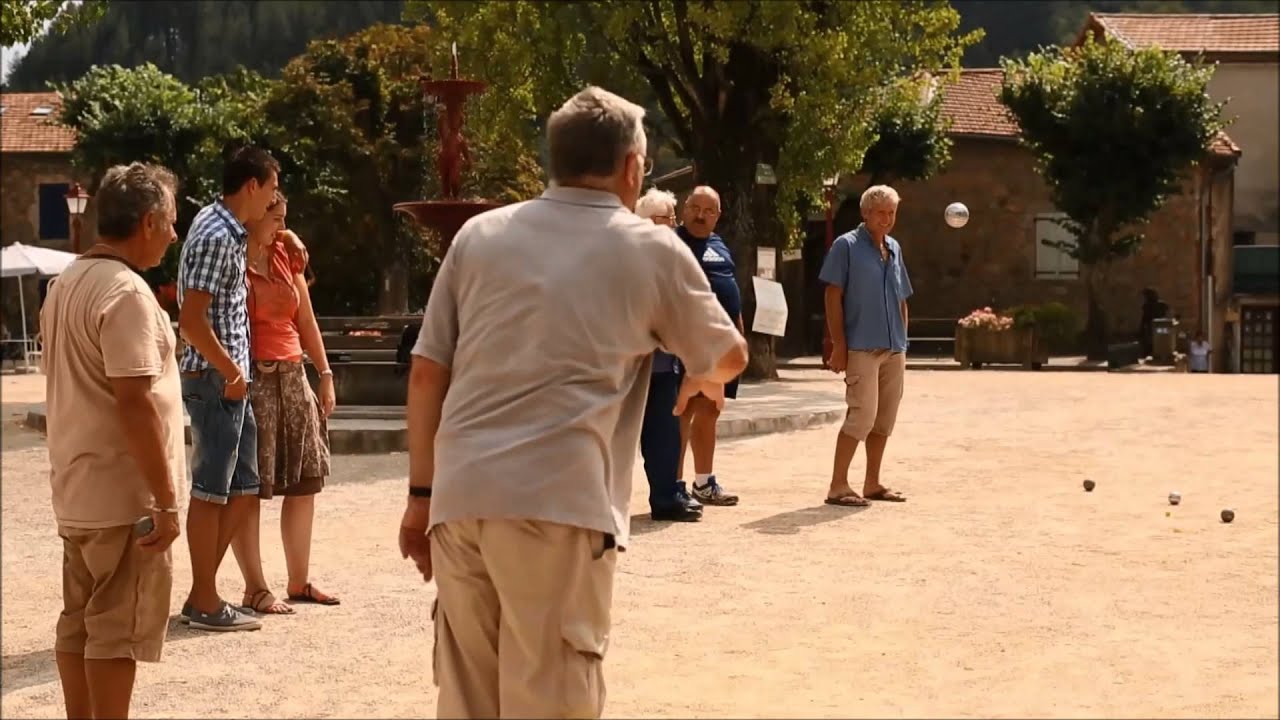
I wrote a post a year or so ago where I listed all things French. One of the things I didn’t list, though, was the game of pétanque. Anyone who has spent any time in France will eventually have come across a scene like this
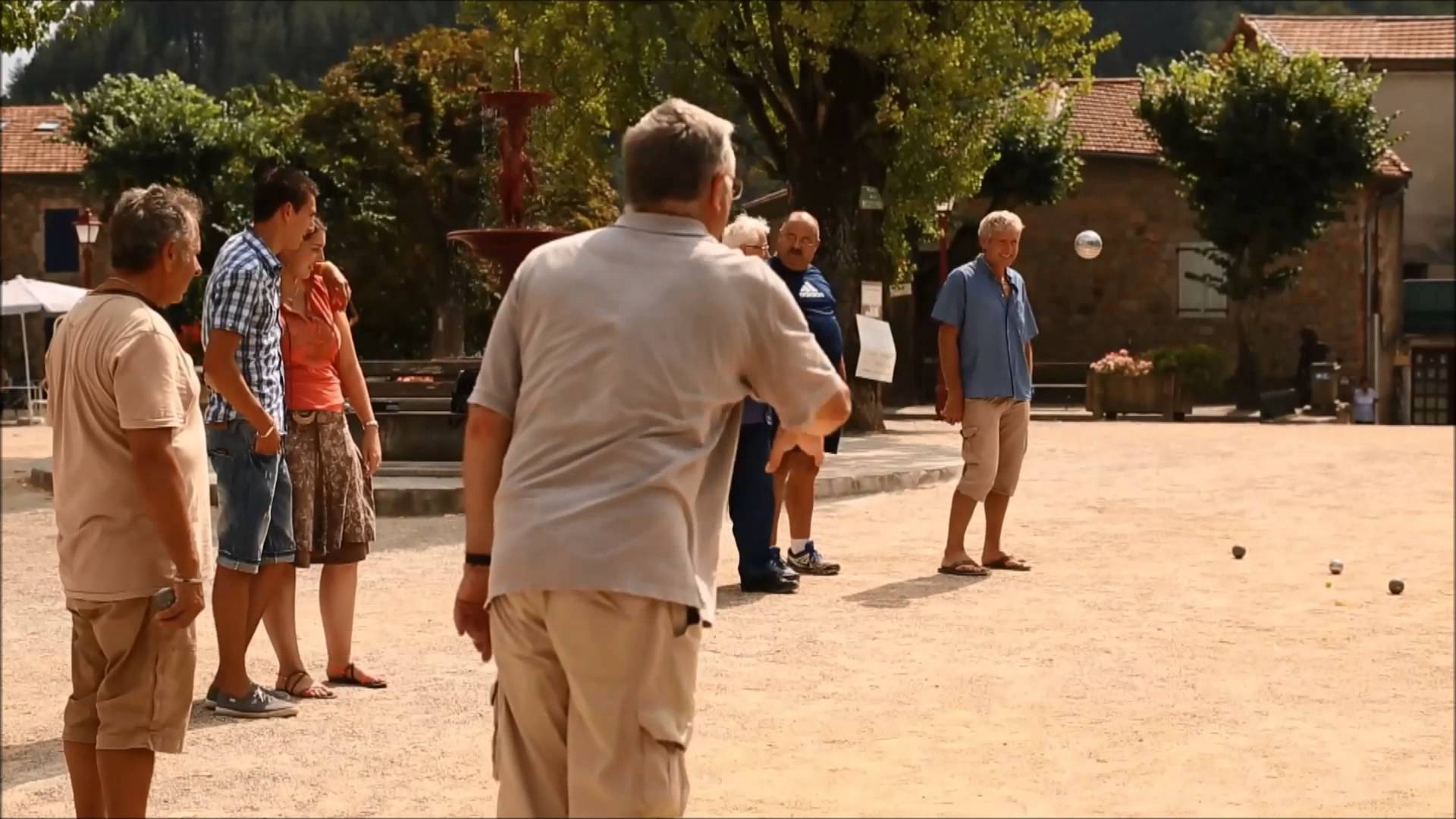
petanques in France

especially if you’re there for the summer holidays; it seems that it’s all the French do during their summer holidays at the beach.
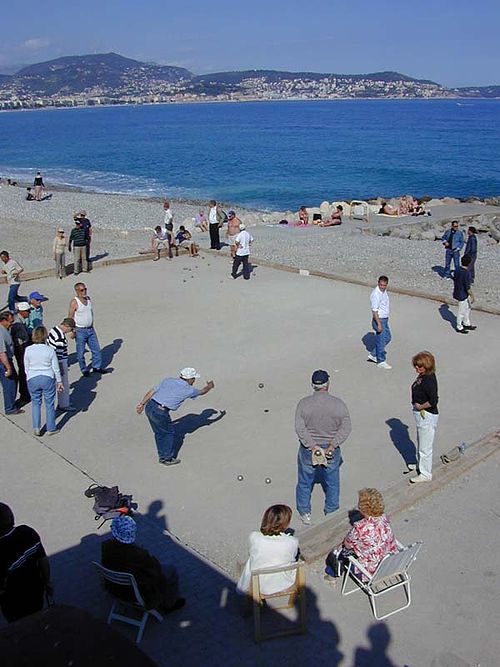
Petanque_on_a_beach_of_Nice

In truth, my memory of pétanque leans more in the direction of the following photo, the game on the village square ringed with those poor plane trees that the French love to massacre, with ten times more spectators than players – and all looking so serious!
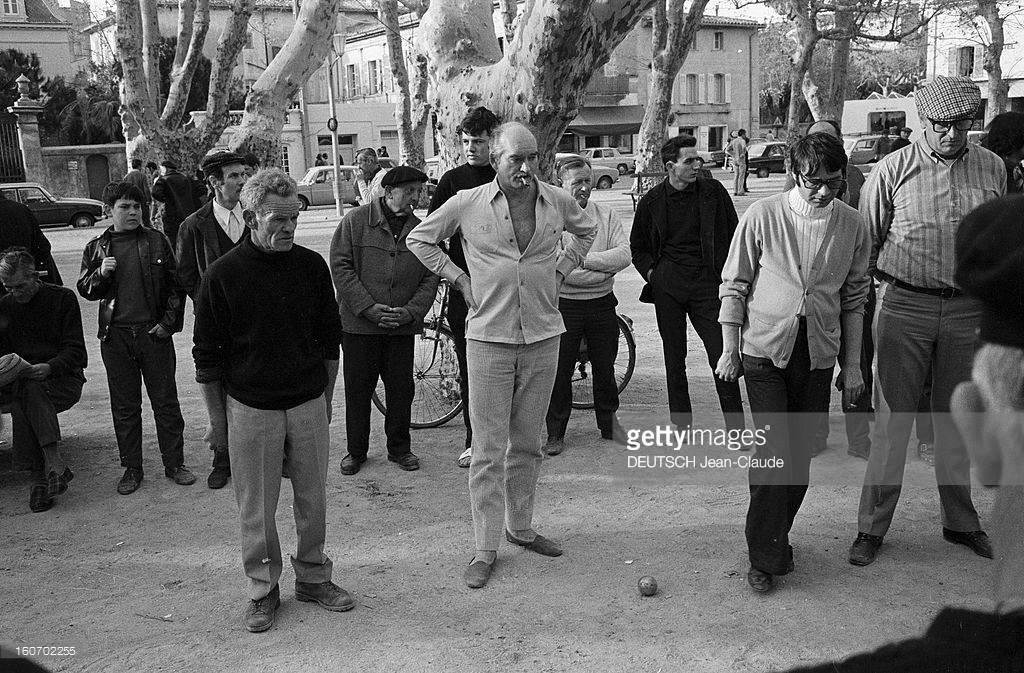
petanque old photo

So French is pétanque that it played a major role in that magisterial compendium of all that is French, Le Tour de Gaule d’Astérix.
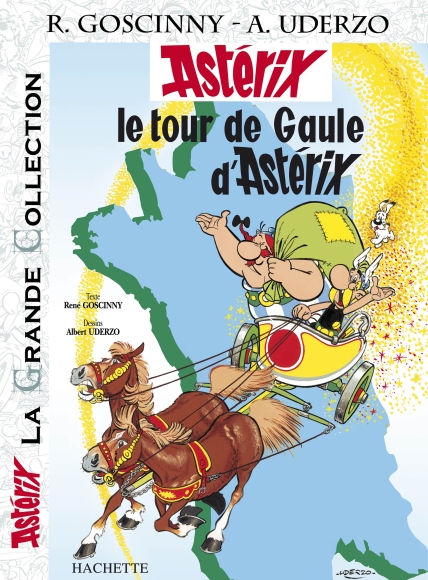
Asterix et le tour de Gaule

The scene takes place in Masilia (today’s Marseilles) – a nod to the Provençal roots of the game – where a Roman patrol is threatened with riot, revolution, massacre, war, in brief general catastrophe, if they disrupt a game of pétanque started specially to let our heroes get away.
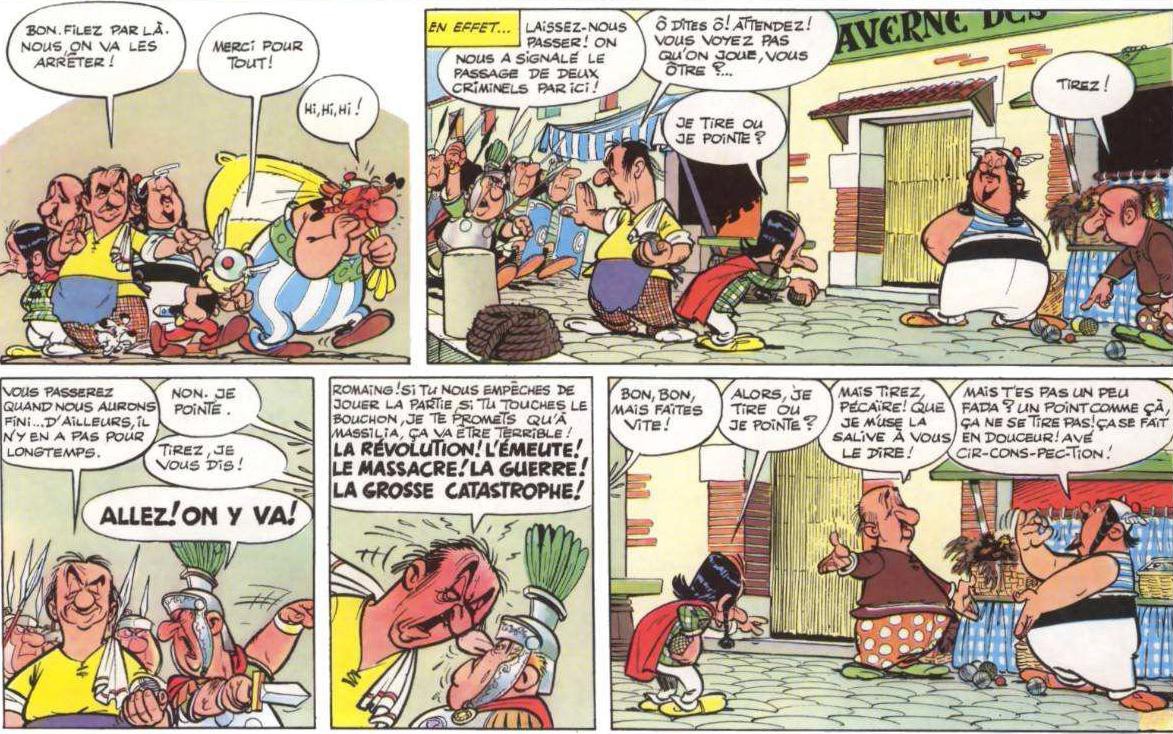
petanque in asterix

To further slow down the game and impede the Roman patrol from advancing, the classic question is being heatedly debated: “je tire ou je pointe?” Should the bowler try to knock away the adversaries’ bowls close to the cochonnet (jack in English), or should he try to get his bowl even closer than theirs to the cochonnet? Extremely delicate question, which explains the serious expressions of everyone in the black and white photo above. It was also the object of serious fights between my French cousins when we played the game at my grandmother’s house. The games normally finished abruptly with them running after each other through the garden, screaming.

Yes, so French: a Gauloise cigarette in corner of the mouth, a glass of pastis in one hand, a petanque bowl in the other, and the pondering of that existential question: “je tire ou je pointe?”

Imagine, then, my astonishment when, during a visit a few Chinese New Years ago to Luang Prabang in northern Laos, I noticed a group of locals playing a game of pétanque. So astonished was I that I took a photo to memorialize the scene. Alas! I cannot find the photo anymore, but no matter, others have memorialized the playing of pétanque in Laos on the internet.

petanque in Laos

After some thinking, I concluded that perhaps it was not all that surprising that Laotians should play pétanque. After all, they had been a French colony. No doubt they would have watched their colonial masters while away their afternoons playing the game and perhaps played it themselves in the mother country while there on scholarships and plotting revolution. And it’s a great game for a hot climate, no frantic running around under the broiling sun.

But imagine my even greater astonishment when several months ago I noticed a group of Thai playing pétanque, or petaung in Thai (my transliteration of what my office colleagues called it). I was so gobsmacked that I didn’t have the presence of mind to take a photo, so I throw in here one that I found on the net. As we can see, the players are obviously debating the question, “je tire ou je pointe?”
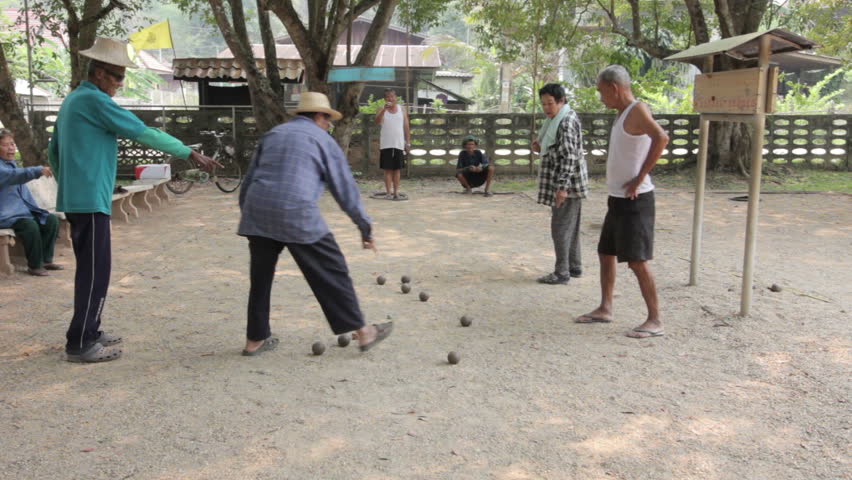
petanque in Thailand

How did they pick up the game? Could it have come through Laos? Or Cambodia, or even Vietnam, also ex-French colonies and where the game is played? Or was it brought by Frenchmen in the service of the King or Government? Whatever the origin, the fact is they play it well. In preparing this post, I discovered that there is an International Championship of pétanque which has been held every two years since 1959. The French, of course, have dominated the event, with French teams winning 27 golds, 12 silvers, and 14 bronzes. But, surprise, surprise, the Thai have won 3 silvers and 3 bronzes, all this since 1991. They seem to be creeping slowly up the medal tables; gold no doubt awaits them soon.

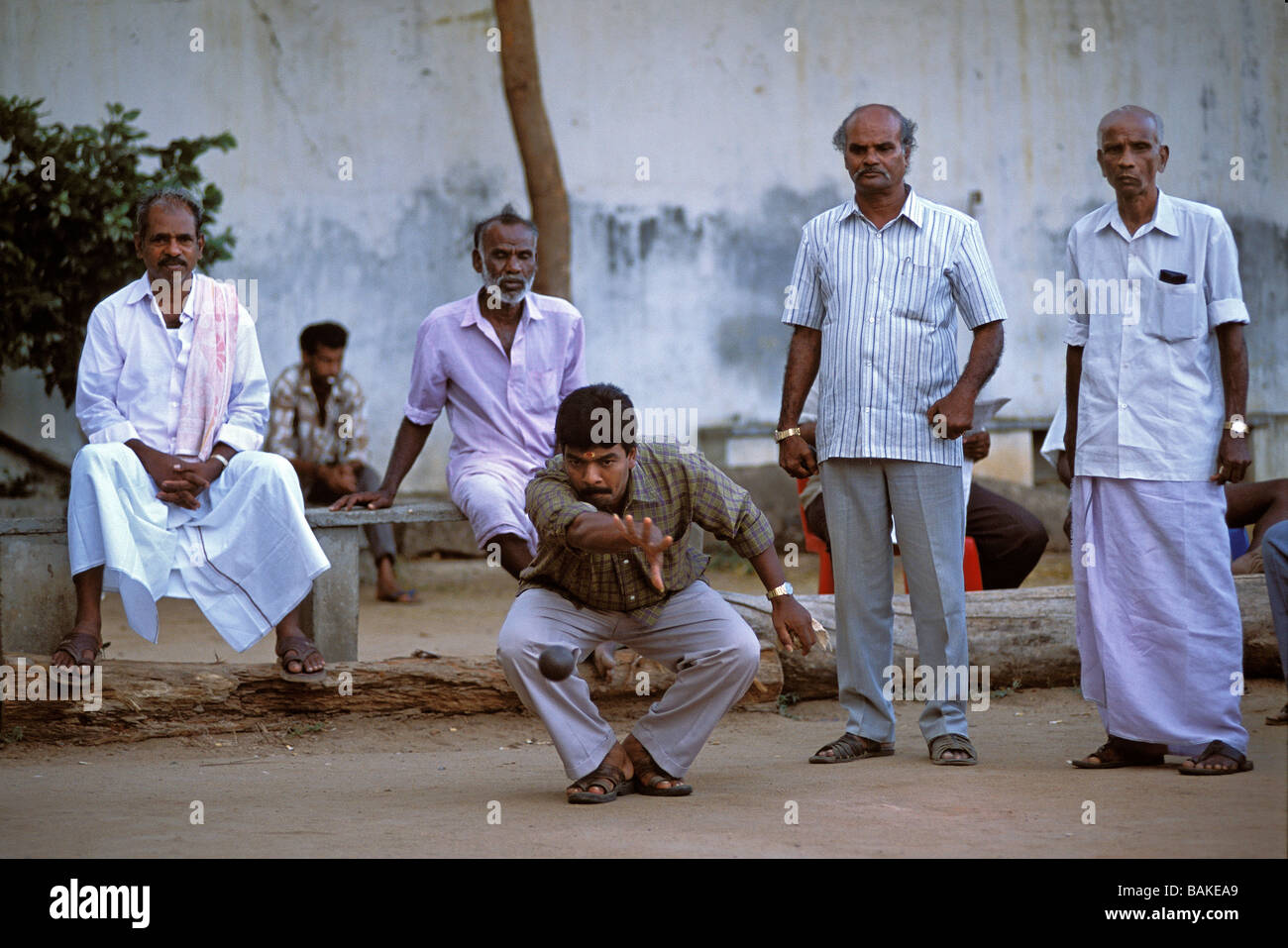
Thoroughly intrigued, I did a rapid internet zip around the world, and discovered many more places where pétanque is played. Just in Asia, I found traces of it in India

BAKEA9 India, Pondicherry Territory, Pondicherry, French consulate, Petanque game

although I suspect it may be limited to the old French enclave of Pondicherry

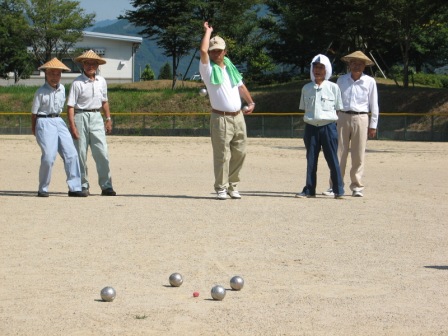
Japan

petanque in Kumamoto Japan

the hats are an interesting stylistic addition

China
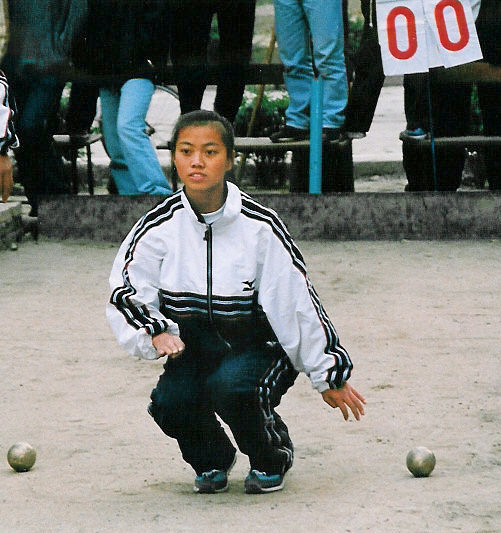
petanque en chine

although I never saw it being played in my five years there, and if this picture is anything to go by the Government has infiltrated the game and officialized it: where are the villagers playing in the shade of the trees?

I didn’t find a picture of anyone playing pétanque in South Korea although there seems to be national federation of pétanque and bowls. What the Koreans do seem to have done is to invent a video-game of pétanque – it figures, I suppose, given South Koreans’ passion for video-games.

petanque video game screen

A number of my posts have touched on the issue of globalization. I suppose this is another example of that. I wonder if the French have ever tried making pétanque an Olympic sport? They could win a few more gold medals for a while, until the rest of the world beat them at their own game (like the Japanese with judo).

______________

Pétanque in France: http://i.ytimg.com/vi/zjJAcu2o03U/maxresdefault.jpg (in https://www.youtube.com/watch?v=zjJAcu2o03U)
Petanque on the beach: https://upload.wikimedia.org/wikipedia/commons/thumb/c/c2/Petanque_on_a_beach_of_Nice.jpg/500px-Petanque_on_a_beach_of_Nice.jpg (in https://en.wikipedia.org/wiki/Pétanque)
Pétanque old photo: http://cache3.asset-cache.net/gc/160702255-albert-debarge-marries-josianne-rousset-in-gettyimages.jpg?v=1&c=IWSAsset&k=2&d=GkZZ8bf5zL1ZiijUmxa7QRb3elaikB0wsuIje6LZ5qIlZFwr4Iyt%2bAtEtk63h7vGHw9WDtPuEHn0XScy7CdEvPc6MFA3lWBXE1Yr5pP3Qlg%3d (in http://www.gettyimages.com/detail/news-photo/albert-debarge-marries-josianne-rousset-in-saint-tropez-news-photo/160702255)
Le Tour de Gaule d’Astérix: http://www.asterix.com/bd/albs/05frx.jpg (in http://www.asterix.com/la-collection/les-albums/le-tour-de-gaule-d-asterix.html)
Pétanque in Laos: http://blog.uniterre.com/uploads/f/frchazelle/576704.jpg (in http://www.uniterre.com/album-photos-voyage-21819.html)
Pétanque in Thailand: http://il2.picdn.net/shutterstock/videos/9605459/thumb/1.jpg?i10c=img.resize(height:160) (in http://www.shutterstock.com/de/video/clip-5718971-stock-footage-petanque-sports.html)
Pétanque in Kumamoto Japan: http://blog-imgs-50.fc2.com/a/k/a/akazawamitsuishi/img_1715696_52818299_2.jpg (in http://akazawamitsuishi.blog59.fc2.com/blog-entry-1676.html)
Pétanque in Pondicherry India: http://c8.alamy.com/comp/BAKEA9/india-pondicherry-territory-pondicherry-french-consulate-petanque-BAKEA9.jpg (in http://www.alamy.com/stock-photo-india-pondicherry-territory-pondicherry-french-consulate-petanque-23785281.html)
Pétanque in China: http://www.boulistenaute.com/uploads/thumbs/4757.jpg (in http://www.boulistenaute.com/modules/newbb/viewattachment.php?topic_id=24172&post_id=692310&forum=37)
Petanque video-game screen: http://a4.mzstatic.com/eu/r30/Purple6/v4/2d/9a/0d/2d9a0d66-5b26-79d9-7d31-21b3b2e2340c/screen340x340.jpeg (in https://www.apptweak.com/petanque-2012-pro/iphone-ipad/kr/en/app-marketing-app-store-optimization-aso/report/497991055)
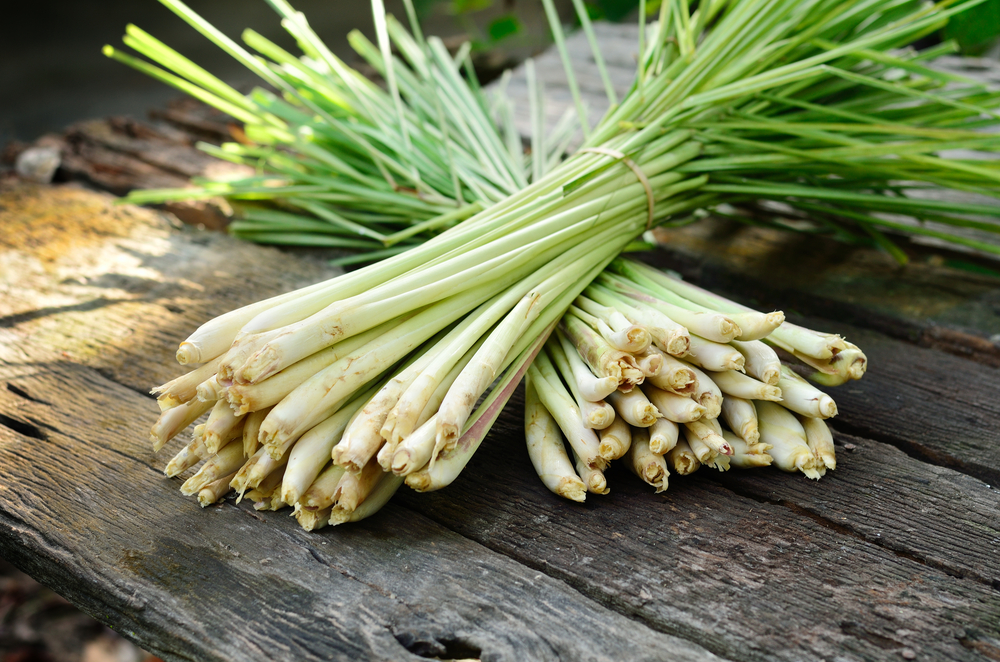
LEMONGRASS

Bangkok, 20 August 2015

One of the things I always do when I go to a new country is to inspect the vegetable section of the local markets or supermarkets, to see what fruits and vegetables they have on display which I have never seen before, and then I try to figure out how the locals eat them. I also play this game with fish, where one can see interesting variations around the world. I normally don’t bother with meats, since there is much less variety here. Chicken, pork, and beef probably cover more than 95% of all meat products sold over the counter. Throw in a few other fowl, like turkey and goose, and you’re probably up at 99%. I’ve never seen meat aisles where you can buy camel or llama or hamster or dog (although I was once in a place where I could have bought kangaroo).

In any event, I played the game when we arrived here in Thailand, and one of the things that immediately jumped out from the vegetable aisles was lemongrass – it’s not a vegetable really, more a spice, but it tends to sit alongside the vegetables, so that’s where I saw it.

lemongrass bunch

Anyone who has lived in Thailand for more than a couple of months will quickly realize that lemongrass plays an important role in Thai cuisine. I’ve mentioned in a previous post one Thai dish in which lemongrass plays a not unimportant role, Tom Yum soup.

tom yum soup

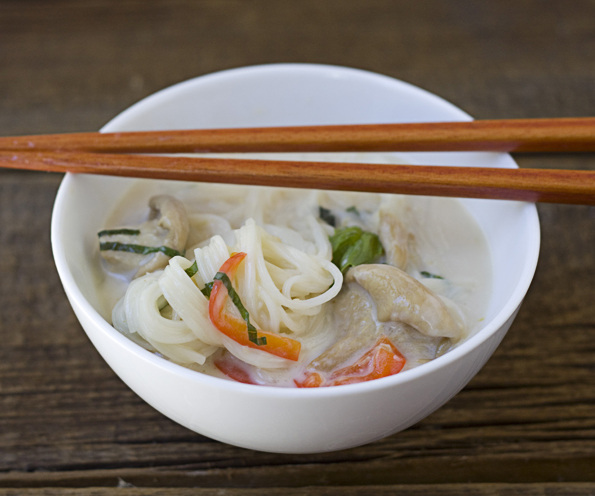
There are other Thai soups which have lemongrass in their recipe, lemongrass coconut noodle soup for instance.

Coconut Lemongrass Noodle Soup

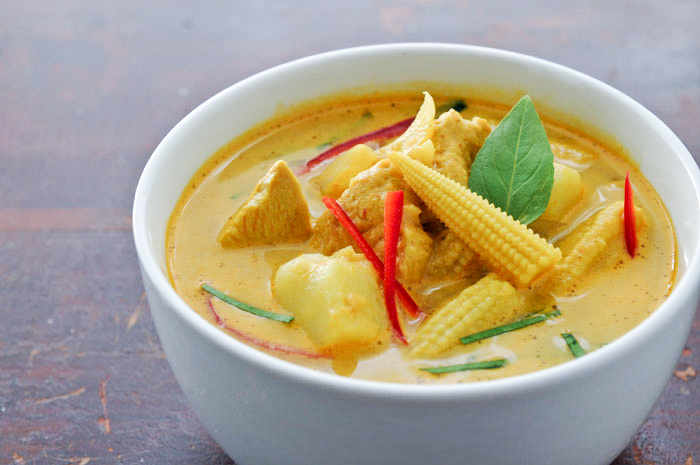
It also finds its place in the green and yellow curries which are omnipresent in Thailand and which Thais will eat with various meats and vegetables. Here they are accompanying chicken.

chicken green currychicken yellow curry

Lemongrass also plays an important role in various sauces, in this case as a coconut and lemongrass sauce accompanying mussels.

mussels in coconut and lemongrass sauce

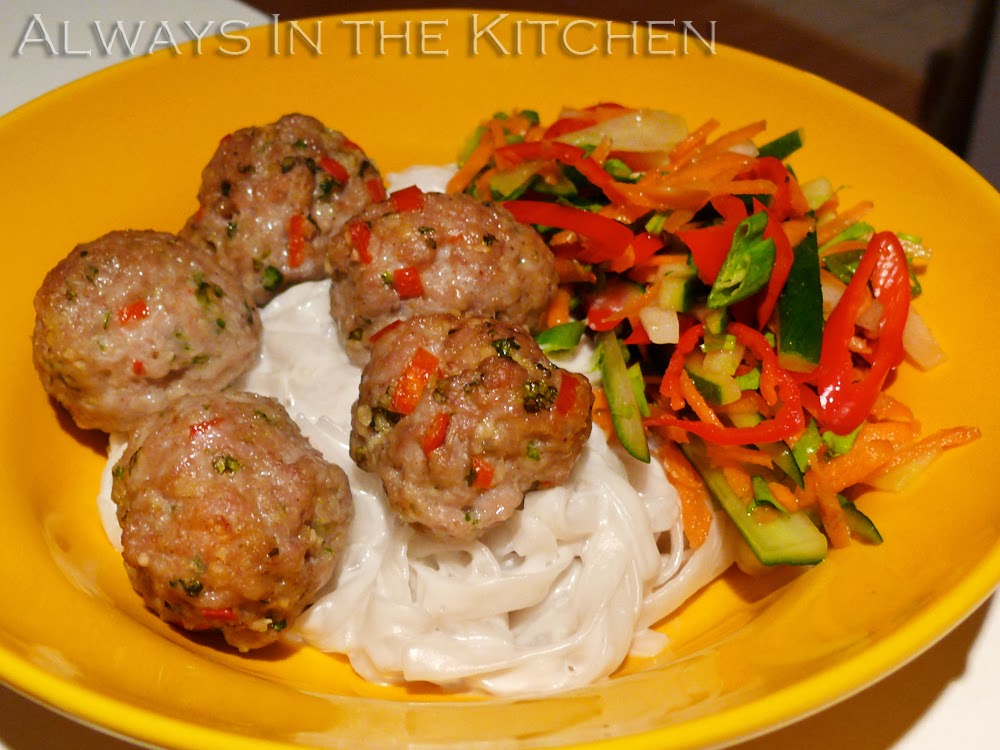
In truth, it is not only in Thai cuisine that lemongrass finds a role. It is common to much South-East Asian cuisine. In Viet Nam, for instance, in pork meatballs the meat is mixed with lemongrass and other herbs.

Vietnamese Lemongrass Pork Meatballs

Or there is Indonesia’s beef rendang, where beef is cooked slowly in a mix of spices which includes lemongrass.

Indonesian beef-rendang

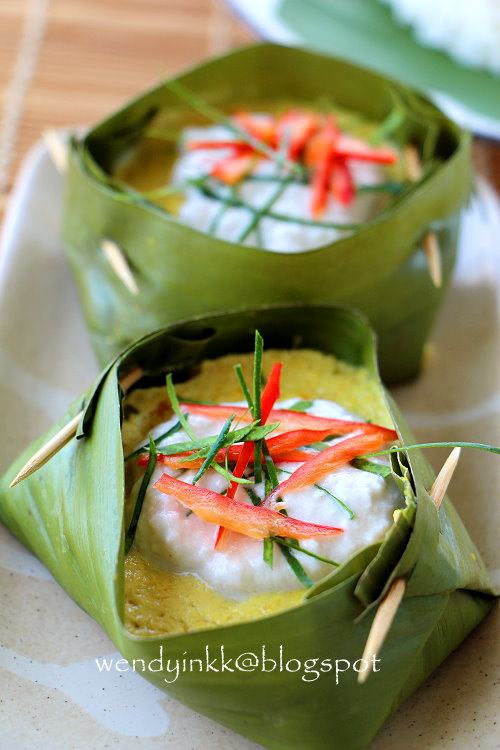
In Cambodia, there’s the national spice-mix paste called Kroeung, which almost always includes lemongrass, and which is used in many dishes, for instance in the fish-based Amok trey

cambodian fish amok trey

For Laos, I cite stuffed lemongrass, the one dish where lemongrass plays a star role.

Laotian stuffed lemongrass

Myanmar gives us as one among many examples Mont Di soup, from Rakhine state

Myanmar Mon Di soup

And let’s not forget the Philippines, from which I’ll cite Lechon Cebu. Lechon, a national dish, is a whole roasted pig. Among its many regional variations there is Cebus’s, where the pig is stuffed with a mix of spices and herbs which includes lemongrass.

Philippine lechon cebu

This enthusiasm for lemongrass is not surprising really. The two forms of the plant which are edible, C. citratus and C. flexuosus, both have their tap root buried deep in this part of the world. Anyway, it’s super for me because I have a great fondness for lemongrass. This affection goes back a long way; I first came across the plant some 50 years ago, as a ten, eleven year-old child. It was in Cameroon, in West Africa. My father had moved there after his stint in Eritrea. One afternoon, at tea time at someone else’s place, I was served this delicious pale yellow infusion, which smelled and tasted softly lemon-like.

lemongrass infusion

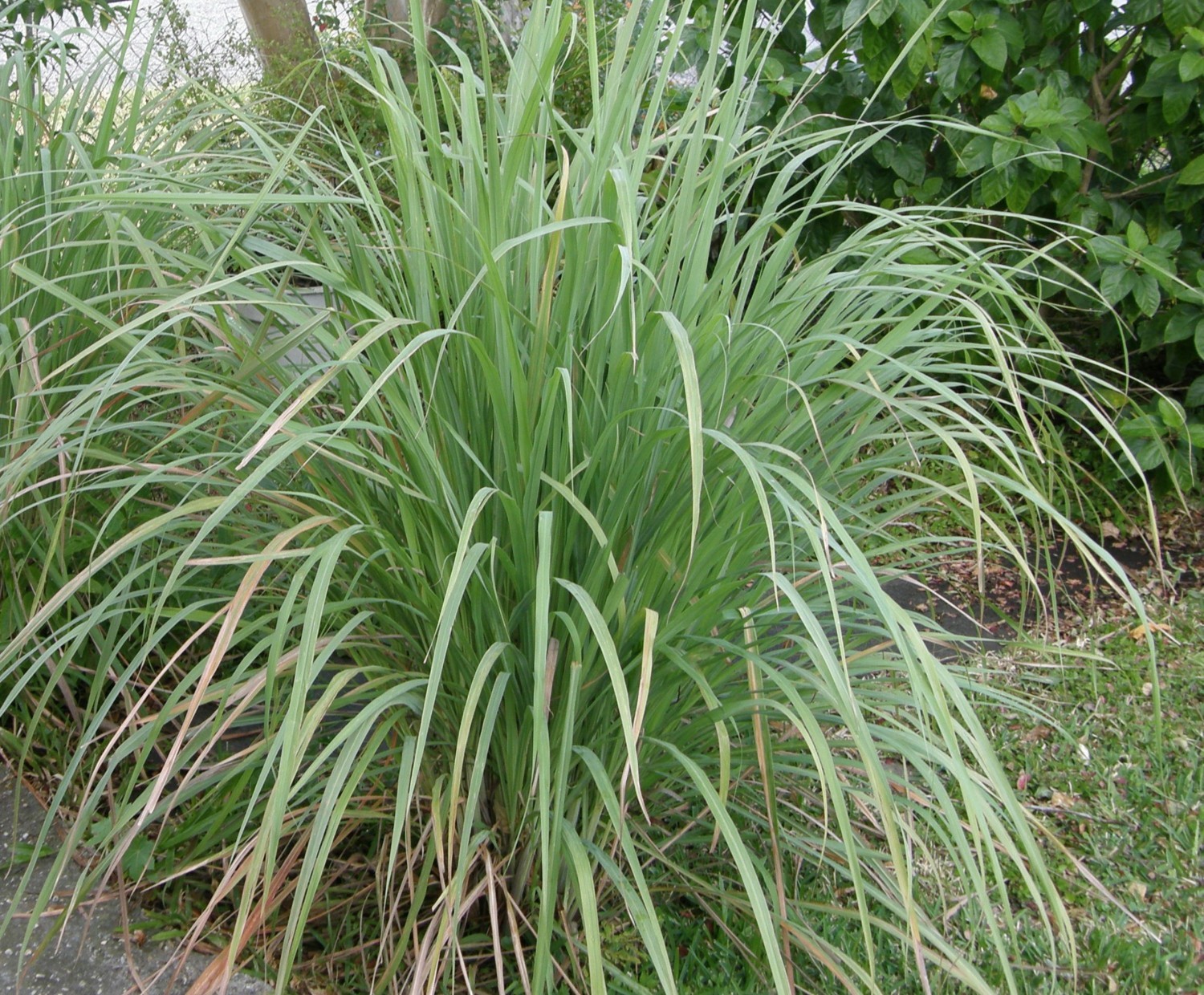
After I’d oohed and aahed about it for a bit, I was shown the plant, a rather spiky big grass

Lemongrass Plant

whose leaves gave off this wonderful lemon scent when you rubbed them between your fingers.

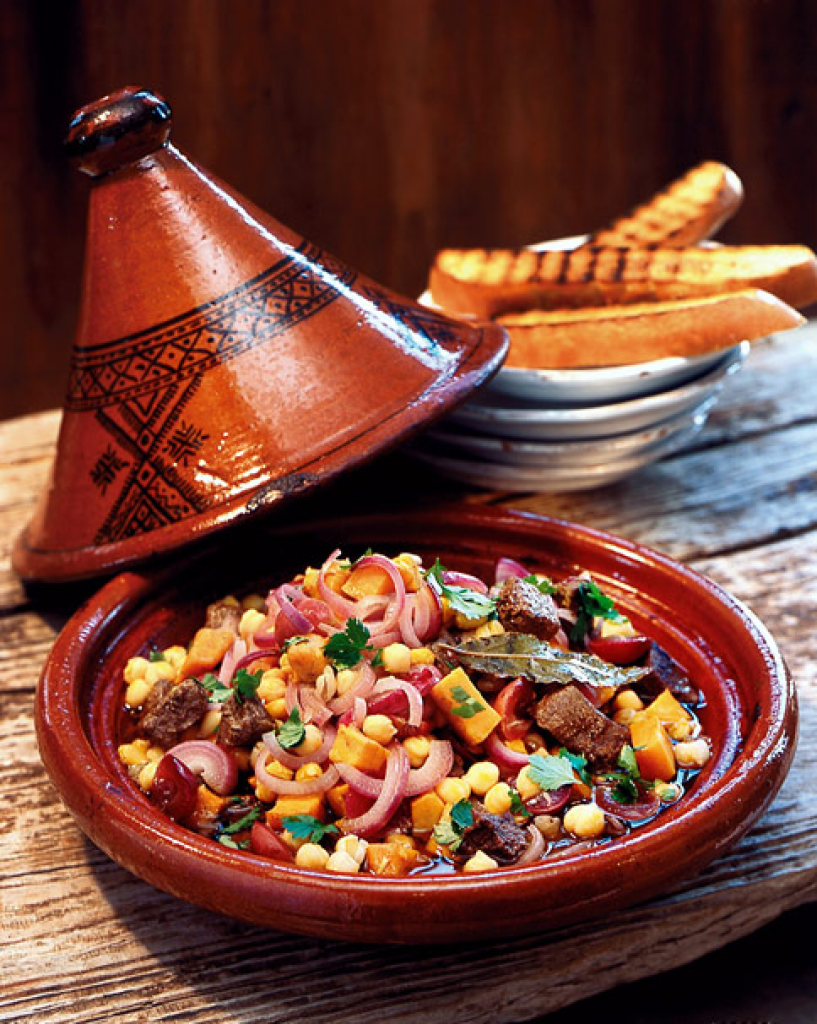
I did not consume lemongrass in any other form while in Cameroon, nor did I ever consume it any other way until I came to Thailand. In fact, an exhaustive search on the internet has led me to conclude that nowhere between Cameroon and S-E Asia does any traditional cuisine include lemongrass (I stress traditional cuisine; with the globalization of cuisines many people are now trying S-E Asian recipes, either straight or fusing it with their own cuisines). Everywhere in the world, there is much enthusiasm to consume lemongrass but only in the form of infusions. I had high hopes to find traces of lemongrass in the Berber regions of North Africa, where their traditional form of cooking, the tajine, is very much a form of stewing, which is quite close to the way lemongrass is used in this part of the world.

tajine

But no, I found no trace of cooking with lemongrass in the shadow of the Atlas Mountains. Not even in India have I found any trace of lemongrass being used in traditional cuisine, even though the subcontinent shares many culinary traits with S-E Asia – curries being the obvious one

south indian curry

and even though the lemongrass plant grows well there (to the extent that C. citratus is known as West Indian lemongrass while C. flexuosus is known as East Indian lemongrass).

I was somewhat astonished by this finding, but also rather disappointed – I had been looking forward to showing pictures of yummy dishes from around the world in which lemongrass plays a role. My first thought was that the consumption of lemongrass infusions the world over was a result of colonialism. In this narrative (a favourite word these days among the chattering classes), Europeans would have discovered the lemongrass infusion (I suspect in India, given the name we Europeans gave the plant)
english lady drinking tea in India

and carried the plant off around the world and hooked our colonial subjects on the drink (the plant’s anti-mosquito properties may also have helped in this diffusion; more on this in a minute).

english lady serving west indians tea

(OK, my pictures show the imbibing of the even more famous herbal infusion, tea, but the general process would have been the same.)

This tidy narrative of mine got a rude shock, however, when I picked up another, insistent, narrative on the internet, which held that already 3,000 years ago the Ancient Egyptians, and through them later the Ancient Greeks and Romans, were familiar with the plant. And there was a big difference. The Egyptians did not eat it, they used it for incense mixes. Incense was big business in Egypt (as it was indeed in all ancient religions). We have here, for instance, Ramses I burning incense as a ritual offering

Rmases I burning incense

and what the Pharaoh did, every man, woman, and probably child, did the length of the country (the country did not have much breadth).

If the Egyptians used lemongrass for incense, I suspect they also used it for their perfumes and perfumed oils. After all, this is also how lemongrass is used today, especially by our friends the aromatherapists.

lemongrass oilI couldn’t find an Egyptian mural showing someone using oils or perfumes, so instead I throw in a picture of ladies using cosmetics more generally.

ancient egyptians using cosmetics

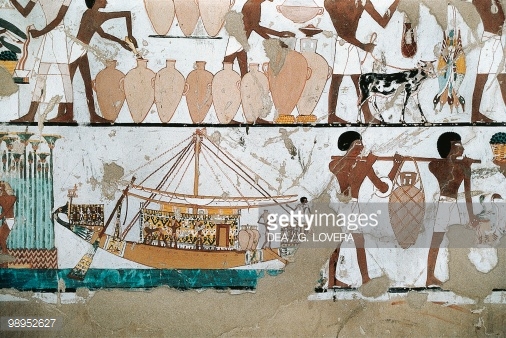
But now the question is, if the Ancient Egyptians were indeed using lemongrass, how did they get it from its place of origin, S-E Asia? I have to think that the answer lies in the spice trade, which was already flourishing in the time of the Pharaohs. Spices like cinnamon and cassia were finding their way to Egypt from Sri Lanka, so it takes no great leap of the imagination to think that lemongrass and other spices were being picked up in S-E Asia and shipped westwards, eventually coming up the Red Sea.

egyptian ship

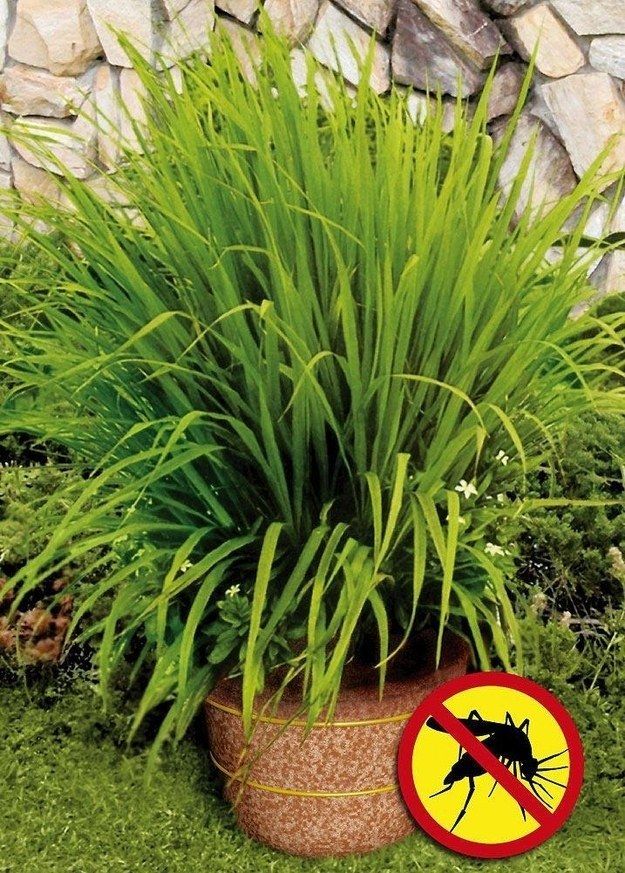
My personal view is that contrary to many spices, where the product and never the plant was shipped (the plant being treated almost like a state secret), the live plant also eventually made its way to Egypt, perhaps overland through India and Iran, along the Fertile Crescent, and then down into Egypt (and from there I would guess eventually along the coast of North Africa). I say this, because lemongrass has another very valuable use, one which I alluded to earlier, and that is as a deterrent to mosquitoes. The little buggers don’t seem to like the odour given off by the plant, and a strategy still in common use today is to plant lemongrass around a house to keep them away.

lemongrass with mosquito

Where does that leave us? Well, with a gigantic culinary opportunity. The S-E Asian countries should plunge in and promote the use of lemongrass in cooking everywhere where the plant is now growing, which is just about anywhere where there is no frost (the plant is not frost hardy). I’ll be happy to help out, throwing lemongrass into anything I find cooking.

______________

Lemongrass bunch: http://www.ashlyns.co.uk/wp-content/uploads/2013/10/shutterstock_107826104.jpg (in http://www.ashlyns.co.uk/shop/lemongrass-bunch/)
Tom yum soup: http://greenpawpaw.efe.com.vn/wp-content/uploads/2014/05/ctg-amb-128.jpg (in http://greenpawpawthai.com.au/menu/)
Coconut lemongrass noodle soup: http://www.lafujimama.com/wp-content/uploads/2010/09/Bowl-of-Coconut-Lemongrass-Somen-Noodle-Soup.jpg (in http://www.lafujimama.com/2010/09/coconut-lemongrass-somen-noodle-soup/)
Chicken green curry: http://sushibeveren.com/online/image/cache/catalog/05.%20kip-500×500.jpg (in http://sushibeveren.com/online/index.php?route=product/product&product_id=90)
Chicken yellow curry: http://rachelcooksthai.com/wp-content/uploads/2011/07/yellow-curry-5.jpg (in http://www.rachelcooksthai.com/yellow-curry-with-chicken-and-potato/)
Mussels in a coconut and lemongrass soup: http://www.taste.com.au/images/recipes/nb/2010/09/25589_l.jpg (in http://www.taste.com.au/recipes/25589/mussels+in+coconut+and+lemongrass+broth)
Vietnamese meatballs with lemongrass: http://3.bp.blogspot.com/-Asn6_ojGAY4/UxzHHvW1oAI/AAAAAAAABLQ/XGg1oUmlMf8/s1600/Vietnamese+Lemongrass+Pork+Meatballs.JPG (in http://alwaysinthekitchen.blogspot.com/2014/03/vietnamese-inspired-lemongrass-pork.html)
Indonesian beef rending: http://cdn.noshon.it/wp-content/uploads/2012-10-17-r-beef-rendang.jpg (in http://noshon.it/recipes/beef-rendang/)
Cambodian Amok Trey: http://3.bp.blogspot.com/-nWM9m8GUofk/U6r1rqzgBMI/AAAAAAAAPH8/TBOl0hNPnXA/s1600/cambodian+fish+amok+trey+8.jpg (in http://wendyinkk.blogspot.com/2014/06/amok-trey-cambodian-fish-mousse-aff.html)
Laotian stuffed lemongrass: https://gallivance.files.wordpress.com/2012/11/stuffed-lemongrass.jpg (in http://gallivance.net/2012/11/10/a-global-gumbo-ethnic-food-adventures/stuffed-lemongrass/)
Myanmar Mont Di soup: http://www.hsaba.com/wp-content/uploads/2008/12/rakhine_moti.jpg (in http://www.hsaba.com/recipes/rakhine-moti)
Philippine Lechon Cebu: http://tenminutes.ph/wp-content/uploads/2013/11/Cebu-Ayers-Lechon-Order-Online-Manila-Shipping-Contact.jpg (in http://ww90.trafficads10.com/)
Lemongrass infusion: 5240254223_8f0879e852_z.jpg (in https://farm6.staticflickr.com)
Lemongrass plant: http://www.herbalteasonline.com/wp-content/uploads/2015/06/Lemongrass-Plant.jpg (in http://www.herbalteasonline.com/lemongrass-tea.php)
Tajine: http://blog.zingarate.com/wanderlustt/wp-content/uploads/2015/01/tajine.png (in http://acquisto.acquea.com/s/tajine)
South Indian curry: http://www.chillimix.com/images/stories/easygallery/resized/0/1212337046_meen%20khatta.jpg (in http://www.chillimix.com/indian-recipe/fish-and-sea-food/meen-khatta.html)
English lady drinking tea in India: http://media.npr.org/assets/img/2015/04/07/vv1190_custom-2fb3f28e67d8197b7555bed3a80833675d5ff748-s900-c85.jpg (in http://www.npr.org/sections/thesalt/2015/04/07/396664685/tea-tuesdays-how-tea-sugar-reshaped-the-british-empire)
English lady serving West Indians tea: http://cache3.asset-cache.net/gc/3228476-21st-september-1944-west-indian-ats-volunteers-gettyimages.jpg?v=1&c=IWSAsset&k=2&d=v9WwiBskt0bjdeMIS%2fO97bO7qBvmTdPLrPrzxlLhIMyq9QGXYV1QZzXet54z3qgP (in http://www.gettyimages.com/detail/news-photo/west-indian-ats-volunteers-being-served-tea-at-the-colonial-news-photo/3228476)
Ramses I burning incense: http://cache1.asset-cache.net/gc/112187026-egyptian-antiquities-pharaoh-ramesses-i-gettyimages.jpg?v=1&c=IWSAsset&k=2&d=bGR6JCu8pZbf%2b2sqs4ajC3pr1O6j4GFGzEmSgJKUFx%2fwR1Oa4nADTEaQuSTwZMs0 (in http://www.gettyimages.com/detail/illustration/egyptian-antiquities-pharaoh-ramesses-i-burning-incense-stock-graphic/112187026)
Lemongrass oil: http://38.media.tumblr.com/c2faea8d8070dc30761b84931745bdbe/tumblr_inline_nifdirPvOm1snpbkm.jpg (in http://blog.massagetablesnow.com/page/3)
Egyptian ladies using cosmetics: http://www.notorious-mag.com/wp-content/uploads/2015/08/ladies.jpg (in http://www.notorious-mag.com/2015/08/05/beauty-tips-ancient-egypt/)
Egyptian ship: http://cache3.asset-cache.net/gc/98952627-mural-painting-depicting-scene-of-carriage-of-gettyimages.jpg?v=1&c=IWSAsset&k=2&d=0njLr93epyP%2fp14uTH5hjWyeKg7%2bNmMNGiew1vRXySmP3uh4n3I9GzP5Xf2kYAzW (in http://www.gettyimages.com/detail/photo/mural-painting-depicting-scene-of-carriage-high-res-stock-photography/98952627)
Lemongrass with mosquito: http://www.jewanda-magazine.com/wp-content/uploads/2015/08/98a5997abe901c1f53505e529852c4d7.jpg (in http://www.jewanda-magazine.com/2015/08/lifestyle-10-moyens-naturels-pour-eloigner-les-moustiques/)

FOOTPRINTS

Bangkok, 6 July 2015

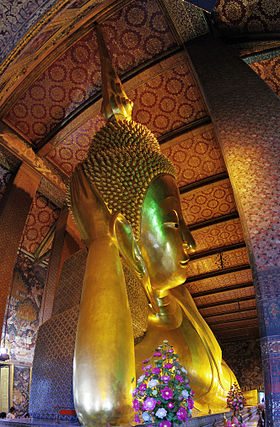
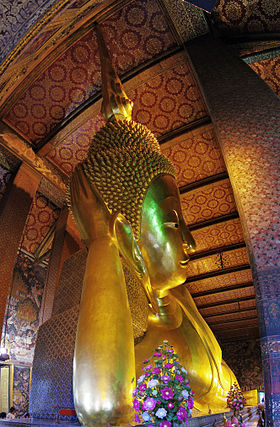
A couple of river-bus stops downriver from where my wife and I live in Bangkok stands the temple Wat Pho, whose main claim to fame is a large reclining Buddha.

wat pho reclining buddha

It is, I read, 46 metres long and 15 metres high, and walking along it certainly is impressive. But I much prefer the soles of the statue’s feet.

wat pho buddhas feet

These soles have been divided into 108 panels each of which contains, in the form of mother-of-pearl inlays, the 108 auspicious symbols by which the Buddha can be identified, like flowers, dancers, white elephants, tigers and altar accessories.

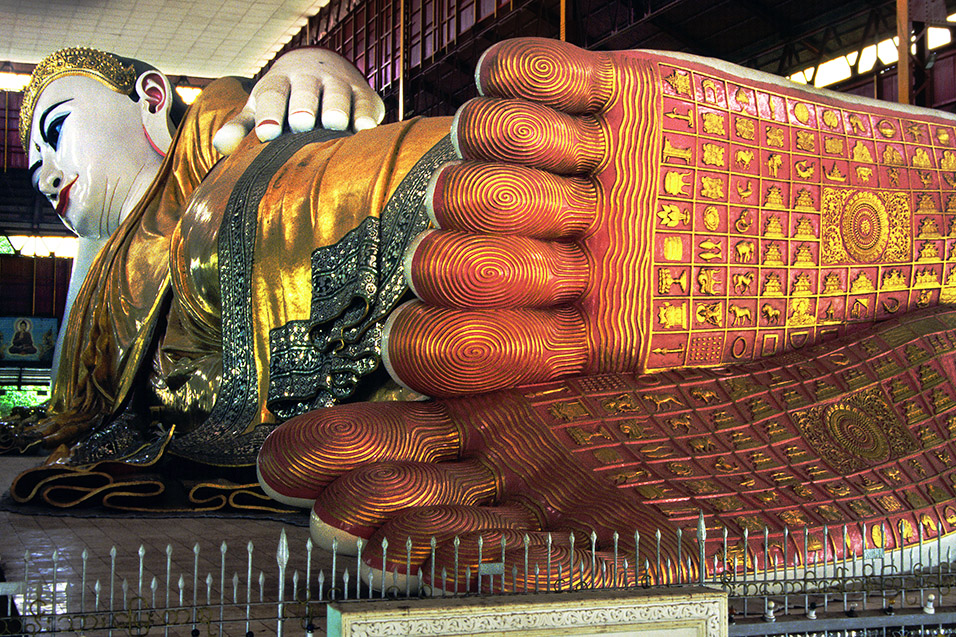
Wat Pho’s reclining Buddha was the first time I saw this interesting art form. But actually it is quite common for reclining Buddhas to have the soles of their feet so decorated. For instance, I find this particular reclining Buddha in Yangon in Myanmar more naturalistic – certainly the pose of the feet is more pleasing to the eye than those stiff blocks in Wat Pho.

yangon_reclining_buddha_feet

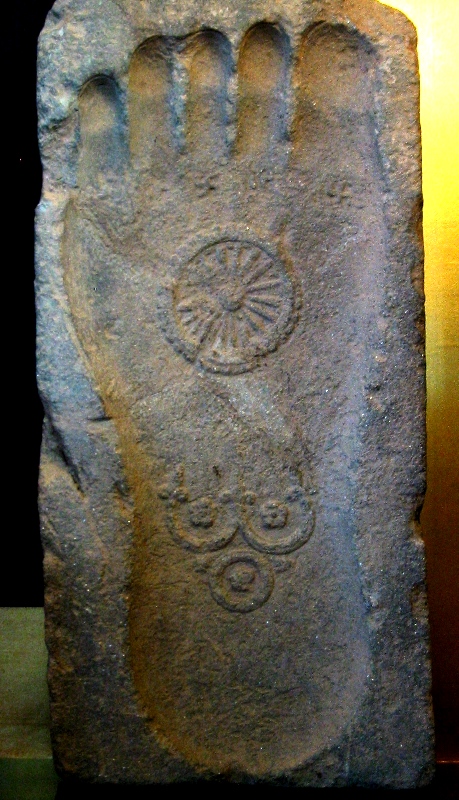
I later learned that the decorations of the feet of Buddha statues are actually a reflection – almost literally – of a much older iconography for depicting the Buddha, that of his footprint. Before anyone made statues of the Buddha, they made his footprints. They were a powerful way to remind the faithful that the Buddha had been present on earth: “the Buddha passed this way”. Quite quickly, the footprints were decorated with some of the symbols used to identify the Buddha. For instance, this footprint of the Buddha made in the 1st Century AD in the kingdom of Gandhara, in what is now the Swat valley in Pakistan, carries the Darmachakra, the “wheel of law”, and the triratna, the “triple gem” of Buddhism: Buddha (the Enlightened One), Dharma (the Teaching), and Sangha (the Community).

Buddha-Footprint

As time went on, more and more symbols were squeezed onto the footprints. And then some bright spark came up with the “positive print”, as it were, where the soles of reclining Buddhas carry the symbols of the Buddha.

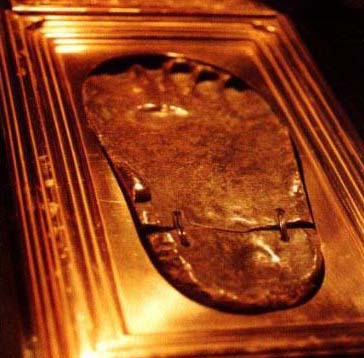
Buddhism is not the only religion that has used footprints of its religious leaders as iconography, although it surely has used them more than any other (there is an estimate of 3,000 Buddha footprints throughout the Buddhist lands). My wife and I came across a footprint of the Prophet Muhammad in the Topkapi museum in Istanbul

Muhammad footprint

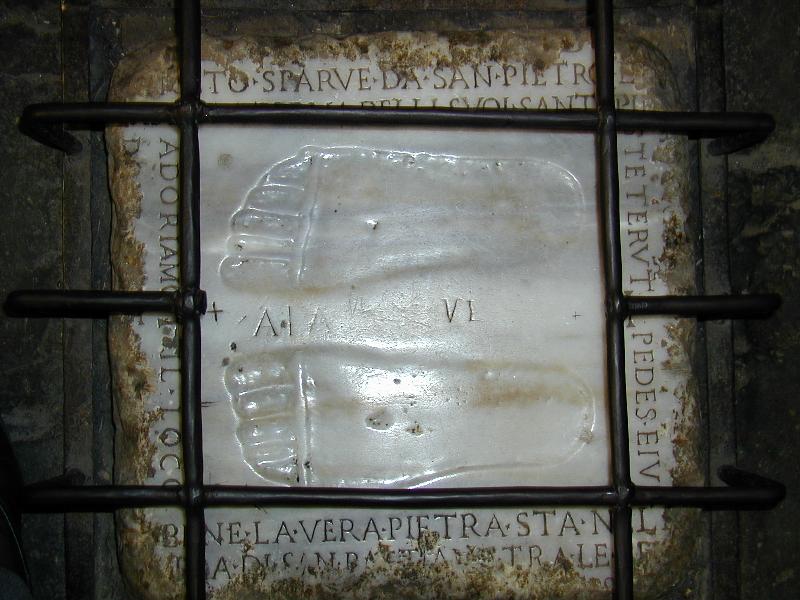
and there is a pair of footprints of Jesus in the Church of Domine Quo Vadis (“Lord, where are you going?”) on the outskirts of Rome.

jesus footprint

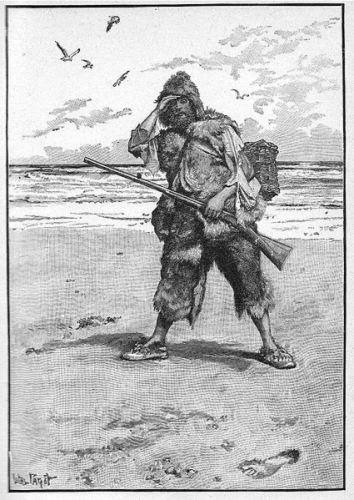
It is true to say that footprints are an incredibly powerful symbol of someone passing, of having been close by. One of the best remembered stories in Robinson Crusoe is of his finding a footprint on the beach.

crusoe and footprint

“It happened, one day about noon going towards my boat, I was exceedingly surprised, with the print of a man’s naked foot on the shore, which was very plain to be seen in the sand. I stood like one thunder-struck, or as if I had seen an apparition; I listened, I looked round me, I could hear nothing, nor see anything; I went up to a rising ground to look farther; I went up the shore and down the shore, but it was all one, I could see no other impression but that one. I went to it again to see if there were any more, and to observe if it might not be my fancy; but there was no room for that, for there was exactly the very print of a foot, toes, heel, and every part of a foot; how it came thither I knew not, nor could in the least imagine. But after innumerable fluttering thoughts, like a man perfectly confused and out of myself, I came home to my fortification, not feeling, as we say, the ground I went on, but terrified to the last degree, looking behind me at every two or three steps, mistaking every bush and tree, and fancying every stump at a distance to be a man.”

That footprint struck fear in Robinson Crusoe, fear of the unknown, fear of attack, fear of savagery. But I get a thrill when I see the footprints that some 15 people left 2,000 years ago in the ash and mud on the shore of Lake Managua in Nicaragua.

nicaragua footprints

I get goose bumps on seeing the footprints left 1.5 million years ago by Homo erectus near the village of Ileret in Northern Kenya on the eastern shore of Lake Turkana.

homo erectus ileret kenya

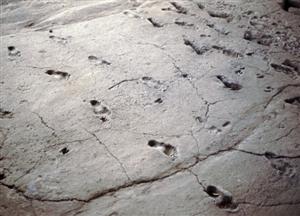
The hairs on my neck rise at the sight of footprints left 3.7 million years ago by three members of the species Australopithecus afarensis at Laetoli in Tanzania, which show that already then bipedalism, such a distinctive feature of our species, was in place.

laetoli footprints

I find these footprints a much more powerful reminder of the Family of Man than a piece of jawbone or a tooth. I can imagine my distant, distant ancestors going about their business, as I will go about mine today.

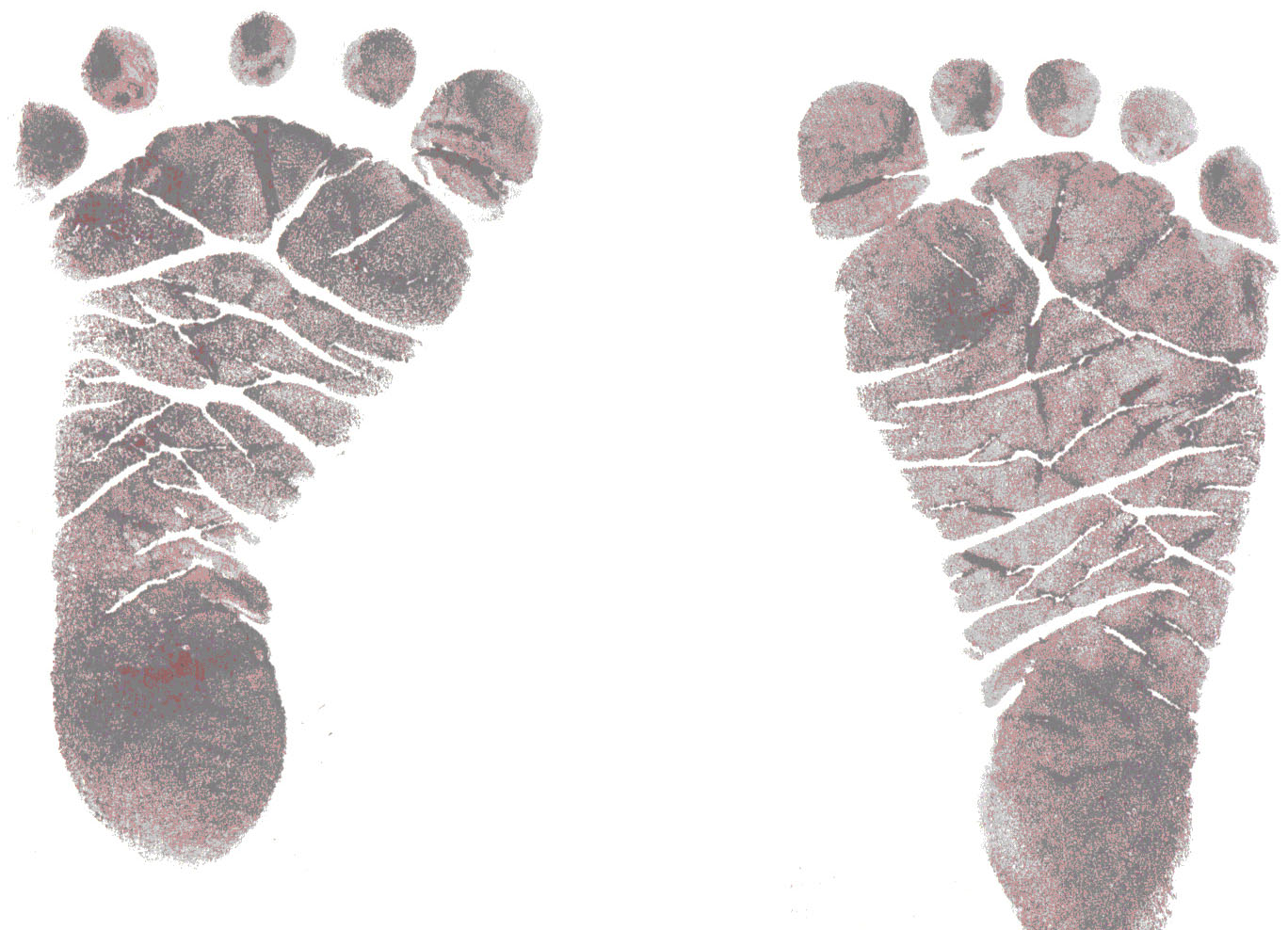
And within the much narrower circuit of my family, my wife and I have two relics, which currently slumber with all our stuff in a warehouse in Vienna but which we will keep preciously until the end of our lives. These are the footprints which the hospital gave us of our children’s feet, made just after they were born; they look like this

newborn footprints

They will forever remind us of the great joy which we experienced when our two children entered our lives and for a few decades walked with us before taking their own path in life.

___________

Reclining Buddha, Wat Pho, Bangkok: https://upload.wikimedia.org/wikipedia/commons/thumb/8/8d/Bangkok_Wat_Pho_reclining_Buddha.jpg/280px-Bangkok_Wat_Pho_reclining_Buddha.jpg (in https://en.wikipedia.org/wiki/Wat_Pho)
Reclining Buddha’s feet: http://s4.perpetualexplorer.com/wp-content/uploads/2013/03/wat_pho.jpg (in http://perpetualexplorer.com/2013/03/03/buddhist-temples/)
Reclining Buddha, Chaukhtatgyi Paya, Yangon: http://www.heybrian.com/lib/images/travels/myanmar/yangon_reclining_buddha_feet.jpg (in http://www.heybrian.com/travels/myanmar/)
Buddha footprint, 1st century, Gandhāra: https://upload.wikimedia.org/wikipedia/commons/7/73/Buddha-Footprint.jpeg (in https://en.wikipedia.org/wiki/Buddha_footprint)
Muhammad footprint, Istanbul: http://www.usna.edu/Users/humss/bwheeler/images/footistanbul.jpg (in http://www.usna.edu/Users/humss/bwheeler/footprints_pm.html)
Jesus footprints, church of Domine Quo Vadis: https://upload.wikimedia.org/wikipedia/commons/b/b1/I_piedi_del_quo_vadis.jpg (in https://en.wikipedia.org/wiki/Church_of_Domine_Quo_Vadis)
Crusoe and the footprint: http://www.bookdrum.com/images/books/92999_m.jpg (in http://www.bookdrum.com/books/the-graveyard-book/16401/bookmark/92998.html)
Nicaragua footprints: http://www.geog.cam.ac.uk/research/projects/eruptions/figures/thumbnails/05_11.jpg (in http://www.geog.cam.ac.uk/research/projects/eruptions/figures.html)
Homo erectus Ileret Kenya: https://nutcrakerman.files.wordpress.com/2014/10/ileret.jpg (in http://nutcrackerman.com/2014/10/14/the-oldest-human-footprints-by-continent/comment-page-1/)
Hominid footprints, Laetoli: http://auth.mhhe.com/socscience/anthropology/image-bank/kottak/chap07/kot37055_0705ta.jpg (in http://auth.mhhe.com/socscience/anthropology/image-bank/kottak/chap07/image7.htm)
Newborn footprints: http://semma.com/Joey/images/Joey/Joey%27s%20Footprints.jpg (in http://semma.com/Joey/photo2.html)

SNIFFING AT MY INHALER

Bangkok, 20 June 2015

The Thais are a handsome race, no doubt about it. They seem to be genetically predisposed to having a gracile body structure, which leads to a race of naturally slim and slender people. Of course, there are Thais who have had a hard life, especially in rural areas, and whose bodies and faces have been marked by it. And given the popularity of fast food and of snacking on processed foods, obesity is on the rise as it is everywhere in the world. But overall, the Thais are pleasing to the eye.
cool thai couple
So it is really very unfortunate that many Thais have this strange habit of going around with an inhaler up their nose, which obviously detracts from their natural comeliness.
women with inhalers
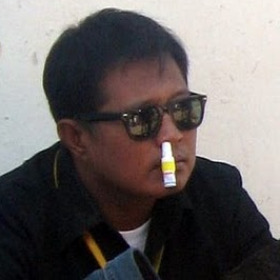
Normally you just see them holding the inhaler to the nose and sniffing away as if they were snorting cocaine or some other such substance, but in extreme cases they will jam the inhaler in their nostrils and walk about with it dangling from their noses.
man with inhaler in nose
man with inhaler in nose-2
(I have even heard of cases of Thais with two inhalers jammed up their noses! But perhaps this is an urban legend)

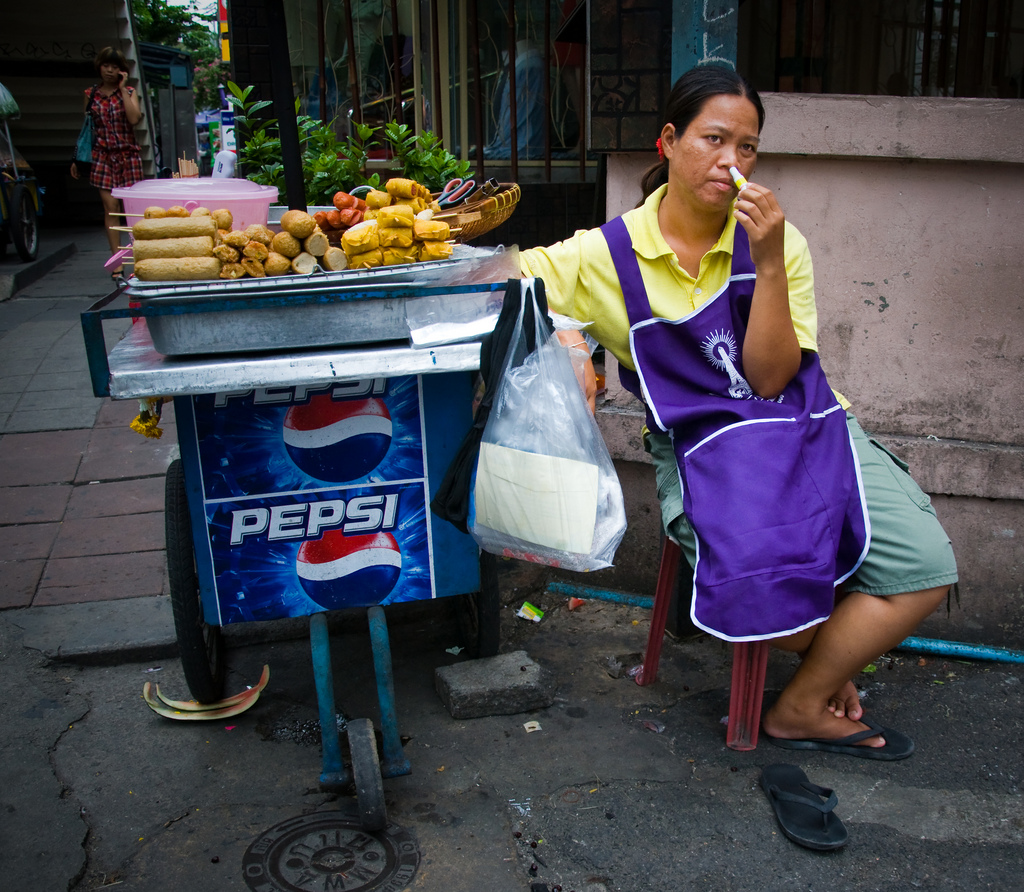
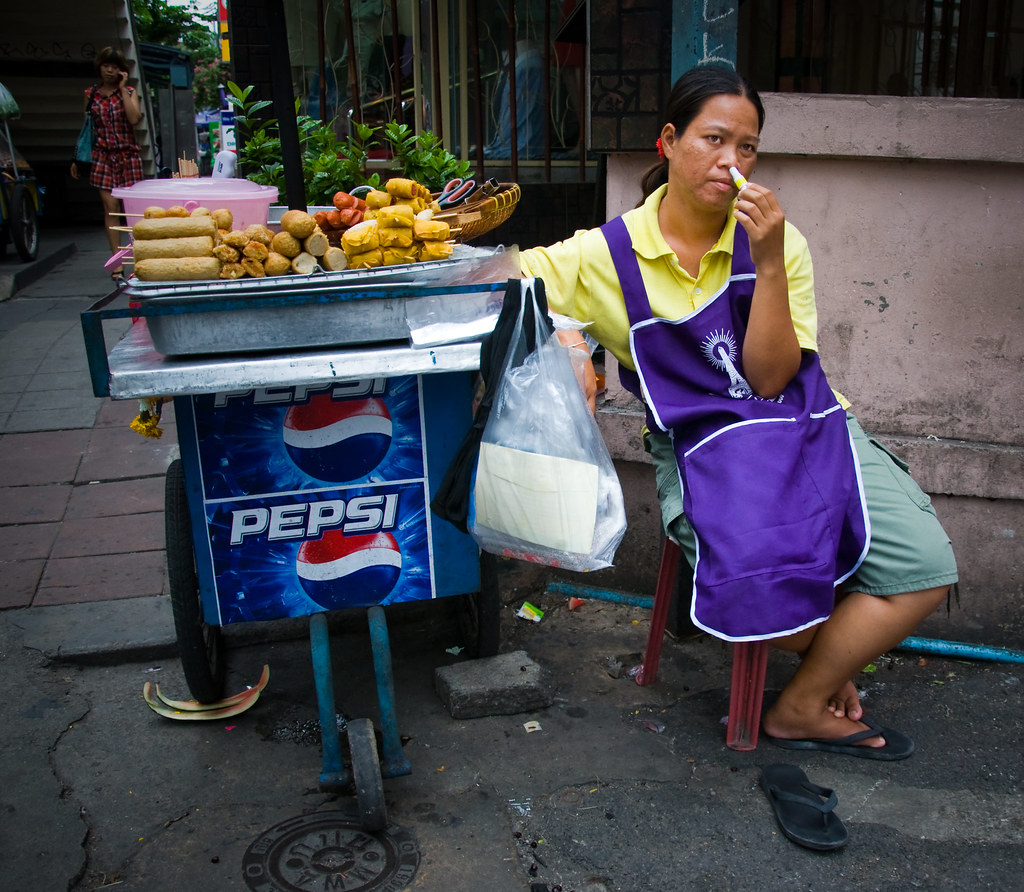
Quite why they do it is not clear to me. No doubt it has something to do with warding off noxious smells, which indeed can sometimes be a problem in Thailand where open drains are still the rule rather than the exception. But the street smells can be strong even in the absence of open drains: cooking smells, for instance, can be penetrating, which may explain this lady’s use of an inhaler
woman vendor with sniffing stick
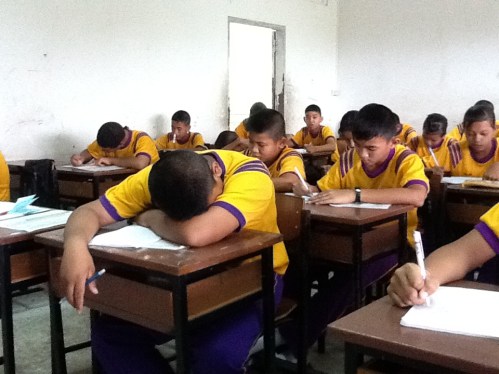
Or it could be a way of keeping alert when required, as this photo of an examination room suggests
https://theheartthrills.com/wp-content/uploads/2015/06/12926-photo2b1-721216.jpg
(the boy with the inhaler is towards the back left and is busily writing while the poor fellow in the front looks like he could do with an inhaler)

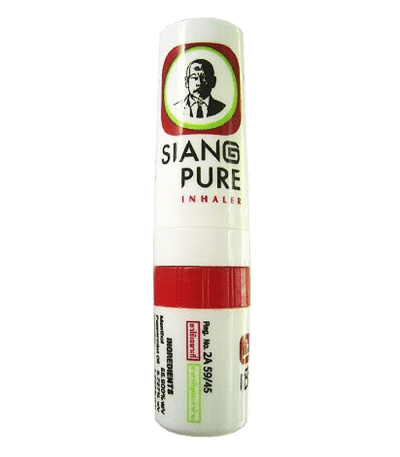
But various sites darkly suggest that one can become hooked and simply sniff for the artificial pleasure of it all. Bent on making a scientific examination of the issue, I purchased an inhaler at my local 7-11 – the cheapest, I’m not that dedicated –
image
and carried out a series of sniff tests …

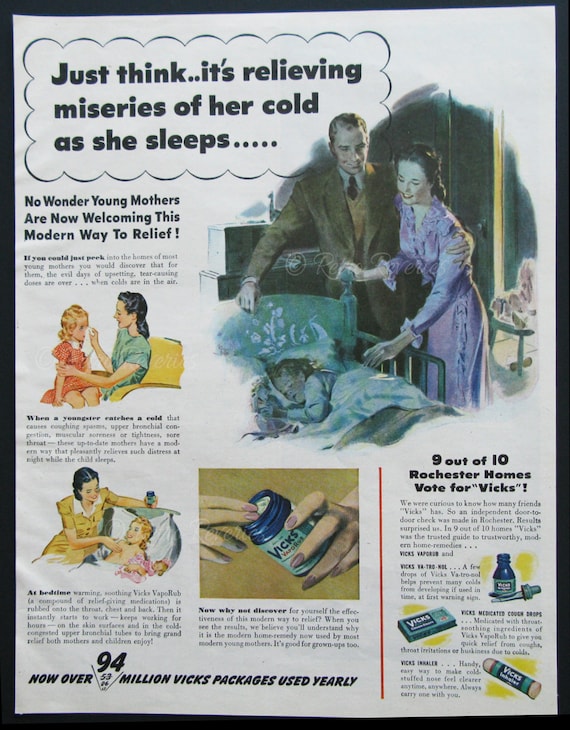
… Ah yes! That eucalyptus smell that I remember soooo well from the Vicks inhalers that our mothers used to hand us young children when we had a cold
vicks inhaler
and which, together with Vicks vapo rub for our chests and Vicks cough drops for our scratchy throats were used by several generations of anxious mothers for their coughing and sniffling brood.
https://img1.etsystatic.com/047/2/9430690/il_570xN.668385061_prsm.jpg
Yes, yes, one or two sniffs and you could feel the stuffiness in your nose magically disappearing, and the late November fogs lifting – only for stuffiness and fog to reappear after a while – to be chased away again with another sniff or two – and so the cycle went on endlessly, until Spring arrived …

… But behind the astringent, aseptic quality of the eucalyptus there lies a softer smell of mint and peppermint … of the Polo mints of my youth!
https://i0.wp.com/oi55.tinypic.com/2cffhar.jpg
“the mint with the hole”, as the ad tag line had it
https://i0.wp.com/images.esellerpro.com/2486/I/514/4/polo-mints-postcard.jpg
a taste which has me instinctively grasping out at one of the mint sweets that hotels in this part of the world so thoughtfully place on the check-in counter for incoming guests.

Memories, memories … I suppose I could end up walking down Bangkok’s streets, dreamily sniffing on my inhaler, letting visions of my – really quite pleasant – life unfold before me. Is that what Thailand is, a nation of dreamers? Or are these inhalers just a modern version of the pomander, that ball made of perfumes held in a perforated case, which the rich of the European Middle Ages hung around their necks to ward off the frequent bad smells around them or in the pious hope that it would protect them against the plague?
pomander
I will let my gentle readers decide.

________________

Cool Thai couple: http://garbagelapsap.com/wp-content/uploads/2012/01/GARBAGELAPSAP_STREETSTYLE_BANGKOK_FASHION.jpg (in http://www.elarmarioaj.com/2013_04_01_archive.html)
Women with inhalers: https://jayinthailand.files.wordpress.com/2012/02/960f.jpeg (in https://jayinthailand.wordpress.com/)
Man with inhaler in nose: http://www.mymuaythai.com/wp-content/uploads/2010/01/inhaler.jpg?7503ae (in http://www.mymuaythai.com/archives/poy-sian-mark-ii/)
Man with inhaler in nose-2: http://pinoyajarn.com/blog/wp-content/uploads/2014/09/2-Vicks-Inhaler.png (in http://pinoyajarn.com/blog/category/living-in-thailand/)
Woman vendor with sniffing stick: https://c1.staticflickr.com/5/4048/4179283228_1a7755aca7_b.jpg (in https://www.flickr.com/photos/adrianbangkok/4179283228/)
Kid with inhaler in nose: https://theheartthrills.com/wp-content/uploads/2015/06/12926-photo2b1-721216.jpg (in http://nakhontuba.blogspot.com/2011_09_01_archive.html)
Inhaler: http://static07.st-sm.com/07SM/1813-thickbox_default/inhaler-nasal-siang-pure-2cc.jpg (in http://www.st-sm.com/07SM/en/pocket-inhaler/420-inhaler-nasal-siang-pure-2cc-8850109011412.html)
Vicks inhaler: https://s-media-cache-ak0.pinimg.com/736x/26/4c/26/264c2634676f95bb2998ba2b0f4b208e.jpg (in https://www.pinterest.com/lhollifield123/the-doctor-said/)
Vicks ad: https://img1.etsystatic.com/047/2/9430690/il_570xN.668385061_prsm.jpg (in https://www.etsy.com/listing/207428148/1945-vicks-vaporub-ad-vicks-inhaler)
Polo sweets: http://oi55.tinypic.com/2cffhar.jpg (in http://tinypic.com/view.php?pic=2cffhar&s=7#.VYTky1Ipq-t)
Polo mint ad: http://images.esellerpro.com/2486/I/514/4/polo-mints-postcard.jpg (in http://www.ebay.co.uk/itm/NEW-POLO-MINTS-POSTCARD-RETRO-VINTAGE-OPIE-OFFICIAL-IMAGE-MINT-WITH-THE-HOLE-/281202056658)
Pomander: http://www.1st-art-gallery.com/thumbnail/342661/1/Portrait-Of-Jan-Gerritz.-Van-Egmond-Van-De-Dijenborgh,-Bust-Length-Wearing-A-Black-Fur-Trimmed-Coat,-Holding-A-Pomander,-Seen-Within-An-Arched-Decorated-Embrasure,-A-Landscape-Beyond.jpg (in http://eighteenthcenturylit.pbworks.com/w/page/70599154/Smelling%20Salts)

SONGKRAN

Bangkok, 15 April 2015

Call me a sourpuss, a killjoy, a party-pooper, even an old fart, but I really cannot find anything positive to say about the Songkran festival which is in full swing at the moment here in Thailand. For those of my readers who may not be familiar with Songkran, it is Thailand’s festival of the new year. Actually, Myanmar, Laos, and Cambodia all celebrate the same festival, even if it has a different name in Myanmar and Cambodia (Thingyan and Chaul Chnam Thmey) – not surprising really, since all these countries follow more or less the same traditional Buddhist calendar.

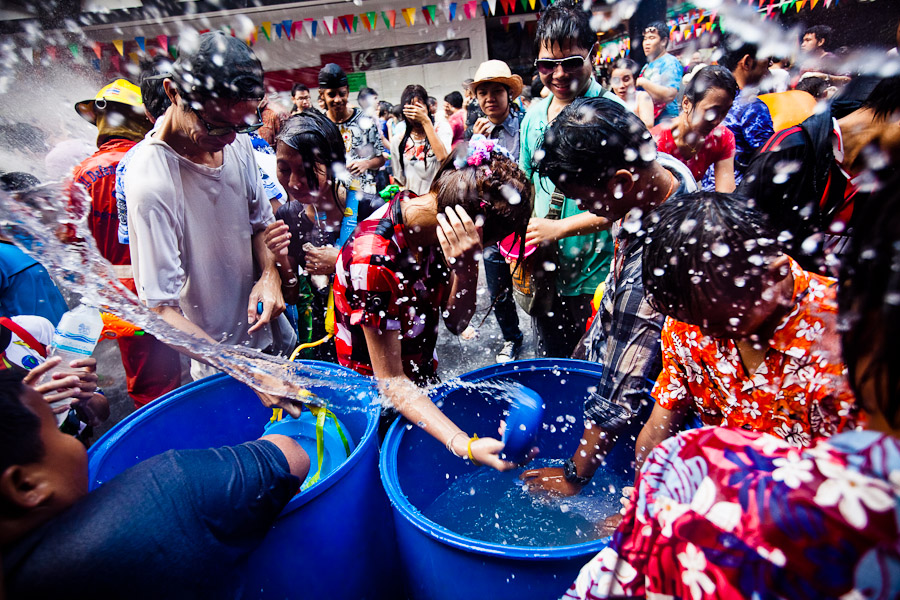
Thais celebrate Songkran by squirting, spraying, and generally throwing water on everyone and everything, in one vast water party.

Songkran water festival in Bangkok, Thailand

water-festival-in-thailand-5

water-festival-in-thailand-4

Songkran in Bangkok, Thailand

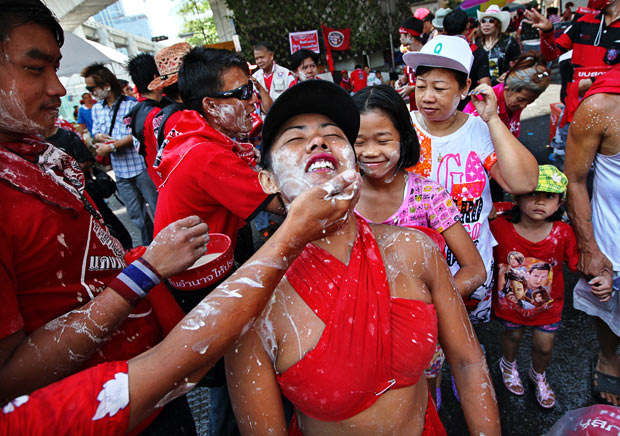
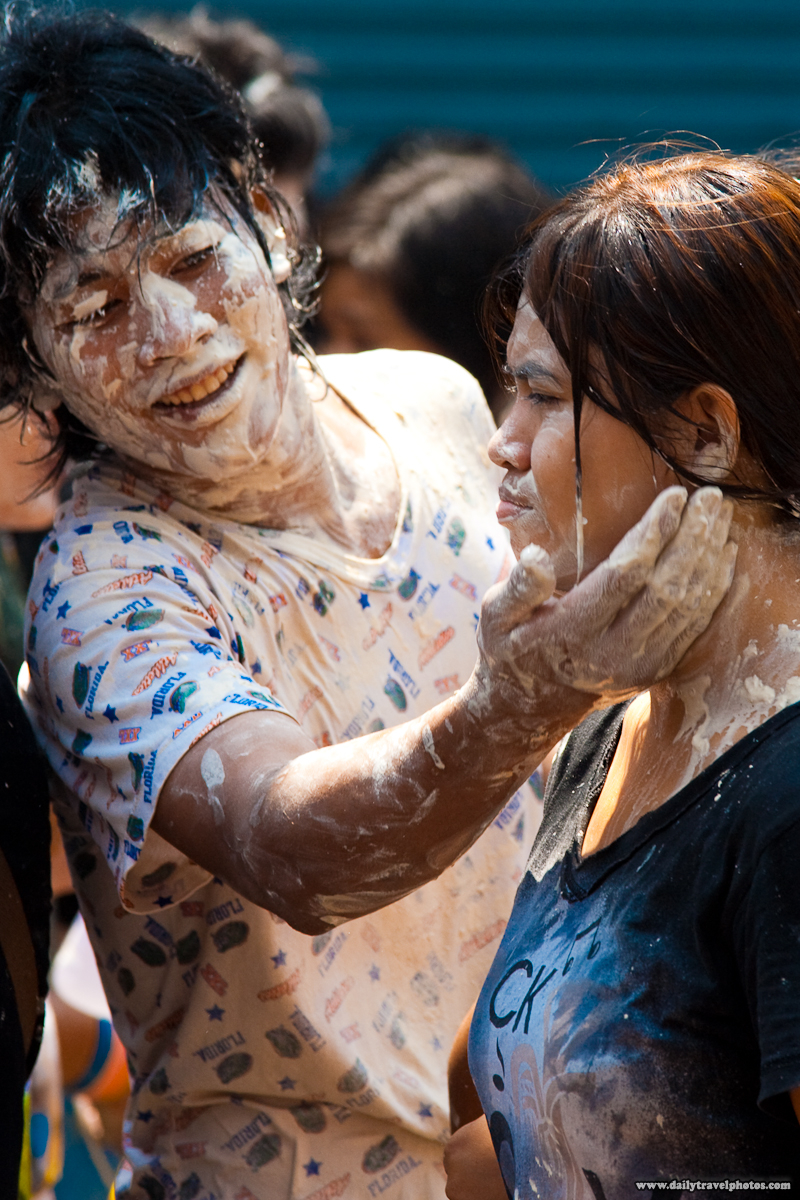
To cap it all, people slather themselves – and others – with a white paste (shades of Myanmar).

white paste on face-1

white paste on face-2

Those who are young, or who have an infantile sense of humour (aïe, my sourpussedness is coming to the surface), find all this hugely entertaining. Shrieks and laughter echo up and down the streets. Clothes are soaked, but no matter, it’s the hottest time of the year, they will dry out in a flash. And off goes another bucket of water!

Of course, for sourpusses like me, who have to get to meetings with officials in nice clothes or have to go to the office to work and who would prefer not to sit in a puddle at their desk, it is a trial to navigate the streets and dodge the pails of water, the hoses, the water guns. And anyway, it’s just so … damned childish to enjoy throwing water at people! (aïe, my party-poopery is coming to the fore: “I grow old, I grow old, I shall wear the bottoms of my trousers rolled”)

What I find really irritating is that all this water throwing is a stupid, facile, totally post-modern corruption of the original festival. Water has a very important role in Thai society, as it does in many cultures. Clean water is the symbol of purity and peace. At the new year, it is used to wash away the dirt of the old year and allow one to start the new year clean and fresh. During the three days of the festival, clean water is poured over statues of the Buddha to clean them. That same water, in some way sanctified by its contact with the Buddha, is sprinkled over family and friends, again as a symbol of cleansing oneself for the year to come. Part of the tradition has younger people sprinkling water on their elders.

In a variation on this last tradition, yesterday in the office my secretary shyly asked me if I would be willing to take part in a ceremony where my colleagues would sprinkle water on my hands, in my role as the head or “elder” of the office. I was glad to, I announced, feeling that this at least gave some meaning to the silly goings-on outside my window. So at the appointed time, my colleagues solemnly – if somewhat self-consciously – processed into my office. A silver bowl filled with clean water strewn with petals was placed on the table, and one by one – eldest first – they came up, knelt in the Thai fashion, and poured a small cup of water over my hands, while wishing me a happy new year. I wished them and their families a happy and prosperous new year in return.

When I came home for lunch, I noticed that a statue of the Buddha had been set up in the lobby, with a bowl of water nearby. Why not? I thought. I might as well go the whole hog. So I offered the statue a traditional if rather awkward namaste and poured a cupful of water over him.

___________________

Water festival-1: http://cdn.c.photoshelter.com/img-get/I0000SR1YiamyV8Y/s/750/750/Water-Festival-in-Bangkok-Thailand-29.jpg (in http://aaronjoelsantos.photoshelter.com/image/I0000SR1YiamyV8Y)
Water festival-2: http://www.chiangmai-alacarte.com/sites/default/files/styles/main_col/public/images/songkran_festival_and_tour_in_chiang_mai_thailand2.jpg?itok=KUnw68jO (in http://detaykibris.com/taylandda-su-bayrami-coskuyla-kutlaniyor-191-olu.html)
Water festival-3: http://www.journeymart.com/gifs/holidays-ideas/festivals/songkran-thailand-water-festival.jpg (in http://www.journeymart.com/holidays-ideas/festivals/songkran-thailands-water-festival.aspx)
Water festival-4: http://cdn.lightgalleries.net/4bd5ec1013294/images/Songkran_Water_Festival_Bangkok-2-1.jpg (in http://www.aaronjoelsantos.com/contents/Stories/Waterworld/image-Songkran_Water_Festival_Bangkok-2/)
White paste on face-1: http://i.telegraph.co.uk/multimedia/archive/01615/red-shirts-white-p_1615328i.jpg (in http://www.telegraph.co.uk/travel/picturegalleries/7586439/Songkran-tourists-and-Thais-splash-each-other-with-water-to-celebrate-new-year-in-Thailand.html)
White paste on face-2: http://www.dailytravelphotos.com/images/2011/110425_songkran_white_powder_paste_faces_thai_festival_day_applied_IMG_9676.jpg (in http://www.dailytravelphotos.com/archive/2011/04/25/)

PAINTED CHEEKS

Bangkok, 5 April 2015

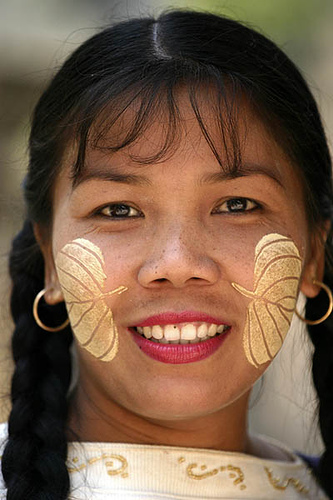
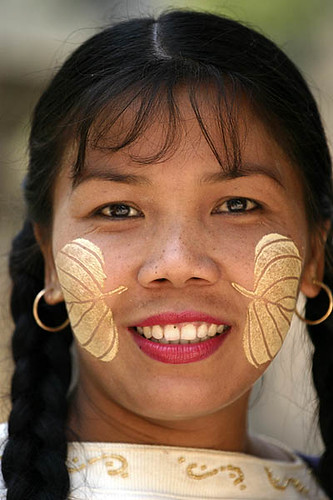
Picking up on the theme of my last post, the application of cosmetics to certain parts of the face (eyebrows in that case), I feel that I should also comment on one fashion statement which I have come across in this part of the world and which, contrary to the fashion of strong eyebrows that seems to be sweeping the world, I hardly see being adopted any time soon away from its place of birth. The part of the world in question is Myanmar, and the fashion statement in question is the daubing by women (but not only) of their cheeks with a beige-coloured paste.
Yangon, Burma, Myanmar. Streets.It really is something that foreigners cannot fail to notice the moment they arrive in Myanmar, and indeed the internet is full of comments along the lines of “what on earth is that stuff on the women’s faces?”  The last time my wife and I were in the country, I finally got around to asking what this stuff was exactly. Thanatka, I was told (or thanat-ka, or thanaka, or thanakha; transliteration of Burmese words into English is quite approximate, rather like Shakespeare spelling his own name in three or four different ways – but I digress). Our hotel had a little exhibition on thanatka in the lobby, which frankly didn’t explain anything at all. Time to scour the internet, and as is normally the case Wikipedia threw up some useful material.

First, the why: why are women (and children to some degree) putting thanatka on? The answer seems to be primarily for beauty, rather like Amerindians paint their faces as decoration.
amerindian with painted faceIndeed, while the photo which starts this post has the lady in question just giving herself a brushstroke’s worth of thanatka on each cheek, others seem far more creative. Painted leaves seem popular (although I wonder if this is simply catering to the tourist trade?)
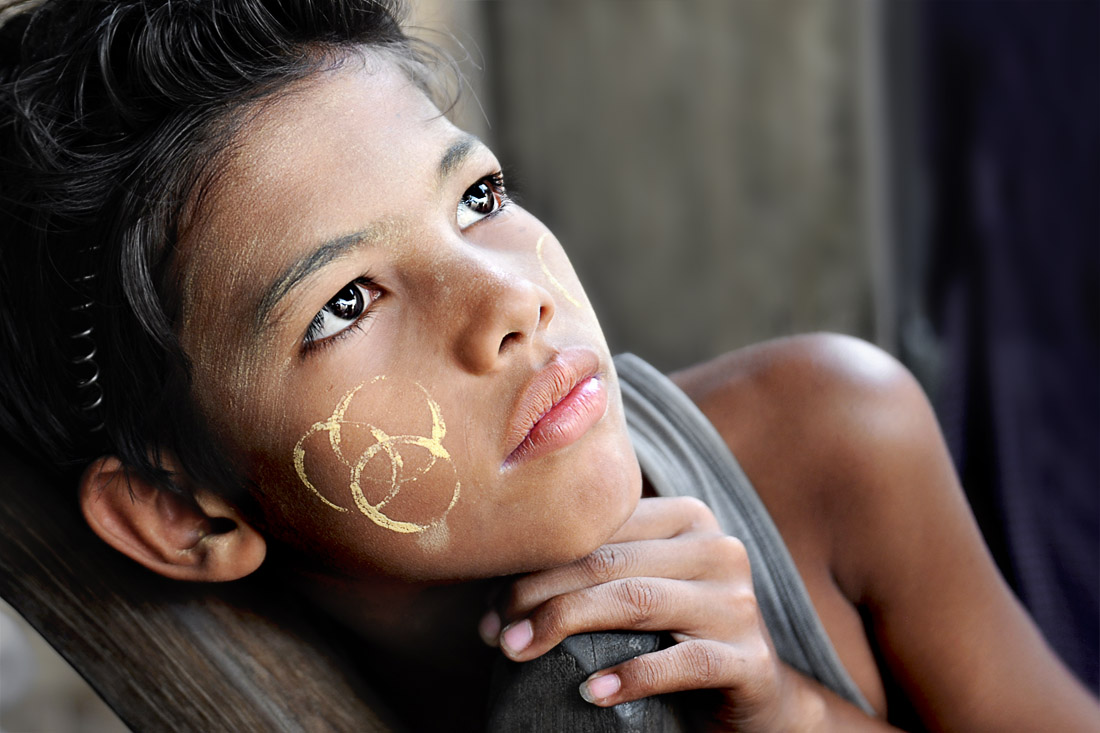
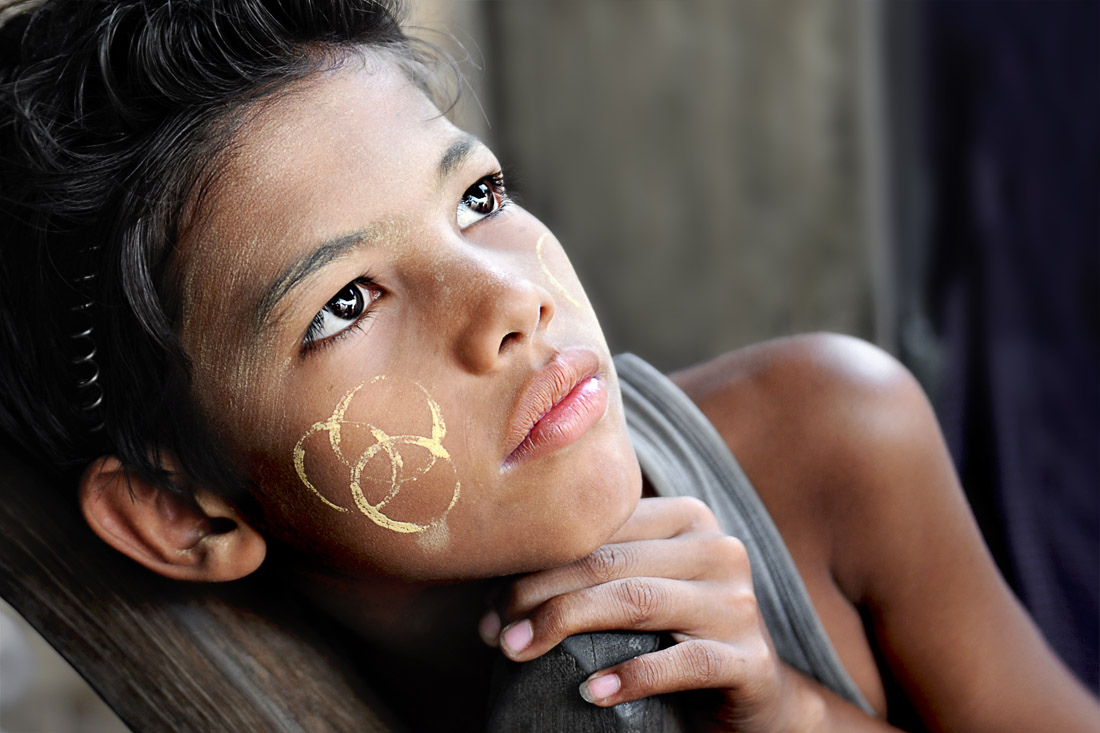
painted leaveswhile simple whorls
whorlsor circles also appear frequently in the cannon.
circlesIt seems that thanatka is not only about beauty. It is also said to provide protection from sunburn. But then I would have thought that application to the whole face would be more appropriate, the way I slathered sunscreen on every piece of my exposed skin during our recent trip to Myanmar. Claims are also made that it removes acne, and there are “before and after” photos to that effect on the net – although, rather strangely, of white people only. It is also claimed to have anti-fungal properties, although luckily there are no “before and after” pictures of that.

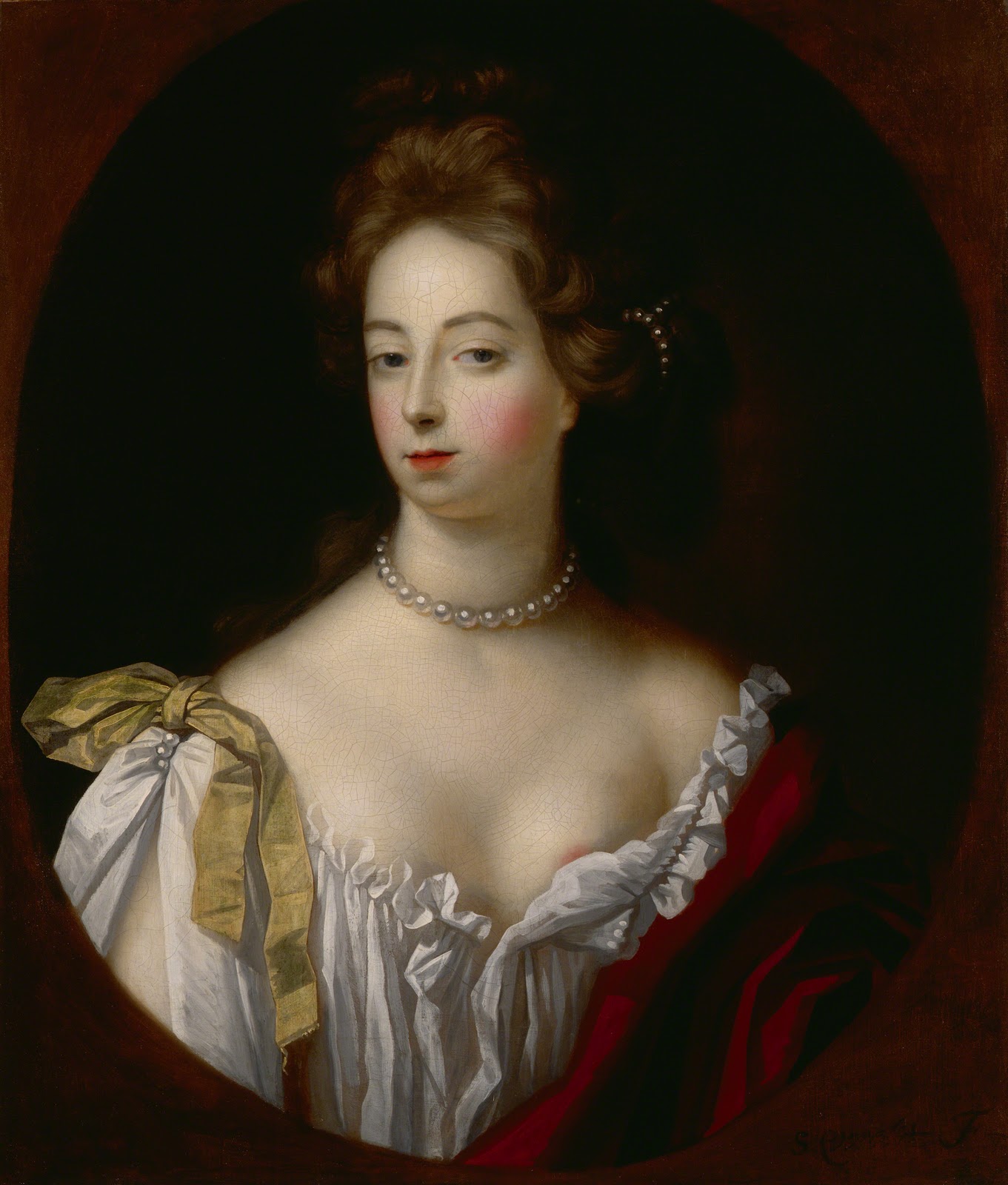
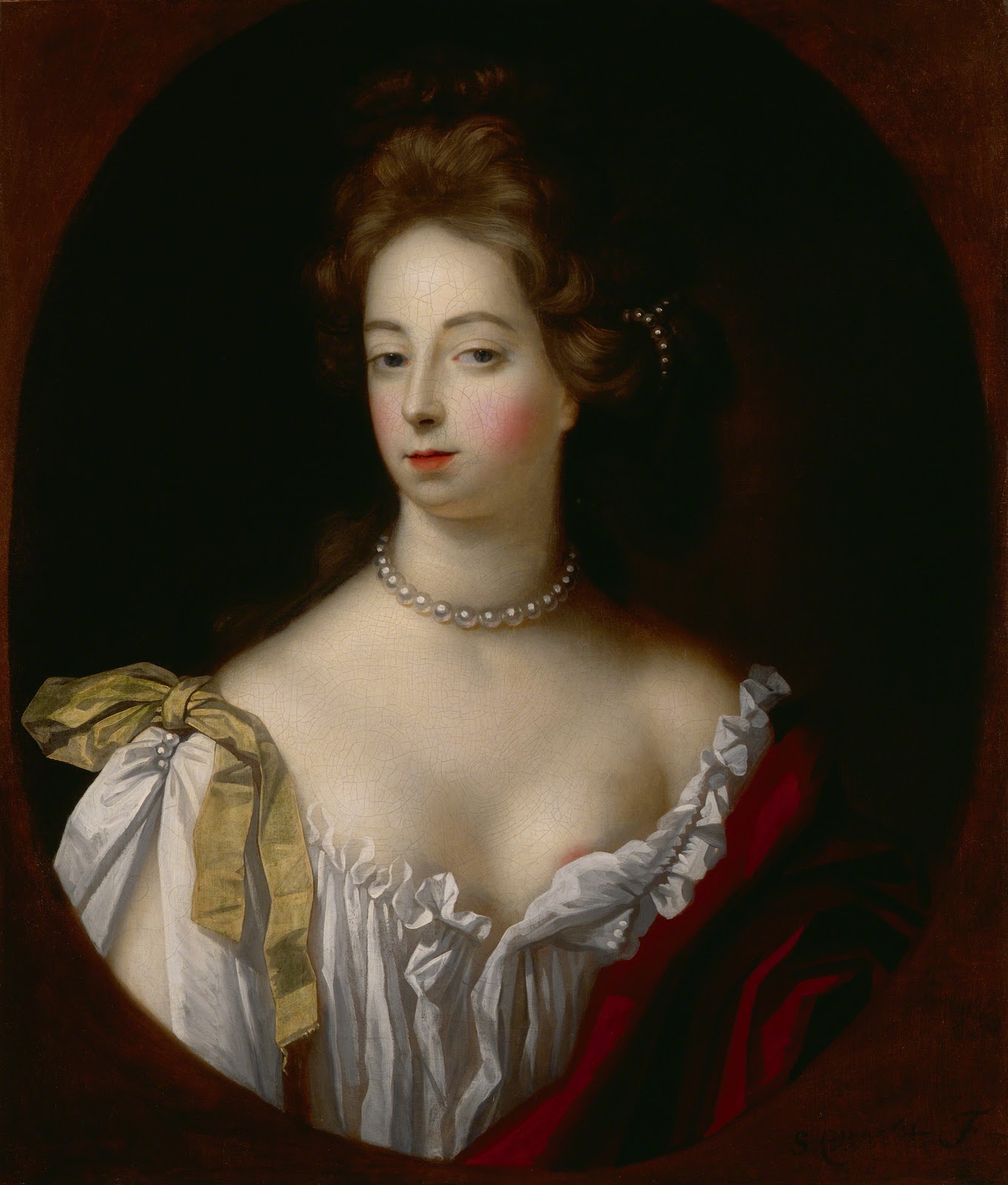
“Beauty is in the eye of the beholder”, they say, and I have to assume that Myanmar men find this wash of beige on their women’s cheeks attractive. After all, Myanmar women have been pasting themselves in this way for at least 700 years. Personally, though, I find it difficult to see anything beautiful in the habit. Every time I see one of these ladies, my instinctive reaction is to think “Ooh, they need to wash their faces”.  Of course, it’s not as if European women don’t paint (or powder) their faces. Rouging one’s cheeks is a fashion that goes back centuries, as attested by all those portrait paintings hanging in various museums of Europe of aristocratic ladies or royal mistresses (or both) with nicely rouged cheeks. For instance, this slightly racy painting of Nell Gwynn, mistress to Charles II of England, shows her with lovely red cheeks (and strong eyebrows, I am pleased to see, given my last post!)
nell gwynn(as I mentioned in an earlier post, there was a time when European aristocratic men also liberally rouged their cheeks)

The fashion statement has continued. For instance, I still remember from my youth those little powder cases which every woman had in their handbag, and which they would whip out from time to time to rouge their cheeks or generally give their face a powdering over.
powder caseAnd as far as I can make out, the fashion still goes strong. Women with cosmetically highlighted cheeks are a dime a dozen on any street in the world (except Myanmar …), although the powder case has given way to other delivery mechanisms.

But there is a difference, no? These women were and are highlighting the natural colouring of their cheeks. Myanmar women, on the other hand, are just daubing themselves. I wonder if the original idea was not simply to make the skin look paler, that universal obsession of women in all Asian countries.

Now for the what: what exactly is thanatka? It is an exceedingly natural cosmetic, made from grinding the bark, wood, or roots of a tree together with a small amount of water.
thanatka preparation 003As modernism marches through the country, a Myanmar lady can go to her supermarket and buy a jar of ready-made product. But she can also still go out and buy the wood (with this particular seller advertising her wares)
wood for saleas well as the stone grinder, and make it at home. No doubt the artisanal aspects of the trade will die out soon.

I finish by saluting the humble trees at the start of the chain: the thanatka tree (a species of Murraya)
thanakta treewith these particular individuals standing in front of some venerable temple, as well as the theethee tree (Limonia acidissima)
theethee treeI just hope that in the rush to slather their faces with paste, the Myanmarians are not chopping these trees down with wild abandon, thus denuding the landscape in the process. Beauty, however defined, is not worth that.

________________________

Woman with painted cheeks: http://www.ellensenisi.com/wp-content/uploads/AN-SEA_2655.jpg (in http://www.ellensenisi.com/2014/blog/burma-post-2/)
Woman Amerindian: http://s13.postimg.org/xu96358hju/24_Matses_Woman_Painted.jpg (in http://www.forumbiodiversity.com/showthread.php/36659-White-Dominican-VS-White-Puerto-Rican/page64)
Thanatka painted leaves: https://c1.staticflickr.com/3/2289/1557809911_2eafe27e17.jpg (in https://www.flickr.com/photos/peace-on-earth_org/1557809911/)
Thanatka whorls: http://www.birmanieresponsable.com/wp-content/uploads/2014/08/thanaka-beauté-birmanie.jpg (in http://www.birmanieresponsable.com/thanaka-beaute-birmane/)
Thanatka circles: http://davidlazarphoto.com/amp/wp-content/uploads/2012/07/19-David-Lazar-Thanaka-Circles.jpg (in http://davidlazarphoto.com/galleries/visions-of-myanmar/19-david-lazar-thanaka-circles/)
Nell Gwynn: http://3.bp.blogspot.com/-bw3i2CA0H8s/TqCFCy51a5I/AAAAAAAABCI/HkYzk9PmrtQ/s1600/NPG_536_883_EleanorNellGwy.jpg (in http://historicalideals.tumblr.com)
Woman with powder case: http://www.cosmeticsandskin.com/companies.images/1951-yardley.jpg (in http://www.cosmeticsandskin.com/companies/yardley.php)
Thanatka preparation: http://www.southeastasiabackpacker.com/wpsite/wp-content/uploads/2012/09/Thanaka-bark.jpg?4928e4 (in http://www.southeastasiabackpacker.com/20-tips-for-travellers-to-myanmar-burma)
Thanatka wood: http://www.ecoburma.com/wp-content/uploads/2013/08/Th1.jpg (in http://www.ecoburma.com/2013/08/photo-essay-thanaka-the-make-up-of-burma/)
Murraya tree: http://image.slidesharecdn.com/myanmar23bagan-140117021821-phpapp02/95/myanmar23-bagan-47-638.jpg?cb=1389946826 (in http://www.slideshare.net/mobile/michaelasanda/myanmar23-bagan)
Theethee tree: http://en.m.wikipedia.org/wiki/Limonia_acidissima#/media/File:Wood-apple_tree.JPG (in http://en.m.wikipedia.org/wiki/Limonia_acidissima)

THICK EYEBROWS

Bangkok, 29 March 2015

In an earlier post, in which I wrote about a short trip my wife and I made to Dubai, I mentioned that we had visited the Sheikh Mohammed Centre for Cultural Understanding. What I didn’t mention – because not pertinent to the subject of that post – was that our guide had exceedingly strong, straight eyebrows. I tried not to stare at her too insistently because that is rude, and I would imagine that staring at women in Muslim countries can also be a dangerous habit. But I did find it quite striking. My surreptitious peeking allowed me to conclude that this was not a gift of nature but a gift of the cosmetics industry. Something like mascara had been applied to our guide’s eyebrows. They looked something like this, although our guide wasn’t quite as glamorous as this lady.
middle eastern lady
In any event, as our guide talked about this, that, and the other, I wondered to myself if this was some sort of new fashion statement in the Middle East. After the tour was over, I was pleased to hear that my wife had also noticed it; I wasn’t imagining things, then.

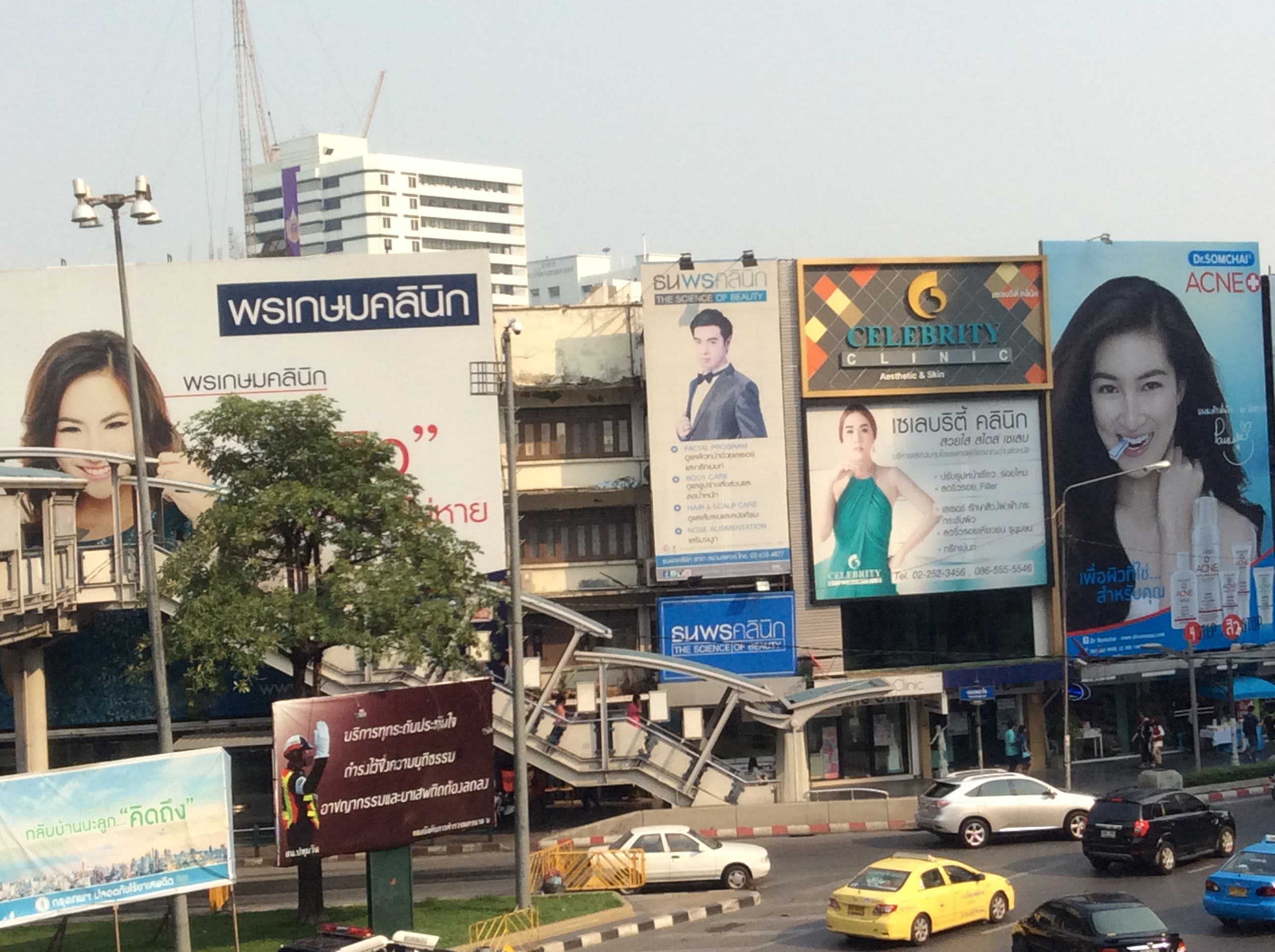
Our trip completed, we went back to Beijing and I forgot about the eyebrows thing. But I was suddenly confronted again with this fashion statement the moment we arrived in Bangkok. It seemed that every young woman in the city had these exaggeratedly strong eyebrows. I’ve not found a photo on the internet and I haven’t dared to openly take a photo myself of one of these young women, but I guess that advertising on the street is a good indicator of trends. Here’s a photo that I took of billboards in one of the smarter shopping areas of a Bangkok.
bangkok billboard-1
What my internet searches did show up is that the Thai consider such eyebrows to be Korean eyebrows, and this photo of a Korean lady actually nicely captures what I am confronted with every day on the streets of Bangkok.
korean lady
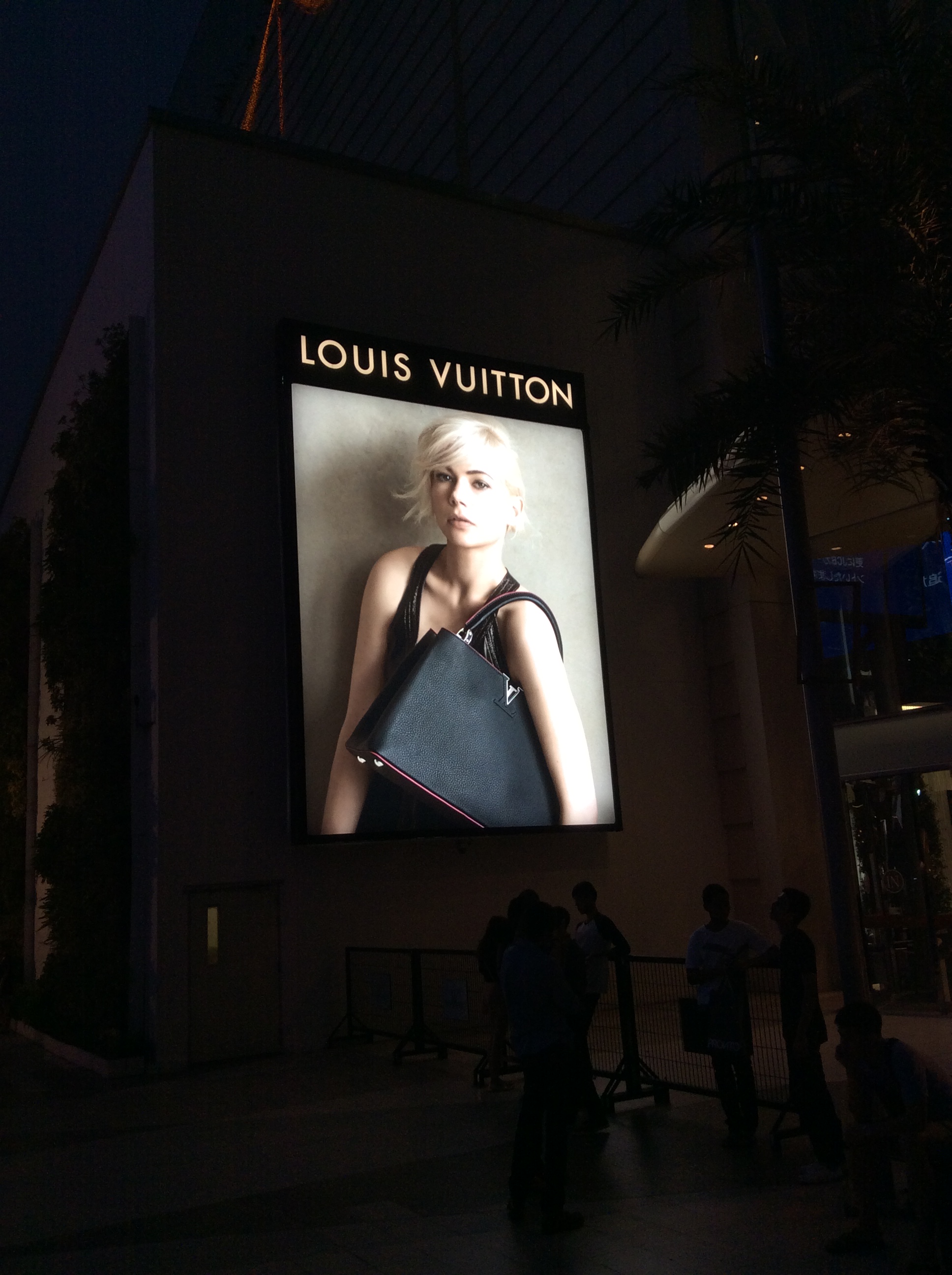
Whose eyebrows the Koreans believe these are is unknown to me – certainly not Japanese; the web-site from which I borrowed the photo above makes a distinction between Korean and Japanese eyebrows, the latter being more arched if I understood correctly. My daughter, who knows more about these things than I do, puts a famous model as the ultimate source.That sounds reasonable. In the old days, Queens and their aristocratic hangers-on were arbiters of fashion; in this more democratic age of ours, models are.

bangkok billboard-3

(the comment below suggests that the model Cara Delevingne is the Ultimate Source – no doubt those below the age of 30 know who this Ms. Delevingne is, and no doubt she is as rich as Queens once used to be)

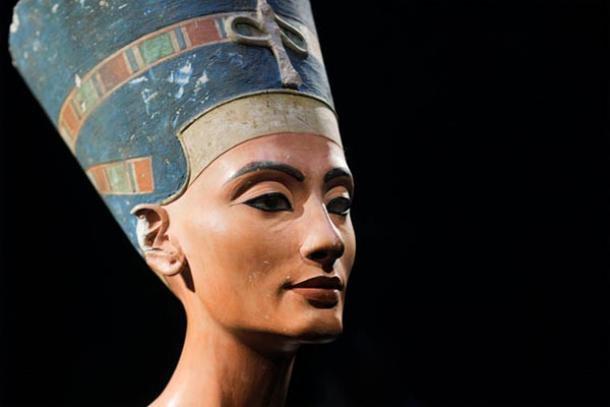
Talking of Queens, my trawls through the internet also snagged a couple of sites which discussed the history of female eyebrow fashion, one starting from as far back as Nefertiti, who was Queen of Egypt three thousand years ago, and who – if this bust of her in a Berlin museum is to be believed – seems to have favoured more pronounced eyebrows.
queen nefertiti
My own recollection of female eyebrow fashion starts with a time when quite a number of women favoured instead pencil-thin eyebrows, the time in question being, I suppose, the fifties and sixties (although as this photo shows, these eyebrows were already popular several decades earlier).
greta garbo
My wife, I have to say, was among this group when I first met her. Luckily, I managed to dissuade her from continuing the habit, and she has spent the rest of our marriage sporting a fine set of no-nonsense eyebrows.

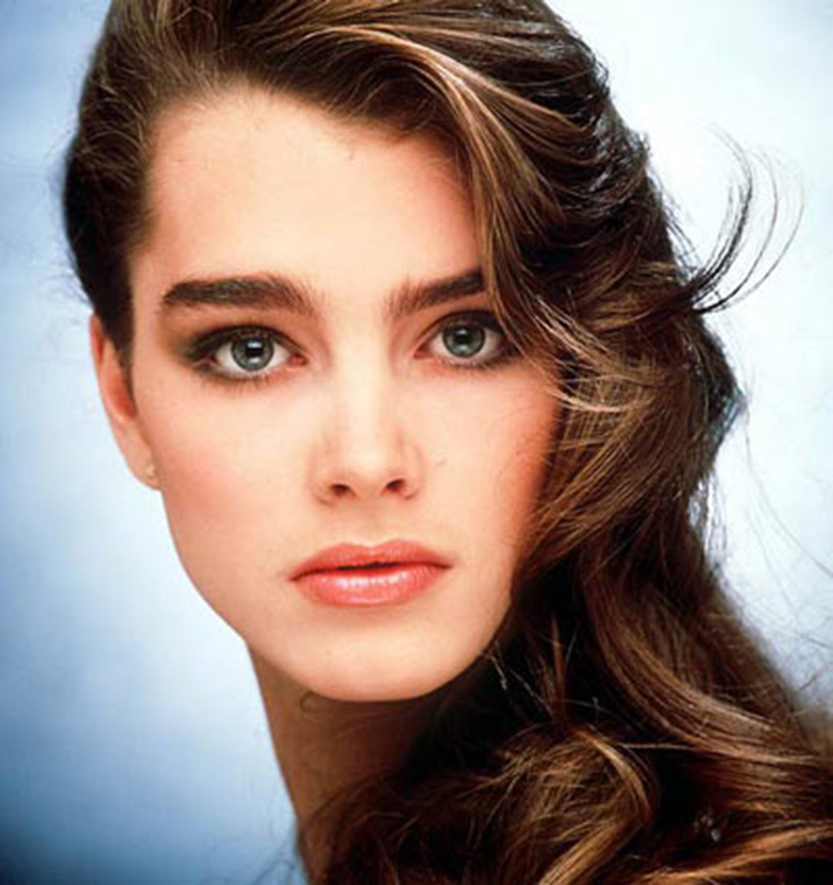
My wife’s abandonment of pencil-thinness coincided with a general return to thicker eyebrows, but sculpting of the eyebrow was still common. I still remember how much chatter was generated in the late seventies-early eighties by the young Brooke Shields’s thick, apparently unsculpted, eyebrows.
brooke shields
They caused quite some emulation for a while (any reader who is younger than 30 and therefore who probably has never heard of Brooke Shields can go the Wikipedia site on her to read more). I feel that what I am seeing now on the streets of Bangkok is really that style, helped along with a pencil or, if I am to believe the internet, some sort of felt pen. Well, styles go in and out of fashion like Swiss trains go in and out of Alpine tunnels. But I hope never to live to see pencil-thinness again.

_________________

Middle-eastern lady with drawn in eyebrows: http://machicon-akihabara.info/2017mimage-middle-eastern-eye-makeup.awp
Billboards in Bangkok: my photos
Korean eyebrows: http://www.tunwalai.com/story/19251/got7-%E2%84%ACad-mafia-%E0%B9%81%E0%B8%AB%E0%B8%81%E0%B8%81%E0%B8%8E%E0%B8%A3%E0%B8%B1%E0%B8%81-%E0%B8%97%E0%B8%94%E0%B8%AA%E0%B8%AD%E0%B8%9A%E0%B9%83%E0%B8%88%E0%B8%A5%E0%B8%B9%E0%B8%81%E0%B8%8A%E0%B8%B2%E0%B8%A2%E0%B8%A1%E0%B8%B2%E0%B9%80%E0%B8%9F%E0%B8%B5%E0%B8%A2-mb
Queen Nefertiti: http://keywordsuggest.org/gallery/18971.html
Pencil thin eyebrows: http://anastil.blogspot.it/
Brooke Shields: https://fashionista.com/2010/10/the-power-brow-is-here-to-stay-we-round-up-the-best-and-boldest

MYANMAR: A FOREST OF STUPAS

Bangkok, 8 March 2015

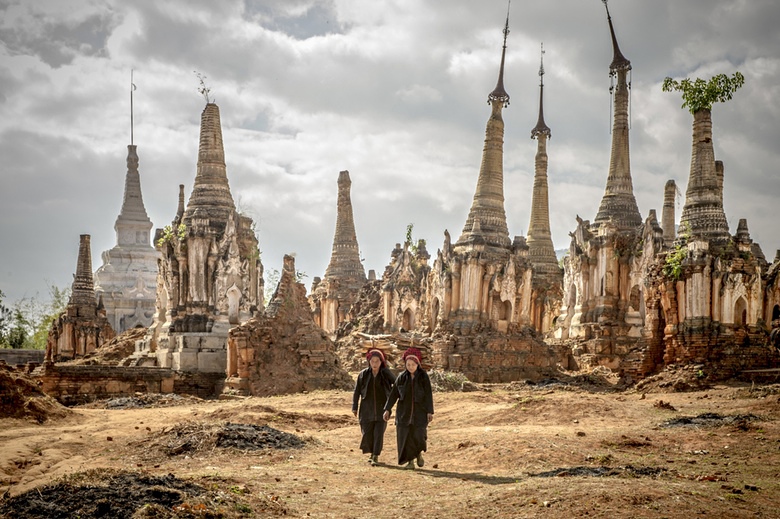
It was this photo that brought us to Myanmar.
Shwe Indein Pagoda, Inle Lake, Burma
My wife said, “We are going to Myanmar, and we are going here!”

“Here” was Inn Dein, a village on the edge of Inle Lake, in Shan State, which is why we found ourselves staying at a hotel on the lake

06-inle lake-inn dein-flav 003

ready to take one of these boats to the village.
06-inle lake-day 3 006
In truth, our travel was a little different that day, because Inn Dein is actually on the old edge of the lake. Over the last fifty years or so, that edge has been creeping forward as farmers have created floating gardens on the lake’s edge

06-inle lake-day 2-flav 021

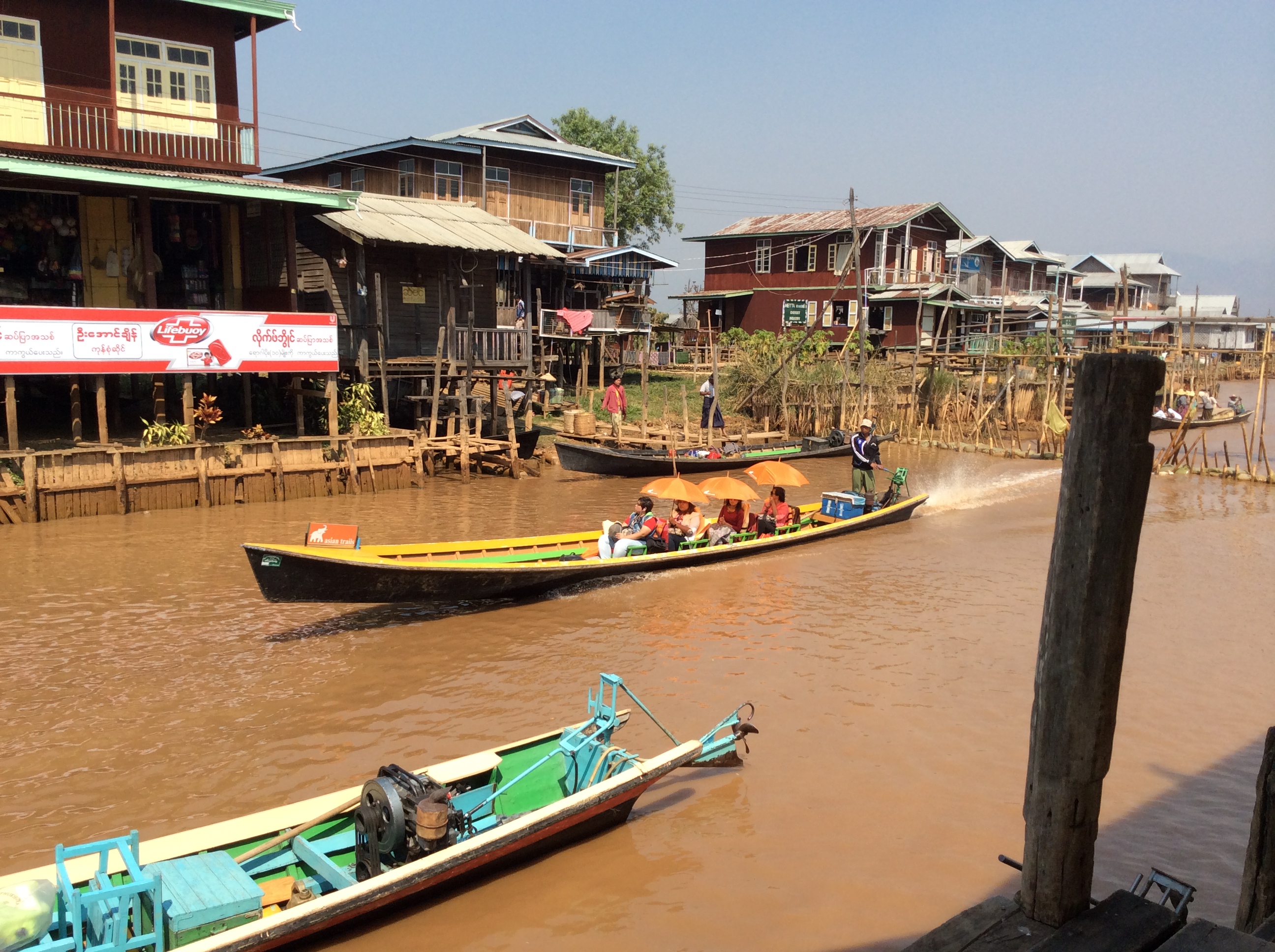
which after a while have become solid land, leading the farmers to create yet more floating gardens further out. So to get to Inn Dein, we had to travel up a shallow canal, the artificial continuation of the stream that runs through the village, which meant our travel was more like this.

06-inle lake-day 1 002

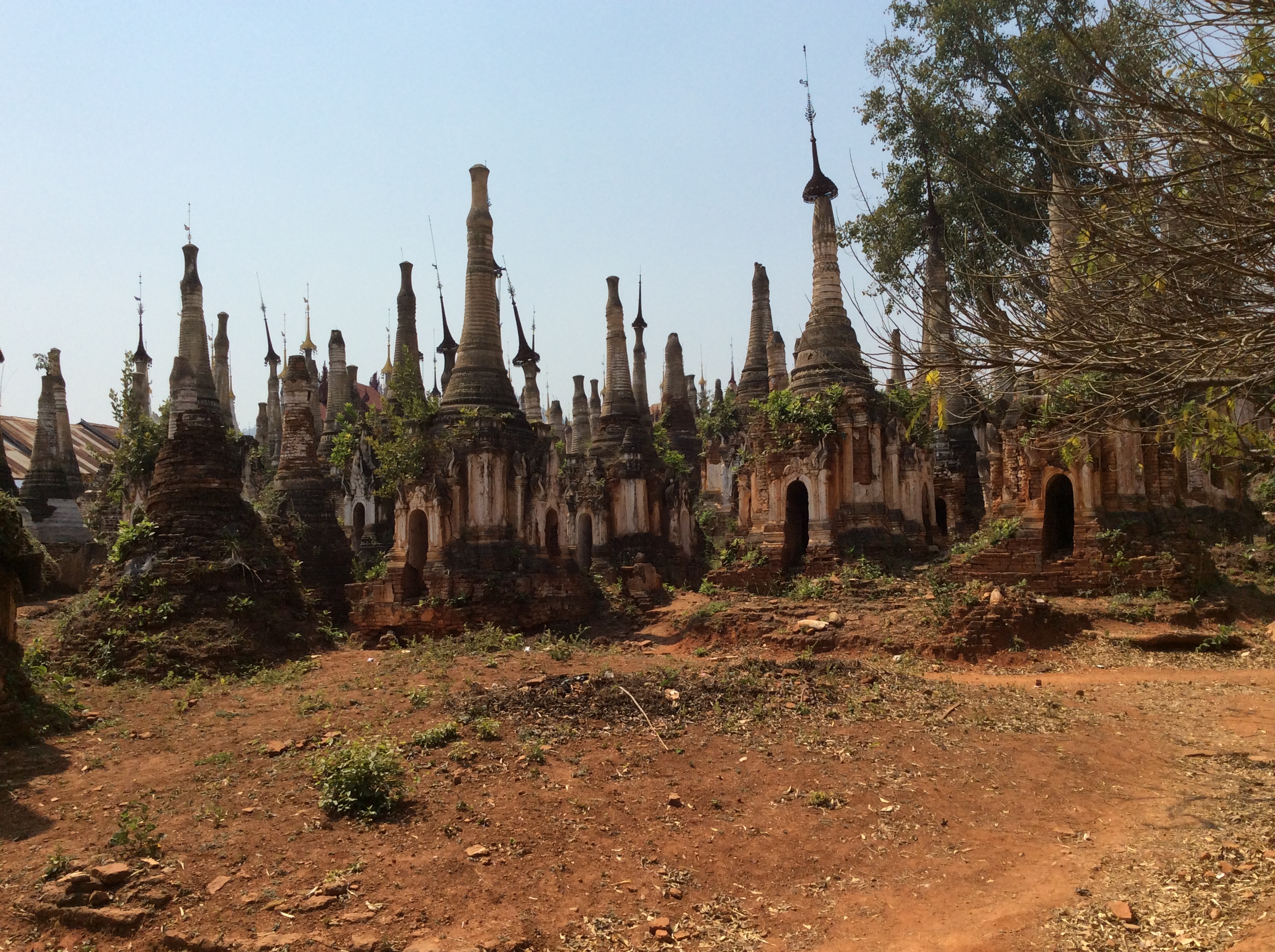
After we disembarked, we crossed Inn Dein’s one and only bridge and soon found ourselves wandering through a field of neglected, mouldering stupas.
06-inle lake-inn dein 007

06-inle lake-inn dein 009

06-inle lake-inn dein-flav 049

To some still clung fragments of their original ornamentation

06-inle lake-inn dein-flav 041

06-inle lake-inn dein 025

06-inle lake-inn dein-flav 043

while others housed Buddhas in varying states of repair.

06-inle lake-inn dein-flav 042

06-inle lake-inn dein-flav 052

06-inle lake-inn dein 008

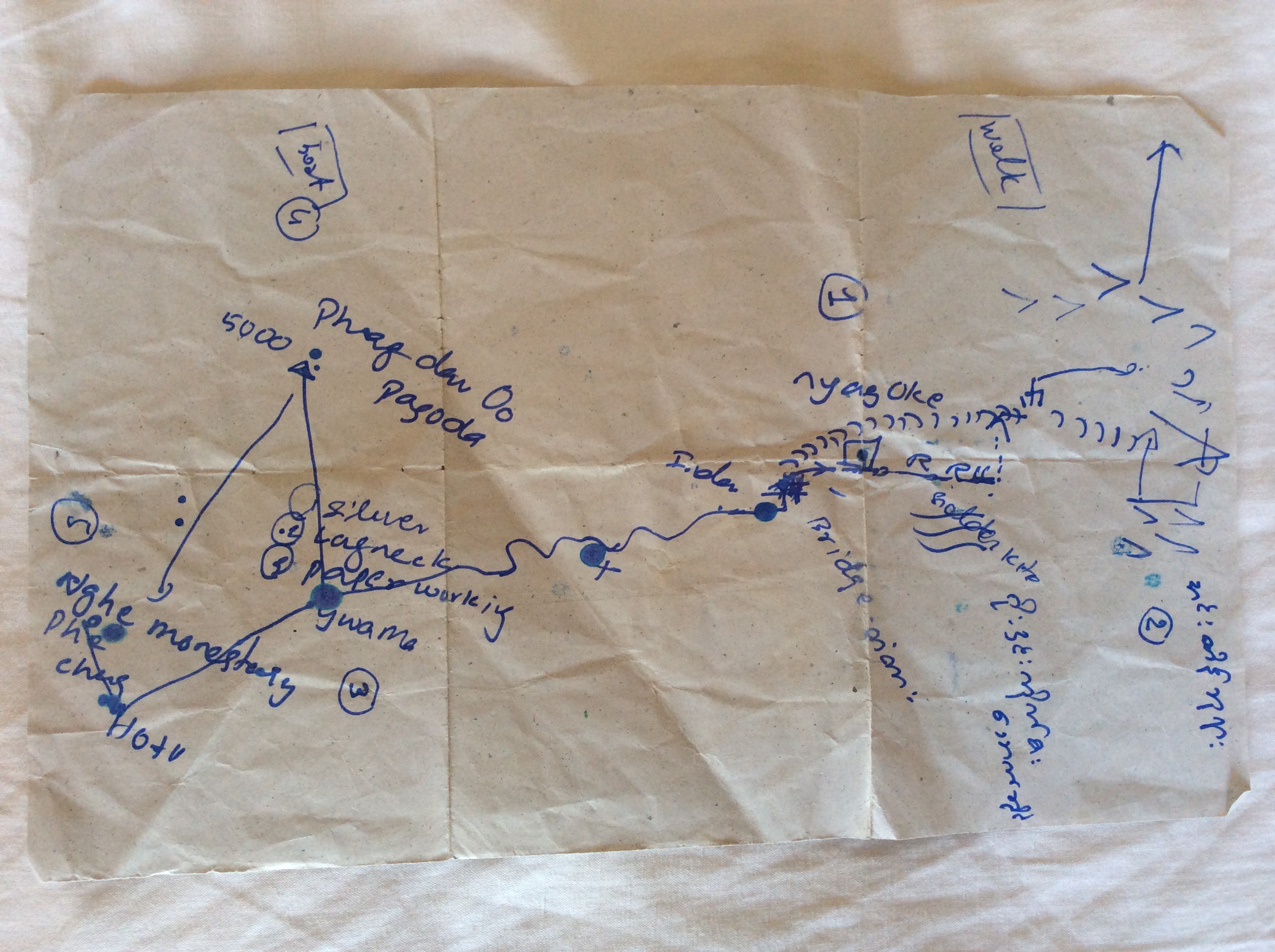
Though beautiful in their neglect, my wife and I agreed that this was not where the photo which had brought us here was taken. So we started walking up the hill behind the village, following the hand-drawn map we had been given at the hotel.
hand drawn map
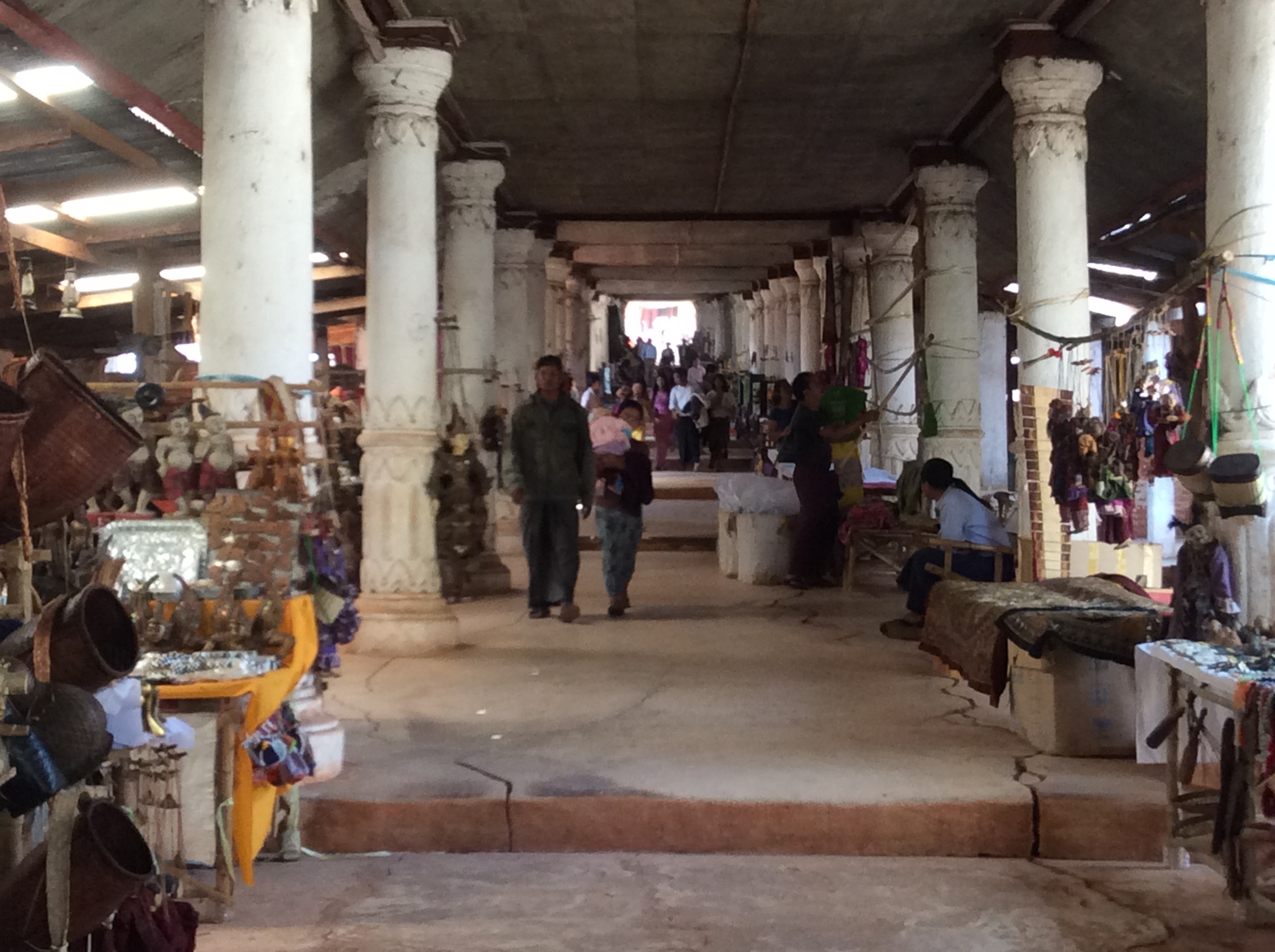
To get out of the sun’s glare, we ducked into a covered walkway that leads up the hill. It was cooler but it exposed us to stall after stall of hideous tourist tat.
06-inle lake-inn dein-flav 058
To console ourselves, I reminded my wife of a similar covered walkway which we had seen in Bologna in Italy, which leads up to the Sanctuary of Saint Luke on a nearby hill.
bologna santuario di S.Luca
No doubt, I told her, when in the old days pilgrims wended their way up the walkway to the Sanctuary (nowadays only tourists do so), there were similar stalls along the side selling hideous religious tat.

When we reached the top, we were greeted by a veritable forest of stupas.
06-inle lake-inn dein 040
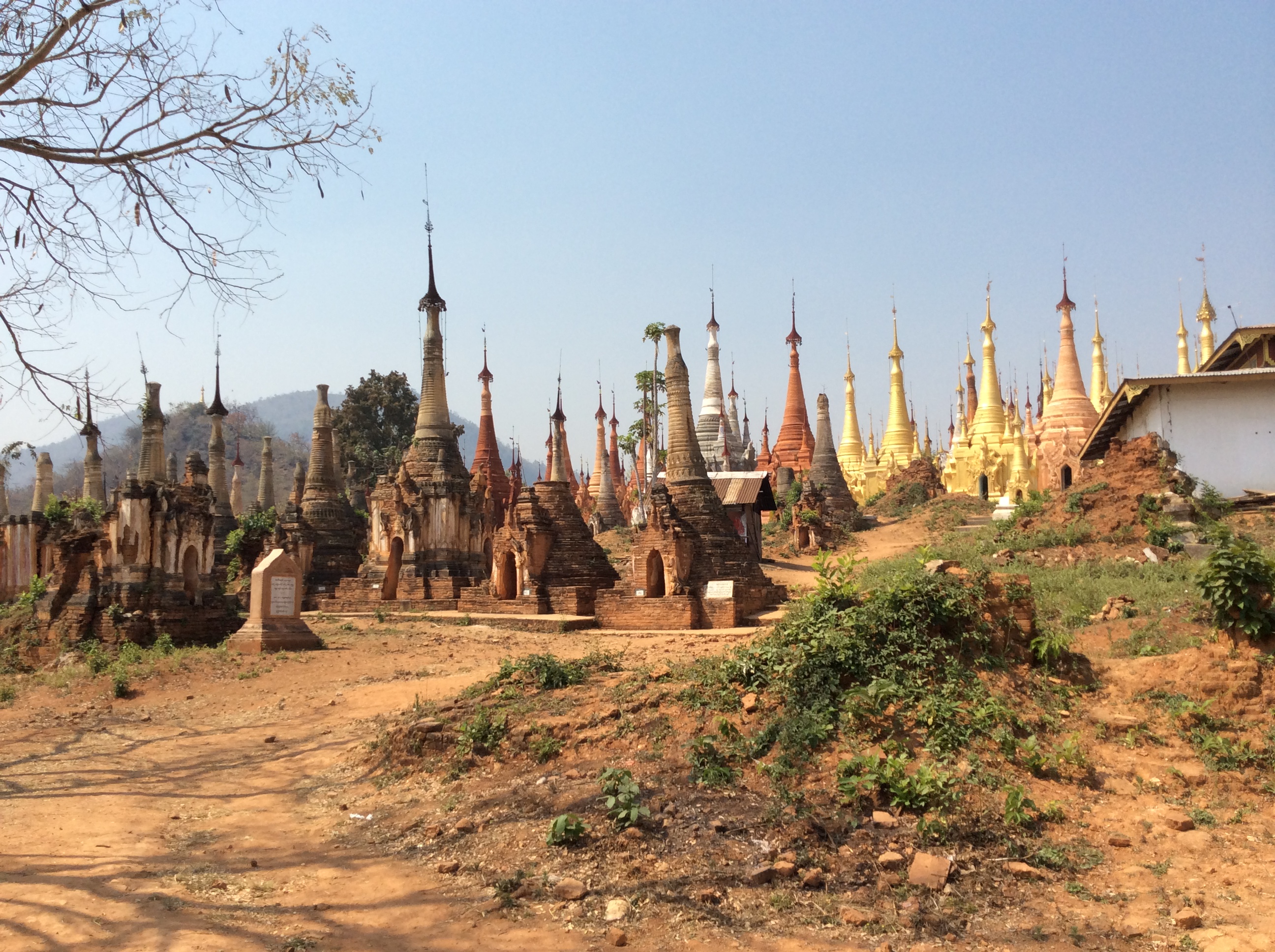
The first were mouldering away as romantically as the ones down the hill
06-inle lake-inn dein-flav 071

06-inle lake-inn dein-flav 069

with some of the decoration clinging on

06-inle lake-inn dein-flav 070
Very beautiful, but not, we agreed once more, the place where the original photo which brought us here had been taken.

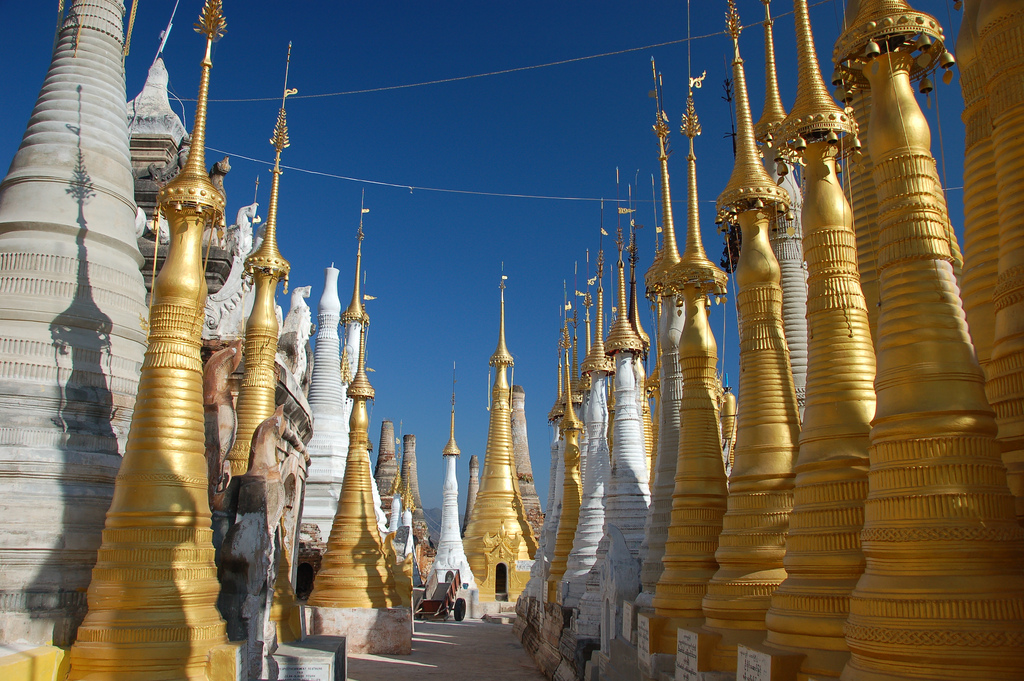
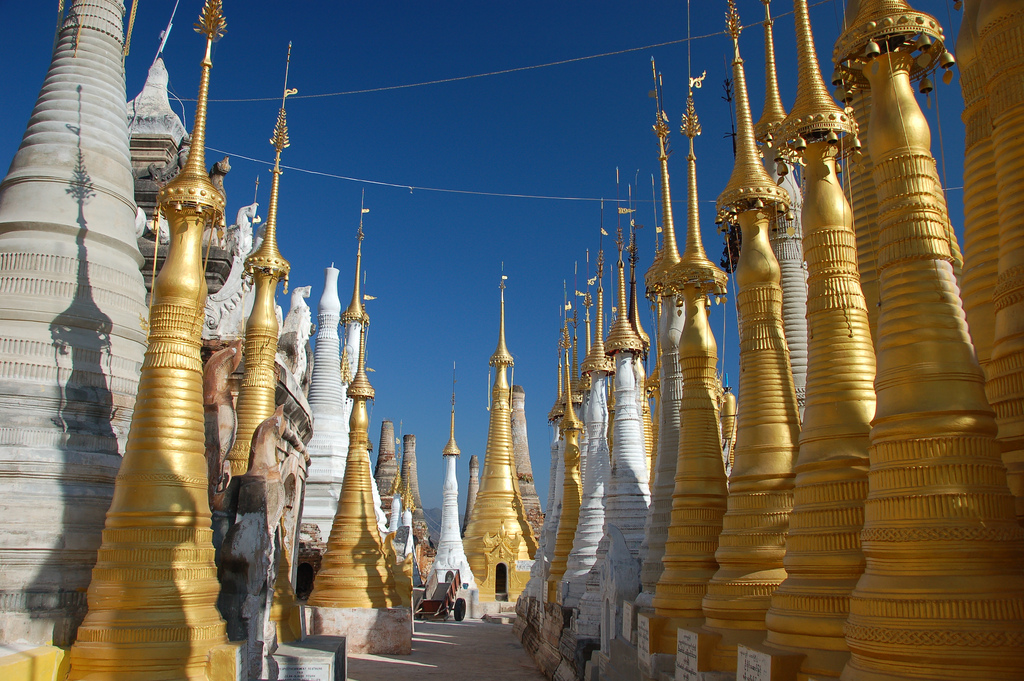
We began to walk up the hill, and soon found ourselves only among renovated stupas. My wife and I had mixed feelings about this wave of renovation that had washed over the hill. The decaying stupas are impossibly romantic, but we can understand that to devout Buddhists it must be dismaying to see such neglect. I suppose the only criticism we have (but it is a large criticism) is that it would have been good to renovate the stupas to their original form, something which quite obviously is not the case. We were so unenthusiastic about these renovated stupas that neither of us took a single photo of them, so what follows comes care of the internet.
Shwe Inn Thein stupas at Indein, Inle Lake
After threading our way, disconsolate, through the packed crowd of renovated stupas, we climbed a nearby hill to get an overview of the stupa forest.
06-inle lake-inn dein 070
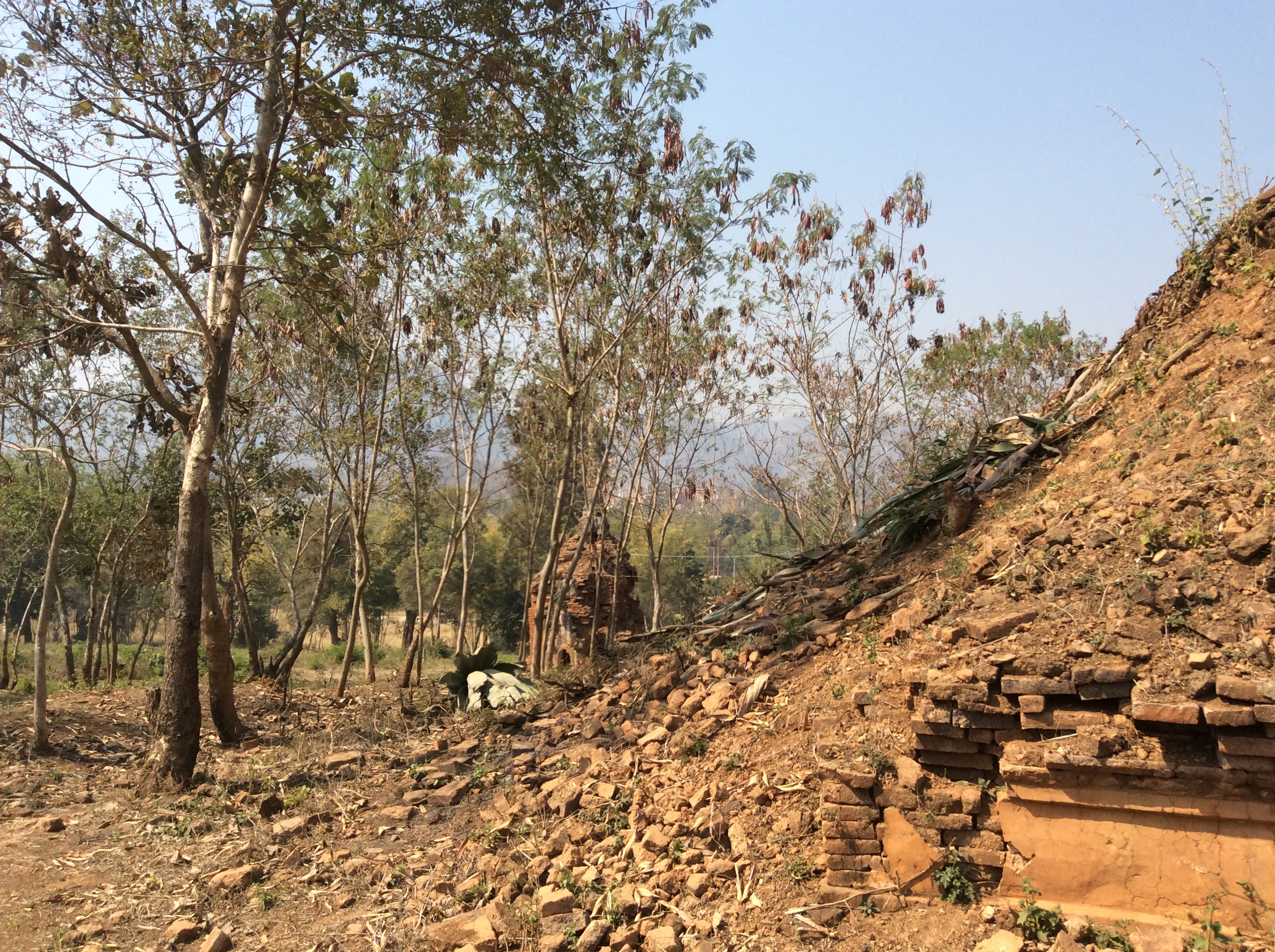
Even from here we could not really understand from where the fateful photo had been taken. So we went back down, walked through the temple at the centre of the forest, and visited the stupas on the other side. These were once again pleasingly decrepit, so we pleasurably ambled our way down the hill through them, picking our way over broken brick and stucco and around bushes and weeds which had taken root in the brick dust.
06-inle lake-inn dein 075
When we broke out of the forest and turned around, there at last we saw the view which had brought us here. Finally …

06-inle lake-inn dein-flav 086a

_____________________

Bologna Santuario san Luca: http://www.laltraitaliatour.it/main2/images/stories/foto_viaggi/centro/tour_cuore_italia/bologna%20santuario%20di%20S.Luca%20panorama%20%28Small%29.jpg (in http://www.laltraitaliatour.it/main2/index.php?option=com_content&view=article&id=100%3Agran-tour-nel-cuore-dellitalia&catid=53%3Aviaggi-centro-italia&lang=en)
Renovated stupas: http://kiplingandclark.com/wp-content/uploads/2014/03/4013943890_7ab483e2b5_b.jpg (in http://kiplingandclark.com/itineraries/myanmar-laos-cambodia-private-tour/)
All other photos: ours

MYANMAR: MRAUK U

Yangon, 7 March 2015

In 1430, King Saw Mon founded a new capital at Mrauk U, in what is now the State of Rakhine, for a Kingdom of Arrakan of which he was the first ruler. Mrauk U lay at the head of several navigable tributaries of the Kaladan River, and so could command the trade routes in the Bay of Bengal, on which the kingdom’s wealth was founded. It became a transit point for goods such as rice, ivory, elephants, tree sap and deer hide from Burma, and of cotton, slaves, horses, cowrie, spices and textiles from Bengal, India, Persia and Arabia. It also lay at the edges of a broad plain, where abundant rice could be grown to feed the city’s population. The area was dotted throughout with hillocks, ideal for capping with splendid pagodas which earned their founders much merit, but also for acting as watchtowers in strong defensive walls which linked hillocks together and could keep the kingdom’s jealous or rapacious neighbours at bay. It was, in all senses, a happy choice for the new kingdom’s capital.

Exactly two hundred years after the city’s founding, a Portuguese monk, Fray Sebastian Manrique, who was to live in India for forty years, visited Mrauk U, as part of an official mission. In a book he wrote about his time in Asia, “Itinerario de las missiones del India Oriental”, he dedicated several chapters to his visit to Mrauk U. “This great city”, he starts, “stands in a lovely valley, some fifteen leagues wide, wholly enclosed by high rocky mountains, which serve as natural fortifications”. The city was bisected by a network of waterways linked to the nearby river, which were “the principal means of traffic, both public and private”. Most of the houses were thatched bamboo and wood structures, held together by “Bengal cane, as we call it in Portugal”. Even the palaces “are made of these reedy materials”. The size and ornamentation of the houses, and not their materials of construction, were what proclaimed the station and wealth of their owners. Inside, wall mats were hung “of the finest texture and of many colours”. No doubt, the richer and more important the owner, the finer and more elaborate the wall mats. The better houses and the palaces also had rooms of wood “ornamented with carving, gilt mouldings, and enamel work in various tints”. Some of the palaces went one further, having rooms of sandalwood and other aromatic woods. One of the richer palaces included a “House of Gold”, a pavilion decorated from floor to ceiling with gold, which housed golden statues, dishes and other vessels. The royal palace boasted a ceremonial hall, with a golden roof “ornamented with flowers of different colours”, supported by thirty gilded wooden pillars. The monks didn’t do too badly for themselves either. A number of the temples and monasteries in which they lived were as sumptuous as the palaces, richly endowed as they were by their wealthy and important founders, who were seeking thereby to gain merit. Most of the temples were “pyramidal in shape”, with a spire that ended in a gilt metal globe on which small bells hung that tinkled in the wind (I presume the good Friar was referring to the stupas, which sit at the centre of temple complexes). The temples’ interiors were decorated with “frescoes done in gold and colours”. Several years later, he again visited Mrauk U on an official mission, and this time he was lucky to be there when the king was crowned. He described in breathless detail all the pomp and ceremony which accompanied the crowning. This print, by the Dutchman Wouter Schouten, gives an idea of what Mrauk U looked like at this time.

mrauk u old print

The happy times did not last. Warfare between the local kingdoms was endemic, as each king tried to grow at the expense of his neighbours. In one of these local wars, King Bodawpaya of the neighbouring kingdom of Burma got the upper hand, helped along, it must be said, by vicious internecine struggles, all worthy of a Shakespearean history play, that were being played out between Arrakanese kings and their impatient heir-apparents, and between them and various usurpers. In 1784, the Burmese army attacked

war elephants

and eventually took the city, razing it to the ground. They took care, though, not to destroy the stupas and associated temples; the soldiers did not want to lose merit. But they stripped them and the rest of the city of all the movable loot they could lay their hands on. What part of the population they did not kill, they enslaved. And so, laden with vast quantities of booty and 20,000 slaves, King Bodawpaya and his army returned home to celebrate, leaving death and desolation behind them. The kingdom of Arrakan and its capital city were no more.

The site was too good to abandon completely. Gradually, people moved back into the city and partially repopulated it. But now it was just a small market town, with the modest lives and modest dreams and modest destiny of such towns. Its citizens lived out their lives in the shadow of monuments from Mrauk U’s royal past, which slowly crumbled away and were overgrown by vegetation.

But Mrauk U’s glorious past was not completely forgotten. Echoes of its history were passed down. Now that Myanmar has come out of its self-imposed isolation from the outside world, and the world has accepted the country back into the community of nations, Mrauk U has become a tourist destination. Not like Bagan, which hosts the ruins of another vanished kingdom, nor like Inle Lake, another popular tourist destination, nor even like the capital Yangon. A much more modest destination, because it has little tourist infrastructure and is hard to get to: seven hours by private boat from Sittwe, several more by the public boat; six hours by car on a spine-crushing road, several more by public bus. But a trickle of tourists do make it through.

We have just been part of that trickle. We hired bicycles, a wonderful way to move around this town whose dimensions are small and whose traffic is contained, and we slowly criss-crossed it, riding down potholed roads, side streets of beaten earth

02-mrauk u-flav 016

half-finished roads on which toiled labour gangs of women

02-mrauk u-flav 059

even across desiccated paddy fields when the half-finished roads were impassible

03-chin villages-flav 001

observing all the very rural life that passed us by. Most of the houses are still made of wood and “reedy materials”

02-mrauk u-flav 050

but from the few modern houses we saw brick and concrete are clearly now the building materials of choice for the wealthy. The network of waterways are still being used, although now sadly choked with plastic and other debris of modern life.

02-mrauk u-flav 052

Bicycles and motor bikes are the mode of transport of choice

02-mrauk u-flav 078

with two-seater bicycle rickshaws playing the role of local taxi

02-mrauk u-flav 067

and ten-seater tuk-tuks playing that of local buses (ten seats is a nominal number; the drivers seemed to be able to squeeze twice that number into them).

03-chin villages-flav 003

As in all ages and in all places, the wealthier disdain these proletarian forms of transport, although they now favour four-wheel drive cars with tinted windows rather than the palanquins and elephants of old. On the edges of town (which were reached after no more than ten minutes by bike from the town centre – and we rode slowly), chickens, pigs, and the odd cow join the human melée. And everywhere, young girls and women (never men and very rarely boys) are walking slowly to or from the wells and reservoirs which dot the town, ferrying the households’ water, no doubt as they had been doing nearly four hundred years ago when Friar Manrique criss-crossed the town – such a waste of women’s time! And the water they were collecting fitted no definition of “drinking water” that I know of.

02-mrauk u-flav 025

The town has schools, but all in a shocking state of decrepitude

02-mrauk u-flav 048

and in any case many children were put to work in various trades: child labour seems the norm here, not the exception. This country’s military dictators have much, much to answer for.

And so it was that we rode and we observed, and we meditated on what we observed, until the next stupa, or temple, or ordination hall from Mrauk U’s past loomed out in front of us. We visited many during our two days, but I will mention only three. The first is Mro U-hnauk Phara
02-mrauk u-flav 037
because it was the first temple we visited, but also because we were intrigued by the very ornate edifice constructed out of galvanized corrugated iron sheets that preceded the ancient stupa.

02-mrauk u-flav 038

The materials of construction may be humble but the designs are really quite complex. We got used to seeing these structures in front of many of the stupas in town. Both my wife and I immediately remarked on how much these constructions reminded us of the stavkirke in Norway.
Borgund_stavkirke
The second site I will mention is Koe Thaung temple, which sits out in the middle of paddy fields a little way out of town.
koe thaung temple
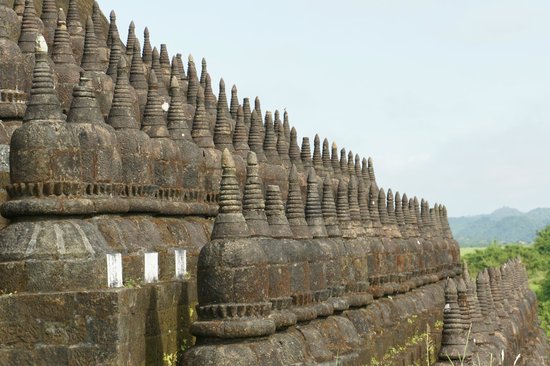
Its design is said to be based on Borobudur in Indonesia. We wouldn’t know, not having been able to visit Borobudur because of a volcanic eruption. But Koe Thaung certainly has charm, what with the serried ranks of stupas lining its terraces

koe-thaung-temple-stupas

and the hundreds of Buddhas, each with a different face, lining the galleries that encircle the edifice.

02-mrauk u-flav 107

When the rice paddies around the temple are planted and green, it must be very beautiful.

The third is actually a grouping of temples and stupas, all situated in a large open space. From the vantage point of the high terrace of one of these, I could see most of the group laid out before me.

02-mrauk u-flav 228

Immediately ahead is the Laymyekhna, with the four Buddhas in its internal gallery facing the four cardinal points, and its attendant Nyidaw Phara. Just behind it the Htukkanthein, a fortress-monastery.  At the base of the hill in the background, is the Shite-thaung temple, the most important religious edifice of the old city and known for its three encircling galleries with Buddhas and friezes.  This is where the coronation during Friar Manrique’s second visit took place. Over to the left is the Ratanabon Temple.

But what also struck me was the apparent indifference of the townsfolk to these venerable monuments. The open space was turned over to the growing of rice and vegetables. There was constant traffic along the roads and tracks which crossed the space as people went about their business. There were goats and cows cropping the grass around the edifices. And I was suddenly reminded of those paintings from the 17th and 18th Centuries, which were also recording the remains of a fallen city, ancient Rome in this case, mouldering slowly away as a new city lived its life around them
Roman forum Claude Lorrain
This particular painting, by Claude Lorrain, is a view of the Forum, with the arch of Septimus Severus in the left foreground, the three remaining columns of the Temple of Castor and Pollux in the middle ground, the arch of Titus in the background, and at the very back the Colosseum. And all around these ruins, the Romans are leading their lives.

Now I don’t want to make too much of a parallel between Rome and Mrauk U. Rome had been a huge city, many times bigger than Mrauk U had ever been. It had also held sway over a much larger territory than Mrauk U had ever done. On the other hand, the collapse of Rome, although over a longer period, was probably as total as Mrauk U’s. Medieval Rome, and perhaps even Baroque Rome, was probably no bigger than Mrauk U is today and just as backward. If it hadn’t been for the Pope, there are good chances that Rome would have disappeared. The Pope kept Europe’s attention on the town, while the pilgrims were a handy source of income, along, later, with the sons of Europe’s aristocracy. They flocked to Rome in the 18th and 19th Centuries because it was the thing for an educated young man to do, and paintings like the one above were produced for them by the hundreds.  Rome was also lucky to have become the capital of the newly unified Italy, which brought it the power (and wealth) of national government. In contrast, Mrauk U seems to have been forgotten by all once its last king fell. If the new government of Myanmar can ensure that Mrauk U shares in the country’s upcoming economic development, then it has the chance to become a prosperous little town.

__________

Mrauk U old print: http://upload.wikimedia.org/wikipedia/commons/0/0c/Vista_de_Mrauk-U,_ou_Arrakan_%28cidade_de_Arrac%C3%A3o%29_no_primeiro_plano_o_bairro_portugu%C3%AAs.jpg (in http://commons.wikimedia.org/wiki/File:Vista_de_Mrauk-U,_ou_Arrakan_%28cidade_de_Arrac%C3%A3o%29_no_primeiro_plano_o_bairro_portugu%C3%AAs.jpg)
War elephants fighting: http://ic2.pbase.com/o6/93/329493/1/131322898.yAQdtZvd.BKKAug10128.jpg (in http://www.alternatehistory.com/discussion/showthread.php?t=240558)
Stavkirke: http://upload.wikimedia.org/wikipedia/commons/b/bb/Borgund_stavkirke.JPG (in http://no.wikipedia.org/wiki/Borgund_stavkirke)
Koe Thaung Temple: http://www.vietnamjettravel.com/images/products/20147141754135.jpg (in http://www.vietnamjettravel.com/voyage-birmanie/a-travers-la-birmanie-de-yangon-a-mrauk-u.79.html)
Koe Thaung temple stupas: http://media-cdn.tripadvisor.com/media/photo-s/04/ab/0c/d1/koe-thaung-temple.jpg (in http://www.tripadvisor.com/LocationPhotoDirectLink-g1390118-d2557685-i78318801-Koe_Thaung_Temple-Mrauk_U_Rakhine_State.html)
Claude Lorrain view of the Roman Forum: http://upload.wikimedia.org/wikipedia/commons/b/ba/Claude_-_The_Campo_Vaccino,_Rome_-_Google_Art_Project.jpg (in http://commons.wikimedia.org/wiki/File:Claude_-_The_Campo_Vaccino,_Rome_-_Google_Art_Project.jpg)
All other photos by my wife

MYANMAR: A JOURNEY

Yangon, 7 March, 2015

We slipped our moorings at half past three in the afternoon, two hours late – the flight from Yangon to Sittwe had left very late. As we drove from the airport to the jetty, our guide told us apologetically that the tide was running out now. This, coupled with the strong current down the Kaladan River, meant we were facing a seven-hour journey up to Mrauk U – if the boat’s engine didn’t break down on the way. Accepting the inevitable, we settled down on the boat’s small focsle, as far away as possible from the engine, which was knocking hard and strong, while the boat chugged its way down the busy creek. It was a beautiful afternoon, cloudless, slightly hazy, not too hot; it was going to be a good ride.

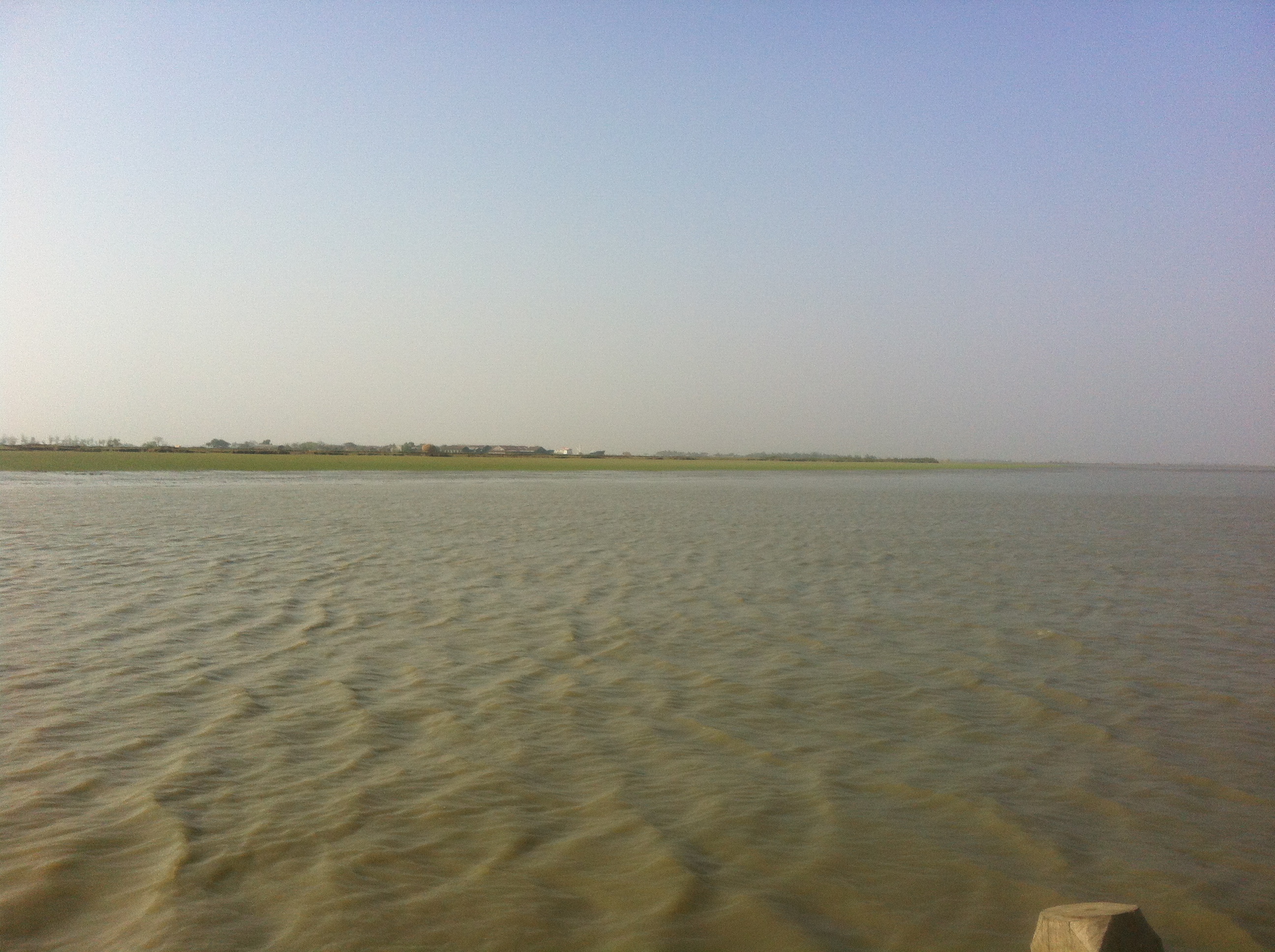
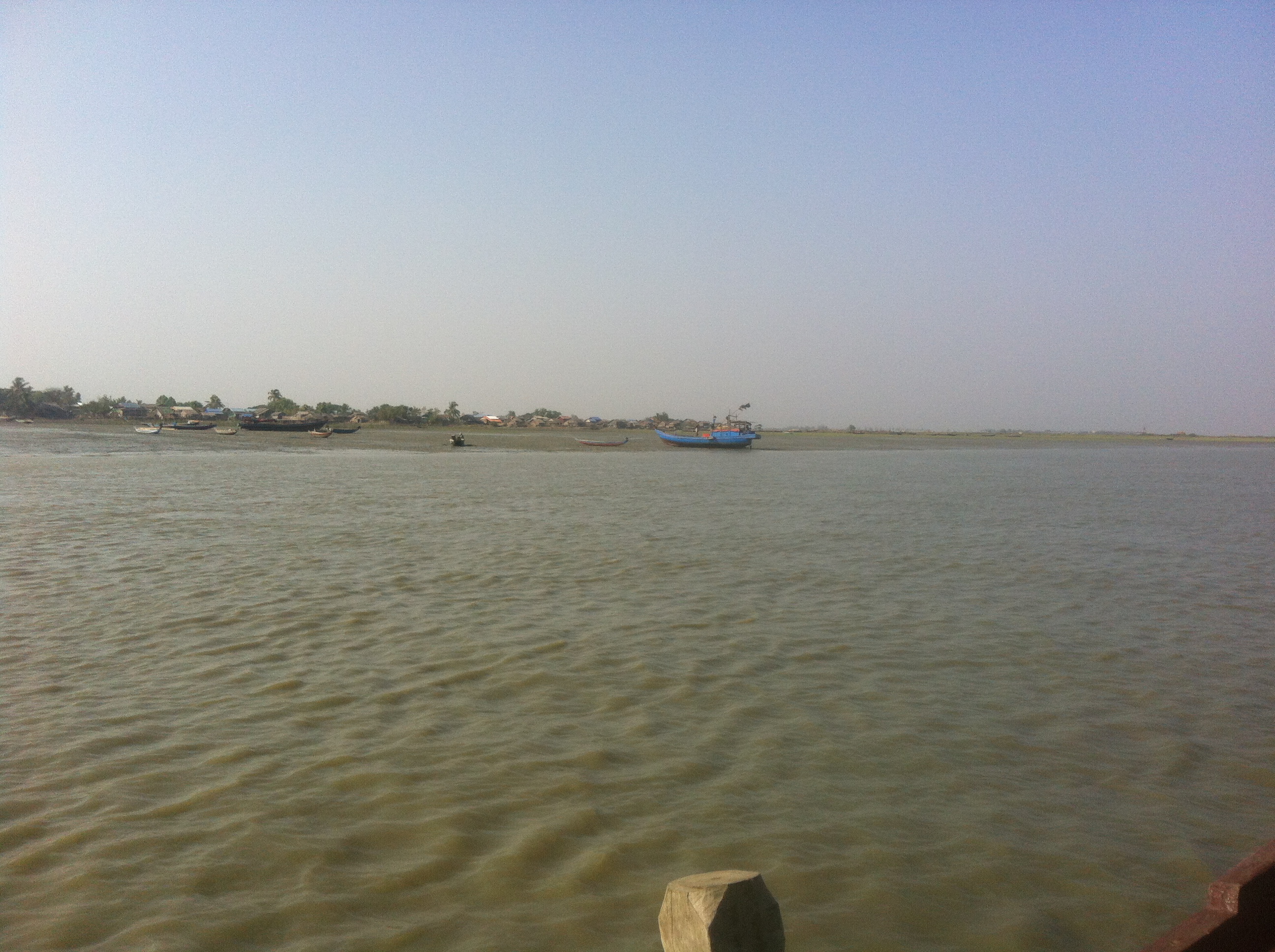
We exited the creek into the mouth of the river, so big that at first we thought we had entered the sea. Surprised, we looked around us as the boat turned northward and started following the shore closely, skirting small fishing boats and their nets. Out to sea, some islets, or maybe headlands, lay humped on the horizon, while to our left extended a grassy plain

01-sittwe-mrauk u 008

on which stood a few small lean-to’s for the fishermen and some fishing boats, sitting upright, waiting to be dragged down to the shore.

01-sittwe-mrauk u 003

We waited for something more riverlike to appear. And gradually, without us noticing it, a low bank crept up on our right, far away in the distance. And so we realized that we had finally entered the Kaladan River. But such a wide river! The far bank kept following us, but always at a respectful distance.

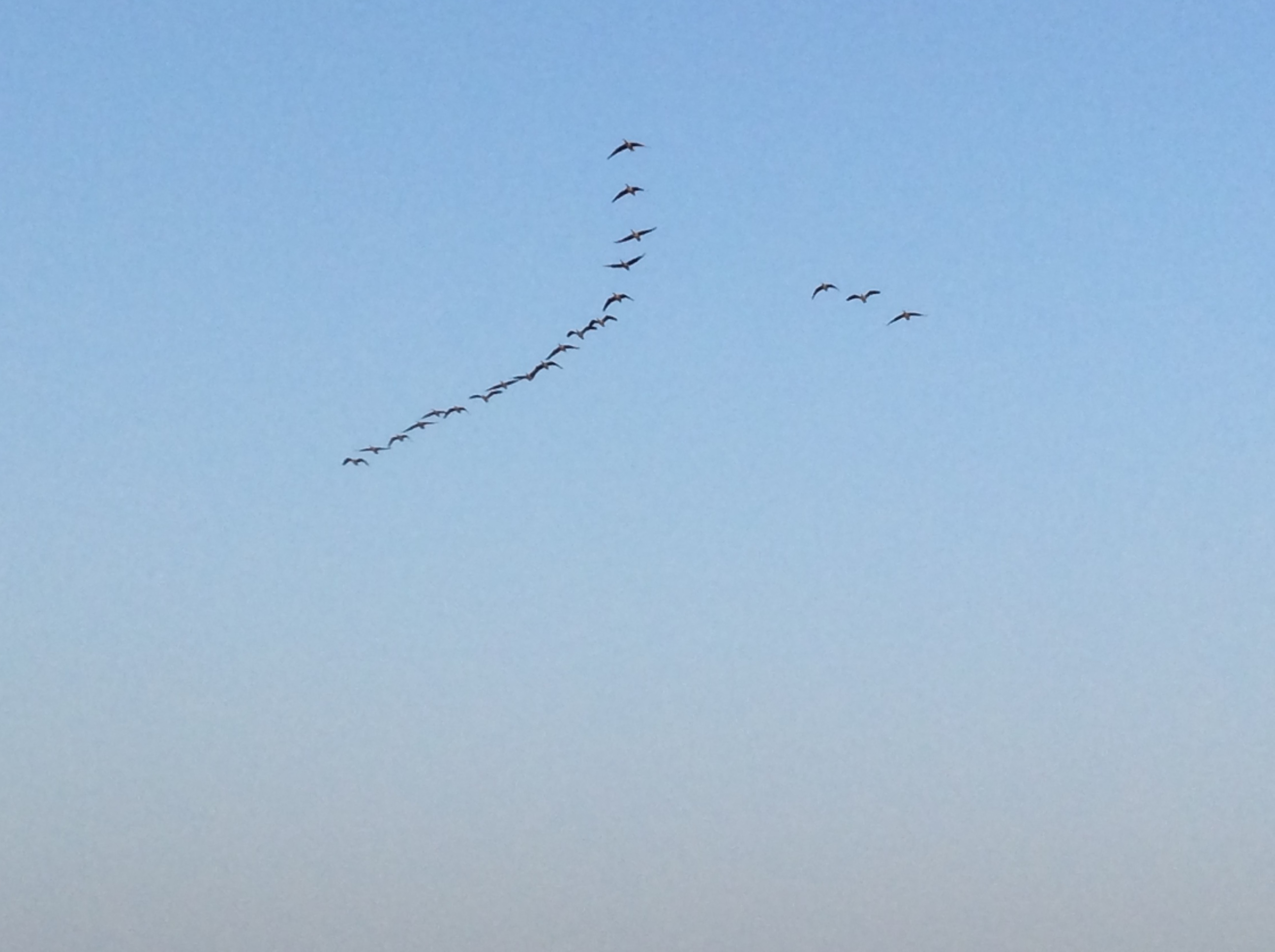
The boat continued crawling up the shore, no doubt to keep out of the strong currents. A flock of birds, sand martins perhaps, dived and swooped close to the water’s surface, flashing from brown to white and back to brown as they rolled and wheeled in tight formation, before settling on the mud of the river bank. Another flock of birds flapped quietly over us in formation, homing in on some faraway destination.

01-sittwe-mrauk u-flav 017

Now and then, a boat would pass us or we would pass one

01-sittwe-mrauk u-flav 020

otherwise we had the river in all its wideness to ourselves. The same flat deserted plain kept us company to our left, but by now the grass had narrowed to a strip of emerald green along the shoreline, backed by a vast expanse of dry paddy fields, dotted with rice-hay ricks.

04-mrauk u-sittwe 013

The flatness was broken now and again by a tall tree standing guard over the landscape.

01-sittwe-mrauk u 012

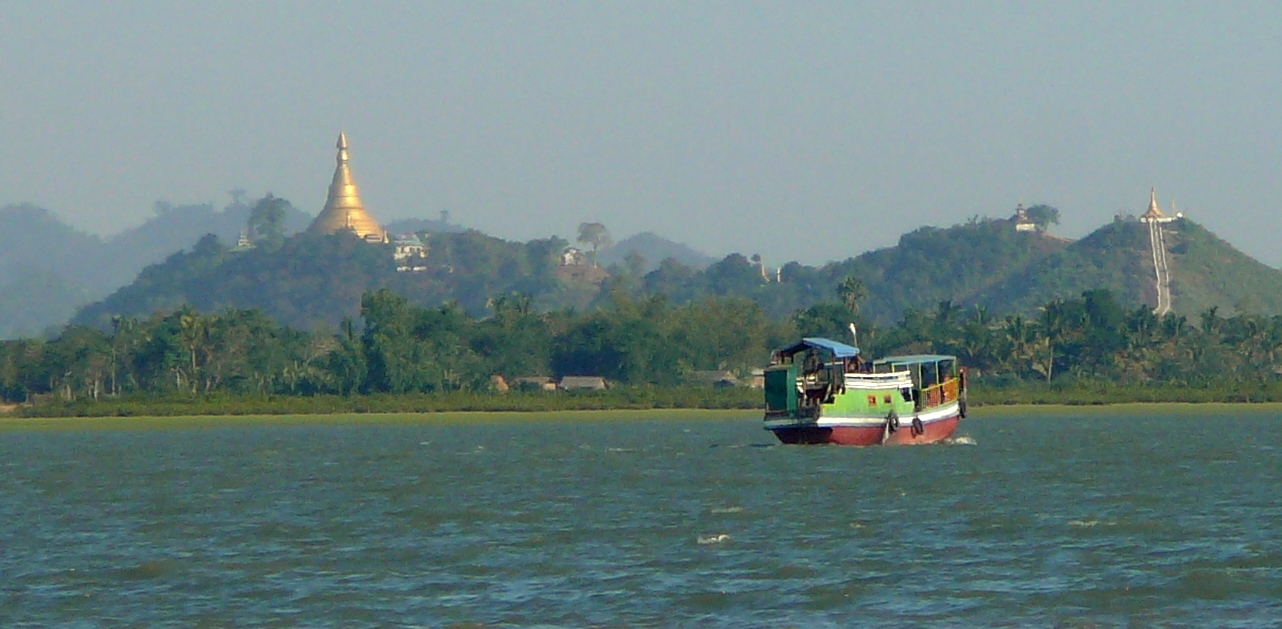
For a brief moment – but only a very brief moment – I imagined ourselves to be chugging along some river in the Netherlands, scanning the flat Dutch farmland. But then a range of small hills hove into sight, with two of them topped by gold-covered stupas and the image of Holland faded.

pagodas

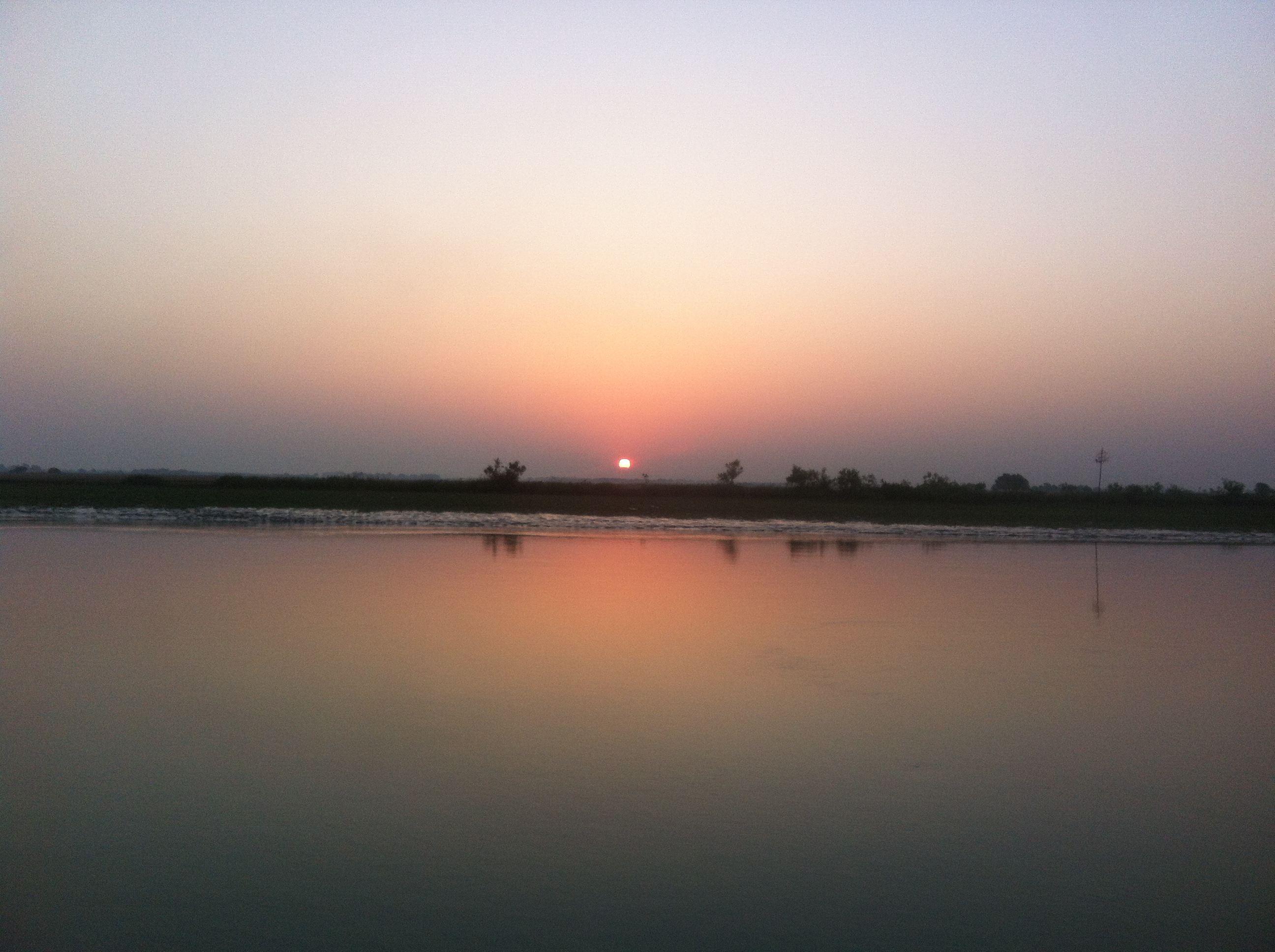
As we approached, the sun began to set, slowly at first and then ever quicker, reddening the stupas’ gold to copper.

04-mrauk u-sittwe 003

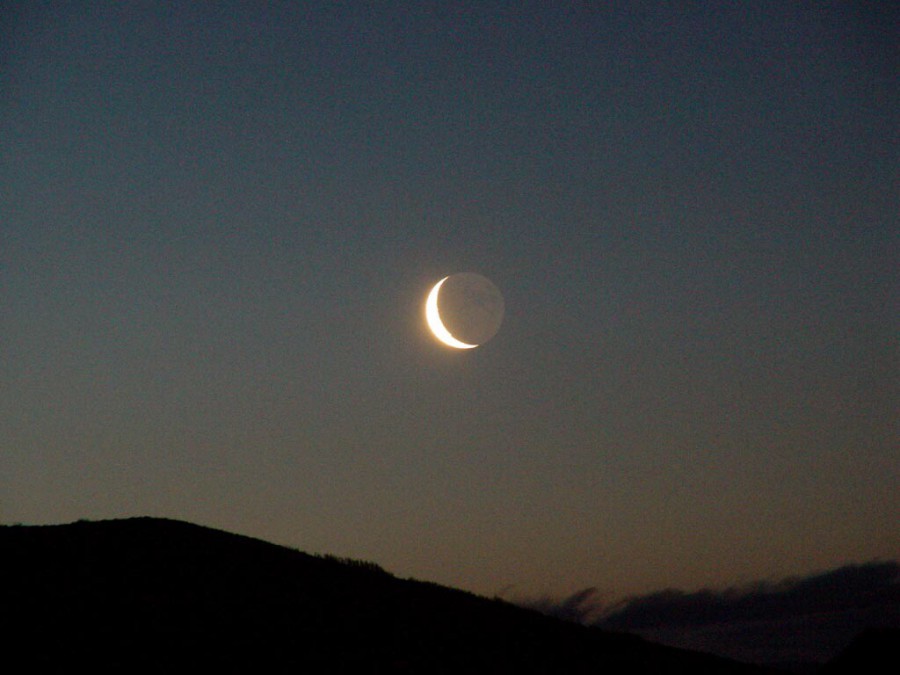
At last, the sun sank below the horizon, leaving us in the moon’s company. She had been waiting quietly for her moment. She was waxing crescent, having reached her dark point a week before. Although only a small sliver was shining down on us, we could make out the ghostly outline of the rest of her lying in that sliver, “the new moone wi’ the auld moone in her arme” as the Scottish ballad puts it.

image

We sat there, enjoying her company, but she was already a spent force when she became visible to us. She stayed with us for just an hour before she too sank below the horizon.

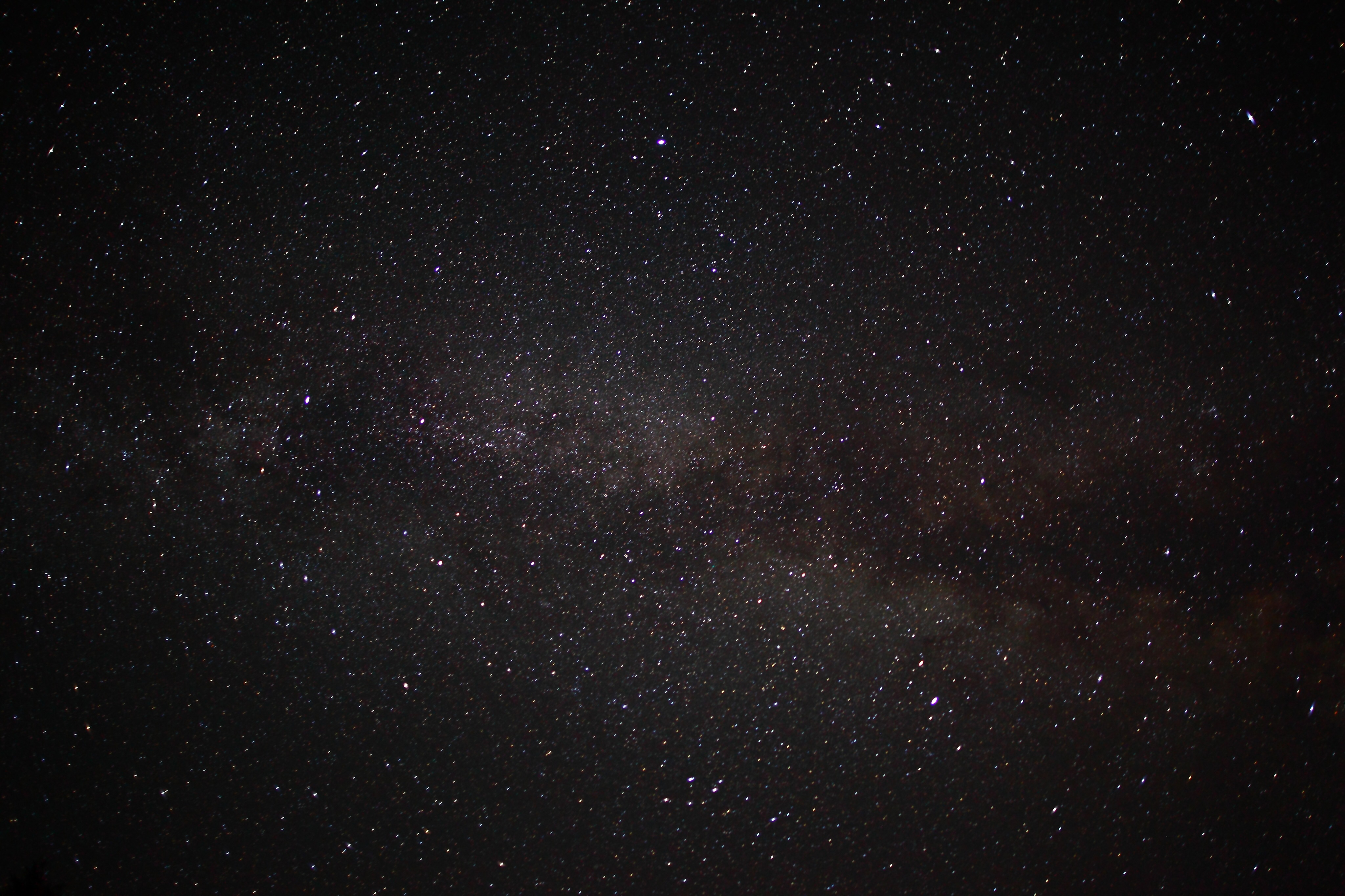
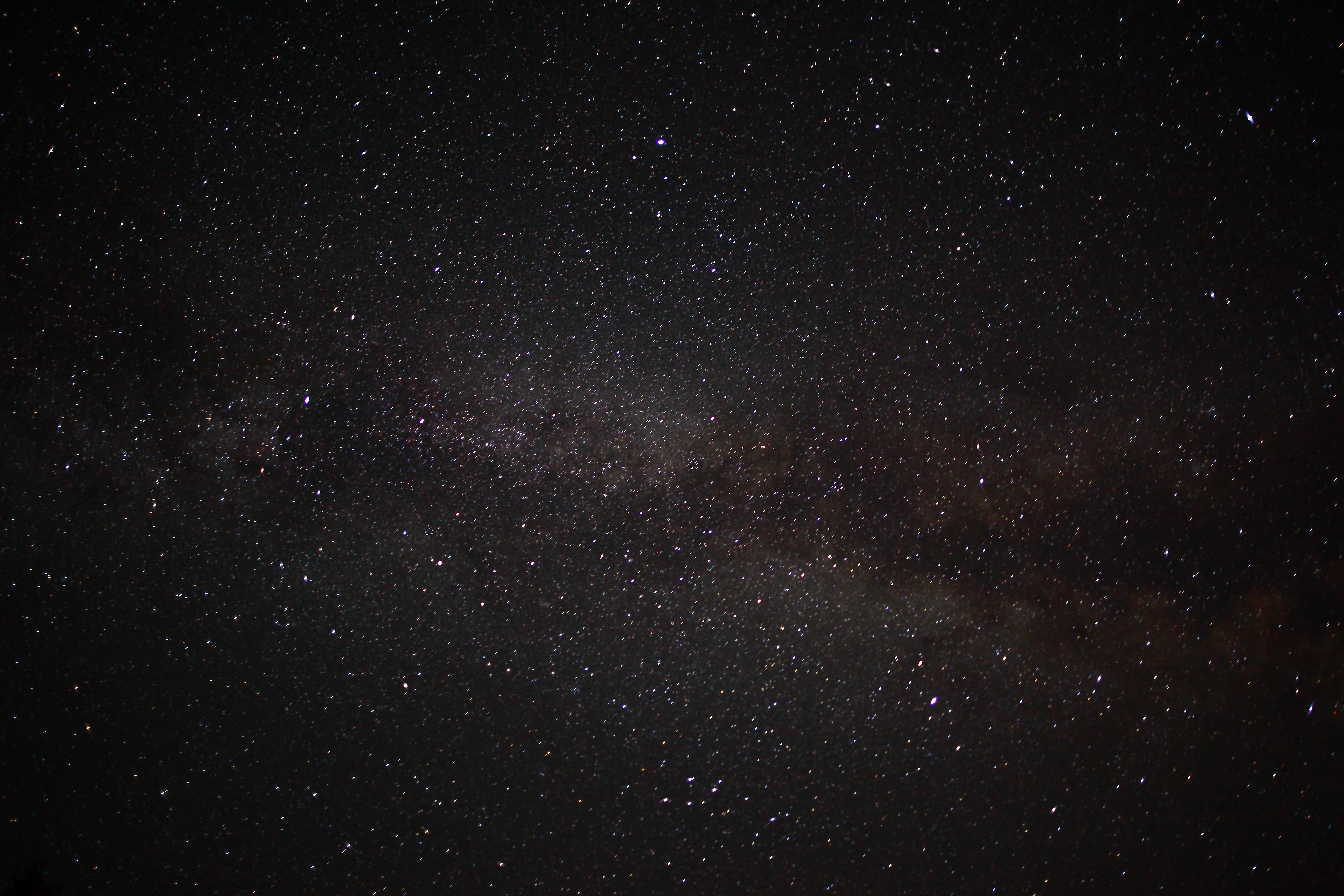
Venus, the star of the evening, had been keeping the moon company, along with some of the brighter stars, but now, with the extinction of the last bright light in the sky, the full panoply of stars was able to appear in all its glory. Such a spectacle! The sky’s dome was studded with stars, some bright, some dim, some big, some small, some quarters of the sky were dense with stars, others were pools of darkness. And arcing across the sky from end to end was the Milky Way

image

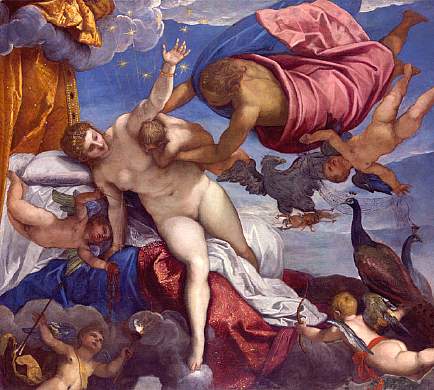
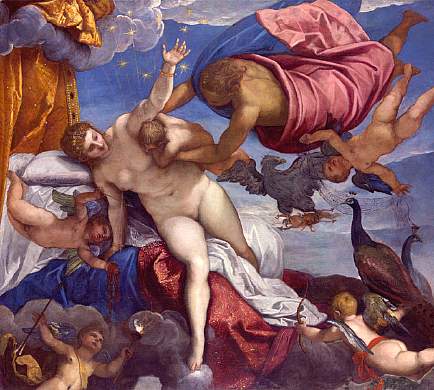
created by the drops of milk, so the Ancient Greeks averred, that sprayed from the breast of the Goddess Hera when she snatched it away from baby Hercules’s mouth, who was suckling her while she slept, put there surreptitiously by Zeus.

milky way tintoretto

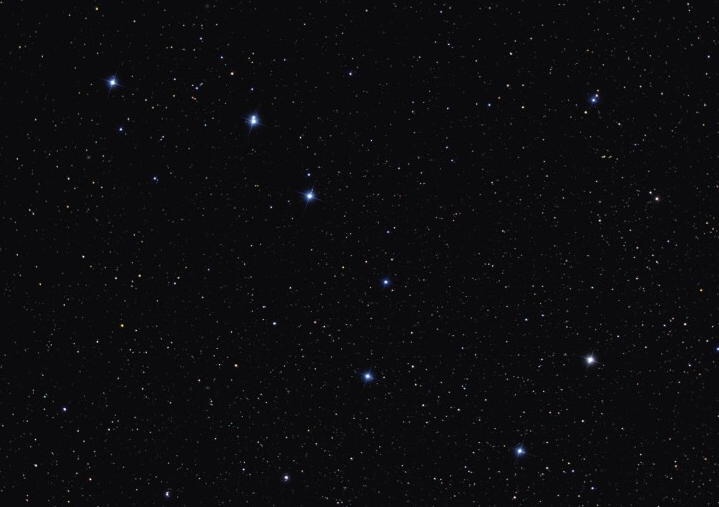
We sat entranced. How rarely we see the stars now! The strong lights of our modern life block out all but the brightest stars. Neither my wife nor I know our constellations at all well, but we could make out the three stars in Orion’s Belt

image

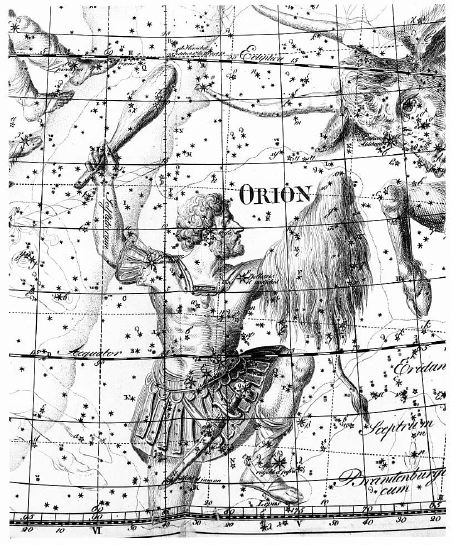
part of a much larger set of stars denoting Orion fighting the heavenly bull in the constellation Taurus

OrionLower on the horizon, we could make out the Great Plough, or Great Wagon (Carro Maggiore) to my Italian wife (and Big Dipper to my American friends).

image

As we pointed and guessed, the Milky Way wheeled this way and that above our heads: the boat was turning strongly now as the river began to meander.

As the river meandered, so did our talk. We talked about the Big Bang, which scientists say occurred some 14 billion years ago. They tell us a fascinating story about what happened afterwards. After a mere microsecond, the first protons and neutrons were being formed. A few minutes later, they began to coalesce into nuclei. Four hundred thousand years later, these combined with electrons to create the first hydrogen atoms. But it was only 150 million years later that the first stars began to form. And it was only 10 billion years later that the process of life creation began on this Earth, eventually leading to my wife and I sitting on the focsle of this boat, gazing at these stars. Scientists tell us that these stars are still rushing away from each other as the Universe continues to expand. What will happen next? Will we see the Big Crunch, where the Universe’s expansion will finally come juddering to a halt and then everything will hurtle back together again? It seems not; current observations suggest that the Universe’s expansion will continue or even accelerate. So will we see the Big Rip, where the Universe expands faster and faster, finally ripping galaxies, stars, and even atoms apart? Or will we see the Big Freeze, where expansion continues more moderately but existing stars burn out, no new ones are created, and the Universe goes dark and very cold? Or something else?

Nearer at home, we talked of our star, the sun. Scientists have a story for its future too. Over the next five billion years or so, they tell us, after it has burned all its hydrogen, our sun will grow into a Red Giant, making the Earth so hot in the process as to become uninhabitable. Then it will suffer a helium flash and collapse inward on itself. After it has stabilized, it will start to consume its helium for several billion years more before starting to expand again. But this time, the expansion will be unstable. At some point, it will shed its outer envelope as a planetary nebula while the core will collapse brutally to become a White Dwarf. It will survive as a White Dwarf for several trillion years before becoming a Black Dwarf. And so, sitting on that little focsle, with our backs against the cabin wall and our eyes on the sky, we followed in the footsteps of our distant ancestors, who for hundreds of thousands of years had gazed up at the stars and weaved beautiful stories to explain them.

Back on Earth, at river level, all was now inky black. No light shone from the shore. From time to time, we would see blinking red lights from fishing boats working the night shift. Once, a strong torch sprang to life ahead of us sweeping the waters, and suddenly a sea-going fishing boat loomed out of the darkness beside us. I dozed on and off, while my wife kept a look-out on the focsle, staring at the stars. At last, a faint glare of light ahead signaled Mrauk U. The wide, wide river had narrowed to a creek, trees were reaching out to us from either bank. The captain throttled the motor and the boat nosed into the jetty, where we could make out the car waiting to take us to our hotel.

_____________

Pagodas: https://www.flickr.com/photos/40867816@N07/4454825335 (in http://flickrhivemind.net/Tags/rakhiang/Interesting)
Old moon in new moon’s arms: http://www.lunarland.com/images/Earthshine.jpg (in http://www.lunarland.com/earthshine-and-the-moon)
http://upload.wikimedia.org/wikipedia/commons/5/51/Night-sky-milky-way-galaxy-astrophotography_-_West_Virginia_-_ForestWander.jpg (in http://feedback.arma3.com/view.php?id=12717)
Tintoretto’s Milky Way: http://www.ianridpath.com/startales/image/milkyway.JPG (in http://www.ianridpath.com/startales/milkyway.htm)
Orion: http://www.scienceinthebible.net/KNOWLEDGE_BIBLE/bigdipper_december.jpg (in http://www.scienceinthebible.net/KNOWLEDGE_BIBLE/NoteChildren2B.htm)
Mythical Orion: http://www.ianridpath.com/startales/image/Orion2.jpg (in http://www.ianridpath.com/startales/orion.htm)
all other photos: ours