A WALK ON THE WILDER SIDE

Sori, 10 December 2016

It’s a sad fact that the coast of the Riviera – as well as that of the Côte d’Azur, which takes over at the Franco-Italian border – has been much overbuilt. Ever since this part of the world – harsh, inhospitable land, from which generations of peasants had barely eked out a living – was discovered in the late 19th Century by the growing middle classes of Northern Europe, who were attracted to its mild winters and dramatic rocky landscapes, brick, concrete, and asphalt have been poured with wild abandon over a narrow strip of land following the shoreline. Sometimes, when I look out over this mass of houses, shops, supermarkets, banks, roads, railway lines, bridges, and all the other infrastructure of modern life, and when I hear the continuous background noise of traffic, I wish I could travel back in time to see these places when they were more pristine and unspoiled, or wave a magic wand and make it all disappear.

At such moments, it is time to pull on the hiking boots and head for the hills. For the overbuilding dies away quite quickly as one ventures up into the deep, narrow valleys giving onto the sea, valleys which are the defining geological feature of this part of the coast. Thus it was that a few days ago, all booted up, we boarded a small bus in front of the village school. At the appointed time it left, taking the road that initially follows the valley floor, jumping from bank to bank of the stream that runs down-valley, before it begins to climb, with the road at this point becoming horridly narrow and sinuous. We climbed through a couple of small villages before being dropped off at the head of the valley. Since this was still a hundred or so meters below the crest, a 3 km tramp up the road was required before we finally arrived at the top. The view of the sea, glittering far below, was magnificent.
image
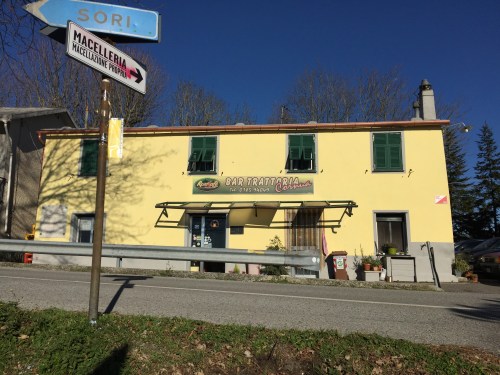
We popped quickly into this restaurant
image
to say hello to the owners. In earlier days, when the children were young, we would come up here quite regularly to have a magnificent plate of lasagne al pesto and go for a short walk or let the children kick a ball around. This time, we could only manage hurried greetings. Normally, this is a place patronized by very local people – it was here that I was first exposed to the local dialect in its pure, undiluted form – and the number of diners is manageable. But this day was a public holiday, the Feast of the Immaculate Conception, and the restaurant was crowded with foreigners (the term “foreigners” covering even the citizens of nearby Genova) and everyone was in overdrive.

A short walk down the road brought us to the start of the trail we were taking today. The aim was to walk along the southern crest of our valley to Sant’Apollinare (the starting point of the first of this trio of walks) and so back down to the village. This panoramic photo taken a few days’ later from our balcony shows the crest we followed.
image
The walk was all I desired to get away from the madding crowd. Almost immediately, most signs of modern life disappeared. As we tramped along what was probably an ancient mule track, we met hardly anyone; it was just us and nature. The track took us through woods
image image
where small flowers unknown to me still grew in this late season on the trackside.
image
The track took us across high pastures, bereft of animals at this time of the year
image
and past numerous hides – hunting being a particularly popular pastime in the autumn, with the excuse that the ever-increasing populations of wild boar need culling.

At points, the vistas opened up, towards the sea on one side
image
and towards the other side of the valley, the side which our bus had climbed
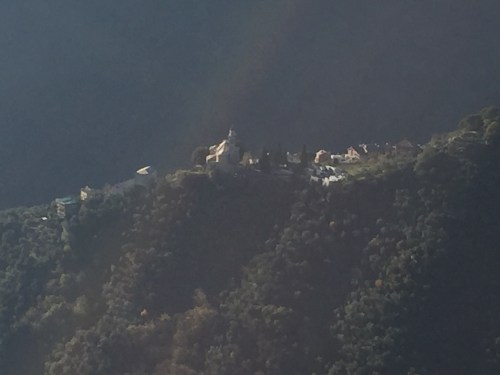
image
and back towards head of the valley, start of our walk
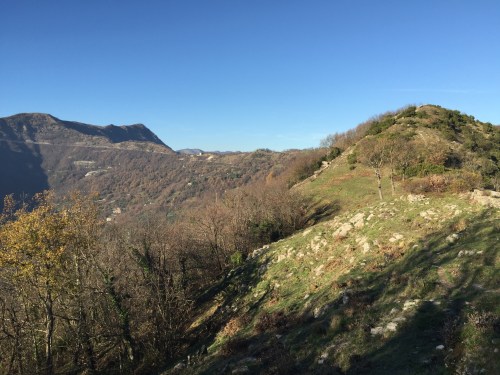
image
and way over the range of valleys up-coast and down-coast.
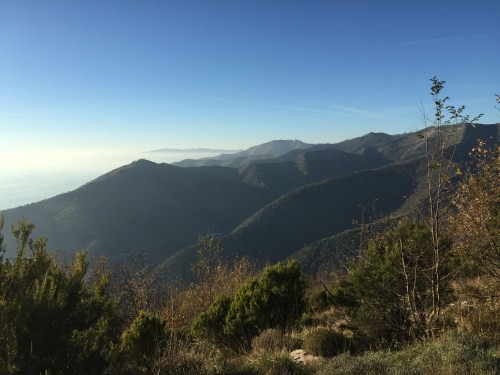
image
image

As we neared our destination, we got a lovely view of Monte di Portofino, the location of the walk in my previous post.
image
We were tiring by now, hoping for a smooth final leg. But it was not to be. The ground got very much stonier, the path harder.
image
Civilization also came butting in. Two men on noisy, smelly motorbikes suddenly appeared on the path, wanting to get by, while the dull roar of the motorway, which was passing under our feet, wafted up.

We reached a monument to Christ the King, put up by enthusiastic parishioners decades ago. We thought we had finally more or less arrived, but 20 minutes of hard and confused slogging over rocks and through woods awaited us still.

image

But we finally made it to the small church of Sant’Apollinare, just as the sun was beginning to sink.

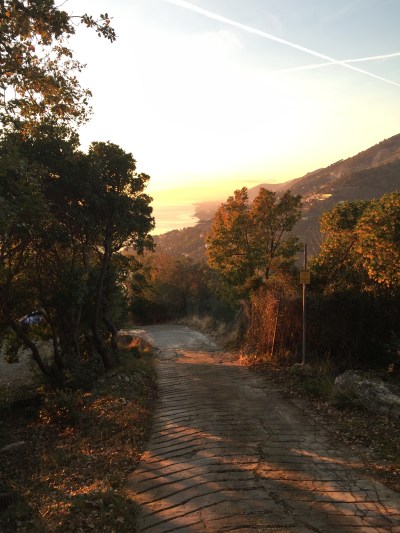
Bone tired, we headed down the last stretch in the gathering darkness, down
image
down
image
down
image
back into the coastline’s overbuilt environment.

image

___________

photos: all mine

A WALK FROM ONE SAINT TO ANOTHER

Sori, 10 December 2016

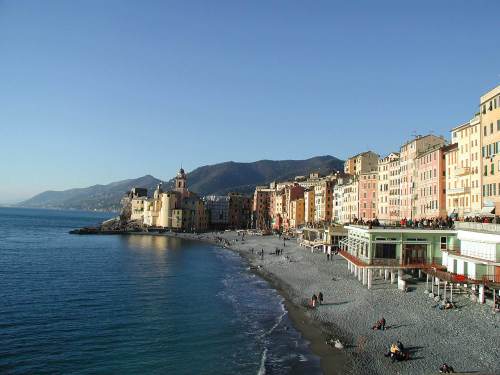
We started in San Rocco, which is perched on a rocky spur high above Camogli.

image
The last time we visited it, we huffed and we puffed our way up the old mule track that snakes its way up from Camogli. This time, we took it easy; we took the Recco-Rapallo bus and hopped off at Ruta, which lies on the saddle between Camogli on one side of Monte di Portofino and Santa Margherita on the other, and took another little bus from Ruta to San Rocco.

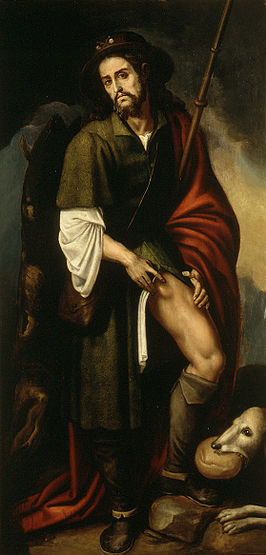
A little aside on the lives of obscure saints: San Rocco, known in English – if at all – as Saint Roch (I found traces of a couple of British churches named after him), lived in the late 1200s, early 1300s, dividing his time between what is now southern France and northern Italy. He is the patron saints of dogs and bachelors (a strange combination) and was especially invoked in times of the plague – hence this painting of the saint pensively pointing to a plague bubo on his leg.
image
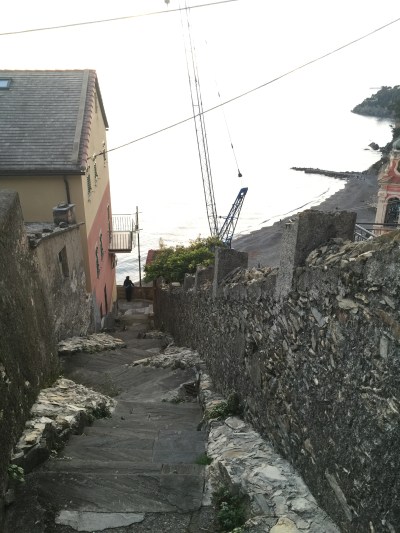
In any event, fresh from our relaxing bus drive, and fortified by a cappuccino and a slice of focaccia, we set off down the path which led to Punta Chiappa, a low rocky ledge jutting out into the sea at the furthest reaches of Monte di Portofino. The idea was to have lunch in a restaurant down at the water’s edge just before Punta Chiappa and, suitably fuelled up, toil our way back up to San Rocco. We started losing height through a series of long flights of steps
image
we wended our way through woods
image
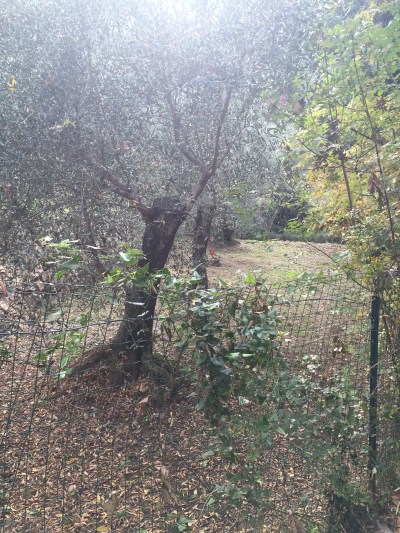
through which struggled a few remaining olive groves.
image
We finally arrived at San Nicolò, a small collection of houses clustered around a pretty little 12th Century church.
image
The original monks who had ministered to the small community of fisherfolk clinging on to this steep hillside finally moved away in the face of continuing depredations by Barabary pirates (I suppose church plate was considered good loot) and the church fell into disuse. Recently, suitable renovations have been undertaken, although there was little left of the original decorations to restore.

Another quick aside on the lives of obscure saints: San Nicolò, Saint Nicholas in English, lived at the juncture of the 3rd and 4th centuries. He was a bishop in Asia Minor and was famous for working miracles (he seems to have been particularly good at this). Of relevance to this story, he is the patron saint of sailors and fishermen.
image
But he also is responsible for a whole host of other professions including coopers, archers, pharmacists and – somewhat bizarrely – broadcasters. Somewhere along the line, no doubt because he is the patron saint of children, this very worthy saint morphed into that very heathen Santa Claus.

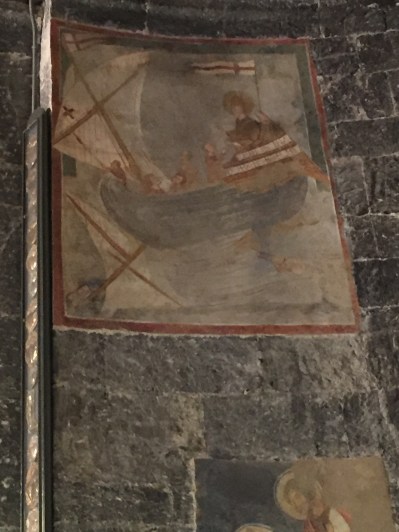
One of the few fragments of the original decorations left is this piece of fresco.
image
It shows St. Nicholas saving two sailors from drowning as their ship founders: that nightmare of all sailors and the subject of famous paintings
image
as well as a myriad of humbler ex-votos, normally dedicated as in this case to Mary in her role as Stella Maris, Star of the Seas.
image

I am moved to insert here those lovely lines from T.S. Eliot’s “The Wasteland” in the short section of the poem entitled Death by Water:

Phlebas the Phoenician, a fortnight dead,
Forgot the cry of gulls, and the deep sea swell
And the profit and loss.
A current underseas
Picked his bones in whispers. As he rose and fell
He passed the stages of his age and youth
Entering the whirlpool.
Gentile or Jew
O you who turn the wheel and look to windward
Consider Phlebas, who was once handsome and tall as you.

From San Nicolò, we got the first good view of the Golfo di Paradiso, the woods having obscured the view in the upper reaches of the walk.
image
Hunger drove us on. We dropped still further towards the sea,
image
finally reaching the restaurant. Alas! Contrary to what we had been assured in the café where we took our morning cappuccino and focaccia, it was closed. We were mournfully counting the tangerines we had brought with us and reckoning on the number of stairs we would need to climb to get back to San Rocco on a nearly empty stomach when we saw a boat coming in to dock. We hurried forward and discovered that by sheer serendipity we had arrived just in time to catch the boat to San Fruttuoso, from whence we could get a boat back to Camogli! Light of stomach, but also light of heart, we hopped on, took a seat, and admired the passing views as we rounded Punta Chiappa
image image
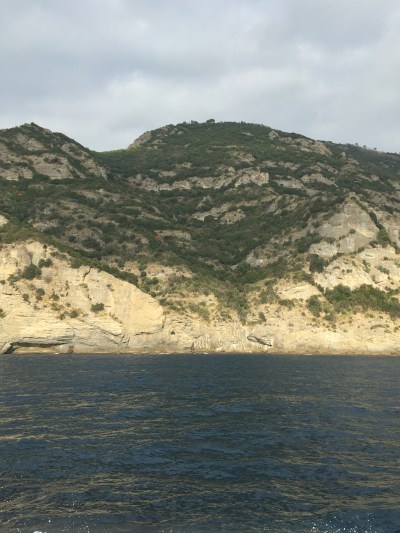
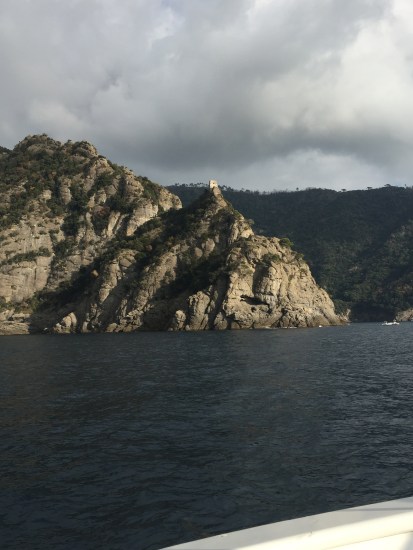
motored past forbidding headlands
image
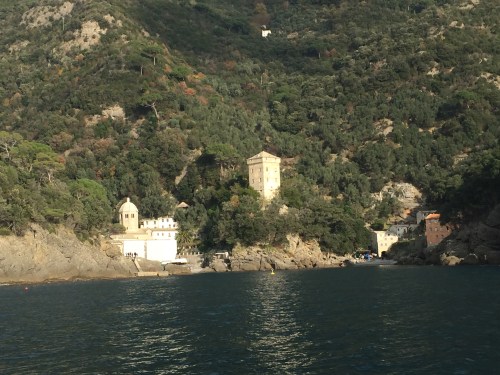
until the small fort protecting San Fruttuoso hove into sight,
image
where we turned into San Fruttuoso’s bay and chugged in towards the village itself.
image
image

image

Calling this a village is perhaps a bit of an exaggeration, composed as it is of the ancient abbey (currently under renovation)
image
a somewhat less ancient watchtower
image
and a few fishermen’s houses clustered in between.

It’s a charming site, much frequented in the summer by people who come to lie on the beach (as it was when we visited it, during a long weekend). We took the easy way in, but hardier folk can take one of a number of paths crisscrossing Monte di Portofino which pass through San Fruttuoso. Well rested and after eating our meager cache of tangerines I went off to visit the Abbey while my wife read her book on the beach.

A final note on the lives of obscure saints: San Fruttuoso, Saint Fructuosus in English (a saint so obscure in the English world that I could find no church named after him), was a bishop of Tarragona in Spain in the second half of the third century.
image
His main, in fact his only, claim to fame was that he was martyred during the reign of the Roman Emperor Diocletian. He is so obscure that no group has claimed him as their patron saint, which is a bit sad. Given his name, makers of fruit juices could perhaps apply …

How an abbey in Italy got to be dedicated to him is a bit of a mystery. The story goes that when the Vandals invaded Spain some monks from Tarragona, anxious that his remains not be despoliated, carried them off by sea. After a certain amount of wandering around the Mediterranean, they ended up on the Monte di Portofino. I find the story to have a lot of holes in it, but hey, who am I to question its veracity? Suffice to say that the Abbey grew quite wealthy from donations of land. Wealth put it in the sights of the Barabary pirates. Like San Nicolò, it went into decline after repeated depredations and was eventually abandoned.

In the early afternoon, our return boat docked. We piled in and returned to Camogli
image
for a well-deserved late lunch of focaccia al formaggio.

image
______________

All photos: mine, except as follows

San Rocco: https://commons.m.wikimedia.org/wiki/File:Camogli-chiesa_di_San_Rocco_(Ruta)-DSCF0645.JPG
Saint Roch: https://en.m.wikipedia.org/wiki/Saint_Roch
Le radeau de la méduse: https://fr.m.wikipedia.org/wiki/Le_Radeau_de_La_Méduse
Ex-voto shipwreck: http://www.ottante.it
Saint Nicholas: http://aristidhmilaqi.blogspot.it/2011/06/saint-nicholas-patron-saint-of-sailors.html?m=1
Saint Fructuosus: https://en.m.wikipedia.org/wiki/Fructuosus
Camogli: http://www.cepolina.com/Camogli-sea-beach.html
Focaccia al formaggio: http://www.italianbotanicalheritage.com/it/scheda.php?struttura=499

A WALK IN THE SETTING SUN

Sori, 8 December 2016

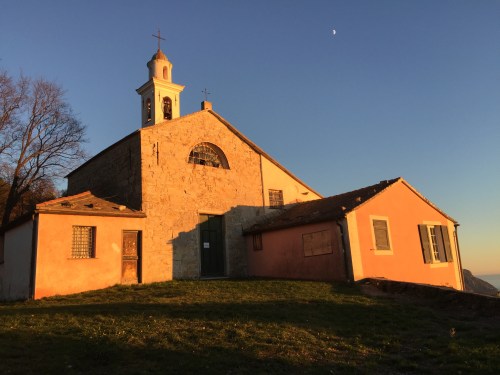
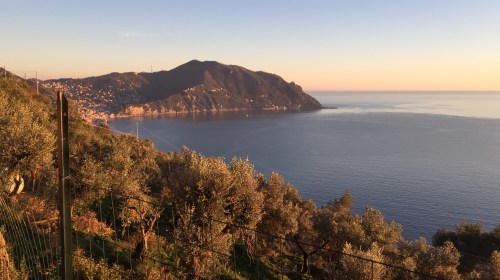
We decided not to struggle up the path which leads from the railway station up along the spur of the hill to the small church of Sant’Apollinare at the top. We did it a few weeks ago and it’s brutally steep. Instead, we took the bus that starts from in front of the village fishmonger, timed to leave just after school breaks up. Together with one shy schoolgirl we zipped up the road which zigs and zags its way up the hillside. 10 minutes later, just shy of 4:30, we were deposited on the small parking area by the church. The sun was beginning to set over the Riviera on the other side of Genova, bathing the little church and the distant Monte di Portofino in its ruddy rays.

image
image
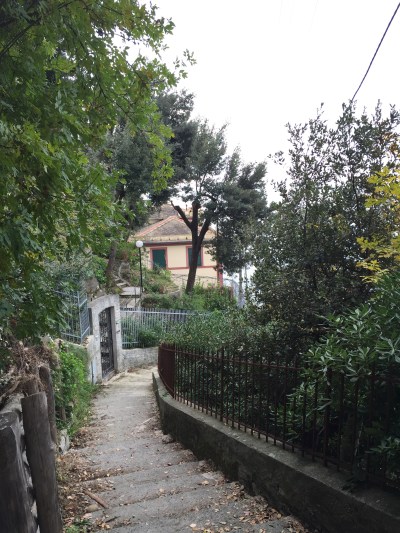
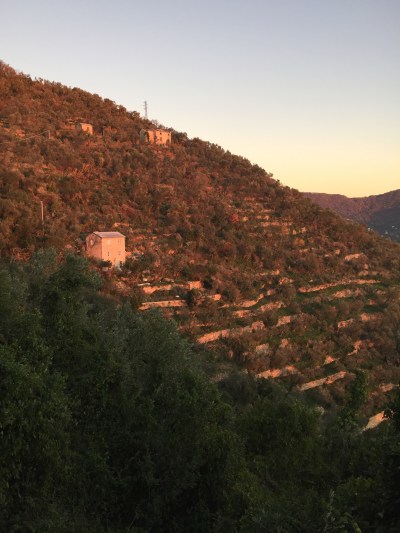
We were taking the path that led down to the little town of Recco, nestled at the foot of the Monte di Portofino. We needed to get down before it got too dark. We started walking, passing through olive groves where the hillside’s exposure to the sun was good
image
and through Mediterranean maquis where it was less good
image
and where earlier farmers had not bothered to terrace the hillside and plant olive trees.
image
We passed the Torre dei Saraceni, the Saracens’ Tower, which according to local legend was built as a lookout to warn local villages when raiding parties of Barbary pirates based in Northern Africa (or maybe closer in Corsica and Sardinia) were approaching, looking to carry away loot and people to be sold as slaves in the market places of Tunis and Algiers (a plague which Italy’s coastal communities suffered until the 1800s).
image
When we were young and foolish, my wife and I had fantasized about living here, brushing aside such practical questions as where the nearest shop was to buy food.

On we hurried, with the Monte di Portofino looming larger.
image
Out to sea, ships were hurrying also, to reach the safety of the port of Genova.
image
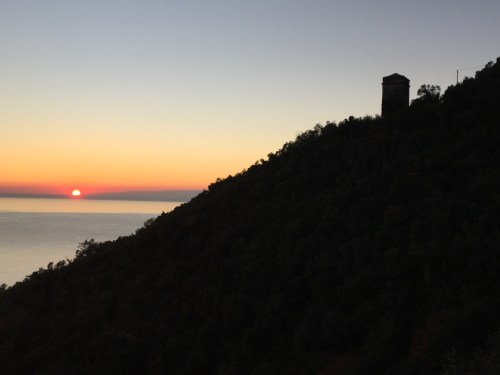
We watched as the sun finally set across the Bay of Genova, silhouetting the Torre dei Saraceni.
image
We went on in the sunset’s afterglow, down dimly-lit steps

image
arriving finally in the small village of Polanesi on the outskirts of Recco. Our path skirted the parish church

image
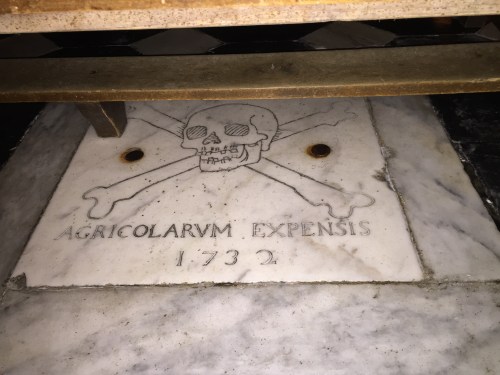
into whose dim interior we quickly dipped. Its floor hinted at some tragedy 200 years ago
image
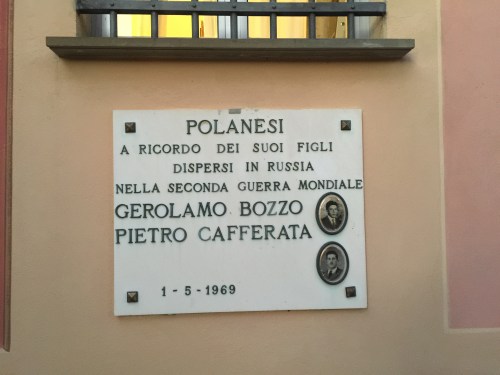
while its outer walls proclaimed a more recent tragedy, the retreat from Russia in 1942-3, in which many Italians died.
image
The moon alone was now shining in the sky.

image
By its dim light, and in places by the light of my phone, we stumbled down the last steps to finally reach the Via Aurelia.
image
When I was young and foolish, I thought this really was the trace of the old Roman road, but I discovered later that the Romans never bothered to build a road through this wild and mountainous region; they just went by boat along the coast.

A short walk brought us to Recco, now enveloped in darkness.
image
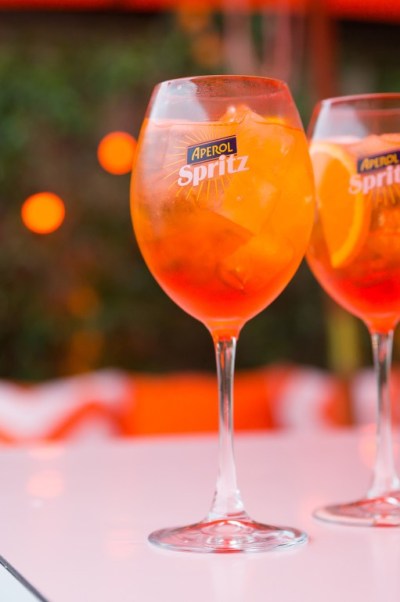
We lowered ourselves into the chairs of the nearest bar and had ourselves a well-merited Aperol Spritz.

image

_______

all photos: mine, except for

Aperol Spritz: http://www.aperolspritzsocials.com

SACRI MONTI

Kyoto, 26 November 2016

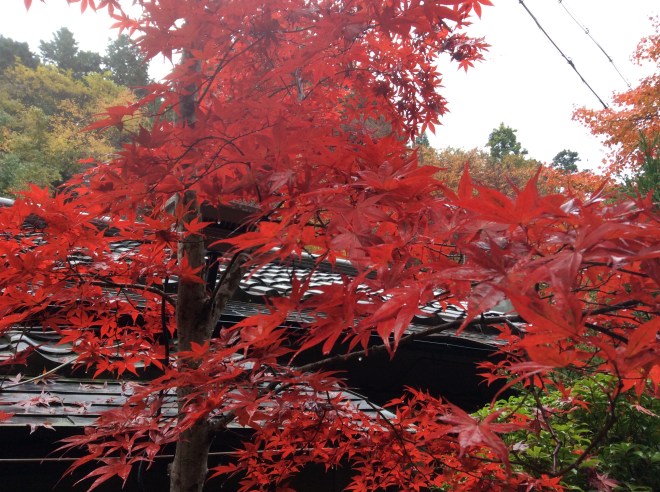
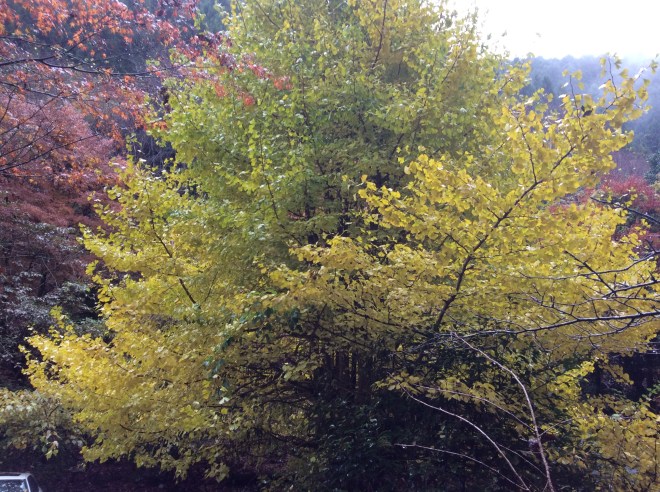
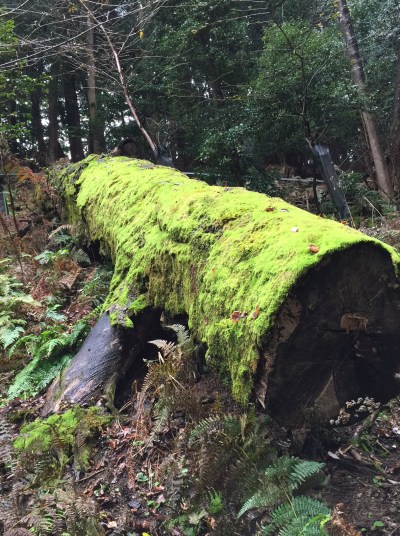
Two weeks ago, my wife and I visited the temple on mount Kurama, a mountain on the outskirts of Kyoto. We took the train to the mountain’s foot and then climbed to the top – well, “climbed” is perhaps misleading, since rather than toil all the way up using the path that snakes its way to the top we took a cable car to very near the summit and toiled lightly the rest of the way. It was the Fall colours which had brought us there, and indeed the red of the Japanese maples and the yellow of the ginkgoes were a sight to behold.
mount-kurama-2

mount-kurama-3
Since it was a cool, rainy day, the surrounding landscape was enveloped in drifting cloud and mist, strongly reminiscent of painted Japanese landscapes.
misty-japanese-landscape
At the top, we walked around the temple

and enjoyed the view.
mount-kurama-1
After which, we walked down the other side of the mountain
mount-kurama-4
to take a well-deserved lunch at the bottom.
mount-kurama-5
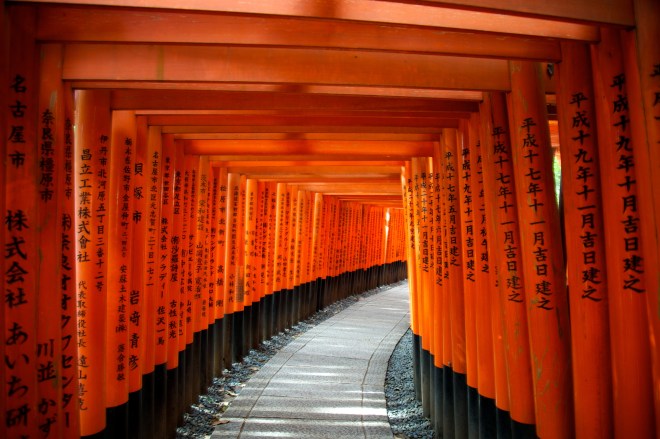
A week later, when our daughter joined us for Thanksgiving, we took her to the Fushimi Inari Shrine on the hilly eastern edge of Kyoto and hiked up the mountain behind the shrine, passing through the famed tunnel of torii on the way
Torii gates—Fushimi Inari Shrine
(although when we passed through the tunnel, it was packed with people – the disadvantage of visiting Kyoto at this time of the year).

After admiring the view at the top and inspecting the small shrines sprinkled along the path, all of which were smothered in small votive torii
http://regex.info/blog/2008-06-19/841
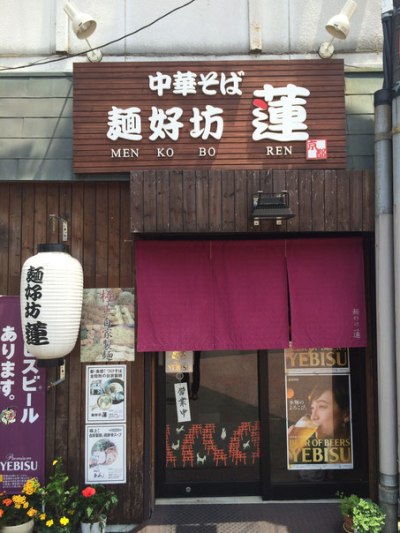
we made our way down again and had a well-deserved bowl of rahmen at the mountain’s foot.
noodle-shop-inari
Ours was an admittedly very secular version of a pastime as ancient as civilization itself, the climbing of mountains to pray to the gods. I suppose it makes sense. Gods often have been thought to reside up in the sky somewhere, and mountains were as close to the sky as we humans could get before the age of aviation. And before there were 7 billion of us, working our presence into every nook and cranny of the planet, mountains were remote, mysterious places, where our ancestors could more easily commune with the divine.

So it comes as no surprise to see that all religions have their mountains. Several degrees of longitude to the west of Kyoto, the Chinese had their Four Sacred Mountains of Buddhism and their Four Sacred Mountains of Daoism, and scholars sitting at the foot of mountains is a common scene on scrolls.
scholars-under-mountain
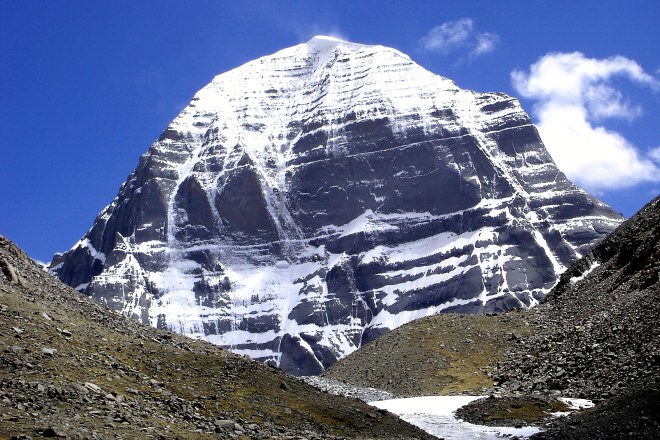
Hinduism, along with Jainism and Buddhism, has its Mount Meru, a mythological mountain, which for many believers, though, finds its material incarnation in Mt. Kailash in Tibet.

Processed by: Helicon Filter;

Many Hindus and Buddhists make the arduous journey to the mountain. Once they reach it they will reverently circle it (I highly recommend the book “To A Mountain In Tibet”, in which that great travel writer Colin Thubron relates his journey on foot to this mountain up through the high valleys of Nepal).

Moving further west, Judaism has its Mount Sinai, traditionally thought to be this mountain.
mount-sinai
The Bible tells us that Moses climbed it to commune with Yahweh in the Burning Bush, and from its top he brought down the Ten Commandments to the people of Israel. Charlton Heston gave a great performance as Moses in the Hollywood film epic “The Ten Commandments”
charlton-heston-as-moses-in-the-ten-commandments
although I personally prefer Michelangelo’s splendid Moses.
michelangelo-moses
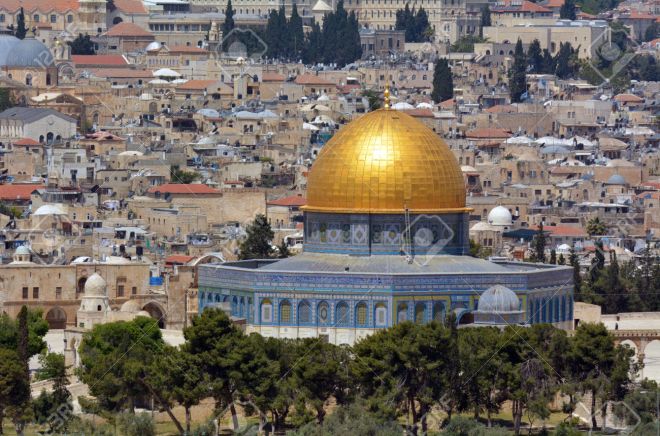
Islam also has its holy mountains; since it is a religion of the Book, many of these are linked to stories in the Bible: Mt. Sinai because of its link to Moses, Al-Judi, reputed to be where Noah’s Ark came to rest after the Flood, the mount of Olives, where the righteous will be chosen and evil abolished. But it also has mountains which are holy because of events in the life of the Prophet Muhammad. One such is the Temple Mount, the scene for Muslims of the Prophet’s ascent to heaven in his Night Journey, and on which they built the beautiful Dome of the Rock.

dome-of-the-rock

Another is Jabal Al-Nour, on the outskirts of Mecca.
jabal-al-nour
This mountain houses the Hira Cave in which Muhammad began receiving the revelations which became the Qu’ran. The cave is extremely popular with Muslim pilgrims who make the arduous trek up the mountain to reach it.

As for Christianity, Jesus was crucified on a hill, Mount Golgotha, outside Jerusalem. It’s really quite a modest hill, a hillock really, which in Christian art, though, grew into a respectable hill, as shown in this painting by Pieter Bruegel the Elder.
procession-to-calvary-by-pieter-bruegel-the-elder
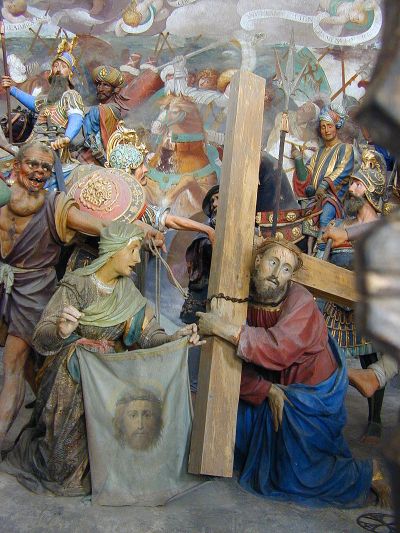
Imagining a good-sized hill gave later generations of Christians an excuse to bedeck local hills with a Via Crucis, or Way of the Cross, which would wend its way up to the top of the hill and along which would be dotted the fourteen stations. The faithful would climb the Via Crucis, stopping and praying at each station (I remember well doing this as a young boy). UNESCO has canonized as a World Heritage Site nine such hills, the Sacri Monti or Sacred Hills, which are strung along the alpine foothills of Lombardy and Piedmont, not too far from Milan where we currently reside. Their Vie Crucis were all created in the 16th-17th centuries.
sacri-monti-1
sacri-monti-2
I’m trying to persuade my wife that we should go and climb a couple. To make the suggestion more palatable, I’m suggesting that we now wait until Spring – and that we choose sacri monti that have good restaurants at their foot to which we can repair after the climbs.

____________________
Misty Japanese landscape: https://loganbalstad.wordpress.com/2013/07/20/japanese-landscape-painting/
Mount Kurama temple: http://apdl.kcc.hawaii.edu/roads/18_temples.html
Other pix of Mount Kurama: ours
Scholars under mountain: http://www.sothebys.com/en/auctions/2013/fine-classical-chinese-paintings-n09009.html
Mount Kailash: https://en.wikipedia.org/wiki/Mount_Kailash
Torii Fushimi Inari Shrine: https://commons.wikimedia.org/wiki/File:Torii_gates%E2%80%94Fushimi_Inari_Shrine_(9977683204).jpg
Fushimi Inari mouintainside shrine: http://regex.info/blog/2008-06-19/841
Noodle shop, Fushimi Inari shrine: http://www.picrumb.com/best-restaurants/inari/
Mount Sinai: https://www.lds.org/media-library/images/mount-sinai-egypt-moses-1244104?lang=eng
Charlton Heston as Moses: https://theiapolis.com/movie-20AU/the-ten-commandments/gallery/charlton-heston-as-moses-in-the-ten-commandments-1081961.html
Michelangelo’s Moses: http://syndrome-de-stendhal.blogspot.jp/2012/04/der-moses-des-michelangelo.html
Dome of the Rock: http://www.123rf.com/photo_42141970_aerial-view-the-dome-of-the-rock-on-the-temple-mount-from-the-mount-of-olives-in-jerusalem-israel.html
Jabal Al-Nour: http://dreamzs338.tumblr.com/post/132478018857/jabal-al-noor-the-mountain-of-light-in-makkah
Pilgrims to Hira Cave: http://mapio.net/pic/p-16183166/
“Procession to Calvary” by Peter Breugel the Elder: https://mydailyartdisplay.wordpress.com/2011/03/07/the-procession-to-calvary-by-pieter-bruegel-the-elder/
Sacri Monti-1: http://www.unescovarese.com/Sacri-monti-in-Piemonte-e-Lombardia
Sacri Monti-2: https://en.wikipedia.org/wiki/Sacro_Monte_di_Varallo

POLITICALLY-CHARGED PUBLIC ART

Milan, 4 November 2016

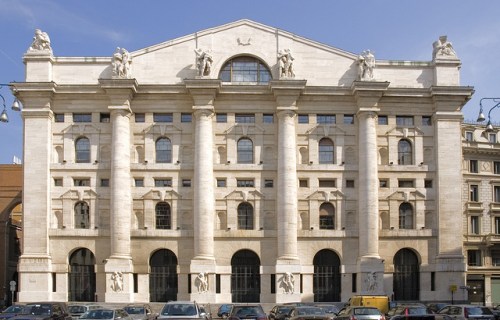
There is a quiet square not too far from where my wife and I live in Milan which goes by the name of Piazza Affari. As the name suggests, this is meant to be the pulsating business and financial centre of Milan. That certainly was the idea when the square was fashioned back in the early 1930s by demolishing a whole block of buildings in front of the just completed stock exchange, the Palazzo Mezzanotte.
image
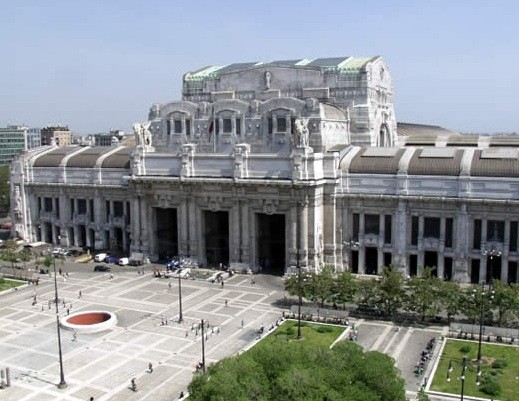
This quite handsome building clad in white travertine is often considered “typical” Fascist architecture because of when it was constructed, but in truth it is actually a nice exemplar of the Italian architecture of the turn of the century, most famously exemplified by Milan’s main train station.
image
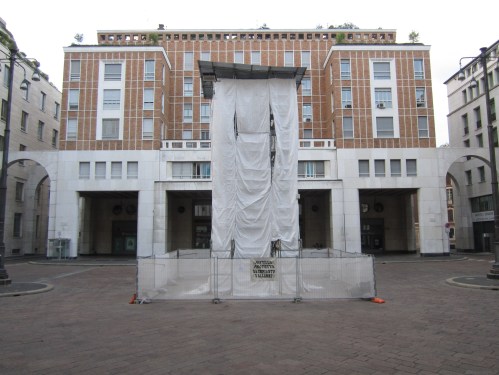
Another building opposite the stock exchange, finished in 1939, closed off the new square.
image
Well, the war came and went, this corner of Milan survived the intense Allied bombing of the city, Fascism fell, and life went on. Then, in 2011, as part of a plan to make Milan a centre of contemporary art, the-then municipal government wanted to hold an exhibition of the works of Maurizio Cattelan, a famous Italian contemporary sculptor well known for satirical sculptures. As part of the deal, the city commissioned an outdoor work from the artist. After some back and forth, it was decided to place the piece in Piazza Affari and Cattelan came up with this.
image
Of course, everyone immediately decided that the artist was giving the finger to Italy’s financial sector – this was a few years after the near meltdown of the banking sector worldwide, whose impacts on the Italian economy were then still being felt (and continue to be felt). The denizens of the stock exchange hated it, everyone else loved it. What was meant to be a temporary exhibition has turned out to be permanent. It has been pointed out, and the photo above shows it clearly, that the hand is not actually giving the finger to the stock exchange but, if anything, to the anonymous building on the other side of the square. And the artist himself has said that the sculpture was actually a commentary on the fall of Fascism – some complicated explanation to the effect that the hand really represents the Fascist salute, and the chopped-off fingers represent the fall of Fascism; its positioning in front of a building seen as Fascist is what links it to Fascism. Others have commented that this finely sculpted hand (look at those veins!) in lovely white marble, in a square with its vaguely Roman look (look at those arcades attached to the 1939 building), reminds them of a De Chirico painting.
image

None of this matters. What is important is what people think. And people think the finger is being given to all those goddamned bankers who screwed all of us over, and they cheer the artist on.

Statuary in public places has always excited intense emotions. Staying in the world of white marble, consider the statue of the naked Alison Lapper, a British artist born without arms and only stubs of legs, and eight months pregnant when the statue was made.
image
In 2005, this statue was placed as a temporary exhibit on the fourth plinth at Trafalgar Square in London, which has been empty ever since the square received its current look back in the 1830s.
image
Many people hated it (because it was ugly; did those who said this realize the judgement they were passing on handicapped people?), many people loved it (because of its optimistic message about the handicapped and because it brought handicapped people more into the mainstream). A much larger replica was used in the opening ceremonies of the 2012 London Paralympic Games.
image
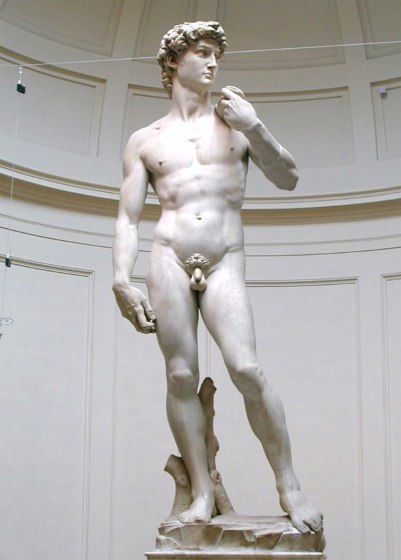
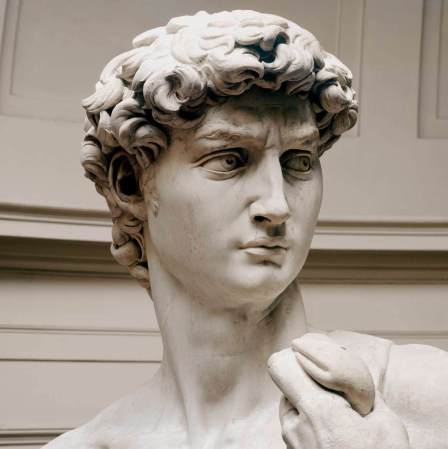
But what about that granddaddy of white marble statuary, Michelangelo’s David?
image
(another statue, I note in passing, with lovely hands)
image
Today, we look at it simply as a glorious work of art, but at the time of its unveiling it was also a highly charged political statement. Already, David had a special place in the heart of the Florentines. They identified with the puny boy who destroyed the huge, nasty Goliath (seen to represent Rome, the French, the Holy Roman Emperor, or any other power threatening it at any particular moment in time). A committee of notable artists, including Da Vinci and Botticelli, was charged with deciding on its emplacement. They chose to have it stand in Piazza Signoria, at such an angle that the statue glared defiantly towards Rome.
image
A statue whose unveiling in 1992 had particular resonance for me was that of Sir Arthur “Bomber” Harris, commander-in-chief during the Second World War of Britain’s Bomber Command.

As the picture shows, it is the typical statue of some Worthy Person which dots every public space in Europe, nothing terribly exciting artistically. But Bomber Command was the group responsible for the so-called area bombing during the War which wiped out entire German cities, many of no military value. Dresden is perhaps the best known.
image
There are many people, and I include myself among them, who believe that these bombings were a crime against humanity, so I have difficulty feeling any disapproval for the person who did this to Harris’s statue.
image
To be fair to Harris, he was not the only person in high circles (Winston Churchill included) who thought that area bombing was a good idea, but he implemented the plan with particular relish.

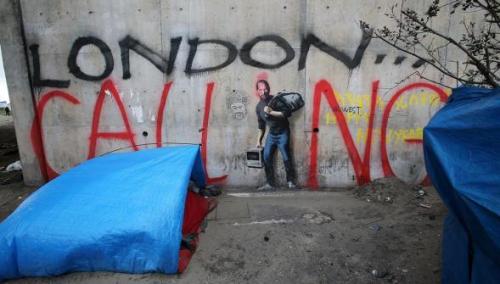
The placement of politically-charged art in public spaces continues. Banksy’s painting in the Calais “Jungle” of Steve Jobs as an immigrant trying to get in shows this.

In a rare statement on any of his art, Banksy commented that he wanted to remind people of the value of immigrants. If Jobs’s father, an immigrant from Homs in Syria, hadn’t been let into the US we wouldn’t have Apple. In this day and age of heated debates, especially in Europe, about refugees and how many to let in, Banksy has very publicly taken sides. It’s a pity that his high mindedness has been subverted, first by an entrepreneurial inhabitant of the Jungle demanding to be paid 5 euros to view the painting and then by a nihilistic vandalizing of the painting.
image
I presume that the vandalizer was doing no more than celebrating The Clash’s third album. Such is life.

Let’s see what this year will bring us in politically-charged statuary.

____________
Palazzo Mezzanote: http://www.newsly.it/braxit-ultime-notizie-borse-europee-in-rialzo-scommettono-sul-si-1
Stazione centrale: http://www.milanoguida.com/visite-guidate/altri-monumenti-milano/stazione-centrale-milano/
Palazzo on other side: https://ripullulailfrangente.wordpress.com/2012/08/24/ancora-per-milano-al-mattino-presto-targhe/
Il dito: http://www.manageronline.it/articoli/vedi/3359/il-dito-medio-in-piazza-affari/
Giorgio de Chirico: http://www.beniculturali.it/mibac/export/MiBAC/sito-MiBAC/Contenuti/MibacUnif/Eventi/visualizza_asset.html_1741131230.html
Alison Lapper statue: http://www.arupassociates.com/en/projects/trafalgar-square-fourth-plinth/
Alison Lapper statue close-up: http://albertis-window.com/2014/01/
Alison Lapper statue Paralympic Games: http://www.goodtoknow.co.uk/wellbeing/galleries/34626/london-2012-paralympic-games/41
David: https://www.pinterest.com/pin/430234570629286662/
David’s hand: http://www.accademia.org/explore-museum/artworks/michelangelos-david/
David’s head: https://www.pinterest.com/almetrami/renaissance-david/
Sir Arthur Harris: http://www.fotolibra.com/gallery/1172664/sir-arthur-harris/
Dresden bombed: http://www.ibtimes.co.uk/dresden-bombing-70th-anniversary-interactive-then-now-photos-show-scale-destruction-1487817
Harris statue defaced: http://www.dailymail.co.uk/debate/article-2166966/PETER-HITCHENS-The-heroes-Bomber-Command-deserve-memorial–unlike-butcher-led-them.html
Banksy’s Steve Jobs: http://edition.cnn.com/2015/12/11/europe/banksy-steve-jobs-graffiti/
Banksy’s Steve Jobs defaced: http://www.zeroviolenza.it/component/k2/item/74240-alto-4-metri-e-lungo-un-chilometro-il-nuovo-muro-antimigranti-è-a-calais

TROFIE

Milan, 25 October 2016

In 1960, during a televised speech, General de Gaulle, then the first President of France’s newly-minted Fifth Republic, posed the rhetorical question, “How do you govern a country which has 246 varieties of cheese?”, implying that a country with such individualism takes badly to being centrally governed. Well, Italy has more types of pasta than France has cheeses – 350 according to one website – which might explain Italy’s chronic ingovernability. We watch with anxiety as the country lurches towards a referendum, which should be about changing the Constitution to make the country more governable but is rapidly turning into a vote of no-confidence in the current government. A collapse in the government with early elections lurk around the corner, perhaps leading to a collapse of the banking sector, and – who knows? – an ignominious exit from the Euro. The continuing incoming flood-tide of refugees/economic migrants isn’t helping.

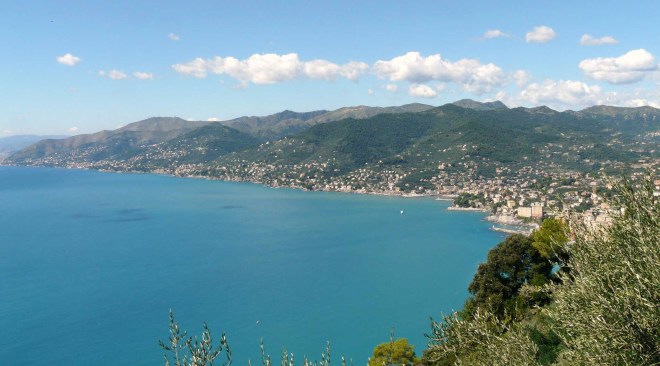
But it is not of these political anxieties that I wish to write, it is about one of these 350 pastas, which goes by the name of trofie. Like many pastas, trofie are very regional in character, coming from Liguria and even more narrowly really only being found in any quantity in the communes giving onto the Golfo Paradiso, which runs from the Monte di Portofino to the west to the outskirts of Genova to the east.
image
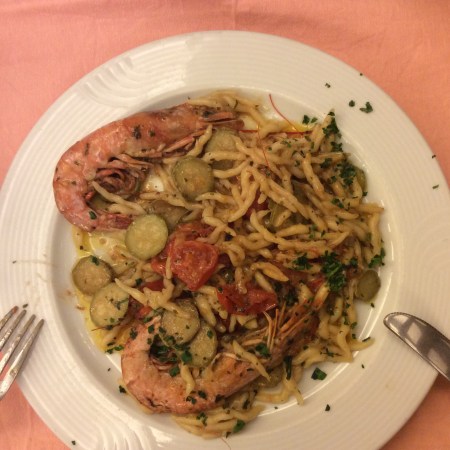
That is where my wife and I have spent the last few days, and that’s where I found myself a few evenings ago in front of a plate of trofie in a sauce of tomatoes and zucchini, with a couple of shrimp thrown in for good measure.
image
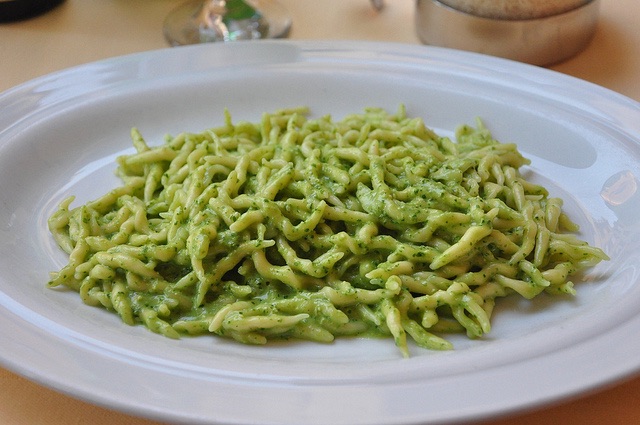
As readers will notice, trofie look rather like worms – an unappetizing simile but really the one that describes them best. The shape comes from how they are made: small lumps of dough are rubbed between the hands (which action is also probably the source of their name: strofinare in Italian means to rub). They are very often eaten with pesto, that other, incomparable, gift from Liguria to global cuisine.

image
I still remember with great clarity the first time I ever ate pesto. My wife and I had gone walking in the hills which in the picture above run down into the Golfo Paradiso. We found ourselves in a cheery restaurant serving only locals, all of whom spoke the local incomprehensible – to my ears – dialect. We were served lasagne in pesto with brisk efficiency. So good they were … We came back to this restaurant often in the years we lived in Italy. Although pesto is considered typically Ligurian, its ingredients suggest a broader reach. The basil, the oil, the pine nuts do indeed come from Liguria – the basil grown in Liguria is the most perfumed I have ever known – but the Parmesan comes from across the Apennine chain which hugs the coast here, while the Pecorino comes from Sardinia across the Golfo Paradiso and beyond. In any event, my wife bought a small cupful of pesto to bring back to Milan, where we will eat it with pansotti, another incredibly good pasta from Liguria – but that is a story for another day.

In the same shop, my wife pointed to a different type of trofie, made with chestnut flour. Chestnut trees grow on those Ligurian hills we go walking in, above the olive groves; they probably grew all the way to the valley bottoms before olive trees were brought to Liguria. On the spur of the moment I told her to buy them, along with the sauce with which they are normally eaten, walnut sauce, another gift of Liguria to the world; walnut trees grow well up on the Ligurian hills. As readers can see in the next photo, these trofie are browner than the normal trofie made with hard wheat. They are also a little sweeter, as befits a pasta made with chestnuts, and a walnut sauce goes wonderfully well with them, softening that sweet note.
image
Many decades ago, we brought a cupful of walnut sauce with us to Paris and served it on a pasta to a friend of ours, an amateur cook from Sicily. He muttered over and over again, “Mmm, that’s good” (a pretty amazing statement for a Sicilian to make about northern Italian cuisine). To thank us, the next evening he whipped up a pasta served with a broccoli-based sauce – soooo good!

Those chestnut trofie make me reflect once more on Italy. My first Italian boss came from the province of Varese, to the north of Milan, a part of the country which before the economic miracle of the 1950s and ’60s was very poor. I don’t know how we got onto the topic, but one day he started reminiscing about his childhood, and he told me that when his parents were young and food ran short they were sent off into the woods to collect chestnuts, which would be ground to a flour to make bread from. Liguria was also a very poor region until quite recently. No doubt chestnut trofie are from those times. Italy has come a long way in the last sixty years, I just hope it can stay the course.

_____________________
Golfo Paradiso: http://www.golfoparadisoportofinovetta.it
Trofie con pomodori e zucchini: my photo
Trofie al pesto: http://foodloversodyssey.com/2010/08/the-dish-from-italy-trofie-al-pesto/
Trofie alla salsa di noci: my photo

SCARFING DOWN ITALIAN NIBBLES

Milan, 20 October 2016

I was with an old colleague in Turin at the beginning of last week, and he was telling me that he had visited the city several times over the last few years to attend the annual Slow Food festival. I made a mental note to attend the next one with my wife. It must have been that thought which made me accept with alacrity my wife’s proposal to go to an exhibition of Italian small-scale food producers, which was taking place in Milan over the weekend. Its title was “Milano Golosa”, which can be translated either as Greedy Milan or as Gourmand Milan. I prefer to think that we were gourmands, although I can understand it if, after reading this post, readers conclude that we were greedy.

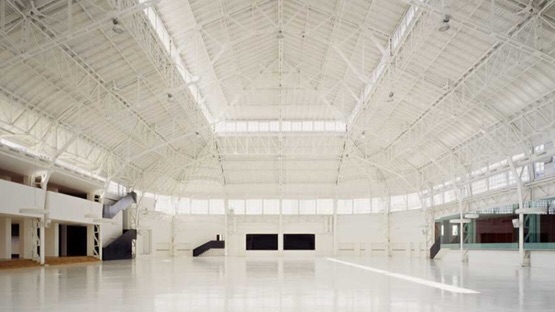
The exhibition was being held in the Palazzo del Ghiaccio, the Ice Palace, a rather grand name for what used to be the city’s premier ice rink. Just visiting the building was a trip down memory lane for my wife. She told me with a reminiscent smile that she had been taken there many a time by her grandfather. While she skated around the rink, he sat on the bleachers reading his newspaper – no doubt the universal pastime of grandfathers supervising grandchildren in parks and other public spaces. At some point in the last forty years, its use as an ice rink was abandoned. The bleachers were removed along with the rink proper, and the building was turned into an exhibition space. It is actually quite a nice building, of the 19th Century train station type, and the empty space looks gorgeous in that typically Italian good design style.
image
When we entered the space, though, it was bisected by four or five rows of little booths, each taken by an Italian food or wine producer (there was one food producer from the islands of São Tomé and Príncipe, off the west coast of Africa, but that was a definite outlier). They came from all over Italy, from Sicily in the south all the way up into the high alpine valleys in the north, and from Sardinia in the west to the Marches in the east.
image
For the vulgar weekend visitors like us, who were not there for professional reasons, the deal was this. You paid 10 euros to get in (5 more if you wanted to drink wine, which we didn’t), and then you tried to eat as many nibbles as possible at all of the booths to cover your initial investment. You could do your eating quite shamelessly, just grabbing the nibbles being made available and heading off to the next booth, or you could pretend to be knowledgeable and stand there trying to make intelligent comments about the nibbles you were scarfing down with enthusiasm. I started with the latter strategy, pretending to write notes on my phone (of the type “good cake!”, “good cheese!”), but eventually abandoned all pretense of knowledge and just wolfed down the nibbles. I was rather reminded of the trailer which my wife and I have been seeing of an upcoming French film, “Saint Amour”, which as far as I can make out is the story of a large pub crawl from one French wine festival to another.
image
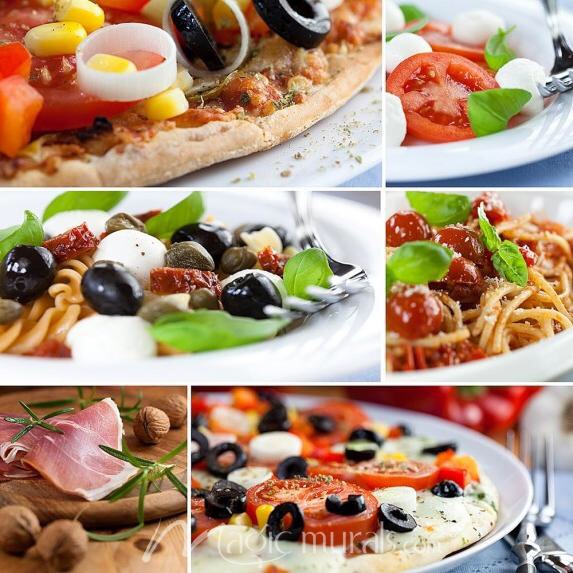
For all of this rank amateurism on my part, I could still appreciate that the nibbles were delicious. Many of the classical Italian products were present: raw ham, cooked ham, salamis of various types, bologna, cooked meats in aspic; hard cheeses like parmesan, soft cheeses like stracchino or crescenza, middling soft and middling hard cheeses whose names now escape me; olive oils of all descriptions, as well as the olives themselves, balsamic vinegars; tomatoes, of course, of all shapes and sizes, beans of all shapes and sizes; pastas of varying lengths and geometries, breads made from a variety of grains, but also bread sticks, fat and short and long and thin; numerous spreads to put on the bread (one in particular, from Sicily and based on sea urchin and a fish whose name meant nothing to me, remains in my taste memory bank); sweet dishes in profusion: panettone, panforte, amaretti dolci, chocolates containing varying levels of coca. And I’m sure I’ve missed things. A veritable smorgasbord! Or perhaps the Italian equivalent to a Chinese banquet, where one picks at a little bit of this and at a little bit of that as the Lazy Mary slowly turns before you. I think we got our ten euros’ worth, staggering out after a couple of hours of busy nibbling. We shelled out some more cash to buy a small bottle of olive oil from the province of Bari and a mozzarella from the province of Naples, both of which we picked up as we wended our way from booth to booth. I can report that at dinner that night the oil went very nicely with the mozzarella, as well as with the salad of green beans I had on the side.

Ah, Italian food!
image

______________
Palazzo del Ghiaccio: http://www.meetingecongressi.com/it/struttura/milano/451/palazzo_del_ghiaccio.htm
Milano Golosa: http://www.ansa.it/canale_terraegusto/notizie/fiere_eventi/2015/09/23/torna-milano-golosa-dal-3-al-5-ottobre-al-palaghiaccio_0867b0e5-db5c-4477-b80a-3e372b3979c1.html
Saint Amour poster: http://www.allocine.fr/film/fichefilm_gen_cfilm=235769.html
Italian food: https://www.magicmurals.com/italian-food-collage.html

SAINT RADEGUND

Vienna, 19th September 2016

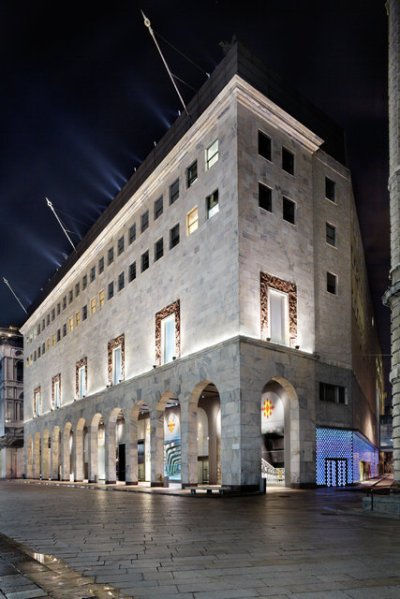
There is a small street which gives on to Piazza Duomo in Milan, which goes by the name of via Santa Radegonda. It’s a very modest, narrow, little street, really quite boring. Its main claim to fame is that it runs alongside the posh department store La Rinascente.

image
But I like the street, for the quite frivolous reason that I like the name. Radegonda, Radegund in the original German: now that’s a girl’s name with some whoomph to it! Not like Amelia, or Olivia, or Emily, which are currently some of the most popular names for little British girls.

This particular Radegund was a 6th Century princess from Thuringia, in what is now central Germany. Her life story was as colourful as her name. Her father, Berachtar, was one of three kings in Thuringia. Her uncle, Hermanfrid, one of the other Thuringian kings, killed her father in battle, took over his part of the Thuringian lands, and while he was at it took Radegund into his household. Hermanfrid then made a deal with the Frankish king, Theuderic, to share sovereignty of the whole of Thuringia, subject to material aid from Theuderic. Having sealed the deal, Hermanfrid attacked, defeated, and killed the third king of Thuringia, his brother Baderic. He then promptly reneged on his agreement with Theuderic. Not surprisingly, Theuderic sought revenge of this perfidy. Together with his brother Chlothar, he defeated Hermanfrid and took over Thuringia. In the ensuing carve-up, Clothar took charge of Radegund and brought her back to Gaul. All this happened before Radegund was 11, by the way.

Clothar packed Radegund off to one of his villas until she was of a more marriageable age. When she was 19 or so, he married her himself. No doubt it made his claims to Thuringia stronger to have her as his wife. She joined Clothar’s five other wives – Guntheuca, Chunsina, Ingund, Aregund, and Wuldetrada – in what may, or may not, have been a cozy concubinage. In any event, she bore Clothar no children.

By the time Radegund was 30, her only remaining brother was the last surviving male member of the Thuringian royal family. Presumably to head off any pesky competing claims to the Thuringian lands, Clothar had him murdered. At which point, either because she feared for her own life or because she was fed up with all this mayhem, Radegund fled and sought the protection of the Church, eventually founding, when she was about 40, a nunnery in Poitiers. Initially, Clothar tried to get her back but eventually left her alone and focused on expanding his lands at the expense of all those around him, including his brothers (although he had the grace not to kill them to obtain his ends, good manners which did not extend to their sons). By the time he died, he was master of a kingdom stretching from the Pyrenees to Thuringia, and from Brittany to French-speaking Switzerland.

All these Franks and Thuringians may have been a lying, traitorous, murderous lot, but they had wonderful names. This all rather reminds me of my Favourite History Book, 1066 And All That, my copy of which recently came to light, among many a delighted cry on my part, from the storage box in which it has been lying these last seven years.
image
In that book, we are reminded that Anglo-Saxon England was peopled with persons carrying wonderful names:

“Wave of Egg-Kings

Soon after this event Egg-Kings were found on the thrones of all these kingdoms, such as Eggberd, Eggbreth, Eggfroth, etc. None of them, however, succeeded in becoming memorable except in so far as it is difficult to forget such names as Eggbirth, Eggbred, Eggbeard, Eggfish, etc. Nor is it even remembered by what kind of Eggdeath they perished.”

The authors were exaggerating, but not by much.

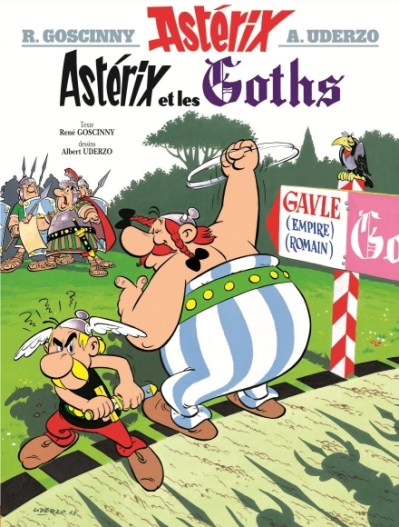
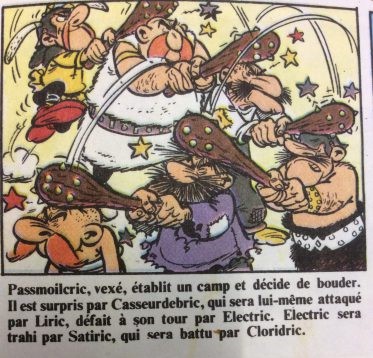
The murderous goings-on around Radegund also remind me of that other Great Source of Early European History, Asterix. In the album Astérix chez les Goths
image
the endemic fighting among the Germanic tribes is well captured.

(Please note the authors’ take on Gothic names – they exaggerate but not by much)

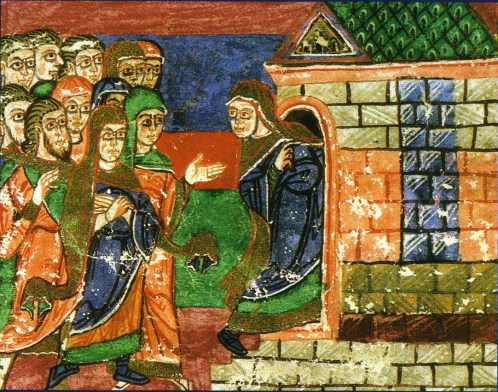
But I digress, and I think my wife feels I’m letting my childish side get the upper hand here. Let us focus on the saintly Radegund. Already when queen, she was noted for her almsgiving. Once a nun, she cared for the local lepers and other infirm of Poitiers. She was also known for eating nothing but legumes and green vegetables: no fish, no eggs, not even fruit. I’m sure the vegans of today would approve (although even they might find her decision to forswear fruit a trifle extreme) but to the meat-eating Germanic elites, who spent much of their time hunting, this must have been pretty weird. Here is the most ancient representation of this saintly lady that I found, from a 10th-11th Century manuscript in the Municipal library of Poitiers, where we see Radegund getting herself to the nunnery (to misquote Hamlet).
image
As far as I can make out, though, her main claim to religious fame, at least in the Dark and Middle Ages, is that the Byzantine Emperor Justin II gave her a fragment of the True Cross. I hasten to add that he did not do so because he was much taken by Radegund’s saintliness. It was, I’m afraid, a purely political maneuver. Justin wanted to wrest control of the north of Italy from the barbarian Lombards, but for this he needed the help of the (equally barbarian) Franks. The relic, given to an ex-wife of the Frankish king who, though, was still on friendly terms with said king, was the bribe, or, to put it more kindly, the bait. Whatever the reason, the relic which Justin handed over to Radegund was a Really Good relic, and any Medieval religious institution with a Really Good relic was sitting on a goldmine as the pilgrims poured in and spent their money locally. This no doubt was the happy fate of Poitiers, helped along by the fact that Radegund was widely believed to have the gift of healing. Indeed, several miracles around her tomb greatly helped to increase the pilgrim traffic. The result was the building of a church which is a combination of Romanesque and Angevin Gothic styles.
image
Sadly, the vicissitudes of history, and more specifically a sack by Huguenots in the 16th Century and the ravages of the French Revolution, combined with some heavy-handed restoration in the 19th Century, has scarred the original splendour.

The pilgrim traffic to Poitiers had the happy side-effect of carrying Radegund’s name far and wide as the pilgrims returned home, and new churches and other religious institutions sprang up all over Europe dedicated to her name. This was certainly the case in Milan, where on the site on which now stands that temple to consumerism, La Rinascente, there once stood a nunnery dedicated to Santa Radegonda. No trace of this nunnery remains today save in the name of that modest, narrow, little street which I like so much.

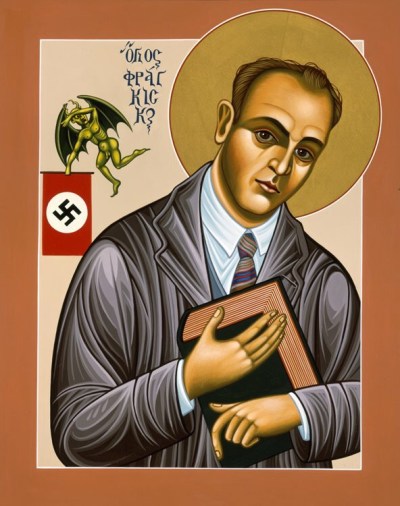
I give just one further example of the many places in Europe which adopted her name, and that is the small village of Sankt Radegund in Upper Austria. In the next few years, readers will see a new film come out, with the title “Radegund”. It is the story of Franz Jägerstätter, a native of Sankt Radegund, who was the only one in his village to vote against the Anschlüss and was courageous enough to be a conscientious objector during World War II.
image
My readers will no doubt convene that this was a dangerous thing to declare oneself to be under the Nazi regime, and in fact Jägerstätter ended up being guillotined in 1943, for the crime of “undermining military morale”. The recent (German) Pope, Benedict XVI, had Jägerstätter beatified: a more appropriate saint for our age, I think.
image
Yesterday afternoon, I noticed that behind Milan’s Duomo there is a small road called via Santa Tecla. What an interesting name! I wonder who she was?

__________________
La Rinascente: http://www.nytimes.com/2014/12/25/fashion/in-milan-with-handbags-and-tongs-under-one-roof.html?_r=0
Clothar I: http://www.pearltrees.com/sirius84/francs-merovingiens/id9615614/item93489971
“1066 And All That”: http://rogerandfrances.eu/books/1066-and-all-that
“Asterix chez les Goths”: http://www.asterix.com/the-collection/albums/asterix-and-the-goths.html
Goths fighting: my photo
Radegund entering nunnery: https://en.m.wikipedia.org/wiki/Radegund
Eglise Sainte-Radégonde, Poitiers: https://www.poitiers.fr/c__244_788__Poitiers_capitale_romane.html
Franz Jägerstätter: http://voiceseducation.org/content/franz-jagerstatter-austrian-world-war-ii-resistance
Icon with Franz Jägerstätter: https://en.m.wikipedia.org/wiki/Franz_Jägerstätter

RINGING BELLS

Milan, 13 September 2016

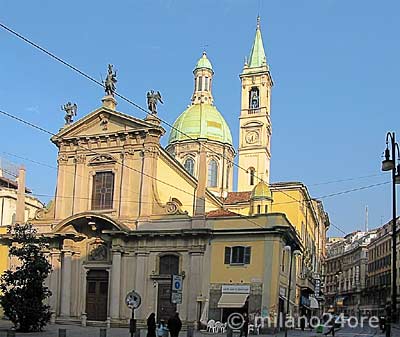
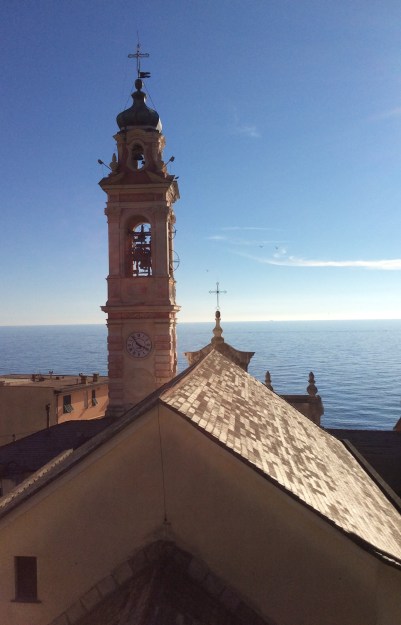
It wasn’t until our first Sunday back in Milan that I realized what it was we had been missing all those years we had spent in China and Thailand: church bells. The carillon that pealed out from the campanile of the nearby Church of San Giorgio
image
for morning mass startled my senses, and I found myself actually listening. Probably Italians, after a lifetime of hearing church bells, simply shut them out: “church bells? what church bells?”

It’s not as if the soundscapes of the cities we have lived in these last seven years have been very different from what we were used to in Europe. Like for everything nowadays, there was a depressing uniformity.  The noise of traffic predominated; given China’s building craze, construction noises came a close second in Beijing. The one typically Chinese noise which we often heard in Beijing was the machine-gun sound of strings of firecrackers going off to celebrate the opening of a new business.
image
Since the economy was doing nicely, this happened quite often. The noise of firecrackers grew to a huge crescendo as the Chinese New Year rolled around.

image

We were always in awe of the massive amounts of firepower, in the form of firecrackers, fireworks, and other noise-making products, being sold on the streets in the days leading up to the New Year.
image
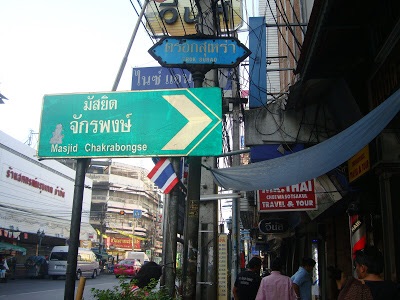
Bangkok was more interesting, noise-wise. From our balcony, as we admired the view over the Chao Phraya river, we would often hear the local muezzin calling the faithful to prayer from the minaret of a nearby mosque. Muslims are a more-or-less tolerated minority in Thailand and as a consequence tend to be very discreet. The Muslim community in our area was no exception. So discreet were they that I never located the minaret and its associated mosque. Was it this one, I wonder? I saw the sign once or twice but never went down the narrow lane to investigate.
image
These calls to prayer were counterbalanced by the morning chanting from the Buddhist monks in the temple across the river.
image
In Thailand’s current politically charged atmosphere, where an aggressive Buddhism is emerging, one has to wonder if the loudspeaker-enhanced chanting was not calculated to remind the local Muslims of who was in charge, just in case they had forgotten.

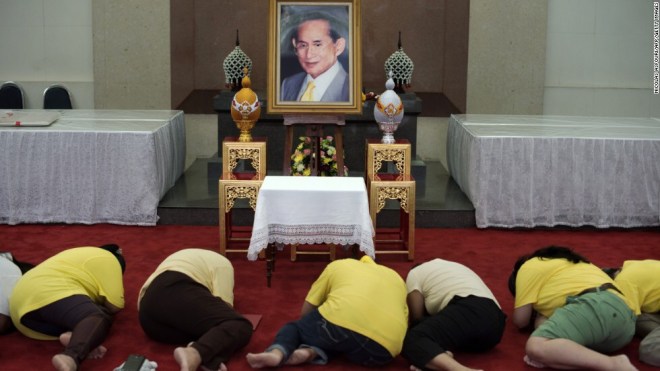
There was also a period when a government institution across the river would blare out the royal anthem twice a day, at 8 am and 6 pm, to remind the populace to venerate their king.
image
Mercifully, from one day to the next, the loudspeakers fell silent. We never figured out why. But we were thankful for the respite.

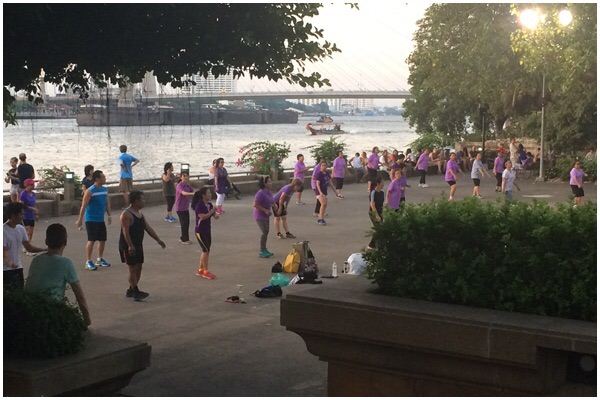
Noises from the new religion of our time, fitness, would assail our ears in the early evening, as an aerobic class would start up in the nearby park at Phra Sumen fort, with the disco music booming out over the river, interspersed with the trainer’s shouted instructions and encouragement.

image
Memories, all memories now. From now on, our soundscapes will be made up, at least in part, of church bells. Christianity may be fading in Europe, but the bells will remain. They will be ringing out the hours of the day and night (even as I write this, the nearby church bells are striking seven pm). They will call the few remaining faithful to Mass on Sundays. They will toll somberly for our brethren who have departed from this world (“Cold it is, my beloved, since your funeral bell was toll’d: / Cold it is, O my King, how cold alone on the wold!”). I may even witness once more, in a Catholic nation somewhere, the bells of a whole city ringing peel after peel in a mad cacophony to speed the soul of a dead Pope on its way; I heard this in Vienna when Pope John Paul II died.

Yes, these sounds are part of my Christian heritage to which I return after many years of absence.

_______________________
San Giorgio: http://www.milano24ore.net/cityinfo/churches/church_of_san_giorgio.php
Fire crackers: http://yourenotfromaroundhere.com/blog/firecrackers-evil-spirit-beijing-china/
Chinese New Year: http://chinesenewyearblog.com/cny-fireworks-victoria-harbor-hong-kong/
Sellers of fireworks: http://iainmasterton.photoshelter.com/image/I0000OGZzPAzdPPM
Mosque Masjid chakrabongse?: http://zlynn17.blogspot.it/2010/02/halal-food-in-banglamphoo.html
Buddhist monks chanting: https://monotonundminimal.wordpress.com/2011/07/28/day-240-bling-bling-bangkok/
Thais venerating the king: http://edition.cnn.com/2014/10/06/world/asia/thailand-king-bhumibol-gallbladder/
Aerobic class Phra Sumen Park: http://www.iamwannee.com/a-nice-walking-path-from-tha-phra-chan-to-tha-phra-athit/

WE’RE HOME

Milan, 31 August 2016

We touched down at Milan’s Malpensa airport around 8:30 this morning. It was a beautiful day, not too hot. We took the train into Milan, passing first the town of Saronno, home of the eponymous liqueur

then Garbagnate, home of the Galbusera brand of biscuit.


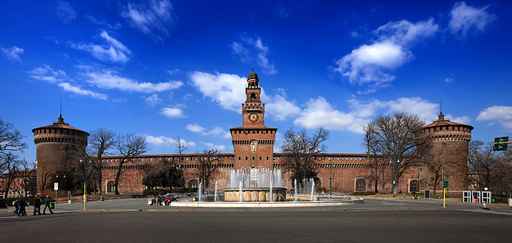
After a few more towns, we pulled into Cadorna station, which lies in the shadow of Milan’s castle.

image
We decided to walk home, so we wheeled our suitcases out, past the strange sculpture in the station square which finally, several years ago, I figured out was a needle and thread – a reference, no doubt, to the city’s place in the fashion world.

image
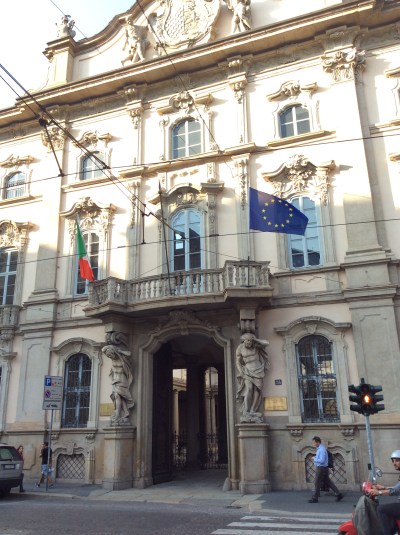
We made our way through back roads to Corso Magenta. We stopped for a well-deserved cappuccino in a caffé there. While we sipped, we admired the Baroque Palazzo Litta on the other side of the Corso.

I’ve always had a fondness for the two giants holding up the massive front door, so obviously suffering from the strain.


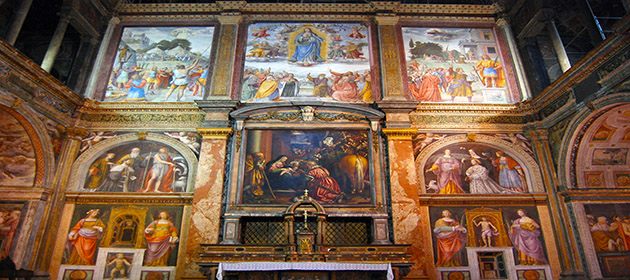
On we went down the Corso, past the Church of San Maurizio, which has magnificent 16th Century frescoes painted by Bernardino Luini and his school
image
before we turned right and threaded our way through the back roads again, past the mouldering ruins of the palace built by the 3rd century Roman Emperor Maximian

image
on past a disused church which is now a museum dedicated to the 20th century artist Francesco Messina

image
until we came to our road.

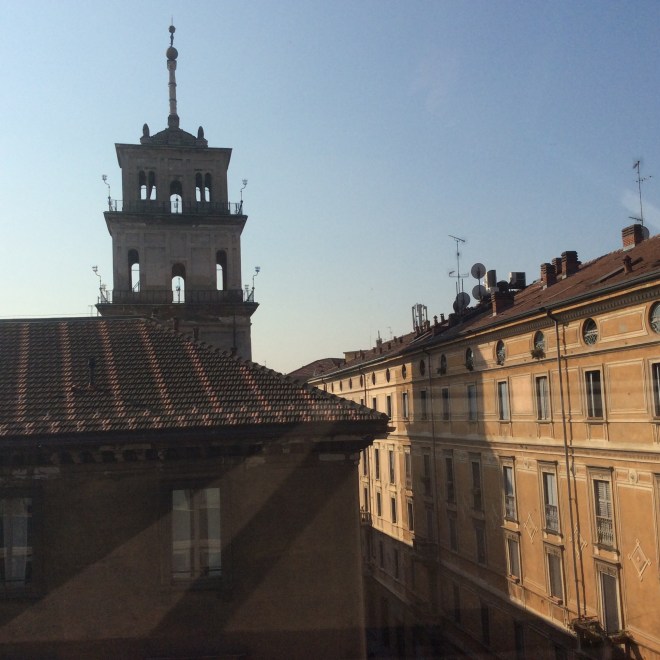
We chatted briefly with the doorman about the family as he handed us a large wad of post, accumulated since our last flying visit six months ago. We squeezed the luggage into the small elevator, manhandled it all through the apartment door, flung open the windows, and gazed over at the tower of the Palazzo Stampa-Soncino across the road.


image
After eighteen years away, it was good to finally be back home.

______________________
Liquore di Saronno: https://it.m.wikipedia.org/wiki/Liquore_amaretto
Biscotti Galbusera: http://www.galbusera.it/prodotti/senza-zuccheri-aggiunti/frollini
Castello Sforzesco, Milan: http://www.conilsud.it/2014/come-raggiungerci/
Sculpture, Piazza Cadorna: http://www.solotravel.it/29032011/piazzale-cadorna-a-milano-tra-design-e-modernita/6334
Palazzo Litta: my photo
Two statues, Palazzo Litta: my photo
Frescoes, church of San Maurizio: http://www.donnecultura.eu/?tag=chiese-di-milano
Remains Imperial Palace of Maximian: http://flickeflu.com/photos/40993657@N06/interesting
Sculpture, Francesco Messina: https://www.pinterest.com/pin/309059593155732010/
Tower, Palazzo Stampa Soncino: my photo