FLOWERS IN LAOS

Vientiane, 12 February 2013

If there is one thing that my wife and I really regretted leaving in Vienna, that was our little garden. With our last apartment we had been really lucky in getting a small roof garden. We loved that garden. My wife tended it with tender care and the summer evenings spent enveloped in flowers were magical. Of course, winters were dreary but there was always the next summer to look forward to with its new crop of flowers.

When we moved to Beijing, we guessed we would never find an apartment with even a small balcony on which to put some flower pots, at least not at prices we could afford. And so it was. We couldn’t be completely plantless so my wife bought some house plants. They give a tinge of green to the apartment, but they are meagre consolation for our roof garden in Vienna.

Imagine, then, our delight when after a seven-hour journey from cold and snowy Beijing we opened the window of our hotel in Vientiane, Laos, and we found this before us.
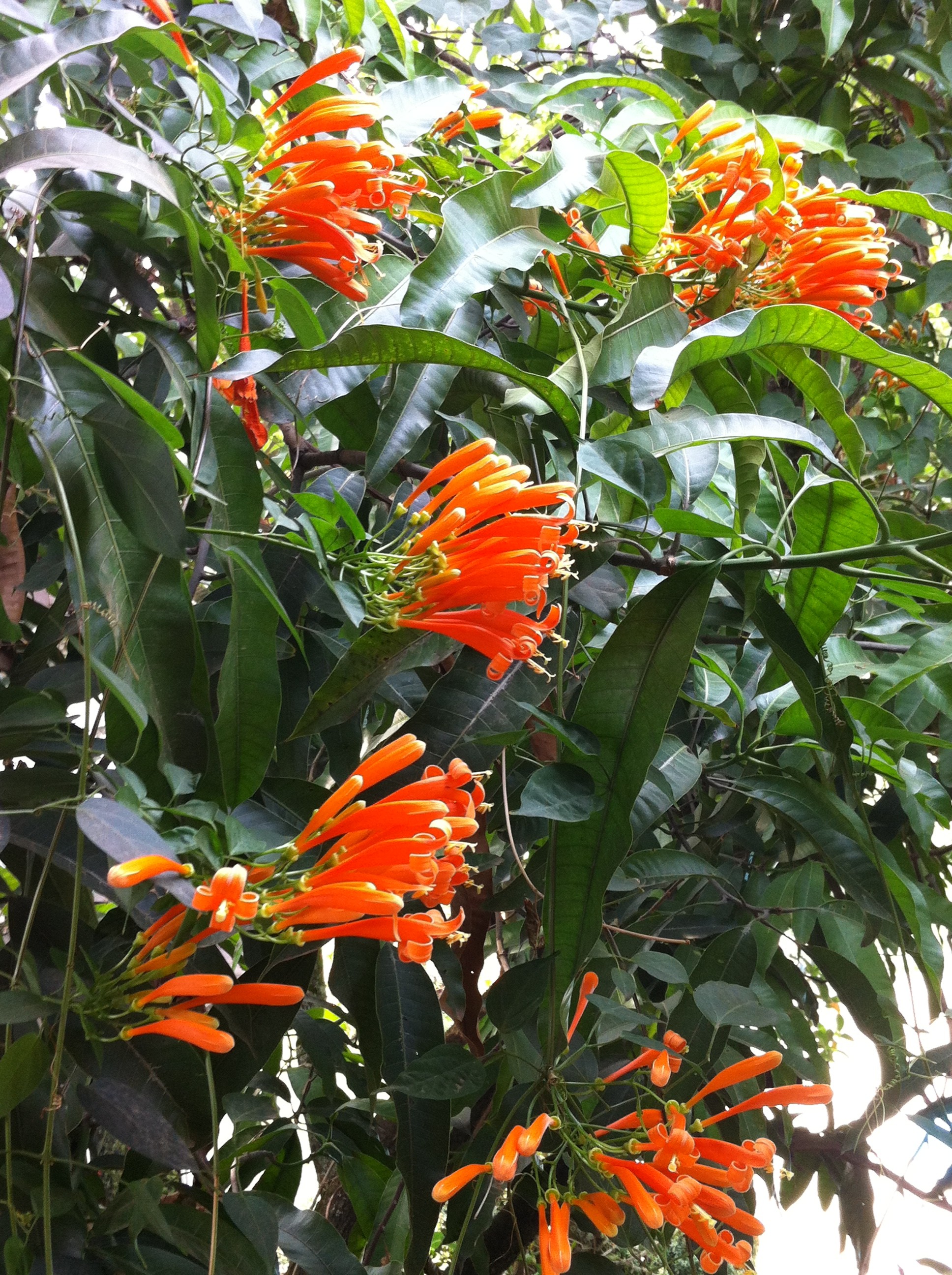
flowers and trees 004

It was a flowering vine, thrown carelessly, or so it seemed, over the mango tree at our window. Five steps down, peering down from our common balcony we saw this, the flower of a banana tree.

flowers and trees 006

I have to say that this burst of botanical colour made me feel rather light-headed, and I started rushing about the hotel’s garden snapping pictures with my phone. I show you here just a few of the photos I took:

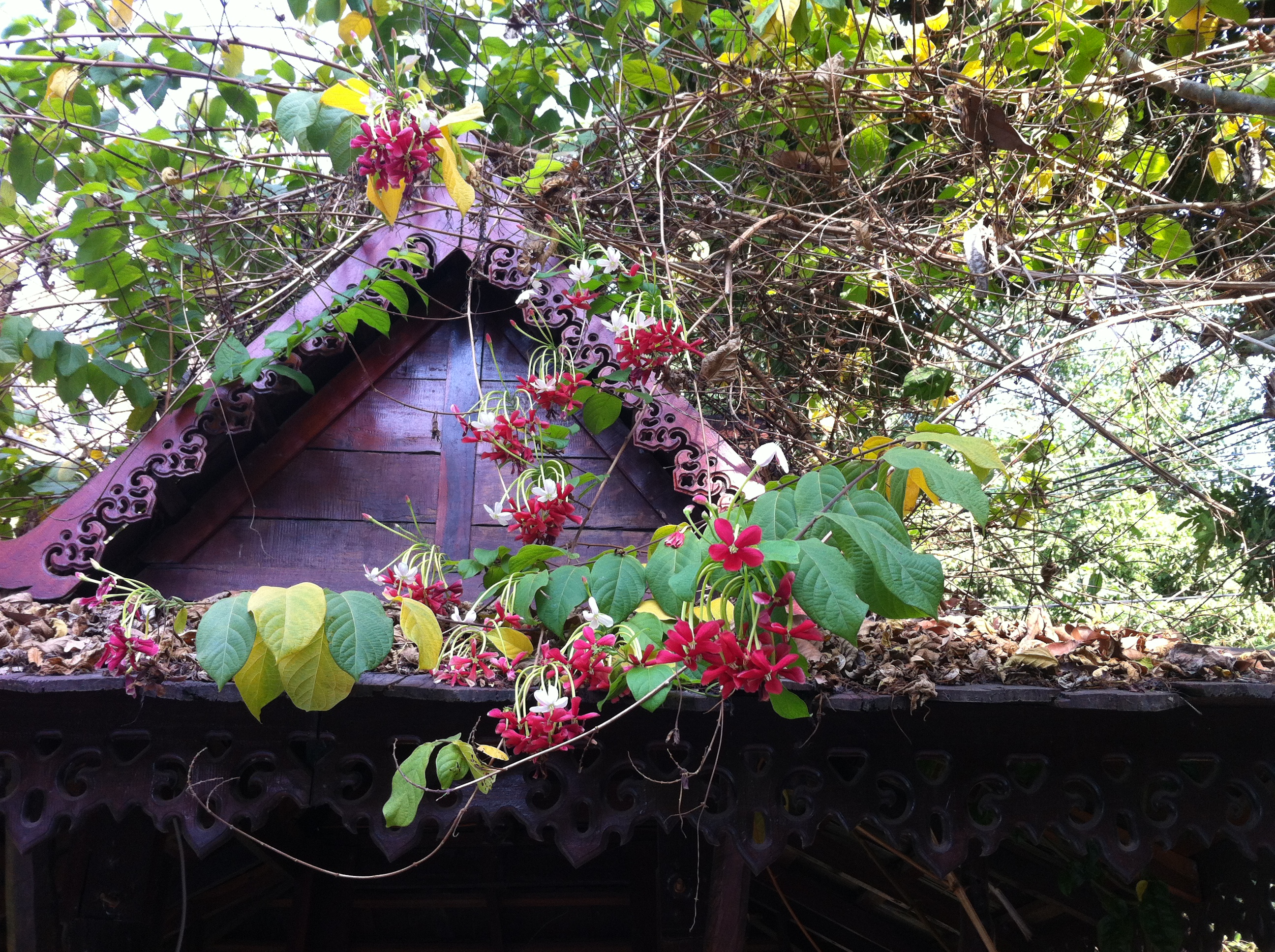
flowers and trees 007

flowers and trees 029

flowers and trees 032

flowers and trees 034

flowers and trees 035

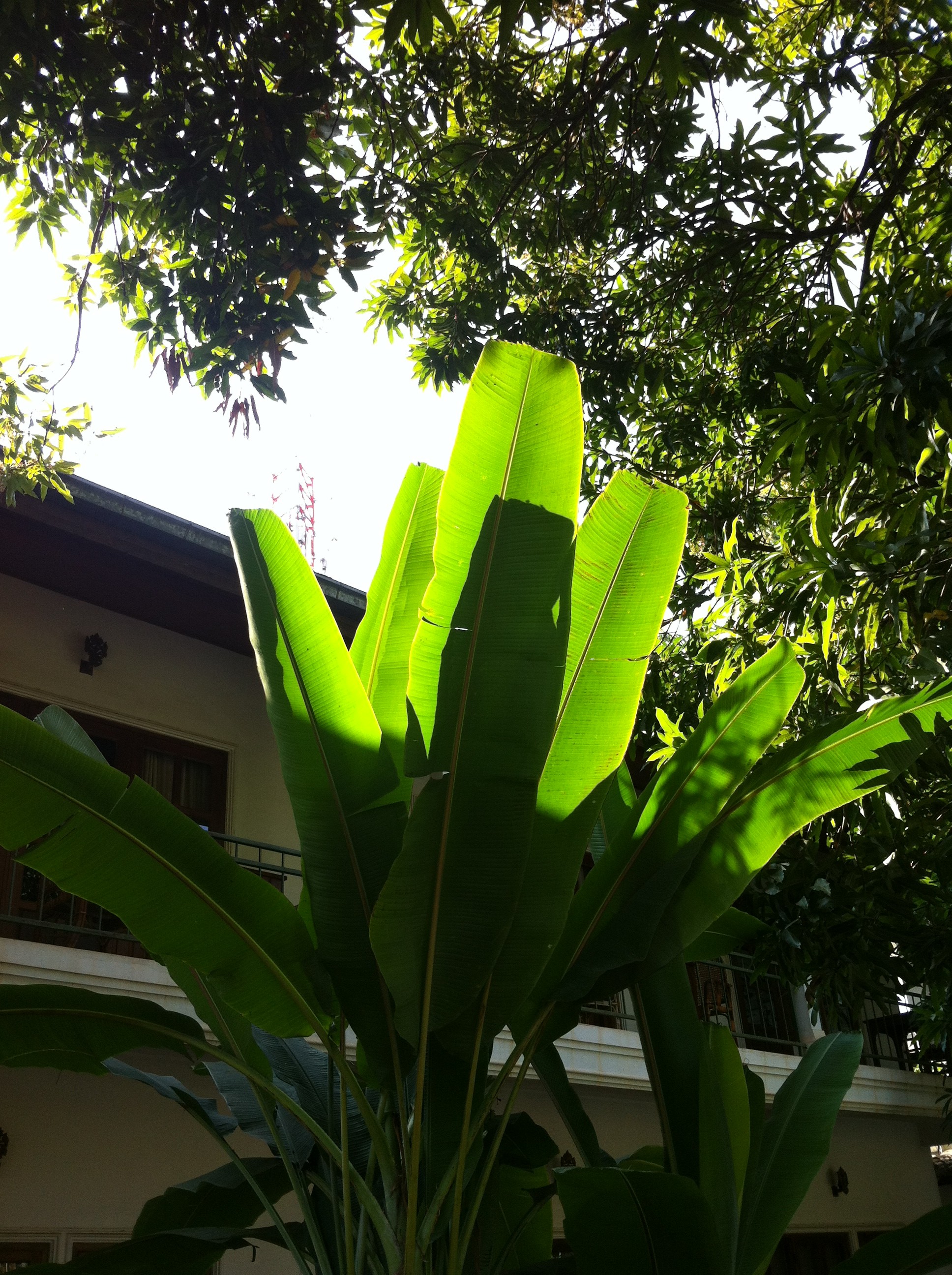
I’ve always been fond of the colour of light through banana tree leaves …

The loveliness didn’t stop at the gates of the hotel. Walking through the streets of Vientiane was like walking though a garden, as flowering plants and trees popped up everywhere.
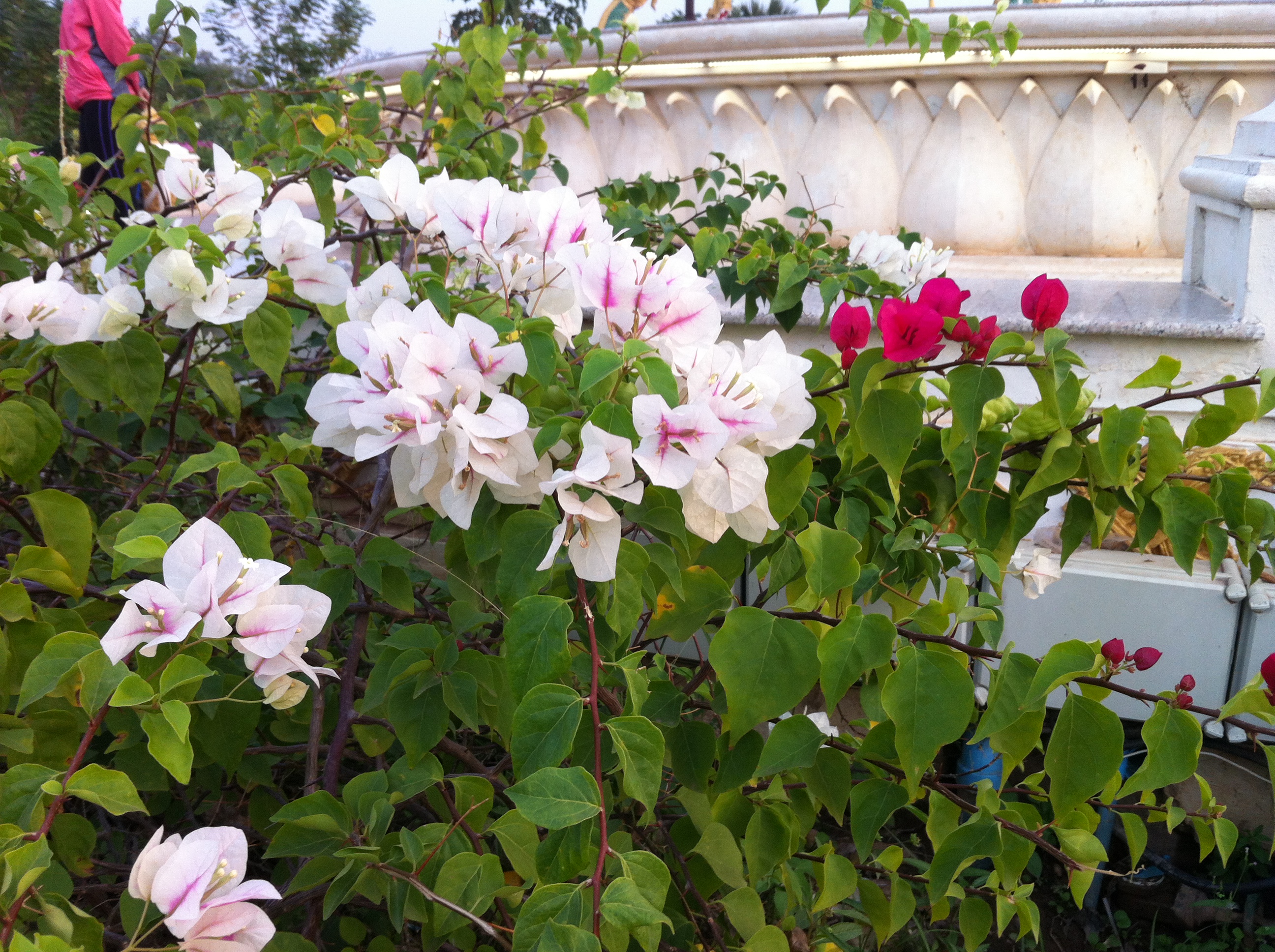
flowers and trees 013

flowers and trees 024

flowers and trees 025

flowers and trees 048

flowers and trees 051

Even the non-flowering trees were magnificent, especially along the road skirting the Mekong River where there were huge banyan and eucalyptus trees. But the tree that took my heart is a tree called the Deer’s Ear (wonderful name …), whose leaves are going red and shedding at this time of year.

flowers and trees 012

This tree is all over town, and each one has reached a different level of redness, so you go from bright green all the way to a deep vermilion. It’s rather like being in Vermont in the Fall.
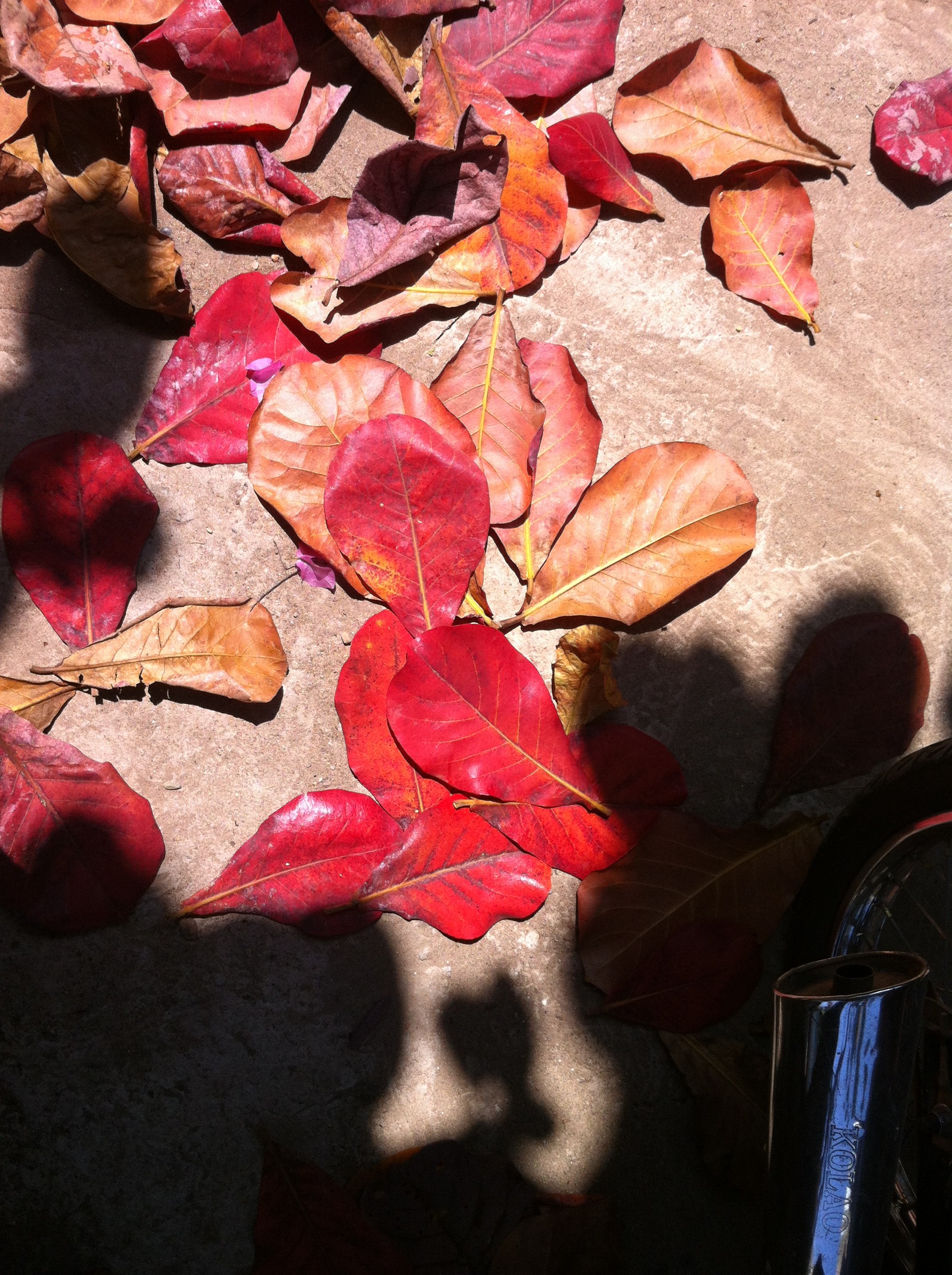
flowers and trees 052

As I recall, many learned men in the Middle Ages spent much time trying to pinpoint where exactly the Garden of Eden had been. For me, it’s obvious; it must have been somewhere in a tropical or subtropical country like Laos.

I suppose the damned mosquitoes were added by God afterwards as part of Adam and Eve’s punishment …
DUST TO DUST, ASHES TO ASHES

Beijing, 4 February 2013

From time to time in Buddhist temples in this part of the world one sees a metal sculpture standing on altars, which takes the form of a stem of a lotus plant to which are attached a flower bud, a fully opened flower, and the seed pod from which the petals have fallen off; sometimes they are accompanied by a young leaf unrolling, a fully mature leaf, and an old leaf, ragged and torn.  It is a visual allegory for the cycle to which we are all subject: birth – life – death. It is a gentler reminder of what I was harshly told every Ash Wednesday when I was a boy: “Remember, man, that thou art dust, and to dust thou shalt return”.

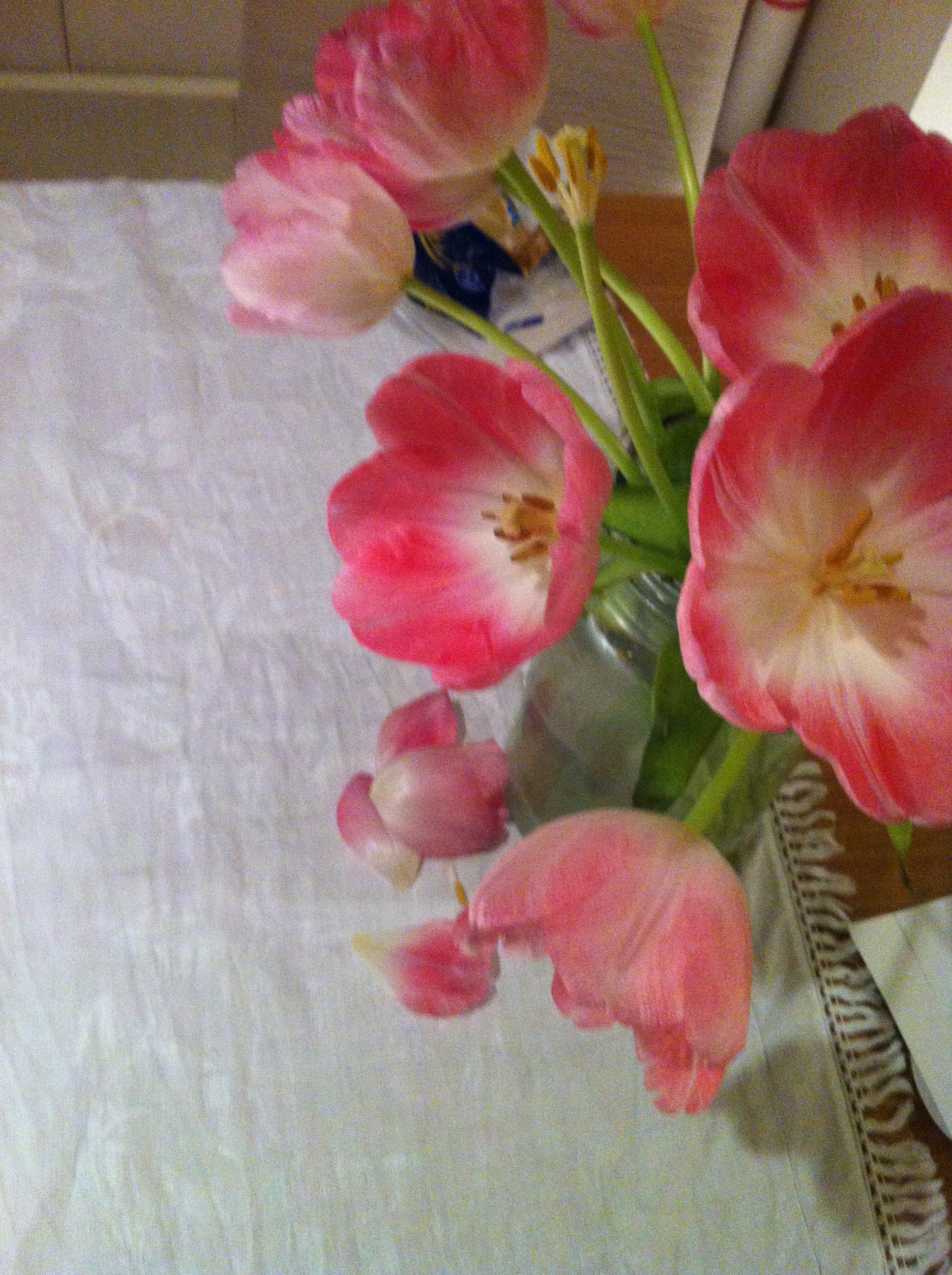
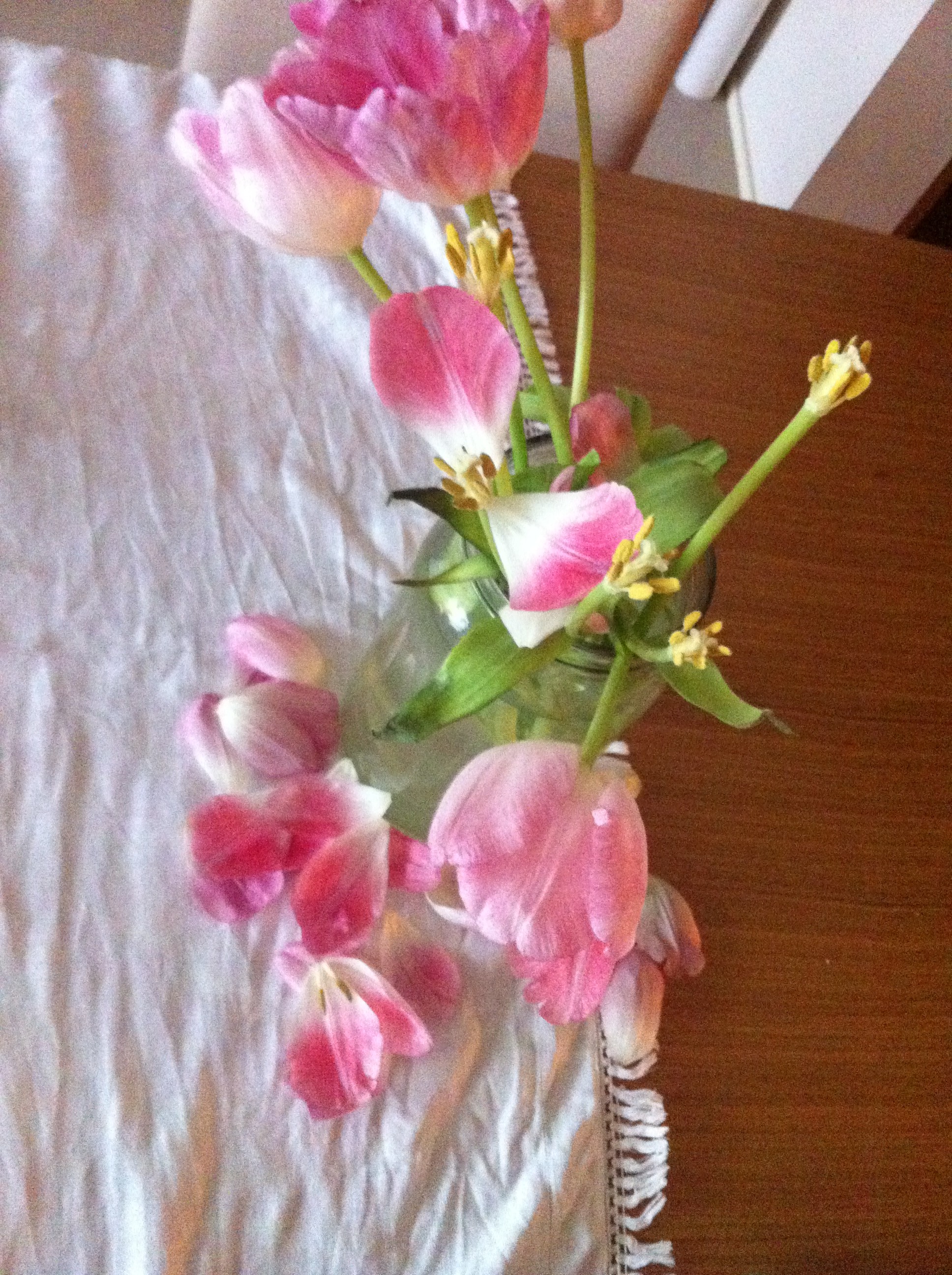
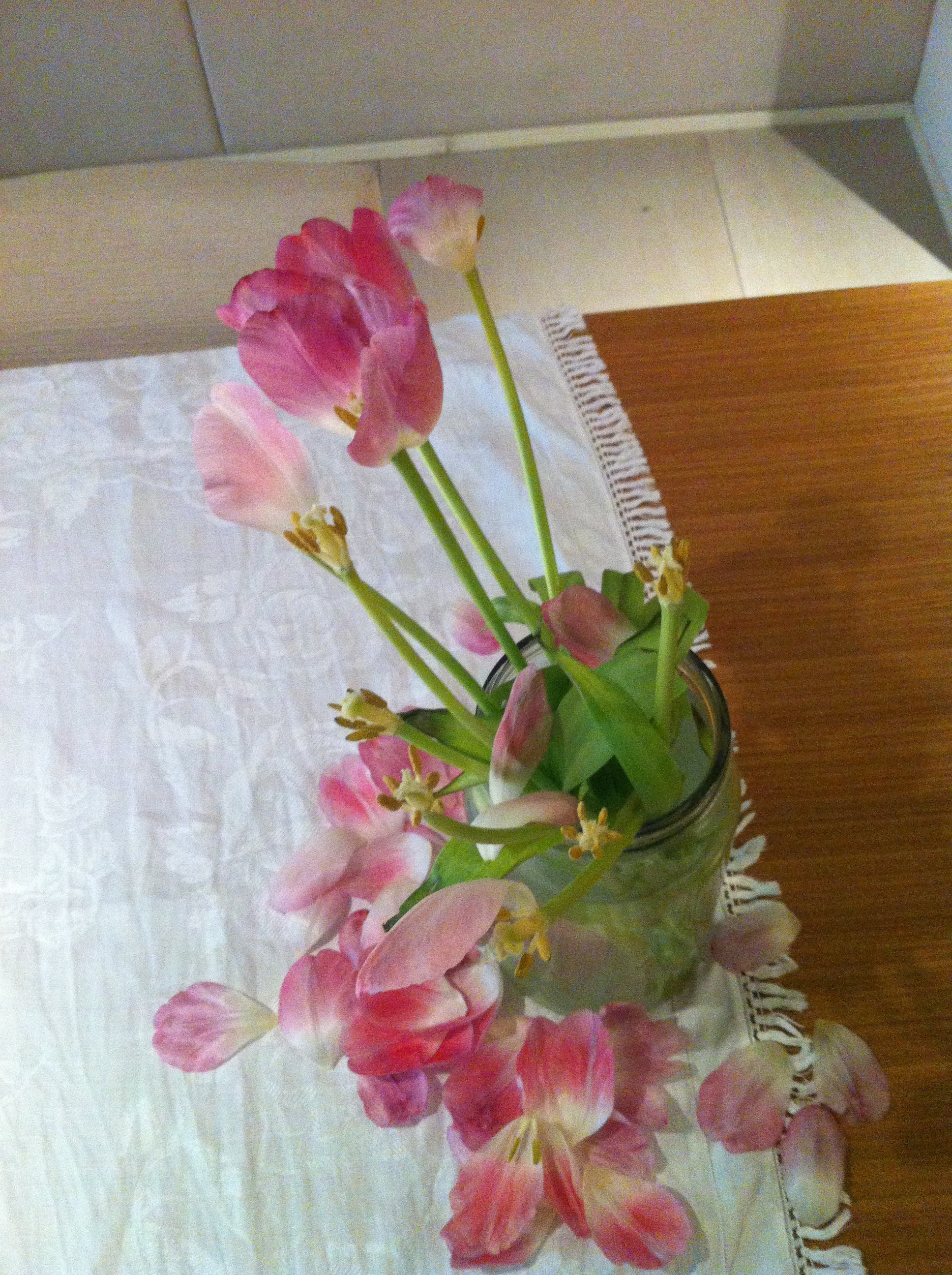
I was reminded of this as the tulips – so lovely two posts ago – paled, wilted, and lost their petals, to finally leave the stamens standing naked and forlorn. I decided to record this decay down to death.

Friday morning:

04 tulips

Saturday morning:

06 tulips-saturday morning

Saturday evening:

10 tulips-saturday evening

Sunday morning:

13 tulips-sunday morning

Sunday evening:

16 tulips-sunday evening

I would like to think that my life currently stands at Saturday evening.  Cold objectivity suggests instead that it stands at Sunday morning.

TULIPS AND MANDARINS

Beijing, 2 February 2013

The last week has been dreadful for air quality in Beijing. The brief break we had which I wrote about a few posts ago was but a temporary remission and we soon plunged back into the murk. My wife was a little more philosophical about it than I. She remarked that it reminded her of her childhood in Milan, when smog was frequent, and reminisced about having to cross the road to go to primary school and not being able to see if the light had changed. But still, we both suffered.

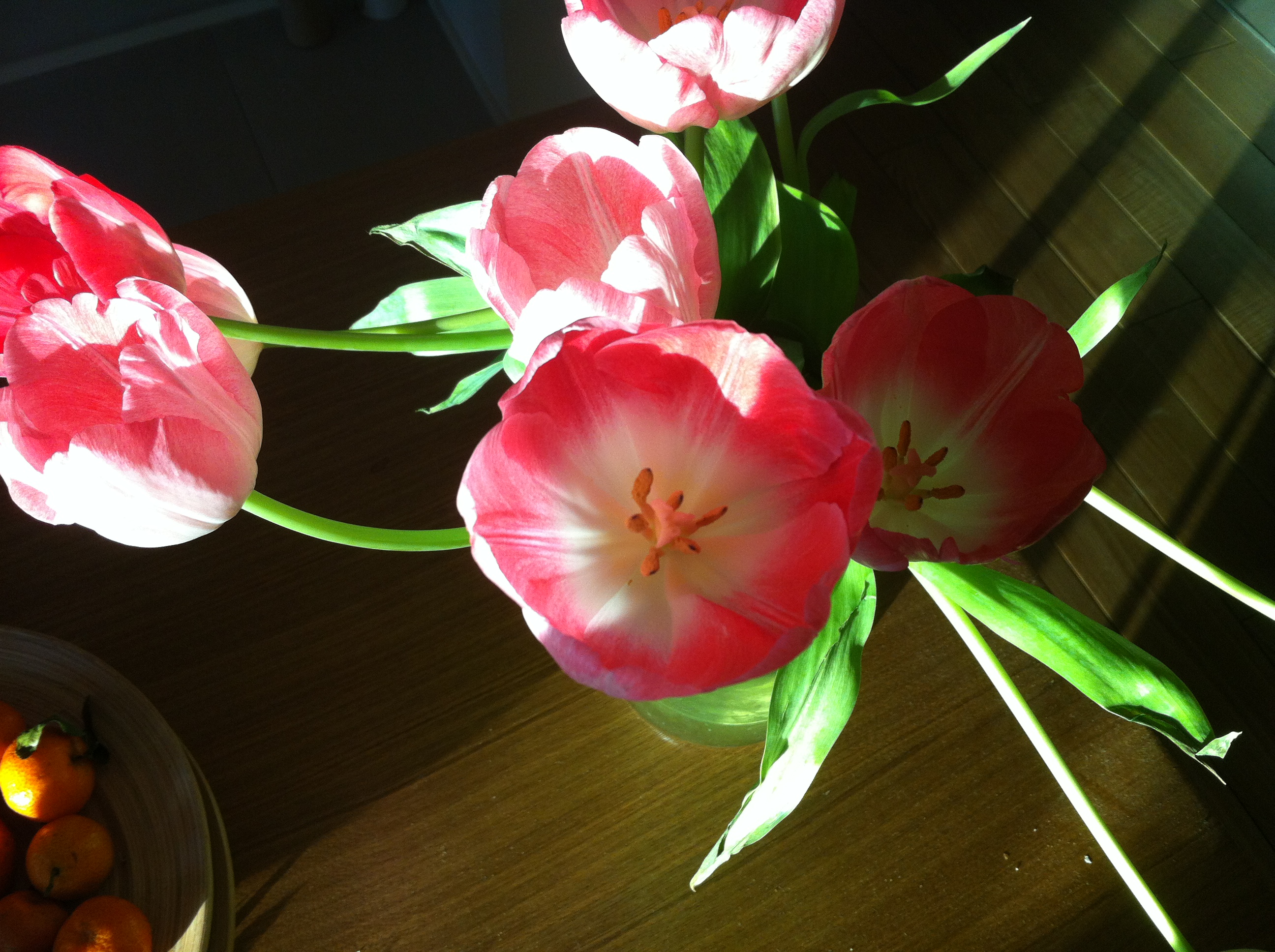
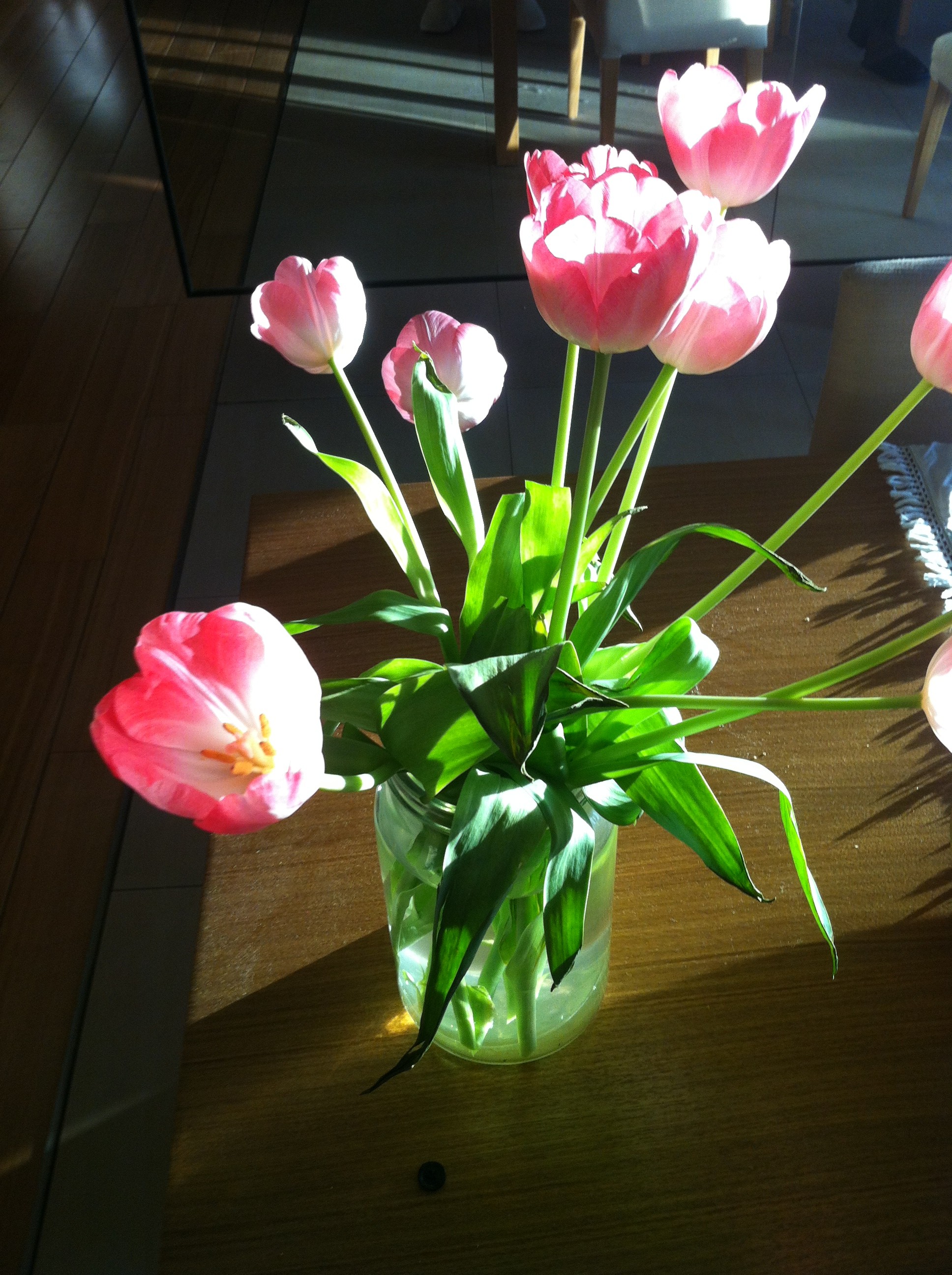
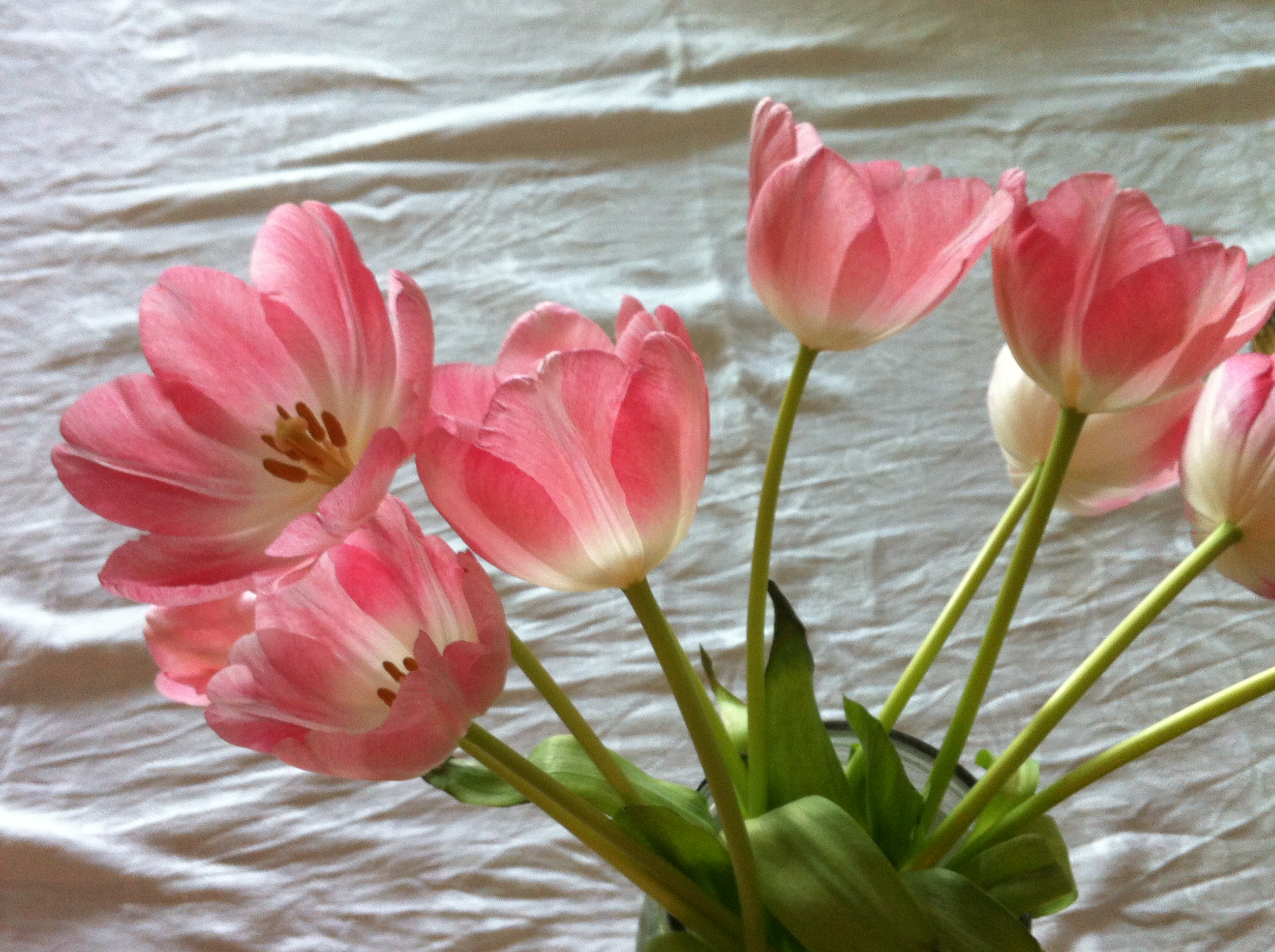
To cheer us up, my wife bought a bunch of tulips. They were still closed when she brought them home, but she placed them in a jar and we watched them slowly open over the following few days. Yesterday morning, we woke up to a gloriously bright and clear day. Thanking all the spirits I could think of, I stepped humming into the dining room, only to be greeted by the tulips which had fully opened over night. The sunlight pouring in through the windows was picking out their delicate pinks, whites and greens. I just had to memorialize the occasion.

   tulips 003

tulips 002

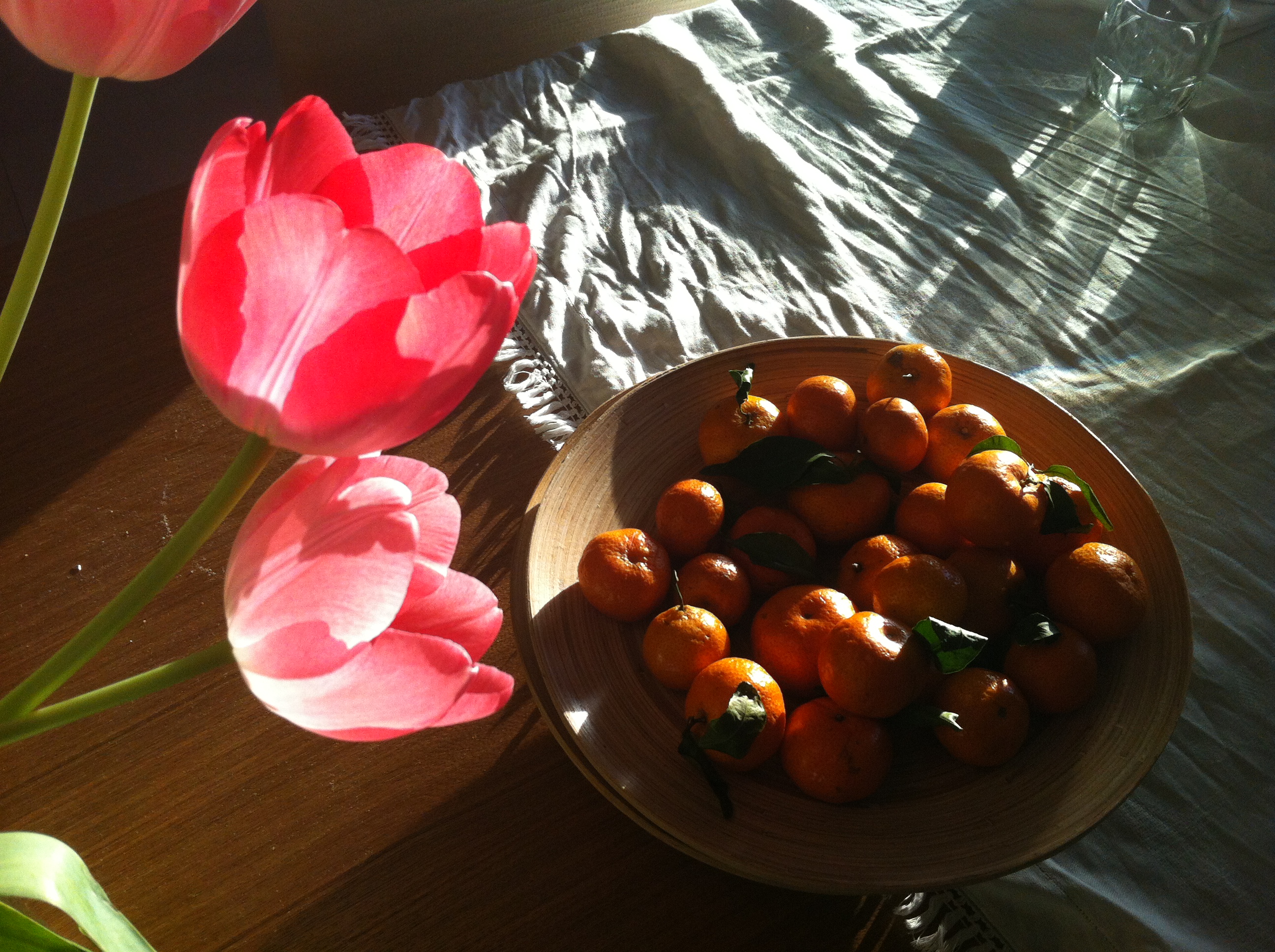
The mandarins which were also on the table kept nudging themselves into the frame, so eventually, I brought them in too.

tulips 005

Wonderful, wonderful fruit, those! They don’t look up to much, but aah the taste, my friends! First comes the delicate mandarin aroma which breaks out as you begin to peel the fruit and prepares you for what lies ahead. Then comes the citrically acidic taste with sharp mandarin overtones which hits your taste buds as you pop one segment in after the other. They are completely addictive; between my wife and I, that plate of mandarins lasted but one breakfast. She has found a greengrocers up the road which sells them. Sorry, the address will remain a secret.

I, TOO, WAS AT DAVOS

Beijing, 31 January 2013

OK, my meeting in Davos was a little more humble than the one that just finished. We didn’t talk of global trends or the next big crisis, nor were television newscasters knocking at our doors begging for an interview. No, we were talking about e-waste and what to do with the growing mountains of broken computers and discarded mobile phones that we generate.

It was still summer, or so I thought. After all, the meeting was taking place in the first week of September. But the morning after I arrived it snowed. I could NOT believe it! My wife and I had made plans that after the meeting she would join me and we would visit the area. But we weren’t about to go visiting in the snow. That was the end of that little holiday.

Perhaps because of this, or perhaps because I realized that the meeting was actually a waste of time, whatever it was, I was not in a receptive mood.  I found Davos to be a pretty nothing place. There was no part of the town that I found worth looking at, no building worth admiring, no vista to stop in front of … nothing. Just a series of anonymous-looking modern buildings along anonymous-looking streets.

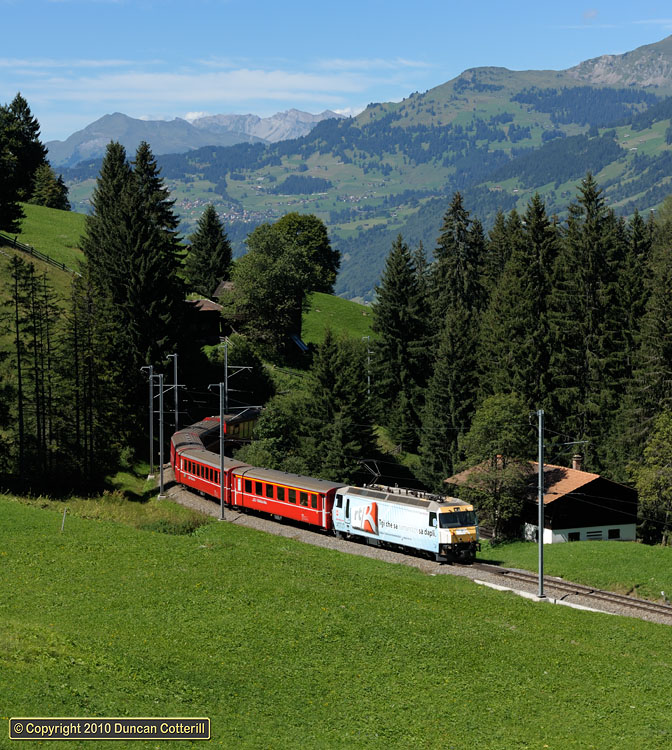
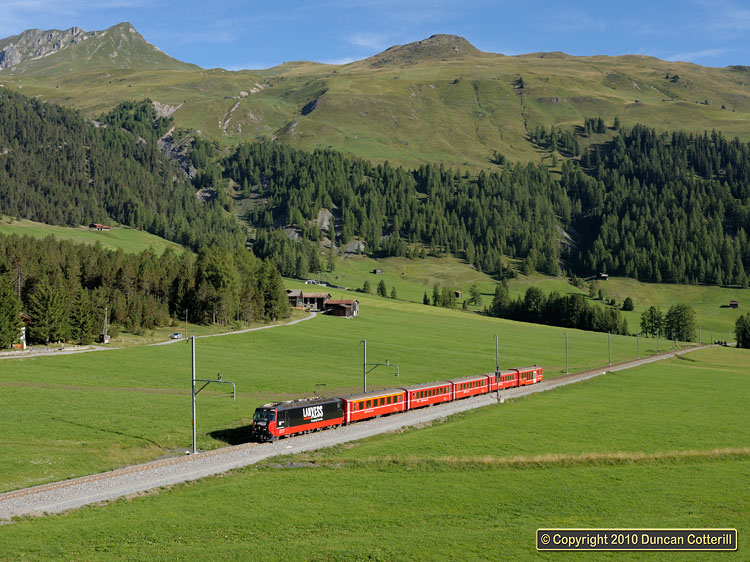
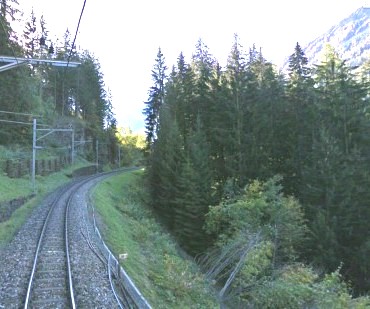
Well, to be fair, there was one thing that has stayed with me and that was the train ride up to Davos. At Zurich airport, I took a train to the small town of Landquart, which stands astride the point where river Landquart meets river Rhine, still a modest river at this point on its journey to the sea. There, I changed to a narrow gauge train, which took me up to Davos. This line is part of the Rhaetian railway network (lovely name, that; it comes from the original inhabitants of the high mountain valleys of these parts, the Rhaetians). The train runs up the valley of the river Landquart to Klosters, where it turns off and begins to climb up to Davos, 10 km away and 400 metres higher. It is a truly lovely ride, reminiscent to me of the ride in the Micheline about which I wrote a post recently. Maybe it’s because the train doesn’t go too fast, or maybe it’s the narrower gauge or the single line, or maybe it’s because the trees are allowed to grow up close to the train, or maybe it’s the way the train twists and turns through the very peaceful fields and woods … but somehow in this train you feel so close to nature.

Camera : NIKON D700 . . . Focal Len : 70.0 mm . . . Shutter : 1/640sec . . . Aperture : f/9.0 . . . ISO : 200 . . . Original : Digital 12MP NEF

davos train-2-Küblis-Saas

Camera : NIKON D700 . . . Focal Len : 42.0 mm . . . Shutter : 1/640sec . . . Aperture : f/9.0 . . . ISO : 200 . . . Original : Digital 12MP NEF

Camera : NIKON D700 . . . Focal Len : 40.0 mm . . . Shutter : 1/500sec . . . Aperture : f/8.0 . . . ISO : 200 . . . Original : Digital 12MP NEF

When I took it, I was alone in my compartment, so I pulled down the window (in itself a small miracle in modern trains), stuck my head out of the window, and just let the hayfields and pine trees whoosh past me, all the way to Davos.

davos train-9

Pity Davos and the meeting were such a let-down.

_____________________________

Davos train-1: http://www.railography.co.uk/photos/schweiz/910/files/10-D-1857.jpg
Davos train-2: http://upload.wikimedia.org/wikipedia/commons/thumb/a/aa/RhB_K%C3%BCblis-Saas.jpg/640px-RhB_K%C3%BCblis-Saas.jpg
Davos train-3: http://www.railography.co.uk/photos/schweiz/910/files/10-D-1840.htm
Davos train-4: http://www.railography.co.uk/photos/schweiz/910/files/10-D-1833.jpg
Davos train-5: http://www.streetviewfun.com/wp-content/uploads/2012/03/googletrainview-550×309.jpg

BUBBLES IN THE ICE

Beijing, 28 January 2013

This morning, I walked along the opposite side of the canal to go to work. I wanted to see what someone had written into the snow that thinly covers the ice. I took a photo. Readers interested in seeing it are referred to the postscript I have just added to my post “Clear, Pure, Clean, Peaceful”.

It so happens that a path has been cleared in the snow next to the script, which carries to the other side of the canal. Many people take a short cut across the ice to the other side. I hesitated. Crossing across the canal would shorten my walk to the office somewhat. But crossing ice like that always makes me a little nervous. Decades ago, when I was fourteen, I had ventured out onto a frozen lake where the ice got progressively thinner from one side to the other. As I trotted across, the ice began to creak and crack ominously. I beat a hasty retreat and all was well, but sometimes – especially if I venture onto iced-up water bodies – the sound of that creaky-cracking comes back to me; stuff of nightmares. So I hesitated.

I finally decided it was alright and set off across the canal. The cleared ice was very transparent, although the view through it was bent and warped by the unevenness of the ice. As I looked down through the ice, I saw a multitude of bubbles, of all shapes and sizes, ghostly white, trapped in the ice. Perhaps it was the slight trepidation I felt as I walked over the ice, but suddenly it seemed to me that I was seeing the last bubbles of air exhaled by a host of people who had got trapped under the ice. I half expected to suddenly see the ethereal face of some drowned person looking up at me through the ice.

I reached the other side. Silliness … I shook the feeling off. But as I turned around to survey the canal, I remembered a shard of T.S. Eliot’s poem. The Wasteland.

Phlebas the Phoenician, a fortnight dead,
Forgot the cry of gulls, and the deep sea swell
And the profit and loss.
A current under sea
Picked his bones in whispers. As he rose and fell
He passed the stages of his age and youth
Entering the whirlpool.
Gentile or Jew
O you who turn the wheel and look to windward,
Consider Phlebas, who was once handsome and tall as you.

BLUE SKY DAY!

Beijing, 24 January 2013

The air is clear, the sky is blue! Finally, the grey murk of the last week or so has gone! I don’t know where it’s gone and I don’t care. All I know is it’s gone. When I walked out into the street this morning, my heart jumped on seeing the blue, blue sky. I’d almost forgotten what a blue sky looked like.

As I walked along my piece of canal, a man on the other side burst into song. If I’d known the tune I would have hummed along. As it is, I smiled benignly at the lady who was walking her dog and she smiled benignly back. I didn’t even mind the very uneven paving stones in the canal path which threaten to trip me up every day.

As I walked into my secretary’s office, she cried out “it’s only 62!” She had already checked the PM 2.5 readings on the US Embassy’s twitter feed and was preparing her daily air quality report to all staff. We laughed in sheer pleasure.

The air is clear, the sky is blue, hallelujah!

blue sky 002

blue sky 003

A JOURNEY BY TRAIN

Shanghai, 24 January 2013

The bullet train pulled out of Beijing South Station forty minutes late, starting its five-hour trip to Shanghai. After a gentle canter through the outskirts of Beijing, the train powered off when it reached the countryside, reaching peaks of 300 km/hour – small screens over the doors helpfully clocked the speed. It was quiet in the train, disturbed only by the sudden jerk to the left caused by trains whooshing past in the opposite direction – and by certain passengers talking very loudly on their phones.

After reading a few pages of a dense report, I gave up and stared mournfully out of the window. The weather was cloudy and foggy, throwing a bleak and bleary light over everything. The land was flat, flat as the Po River plain in northern Italy. There was a thin covering of snow, not enough to make the scene beautiful. The field strips were small, reminding me of the fields around Neusidlersee to the south of Vienna. Some had been planted in corn – the stalks were still standing, some had fruit trees, but most were bare of anything. Copses of poplars broke the horizontal monotony. A few villages flashed by, a group of houses huddled together in no particular order, some proudly bearing a solar water heater on their roofs. Often, the country’s modern development would intrude, with bare, broken, worked-over ground waiting for the concrete and asphalt to arrive.

The countryside was empty save for shepherds leading small groups of sheep through the bare fields, particularly the corn fields, where the sheep were stripping the standing stalks of some nourishment. The shepherds were probably Muslim Chinese who had migrated centuries ago from the west of China and are now scattered throughout China’s eastern seaboard. They brought back memories of northern Italy, where you can also see shepherds who have come down from the mountains and are feeding their herds in bare winter fields.

The only other presence was the dead. Countless gravesites dotted the landscape. You can tell a Chinese grave by the way the earth is heaped up in a conical mound over the deceased. Groups of four or five of these mounds were visible at the corner of almost every field, or so it seemed. There was no wall around them like we would have in Europe, nothing to separate them from the world of the living. Often, there would be dark trees, pines perhaps, planted nearby to keep the dead company. They reminded me so much of the cypress trees that flourish in the graveyards of Italy.

Darkness slowly set in and everything outside my window dissolved in the murk. As we started slowing down to pull into our first stop, I sighed, put on my reading glasses, and hauled out the dense report again.

CLEAR, PURE, CLEAN, PEACEFUL

Beijing, 18 January 2013

Readers of my posts will know that I walk along a piece of canal on my way to and from the office. During these walks, I watch how the change of seasons are reflected – literally and figuratively – in the waters of the canal and the willows that grow along its edge. This year, winter came flurrying in with a blustery storm in late November which damaged a number of the willows along the canal.

Winter-2012 005

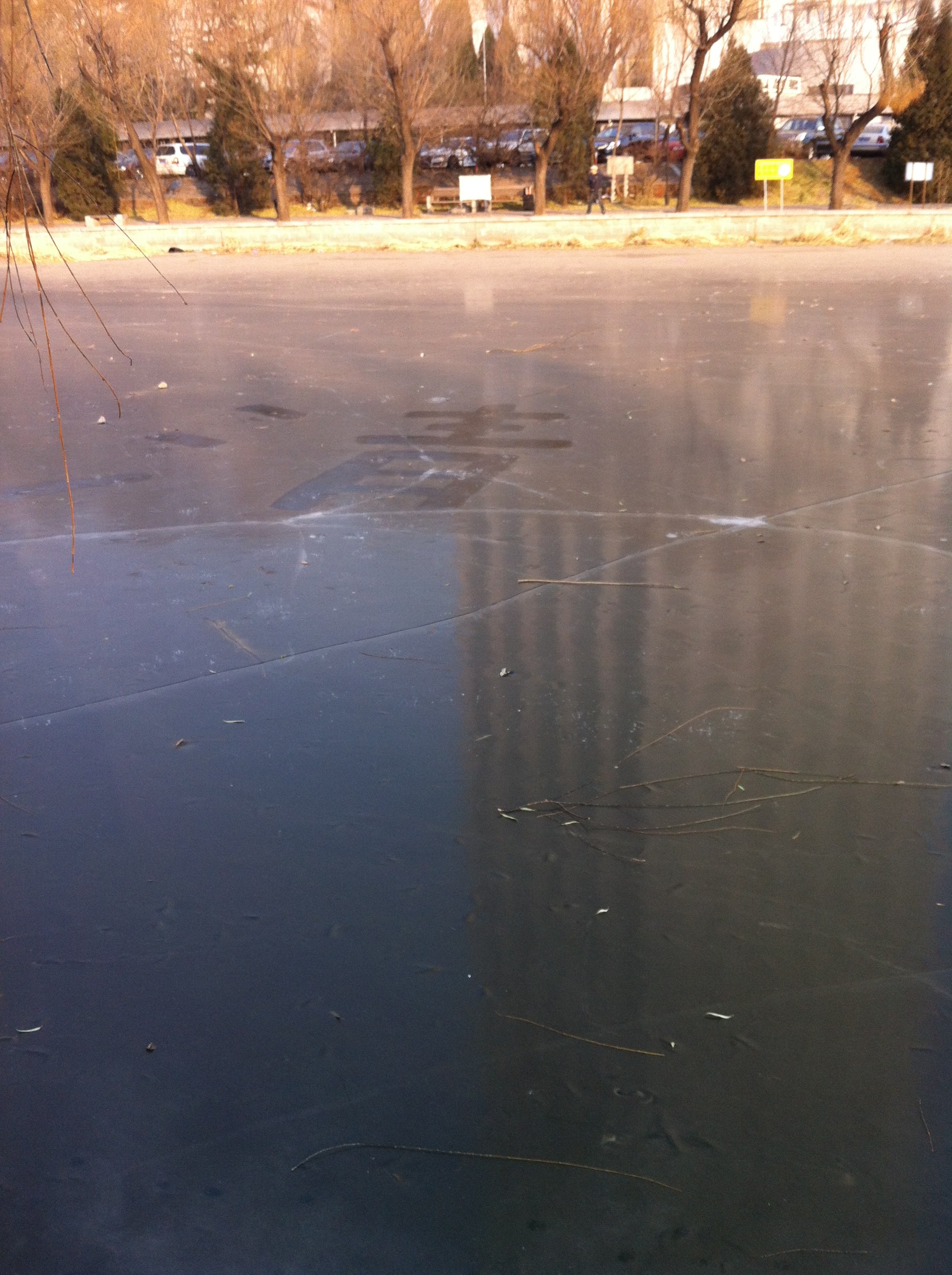
Then came a snowstorm, which left a modest covering of snow and which quickly disappeared. Thereafter, the temperatures plunged and the canal froze over. With no snow, the ice was initially buffed clean by the wind, but the wind soon died down and over a period of a week or so a thin layer of dust settled on the ice’s surface; winter is very dry in Beijing. One morning, as I turned off the bridge to start my walk along the canal, I noticed faintly etched in the dust a Chinese character. I was intrigued. What had been written? A name? Two names, united in love? Or something stupid like “Wash me”? Or worse?! Given my illiteracy in Chinese, I had no idea. So I took a photo.

qing

I showed it to my Chinese secretary. She studied the photo a minute and said “it says, qīng.”

And what does it mean, I asked?

Clear, pure, clean, she told me. Peaceful, also.

Clear, pure, clean, peaceful … The writer must have been feeling good when he wrote it. Was it love? Just a happy moment? Whatever it was, I thank him. Later wind has effaced the character, but every time I walk past the spot I get a warm feeling.

POSTSCRIPT 28/1/13

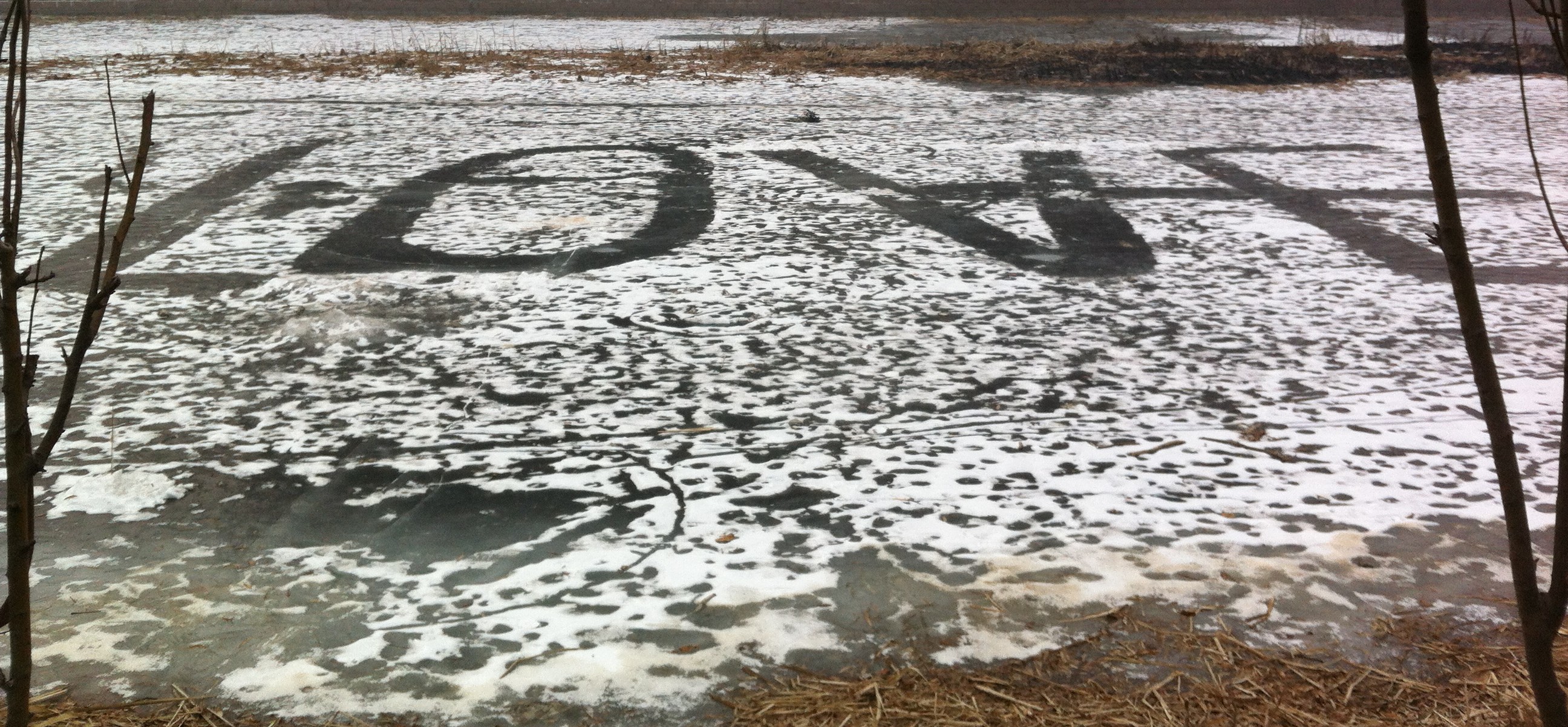
Since writing this, snow has fallen and has covered the canal’s ice with a thin coating of snow.  Someone went out and wrote in the snow. This one I could read:

love 002

ST. MARY’S GARDEN

New York, 7 January 2013

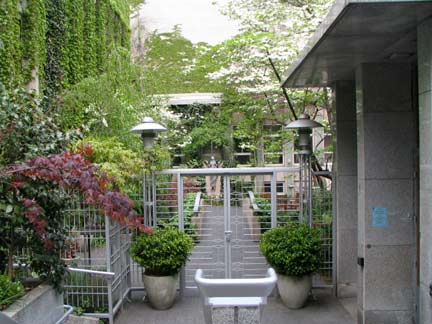
Several years ago, I had to be in New York for a period of two weeks to cover an international meeting. It was early May, a good time to be in the city. The weather is normally nice and it’s not too hot yet. The first morning, I left early to give myself plenty of time to deal with the wearisome entry procedures. My walk to the meeting took me along 47th Street. As I was walking between First and Second Avenues, I spied to my left the entrance to a little garden, open to the public.

mary's garden-2

Intrigued, I checked my watch and decided I had sufficient time to take a quick look. What I found was achingly lovely: a little pool with the quiet gurgle of a fountain to the side, a small bridge spanning the pool

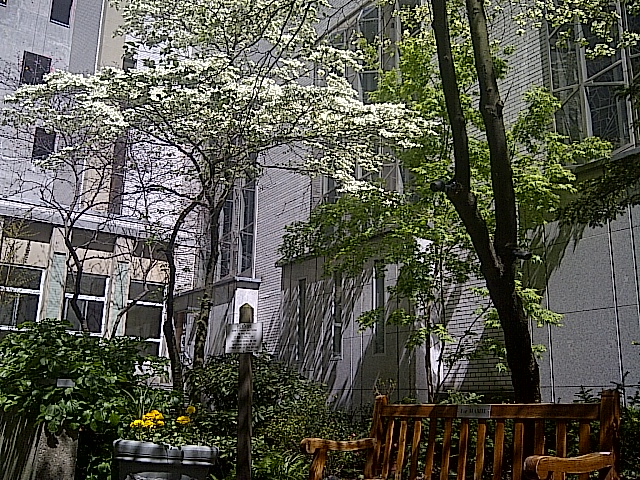
mary's garden-1

leading to three benches, and planted beds around the pool. Most magnificent of all, arching over the whole, were three dogwood trees. They were in full bloom, and the soft whiteness of their flowers, tinged with spring green, permeated the whole space. I was left without breath and sat for five minutes to absorb it all. Of a sudden, I started out of my reverie, checked my watch again, and hurried off to my meeting.

The garden must be little known, because I was unable to find any photos of it on the web other than the two above. So I later sent my daughter to take photos when the dogwood trees were in flower. Here is a sample.

IMG-20130503-01859

IMG-20130503-01863

IMG-20130503-01864

I went back several times during the next two weeks, to reflect and to rest, watching the dogwood flowers begin to fade. I learned the garden’s name – St. Mary’s garden – and that it was attached to the small church next door, the Church of the Holy Family. I brought my wife there when she joined me in the second week. We sat on one of the benches and held hands.

When yesterday I found myself by chance close by, I could not resist visiting the garden again. Given the season, it was drearer.

garden-winter 002

But it still had a dreamy quiet; the fountain gurgled softly, and a bird sang in the dogwood trees. As I sat there, a fragment of the Litany of the Blessed Virgin Mary floated up out of my boyhood memories, heard murmured by old women in dark, empty churches at the time of the Angelus:

Mystical rose,
Tower of David,
Tower of ivory,
House of gold,
Ark of the covenant,
Gate of heaven,
Morning star,
Health of the sick,
Refuge of sinners,
Comforter of the afflicted …

And then another memory fragment floated to my the surface of my mind, lines from the end of T.S. Eliot’s poem Ash Wednesday:

Blessed sister, holy mother, spirit of the fountain, spirit of the garden,
Suffer us not to mock ourselves with falsehood
Teach us to care and not to care
Teach us to sit still …

And I sat still.

_________________
Mary’s garden-1: http://www.dkimages.com/discover/previews/739/151269.JPG
Mary’s garden-2: http://forgotten-ny.com/wp-content/gallery/streetscenes_chip_07/11-holyfamily-grotto.jpg
Dogwood in bloom-1: my daughter
Dogwood in bloom-2: my daughter
Dogwood petals in the pool: my daughter
garden in winter: my picture

LA MICHELINE CHUGGING ACROSS THE COUNTRYSIDE

New York, 2 January 2013

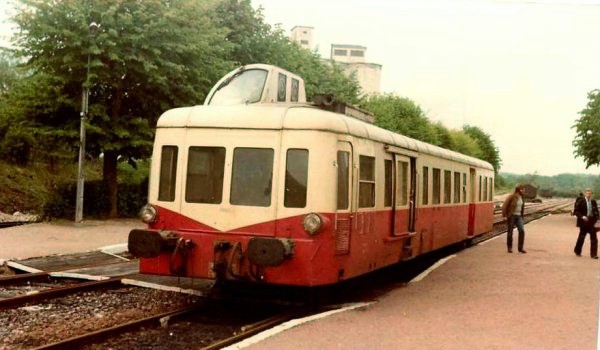
Down at the end of my French grandmother’s property ran a little train, the Micheline we called it. It was a rinky-dink train, one carriage (on rare occasions two), which chugged along at a venerable speed across the countryside from one market town to another, winding its way through vineyards and meadows, stopping at toy-town stations where stationmasters with moustaches, who smoked filterless gauloises and no doubt drank un petit rouge corsé in evenings, would agitate green flags and blow shrill whistles to let the Micheline continue on. This photo captures the rural idyll nicely.

micheline

I used to accompany my grandmother on her visits to town. We would walk down a long alley flanked first by peach and apple trees and then by black locusts, down to the end of the property where there was a big iron gate, which swung ponderously open; from there, it was a short five-minute walk to the station. In came the Micheline

micheline-5

I would help my grandmother in, the stationmaster would agitate his flag and blow his whistle, and off we went.

My mother used to tell me that during the Second World War, people were sent to my grandmother by the French Resistance for her to hide for a while; they would quietly slip in with the Micheline. My memory is instead of two old ladies, two sisters, Tante Chlothilde and Tante Marcelle, coming to visit via the train. They were first cousins to my grandmother. Both of them being widows, they always wore black. We would first see the Micheline chug by, then some ten minutes later two black silhouettes would be sighted slowly walking up the long alley. My grandmother would then walk down to greet them, speaking very loudly because one of the sisters was as deaf as a post.

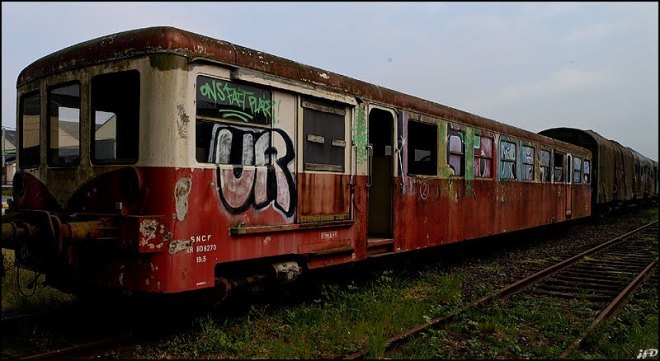
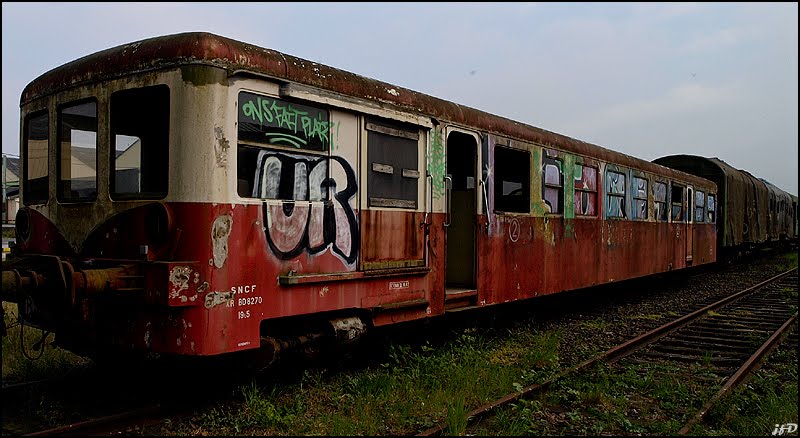
Well, things changed. The road network got better, buses took over, and the line was finally closed down. I suppose the Michelines were retired like this one was

micheline-3

The rails were pulled up, and the weeds took over.

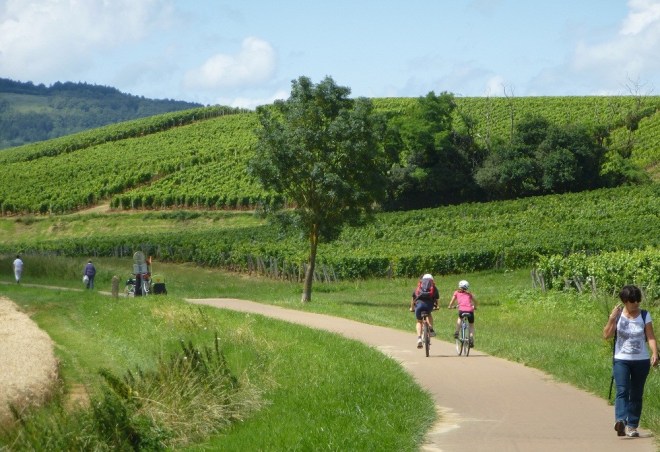
After a long period of neglect, the municipalities got their collective acts together and turned the railway line into a “Green Way”, for people to walk and cycle along. So now we have a quiet, carless, path that allows us to enjoy some of the most beautiful countryside on Earth (I admit, I’m biased).

voie-verte-1

voie-verte-3

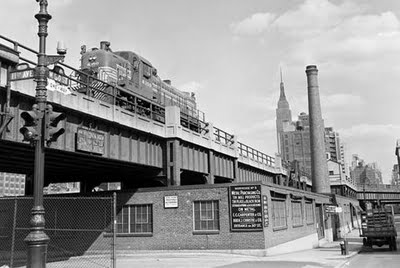
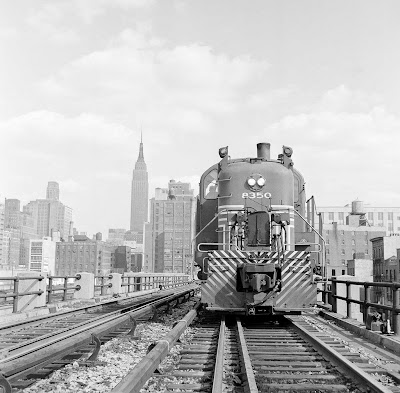
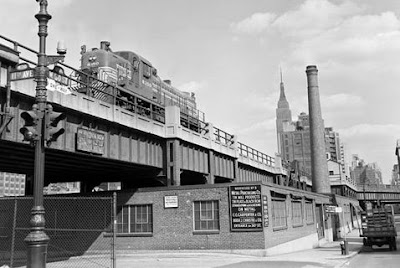
All of this came back to me yesterday while my wife and I strolled along the High Line in Manhattan. We are talking of a very different context – urban rather than rural, large-scale rather than small-scale – but the historical trajectory is the same: a rail line that was once a vital artery of the city

high-line-old-1

high-line-old-2

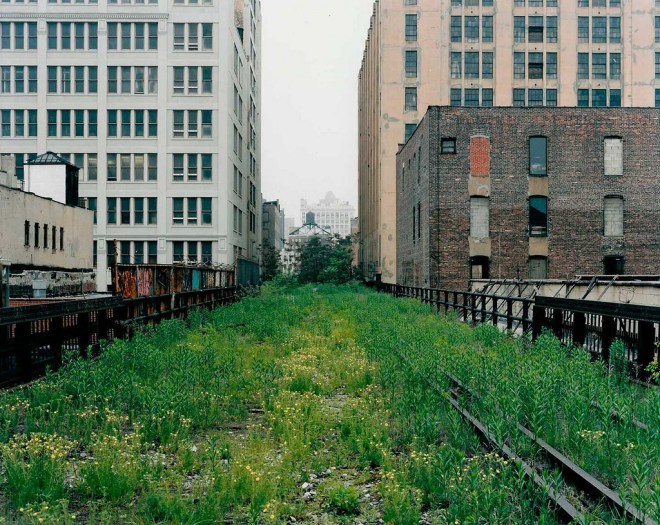
falls victim to roads and trucks and is finally abandoned. It becomes derelict, overgrown by weeds

high-line-5

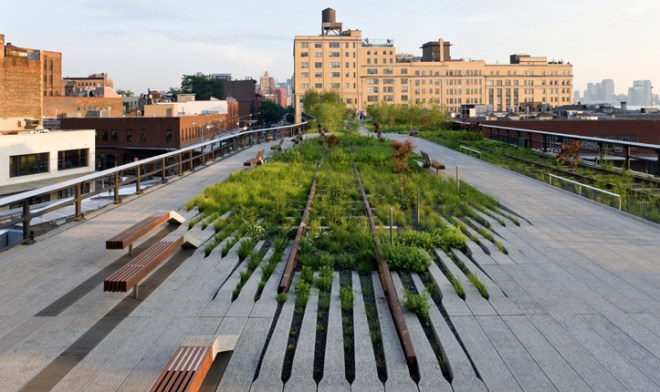
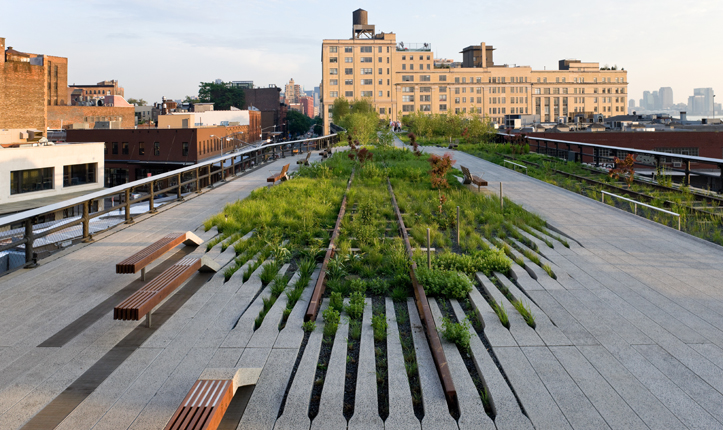
and is threatened with demolition. But good sense eventually prevails and the elevated line is turned into an elevated garden.

high-line-2

high-line-4

high-line-1

high-line-6

Magic.

____________

Micheline-1: http://www.google.fr/imgres?q=micheline+train&num=10&hl=fr&tbo=d&biw=1280&bih=683&tbm=isch&tbnid=QbpsYHDZWoAGgM:&imgrefurl=http://www.worldofstock.com/stock-photos/france-ardeche-mirabel-village-surroundings-local-micheline/TRT1500&docid=307ZNJAoHh-JTM&imgurl=http://www.worldofstock.com/slides/TRT1500.jpg&w=500&h=332&ei=hIXjUMDvFuXQ0wGh84HQCg&zoom=1&iact=rc&dur=684&sig=113446295457090783361&page=1&tbnh=140&tbnw=202&start=0&ndsp=22&ved=1t:429,r:10,s:0,i:118&tx=96&ty=67

Micheline-2: http://c1.img.v4.skyrock.net/1729/16641729/pics/3080416001_1_3_WEG0CElV.jpg

Micheline-3: Micheline-3: http://1.bp.blogspot.com/-C8L1231bJ-o/TbhQHR6dc_I/AAAAAAAAEAQ/FvpTQts0R0I/s1600/micheline01-1.jpg

Green Way-1: http://www.sortiramacon.com/media/news/voie-verte-velo.jpg

Green Way-2: http://www.velo-ravel.net/2009/2009-08-17_Bourgogne_sud_files/image020.jpg

High line 1-historical: http://1.bp.blogspot.com/-X8IIsMIF7GY/TmlooRzMZ9I/AAAAAAAAF9M/_PpGNN3xJEU/s400/Highline_train.jpg

High line 2-historical: http://4.bp.blogspot.com/-0FEWcWopww8/TmlooMh8vlI/AAAAAAAAF9E/SuXL4wcu6To/s400/HIghline_historical.jpg

High line derelict: http://2.bp.blogspot.com/-iD76YXAA-Uw/TffNNuz4gXI/AAAAAAAAAYU/KWHnUGbYjPU/s1600/High+Line+2.jpg

High line 1: http://www.asla.org/sustainablelandscapes/images/highline/Highline_6.jpg

High line 2: http://4.bp.blogspot.com/-usnFjgnfQc4/TffNIgAV6xI/AAAAAAAAAYQ/XMQA0bZJAb4/s1600/High+Line.jpg

High line 3: http://www3.pictures.gi.zimbio.com/New+York+New+High+Line+Park+Opens+Public+3B45D1SYEJcl.jpg

High line 4: http://1.bp.blogspot.com/-WbybGegkYX0/Tmlon5yO-1I/AAAAAAAAF88/LyBQFC8kMpo/s1600/Highline_above.jpg