MY ART COLLECTION

Beijing, 3 August 2013

I was in Vienna a few weeks ago – it is always good to show your face from time to time in Headquarters to remind your colleagues that you still exist – and my wife accompanied me because we had decided to go on vacation at the same time. Since we had a free morning, we decided to visit the Leopold Museum.

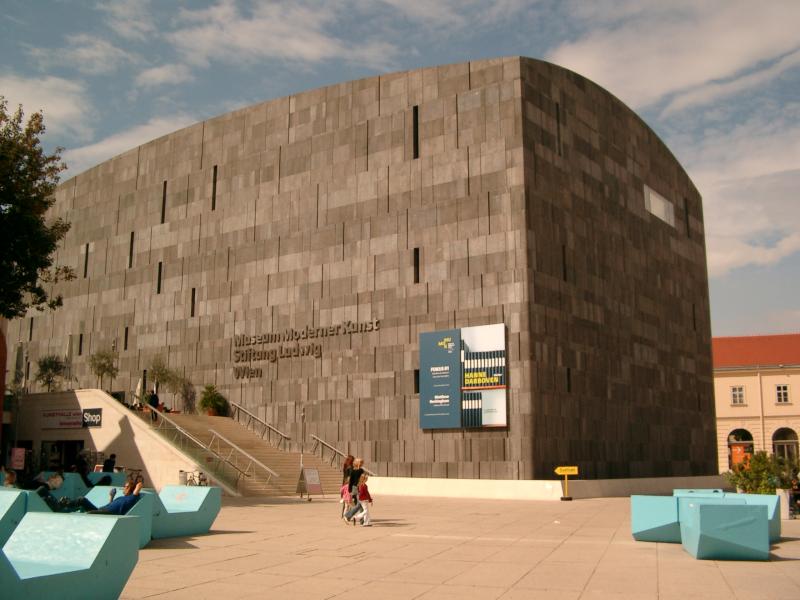
The museum is part of a very nice urban recovery scheme which the Austrian government undertook some ten-fifteen years ago. There being no imperial horses to house anymore, the old imperial stables had fallen on hard times. So the city decided to turn the stables into a Museums Quarter, made a deal to purchase the art collection of a certain Rudolf Leopold, and built two art museums on the premises, one for his modern art

Leopold Museum

and one for his contemporary art

MUMOK

(is there a deeper meaning to the colour scheme of the museums’ cladding?)

For those readers who plan to visit Vienna, the Quarter is just across the road from the Kunsthistorisches Museum, the country’s premier museum of fine arts, which houses the old imperial collection. This is a truly fantastic collection, which alone is worth a visit to Austria. One of my favourites there is Caravaggio’s “Madonna of the Rosary”.

caravaggio

As for the Leopold Museum, it has a great collection of early 20th Century Austrian, German and Central European art. I particularly like its collection of Egon Schieles. The very first time my wife and I went to Vienna, back in the early 80s, we stumbled on Mr. Leopold’s collection, hung at that time in a cramped house somewhere in the outskirts of Vienna. His Schieles knocked my socks off as they say. I particularly remember this one.

Egon Schiele

With the art from these fantastic collections almost spilling out onto the pavements of Vienna (and I haven’t even mentioned the Belvedere or the Albertina or the smaller collections), it’s not surprising that it is here that I started my own – very, very modest – art collection. The spark that lit the fuse was the Dorotheum.

Dorotheum

Wonderful, wonderful place, the Dorotheum. It’s an auction house, but the marvelous thing about it is that it has two whole floors where the price is fixed and you can buy the articles on the spot. Which is great, because auctions make me nervous; I only went to one auction at the Dorotheum – where Mr. Leopold was present, by the way – and the speed with which the prices levitated (on a particularly nice painting by a Hungarian artist) gave me palpitations. These two floors have more the feel of a jumble sale, full of horrible stuff, but where you feel – you know – that the piece of your dreams is just behind that dreadful cabinet in the corner. And in the spirit of a jumble sale the prices in these parts of the Dorotheum are – relatively speaking – affordable.

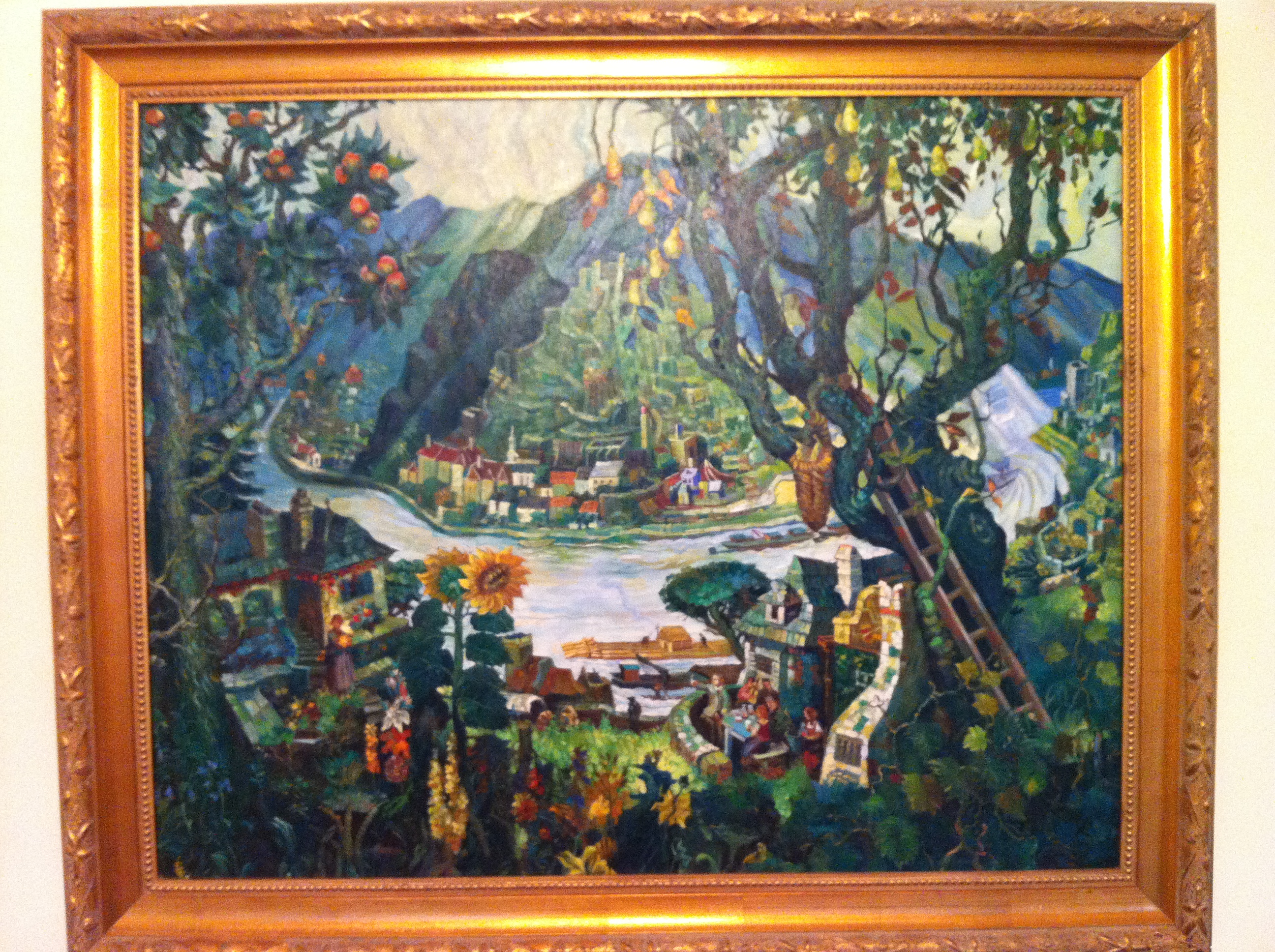
My first piece of art was hanging in a corner, in the dead end of a section dedicated to carpets.
general photos 002

When I first spied it behind the carpets, it was woebegone, sagging in the middle, dust covering its frame. But it cried out to me: “Take me! Take me!” That riot of flowers and fruit against that cubist-type background of mountains! That river, with the small town on its bank! The happy people! It had to be mine!! But the price made me hesitate – it was 400 euros or thereabouts. And it would need fixing and cleaning. I dithered and dathered, I went back a few times, I was like one tormented. Eventually, my wife took over and gently pushed me towards the purchase.

They say that the first murder is the most difficult; after that, it gets easier and easier. I think it’s the same with the purchase of art. In relatively short order after that, I purchased, always at the Dorotheum, this gouache, a naïf view of the Seine in early 19th century Paris:

general photos 004

(the apparent sun in the background is actually my camera’s flash)

This aquarelle, an 18th Century view of Kashmir:

general photos 005

(same comment about my camera’s flash)

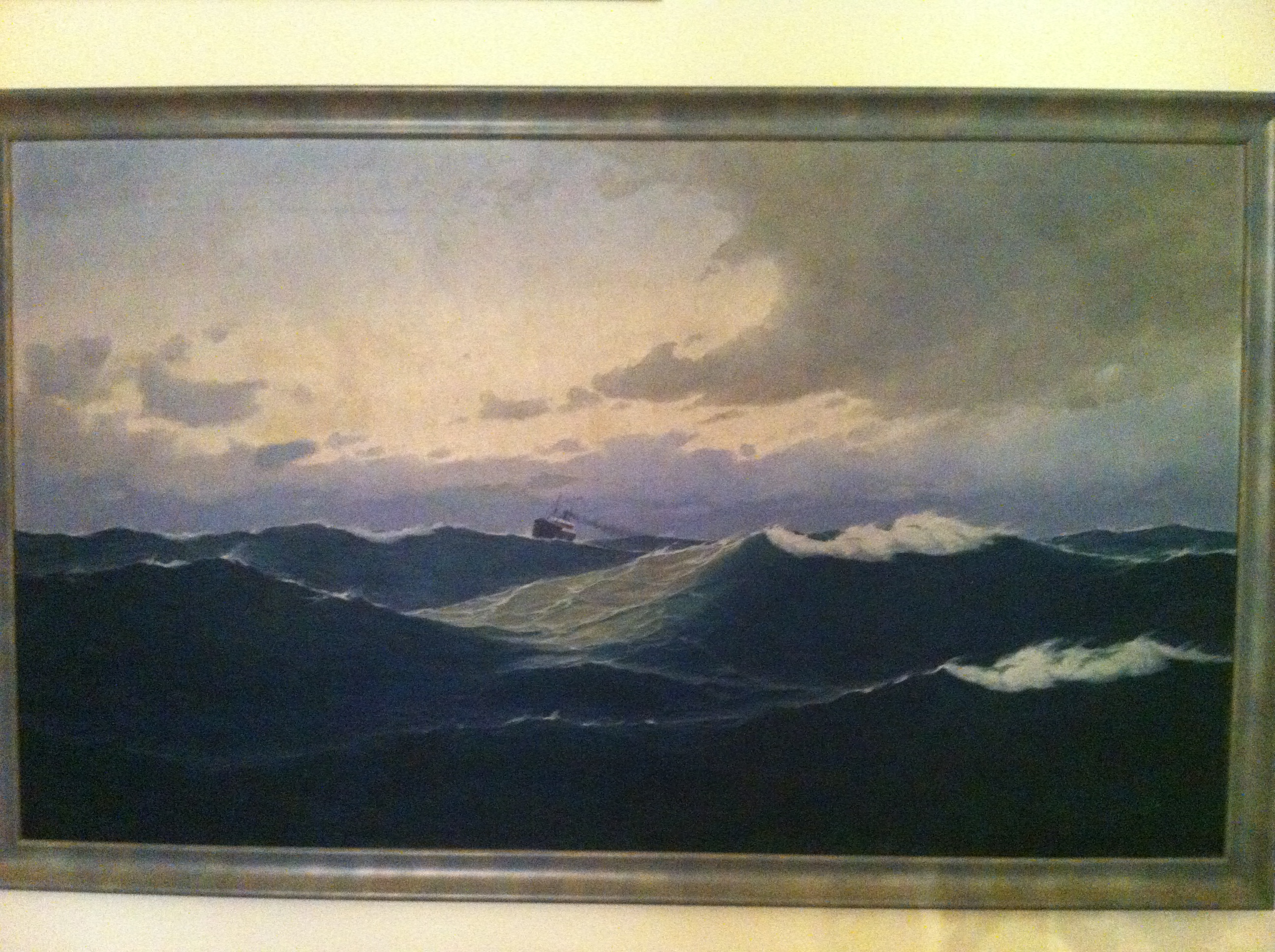
This oil painting, of a tramp ship ploughing its way through the waves:
general photos 009

(I bought it because it reminded me powerfully of the poem “Cargoes” by John Masefield, whose last verse is:
“Dirty British coaster with a salt-caked smoke stack,
Butting through the Channel in the mad March days,
With a cargo of Tyne coal,
Road-rails, pig-lead,
Firewood, iron-ware, and cheap tin trays”)

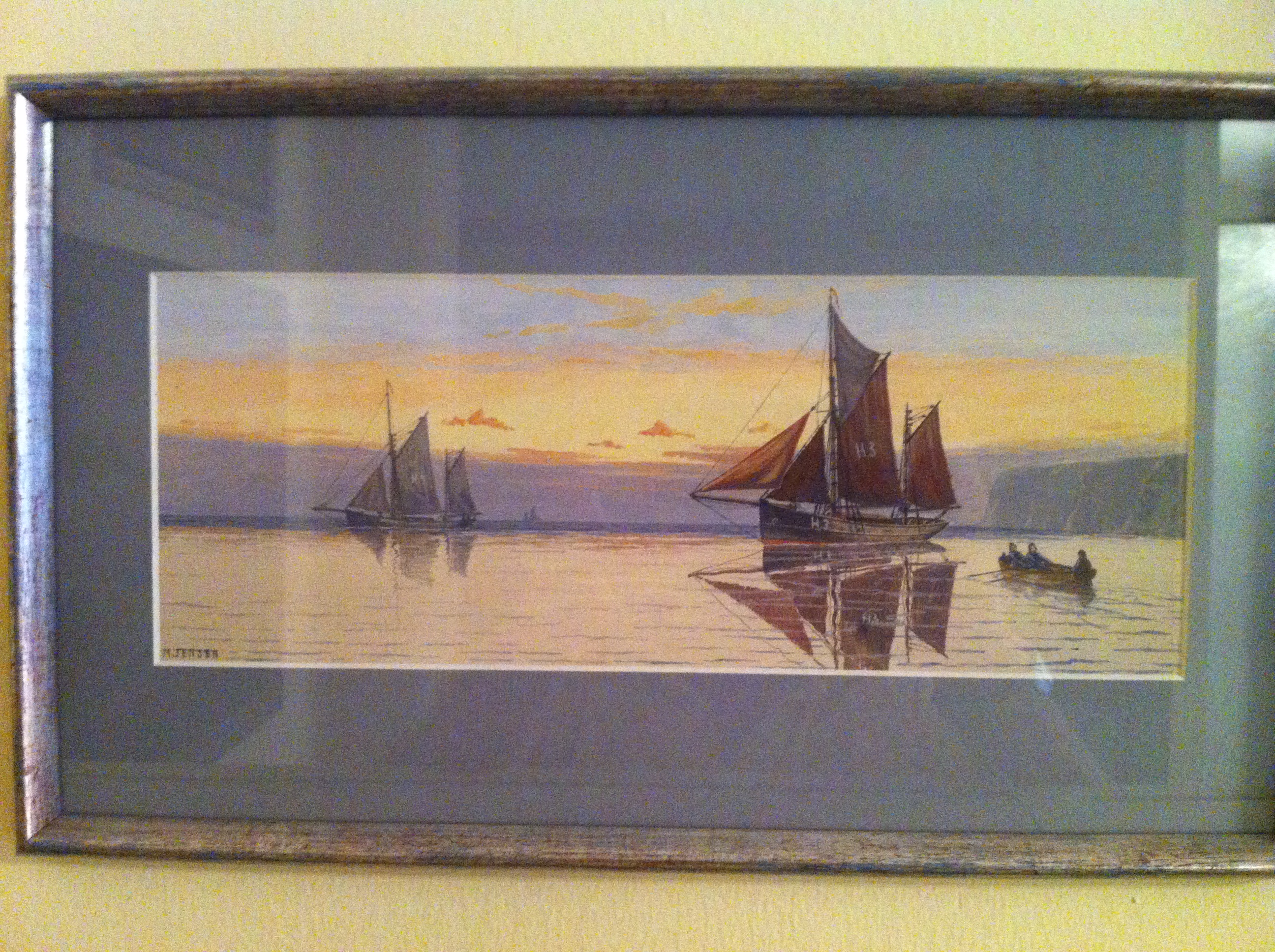
This aquarelle, by the same artist, of fishing boats off the coast of Britain:
general photos 010

This print, of a barn half buried in the snows of Upper Austria:

general photos 008

It was just as well that we left for China. My wife was becoming anxious about how the art was slowly invading the walls of our apartment; she has always preferred bare white walls and generally uncluttered internal vistas. I could not bear to have these sitting in the dark of a warehouse in Vienna waiting for us to come back. We took them all down to Milan, where they hang in our apartment. I took the photos above a few weeks ago, when we passed through.

The wonderful thing about these pieces is that they have allowed me to also unfurl my passion for history, giving me an excuse to dig around into their past. For instance, the Dorotheum claimed that the first painting was a view of Dürnstein, north of Vienna on the Danube (and in whose Castle Richard I was kept prisoner for a while). But after revisiting the place, I am convinced that this is not so; the banks of the river are not that steep on both sides. The picture framer who cleaned and fixed the painting was also not convinced of the appellation. He thought it was the upper Moselle River; a visit there is on my to-do list. As for the gouache, it was sold to me by the Dorotheum as an urban landscape in northern Belgium. Not so! For reasons which I won’t go into here but have to do with research I did on that shop on the right hand side of the painting, I am convinced that it is a view of the Seine River in Paris, looking upstream from Pont Notre-Dame, one of the bridges linking the Île de la Cité with the Right Bank. For its part, the view of Kashmir was, according to the Dorotheum, a view from western China (which is why I bought it; I already knew then that I would be going to China). Research on my part quickly showed me that actually it is a well-known view of a rope bridge near Srinagar. Really, the Dorotheum is doing some very sloppy work here – but it’s more fun for me.

With the Dorotheum no longer just a few subway stops away, the collecting passion has slowed – the apartments are smaller too. We have bought a piece or two, which when we take them back will remind us of our stay in China, rather like those old English colonels who came back from the Empire with bits and bobs of native paraphernalia, which they would proudly display in their retirement home at Bournemouth.

__________________________

Leopold Museum: http://de.academic.ru/pictures/dewiki/76/Leopold_Museum_%28Vienna%29.jpg
MUMOK: http://upload.wikimedia.org/wikipedia/commons/e/eb/Museum_Moderner_Kunst_Stiftung_Ludwig_Wien.jpg
Caravaggio: http://www.christusrex.org/www2/art/images/carav18.jpg
Egon Schiele: http://kellypahl.files.wordpress.com/2011/11/2.jpg
Dorotheum: http://static3.kleinezeitung.at/system/galleries_520x335/upload/3/6/3/2430195/dorotheum030810apa726.jpg
the rest are my pictures
100th ANNIVERSARY

Beijing, 21 July 2013

I am astonished to discover that this is my 100th posting! It seems only yesterday that, rather like a kid on his first day at school, I was nervously writing my first posting. This milestone deserves to be celebrated in some way. And what better way could there be than by singing the praises of the written word?

In my very first posting, which I entitled Manifesto (and which later became my “About” page, once I’d understood better how all this blog thing worked), I explained why, as I neared my 60th birthday, I had finally decided to take up the pen (electronic in this case) and write.

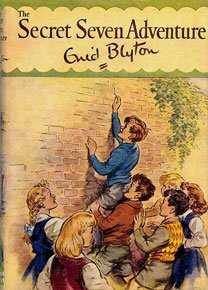
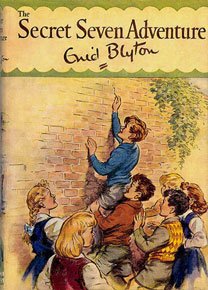
My decision to write actually flowed from my habit of reading. I’ve always loved to read. I still remember the day I got really hooked. I was maybe six, possibly seven. I was bored, and as is usual in these cases was bothering my elder siblings, who were all reading. In exasperation, one of my sisters gave me a book and ordered me to read it. I complied a trifle sulkily, but before I knew it I was drawn in – sucked in! – by the story. I still remember the book; it was from the Secret Seven series by Enid Blyton, about seven very English children who sluith around solving various mysteries (I’m amazed to see that these stories are still popular!)

secret-seven-adventure

For most of the next decade or so I read only fiction, but then I lost interest with the excuse that I lacked time.  I took up the habit again in my mid-twenties and I haven’t looked back. The contents of my modest library are packed away in Vienna, waiting to see the light of day again, but in my mind’s eye I can still walk slowly, pleasurably, along my bookcases packed with the books which have marked the passing of my adult life. My library always started with a section which I suppose would be called English Literature in a public library, so in my head my hand is now brushing over the spine of the novel “House of Spirits” by Isabelle Allende, which was the first of her novels I read and which led me – and my wife – to read many of her other novels (OK, strictly speaking these are not English literature, but since I read them in English that’s where I put them). They reconciled me with fiction after a long rift I had with the genre.

isabelle allende house of spirits

My eye is then drawn to the shelves dedicated to detective stories (since those memorable Secret Seven days, I’ve always had a weakness for “yellows” as Italians call them), where my hand falls on “A Morbid Taste for Bones”, the first in the series about Cadfael, the Benedictine monk from the great Abbey of Shrewsbury during the reign of King Stephen.

a morbid taste for bones

I picked up the first out of curiosity at the British bookshop in Milan but it led me, fascinated and hooked, to the next one, which led me in turn to the next one, and on and on like Adriadne’s thread, until one day I had read them all – they always reminded me so much of my school days in a Benedictine Abbey school.

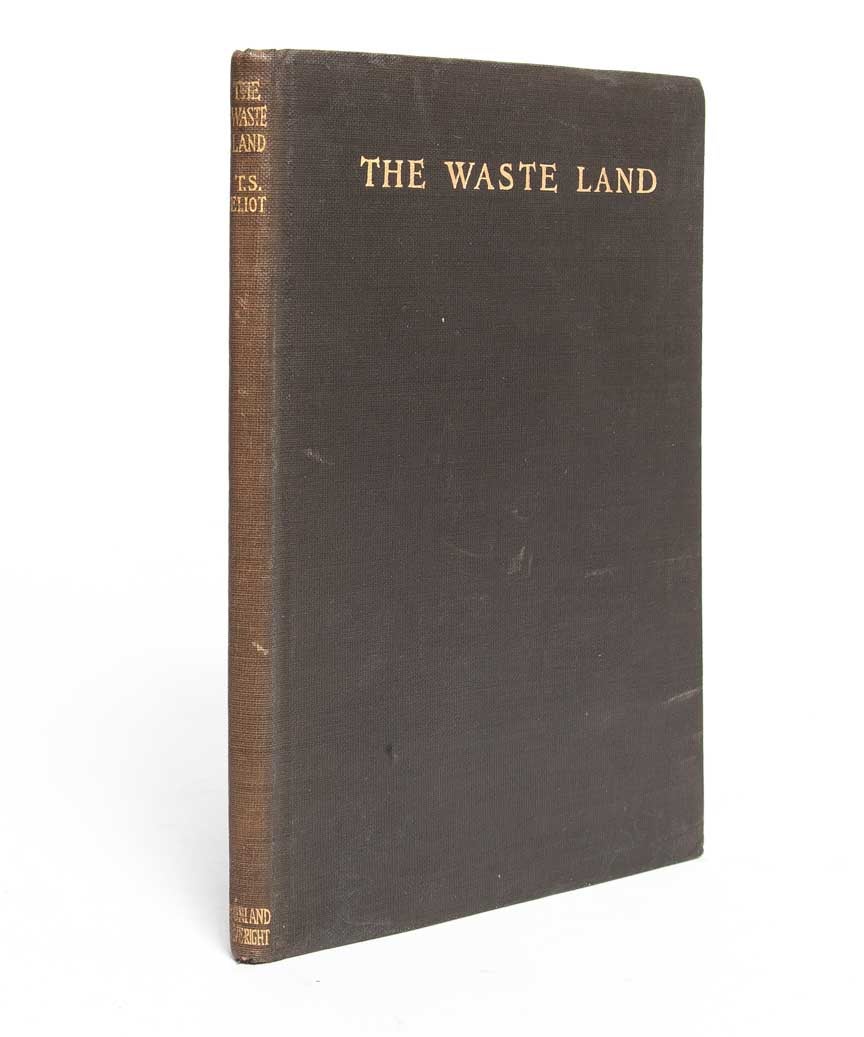
In my library, where space as much as logic has determined where books are placed (my wife has resisted the wholesale takeover of our successive apartments by books), the detective stories are followed by poetry. Here, I pick out the poems of T.S. Eliot, the first poet I came to appreciate, at age 16, during a class at school on English poetry, run by a wonderfully eccentric schoolmaster. The poem he introduced us to was, of course, “The Waste Land”.

wasteland

I always place “The Waste Land” next to the poems by Wilfred Owen and the other First World War poets. I feel that this poem’s sorrowful elegies of times past marry well with the anger that pulses through the war poems, an anger at the sheer futility and waste of that war.  I picked up this particular compendium of WWI poetry in a bookstore on Oxford Street, during a short visit to London.

first world war poetry

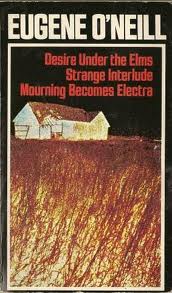
The English Lit section finishes with the plays I have acted in and the many more I would have liked to act in (“Mourning Becomes Electra” by Eugene O’Neill definitely falls into the latter category; it is a constant wound in my soul that I have never seen this play acted, yet alone acted in it myself).

mourning becomes electra

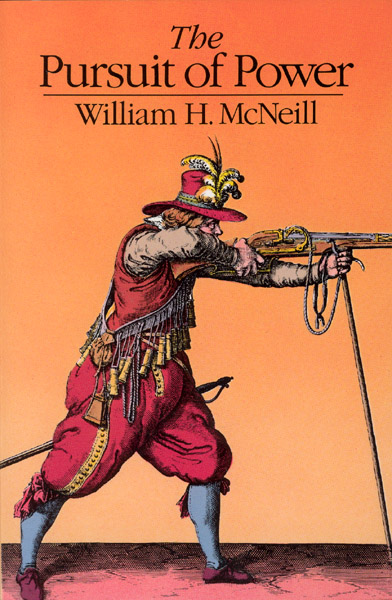
After English Lit in my library comes History: my passion – if I had not chosen to do sciences in high school, I would  have done history.   Among my many, many history books, I eye with particular fondness “The Pursuit of Power” by William McNeill,  which is a magnificent synthesis of military, technological, and social history over an arc of a thousand years.

pursuit of power

My hand then brushes over “Guns, Germs and Steel” by Jared Diamond, which (I am summarizing here!) tried to answer the question “Why was it European ships that sailed west and discovered the Americas and not the other way around?”. This book gave me the same shock of intellectual stimulation as McNeill’s book did when I first read it.

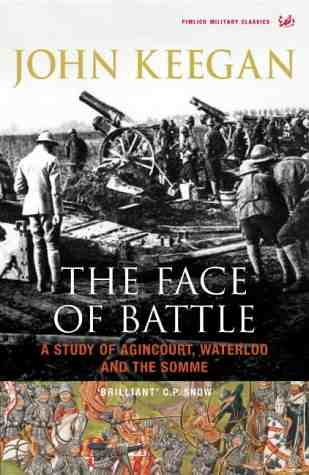
Guns Germs SteelI quickly jump to a shelf dedicated to histories of War, where I pick out  “The Face of Battle”, by the British war historian John Keegan, a fascinating analysis about how the field of battle has changed over time. I bought this book on impulse in a Barnes & Noble bookshop in New York 25 years ago and I liked it so much that over the succeeding years I read every single book Keegan wrote.

The-Face-of-Battle

History is followed by Other Social Sciences – politics, sociology, economics, and such like – where my hand brushes briefly over Henry Kissinger’s two volumes on his years in the White House.

white house years

I pass on quickly to the Science section, where I stop in front of my small collection of books on the biological sciences and evolution especially. My favourites are the collected essays on natural history by Stephen Jay Gould, whose warm, wisecracking style I find so quintessentially American, and the books by his “competitor” Richard Dawkins, whose coldly lucid style I find so quintessentially English.

Pandas ThumbBlind_Watchmaker

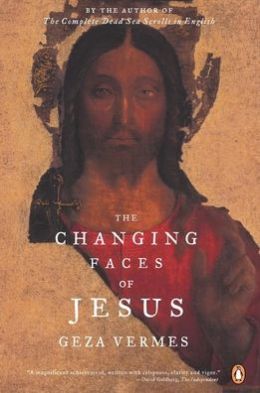
My science books are followed by my books on religion; why not? science has challenged (and in my view defeated) religion. And here my hand falls on “The Faces of Jesus” by Geza Vermès.

changing faces of Jesus

This was one of those books which takes your breath away by its ability to blow old ideas out of the window. It led me to buy several of his books, to explore who the real Jesus probably was once you get behind all the layers of Christian piety.

And finally, squeezed in at the end of my bookshelves, are books on art, cookery books, travel guides …

In China, I have continued the habit of buying books, nosing out where books in English can be found. We came with nearly no books (two compendia of English poetry, a book on Caravaggio, a book or two on Chinese history), now we don’t know where to put all the books that are piling up in drifts throughout the apartment.

Yet, during all this reading I have always felt a point of guilt: I was passively receiving these written words without writing anything back. Oh, I wrote a lot, but it was all dry, sterile stuff which I had to do for work; at the best of times clear, precise analysis, at the worst of times bureaucratese of the highest order. And so I started this blog. What a liberation it has been! I feel that I have finally gained my voice, that after all the croaking I’ve done I can finally sing (to paraphrase some lines from the African-American poet Langston Hughes, “now do I wonder at this thing, that I am old and yet can sing”). Of course, I don’t pretend to be writing great literature. These postings are just scribblings. My wife urges me to write a book, but I don’t think I can go beyond these brief notes. I am a sprinter, I tell her, I can only run 100 metres, I’m not a marathon runner. Still, the pleasure I derive from this writing is immense – and I hope my few readers derive some pleasure from reading these posts.

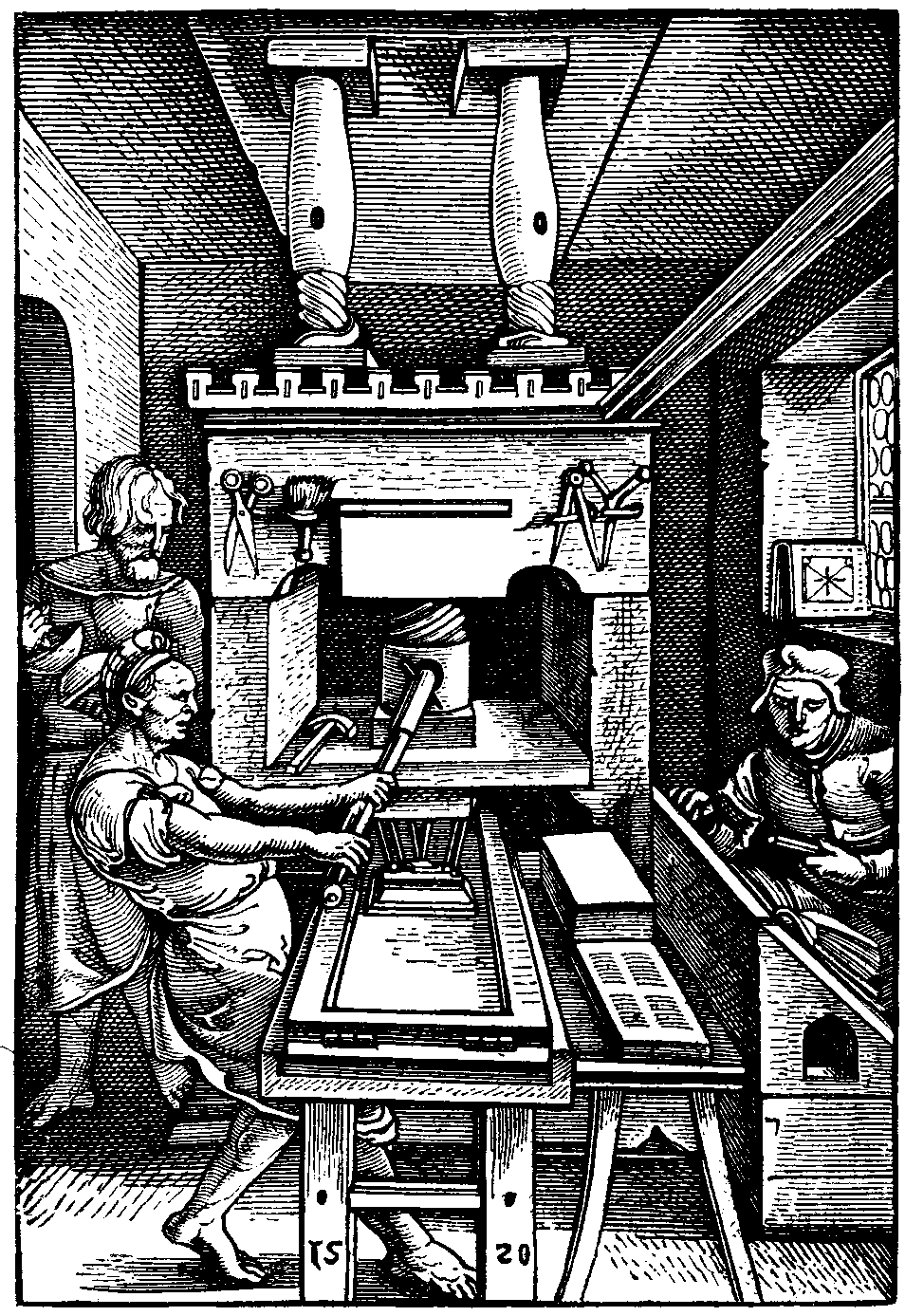
Yet, amidst all this pleasure, I have a sense that all is not well in the world of the written word. I see with dismay that bookshops are closing one after another as if hit by some sort of plague, and those that remain often survive by selling rubbish. To some degree, it is simply a change in venue. The written word is migrating from the printed page to an electronic format – am I not writing somewhere in an electronic cloud? For sure, newspapers have already almost vanished to be replaced by their electronic namesakes. Even books are taking this path. A younger colleague of mine urged me to switch to a Kindle; he even gave me his to handle, rather as you would drape a snake around someone’s shoulders to show how nice they really are. But I recoil from this electronicization of books. I want my books the old way, printed on paper, the way Gutenberg started it 500 years ago.

gutenberg

I sense, though, that the malaise with books goes deeper than a simple migration to the electronic cloud. I truly wonder if books will survive at all. The book I am currently reading, “The Swerve” by Stephen Greenblatt, tells me that books have disappeared before.

the swerve

Greenblatt is writing about the near-miraculous recovery in the 1400’s, from some dark corner of a library in a European monastery, of a mouldering 8th Century copy of the poem “De Rerum Natura” by  the Roman poet Lucretius, written in the first decades BCE. But in telling this story he also tells of the time when books disappeared from the Roman Empire as the Empire slowly collapsed in on itself and Christianity spread. It had seemed to the Roman intelligentsia that books would be there for ever, and then one day they were gone. Many Roman writers we know only by name; none of their works have survived. To a book lover like me, it is a story that sends a shiver down the spine.

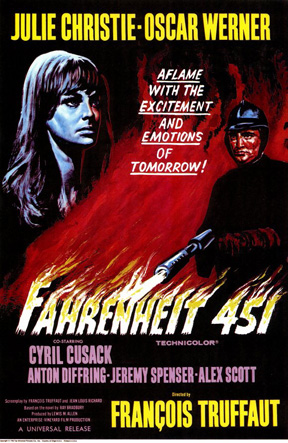
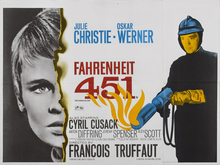
Those of my generation may remember a film of the 1960’s, Fahrenheit 451. The story is set in modern times, in a society which has banned books and where firemen are there to burn down houses containing books and not put out fires burning down houses. Through various twists and turns, the hero goes from being part of the system of suppression as a fireman to joining a resistance movement whose members live in the forests and keep books alive by each learning a few books by heart to pass on to younger generations, waiting for the time when books will be accepted again.

Fahrenheit 451

I don’t think that the next time books disappear it will be because society is hostile to them, or because society is collapsing. It will simply be through a collective bout of attention deficiency disorder as our electronic toys spin a web of confusion around our minds. Who will need books when you can slip on a pair of super-cool glasses and take part in a 3-D story peopled by electronic characters and set in electronic simulations of paradises on Earth?

I hope I’m not alive to see that day.

_____________

Secret Seven: http://www.enidblytonsociety.co.uk/author/covers/secret-seven-adventure.jpg
House of Spirits: http://swanyart.com/cms/wp-content/uploads/2013/05/houseofspirits.jpg
A Morbid Taste for Bones: http://www.hachettebookgroup.com/_b2c/media/cache/44/a4/44a4f75b43b0f8f64547b5fb88d3d63b.jpg
Waste Land: http://www.whitmorerarebooks.com/pictures/464.JPG
First World War poetry: http://ethershop.umwblogs.org/files/2011/10/poetry.jpg
Mourning Becomes Electra: http://t2.gstatic.com/images?q=tbn:ANd9GcQiKE5e4yBs1a08Z3wtMqkMnkbgAmpbLeajHmGMMCFt-_hTQ-hj
Pursuit of Power: http://www.bibliovault.org/thumbs/978-0-226-56158-5-frontcover.jpg
Guns, Germs and Steel: http://www.beyondone.org/images/image/GunsGermsSteel.jpg
Face of Battle: http://www.jamesaitcheson.com/wp-content/uploads/2013/01/The-Face-of-Battle.jpg
White House Years: http://i.ebayimg.com/00/s/NDgwWDMyNQ==/$%28KGrHqF,!osE8Vffrj3DBPOp0ebETg~~60_35.JPG?set_id=8800005007
Panda’s Thumb: http://www.ateism.nu/images/The%20Pandas%20Thumb%20by%20Stephen%20Jay%20Gould.jpg
Blind Watchmaker: http://upload.wikimedia.org/wikipedia/uk/thumb/f/f8/Blind_Watchmaker.jpg/240px-Blind_Watchmaker.jpg
The Changing Faces of Jesus: http://img2.imagesbn.com/p/9780142196021_p0_v1_s260x420.jpg [in http://www.barnesandnoble.com/w/the-changing-faces-of-jesus-geza-vermes/1004427856?ean=9780142196021%5D
Gutenberg: http://www.mainlesson.com/books/bachman/inventors/zpage206.gif
The Swerve: http://media.npr.org/assets/bakertaylor/covers/t/the-swerve/9780393064476_custom-90f41678e2d9b3883ed17ae22fff5d2273ca209e-s6-c30.jpg
Fahrenheit 451: http://upload.wikimedia.org/wikipedia/en/f/f0/Fahrenheit451B.jpg

MY CRUISE OF FIRSTS

Beijing, 5 April 2013

My previous post about chocolate Easter eggs led me to take a page from Charles Dickens and I allowed myself to be visited by the ghost of Easters past. He took me back through memories of previous Easters, some very pleasant and others not so much. One in particular has stayed with me, the Easter I passed on a cruise in the Mediterranean when I was 14.

My English grandmother had decided that she would like to go on a cruise but wanted company. So she took me and my older brother along with her. It was a wonderful trip, one of those golden-hued memories that each one of us has. Easter itself was celebrated without much fuss and bother in Brindisi, in southern Italy – we were just a few Catholics among a sea of Anglicans and so were packed off to a small room on the ship and a local priest was brought in for the occasion.  A surf through the web tells me that Easter occurred on April 14, two weeks later than this year. We were already towards the end of the cruise. There were a couple more stops in what was then Yugoslavia and is now Croatia, at Split and Dubrovnik, and then it was back to Venice where we had boarded ship. Before Brindisi, we had visited Olympia, Crete, Athens, Istanbul, Ephesus, and then finally Rhodes before starting back (there was also a visit to one of the smaller Ionian islands but I no longer remember which one).

For me, this was a trip of many firsts (well, the whole trip was a first but there were certain things which were more first than others, if you get my drift).

It was my first trip to Venice, one which my wife and I have repeated many, many times, sometimes with the children, first from Milan when we lived there and then later from Vienna. What I fell in love with that first time and keep going back to is not the grand theatricality of St. Mark’s Square

venice-st marks square

or of the laguna, which the cruise ship sailed down as we left Venicevenice-the lagoon

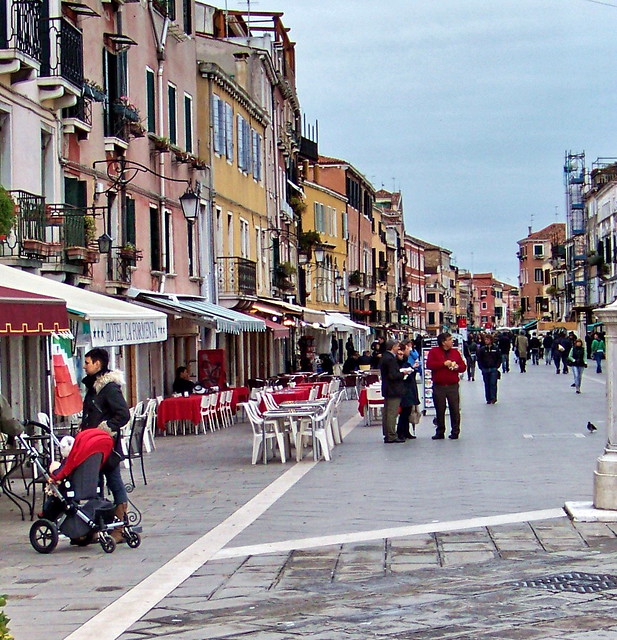
No, what always bring us back is the humbler Venice, the alleys and lanes (it’s hard to talk of streets when there are no cars) far away from the tourist haunts, which widen and narrow with no apparent rhyme or reason, which loop and re-loop over narrow canals, which suddenly bring you, blinking in the light, into small piazzas teeming with life.

venice-calle-1

venice-calle-2

venice-calle-3

venice-calle-4

We spent the afternoon before setting sail wandering around, map in hand – a map is always necessary in Venice, although my wife is not really of that opinion: ask people the way, that’s her motto.

The cruise also took me on my first visit to classical ruins. England and the parts of France I was then familiar with don’t have any Roman ruins to speak of; an odd crumbling wall here and there is about the sum of it. Here, we had a feast!

Olympia

olympia-column-2

Knossos

Knossos-palace-1

Mycenae

mycenae-lion-gate-4

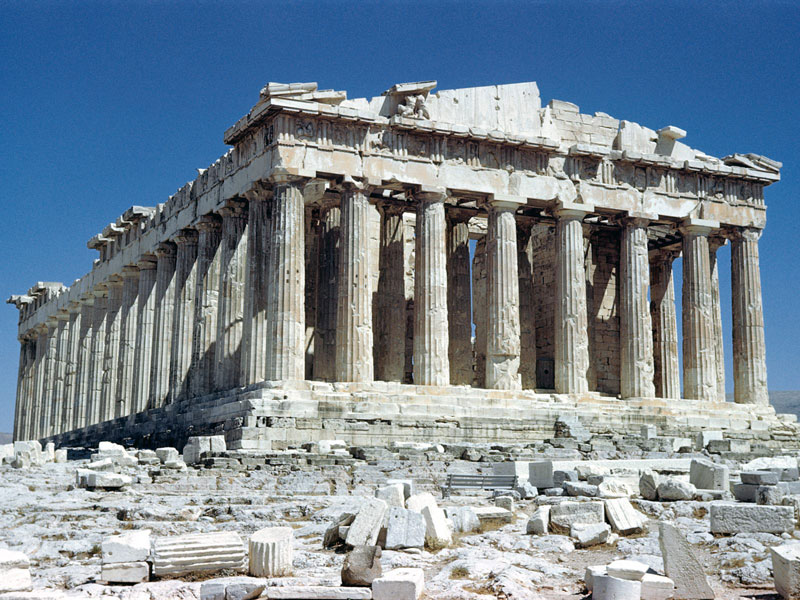
The Acropolis in Athens

athens-acropolis-1

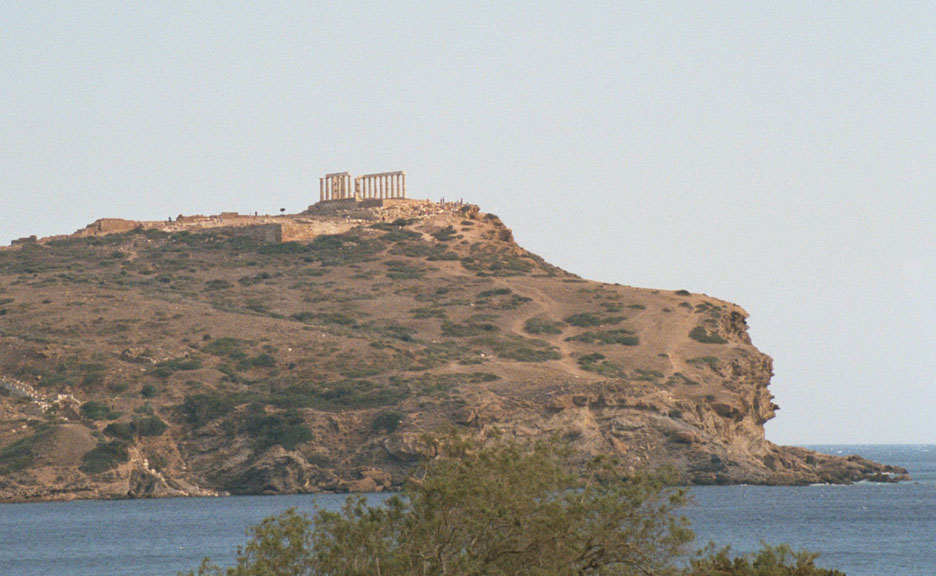
Cape Sounion

cape-sounion

Ephesus

ephesus

Actually, it was more a surfeit than a feast. To be very honest, after I’ve seen three broken columns and five fallen walls the experience begins to pall. Many decades later, when I got to know Shelley’s poem Ozymandias I could relate to all these ruins and many others I have seen since all over the world in a different way:

I met a traveller from an antique land
Who said: Two vast and trunkless legs of stone
Stand in the desert. Near them, on the sand,
Half sunk, a shattered visage lies, whose frown,
And wrinkled lip, and sneer of cold command,
Tell that its sculptor well those passions read
Which yet survive, stamped on these lifeless things,
The hand that mocked them and the heart that fed:
And on the pedestal these words appear:
“My name is Ozymandias, king of kings:
Look on my works, ye Mighty, and despair!”
Nothing beside remains. Round the decay
Of that colossal wreck, boundless and bare
The lone and level sands stretch far away

But, in all this blur of broken stone one memory stands out, etched for ever more in my mind: wildflowers growing in profusion among the ruins of Olympia. A search of the web shows that I am not the only traveler to Olympia who has been struck by the flowers there:

olympia-wildflowers-6

olympia-wildflowers-5

SANYO DIGITAL CAMERA

The trip was also my first real exposure to Greek sculpture. My grandmother had taken me a few times to the British Museum but somehow we always seemed to end up in the section of the Egyptian mummies – at least, that’s all I remember of those early visits. But the visit to the National Archaeological Museum in Athens was a real eye-opener for me. Two pieces I remember particularly well. One was the statue of Zeus (or is it Poseidon?):

Athense-bronze_statue_of_Zeus_or_Poseidon-1

Look at that face!

Athense-bronze_statue_of_Zeus_or_Poseidon-3

Speaking of faces, the other piece that impressed itself on me was the gold mask which Schliemann dug up in Mycenae (our Greek and Latin teacher had often quoted the phrase “I have gazed upon the face of Agamemnon”, said to have been uttered by Schliemann when he first set eyes on the mask)

agamemnon-1

Another notable first on this trip was my exposure to Byzantine mosaics, in the cavernous interior of Hagia Sophia in Istanbul.

istanbul-hagia sophia-interior-1

istanbul-hagia sophia-mosaics-1

istanbul-hagia sophia-mosaics-4

istanbul-hagia sophia-mosaics-5

This started an interest – an obsessive interest, my wife might observe – in early Christian mosaics, which I have tracked down in various parts of the Mediterranean basin since then.

Istanbul was the site of yet another first, my first exposure to Muslim architecture, in the form of the incomparably beautiful Sultan Ahmed Mosque.

istanbul-sultan ahmed mosque-exterior-2

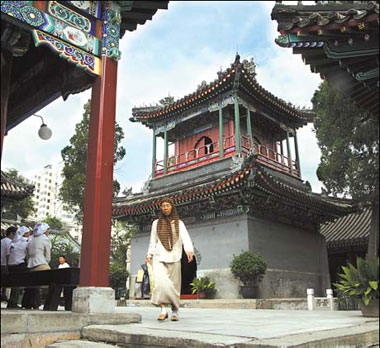
Since then, I have been lucky enough to admire Muslim architecture in all its wonderfully different variations in many parts of the world – even here in Beijing, where it has taken on decidedly Chinese characteristics.

beijing mosque

Iran and Central Asia await me still …

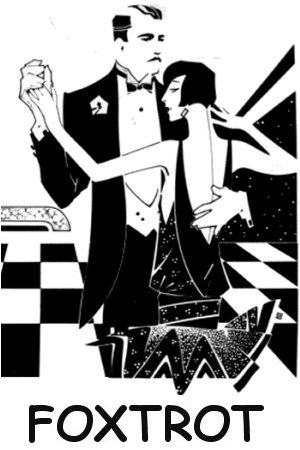
On a lighter note, the cruise was the first – and probably last – time I saw the foxtrot being danced. Every evening a three-man band played in the dance room. It started with oldies, and a retired English Major and his wife were assiduous dancers. As the band started up, they would step out, glide through a number of foxtrot numbers, and then retire to the bar.

foxtrot-1

They looked surprisingly like this picture, just somewhat longer in the tooth.

After they had left, the tempo changed and us young things would take over the dance floor and dance the night away. Well, I didn’t. I was far too shy. I would look on enviously at the elder young things. At last, one took pity on me and led me to the floor to dance my first modern dance. Another first …

Last, but definitely not least, it was on that cruise that I first set eyes on the Mediterranean. It was love at first sight.

mediterranean sea-3

______________________

Venice-St Mark’s square: http://www.instablogsimages.com/1/2012/04/25/sunset_on_st_marks_square_image_title_upyro.jpg
Venice-Lagoon: http://cdn2.vtourist.com/4/3990973-looking_back_from_the_water_bus_Venice.jpg
Venice-calle-1: http://renaissancerules.files.wordpress.com/2011/01/venice-2009-294.jpg
Venice-calle-2: http://picasaweb.google.com/lh/photo/Vx_htYT8ClwJ1DwCpMcy1A
Venice-calle-3: http://www.cepolina.com/photo/Europe/Italy/Venice/Venice-mix/3/Venice-street-narrow-calle-rill.jpg
Venice-calle-4: http://farm2.staticflickr.com/1265/5186001188_065ec8a290_z.jpg
Olympia: http://images.fanpop.com/images/image_uploads/Olympia-greece-585497_1024_768.jpg
Knossos-palace: http://ant3145crete.wikispaces.com/file/view/Knossos_1.jpg/68392549/Knossos_1.jpg
Mycenae-lion-gate: http://www.civilization.org.uk/wp-content/uploads/2012/02/Mycenae-Lion-gate-028.jpg
Athens-acropolis: http://www.limotaxi.gr/wp-content/uploads/2010/10/athens1.jpg
Cape Sounion: http://www.grisel.net/images/greece/sounion11.JPG
Ephesus: http://historyoftheancientworld.files.wordpress.com/2012/09/theatre2.jpg
Olympia-wildflowers-1: http://farm3.staticflickr.com/2245/2331955314_1629efb4ab_z.jpg
Olympia-wildflowers-2: http://farm3.staticflickr.com/2380/2331125289_93eb068ca2_z.jpg
Olympia-wildflowers-3: http://www.touringtykes.com/wp-content/uploads/2010/02/olymipia-flowers.jpg
Athens-statue of Zeus/Poseidon-1: http://upload.wikimedia.org/wikipedia/commons/6/67/Bronze_statue_of_Zeus_or_Poseidon.jpg
Athens-statue of Zeus/Poseidon-2: http://cdn.arstechnica.net/wp-content/uploads/2011/11/zeus_or_poseidon_national_archaeological_museum_athens-4ecd0b1-intro.jpg
Athens- Gold Mask “Agamemnon”: http://hernandopages.com/agamemnon.jpg
Istanbul Hagia Sophia-interior: http://hansmast.com/images/istanbul/hagia_sophia/IMG_1846_Enhancer-IMG_1857_Enhancer-2.jpg
Istanbul-Hagia Sophia-mosaics-1: http://www.mosaicartsource.com/Assets/html/artists/lilian/mosaic_hagia_sophia.jpg
Istanbul-Hagia Sophia-mosaics-2: http://www.sacred-destinations.com/turkey/istanbul-hagia-sophia-photos/slides/imperial-entrance-mosaic-c-hbetts.jpg
Istanbul-Hagia Sophia-mosaics-3: http://www.turkey4travel.com/wp-content/uploads/2009/05/hagia-sofia-mosaic.jpg
Istanbul-sultan ahmed mosque: http://www.viitoaremireasa.ro/images/articole/large/2084/Istanbul-Orasul-care-se-intinde-pe-doua-continente-5.jpg
Beijing mosque: http://www.chinadaily.com.cn/cndy/attachement/jpg/site1/20080815/000802ab80450a0f185656.jpg
Foxtrot: http://ssqq.com/archive/images/foxtrot.jpg
Mediterranean Sea-3: http://1.bp.blogspot.com/-4O6DVn4JTeQ/UG6WCS6K7yI/AAAAAAAAFaQ/NHquXzafTsA/s1600/43923144.jpg

FULL MOON

Beijing, 25 February 2013

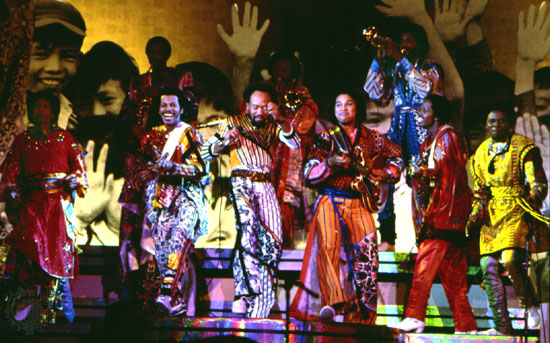
Yesterday started with my wife finally remembering a song that had been chasing around in her head all night: “September”, by Earth, Wind and Fire, whom we see here in concert:

earth wind and fire concert-1

This is a song from “our” generation; it came out in 1978. My wife tracked down a version of it on the web and promptly played it for the rest of the day. Now don’t get me wrong, it’s a great song – a feel-good song, my wife calls it – but after you’ve sung along with the refrain

Ba de ya – say do you remember
Ba de ya – dancing in September
Ba de ya – never was a cloudy day

for the fifth time, it begins to pall – at least for me. But not my wife. Mercifully, she had to turn it off when we went to bed, but then the fireworks, which had been grumbling along all day,

fireworks-5

began to build up to their final roar for midnight.

fireworks-6

Because, for those of you who do not closely follow matters Chinese, yesterday was the Lantern Festival, the last day of the Chinese new year celebrations, whose end is traditionally celebrated with an orgy of fireworks.

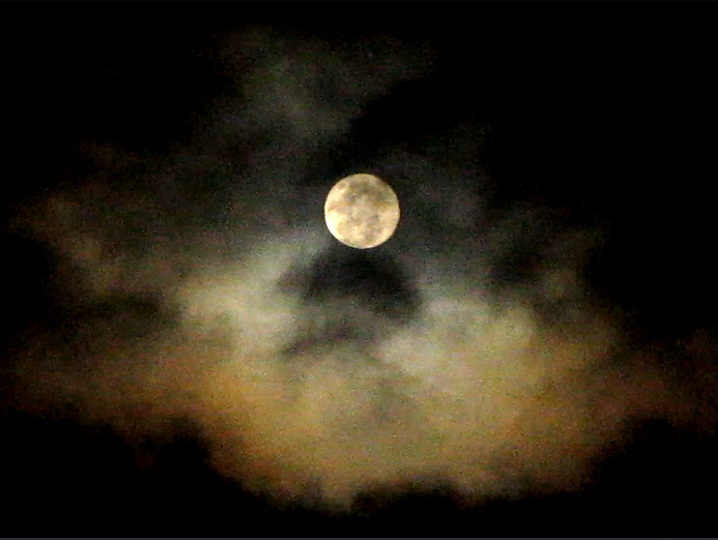
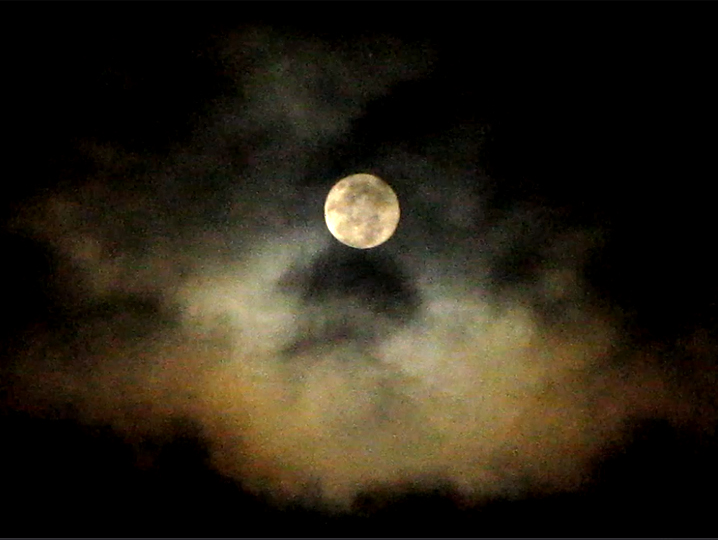
At one moment during the evening I slipped out to the local 7-11 to buy a bottle of our favourite wine (a Spanish tempranillo – but I digress). Coming back, I looked up and glimpsed through the clouds what all this sound and fury was all about: the full moon.

full moon-1

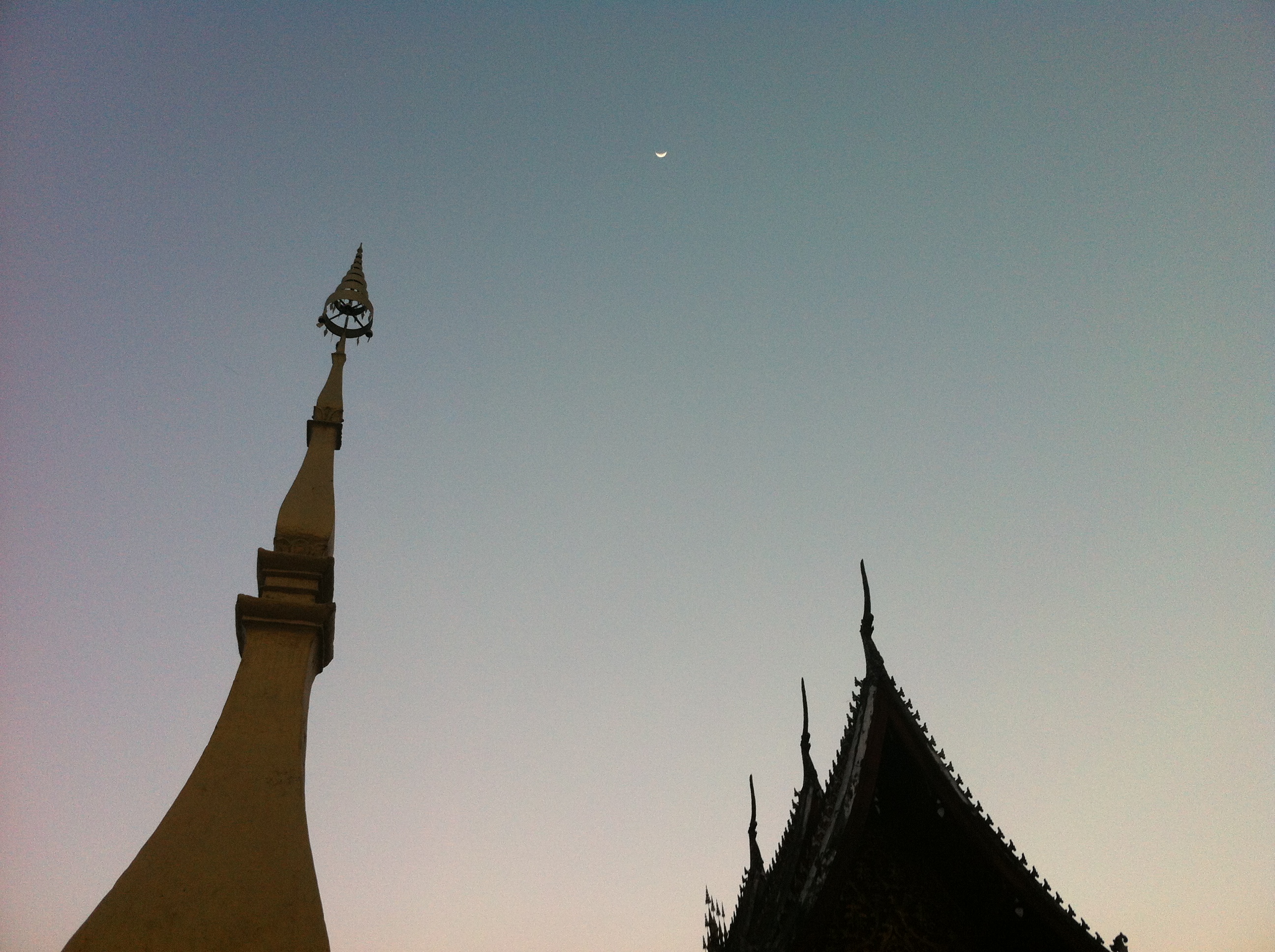
Because the Chinese new year is really a lunar festival. It starts on the second new moon after the winter solstice and ends 15 days later at the full moon. I had picked up the new moon – or newish moon; it had already waxed a few days – in Luang Prabang.

laos 499

And now I was seeing the full moon, shining serenely down on all this silliness.

A full moon is a beautiful thing. It certainly has caught the attention of many poets. A short search on the web brought to light at least 100 poems about the moon by well-known poets; Lord knows how many have been written by bad poets. But the poem which always comes to my mind when I see a full moon is not actually about the moon. I need to explain. One night in Vienna, I woke up and was enchanted by the brilliant nearly full moon pouring its white light into the bedroom. Two nights later, I was in Cambodia on the shore of the Mekong River. Looking up, I saw the full moon and thought to myself “This same moon will be shining down on my wife and children in a few hours” and found that thought immensely comforting. Now for the poem, which is by the Welsh poet Alun Lewis. He wrote it during the Second World War, when he was far away in India, in the city of Poona.

Last night I did not fight for sleep
But lay awake from midnight while the world
Turned its slow features to the moving deep
Of darkness, till I knew that you were furled,

Beloved, in the same dark watch as I.
And sixty degrees of longitude beside
Vanished as though a swan in ecstasy
Had spanned the distance from your sleeping side.

And like to swan or moon the whole of Wales
Glided within the parish of my care:
I saw the green tide leap on Cardigan,
Your red yacht riding like a legend there.

And the great mountains Dafydd and Llewelyn,
Plynlimmon, Cader Idris and Eryri
Threshing the darkness back from head and fin,
And also the small nameless mining valley

Whose slopes are scratched with streets and sprawling graves
Dark in the lap of firwoods and great boulders
Where you lay waiting, listening to the waves
My hot hands touched your white despondent shoulders

And then ten thousand miles of daylight grew
Between us, and I heard the wild daws crake
In India’s starving throat; whereat I knew
That Time upon the heart can break
But love survives the venom of the snake.

When I read the poem for the first time, I was reminded of that night in Vienna with its full moon. And now, when I’m far away from home and see the moon, I think of this poem and of my wife.

_____________________

Earth Wind and Fire concert: http://sharelike.me/image/pics/EarthWindandFireconcertPics1ApCC7Md5iwM.jpg
Fireworks-1: http://cdn.ph.upi.com/sv/em/upi/UPI-16811361735171/2013/1/9eb14390c758aeb27fd87349de4d55bc/China-celebrate-Lunar-New-Year.jpg
Fireworks-2: http://findlaydonnan.files.wordpress.com/2009/03/fireworks-to-celebrate-the-chinese-new-year-light-up-the-sky-above-beijing-china-on-january-26-2009-chinese-welcomed-the-arrival-of-the-year-of-the-ox-with-raucous-celebrations-on-sun.jpg?w=497&h=283
Full moon: http://3.bp.blogspot.com/-gY39tpbGmzg/TnLTHVEnSyI/AAAAAAAABaM/R2kBI2LddYg/s1600/Moon_Lantern_Festival.jpg
New moon Luang Prabang: my photo

BUBBLES IN THE ICE

Beijing, 28 January 2013

This morning, I walked along the opposite side of the canal to go to work. I wanted to see what someone had written into the snow that thinly covers the ice. I took a photo. Readers interested in seeing it are referred to the postscript I have just added to my post “Clear, Pure, Clean, Peaceful”.

It so happens that a path has been cleared in the snow next to the script, which carries to the other side of the canal. Many people take a short cut across the ice to the other side. I hesitated. Crossing across the canal would shorten my walk to the office somewhat. But crossing ice like that always makes me a little nervous. Decades ago, when I was fourteen, I had ventured out onto a frozen lake where the ice got progressively thinner from one side to the other. As I trotted across, the ice began to creak and crack ominously. I beat a hasty retreat and all was well, but sometimes – especially if I venture onto iced-up water bodies – the sound of that creaky-cracking comes back to me; stuff of nightmares. So I hesitated.

I finally decided it was alright and set off across the canal. The cleared ice was very transparent, although the view through it was bent and warped by the unevenness of the ice. As I looked down through the ice, I saw a multitude of bubbles, of all shapes and sizes, ghostly white, trapped in the ice. Perhaps it was the slight trepidation I felt as I walked over the ice, but suddenly it seemed to me that I was seeing the last bubbles of air exhaled by a host of people who had got trapped under the ice. I half expected to suddenly see the ethereal face of some drowned person looking up at me through the ice.

I reached the other side. Silliness … I shook the feeling off. But as I turned around to survey the canal, I remembered a shard of T.S. Eliot’s poem. The Wasteland.

Phlebas the Phoenician, a fortnight dead,
Forgot the cry of gulls, and the deep sea swell
And the profit and loss.
A current under sea
Picked his bones in whispers. As he rose and fell
He passed the stages of his age and youth
Entering the whirlpool.
Gentile or Jew
O you who turn the wheel and look to windward,
Consider Phlebas, who was once handsome and tall as you.

RIVER POEMS

Beijing, 17 January 2013

There are only a few weeks to go to the Chinese New Year and the Chinese newspapers are full of articles on people’s plans for the festive period and on the country’s transportation infrastructure bracing itself for the onslaught of Chinese who will be travelling home or – more frequently now as they get richer and move into the middle classes – travelling abroad for package tour holidays. As I read, I was reminded of a wonderful piece in the New Yorker written by the magazine’s Man in Beijing, Evan Osnos. Two Chinese New Years ago, Osnos decided to join one of these package tours, the “Classic European,” a bus tour visiting five countries in ten days.  It’s a sympathetically amusing article and I would urge any of my readers with an interest in social trends in China to read it. It can be accessed at http://www.newyorker.com/reporting/2011/04/18/110418fa_fact_osnos. Here is a photo from the article.

chinese tourists-8

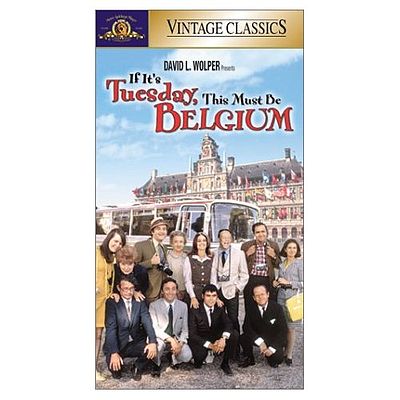
Osnos’s piece reminded me rather of a 1969 film, If It’s Tuesday, This Must Be Belgium, a romantic comedy about a group of American tourists doing a bus tour of nine European countries in 18 days.

If_It's_Tuesday

Osnos mentions in passing a sub-trend in Chinese tourism, that of Chinese lovers of poetry who go on a pilgrimage to Cambridge (the Cambridge in the UK) to gaze reverently at a clump of willow trees growing on the banks of the River Cam. The reason for all this is a poem which is wildly popular in China: 再别康桥 “Saying Goodbye to Cambridge Again”. It was written by Xu Zhimo, a famous romantic poet of the early twentieth-century.

Xu Zhimo

Xu travelled in the West for a number of years. He spent a year in Cambridge in 1921 and on a second trip there in 1928 wrote the poem. He died a few years later in a plane crash in China.

I don’t read (or speak) Chinese, so I’m afraid the poem in its original form is closed to me. However, there is what seems to be a standard translation (every Chinese website that I looked at carried the same one) which is really quite pleasant on the ear. But before I quote it here, I am moved to first cite the poem in its pinyin form (without tonal marks, which I find confusing and quite unhelpful since I don’t hear the language’s tones), to give other Chinese-illiterate readers like myself a small taste of its rhythm and rhyme.

Qingqing de wo zou le, zhengru wo qingqing de lai;
wo qinqing de zhaoshou, zuobie xi tian de yuncai.

Na hepan de jin liu, shi xiyang zhong de xinniang;
boguang li de yan ying, zai wo de xintou dangyang.

Ruanni shang de qing xing, youyou de zai shuidi zhaoyao;
zai Kang he rou bo li, wo ganxin zuo yi tiao shuicao!

Na yu yin xia de yi tan, bus hi qingquan,
shi tianshang hong rousi zai fu zao jian, chendianzhe caihong shide meng.

Xunmeng? Cheng yi zhi chang gao, xiang qingcao gen qing chu man su,
manzai yi chuan xing hui, zai xing hui banlan li fangge.

Dan wo buneng fangge, qiaoqiao shi bieli de shengxiao;
xiachong ye wei wo chenmo, chenmo shi jinwan de Kangqiao.

Qiaqiao de wo zou le, zhengru wo qiaoqiao de lai;
wo hui yi hui yixiu, bu daizou yi pian yuncai.

And now for the translation:

Very quietly I take my leave
As quietly as I came here
Quietly I wave good-bye
To the rosy clouds in the western sky

The golden willows by the riverside
Are young brides in the setting sun
Their reflections on the shimmering waves
Always linger in the depth of my heart

The floating heart growing in the sludge
Sways leisurely under the water
In the gentle waves of Cambridge
I would be a water plant!

That pool under the shade of elm trees
Holds not water but the rainbow from the sky
Shattered to pieces among the duckweeds
Is the sediment of a rainbow-like dream

To seek a dream? Just to pole a boat upstream
To where the green grass is more verdant
Or to have the boat fully loaded with starlight
And sing aloud in the splendour of starlight

But I cannot sing aloud
Quietness is my farewell music
Even summer insects keep silence for me
Silent is Cambridge tonight

Very quietly I take my leave
As quietly as I came here
Gently I flick my sleeves
Not even a wisp of cloud will I bring away

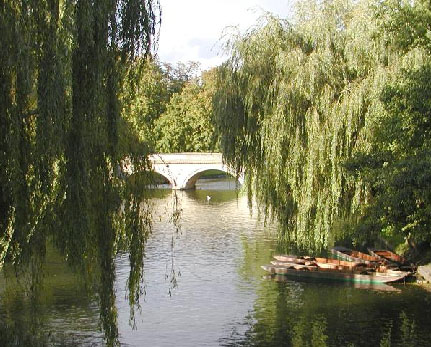
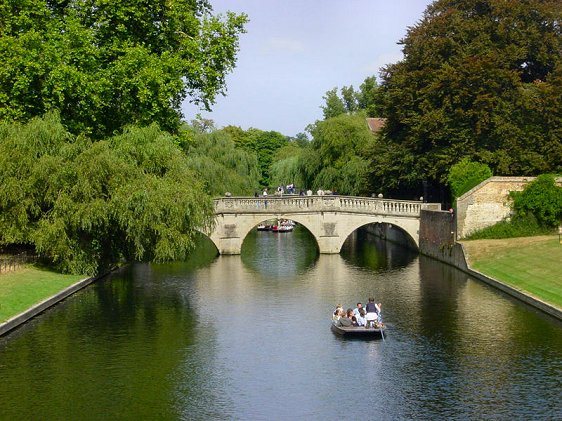
I can’t resist adding a few pictures here of the river Cam. It is a river that flows quietly through Cambridge, as quietly as the poem itself flows across the page.

Cam with willows

Henry VIII chapel and Cam

Cam-1

I came across the text of the poem for the first time through an English Lit class I held with a Chinese student (class is a big word; it was more a pleasant discussion around English literature every Saturday morning, over a cup of hot sweet soya milk). After we had gone through a few English poems he brought me this translation of  “Saying Goodbye to Cambridge Again”. I was touched and wanted to give him in return an English poem with a river as its theme. But what?

I went on a search and came across the poem “The River” by Sara Teasdale.

sara-teasdale

Teasdale, an American poet, was more or less a contemporary of Xu. She died in 1933.

I came from the sunny valleys
And sought for the open sea,
For I thought in its gray expanses
My peace would come to me.

I came at last to the ocean
And found it wild and black,
And I cried to the windless valleys,
“Be kind and take me back!”

But the thirsty tide ran inland,
And the salt waves drank of me,
And I who was fresh as the rainfall
Am bitter as the sea.

I had never heard of Teasdale, and a look at her other poems did not impress me, but this poem, at this time in my life, spoke to me. Who doesn’t reach my age and sometimes wish he could slough off the pessimism which comes with the passing years and be young again, fresh and optimistic?

____________________________

Chinese tourists: http://www.newyorker.com/online/blogs/books/assets_c/2011/04/110418_osnoschinese01_p465-thumb-465×310-68686.jpg
Film poster: http://upload.wikimedia.org/wikipedia/en/9/9f/If_It%27s_Tuesday.jpeg
Xu Zhimo: http://cfile25.uf.tistory.com/image/1768563E4F8F1F6C23B5BE
Cam with willows: http://www.baihuisoft.com/Uploads/201179154340875.jpg
Henry VIII chapel and Cam: http://ts1.mm.bing.net/th?id=H.4921582377371804&pid=1.9
Cam and Clare college: http://anyluckypeny.files.wordpress.com/2012/05/clare-college-bridge-university-of-cambridge.jpg?w=870
Sara Teasdale: http://www.poetryfoundation.org/uploads/authors/sara-teasdale/448x/sara-teasdale.jpg

ST. MARY’S GARDEN

New York, 7 January 2013

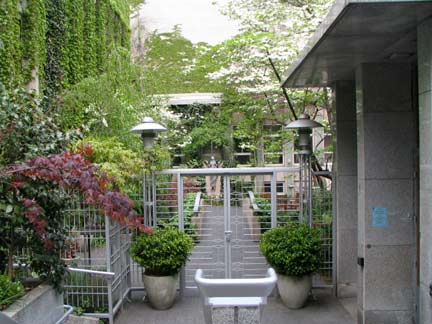
Several years ago, I had to be in New York for a period of two weeks to cover an international meeting. It was early May, a good time to be in the city. The weather is normally nice and it’s not too hot yet. The first morning, I left early to give myself plenty of time to deal with the wearisome entry procedures. My walk to the meeting took me along 47th Street. As I was walking between First and Second Avenues, I spied to my left the entrance to a little garden, open to the public.

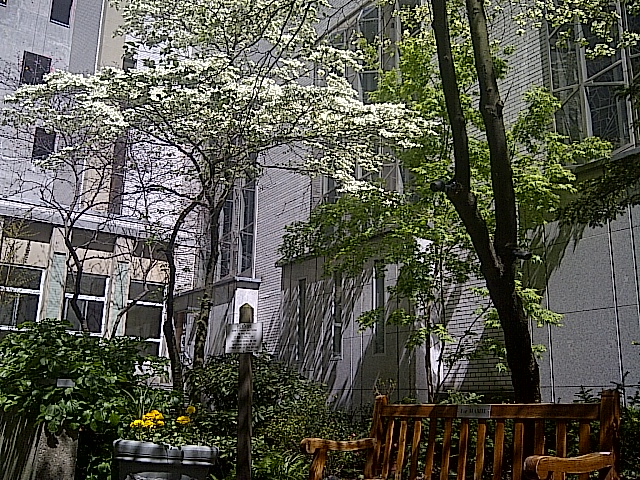
mary's garden-2

Intrigued, I checked my watch and decided I had sufficient time to take a quick look. What I found was achingly lovely: a little pool with the quiet gurgle of a fountain to the side, a small bridge spanning the pool

mary's garden-1

leading to three benches, and planted beds around the pool. Most magnificent of all, arching over the whole, were three dogwood trees. They were in full bloom, and the soft whiteness of their flowers, tinged with spring green, permeated the whole space. I was left without breath and sat for five minutes to absorb it all. Of a sudden, I started out of my reverie, checked my watch again, and hurried off to my meeting.

The garden must be little known, because I was unable to find any photos of it on the web other than the two above. So I later sent my daughter to take photos when the dogwood trees were in flower. Here is a sample.

IMG-20130503-01859

IMG-20130503-01863

IMG-20130503-01864

I went back several times during the next two weeks, to reflect and to rest, watching the dogwood flowers begin to fade. I learned the garden’s name – St. Mary’s garden – and that it was attached to the small church next door, the Church of the Holy Family. I brought my wife there when she joined me in the second week. We sat on one of the benches and held hands.

When yesterday I found myself by chance close by, I could not resist visiting the garden again. Given the season, it was drearer.

garden-winter 002

But it still had a dreamy quiet; the fountain gurgled softly, and a bird sang in the dogwood trees. As I sat there, a fragment of the Litany of the Blessed Virgin Mary floated up out of my boyhood memories, heard murmured by old women in dark, empty churches at the time of the Angelus:

Mystical rose,
Tower of David,
Tower of ivory,
House of gold,
Ark of the covenant,
Gate of heaven,
Morning star,
Health of the sick,
Refuge of sinners,
Comforter of the afflicted …

And then another memory fragment floated to my the surface of my mind, lines from the end of T.S. Eliot’s poem Ash Wednesday:

Blessed sister, holy mother, spirit of the fountain, spirit of the garden,
Suffer us not to mock ourselves with falsehood
Teach us to care and not to care
Teach us to sit still …

And I sat still.

_________________
Mary’s garden-1: http://www.dkimages.com/discover/previews/739/151269.JPG
Mary’s garden-2: http://forgotten-ny.com/wp-content/gallery/streetscenes_chip_07/11-holyfamily-grotto.jpg
Dogwood in bloom-1: my daughter
Dogwood in bloom-2: my daughter
Dogwood petals in the pool: my daughter
garden in winter: my picture

LITTLE LAMB

Beijing, 15 December 2012

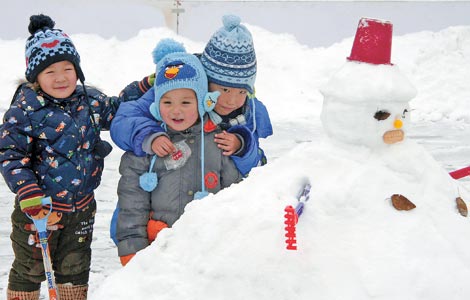
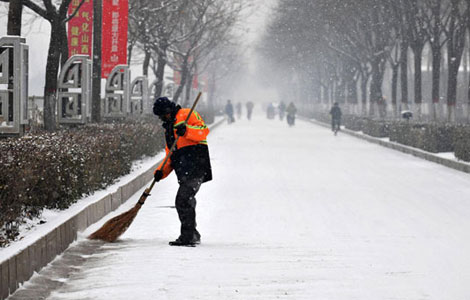
Yesterday, we had the first heavy snowfall of the year in Beijing – there had been some earlier flurries, but no more than that. I don’t want to exaggerate; there wasn’t really a huge amount of snow, which was just as well because Beijing drivers have no idea how to drive in snow and their cars are not equipped for it. But for Beijing it was significant. As the snow began to pile up, people – and not just children – were out on the streets making snowmen and throwing snowballs, while some of the more responsible ones were clearing the pavements; I even saw a snowblower for the first time here!

children and snowman road cleaning

It was all quite picturesque, so I was moved to haul out our old CD “The Essential Carols Collection” which we always played at this time of the year when the children were with us, and gave it a whirl.

carols CD

Out floated those hoary old favourites, “Once in Royal David’s City”, “The Holly and the Ivy”, “Silent Night”, “O Come All Ye Faithful”, and on and on, while the odd tear or two formed in the corner of my eye.

But squeezed in between “O Tannenbaum” and “Ding Dong Merrily on High”, comes John Tavener’s “The Lamb”, an ethereally, achingly beautiful modern carol. Every time I get to this part of the CD, I have stop whatever I’m doing and sit down and just let the music flow through me. Tavener uses the words of William Blake’s The Lamb for the carol:

Little Lamb who made thee
Dost thou know who made thee
Gave thee life and bid thee feed.
By the stream and o’er the mead;
Gave thee clothing of delight,
Softest clothing wooly bright;
Gave thee such a tender voice,
Making all the vales rejoice!
Little Lamb who made thee
Dost thou know who made thee

Little Lamb I’ll tell thee,
Little Lamb I’ll tell thee!
He is called by thy name,
For he calls himself a Lamb:
He is meek and he is mild,
He became a little child:
I a child and thou a lamb,
We are called by his name.
Little Lamb God bless thee.

I always wanted my mother to hear this carol, she loved William Blake. But this will join that long list of regrets, things we wished we had done but left until it was to too late.

_________________

Children with snowman: https://usa.chinadaily.com.cn/

Man sweeping snow in street: https://usa.chinadaily.com.cn

MY MOTHER HAS JUST DIED

Beijing, 11 August 2012

My mother died a few days ago. My brother’s email telling me so didn’t give any details, and a later email from my sister simply said that she had passed away very peacefully; the usual words.

My mother has actually been dead for a while. The person I visited last month was not my mother. She didn’t talk, she didn’t react to my talking, she simply sat there gazing blankly. It was the hollowed-out shell of my mother, a moulted exoskeleton. So the news elicited no grief from me, just a melancholy relief that she had finally been spared the indignity of living on.

Did she die well? I would like to think that she did. I would like to hope that she – a fervent Catholic all her life – managed one last prayer to the Lord her God before her heart finally gave out. But I doubt it; she probably died the way an old, badly tuned car engine sputters out, just a last wheeze and jolt and that was it, in the little room that she occupied in the old person’s home.

I have always had this picture of the generations walking in cohorts towards the final end, one behind the other; rather like regiments marching across No Man’s Land. The generation ahead of mine – my parents and my aunts and uncles – is sadly depleted; only three very elderly aunts remain. Soon even they will be gone, and then there will be no-one between me and the end. Even my cohort is beginning to thin; death has picked off the husband of my sister, a cousin … the pace will pick up in the coming years.

This vision wouldn’t bother me so much if I – like my parents – could believe that death is merely an uncomfortable rite of passage to be endured, because it leads to a greater – and eternal – life. But I cannot. Decades ago, I played Claudius in Shakespeare’s Measure for Measure. As he awaits execution in prison, Claudius meditates on what will come after he dies:

…to die, and go we know not where;
To lie in cold obstruction and to rot;
This sensible warm motion to become
A kneaded clod; and the delighted spirit
To bathe in fiery floods, or to reside
In thrilling region of thick-ribbed ice;
To be imprison’d in the viewless winds,
And blown with restless violence round about
The pendant world; or to be worse than worst
Of those that lawless and incertain thoughts
Imagine howling: ’tis too horrible!
The weariest and most loathed worldly life
That age, ache, penury and imprisonment
Can lay on nature is a paradise
To what we fear of death.

At much the same time that I played Claudius I had come to the unalterable conclusion that there was no world beyond ours and I turned away forever from the religion of my forebears. So like Claudius, I am afraid “to lie in cold obstruction and to rot; this sensible warm motion to become a kneaded clod”. And I too feel that “the weariest and most loathed worldly life that age, ache, penury and imprisonment can lay on nature is a paradise to what we fear of death.” But I cannot follow Claudius in his belief of an afterworld, even if his vision is one of terror. I am merely afraid of disappearing forever.