BREAKING IN BOOTS ON THE YORKSHIRE MOORS

London, 7 May 2014

My wife and I were on Oxford Street yesterday, where she did one of her favorite things, namely she entered a shoe shop to inspect its contents. In this case, the inspection led to her purchasing two pairs of moccasins. Flushed with this success, she emerged from the shop wearing one of her purchases. After a few hours of further walking around London, the inevitable happened. My wife’s face started taking on a strained look, and she eventually confessed to sore feet. The new shoes, she announced, needed breaking in. I then suggested, in a moment of flippancy, that she should find someone to break in her shoes for her. She waved this off as the flippant suggestion that it was.

And yet … it was not so foolish a suggestion. I, for one, had done exactly this at school. I had broken in a pair of shoes for someone else. Boots, actually.

I should explain.

It was June 1972. My classmates and I had just finished taking our A-levels and we were about to leave school for good. A bunch of us got together and decided to celebrate this rite of passage by crossing the Yorkshire moors (which lay just to the north of our school) from one side to the other, all in one go. This may not sound like much, but actually it was a bit of bravado. We’re talking of a distance of some 60 kilometers, so to do it in one go meant starting at 3 in the morning with the hope of finishing in the late afternoon. I realize now that what we did was the Lyke Wake Walk or some variant of it. This walk runs from the village of Osmotherley, which lies on the western edges of the moors, all the way to the sea which laps at the moors’ eastern border. We started feverish preparations, which brings us to the topic of boots and their breaking-in. I suddenly realized that I had no adequate footgear. Gym shoes were far too light (the heavy running shoes of today did not yet exist), but I didn’t want to buy a pair of walking boots just for this. At the last moment, the younger brother of one of the walking team offered to lend me his brand new boots. By using them I would be doing him the favour of breaking them in. Damned good deal, I thought.

So at 3 am of a Saturday morning, we were dropped off from an old army truck, me in my brand-new borrowed boots, with the escarpment of the moors looming up in front of us in the darkness. Feeling a bit like a bunch of commandos on a special mission to knock out the enemy’s gun positions, we quietly filed up the path which carried us to the top of the escarpment and then started walking across the heather. And we walked.

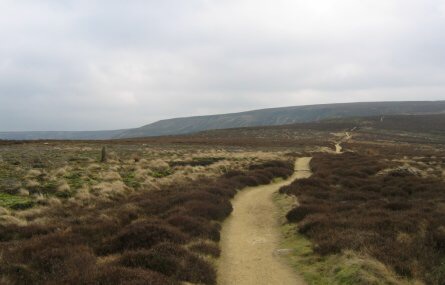
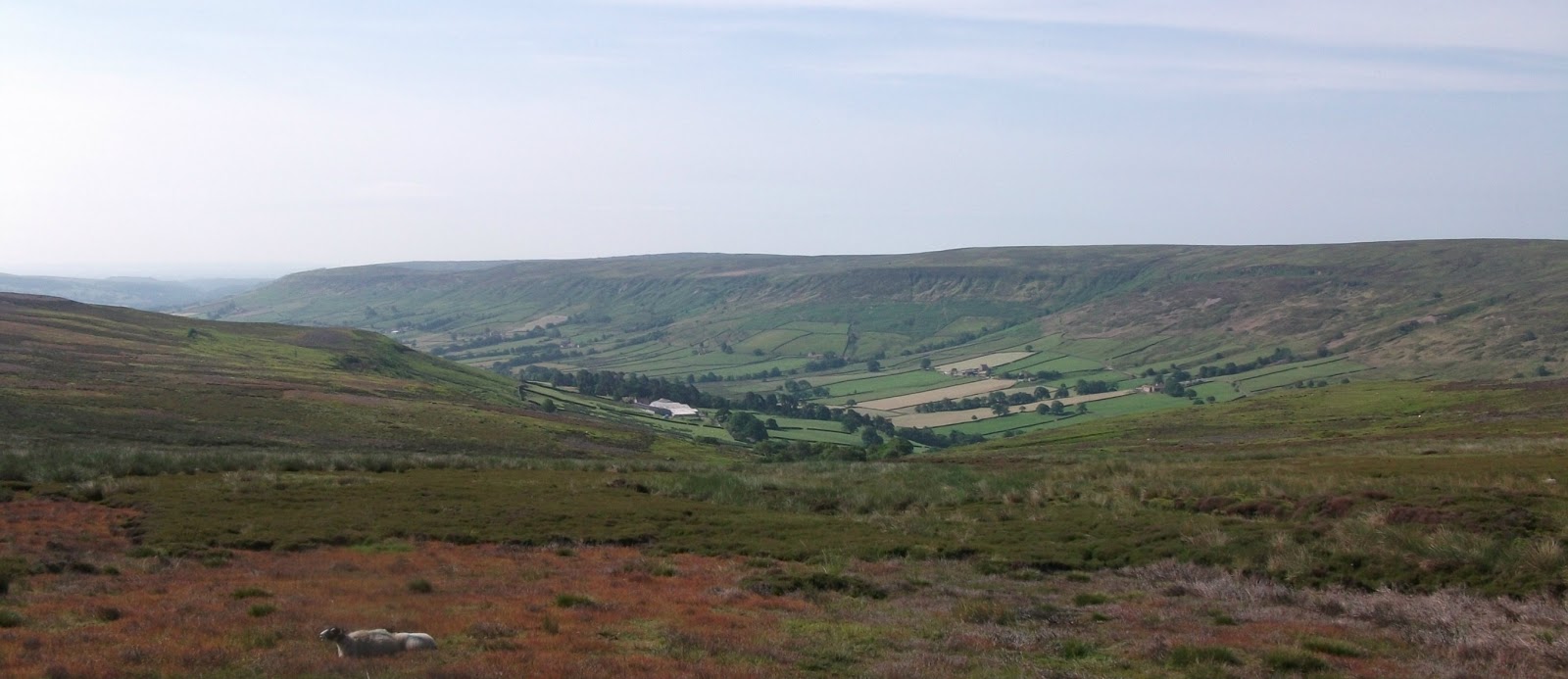
The sky slowly lightened up until we could see around us. It was really very beautiful, bleak perhaps, certainly remote, but beautiful.

image image

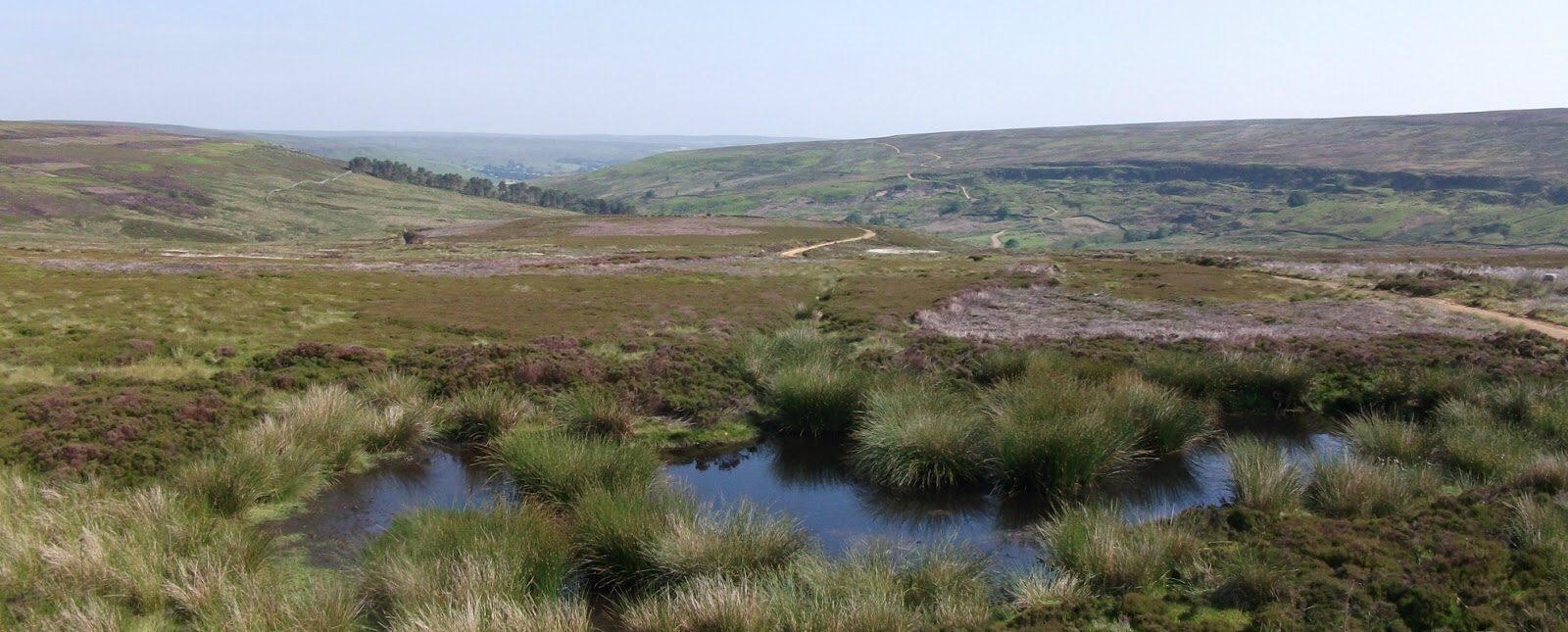
We stopped for breakfast, munching on some sandwiches we had brought with us. A squall swept through, luckily the only one of the day. After which we started walking again, with stunning views around us

image image

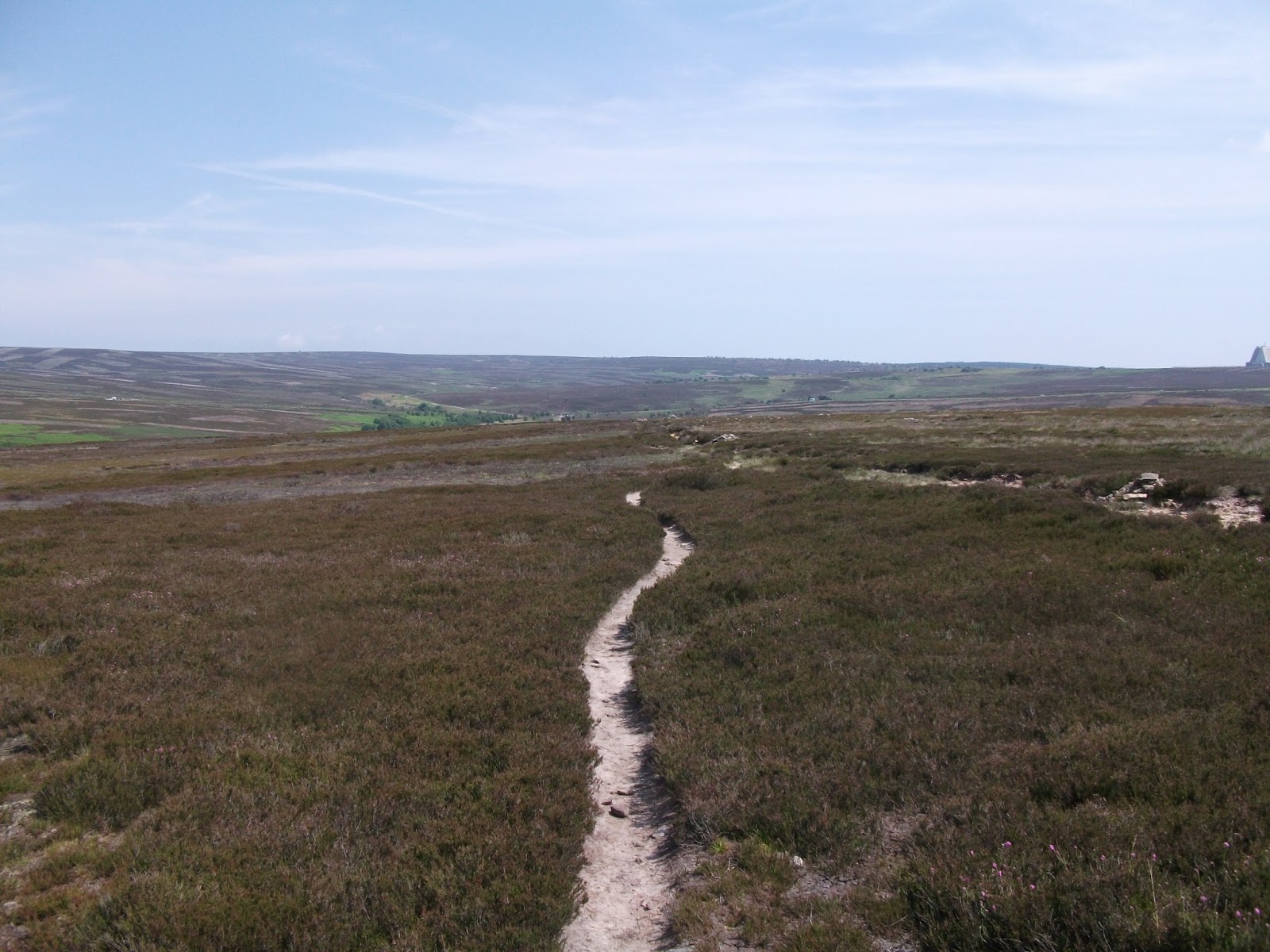
And we walked. And walked. The sun in the meantime slowly climbed to its zenith, the clouds clearing away and leaving a beautiful sunny day in their wake.

image

At lunchtime, we reached a road on which the old army truck was parked, waiting for us. As we each trudged in, we clustered around the truck and took the food and drink being handed out. We sank down on the heather, glad to have an excuse to rest our aching legs a while. Eventually, though, we had to lever ourselves back on to our feet and walk on. And so we walked. And walked.

image

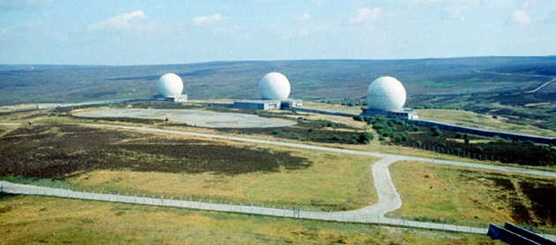
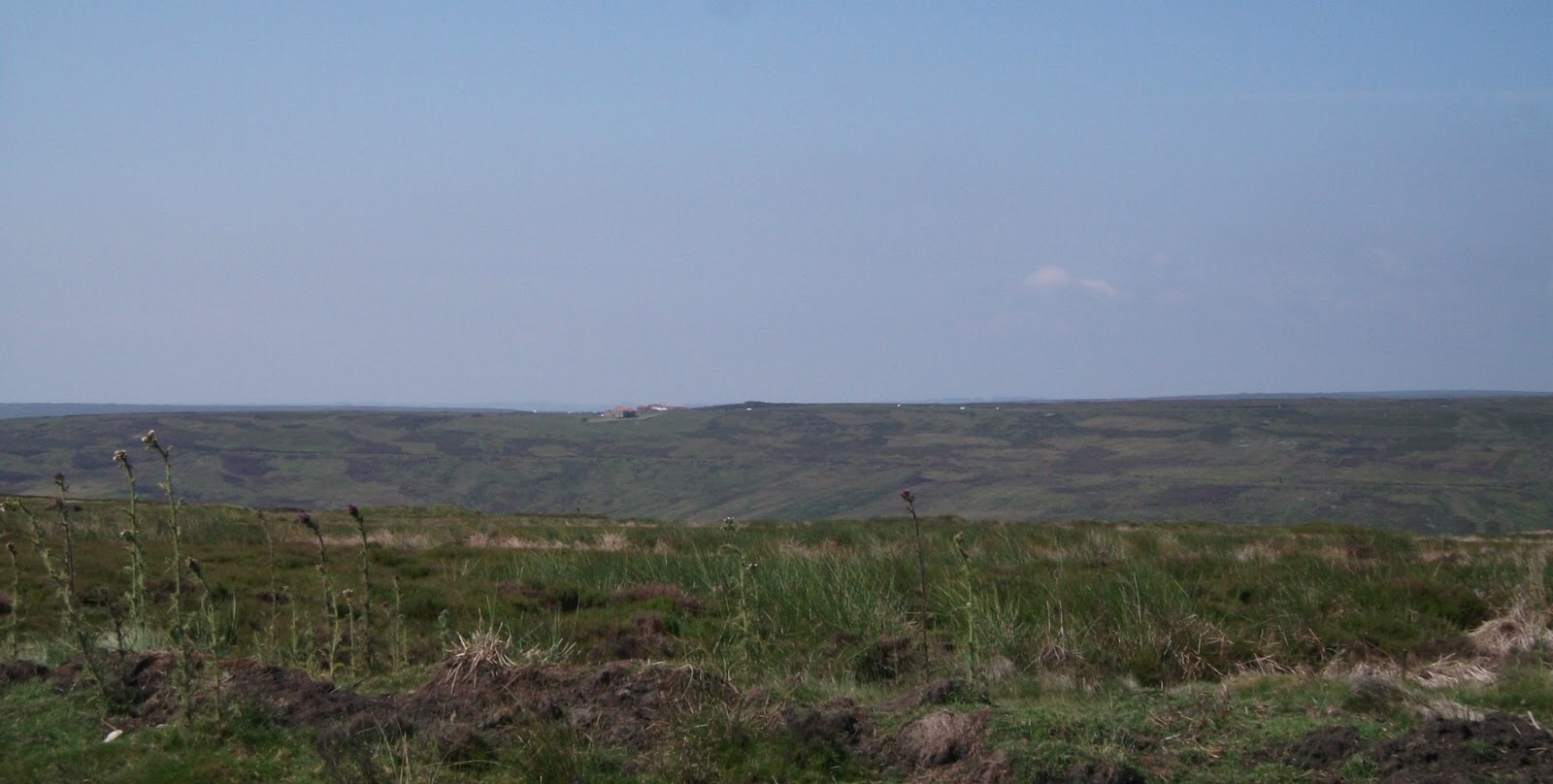
An hour or so later we reached Fylingdales, those strange “golf balls” in the middle of the moors, which are actually part of an RAF radar station.

image

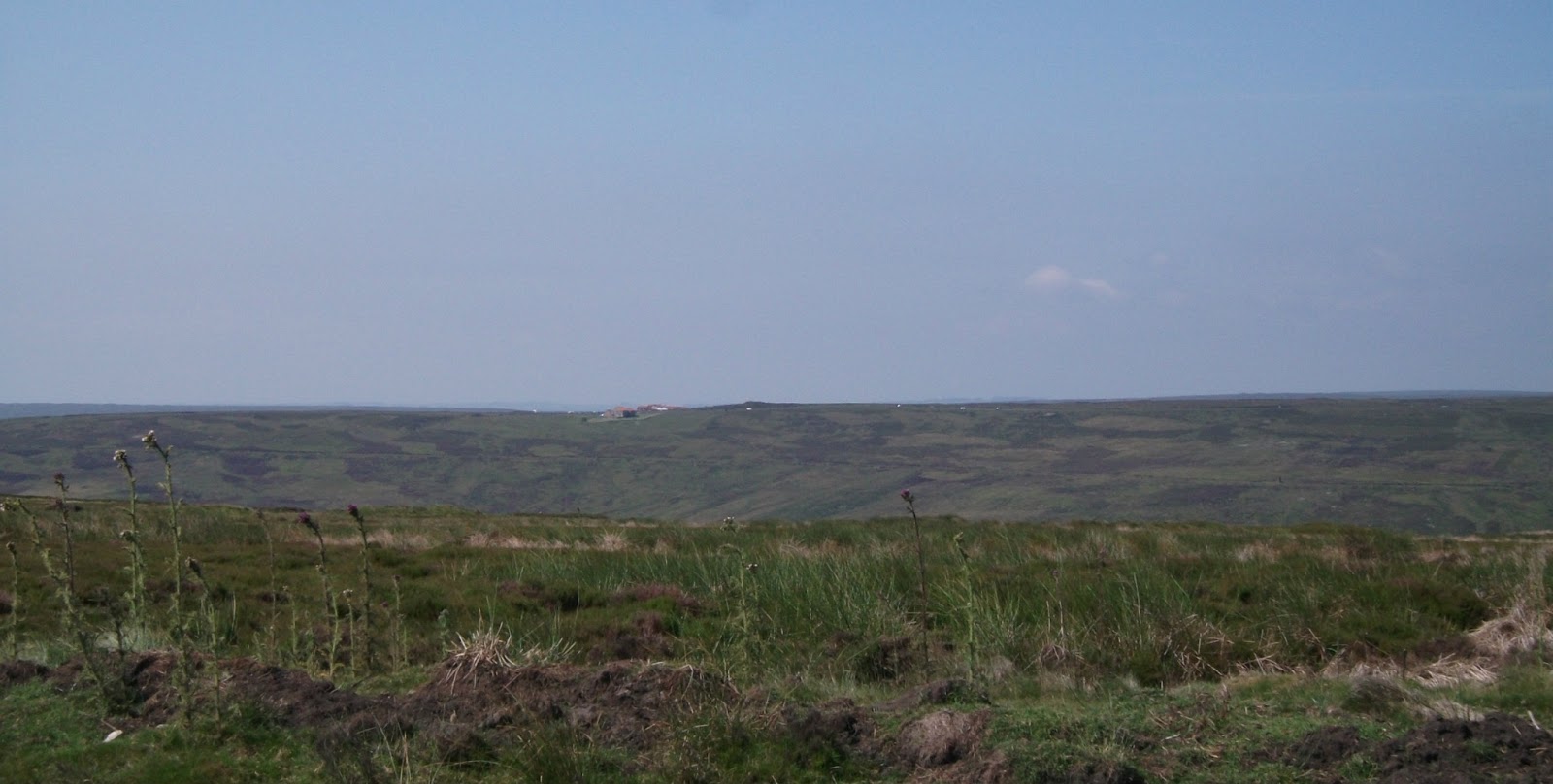
We stopped a moment, with the excuse to admire the balls but really just to be able to stop walking for a bit. But we soon had to push on. The earlier joshing and joking had died away hours ago. We now just walked, oblivious to the beauty around us

image

By this point, the new, being broken-in boots were hurting me so much that I took them off and walked barefoot. How much further, dear God? How much further? My friends began to stumble past me as I shuffled on slower and slower, and they weaved off unsteadily ahead of me through the heather. At last, at last, I crested a rise and there, down on the road, was the old army truck. Thank God, thank God, and thank God!! Still after all these years, I can remember with perfect clarity the exhausted joy of sighting that truck. I sank down in the heather beside it and promptly fell asleep.

And the next day, after I had crawled stiffly out of bed and had had some breakfast, I solemnly handed over the boots to their owner, who was very pleased by the impeccably thorough breaking-in I had given them.

So all of this to say that I’m sure my wife could find a penniless student who would break in her shoes for her, for a price.

_________________

http://www.sub3000.com/balbum/England/37/images/UraCW.jpg [in http://www.sub3000.com/balbum/England/37/Urra.html%5D
http://www.sub3000.com/balbum/England/37/images/uraSummit.jpg [in http://www.sub3000.com/balbum/England/37/Urra.html%5D
http://www.walterthompson.co.uk/images/uploads/lykewake.jpg [in http://www.walterthompson.co.uk/news/article/lyke_wake_walk_2011%5D
http://4.bp.blogspot.com/-nJnaXzkEn04/Uek1cHLm7hI/AAAAAAAACT8/TDpegiXR8F4/s1600/Lyke+Wake+Race+2013+016+small+farndale.jpg [in http://mike-viewfromtherear.blogspot.com/2013/07/lyke-wake-race-13th-july-2013.html%5D
http://4.bp.blogspot.com/-nWhv6e9B5h0/Uek1rONGZ3I/AAAAAAAACUE/yrAlHv5C59I/s1600/Lyke+Wake+Race+2013+017+small+esk+valley+walk.jpg [in http://mike-viewfromtherear.blogspot.com/2013/07/lyke-wake-race-13th-july-2013.html%5D
http://2.bp.blogspot.com/-ok8cGHAg8x4/Ue1JtqkDs5I/AAAAAAAACWw/1XzKPvV8r5s/s1600/Lyke+Wake+Race+2013+037.jpg [in http://mike-viewfromtherear.blogspot.com/2013/07/lyke-wake-race-13th-july-2013.html%5D
http://www.raf.mod.uk/raffylingdales/rafcms/mediafiles/98EEDACF_DEA3_0ABB_4AF9D7034C1B3316.jpg [in http://www.raf.mod.uk/raffylingdales/aboutus/history.cfm%5D
http://2.bp.blogspot.com/-MEwBIIEDv60/Uek4z8Dc7YI/AAAAAAAACUk/2xdScmj96ao/s1600/Lyke+Wake+Race+2013+022+small+lion.jpg [in http://mike-viewfromtherear.blogspot.com/2013/07/lyke-wake-race-13th-july-2013.html%5D

ROOTLESS IN BEIJING

London, 4 May 2014

I like George Orwell. His novels are good, no doubt about it – some of them, like 1984 and Animal Farm, are classics – but it is really his non-fiction work that I appreciate the most. When I was young and going to school in the UK, I particularly liked those books of his like Down and Out in Paris and London and The Road to Wigan Pier in which he excoriated the smug, self-satisfied, class-ridden Britain of the 1930s, a Britain which still existed, albeit in a milder form, when I was going to school.

Orwell had a particular animus against colonialism, in part no doubt because of his first-hand experience with it as an officer in the Burmese police. But he still showed a certain compassion for the colonial administrators. I particularly remember his description of one of his superiors who had spent his whole working life in the colonies, who by necessity believed he had a deep connection with the Mother Country (wasn’t he out there on His Majesty’s Service?), but who in his rare visits home would sit friendless and familyless in his Club in London, looking out at a country he no longer recognized or felt part of, nursing a gin and tonic while waiting for the boat to carry him back.

I am not a colonial administrator but I have been out of the UK for nigh on forty years. I didn’t mean it to be so. When I left after University I was quite expecting to come back, but you know how it is, life just takes over. And now, on one of my rare visits back to the UK, I too, like that colonial administrator of long ago, no longer feel any connection to the country. I too sit there, not participating in the social, economic and political life going on around me, but merely observing it. Even my own language is becoming foreign to me. I don’t get many of the jokes any more, referring as they do to situations I am not familiar with. Much of today’s slang is a closed book to me. I’m even beginning to experience difficulties in understanding some of the stronger British accents!

This alienation from Britain sometimes fills me with melancholy, as it did today walking around the streets of London. Where do I belong? I am just a stone rolling around the world gathering no moss. I am Rootless in Beijing today, I will be Rootless in some other city tomorrow.
It’s not as if I can even mourn the loss of British roots, because I’ve never really had any. My parents left the UK before I was born and I only went to school there. When I tell people I’m British, they normally ask me where I’m from in Britain. I just say London. Everyone has heard of London and I did spend some time there with my grandmother. But I’m no real Londoner.

To make it all worse, I’m only half British, with my other half being French. At school, they sometimes called me froggie in that way children have of unerringly picking up differences and using them to pick on you. The fact is, I did feel different from most of my schoolmates. They were so much more English than I was! But my French side gave me no comfort. I was even less French than I was English. I just spent summer holidays there.

When I was younger, I didn’t mind my rootlessness. In fact, I was quite proud to be a citizen of the world, of belonging nowhere and everywhere, and I quite liked the fact that I could often ignore the social conventions of the places I lived in because I was foreign and not expected to conform.

But with age, I feel ever more urgently a need for roots. I want to have a place where I can say, “here, I will lay down my head; here, I will lay my bones to rest”. Luckily, my wife has given me strong roots in Italy. That is where I will finally come to rest when my tour of duty in Beijing is finished.

Goodness me, what is all this maundering self-pity? Time to pour myself another gin and tonic and discuss with my wife what we shall do tomorrow.

PEKING DUCK LIKE OPIUM

Beijing, 30 April 2014

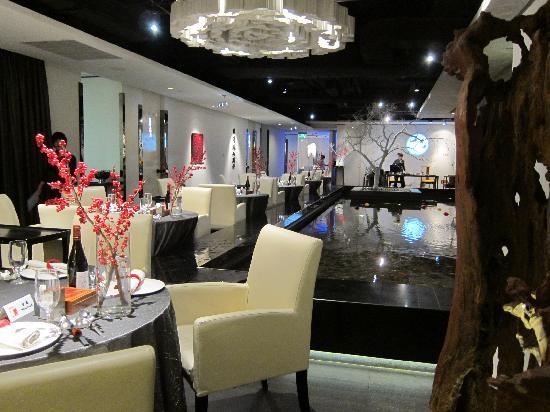
One of the first things my wife and I did when we arrived in Beijing was to eat Peking Duck. Well, not quite the first thing. We waited until the children came a few months later to visit us at Christmas before trying this Beijing delicacy. It was worth the wait. We went to the Dadong restaurant, which in the meantime has grown exponentially into a chain of really quite swanky restaurants scattered throughout the city.

dadong restaurant

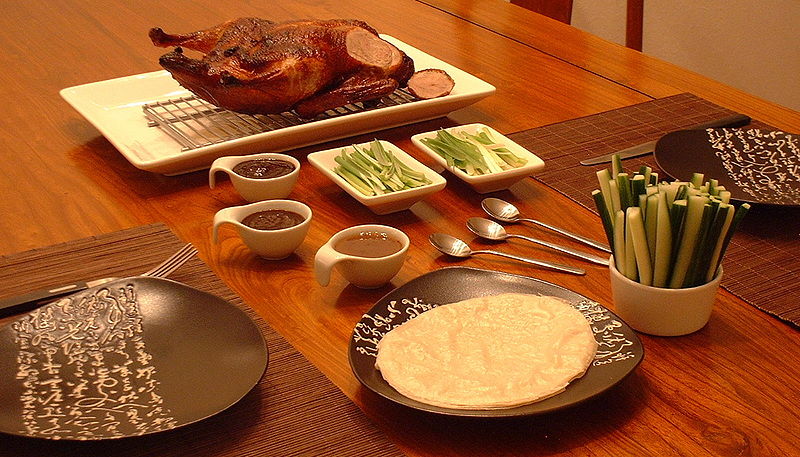
For readers who have not tried this dish, it presents itself so:

Peking Duck complete dish-3

As you can see, we don’t just have duck. Many other ingredients are part of the package. Eating Peking Duck requires one to follow a certain, very specific procedure, to bring together all these ingredients in the right order. Allow me to walk readers through the Standard Operating Procedure (SOP) for eating Peking Duck.

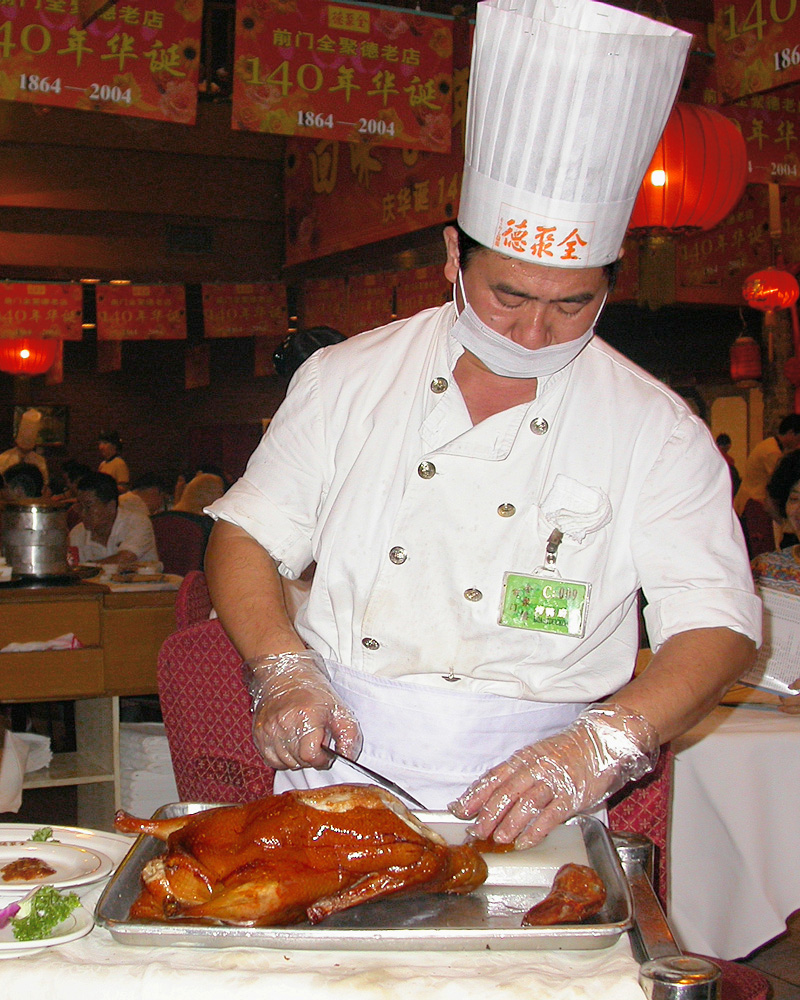
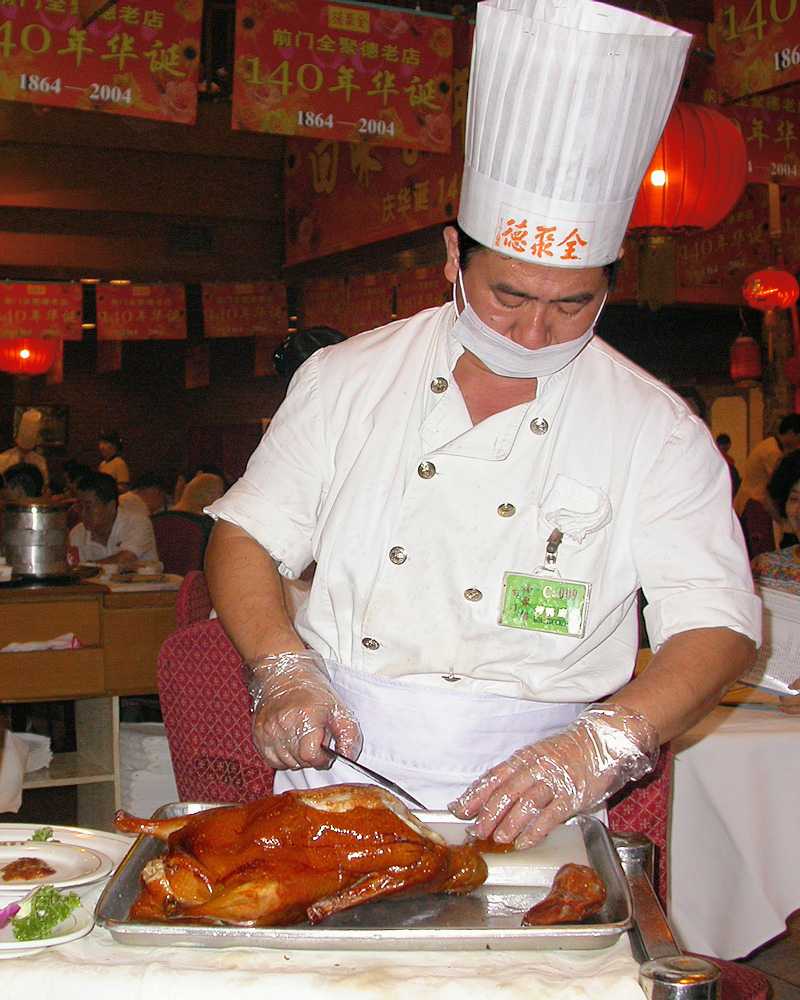
1. Look on respectfully as a chef comes to your table and slices up the bird in front of you.

cook slicing the duck

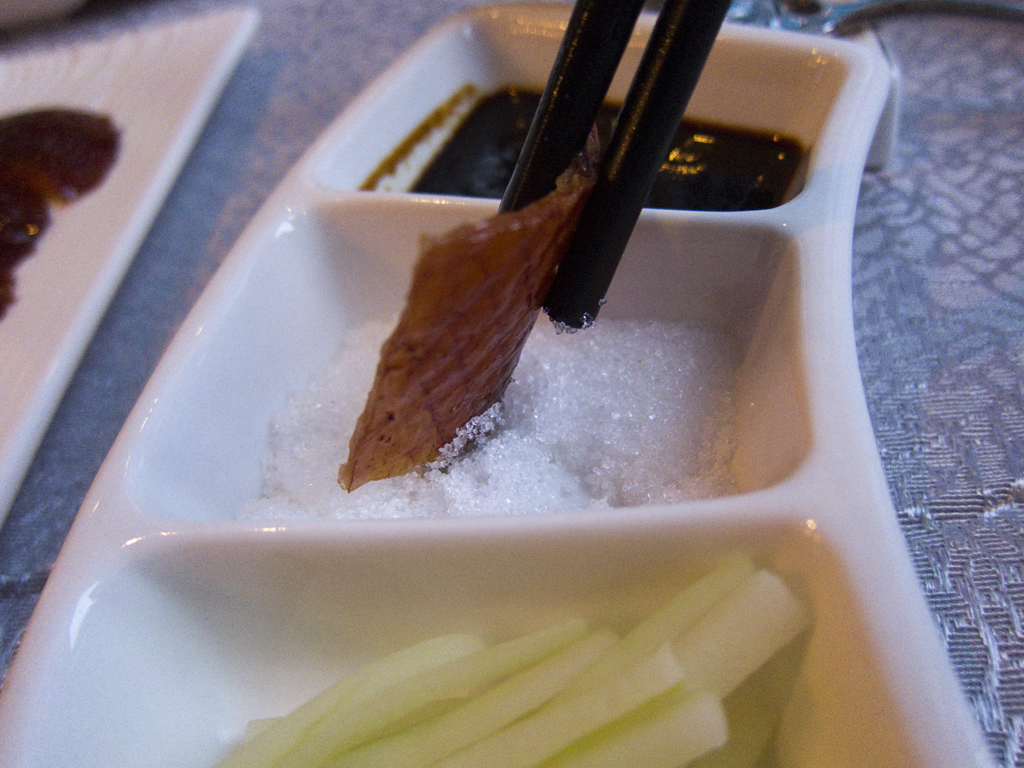
2. Start with the crispy skin. Take a piece or two, dip into sugar, and eat.

dipping skin in sugar

Personally, I find that one piece is enough for me; it’s just too fatty.

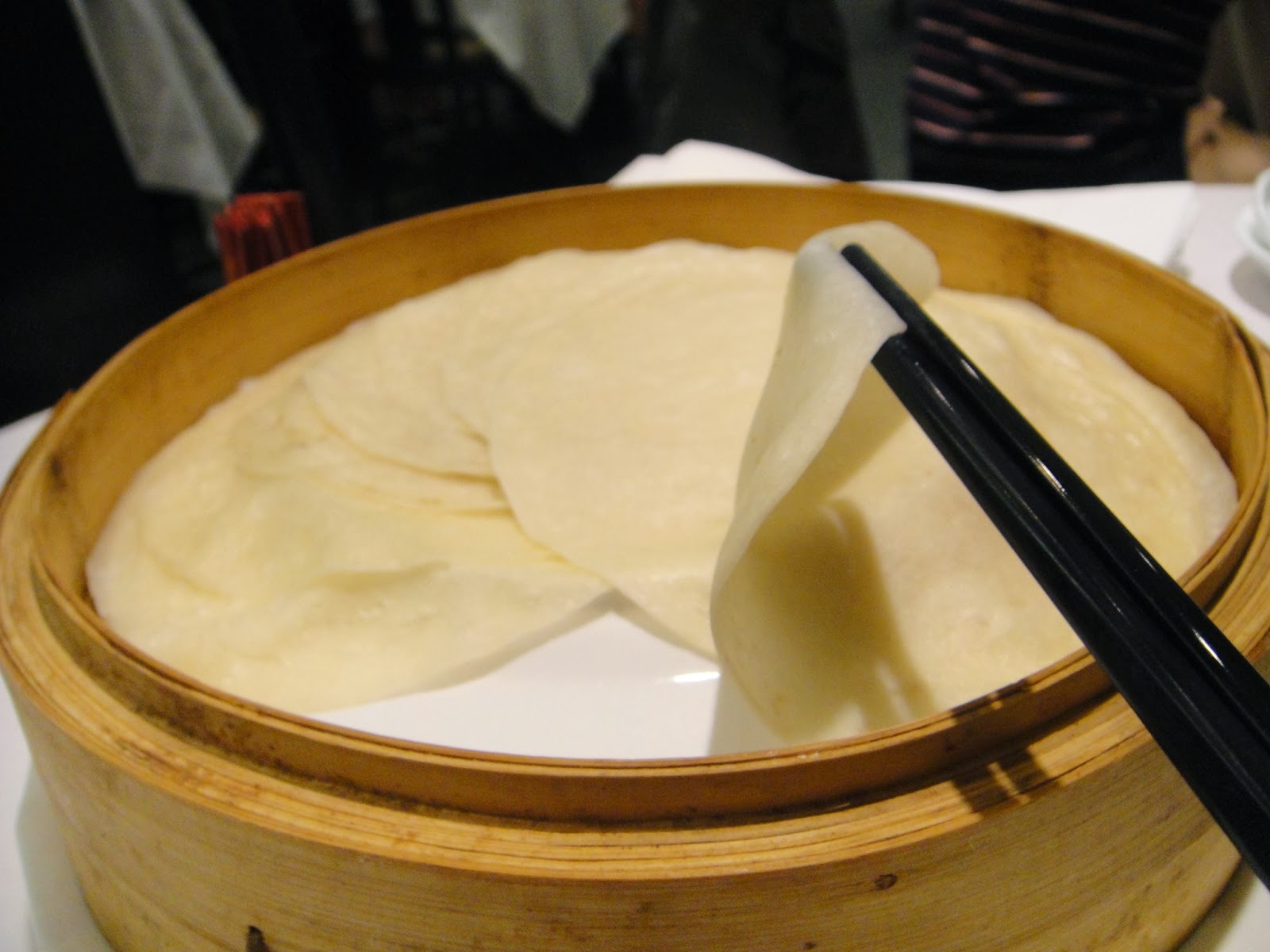
3. Start in on the duck meat proper. Pick up a wafer-thin circular crepe. For neophytes in the use of chopsticks, this can be an immense challenge.
picking up crepes
4. Use the chopsticks to smear dollops of the various sauces onto the bread wrap. The usual menu of sauces include sweet bean sauce or hoisin sauce, which is a thick, pungent sauce usually including soy, red chilies, garlic, vinegar and sugar.
hoisin sauce
5. Place the slices of roast duck on the bed of sauce. A mix of crackling skin and meat is the optimal choice. More sauce can be smeared on the meat if so desired. Place on top of the duck a couple of thinly sliced scallions.

duck and spring onions on crepe

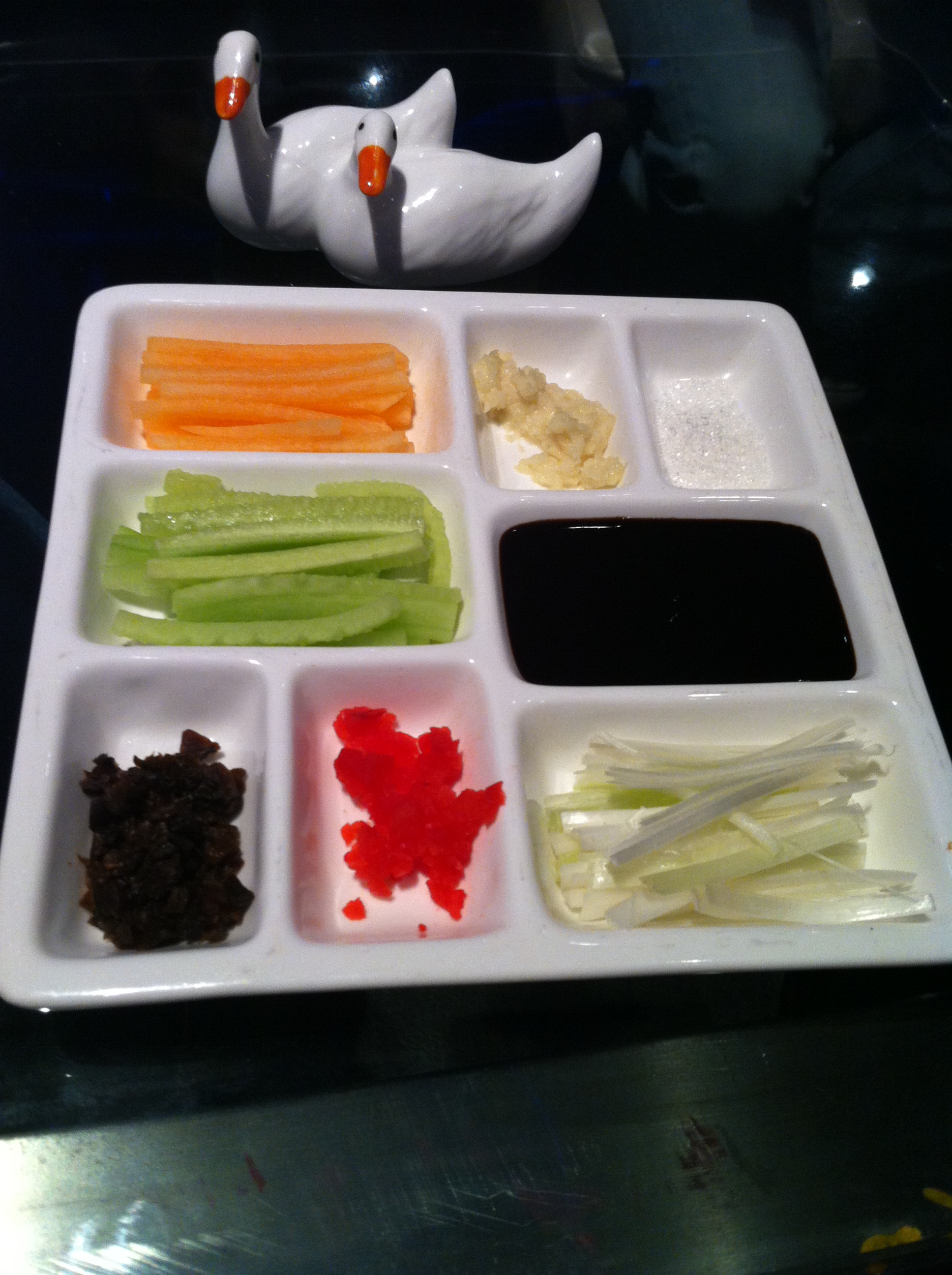
Various other ingredients can also be added: thinly chopped cucumber is popular, at Dadon they also offer thinly chopped melon and some other stuff whose identity is a mystery.

beijing duck ancillaries 002
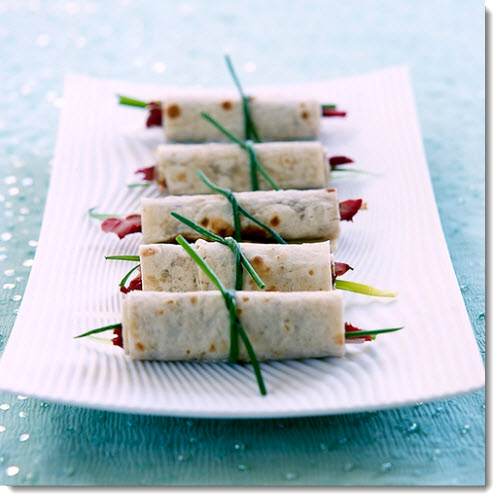
6. Roll the whole into a tubular sandwich.

rolled up crepes

These look far fancier than the ones I produce. It’s rather like comparing the product of someone who has spent a life rolling his own cigarettes to that of the fellow who is just starting out in this bad habit.

7. Eat, making loud noises of appreciation if you have been invited by Chinese hosts, who are always glad to know that you’re liking it.

8. Repeat from step 3 (or step 2 if you have a mind to), making small variations if you wish, until all the duck has been consumed.

9. As a finale, slurp down the duck soup which they will bring, made with all the leftovers of the carved ducks.

duck soup

This must really be one of the most Chinese of dishes. Some even call it China’s national dish (I’m not sure what the Cantonese think of that, but we’ll let it pass).

So it’s a bit of a shock to know that the ducks consumed in China aren’t all that Chinese.

I was informed of this fact last week during a talk in Shanghai by a very respected Academician, who revealed to the stunned audience the whole sorry story.

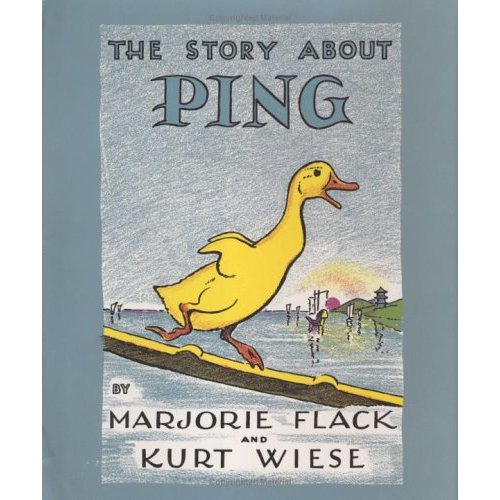
There was a time, before 1873, when the duck was Chinese. It had evolved and prospered on the Grand Canal, where it had grown fat on the grain that fell off the barges going north towards the capital. The Chinese, never ones to leave anything go to waste, had recycled this lost grain by domesticating the ducks and eating them. In Beijing, the SOP described above evolved as the way to consume the ducks. This culture of duck rearing was beautifully captured in the children’s book The Story about Ping, which I loved to read to my children (although I don’t know if they loved hearing me read it …)

the-story-about-ping

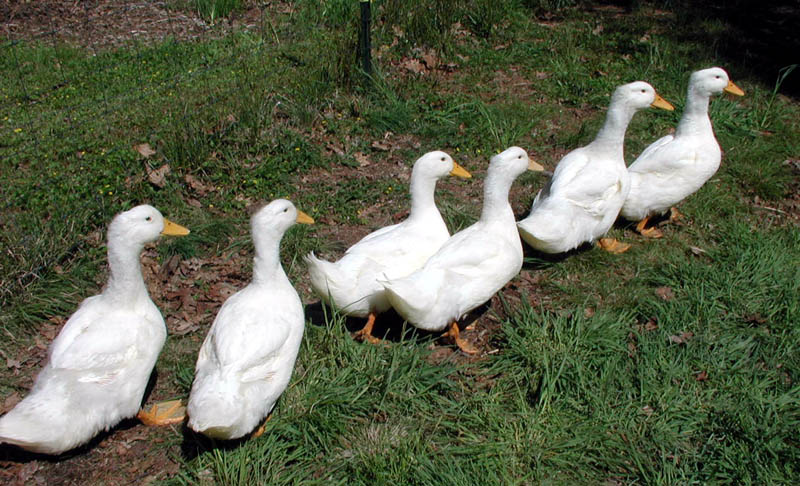
Then, in 1873, 25 of these Pekin ducks (note: no final g on Pekin) were exported to Long Island – most of them didn’t make it, eaten no doubt by the hungry voyagers on the same ship as them. The few that made it through went on to become the progenitors of the most successful domesticated breed of duck in Europe and the US. Those nice white ducks waddling around the farmyards of my youth were in all probability children of Chinese immigrants.

OLYMPUS DIGITAL CAMERA

Except that European and American farmers and agronomists were not content with just taking this Chinese duck and breeding it. They started playing with its DNA through selective breeding to make bigger, fatter, and I know not what.

In the meantime, the Chinese had slipped into anarchy, had been eviscerated by the war imposed on them by the Japanese, and – after the Revolution and the creation of the new China – had gone through the disasters of the Great Leap Forward and Cultural Revolution. So by the time the 1970s rolled in, the original Pekin Duck and its rearing were in as sorry a state as the rest of the country.

Well, the economy picked up and so did the Chinese appetite for Peking Duck. But for some reason, national production remained stagnant, or at least didn’t grow as fast. The result was that China, the biggest exporting country in the world, began to import the Pekin Ducks to turn into Peking Ducks. And began to import them in vast quantities. According to the Respected Academician in Shanghai, 70% of the Peking Ducks which are consumed in China were born and bred … in the UK. In fact, for the most part they come from one farm in Lincolnshire, the Cherry Valley Farm.

Supra

Unbelievable. It’s the opium wars all over again, except that this time the UK is flooding China with Pekin Ducks …

______________________

Dadong restaurant: http://media-cdn.tripadvisor.com/media/photo-s/01/e4/55/6e/beautiful-room.jpg [in http://www.tripadvisor.com/members-citypage/msyolee/g294212%5D
Peking duck-complete dish: http://img.cits.net/images/2011/9/27/151515157efde4e3-d.jpg [in http://www.cits.net/china-guide/china-traditions/peking-roast-duck.html%5D
Cook slicing the duck: http://upload.wikimedia.org/wikipedia/commons/e/e5/Quanjude_roastduck.JPG [in http://en.wikipedia.org/wiki/Peking_duck%5D
Dipping skin in sugar: [in http://theavidphotographer.wordpress.com/tag/paradise-pavilion/%5D
Picking up crepes: http://2.bp.blogspot.com/-T1E6blAnjAY/Up5-R7KL_bI/AAAAAAAAAtw/J3kRodTOSdc/s1600/DSC05471.JPG [in http://missvancouverpiggy.blogspot.com/2013/12/red-star-seafood-vancouver-location.html%5D
Hoisin sauce: http://www.seriouseats.com/images/2012/01/20120116-188016-hoisin-sauce-small.jpg [in http://www.seriouseats.com/2012/01/sauced-hoisin-sauce.html%5D
Duck and spring onions on crepe: http://finedininglovers.cdn.crosscast-system.com/BlogPost/l_1859_pancake-duck-00244258-CUT1.jpg [in http://www.finedininglovers.com/recipes/main-course/peking-duck-recipe-pancakes/%5D
Peking duck ancillaries: our photo
Rolled up crepes: http://www.frugal-cafe.com/public_html/frugal-blog/frugal-cafe-blogzone/wp-content/uploads/2011/01/peking-duck-pancake-rolls-loua-flickr.jpg [in http://www.frugal-cafe.com/public_html/frugal-blog/frugal-cafe-blogzone/2011/01/28/fab-food-friday-fotos-chinese-style-stewed-meatballs-easy-tartlets-twinkie%5D
Duck soup: http://chompchowchew.typepad.com/.a/6a01156f88f5ce970b015431e280cc970c-800wi [in http://chompchowchew.typepad.com/blog/2011/04/peking-duck-house-nyc.html%5D
The story about Ping: http://laughingstars66.files.wordpress.com/2010/05/the-story-about-ping.jpg [in http://www.momto3feistykids.com/2010/05/rowing-story-about-ping.html%5D
Pekin ducks: http://www.rocketroberts.com/farm/images/ducks_in_row.jpg [in http://www.rocketroberts.com/farm/farm.htm%5D
Cherry Hill farm-1: http://upload.wikimedia.org/wikipedia/commons/7/7b/Cherry_Valley_-_geograph.org.uk_-_373257.jpg [in http://commons.wikimedia.org/wiki/File:Cherry_Valley_-_geograph.org.uk_-_373257.jpg%5D

PEKING WILLOW

Beijing, 9 April 2014

The somber, funereal tone of my last post seems like a good place to start this one – a tombstone

Weeping Willow on gravestone

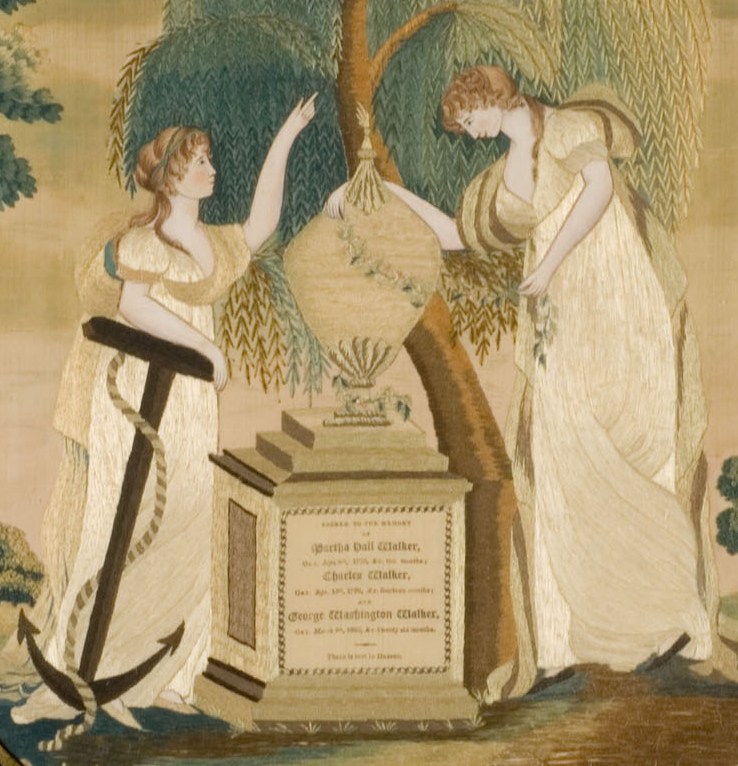
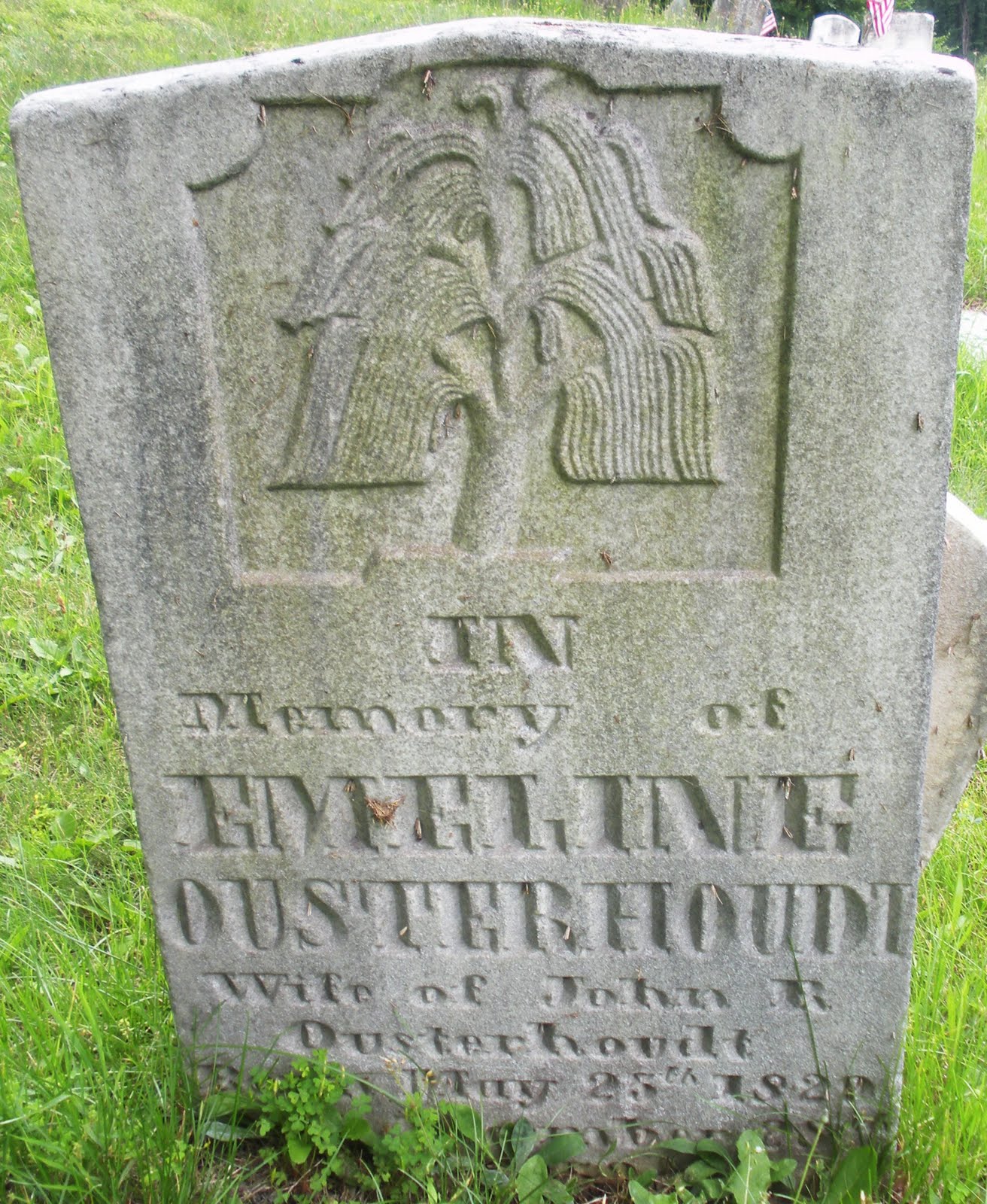
This one has a weeping willow on it, a common symbol on tombstones 200 years ago. Its drooping branches symbolize, you’ve guessed it, the weeping of the world at your passage to the next. Here’s another in the same genre from the same period, this time a piece of needlework memorializing the death of three babies.

BT OA FR

And then there were the ballads which used the weeping willow as the symbol of death, lost love, or both:

My heart is sad and I’m in sorrow
For the only one I love
When shall I see him, oh, no, never
Till I meet him in heaven above

Oh, bury me under the weeping willow
Yes, under the weeping willow tree
So he may know where I am sleeping
And perhaps he will weep for me

They told me that he did not love me
I could not believe it was true
Until an angel softly whispered
He has proven untrue to you

Oh, bury me under the weeping willow
Yes, under the weeping willow tree
So he may know where I am sleeping
And perhaps he will weep for me

 Etc. You get the picture.

The weeping willow’s symbolism was used a bit more elegantly in Psalm 137 of the Old Testament, that lyrical lament about the pains of exile, in this case that of the Israelites who had been marched off to Babylon from Jerusalem:

By the rivers of Babylon—
there we sat down and there we wept
when we remembered Zion.
On the willows there
we hung up our harps.
For there our captors
asked us for songs,
and our tormentors asked for mirth, saying,
“Sing us one of the songs of Zion!”

 How could we sing the Lord’s song
in a foreign land?
If I forget you, O Jerusalem,
let my right hand wither!
Let my tongue cling to the roof of my mouth,
if I do not remember you,
if I do not set Jerusalem
above my highest joy.

jewish bible with picture

I’ve left out the last verse where the poet gets vengeful and nasty, talking about taking the babies of their captors and bashing their brains out against the rocks …

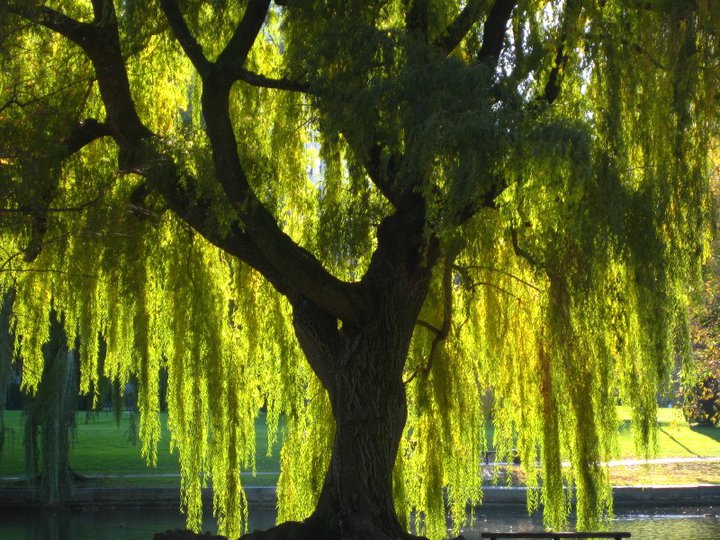
But if we brush aside the drooping veil of gloom, we find a really beautiful tree, for the most part sitting elegantly near a body of water, into which its trailing branches will often dip.

weeping willow tree

And such an English tree! (well, you also find them on the continent but we’ll ignore that). Here’s a weeping willow on the edges of a pond in Grantchester, in which, so it is said, the poet Byron swam.

weeping-willow-Grantchester

Here are students punting on the river Cam in Cambridge with some weeping willows languidly brushing the water’s surface.

weeping willows on the River Cam

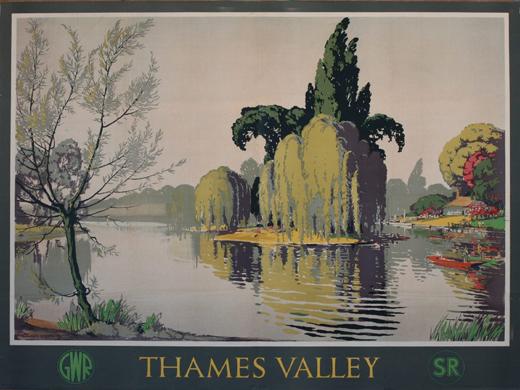
Here is a 1946 poster from the Great Western Railway, inviting Londoners to take a day out in the Thames Valley, with a weeping willow centre stage beckoning to them.

great western railway-thamesvalley

Talking of the Thames, here is the cover of that most English of children’s books, The Wind in the Willows, where we see our friends Mole, Ratty and Toad on the river Thames, waving to Badger on the shore, the whole discretely framed by weeping willows

the_wind_in_the_willows

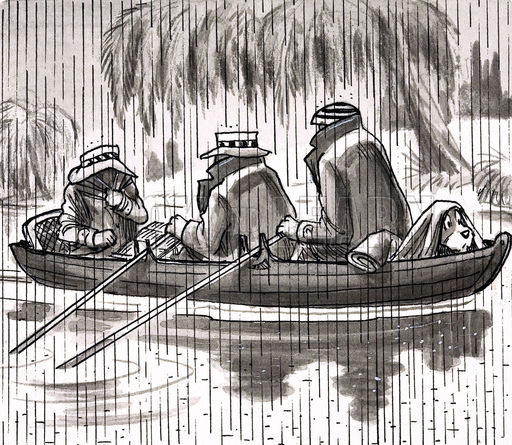
And of course there’s Three Men in a Boat, a book about – well, three men in a boat, messing around on the same river Thames (a book much loved by my father-in-law, in passing). Here we have them in that quintessentially English situation, rain, together with that quintessentially English animal, the dog, with some weeping willows in the background.

Three Men in a Boat by Jerome K. Jerome

Yes, all very English.

Except that the weeping willow isn’t English.

It’s Chinese.

Well, half-Chinese.

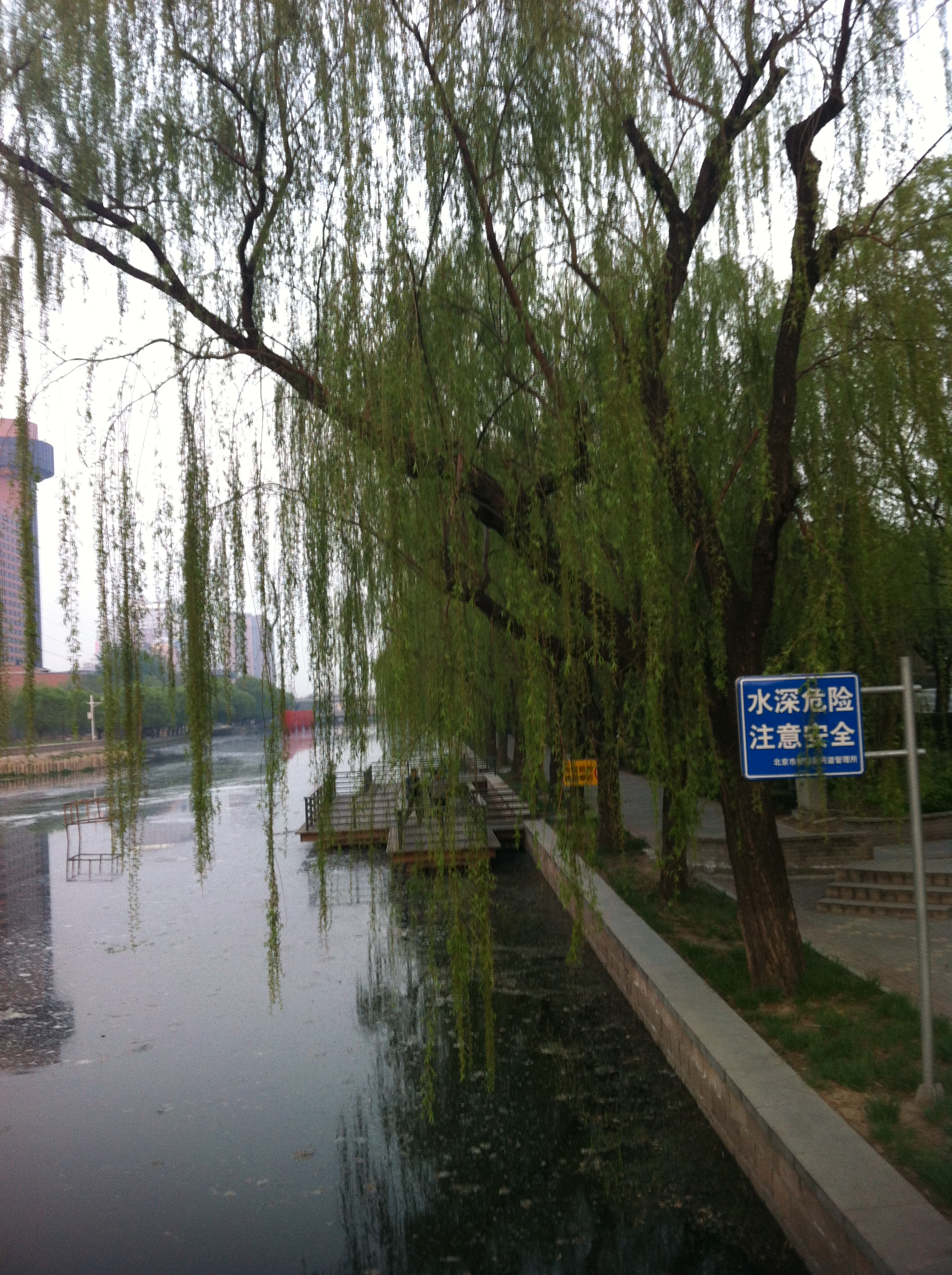
Yes, the willows, suitably called Peking willows, lining my piece of canal in Beijing

peking willows 004

are the ancestors of all those graceful weeping willows whose photos I have included above. It is they which carry the gene that makes the tree’s branches weep.

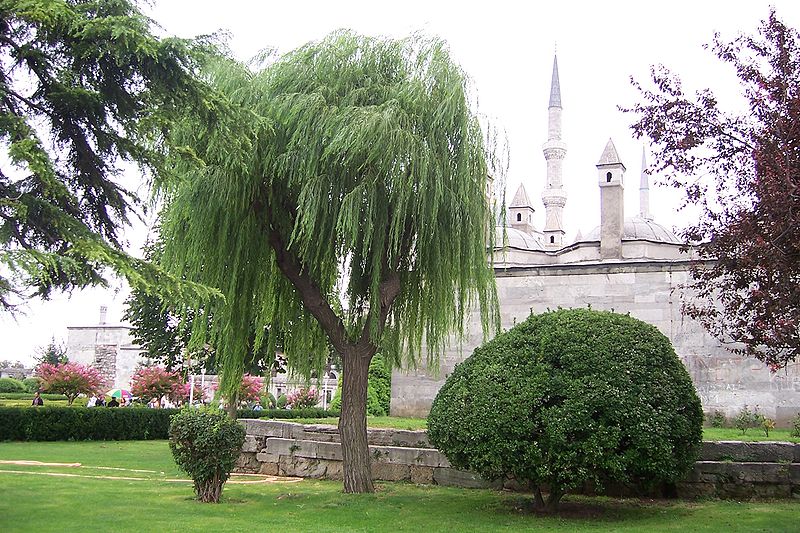
Somehow, for some reason, cuttings or seeds from these trees made their way to the west. I have read that they were moved along the Silk Road. Probably, traders from the west were charmed by the trees’ weeping branches and wanted them in their gardens. I’ve looked for pictures of Peking willows planted along the Road. The best I have found is a Peking willow in Istanbul.

Salix_babylonica in Istanbul

Not quite on the Road, which ended on the Mediterranean seaboard at Antioch or Tyre or Sidon, but close enough. And maybe one of the ways which the Peking willow entered Europe, through the Balkans.

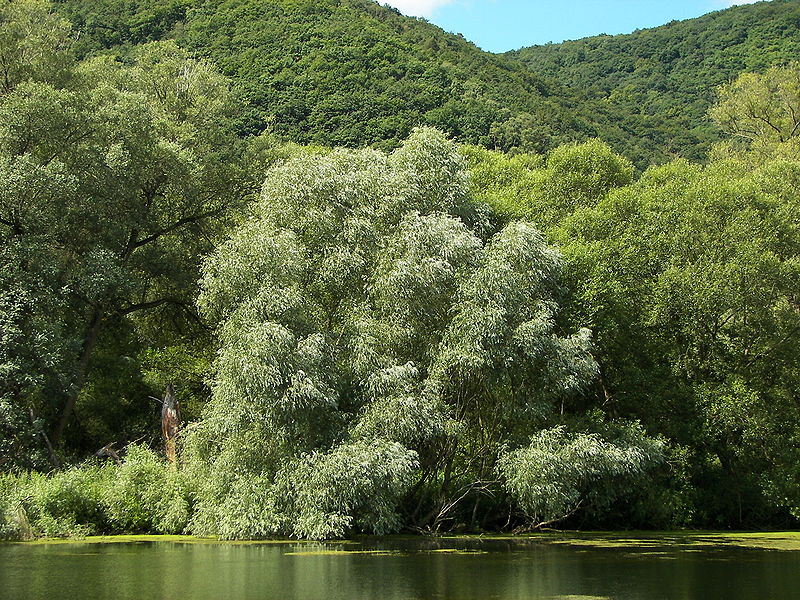
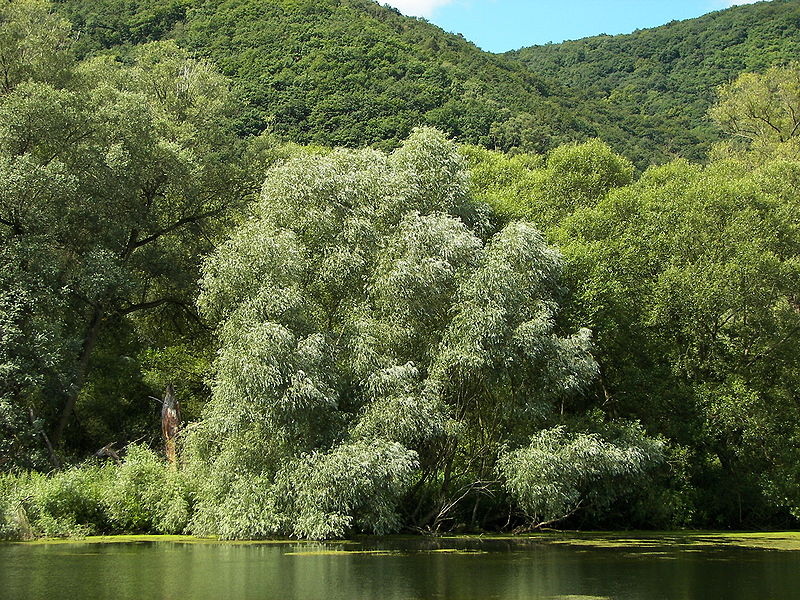
Somewhere along the way further to the west, the Peking willow was crossed with another willow, the European white willow.

white willow

The two were crossed because gardeners found that the Peking willow suffered in the more humid climate of Europe. Its gene pool needed bracing up, as it were.

So the weeping willow is half Chinese, half European.

Although my bubble of Englishness has been pricked, I’m glad to report that the weeping willow is nevertheless half brother –  or perhaps half sister – to that most English of artifacts, the cricket bat! Because these are made from the willow of a cross between the white willow and (possibly) the crack willow (the ancestry on the other side is not clear). So this allows me to insert here a picture of that most English of cricketers WG Grace holding a bat, in an ad for that most  English of condiments, Colman’s Mustard

wg grace with bat

Well, while I’m about it, I might as well also clarify another misconception. The willows by the waters of Babylon under which the Israelites wept were not willows, they were Euphrates poplars.

euphrates poplar

______________________

Tombstone with weeping willow: http://4.bp.blogspot.com/-V965riBwMQE/ThW9WsV_6gI/AAAAAAAAAA4/kGf3gW9vaZ0/s1600/%2523%2523%2523Weeping+Willow+St.+Mark%2527s+Luth+Appenzell+%25283%2529.JPG [in http://callmetaphy.blogspot.com/2011/07/symbol-of-weeping-willow-in-gravestone.html%5D
Girls weeping on tomb: http://mansionmusings.files.wordpress.com/2011/04/mourning-picture-detail.jpg [in http://mansionmusings.wordpress.com/2011/04/29/a-mansion-favorite-returns-home-abigail-walker-needlework-mourning-picture-ca-1803/%5D
Jewish psalter: http://upload.wikimedia.org/wikipedia/commons/9/97/Chludov_rivers.jpg [in http://en.wikipedia.org/wiki/Psalm_137%5D
Weeping willow tree: http://www.blogmagazine.org/wp-content/uploads/2012/05/weepingwillow.jpg [in http://www.blogmagazine.org/2012/05/admiring-the-beauty-of-the-weeping-willow/%5D
Weeping willows Grantchester: http://3.bp.blogspot.com/-3Lkrd8FlSCE/UhFK2RfkItI/AAAAAAAAGiM/v5kklmS41GE/s1600/photograph-of-weeping-willow-Byrons-Pool-Grantchester.jpg [in http://ailecphotography.blogspot.com/2013/08/day-18-august-challenge.html%5D
Weeping willows on the river Cam: http://upload.wikimedia.org/wikipedia/commons/d/da/Punting_on_the_River_Cam_-_geograph.org.uk_-_222149.jpg [in http://commons.wikimedia.org/wiki/File:Punting_on_the_River_Cam_-_geograph.org.uk_-_222149.jpg%5D
“The Wind in the Willows”: http://www.usborne.com/images/covers/eng/max_covers/the_wind_in_the_willows.jpg [in http://www.usborne.com/catalogue/book/1~CS~CSP~3249/the-wind-in-the-willows.aspx%5D
“Three Men in a Boat”: http://s3-eu-west-1.amazonaws.com/lookandlearn-preview/A/A008/A008727.jpg [in http://www.lookandlearn.com/history-images/A008727/Three-Men-in-a-Boat-by-Jerome-K-Jerome?img=2&search=Jerome+Klapka+Jerome&bool=phrase%5D
Great Western Railway poster: http://www.southernposters.co.uk/Destinations/Resources/thamesvalleylarg.jpeg [in http://www.southernposters.co.uk/Destinations/thamesvalley1946.html%5D
Peking willow, Beijing: my photo
Peking willow in Istanbul: http://upload.wikimedia.org/wikipedia/commons/thumb/7/75/Salix_babylonica.jpg/800px-Salix_babylonica.jpg [in http://en.wikipedia.org/wiki/Salix_babylonica#Horticultural_selections_and_related_hybrids%5D
White willow: http://bioweb.uwlax.edu/bio203/2011/girard_stev/maintop.jpg [in http://bioweb.uwlax.edu/bio203/2011/girard_stev/facts.htm%5D
Euphrates willow: http://mw2.google.com/mw-panoramio/photos/medium/49589465.jpg [in http://www.panoramio.com/user/1183385/tags/%D7%A0%D7%97%D7%9C%20%D7%A6%D7%99%D7%9F%5D

I ADMIRE THEM, THE CHINESE EAT THEM

Beijing, 22 November 2013

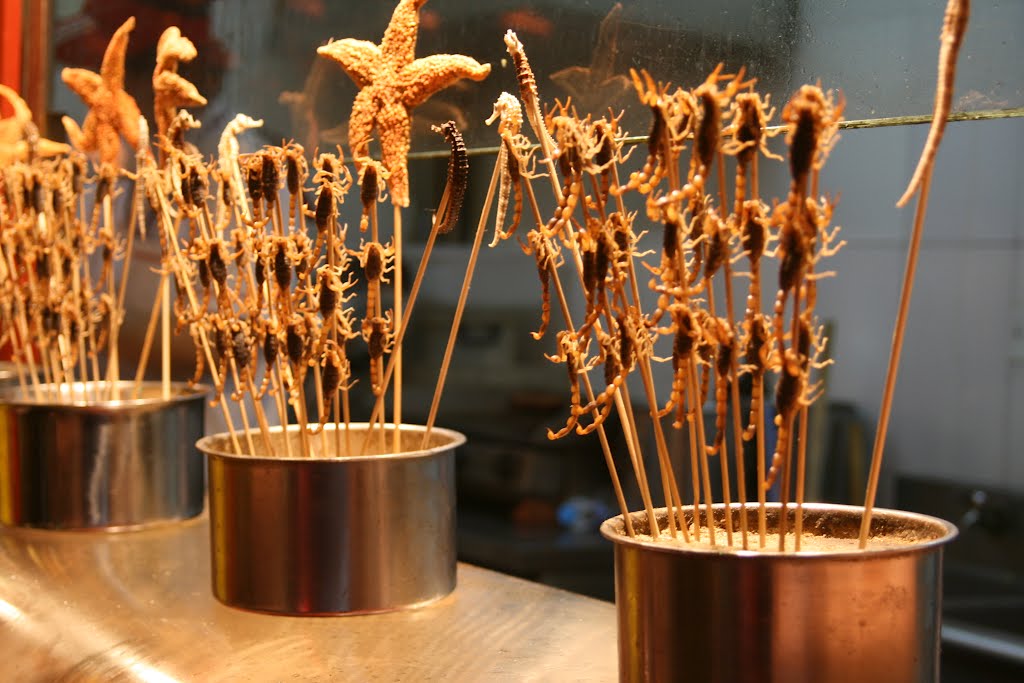
There is a joke that northern Chinese crack about their cousins in the south, to the effect that southerners eat everything on four legs except the table they are sitting at. When they tell this joke to foreigners they will helpfully go on to explain that southerners eat absolutely everything. I think many foreigners are bemused by this distinction which northerners make between themselves and their southern cousins, since it seems to most of us that northerners will also eat everything. I mean, which tourist in Beijing has not visited the food night market in Wanfujing road and seen scorpions and other insects being offered as delicacies to nibble?

scorpions on wanfujing road

And what about the disgusting stinky tofu which all Chinese – northerners and southerners alike – delight to eat?

eating stinky tofu-3

Looking beyond these extremes of eating behaviour, it is true to say that the Chinese have a very deep and intense relationship with food. I have been told that this is because hunger and starvation is still a recent experience for many. One of my staff, for instance, who is my age, once told me that her sister, who is five-six years younger than her, is smaller because she was born in a time of intense hunger. I don’t disagree with this; hunger can certainly make you focus obsessively on food. Nevertheless, I think the Chinese’s intense love of food goes beyond lingering memories of hungry times; they have an existential relationship with their food. Whenever I see a group of Chinese about to sit down to eat, they remind me of a group of Englishmen about to enter a pub. They suddenly all brighten up, start talking and laughing loudly, and generally behave as if this was the most wonderful moment of their lives.

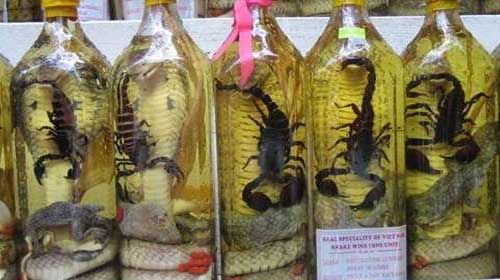
I was reminded of all this recently when my wife and I were nosing around a Chinese chemist (drug store to my North American friends), looking at the weird and wonderful things which the Chinese are willing to eat or drink for their supposed medicinal value.

Snake-Wine

As I poked around in the various cases, I stumbled across this.

chuan-bei-mu-bulbs

It was marked as “chuan bei”.  After some research, I discovered that these odd things were the bulbs of a species of fritillary, fritillaria cirrhosa. The Chinese take it as a cough medicine, along with “zhe bei”, the bulbs of another species of fritillary, fritillaria verticillata.

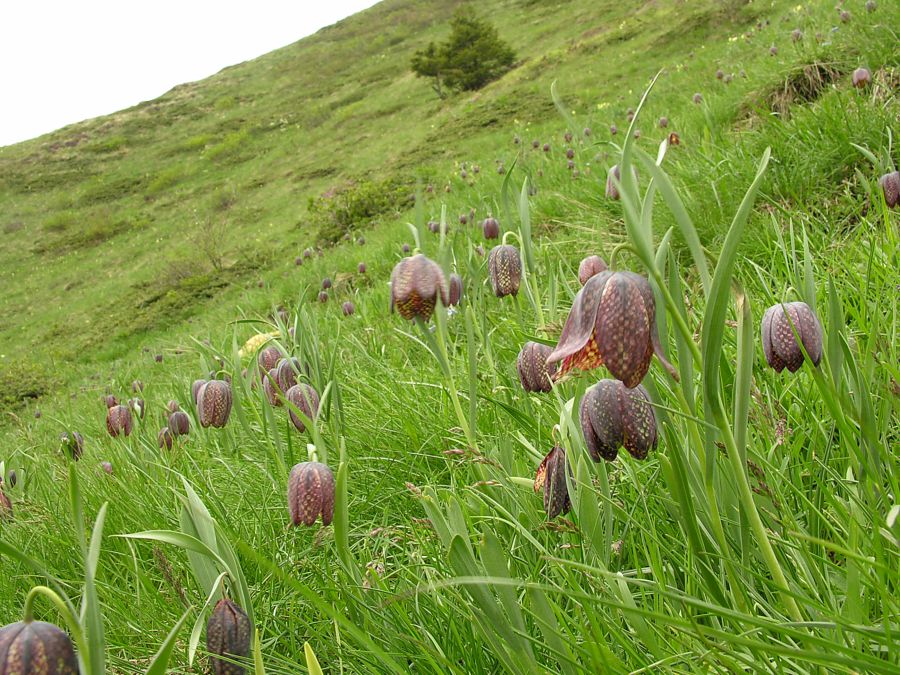
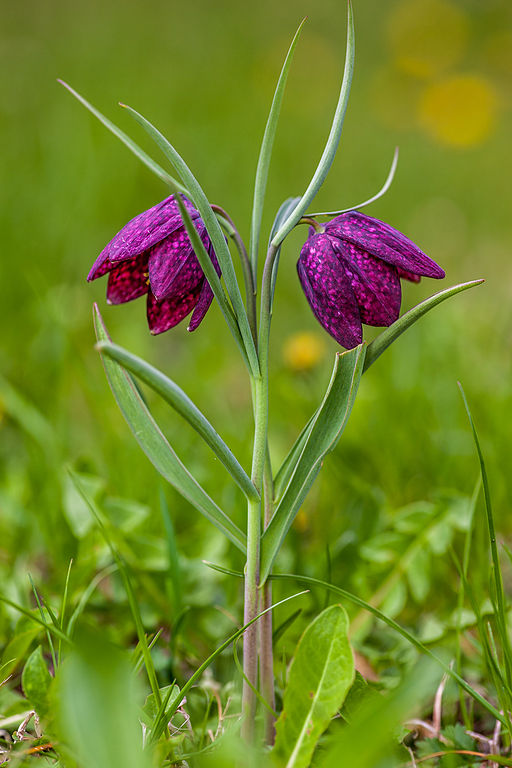
Some of you may be asking yourselves what a fritillary is. It’s a flower, a beautiful bell-shaped flower. The commonest European variety is the snake’s head,  fritillaria meleagris

snakes head fritillary

The common name probably derives from the flower’s somewhat snakelike appearance when it nods in the wind on its long stem.

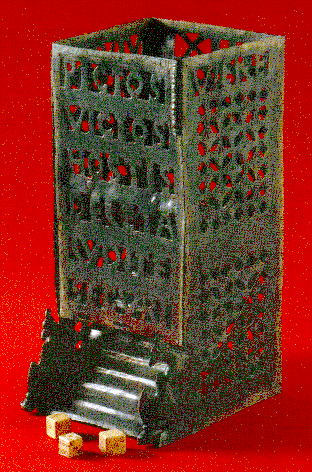
As for the name fritillary, it derives from the Latin term for a dice-box (fritillus), probably because of the checkered pattern on the petals of many of the fritillary species.

fritillus

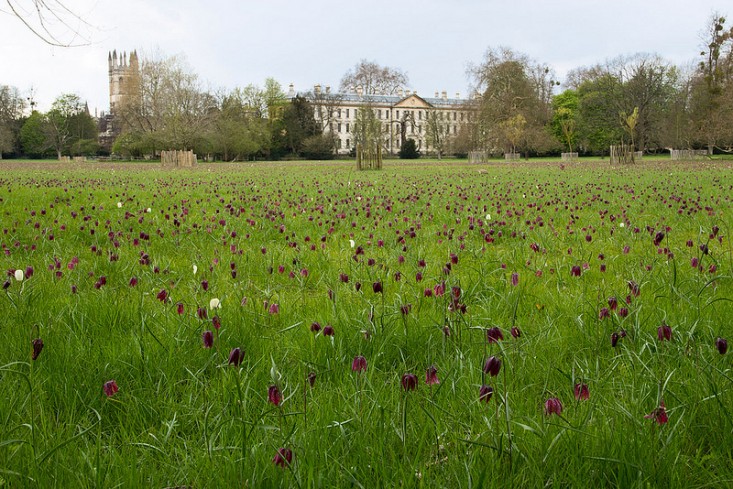
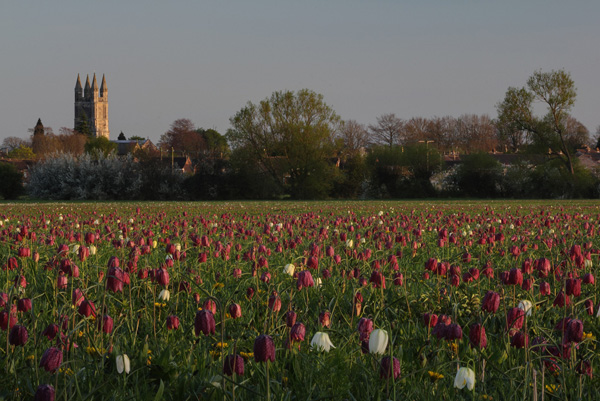
I must confess that I’ve never seen the snake’s head in the flesh. I first came across it in a book with absolutely lovely photos; the book is now slumbering along with all of my other books in a storage depot in Vienna. There was a photo of snake’s head fritillaries in the meadow of Magdalen College, Oxford. The following picture is not as beautiful but it does give a sense of how wonderful that meadow must be when the snake’s heads are in bloom.

magdalen meadow

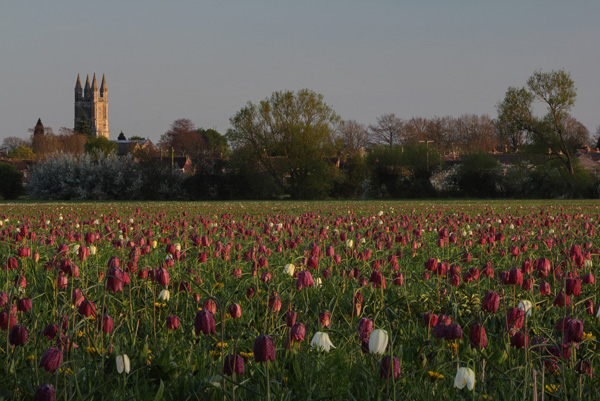
A visit to Magdalen meadow is one of the things on my bucket list, along with visits to other ancient hay meadows in England which have retained their annual crop of snake’s heads: Fox Fritillary Meadow:

Fox Fritillary meadow

North Meadow in Crickdale:

North_Meadow_Cricklade_Wiltshire

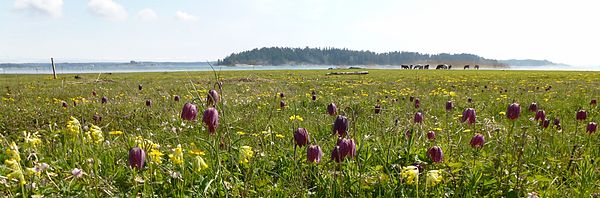
and no doubt others. I also have to travel to Sweden to see it there:

kungsängslilja

as well as to the high Alpine meadows to see a cousin, the meleagride alpino, or fritillaria tubiformis:

fritillaries in the alps

I have to hurry up. There was a time when snake’s heads were plentiful in the UK. They grow best in heavy, marshy soils, the same soils which make the best hay meadows. When we rode horses, hay was a valuable commodity and hay meadows – and the snake’s heads – were to be found everywhere. But cars came, horses disappeared, and then – the final blow – during World War II many of the meadows were ploughed under for food production. Now the flower is endangered.

So as I sit here and look at these beautiful flowers and mourn their passing glory, I see a fundamental difference between me and the Chinese. I say “how beautiful!”, they say “what’s it taste like?”

____________

scorpions on Wanfujing Road: http://static.panoramio.com/photos/large/72103761.jpg [in http://www.panoramio.com/photo/72103761%5D
Eating stinky tofu: http://aningredientaday.files.wordpress.com/2012/07/stinky.jpg
Chinese medicine: http://www.funcage.com/blog/wp-content/uploads/2011/03/Snake-Wine.jpg [in http://www.funcage.com/blog/8-strange-foods-that-will-make-you-cringe/%5D
Chuan Bei Mu bulbs: http://www.ioffer.com/img/item/198/952/678/2lb-bulbus-fritillariae-cirrhosae-chuan-bei-mu-ceba5.jpg [in http://www.ioffer.com/i/2lb-bulbus-fritillariae-cirrhosae-chuan-bei-mu-198952678%5D
Snakes head fritillary: http://upload.wikimedia.org/wikipedia/commons/thumb/6/60/Fritillaria_meleagris_MichaD.jpg/512px-Fritillaria_meleagris_MichaD.jpg [in http://en.wikipedia.org/wiki/F._meleagris%5D
Fritullus: https://www.uni-erfurt.de/imgs/7944 [in https://www.uni-erfurt.de/max-weber-kolleg/personen/wolfgangspickermann/roemische-inschriften-in-germanien/kleininschriften/%5D
Magdalen meadow: http://www.gardenista.com/files/styles/733_0s/public/fields/magdalen%20meadow%20by%20Andrew%20Johnson.jpg [in http://www.gardenista.com/posts/how-to-make-a-fritillary-meadow%5D
Fox fritillary meadow: http://squeezyboy.blogs.com/photos/fox_fritillary_meadow/framsden_fritilliary_meadow_009.jpg [in http://squeezyboy.blogs.com/photos/fox_fritillary_meadow/framsden_fritilliary_meadow_009.html%5D
North Meadow Crickdale: http://www7.clikpic.com/RobertHarvey/images/UK11-176_Snakes_head_fritillaries_Fritillaria_meleagris_North_Meadow_Cricklade_Wiltshire.jpg [in http://www.robert-harvey.co.uk/articles_177296.html%5D
Kungsängslilja: http://upload.wikimedia.org/wikipedia/commons/thumb/b/b2/Sandemar_f%C3%A5gelseservat_2012a.jpg/600px-Sandemar_f%C3%A5gelseservat_2012a.jpg [in http://sv.wikipedia.org/wiki/Kungs%C3%A4ngslilja%5D
Fritillaries in the Alps: http://www.actaplantarum.org/floraitaliae/download/file.php?id=67858 [in http://www.actaplantarum.org/floraitaliae/viewtopic.php?t=2255%5D

KEDGEREE

Beijing, 14 November 2013

I was doing my favourite thing two Sundays ago, which is to be with my wife, sipping a cappuccino, and reading the weekend section of the Financial Times. My eyes fell on the cookery section, where Rowley Leigh was explaining how to prepare kedgeree.

Kedgeree …

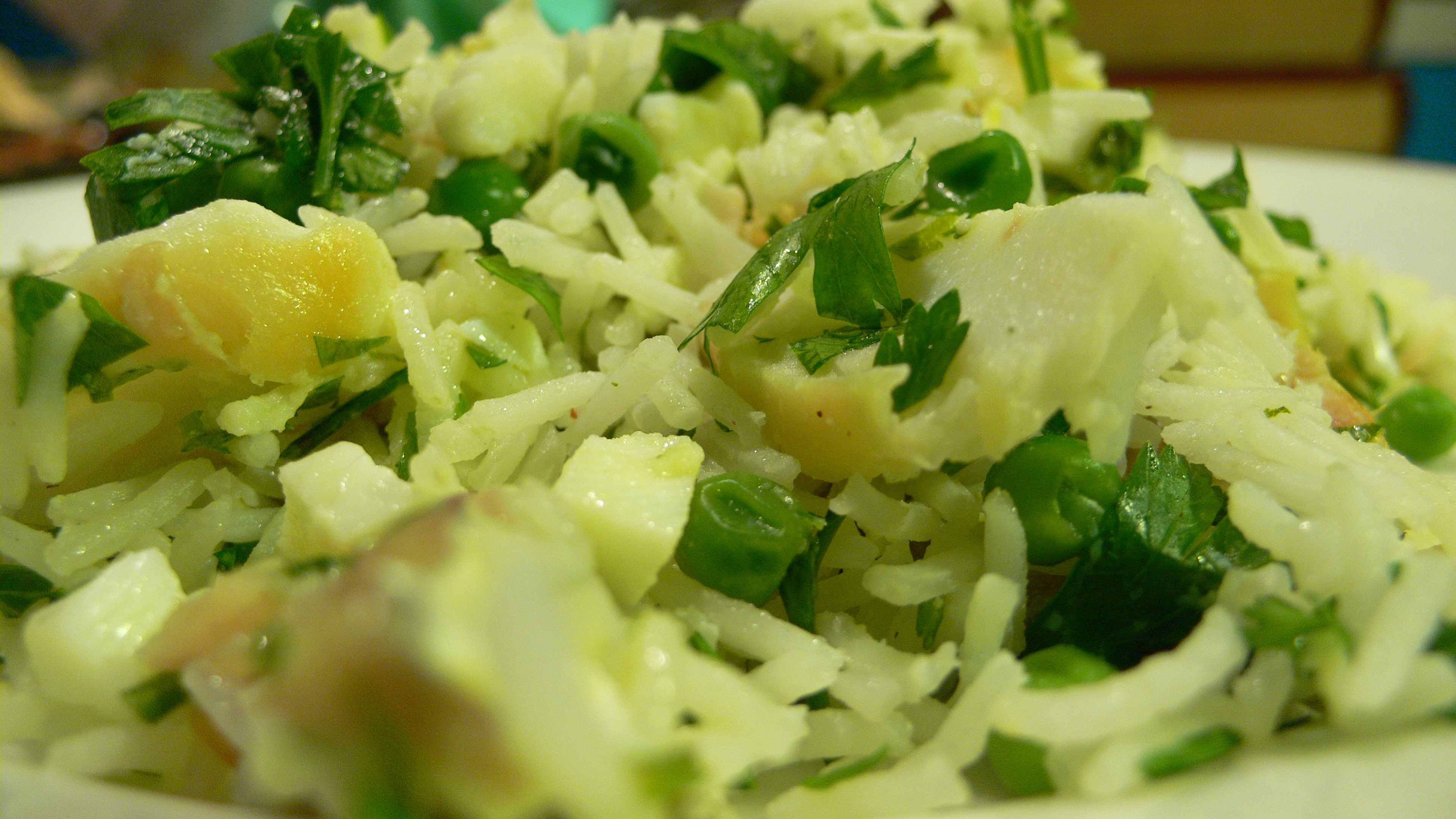
My mind whirled back 50 years, and suddenly I am a boy again, staying with my English grandmother in London. She is having some guests over to dinner and has prepared kedgeree, one of her signature dishes. She is allowing me to take part in the dinner, and amid the chatter of grown-up conversation around me, I dig into this new dish for me. Ah, the softness of the rice with its buttery taste, overlain by the flavour of strong tasting smoked haddock merging with mild tasting hard-boiled egg. Mmmm …
Kedgeree-2
I once asked my sister if she had ever persuaded my grandmother to hand over her kedgeree recipe (my sister is the cook of the family). She had, and she sent it to me by return of electronic post. I printed it off and slipped the sheet into one of my wife’s cookery books, with the intention of trying it one day. Alas, the road to hell is paved with good intentions, as they say.  That piece of paper has never been used and is now lying, along with the cookery book, in a storage space in Vienna, awaiting our return to Europe.

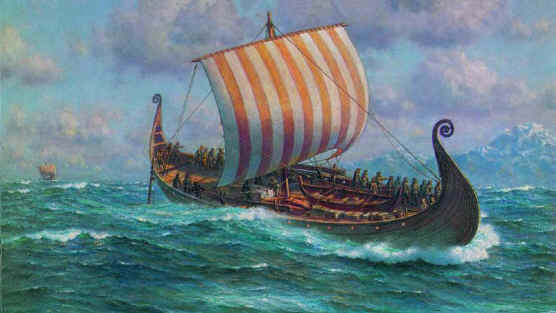
After receiving the recipe from my sister, my curiosity was piqued and I started to do some research on kedgeree. The first thing I discovered was that its culinary roots are in India!  For some reason, I think because my grandmother was always going on about her Norwegian roots (she was half Norwegian) and because the dish had fish in it (the Norwegians are a sea-faring nation, aren’t they? They must all eat fish), it had to be originally Norwegian, with a name like kåjorø or something.

viking_longship

Of course, the rice should have warned me that Norwegian roots were doubtful, but I wasn’t that sagacious when I was young.  Apart from the rice, my grandmother had eliminated all other references to India. For instance, all recipes mention a sauce in which to cook the rice. There is a good deal of disagreement about what should go into this sauce, but they all agree on at least two ingredients. There should be onions, and there should be curry. Well there you go! My grandmother disliked onions – she didn’t like the smell and I think they disagreed with her digestion (as they do with mine and as they did with my father’s – the mystery of genes; I wonder which part of our DNA helix has problems with onions). In addition, my grandmother really, really disliked curry and all spicy spices. It looks like there too I inherited her bit of anti-spice DNA. So it’s not surprising that she ruthlessly eliminated the onions and the curry from her version of kedgeree, along with the medley of other spices which various sources suggest: cardamom, turmeric, cumin, fennel, cloves, cinnamon, nutmeg, mace, … the Spice Islands unfurl before the eyes. So maybe I wasn’t that wrong all those years ago. My grandmother’s kedgeree may not have come from Norway, but it sure ended up looking and tasting Norwegian.

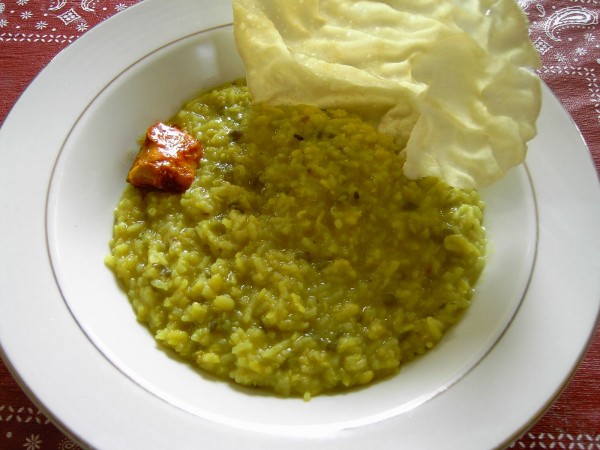
The fascinating thing is to look at the Indian ancestor of kedgeree. The sources all seem to agree on khichdi as the ultimate source, or khichuri to give it what I think is its Bengali pronunciation. A typical recipe goes like this. First, throw out the fish and egg. This seems to have been a British addition (Wikipedia suggests that Bengalis eat their khichuri with fish and/or eggs, but I was able to find no reference to this in other recipes). Second, add lentils to the mix. Because basically, as far as I can make out what we have here is a dal mixed with rice. Third, add vegetables like cauliflower and peas. Cook the lentils, the rice, and the vegetable in the sauce, et voilà! (more or less; I’m cutting details).

moong-mogar-dal-khichdi

How did this Indian dish mutate into its pale British imitation? I construct the following hypothetical journey – a complete fabrication, I’m sure, but it satisfies my sense of the romantic. I take as true the Wikipedian claim that Bengalis added fish and eggs to their khichuri. So I imagine that khichuri started its journey to kedgeree in Calcutta, among the men of the East India Company.

East-India-Company

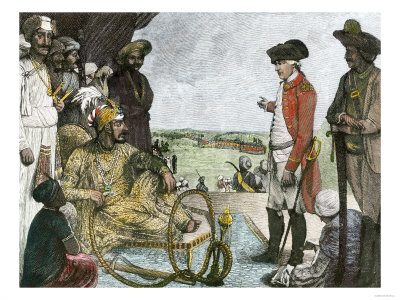
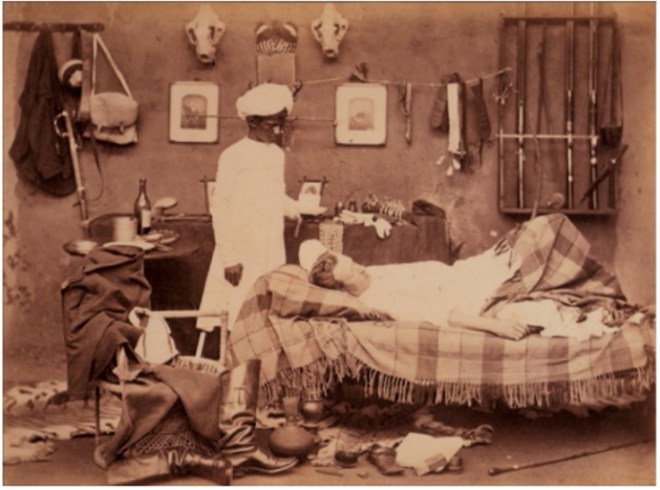
At the beginning, there were few British women in India to feed the men their British meat and potatoes, and since the men did not cook (of course) their diet went native. So far so good. But here I have recourse to another aspect of khichuri, that it is fed to those who are recovering from sickness or are otherwise generally feeble. And so I imagine that the Indian servants fed khichuri to their East India Company masters who had been felled by one of the many diseases of the Indian subcontinent to which their British constitution was not used and against which they had no defence, natural or pharmaceutical.  Since the British were very often sick (the death rate among the British at the beginning of their rule in India was alarmingly high), they were very often fed khichuri by their Indian servants (although in this case the servant seems to be bringing his sick master a cup of tea).

Thus was born a love of khichuri among the British men of India.

Now we have to move on some decades, to when sanitary conditions got better and medicines more effective, travel to India quicker, and racist theories about the superiority of the British over the Indians grew stronger. This last factor led from an earlier disapproval of having British women around to a disapproval of having British men – naturally, given the circumstances – consorting with Indian women. British men, it was decreed, should be with British women. The better and quicker travel meant that single (normally dowryless) British women could be brought over by the boatload and married off to the single British men running India. The better sanitary conditions and more effective medicines meant that they didn’t die in droves and had time to set up stable families.

So were born the memsahibs, that army of British women who ran the men who ran India.

memsahibs

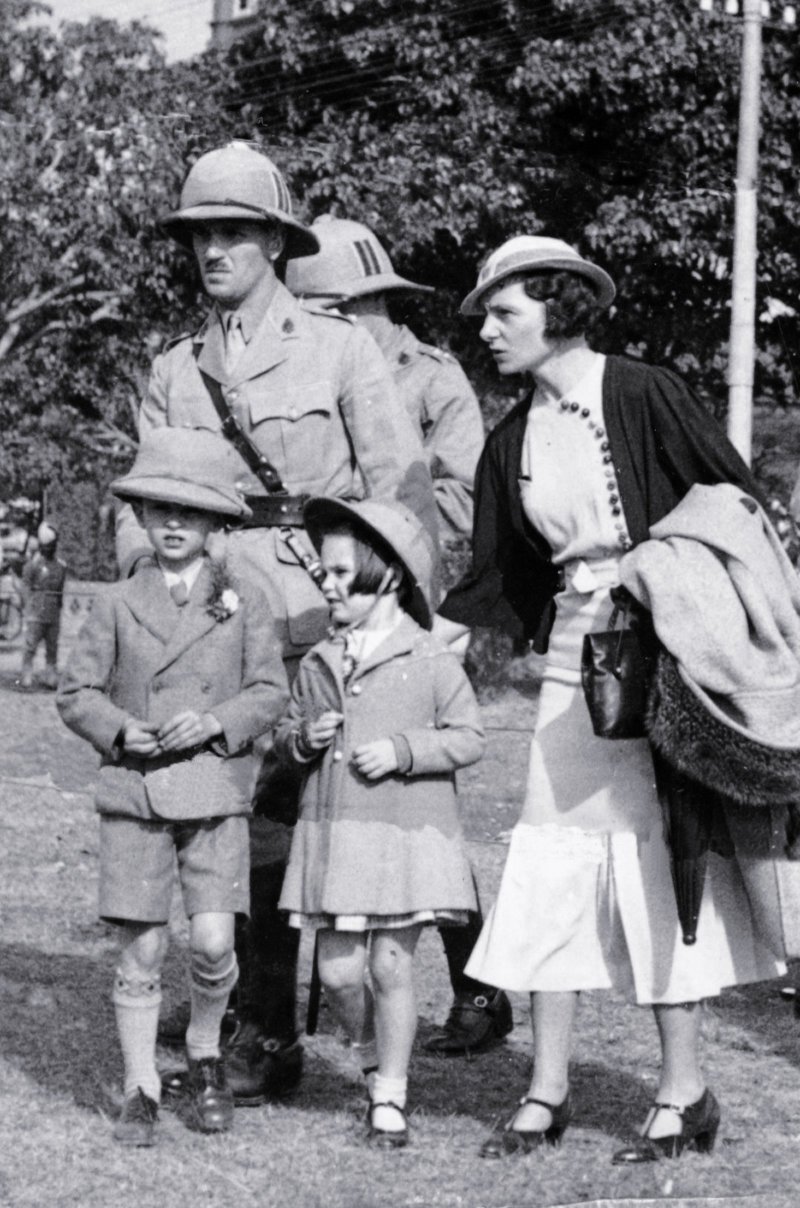
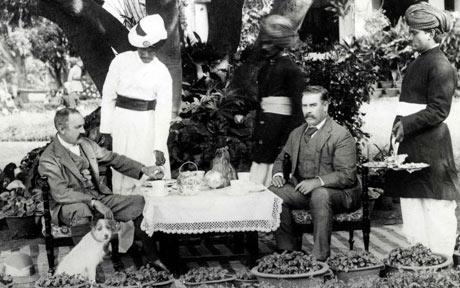
They were the keepers of the flame of Britishness.  Everything became more British and the divide between British and Indians widened and deepened.

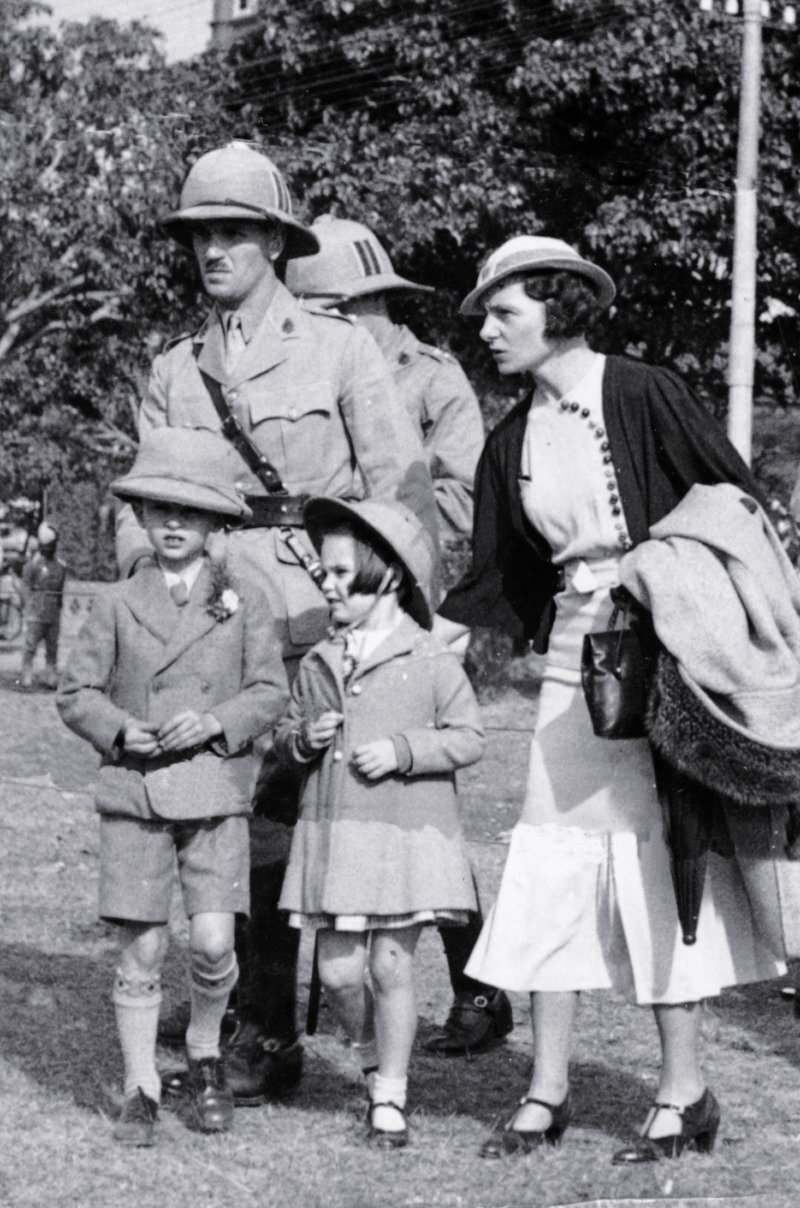
British family in india

Britification included the cuisine, of course. Meat, two veg, and potatoes, along with soggy deserts, became de rigeur, and all things Indian in the kitchen were determinedly stamped out (except the cook, of course; memsahibs did not cook).

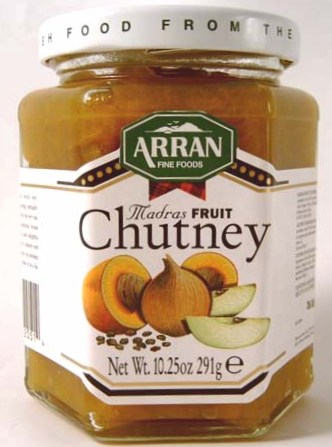
But some Indian dishes survived the onslaught and slipped into the mainstream of British food. Chutney was one, although much of the original Indian spiciness and sourness was stripped out in the transition. When I was young chutney seemed as British as cricket.

Chutney

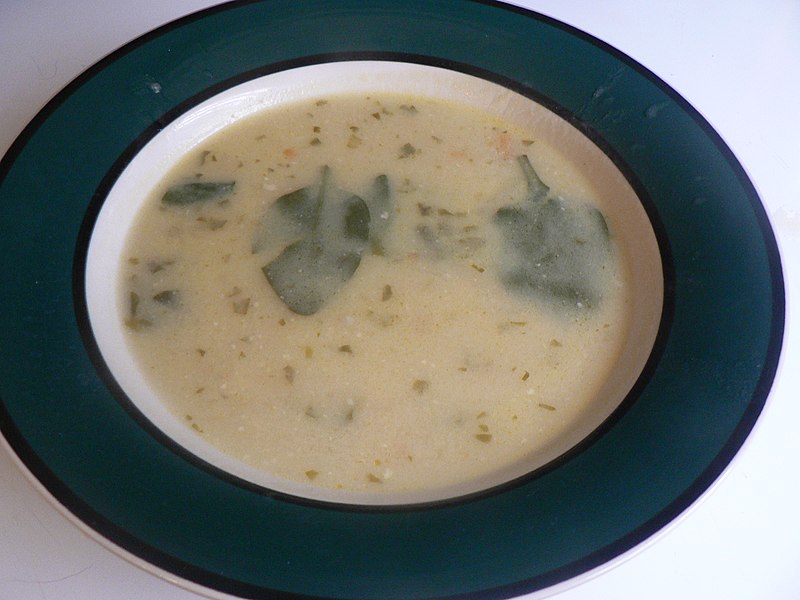
Mulligatawny soup (Milagu thanni in Tamil) was another, although my Wikipedian sources tell me that the British got confused and gave the name of one soup to the recipe of another; what the Brits eat really should be called Russum soup.

Mulligatawny

And of course there was khichdi /khichuri/kedgeree.

For some reason, in Anglo-India kedgeree became a breakfast dish, perhaps because fish (in the form of kippers) and eggs were typical ingredients of the British breakfast while the idea of eating rice at breakfast made sense in India.

breakfast-british raj

But I have to think that once kedgeree filtered back to the UK proper, the rice content meant that it migrated to the lunch and dinner menus; that’s certainly where my grandmother had it.

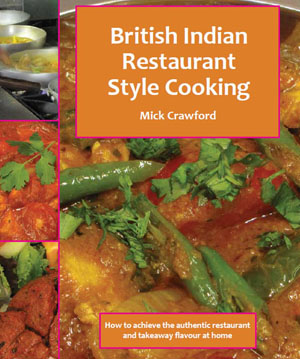
Of course, Indian cuisine has had the last laugh. When I was a young, impoverished University student, going to an Indian restaurant was a good option for a night out. The restaurants were slightly dodgy, the sort of places where you weren’t quite sure of the source of the meat on your plate (a story which made the rounds of the student dorms was of an inspection of an Indian restaurant turning up a dead dog in the kitchen’s refrigerator).  But now, as far as I can make out the English themselves are cooking Indian food. My guess is that in another thirty years British cooking won’t exist anymore in Britain. Everyone will eat Indian.

Indian cookery book

_________________

Kedgeree: http://upload.wikimedia.org/wikipedia/commons/b/b8/Kedgeree.jpg [in http://en.wikipedia.org/wiki/Anglo-Indian_cuisine%5D
Viking longship: http://www.celticattic.com/scandinavian/images/viking_longship.jpg [in http://www.celticattic.com/contact_us/norwegian_connection/ships.htm%5D
Kichdi: http://jainrasoi.com/mg/wp-content/uploads/2012/09/moong-mogar-dal-khichdi-600×450.jpg [in http://jainrasoi.com/khichdi/moong-mogar-dal-khichdi%5D
East India company: http://thediplomat.com/sport-culture/files/2012/01/East-India-Company.jpg [in http://thediplomat.com/sport-culture/2012/01/12/revisiting-the-east-india-co/%5D
Sick man: https://naughtgin.com.au/a-tonic-for-our-time/ HhdTZia6Bzk/ULac2VucJAI/AAAAAAAAAN0/rCoD3QxO_us/s1600/sick_man_24338_md.gif [in http://storytimehats.blogspot.com/2012/11/sick-to-move.html%5D
Memsahibs: http://s157.photobucket.com/user/dismasdolben/media/memsahibs.jpg.html?t=1176095517 [in http://sanatana-dharma.livejournal.com/106044.html%5D
British family in India: http://3.bp.blogspot.com/-JXoJcY6cvfg/T33zjAqxGjI/AAAAAAAAAc4/Ln-30Elvh-8/s1600/British+india.jpg [in http://hkm128.blogspot.com/2012/04/being-dark-skinned-in-india.html%5D
Chutney: http://www.taste-of-arran.co.uk/data/shop/Madras%20Fruit%20Chutney.jpg [in http://www.taste-of-arran.co.uk/item.asp?itemid=121%5D
Mulligatawny soup: http://upload.wikimedia.org/wikipedia/commons/thumb/b/bd/Mulligatawny.jpg/800px-Mulligatawny.jpg [in http://en.wikipedia.org/wiki/Mulligatawny%5D
Breakfast-British Raj: http://4.bp.blogspot.com/-pEIQ5D-CSEU/UCo2tDj8nNI/AAAAAAAAJs8/35DYCGC5zk4/s1600/raj.jpg [in http://marykunzgoldman.com/2012/08/breakfast-of-champions.html%5D
British Indian cookery book: http://www.greatcurryrecipes.net/wp-content/uploads/2012/05/FRONT-COVER-NEW-BOOK1.jpg [in http://www.greatcurryrecipes.net/2012/05/12/a-review-of-british-indian-restaurant-style-cooking-by-mick-crawford/%5D

SQUATTING AND CHAIRS

2 June 2013

On our last visit to Hong Kong, my wife and I wandered into an antiques shop to poke around among the offerings. The owner, an ethnic Chinese, struck up a conversation with us. After discovering that I came from the UK, she lit up and became positively garrulous. It turned out that her son was completing a Masters at Oxford University, and she described, lovingly and in great detail, a trip she had recently made to the UK to see him. It soon became clear that she regretted Hong Kong no longer being British. In short order, her misty-eyed regrets over the UK leaving turned into a rant against the “Mainlanders”, Chinese from mainland China. This is a common topic of converstation in Hong Kong, where many of its ethnically Chinese residents determinedly stress that they are different from the Mainlanders. This determination is becoming fiercer as Mainlanders come in ever larger numbers to Hong Kong to gawp, buy, and generally get in the way. For this lady, there were two things which symbolized all the differences between Her and Them. She proceeded to tick them off on her fingers with disdain: “they spit, and they squat”.

I think we can all agree that the generalized Chinese habit of spitting is really quite revolting, particularly when it is preceded by a noisy hawking of the throat and – most disgusting of all – a blowing of the nose without a handkerchief. And it is true to say that you see very little of this in Hong Kong.

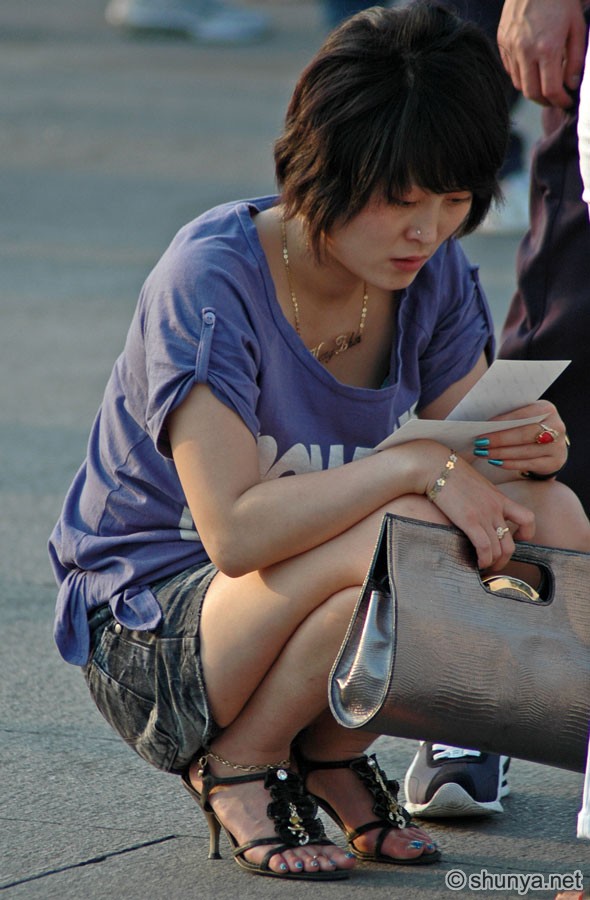
Our interlocutor’s hostility to the prevalent Chinese habit of squatting is more interesting. Everywhere in China – on pavements, in malls, at bus stops, in railway stations; anywhere, really, where people stand and wait – you will see people who have dropped down onto their haunches for a rest

squatting men beijing-wangfujing

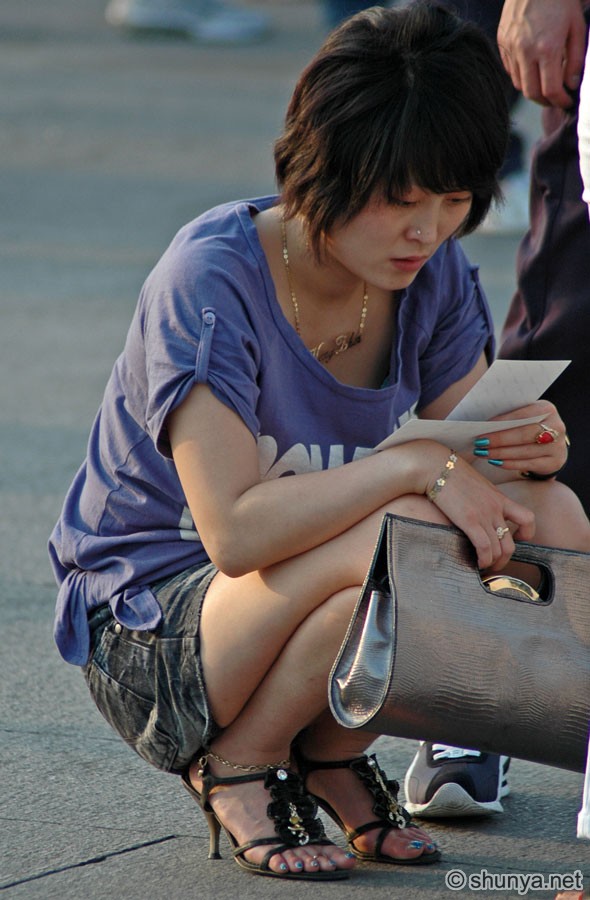
reading, more often than not these days, their text messages.

squatting woman-5

I have to say that I also find this habit disquieting. It seems such a … humiliating posture, is the only way I can describe it. Every time I see people squatting, I scold them mentally: “Get up, get up! You are not a slave!”

And yet … when you think about it, in a world where chairs didn’t exist, which must have been 99.9% of the time that we have been human beings, it was really quite natural for us to drop down  onto our haunches when we were tired of standing and when there wasn’t a nice log or large stone to sit on. So I’ve come to the conclusion that I think the way I do about squatting because of the chair.

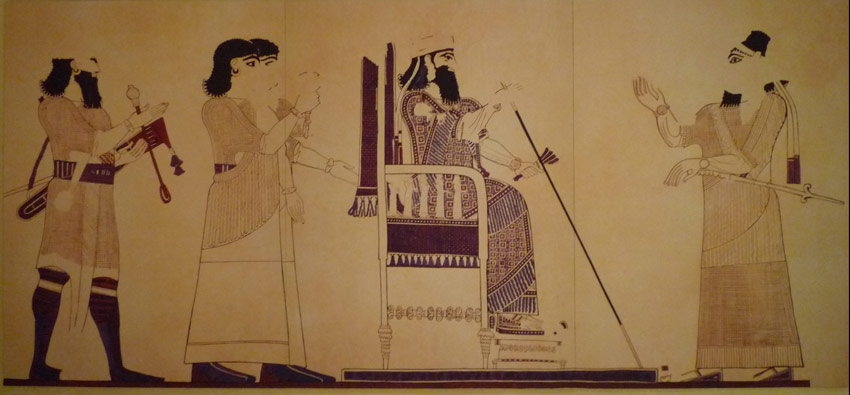
The chair, or rather the throne, was obviously an instrument used by Kings and Emperors, from the earliest times, to overawe their subjects. Here we have an Assyrian emperor lording it over some subject of his

throne-assyrian throne

And the temple of Abu Simbel in Egypt must surely be the epitome of rulers lording it over their lands while sitting on thrones

throne-abu simbel

Shelley’s poem Ozymandias, which I quoted in an earlier post, comes to mind when I look at these statues.

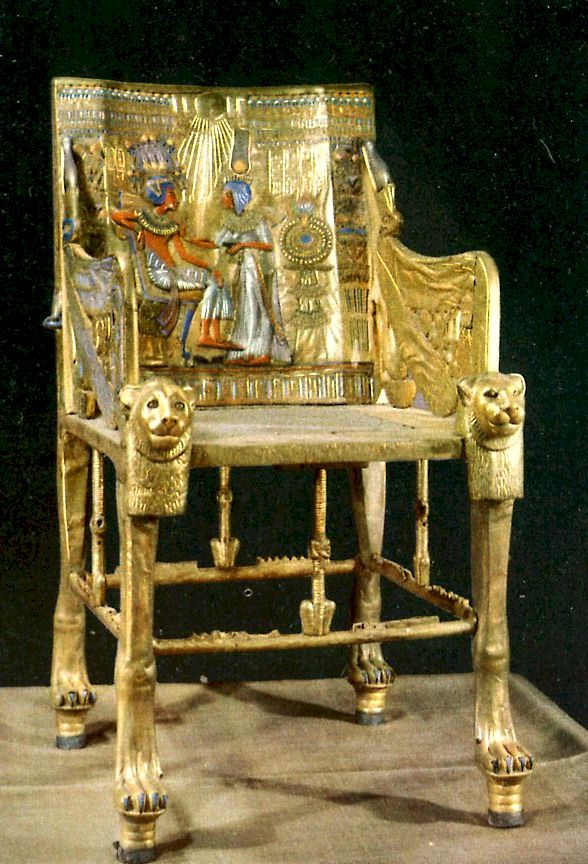
Egypt’s dry desert air, in which buried things do not rot, allows us to contemplate today a real Egyptian throne, this one from King Tut’s tomb (“Tutankhamun, King of Upper and Lower Egypt, Lord of the forms of Re, Strong bull, Perfect of birth, He whose beneficent laws pacify the two lands, He who wears the crowns, who satisfies the gods” to you, mere mortal, and don’t you forget it …):

throne-king tut-1

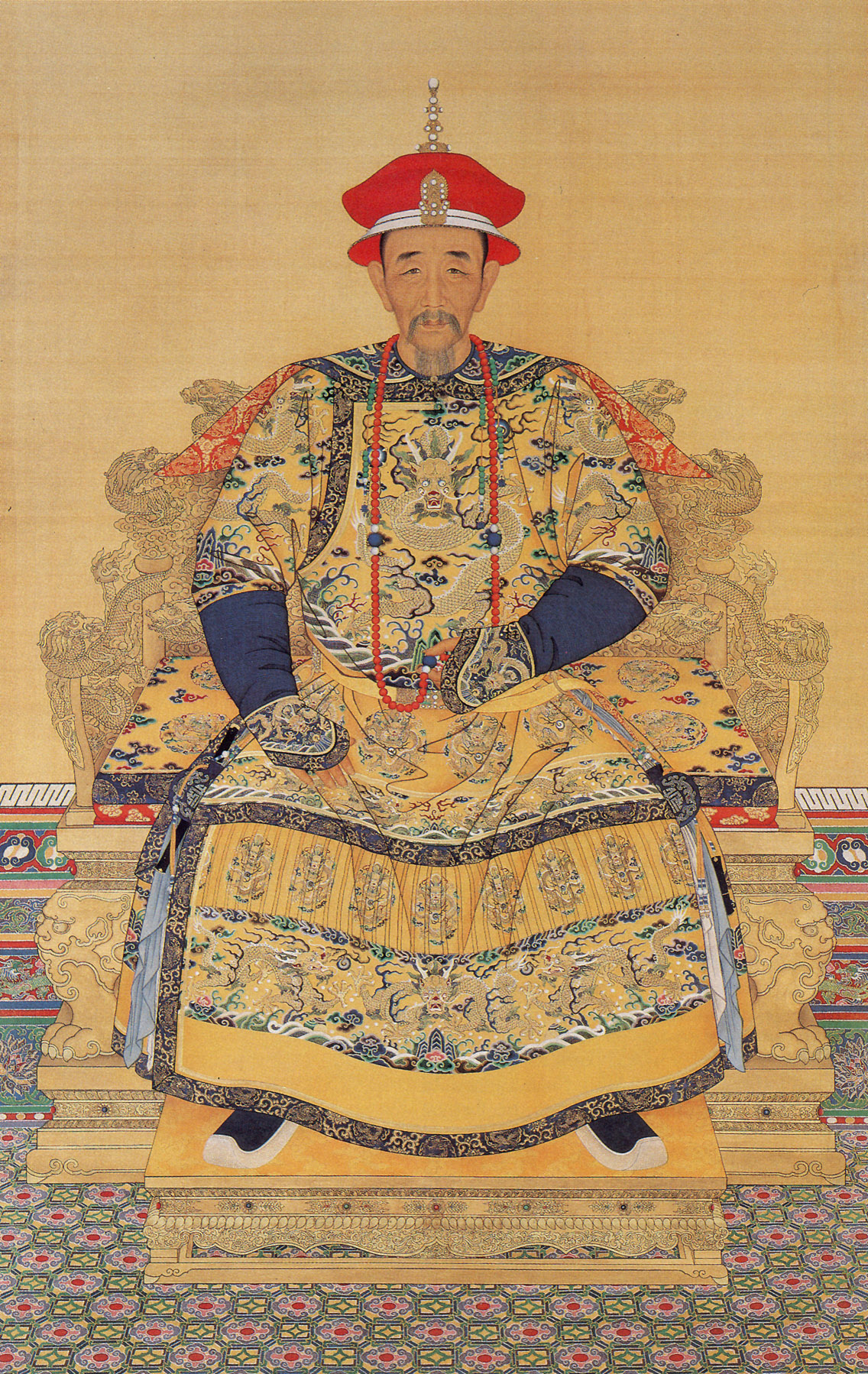
Even in more modern times have thrones played their part in elevating the splendour of the sitter, as in this case of the Qing emperor Kangxi

throne-Qing Emperor Kangxi

And of course Chinese emperors, along with many copy-cat Asian emperors, liked to have their subjects not just squat in front of them but to really debase themselves by kowtowing:

kowtowing before the emperor

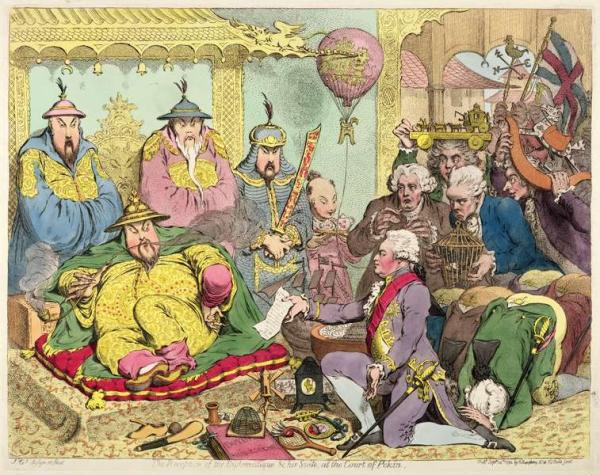
Which led to the famous diplomatic incident of 1793, when, Lord Macartney, King George III’s envoy to the Chinese Emperor, refused to kowtow but did accept to get down on one knee as he would have before his King:

kowtowing before the emperor-English ambassador

Even more recently, thrones have played their part to prop up monarchies. The last Shah of Iran, for instance, was fond of using the Naderi throne to impart some sheen to his tawdry reign.

throne-peacock throne-Shah in front

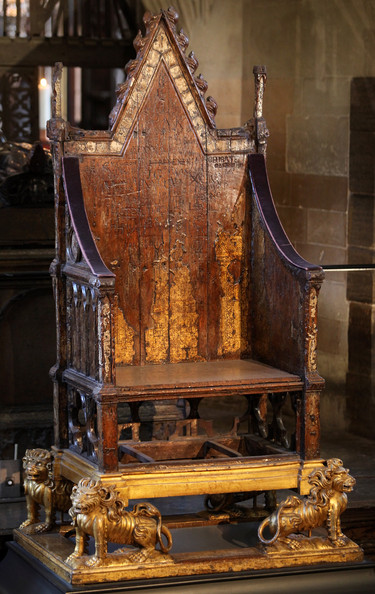
And of course we in the UK have our venerable King Edward’s Chair in which all English, and then British, monarchs (bar two) have been crowned since 1308 – by the way, King Edward I commissioned the chair to house the Stone of Scone after he stole it (a.k.a. war booty) from the Scots.

throne-king edwards

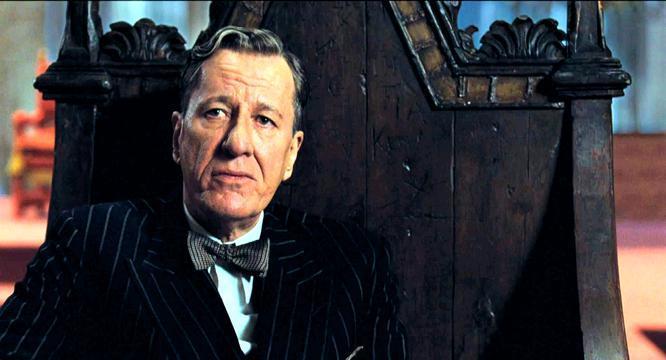
Those of us who have the seen the film The King’s Speech will recognize the throne, which appears at some point in the story and whose portentous humbug is mercifully taken down a peg or two by the egalitarian Australian speech therapist Lionel Logue (played by that wonderful actor Geoffrey Rush), who slouches around in it provoking a burst of monarchist anger from King George VI:

throne-king edwards-Geoffrey Rush in it

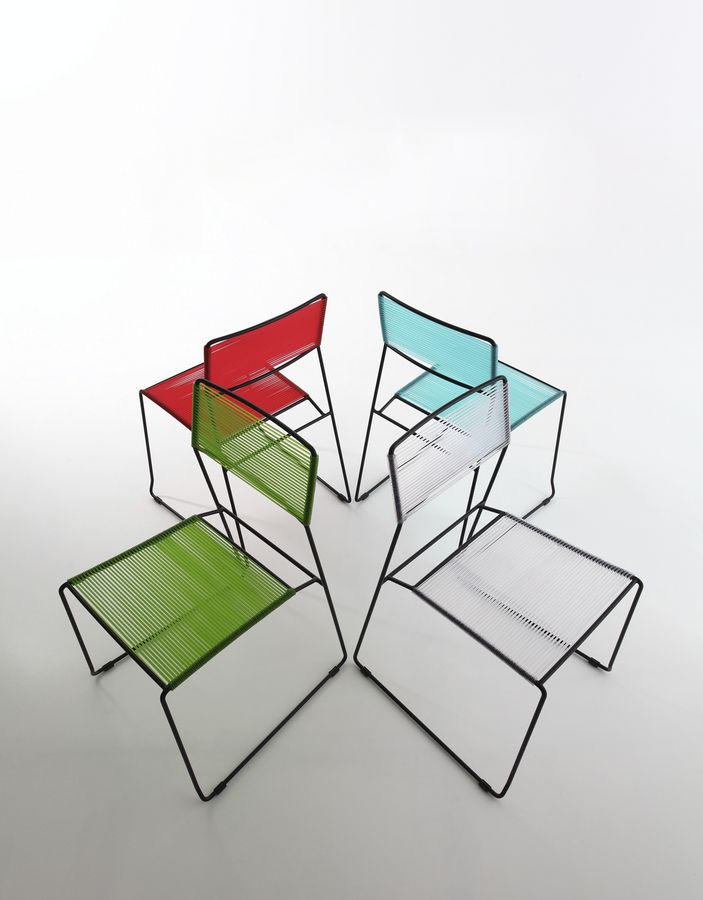
Luckily, Lionel Logue’s egalitarian comments about the chair in question was preceded a century or so ago (not more, I suspect) by a move to make the chair a product of mass consumption, which meant that I (but probably not the Chinese of my generation) have spent my whole life sitting on chairs and not squatting on the ground. I try to remember the chairs of my childhood but fail. A chair’s a chair, some of you might say, it’s a functional object. True, but even functionality for the masses can be beautiful. It took my wife to introduce me to Italian furniture design and to make me realize that a chair could be both beautiful and functional. The moment we could – in the early 1980s – we bought ourselves a set of dining chairs. My wife has scoured the internet for photos of the model of our chairs but has found none. This photo of the spaghetti chair is the closest I can find:

chair-sled based-spaghetti

I designed and put together a dining room table to go with our chairs, the only thing I have ever designed in my life. All slumber in a warehouse in Vienna, awaiting our return to Europe.

Later, when we were living in New York, we came across Shaker chairs (and other furniture) during a weekend trip in upstate New York which took us to an old Shaker colony. Beautiful things.

chair-shaker-2

We would have bought some reproductions if we hadn’t already had our chairs – and if they hadn’t been so expensive.

Over the years, we’ve seen some “trophy” chairs (chairs which don’t just sit quietly around a dining room table) which we wouldn’t have minded buying, if the price had been right (and if we’d had the space).

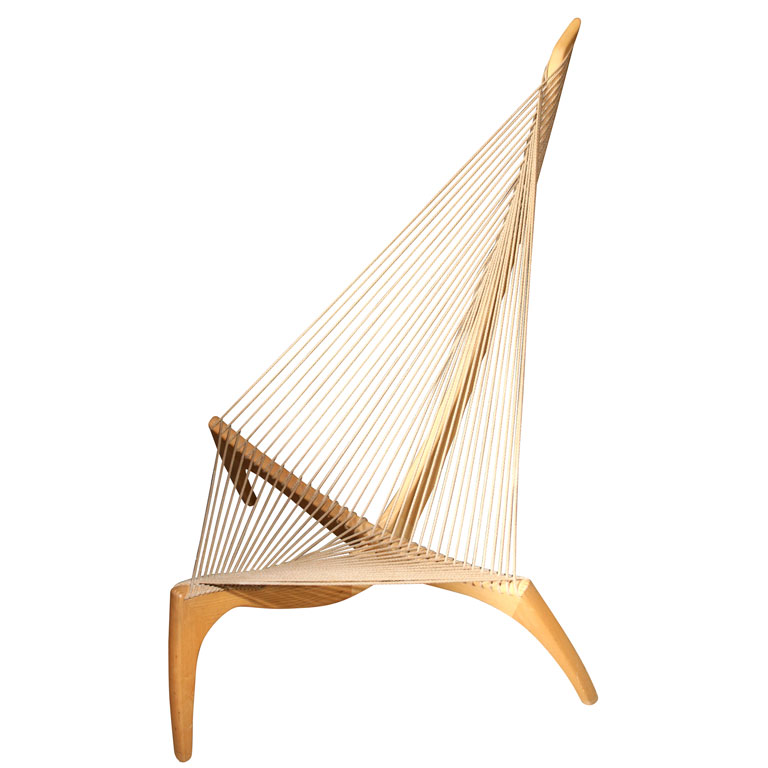
The Danish harp chair:

chair-danish harp chair

The Mondrian chair (this would have been more my choice than my wife’s):

Chair-Mondrian chair

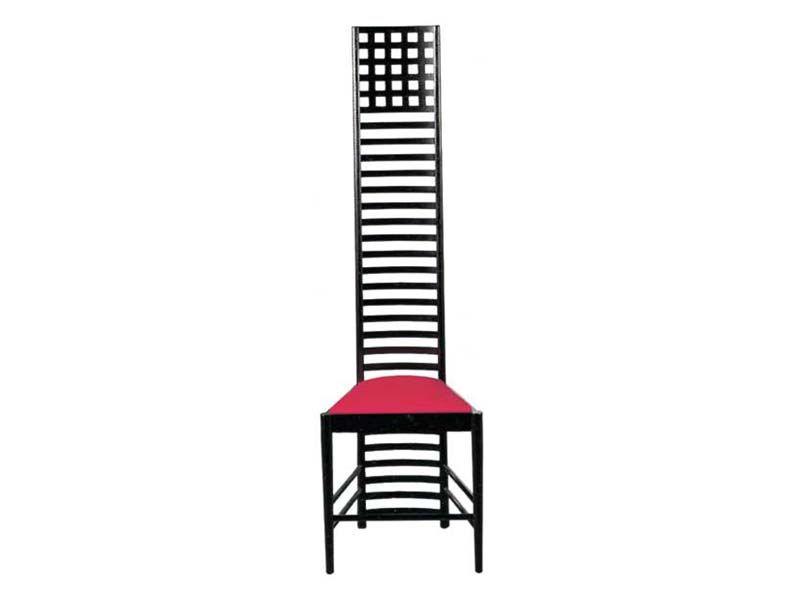
Chairs designed by the Glaswegian architect, designer and artist Charles Mackintosh (again, my choice I think):

chair-Mackintosh chair

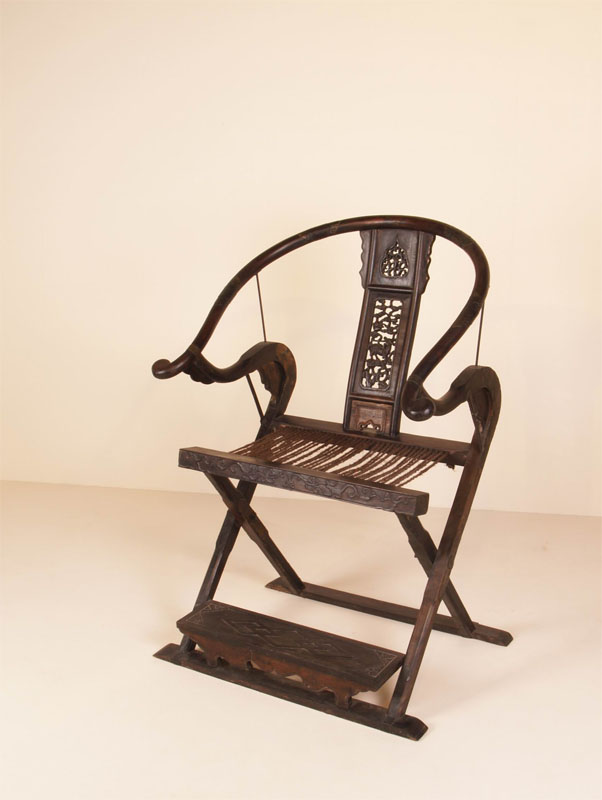
Here in China, chairs from the Ming period:

chair-ming-1

The reader will have noted by now that our tastes in chairs (indeed, all furniture) lean towards the simple and clean line …

I suppose that with consumption on the rise in China, the habit of squatting will disappear, as will – I fervently hope and pray – the habit of spitting.  In the meantime, I will continue to mentally exhort my fellow Beijingers to stand up straight and proud every time I see them squatting on the ground.

_________________________

Squatting men: http://mattchalmighty.files.wordpress.com/2012/10/beijing-wangfujing-men-squatting-large.jpg
Squatting woman: http://www.shunya.net/Pictures/China/Beijing/BeijingWoman.jpg
Assyrian throne: http://www.ucl.ac.uk/sargon/images/essentials/kings/sh5-til-barsip-large.jpg
Abu Simbel: http://famouswonders.com/wp-content/uploads/2009/04/abu-simbel.jpg
King Tut throne: http://comeseeegypt.com/images/tutthrone.jpg
Qing Emperor Kangxi: http://upload.wikimedia.org/wikipedia/en/1/12/China,Qing,Emperor,Kangxi,Painting,Color.jpg
Kowtowing before the emperor: http://www.mitchellteachers.org/WorldHistory/AncientChinaCurriculum/Images/legendaryemperors/ImperialRobesOfficialsPayingRespect_large.jpg
English ambassador Lord Macartney before the Emperor: http://images.printsplace.co.uk/Content/Images/Products/92648/89219/Reception_of_the_Diplomatique_and_his_Suite_at_the_Court_of_Pekin__c_1793__1.jpg
Shah of Iran in front of peacock throne: http://filelibrary.myaasite.com/Content/26/26343/29921747.jpg
King Edward’s Chair: http://www2.pictures.zimbio.com/gi/Visitors+Look+Coronation+Chair+Westminster+Wk0GK7SFdXnl.jpg
Geoffrey Rush sitting in King Edward’s Chair: http://v020o.popscreen.com/eGhxd3hrMTI=_o_st-edwards-chair.jpg
Spaghetti chair with sled base: http://img.archiexpo.com/images_ae/photo-g/commercial-contemporary-sled-base-stacking-chair-50648-3267845.jpg
Shaker chair: http://www.jkrantiques.com/_images//ShakerCounterChairWeb.jpg
Danish harp chair: http://shard1.1stdibs.us.com//archives/upload/1stdibsA/071607_sb/arensojoldHD/19/xHudJuly07_398.jpg
Mondrian chair: http://www.dorotheum.com/fileadmin/user_upload/bilder/Presse/Gallery_of_Highlights/Rietveldstuhl.jpg
Mackintosh chair: http://1.bp.blogspot.com/-_ZjHHv_Nzls/UOP0yApjC4I/AAAAAAAAAI0/yTahn5EI7q0/s1600/1.Charles_Rennie_Mackintosh_Hillhouse_Chair_rfd.jpg
Ming chair: http://www.easterncurio.com/easten%20curio/Afurniture/ItemForOn-Selling/A1S152101.jpg

MANDARIN DUCKS

21 April 2013

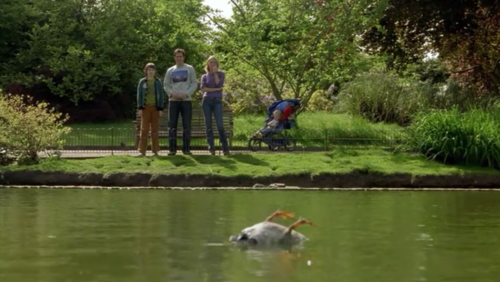
One of the funnier scenes for me in the film About a Boy is when the Boy kills a duck after he throws a loaf of bread, which his mother had baked, into the pond. Lord knows what ingredients she had used, but it had the density of a rock and thus the predictable effect when it hit the duck.

about a boy dead duck-1

I laughed loud and long, partly because it reminded me of when I was a boy. During my visits to my grandmother in London, one of her staple ideas for keeping me busy was to take me down to one of the ponds in Central London’s many parks to feed the ducks. She did this with most of her grandchildren who passed through London and kept a stash of stale bread for the purpose. And boy was it stale sometimes! If I’d been a duck I wouldn’t have touched it with the end of my webbed foot.

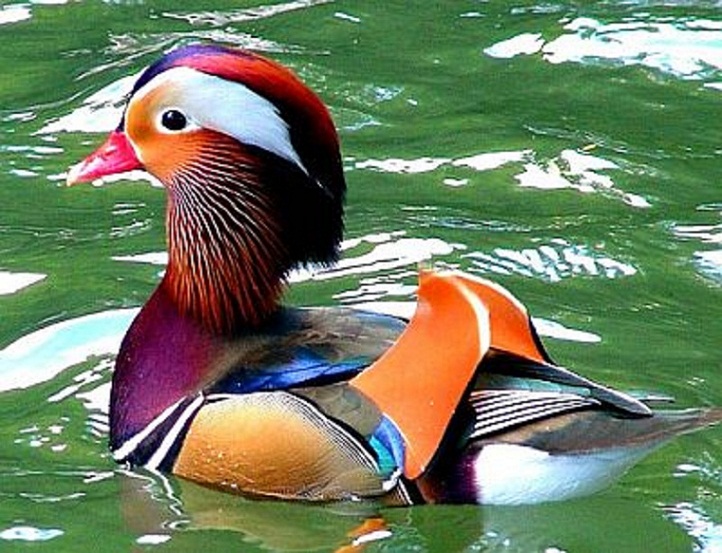
As I said, she took me to several parks in Central London. Hyde Park was a favourite with its Serpentine lake. Another was the lake in St. James’s Park. The nice thing about that lake was that it played host to many different types of ducks, some of them really beautiful. One of the most lovely was the mandarin duck:

mandarin duck-1

(I knew its name because the park authorities had thoughtfully placed plaques by the lake’s edge, right where little boys and girls threw stale bread to the ducks, which carried a picture of each type of duck along with its name).

I swore to myself that when I owned a duck pond, I would stock it with mandarin ducks. Well, I don’t own a duck pond – yet (hope springs eternal). But I do live by a pond-like body of water here in Beijing. So you can imagine my excitement when on Saturday I noticed a pair of mandarin ducks paddling peacefully along its surface.

Will they be there tomorrow, when I walk to work? Or will they have flown off to greener pastures? I really hope they’ll be there. Feeding them will be a great way to get rid of our stale bread.

PS:

They stayed! Here’s a photo of the male I took the other day, a month or so after writing this post. It’s not a great photo – actually, it’s a lousy photo – but the duck was careful in not coming too close (no doubt it sensed that it could quickly end up in a pot in a Chinese kitchen), but it is evidence of their continued presence.

duck on canal 001

______________________

“About a Boy” dead duck: http://media.tumblr.com/tumblr_lpks23apyX1qiurmy.png

Mandarin duck: http://blogimg.goo.ne.jp/user_image/2f/0e/202ca598a665e53251ea85d5818715ee.jpg

COAL

Beijing, 23 February 2013

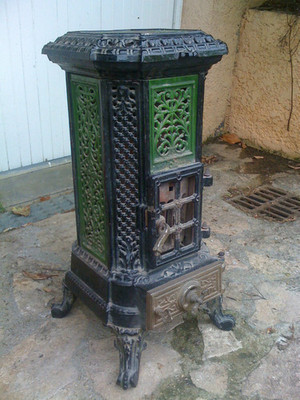
Whenever I visited my French grandmother at Easter, we used to stay in her house in the countryside. It was still cold enough for us to need heating, which meant that we spent much of our time in the living room, huddled around a venerable stove. It looked like this:

coal stove

although it had a chimney that came out of the back, which after a metre or so took a right-angle turn and exited through the living room wall.

During the day, my grandmother burned wood scrap – fallen branches, pinecones, bark, whatever lay around the garden after the winter storms – which she sent me out to collect on a regular basis. At night, though, she would load the stove up with coal, and it was my job to fill the coal scuttle. This meant taking the scuttle down to the cellar, where the coal was stored, to fill it up. This is what the scuttle looked like:

coal scuttle-3

I loved that cellar. It was really the ground floor of the house – there was a door at the back which gave onto the road outside. From the garden side, though, you had to open a door with a large key, of the kind gaolers had in medieval times, go down a few stairs past dark corners where all the garden utensils were stored, and through a second door into the cellar proper. And there, stretched out in the semi-darkness, was a world of enchantment. For starters, the cellar had a dirt floor, which gave it a very particular smell. Then all around, strange and wonderful things loomed out of the dark. The coal was stored in an untidy pile to the left of the door, and beyond it was an old wooden table on which were stored my grandmother’s cache of goat cheeses bought from a nearby farm, the bottled fruit which she prepared during the summer, and a small wooden barrel in which she made her vinegar. Wonderful, wonderful, that vinegar was! It seemed to me total magic that my grandmother would pour the local red wine in, let it stand for a while, and hey-presto! out came delicious vinegar. I tried making vinegar of my own decades later in Vienna. The results were … mixed, let us say. Next to the vinegar barrel was the wine rack, good rough Beaujolais wines from the local vineyards. Over on the cellar’s right were piles of wood, various pieces of old furniture, ancient utensils whose use I could not figure out, an old bike or two, some hay, and I don’t know what else.

I always spent a few moments poking around in the corners seeing what new things I might stumble across, before filling up the scuttle and hauling it back up to the living room. The coal was, of course, dusty and left all your fingers black, but it came in nice, neat egg-shaped pieces. I never thought about it at the time, but I suppose this was pulverized coal pressed and molded; I remember the mold lines running around the pieces. Here’s what it looked like, in a coal scuttle; really heavy to carry! (appropriately enough, this is a photo from a museum; we are talking history here):

As for my English grandmother’s house, it had no coal. The use of coal had been banned in London after the last big smog of 1952. I remember my mother telling us about that smog when we were children, how she had had to walk down the road and almost panicked at not being able to see a thing. Soon thereafter, my parents escaped to the sunnier climes of Africa where I was born.

london smog 1952

The house had no coal but still had a coal cellar, which was located under the pavement. A manhole in its ceiling had once allowed the coal-man to handily pour in the coal without coming into the house. My grandmother didn’t really use the coal cellar for much. The only thing I ever saw her put in there were the French cheeses which my father bought when we visited. He had a fondness for the smellier French cheeses like Roquefort:

roquefort

My grandmother, in true English style, detested smells, so she banished his cheeses to the coal cellar between meals. Lucky for her that my father didn’t eat the aptly-named Crotte du diable, or devil’s droppings!

crotte du diable

Truly, evilly smelly – in fact, it seems not to exist anymore, which is a tragedy because it tasted absolutely wonderful (you had to wash your hands very well after eating it, though …).

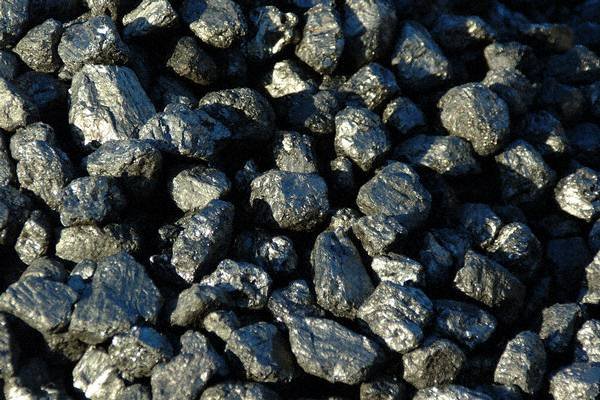
In any event, things changed and moved on. My French grandmother had a heart attack while picking strawberries in her vegetable garden and was eventually moved into a home, and the stove stopped being used. I came across coal one more time, at school, where we had an open fire in the school monitors’ room and a ration of coal to feed it with. The coal looked more like the stuff that’s dug out of the ground, rough chunks:

coal at school

I liked to pick up a chunk and turn it in the light. Coal can be very beautiful, with black, glistening surfaces, reminiscent of obsidian:

bituminous coal

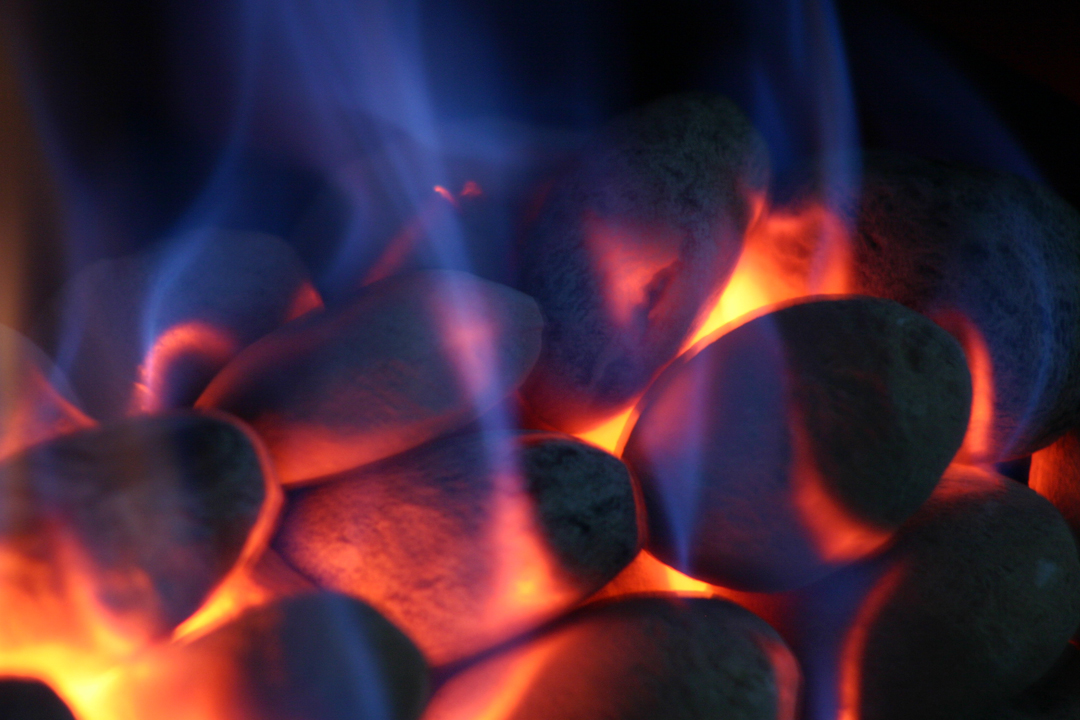
I also liked to sit next to the fire and gaze deep into the glowing coals rather than study for my A-levels:

glowing coal-2

which may partially explain why I didn’t do too well in my A-levels.

After that, coal disappeared from my life, as it did from the lives of all us in Europe.

Then we came to China.

Some statistics, courtesy of Wikipedia [1]: China is third in the world in terms of total coal reserves. It is the largest coal producer in the world, with the world’s largest (and deadliest) coal mining industry. It is also the largest consumer of coal in the world. Over half of the coal is used to make electricity, another third is used by industry, some is used in district heating plants, leaving a mere 3% to be used in residences. But you sure see that 3%.

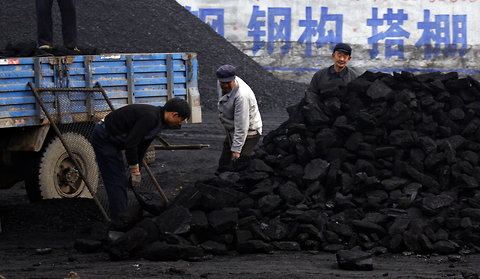
You see them shoveling up huge chunks of coal – I was astonished at how big the chunks are; they have come straight from the coal face – you see them trucking it around, and piled up in street corners.

china-shoveling coal

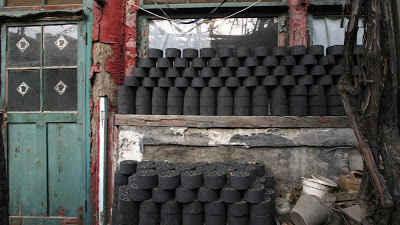
And more than anything you see China’s version of molded coal, which looks like this:

molded coal china-1

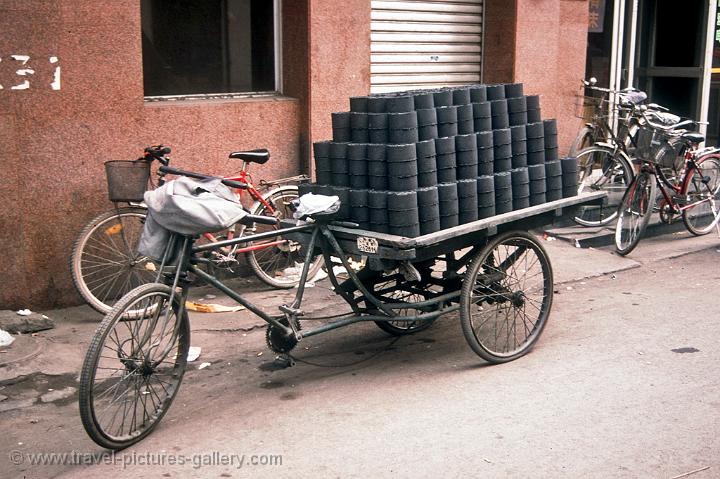
You see them transporting it around on the tricycles which I wrote about in an earlier post:

tricycle with coal

You see it piled up outside houses:

molded coal china-3

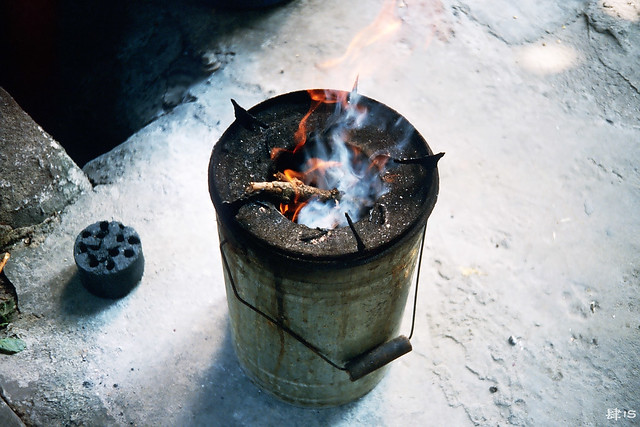
Then it’s burned in these special stoves:

stoves china-1

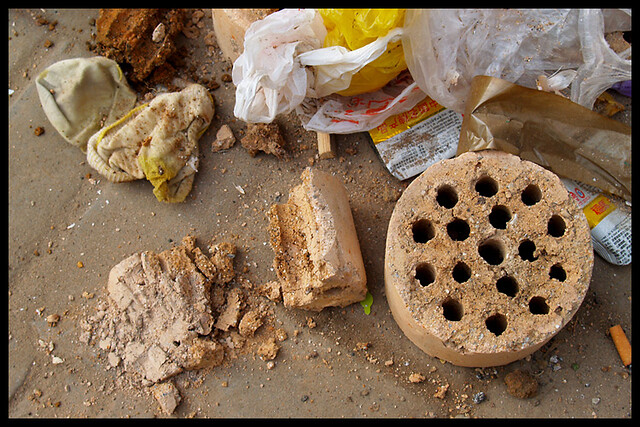
which leaves behind the consumed molds which you see in the bottom right-hand corner of the picture. Cities’ rubbish is littered with these discards.

molded coal china-consumed

All this coal burning leaves a taste in the air, a taste which instantly takes me back to my early years in the UK, when you would walk through a town or village and smell the sharp, acidic taste of coal being burned.

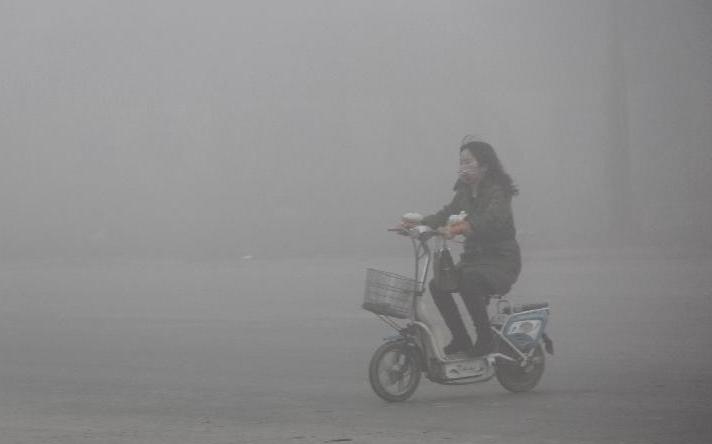
And it gives rise to smog:

beijing smog-2

Not much different from London’s smogs.

I’m optimistic. Like the UK did, China will eventually get rid of the smogs – probably by stopping to burn coal.

______________________

1. http://en.wikipedia.org/wiki/Coal_in_China

coal stove: http://img.fr.clasf.com/2012/11/22/poele-a-charbon-ancien-maill-20121122191235.jpg
coal scuttle: http://gillesrenaud9.free.fr/Seau%20%C3%A0%20charbon/P1050541.jpg
coal scuttle-fullhttp://a406.idata.over-blog.com/600×879/1/05/04/45/photos-blog-N-21/le-seau-a-charbon-boulets-musee-de-la-mine.jpg
London smog 1952: http://www.thefloridastandard.com/files/2013/02/smogdm1403_468x673.jpg
Roquefort: http://img.dooyoo.co.uk/GB_EN/orig/0/1/0/2/8/102828.jpg
Crotte due diable: http://i.ebayimg.com/00/s/MTYwMFgxMTgy/$%28KGrHqF,!iUE8cj4nvorBPVlcwEB,!~~60_35.JPG
Coal at school: http://i01.i.aliimg.com/photo/v0/112891981/Tissue_Paper_Coal_Palm_oils_Pail.jpg
Bituminous coal: http://www.ua.all.biz/img/ua/catalog/1865574.jpeg
Glowing coal: http://bargainsbegin.co.uk/wp-content/uploads/2013/01/Heater-3-edit.jpg
Chinese shoveling coal: http://graphics8.nytimes.com/images/2011/12/21/business/coal/coal-blog480.jpg
Molded coal China: http://lexpansion.lexpress.fr/pictures/1455/745377_des-briques-de-charbon-dans-un-commerce-de-huaibei-en-chine.jpg
Tricycle with molded coal: http://www.travel-pictures-gallery.com/images/china/beijing/beijing-0042.jpg
Molded coal China against the wall: http://4.bp.blogspot.com/-ASl1mhpkw5k/TkRxVCEtoII/AAAAAAAAA14/pgggOooaKE0/s400/Hutong%2Bcoal.jpg
Stove for burning molded coal: http://farm6.staticflickr.com/5164/5261127408_36ccd1d718_z.jpg
Molded in coal China-consumed: http://farm1.staticflickr.com/68/424608074_e7f49e2f9a_z.jpg?zz=1
Beijing smog: http://feww.files.wordpress.com/2013/02/china-smog-17feb2013.jpg

A HORSE! A HORSE! MY KINDGOM FOR A HORSE!

Beijing, 5 February 2013

I was all atwitter this morning when I saw the news. The skeleton found under the car park in Leicester, England, is indeed that of Richard III, last of England’s Plantagenet kings! OK, there are some sour-puss academics raising doubts, but that’s probably because the skeleton wasn’t found under their car park.

I spent the early morning skittering around the house with one shoulder up and shouting “A horse! A horse! My kingdom for a horse!” instead of getting ready for work. My wife looked on and rolled her eyes. But what Englishman has not at least heard of Shakespeare’s play Richard III? What person, who – like me – has thespian pretensions, has not dreamed of prancing about a stage as a mediaeval version of Quasimodo, murdering all and sundry with devilish glee and getting the beautiful women into the bargain? If it wasn’t for Shakespeare, who would remember King Richard III?

I did most of my acting at school. To my great regret, we never put on Richard III. But I’ve seen it a number of times, both in film as well as on the stage. I first saw it years ago with my wife, in some poky cinema on Paris’s rive gauche. That was the 1955 film version, with Laurence Olivier doing a marvelously over-the-top evil characterization of Richard.

laurence olivier

This film stayed in some sort of medieval setting. The next version I saw, with Ian McKellen playing Richard III, was made 40 years after Olivier’s movie. It tried to be clever and set the story in some sort of 1930s fascist version of Britain where the king’s deformity was moral rather than physical.

ian mckellen

We saw this film in Milan. As you can imagine, given Italy’s history

mussolini

the fascist overtones of the film had a certain resonance there.

And then, about a year ago, through sheer serendipity – we just happened to be visiting Hong Kong when the play was running – we saw Kevin Spacey play Richard III with a manic savageness.

kevin spacey

One of the amazing things about Shakespeare is the sheer number of quotes he has generated. Half the quotes people use, or so it seems, come from one Shakespeare play or another. Richard III has its fair share. There’s the quote which I’ve used as my title, which must be one of the most famous quotes in the English language. Then there is this quote:

“Now is the winter of our discontent
Made glorious summer by this sun of York”

which seems to be one of those quotes that everyone knows. Then there is this quote:

“Off with his head!”

which my father was very fond of using  whenever I was naughty.

Apart from these, the play has some deliciously cynical lines:

“Conscience is but a word that cowards use
Devis’d at first to keep the strong in awe”

“And thus I clothe my naked villainy
With odd old ends stolen out of holy writ;
And seem a saint, when most I play the devil.”

“Why, I can smile and murder while I smile,
And cry ‘content’ to that which grieves my heart,
And wet my cheeks with artificial tears,
And frame my face for all occasions”

Yes, we never did put on Richard III at school. But we put on Shakespeare’s Richard II; the events it recounts were the original cause of the War of the Roses, whose final act was the unhorsing of Richard III on Bosworth Field outside of Leicester and his killing with several savage blows to the head as shown by that skull beneath the car park.  I played the Duke of York (I should have played King Richard II, of course, but we’ll pass over that). As usual, the play has many memorable lines, but one set in particular remains with me, uttered by my elder brother John of Gaunt, Duke of Lancaster, as he lies dying in Act I:

This other Eden, demi-paradise;
This fortress, built by nature for herself,
Against infection, and the hand of war;
This happy breed of men, this little world;
This precious stone set in the silver sea,
Which serves it in the office of a wall,
Or as a moat defensive to a house,
Against the envy of less happier lands;
This blessed plot, this earth, this realm, this England

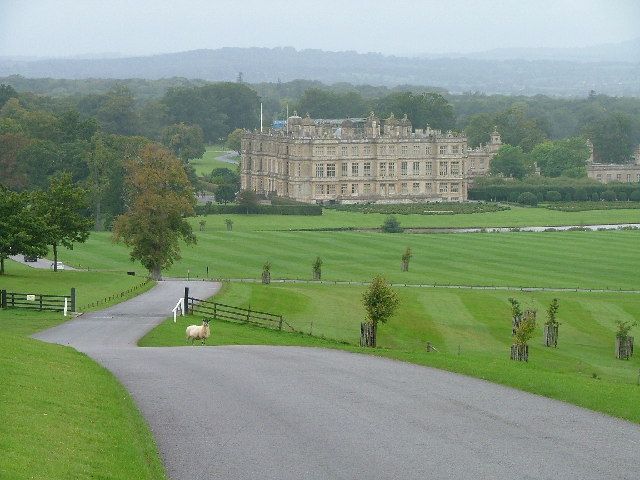
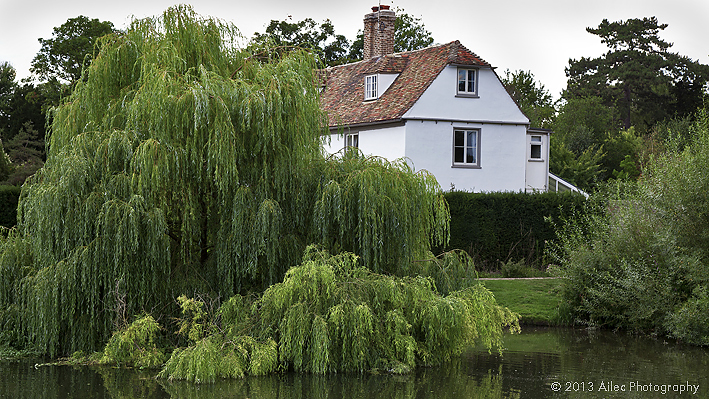
I don’t go back to the UK very often, but those lines echo with me when I stand in the countryside and see how so very lovely it can be.

english-countryside

_______________________________-

Laurence Olivier: http://3.bp.blogspot.com/-Z1o-IQnC1nE/UK8xybvIJ7I/AAAAAAAABCU/OJcjGS2QOzE/s1600/tumblr_m3xc1hNXLZ1rrfb56o1_1280.jpg

Ian McKellen: http://www.mckellen.com/images/r3/ban-15.jpg

Mussolini: http://757f8ed9aaa522dde29d-4c07cfa4f788be17c79661948c0f2477.r99.cf1.rackcdn.com/5728_1323465695_july-25th-benito-mussolini-deposed.jpg

Kevin Spacey: http://i.telegraph.co.uk/multimedia/archive/01934/Richard_a_1934160b.jpg

English countryside: http://www.style-passport.com/style/wp-content/uploads/2012/10/english-countryside.jpg