POSTS

ROOTLESS IN BEIJING

London, 4 May 2014

I like George Orwell. His novels are good, no doubt about it – some of them, like 1984 and Animal Farm, are classics – but it is really his non-fiction work that I appreciate the most. When I was young and going to school in the UK, I particularly liked those books of his like Down and Out in Paris and London and The Road to Wigan Pier in which he excoriated the smug, self-satisfied, class-ridden Britain of the 1930s, a Britain which still existed, albeit in a milder form, when I was going to school.

Orwell had a particular animus against colonialism, in part no doubt because of his first-hand experience with it as an officer in the Burmese police. But he still showed a certain compassion for the colonial administrators. I particularly remember his description of one of his superiors who had spent his whole working life in the colonies, who by necessity believed he had a deep connection with the Mother Country (wasn’t he out there on His Majesty’s Service?), but who in his rare visits home would sit friendless and familyless in his Club in London, looking out at a country he no longer recognized or felt part of, nursing a gin and tonic while waiting for the boat to carry him back.

I am not a colonial administrator but I have been out of the UK for nigh on forty years. I didn’t mean it to be so. When I left after University I was quite expecting to come back, but you know how it is, life just takes over. And now, on one of my rare visits back to the UK, I too, like that colonial administrator of long ago, no longer feel any connection to the country. I too sit there, not participating in the social, economic and political life going on around me, but merely observing it. Even my own language is becoming foreign to me. I don’t get many of the jokes any more, referring as they do to situations I am not familiar with. Much of today’s slang is a closed book to me. I’m even beginning to experience difficulties in understanding some of the stronger British accents!

This alienation from Britain sometimes fills me with melancholy, as it did today walking around the streets of London. Where do I belong? I am just a stone rolling around the world gathering no moss. I am Rootless in Beijing today, I will be Rootless in some other city tomorrow.

It’s not as if I can even mourn the loss of British roots, because I’ve never really had any. My parents left the UK before I was born and I only went to school there. When I tell people I’m British, they normally ask me where I’m from in Britain. I just say London. Everyone has heard of London and I did spend some time there with my grandmother. But I’m no real Londoner.

To make it all worse, I’m only half British, with my other half being French. At school, they sometimes called me froggie in that way children have of unerringly picking up differences and using them to pick on you. The fact is, I did feel different from most of my schoolmates. They were so much more English than I was! But my French side gave me no comfort. I was even less French than I was English. I just spent summer holidays there.

When I was younger, I didn’t mind my rootlessness. In fact, I was quite proud to be a citizen of the world, of belonging nowhere and everywhere, and I quite liked the fact that I could often ignore the social conventions of the places I lived in because I was foreign and not expected to conform.

But with age, I feel ever more urgently a need for roots. I want to have a place where I can say, “here, I will lay down my head; here, I will lay my bones to rest”. Luckily, my wife has given me strong roots in Italy. That is where I will finally come to rest when my tour of duty in Beijing is finished.

Goodness me, what is all this maundering self-pity? Time to pour myself another gin and tonic and discuss with my wife what we shall do tomorrow.

PEKING DUCK LIKE OPIUM

Beijing, 30 April 2014

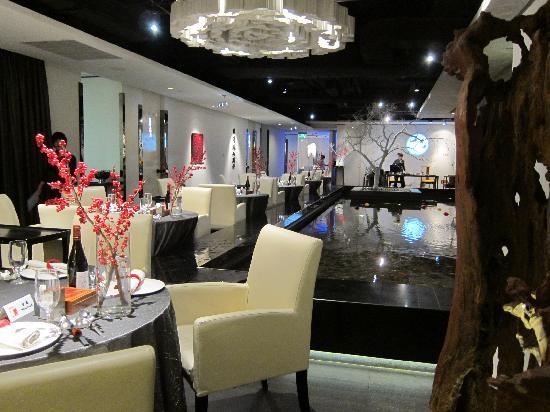
One of the first things my wife and I did when we arrived in Beijing was to eat Peking Duck. Well, not quite the first thing. We waited until the children came a few months later to visit us at Christmas before trying this Beijing delicacy. It was worth the wait. We went to the Dadong restaurant, which in the meantime has grown exponentially into a chain of really quite swanky restaurants scattered throughout the city.

dadong restaurant

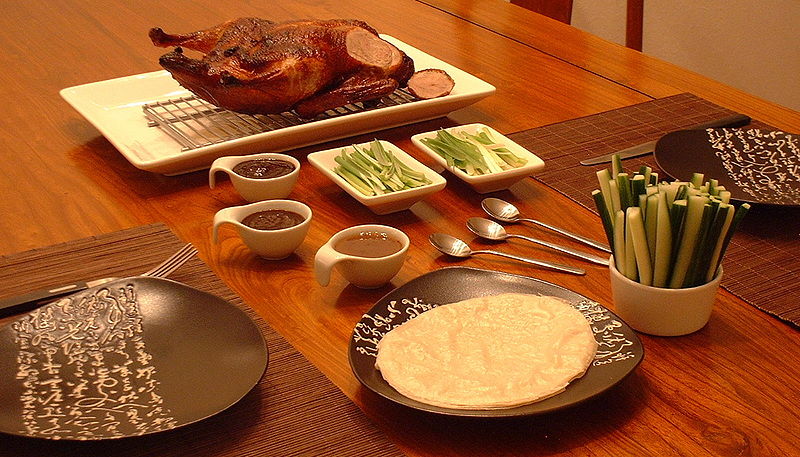
For readers who have not tried this dish, it presents itself so:

Peking Duck complete dish-3

As you can see, we don’t just have duck. Many other ingredients are part of the package. Eating Peking Duck requires one to follow a certain, very specific procedure, to bring together all these ingredients in the right order. Allow me to walk readers through the Standard Operating Procedure (SOP) for eating Peking Duck.

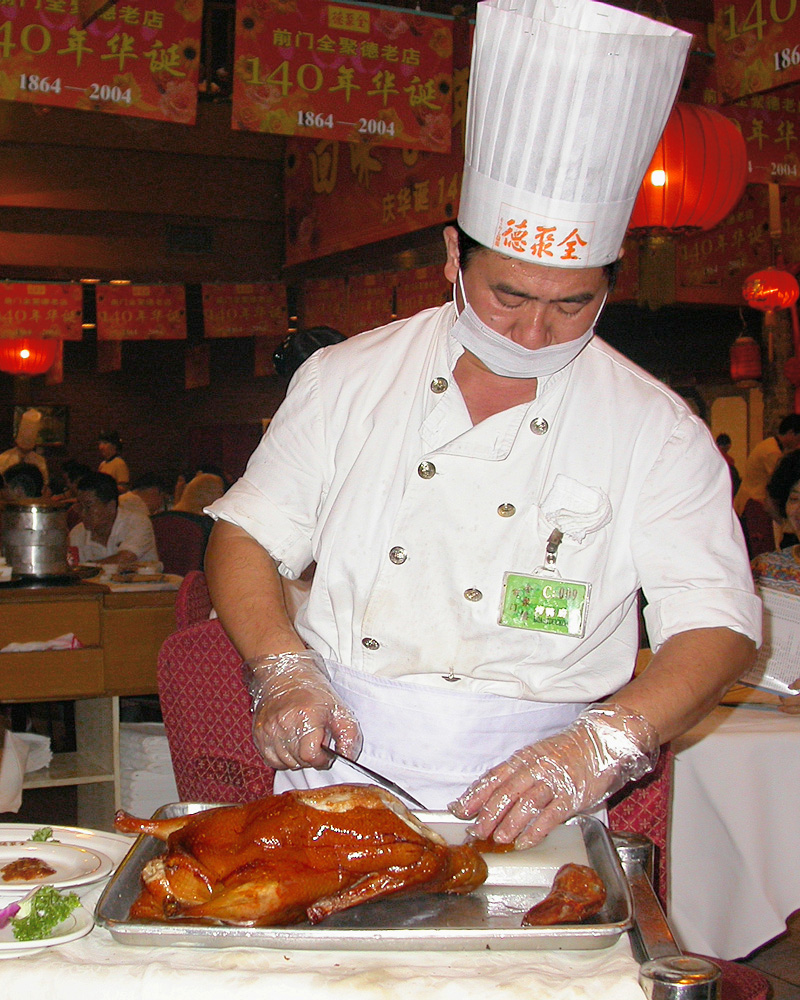
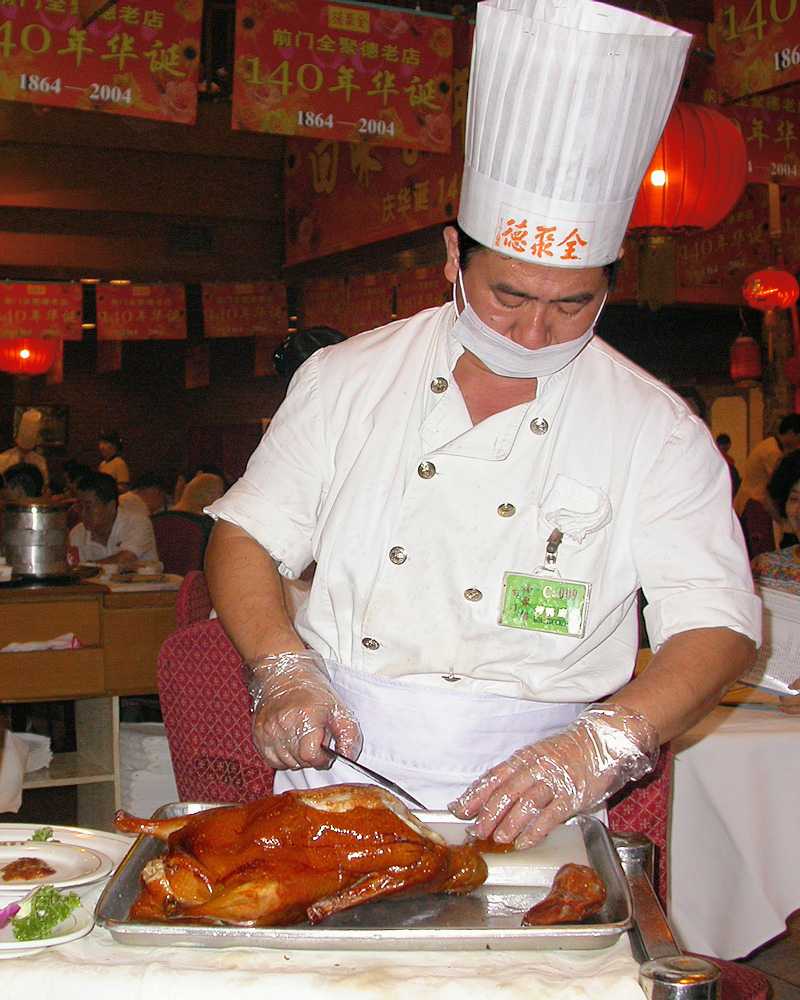
1. Look on respectfully as a chef comes to your table and slices up the bird in front of you.

cook slicing the duck

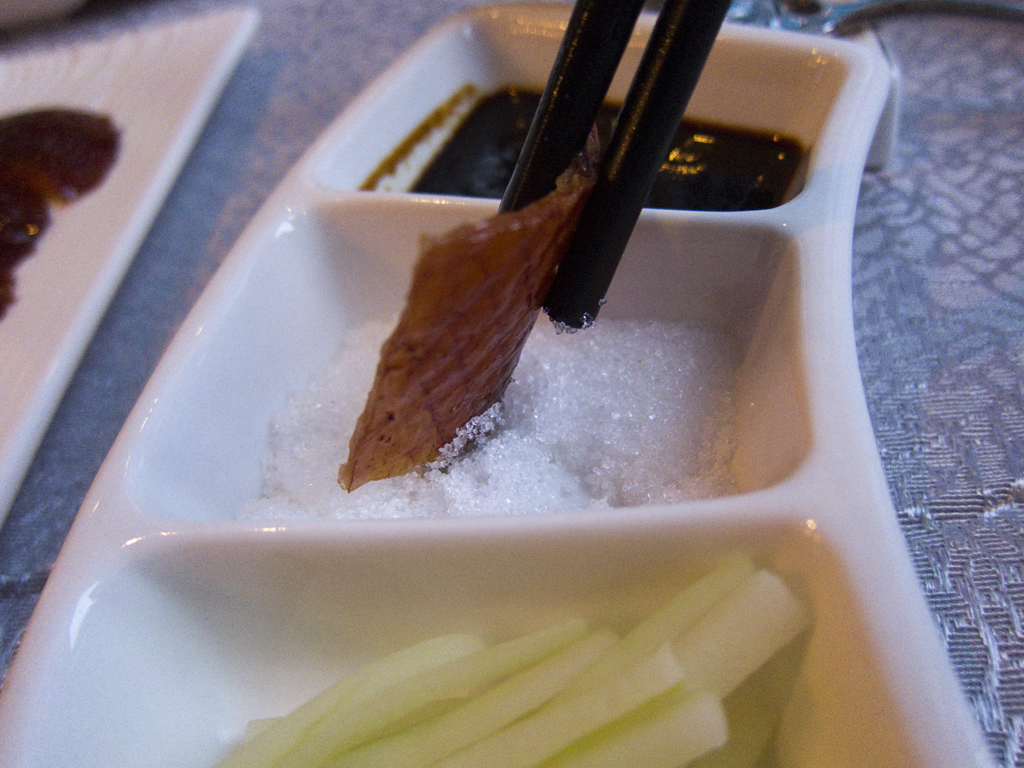
2. Start with the crispy skin. Take a piece or two, dip into sugar, and eat.

dipping skin in sugar

Personally, I find that one piece is enough for me; it’s just too fatty.

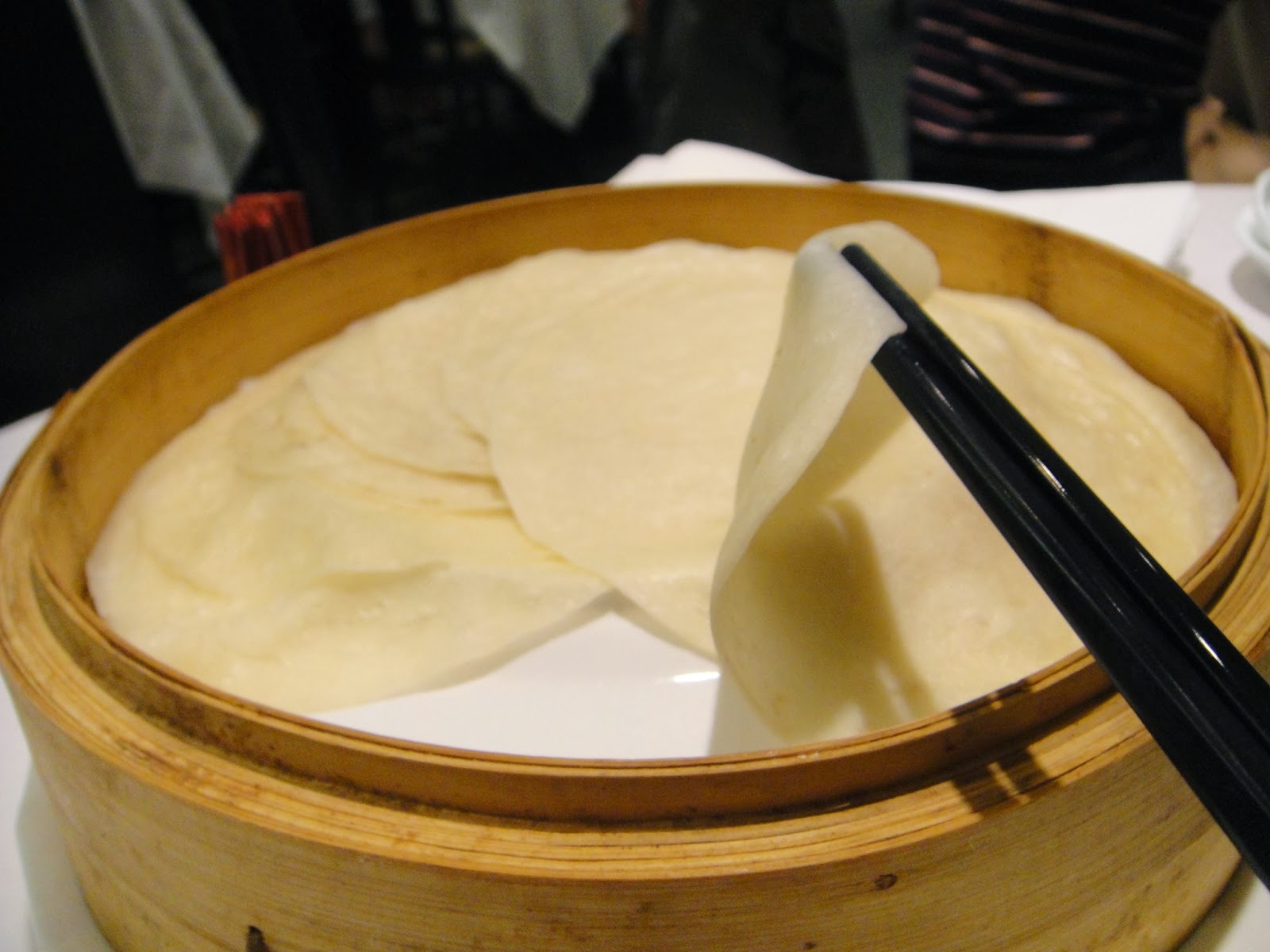
3. Start in on the duck meat proper. Pick up a wafer-thin circular crepe. For neophytes in the use of chopsticks, this can be an immense challenge.
picking up crepes
4. Use the chopsticks to smear dollops of the various sauces onto the bread wrap. The usual menu of sauces include sweet bean sauce or hoisin sauce, which is a thick, pungent sauce usually including soy, red chilies, garlic, vinegar and sugar.
hoisin sauce
5. Place the slices of roast duck on the bed of sauce. A mix of crackling skin and meat is the optimal choice. More sauce can be smeared on the meat if so desired. Place on top of the duck a couple of thinly sliced scallions.

duck and spring onions on crepe

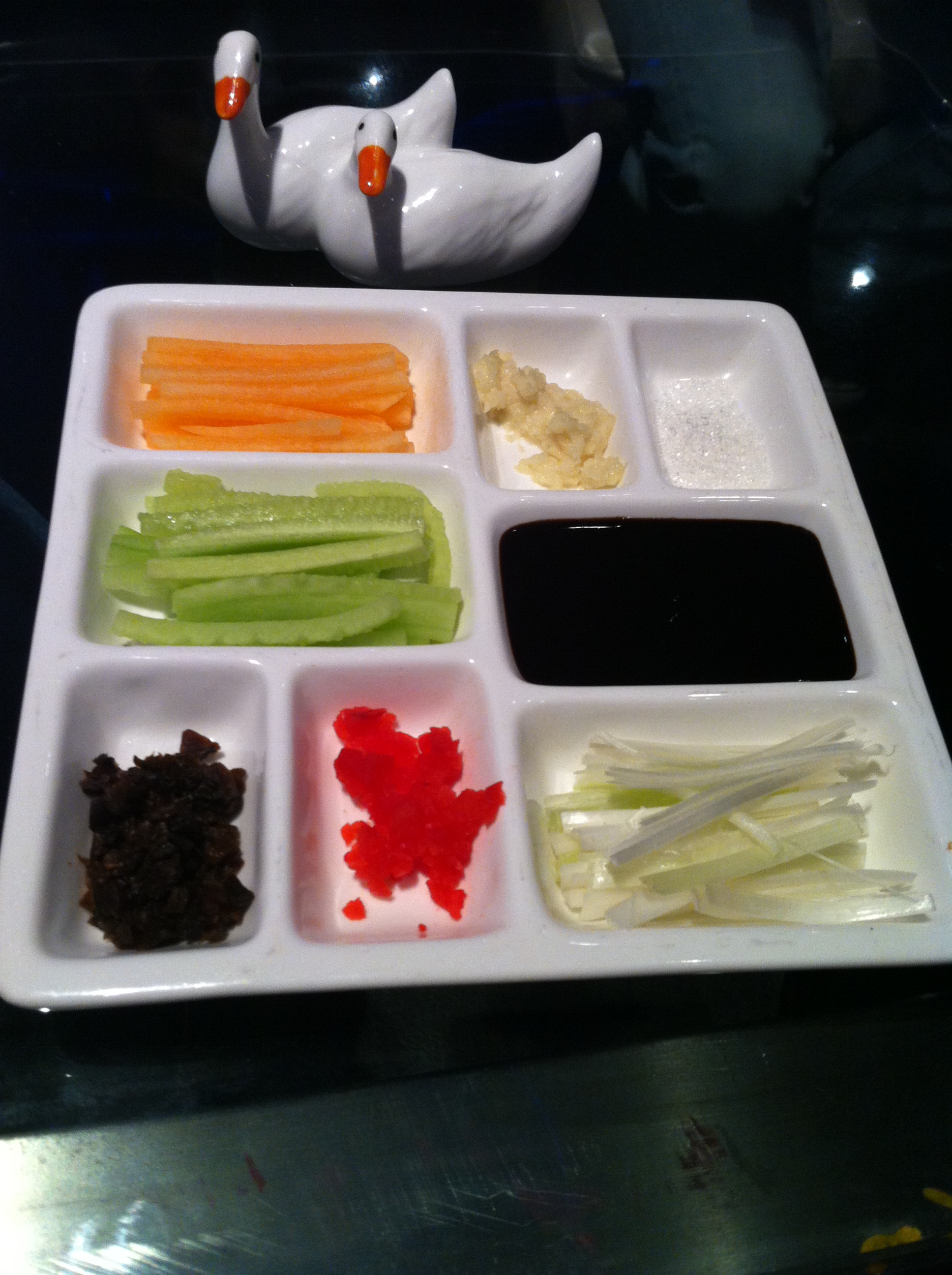
Various other ingredients can also be added: thinly chopped cucumber is popular, at Dadon they also offer thinly chopped melon and some other stuff whose identity is a mystery.

beijing duck ancillaries 002
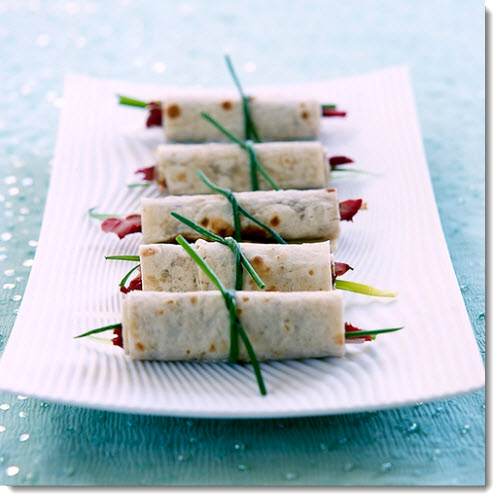
6. Roll the whole into a tubular sandwich.

rolled up crepes

These look far fancier than the ones I produce. It’s rather like comparing the product of someone who has spent a life rolling his own cigarettes to that of the fellow who is just starting out in this bad habit.

7. Eat, making loud noises of appreciation if you have been invited by Chinese hosts, who are always glad to know that you’re liking it.

8. Repeat from step 3 (or step 2 if you have a mind to), making small variations if you wish, until all the duck has been consumed.

9. As a finale, slurp down the duck soup which they will bring, made with all the leftovers of the carved ducks.

duck soup

This must really be one of the most Chinese of dishes. Some even call it China’s national dish (I’m not sure what the Cantonese think of that, but we’ll let it pass).

So it’s a bit of a shock to know that the ducks consumed in China aren’t all that Chinese.

I was informed of this fact last week during a talk in Shanghai by a very respected Academician, who revealed to the stunned audience the whole sorry story.

There was a time, before 1873, when the duck was Chinese. It had evolved and prospered on the Grand Canal, where it had grown fat on the grain that fell off the barges going north towards the capital. The Chinese, never ones to leave anything go to waste, had recycled this lost grain by domesticating the ducks and eating them. In Beijing, the SOP described above evolved as the way to consume the ducks. This culture of duck rearing was beautifully captured in the children’s book The Story about Ping, which I loved to read to my children (although I don’t know if they loved hearing me read it …)

the-story-about-ping

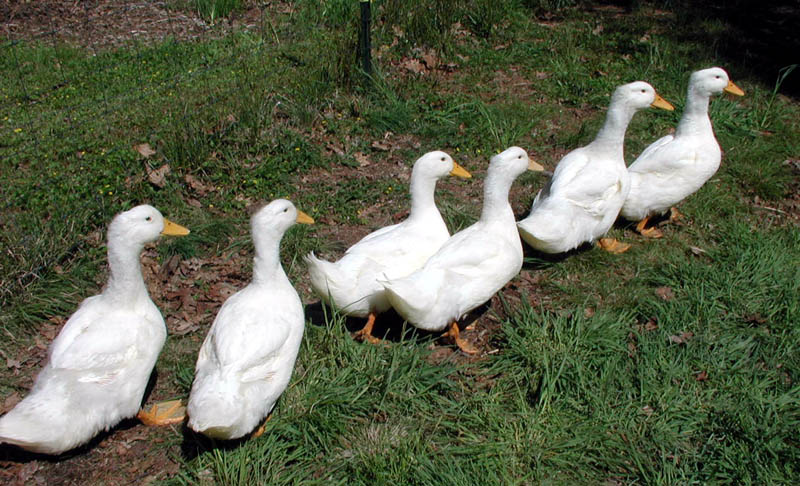
Then, in 1873, 25 of these Pekin ducks (note: no final g on Pekin) were exported to Long Island – most of them didn’t make it, eaten no doubt by the hungry voyagers on the same ship as them. The few that made it through went on to become the progenitors of the most successful domesticated breed of duck in Europe and the US. Those nice white ducks waddling around the farmyards of my youth were in all probability children of Chinese immigrants.

OLYMPUS DIGITAL CAMERA

Except that European and American farmers and agronomists were not content with just taking this Chinese duck and breeding it. They started playing with its DNA through selective breeding to make bigger, fatter, and I know not what.

In the meantime, the Chinese had slipped into anarchy, had been eviscerated by the war imposed on them by the Japanese, and – after the Revolution and the creation of the new China – had gone through the disasters of the Great Leap Forward and Cultural Revolution. So by the time the 1970s rolled in, the original Pekin Duck and its rearing were in as sorry a state as the rest of the country.

Well, the economy picked up and so did the Chinese appetite for Peking Duck. But for some reason, national production remained stagnant, or at least didn’t grow as fast. The result was that China, the biggest exporting country in the world, began to import the Pekin Ducks to turn into Peking Ducks. And began to import them in vast quantities. According to the Respected Academician in Shanghai, 70% of the Peking Ducks which are consumed in China were born and bred … in the UK. In fact, for the most part they come from one farm in Lincolnshire, the Cherry Valley Farm.

Supra

Unbelievable. It’s the opium wars all over again, except that this time the UK is flooding China with Pekin Ducks …

______________________

Dadong restaurant: http://media-cdn.tripadvisor.com/media/photo-s/01/e4/55/6e/beautiful-room.jpg [in http://www.tripadvisor.com/members-citypage/msyolee/g294212%5D
Peking duck-complete dish: http://img.cits.net/images/2011/9/27/151515157efde4e3-d.jpg [in http://www.cits.net/china-guide/china-traditions/peking-roast-duck.html%5D
Cook slicing the duck: http://upload.wikimedia.org/wikipedia/commons/e/e5/Quanjude_roastduck.JPG [in http://en.wikipedia.org/wiki/Peking_duck%5D
Dipping skin in sugar: [in http://theavidphotographer.wordpress.com/tag/paradise-pavilion/%5D
Picking up crepes: http://2.bp.blogspot.com/-T1E6blAnjAY/Up5-R7KL_bI/AAAAAAAAAtw/J3kRodTOSdc/s1600/DSC05471.JPG [in http://missvancouverpiggy.blogspot.com/2013/12/red-star-seafood-vancouver-location.html%5D
Hoisin sauce: http://www.seriouseats.com/images/2012/01/20120116-188016-hoisin-sauce-small.jpg [in http://www.seriouseats.com/2012/01/sauced-hoisin-sauce.html%5D
Duck and spring onions on crepe: http://finedininglovers.cdn.crosscast-system.com/BlogPost/l_1859_pancake-duck-00244258-CUT1.jpg [in http://www.finedininglovers.com/recipes/main-course/peking-duck-recipe-pancakes/%5D
Peking duck ancillaries: our photo
Rolled up crepes: http://www.frugal-cafe.com/public_html/frugal-blog/frugal-cafe-blogzone/wp-content/uploads/2011/01/peking-duck-pancake-rolls-loua-flickr.jpg [in http://www.frugal-cafe.com/public_html/frugal-blog/frugal-cafe-blogzone/2011/01/28/fab-food-friday-fotos-chinese-style-stewed-meatballs-easy-tartlets-twinkie%5D
Duck soup: http://chompchowchew.typepad.com/.a/6a01156f88f5ce970b015431e280cc970c-800wi [in http://chompchowchew.typepad.com/blog/2011/04/peking-duck-house-nyc.html%5D
The story about Ping: http://laughingstars66.files.wordpress.com/2010/05/the-story-about-ping.jpg [in http://www.momto3feistykids.com/2010/05/rowing-story-about-ping.html%5D
Pekin ducks: http://www.rocketroberts.com/farm/images/ducks_in_row.jpg [in http://www.rocketroberts.com/farm/farm.htm%5D
Cherry Hill farm-1: http://upload.wikimedia.org/wikipedia/commons/7/7b/Cherry_Valley_-_geograph.org.uk_-_373257.jpg [in http://commons.wikimedia.org/wiki/File:Cherry_Valley_-_geograph.org.uk_-_373257.jpg%5D

PAULOWNIA BY THE BARRACKS

Beijing, 19 April 2014

When my wife and I first arrived here, we lived in an apartment on the 31st floor of a high-rise. We soon noticed that we could hear regular shouting somewhere in the distance. We consulted with each other. What could we be hearing? Initially, I thought we were witnessing a spontaneous popular demonstration, and I scanned the horizon for signs of smoke, tear gas, armoured police, or other evidence of mayhem. But there was none, and no news on BBC or CNN to this effect. And the shouting was coming regularly, a couple of times a day. My wife then suggested that there must be a stadium somewhere around us and what we were hearing were the fans cheering on their team. But upon further investigation we concluded that the closest stadium was too far away for us to be hearing the shouting. And anyway, as I said, the shouting was quite regular, not just at the weekends or in the evening, which is what you might expect if a stadium was the source of the shouting.

We eventually solved the mystery. But before I tell you what it was all about, I need to take a step back and explain one thing. All of the embassies around here have guards, young lads who from the look of them were probably planting rice not that long ago. Here’s a couple standing tall and proud in front of the UK embassy

guards at UK embassy

Something you quickly learn to do if you live around the embassies is to get out of the way when the change of the guard is taking place. Several times a day you will see a platoon of guards marching along the pavements

guards marching along the pavement

with individual guards peeling off when they reach their assigned embassy. Nothing stops them, not even the traffic. One of the lads will march off into the road and stop the traffic, and the platoon marches over, looking neither left nor right.

guards crossing the road 002

Of course, since, as we all know, every action has an equal and opposite reaction (Newton’s third law), it comes as no surprise that soon after a platoon has marched in one direction, a platoon comes marching back in the opposite direction, consisting of the lads who have been relieved.

And where do they march to? The answer to this question brings us back to our mystery shouting. They are marching back to their barracks. We discovered that we had a barracks discretely tucked away near our apartment. And the noise we were hearing was the lads being led through some sort of periodic cheering exercise, no doubt to build up their soldierly virtues. What do they shout, I wonder? “Death to the capitalist pigs”? “Long live the Politburo”? “Beijing-3, Shanghai-0”? Whatever it is, their lusty voices floated up to us loud and clear on the 31st floor.

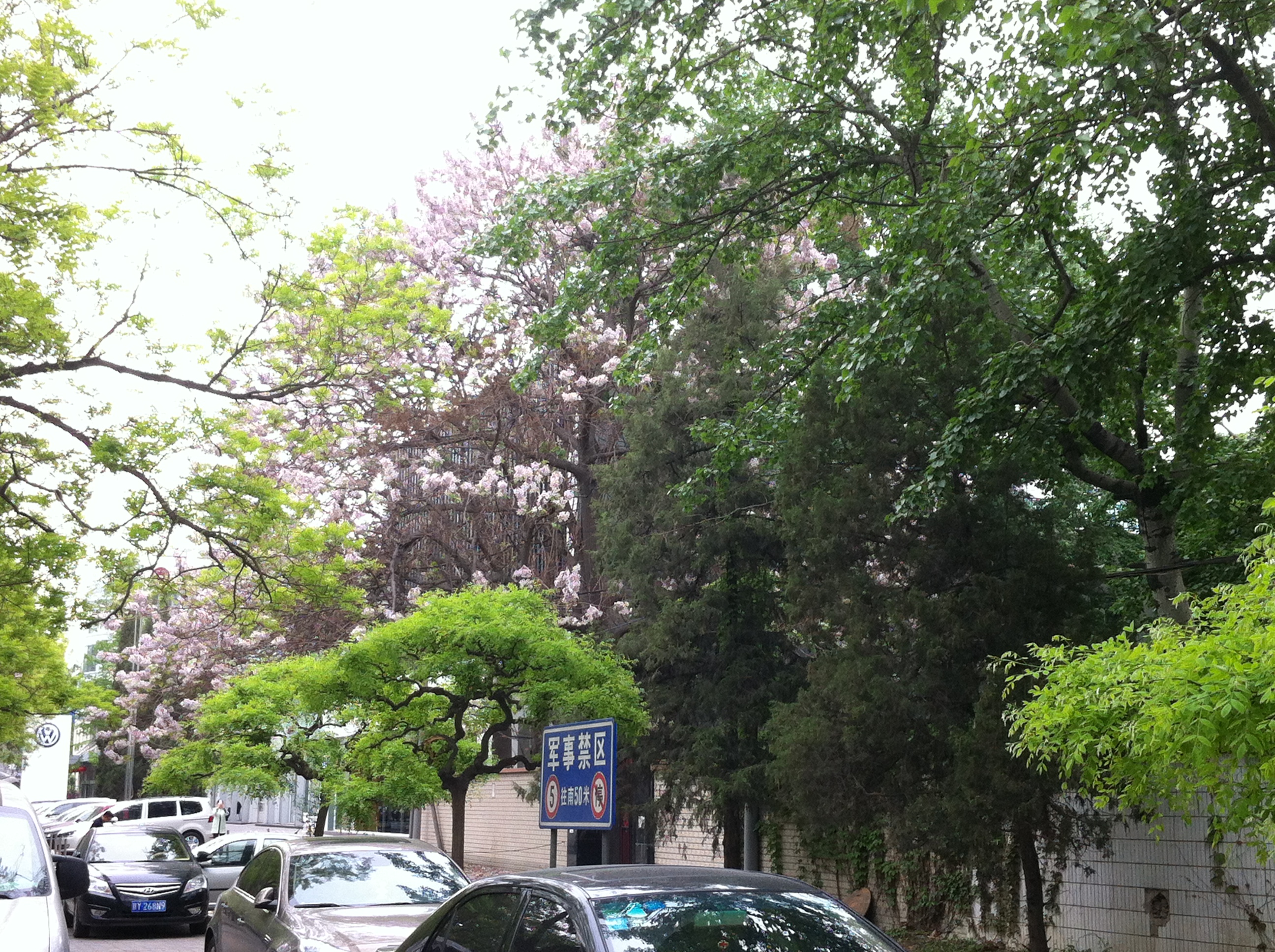
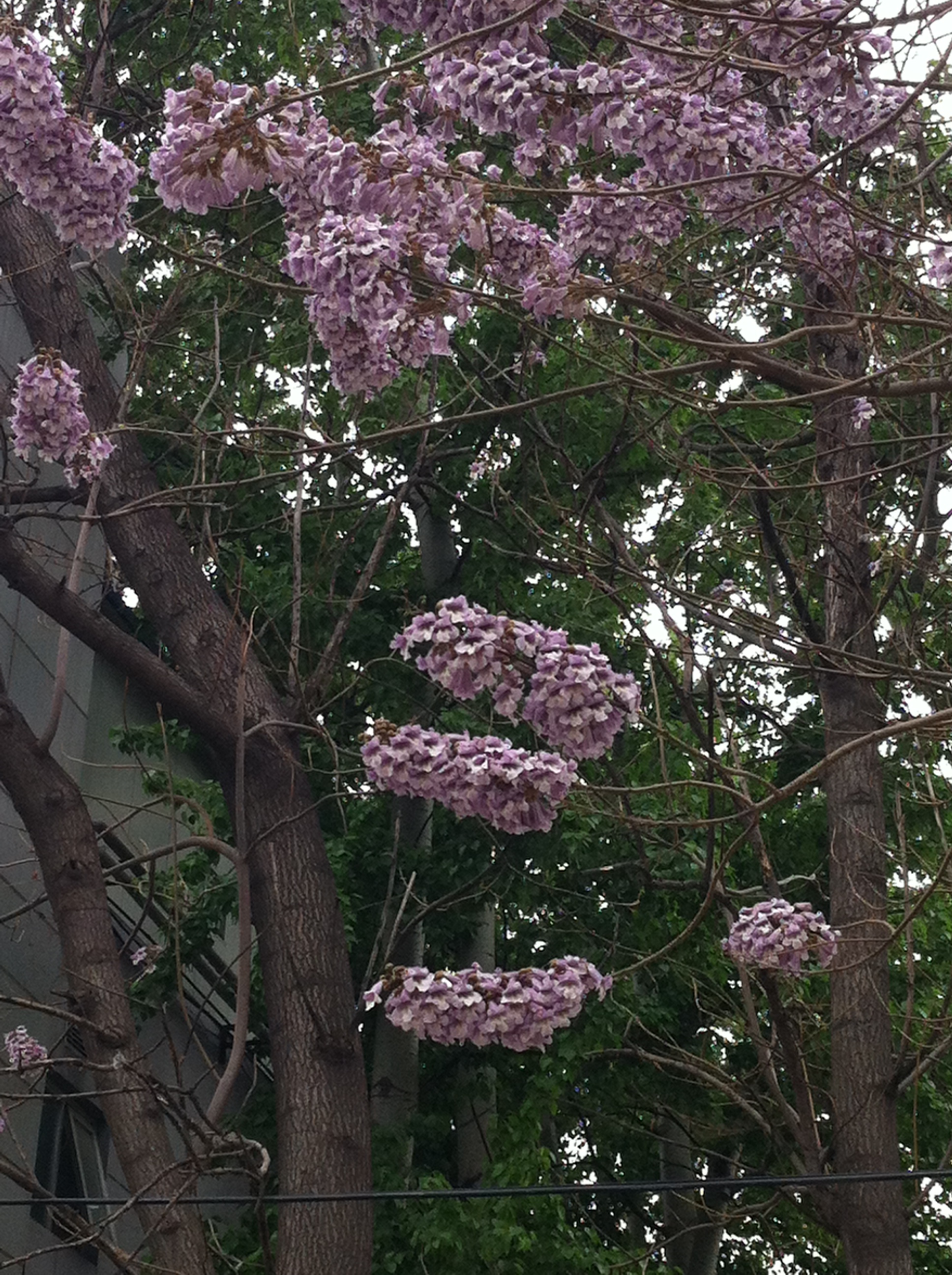
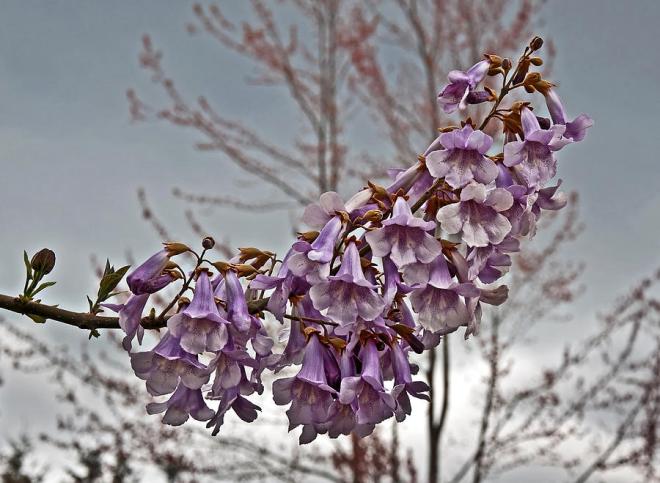
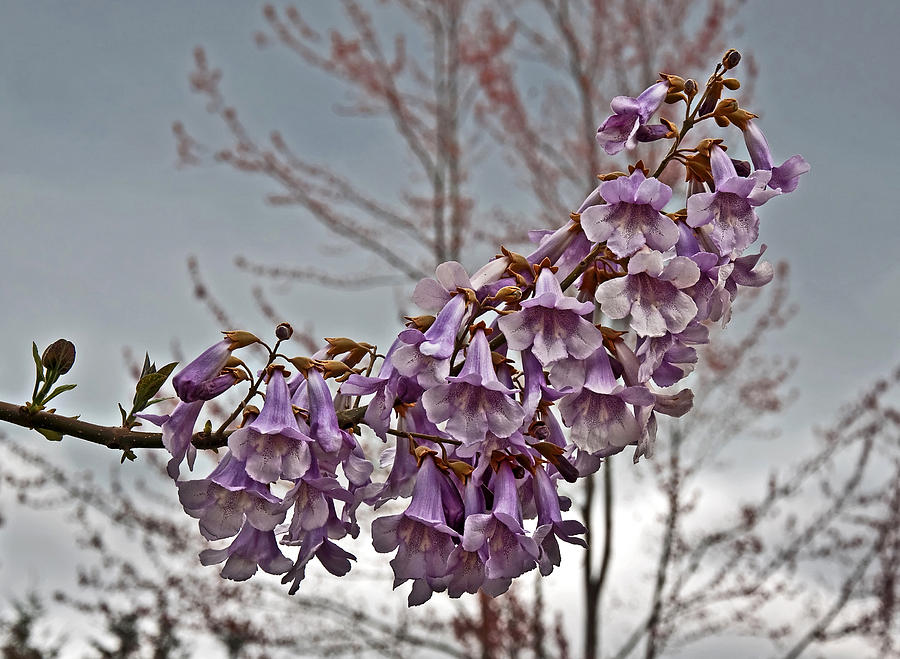
I just said that the barracks is discretely located. One of the things that helps it maintain this discretion is a screen of trees along the inside of the barracks wall which lean gracefully out over the pavement, giving the whole a feeling of a courtyard of a normal housing estate. Some of the trees in question are Paulownias, and at this time of the year, when they are in flower, they are magnificent.

paulownia at the barracks April 2014 002

paulownia at the barracks April 2014 003

paulownia at barracks 001

I throw in for good measure a photo which my wife took of a road we stumbled across just this morning. It was flanked on both sides by Paulownias, all in flower at the moment and, my wife tells me, smelling heavenly (I smelled nothing; the pollution must be getting to my olfactory organs)

paulownia along road FN 003

As usual, I did a bit of research on the tree before writing this post and discovered that it was so named by a Dutch botanist, Siebold, in honour of the-then Queen of the Netherlands, Anna Paulowna, daughter of Tsar Paul I of Russia. The choice of name was not very apt for this lovely tree; the queen was by all accounts rather full of herself. She was arrogant and distant towards the public, she valued pomp, etiquette, and formal ceremonies and rituals, and she felt she had married beneath herself, her husband being a mere kinglet while she was the daughter of a great emperor.

Anna Paulowna

Not at all the kind of person I like. I suppose Siebold was sucking up to royalty by naming the tree after her. But I don’t need to suck up to royalty, so instead I will use its Chinese name, tongmu. Because, apart from anything else, like the wisteria, the magnolia, the weeping willow, the persimmon, and the gingko, about all of which I have written recently, the Paulownia is Chinese – this is getting to be a bit of a habit, this discovering that plants I had come to know and love in Europe are actually Chinese immigrants. It’s also getting to be a habit to discover that the route of immigration was via Japan; it seems that this is where Siebold discovered the plant and brought it back to Europe.

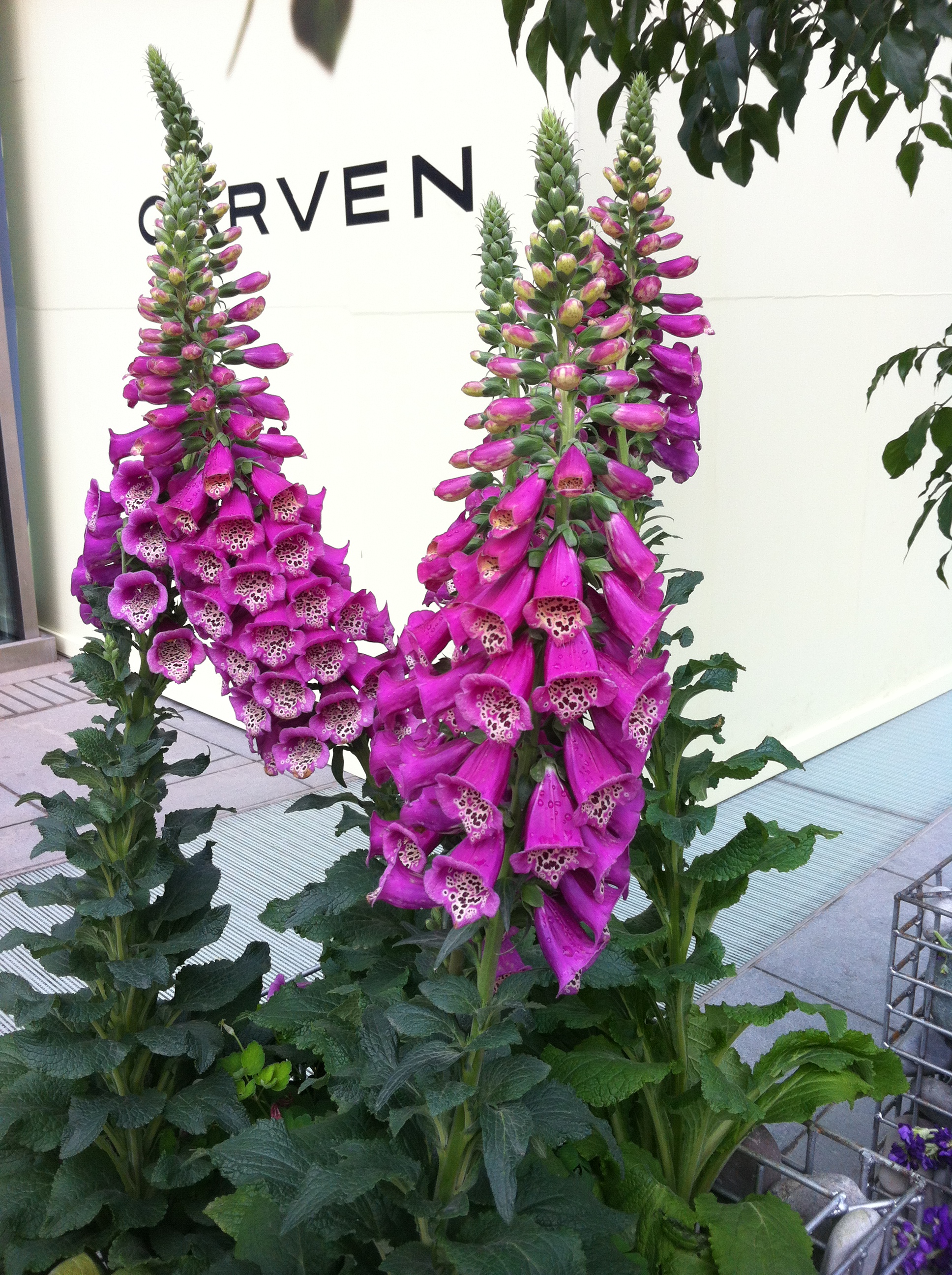
The tongmu is sometimes called the foxglove tree because the flowers, both in their bell-like shape (or finger-glove shape) and in their clustering effect look like foxgloves:


foxglove flower

This happy resemblance allows me to conclude with the thought that despite appearances to the contrary the botanical flow has not been all one way. Plants have flowed from Europe to China. This was brought home to me just now when I noticed foxgloves planted – for advertising effect only, I think – in front of a shop at the South Village mall down the road at Sanlitun

foxgloves at sanlitun 001
The foxglove is native to western and southwestern Europe, western and central Asia, northwestern Africa, and Australasia (the last I find odd; there must be a story in there: how did foxgloves end up being native in Australia?)

______________

Guards at UK embassy: http://cdn.24.co.za/files/Cms/General/d/2362/ac78b462d715435cb3207a3c45bb415a.jpg [in http://www.news24.com/Multimedia/World/Margaret-Thatcher-remembered-20130409%5D
Guards marching along pavement: our photo
Guards marching across the road: our photo
Paulownia in flower in front of the barracks-1: our photo
Paulownia in flower in front of the barracks-2: our photo
Paulownia in flower in front of the barracks-3: our photo
Paulownia along the road: our photo
Anna Paulowna: http://upload.wikimedia.org/wikipedia/commons/f/fc/Jan_Baptist_van_der_Hulst_-_Koning_Willem_II_en_familie.jpg [in http://en.wikipedia.org/wiki/Anna_Pavlovna_of_Russia%5D
Paulownia flower: http://images.fineartamerica.com/images-medium-large-5/1-rare-foxglove-tree-paulownia-tomentosa-blooms-valerie-garner.jpg [in http://fineartamerica.com/featured/1-rare-foxglove-tree-paulownia-tomentosa-blooms-valerie-garner.html%5D
Foxglove flower: http://www.plants4less.co.uk/ekmps/shops/plants4less/images/digitalis-purpurea-woodland-foxgloves-purple-225-p.jpg [in http://www.plants4less.co.uk/digitalis-purpurea-woodland-foxgloves-purple-225-p.asp%5D
Foxglove flower in Sanlitun: our photo

WISTERIA

Beijing, 13 April 2014

My French grandmother’s house was … old-fashioned, shall we say. Among its many quirks was the fact that it did not have a flush-toilet. Instead, you eased yourself into this small, cluttered space, and you parked your derriere (your backside) on this beautiful wooden seat to do your besoins (your needs), as the French delicately put it. Once finished, you pulled a lever to open a trap door at the bottom of the porcelain bowl and off went your besoins, helped along with a generous portion of water you poured in from a large enameled metal jug. The exhalations emanating from the opened trap door were sometimes eye-wateringly powerful, and there was always a generally musty smell in the loo. However, the olfactory downsides were more than offset by the beautiful view from the window, framed as it was by the bright green leaves of a wisteria vine which snaked up the outside wall and onto the roof. The view was that much more beautiful in spring when clusters of the wisteria’s light purple flowers thrust themselves at the window. When my mother inherited the house, one of the first things she did was to install a flush toilet. But the wisteria remained. In fact, after my parents retired there my mother encouraged it to spread to other walls nearby, which made it a rare pleasure to go and visit my parents in spring. This is not a photo of the house, but it gives an idea of what would greet my wife and I, with children in tow, after a long drive up from Italy in May.
glycine sur mur-2
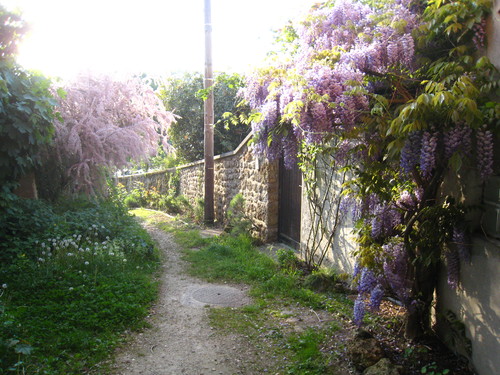
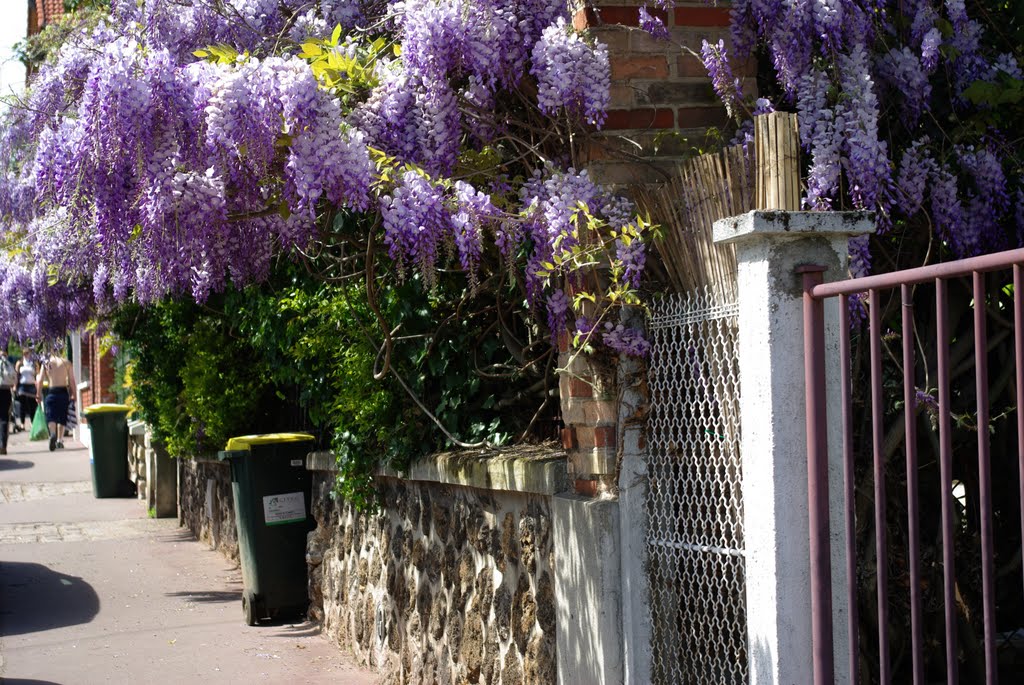
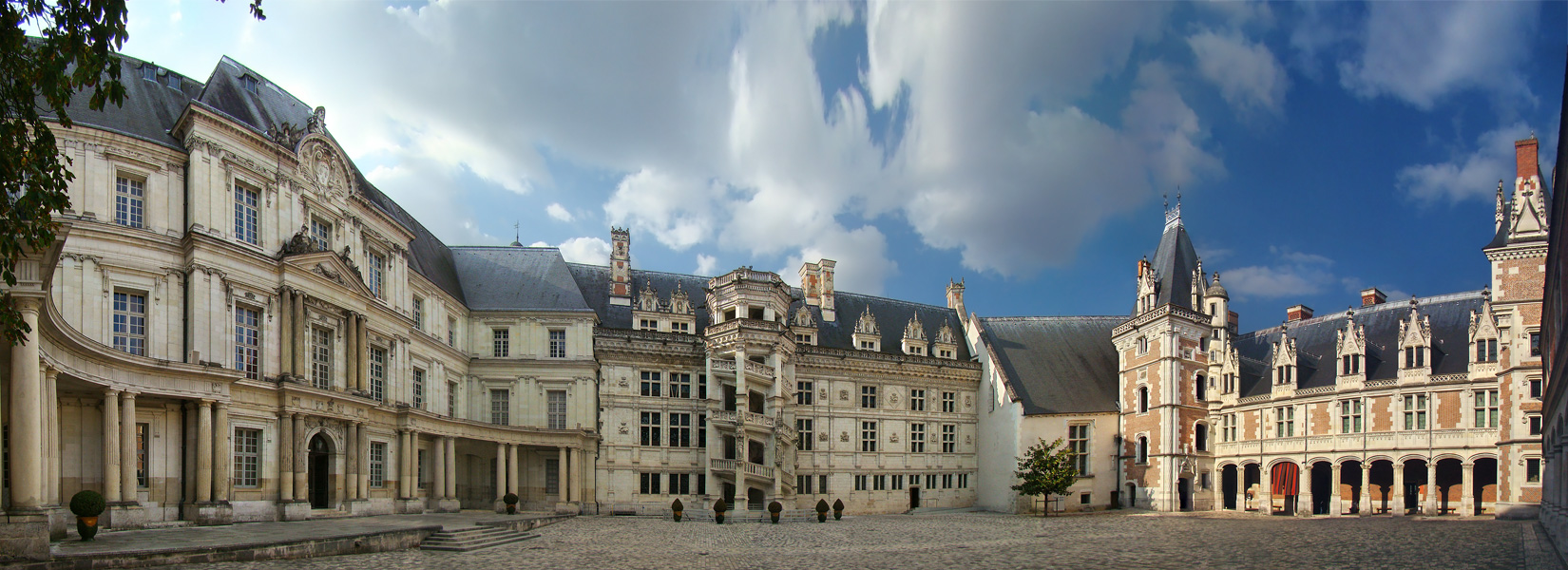
Since those moments in my grandmother’s loo, I have always had a weak spot for wisteria. At the right moment of the year, I keep an eager lookout for a sudden froth of light purple flowers popping up over a wall or in the corner of a garden. I have a particularly powerful memory of a bike trip which my wife and I made many years ago along the Loire valley, where between one Renaissance chateau

chateau_amboise

and another

chateau_Blois

we would run into cascades of wisteria – every garden seemed to have a wisteria.
glycine dans la vallee de la Loire-1

glycine dans la vallee de la Loire-2
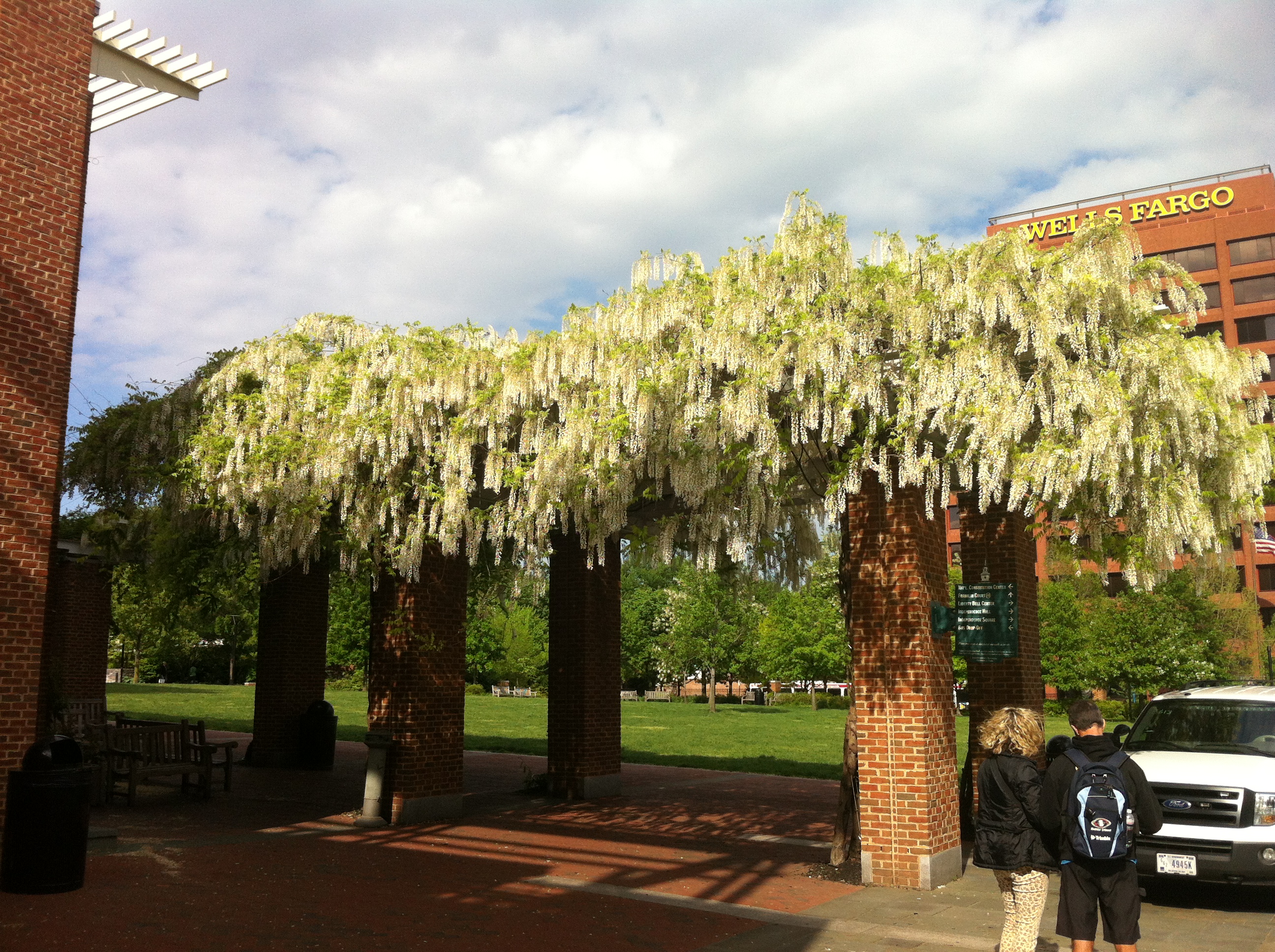
And just last year, when we were in Philadelphia, we stumbled onto a pergola covered by a thick coat of white wisteria, which was a first for me (I’ve mentioned this in an earlier post but I repeat the photo)
white flowers 003
And the neighbours to our rooftop garden in our last apartment in Vienna had planted a wisteria, which coiled and twisted its way onto our side, an intrusion we gladly accepted since it rendered so pleasant those first days in spring when my wife (with a very little help from me) toiled at her garden tubs, planting and repotting, after the long sleep of winter. In fact, jealous at their success, I purchased a modest wisteria plant for our side, with dreams of it eventually smothering our balcony. Alas, it perished miserably that summer while we were away for our holidays.

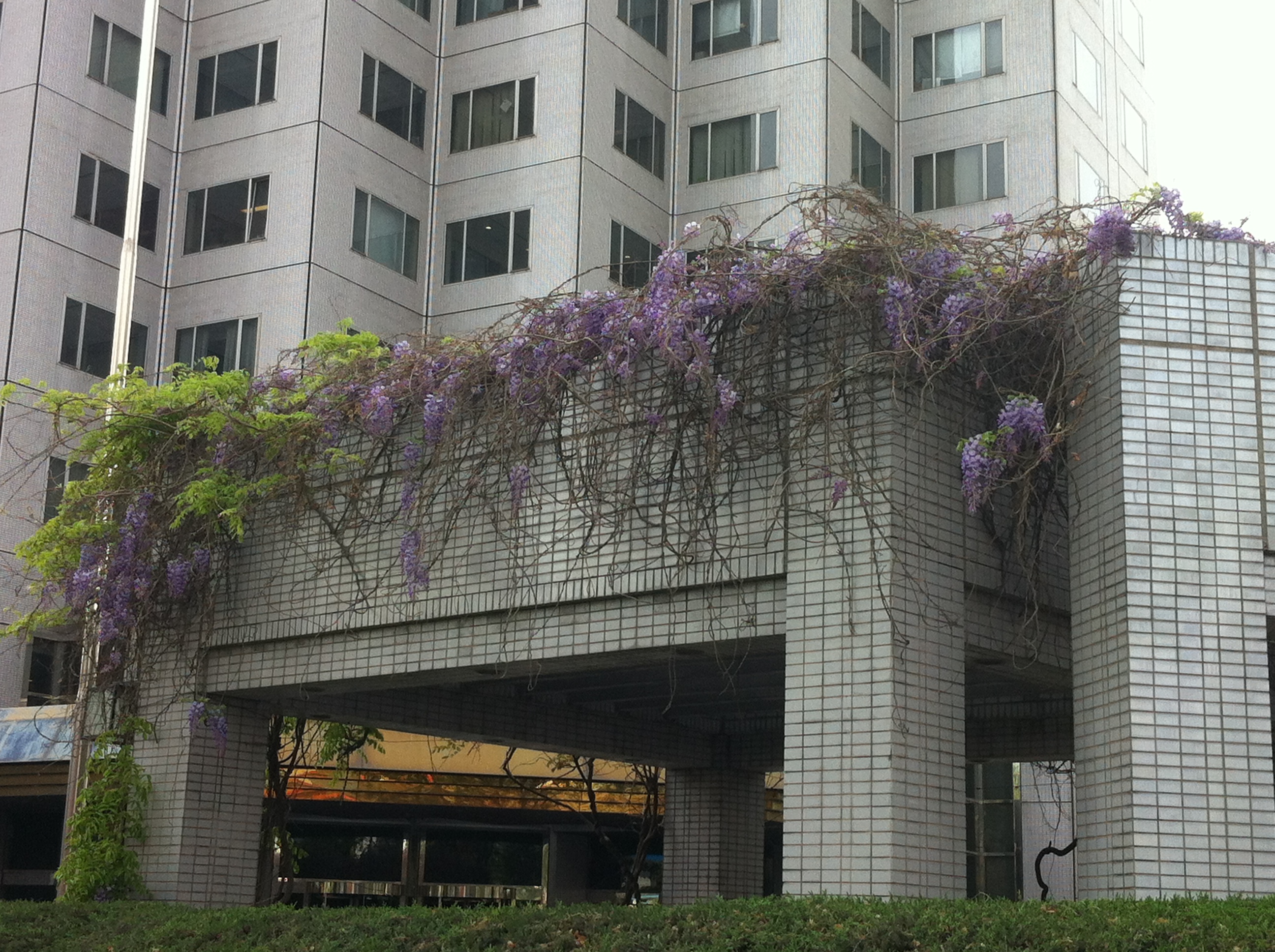
So you can understand my pleasure when I saw that the wisteria across the road from our apartment in Beijing had flowered
wisteria beijing

although I mentally castigated the management of the building for not doing a little pruning.

For the first time in my life, I read up a bit on wisteria. And the first thing I discovered is that wisteria is Chinese! Well, there’s also a Japanese wisteria. And two American wisterias. But no European wisteria! So once again, like the weeping willow which I wrote about in my last post and the magnolia which I wrote about a few posts earlier, Europeans have borrowed a plant from China, or maybe in this case from Japan (but not from the US; American wisteria don’t seem to be gardeners’ favourites, even in the US itself, since their flowers are of more modest size, bloom for less time, and are scentless). When you read these cases, you begin to understand why the poorer countries complain about pharmaceutical and other companies from the richer countries coming and “borrowing” their flora and making a fortune selling them, or their chemical components, back home.

But now I’m left with a tricky question: was the wisteria at my grandmother’s house Chinese or Japanese? The literature tells me that the flower-clusters (racemes in the horticultural lingo) of the Japanese wisteria are longer than those of the Chinese wisteria, but I’m buggered if I remember the length of those racemes nodding at the loo window. And anyway, I’m sure raceme lengths are all averages, so I don’t think this would be a good way for an uneducated plant man like me to distinguish a Chinese wisteria from its Japanese cousin. A far more powerful way of distinguishing the two seems to be the direction of twining which the vine adopts. Chinese wisteria twine clockwise, while Japanese wisteria twine counter-clockwise! (I love it; isn’t that a great way of figuring out where a plant comes from? But why would one twine one way and the other the other? The mysteries of genetics). I must remember to send my sister an email (she inherited the house, did further massive works, but kept the wisteria) and ask her which way the wisteria twines. This will no doubt be the moment she concludes that I have finally lost it …

______________

Wisteria on the house: http://img.over-blog-kiwi.com/0/53/56/12/201305/ob_bbf5590f142c0c0c464830009f54793b_img-8686.JPG [in http://mounic.over-blog.com/lieu-saint-de-provence%5D
Château d’Amboise : http://www.chateau-amboise.com/oktThemes/p-c094-01/images/chateau_amboise_accueil.jpg [in http://www.chateau-amboise.com/en/%5D
Château de Blois : http://upload.wikimedia.org/wikipedia/commons/f/fb/Loire_Cher_Blois1_tango7174.jpg [in ] http://en.wikipedia.org/wiki/Ch%C3%A2teau_de_Blois
Wisteria along the road-1: http://mw2.google.com/mw-panoramio/photos/medium/22548315.jpg [in http://www.panoramio.com/user/701296/tags/Season%20Spring?photo_page=2%5D
Wisteria along the road-2: http://static.panoramio.com/photos/large/34926262.jpg [in http://www.panoramio.com/user/701296/tags/Season%20Spring?photo_page=2%5D
Wisteria in Philadalphia: my photo
Wisteria in Beijing: my photo

PEKING WILLOW

Beijing, 9 April 2014

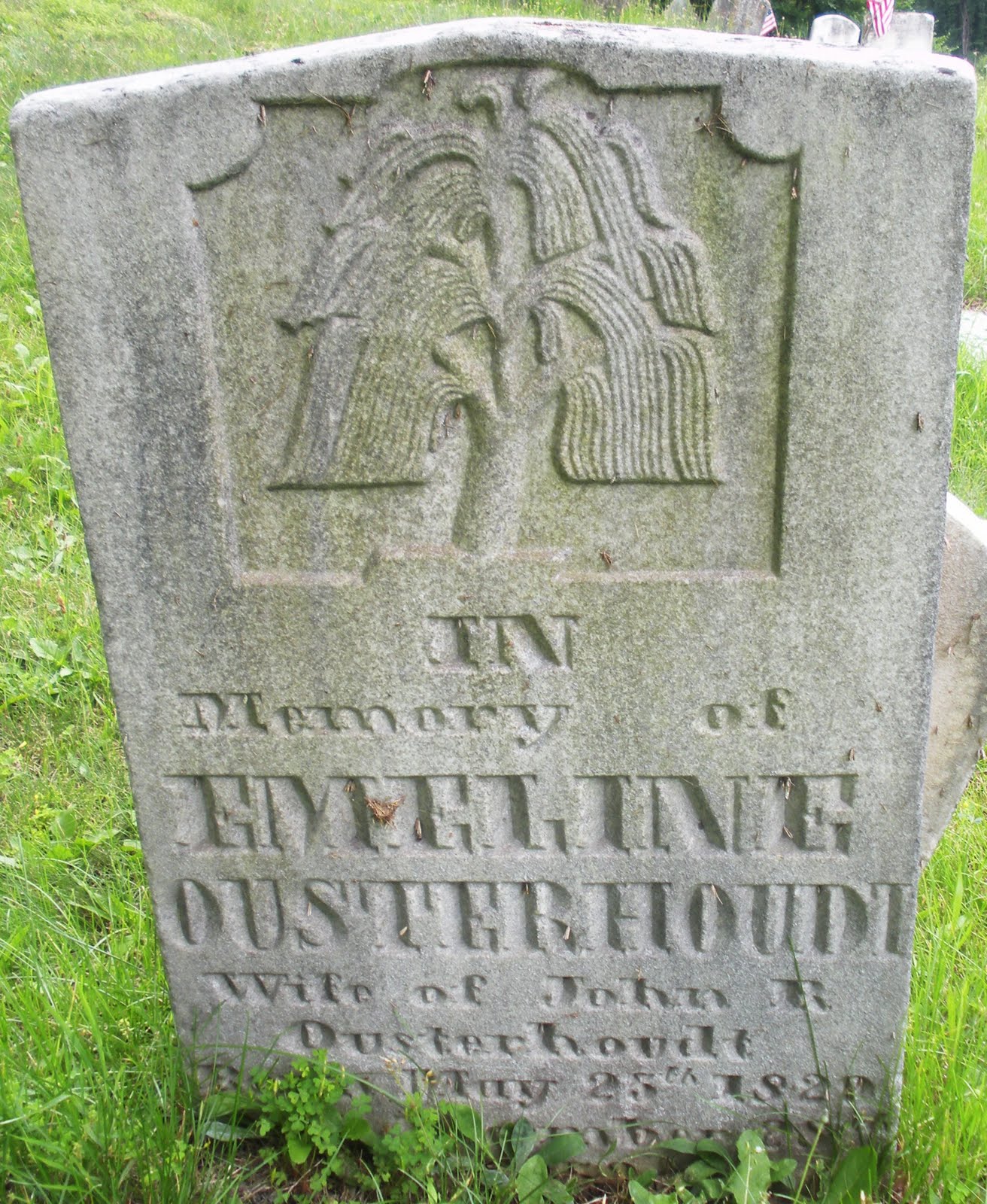
The somber, funereal tone of my last post seems like a good place to start this one – a tombstone

Weeping Willow on gravestone

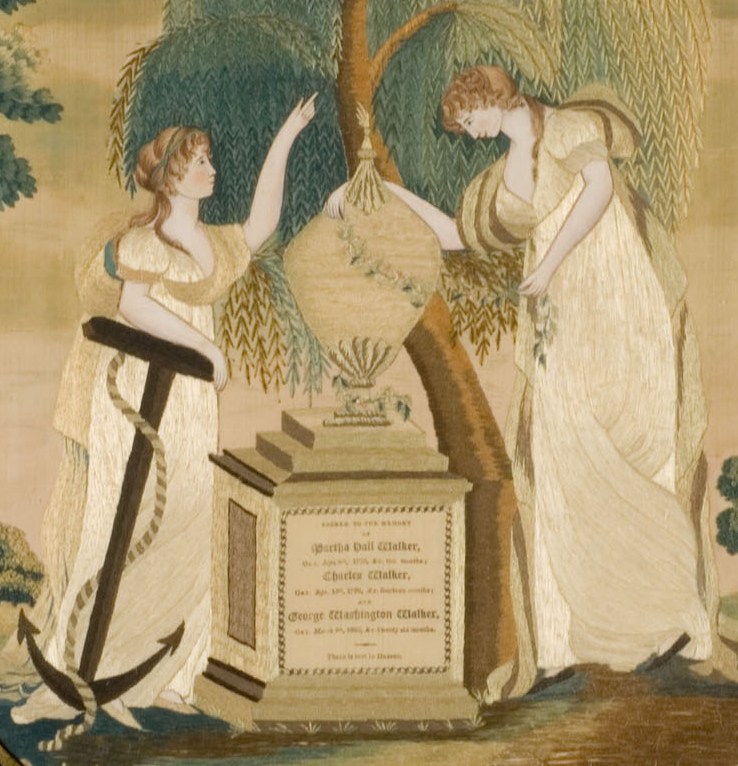
This one has a weeping willow on it, a common symbol on tombstones 200 years ago. Its drooping branches symbolize, you’ve guessed it, the weeping of the world at your passage to the next. Here’s another in the same genre from the same period, this time a piece of needlework memorializing the death of three babies.

BT OA FR

And then there were the ballads which used the weeping willow as the symbol of death, lost love, or both:

My heart is sad and I’m in sorrow
For the only one I love
When shall I see him, oh, no, never
Till I meet him in heaven above

Oh, bury me under the weeping willow
Yes, under the weeping willow tree
So he may know where I am sleeping
And perhaps he will weep for me

They told me that he did not love me
I could not believe it was true
Until an angel softly whispered
He has proven untrue to you

Oh, bury me under the weeping willow
Yes, under the weeping willow tree
So he may know where I am sleeping
And perhaps he will weep for me

 Etc. You get the picture.

The weeping willow’s symbolism was used a bit more elegantly in Psalm 137 of the Old Testament, that lyrical lament about the pains of exile, in this case that of the Israelites who had been marched off to Babylon from Jerusalem:

By the rivers of Babylon—
there we sat down and there we wept
when we remembered Zion.
On the willows there
we hung up our harps.
For there our captors
asked us for songs,
and our tormentors asked for mirth, saying,
“Sing us one of the songs of Zion!”

 How could we sing the Lord’s song
in a foreign land?
If I forget you, O Jerusalem,
let my right hand wither!
Let my tongue cling to the roof of my mouth,
if I do not remember you,
if I do not set Jerusalem
above my highest joy.

jewish bible with picture

I’ve left out the last verse where the poet gets vengeful and nasty, talking about taking the babies of their captors and bashing their brains out against the rocks …

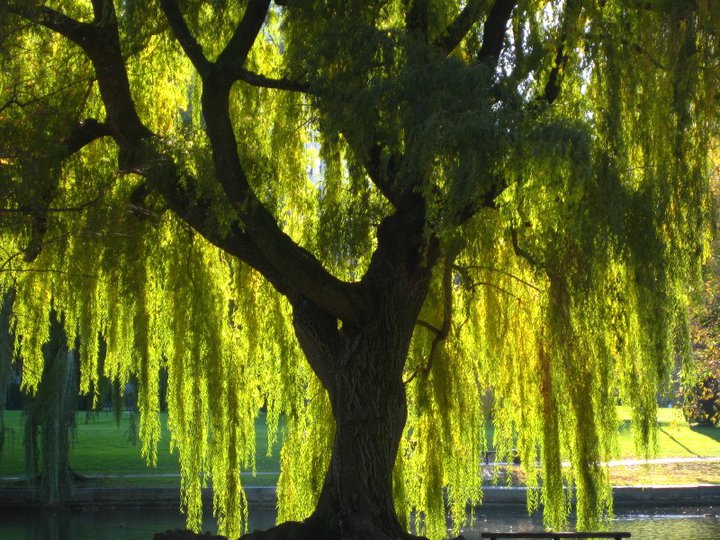
But if we brush aside the drooping veil of gloom, we find a really beautiful tree, for the most part sitting elegantly near a body of water, into which its trailing branches will often dip.

weeping willow tree

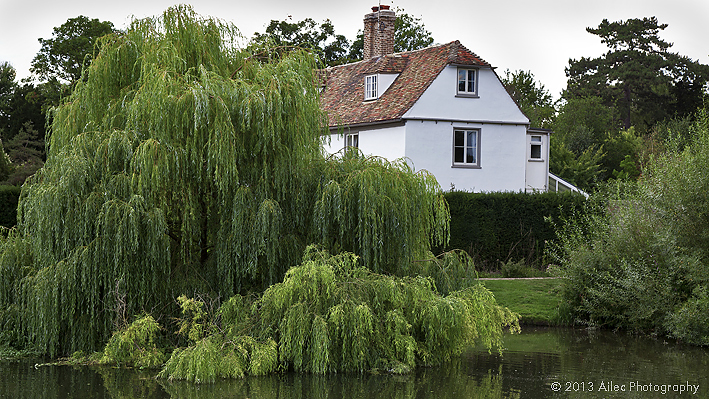
And such an English tree! (well, you also find them on the continent but we’ll ignore that). Here’s a weeping willow on the edges of a pond in Grantchester, in which, so it is said, the poet Byron swam.

weeping-willow-Grantchester

Here are students punting on the river Cam in Cambridge with some weeping willows languidly brushing the water’s surface.

weeping willows on the River Cam

Here is a 1946 poster from the Great Western Railway, inviting Londoners to take a day out in the Thames Valley, with a weeping willow centre stage beckoning to them.

great western railway-thamesvalley

Talking of the Thames, here is the cover of that most English of children’s books, The Wind in the Willows, where we see our friends Mole, Ratty and Toad on the river Thames, waving to Badger on the shore, the whole discretely framed by weeping willows

the_wind_in_the_willows

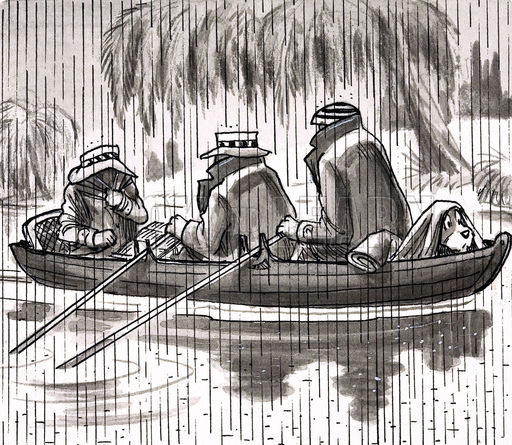
And of course there’s Three Men in a Boat, a book about – well, three men in a boat, messing around on the same river Thames (a book much loved by my father-in-law, in passing). Here we have them in that quintessentially English situation, rain, together with that quintessentially English animal, the dog, with some weeping willows in the background.

Three Men in a Boat by Jerome K. Jerome

Yes, all very English.

Except that the weeping willow isn’t English.

It’s Chinese.

Well, half-Chinese.

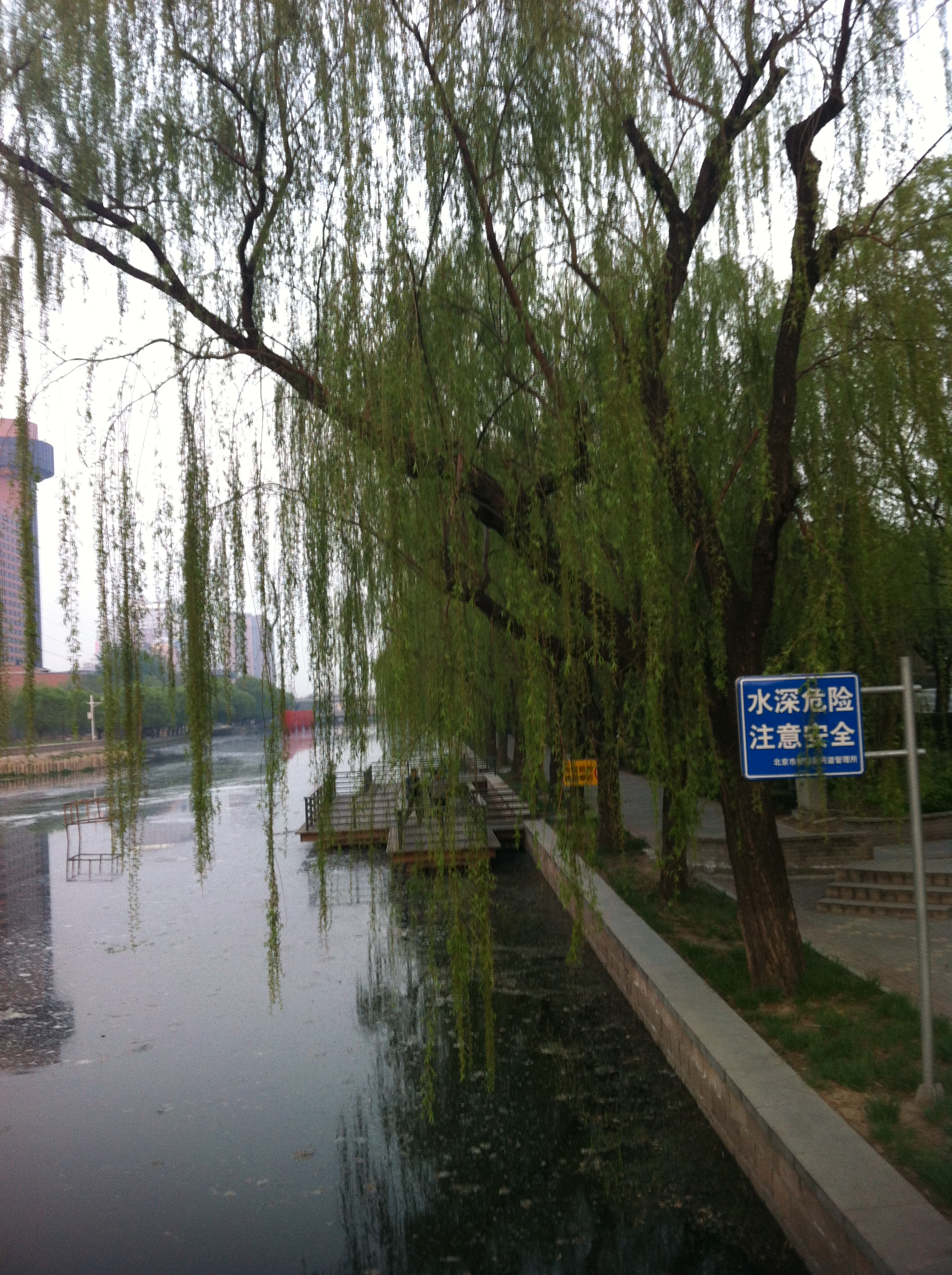
Yes, the willows, suitably called Peking willows, lining my piece of canal in Beijing

peking willows 004

are the ancestors of all those graceful weeping willows whose photos I have included above. It is they which carry the gene that makes the tree’s branches weep.

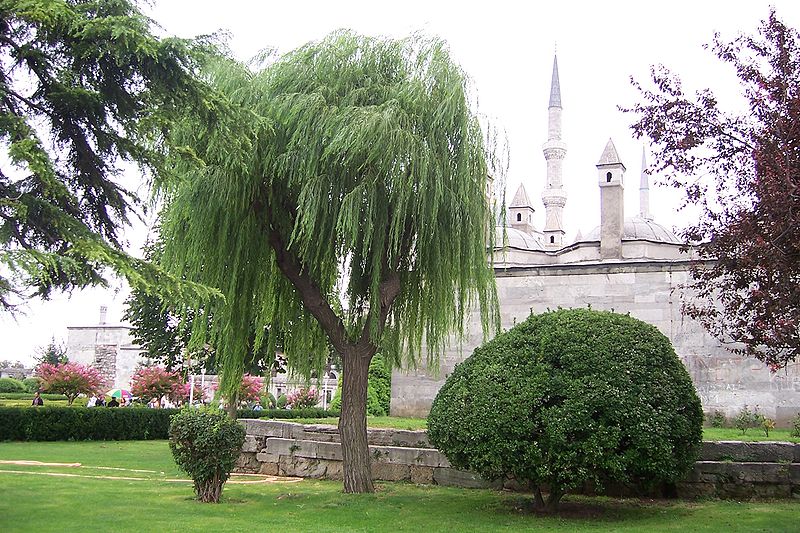
Somehow, for some reason, cuttings or seeds from these trees made their way to the west. I have read that they were moved along the Silk Road. Probably, traders from the west were charmed by the trees’ weeping branches and wanted them in their gardens. I’ve looked for pictures of Peking willows planted along the Road. The best I have found is a Peking willow in Istanbul.

Salix_babylonica in Istanbul

Not quite on the Road, which ended on the Mediterranean seaboard at Antioch or Tyre or Sidon, but close enough. And maybe one of the ways which the Peking willow entered Europe, through the Balkans.

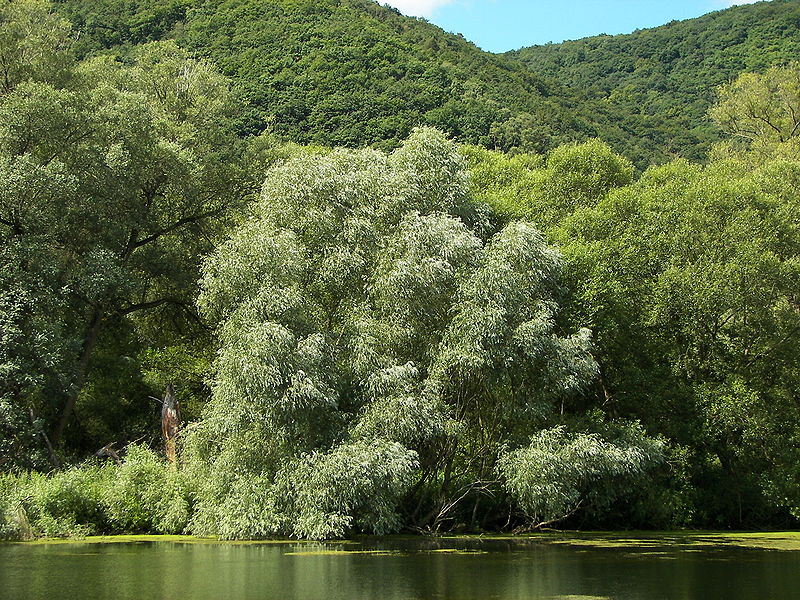
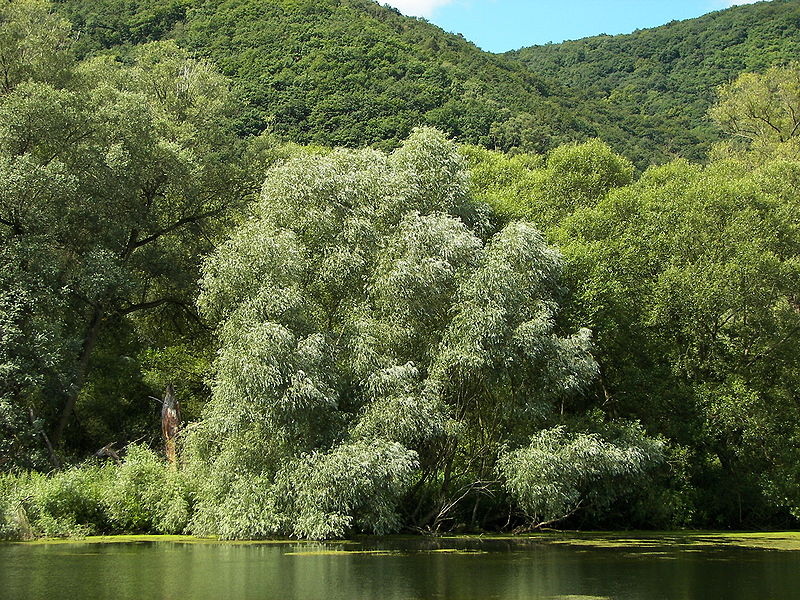
Somewhere along the way further to the west, the Peking willow was crossed with another willow, the European white willow.

white willow

The two were crossed because gardeners found that the Peking willow suffered in the more humid climate of Europe. Its gene pool needed bracing up, as it were.

So the weeping willow is half Chinese, half European.

Although my bubble of Englishness has been pricked, I’m glad to report that the weeping willow is nevertheless half brother –  or perhaps half sister – to that most English of artifacts, the cricket bat! Because these are made from the willow of a cross between the white willow and (possibly) the crack willow (the ancestry on the other side is not clear). So this allows me to insert here a picture of that most English of cricketers WG Grace holding a bat, in an ad for that most  English of condiments, Colman’s Mustard

wg grace with bat

Well, while I’m about it, I might as well also clarify another misconception. The willows by the waters of Babylon under which the Israelites wept were not willows, they were Euphrates poplars.

euphrates poplar

______________________

Tombstone with weeping willow: http://4.bp.blogspot.com/-V965riBwMQE/ThW9WsV_6gI/AAAAAAAAAA4/kGf3gW9vaZ0/s1600/%2523%2523%2523Weeping+Willow+St.+Mark%2527s+Luth+Appenzell+%25283%2529.JPG [in http://callmetaphy.blogspot.com/2011/07/symbol-of-weeping-willow-in-gravestone.html%5D
Girls weeping on tomb: http://mansionmusings.files.wordpress.com/2011/04/mourning-picture-detail.jpg [in http://mansionmusings.wordpress.com/2011/04/29/a-mansion-favorite-returns-home-abigail-walker-needlework-mourning-picture-ca-1803/%5D
Jewish psalter: http://upload.wikimedia.org/wikipedia/commons/9/97/Chludov_rivers.jpg [in http://en.wikipedia.org/wiki/Psalm_137%5D
Weeping willow tree: http://www.blogmagazine.org/wp-content/uploads/2012/05/weepingwillow.jpg [in http://www.blogmagazine.org/2012/05/admiring-the-beauty-of-the-weeping-willow/%5D
Weeping willows Grantchester: http://3.bp.blogspot.com/-3Lkrd8FlSCE/UhFK2RfkItI/AAAAAAAAGiM/v5kklmS41GE/s1600/photograph-of-weeping-willow-Byrons-Pool-Grantchester.jpg [in http://ailecphotography.blogspot.com/2013/08/day-18-august-challenge.html%5D
Weeping willows on the river Cam: http://upload.wikimedia.org/wikipedia/commons/d/da/Punting_on_the_River_Cam_-_geograph.org.uk_-_222149.jpg [in http://commons.wikimedia.org/wiki/File:Punting_on_the_River_Cam_-_geograph.org.uk_-_222149.jpg%5D
“The Wind in the Willows”: http://www.usborne.com/images/covers/eng/max_covers/the_wind_in_the_willows.jpg [in http://www.usborne.com/catalogue/book/1~CS~CSP~3249/the-wind-in-the-willows.aspx%5D
“Three Men in a Boat”: http://s3-eu-west-1.amazonaws.com/lookandlearn-preview/A/A008/A008727.jpg [in http://www.lookandlearn.com/history-images/A008727/Three-Men-in-a-Boat-by-Jerome-K-Jerome?img=2&search=Jerome+Klapka+Jerome&bool=phrase%5D
Great Western Railway poster: http://www.southernposters.co.uk/Destinations/Resources/thamesvalleylarg.jpeg [in http://www.southernposters.co.uk/Destinations/thamesvalley1946.html%5D
Peking willow, Beijing: my photo
Peking willow in Istanbul: http://upload.wikimedia.org/wikipedia/commons/thumb/7/75/Salix_babylonica.jpg/800px-Salix_babylonica.jpg [in http://en.wikipedia.org/wiki/Salix_babylonica#Horticultural_selections_and_related_hybrids%5D
White willow: http://bioweb.uwlax.edu/bio203/2011/girard_stev/maintop.jpg [in http://bioweb.uwlax.edu/bio203/2011/girard_stev/facts.htm%5D
Euphrates willow: http://mw2.google.com/mw-panoramio/photos/medium/49589465.jpg [in http://www.panoramio.com/user/1183385/tags/%D7%A0%D7%97%D7%9C%20%D7%A6%D7%99%D7%9F%5D

TOMB SWEEPING DAY

Beijing, 6 April 2014

I think it must be a universal characteristic of human beings to want to remember their dead. Perhaps it’s part of a refusal, deep down in our psyche, to accept that we die, so remembering the dead is a way to declare defiantly that we too, when we will be among the dead, will not really be dead. Whatever it is, and I’m certainly not competent to explore this side of our collective consciousness, we do have ritual days in our calendars when we are called upon to remember our dearly departed. For us in Western Europe, it’s All Souls’ Day, November 2nd.
All souls day Germany-3
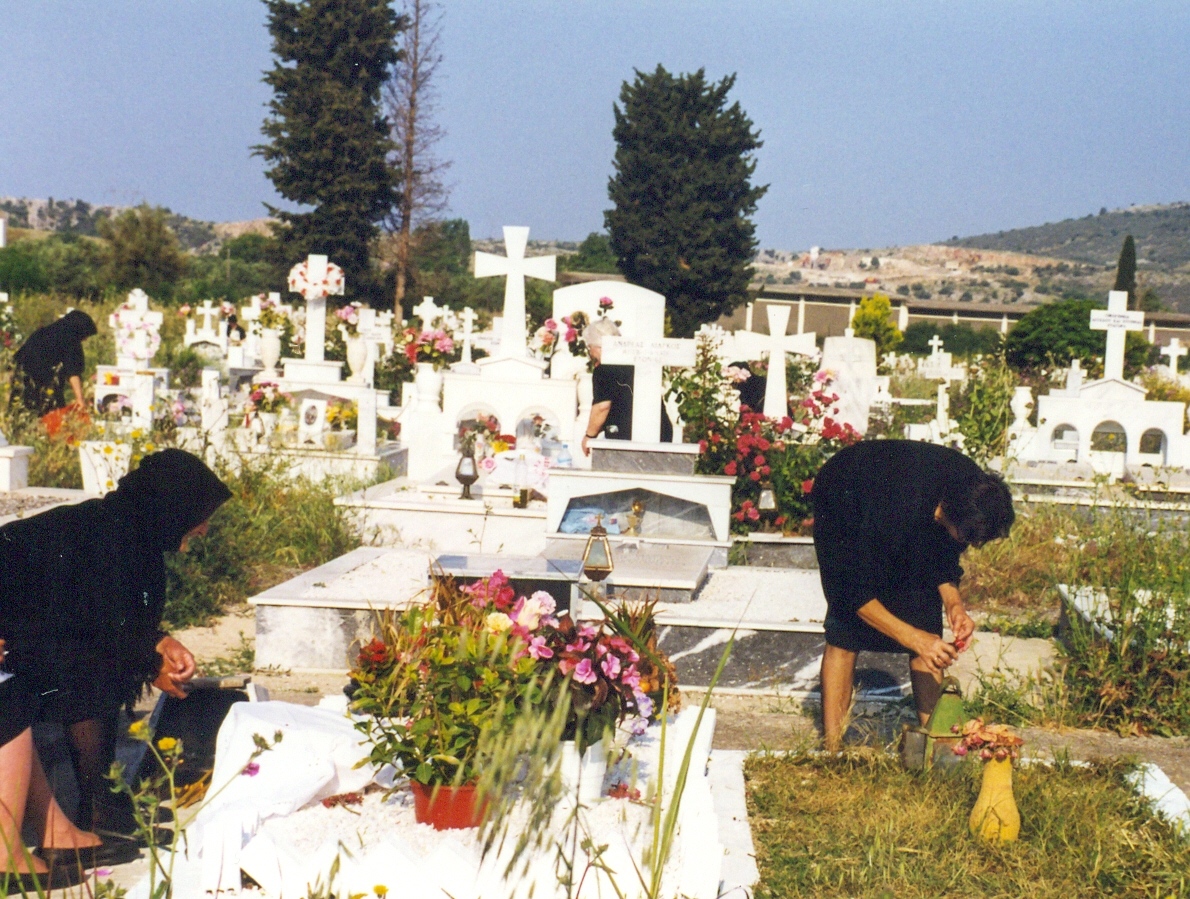
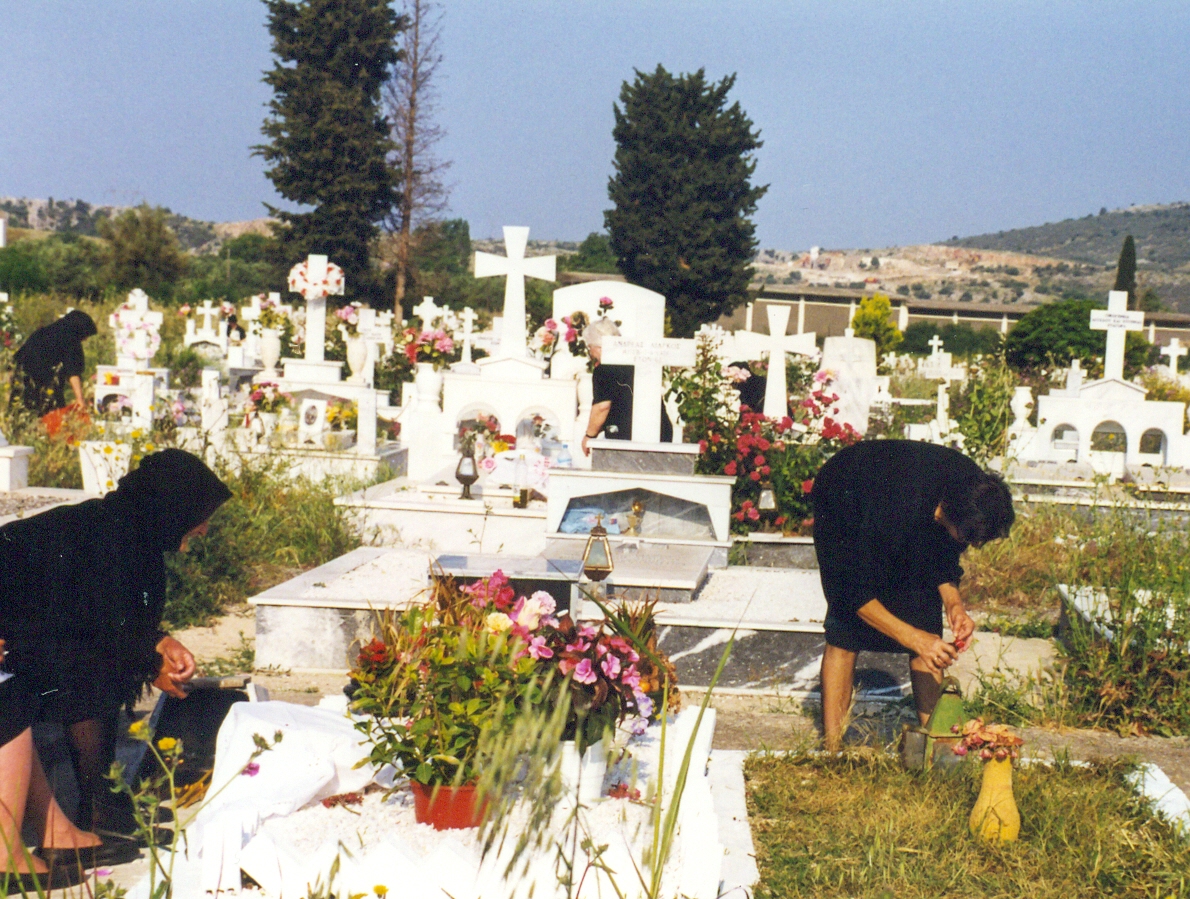
For those following the Christian Orthodox tradition, it’s the Saturday of Souls, commemorated some time in Spring
Greek orthodox saturday of souls-2
For the Chinese, it’s the Qingming Festival, or tomb sweeping day. It falls on the 15th day following the Spring equinox, which this year turned out to be yesterday. The pious Beijingers flocked to the tombs of their loved ones, while the rest of us, who don’t have any tombs to sweep in the immediate vicinity, took the day off. My wife and I fall into the latter category, our parents and grandparents lying in peace (I hope) in Italy, France and the UK. Nevertheless, we thought it would be interesting to observe this Chinese festival at first-hand. So we visited a cemetery in the farther reaches of the city, arriving there after a long journey by bus and under the curious stares of the locals.

The cemetery was indeed full of people
tomb sweeping day-1
and it was fascinating to watch what they did. They burned incense
tomb sweeping day-3
As well as leaving normal flowers, they garlanded the graves with paper flowers (I suppose cheaper than real flowers, and certainly a good deal more colourful)
picture 001
They left food on the graves
picture 005
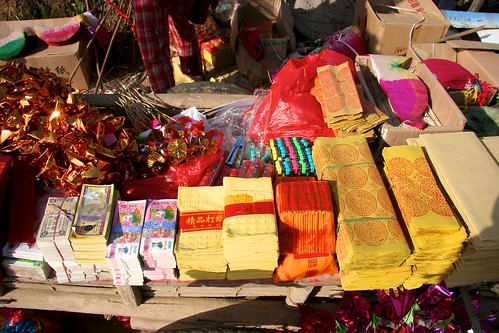
They left money (fake, alas, as we determined after surreptitiously picking up a few notes under the suspicious gaze of one of the gardeners)
tomb sweeping day-5
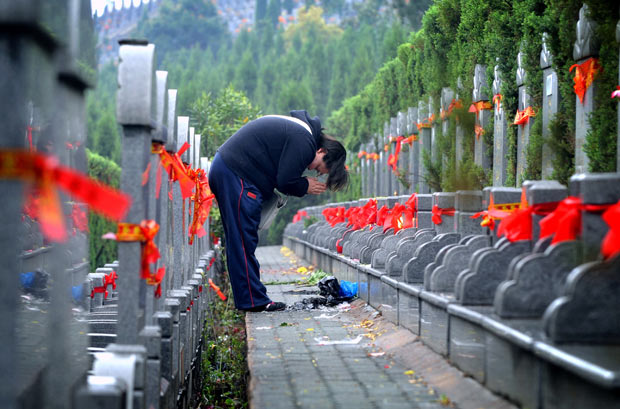
They paid their respects
tomb sweeping day-4-woman bowing
And even in one case we heard an old woman talking to her husband (I presume), I suppose updating him on what had been happening since she had last visited. The loneliness of old age can indeed be hard …

Well, the flowers we could relate to. After all, we do that in Europe too on All Souls Day – although the garlands of fake flowers was new to us.
All souls day Austria-2
We could also sort of understand the incense – I remember piles of incense being burned in the churches of my youth, although I never saw it used on tombs.

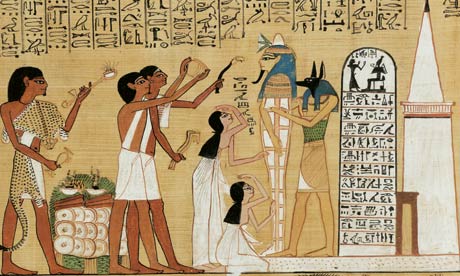
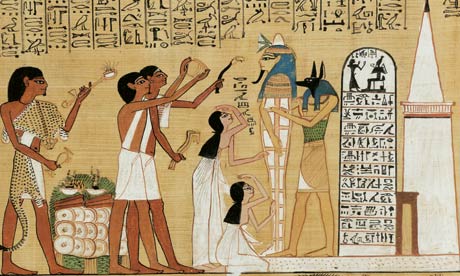
But the food and the money we found really strange. Especially the food. There was something almost animistic about this. It was like the ancient Egyptians who buried their dead with food for the afterlife.
bringing food to the dead egypt
Mind you, it’s not as if we don’t have our own strange cemetery habits. For instance, what I missed were the little candles which we leave on our graves in Europe
All souls day Germany-2-night
But if a Chinese were to ask me what those candles signify I would have to confess to not knowing. To keep away the bad spirits? To help God remember that they are there? To light up the darkness in which they lie?

Something else I missed was the statuary. The tombs we saw were very sober affairs.
picture 012
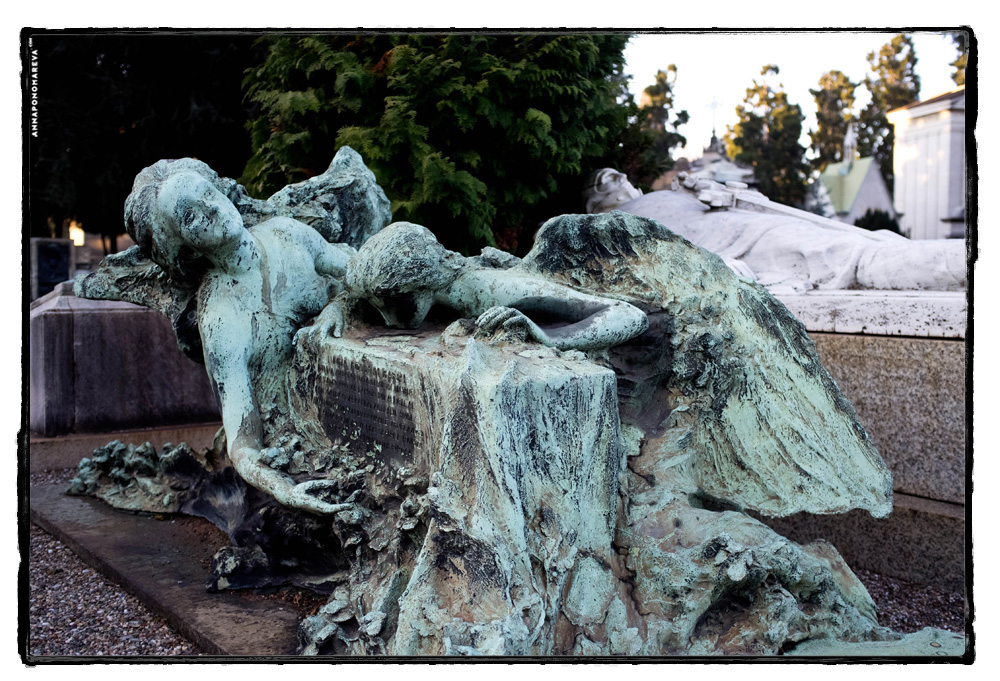
Compare this to the almost baroque constructions I’m familiar with, especially in Italy. Here are a few examples from the cemetery where my wife’s parents are buried
Giorno-dei-morti-Milano
statua monumentale Milano-2
statua monumentale Milano-3
From the style of these examples you might think that this was a habit of the past, but one of the tombs near my father-in-law’s has a life-size statue of a fisherman standing on it.

around nonno's grave 003

I presume the tomb’s incumbent loved fishing. Another close by, sadder to contemplate, is the statue of the young man buried there, whose life was tragically cut short.

around nonno's grave 006

My father-in-law’s tomb itself has a beautiful statuary group of angels singing in the heavenly choir.
angels with trumpets
We are going back to Milan in a few weeks to recuperate it after cremating his remains. My father-in-law has had thirty-five years of peaceful repose and now it is the turn of someone else to lie there: the iron law of increasing populations and decreasing real estate in which to rest the dead. But we’ll have the singing angels by which to remember him – and my mother-in-law, who chose the statuary’s theme. They had a common love of music. We will try to have his ashes relocated next to hers, so that after a separation of thirty-five years they can be together in death as they had been in life.

I wish I could say the same for my parents. Deaths ten years apart and the same real-estate forces which I just alluded to has meant that, after a life together, they were buried in different places. It fills me with melancholy and makes me think of Thomas Hardy’s poem In Death Divided

I shall rot here, with those whom in their day
You never knew,
And alien ones who, ere they chilled to clay,
Met not my view,
Will in your distant grave-place ever neighbour you.

No shade of pinnacle or tree or tower,
While earth endures,
Will fall on my mound and within the hour
Steal on to yours;
One robin never haunt our two green covertures.

Some organ may resound on Sunday noons
By where you lie,
Some other thrill the panes with other tunes
Where moulder I;
No selfsame chords compose our common lullaby.

The simply-cut memorial at my head
Perhaps may take
A Gothic form, and that above your bed
Be Greek in make;
No linking symbol show thereon for our tale’s sake.

And in the monotonous moils of strained, hard-run Humanity,
The eternal tie which binds us twain in one
No eye will see
Stretching across the miles that sever you from me.

I hope that, one day, I can bring them together so that finally one robin can haunt their two green covertures.

___________________________

All Souls Day Germany: http://images.fotocommunity.de/bilder/architektur/friedhoefe/allerheiligen-auf-dem-gratweiner-friedhof-1cf8be4b-d04b-430a-93e0-b3685f0f992f.jpg [in http://www.fotocommunity.de/pc/pc/display/14858389%5D
Greek Orthodox Saturday of souls: http://1.bp.blogspot.com/-Co-zt3nzWXs/T1EaVmrfyRI/AAAAAAAAAVA/M9gA4b1_m2I/s1600/%CF%83%CE%AC%CF%81%CF%89%CF%83%CE%B70003.jpg [in http://fiestaperpetua.blogspot.com/2012/03/blog-post.html%5D
Tomb sweeping day-1: http://www.wildchina.com/blog/wp-content/uploads/2010/04/pb-120404-qingming-da.photoblog900.jpeg [in http://www.wildchina.com/blog/tag/tomb-sweeping-day/%5D
Tomb sweeping day-2: http://www.fashion-bop.com/wp-content/uploads/2010/04/Tomb-Sweeping-Day.jpg [in http://www.fashion-bop.com/fashion-bop-things-about-us/tomb-sweeping-day/%5D
Tomb sweeping day-3: our picture
Tomb sweeping day-4: our picture
Tomb sweeping day-5: http://farm6.static.flickr.com/5193/7044748643_b7415e94a9.jpg [in http://easternjourney.com/2012/04/tomb-sweeping-day-2012/%5D
Tomb sweeping day-6: http://i.telegraph.co.uk/multimedia/archive/01864/Bowing_1864893i.jpg [in http://www.telegraph.co.uk/news/picturegalleries/worldnews/8429441/The-Qingming-festival-The-Chinese-honour-their-ancestors-by-sweeping-their-tombs.html%5D
All Souls Day Austria-flowered graves: http://www.mariazellerland-blog.at/wp-content/gallery/allerheiligen/allerheiligen-mariazell_1501.jpg [in http://www.mariazellerland-blog.at/allerheiligen-und-allerseelen-in-mariazell/allgemein/3588/%5D
Bringing food to the dead in Egypt: http://static.guim.co.uk/sys-images/Guardian/Pix/pictures/2010/10/11/1286794872587/Extra-British-Museum-Book-006.jpg [in http://www.theguardian.com/extra/2010/oct/11/extra-event-british-museum-book-of-the-dead%5D
All Souls Day Germany-night lights: http://images.fotocommunity.de/bilder/specials/mystische-orte/allerheiligen-am-friedhof-1436be22-b4bf-4a77-aba9-500ebdb2f3e7.jpg [in http://www.fotocommunity.de/pc/pc/display/19329266%5D
General view of Chinese cemetery: our photo
Statues cemetery Milan-1: http://www.milanospia.it/wp-content/uploads/2011/10/Giorno-dei-morti.jpg [in http://www.milanospia.it/2011/10/31/ponte-di-ognissanti-al-cimitero-di-milano-diventa-un-business/%5D
Statues cemetery Milan-2: http://farm8.staticflickr.com/7141/6655629153_17775801fa_o.jpg [in http://italia-ru.com/blog/ankh/2012/01/25/cimitero-monumentale-di-milano%5D
Statues cemetery Milan-3: http://milanosotto.files.wordpress.com/2013/08/cimitero-monumentale-scorcio.jpg [in http://milanosotto.wordpress.com/2013/08/13/il-cimitero-monumentale-di-milano-tra-storia-leggende-e-simboli-massonici/%5D
Statues cemetery Milan-4, 5 & 6: our photo

MAGNOLIA

Beijing, 4 April 2014

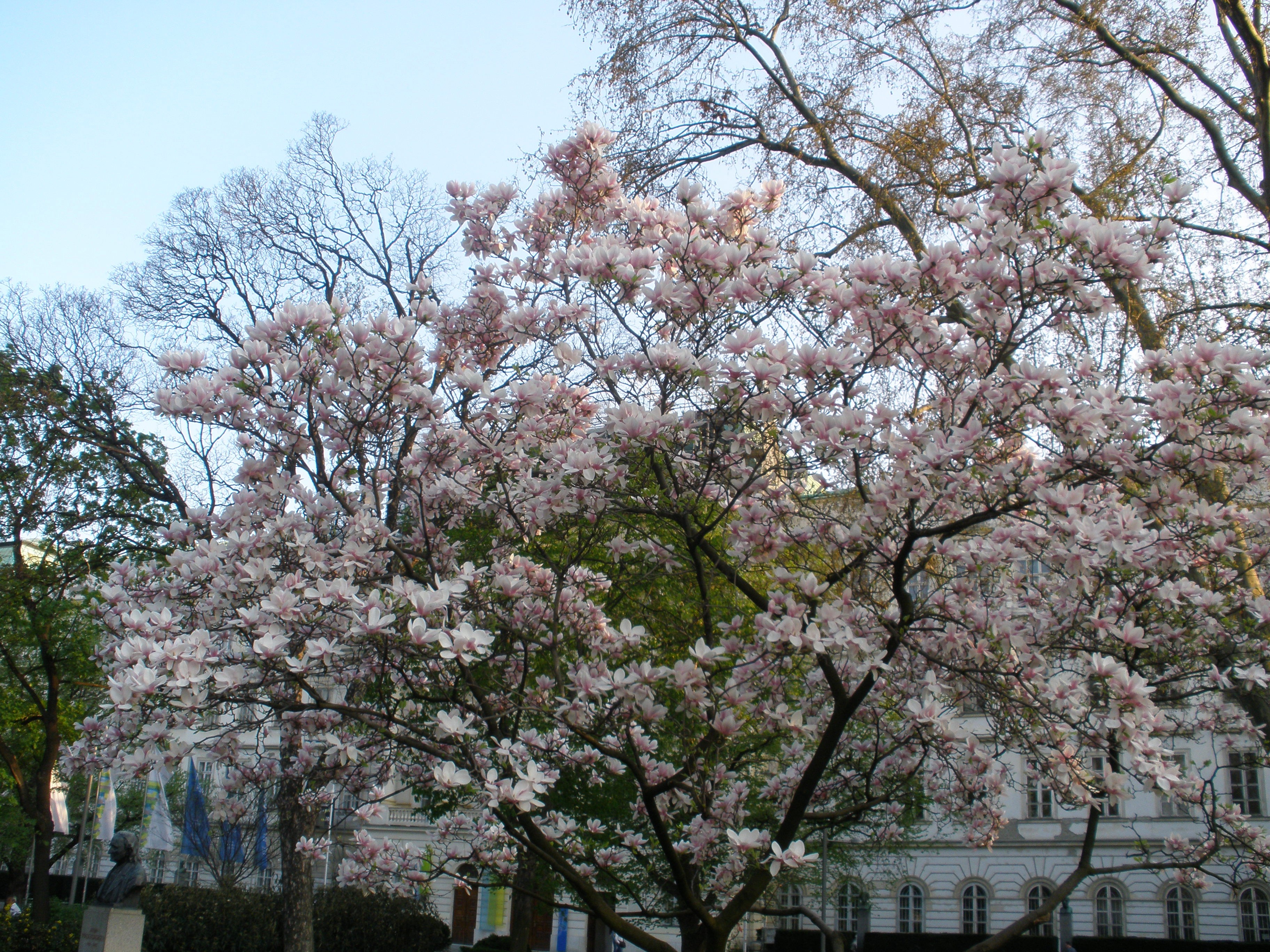
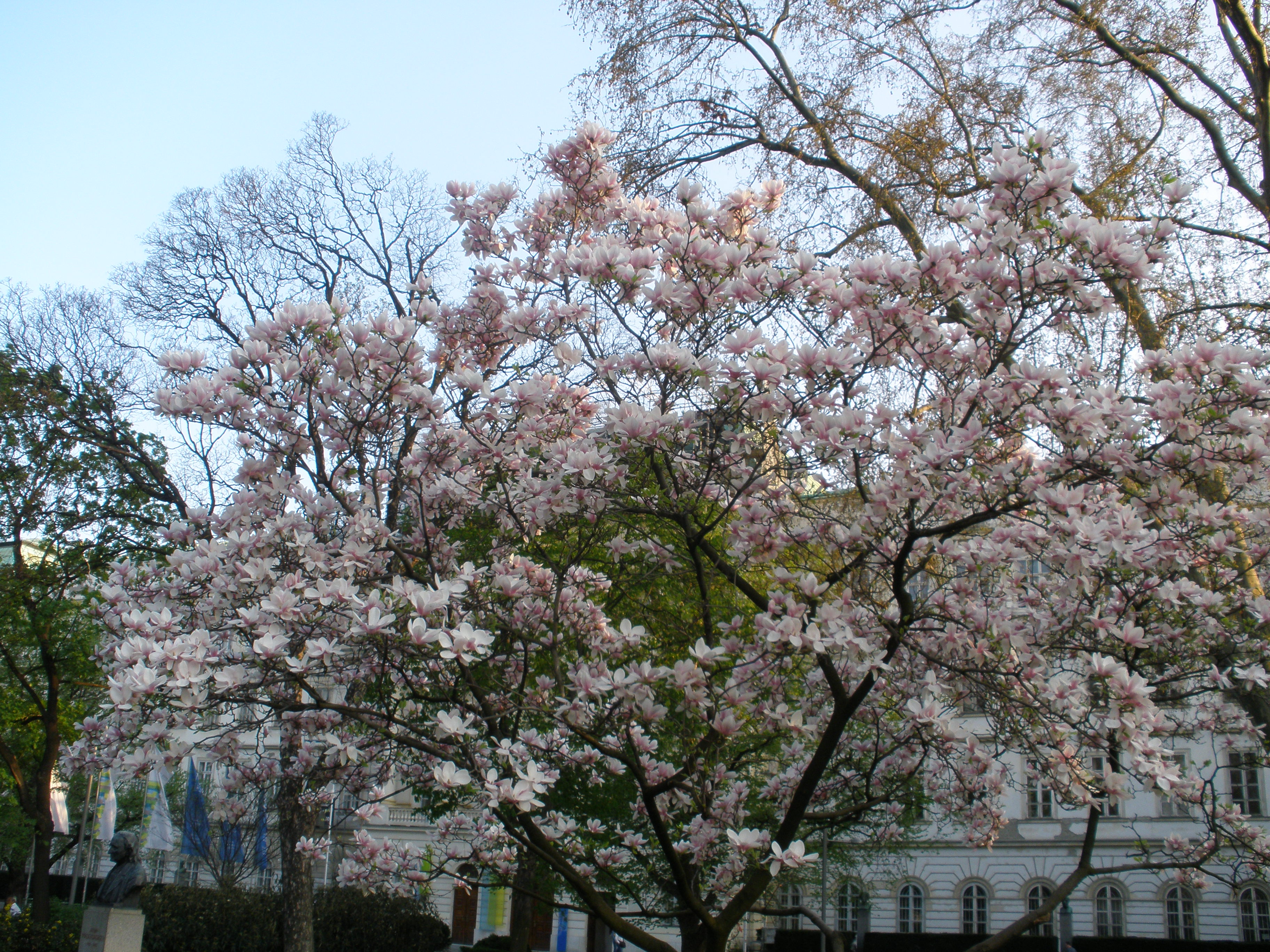
One of my abiding memories of Vienna is the magnolias in flower. I suppose it’s always the case that the first months you spend in a new place imprint themselves more forcefully on your brain’s virtual retina than the remaining years. We arrived in Vienna in February, two months later the magnolias were in bloom. It seemed that every garden and every park had its magnolia tree.
OLYMPUS DIGITAL CAMERA
We would pass one particularly magnificent specimen as we drove the children up to school every day. It was like living in a multiple exposure photo. Every day, as we swept by, we would note its progress, as the buds opened fully, and then the decay, as the flowers wilted and scattered their petals over the pavement.

A month or so later, it was the turn of the city’s multitude of lilac bushes to bloom, another fond memory which I have of Vienna and one about which I have had cause to write an earlier post.

Yes, they were good times.

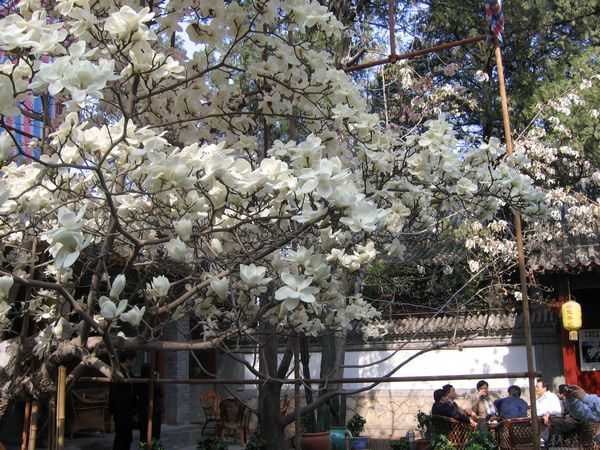
And then, when my wife and I came to Beijing, we found our friends the magnolia trees here, waiting to greet us with their blooms after we emerged from our first Chinese winter. A sight for sore eyes, let me tell you, after all that grey dryness of a Beijing winter. There was a pure white variety
magnolia trees dajue western temple
as well as a pinker type which we were familiar with from Vienna.
Tanzhe western Temple
Then, with the passage of time, I discovered that this tree, which I had, without really thinking about it, assumed was European, was actually Chinese! Actually, it’s a bit more complicated than that. There are nearly hundred different types of magnolia native to China (out of 200-plus native to Asia). The beautiful white magnolia pictured above, which comes from central and eastern China, grabbed the Chinese headlines early on. With its flower rightly regarded as a symbol of purity, it was planted in Buddhist temple gardens and the gardens of the emperors from as early as 600 AD during the Tang dynasty. It is called the Yulan, or jade lily, magnolia; I presume the name refers to the jade-like glossy smoothness of the magnolia’s petals and the sometimes lily-like look of the flower.

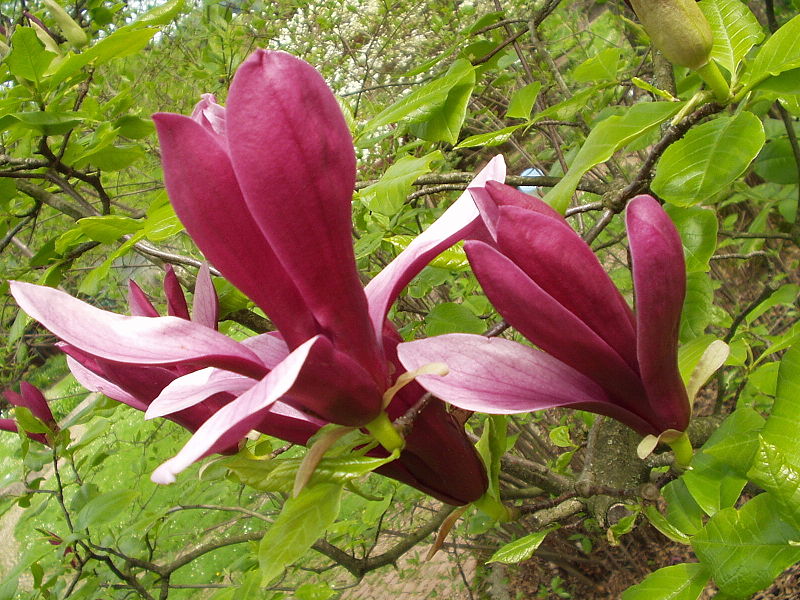
A second magnolia which has also been very popular in China for centuries is the Mulan magnolia which comes from Sichuan and Yunnan provinces.
magnolia lillliflora
Magnolias of course became favourite subjects of the poets, seeing as they spent hours haunting such gardens.

???

Here is the poem Magnolia Slope by Wang Wei, who lived in the 700s AD and is considered “the consummate master of the short imagistic landscape poem that came to typify classical Chinese poetry” (in the words of David Hinton, who made the admirable translation below).

Lotus blossoms adrift out across treetops
flaunt crimson calyces among mountains.

At home beside this stream, quiet, no one
here. Scattered. Scattered open and falling.

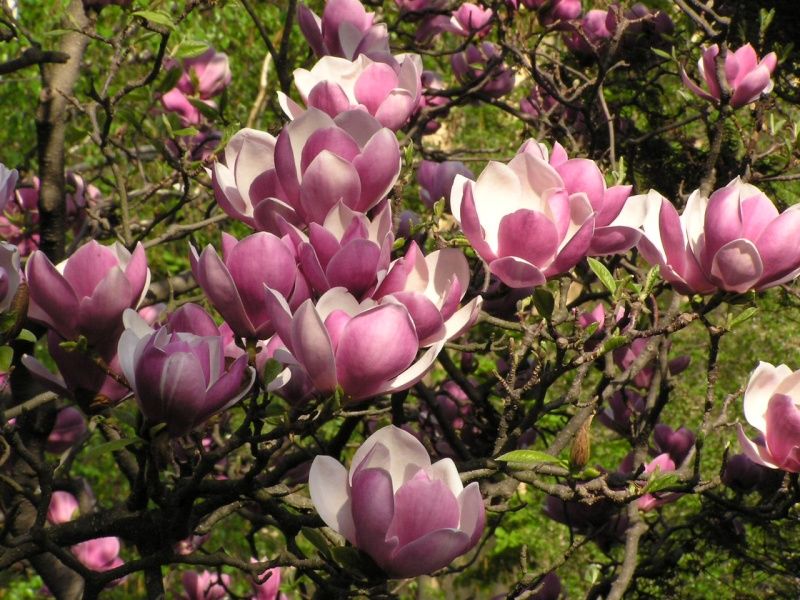
As with many things Chinese which were considered the nec plus ultra by the East Asian fashionistas and trend followers of yesteryear, the cultivation of these magnolias was taken up with enthusiasm by the Japanese, from whence – like the Chinese ginkgo tree of which I have written earlier – it made its way to Europe. And there, in 1820, in the grounds of his château of Fromont near Paris, an ex-cavalry officer turned plantsman, Étienne Soulange-Bodin, crossed the Yulan with the Mulan and created the hybrid saucer magnolia.
OLYMPUS DIGITAL CAMERA
With its large, early-blooming flowers in various shades of white, pink, and purple, this cultivar became immensely popular and spread around Europe (including Austria, no doubt, because I’m sure the Viennese magnolia I described above is one of these), the US, and eventually – I suspect – China, in hundreds of different cultivars as plant breeders continued to play with its gene pool.

Here I have to pause, to consider that other great reservoir of magnolias, the Americas. I said earlier that Asia boasts 200 or more types of magnolias. The Americas are host to another 90 or so. In fact, it was in the Americas, in the Caribbean island of Martinique to be exact, that in the 1690s a French botanist by the name of Charles Plumier discovered and named – in the modern scientific nomenclature; of course it already had a native name, the talauma – the magnolia, after yet another French botanist Pierre Magnol (a lot of French botanists in this story …). I haven’t found a picture of his original drawing of the magnolia which he came across but this one will do as a substitute.
talauma
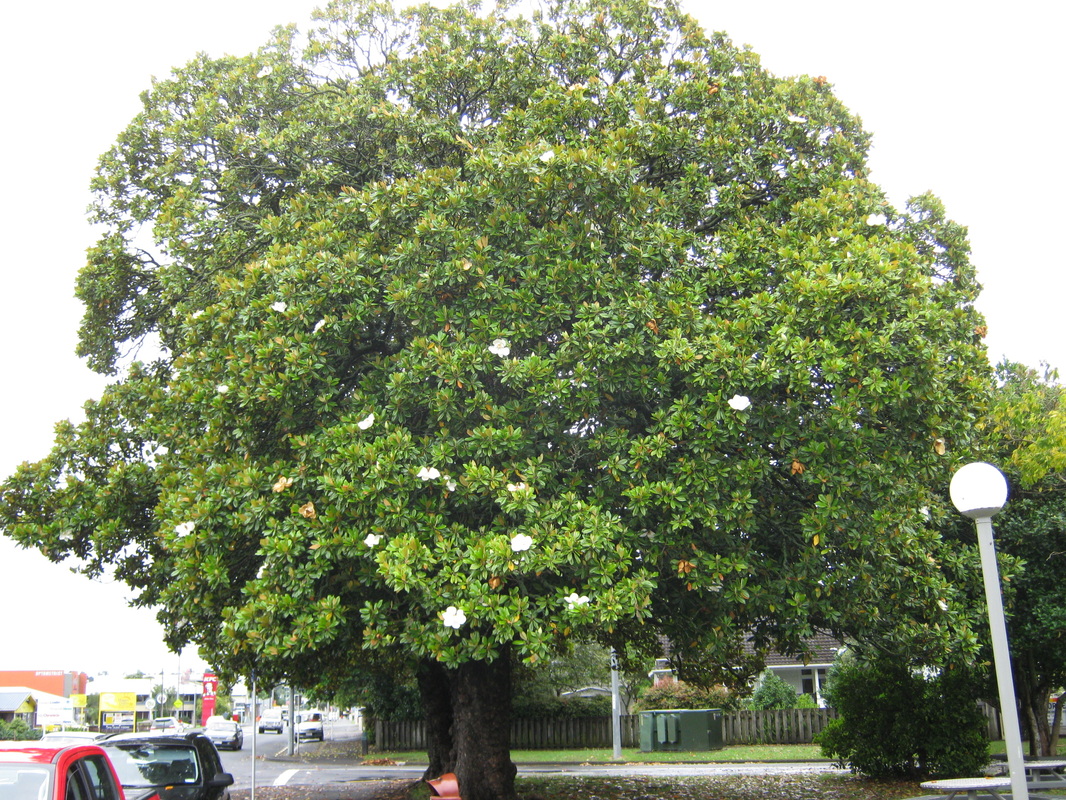
This picture, with its flower surrounded by a thick crown of leaves, sums up nicely a perplexity I had until I did some reading for this post. When we had been in the US, we had come across the southern magnolia, which looked something like this specimen, that is to say, a tree with very thick foliage and a few flowers sprinkled over the whole.
southern magnolia
Very beautiful flowers, by the way.
southern magnolia-flower
I couldn’t relate all this to the magnolias like those above, which are first completely covered with flowers and only get their leaves after the flowers have fallen. Well, the fact is, they are – botanically speaking – part of the same family. It’s just that it’s a very large family (some 300 members all told), and like in all large families distant cousins don’t necessarily resemble each other very much.

Which brings me to my final coda. The magnolia cousins have drifted so far apart because it is an old – very old – genus. It branched off the main tree of trees, if you get my drift, 100 million years or so ago. Fossils of plants identifiably belonging to the Magnoliaceae have been found dating back to 95 million years ago, while a 20 million year-old fossil has been found of the cucumber magnolia, which is native to the Eastern US and has this small flower with lovely yellow hues (in fact, these yellow hues as well as the tree’s cold hardiness have been exploited to create new yellow-flowered hybrid magnolias).
magnolia acuminata
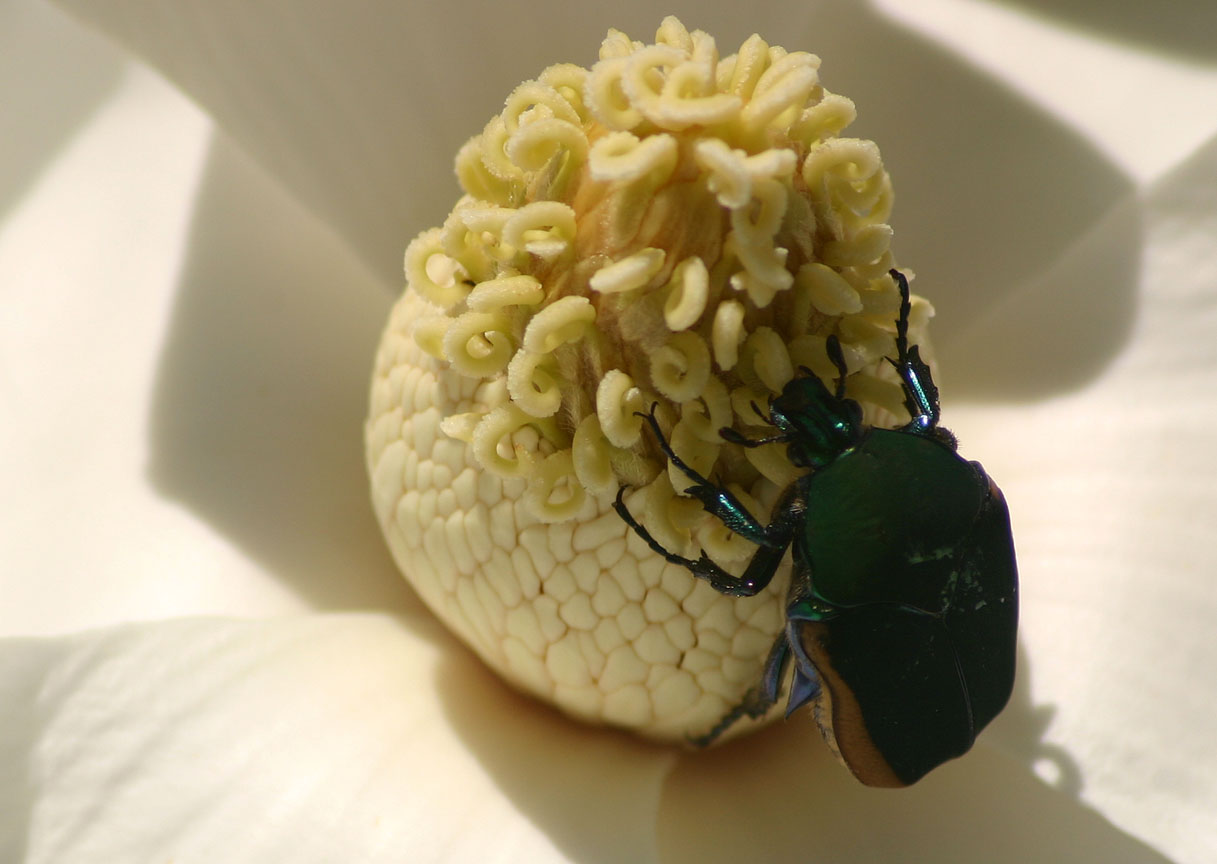
Magnolias are so ancient that they came on the scene as flowering plants before bees, or butterflies, or moths, existed to help along with pollination. So magnolias have evolved to use for pollination the only insects which were around at the time, beetles or flies.
beetle in magnolia-1
And this co-existence with beetles explains the rather leathery petals magnolias have. Compared to bees, beetles are clumsy insects, clomping around all over the flower and with a tendency to snack on the petals as well as the nectar. The leathery petals protect the flowers from these lumbering but necessary partners in the act of procreation.

Oh, and by the way, magnolia flowers don’t actually have petals, they have tepals. And that’s because the flowers are quite primitive, so their sepals and petals are not distinct and differentiated (no idea what that really means, but it sounds impressive).

__________________
Magnolia in Vienna: http://farm3.staticflickr.com/2542/3753020942_3f6c39bb5f_o.jpg [in https://www.flickr.com/%5D
Yulan Magnolia tree in Dajue western temple: http://www.beijingrelocation.com/blog/wp-content/uploads/2013/03/magnolia.jpg [in http://www.beijingrelocation.com/blog/beijing-trees/%5D
Magnolia tree in Tanzhe temple: http://www.travelchina.gov.cn/picture/0/1403261604282295162.png [in http://www.travelchina.gov.cn/art/2014/3/26/art_15_1202.html%5D
Mulan Magnolia: http://upload.wikimedia.org/wikipedia/commons/thumb/d/d6/Magnolienbluete_freiburg.jpg/800px-Magnolienbluete_freiburg.jpg [in http://en.wikipedia.org/wiki/Magnolia_liliiflora%5D
Poet in garden: http://upload.wikimedia.org/wikipedia/commons/1/1a/Wang_Xizhi_by_Qian_Xuan.jpg [in http://en.wikipedia.org/wiki/Chinese_garden%5D
Magnolia soulangeana: http://upload.wikimedia.org/wikipedia/commons/3/3e/Magnolia_x_soulangeana.jpg [in http://en.wikipedia.org/wiki/Saucer_magnolia%5D
Talauma: http://www.plantillustrations.org/illustration.php?id_illustration=90190 [in http://www.plantillustrations.org/epithet.php?epithet=plumieri&lay_out=1&hd=0%5D
Southern magnolia: http://whangareiflora.weebly.com/uploads/8/4/3/9/8439522/6466041_orig.jpg [in http://whangareiflora.weebly.com/exotic-trees.html%5D
Southern magnolia-flower: http://www.magnoliasociety.org/resources/Pictures/images/cultivars/msieboldi8422.JPG [in http://www.magnoliasociety.org/MagnoliaResources%5D
Magnolia acuminata: http://1.bp.blogspot.com/-yf82eYSuRd4/T6gSQGfe2bI/AAAAAAAAAnI/6SgLRh0exIY/s1600/DSCF7584.JPG [in http://welkinweir.blogspot.com/2012/05/may-flowers.html%5D
Beetle in a magnolia: http://blogging.la/wp-content/uploads/2009/06/gjb.jpg [in http://blogging.la/2009/06/28/it-caught-my-eye-the-beetle-the-blossom/%5D

WHAT MASK SHALL WE WEAR TODAY, DEAR?

Beijing, 30 March 2014

We’ve had a bad air day here in Beijing.
smog in Beijing
Actually, we’ve been having a series of bad air days, after a relatively long period of good air days. Due to the change of weather patterns as we move from winter to spring, I imagine.

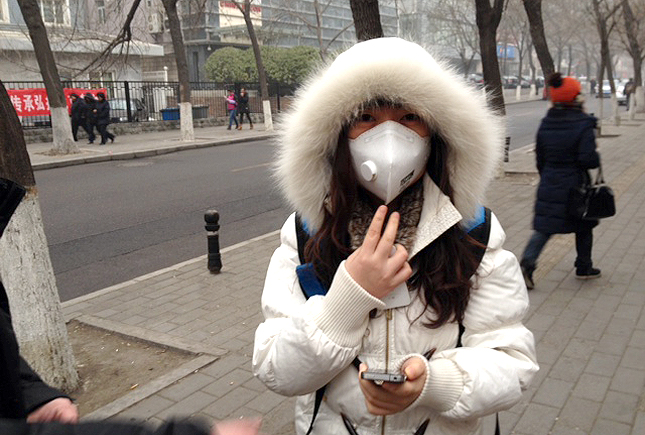
In any event, these days of high particulate levels have led to an efflorescence of masks on the face of pedestrians.
beijingers wearing masks
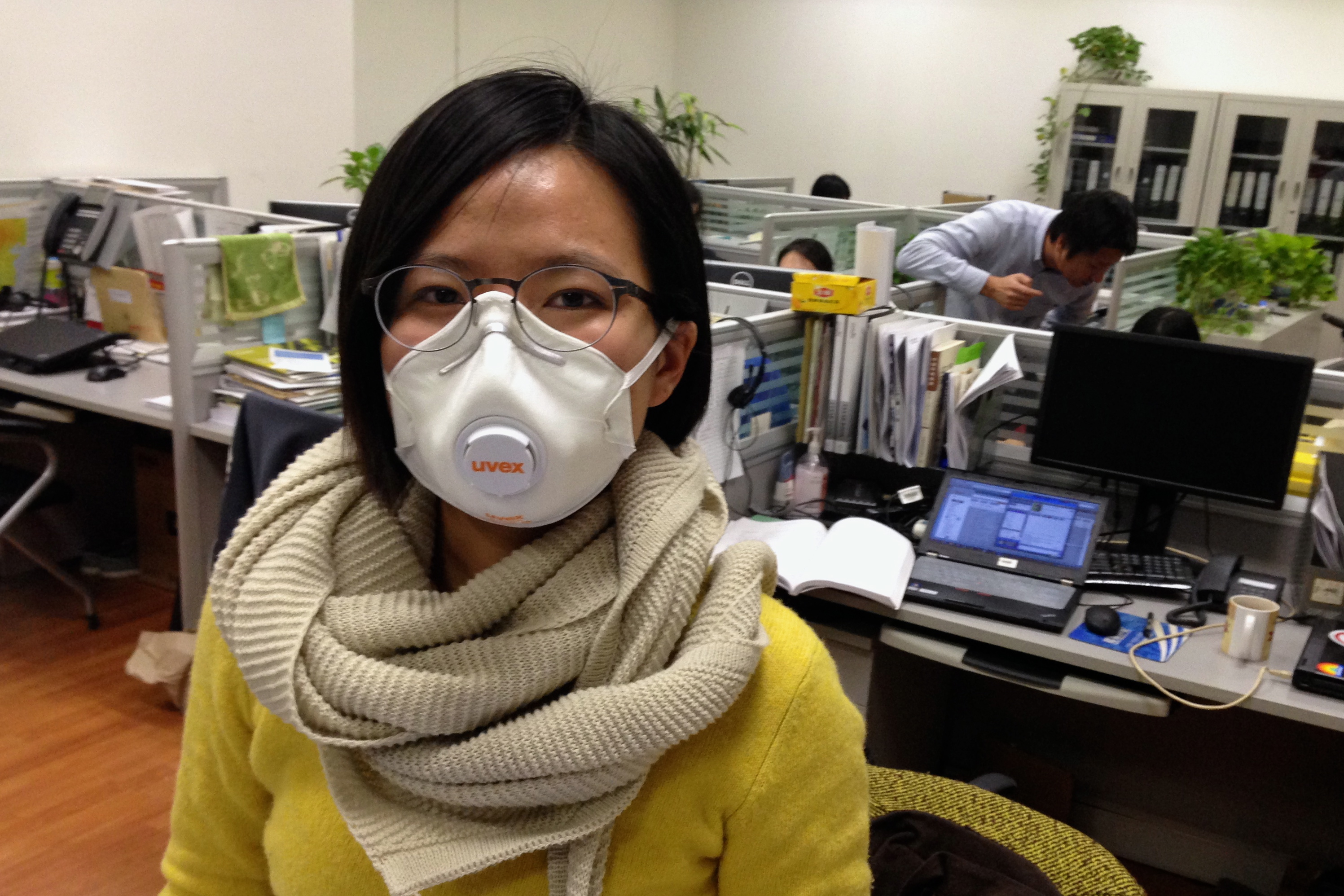
When my wife and I first arrived here four years ago, the local population stoically accepted the situation. The official government position at the time could be summed up as: “air pollution? what air pollution?” So the masses followed the party line and officially shrugged off the decision by some foreigners to wear protective masks as weak-kneed and effeminate. At most, they would don surgical masks
mask-medical-2
a common enough habit here, although used more as a way to control the spread of the common cold.

Then, about a year ago, with the change in party leadership, the government made it publicly known that actually there was an air pollution problem, and almost overnight Beijingers started wearing protective masks. Such is the power of the party …

My wife and I, though, are made of tougher stuff and have considered all these mask wearers, Chinese and foreigners alike, weak-kneed and effeminate. That is, until now. Because even we, tough nuts though we are, have begun to think that maybe we should also be wearing masks on bad air days, before we get hit with an irreversible case of asthma or worse.

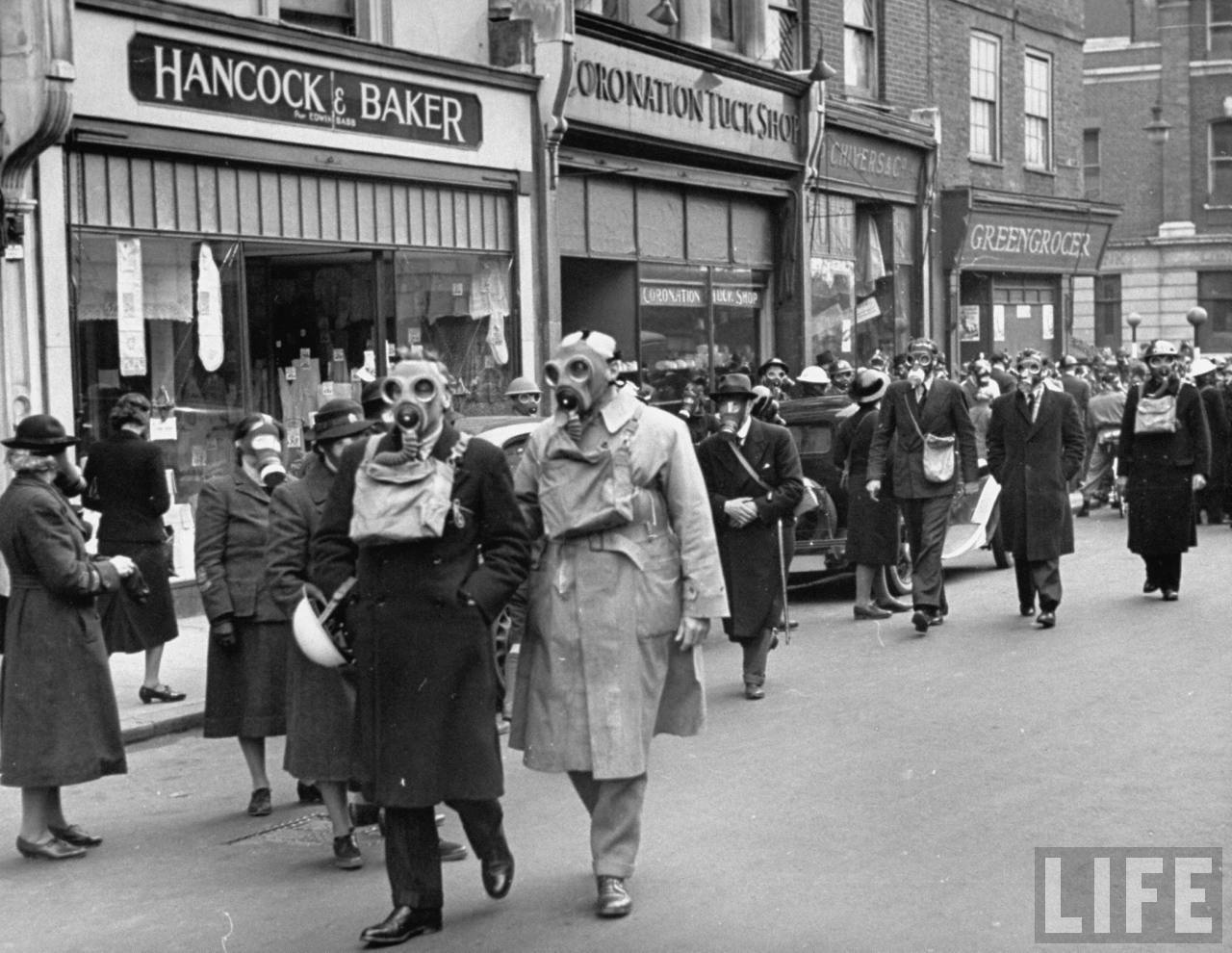
But what masks should we wear? And here, I have to say, aesthetics will play as much a part in our decision as efficacy. Efficacy alone would suggest wearing some sort of gas mask. The problem is, gas masks – at least in their traditional form – are fantastically unaesthetic. Consider this photo, taken in London during the Second World War
gas masks WW2-1
The Londoners in question were taking part in a drill, to make sure they knew how to use their masks in case the Germans dropped gas bombs.

Or how about this one, also from the Second World War, of some bizarre outing in the woods by a bunch of people (scouts?), all kitted up in gas masks
gas masks WW2

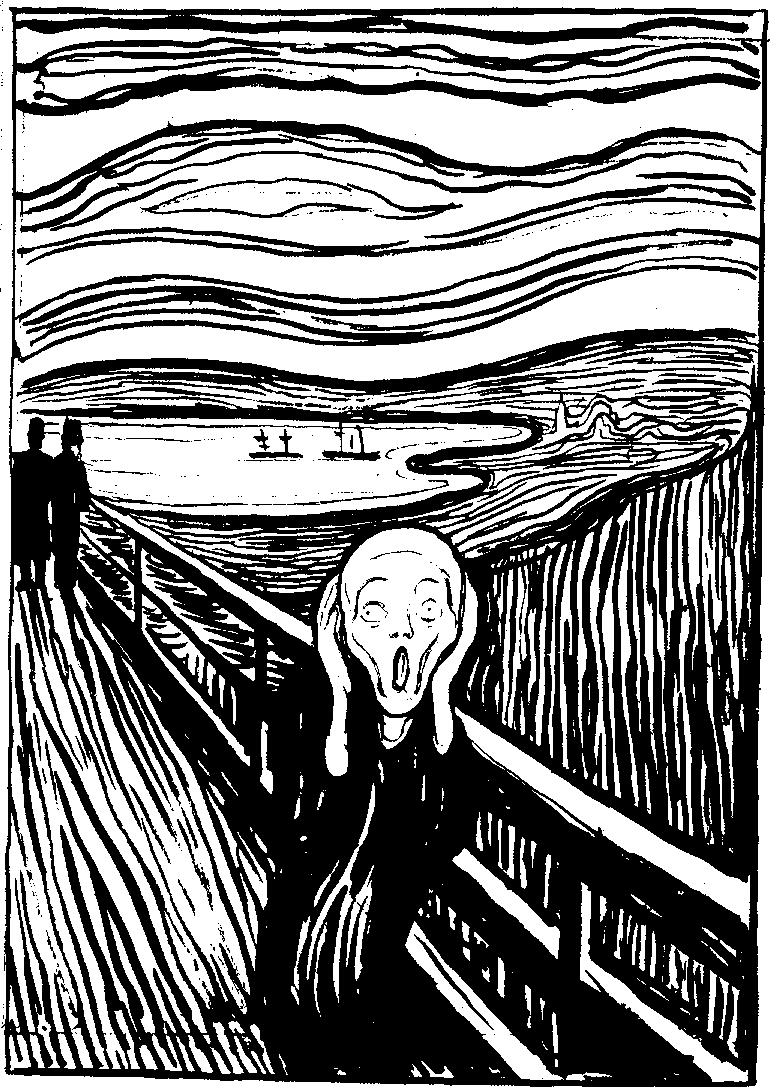
Can you imagine us all walking around Beijing looking like this? Already walking around in the smog is depressing enough. Having people looking like this looming out of the fug around you would be enough to give you a serious case of the heebie-jeebies. It would be like meeting a streetful of Edvard Munch’s screamers; one would begin to start screaming oneself.
The Scream lithography
The more modern gas masks have a friendlier design, showing as they do the face of the wearer.
gas mask-modern
I mean, at least you could smile at each other as you pass on the pavement and give each other moral support in this time of trial and tribulation.

But I feel that wearing even such a user-friendly gas mask would really be over the top. After all, we are only being subjected to excessively high particulate levels and not to massive leaks of poisonous gas, which these gas masks were presumably designed to deal with. Good design must be “fit for purpose”, as they say; these gas masks fail on this criterion.

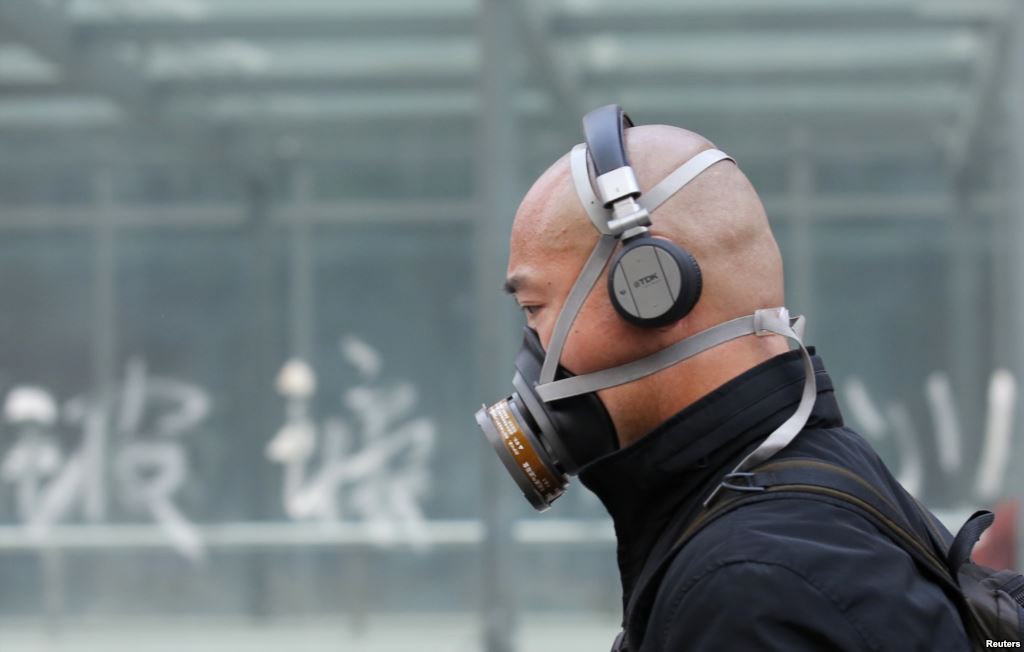
A somewhat pared-down version of these gas masks is available in China, which has the “snout” but not the eye coverings.
mask-1
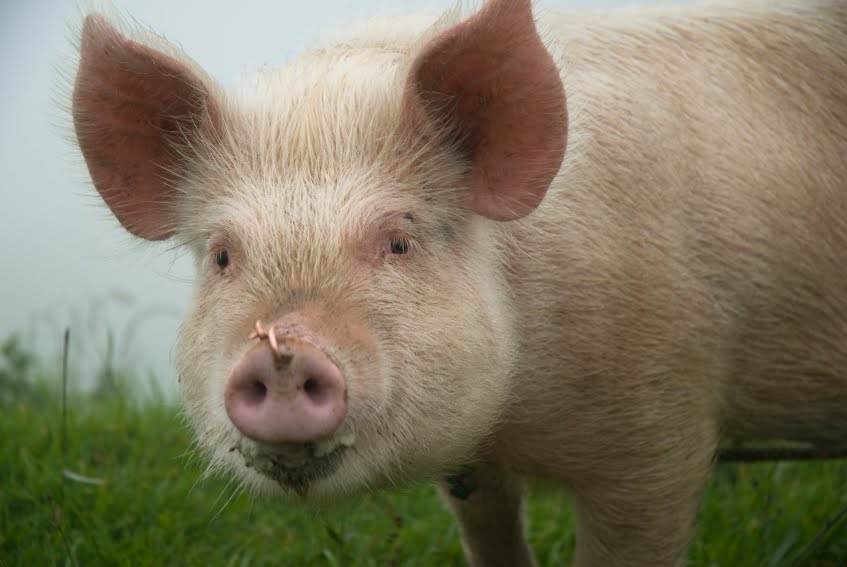
And that is precisely the problem which I have with this particular mask design. It would make the wearer look somewhat porcine
pig snout
So we need to look further afield for an efficacious but also aesthetically pleasing mask. I have found these on the web and/or seen people wearing them on the street:
mask-2

mask-3

mask-4a

IMG_0374

mask-8a

mask-8
My wife and I have debated the relative merits of these masks. Always assuming that we take the final plunge and buy masks, she would go for the fourth, which gives her space to breathe; she has tried the last mask and found it suffocating. For my part, I would go for the second mask, which I find pretty cool.

Of course, the best would be that NO-ONE has to wear masks. But for that to happen, the party is going to have to take some painful decisions. We will see …

____________________
Smog in Beijing: http://www.csmonitor.com/var/ezflow_site/storage/images/media/content/2013/0114-smog/14755543-1-eng-US/0114-smog_full_600.jpg [in http://www.csmonitor.com/World/Latest-News-Wires/2013/0114/Heavy-smog-in-Beijing-prompts-uncharacteristic-government-transparency-video%5D
Beijingers wearing masks: http://www.thestar.com/content/dam/thestar/news/world/2014/02/24/pollution_soars_in_china_rare_industry_shutdowns_reported/china_smog.jpg.size.xxlarge.letterbox.jpg [in http://www.thestar.com/news/world/2014/02/24/pollution_soars_in_china_rare_industry_shutdowns_reported.html%5D
Mask-medical: http://news.xinhuanet.com/english/china/2013-10/21/132816417_11n.jpg [in http://news.xinhuanet.com/english/china/2013-10/21/c_132816417.htm%5D
Gas masks in WW2-1: http://www.moneyandshit.com/wp-content/uploads/2010/02/partisans-in_World_war2.jpg [in http://www.moneyandshit.com/partisans-in-gas-masks-during-world-war-2n/%5D
Gas masks in WW2-2: http://charlesmccain.com/wp-content/uploads/2013/12/hist_uk_20_ww2_pic_gas_mask_mock_london.jpg [in http://charlesmccain.com/2013/12/2768/%5D
The Scream lithography: http://upload.wikimedia.org/wikipedia/en/5/50/Munch_The_Scream_lithography.png [in http://en.wikipedia.org/wiki/File:Munch_The_Scream_lithography.png%5D
Gas mask-modern: http://img.xxjcy.com/pic/z14f386f-0x0-1/industrial_gas_masks_product_mf27_full_eyepiece_gas_mask.jpg [in http://www.xxjcy.com/manufacturers/z6a4a78/iz28e1a63-mf22a_type_gas_masks.html%5D
Mask-1: http://gdb.voanews.com/B8CC4108-6777-4820-9381-2F5CFE6AB98E_mw1024_mh1024_s_cy7.jpg ] [in http://www.voanews.com/content/study-finds-coal-pollution-cuts-north-china-lifespan-by-five-and-a-half-years/1697648.html%5D
Pig snout: http://kristilowe.files.wordpress.com/2013/09/istock_000012723567small.jpg [in http://kristilowe.com/tag/pig-snout/%5D
Mask-2: http://www.allergyasthmatech.com/ProdImages/model_photo copy[1].jpg [in http://www.allergyasthmatech.com/SP/Air_Pollution_Mask/101_373%5D
Mask-3: http://www.loftwork.jp/~/media/Images/Event/2013/20131218_frog/r_04.ashx?h=402&w=537 [in http://www.loftwork.jp/event/2013/20131218_frogdesign/report1218.aspx%5D
Mask-4: http://www.myredstar.com/wp-content/uploads/2013/02/Totobobo.jpg [in http://www.myredstar.com/smog-living/%5D
Mask-5: http://www.pri.org/sites/default/files/story/gallery/huang.jpg [in http://www.pri.org/stories/2013-11-11/beijingers-don-masks-defend-themselves-against-dirty-air-and-make-fashion%5D
Mask-6: http://www.i-m-s.dk/wp-content/uploads/2013/02/china-air-poll.jpg [in http://www.i-m-s.dk/pollution-finally-a-front-page-story-in-china/%5D
Mask-7: http://www.theworldofchinese.com/wp-content/uploads/2014/02/top5-masks-master.jpg [in http://www.theworldofchinese.com/2014/02/the-top-pollution-busting-face-masks/%5D

LET’S DANCE!

Beijing, 24 March 2014

Jean Renoir, son of the French impressionist painter of the same name, was a good film director. In fact, he is considered by some to be among the greatest film directors of all time. He made such classics as La Grande illusion (1937) and La Règle du jeu (1939). So it was with some anticipation that some years ago my wife and I went to see The River, a film he had made in 1951, on location in India, in English, his first in colour, and which won the International Prize at the Venice Film Festival.

The River

Bad, bad mistake! The theme of the film – loss, love lost, love found – had all to hold one. The problem was the actors. They were all, to a man and woman, dogs – it’s the only word to adequately describe the appallingly amateur acting that we were subjected to. To this day, I ask myself what on earth happened in the making of this film. How did Jean Renoir lose control of his creation? Was it lack of money? Loss of talent? – was he getting too old for the job? Was it working far from home and in a foreign language? Mystery …

The worst actor by far was an Indian woman, Radha Burnier by name. She later gained a certain fame by becoming president of the Indian branch of the Theosophical Society (fame defined here as having an entry in Wikipedia). But that was still in the future when she acted in this film. I literally gritted my teeth every time she appeared on-screen and droned out her lines tonelessly. And then, at some point in all this hideousness, she acted out a dream sequence. For some reason which I cannot now recall, this dream required her to dance a classical Indian dance. What a transformation!  This ugly duckling of an actress morphed into a beautiful dancer. We were treated to a powerfully expressive, supremely graceful performance of Indian classical dancing.

I immediately forgave her all her poor acting.

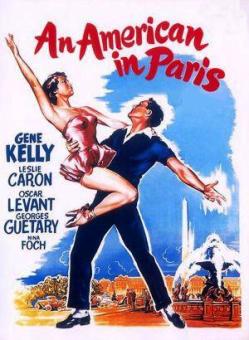
I was forcefully reminded of this episode a few weeks ago when, during a long flight back from the US, I decided to watch An American in Paris, a film also made in 1951, directed by Vincente Minelli and with Gene Kelly in the lead role.

An_American_in_Paris_poster

It was an exceedingly silly film, with the lightest of plots (love lost, love gained, the whole with a papier mâché Paris in the background), but at least the actors could act. It also had a good musical score by George Gershwin. So I smiled indulgently and let myself be carried along on the silly frothiness of it all. At some point, though, Gene Kelly went into a tap dancing routine. My attention suddenly snapped into focus. What a dance! Light-hearted though it was, it was a superb rendition, a wonderful example of what a highly accomplished classical dancer can do with the hypnotic rhythms of clicking shoes.

In a way, I think these two threads of dancing come together in Spanish flamenco dancing – the syncopation of tap dancing fusing with the sinuous, sulphurous eroticism of Indian classical dancing, which also carries its own brand of stressed rhythm with the use of feet bangles. Staying in the film medium, I give here a wonderful example of Spanish flamenco from Carmen, a 1983 film directed by Carlos Saura.

Carmen_by_Saura

It’s a remake in the flamenco style of Bizet’s famous opera of the same name. Here we have love exploding between Carmen and Don José

but alas! it all ends badly

Ah, the madness of jealous love!

I cannot end without bringing in tango, that most sultry of all dances. Which is just as well because that allows me to introduce a final clip from the 2005 film Je ne suis pas là pour être aimé

je-ne-suis-pas-la-pour-etre-aime

in which two lonely people, Jean-Claude and Françoise, find a common love, and love, in tango

Ah, l’amour, l’amour! After a few taps of my toes and a pirouette, I turn in for the night.

______________________

The River: http://upload.wikimedia.org/wikipedia/en/7/77/La_Fleuve_1951_film_poster.jpg [in http://en.wikipedia.org/wiki/The_River_(1951_film)%5D
An American in Paris film poster: http://en.wikipedia.org/wiki/File:An_American_in_Paris_poster.jpg [in http://en.wikipedia.org/wiki/An_American_in_Paris_%28film%29%5D
Carmen film poster: http://en.wikipedia.org/wiki/File:Carmen_by_Saura.jpg [in http://en.wikipedia.org/wiki/Carmen_%281983_film%29%5D
Je ne suis pa la pour etre aime poster: http://www.bestofneworleans.com/imager/french-cin-club-je-ne-suis-pas-la-pour-tre-aim/b/original/2222223/686d/f8df3e30_je-ne-suis-pas-la-pour-etre-aime.jpg [in http://www.bestofneworleans.com/gambit/french-cin-club-je-ne-suis-pas-la-pour-tre-aim/Event?oid=2222222%5D

BIRDS IN BEIJING

Beijing, 22 March 2014

A few days ago, as I was walking to work along my piece of canal, I saw, sitting on the lower branch of a willow tree, a small bird which I had never seen before. I’m not a birder by any means, but I do appreciate a beautiful or graceful bird when I see one. This bird had a wonderfully variegated plumage, really very handsome. By the shape of its head and bill I was guessing it to be a member of the woodpecker family. Intrigued, I sidled forward to have a better look. The bird cocked its head, kept a wary eye on me, and finally decided I had invaded too much of its private space. With a quick flip of its wings, it was off, dipping and lifting across the waters of the canal. I finally lost sight of it among the willow trees and buildings on the other bank.

The internet is a wonderful thing, really it is. Yes, there are dark corners where bad, nasty people show and say bad, nasty things, but overall it is a great global market square into which you can wander of an evening and, like young Marco Polo sauntering along Venice’s wharves, hear tales fantastical of faraway lands and pick up information from the furthest reaches of the globe. This burst of appreciation for the internet at this particular moment in my tale comes from the fact that at home that evening, on a whim, I typed “birds in beijing” in my search field to see what I could find. And I immediately stumbled onto the site Birding Beijing! I salute its author, Terry Townshend, a Beijing resident like myself and a dedicated birder, who has put together this wonderful site.

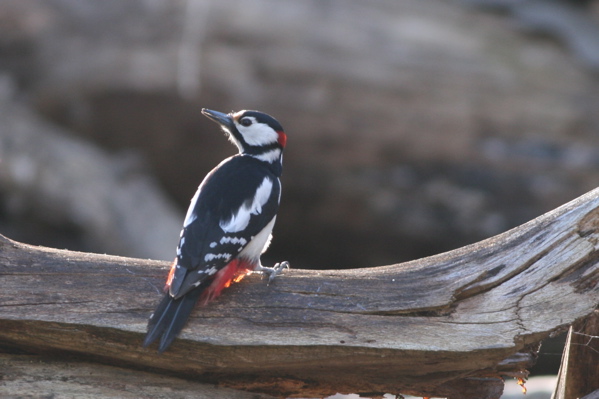
Terry’s site gave me the answer I was looking for. The bird I had seen in the morning was indeed a woodpecker, the great spotted woodpecker (Dendrocopos major) to be precise. This photo is from his site
great-spotted-woodpecker-small-1
Here is another from a UK site

great-spotted-woodpecker-2
which I chose because this woodpecker has a range which stretches all the way from China across Central Asia and Europe to my home country. It gives me an odd sense of comfort, that: part of home in Beijing.

Terry’s site gave me the answer to one more ornithological question which has been nagging me for the last few years, the identity of another bird which I have often seen here. It seemed to me quite like the magpie, although with much more delicate colouring in its feathers. It seemed to fill the same ecological niche, too, as far as I could gather. Well, Terry’s site tells me that it is indeed a magpie! (although a different member of the family, to be sure). It is the azure-winged magpie (Cyanopica cyanus). This photo of it is also from Terry’s site
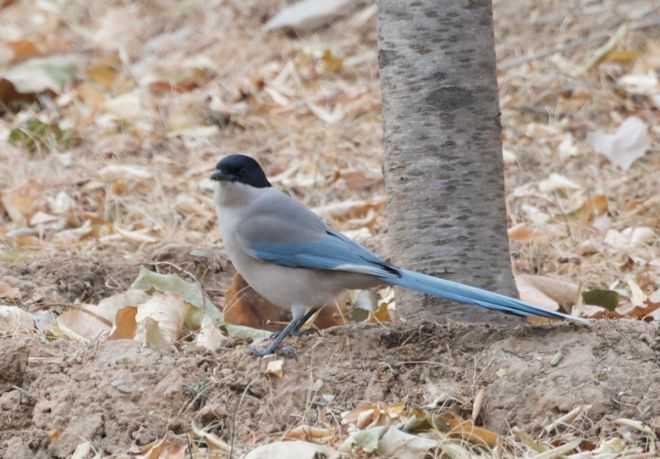
azure-winged-magpie-1

but this one comes from a Russian orthinological site
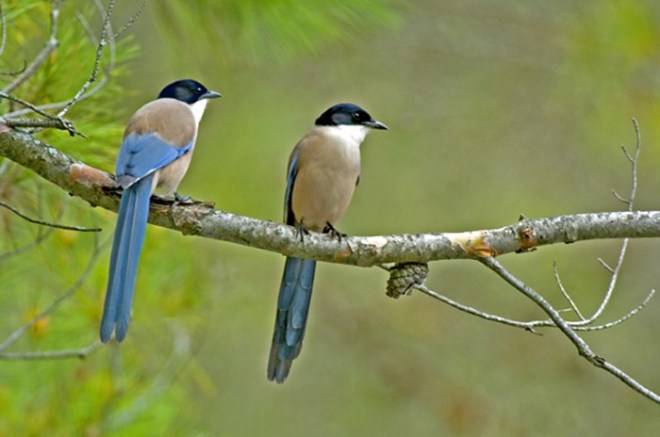
azure-winged-magpie-2

which I include because the range of this magpie covers East and North-East Asia (so including Siberia).

I’m not sure “azure” really describes the wonderful shade of blue which this bird sports in its wing and tail feathers. A long hunt through various other internet sites makes me think that cornflower blue might better describe this particular shade of blue. The internet also tells me that this colour was one of the Dutch painter Jan Vermeer’s favourite colours. Is the blue in his painting Girl with a Pearl Earring the same?
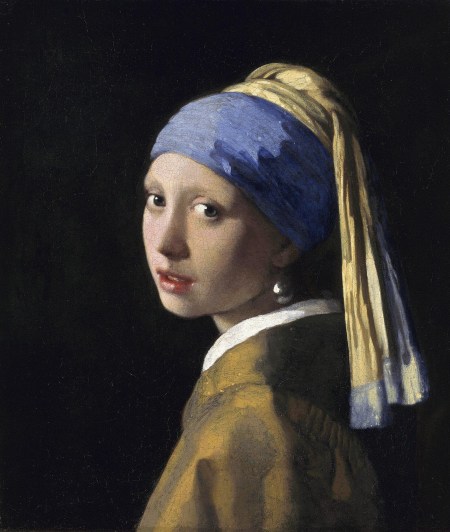
Girl_with_a_Pearl_Earring

Perhaps it is a slightly darker shade of blue?

Flush from these two successful identifications, I went through the rest of the bird gallery in Terry’s site, to put a name to what else I’ve seen in Beijing. He mentions the the Eurasian magpie (Pica pica), which I’ve had cause to write about in an earlier posting. It seems more common than the azure-winged magpie; I certainly feel that I see it more often. Terry does not include a picture of this magpie (too common, no doubt), so I add here a photo from another site
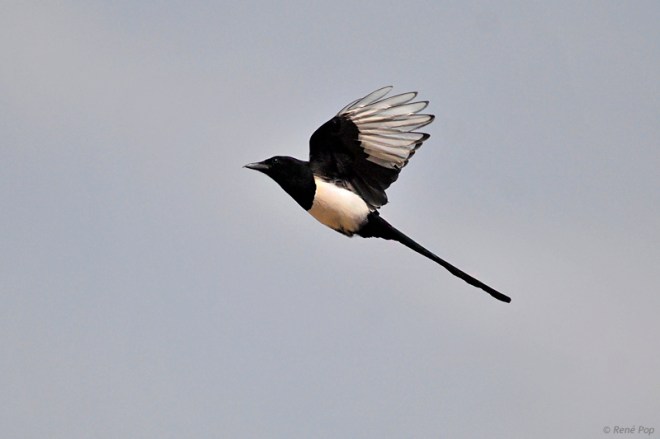
Eurasian magpie-2
Terry mentions the Eurasian tree sparrow (Passer montanus). I’ve seen that, of course, who hasn’t?
tree-sparrow
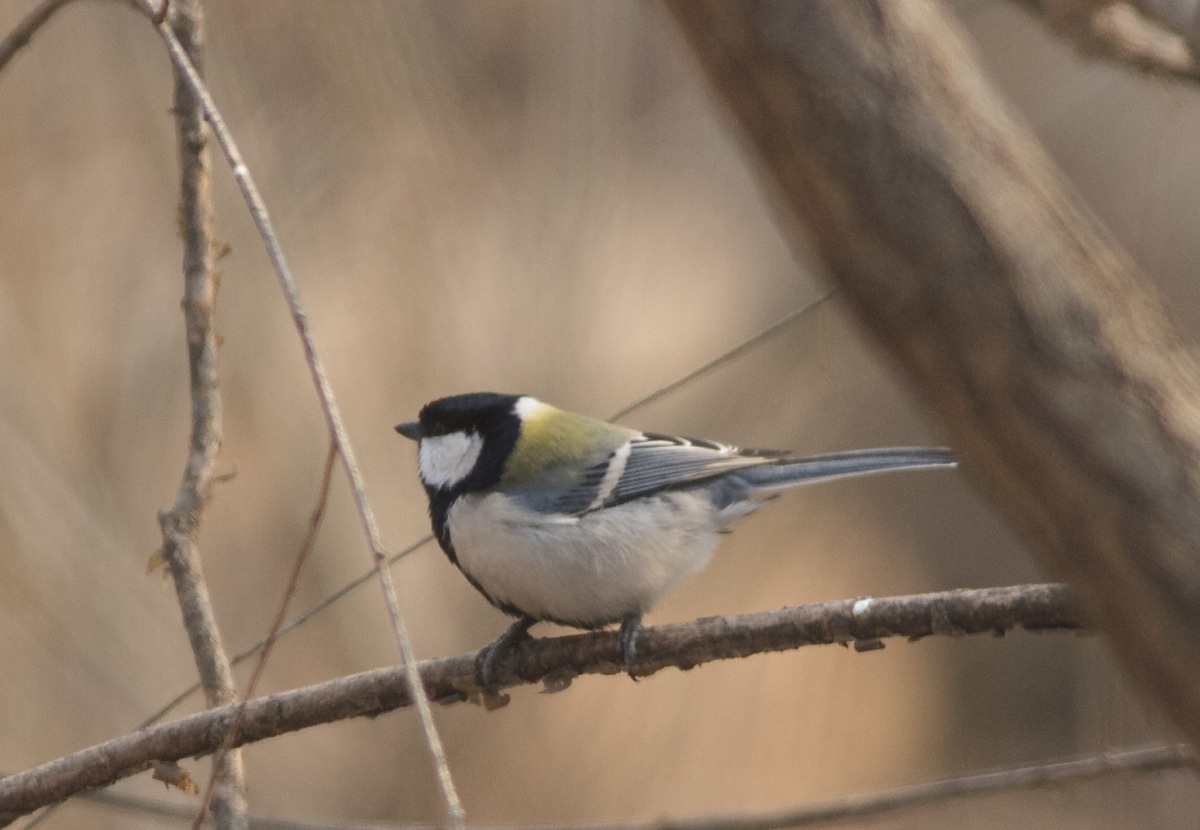
I think I might once have seen another bird he mentions, the eastern great tit (Parus minor)
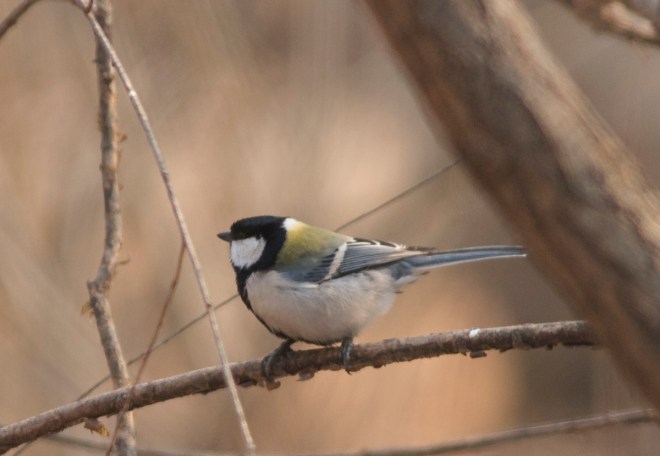
japanese-tit
I’m almost certain I also saw a Eurasian kestrel (Falco tinnunculus) once. I spotted it during a particularly boring teleconference for which I was a passive participant, sitting at my desk and staring out of the window while the others droned on.  I was glad for the lovely distraction of its diving and swooping around my office building.

kestrel

These wonderful photos move me to cite here three poems about birds which I particularly like:

The Eagle, by Alfred, Lord Tennyson

He clasps the crag with crooked hands;
Close to the sun in lonely lands,
Ring’d with the azure world, he stands.

The wrinkled sea beneath him crawls;
He watches from his mountain walls,
And like a thunderbolt he falls.

The Windhover, by Gerard Manley Hopkins

I caught this morning morning’s minion, king-
  dom of daylight’s dauphin, dapple-dawn-drawn Falcon, in his riding
  Of the rolling level underneath him steady air, and striding
High there, how he rung upon the rein of a wimpling wing
In his ecstasy! then off, off forth on swing,
  As a skate’s heel sweeps smooth on a bow-bend: the hurl and gliding
  Rebuffed the big wind. My heart in hiding
Stirred for a bird,—the achieve of; the mastery of the thing!

Brute beauty and valour and act, oh, air, pride, plume, here
  Buckle! AND the fire that breaks from thee then, a billion
Times told lovelier, more dangerous, O my chevalier!

No wonder of it: shéer plód makes plough down sillion
Shine, and blue-bleak embers, ah my dear,
  Fall, gall themselves, and gash gold-vermillion.

The Darkling Thrush, by Thomas Hardy

I leant upon a coppice gate
    When Frost was spectre-gray,
And Winter’s dregs made desolate
    The weakening eye of day.
The tangled bine-stems scored the sky
    Like strings of broken lyres,
And all mankind that haunted nigh
    Had sought their household fires.

The land’s sharp features seemed to be
    The Century’s corpse outleant,
His crypt the cloudy canopy,
    The wind his death-lament.
The ancient pulse of germ and birth
    Was shrunken hard and dry,
And every spirit upon earth
    Seemed fervourless as I.

At once a voice arose among
    The bleak twigs overhead
In a full-hearted evensong
    Of joy illimited;
An aged thrush, frail, gaunt, and small,
    In blast-beruffled plume,
Had chosen thus to fling his soul
    Upon the growing gloom.

So little cause for carolings
    Of such ecstatic sound
Was written on terrestrial things
    Afar or nigh around,

That I could think there trembled through
    His happy good-night air
Some blessed Hope, whereof he knew
    And I was unaware.

Lovely …

And yet I’m worried. Last Christmas, when we were in New York, we visited the Metropolitan Museum. On our wanderings through the galleries we bumped into four of these hanging on the wall of a corridor:
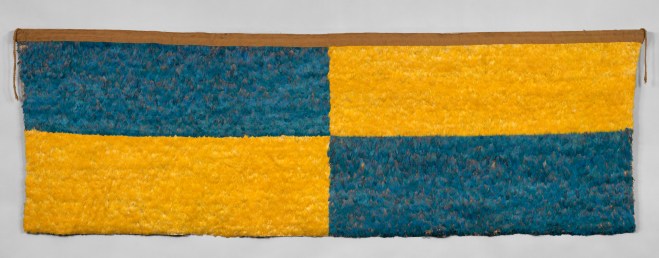
Peruvian-Featherwork-cape-1

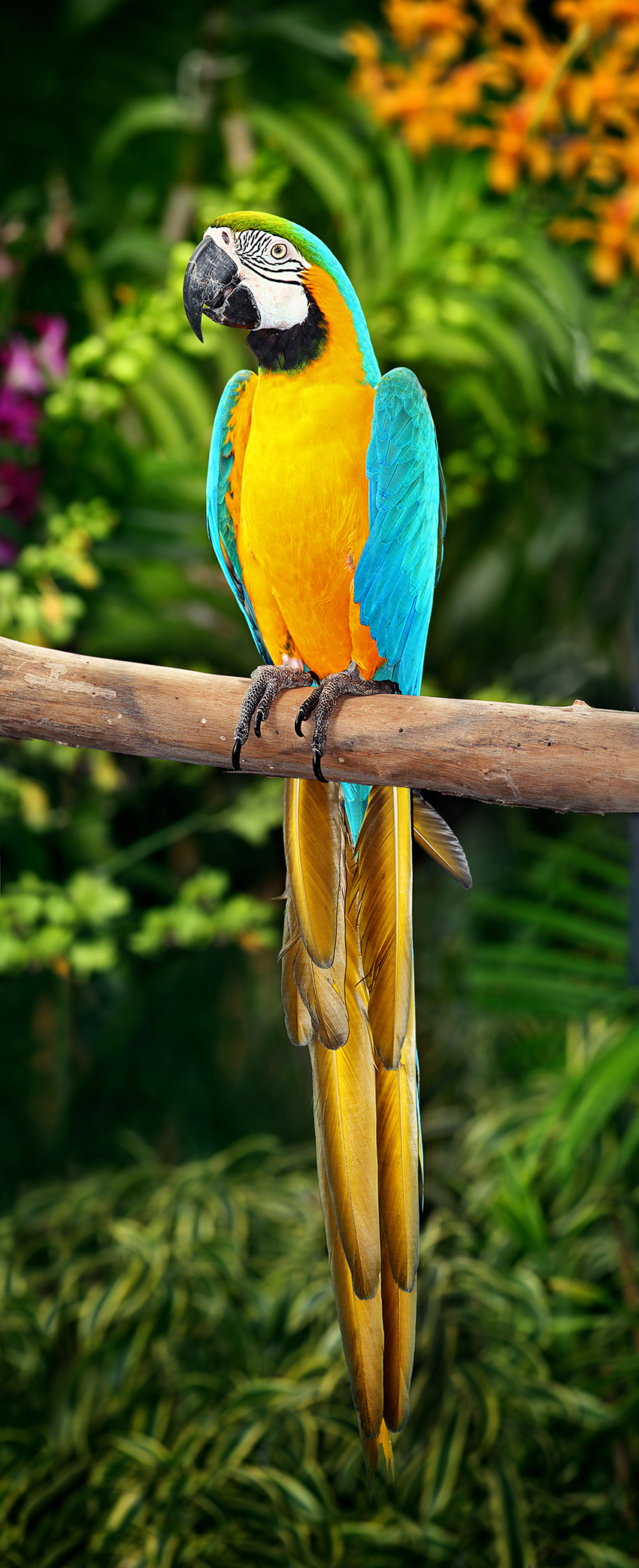
They are capes, from Peru. They are 1,000 years old, made with the feathers of the blue-and-yellow macaw.
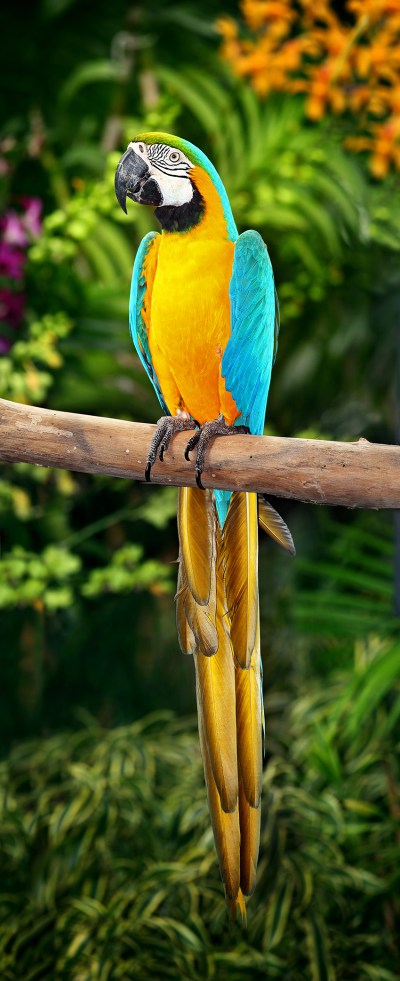
Blue-and-yellow Macaw

How many of these magnificent birds were killed to make these capes? Such needless, selfish destruction! Nowadays, it’s not killing for their feathers that’s killing off birds, it’s destruction of their habitat. But it’s still the same: needless, selfish destruction.

____________________

Great spotted woodpecker-1: http://birdingbeijing.files.wordpress.com/2013/03/great-spotted-woodpecker-small-1.jpeg [in http://birdingbeijing.com/birders-guide-to-beijing/a-guide-to-beijings-common-birds/%5D
Great spotted woodpecker-2: http://www.worldbirds.co.uk/images/oakes0/photos/image298.jpg [in http://www.worldbirds.co.uk/lesser_spotted_woodpecker.aspx?key=60%5D

Azure-winged magpie-1: http://birdingbeijing.files.wordpress.com/2013/03/2013-12-28-azure-winged-magpie.jpg [in http://birdingbeijing.com/birders-guide-to-beijing/a-guide-to-beijings-common-birds/%5D
Azure-winged magpie-2: http://onbird.ru/img/photo/golubaya-soroka/golubaya-soroka foto 4 (onbird.ru).jpg [in http://onbird.ru/opredelitel-ptic/golubaya-soroka-584/foto%5D
Girl with a pearl earring: http://upload.wikimedia.org/wikipedia/commons/c/ce/Girl_with_a_Pearl_Earring.jpg [in http://en.wikipedia.org/wiki/Johannes_Vermeer%5D
Eurasian magpie: http://birdsofkazakhstan.com/wp-content/uploads/2010/01/Pica-pica-bactriana-adult-Zhabagly-South-Kazakhstan-province-Kazakhstan-16-September-2009-Rene-Pop2.jpg [in http://birdsofkazakhstan.com/eurasian-magpie-pica-pica/%5D
Tree sparrow: http://birdingbeijing.files.wordpress.com/2013/03/2013-10-03-tree-sparrow.jpg [in http://birdingbeijing.com/birders-guide-to-beijing/a-guide-to-beijings-common-birds/%5D
Japanese tit: http://birdingbeijing.files.wordpress.com/2013/03/2014-01-23-japanese-tit.jpg [in http://birdingbeijing.com/birders-guide-to-beijing/a-guide-to-beijings-common-birds/%5D
Kestrel: http://birdingbeijing.files.wordpress.com/2013/03/2009-09-14-kestrel2.jpg [in http://birdingbeijing.com/birders-guide-to-beijing/a-guide-to-beijings-common-birds/%5D%5D
Peruvian featherwork cape: http://www.thehistoryblog.com/wp-content/uploads/2013/09/470_Peruvian-Featherwork.jpg [in http://www.thehistoryblog.com/archives/27107%5D
Blue and yellow macaw: http://upload.wikimedia.org/wikipedia/commons/6/6d/Blue-and-Yellow-Macaw.jpg [in http://en.wikipedia.org/wiki/Blue-and-yellow_Macaw%5D