EXTINCTION IS FOREVER

Vienna, 4 September 2026

Well we’re back from Los Angeles, leaving our two bundles of fun – that is to say, our grandchildren – to grow and prosper. But I don’t want to use this post to drool over them, even though they are very droolable. I want to write about the monarch butterfly – and there is a connection between it and the grandchildren, as readers will see.
Source

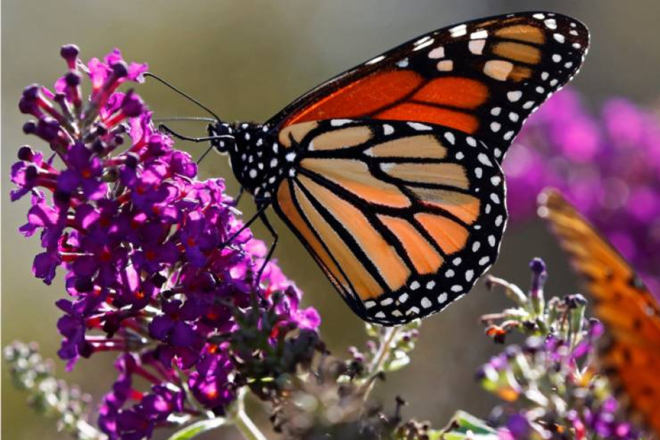
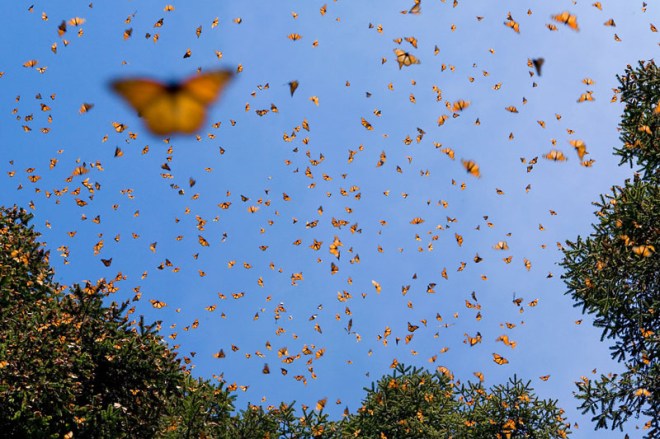
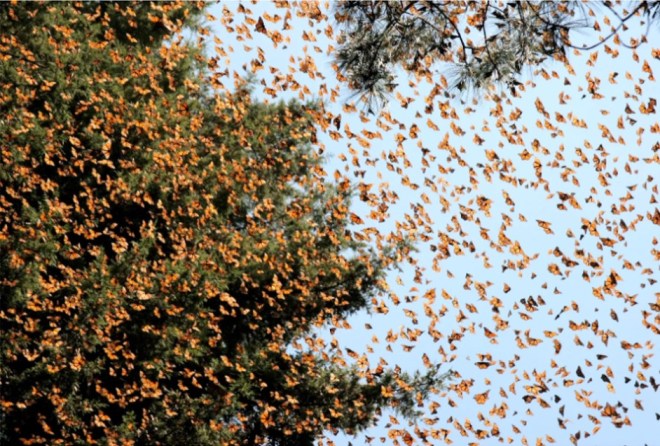
I think we can all agree that this particular species is a rather handsome example of the butterfly family. Subspecies of the monarch butterfly exist in various parts of the world, but the North American monarch is exceptional because it exhibits a wonderful trait. It migrates over thousands of kilometres every year, in what has been called “one of the most spectacular natural phenomena in the world”.
Source

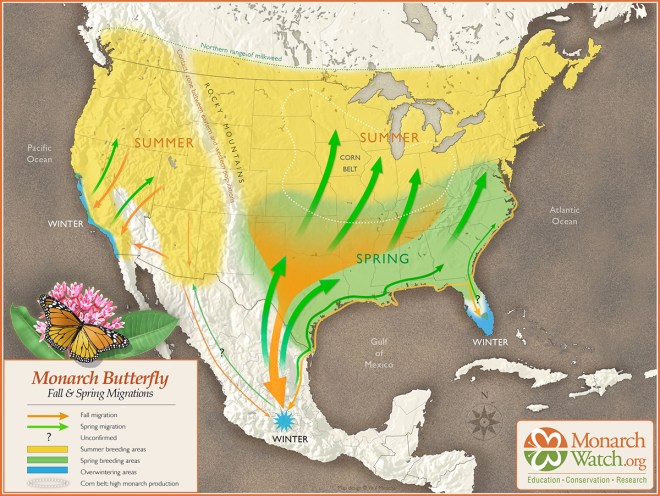
There are two branches to this migration.
Source

In the first, the eastern branch, the butterflies migrate back and forth between central Mexico in the south and the Great Lakes region in the north, a distance of some 5,000 km. This is by far the largest branch, with millions of monarchs overwintering in Mexico, slumbering on oyamel fir trees.
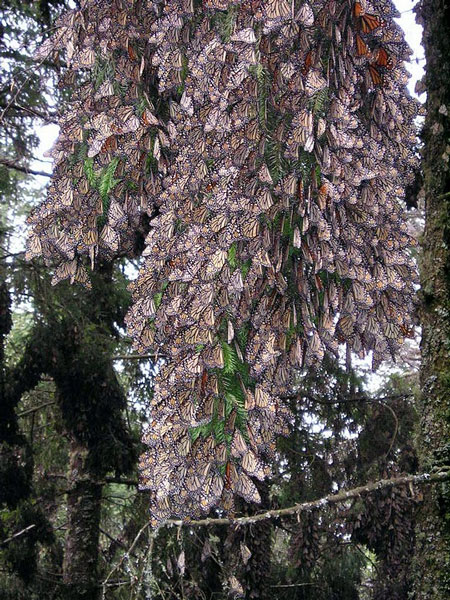
Source

The second, western, branch is more modest, both in distance travelled (500 to 1,500 km) and in the numbers of butterflies involved. The butterflies migrate between their overwintering sites in coastal areas of California to the south and the regions west of the Rocky Mountains all the way up to the Canadian border to the north. Here we have a photo of the butterflies overwintering in Pismo Beach, in California’s San Luis Obispo county.
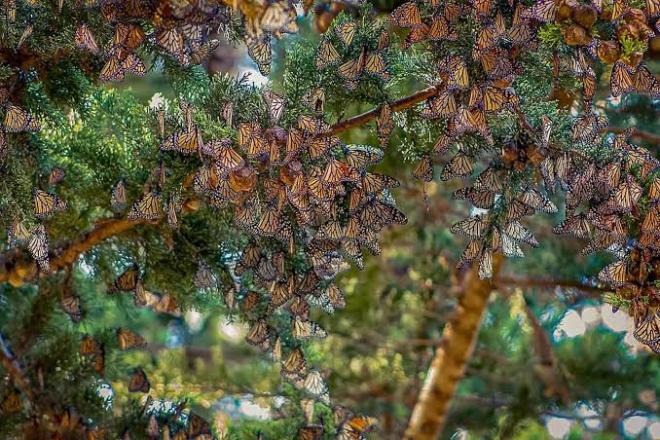
Source

Although more modest, this is the migration branch that interests me, because the monarch butterflies I have been seeing flitting around these last few months belong to this branch.

My interest in them was first triggered last year when we went to Los Angeles in July. Our daughter’s next-door neighbour had planted some tropical milkweeds in his front garden to support the monarchs – milkweeds are the only plants these butterflies will lay their eggs on. This particular species of milkweed also happens to have quite handsome flowers.
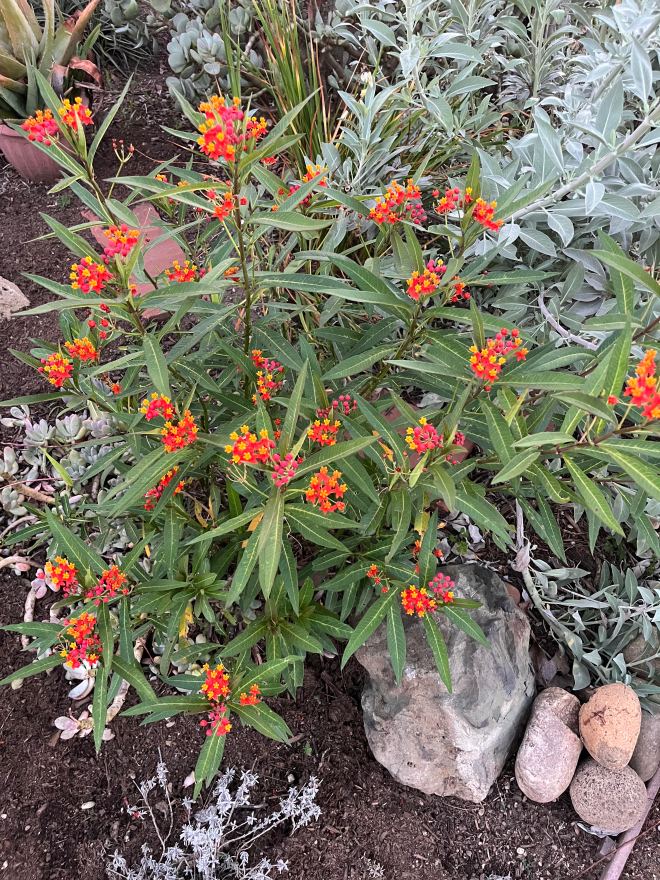
my photo

Last year, a number of monarchs had laid their eggs on the neighbour’s milkweeds, and he kindly allowed number-one bundle of fun to inspect the caterpillars and the pupae. The inspections stretched over several weeks as the caterpillars developed, pupated, and eventually emerged as butterflies, and I accompanied the little one on several of his expeditions. I was there primarily to ensure that curious little fingers didn’t damage either caterpillars or pupae, but I used the occasion to do some inspecting of my own.

I have to say, I am not generally a great fan of caterpillars. I have some rather negative memories of them from my childhood; they were black hairy caterpillars which gave you a rash if they crawled onto your skin. But the monarch’s caterpillars are really very handsome, with their white, yellow, and black transverse bands.
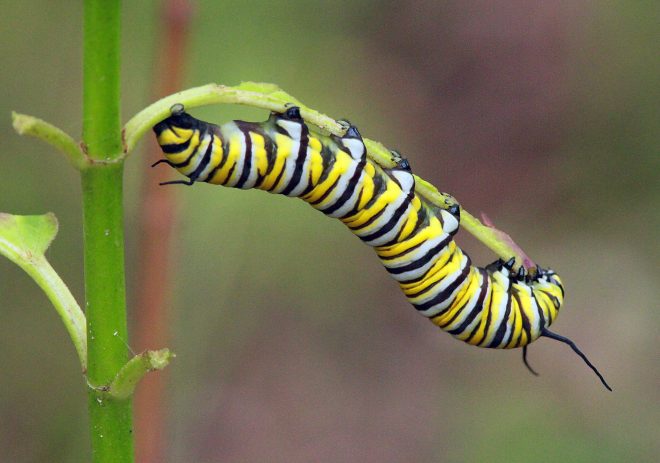
Source

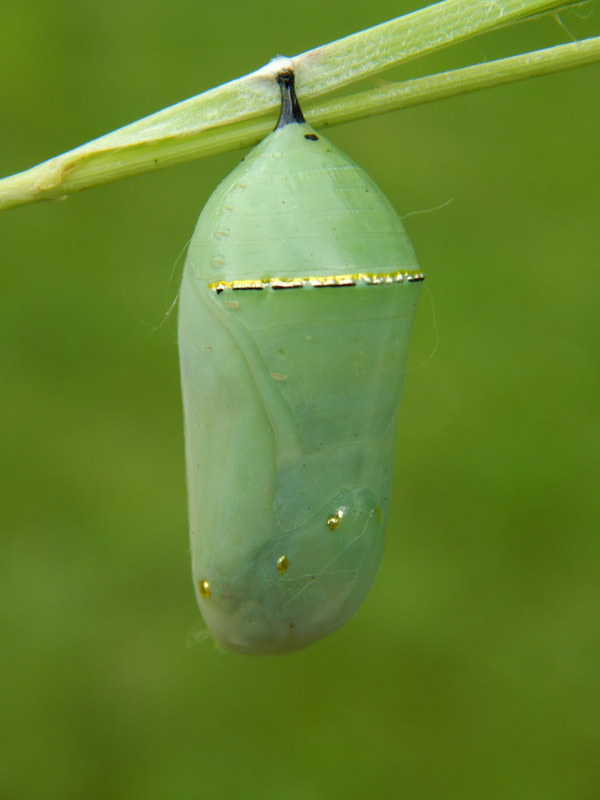
And the pupae are quite lovely, these little opaque green boxes with small golden dots near the bottom, and a gold-and-black rim around the top.
Source

Fortified by his success, this year the neighbour planted many more tropical milkweeds. Alas! Not a single monarch butterfly laid its eggs on them. The fact is, the western monarch butterflies are under tremendous stress. The migrations used to involve millions of them, but the numbers are now terribly diminished. Every year, around Thanksgiving, devoted volunteers do a count of the number of monarch butterflies overwintering in California. Last year, 12,260 monarchs were counted at the Californian overwintering sites. As recently as the 1980s, which is a mere 40 years ago, the counts were in the low millions. So a 99% drop …

A host of reasons have been driving these huge die-offs: the use of pesticides, which kill both the butterflies themselves and the milkweeds on which their lifecycle completely depends as well as the nectar sources which they need to fuel their long, long migrations; destruction of their overwintering sites in the name of development – by a cruel irony, all the butterfly’s overwintering site are along the coast, where development is most intense; climate change; and on and on … We are nearing the point of extinction.

And our daughter’s neighbour, God bless his soul, and many others like him who plant tropical milkweed to help the monarchs aren’t actually helping at all. As the name suggests, this species of milkweed isn’t native to North America. In contrast to native milkweeds, it keeps flowering during the winter, which discourages the monarchs from migrating. Essentially, sedentary populations of monarchs spring up wherever a lot of tropical milkweed is planted. Subtle chemical differences in the sap of this milkweed reinforces the butterflies’ tendency to become sedentary. At the same time, caterpillars feeding on tropical milkweed mean that the butterflies into which they metamorphose tend to suffer from a dramatic buildup of a particular parasite, which reduces population numbers. It would be much better if he were to plant native species such as common milkweed,
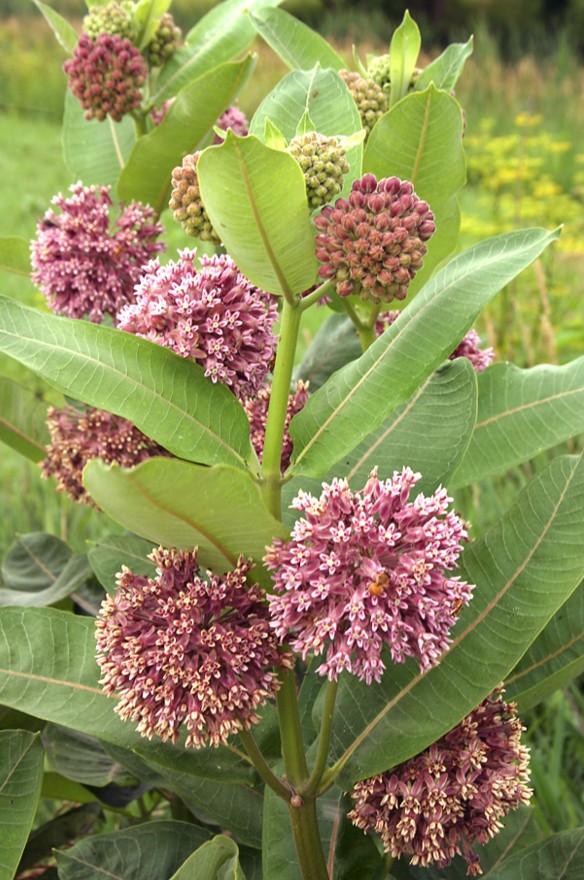
Source

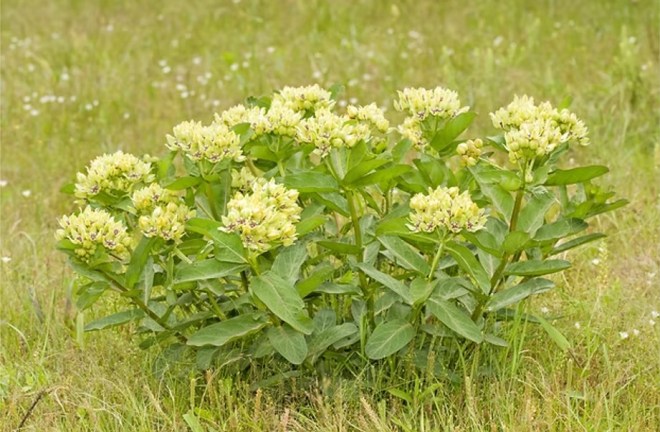
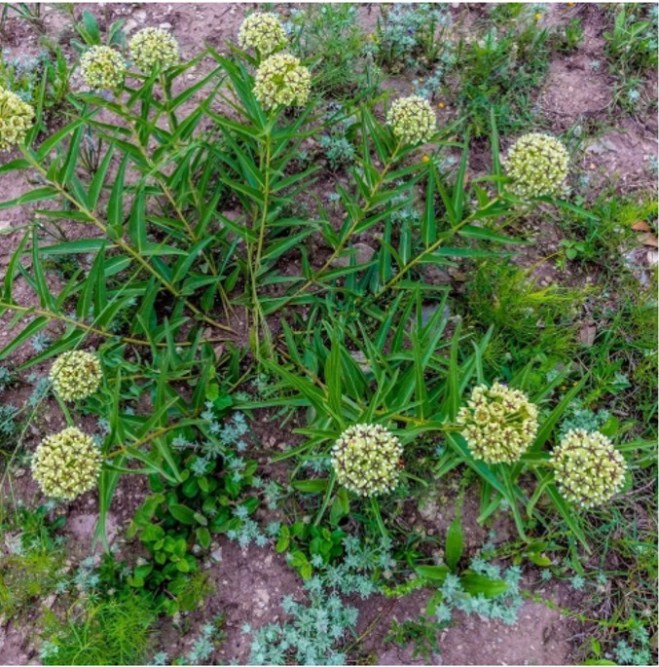
green antelope horn milkweed,

Source

or just plain antelope horn milkweed.
Source

Admittedly, they aren’t as showy as the tropical milkweed, but if he really wants to help the butterflies he should accept a somewhat less pretty garden.

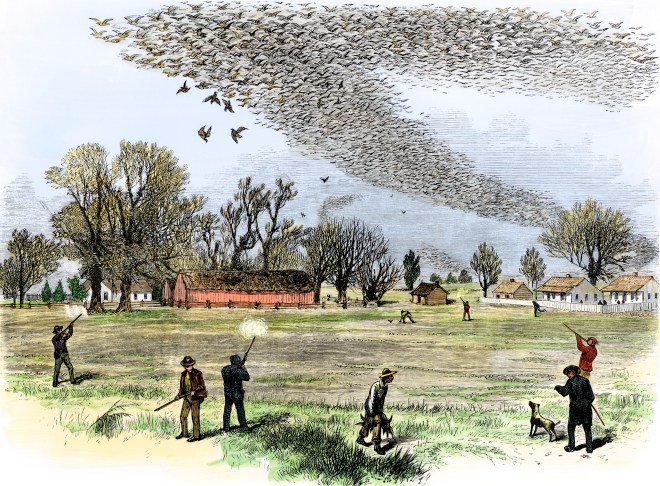
This catastrophic drop in the western monarch’s numbers and the probable end to its annual  migrations – that “spectacular natural phenomenon” – reminds me of the fate of the carrier pigeon. When European colonists arrived in North America, they were awed by the annual migrations of this bird, which numbered literally in the billions. Here is a description by John James Audubon, the artist, naturalist, and ornithologist famous for his lifelike and detailed paintings of North American birds.

“In the autumn of 1813, I left my house at Henderson, on the banks of the Ohio River, on my way to Louisville. … I observed the pigeons flying from northeast to southwest in greater numbers than I thought I had ever seen them before … I traveled on, and still met more the farther I proceeded. The air was literally filled with pigeons; the light of noonday was obscured as by an eclipse; the dung fell in spots, not unlike melting flakes of snow, and the continued buzz of wings had a tendency to lull my senses to repose. Before sunset I reached Louisville, distant from Hardinsburgh fifty-five miles. The pigeons were still passing in undiminished numbers and continued to do so for three days in succession.”

The continuation of Audubon’s description explains why the pigeon was extinct within a century of him writing down this description:

“The people [in Louisville] were all in arms. The banks of the Ohio were crowded with men and boys incessantly shooting at the pilgrims, which there flew lower as they passed the river. Multitudes were thus destroyed. For a week or more, the population fed on no other flesh than that of pigeons and talked of nothing but pigeons.”
Source

Extreme levels of hunting, coupled with rapid deforestation, did it for the passenger pigeon. In 1914, the last member of the species died miserably in Cincinnati Zoo.

The same fate nearly overcame the bison, as I’ve written earlier. But luckily in their case there was a different outcome. From the brink of extinction, the bison has been brought back, not to its original millions but at least to numbers which will allow our two bundles of fun to watch them one day, hopefully with the same awe that engulfed the teenage me many decades ago in a Canadian national park as I watched a troop of bison graze on a prairie.

I have to really, really hope that the western monarch follows the path of the bison and not the passenger pigeon, so that our two bundles of fun will also one day be able to watch the monarchs wake from their winter slumber and flutter off from their Californian overwintering sites, if not in their millions at least in their thousands.
Source

PISTACHIO

Sori, 24 May 2022

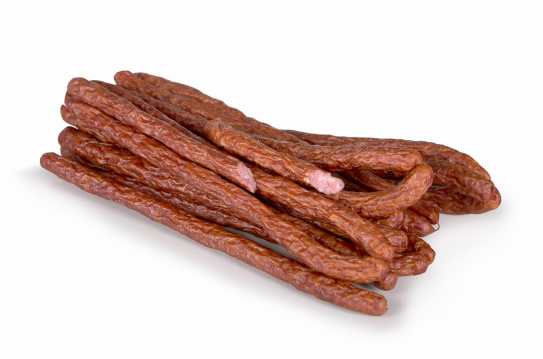
There are certain foods that somehow, without our being quite being aware of it, my wife and I will methodically demolish if they are put in front of us. Kabanosy sausages very much fall into this category for me.

Source

As for the both of us, berries definitely have this effect (it’s strawberries at the moment, they are pouring into the shops and they are cheap).

Source

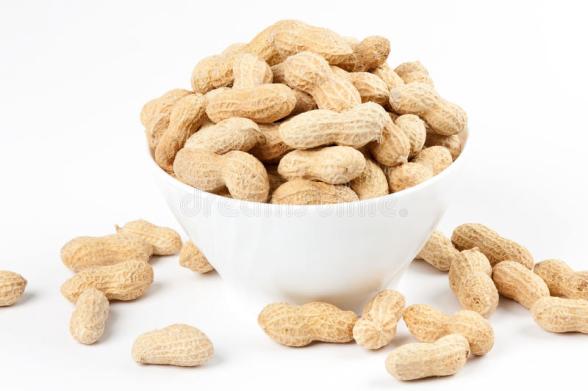
But so do peanuts.

Source

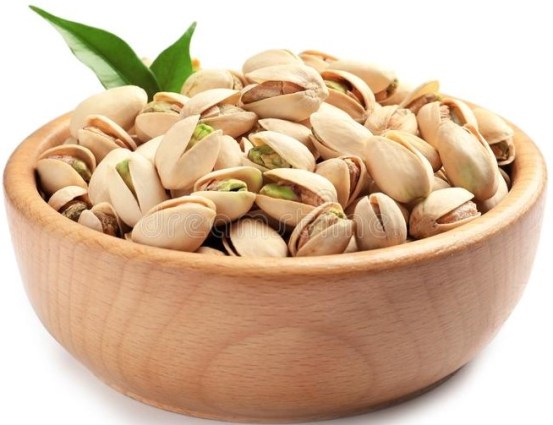
And – the subject of this post – so do pistachios.

Source

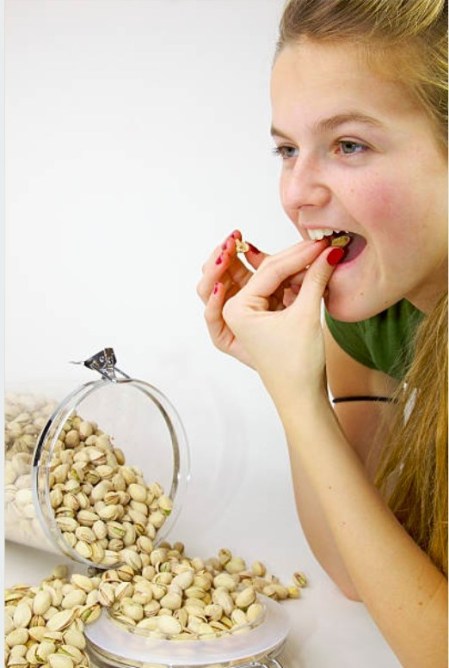
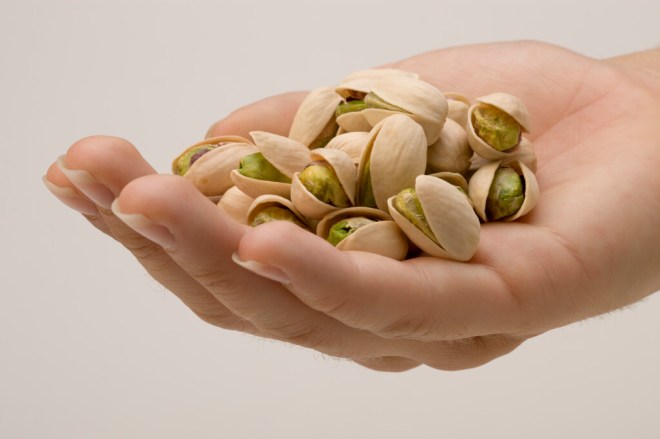
Put a bowl of pistachios in front of us and before we know it, one will smoothly follow the other until we have popped every single one of them into our mouths – except the pesky ones where the shells are firmly closed and stubbornly resist being cracked open by our aging teeth.

Source

This is really the only way I eat pistachios, and I rather sense that it is the best way to eat them if you want to truly appreciate their unique taste. Sometimes, when I’m eating a slice of mortadella (a rare occurrence in these diet-dominated days, alas!), I will come across thin slices of pistachio embedded in the mortadella.

Source

Quite honestly, it seems to be a waste of pistachios; they don’t materially alter the taste of the mortadella as far as I can make out. My wife will occasionally have pistachio as one of the two tastes she chooses for her post-hike celebratory ice creams.

Source

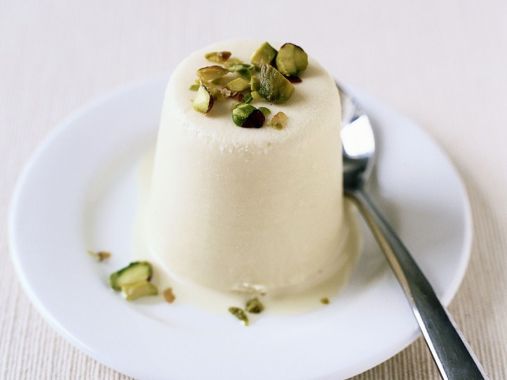
Researching for this post, I recently tried pistachio ice cream, twice. I was not impressed. In the first case, even though the shop claimed that the ice cream was made with high-quality Italian pistachios with a Protected Designation of Origin title – see below – I could detect no pistachio taste at all. In the second case, there was a pistachio taste but it all came from the pistachio crumbs sprinkled on the ice cream; the ice cream itself had no pistachio taste to it at all. Talking of pistachio crumbs, Middle Eastern and Indian desserts will often be sprinkled with them. For instance, this is a pistachio-sprinkled kulfi from India.

Source

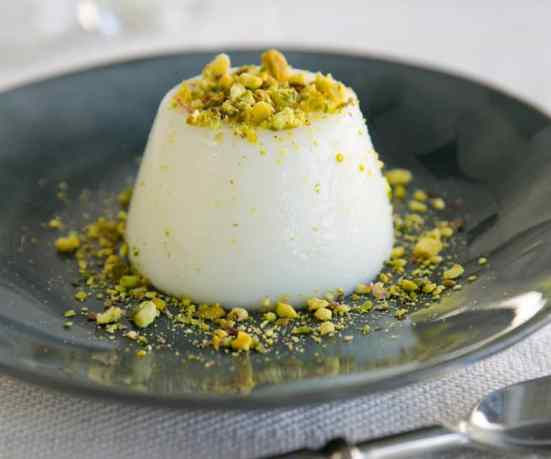
And this is a pistachio-sprinkled mouhallibieh from Turkey – although this dessert originated in Sassanid Persia.

Source

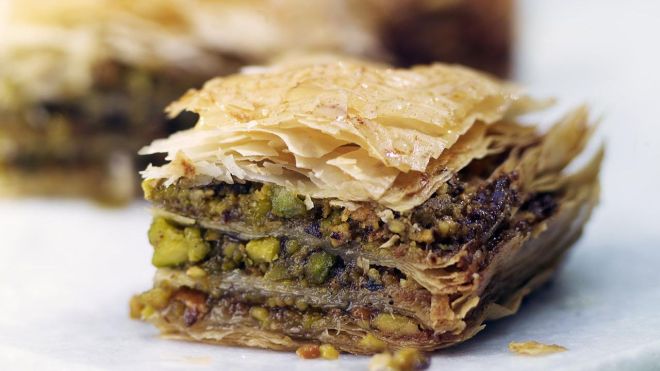
If my experience with pistachio ice cream is anything to go by I’m not sure how much the pistachios add to these desserts; they act more like a garnish. But there are lots of Middle Eastern pastries where pistachios play a more important role as a stuffing, often mixed with various other things. Baklava, for instance, will often have pistachios as the stuffing.

Source

I rather suspect, though, that all the honey and other sugary additions to these stuffings overwhelm that delicate pistachio taste.

On the salty side of things, Moroccans will add a fistful of pistachios to their tajines.

Source

But again, it seems to me that the strong tastes of the tajine will drown out the delicate tastes of the pistachios. Of course, I may be wrong; time to find a Moroccan restaurant here in Milan which makes tajine the right way, to perform a taste test. On top of it, we haven’t had a tajine in a long time – but is it diet-friendly??

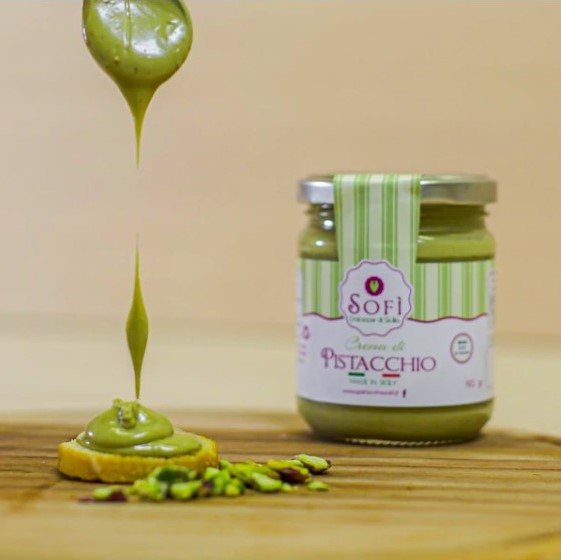
I read that Clever Persons Out There have commercialized pistachio butter, the pistachio equivalent to peanut butter. This intrigues me. As I recall from my youth, peanut butter tastes pretty peanutty, so maybe pistachio butter tastes pretty pistachio-y. This needs to be followed up – and pistachio butter definitely exists in Italy, although it goes by the much fancier name of crema di pistacchio (everything about pistachios in Italy is fancier, as we shall see).

Source

BUT, when all is said and done, what is crystal clear is that an excellent way of eating pistachios is one after another: crack open the shell, scoop out the nut, and pop it into your mouth. Mmm-mmm!

Source

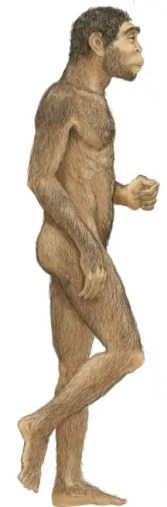
In this, we are merely following in the footsteps of our most remote ancestors. Archaeologists have discovered pistachio shells in a dig in Jordan dating back 780,000 years. We’re not even talking Homo sapiens here, but Homo erectus!

Source

So we are in very venerable company when it comes to the scarfing of pistachios off the trees (although it is true to say that we tend to eat them roasted and slightly salted, while our ancestors ate them fresh. On this point, I have read that fresh pistachios are delicious – something else my wife and I need to try; somehow, we need to be near some trees when the nuts are being picked).

I should clarify at this point that there are several species of pistachio trees and that they all offer us hungry humans edible nuts. The nuts which our Homo erectus ancestors were eating in Jordan came from the Pistacia Atlanticus tree, whereas the pistachios we find in our shops today come from the Pistacia vera tree. The nuts from P. vera are much bigger than the nuts from the other Pistacia trees (and the shell harder, which makes their transportation much easier), so no-one really eats these other types of pistachio nuts anymore.

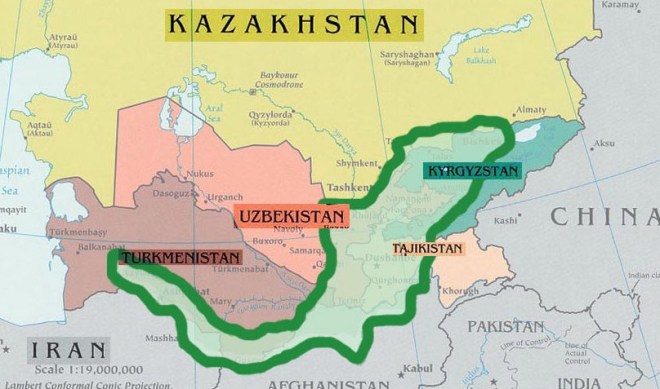
The original home of P. vera is the dry steppe lands that go from north-east Iran through southern Turkmenistan, northern Afghanistan, southern Uzbekistan, and on into Tajikistan and Kyrgyzstan – more or less the region which the Ancient Greeks called Bactria.

Source

Our hunting and gathering ancestors who lived in the area happily munched on wild P. vera nuts. There are still stands of wild P. vera in the area, although they are sadly depleted from their glory days.

Source

Then someone, or probably someones, decided to domesticate the tree. Quite when this happened is unclear, but certainly no earlier than 2000 BCE. After that came the tree’s slow westward migration. It was the Persians who were responsible for that; the eastern marches of their Empires overlapped with the tree’s western range. They brought the domesticated tree to the rest of their Empire. In the process, they gave the nut the name we all know it by: pistak was the nut’s name in Ancient Persian.

It is possible that during this drift westwards the Persians made a fundamental change to the tree’s life cycle, systematically grafting it onto the root stock of one of its cousins, either P. atlanticus or P. terebinthus. If it wasn’t them, it was people in the eastern part of the Roman Empire who did it, where the tree eventually arrived as it continued its slow shift westwards. The Ancient Greek philosopher Theophrastos, whose life saddled the 4th and 3rd Centuries BCE, mentioned the habit of grafting the tree (as well as pointing to Bactria as its original homeland). It is certainly a fact that nowadays almost all commercial orchards of P. vera the world over are grafted onto a root stock. These root stocks are hardier than P. vera, thus allowing the tree to be moved successfully out of its original ecological niche into new ones. But it does mean that all commercially grown P. vera trees are a sort of botanical Frankenstein.
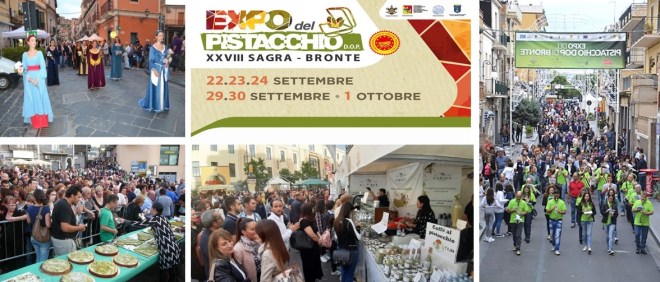
The tree was brought to Italy and Spain in the western part of the Roman Empire during the reign of the Emperor Tiberius. P. vera is still grown there commercially, although production is quite modest compared to other parts of the world. But what these orchards lack in quantity they make up for in quality. The Italians especially have turned their tiny output, mostly grown near Mount Etna, into a high quality product, which has received the EU’s Protected Designation of Origin title and is being aggressively promoted through some savvy branding and promotion.

Source

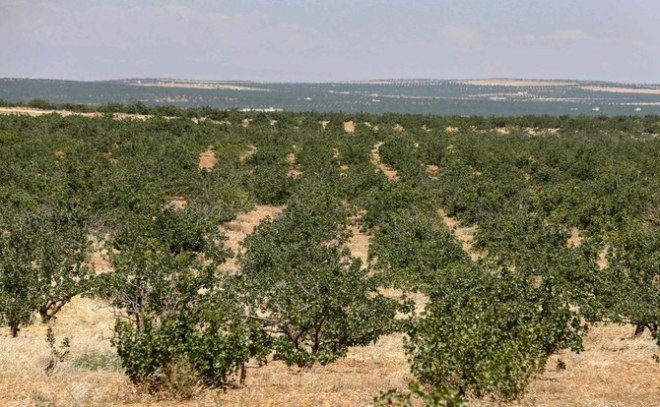
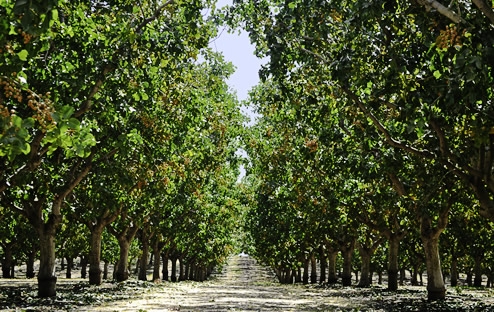
The fact is, though, that P. vera is a desert plant. The trees can survive temperatures up to 48°C in summer; in fact, the trees actively need long, hot summers for the nut to properly ripen (and of course because temperatures can plunge in desert regions the trees are equally tolerant at the other end of the temperature scale, being able to survive winter temperatures as low as −10°C). Consistent with their desert nature, the trees dislike high humidity levels and their roots prefer to receive modest amounts of water and sit in a well-draining soil. They are also highly tolerant of saline water and saline soil, a big advantage in desert-like areas. All of this to say that the Arabs first, and the Ottomans later, recognized the potential of P. vera in many of the lands they had newly conquered and promoted the tree extensively. As a result, historically the major production area other than Persia was in Syria, around Aleppo, with Turkey also getting into the act. Here is a photo of one of Syria’s pistachio orchards.

Source

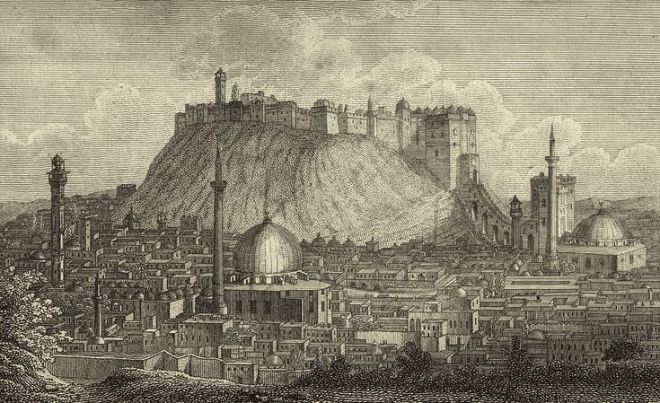
Even though, as I have said, there was modest production in southern Europe, it was from Syria that most of the pistachios eaten in Europe came from. The Venetians, those inveterate traders with the eastern rim of the Mediterranean, were the first in this trade. They delivered the Aleppo pistachios they purchased to northern and central Italy (and much later to northern European countries via trade routes across the Alps). In later centuries, when French ships out of Marseilles challenged the Venetians in their trade with the Ottoman Empire, Aleppo pistachios also began to be imported into France. I use this occasion to show what Aleppo looked like several hundred years ago. I don’t want to even think about what it looks like now.

Source

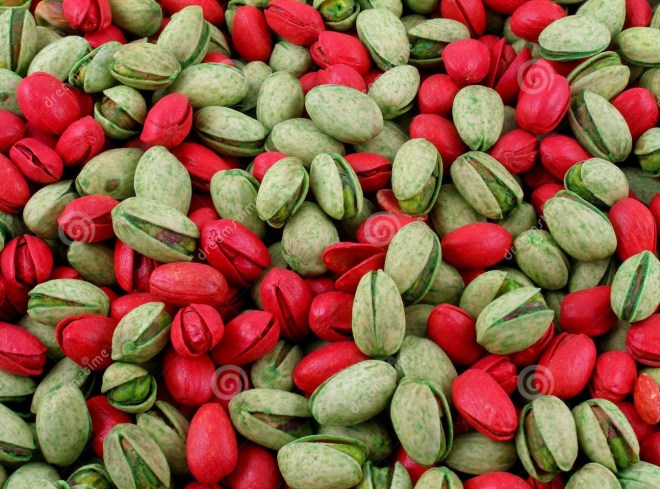
It is from this trade in pistachios – not just to Europe, but more generally – that came the habit of dyeing the shells red  or green.

Source

Now, if it’s done at all, it’s just an aesthetic touch. But in the old days, it was a way of masking stains on the shell caused by mishandling during manual harvesting.

So that’s how the global production of pistachios stood until quite recently: Persia, now called Iran, first; Syria second; Turkey third.

Then along came California.

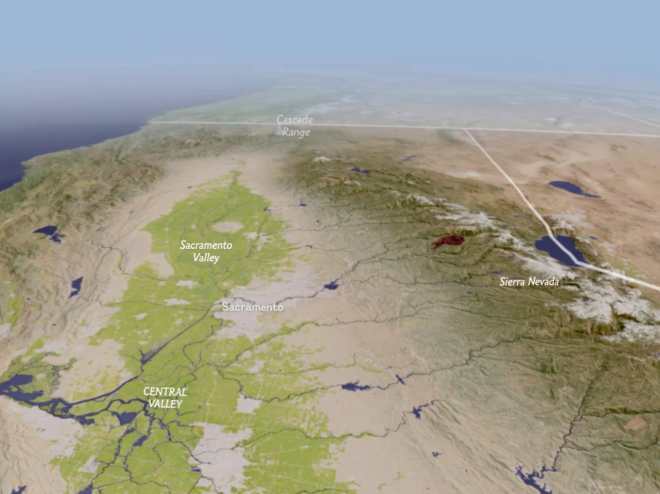
It had long been recognized that California’s Central Valley, with its hot, dry summers, moderately cold winters, and well drained soils, offered ideal growing conditions for the pistachio.

Source

Already back in 1929, an American botanist had gone to Persia to collect about 10 kilograms’ worth of various pistachio nuts from the country’s orchards, taking them back to California, and planting them. After nearly ten years (it takes that long for a pistachio tree to give its first harvest of nuts), he found that only one of his nuts had worked out. That one nut gave rise to California’s pistachio industry. But it wasn’t until the 1980s that the industry really took off – it took quite a while to find the right root stock. Since then, though, Californian production has grown meteorically. This, coupled with the sanctions on Iran (and general economic mismanagement) and the civil war in Syria, has meant that California is now Top Dog in world pistachio production.

Source

But who knows for how long? All sorts of places with the right climatic and soil conditions are looking to grow pistachios, drawn by the high value of the crop (as well as its relatively modest requirements in water). In full production, the trees guarantee more than €10,000 per hectare: I’m not a farmer, but my readings assure me that this is a very good return for an agricultural crop.

In this pistachio Gold Rush, there is one place I’m rooting for: the tree’s original homeland. I mean, doesn’t natural justice tell us that this is really where we should be getting our pistachios from? What right do these other countries have of making money from someone else’s genetic heritage? (this is basically the argument behind the Convention on Biological Diversity). In addition, the ex-Soviet republics of Central Asia need to move away from the environmentally unsustainable crops which central economic planning from the Soviet era foisted on them (think cotton, whose continued production in this region is destroying the Aral Sea). In the arid foothills where the wild P. vera originated, the raising of livestock is particularly harmful, as the animals overgraze the land and lead to desertification – all made worse by climate change. So bring it on! Here we see the land being prepared for pistachio planting in Uzbekistan.

Source

I’m particularly chuffed to see that an international fund, the Global Environment Facility, is actively involved in promoting the return of P. vera to its natural range. I should explain that there was a period in my life when I was deeply involved with this fund; I still wear a cap on my hikes which I picked up at one of their do’s.

my photo

The one cloud on the horizon that I see is that if everyone and their dog piles into pistachio growing, then of course supply will soar. So, unless the demand for pistachio soars by an equal amount, the price of pistachios will fall, thus wiping out one of the main reasons people want to grow pistachio trees. The same thing happened in the coffee business. Some two decades ago, the World Bank financed enormous increases in coffee plantations in Viet Nam, with the net result that coffee prices dropped vertiginously and coffee farmers in various parts of the developing world who had been doing quite well up to then, thank you, suddenly found they could no longer make ends meet.

With this sobering thought in mind, let me toss another handful of pistachios into my mouth.

Source

WONDROUS PLANTS, WONDROUS ROCKS

Los Angeles, 31 March 2017

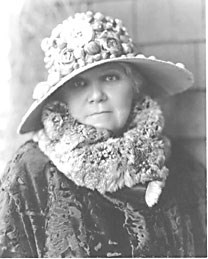
Two weekends ago, my wife and I visited Joshua Tree National Park, together with our daughter and her beau (I should quickly explain that we are currently in Los Angeles, visiting the happy couple). For those of my readers who have only a hazy idea of this National Park, let me give some background. Located some three hours’ drive east of LA, the park straddles the border between two desert ecologies, that of the lower-altitude Colorado desert, and that of the higher-altitude Mojave desert. It was created back in 1936, to protect and preserve its rare desert plants. As a tribute, I throw in here a photo of the lady, Minerva Hoyt, whose tireless efforts back in the 1930s finally led the US Congress to list the site.

The park is – at least to my European eyes – enormous: 3,200 square kilometres, the size of Luxembourg. But that’s less than 1% of the size of California. One of the difficulties I always have in the US is getting used to the size of things here (including food portions, but that is another story).

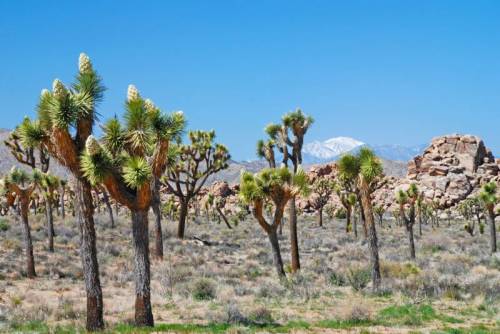
The park’s symbol, and the origin of its name, is the Joshua Tree, a member of the Yucca family.

It is related that the plant got its odd name from a group of Mormon pioneers in the mid-19th century who were heading west to what they fervently hoped would be their Promised Land. When they came across the tree, members of the party decreed that the plant’s shape reminded them of the Biblical story in which Joshua holds up his hand in prayer to stop the sun.

Personally, I have my doubts about this tale but have no better name-origin story to offer.

There are parts of the park where Joshua Trees cluster closely. Contrary to many web sites, that of the park itself included, I’m not sure I would go so far as to call these clusters a forest.

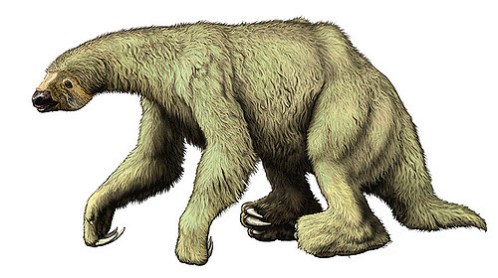
It is sad to relate that the Joshua Tree is in danger of disappearing from the park because of climate change. I suppose the trees are finicky in their locational needs, both in terms of altitude as well as of terrain. Climate change is making their current location too hot for them. But where can they escape to? The tragedy of the Joshua Tree, and indeed of all plants, is that being rooted to one place they cannot migrate to cooler climes. To migrate long distances they are totally dependent on either having their seeds sail away on the back of the winds or on animals eating their fruit and wandering far away and depositing the seeds in a nice bed of faeces. It seems that in its evolution the Joshua Tree opted for the latter form of dispersal, but it was its bad luck to create this symbiotic relationship with the Shasta ground sloth.

Note that this is an artist’s reconstruction of the animal based on fossils; it disappeared in the big wave of extinctions that occurred in North America some 12,000 years ago (perhaps hastened on their way by the first humans who arrived in North America, or perhaps not; the experts are animatedly divided on this issue). So the Joshua Tree has been nailed to the spot for the last 12,000 years.

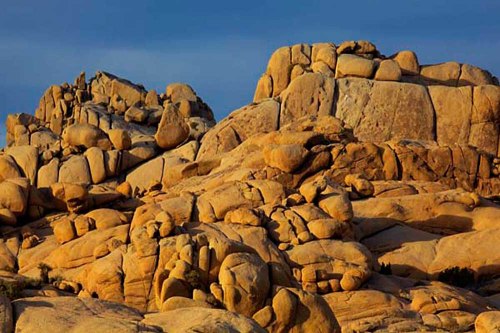
After admiring the Joshua Tree – in my case with a point of sadness – we went for a hike through a most interesting geological formation that the park hosts.


When we weren’t wondering where the end of the trail was because we had run out of water, we were wondering how these formations had come to into being. Wikipedia has since informed me they were formed by the cooling of magma beneath the surface into a form of granite with roughly rectangular joints. Groundwater then filtered through the joints to erode away the corners and edges to create rounded stones. In a final step, flash floods washed away the covering leaving these piles of boulders.

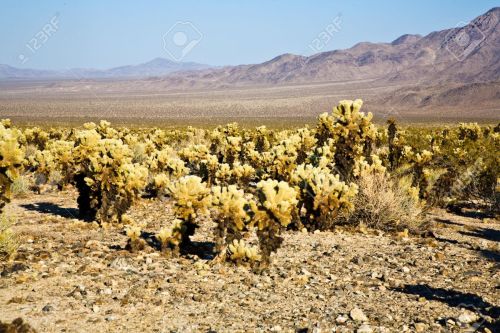
All this was in the higher-altitude Mojave desert. After finally getting a badly-needed drink of water, we started down for the lower-altitude Colorado desert. As we wound our way down, we quite suddenly entered a belt of Cholla cactuses.

These cactuses are gleaming white at their crown

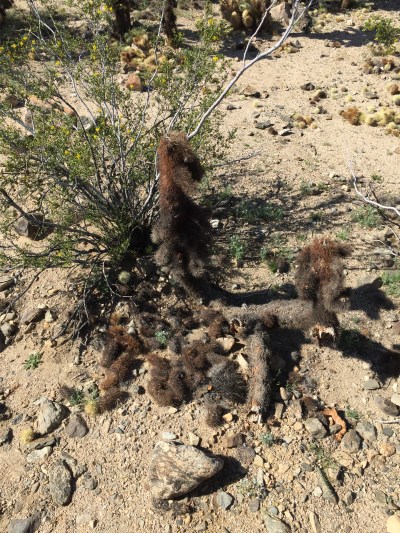
but go coal black at their base

and eventually collapse in an untidy, dirty black pile

leaving behind this strange trunk, empty at the core and with regularly spaced diamond-shaped holes in the remaining husk.

It looks for all the world like a thick mesh fabric which has been rolled into a tube.

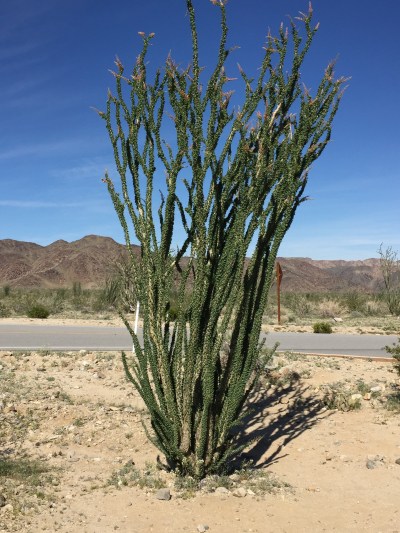
Just past the belt of cholla cactuses, we began to spy another strange plant, the Ocotillo.

From a distance, it appeared to be a cactus with long thin branches. But when we got close, we saw that actually the plant closely covers its branches with leaves rather than have them all clustered at the crown like most other trees do.

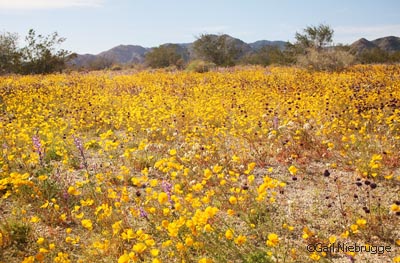
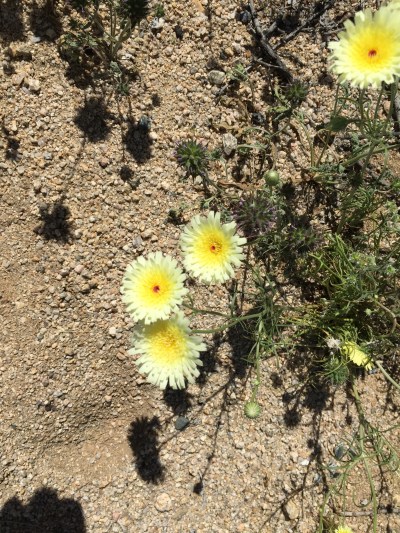
Onwards down into the Colorado desert we rolled until at last we sighted what had brought us there, the desert’s flowers.

We were visiting the park at that short moment in the year when the apparently barren desert bursts into flower. The flowers race to create seeds for the next generation before the summer heat builds up and withers away everything on the desert floor.

And with that, we cruised back up to the upper Mojave desert and took the road back to LA.
_______________

Minerva Hoyt: https://www.nps.gov/jotr/learn/historyculture/mhoyt.htm
Joshua Tree: https://www.nps.gov/jotr/learn/nature/jtrees.htm
Joshua praying to stop the sun: http://pasemonmaspram.blogspot.it/2017/04/
Joshua Tree cluster: http://www.wolfsvisionphotography.com/JoshuaTreeNationalPark.html
Shasta ground sloth: http://freethoughtblogs.com/pharyngula/2013/03/10/bring-back-the-shasta-ground-sloth/
Rock formations: http://charlesgurche.com/photography/landscape/national-park/joshua-tree/
Cholla cactus gardens: https://www.123rf.com/photo_9396795_beautiful-cholla-cactus-garden-in-joshua-treer-national-park-in-afternoon-sun.html
Cholla cactus close-ups: my pictures
Ocotillo: my pictures
Wildflowers: http://niebruggestudio.com/wildflowers-at-joshua-tree-national-park
Wildflower close-ups: my pictures