PLEASE SAVE THE TREES

Beijing, 17 December 2012

I’m a sucker for a fine tree, as any reader of these postings will know. So it was with increasing depression that I read an article recently in Science Daily (www.sciencedaily.com) which said that large old trees – trees that are centuries old – are dying at alarming rates. The die-off seems to be happening in all types of forests worldwide and to be caused by many things: land clearance, changes in agricultural practices and in fire regimes, logging and timber gathering, insect attack, climate change, and I don’t know what else.

I suppose I should recite the critical ecological roles which large old trees play. For instance, they provide nesting or shelter for up to 30 percent of all birds and animals in some ecosystems. They store huge amounts of carbon. They recycle soil nutrients. They create rich patches for other life to thrive in. They influence local flows of water and the local climate. They supply lots of food for many animals with their fruits, their flowers, their leaves, their nectar. In agricultural landscapes, they can be focal points for restoration of vegetation. They help connect the landscape by acting as stepping stones for many animals that disperse seeds and pollen.

So large old trees are very useful. But ultimately they are beautiful.

baobab_tree

C

elm tree

oak tree

plane tree

Angkor-wat-Tree

I’ve said it before, but my life has been punctuated by a number of beautiful large old trees. Let me tell you about one of them. My maternal grandmother had a sequoia, Sequoiadendron giganteum, standing in magnificent splendour in the corner of her garden. There must have been a fad for planting sequoias in the late 19th century in this part of France because a number of older properties in the surroundings had sequoias – you could see them towering over garden walls as you drove by. I loved that sequoia. My cousins and I used to spend all our summers in that tree, or so it seems to me as I gaze back through the golden haze of more than four decades of memories. Our grandmother tried to stop us climbing it by sawing off the lower branches. But we just cut steps into the soft bark and climbed. And climbed. All the way to the top, where we would sit, talk, and look out over the pastures, woods and vineyards that surrounded us as the breeze rustled through the branches and the tree swayed slightly. We were lords of all that we surveyed.

I don’t have a photo of my grandmother’s sequoia, but here is a photo of another sequoia in a French garden somewhere. It gives you a great idea of what awaited us in the far corner of my grandmother’s garden.

sequioa-in-france

That tree seemed so huge to us, but nearly two decades ago, when the children were young, we took our summer holiday in California and visited Sequoia National Park. My God, what truly magnificent trees those were! My sequoia was a laughable midget compared to these giants. But I couldn’t climb these trees.

giant-sequoia-tree-pv

My wife has just old me that she never climbed trees when she was young. And I don’t remember our children every really climbing trees – we have become so conscious of dangers for children in the intervening decades (it is true that my younger brother and cousin fell out of a tree when a branch broke; my cousin cushioned my brother’s fall but fractured his collar bone in the process). But I think my family missed something. There is something magic about being up in a tree. Suddenly you are back to being a four-limbed creature as you have to use your arms as much as your legs. The world concentrates down to just a few branches. And the noise levels change; there is a quietness in a tree which you do not have on the ground, but also you hear noises you don’t hear so much on the ground, like the rustling of leaves. And your lines of sight change; suddenly you are a giant able to see much further around you than you normally can. And if the tree is a fruit tree, ahh … you can sit on a branch, pluck the fruit around you, and munch on them in quiet contentedness.

My memories of trees are nearly all from rural areas, although I do have some memories of beautiful trees from city parks – one of the earlier postings testifies to this. So many of us live in cities now and I’m worried we are getting cut off from trees – and this can only get worse as more and more of us live in cities. Cities and trees do not seem to mix well. As I look around Beijing streets, for instance, I do not see many great trees. The majority of the specimens look malingering. And yet … My wife and I visited Singapore recently. For her, it was the first time. For me, it was the first time in fifteen years. And the city struck me the way it had always struck me: it is so green. Not grass green, although there is certainly a lot of that. No, tree green.

01-rain-tree-06

There’s a huge number of trees in Singapore – and not small trees, either, but big, mature trees. The city always gives me the impression of the planners having carefully inserted the buildings between and around the trees which already grew there. Of course, it’s silly; it was obviously the other way round. I mean, the trees grow along the sides of straight roads … And the older parts of the city, like Little India and Chinatown, show the bare and treeless Singapore of the past, the kind of city we’re used to seeing elsewhere. But still, the impression is of a city inserted into a forest. According to National Parks Singapore there are something like 2 million trees planted in the city-state, which works out to be about one tree for every two and half people. I don’t know of any other city with such a high tree-to-citizen ratio.

So it is possible to live in close harmony with great trees. We must do it, because I think we lose part of our humanity if we don’t live near trees, if we cannot have this view every day of our lives.

01-rain-tree-04

_______________
Baobab tree: http://www.louisianagardenclubs.org/live_oak_society/photos_files/AngelOak.jpg
Copper beech tree: http://www.visualphotos.com/photo/2×4003896/copper_beech_tree_1811714.jpg
Elm tree: http://i.istockimg.com/file_thumbview_approve/1678381/2/stock-photo-1678381-elm-trees.jpg
Oak tree: http://www.louisianagardenclubs.org/live_oak_society/photos_files/AngelOak.jpg
Plane tree: http://mw2.google.com/mw-panoramio/photos/medium/14963960.jpg
Angkor wat tree: http://www.davestravelcorner.com/photos/cambodia/Angkor-Crooked-Tree.jpg
Sequoia in France: http://ts2.cn.mm.bing.net/th?id=H.4582357281933013&pid=1.9
Giant sequoia: http://www.nunukphotos.com/images/giant-sequoia-tree-pv.jpg
National Parks Singapore: http://www.nparks.gov.sg/cms/index.php?option=com_content&view=article&id=173&Itemid=161

LITTLE LAMB

Beijing, 15 December 2012

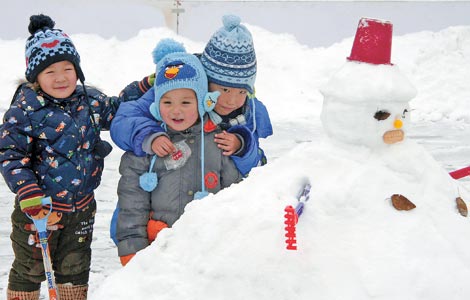
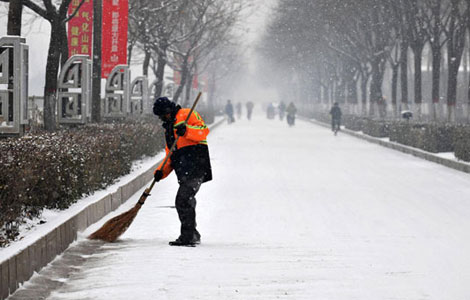
Yesterday, we had the first heavy snowfall of the year in Beijing – there had been some earlier flurries, but no more than that. I don’t want to exaggerate; there wasn’t really a huge amount of snow, which was just as well because Beijing drivers have no idea how to drive in snow and their cars are not equipped for it. But for Beijing it was significant. As the snow began to pile up, people – and not just children – were out on the streets making snowmen and throwing snowballs, while some of the more responsible ones were clearing the pavements; I even saw a snowblower for the first time here!

children and snowman road cleaning

It was all quite picturesque, so I was moved to haul out our old CD “The Essential Carols Collection” which we always played at this time of the year when the children were with us, and gave it a whirl.

carols CD

Out floated those hoary old favourites, “Once in Royal David’s City”, “The Holly and the Ivy”, “Silent Night”, “O Come All Ye Faithful”, and on and on, while the odd tear or two formed in the corner of my eye.

But squeezed in between “O Tannenbaum” and “Ding Dong Merrily on High”, comes John Tavener’s “The Lamb”, an ethereally, achingly beautiful modern carol. Every time I get to this part of the CD, I have stop whatever I’m doing and sit down and just let the music flow through me. Tavener uses the words of William Blake’s The Lamb for the carol:

Little Lamb who made thee
Dost thou know who made thee
Gave thee life and bid thee feed.
By the stream and o’er the mead;
Gave thee clothing of delight,
Softest clothing wooly bright;
Gave thee such a tender voice,
Making all the vales rejoice!
Little Lamb who made thee
Dost thou know who made thee

Little Lamb I’ll tell thee,
Little Lamb I’ll tell thee!
He is called by thy name,
For he calls himself a Lamb:
He is meek and he is mild,
He became a little child:
I a child and thou a lamb,
We are called by his name.
Little Lamb God bless thee.

I always wanted my mother to hear this carol, she loved William Blake. But this will join that long list of regrets, things we wished we had done but left until it was to too late.

_________________

Children with snowman: https://usa.chinadaily.com.cn/

Man sweeping snow in street: https://usa.chinadaily.com.cn

MELANCHOLY

Beijing airport, 7 December 2012

Perhaps it is the tiredness that is seeping into my bones as I wait at the airport to take my third flight this week, or perhaps it is the piercing cold that has descended on the north of China these last few days, but I find myself in a melancholy mood. My last post on red hair is making my mind wander off to a sad tale of a young woman who lived and died long ago, decades before I was born.

My mother was the source of the tale, which she in turn had received from her mother. The events took place in the early 1900s, when my grandmother was in her early twenties. It was that moment in the lives of young women of a certain class – to which my grandmother firmly belonged – when their attention was increasingly taken up by their matrimonial prospects. If a woman was not married by her mid-twenties, she was considered an old maid and condemned to spinsterhood, which meant living with her parents for the rest of their lives and eking out a modest living thereafter off the kindness of her family; working was of course unthinkable. It was a fate to be avoided at all costs.

My grandmother was very friendly with the girl next door, who was close to her in age. This girl’s main claim to beauty was her wonderfully long, auburn, hair. The girl’s father was a wine merchant, as were many in that region. Perhaps too many, because he went out of business and was bankrupted. This was a catastrophe for the whole family, never more so than for the girl. For now there was no money for her dowry, and in those days a girl without a dowry simply could not marry (or could only marry beneath her station, which was unthinkable). The father compounded the calamity by committing suicide, to save his honour it was said.

A solution was found for the girl’s younger brother. He was placed with an uncle who was working in Romania, in the wine industry. But as I said, work was not a solution for the girl. She was faced with the prospect of passing the rest of her life with her mother, with no likelihood of ever marrying, living off some miserable amount of money.

But in this dark time, she met a man, who made promises. And she succumbed to his blandishments. He got what he wanted, but he reneged on his promises. She came to see my grandmother one evening to tell her all this. She stood in front of the mirror and looked at her hair, and said “No-one will ever be able to enjoy this hair after all.” My grandmother tried to comfort her, telling her that things would look better in the morning. The girl thanked her, hugged her and left. She was found a few days later floating in the river than ran through town.

I think of her every time I see the painting of Ophelia drowned, by the pre-Raphaelite Millais.

ophelia-drowned

But I don’t suppose the girl looked nearly so nice when they hauled her out of the river.

Ah, they’re calling the flight. I might get to bed before midnight.

_________________

Ophelia drowned: http://2.bp.blogspot.com/-NsRjraTWfLI/TmDuDyK05LI/AAAAAAAAATs/XzybC5ru9uk/s1600/Drowning%253F.jpg

FLAMING RED HAIR!

Beijing, 30 November 2012

edited in Bangkok, 29 February 2015

I said in my previous post that I currently lived in a country where everyone had black hair. That is not strictly true. Like everywhere else, Chinese women, young and old, as well as young men, have a fondness for dyeing their hair. The great majority of them have wisely settled for adding reddish tints. This gives them hair-dos with varying shades of red-brown, which goes well with the natural colour of their skin. An unfortunate few have dyed their hair blonde which, with the yellow hues of their skin, simply makes them look ill.

In their colour preferences, Chinese hair-dyers are following what seems to me a broader trend worldwide to add more red to one’s hair. My memory tells me that when I was young, the dyeing colour of choice – at least in Europe – was blonde, but some fifteen years ago the shades definitely shifted into the redder part of the spectrum.

And why not? Naturally red hair is a magnificent sight, and the rarest natural colour in us humans. On average, no more than one or two people in every 100 have red hair. Scotland has the highest proportion, with a little more than one every ten Scotsmen or women having red hair. I remember well being struck by the amount of red-heads around me when I first moved to Edinburgh for University.  Ireland follows close behind. And then there is a scattering of red-heads throughout the rest of Europe.

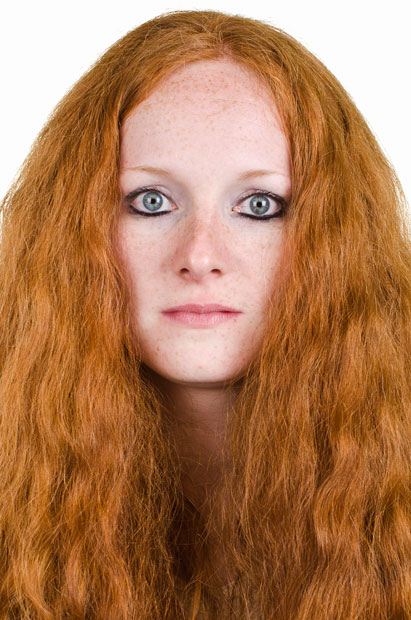
Let me insert here a little photo gallery of some European read heads (probably Scottish or Irish, at least of descent), a young woman

ginger girla young man with a magnificent red beard

red header with bearda baby, readying himself or herself for a life on the red side

red headed baby

a slightly older man, looking back at a life spent on the red side.

ginger haired old man

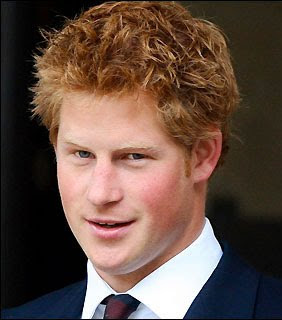
I feel I have to complete this photo gallery with a picture of the Fair Prince Harry, who has given redness of hair a good name.

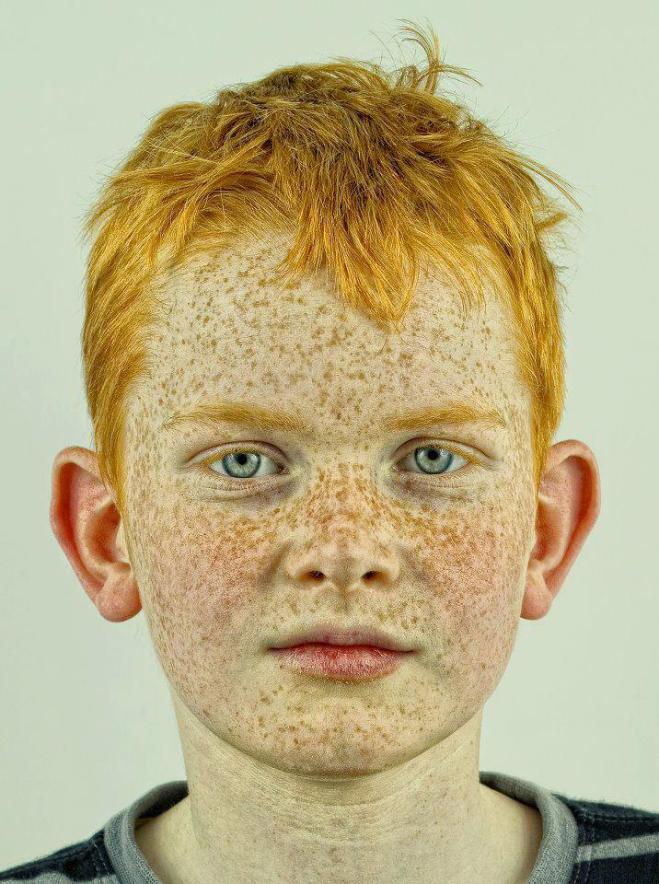
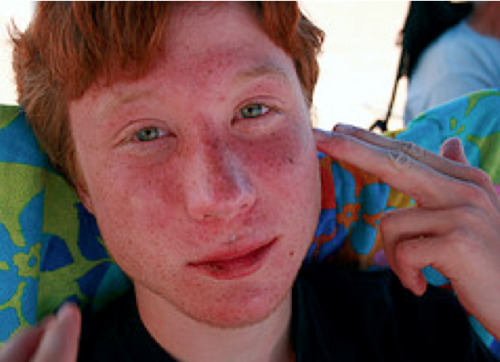
The observant reader will have noticed that most of these wonderful red-heads have blue eyes. The gene mutation which leads to red hair is closely linked to the one which gives rise to blue eyes. Fair, non-tanning skin almost always accompanies red hair, to the distress of red-heads when visiting countries with fierce sunlight:

Freckles are also often their lot:

Europe is not the only place to harbour red-heads. Here, in no particular order, are some red-heads from other parts of the world:

Syria:

Turkey:

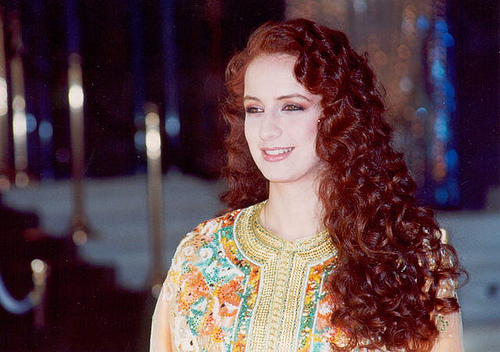
The Berbers of North Africa, represented here by Morocco’s queen (who is a Berber):

and a small child:

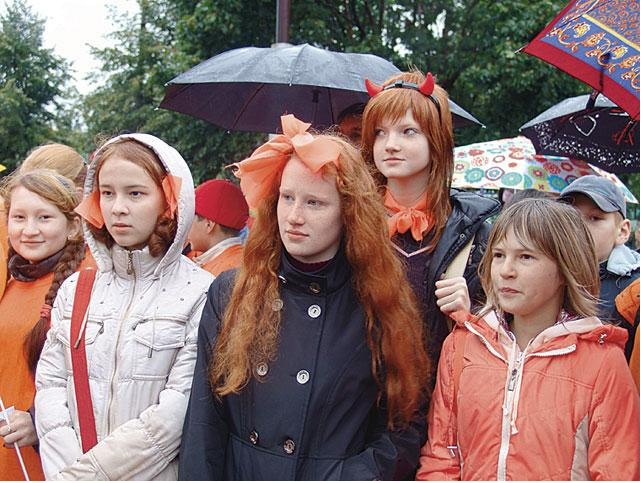
Udmurtia, a small provincial backwater in the Ural mountains of Russia famous for its red-heads:

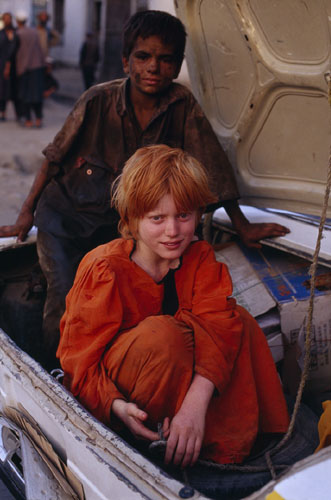
Afghanistan:

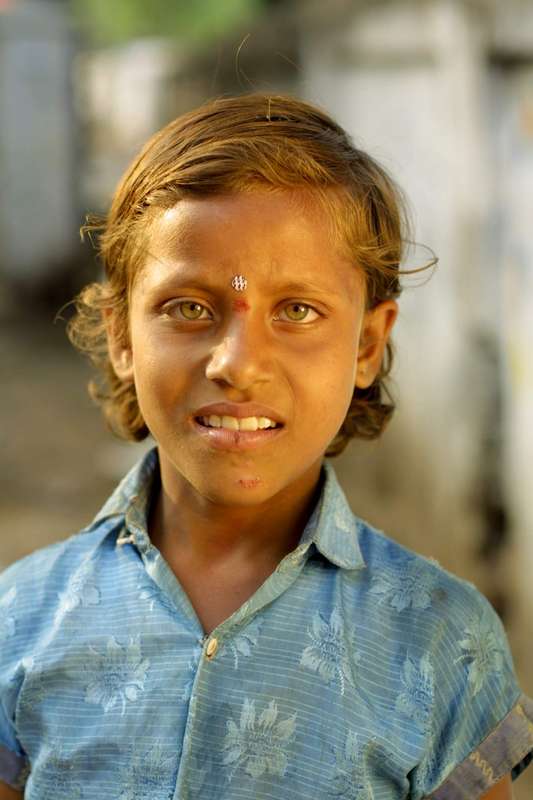
India:

and even Polynesia – this girl is from Tahiti:

Ashkenazi Jews are also well known for their redheads. My representative of this group is Woody Allen; this is a clip from one of his best films, Sleeper:

Nearer to me but also much further back in time are the Tochtarian people who inhabited the Tarim basin of Xingjian Autonomous Region some 4,000 years ago. The bodies of their dead were dessicated and mummified in the desert conditions of the Tarim basin, so many mummies have been unearthed. At least one these, the so-called Beauty of Xiaohe, had what looks like red hair.

Dessicating deserts in Peru have also given the world a share of mummies, some of these being red-heads. These red-headed mummies have had certain archaeologists (notably Thor Heyerdahl) afroth with fancy (and relatively racist) theories of Nordic whites somehow arriving in South America to take the natives in hand. This particular mummy also seems to have been subjected to skull lengthening.

peruvian mummy

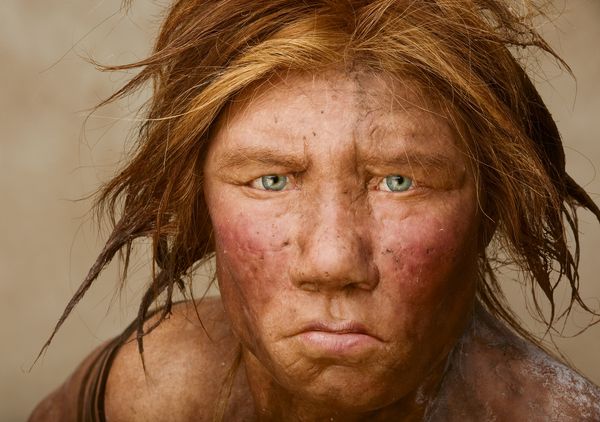
Going back even further, from studies of fossil DNA it seems that some of our Neanderthal cousins were also red-heads:

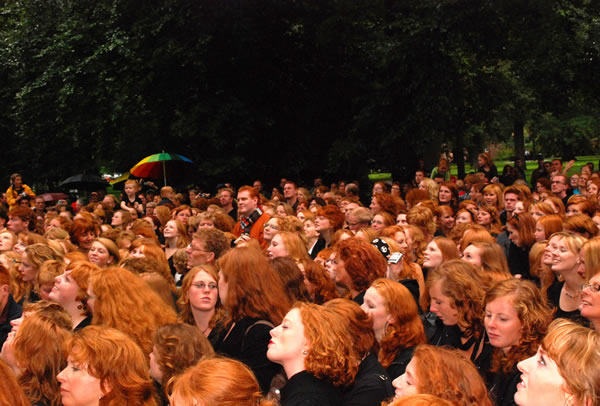
So come join Edinburgh’s annual Ginger Pride Parade! Immerse yourself in a sea of red hair!

ginger pride parade

___________________
Ginger girl: http://i.telegraph.co.uk/multimedia/archive/02510/ginger-girl-13_2510537k.jpg (in http://www.telegraph.co.uk/culture/culturepicturegalleries/9932654/I-Collect-Gingers-artist-Anthea-Pokroy-photographs-500-red-haired-people.html?frame=2510537)
Red header with beard: https://s-media-cache-ak0.pinimg.com/736x/96/d0/17/96d017f4374dbd877396ca77e2baf638.jpg (in https://www.pinterest.com/bridgeemelling/bearded-boss/)
Red headed baby: http://3.bp.blogspot.com/-rQ0mt43F_48/UXqtfoVyvGI/AAAAAAAAPow/zK3OEOiHiFI/s1600/150421_343259622462322_454686503_n.jpg (in http://klubkotajasna8.blogspot.com/2013_06_01_archive.html)
Ginger haired old man: https://s-media-cache-ak0.pinimg.com/564x/02/36/0b/02360b9c030976e4bc871f810ac4aba7.jpg (in https://br.pinterest.com/pin/499899627364000820/)
Prince Harry: http://4.bp.blogspot.com/_tR4bYTcAqeQ/SvI-Hwpk8NI/AAAAAAAABsM/OBj6T465Dlc/s400/princeh.bmp
sunburned boy: http://25.media.tumblr.com/tumblr_ld4t18EDYN1qfs58no1_500.png
freckled boy: http://25.media.tumblr.com/tumblr_mbjiv5TNfp1qer9yuo1_1280.jpg
Syrian baby: http://i45.tinypic.com/260x2xu.jpg
Turkish young man: http://t2.gstatic.com/images?q=tbn:ANd9GcSBd3GBpDXFhzwdCW99RLJk_znIncX8Uaory6HOjMPNSpP6n1Kvag
Moroccan Queen: http://badrhariboxer.com/wp-content/uploads/2012/05/moroccan-queen.jpg
Berber girl: http://looklex.com/e.o/slides/berbers02.jpg
Udmurt girls: http://russianpickle.files.wordpress.com/2010/03/udmurt_people_red.jpg
Afghan boy: http://fc04.deviantart.net/fs16/f/2007/122/1/a/Afghan_Redhead_and_boy_by_xerquina.jpg
Indian boy: http://mathildasanthropologyblog.files.wordpress.com/2008/06/light-indian.jpg
Polynesian girl: http://t0.gstatic.com/images?q=tbn:ANd9GcS9dYzPU1dcELZO1dZOJTMta43zg-fJO2tGxOcwAqHJ7XKp0iIpTAJGjDAAnA
Woody Allen: http://www.nerve.com/files/uploads/scanner/sleeper_0.jpg
Tochtarian mummy: http://images.mirror.co.uk/upl/dailyrecord3/feb2011/0/7/mummy-image-2-601127141.jpg
Peruvian mummy: https://s-media-cache-ak0.pinimg.com/736x/2d/43/e4/2d43e4c46a67385e964b409fe38e229a.jpg (in https://www.pinterest.com/aprildherbert/creepy-cool/)
Neanderthal: http://images.nationalgeographic.com/wpf/media-live/photos/000/601/cache/neanderthal-genome_60159_600x450.jpg
Ginger pride parade: http://scrapetv.com/News/News%20Pages/Health/images-3/ginger-rally-uk-support.jpg (in http://scrapetv.com/News/News%20Pages/Health/pages-3/World-misses-prime-opportunity-to-eliminate-gingers-during-pride-parade-Scrape-TV-The-World-on-your-side-2013-08-12.html#.VtRaZEAppEN)

BLUE EYES: PERSONAL MEMORIES

Beijing, 18 November 2012

In my last posting, I did not reveal if I am or not one of the millions who carry that little mutation in my DNA which codes for blue eyes. Well, … I think I do. My mother certainly carried the mutation because she had beautiful baby blue eyes, as did her brother. She once told me that her father also had blue eyes, although I have no direct confirmation of this. He died in the 1930s of tuberculosis. The only indirect confirmation I could have would be from photos. But photos with him in them are black and white and taken from a distance, and all I can see is his illness in his hollowed face. In any event, he must have carried the blue-eye gene, because otherwise my mother could not have had blue eyes. The gene for blue eyes is recessive and must be inherited from both parents to be expressed. So my maternal grandmother must have carried it too, although she definitely did not have blue eyes. As I dig into my memory for her face, I think I see hazel eyes.

My father’s eyes were brown, as were those of his brother and sisters. He inherited the gene for that from his father, although here too I have to depend on indirect evidence: a painting of him that hung in my paternal grandmother’s living room, in which his eyes were definitely brown. He also died in the 1930s, from leptospirosis, which he caught on the Norfolk Broads. From my grandmother my father inherited a blue-eye gene because she had beautiful blue eyes. By the time I knew her they had faded a little and her hair had turned completely white. But as a younger woman, she had dark hair: blue eyes and dark hair, she must have been a striking woman.

So my father had one brown-eye gene and one blue-eye gene, while my mother had two blue-eye genes. One of my sisters inherited my father’s brown-eye gene because her eyes are brown. My two brothers inherited the blue-eye genes from both sides pure and unadulterated, because they both have blue, blue eyes. The rest of my sisters have eyes with varying shades of green: I guess part of their DNA is pushing for some level of melanine in their irises.

As for me, my mother used to say that the colour of my eyes was caca d’oie, or goose poop. Anyone who has looked closely at defecations from geese will immediately recognize the allusion: green with brown streaks.

my eyes

BLUE EYES, BLUE SKY

Beijing, 15 November 2012

My wife and I have one fundamental difference: I notice people’s looks and she notices people’s characters. One result of this is that after living in a part of the world where everyone has black hair and dark eyes, I have become intensely aware of differences in hair and eye colouring, whereas my wife is quite indifferent to it. So it was that yesterday, when my wife and I were sitting at our favourite café and we found ourselves sitting across from a European expat, I was transfixed by his blue eyes while she didn’t notice. After spending a suitable moment marvelling at the sight, I began to ask myself some questions. Questions which my wife’s iPad, which I commandeered, and the café’s wifi allowed me to find answers to.

Perhaps the most amazing fact is this. Every person in the world with blue eyes (and the closely linked grey and green eyes) has one single, common ancestor! A mutation occurred in some corner of this person’s DNA and that little mutation has been passed on down the generations ever since. Up to that point, the colour of all humans’ eyes had been dark. And then, some ten thousand years ago somewhere in the north-western part of the Black Sea region (geneticists have managed to pinpoint the source that accurately), someone was born with blue eyes.  Can you imagine what that must have been like? Was the person treated as a wonder or as a dangerous freak, I ask myself? I have to think the former, since this person was able to sire children who passed on the mutation.

I suppose blue eyes are most associated with Europe: blondes or the red-heads with blue eyes.

But actually, according to very recent research, the original Ol’ Blue Eyes was probably dark skinned and dark haired. And in fact blue eyes are found everywhere:

Algeria …

Palestine …

Lebanon …

Syria …

Jordan …

Iran …

Afghanistan …

India …

Central Asia …

Even China! (although more green than blue) …

Even Africa!! …

But most basic of all, why are eyes blue? Because the irises lack melanin. It’s melanin which makes the human eye – and skin, and hair – dark. But why aren’t blue eyes colourless then? Because of the same effect that makes the sky blue: “longer wavelengths of light tend to be absorbed by the dark underlying epithelium, while shorter wavelengths are reflected and undergo Rayleigh scattering in the turbid medium of the stroma. This is the same frequency-dependence of scattering that accounts for the blue appearance of the sky” (1). So eyes are blue because the sky is blue. Now how cool is that …

______________
1. http://en.wikipedia.org/wiki/Eye_color#Blue

Links for the pix:
Little European blonde girl: http://ts3.mm.bing.net/th?id=I.4963638661679662&pid=1.7&w=237&h=155&c=7&rs=1
Little European red-headed girl: http://ts3.mm.bing.net/th?id=I.4615243792843710&pid=1.7
Algerian old woman: http://pulitzercenter.org/reporting/algeria-aures-mountains-facial-tattoos-culture-portrait-series
Palestinian man: http://i56.tinypic.com/2vao8av.jpg
Syrian man: http://www.hobotraveler.com/123_07baghdadistanbul/0077.JPG
Jordanian man: http://www.lurvely.com/photo/4259694961/A_face_from_Jordan/
Little Iranian girl: http://www.worldisround.com/articles/73022/photo653.html
Afghan woman: http://en.wikipedia.org/wiki/Nuristani_people
Afghan man: http://farm5.static.flickr.com/4041/4696088197_24f3ecf0c4.jpg
Little Indian girl: http://i2.asntown.net/h3/fun/12/beautiful-eyes/asian-people-with-blue-eyes05.jpg
Indian woman in Sari and Indian boy: http://www.asiafinest.com/forum/lofiversion/index.php/t8178-100.html
Indian man with green eyes: http://i.images.cdn.fotopedia.com/flickr-4833454489-hd/Countries_of_the_World/Asia/Portrait-Asia-Demographics_of_Asia-Demographics_of_India-Human-India-Portrait_photography-Rajasthan-Rajasthani_people-hd.jpg
Central Asian man: http://anthrocivitas.net/forum/showthread.php?t=7853
Chinese woman: http://ts1.mm.bing.net/th?id=I.4981686084830908&pid=1.7
African girl: http://korraisnottan.tumblr.com/post/21640006035/anonymous-asked-korra-is-not-tan-korra-is-not

CHINA PAVILION REBORN

Shanghai, 6 November 2012

I have mentioned in an earlier post that I had to visit the Shanghai Expo from time to time when it was on. “Had to” is the operative phrase: I was there for work and got no joy in being there. On one of my visits with my more important Boss, we were given the VIP visit of China’s pavilion. I confess immediately to remembering nothing – but then I don’t remember anything of any of the pavilions which I visited. My one memory of the visit is of one of our party who lost his wife in the pavilion. We left him sitting disconsolately at the exit waiting for Wife to appear (I heard later that having got separated from us she had left by another exit).

But my wife and I were now visiting the pavilion (with me telling her to stay close …) in its new guise, as the China Art Museum. It was an interesting visit: not fantastic, not five stars, but interesting. The collection is certainly huge; we thanked the Lord that looming closing time gave us an excuse to go faster and faster towards the end, skimming along. Even so, we didn’t finish. Another reason to go back to Shanghai, I suppose.

Starting from the top, the logic behind the flow of the visit seems to be:

1.      China meets the West and starts to modify traditional art forms using a more Western sensibility;

2.      China also tries out the new Western ways (oils versus watercolour, many colours versus the traditional monochrome or at least no more than two tones, impressionism);

3.      China also enthusiastically adopts some of the more low-brow forms of Western art, especially advertising and calendars, as well as animated cartoons;

4.      But China also tries out wood cuts, turning out among other things some dark political commentaries – signs of the gathering storm;

5.      The New China triumphs and artists turn to social realism to support and teach the Revolutionary Masses, often using the traditional models in a new guise;

6.      Art as a teacher of the masses continues, up to the present day.

Here are some photos I took – not as many as I would have liked, because there was a no-photo rule, with people in each room walking around to enforce it. I have to say it was a rule more honoured in the breach by many of the Chinese visitors, and many of the enforcers seemed to take their duties very lightly. But from this point of view I am an old-fashioned Englishman: a rule is a rule and I feel guilty and uncomfortable breaking it. My wife, now, is very Italian in this respect: rules are merely to be treated as guidelines. Thinking about it, the Italians have affinities with the Chinese on this point, whereas the English are more like the Japanese. But I digress.

Type 1:

cool hair-do …

Type 2:

best painting in the whole collection

more traditional

Type 3:

“Pink Pills for Pale People” – I love it.

China at Bournemouth?

Type 4:

Type 5:

rather blurred; the enforcer of no-photos was stricter in this room.

Type 6:

a modern painting, part of a triptych, telling the story of some famous revolutionary. If we understood the captions in this section of the museum correctly, this was part of a government programme to immortalize in paint various Great Moments or Great People from the Glorious Past. This particular painting caught well the idea of painting memories, already beginning to fade, already beginning to blur. There were several in this style.

another modern painting of some Great Moment in which, judging from the soldiers’ uniforms, the Brits were involved. I liked the cartoonish style.

The caption was more interesting than the painting.

What surprised me in this line-up was the lack of any revolutionary posters. If you’re going to have advertising and calendars, why not have a collection of good revolutionary posters? I took these off the net.

This seems a natural follow-on to the earlier wood-cuts

– o O o –

Of course, life never follows neat patterns, and the museum’s exhibits were no exception. Here, in no particular order, are some paintings we came across during our tour which don’t seem to fit the 6-phase approach I’ve outlined above:

very amusing depiction of the subway

The collector is rather “dark”. I wonder if that’s what the sculptor wanted. Had he had some run-ins with collectors?

wonderful watercolour; it captures the spirit of the man beautifully

A timeless vision of mother and daughter, in modern garb.

Given her weightlessness, I thought she was reading Milan Kundera’s “Unbearable Lightness of Being”. But according to the caption she was reading Gabriel Garcia Marquez’s “One Hundred Years of Solitude” …

A painting of generations. I rather like the idea that our parents are intently looking on from behind our shoulders.

How come they have two children? …

76

– o O o –

What strikes me about the whole collection is the complete absence of any abstract art. In the whole museum I came across only two exhibits which could claim to be abstract, two small pre-WWII wood cuts:

Now, I’m not particularly fond of abstract art, so its absence doesn’t bother me much. But it is strange that the museum’s curators saw fit to exclude such art. And it is not as if there have not been Chinese abstract artists. I don’t know about the pre-war art world, but there have been a number of well-respected Chinese abstract artists since China’s opening up (none, of course, during the Communist period; like in the Soviet Union, social realism was the only approved style). Indeed, at one point Shanghai was a hotbed of abstract art. I can only assume that the Government still disapproves of abstract art. But why?

_____________

pix of revolutionary posters:

http://xaharts.org/va/prog.html

mikeb302000.blogspot.com

“THE POWER HOUSE OF ART”

Shanghai, 5 November 2012

It was difficult for my wife and I not to make comparisons with the Tate Modern when we visited the newly opened Shanghai Museum of Contemporary Art. Like the Tate Modern, the museum is housed in an old power station on the edges of a river running through a big city. And in this country where copying is a way of life, it was hard not to see the whole enterprise as just a me-too Tate Modern.

But let’s not be too negative. Let’s just go and make our visit.

Our understanding is that the mission of the Power Station of Art, as it is cutely called, is to focus on post-1980 contemporary art, mainly from China. It is not clear to us if the museum will use just the power station or if it will spread to some of the other adjacent old Expo pavilions. When we visited they were using just the power station, but there seemed to be works going on in the near-by spaces. I suppose this gives us an incentive to come back another time to check things out.

Anyway, when we went they were holding the Ninth Shanghai Biennale, or Biennalé as the Voice on the show’s audio-guide called it. There was a lot of dross as there always is in these kinds of shows, but a few things stood out. I show some photos below in no particular order.

This greeted you as you entered the building.

In the entry hall – hugely high, it must have been the generator room – there was this sculpture; I’m sure I saw a smaller version of it in San Francisco.

This intriguing sculpture, made with a series of neon strip lights, hung in a very high well which I suspect had been linked to the old chimney somehow.

In another stairwell was this series of kites, quite striking.

This was a lovely idea, using Chinese pots to make a very high totem pole, using the high ceilings of the generator room to maximum effect.

A smaller version has been placed on the museum’s huge terrace, which by the way has a great view over the river and Pudong. My wife and I are thinking of doing an even smaller version in our apartment – we had better start collecting the pots.

Moving to the smaller scale, here is a great picture from the Italian section of the show (Palermo, to be precise). Using just thick paint the artist has created a nice 3D effect of the sea.

While another of the Italian contingent created this amusing triptych commenting on the Jesuit priests who came to China.

From the Indian (“Mumbai”) section of the show came this piece, made of pressed burlap bags. It had a wonderful “feel” to it.

This sculptural piece was by a Japanese artist. I don’t what it is, but it seems so very “Japanese”: maybe it’s the neatness of it, allied to the strict geometry.

And finally, this small piece. It was actually one of a number of such pieces, all with the same subject of Christ on the Cross and all made with bits and pieces. It reminded me of an Italian expression, “povero christo” or “por’ christ’ ” in the dialects of northern Italy, which can be roughly translated as “poor bugger”.

One final note. From the museum’s terrace one could see, in the distance, China’s pavilion at the Expo.

It now houses the China Art Museum. That’s where my next post will come from.

A BLAST OF MY TRUMPET AGAINST THE MONSTROUS REGIMENT OF HOT SPICES

Beijing, 3 November 2012

Dedicated to my dearest daughter who, like me, dislikes hot spices

In 1558, John Knox, one of the founders of the Protestant faith in Scotland, wrote The First Blast of the Trumpet against the Monstrous Regiment of Women, a diatribe against women rulers. He wrote choice rants such as these:

“Wonder it is, that amongst so many pregnant wits as the isle of Great Britain has produced, so many godly and zealous preachers as England did sometime nourish, and amongst so many learned, and men of grave judgment, as this day by Jezebel are exiled, none is found so stout of courage, so faithful to God, nor loving to their native country, that they dare admonish the inhabitants of that isle, how abominable before God is the empire or rule of a wicked woman (yea, of a traitress and bastard) … We see our country set forth for a prey to foreign nations; we hear of the blood of our brethren, the members of Christ Jesus, most cruelly to be shed; and the monstrous empire of a cruel woman (the secret counsel of God excepted) we know to be the only occasion of all those miseries … And therefore, I say, that of necessity it is that this monstiferous empire of women (which amongst all enormities that this day do abound upon the face of the whole earth, is most detestable and damnable) be openly revealed and plainly declared to the world, to the end that some may repent and be saved … we are debtors to more than princes: to wit, to the multitude of our brethren, of whom, no doubt, a great number have heretofore offended by error and ignorance, giving their suffrages, consent, and help to establish women in their kingdoms and empires, not understanding how abominable, odious, and detestable is all such usurped authority in the presence of God.”

The book goes on in this vein for many pages. Boiling it down to its essentials, his thesis was that women should be in the kitchen and not running countries.

Knox was fond of diatribes and had a nasty habit of whipping people up into a frenzy of destruction with them. The picture below captures nicely what he must have been like when he was in full spate, beady-eyed, beetled brow, and frothing at the mouth.

He reminds me of another tribe of hirsute religious leaders who are currently whipping people into frenzies. I’m sure he would have got on with them like a house on fire – and then promptly burned them at the stake for heresy.

I would have disliked him intensely. I have an aversion to people who shout and scream and hate. And yet … when it comes to the use of hot spices in food I feel my beard growing, my eyes beading, my brow beetling, and froth forming in the corners of my mouth.

By hot spices, I mean those spices that numb your mouth, that put your tongue, palate, inner cheeks and throat on fire and have you groping for water, that make you cry, that make you choke, and generally that kill all enjoyment of the food you are eating.

What in the name of God got into the human species to add this stinking scum to their food??!! What did we do that we now have to punish ourselves for eternity in this way??!! And no-one can tell me that they add taste, because they DO NOT!!!! As for people who actually enjoy hot spices, they are like drug addicts, their enjoyment of this filth is a deviancy; they need to be locked up until they have cold turkeyed!!

I NAME – and SHAME – the Piper genus: 1,000 species! The genus has spread its evil tentacles far and wide. Asia has given the world black pepper, P. nigrum; may a curse fall on those who spread it around the world! But in Asia, deluded, lost souls also eat the Indian long pepper, P. longum, Balinese long pepper, P. retrofractum, Cubeb, P. cubeba, and Prik Nok, P. caninum. In Latin America, poor fools eat Mecaxochitl, P. amalgo, and Matico, P. aduncum. As for Africa, miserable inhabitants of that miserable continent eat West African pepper, P. guineense, and Voatsiperifery pepper, P. borbonense. And who knows how many of the other 1,000 species are eaten only locally by poor, benighted villagers who know no better.

I NAME – and SHAME – the Zanthoxylum genus: only (thank God) 250 species! But at least two of these, Z. simulans and Z. bungeanum, I curse again and again for producing Sichuan pepper, which makes my life a misery at every banquet I go to in Sichuan and other western provinces of China! I emerge from these with numbed mouth and lips, having enjoyed not a whit of the food on offer. The Chinese use other species for the same foul purpose: xiang-jiao-zi (“aromatic peppercorn”), Z. schinifolium, chun ye hua jiao (“Ailanthus-leaved pepper”), Z. ailanthoides, while the Japanese use sanshō (the Japanese pricklyash), Z. piperitum. I am horrified to see that the genus is also present in the Americas and Africa, where no doubt there are wretches who eat the fruits.

But my heaviest, longest, most profound curses of all fall on the Capsicum genus, home of the dreaded chili pepper. There is C. annuum, whose varieties include banana pepper, cayenne pepper, jalapeño pepper, and the ferocious chiltepin; C. frutescens, which contains malagueta pepper, tabasco pepper, and the African piri piri; C. sinense, which incorporates hideously hot peppers like the naga, habanero, Datil, and Scotch bonnet peppers; C. pubescens, whose most notorious variety is the rocoto; and finally C. baccatum, which includes the deceptively named but nastily hot Lemon drop pepper and the Aji Amarillo as varieties. May Diego Álvarez Chanca, a physician on Christopher Columbus’s second voyage who first brought chili peppers to Spain, reside in the deepest circles of Hell for eternity!! And may the Portuguese forever beat their breast for spreading chili peppers to the rest of the world through their rapacious traders!!! And may the idiots who boast of being able to eat the hottest of hot chili peppers have their mouths (and the other end of their alimentary canals) on fire forever and ever!!!!

Amen.

________
pix:
http://revhelio.blogspot.com/2011/02/john-knox-o-reformador-da-escocia.html

http://www.wikipaintings.org/en/hans-memling/the-last-judgment-triptych-right-wing-casting-the-damned-into-hell-1470

WORKING TO MAKE CHINA GREAT

Shanghai, 3 November 2012

Even though it was dark now, there were still dozens of them up and down the Bund, couples headed for wedlock who were preparing their wedding albums. Striking a thousand poses, most with Her in a red dress and Him in a matching dinner jacket, they used the river and Pudong as a background as they gazed dreamily, coquettishly, lovingly, laughingly at the cameras. Their future – young parents with babies, parents with teenagers, grandparents with grown children and small grandchildren – strolled along behind the snapping cameras. Yesterday’s buildings of the Bund, lit up as theatrical backdrops, and tomorrow’s skyscrapers on Pudong, glowing and pulsing with lights, looked down on them all benignly, while tourist ships with their outlines picked out with bright green, blue, white and red strings of lights glided back and forth along the river. Pretty, so pretty …

All the while, burly ships hauling sand, coal, ore, and other sinews of the economy threaded their way through the happy throng, rumbling quietly by, lightless silhouettes against the lights – floating daguerreotypes – working to make China great.

ships-2013-11 006

ships-2013-11 013

_______________________
first two pix:
http://farm8.staticflickr.com/7153/6431300581_41f2593603_z.jpg”
http://www.chinatourguide.com/china_photos/shanghai/attractions/hrc_shanghai_huangpu_night_cruise.jpg”