MY ART COLLECTION

Beijing, 3 August 2013

I was in Vienna a few weeks ago – it is always good to show your face from time to time in Headquarters to remind your colleagues that you still exist – and my wife accompanied me because we had decided to go on vacation at the same time. Since we had a free morning, we decided to visit the Leopold Museum.

The museum is part of a very nice urban recovery scheme which the Austrian government undertook some ten-fifteen years ago. There being no imperial horses to house anymore, the old imperial stables had fallen on hard times. So the city decided to turn the stables into a Museums Quarter, made a deal to purchase the art collection of a certain Rudolf Leopold, and built two art museums on the premises, one for his modern art

Leopold Museum

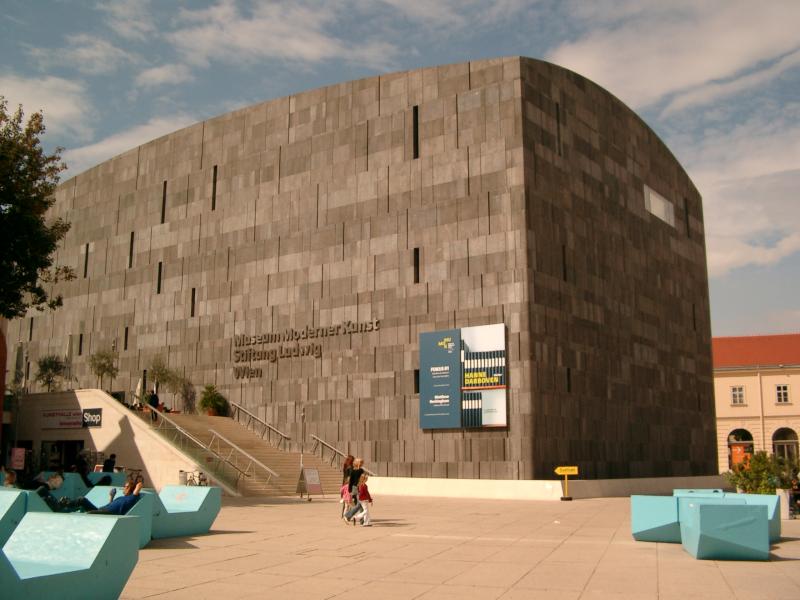
and one for his contemporary art

MUMOK

(is there a deeper meaning to the colour scheme of the museums’ cladding?)

For those readers who plan to visit Vienna, the Quarter is just across the road from the Kunsthistorisches Museum, the country’s premier museum of fine arts, which houses the old imperial collection. This is a truly fantastic collection, which alone is worth a visit to Austria. One of my favourites there is Caravaggio’s “Madonna of the Rosary”.

caravaggio

As for the Leopold Museum, it has a great collection of early 20th Century Austrian, German and Central European art. I particularly like its collection of Egon Schieles. The very first time my wife and I went to Vienna, back in the early 80s, we stumbled on Mr. Leopold’s collection, hung at that time in a cramped house somewhere in the outskirts of Vienna. His Schieles knocked my socks off as they say. I particularly remember this one.

Egon Schiele

With the art from these fantastic collections almost spilling out onto the pavements of Vienna (and I haven’t even mentioned the Belvedere or the Albertina or the smaller collections), it’s not surprising that it is here that I started my own – very, very modest – art collection. The spark that lit the fuse was the Dorotheum.

Dorotheum

Wonderful, wonderful place, the Dorotheum. It’s an auction house, but the marvelous thing about it is that it has two whole floors where the price is fixed and you can buy the articles on the spot. Which is great, because auctions make me nervous; I only went to one auction at the Dorotheum – where Mr. Leopold was present, by the way – and the speed with which the prices levitated (on a particularly nice painting by a Hungarian artist) gave me palpitations. These two floors have more the feel of a jumble sale, full of horrible stuff, but where you feel – you know – that the piece of your dreams is just behind that dreadful cabinet in the corner. And in the spirit of a jumble sale the prices in these parts of the Dorotheum are – relatively speaking – affordable.

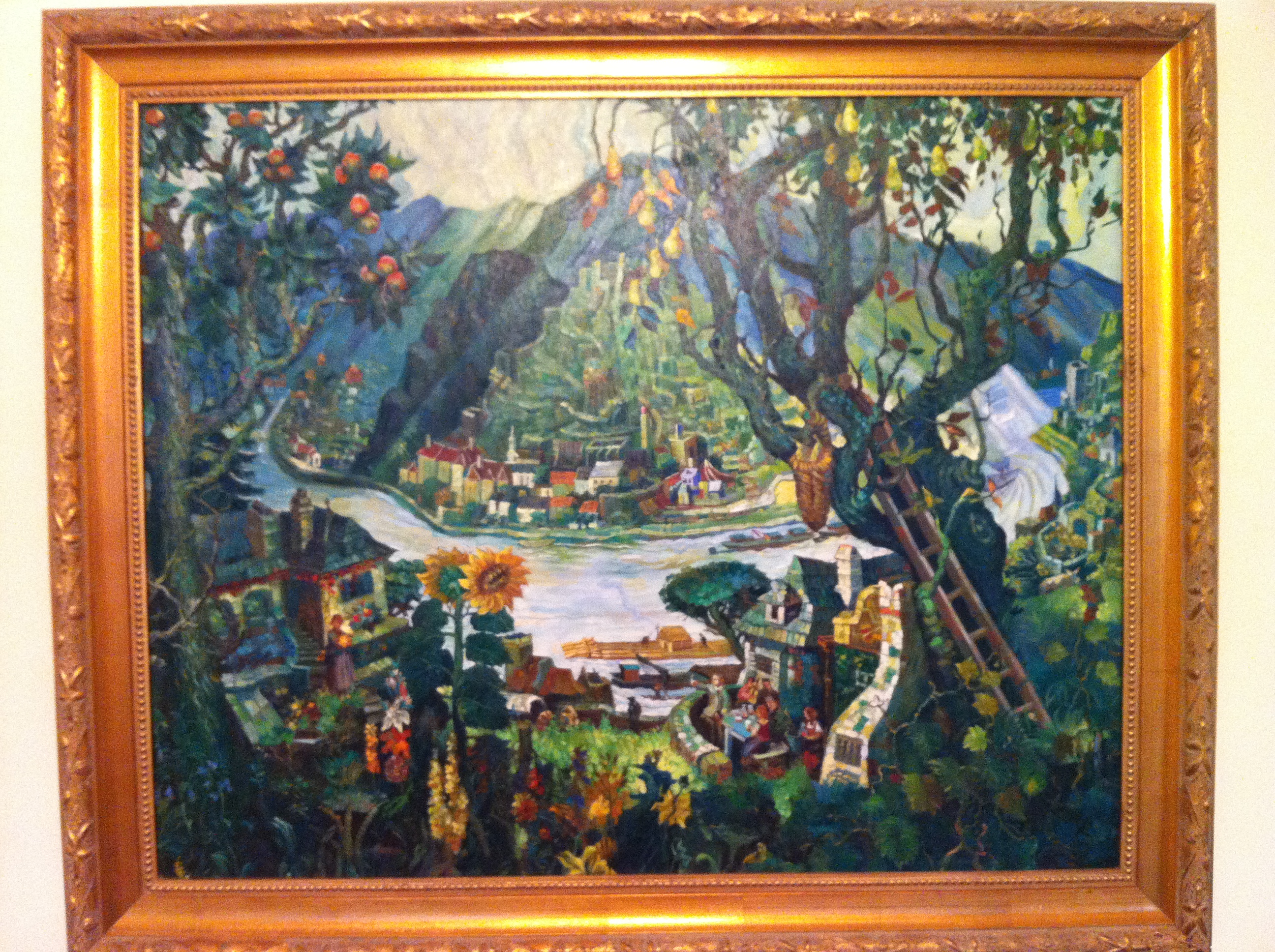
My first piece of art was hanging in a corner, in the dead end of a section dedicated to carpets.

general photos 002

When I first spied it behind the carpets, it was woebegone, sagging in the middle, dust covering its frame. But it cried out to me: “Take me! Take me!” That riot of flowers and fruit against that cubist-type background of mountains! That river, with the small town on its bank! The happy people! It had to be mine!! But the price made me hesitate – it was 400 euros or thereabouts. And it would need fixing and cleaning. I dithered and dathered, I went back a few times, I was like one tormented. Eventually, my wife took over and gently pushed me towards the purchase.

They say that the first murder is the most difficult; after that, it gets easier and easier. I think it’s the same with the purchase of art. In relatively short order after that, I purchased, always at the Dorotheum, this gouache, a naïf view of the Seine in early 19th century Paris:

general photos 004

(the apparent sun in the background is actually my camera’s flash)

This aquarelle, an 18th Century view of Kashmir:

general photos 005

(same comment about my camera’s flash)

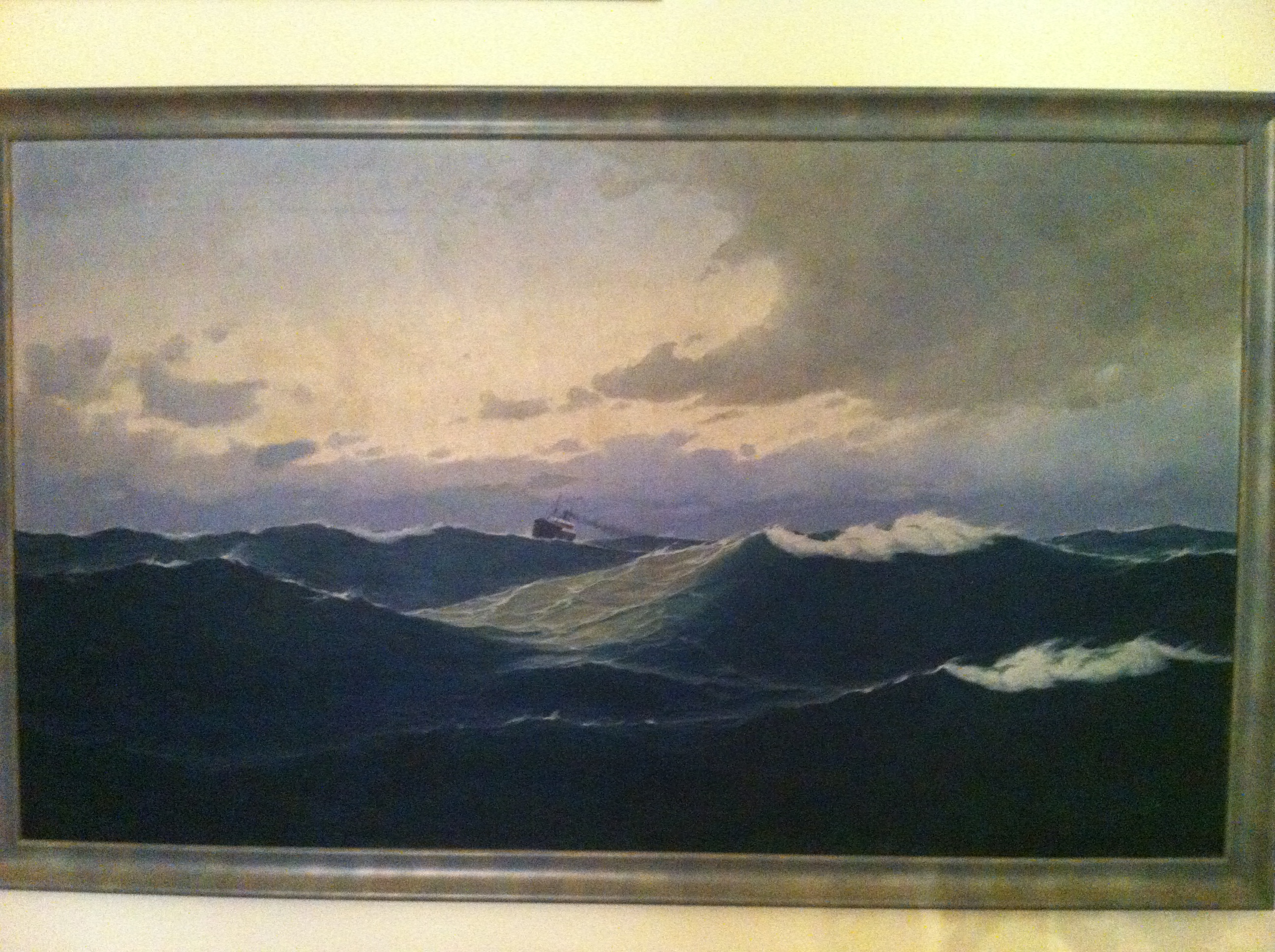
This oil painting, of a tramp ship ploughing its way through the waves:

general photos 009

(I bought it because it reminded me powerfully of the poem “Cargoes” by John Masefield, whose last verse is:
“Dirty British coaster with a salt-caked smoke stack,
Butting through the Channel in the mad March days,
With a cargo of Tyne coal,
Road-rails, pig-lead,
Firewood, iron-ware, and cheap tin trays”)

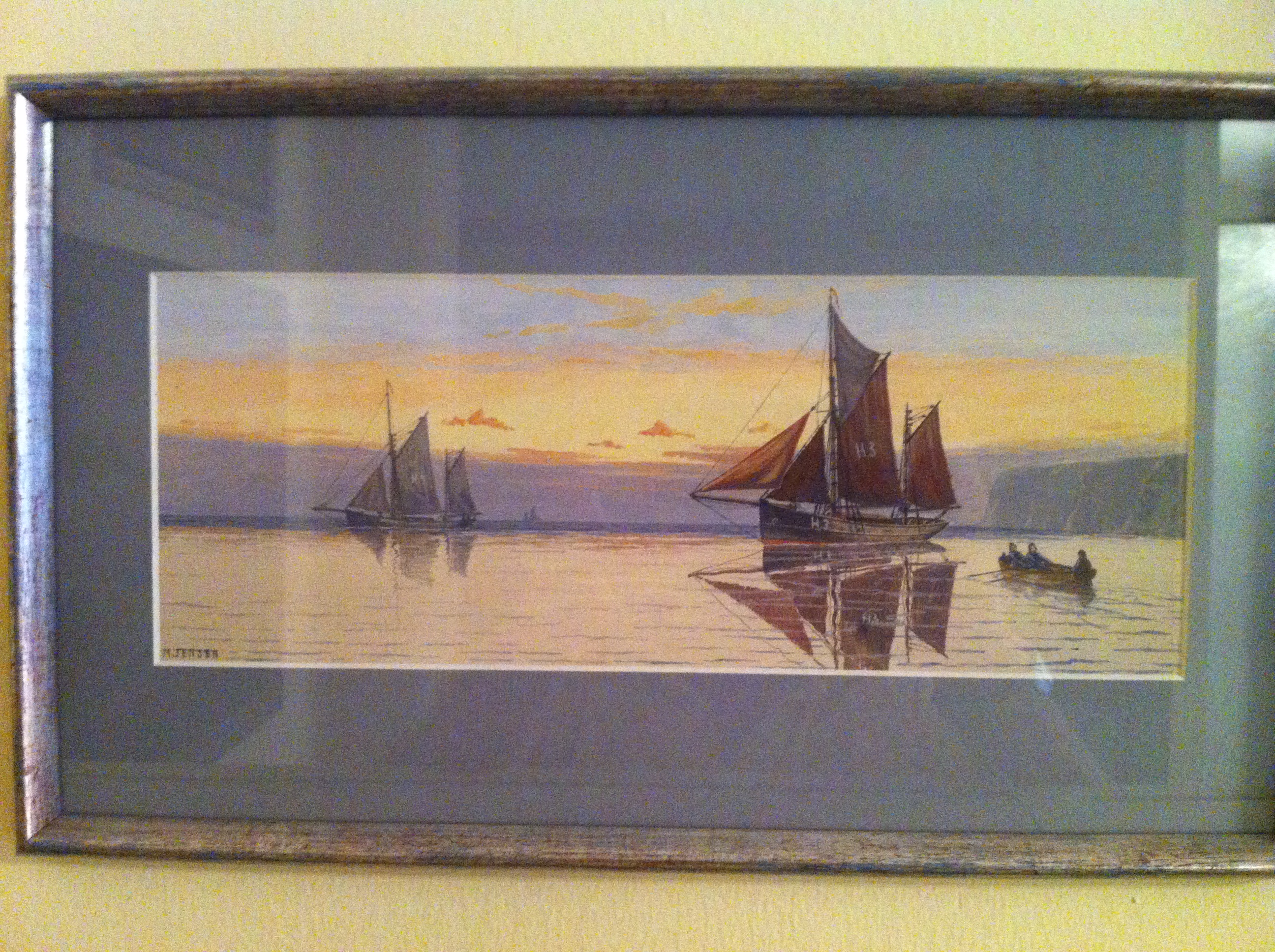
This aquarelle, by the same artist, of fishing boats off the coast of Britain:

general photos 010

This print, of a barn half buried in the snows of Upper Austria:

general photos 008

It was just as well that we left for China. My wife was becoming anxious about how the art was slowly invading the walls of our apartment; she has always preferred bare white walls and generally uncluttered internal vistas. I could not bear to have these sitting in the dark of a warehouse in Vienna waiting for us to come back. We took them all down to Milan, where they hang in our apartment. I took the photos above a few weeks ago, when we passed through.

The wonderful thing about these pieces is that they have allowed me to also unfurl my passion for history, giving me an excuse to dig around into their past. For instance, the Dorotheum claimed that the first painting was a view of Dürnstein, north of Vienna on the Danube (and in whose Castle Richard I was kept prisoner for a while). But after revisiting the place, I am convinced that this is not so; the banks of the river are not that steep on both sides. The picture framer who cleaned and fixed the painting was also not convinced of the appellation. He thought it was the upper Moselle River; a visit there is on my to-do list. As for the gouache, it was sold to me by the Dorotheum as an urban landscape in northern Belgium. Not so! For reasons which I won’t go into here but have to do with research I did on that shop on the right hand side of the painting, I am convinced that it is a view of the Seine River in Paris, looking upstream from Pont Notre-Dame, one of the bridges linking the Île de la Cité with the Right Bank. For its part, the view of Kashmir was, according to the Dorotheum, a view from western China (which is why I bought it; I already knew then that I would be going to China). Research on my part quickly showed me that actually it is a well-known view of a rope bridge near Srinagar. Really, the Dorotheum is doing some very sloppy work here – but it’s more fun for me.

With the Dorotheum no longer just a few subway stops away, the collecting passion has slowed – the apartments are smaller too. We have bought a piece or two, which when we take them back will remind us of our stay in China, rather like those old English colonels who came back from the Empire with bits and bobs of native paraphernalia, which they would proudly display in their retirement home at Bournemouth.

__________________________

Leopold Museum: http://de.academic.ru/pictures/dewiki/76/Leopold_Museum_%28Vienna%29.jpg
MUMOK: http://upload.wikimedia.org/wikipedia/commons/e/eb/Museum_Moderner_Kunst_Stiftung_Ludwig_Wien.jpg
Caravaggio: http://www.christusrex.org/www2/art/images/carav18.jpg
Egon Schiele: http://kellypahl.files.wordpress.com/2011/11/2.jpg
Dorotheum: http://static3.kleinezeitung.at/system/galleries_520x335/upload/3/6/3/2430195/dorotheum030810apa726.jpg
the rest are my pictures

100th ANNIVERSARY

Beijing, 21 July 2013

I am astonished to discover that this is my 100th posting! It seems only yesterday that, rather like a kid on his first day at school, I was nervously writing my first posting. This milestone deserves to be celebrated in some way. And what better way could there be than by singing the praises of the written word?

In my very first posting, which I entitled Manifesto (and which later became my “About” page, once I’d understood better how all this blog thing worked), I explained why, as I neared my 60th birthday, I had finally decided to take up the pen (electronic in this case) and write.

My decision to write actually flowed from my habit of reading. I’ve always loved to read. I still remember the day I got really hooked. I was maybe six, possibly seven. I was bored, and as is usual in these cases was bothering my elder siblings, who were all reading. In exasperation, one of my sisters gave me a book and ordered me to read it. I complied a trifle sulkily, but before I knew it I was drawn in – sucked in! – by the story. I still remember the book; it was from the Secret Seven series by Enid Blyton, about seven very English children who sluith around solving various mysteries (I’m amazed to see that these stories are still popular!)

secret-seven-adventure

For most of the next decade or so I read only fiction, but then I lost interest with the excuse that I lacked time.  I took up the habit again in my mid-twenties and I haven’t looked back. The contents of my modest library are packed away in Vienna, waiting to see the light of day again, but in my mind’s eye I can still walk slowly, pleasurably, along my bookcases packed with the books which have marked the passing of my adult life. My library always started with a section which I suppose would be called English Literature in a public library, so in my head my hand is now brushing over the spine of the novel “House of Spirits” by Isabelle Allende, which was the first of her novels I read and which led me – and my wife – to read many of her other novels (OK, strictly speaking these are not English literature, but since I read them in English that’s where I put them). They reconciled me with fiction after a long rift I had with the genre.

isabelle allende house of spirits

My eye is then drawn to the shelves dedicated to detective stories (since those memorable Secret Seven days, I’ve always had a weakness for “yellows” as Italians call them), where my hand falls on “A Morbid Taste for Bones”, the first in the series about Cadfael, the Benedictine monk from the great Abbey of Shrewsbury during the reign of King Stephen.

a morbid taste for bones

I picked up the first out of curiosity at the British bookshop in Milan but it led me, fascinated and hooked, to the next one, which led me in turn to the next one, and on and on like Adriadne’s thread, until one day I had read them all – they always reminded me so much of my school days in a Benedictine Abbey school.

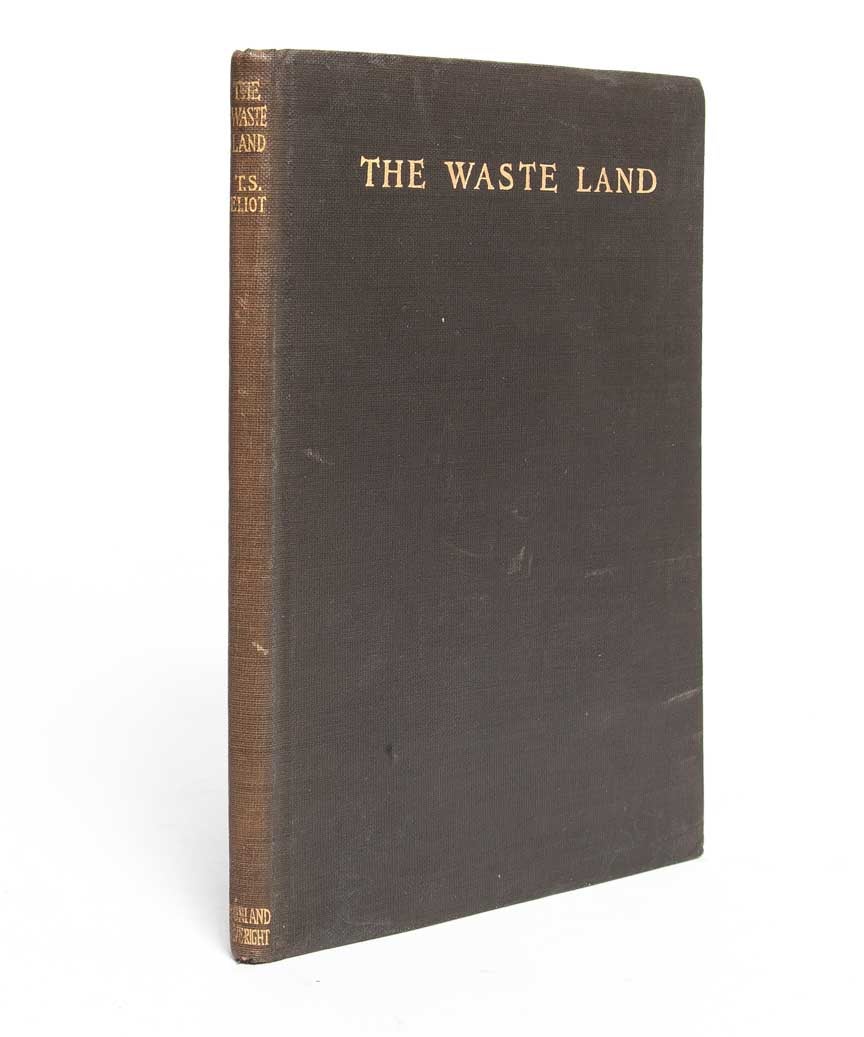
In my library, where space as much as logic has determined where books are placed (my wife has resisted the wholesale takeover of our successive apartments by books), the detective stories are followed by poetry. Here, I pick out the poems of T.S. Eliot, the first poet I came to appreciate, at age 16, during a class at school on English poetry, run by a wonderfully eccentric schoolmaster. The poem he introduced us to was, of course, “The Waste Land”.

wasteland

I always place “The Waste Land” next to the poems by Wilfred Owen and the other First World War poets. I feel that this poem’s sorrowful elegies of times past marry well with the anger that pulses through the war poems, an anger at the sheer futility and waste of that war.  I picked up this particular compendium of WWI poetry in a bookstore on Oxford Street, during a short visit to London.

first world war poetry

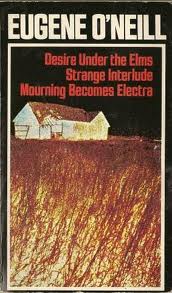
The English Lit section finishes with the plays I have acted in and the many more I would have liked to act in (“Mourning Becomes Electra” by Eugene O’Neill definitely falls into the latter category; it is a constant wound in my soul that I have never seen this play acted, yet alone acted in it myself).

mourning becomes electra

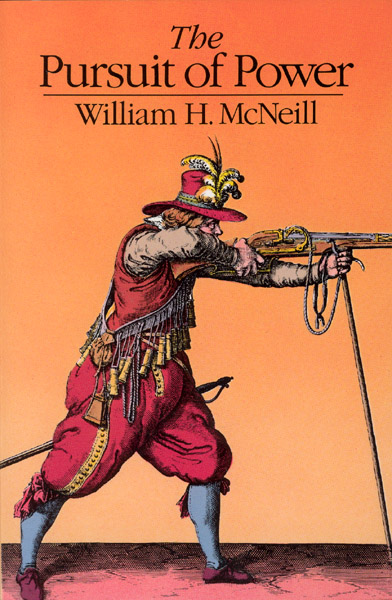
After English Lit in my library comes History: my passion – if I had not chosen to do sciences in high school, I would  have done history.   Among my many, many history books, I eye with particular fondness “The Pursuit of Power” by William McNeill,  which is a magnificent synthesis of military, technological, and social history over an arc of a thousand years.

pursuit of power

My hand then brushes over “Guns, Germs and Steel” by Jared Diamond, which (I am summarizing here!) tried to answer the question “Why was it European ships that sailed west and discovered the Americas and not the other way around?”. This book gave me the same shock of intellectual stimulation as McNeill’s book did when I first read it.

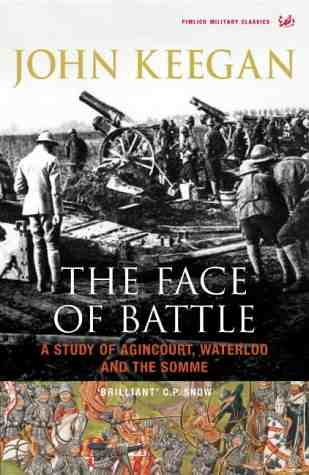
Guns Germs SteelI quickly jump to a shelf dedicated to histories of War, where I pick out  “The Face of Battle”, by the British war historian John Keegan, a fascinating analysis about how the field of battle has changed over time. I bought this book on impulse in a Barnes & Noble bookshop in New York 25 years ago and I liked it so much that over the succeeding years I read every single book Keegan wrote.

The-Face-of-Battle

History is followed by Other Social Sciences – politics, sociology, economics, and such like – where my hand brushes briefly over Henry Kissinger’s two volumes on his years in the White House.

white house years

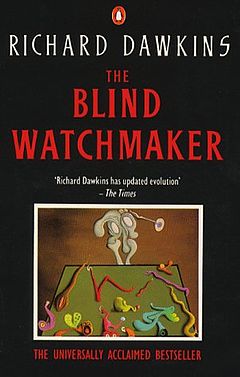
I pass on quickly to the Science section, where I stop in front of my small collection of books on the biological sciences and evolution especially. My favourites are the collected essays on natural history by Stephen Jay Gould, whose warm, wisecracking style I find so quintessentially American, and the books by his “competitor” Richard Dawkins, whose coldly lucid style I find so quintessentially English.

Pandas ThumbBlind_Watchmaker

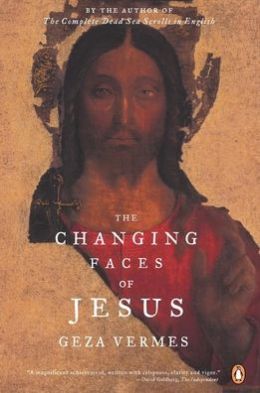
My science books are followed by my books on religion; why not? science has challenged (and in my view defeated) religion. And here my hand falls on “The Faces of Jesus” by Geza Vermès.

changing faces of Jesus

This was one of those books which takes your breath away by its ability to blow old ideas out of the window. It led me to buy several of his books, to explore who the real Jesus probably was once you get behind all the layers of Christian piety.

And finally, squeezed in at the end of my bookshelves, are books on art, cookery books, travel guides …

In China, I have continued the habit of buying books, nosing out where books in English can be found. We came with nearly no books (two compendia of English poetry, a book on Caravaggio, a book or two on Chinese history), now we don’t know where to put all the books that are piling up in drifts throughout the apartment.

Yet, during all this reading I have always felt a point of guilt: I was passively receiving these written words without writing anything back. Oh, I wrote a lot, but it was all dry, sterile stuff which I had to do for work; at the best of times clear, precise analysis, at the worst of times bureaucratese of the highest order. And so I started this blog. What a liberation it has been! I feel that I have finally gained my voice, that after all the croaking I’ve done I can finally sing (to paraphrase some lines from the African-American poet Langston Hughes, “now do I wonder at this thing, that I am old and yet can sing”). Of course, I don’t pretend to be writing great literature. These postings are just scribblings. My wife urges me to write a book, but I don’t think I can go beyond these brief notes. I am a sprinter, I tell her, I can only run 100 metres, I’m not a marathon runner. Still, the pleasure I derive from this writing is immense – and I hope my few readers derive some pleasure from reading these posts.

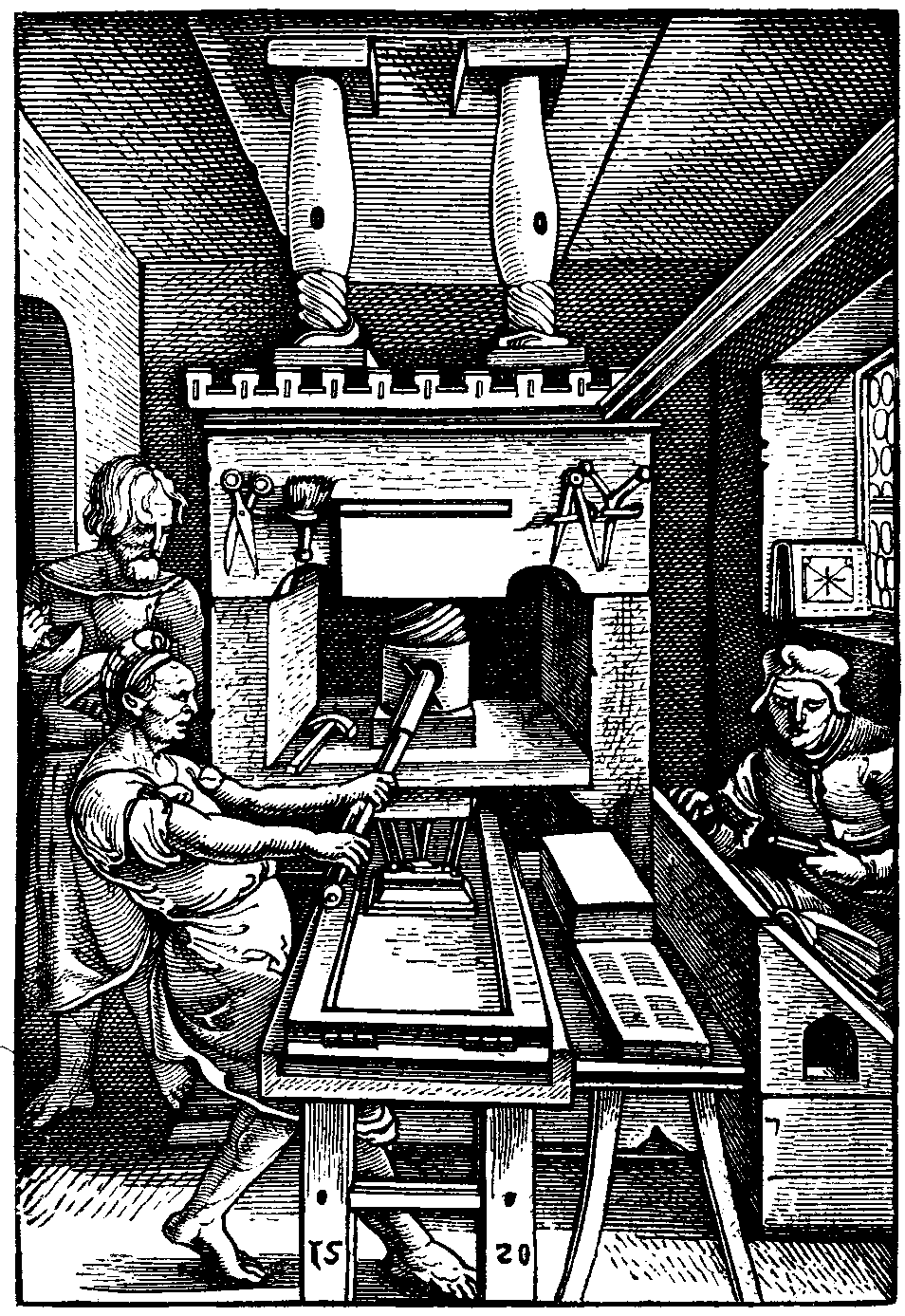
Yet, amidst all this pleasure, I have a sense that all is not well in the world of the written word. I see with dismay that bookshops are closing one after another as if hit by some sort of plague, and those that remain often survive by selling rubbish. To some degree, it is simply a change in venue. The written word is migrating from the printed page to an electronic format – am I not writing somewhere in an electronic cloud? For sure, newspapers have already almost vanished to be replaced by their electronic namesakes. Even books are taking this path. A younger colleague of mine urged me to switch to a Kindle; he even gave me his to handle, rather as you would drape a snake around someone’s shoulders to show how nice they really are. But I recoil from this electronicization of books. I want my books the old way, printed on paper, the way Gutenberg started it 500 years ago.

gutenberg

I sense, though, that the malaise with books goes deeper than a simple migration to the electronic cloud. I truly wonder if books will survive at all. The book I am currently reading, “The Swerve” by Stephen Greenblatt, tells me that books have disappeared before.

the swerve

Greenblatt is writing about the near-miraculous recovery in the 1400’s, from some dark corner of a library in a European monastery, of a mouldering 8th Century copy of the poem “De Rerum Natura” by  the Roman poet Lucretius, written in the first decades BCE. But in telling this story he also tells of the time when books disappeared from the Roman Empire as the Empire slowly collapsed in on itself and Christianity spread. It had seemed to the Roman intelligentsia that books would be there for ever, and then one day they were gone. Many Roman writers we know only by name; none of their works have survived. To a book lover like me, it is a story that sends a shiver down the spine.

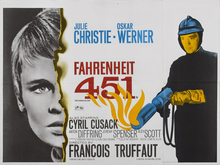
Those of my generation may remember a film of the 1960’s, Fahrenheit 451. The story is set in modern times, in a society which has banned books and where firemen are there to burn down houses containing books and not put out fires burning down houses. Through various twists and turns, the hero goes from being part of the system of suppression as a fireman to joining a resistance movement whose members live in the forests and keep books alive by each learning a few books by heart to pass on to younger generations, waiting for the time when books will be accepted again.

Fahrenheit 451

I don’t think that the next time books disappear it will be because society is hostile to them, or because society is collapsing. It will simply be through a collective bout of attention deficiency disorder as our electronic toys spin a web of confusion around our minds. Who will need books when you can slip on a pair of super-cool glasses and take part in a 3-D story peopled by electronic characters and set in electronic simulations of paradises on Earth?

I hope I’m not alive to see that day.

_____________

Secret Seven: http://www.enidblytonsociety.co.uk/author/covers/secret-seven-adventure.jpg
House of Spirits: http://swanyart.com/cms/wp-content/uploads/2013/05/houseofspirits.jpg
A Morbid Taste for Bones: http://www.hachettebookgroup.com/_b2c/media/cache/44/a4/44a4f75b43b0f8f64547b5fb88d3d63b.jpg
Waste Land: http://www.whitmorerarebooks.com/pictures/464.JPG
First World War poetry: http://ethershop.umwblogs.org/files/2011/10/poetry.jpg
Mourning Becomes Electra: http://t2.gstatic.com/images?q=tbn:ANd9GcQiKE5e4yBs1a08Z3wtMqkMnkbgAmpbLeajHmGMMCFt-_hTQ-hj
Pursuit of Power: http://www.bibliovault.org/thumbs/978-0-226-56158-5-frontcover.jpg
Guns, Germs and Steel: http://www.beyondone.org/images/image/GunsGermsSteel.jpg
Face of Battle: http://www.jamesaitcheson.com/wp-content/uploads/2013/01/The-Face-of-Battle.jpg
White House Years: http://i.ebayimg.com/00/s/NDgwWDMyNQ==/$%28KGrHqF,!osE8Vffrj3DBPOp0ebETg~~60_35.JPG?set_id=8800005007
Panda’s Thumb: http://www.ateism.nu/images/The%20Pandas%20Thumb%20by%20Stephen%20Jay%20Gould.jpg
Blind Watchmaker: http://upload.wikimedia.org/wikipedia/uk/thumb/f/f8/Blind_Watchmaker.jpg/240px-Blind_Watchmaker.jpg
The Changing Faces of Jesus: http://img2.imagesbn.com/p/9780142196021_p0_v1_s260x420.jpg [in http://www.barnesandnoble.com/w/the-changing-faces-of-jesus-geza-vermes/1004427856?ean=9780142196021%5D
Gutenberg: http://www.mainlesson.com/books/bachman/inventors/zpage206.gif
The Swerve: http://media.npr.org/assets/bakertaylor/covers/t/the-swerve/9780393064476_custom-90f41678e2d9b3883ed17ae22fff5d2273ca209e-s6-c30.jpg
Fahrenheit 451: http://upload.wikimedia.org/wikipedia/en/f/f0/Fahrenheit451B.jpg

SQUATTING AND CHAIRS

2 June 2013

On our last visit to Hong Kong, my wife and I wandered into an antiques shop to poke around among the offerings. The owner, an ethnic Chinese, struck up a conversation with us. After discovering that I came from the UK, she lit up and became positively garrulous. It turned out that her son was completing a Masters at Oxford University, and she described, lovingly and in great detail, a trip she had recently made to the UK to see him. It soon became clear that she regretted Hong Kong no longer being British. In short order, her misty-eyed regrets over the UK leaving turned into a rant against the “Mainlanders”, Chinese from mainland China. This is a common topic of converstation in Hong Kong, where many of its ethnically Chinese residents determinedly stress that they are different from the Mainlanders. This determination is becoming fiercer as Mainlanders come in ever larger numbers to Hong Kong to gawp, buy, and generally get in the way. For this lady, there were two things which symbolized all the differences between Her and Them. She proceeded to tick them off on her fingers with disdain: “they spit, and they squat”.

I think we can all agree that the generalized Chinese habit of spitting is really quite revolting, particularly when it is preceded by a noisy hawking of the throat and – most disgusting of all – a blowing of the nose without a handkerchief. And it is true to say that you see very little of this in Hong Kong.

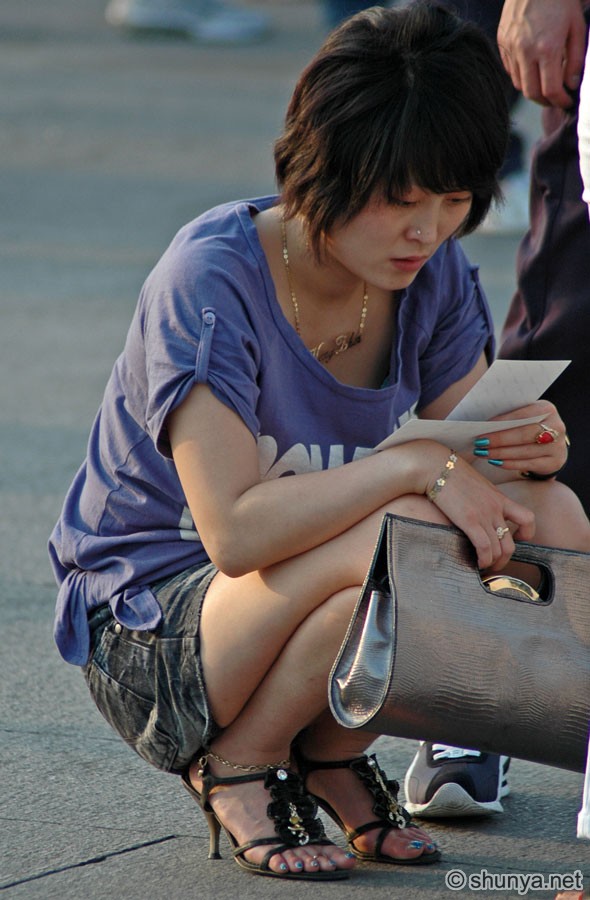
Our interlocutor’s hostility to the prevalent Chinese habit of squatting is more interesting. Everywhere in China – on pavements, in malls, at bus stops, in railway stations; anywhere, really, where people stand and wait – you will see people who have dropped down onto their haunches for a rest

squatting men beijing-wangfujing

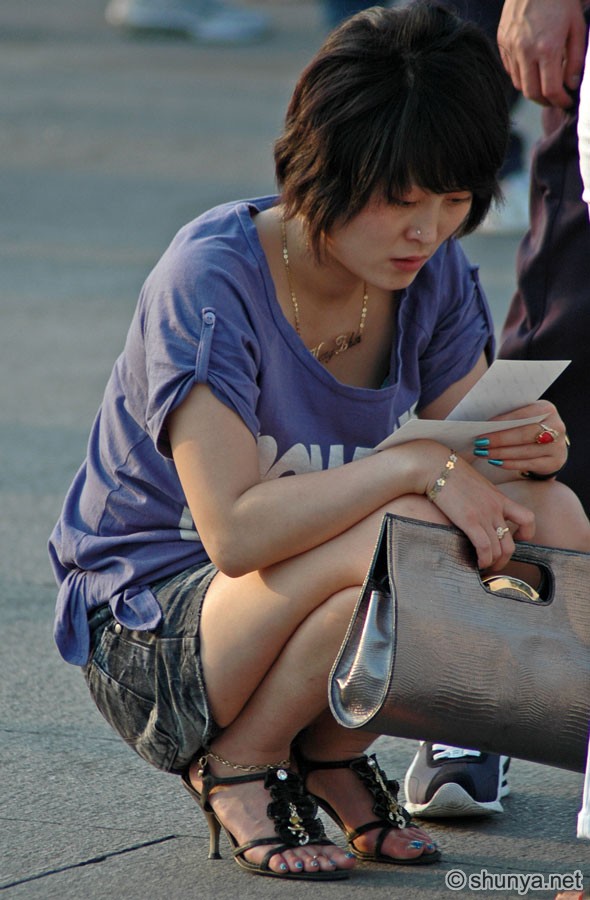
reading, more often than not these days, their text messages.

squatting woman-5

I have to say that I also find this habit disquieting. It seems such a … humiliating posture, is the only way I can describe it. Every time I see people squatting, I scold them mentally: “Get up, get up! You are not a slave!”

And yet … when you think about it, in a world where chairs didn’t exist, which must have been 99.9% of the time that we have been human beings, it was really quite natural for us to drop down  onto our haunches when we were tired of standing and when there wasn’t a nice log or large stone to sit on. So I’ve come to the conclusion that I think the way I do about squatting because of the chair.

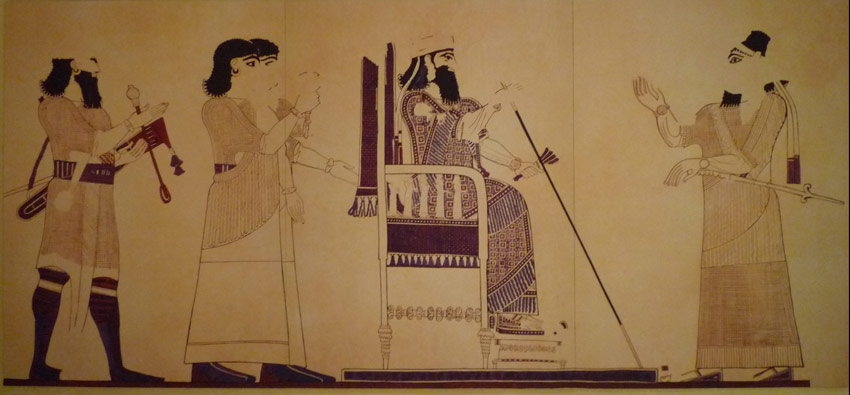
The chair, or rather the throne, was obviously an instrument used by Kings and Emperors, from the earliest times, to overawe their subjects. Here we have an Assyrian emperor lording it over some subject of his

throne-assyrian throne

And the temple of Abu Simbel in Egypt must surely be the epitome of rulers lording it over their lands while sitting on thrones

throne-abu simbel

Shelley’s poem Ozymandias, which I quoted in an earlier post, comes to mind when I look at these statues.

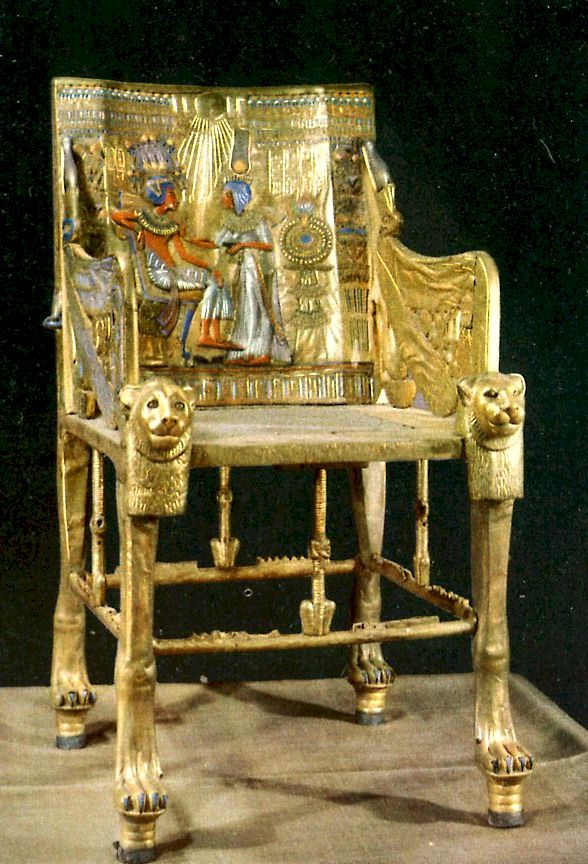
Egypt’s dry desert air, in which buried things do not rot, allows us to contemplate today a real Egyptian throne, this one from King Tut’s tomb (“Tutankhamun, King of Upper and Lower Egypt, Lord of the forms of Re, Strong bull, Perfect of birth, He whose beneficent laws pacify the two lands, He who wears the crowns, who satisfies the gods” to you, mere mortal, and don’t you forget it …):

throne-king tut-1

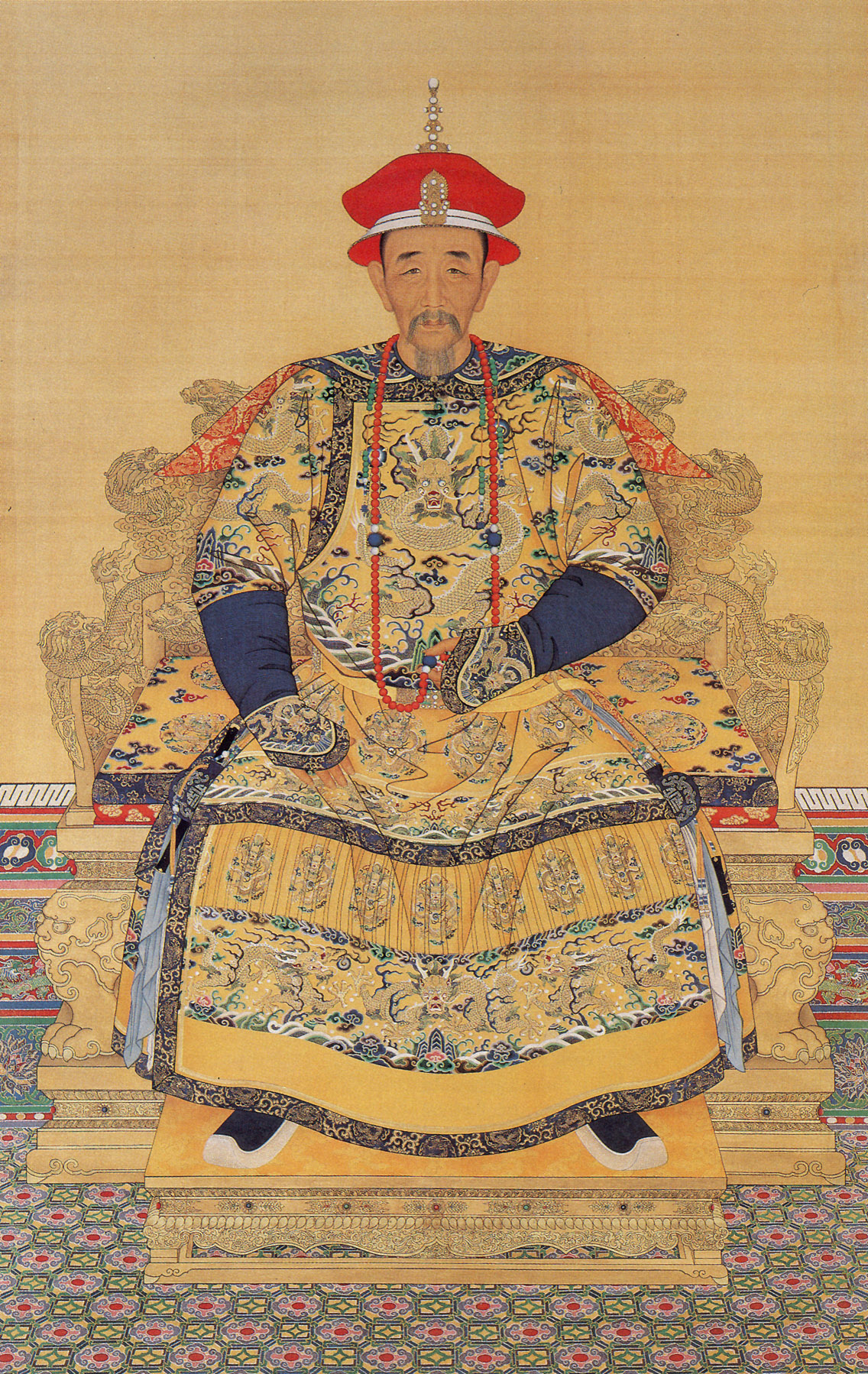
Even in more modern times have thrones played their part in elevating the splendour of the sitter, as in this case of the Qing emperor Kangxi

throne-Qing Emperor Kangxi

And of course Chinese emperors, along with many copy-cat Asian emperors, liked to have their subjects not just squat in front of them but to really debase themselves by kowtowing:

kowtowing before the emperor

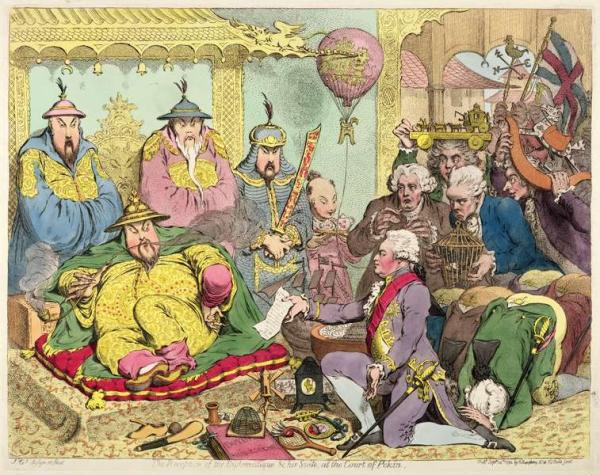
Which led to the famous diplomatic incident of 1793, when, Lord Macartney, King George III’s envoy to the Chinese Emperor, refused to kowtow but did accept to get down on one knee as he would have before his King:

kowtowing before the emperor-English ambassador

Even more recently, thrones have played their part to prop up monarchies. The last Shah of Iran, for instance, was fond of using the Naderi throne to impart some sheen to his tawdry reign.

throne-peacock throne-Shah in front

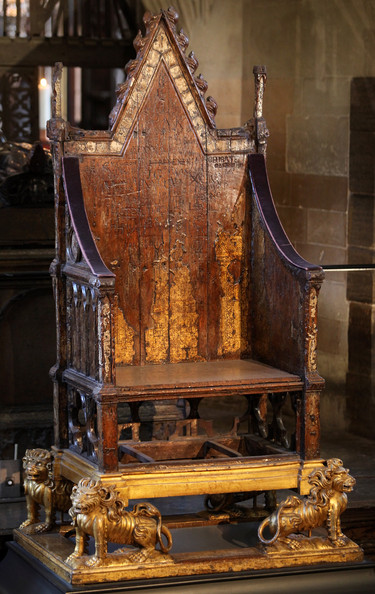
And of course we in the UK have our venerable King Edward’s Chair in which all English, and then British, monarchs (bar two) have been crowned since 1308 – by the way, King Edward I commissioned the chair to house the Stone of Scone after he stole it (a.k.a. war booty) from the Scots.

throne-king edwards

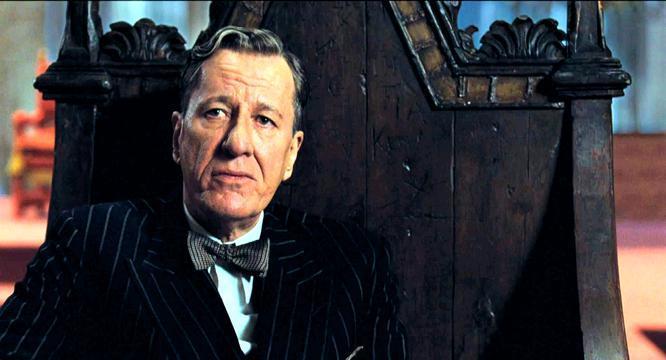
Those of us who have the seen the film The King’s Speech will recognize the throne, which appears at some point in the story and whose portentous humbug is mercifully taken down a peg or two by the egalitarian Australian speech therapist Lionel Logue (played by that wonderful actor Geoffrey Rush), who slouches around in it provoking a burst of monarchist anger from King George VI:

throne-king edwards-Geoffrey Rush in it

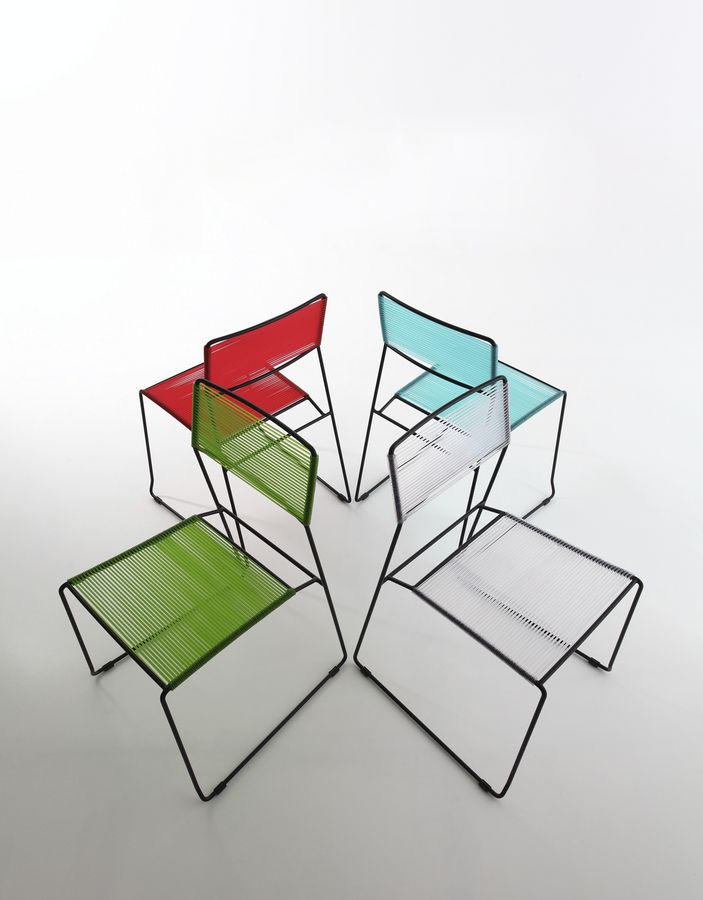
Luckily, Lionel Logue’s egalitarian comments about the chair in question was preceded a century or so ago (not more, I suspect) by a move to make the chair a product of mass consumption, which meant that I (but probably not the Chinese of my generation) have spent my whole life sitting on chairs and not squatting on the ground. I try to remember the chairs of my childhood but fail. A chair’s a chair, some of you might say, it’s a functional object. True, but even functionality for the masses can be beautiful. It took my wife to introduce me to Italian furniture design and to make me realize that a chair could be both beautiful and functional. The moment we could – in the early 1980s – we bought ourselves a set of dining chairs. My wife has scoured the internet for photos of the model of our chairs but has found none. This photo of the spaghetti chair is the closest I can find:

chair-sled based-spaghetti

I designed and put together a dining room table to go with our chairs, the only thing I have ever designed in my life. All slumber in a warehouse in Vienna, awaiting our return to Europe.

Later, when we were living in New York, we came across Shaker chairs (and other furniture) during a weekend trip in upstate New York which took us to an old Shaker colony. Beautiful things.

chair-shaker-2

We would have bought some reproductions if we hadn’t already had our chairs – and if they hadn’t been so expensive.

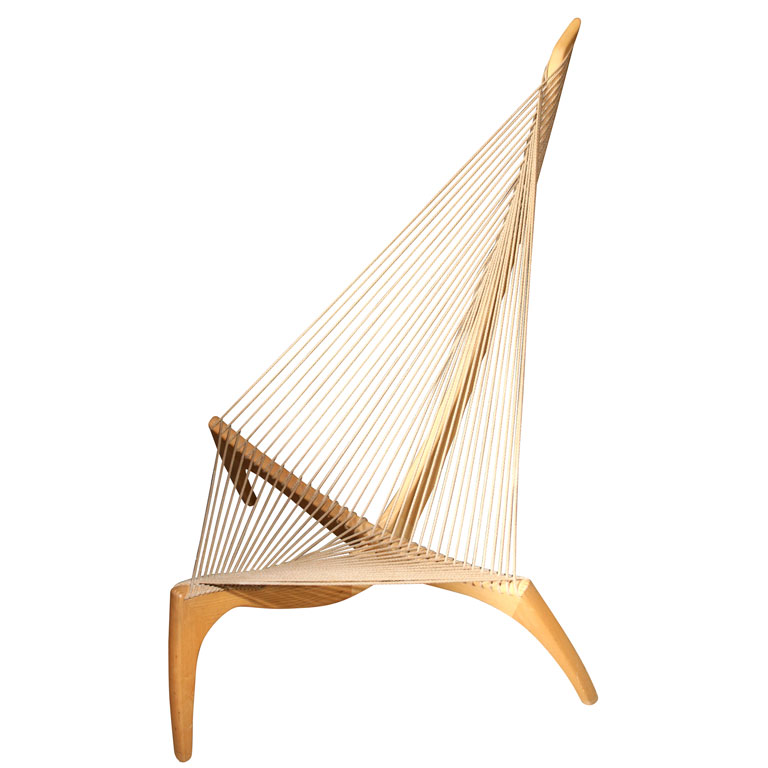
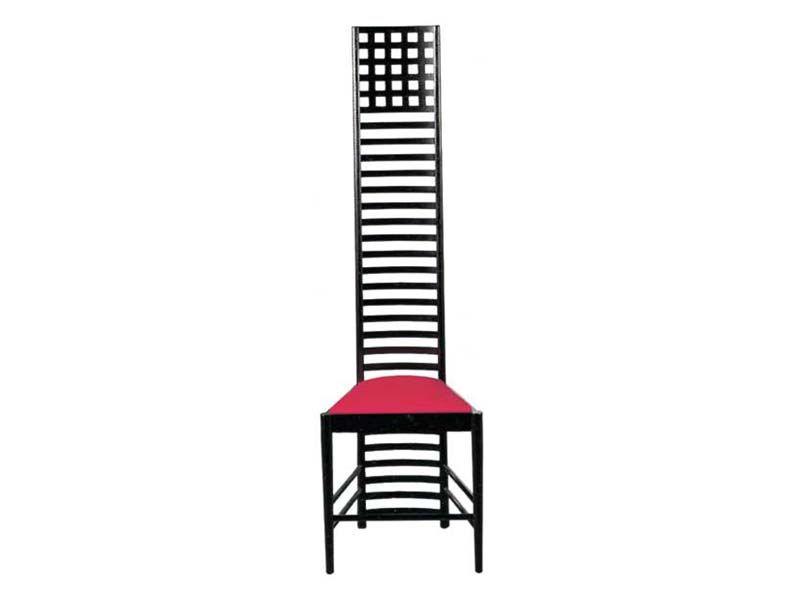
Over the years, we’ve seen some “trophy” chairs (chairs which don’t just sit quietly around a dining room table) which we wouldn’t have minded buying, if the price had been right (and if we’d had the space).

The Danish harp chair:

chair-danish harp chair

The Mondrian chair (this would have been more my choice than my wife’s):

Chair-Mondrian chair

Chairs designed by the Glaswegian architect, designer and artist Charles Mackintosh (again, my choice I think):

chair-Mackintosh chair

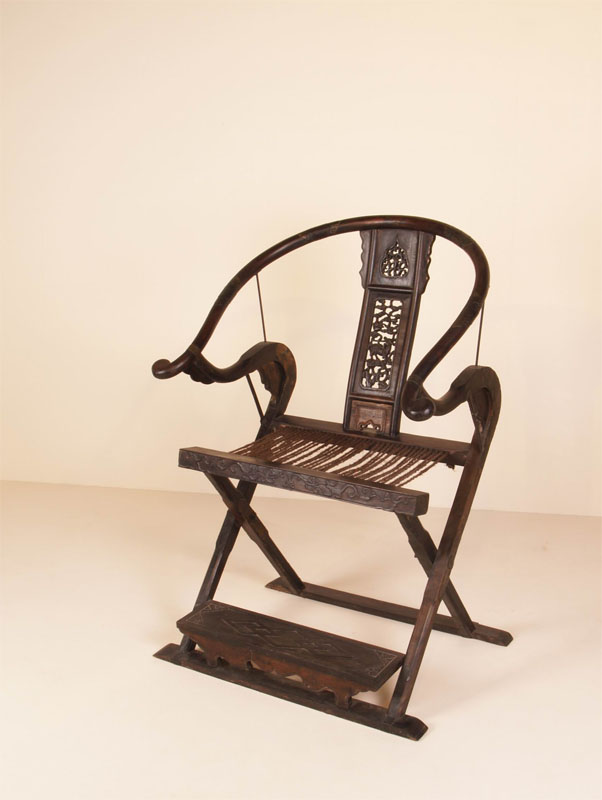
Here in China, chairs from the Ming period:

chair-ming-1

The reader will have noted by now that our tastes in chairs (indeed, all furniture) lean towards the simple and clean line …

I suppose that with consumption on the rise in China, the habit of squatting will disappear, as will – I fervently hope and pray – the habit of spitting.  In the meantime, I will continue to mentally exhort my fellow Beijingers to stand up straight and proud every time I see them squatting on the ground.

_________________________

Squatting men: http://mattchalmighty.files.wordpress.com/2012/10/beijing-wangfujing-men-squatting-large.jpg
Squatting woman: http://www.shunya.net/Pictures/China/Beijing/BeijingWoman.jpg
Assyrian throne: http://www.ucl.ac.uk/sargon/images/essentials/kings/sh5-til-barsip-large.jpg
Abu Simbel: http://famouswonders.com/wp-content/uploads/2009/04/abu-simbel.jpg
King Tut throne: http://comeseeegypt.com/images/tutthrone.jpg
Qing Emperor Kangxi: http://upload.wikimedia.org/wikipedia/en/1/12/China,Qing,Emperor,Kangxi,Painting,Color.jpg
Kowtowing before the emperor: http://www.mitchellteachers.org/WorldHistory/AncientChinaCurriculum/Images/legendaryemperors/ImperialRobesOfficialsPayingRespect_large.jpg
English ambassador Lord Macartney before the Emperor: http://images.printsplace.co.uk/Content/Images/Products/92648/89219/Reception_of_the_Diplomatique_and_his_Suite_at_the_Court_of_Pekin__c_1793__1.jpg
Shah of Iran in front of peacock throne: http://filelibrary.myaasite.com/Content/26/26343/29921747.jpg
King Edward’s Chair: http://www2.pictures.zimbio.com/gi/Visitors+Look+Coronation+Chair+Westminster+Wk0GK7SFdXnl.jpg
Geoffrey Rush sitting in King Edward’s Chair: http://v020o.popscreen.com/eGhxd3hrMTI=_o_st-edwards-chair.jpg
Spaghetti chair with sled base: http://img.archiexpo.com/images_ae/photo-g/commercial-contemporary-sled-base-stacking-chair-50648-3267845.jpg
Shaker chair: http://www.jkrantiques.com/_images//ShakerCounterChairWeb.jpg
Danish harp chair: http://shard1.1stdibs.us.com//archives/upload/1stdibsA/071607_sb/arensojoldHD/19/xHudJuly07_398.jpg
Mondrian chair: http://www.dorotheum.com/fileadmin/user_upload/bilder/Presse/Gallery_of_Highlights/Rietveldstuhl.jpg
Mackintosh chair: http://1.bp.blogspot.com/-_ZjHHv_Nzls/UOP0yApjC4I/AAAAAAAAAI0/yTahn5EI7q0/s1600/1.Charles_Rennie_Mackintosh_Hillhouse_Chair_rfd.jpg
Ming chair: http://www.easterncurio.com/easten%20curio/Afurniture/ItemForOn-Selling/A1S152101.jpg

DREAM JOURNEY: PART I

Beijing, 8 May 2013

May is a good time to be in the Mediterranean. The weather is good, the temperatures not too high, the vegetation still green, and the flowers blooming. I feel restless, I want to be there. But it cannot be; the rent must be paid, as must the gas and electricity, not to mention the food, the occasional bottle of wine and other sundries. I must earn my living.

The internet is a wonderful thing though. Sitting on my living room couch in the evenings, navigating with my little black mouse and clicking my way through hundreds of internet pages, I can visit all the places I want to be in but cannot. So I have decided.  Riding the surf of the web, my wife and I will take a trip I have long wanted to make: a visit to a string of sites around the northern rim of the Mediterranean which are known for their early Christian mosaics. In an earlier post I have alluded to my fascination with this art form.

It’s time to start. As I sit in front of my computer screen, I have to first wrestle with the question of what car my wife and I will travel in on this virtual trip we are about to make. With the freedom that comes from a trip in my imagination – no cost considerations, no considerations of practicality (is the boot big enough?) – I first think of taking a Smart; I like its cheerfully odd shape and I have never driven one.

Smart-Car

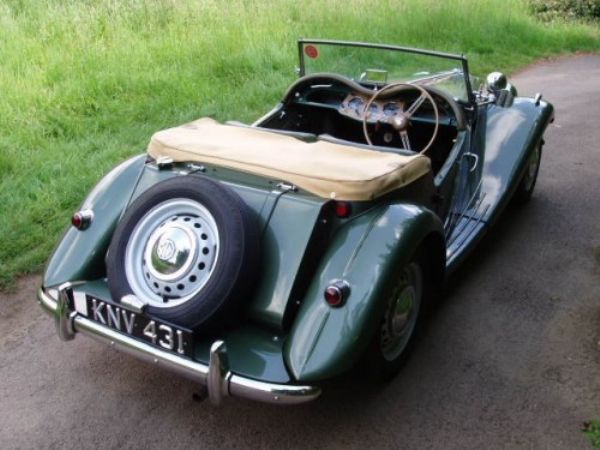
But on further consideration, I plump for an MG convertible, and specifically a model which is as old as we are.

MG car

In my imagination we can have the roof down and enjoy the sun on our faces and the wind in our hair (although the only time we ever drove such a car in the real world it started raining and we had no idea how to put the roof back in position).

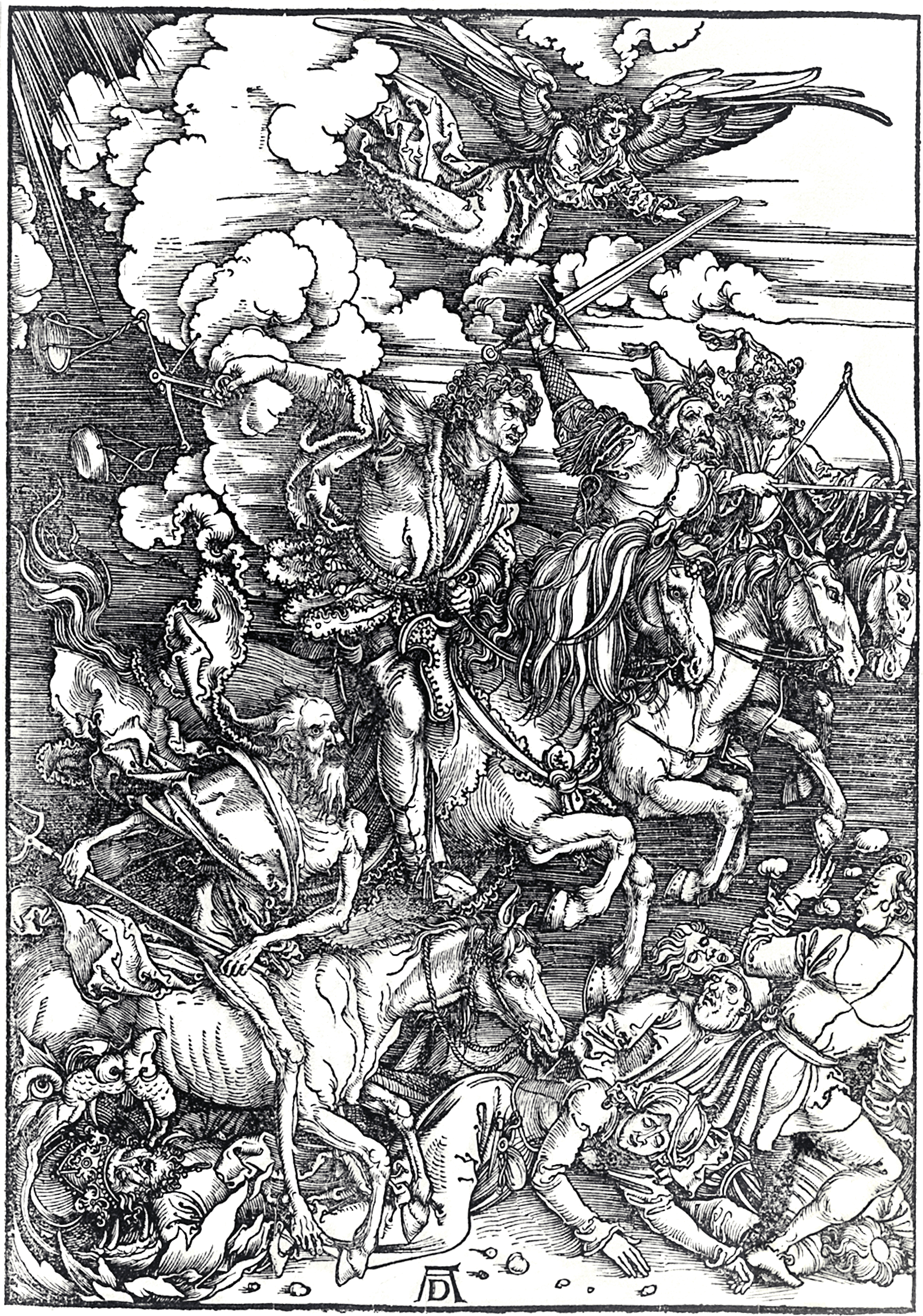
So here we are, comfortably ensconced in our little MG. Where do we start our journey? I pick Ravenna, because the city has one of the finest collections of early mosaics still extant. Actually, it’s a small miracle that there are any mosaics left at all, either in Ravenna or anywhere else. Over the millennium and a half that separates us from their creation, they have suffered from the ravages of religion: from outright hostility towards their symbolic potency, to their neglect through changes in artistic fashion. They have suffered from natural catastrophes like earthquakes and fires. And last but not least, they have suffered from the four horsemen of the Apocalypse – Conquest, War, Famine, and Death – sweeping repeatedly across the face of the land; every time the horsemen passed, not only did people die but the beautiful things they had created were destroyed. You only have to see what is happening to Syria’s irreplaceable cultural heritage in this time of civil war to know what I mean.
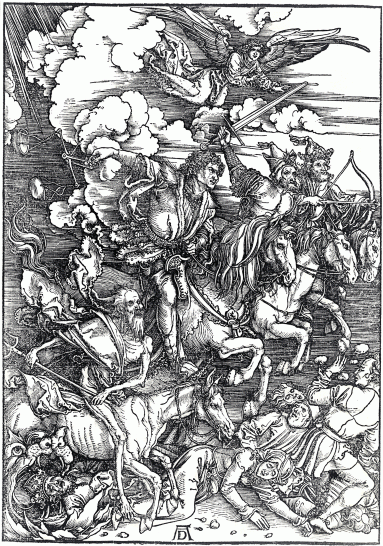
4-horsemen-apocalypse-1-durer

Ravenna sadly exemplifies what I’ve just described. It became the capital of the Western Roman Empire in 402 AD, when everything was beginning to fall apart there. In 490, it was put under siege for three years and finally captured by the Ostrogothic King Theoderic. In 540, it was captured by the Byzantines after a war with the Ostrogoths. In 751, it was captured by the Longobards after a long war of attrition between them and the Byzantines. In 774, to thank Charlemagne for taking Ravenna away from the Longobards and giving it to him, Pope Adrian I allowed Charlemagne to take away anything he liked from the city to enrich his capital in Aachen. Lord knows how much Ravenna lost, but it must have been a lot. Over the following centuries, lordship over Ravenna swapped hands many times as the papacy’s claim to Ravenna was contested by local families. Finally, in 1275 a local family, the De Polenta, made Ravenna their long-lasting seigniory, which gave the city some stability for nearly 200 years. Then from 1440 to 1527, Venice ruled Ravenna, although in 1512, during one phase of the Italian wars, Ravenna was sacked by the French. Thereafter, Ravenna again became part of the Papal States and stayed there, except for a short interlude during the French Revolution and Napoleonic Empire, until 1859, when it became part of the new Italian State. After that, apart from some bombing by the Austrians during the First World War, Ravenna knew peace. Truly, it is a minor miracle that we have any mosaics left after all this mayhem. And I haven’t even included the natural disasters which the city suffered along the way.

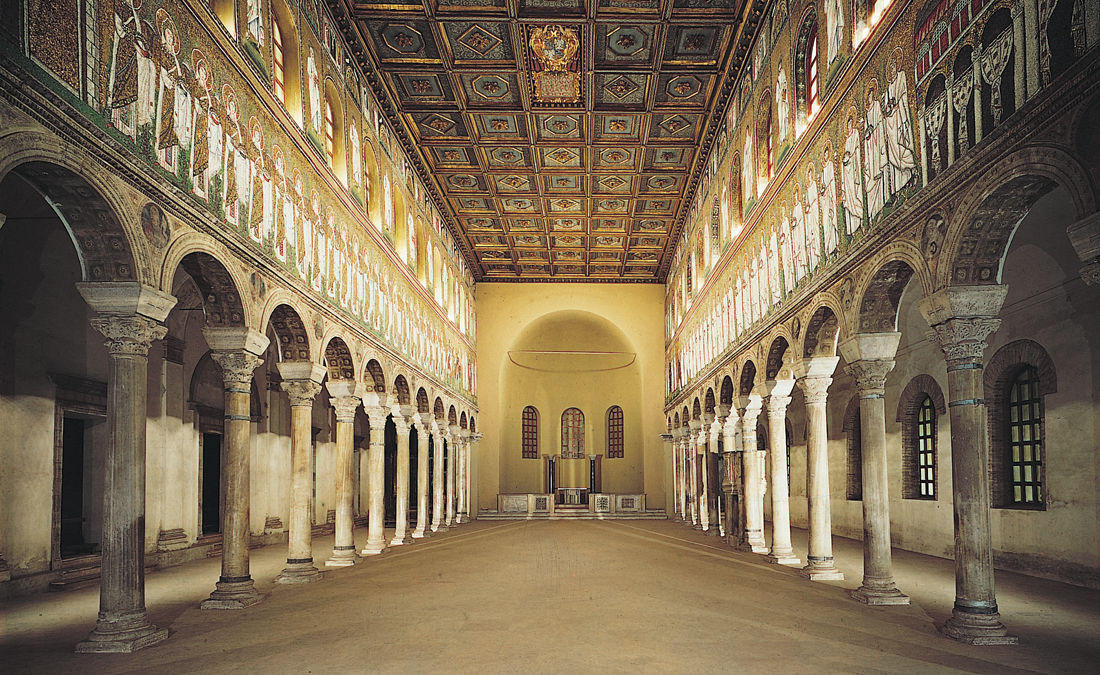
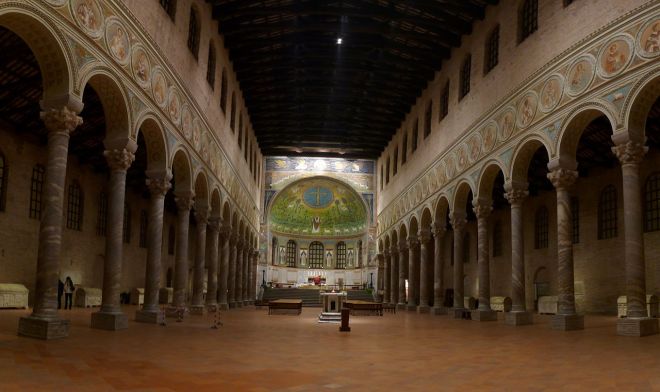
It’s time to start our journey and visit some of what is left. After clicking around a bit, I choose for us to drive up and park in front of the church of Sant’Apollinare Nuovo, where the mosaics date from the 6th Century. Here’s what greets us when we enter the church.

sant'apollinare nuovo-2

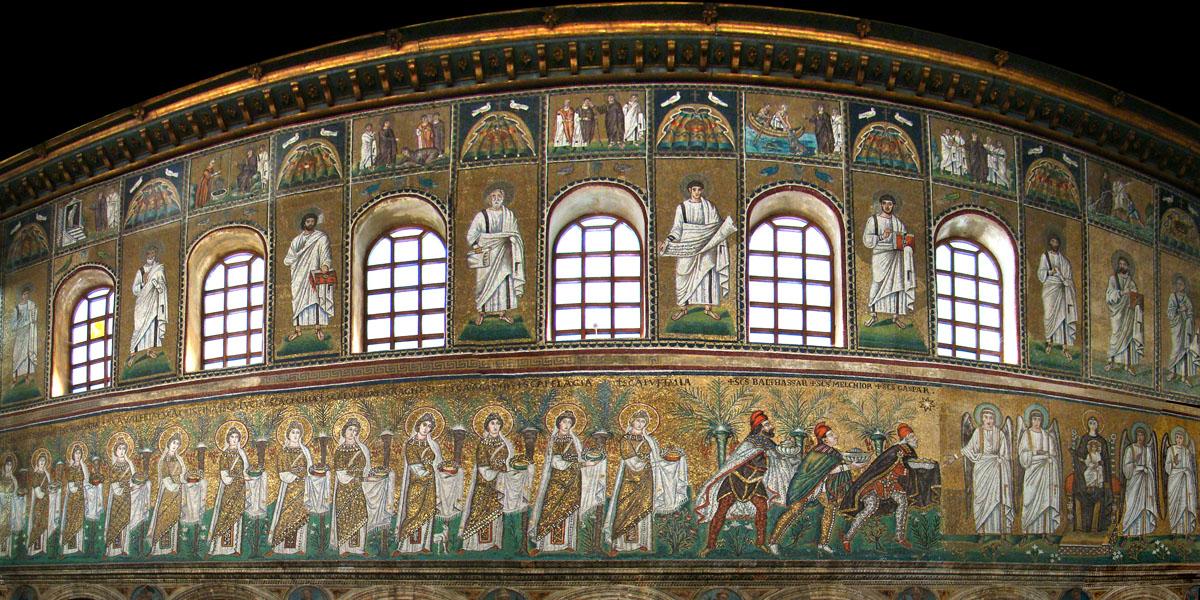
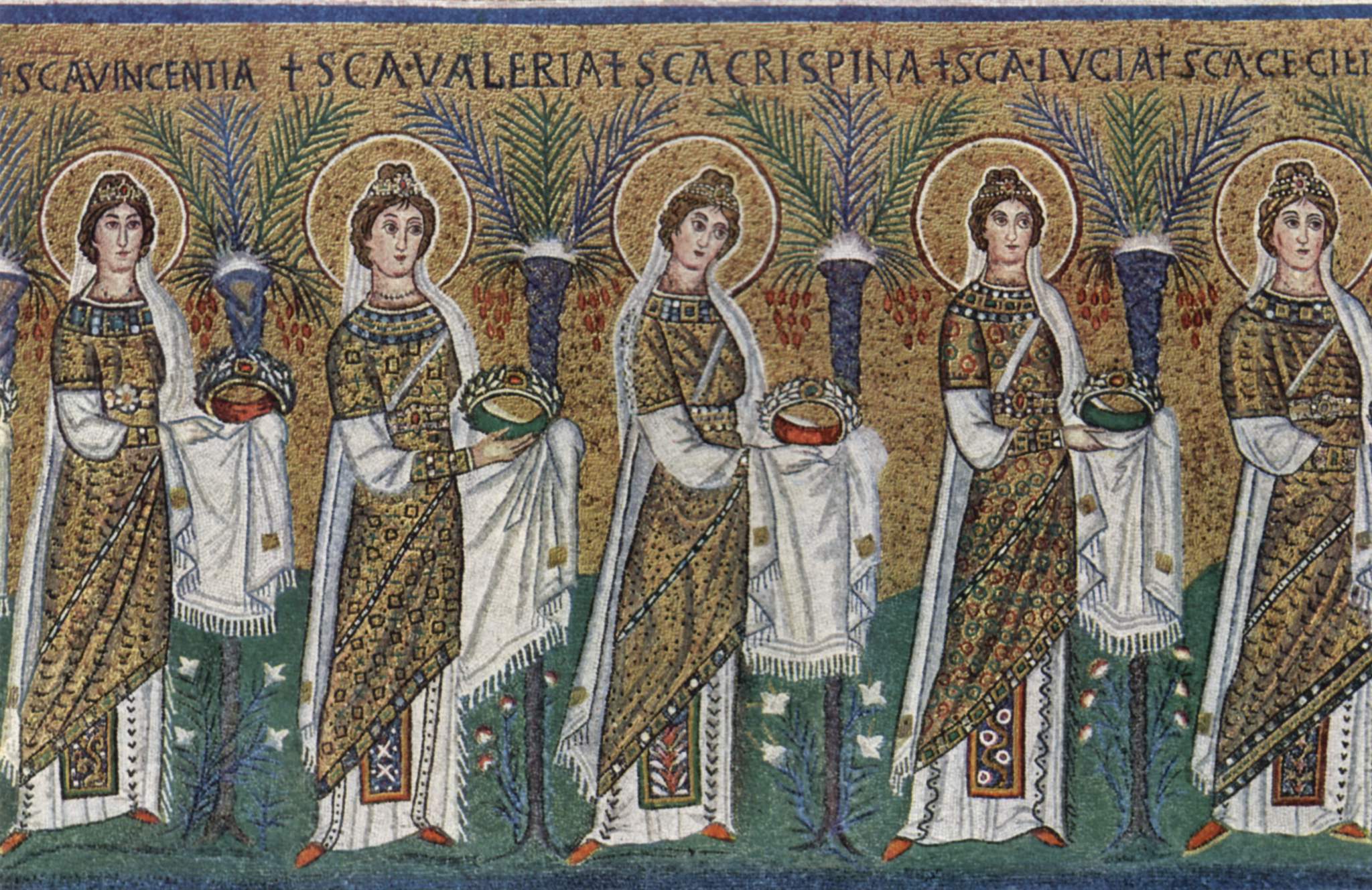
On either wall of the nave, runs a line of men and women, saints and martyrs, processing solemnly towards the altar.  My wife and I prefer to focus on the women principally because among them is the martyr who has our daughter’s name. It gives us a comforting sense of connection.
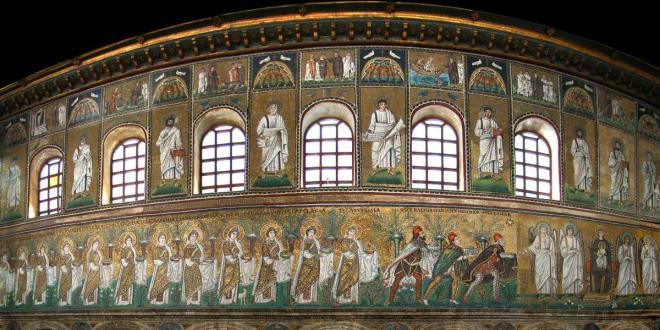
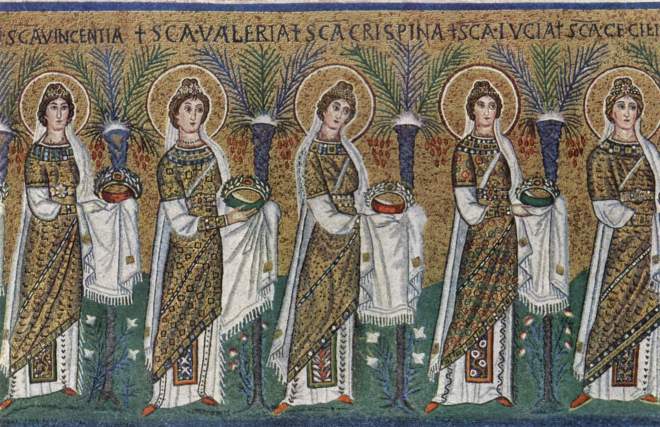
sant'apollinare nuovo-5

sant'apollinare nuovo-4

Originally, the two lines were processing towards a scene of stately splendour in the apse. But it is gone, victim to a desire to modernize; it was removed during renovations in the 16th Century. The apse itself was so badly damaged by Austrian bombing during the First World War that it had to be rebuilt.

Time to move on to the church of Sant’Apollinare in Classe, and in a couple of clicks we’re there. With much the same layout as the other Sant’Apollinare, and with mosaics from the same period, it is its mirror image: the mosaics in the nave have disappeared, victim to the depredations of the Venetians in the 15th Century, but the apse glows with a magnificent mosaic, where the colour of grass dominates: a green and pleasant land for the Christian faithful.
sant'apollinare in classe-3

sant'apollinare in classe-1

This great expanse of mosaic colour makes me decide to visit the Mausoleum of Galla Placidia. So with a click, a hop and a jump we’ve gone from church to mausoleum and are gazing up at the wonderfully dark blue ceiling

mausoleum galla placidia-2

There are other early mosaics in Ravenna, but it’s time to leave. We’ll see them another time.

Next stop: Venice.

As I gaze at Google Map trying to choose which road to take, I decide all of a sudden that it would be in keeping to follow the trace of the old Roman roads. To do this, I will rely on the Peutinger map. This is the only existing example of a Roman map of the Empire’s road network. It now resides in the Austrian National Library. It is actually a 13th Century copy, made by an anonymous monk in Colmar in Alsace, of what was probably a 5th Century original, itself a distant descendant of the original made by one Marcus Vipsanius Agrippa for the Emperor Augustus in the last years BC. It is so rare that it has been placed on UNESCO’s Memory of the World Register. This photo shows one section of the map, showing Italy from Rome to Sicily

peutinger map segment IV

Actually, I find the map very difficult to read; it is not to scale, it is not oriented the way modern maps are, and many of the place names mean nothing to me. So it is with considerable relief that I discover that someone has transcribed the Peutinger map onto a modern map. Studying this map, I decide we will follow the trace of the old Via Popillia, which once connected Rimini with Adria and the Via Annia. My intermediary objective is Fusina, just south of Mestre. I’m driving there because in this trip of my imagination I want to enter Venice the way it was meant to be entered before they built the causeway, by sea. And Fusina is the only place where you can catch a ferry into Venice from the mainland.

So we motor up to Fusina, and in my zeal to follow the trace of the old Roman road (I can already see my wife tapping her fingers impatiently at these signs of anal behaviour on my part) we do so through a complicated series of back roads which take us through a number of small towns and villages and finally along the SP (Strada Provinciale) 53, with us cutting down to the right at some point to get to Fusina. In my defence, the coastline between Ravenna and Venice has changed a lot since Roman times; the silt brought down by the River Po and a number of other rivers in this area has pushed the coastline out quite a distance. As a result, the road network in the area has changed considerably over the centuries. In any event, we’ve arrived; by the way, the website I just used informs me that we have travelled about LXXV Milia Passuum (75 thousand paces, or 75 Roman miles), which in Roman times would have taken us about VI dies (6 days) to walk. We park the car and wait for the next ferry; the timetable available online helpfully informs me that there is a ferry every hour on the hour, so I don’t suppose we need wait too long. No doubt there is a bar where we can sit down and have a cappuccino.

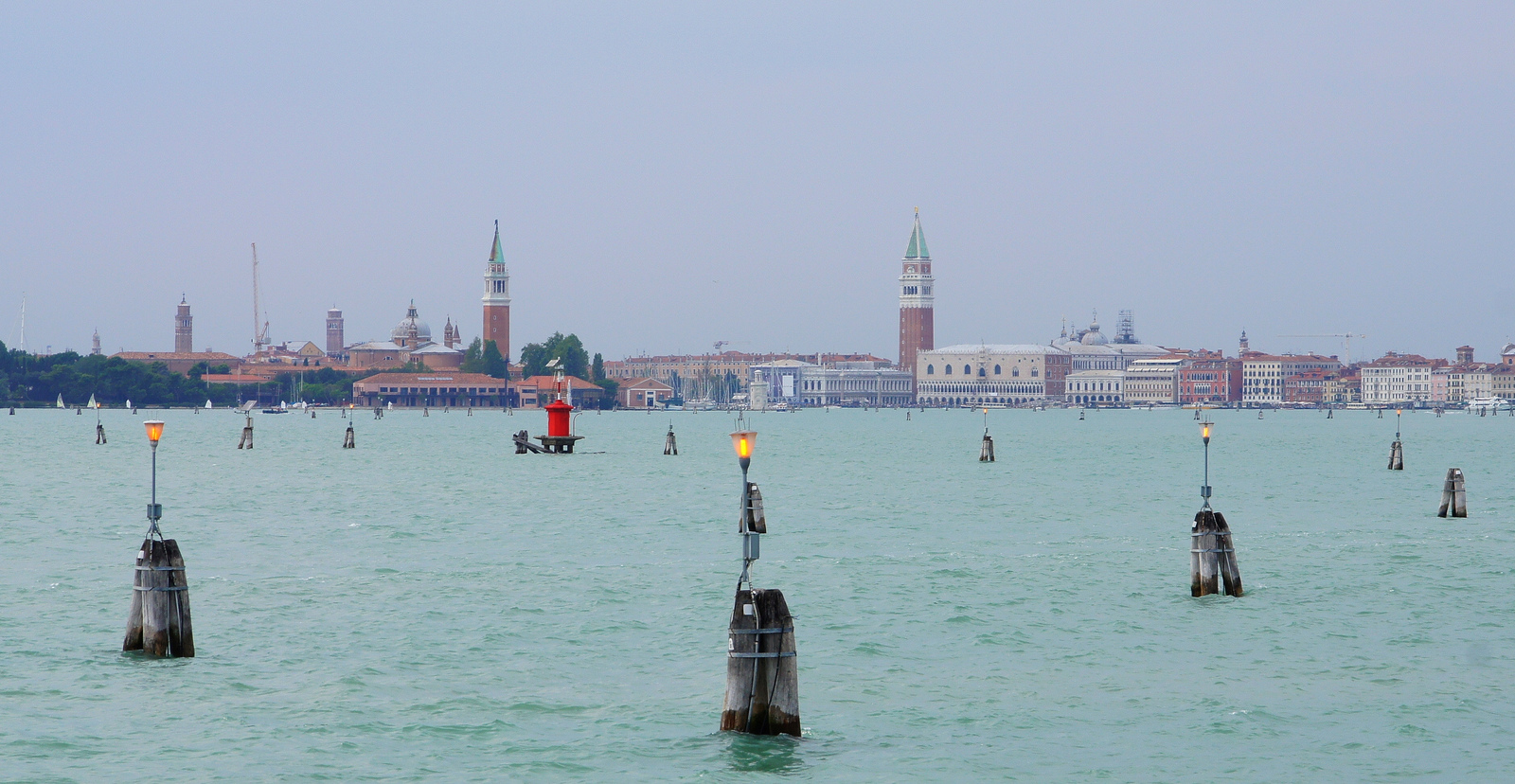
With a click we are on the ferry heading across the lagoon. As we get closer, we see this incomparable picture of Venice before us.

view from ferry

All too soon, it is time to get off at Zattere, to the south of the Canal Grande. We start threading our way through Venice’s maze of alleyways, crossing the Canal Grande at the Ponte dell’Accademia, and then after a sharp right in Campo Santo Stefano walking on to Piazza San Marco. Here, I stop and reveal to the reader that Venice is not actually our destination; we are going instead to the small island of Torcello to the north of the main island. It is true that the Basilica of San Marco is full of mosaics, but most of them are relatively modern, pale copies of the paintings of the time – and the church is always so horribly crowded with tourists! So we turn left in Piazza San Marco and head up to the north side of the island, to Fondamente Nova, where the municipality’s website helpfully informs me that I should catch the N9 aquatic bus. In my mind’s eye, when it arrives the bus is crowded with people going to the small nearby island of San Michele, the city’s graveyard. My wife and I squeeze on, and we wait patiently until after the stop at the graveyard and possibly also the following stop at Murano to be able to sit down. Then there’s a stop in the island of Burano before we finally get to Torcello.

Torcello was a place of refuge in the troubled centuries after the collapse of the Western Roman Empire. It was here and in the other islands of the Venetian lagoon that people came to escape from the depredations of the passing waves of various barbarian tribes. Until the 12th Century or so, it was a vibrant place with a significant population, but gradual silting of this part of the lagoon not only killed off the island’s more important economic activities but brought malaria to its inhabitants. So everyone left for Venice itself and now hardly anyone lives here. It is very peaceful, with just the church surrounded by vineyards.

Torcello Aerial view

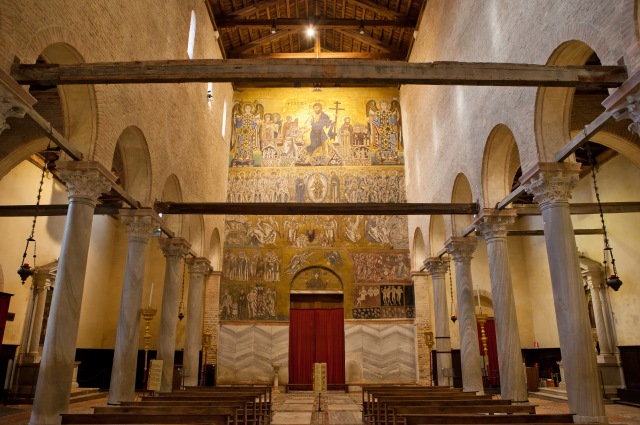
This abandonment might well have saved the mosaics which we are about to see. We walk up the path from the aquatic bus stop to the church, go in, and find this in front of us

torcello-8-front

And turning around, this behind us

torcello-6-back wall

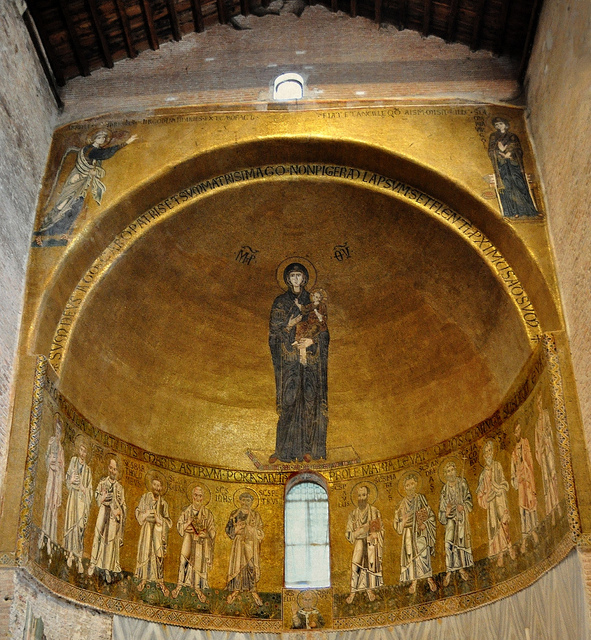
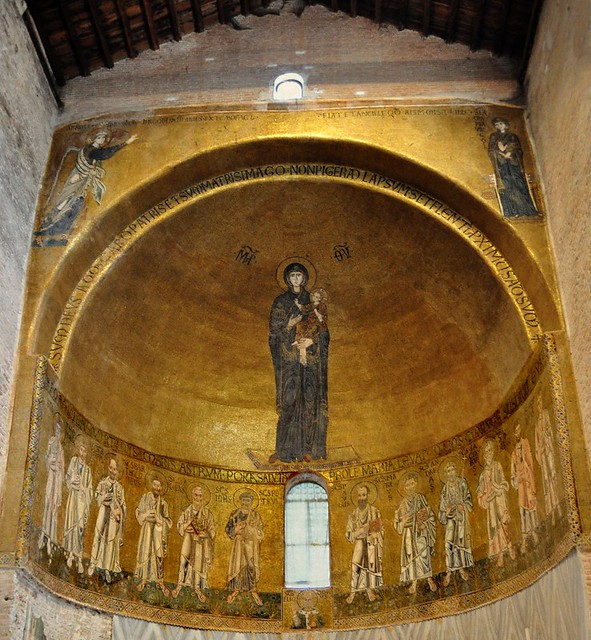
We have leapt forward some six centuries from Ravenna, with these mosaics being from the 11th and 12th Centuries. The style has changed, from one which in Ravenna still echoed the Roman styles to one which is much closer to that rigid style we call “Byzantine” as well as to what was later to become the medieval style. We walk forward to get closer to the mosaic in the apse, which is of the Virgin Mary with the infant Jesus.

torcello-5

I love this mosaic, with its gentle Madonna floating in a huge field of gold. I still remember well the impact it had on me the first time I saw it, a decade ago, on a late Autumn afternoon. The memory of that gentle face in its sea of gold has stayed with me ever since.

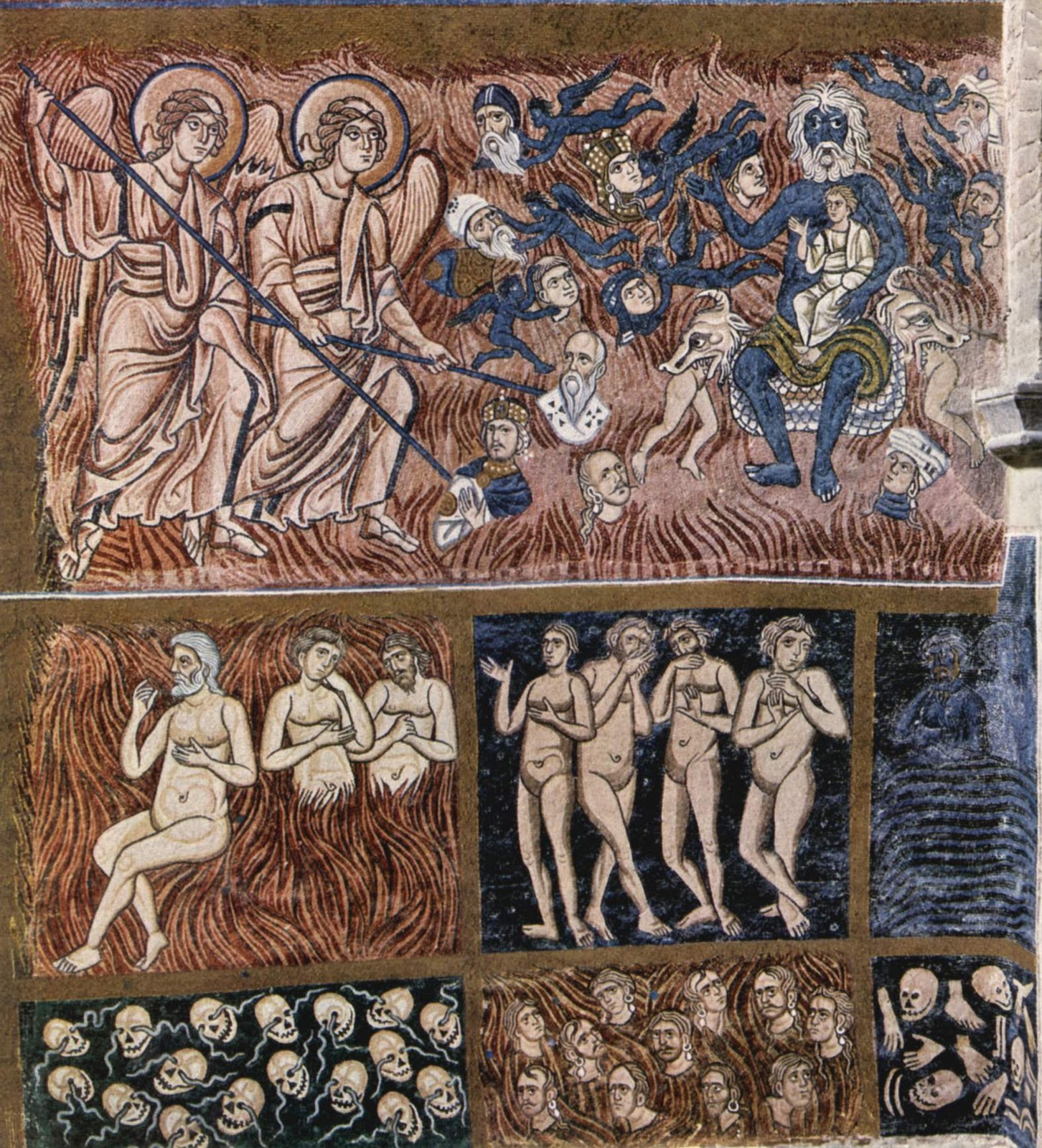
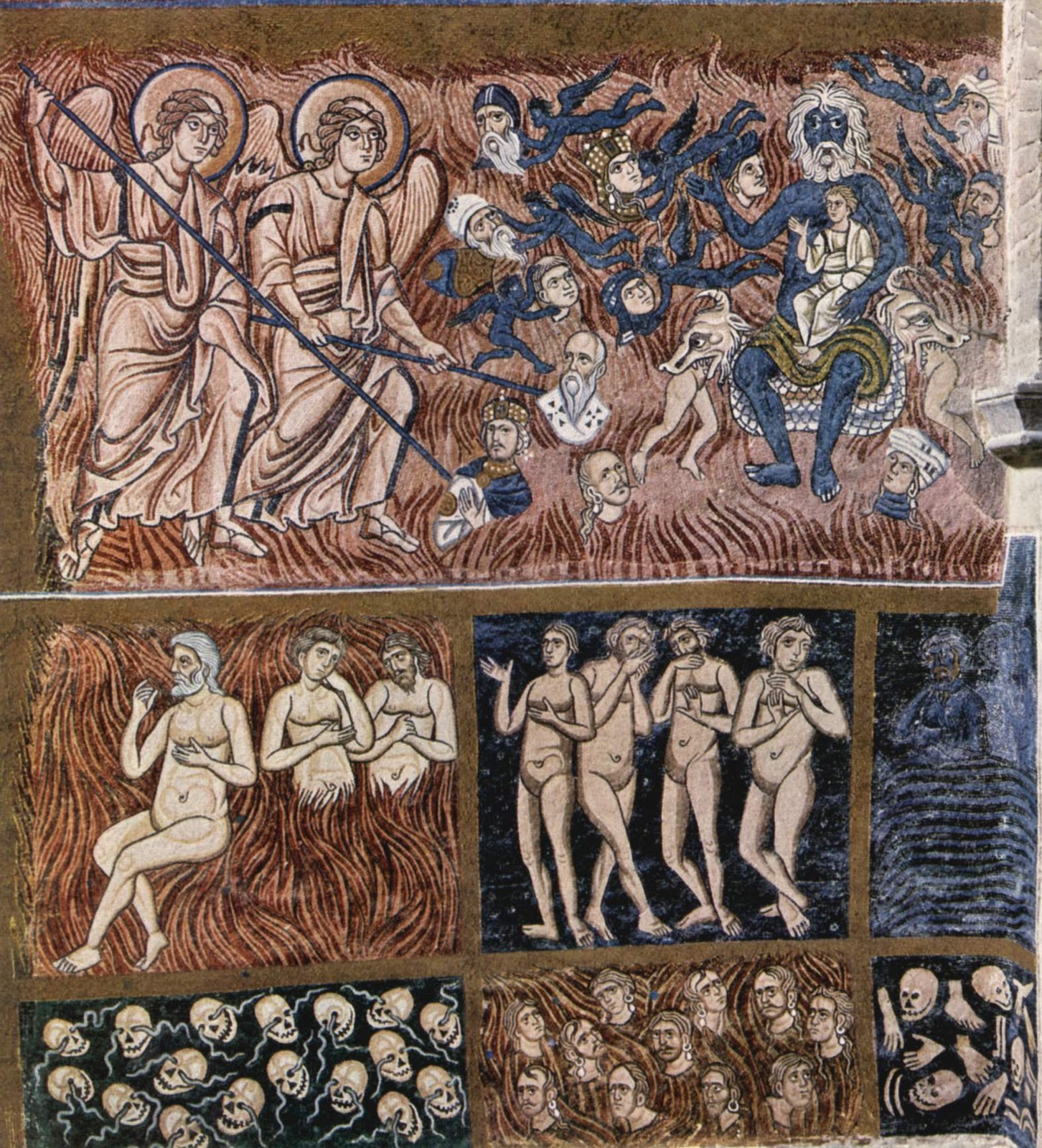
The mosaic on the back wall, a Last Judgement, is also spectacular, no doubt about it, but it doesn’t hold me as much. There are the usual scenes of naughty people being punished for their sins

Torcello-9-Last Judgment detail

The Middle Ages had a morbid fascination for this kind of stuff. But I find it all rather puerile. It always reminds me of the scary stories we used to tell each other in the dormitories at school after lights out, to give ourselves a delicious thrill of fright.

Onwards!

With a click of my mouse, my wife and I are back in Fusina, driving out of the car park in the little MG. We are now heading to Aquileia (79 Roman miles; 6 days’ marching). True to my promise to myself to follow the old Roman roads, I want to pick up the Via Annia, a major Roman road which linked Padova with Aquileia. We pick our way across the main road into Venice along the causeway and take the SS (Strada Statale) 14, which pretty much follows the trace of Via Annia. We bowl along, with the sun in our faces and the wind in our hair, passing Venice’s airport, and maybe catching sight to our right of Torcello’s tall campanile in the distance. We pass through Concordia Saggitaria, where we meet the Via Postumia, which ran across the whole of northern Italy from Genova to Aquileia, and on to Cervignano del Friuli. At Cervignano, we turn right onto the SR (Strada Regionale) 352 and a few Roman miles later arrive in Aquileia.

Poor Aquileia. During the Roman period it was an important city, guarding the eastern marches of Italy, which was the core of the Empire. A look at a map shows that any tribe from Central and Eastern Europe and beyond necessarily had to pass this way to enter the Italian lands, whether with peaceful intentions or not. When the Empire had its borders along the Danube River, Aquileia was the gateway to the rougher provinces of Illyricum, Dacia and Thrace that backed the frontier. As such, it was the starting-point of several important roads leading to this north-eastern portion of the Empire.

As the Empire’s western half collapsed and its borders were breached, the tribes did come, along those roads so helpfully built by the Romans. And the roads led to Aquileia, which was such a tempting target. It was first besieged by Alaric and his Visigoths in 401, who attacked it again and sacked it in 408 on his way to sacking Rome. Then it was attacked by Attila and his Huns in 452, who so utterly destroyed it that it was afterwards hard to recognize the original site. It rose again, a pale shadow of its former self, but was once more destroyed, by the Longobards this time, in 590. Today, it is just a quiet little village.

Aquileia’s loss was Venice’s gain. After each barbarian invasion, more of its inhabitants, along with those of smaller towns around it, fled to safety in the lagoon’s islands nearby, and so laid the foundations of Venice, but also of Torcello which we just visited, and of other lagoon towns.

We have come to visit the Basilica. From the outside it has all the look of a Romanesque church, and indeed it was built in 1031.

Basilica exterior

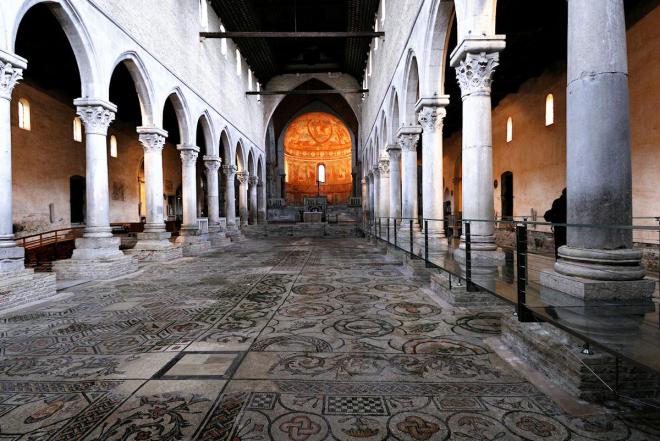
But when you go in, you find yourself in front of a vast mosaic floor, which quite takes your breath away
basilica floor-5

basilica floor-6

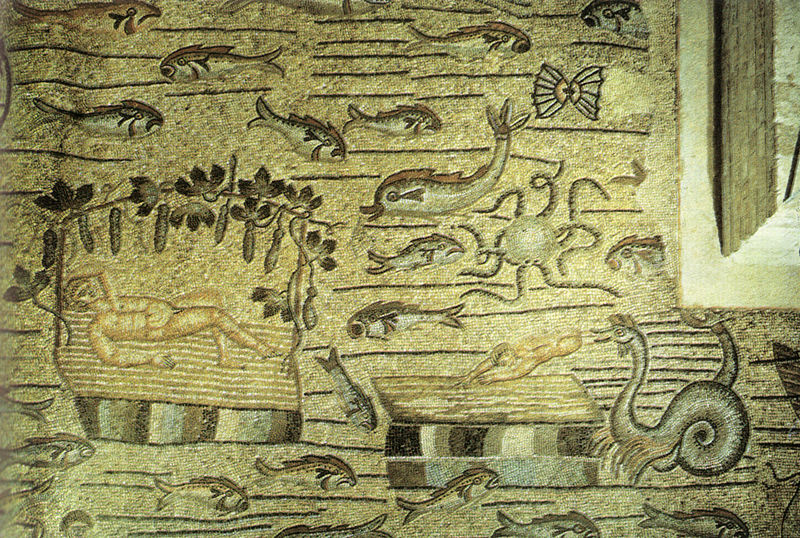
It was laid down in the 4th Century in a building which was destroyed by Attila’s Huns and around which a new church was built six centuries later. In fact, the builders covered up the mosaic with a new floor, and it wasn’t until 1909, when this floor was removed, that the mosaics once more saw the light of day. The subjects depicted include symbolic subjects, portraits of donors, scenes from the Gospels and dedicatory inscriptions. I show just one detail of it.

basilica floor-particular

These are even earlier than the mosaics we saw in Ravenna, and the Roman influence is clear. We could almost be looking at the mosaic floor of some vast Roman villa.

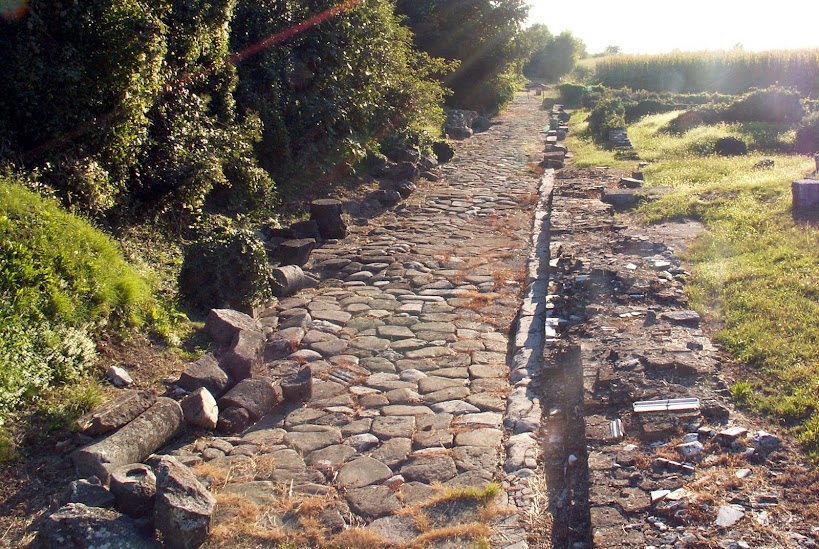
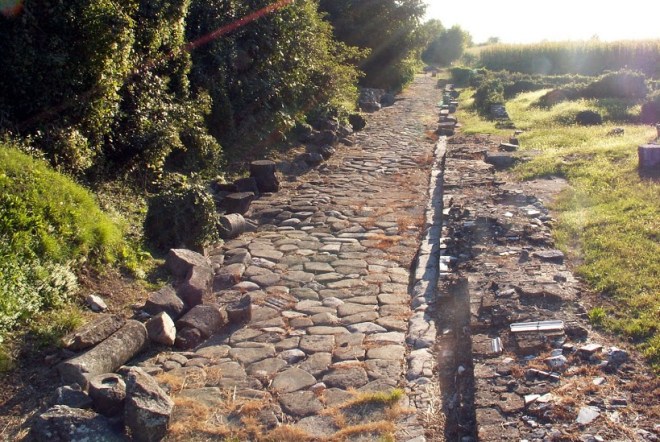
After admiring the mosaic floor and visiting other mosaics in the baptistery, my wife and I leave and walk around the ruins of the Roman town. As I click around, I am in a melancholy mood. So much destroyed, and for no purpose. We see the remains of one of the Roman roads that led out of the city.
roman road-3

The road beckons. After a rest, we’ll continue our journey north-eastward, from whence came the tribes which destroyed Aquileia.

(Readers who are curious to know how this dream trip continues can hyperlink here to the next leg of the journey)

______________________

Smart car: http://www.kinghdwallpaper.com/wp-content/uploads/2013/03/Smart-Car.jpg
MG car: http://www.msmclassifieds.co.uk/autoclass/stock-images/fliw8myjsf/oilhekvry4/fb173nj5q1.jpg
4 horsemen apocalypse-Durer: http://mcalmont.files.wordpress.com/2013/01/dur_4horse.gif
Sant’Apollinare Nuovo-1: http://apah.lakegeneva.badger.groupfusion.net/modules/groups/homepagefiles/49961-87537-58717-18.jpg
Sant’Apollinare Nuovo-2: http://classconnection.s3.amazonaws.com/256/flashcards/1016256/jpg/22early_christian_and_byzantine_%28student%291351736386614.jpg
Sant’Apollinare Nuovo-3: http://upload.wikimedia.org/wikipedia/commons/f/fd/Meister_von_San_Apollinare_Nuovo_in_Ravenna_002.jpg
Sant’Apollinare in Classe-1: http://upload.wikimedia.org/wikipedia/commons/thumb/f/fd/Sant%27Apollinare_in_Classe,_Ravenna.jpg/1280px-Sant%27Apollinare_in_Classe,_Ravenna.jpg
Sant’Apollinare in Classe-2: http://pixdaus.com/files/items/pics/9/49/73949_68edee7b4d49d43caa20681b9709f5bd_large.jpg
Mausoleum Galla Placidia: http://www.cittadarte.emilia-romagna.it/images/galleries/ravennaintro/ra-mausoleo-galla-placidia-mosaico-volta-celeste.jpg
Peutinger map segment: http://libweb5.princeton.edu/visual_materials/maps/websites/thematic-maps/qualitative/peutinger-table-map-1619.jpg
View from the ferry: http://farm9.staticflickr.com/8149/7667954390_2eafc258f6_h.jpg
Torcello aerial view: http://www.venicenews.info/Resource/TorcelloAerial.jpg
Torcello-1-front: http://venezia.myblog.it/media/00/00/1215490241.jpg
Torcello-2-backwall: http://d1ezg6ep0f8pmf.cloudfront.net/images/slides/a2/8812-torcello-cathedral-nave-looking-west.jpg
Torcello-3: http://farm7.staticflickr.com/6094/6362159351_0d3fe8a136_z.jpg
Torcello-4-last judgement detail: http://4.bp.blogspot.com/-wKvqFMTU-O8/TuyBuW4hnqI/AAAAAAAAAg8/-L3J_V80UC4/s1600/Last+Judgment+Torcello+Tweede+plaatje.jpg
Aquileia Basilica exterior: http://upload.wikimedia.org/wikipedia/commons/8/87/Basilica_Aquileia_1.JPG
Aquileia Basilica floor-1: http://img11.rajce.idnes.cz/d1102/7/7156/7156708_b33224f9e53bf0956558a717bbf58ec8/images/Aquileia_-_Basilica.jpg
Aquileia Basilica floor-2: http://static.turistipercaso.it/image/f/friuli/friuli_qhjf9.T0.jpg
Aquileia Basilica floor particular: https://upload.wikimedia.org/wikipedia/commons/thumb/8/8c/Aquileia,_storia_di_giona,_pavimento_della_basilica,_1a_met%C3%A0_del_IV_secolo.jpg/800px-Aquileia,_storia_di_giona,_pavimento_della_basilica,_1a_met%C3%A0_del_IV_secolo.jpg
Aquileia Roman Road: https://lh5.googleusercontent.com/-QkR-yVgM57g/SOy7HQQg_OI/AAAAAAAAYB4/7b6E9opcEuo/w819-h549/Aquileia+-+Roman+road.jpg
A HORSE! A HORSE! MY KINDGOM FOR A HORSE!

Beijing, 5 February 2013

I was all atwitter this morning when I saw the news. The skeleton found under the car park in Leicester, England, is indeed that of Richard III, last of England’s Plantagenet kings! OK, there are some sour-puss academics raising doubts, but that’s probably because the skeleton wasn’t found under their car park.

I spent the early morning skittering around the house with one shoulder up and shouting “A horse! A horse! My kingdom for a horse!” instead of getting ready for work. My wife looked on and rolled her eyes. But what Englishman has not at least heard of Shakespeare’s play Richard III? What person, who – like me – has thespian pretensions, has not dreamed of prancing about a stage as a mediaeval version of Quasimodo, murdering all and sundry with devilish glee and getting the beautiful women into the bargain? If it wasn’t for Shakespeare, who would remember King Richard III?

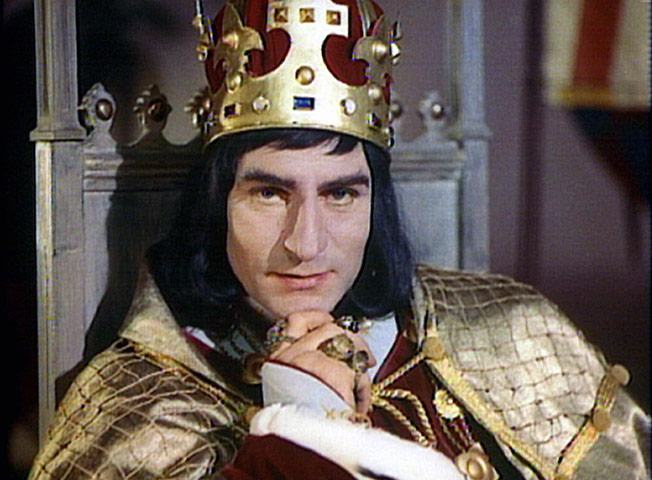
I did most of my acting at school. To my great regret, we never put on Richard III. But I’ve seen it a number of times, both in film as well as on the stage. I first saw it years ago with my wife, in some poky cinema on Paris’s rive gauche. That was the 1955 film version, with Laurence Olivier doing a marvelously over-the-top evil characterization of Richard.

laurence olivier

This film stayed in some sort of medieval setting. The next version I saw, with Ian McKellen playing Richard III, was made 40 years after Olivier’s movie. It tried to be clever and set the story in some sort of 1930s fascist version of Britain where the king’s deformity was moral rather than physical.

ian mckellen

We saw this film in Milan. As you can imagine, given Italy’s history

mussolini

the fascist overtones of the film had a certain resonance there.

And then, about a year ago, through sheer serendipity – we just happened to be visiting Hong Kong when the play was running – we saw Kevin Spacey play Richard III with a manic savageness.

kevin spacey

One of the amazing things about Shakespeare is the sheer number of quotes he has generated. Half the quotes people use, or so it seems, come from one Shakespeare play or another. Richard III has its fair share. There’s the quote which I’ve used as my title, which must be one of the most famous quotes in the English language. Then there is this quote:

“Now is the winter of our discontent
Made glorious summer by this sun of York”

which seems to be one of those quotes that everyone knows. Then there is this quote:

“Off with his head!”

which my father was very fond of using  whenever I was naughty.

Apart from these, the play has some deliciously cynical lines:

“Conscience is but a word that cowards use
Devis’d at first to keep the strong in awe”

“And thus I clothe my naked villainy
With odd old ends stolen out of holy writ;
And seem a saint, when most I play the devil.”

“Why, I can smile and murder while I smile,
And cry ‘content’ to that which grieves my heart,
And wet my cheeks with artificial tears,
And frame my face for all occasions”

Yes, we never did put on Richard III at school. But we put on Shakespeare’s Richard II; the events it recounts were the original cause of the War of the Roses, whose final act was the unhorsing of Richard III on Bosworth Field outside of Leicester and his killing with several savage blows to the head as shown by that skull beneath the car park.  I played the Duke of York (I should have played King Richard II, of course, but we’ll pass over that). As usual, the play has many memorable lines, but one set in particular remains with me, uttered by my elder brother John of Gaunt, Duke of Lancaster, as he lies dying in Act I:

This other Eden, demi-paradise;
This fortress, built by nature for herself,
Against infection, and the hand of war;
This happy breed of men, this little world;
This precious stone set in the silver sea,
Which serves it in the office of a wall,
Or as a moat defensive to a house,
Against the envy of less happier lands;
This blessed plot, this earth, this realm, this England

I don’t go back to the UK very often, but those lines echo with me when I stand in the countryside and see how so very lovely it can be.

english-countryside

_______________________________-

Laurence Olivier: http://3.bp.blogspot.com/-Z1o-IQnC1nE/UK8xybvIJ7I/AAAAAAAABCU/OJcjGS2QOzE/s1600/tumblr_m3xc1hNXLZ1rrfb56o1_1280.jpg

Ian McKellen: http://www.mckellen.com/images/r3/ban-15.jpg

Mussolini: http://757f8ed9aaa522dde29d-4c07cfa4f788be17c79661948c0f2477.r99.cf1.rackcdn.com/5728_1323465695_july-25th-benito-mussolini-deposed.jpg

Kevin Spacey: http://i.telegraph.co.uk/multimedia/archive/01934/Richard_a_1934160b.jpg

English countryside: http://www.style-passport.com/style/wp-content/uploads/2012/10/english-countryside.jpg
EXTRATERRESTRIALS IN SICHUAN, READ ALL ABOUT IT!

Beijing, 3 February 2013

A few weeks ago, I went to Chengdu, capital of Sichuan. I was visiting a company that makes an interesting energy conservation technology, details about which I won’t bore you with. I also visited a company that makes graphite electrodes for electric arc furnaces; again, I won’t bore you with details. And of course, as is usual, the local authorities put on a banquet for me, at which I politely ate the local, horribly spicy food (see my earlier rant about spices to know how I feel on this topic). But when all else has faded from my mind, what will remain with me is a visit to the Sanxingdui Museum, some 40 km to the north of Chengdu.

Before going there, I knew nothing about the museum or the historical Ba-Shu culture on which it is based. I was just told that the museum was very interesting and asked if I would like to visit it. If I can, I never disappoint my hosts, and anyway being a bit of a museum rat I’m always glad to visit a museum. So of course I heartily agreed to the proposal.

But I was totally unprepared for what met me when I got there.

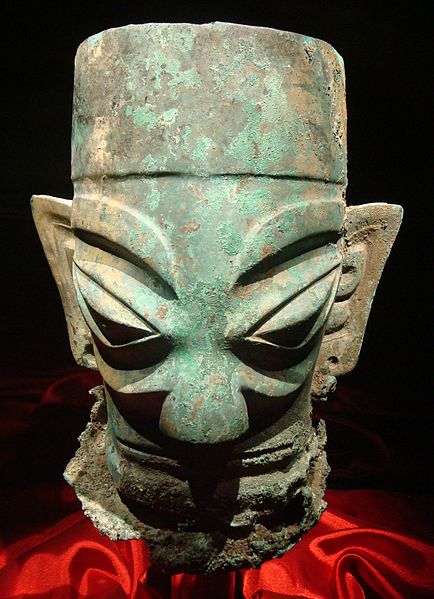
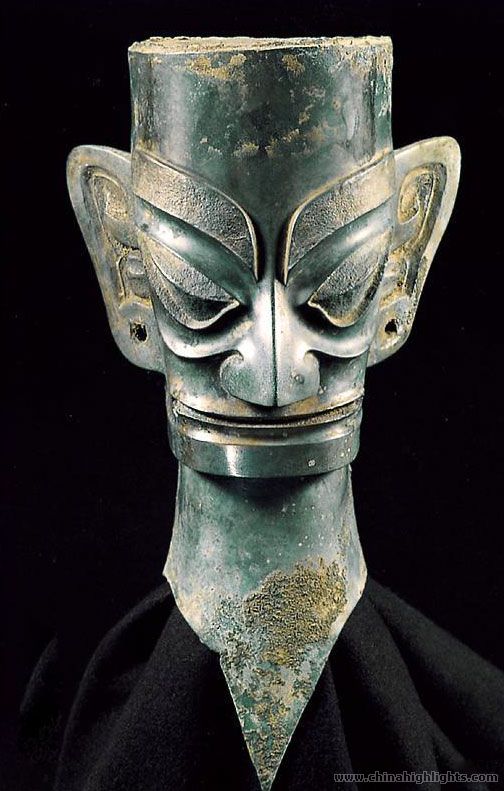
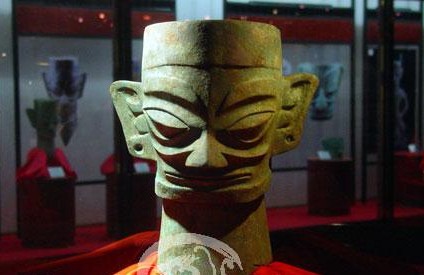
Bronze head-1

Bronze head-5

Bronze head-7

Bronze head-10

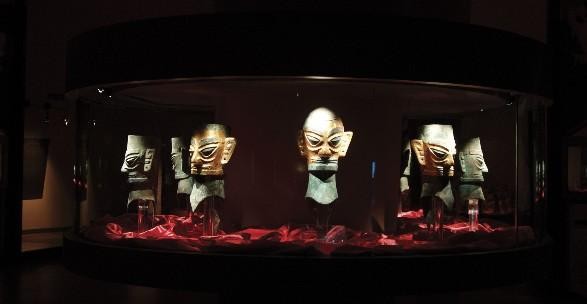
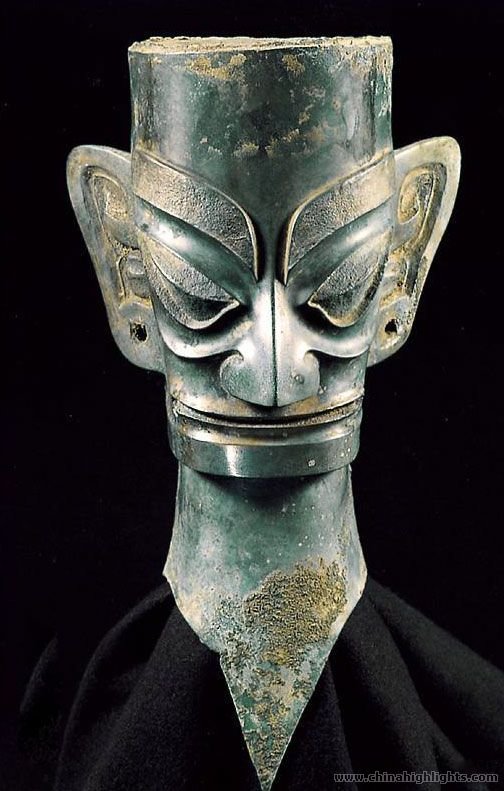
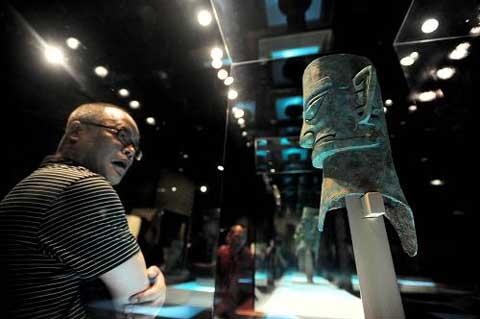
These strange, strange bronze heads, sometimes also in groups and overlain in gold

Bronze head-3- 3 heads

Bronze head-13-many heads

Like this gentleman, I was gobsmacked by these heads

man looking at mask

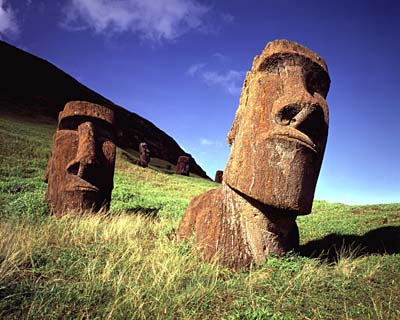
There are other enigmatic heads around the world. Easter Island heads and Olmec heads from Mexico come to mind.

easter island heads

itabaso001p4

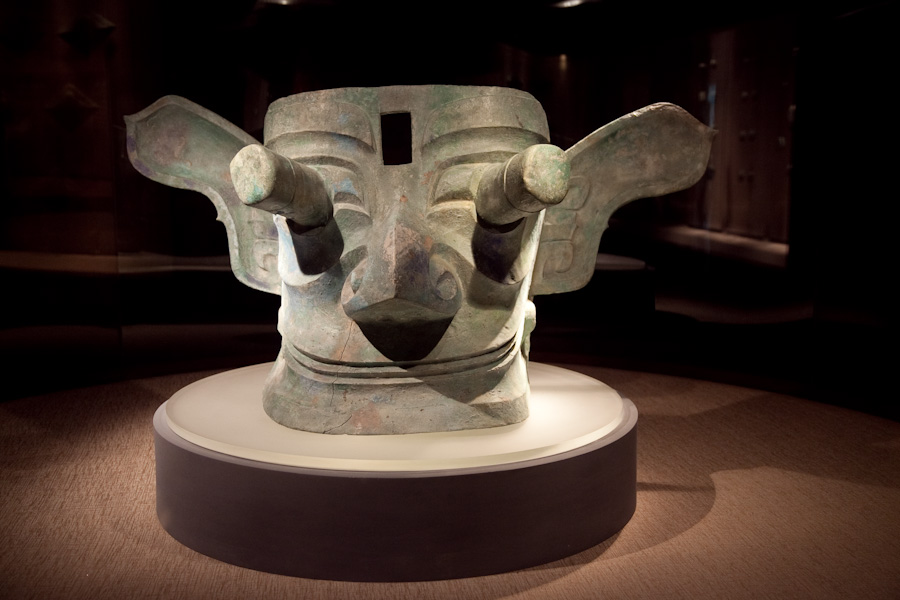
But these Ba-Shu heads take the biscuit. It’s the eyes that are so strange, they’re not human at all. Link that to those thin, thin lips with that slight smile playing on some of them and you have a really sinister-looking face. I have to say that my first reaction was “extraterrestrials!”. Foolish, of course, but I could well imagine a movie where beings looking like this step off the mother ship in front of groveling earthlings.

bronze statue-3

But it gets stranger. Take a gander at these

Bronze head-11-protruding eyes-3

bronze head-15-protruding eyes-4

What is one to make of those rods in the eyes? The museum literature suggests that these could be rays emanating from the eyes. To my overheated imagination, they look nothing more like sticks rammed into the being’s eyes and his masochistic delight at this treatment.

For the historically inclined, I should mention that these finds have been dated to a period 3,000 to 4,000 years ago, that for reasons unknown the civilization disappeared from view and from the historical record, only to resurface in 1986 after a farmer was doing some digging in his fields.

Well, it’s clear. The beings decided to go back to wherever they came from, probably after promising that they would be back …

________________________

Bronze head-1: http://en.wikipedia.org/wiki/File:Bronze_head_from_Sanxingdui.JPG
Bronze head-2: http://images.yangtzeriver.org/attraction/chengdu/sanxingdui-museum-in-guanghan/sanxingdui-museum-in-guanghan3.jpg
Bronze head-3: http://data.travelchinaguide.com/photo/chengdu-sanxingdui-museum.jpg
Bronze head-4: http://www.mychinatours.com/images/attraction/chengdu/sanxingdui-museum-in-guanghan/sanxingdui3.jpg
Bronze head group-1: http://upload.wikimedia.org/wikipedia/commons/8/8b/Sanxingduimasks.jpg
Bronze head group-2: http://www.chinesetimeschool.com/Portals/2/cms/images/201206/634753526083340000.jpeg
Man looking at head: http://p3.img.cctvpic.com/program/cultureexpress/20100705/images/1278294852929_1278294852929_r.jpg
Easter Island heads: http://www.philipcoppens.com/easterisle01.jpg
Olmec head: http://media-2.web.britannica.com/eb-media/56/4556-004-1703C415.jpg
Bronze head with protruding eyes-1: http://peripatetickiwi.files.wordpress.com/2009/07/imgp1405.jpg
Bronze head with protruding eyes-2: http://jessiechophotos.com/wp-content/uploads/2009/11/Day3-206.jpg

MIT CHAPEL

Beijing, 22 January 2013

Readers of my posts will perhaps know that I have a certain fondness for Chinese porcelain. So it should come as no surprise to them to hear that when I read in the China Daily of an exhibition at the Capital Museum on porcelain I immediately suggested to my wife that we visit it. Which we did this weekend.

The exhibition was of porcelain ordered by the Empress Dowager Cixi (the last real imperial ruler of China). I’m afraid to say that it was a disappointment. The porcelain on show was undoubtedly of the highest quality, but the designs were … well, twee is perhaps the best way to describe them. Lots of canary yellow background, and lavish use of birds and butterflies as motifs.

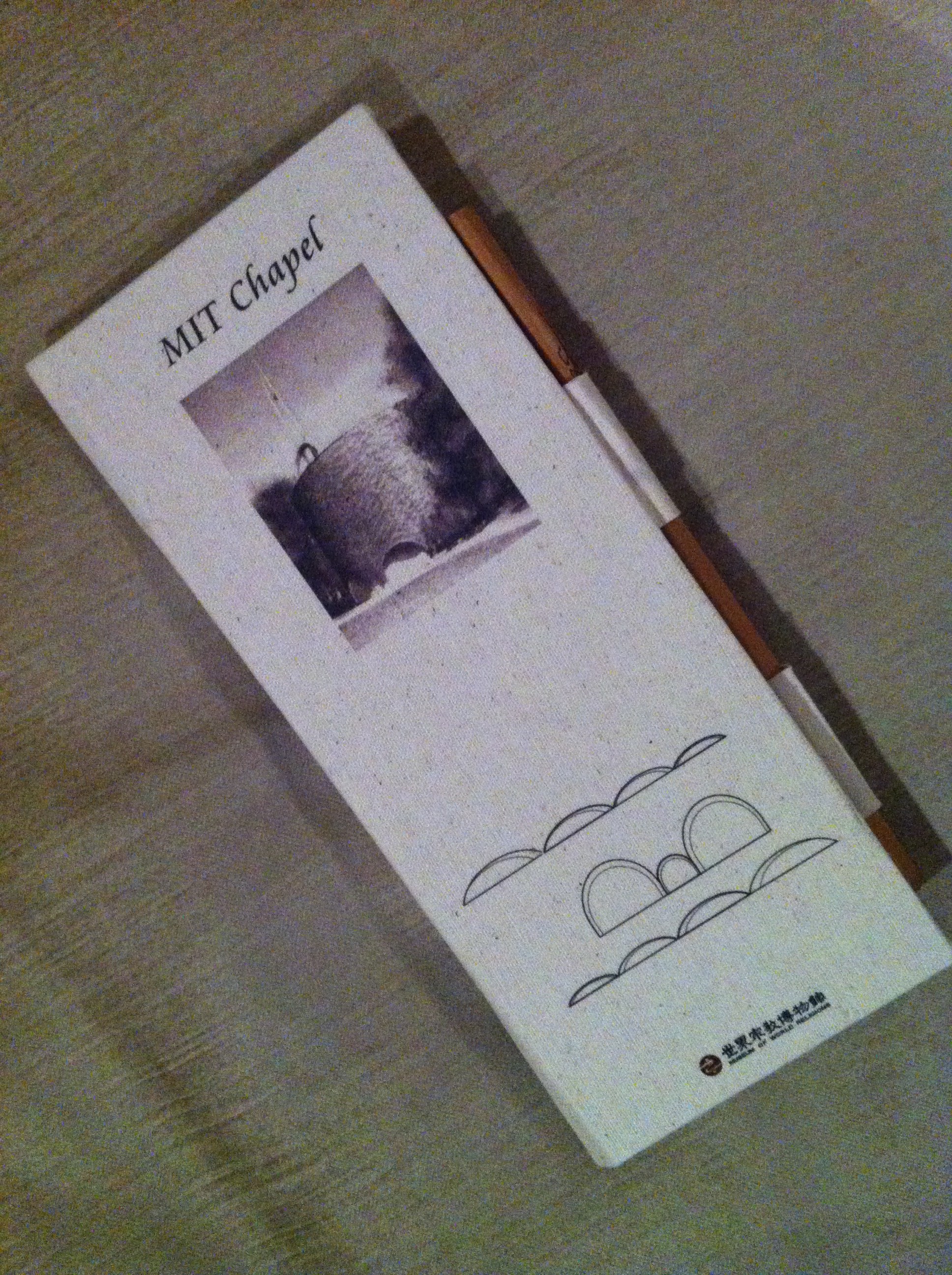
Somewhat disconsolately we went to see what else the museum was offering. There was an exhibition from Taipei, from the Museum of World Religions, and for lack of anything better we visited that. It was nothing special, just a collection of religious memorabilia from various world religions. So we left that exhibition even more disconsolate than before and went to the museum shop. We were running a listless eye over what was on offer when something caught our attention. It was a small something – we were not sure what it was – which, critically, had written on it “MIT chapel”. We had to buy it.

museum purchase 002

I should explain: my wife and I were married in that chapel, I was doing my graduate studies at MIT at the time. It’s a lovely chapel, designed by the Finnish-American architect Eero Saarinen. Probably his most well known works are the old TWA Flight Center at JFK Airport and the Gateway Arch in St. Louis, Missouri. He did many other big works for corporations and governments, but he also did a number of smaller, more intimate works like the MIT chapel.

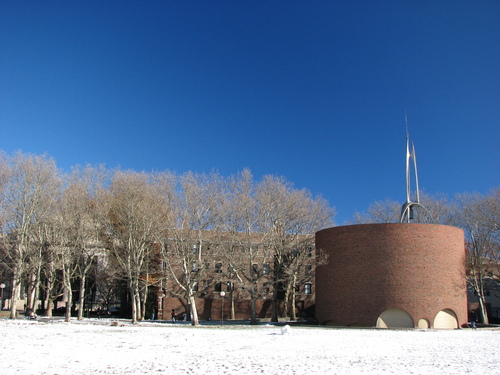
From the outside the chapel doesn’t look like much, just a small circular brick building set down on a lawn and some trees.

MIT_Chapel-2

Snow makes it more interesting.

MIT_Chapel-winter

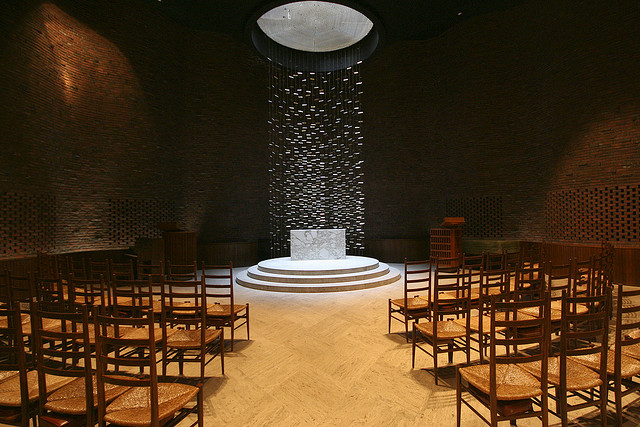
The interior, on the other hand, has a wonderful feel to it. The first thing that strikes you as you enter the chapel is the altar bathed in light streaming down from the skylight above it, while the installation over the altar leaves you very much with the sense of angel dust raining lightly down from on high.

MIT_Chapel-inside-5

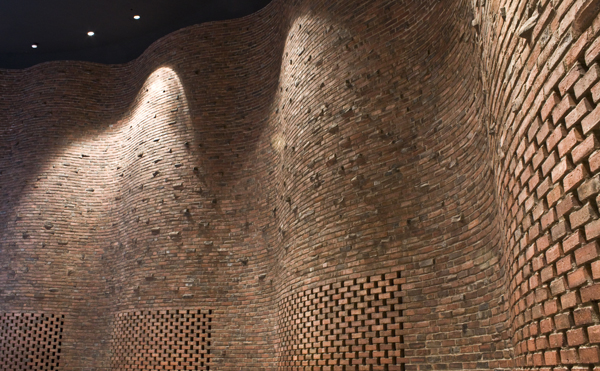
Then there is the wall. Outside, it is a normal circle. Inside, it is wavy and is roughened by bricks sticking slightly out of the wall.  It also holds a regular pattern of bricks that reminds me of the ventilation systems used in brick barns in northern Italy.

MIT_Chapel-inside-4

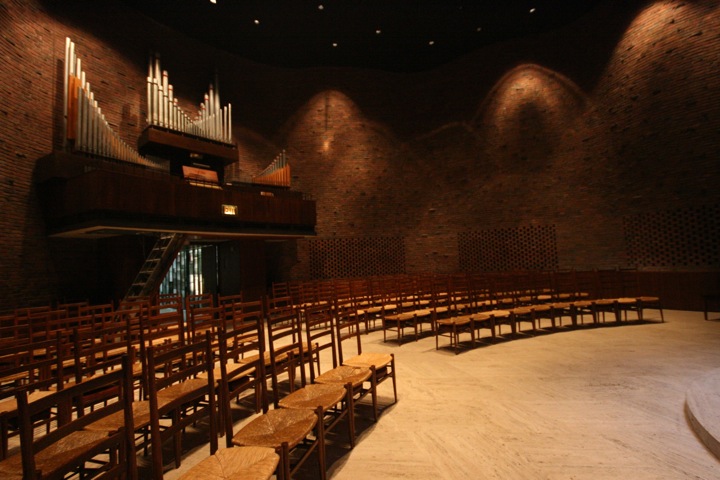
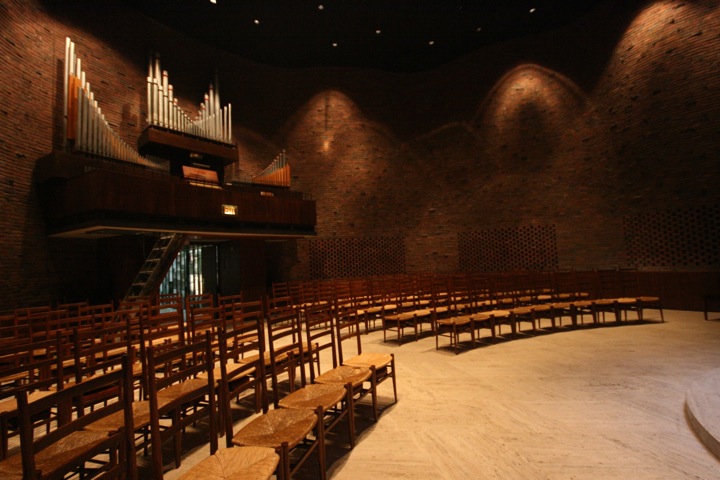
And then there is the organ, small but perfect, in its organ loft.

MIT_Chapel-organ-2

Our friend who volunteered to take the photos failed miserably (he forgot to press some button or other on the camera), so we have very few photos of the wedding. But it is all still fresh in our minds. My wife wore a pink tailleur and I a dove grey suit. She kept that tailleur for many years, while a rapidly increasing girth meant that I had to abandon the suit quite quickly. We had come up with our own vows – the parish priest had grumbled at this, asking why we wanted to abandon the beauty of the traditional vows, but we had insisted. A copy of them slumbers on together with all the rest of our stuff in storage in Vienna – we have carried them with us everywhere we have gone. We had our rings designed by a goldsmith in Milan: double gold bands, which echoed the design of the engagement ring I had given my wife from the same goldsmith. My mother-in-law, who was a great lover of music, chose the organ music (not Mendelssohn’s wedding march …). My parents and a couple of siblings had driven down from Canada, and the rest of the chapel was filled with university friends from MIT and Johns Hopkins, where my wife was doing her graduate studies. After the wedding, we had all gone downtown to a restaurant on Boston Commons for our lunch. No speeches, nothing like that; just good food. Because of timing, we had gone on our honeymoon before the wedding, in the Shenandoah Valley, together with my mother-in-law (I liked her a lot …). Immediately after the wedding, we started classes again.

So I’m sure my readers understand why we just had to buy that article with “MIT chapel” written on it (which, by the way, turned out to be a small case containing a tiny pad of ruled paper, a ruler, and an unsharpened pencil – quite where the connection was with MIT remains a mystery).

________________________

MIT chapel: http://ad009cdnb.archdaily.net/wp-content/uploads/2011/02/1297993341-mit-chapel-wikimedia-commons2-375×500.jpg
MIT chapel-winter: http://mw2.google.com/mw-panoramio/photos/medium/6339334.jpg
MIT chapel inside-altar: http://farm4.staticflickr.com/3383/3478369283_08678cfd7a_z.jpg
MIT chapel inside-wall: http://jmcvey.net/sylva/wp-content/uploads/2010/10/chapel_interior_wall2.jpg
MIT chapel-organ: http://ad009cdnb.archdaily.net/wp-content/uploads/2011/02/1297993330-mit-chapel-caribbeanfreephoto.jpg

MY MESSAGE IN A BOTTLE

Beijing, 16 January 2013

My previous posting on a message in a bottle has reminded me of a story that happened to me a year or so ago. It all started when out of the blue I received an email from a woman who was quite unknown to me. After telling me that she had got my email address off the Internet, she cited me an address in Edinburgh and one in Canada, and asked me if I had ever lived there. It so happened that the Edinburgh address was where my wife and I had lived in our last two years as students at University, while the Canadian address was that of my parents.

I didn’t know what to make of this email. How had this complete stranger found my old addresses? I looked her up on the Internet and discovered that she was British, so some sort of connection with my past was possible. But she was obviously at least ten years younger than me, possibly more, so it wasn’t someone I had known in the past whose name had changed, nor was it someone with whom I could have had a common acquaintance of my generation. So who was she? Was this some kind of scam? Was some murky story in my past coming back to haunt me? But what murky story could that possibly be? I’m not a very murky person.

After a few weeks of mulling it over – I was on holidays at the time – I decided that I couldn’t resist the temptation to know more. So I wrote back to her, warily admitting that I had indeed lived at those addresses and so I was probably the person she was looking for. I then politely asked her what this was all about.

She got back to me quickly, thanking me effusively for replying. She then explained the background. One day, she and her boyfriend were browsing around in a used books store in Royal Tunbridge Wells in the south of England. For those of you, like me, who have never been to this pretty little town, I append here a picture.

Royal Tunbridge Wells

In the store, she told me, she had stumbled across a small book in the front of which a piece of paper had been slipped with my name and the addresses in Edinburgh and Canada written on it – as well as the fateful phrase “please forward if possible”. My correspondent was electrified by that last phrase. She felt that fate had sent her a message-in-a-bottle and she decided there and then that she was going to track me down and hand over the book.

So the hand-over took place through my daughter in London. No doubt my correspondent was highly pleased with herself. But I was left with an even deeper mystery. Who had wanted to give me this book? And why?

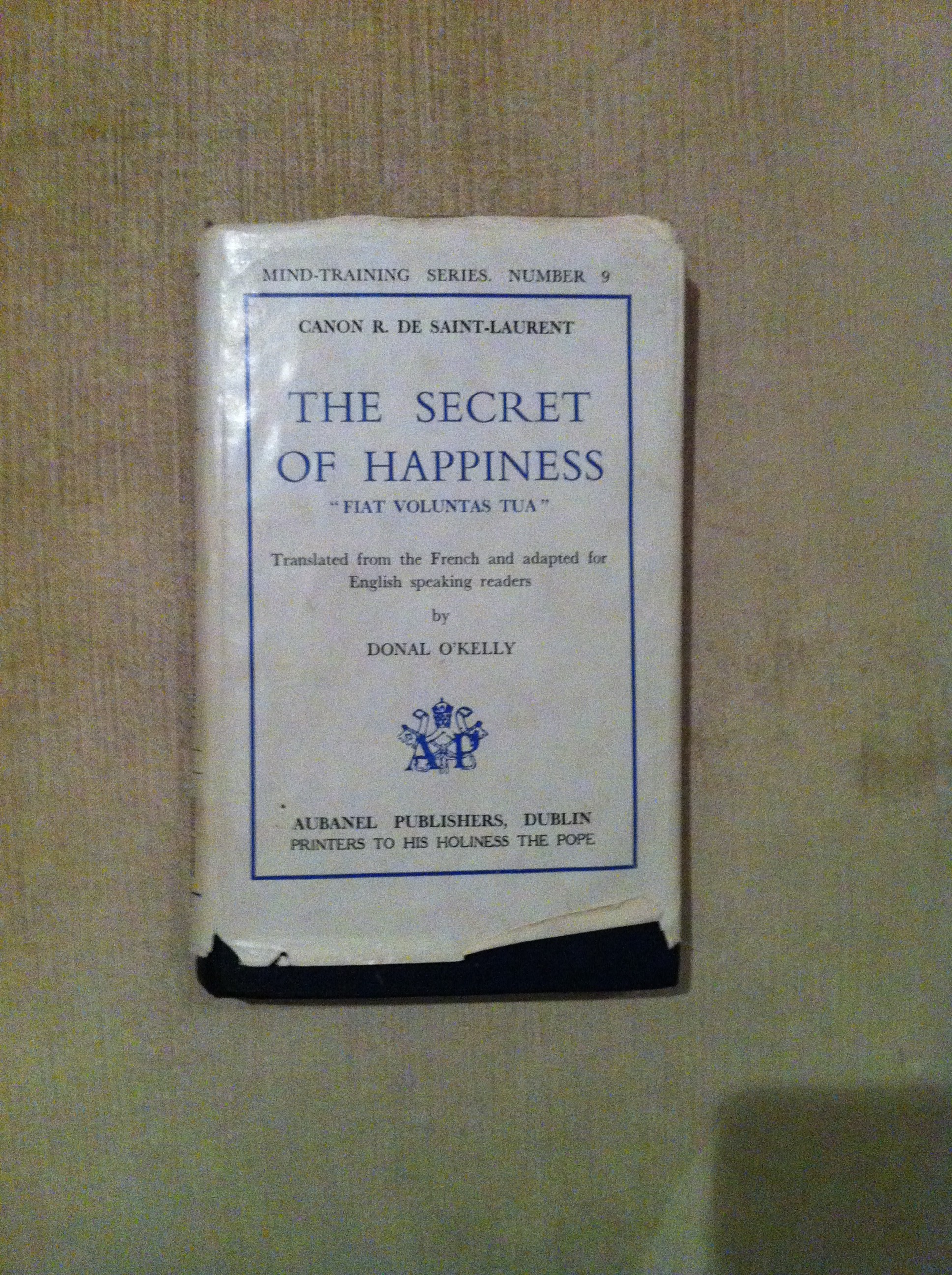
The book is quite special. It is entitled “The Secret of Happiness” and subtitled “Fiat Voluntas Tua”, or Thy Will be Done.  It is a rigorously Catholic self-help book, written originally in French by a certain Canon Raymond de Saint-Laurent, and published in English by Aubanel Publishers, Dublin, “Printers to His Holiness the Pope”, in 1951.

book cover 002

According to the book’s back cover, the reverend Canon was the author of many such books with titles like “A Cure for Shyness: Causes, Consequences and Remedies”, Self-Control: Ways of Curing Yourself from Being Emotive, Expansive and Impulsive”, and “Optimism: How to Acquire Mental Poise”.

Who had thought I would be interested in this book, or that it would help me? I’ve never needed help to be happy.

The book itself gives no clues other than the inserted note. There are no names written in it, no dedications, no marginalia. In fact, the book looks unread. Not surprising really. I flipped through a couple of pages, it’s enough to send the most hardened insomniac into a deep Rip van Winkle-like sleep.

Casting around for possible suspects, I first thought of my mother. She had from time to time during my boyhood sent me pious books to read, but mostly on the lives of worthy saints, presumably as exemplars for me of a better life. I also vaguely recall that in my puberty she once gave me a book on Sex, written by a Jesuit priest. All I remember from it is an affirmation that after heavy petting it was quite normal for girls to have backaches … But I quickly eliminated my mother. The writing on the note wasn’t hers, she hadn’t lived in the UK since the book was published, and why would she put her own address in Canada?

I then thought of an Aunt, sister of my father, who lived to the south of London and in the general direction of Royal Tunbridge Wells. She was a very religious person, High Church of England – only my father had converted – so she might have owned this book. And she did always send us books for Christmas. Perhaps when she died and the contents of her house were dispersed this book somehow ended up in a used books store in Royal Tunbridge Wells. But this scenario didn’t seen likely. The type of books she sent us was detective stories and the like; I really couldn’t see her wanting to send me this book.  Nevertheless, in order to pursue all lines of enquiry, I sent a scan of the note to one of her children to see if he thought it was her handwriting. He replied in the negative.

Given the religious nature of the book, I then thought of my godparents. I eliminated my godmother immediately. She was French, a dentist in Haute Savoie. I had met her a few times, and she had never struck me as the type of Catholic who reads books like this. And why would the book have ended up in Royal Tunbridge Wells? My godfather made for a better candidate. He was English and lived in the south of England somewhere, so it’s imaginable that books dispersed after he died ended up in Royal Tunbridge Wells. From the diary my father kept at school and university, which I had recuperated from a dusty shelf after he died, I discovered that my godfather had been very instrumental in encouraging my father to convert to Catholicism when at University, so I knew he was a strong Catholic. But we were never close; I had only met him once. Could it be that as a last act of his godfathering he thought of sending me this book? There is no way of finding out. He’s dead and I don’t know any of his children, to whom I could have sent the note to check the handwriting.

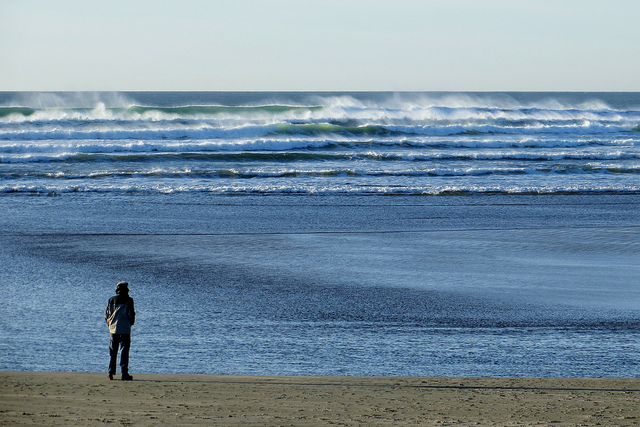
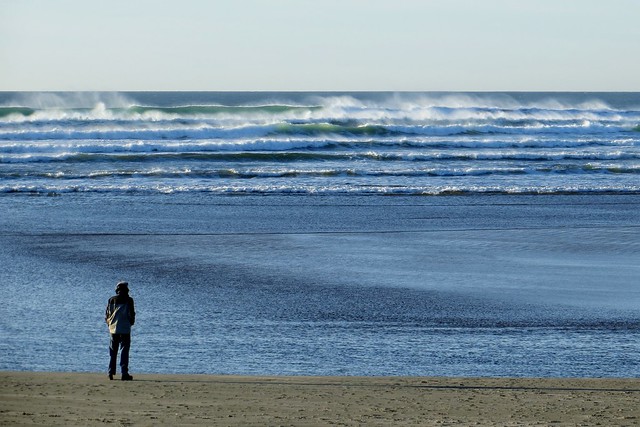
And so the leads have all gone cold, and I am left with the unsolved mystery. I stand on the metaphorical beach holding in my hands the message that arrived to me in a bottle. I will spend the rest of my life scanning the horizon, wondering where the message came from and why it was sent to me.

man standing on a beach-2

And saddest of all, although I love reading books I will never read this one, because it is a type of book that I would never, ever, read!

_____________________

Royal Tunbridge Wells: http://farm9.staticflickr.com/8078/8367015396_c8c90646e0_z.jpg
book cover: my picture
Man staring out to sea: http://farm9.staticflickr.com/8078/8367015396_c8c90646e0_z.jpg

9/11 MEMORIAL, NEW YORK

Beijing, 13 January 2013

They say that those of us who were alive at the time remember where we were and what we were doing when we heard about Jack Kennedy’s assassination. That is certainly true for me; I was in bed in my dormitory at boarding school with lights out when one of the older boys burst in announcing the news. The same holds for me when it comes to the attack on the twin towers of the World Trade Center in New York. I had recently come back from lunch and was working without much enthusiasm on a document when a colleague came running down the hall shouting out the news to all of us.

Since then, every time my wife and I go back to New York, we always take a trip down to ground zero, to see how things have changed. So it was this time that on the last day of our latest stay in New York, after an earlier false start (we hadn’t understood that you need to book on-line), my wife and I managed to visit the 9/11 Memorial. After collecting the tickets, finding the entrance, threading our way through an active construction site, past numerous security checks – more numerous than at an airport – we finally arrived in the area of the memorial itself.

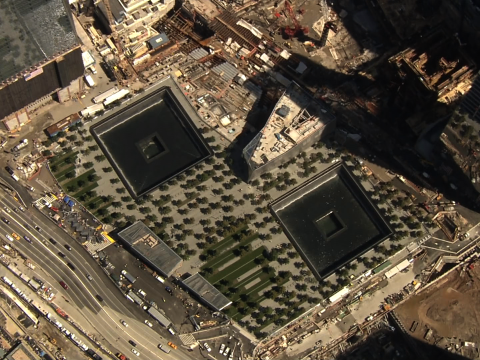
It is a somberly moving monument. First, there is the location of the two square fountains that make up the design. They have been inserted into the footprints of the two towers, thus serving as an eternal reminder of the latter’s disappearance.

aerial view-3

Then there is the design of the fountains. The water doesn’t spray up in noisy, joyous jets as is normally the case for fountains, but instead falls from the rims of the fountains, continuous lines of tears, into the dark pool far below

memorial 004

from where it disappears down into a central, apparently bottomless void, the hole left in the city’s and the in country’s heart.

memorial 006

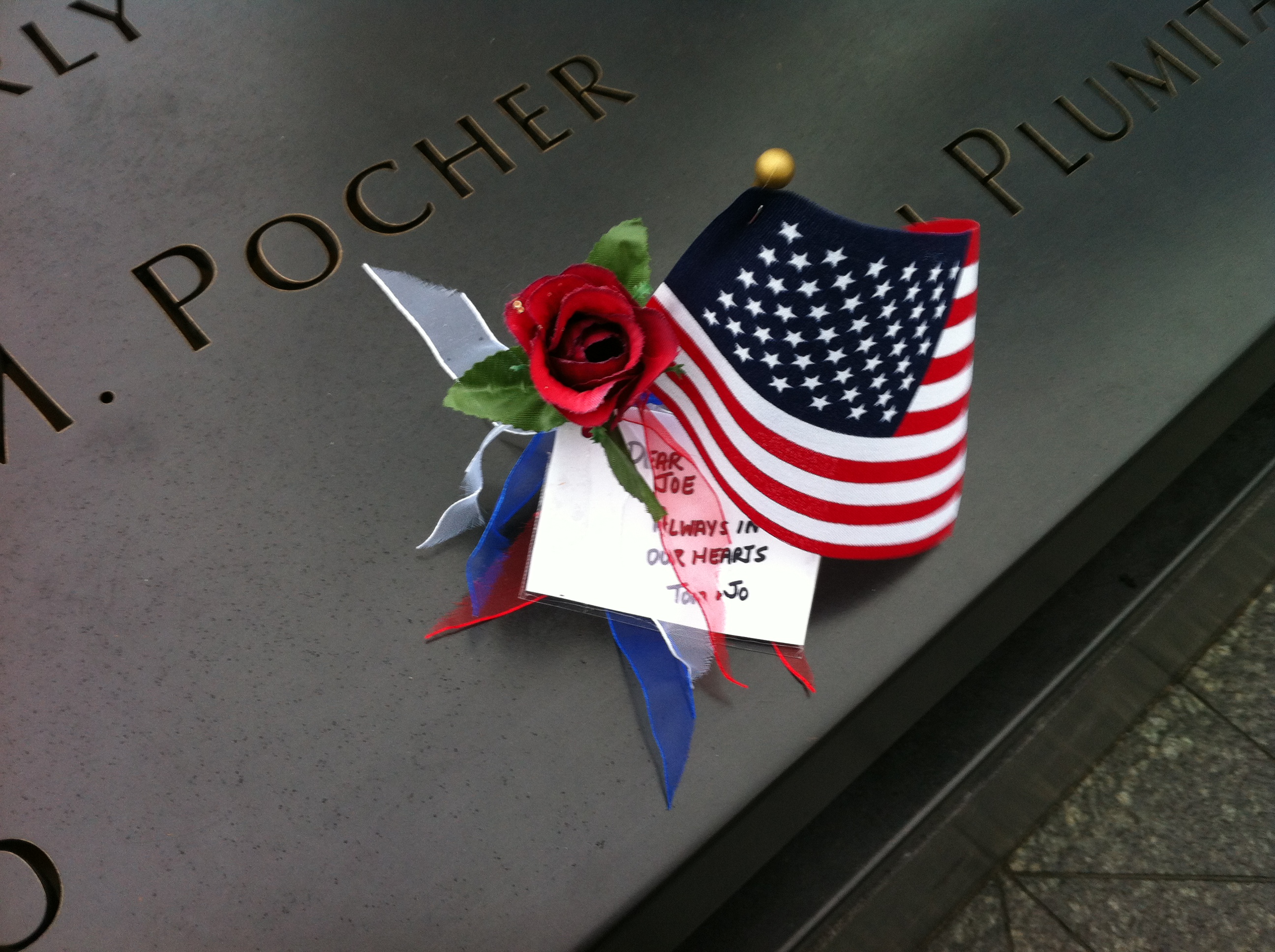
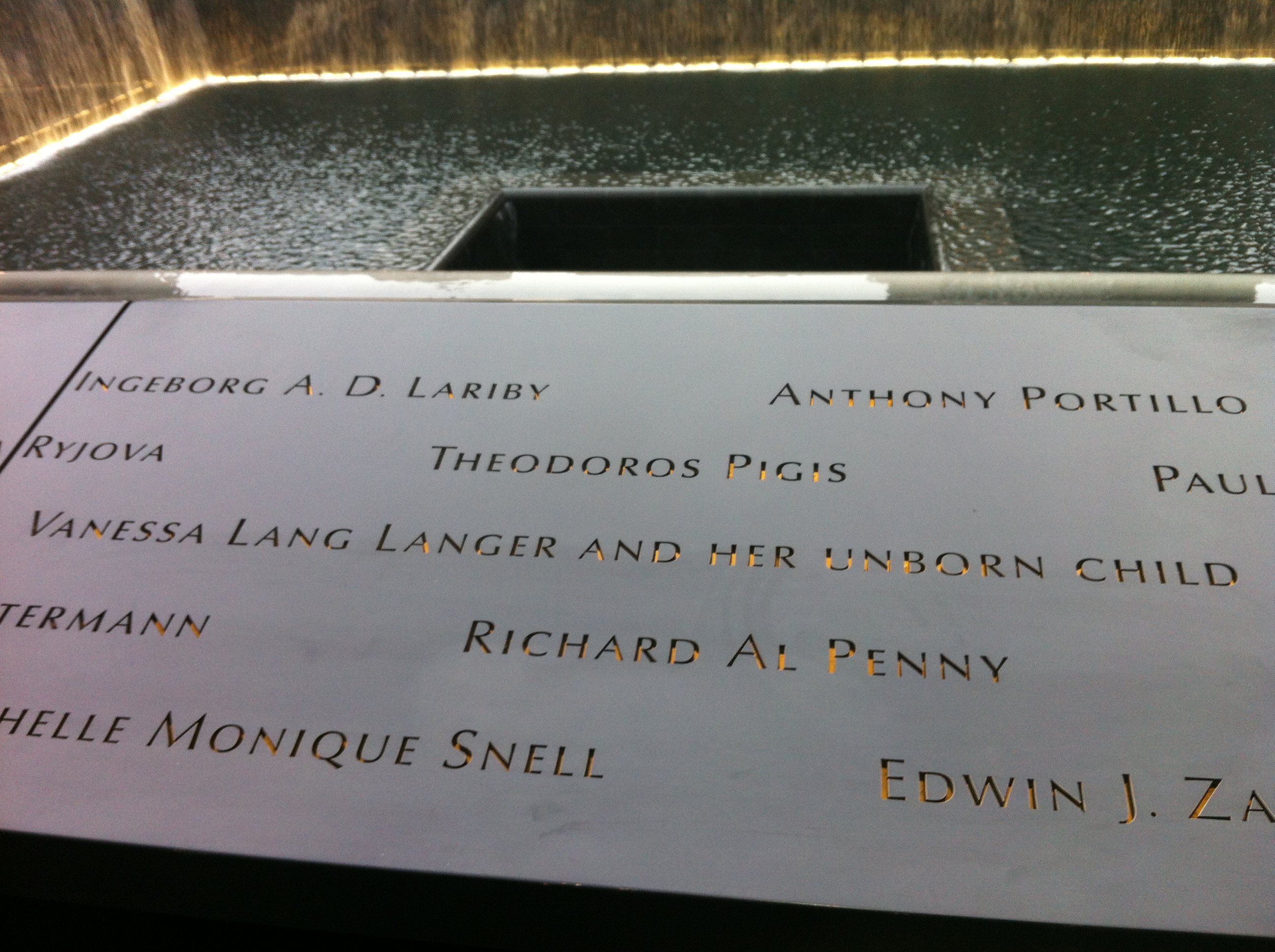
And all around the fountains’ rims, from where the water-tears flow, are inscribed the names of those who died in the attack on the towers, as well as in the attack on the Pentagon and in the airplanes that were used as the weapons.

memorial 007

Truly moving indeed.

memorial 010

_______________________

Aerial view: http://i.i.com.com/cnwk.1d/i/tim/2011/09/10/rmitchell911memorial_480x360.png

other pictures: mine

LA MICHELINE CHUGGING ACROSS THE COUNTRYSIDE

New York, 2 January 2013

Down at the end of my French grandmother’s property ran a little train, the Micheline we called it. It was a rinky-dink train, one carriage (on rare occasions two), which chugged along at a venerable speed across the countryside from one market town to another, winding its way through vineyards and meadows, stopping at toy-town stations where stationmasters with moustaches, who smoked filterless gauloises and no doubt drank un petit rouge corsé in evenings, would agitate green flags and blow shrill whistles to let the Micheline continue on. This photo captures the rural idyll nicely.

micheline

I used to accompany my grandmother on her visits to town. We would walk down a long alley flanked first by peach and apple trees and then by black locusts, down to the end of the property where there was a big iron gate, which swung ponderously open; from there, it was a short five-minute walk to the station. In came the Micheline

micheline-5

I would help my grandmother in, the stationmaster would agitate his flag and blow his whistle, and off we went.

My mother used to tell me that during the Second World War, people were sent to my grandmother by the French Resistance for her to hide for a while; they would quietly slip in with the Micheline. My memory is instead of two old ladies, two sisters, Tante Chlothilde and Tante Marcelle, coming to visit via the train. They were first cousins to my grandmother. Both of them being widows, they always wore black. We would first see the Micheline chug by, then some ten minutes later two black silhouettes would be sighted slowly walking up the long alley. My grandmother would then walk down to greet them, speaking very loudly because one of the sisters was as deaf as a post.

Well, things changed. The road network got better, buses took over, and the line was finally closed down. I suppose the Michelines were retired like this one was

micheline-3

The rails were pulled up, and the weeds took over.

After a long period of neglect, the municipalities got their collective acts together and turned the railway line into a “Green Way”, for people to walk and cycle along. So now we have a quiet, carless, path that allows us to enjoy some of the most beautiful countryside on Earth (I admit, I’m biased).

voie-verte-1

voie-verte-3

All of this came back to me yesterday while my wife and I strolled along the High Line in Manhattan. We are talking of a very different context – urban rather than rural, large-scale rather than small-scale – but the historical trajectory is the same: a rail line that was once a vital artery of the city

high-line-old-1

high-line-old-2

falls victim to roads and trucks and is finally abandoned. It becomes derelict, overgrown by weeds

high-line-5

and is threatened with demolition. But good sense eventually prevails and the elevated line is turned into an elevated garden.

high-line-2

high-line-4

high-line-1

high-line-6

Magic.

____________

Micheline-1: http://www.google.fr/imgres?q=micheline+train&num=10&hl=fr&tbo=d&biw=1280&bih=683&tbm=isch&tbnid=QbpsYHDZWoAGgM:&imgrefurl=http://www.worldofstock.com/stock-photos/france-ardeche-mirabel-village-surroundings-local-micheline/TRT1500&docid=307ZNJAoHh-JTM&imgurl=http://www.worldofstock.com/slides/TRT1500.jpg&w=500&h=332&ei=hIXjUMDvFuXQ0wGh84HQCg&zoom=1&iact=rc&dur=684&sig=113446295457090783361&page=1&tbnh=140&tbnw=202&start=0&ndsp=22&ved=1t:429,r:10,s:0,i:118&tx=96&ty=67

Micheline-2: http://c1.img.v4.skyrock.net/1729/16641729/pics/3080416001_1_3_WEG0CElV.jpg

Micheline-3: Micheline-3: http://1.bp.blogspot.com/-C8L1231bJ-o/TbhQHR6dc_I/AAAAAAAAEAQ/FvpTQts0R0I/s1600/micheline01-1.jpg

Green Way-1: http://www.sortiramacon.com/media/news/voie-verte-velo.jpg

Green Way-2: http://www.velo-ravel.net/2009/2009-08-17_Bourgogne_sud_files/image020.jpg

High line 1-historical: http://1.bp.blogspot.com/-X8IIsMIF7GY/TmlooRzMZ9I/AAAAAAAAF9M/_PpGNN3xJEU/s400/Highline_train.jpg

High line 2-historical: http://4.bp.blogspot.com/-0FEWcWopww8/TmlooMh8vlI/AAAAAAAAF9E/SuXL4wcu6To/s400/HIghline_historical.jpg

High line derelict: http://2.bp.blogspot.com/-iD76YXAA-Uw/TffNNuz4gXI/AAAAAAAAAYU/KWHnUGbYjPU/s1600/High+Line+2.jpg

High line 1: http://www.asla.org/sustainablelandscapes/images/highline/Highline_6.jpg

High line 2: http://4.bp.blogspot.com/-usnFjgnfQc4/TffNIgAV6xI/AAAAAAAAAYQ/XMQA0bZJAb4/s1600/High+Line.jpg

High line 3: http://www3.pictures.gi.zimbio.com/New+York+New+High+Line+Park+Opens+Public+3B45D1SYEJcl.jpg

High line 4: http://1.bp.blogspot.com/-WbybGegkYX0/Tmlon5yO-1I/AAAAAAAAF88/LyBQFC8kMpo/s1600/Highline_above.jpg