MEXICO: BOUGAINVILLEA

Mexico City, 25 December, 2014

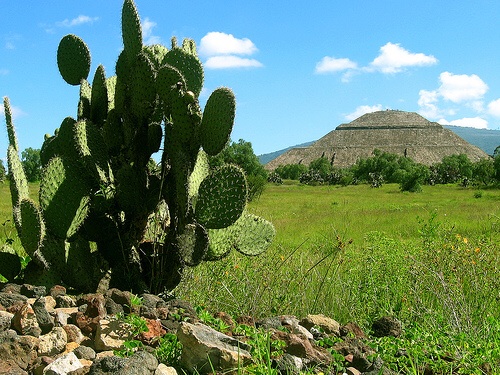
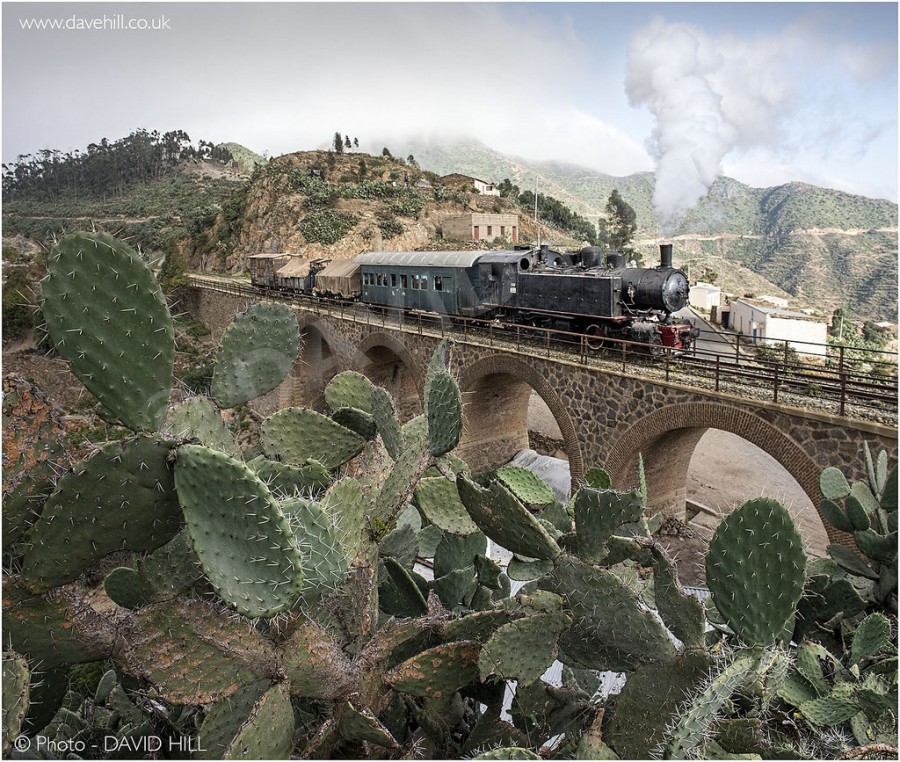
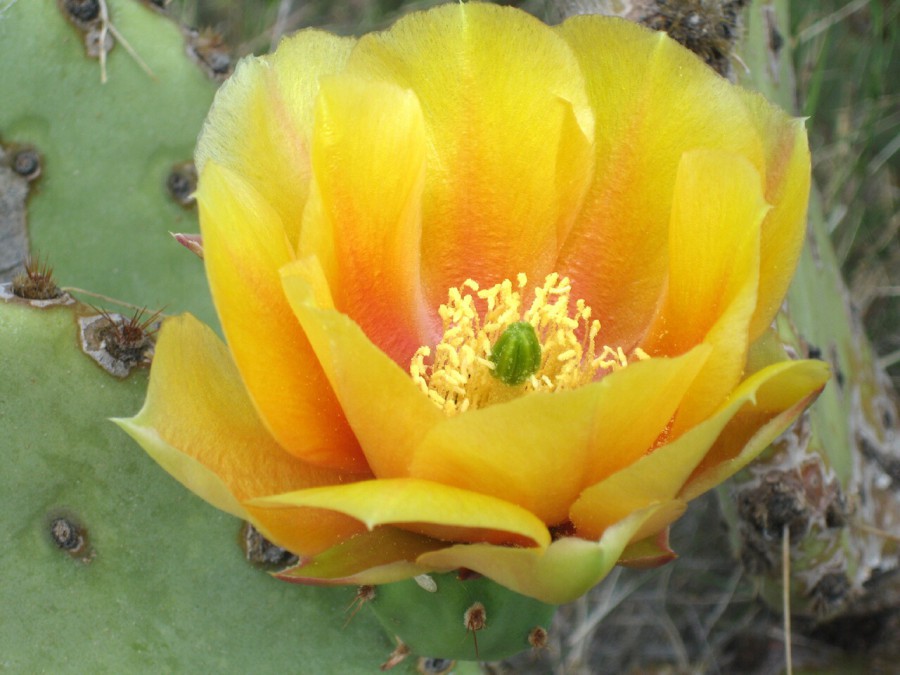
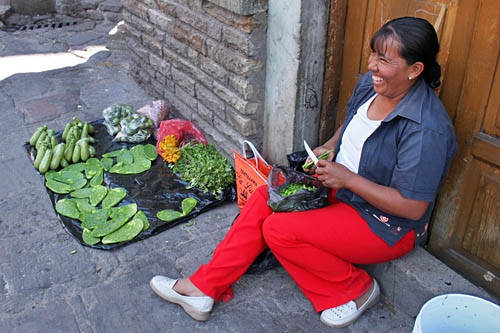
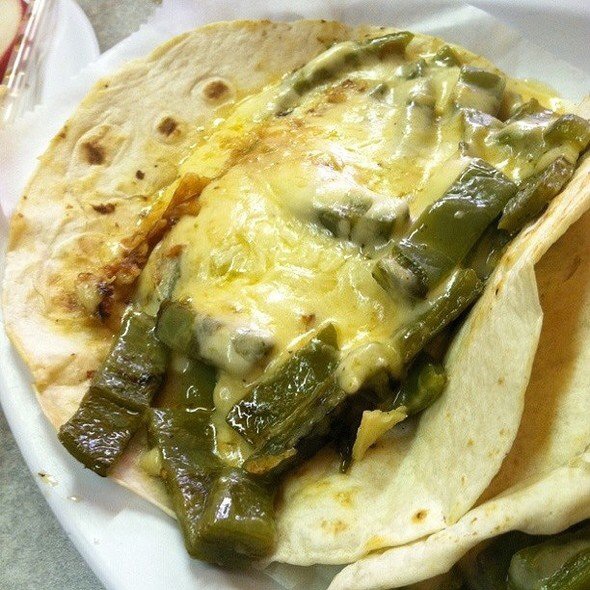
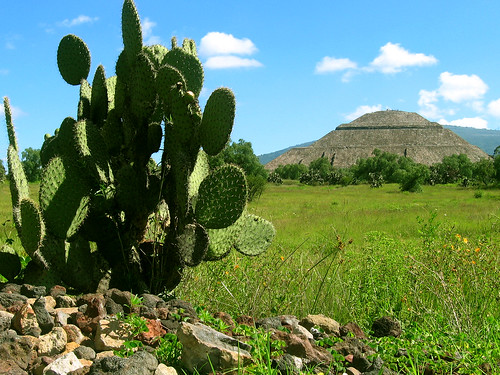
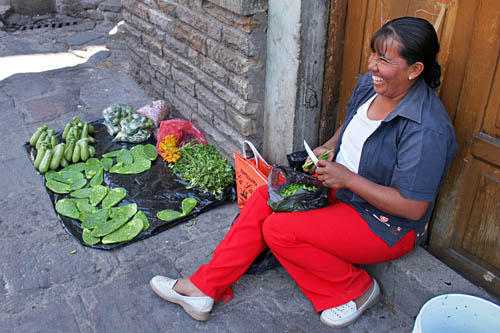
My wife and I are spending Christmas in Mexico City. Parental love is what draws us to Mexico. Our son has his business here, and this year it is his turn to hold the fort over the busy Christmas period. As the Turkish saying goes, “Dağ sana gelmezse, sen dağa gideceksin”, “If the mountain won’t come to you, you must go to the mountain”. These last few days, together with our daughter (she has been able to escape from her job in New York, but at the price of being often on FaceTime and email with her colleagues), we have been roaming the city and appreciating its delights, both visual and gastronomic. Yesterday, for instance, we visited Frida Kahlo’s house, La Casa Azul, which presents a compact collection of her paintings (including one which I’ve mentioned in a previous post) as well as of paintings by her husband Diego Rivera. And while we stood in the long, long line to get in, we tucked into an assortment of delicious tacos, including one where the filling was a mix of cheese and cactus pads. Cactus pads! That was a first for me.

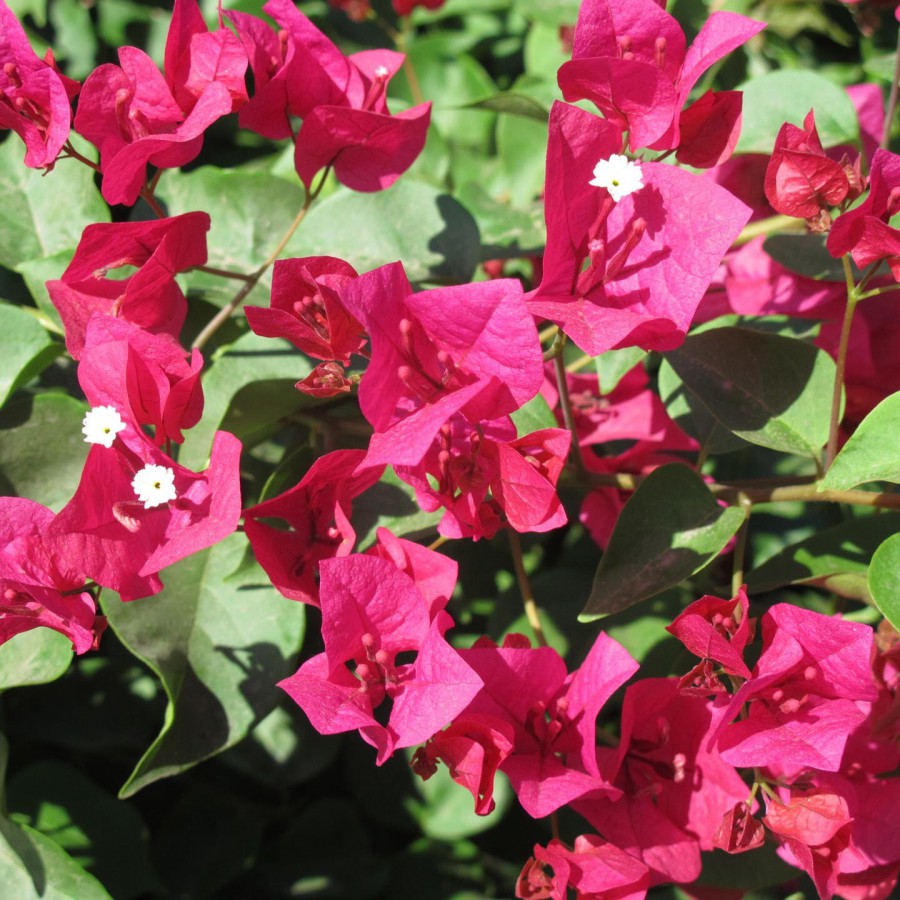
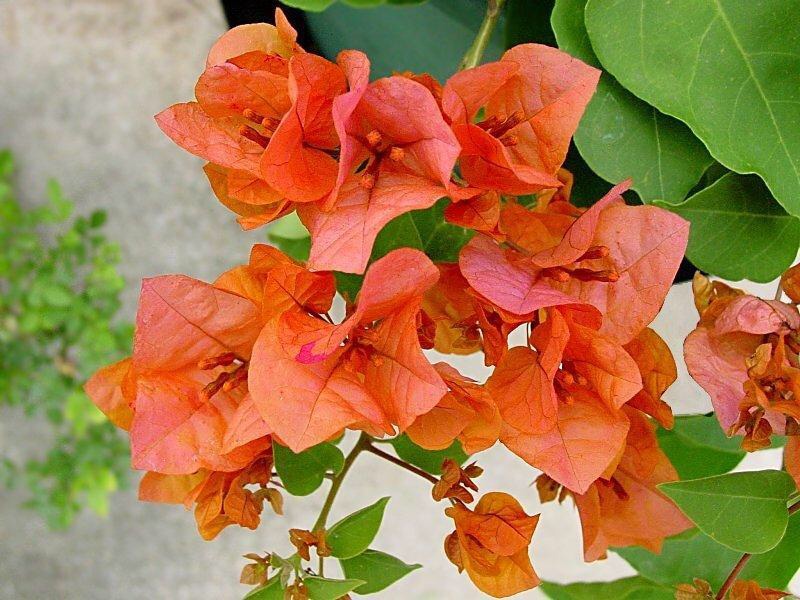
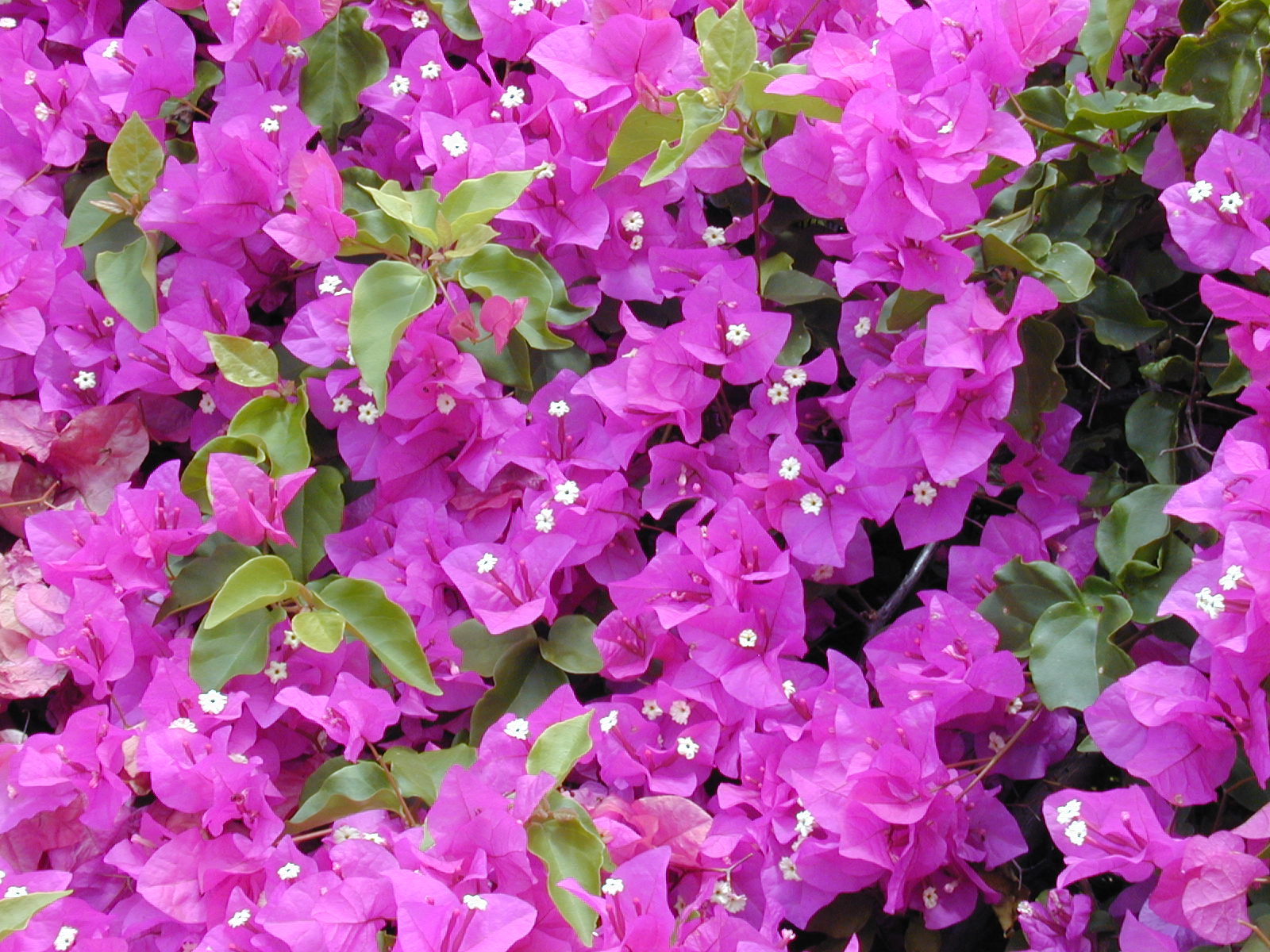
Everywhere we have been in the city, we have been delighted with great clouds of bougainvillea, mauveimage

red

image
orange
image

white

image

clawing their way over roofs, snaking along balconies, tumbling over walls, strangling trees, or simply sculpted into staid bushes.

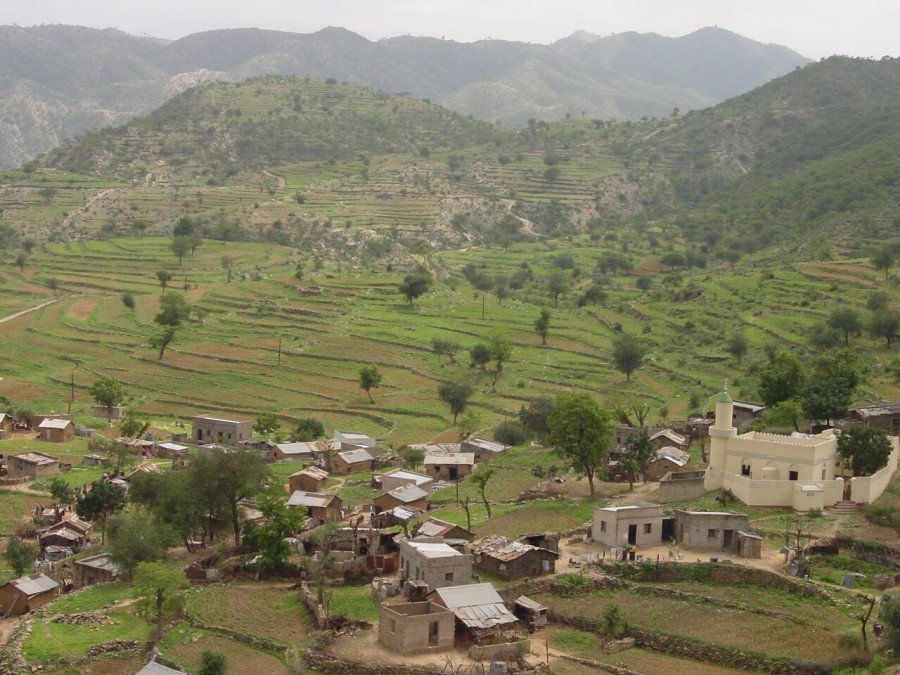
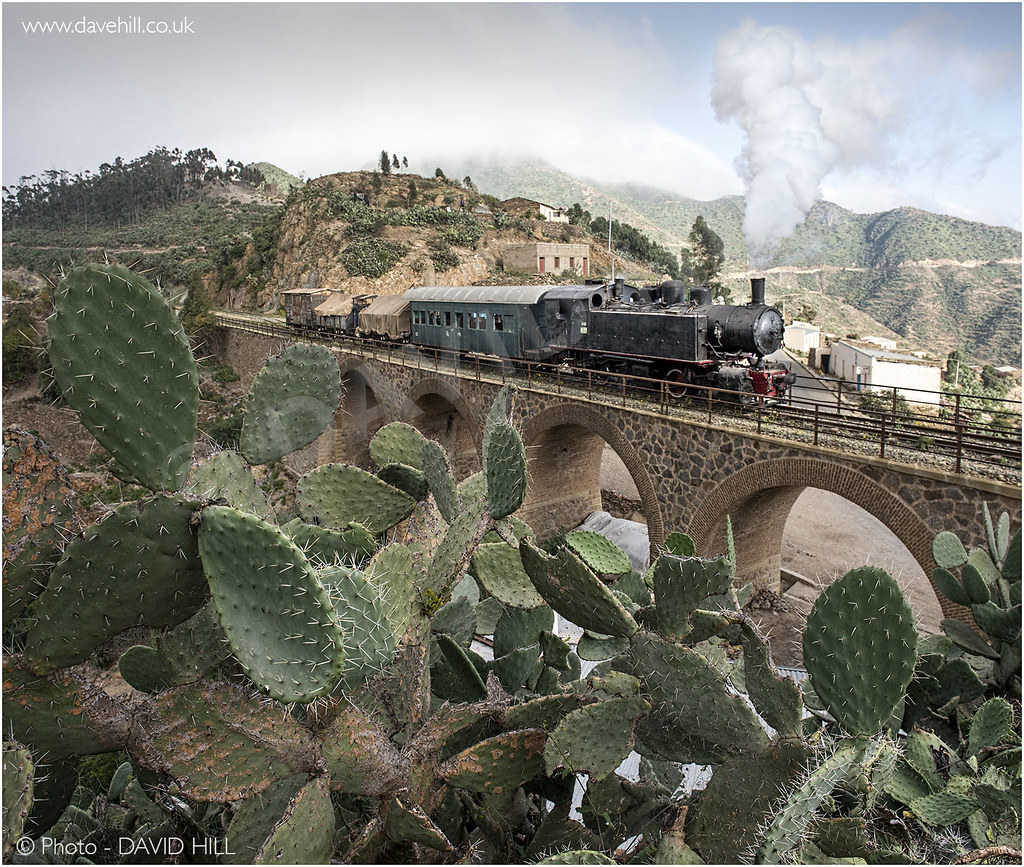
I’m very fond of bougainvillea. It’s an old friend which I’ve run into in various parts of the world, always places with the sunny, warm climates which I feel very comfortable in, like Eritrea where I was born
image
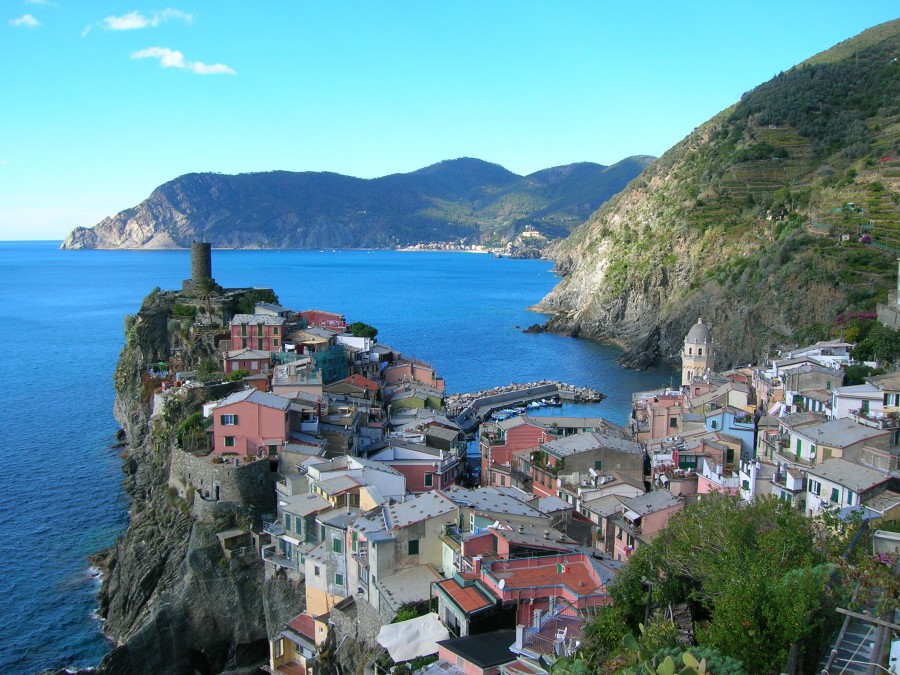
or Liguria which my wife introduced me to nearly 40 years ago and to which we return again and again
image
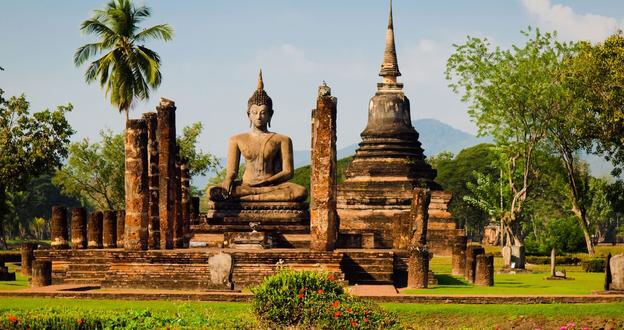
or Thailand where we live at the moment.
image

This latest meeting with bougainvillea in Mexico has moved me to use my free time during this holiday period, between visits to the sites and shopping for Christmas lunch and dinner, to explore this beautiful plant’s history. I had always known that its rather fancy name came from the French Admiral Louis Antoine, Comte de Bougainville.
image
France’s response to Britain’s James Cook, Bougainville was the first Frenchman to circumnavigate the globe, in the late 1760s, and it was during this trip that bougainvillea was discovered (by Europeans; the locals knew it already of course). It was actually Bougainville’s on-board botanist, Philibert Commerson, who discovered it.

image

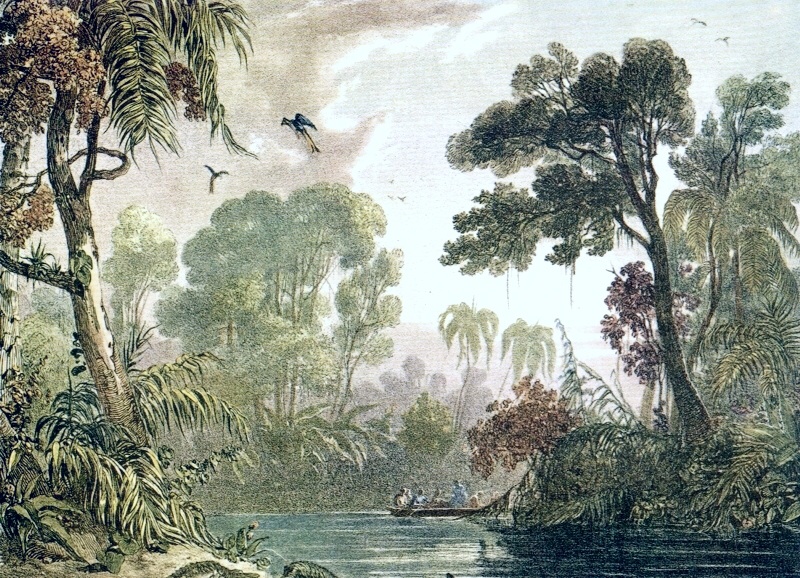
The discovery occurred during an enforced stopover in the Bay of Rio de Janeiro, where Bougainville had decided to regroup and carry out urgent repairs to his two ships. Like most European botanists of the time, Commerson was dazzled by the huge biological diversity he found in Brazil: “this country is the most beautiful in the world”, he wrote home. Something of what he found before him can be gathered from this more-or-less contemporary painting.
image
Commerson took advantage of the stop in Rio to go out botanizing along the coast and islets of the bay. As he reported to a friend in a letter home, one day he stumbled on this vine, “a wonderful plant with big flowers of a sumptuous violet colour”. He decided to honour Bougainville by naming the plant after him (Bougainville also gave his name to a couple of islands, a couple of straits between islands, and a town in the Falkland Islands). Commerson’s dried sample eventually made it back to France, where it can still be viewed, faded but nevertheless recognizable.

image
We can leave the story of bougainvillea there; suffice to say that the first period of globalization which came with European colonialism spread the pretty plant far and wide. But its discovery in the Bay of Rio de Janeiro gives me pause. That wonderful botanical diversity which so took Commerson’s breath away has been sadly depleted. Before the arrival of the Europeans, the bay of Rio de Janeiro was enveloped by the Mata Atlântica, the Atlantic Forest. This mighty forest stretched unbroken from north-east Brazil all the way down the Atlantic coastline as far as Uruguay, and spread into north-eastern Argentina and eastern Paraguay. It once covered some one and a half million square kilometres, but three hundred years of deforestation for logging and farming have seen it become the second most threatened biome in the world, after Madagascar. Today, less than a tenth of the original forest area remains.

There is some light in all the gloom. Despite all the loss and habitat fragmentation, the region is still ranked in the top five of the world’s biodiversity hotspots. It is particularly remarkable for its bird species. In 2001, wanting to preserve what was left if not reverse some of the damage (to which his own ancestors had contributed), a farsighted owner of farmland at the base of the mountains, in the valley of the Guapiaçu river, some 80 kilometres north-east of Rio, established an ecological Reserve, the Reserva Ecológica de Guapiaçu (REGUA). REGUA’s objective is to protect the remaining forest and biodiversity from deforestation, hunting, and over-extraction of natural resources. With funds from the World Land Trust and others, REGUA has bought land to consolidate and extend the Reserve. Over 100,000 trees, all native species, have been planted, wetlands have been recreated, some animal species have been reintroduced, hunters have been turned into guides, and visitors are encouraged to come and share in this wonderful effort. If I know all this, it is because my wife and I financially supported the planting of a modest number of trees and stayed at the Reserve’s lodge for several days, going out on a birding expedition, inspecting our tree seedlings and the-then nascent wetlands, and just generally enjoying ourselves.
image
We hope to go back there one day, to see how our trees are doing. And maybe we’ll spot some bougainvillea in its natural state, ruthlessly climbing over some unfortunate tree, choking the life out of it.

_______________________________
Mauve bougainvillea: http://upload.wikimedia.org/wikipedia/commons/f/f8/Starr_030418-0058_Bougainvillea_spectabilis.jpg (in http://en.m.wikipedia.org/wiki/Bougainvillea_spectabilis)
Red bougainvillea: http://www.boethingtreeland.com/media/catalog/product/cache/1/image/1440x/9df78eab33525d08d6e5fb8d27136e95/B/o/Bougainvillea-Temple-Fire.jpg (in http://www.boethingtreeland.com/bougainvillea-temple-fire.html)
Orange bougainvillea: http://pics.davesgarden.com/pics/2007/02/01/htop/a25dea.jpg (in http://davesgarden.com/guides/pf/showimage/139848/#b)
White bougainvillea: http://www.phytoimages.siu.edu/users/paraman1/7_13_09/Upload13July09A/BougainvilleaWhite1.jpg (in http://www.phytoimages.siu.edu/imgs/paraman1/r/Nyctaginaceae_Bougainvillea_spectabilis_16879.html)
Eritrean highlands: http://4.bp.blogspot.com/_iNSpfNcQ0Sg/SmH-m6Qdw7I/AAAAAAAABk0/m6818sz2DR8/s1600-h/asmara+114.jpg (in http://www.concretegardener.com/2009/07/glimpse-of-massawa-eritrea.html)
Liguria: http://upload.wikimedia.org/wikipedia/commons/e/ea/Vernazza.JPG (in http://commons.m.wikimedia.org/wiki/File:Vernazza.JPG)
Thailand: http://ichef.bbci.co.uk/wwtravel/624_330/images/live/p0/15/w6/p015w6lz.jpg (in http://www.bbc.com/travel/feature/20130304-the-perfect-trip-thailand)
Bougainville: http://en.m.wikipedia.org/wiki/Louis_Antoine_de_Bougainville#/image/File:Louis_Antoine_de_Bougainville_-_Portrait_par_Jean-Pierre_Franquel.jpg (in http://en.m.wikipedia.org/wiki/Louis_Antoine_de_Bougainville)
Commerson: http://en.m.wikipedia.org/wiki/Philibert_Commerçon#/image/File:Commerson_Philibert_1727-1773.png (in http://en.m.wikipedia.org/wiki/Philibert_Commerçon)
Brazilian jungle: http://fr.m.wikipedia.org/wiki/Philibert_Commerson#/image/Fichier:Rugendas_-_Embouchure_de_la_riviere_Caxoera.jpg
Commerson’s dried sample: http://dsiphoto.mnhn.fr/sonnera2/LAPI/scanG/G20090518/P00169376_a.jpg
REGUA: http://media-cdn.tripadvisor.com/media/photo-s/06/3f/61/18/regua-reserva-ecologica.jpg (in http://www.tripadvisor.com.au/LocationPhotoDirectLink-g954096-d2557905-i104816920-REGUA_Reserva_Ecologica_de_Guapiacu-Cachoeiras_de_Macacu_State_of_Rio_de.html)

BUTTERFLIES

Bangkok, 8 November 2014

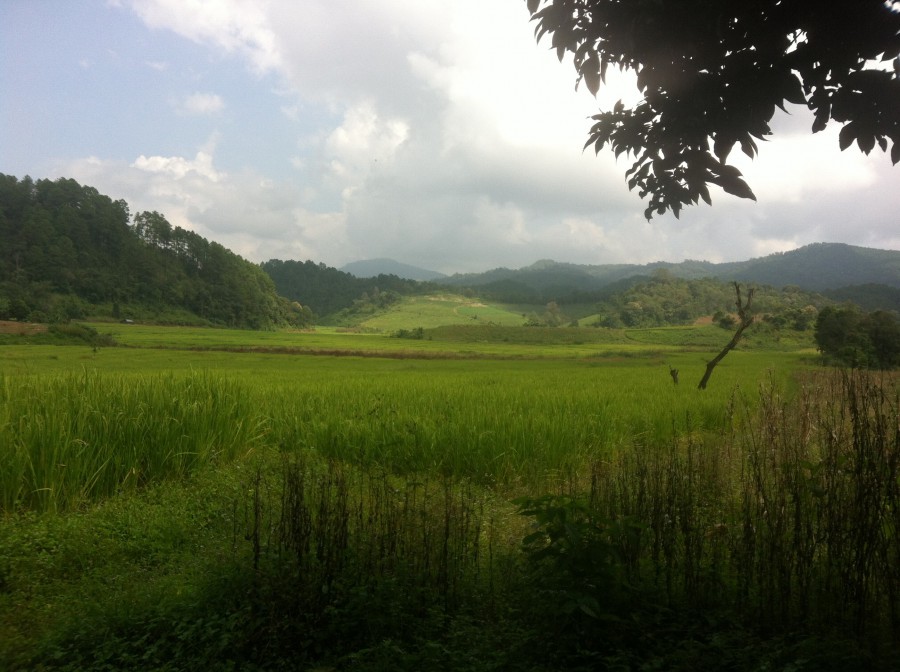
We were up in the north of Thailand two weekends ago, very close to the border with Myanmar, up in the high hills (or low mountains?) behind the town of Mae Hong Son. Lovely, really lovely … We stayed in the small village of Mok Cham Pae, perched on a hillside overlooking a small river and its bottom lands. In the UK they would have been turned into hay meadows. Here, they had become a patchwork of rice paddies.

image

Around Mae Hong Son, the rice was already ripening. But up in Mok Cham Pae it was relatively cooler, so the rice was still green, that intense green which you only get with rice paddies.

image

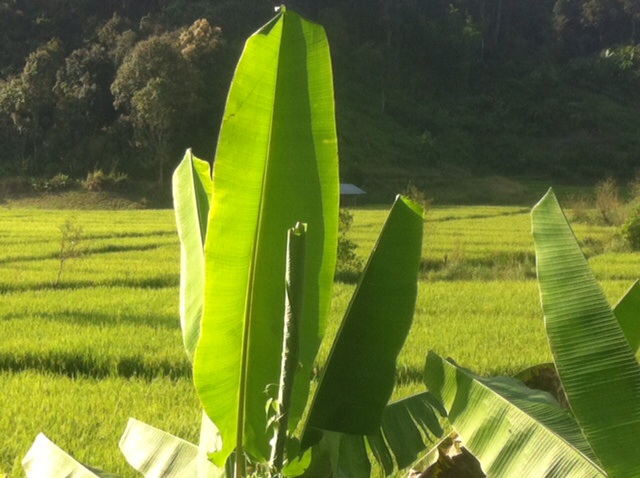
But rice paddies, for all their beauty, are a monoculture, where all other species are kept at bay. After walking around the edge of the paddy fields, seeing only some banana trees marking the edge of “rice country”
image

image

and some very smelly pigs (which turned out to be owned by our hostess), we ventured out along a dirt road which wound its way up the river valley.

image

The paddies narrowed down to a strip along the water, for a while vegetables took their place, and then finally what was left of the forest straggled down to the road’s edge.

image

We saw no elephants browsing in the forest, or tigers moving in for the kill (my memories of Rudyard Kipling’s Mowgli are getting the better of me). But what we did see in profusion were butterflies, fluttering in and out of the bedraggled forest, chasing each other around, or settling on the road close to water. On that walk, which was no more than two hours long, I swear we saw at least 20 different species of butterfly. In Europe now, you’re lucky if you see three different species in a whole day. There were never that many species to begin with, and intensive ploughing, pesticides, and the tearing up of hedgerows have put paid to the few there were. I’ve had a look at various web sites dedicated to Thai butterflies to identify the ones we saw, but it’s hopeless. Did we see a Common Grass Yellow or a Tree Yellow? Was that one by the bush a Gram Blue or a Plains Cupid? Or maybe a Forget-me-not?? In the end, who cares? They were just lovely. I invite readers to visit the following flickr site to get a taste of what awaits you in this part of the world, butterfly-wise.

And I choose just two to represent the class
image

image

I chose these two very deliberately, because they each bring back to me two distinct butterfly-related memories.

The first is from Mexico. It was some 35 years ago, my wife and I – and mother-in-law – were travelling around the country. We mostly took buses and the occasional train. But in Yucatan, we decided to hire a car. We got a Volkswagen beetle – I remember it well, they had recently been phased out in Europe – and drove from one Mayan temple to the next. And along the road we drove through these clouds, these drifts, of green-yellow butterflies. I was in agony at the butterfly holocaust I was causing, but what could I do? They were just sitting there on the road, sunning themselves.

I feel particularly bad about killing butterflies because – and this brings us to the second photo – I have a very vivid memory of when I was a child – six years old, I would guess – in our garden in Africa. It was full of butterflies, and like all children I liked chasing them. But this time, one, of about the color in the photo, had settled on the ground and was sunning itself. I crouched down, picked it up, and slowly – pulled – its – wings – off. Yes, I did that. Even as I write about it, I feel a strong sense of guilt at such a casual act of gratuitous cruelty. Perhaps the rest of my life as an environmental engineer has been an act of atonement for it.

___________
Tree yellow: http://www.vireos.com/Thailand/html/photoFrameset.html
Orange lacewing: http://www.pbase.com/glazemaker/image/130569578

all other photos: ours

RUBBING ALONG TOGETHER

Bangkok, 1 November 2014

I think it must be a scientific law that the closer you get to the equator, the more species you will find per square metre (or foot, if you wish) looking for their space in the sun. All that steamy heat seems to lead to a sustained biological ebullience. Certainly, in a totally unscientific survey, my wife and I have agreed that the number of species wishing to share with us our hot and steamy Bangkok apartment is considerably higher than it was in Beijing. There, over a period of five years, we catalogued a few, relatively small, cockroaches making a frantic getaway over the floor and that was it (although the rare cockroach sighting led to apoplectic calls to the front desk and demands for a thorough chemical spraying). Here, in just one month and a bit, we have seen:

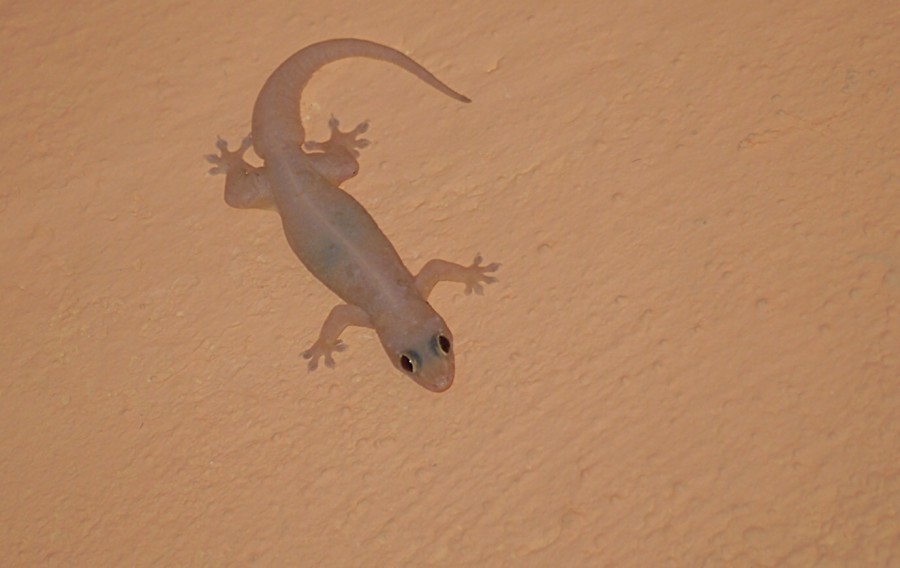
– A little lizard, very pale, almost albino, which we first sighted peeping out from under the dining table, then from behind a column that we have in the living room, then in the cupboard under the kitchen sink. He looked very similar to this little fellow.
image
I have had a soft spot for lizards ever since I used to chase them as a boy across the walls of my grandmother’s garden in France, so I was pleased to see it. But my wife is not a lizardophile and demanded that I get rid of it. I rather reluctantly chased it around a bit and was secretly pleased when it disappeared of its own accord.
– A horribly large cockroach, which luckily was flat on its scaly back, dead, in the shower. But I have seen them horribly alive, skittering ahead of me across the pavements, always in the darker corners of the neighborhood. Disgusting creatures, I refuse to grace them with a picture ….
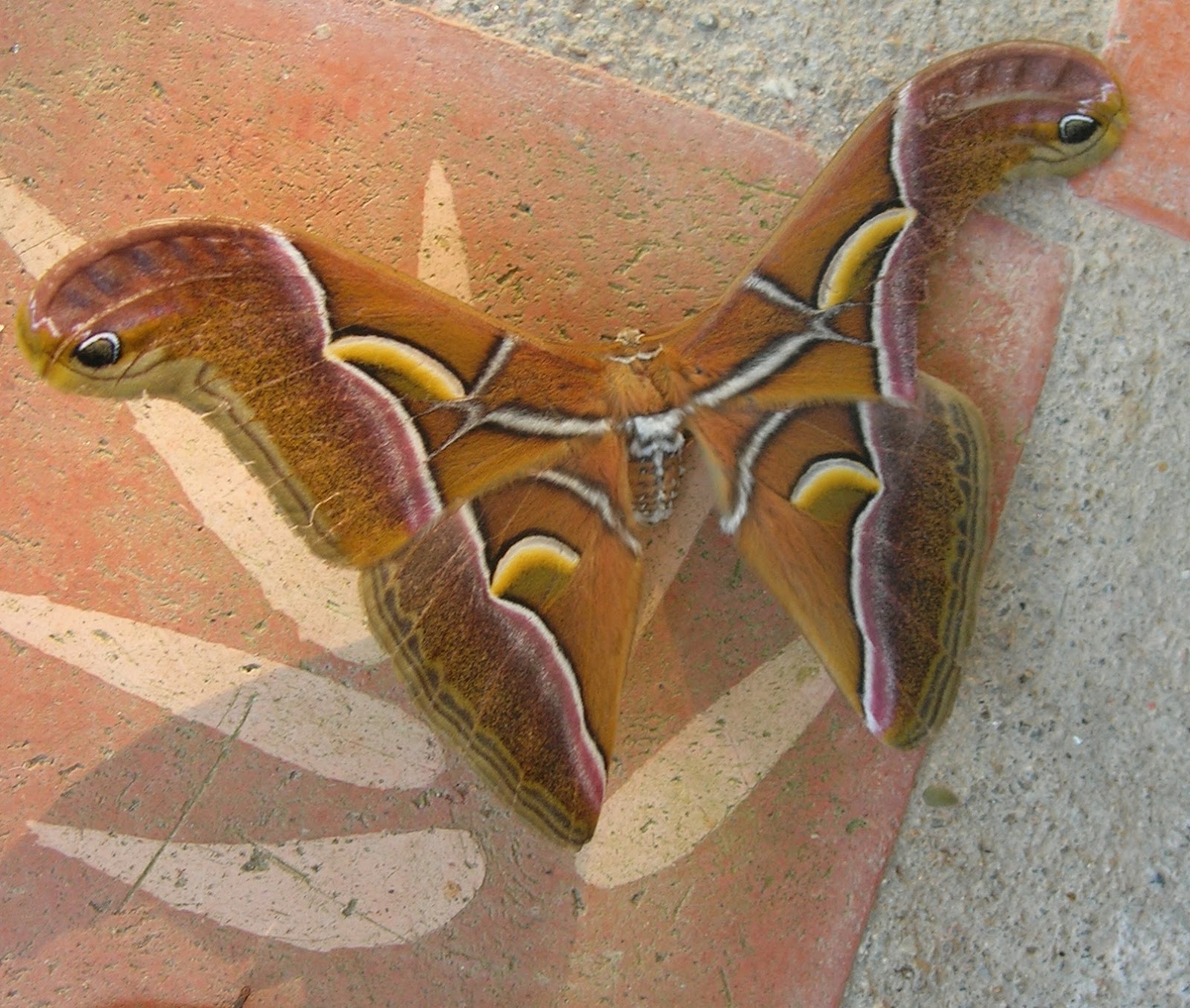
– A number of wonderfully large moths, which flutter in at night from out over the river and settle down for a rest. They are really beautiful, nothing like the dreary little things we have in Europe, so I’d be pleased to share my living space with them.
image
But my wife is having none of it, so with a sigh I shoo them out, using the pasta drainer to catch them and carry them out.
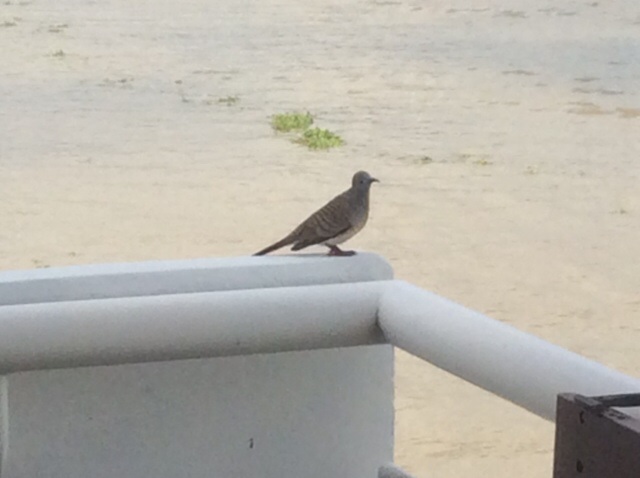
– Several species of bird which use the balcony railing as a favorite stopping place. There are those pesky pigeons which crowd our squares in Europe. But there has also been a beautiful bird, which I think is also a type of pigeon although my wife disagrees.
image
Cheeky little sparrows also hop on and off the railings, beadily eyeing any crumbs which might have fallen off the table that we carry out onto the balcony for breakfast, lunch and dinner.
– swallows, which my wife says she found early one morning twittering around on the living room parquet (we had left the windows open). Imagine that! I see them dive and swoop over the river
image
as I have seen them dive and swoop over summer fields in Europe. But I have never seen them stand still.

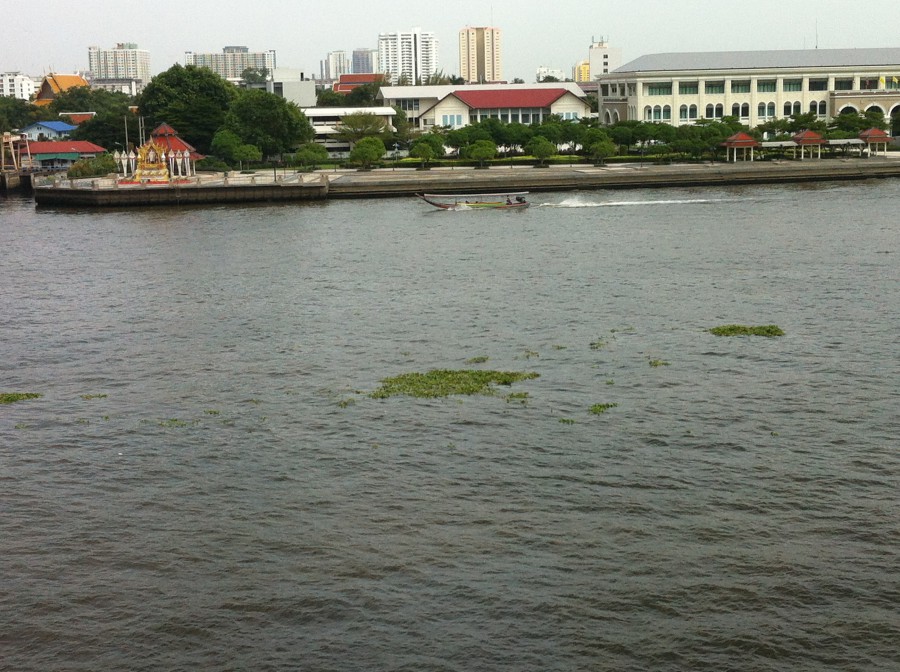
All this in the few square meters (or feet, if you wish) of our apartment. Expanding out a little, we’ve seen beautiful little birds, black with white tufts on their wings, fluttering silently on and off the clumps of water hyacinth which drift past us on the river. They have recently been joined by a lovely white egret.

image
And then there’s the Asian koel bird which I’ve mentioned before. I keep on hearing it, but I’ve never managed to see it. In the dirty, oh so very dirty, canal which runs behind the office, I’ve seen what I think is a monitor lizard swimming lazily (or sickly?) in the watery gook: the water is greyer than in this photo.
image
The same canal teams with fish, which some enterprising (or mad?) people fish from time to time. And we have a couple of next-door fishermen who put out their nets in the river while we are having breakfast, well out of the way of the busy river traffic. I’ve sometimes caught a gleam of silvery scales in the bottom of their shallow little boats.

image

But I presume that the number of species we can stumble across in the concrete jungle of Bangkok would be nothing compared to what is present in the real jungle – or what is left of it in Thailand. That pleasure awaits us still.

_______________
Lizard: http://naturestudent.files.wordpress.com/2013/01/20130121-162953.jpg (in http://naturestudent.wordpress.com/2013/01/21/lovely-lizards/)
Moth: http://1.bp.blogspot.com/-R3HpNI3L0lM/TzdPTJ13xQI/AAAAAAAAAD8/TiXKoEuS1go/s1600/Samia+canningii.JPG (in http://norfolkbirderinthailand.blogspot.com/2012/02/thailand-moths-part-two.html)
Bird on the balcony railing: my wife’s picture
Flying swallow: https://c1.staticflickr.com/9/8164/7244597922_bd666a00e8_z.jpg (in https://www.flickr.com/photos/clicks_1000/7244597922/)
Egret: http://upload.wikimedia.org/wikipedia/commons/f/f1/Little_Egret_flying_-_Thailand.jpg (in http://c
ommons.m.wikimedia.org/wiki/File:Little_Egret_flying_-_Thailand.jpg)
Monitor lizard: http://cdn2.vtourist.com/4/6079856-Monitor_lizard_swims_khlong_Bangkok.jpg?version=2 (in http://www.virtualtourist.com/travel/Asia/Thailand/Central_Eastern_Thailand/Bangkok-1445238/Off_the_Beaten_Path-Bangkok-Khlongs_Canals-BR-1.html)

PERAMBULATING PARQUETS

Bangkok, 26 October 2014

My wife has been busy getting to know Bangkok in her usual favorite way, taking the bus (with me joining her on the weekends). When she told the very nice Thai couple whom we have befriended in the building that she takes the bus to get around, they stared at her and finally managed to ask, “the aircon buses?” When she said no, no, the normal buses, they tittered nervously. When pressed, they confessed to have not taken a bus in twenty years. (This reminds me of a scene early in our marriage. It was downtown Baltimore, 1978 or 9. We wanted to get somewhere, I forget where, so we approached a nice young man sitting on a bench eating his lunch and asked him what bus we might take. He confessed that he had no idea, that he had never taken a city bus in his life. We stared at him: how could it be that someone had NEVER taken a bus? The difference between a European and an American, I suppose. But I digress.)

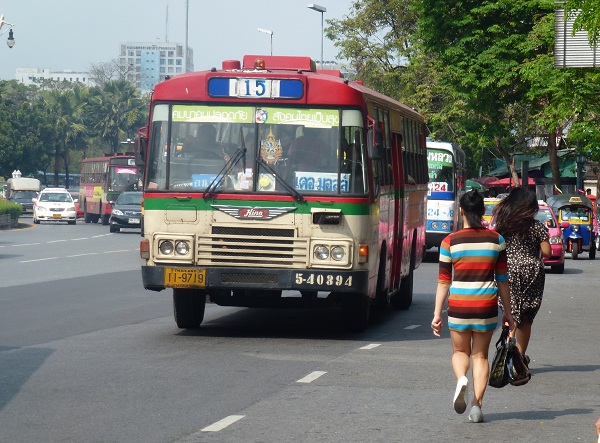
It is true to say that the (non-aircon) buses of Bangkok are not the most handsome of buses. In fact, they obviously have had a hard-scrabble life.
image
And their technology looks – and sounds – very old-fashioned. For instance, whenever the drivers change gears (using a huge gear shift as big as the seated drivers themselves), it sounds distinctly like they are double-declutching (a term which I would imagine is meaningless to anyone below the age of 60). The drivers are always in a tearing hurry, no doubt due to being perennially bottled up in Bangkok’s terrible traffic, so getting on and off buses is an athletic accomplishment. To get on, wave down the bus, rush for the door, swing in as the bus already starts to move off. To get off, ring for the stop, balance yourself on the balls of your feet, hustle down the steps the moment the doors start clattering noisily open, and drop down into the street as the bus already moves off. And while inside, hang on for dear life as the bus barrels its way down the city’s streets, riding roughshod over every pothole and other imperfection in the road’s mantle.

But as I grimly hang on in the bus, bouncing up and down on the (really quite comfortable) seats, I cannot help but wonder at the beautiful parquet floor which the buses have. Look at that! Who has ever seen parquet floors in buses?
image
Well, “parquet” may be pushing it a little, but this is really nice wood they’ve used. No trash soft wood here, being rubbed to pieces by passenger’s dirty shoes. This is close-grained hardwood. I would be proud to have a floor of that in our living room, sanded down and waxed into a rich red-brown color, instead of the fake plasticized “parquet” which our miserly landlord has laid down and which rings hollow every time we walk across it. I wince when I see how this beautiful wood has been mercilessly screwed down onto to the bus chassis, with big, gleaming, screws. Aie-aie-aie!

The only thing that worries me here is the wood’s provenance. This is not plantation wood, nor I’m sure is it certified wood from responsibly managed forests. I fear that this is just brutally logged wood from Myanmar or Laos or perhaps Indonesia (Thailand has already cut down much of its forests).
image
Perhaps it would be better for Bangkok to shift to modern, gleaming, air-conditioned, buses with plasticized floors
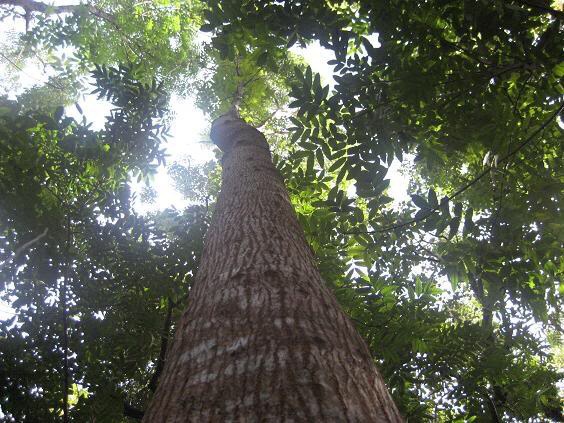
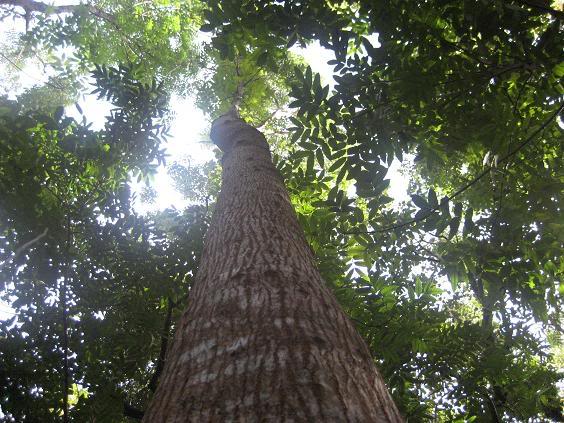
imageand leave this beautiful wood standing in its wilderness, soaring up towards the sky.
image

_______________
Bangkok bus: http://www.langeasy.com/images2/bkk/bus2.jpg (in http://www.langeasy.com/cities/bangkok/bangkokpage1.html)
Bangkok bus floor: my photo
Illegal logging: http://www.globalpost.com/sites/default/files/imagecache/gp3_slideshow_large/illegal_logging_in_anlong_veng_ii.jpg ( in http://pixgood.com/illegal-loggers.html)
Modern city bus: http://i01.i.aliimg.com/photo/v2/280618923_1/SLK6111_Aluminum_Body_City_Bus.jpg (in http://www.skyscrapercity.com/showthread.php?t=1468014)
Mahogany tree soaring: http://treepicturesonline.com/tree-mahogany.jpg (in http://treepicturesonline.com/mahogany_tree_pictures.html)

SCENT OF MY WIFE

Beijing, 3 August 2014

I’m very boring when it comes to using after-shaves, eaux de cologne, or similar perfumes. I use none. I don’t even like to use perfumed soaps. I prefer to smell of nothing. Very boring.

This dislike of perfumes extends to perfumes on others. For instance, I wince and move rapidly out of the way if I happen, on the street or in a corridor, to find myself walking into the scented wash following a heavily perfumed person. And I always stare disapprovingly at scented people if I find myself with them in elevators or other enclosed spaces from which I cannot escape.

As you can imagine, this scentophobia of mine, if I can call it that, is the despair of my wife. Whenever we are taking an international flight she always makes a bee-line for the perfumery section of the Duty Free shop, where she will try a spray of this and a squirt of that. She always asks me my opinion, and like any good husband I always take a sniff and murmur something unintelligible. She sighs and asks out loud why she bothers. Indeed, why does she bother? I suppose hope springs eternal.

But actually, once, just once, she tried a perfume, she asked me my opinion, I dutifully sniffed … and I blinked. I liked it! I actually liked it! It had a lemony-sort of scent which my nose really found quite attractive. Terribly pleased by this exciting development, my wife promptly purchased the perfume in question and has been using it ever since. Since my readers are no doubt on the edge of their seats by now, wondering what perfume it was, I am glad to announce that it was Chance Eau Fraîche, by Chanel.

Chanel Chance Eau FraicheI’m not sure that its use filled my wife with quite as much delirious happiness as this young lady is showing, but it did put a spring in her step and a twinkle in her eye. It also allowed me to close my eyes and go “mmm-aaah” whenever she gave herself a spray.

man smelling perfume-2

All was well until the perfume began to run out. A replacement became an impelling necessity. An inspection of shops in Beijing showed that prices were ridiculously high here, so I was given the task – gladly taken on, since I liked the perfume – of getting a new bottle on my upcoming trip to Europe. Which I did, in the Duty Free shop at Vienna airport. I triumphantly presented it to my wife upon my arrival. She ceremoniously opened the packaging, fished out the bottle, and gave herself a spray.

OMG, not the same! We sniffed, we conferred, we checked the packaging (I could have got the wrong product, it wouldn’t have been the first time), we compared it to the remaining dregs in the old bottle … No doubt about it, something was different. But what?

I went off in a frenzy of searching on the internet, starting with Chanel perfumes’ own website. Allow me to quote the blurb about Chance Eau Fraîche which I found there

A vibrant incarnation of the unexpected fragrance, now takes on a sparkling freshness. The unexpected floral bursts with a lightness and zest as notes of Citrus, Water Hyacinth and Jasmine Absolute are highlighted and energized with woody notes of Amber, Patchouli and Fresh Vetiver.

I must say, I thought I had reached the maximum levels of BS in descriptions of wines, which I commented on in an earlier post, but the BS written about perfumes beats them all. In any event, this description didn’t help me in figuring out what was wrong.

Another site, after breathlessly quoting the Chanel site blurb almost word for word, added this:

Top Notes: Citron, Water Hyacinth
Middle Notes: Jasmine Absolute, White Musk
Base Notes: Vetiver, Amber, Patchouli, Teak

What was this stuff about notes? A bit more research on my part taught me that there is such a thing as a fragrance pyramid, which looks like this:

olfactive_pyramid

This chart explains what all these notes mean (BTW, middle notes are also called heart notes, and top notes head notes), but it’s rather scholastic, the sort of thing a teacher would put on the board at school. Here’s a more colourful version of the same pyramid

olfactive pyramid-2Coming back to our problem with Chance Eau Fraîche, something must have happened to the top notes, because we smell the difference immediately. My wife thinks the Chanel people have cut back on the citron note. I think it’s something else – have they fiddled with the water hyacinth note? I wouldn’t be able to say because I have no idea what water hyacinth smells like. The closest I’ve come to the plant is clumps of it floating past the window on the Chao Phraya River last week in Bangkok.

water hyacinths 001

In fact, I only know it as a horribly invasive species, which has more or less choked Lake Victoria in Africa to death. But it has a beautiful flower

Water Hyacinth Flowerwhich, it seems, was the reason it was taken away from its original homeland in South America and spread the world over.

But now that I’ve learned this stuff about notes, I shall have to sneak up on my wife some 10-15 minutes after she has applied the perfume and see if I can smell the middle notes, jasmine absolute and white musk – which are what, exactly?

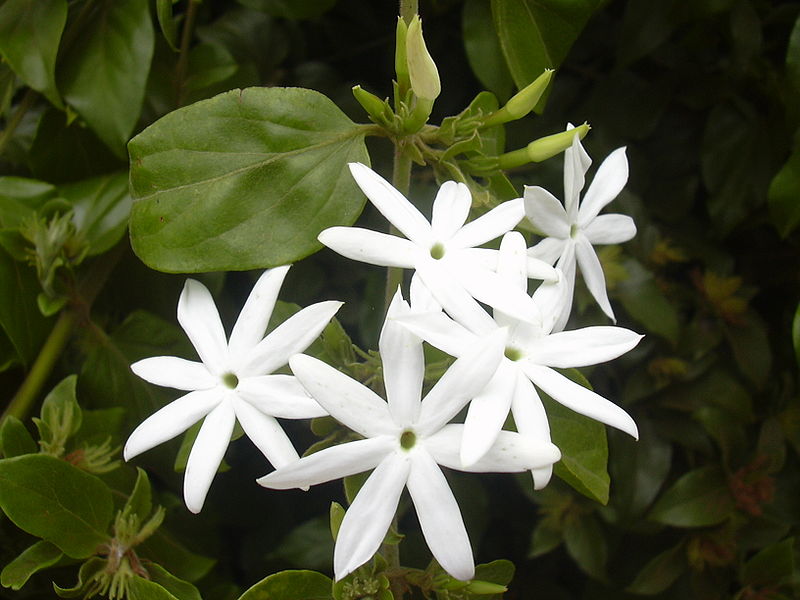
Well jasmine I know, and I know that my wife loves it. But there are a bewildering number of jasmine species, several of which are used for fragrances, so completely randomly I’ve chosen a picture of the flower from jasminum multiflorum to represent the species.

jasmineAs for this word “absolute”, I have learned that some flowers, jasmine being one of them, are too delicate to have their oils extracted through distillation. Instead, they are extracted with solvents or through enfleurage, a process where the petals are pressed or stirred into fats.

I think I would recognize jasmine if I smell it on my wife, but I’ve no idea what white musk would smell like. I have this idea that it would be very penetrating as a smell – “animalic”, as they put it in that second fragrance pyramid I give above. Come to think of it, I don’t even really know what musk is, or at least I didn’t until I read up for this post. Now I know a bit more. For starters, white musk is the name given to synthetic musk. For economic, and I would hope ethical, reasons, musk is no longer taken from its natural source, which is a gland of the male musk deer (I had vaguely thought it came from civet cats, don’t know why).

musk deer

Nice looking creatures, although what strange fangs they have! The famous musk gland lies in a sac located between the poor animal’s genitals and its navel. Presumably, you had to kill the animal to get to this gland.

So that does the middle notes. After three-four hours, I can sneak up on my wife again and try to detect the base notes. And here again, I have to confess to much ignorance. I know what amber and teak are, although I have difficulties in understanding what essential oils could be extracted from them, but what, I asked myself, are vetiver and patchouli?

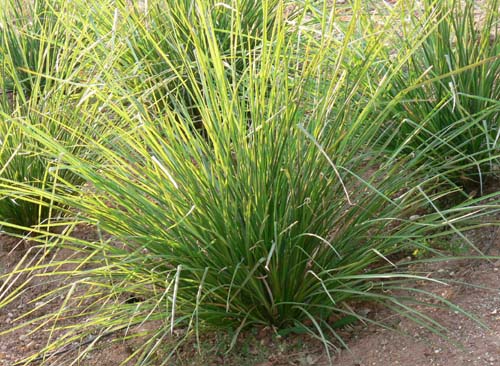
They are both plants, it turns out, which come from India or thereabouts. Vetiver is a grass, related to sorghum.

vetiverThe essential oil used in perfumes comes from its roots.

vetiver roots

The oil is described as smelling “warm and dry, and conveying earthy, woody, leather, balsamic and smoky notes”. I’m not sure how exactly that would register in my nose; I guess I will see.

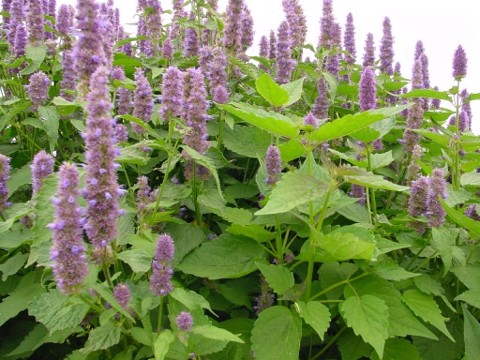
As for patchouli, it is a bushy herb of the mint family with small, pale purple flowers.

patchouli plantIf you thought like I did that the essential oil comes from the flowers, you would be wrong. It comes from a distillation of the plant’s leaves. It seems that it has a heavy and strong scent, so I guess I will recognize it when I take that surreptitious sniff at my wife’s neck.

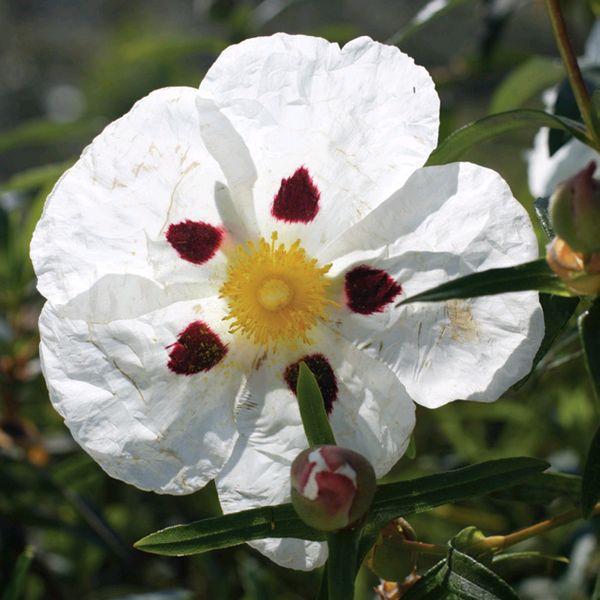
As for amber, I quickly understood that we were not talking about real amber. Instead, the word is used to loosely describe a fragrance that is “warm, musky, rich and honey-like”, and also “somewhat oriental and earthy”. Like everything nowadays, it can be made completely synthetically. But I prefer to believe that the master perfumer who created Chance Eau Fraîche, Jacques Polge, used natural resins. In that case, the basis of the “amber” in my wife’s perfume will probably be labdanum, which comes from a species of rockrose found in the Mediterranean. The shrub has a lovely flower

labdanum

but actually what is used in perfumes is the plant’s resin, which is usually extracted by boiling the leaves and twigs. To this can be added benzoin resin (obtained from the bark of several species of trees in the genus Styrax), copal (another type of tree resin), Dammara resin (from the kauri or dammar trees), vanilla, cloves and who knows what else. Labdanum’s fragrance is described as “animalic, sweet, woody, ambergris, dry musk, or leathery” and “very rich, complex and tenacious”. OK, let’s see what my nose tells me.

And teak? I guess that will be a woody smell …

Right, it’s time to go sniffing around my wife.

____________________

Chanel Chance Eau Fraiche: http://goods.tuanweihui.com/ueditor/php/upload/20131114/1384410621998.jpg [in http://www.wensm.com/zonghe/qita/9872.html%5D
Man smelling perfume: http://raindropsbasmatirice.files.wordpress.com/2013/01/1083376-clipart-man-smelling-an-aroma-royalty-free-vector-illustration.jpg [in http://raindropsbasmatirice.wordpress.com/2013/01/05/keeping-a-tradition-alive/%5D
Fragrance Pyramid: http://www.toutenparfum.com/miniguide/element/olfactive_pyramid.jpg [in http://www.toutenparfum.com/miniguide/petit_guide/smallguide.en.php%5D
Fragrance pyramid-2: http://www.lacedivory.com/blog/wp-content/uploads/2012/05/FragranceFamiliesPyramid.jpg [in http://www.lacedivory.com/blog/2012/05/12/guest-post-an-introduction-to-the-different-notes-in-a-fragrance/%5D
Water hyacinth on the Chao Phraya River: my photo
Water hyacinth flower: http://upload.wikimedia.org/wikipedia/commons/7/77/Pond_Water_Hyacinth_Flowers.jpg [in http://commons.wikimedia.org/wiki/File:Pond_Water_Hyacinth_Flowers.jpg%5D
Jasmine flower: http://upload.wikimedia.org/wikipedia/commons/thumb/3/3b/Starr_030602-0071_Jasminum_multiflorum.jpg/800px-Starr_030602-0071_Jasminum_multiflorum.jpg [in http://en.wikipedia.org/wiki/List_of_Jasminum_species%5D
Musk deer: http://upload.wikimedia.org/wikipedia/commons/thumb/9/9d/Moschus_moschiferus_in_Plzen_zoo_(12.02.2011).jpg/640px-Moschus_moschiferus_in_Plzen_zoo_(12.02.2011).jpg [in http://en.wikipedia.org/wiki/Musk_deer%5D
Vetiver: http://www.essentialoilspedia.com/wp-content/uploads/2013/05/vetiver1.jpg [in http://www.essentialoilspedia.com/vetiver/%5D
Vetiver roots: http://www.vetivernurseries.co.nz/uploads/images/3Months growth2.JPG [in http://www.vetivernurseries.co.nz/index.php?page=the-vetiver-system%5D
Patchouli: http://1.bp.blogspot.com/-HiPRjCwKAUk/UbWkXqtZyFI/AAAAAAAACPQ/IuvNYw7f8O0/s1600/patchouli+plant.jpg [in http://eleneetha.blogspot.com/2013/06/tonight-patchoulis.html%5D
Labdanum flower: http://www.biolandes.com/images/p-ciste-labdanum-espagne6grand.jpg [in http://www.biolandes.com/en-cistus-labdanum.php?lg=en%5D

LIME GREEN? SPRING BUD MAYBE?

Beijing, 1 July 2014

For reasons which are too long to explain, a few days ago my wife and I moved out of our apartment and into another one not too far away. Suffice to say that renters have little if any protection in China: “you don’t agree to my doubling the rent? Well, the door is over there. Oh, and by the way, I’ll keep the deposit.”

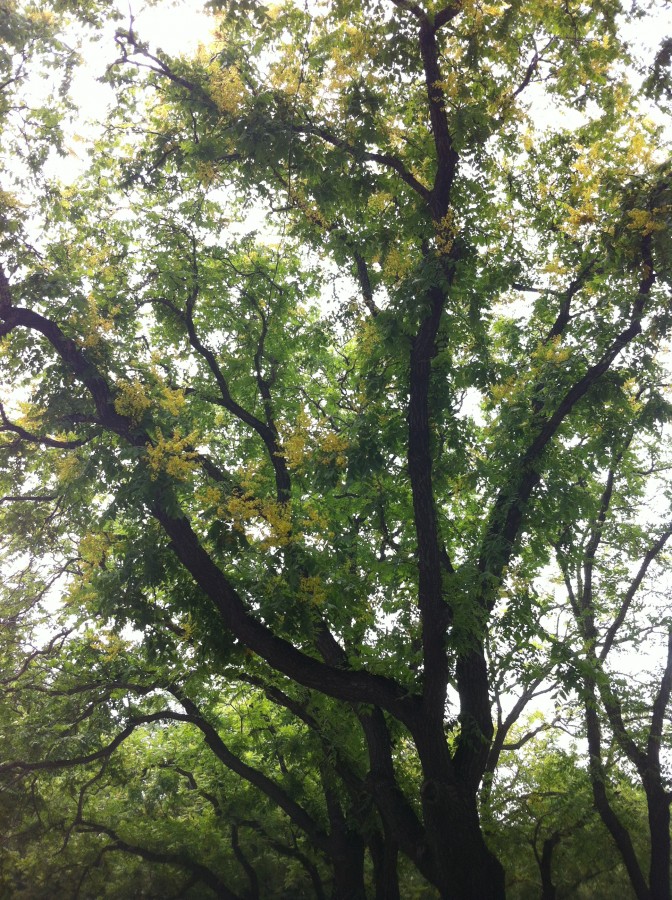
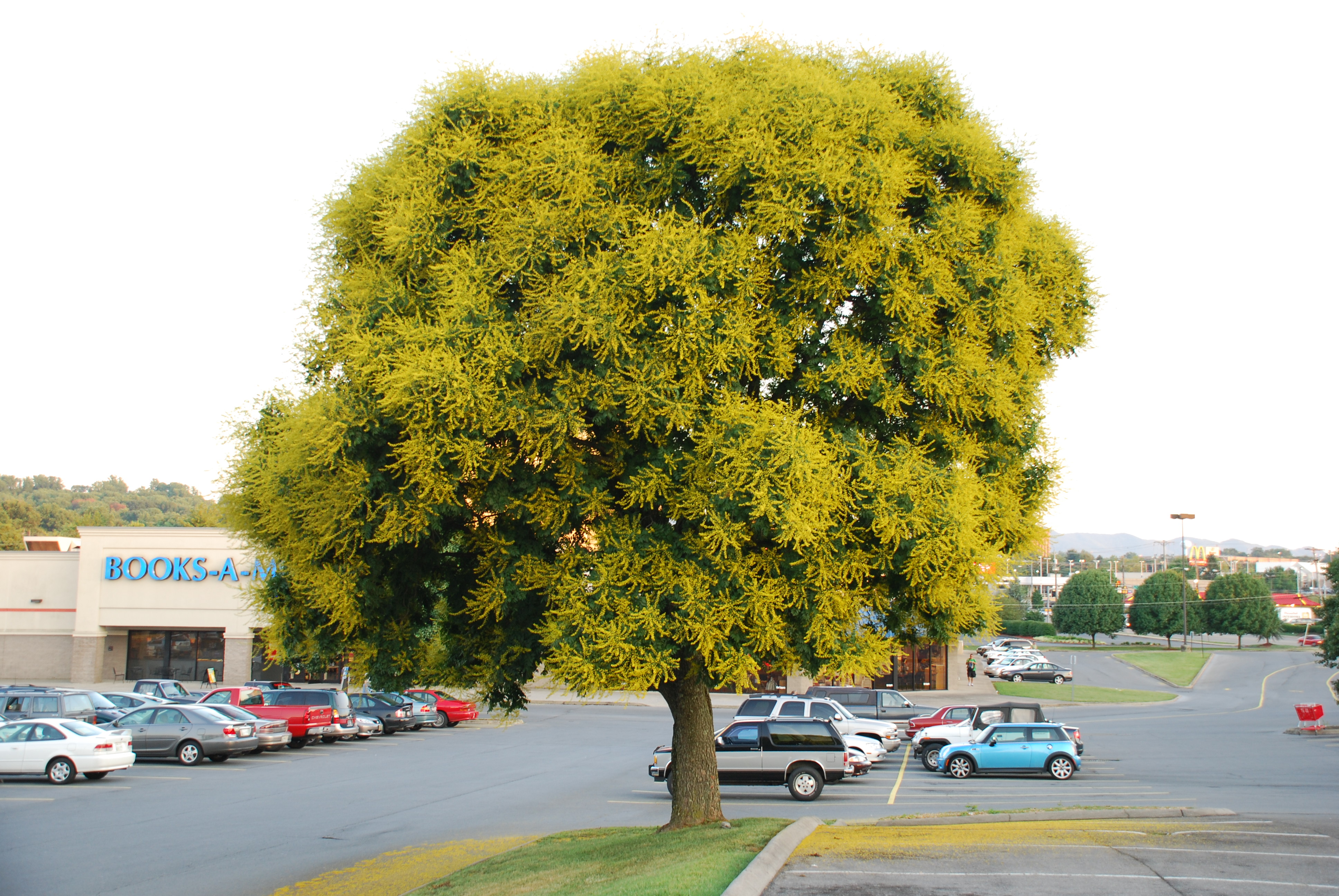
In any event, this forced relocation has meant that I’ve had to walk a new route to and from the office, which takes me under a new set of trees. Every cloud has a silver lining, as they say, which in this case is my discovery of the goldenrain tree, Koelreuteria paniculata, under a row of which I now walk every day. This picture shows nicely the origins of the name. At this time of the year, the tree is covered with bunches of small yellow flowers, which drizzle down on the ground around the tree.

solitary goldenrain tree

In my row of goldenrain trees, planted as they are close to each other – to give shade, which is devoutly to be thanked for at this time of year – I don’t get such an uncluttered view of the trees and their flowers. This is about the best I’ve managed to see.

golden rain tree 009

I also haven’t really been able to see the golden raindrops scattered around on the ground since the street sweepers are very efficient in this part of town. This is all I’ve seen, little piles ready to be picked up

golden rain on ground

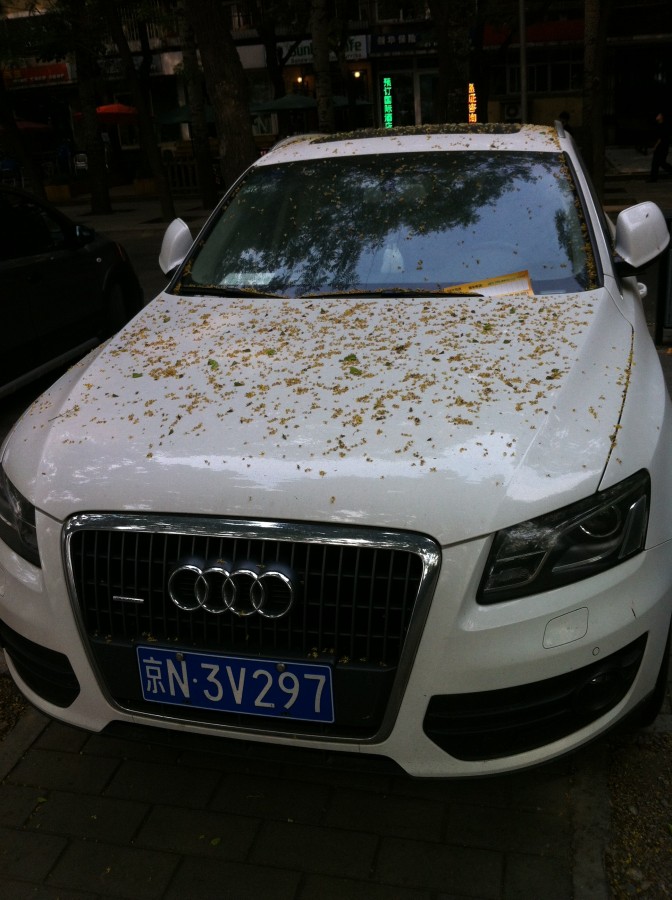
although this car parked under some of the trees shows what the pavement must look like early in the morning.

golden rain on car

Actually, it wasn’t the flowers which attracted my attention. It was the seed pods (the tree seems to move from flower to seed astonishingly quickly). Some of them had fallen onto the pavement

seed pods on ground 006

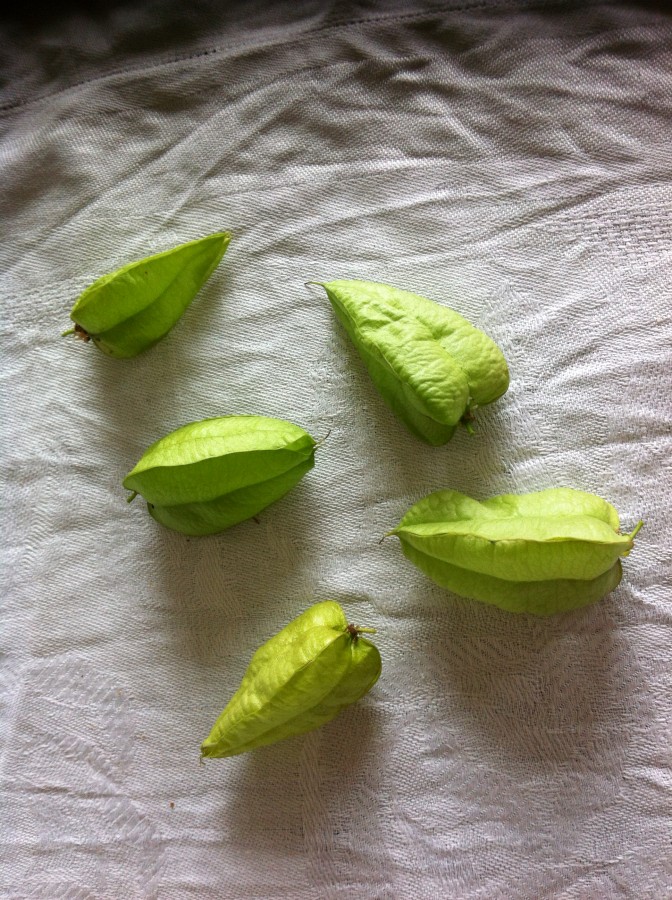
and it was their light, translucent green which drew my eye. I carefully picked up a few – they are very delicate – and took them home. My wife took this in her stride; she is used by now to my bringing home botanical strays. I laid the pods out on our table cloth and took this picture

pods on table - 1 july 001

I’m not sure what to call this green. The clever thingy which in the Word software allows me to have an infinite number of colours for my fonts tells me that in the colour model RGB (whatever that is) it’s about 200 Red, 255 green, and 90 blue. But that’s far too boringly scientific. I would like a name for this green! A search of colour charts for paints, dyes and the like suggests that it could be Lime Green. Or there’s a green called Inchworm, after an inch-long worm of that colour. Or could it be Chartreuse? But that’s too yellow I think. Or maybe Spring Bud; it certainly has something of that tender green which we associate with Spring.

And I really like their shape. A number of websites call it bladder-like. Really, some people have no imagination! Others note a resemblance to Chinese lanterns, which is a much better comparison

green chinese lantern

although I think Chinese lantern makers could profit aesthetically from trying to copy the somewhat rounded pyramidal shape of these seed pods.

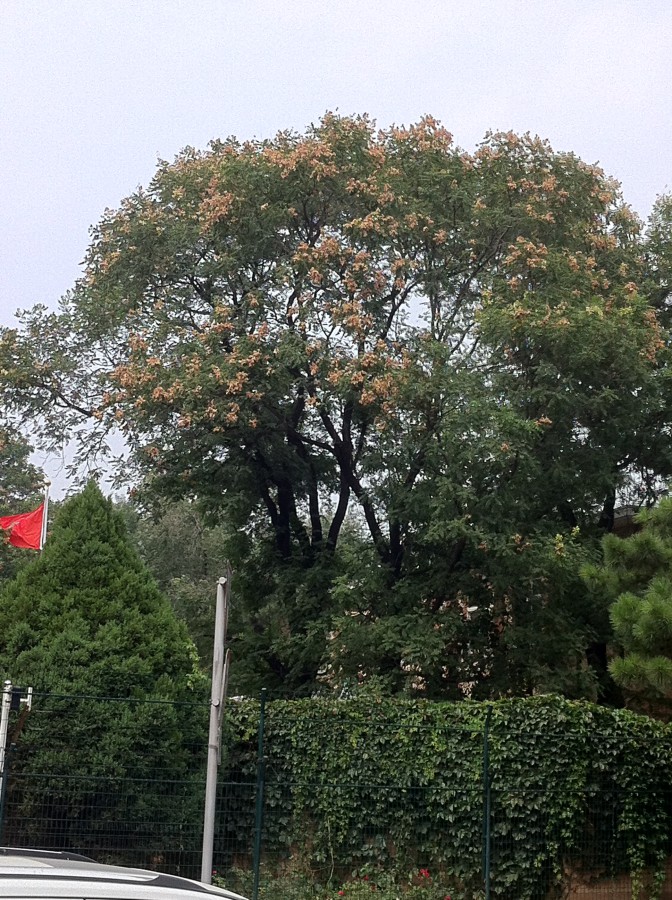
Having had my attention drawn to the pods, I quickly noticed how they clustered thickly about the crown of the trees, giving a frosting of light green on the dark green of the leaves, a delightful effect.

pods on tree - 1 july 002

pods on the tree

I understand that the pods eventually turn brown. It will be interesting to see how this changes the visual pleasure which I currently get from the tree on my daily walk to and from the office (intermittently cursing at my previous landlord).

POSTSCRIPT 1, 10 July 2014

Once you see one, you begin to see them everywhere …

I’m in Budapest at the moment, for reasons which are also too long to explain. Yesterday evening, I was walking across a little park when at its exit I stumbled across a goldenrain tree sheltering locals having a quiet evening drink and chat.

goldenrain trees Budapest 003

Here, it’s an immigrant in a foreign land. The goldenrain tree is native to China and Korea.

POSTSCRIPT 2, 17 August 2014

Well, the pods have turned brown. This is what the trees look like now.

golden rain tree with mature pods 002

I don’t know, I think I prefer the pods in their lime green phase.

______________________

Solitary goldenrain tree: http://www.whatgrowsthere.com/grow/wp-content/uploads/2011/04/Koelreuteria-paniculata-6.jpg [in http://www.whatgrowsthere.com/grow/2011/07/01/goldenrain-tree-sparks-a-july-golden-celebration/%5D
Green Chinese lanterns: http://10kblessingsfengshui.typepad.com/.a/6a00e39336235e8834014e5f344434970c-800wi [in http://10kblessingsfengshui.typepad.com/10000_blessings_feng_shui/2011/02/lighting-lamps-for-the-lantern-festival.html%5D
other pictures: mine

SCULPTURE AND NATURE

Beijing, 15 June 2014

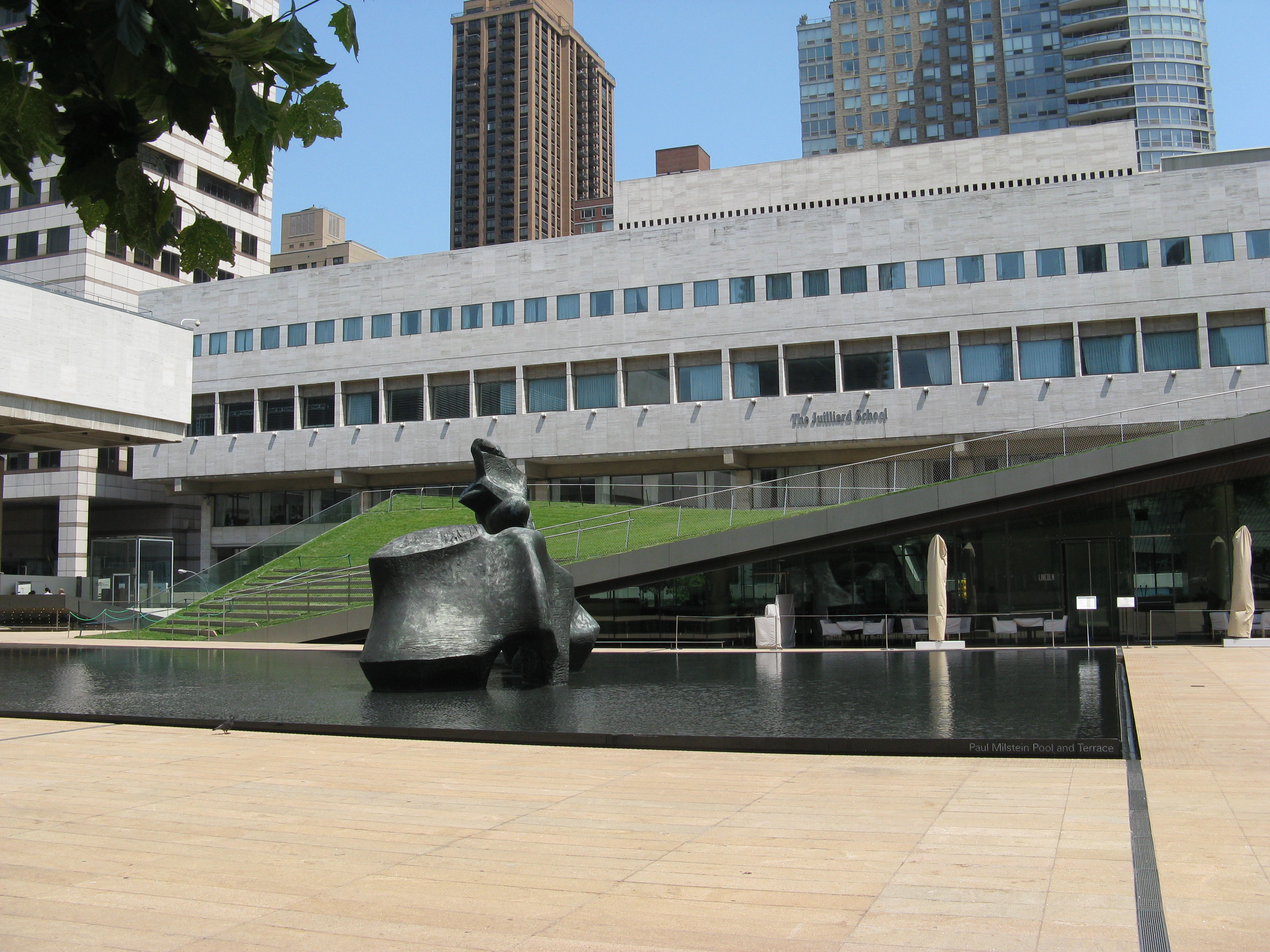
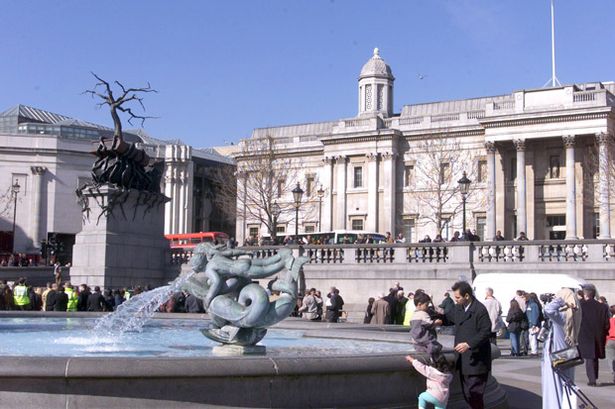
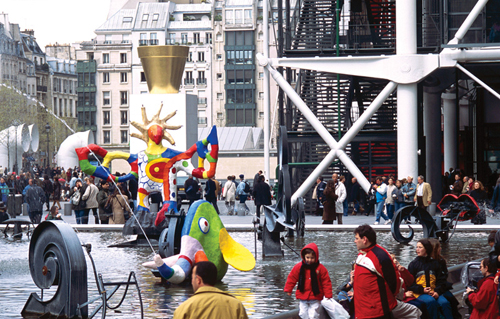
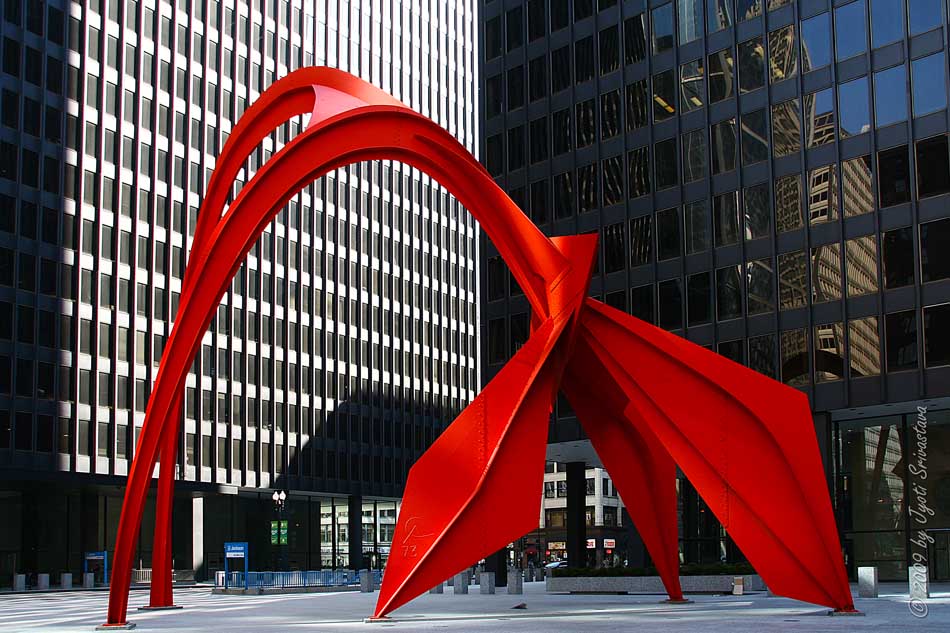
My wife and I were watching TV with one eye the other day when the BBC passed a programme which caught our attention. It was about the Yorkshire Sculpture Park in the north of England. I think a few words of explanation are required for those readers who have never heard of this Park (our situation before watching the BBC programme). It was established back in 1977 in the grounds of a stately home the last of whose aristocratic owners (Viscount Allendale) had sold it to the local council after World War II, no doubt to save his financial skin (I mentioned the financial woes of the UK’s stately homes in an earlier posting of mine). The idea is a simple one: rather than displaying modern sculpture in open spaces in cities like plazas
sculpture in cities-1

sculpture in cities-2

or squares

sculpture in cities-3

sculpture in cities-4

or using the atriums of posh buildings

sculpture in cities-6

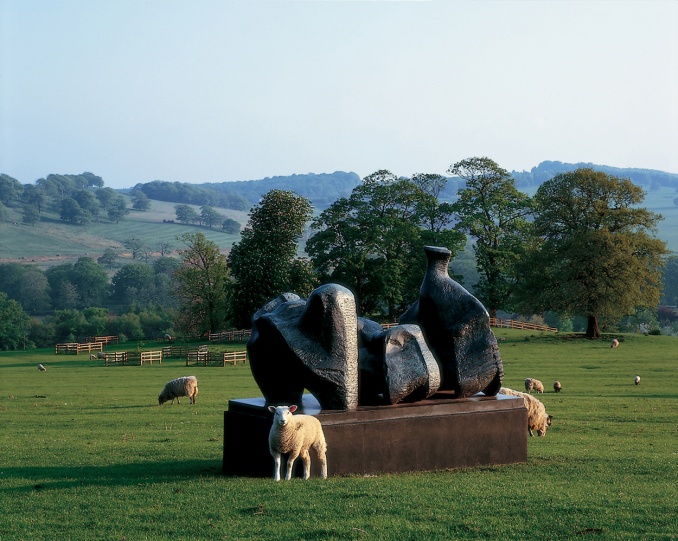
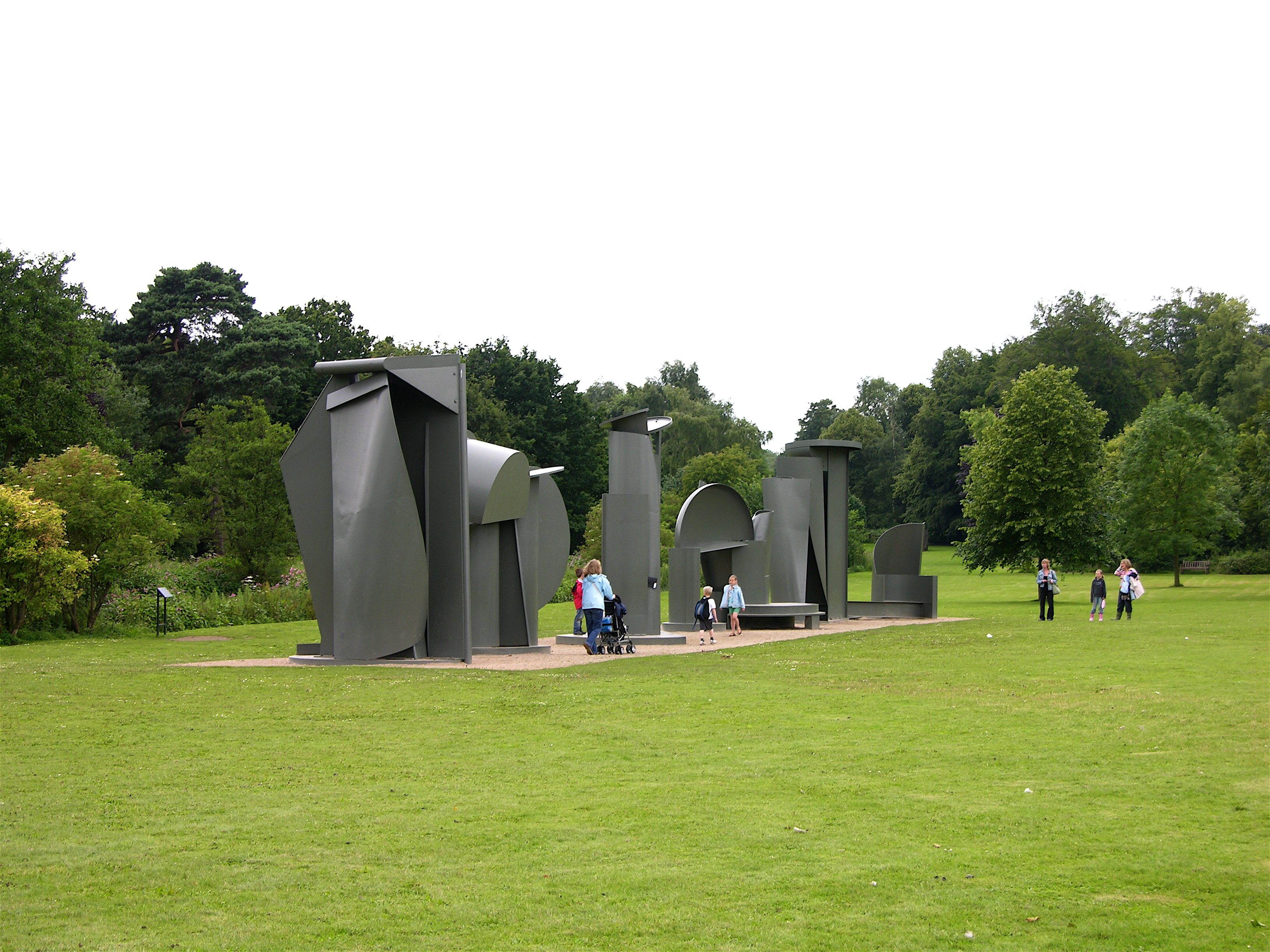
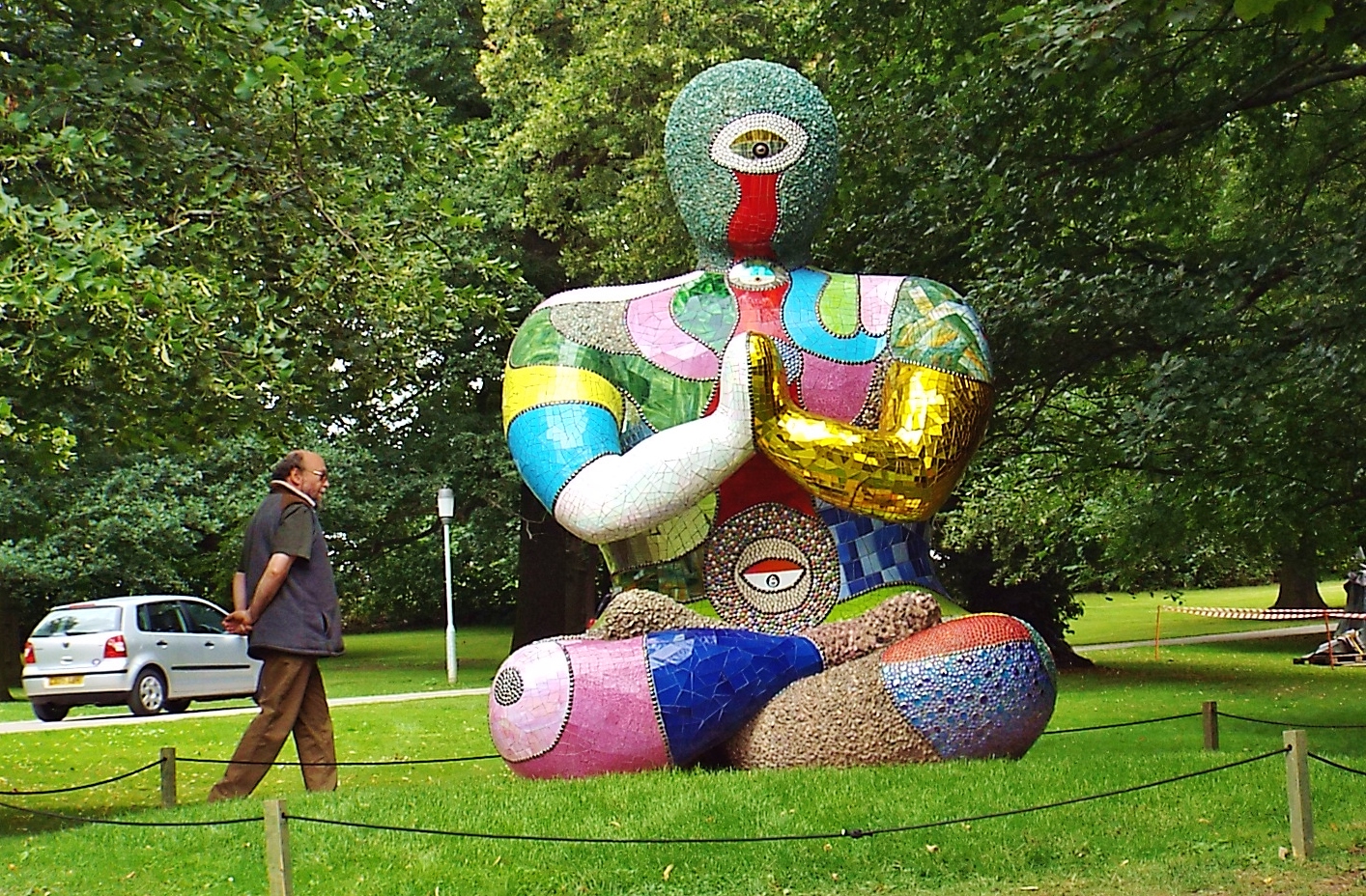
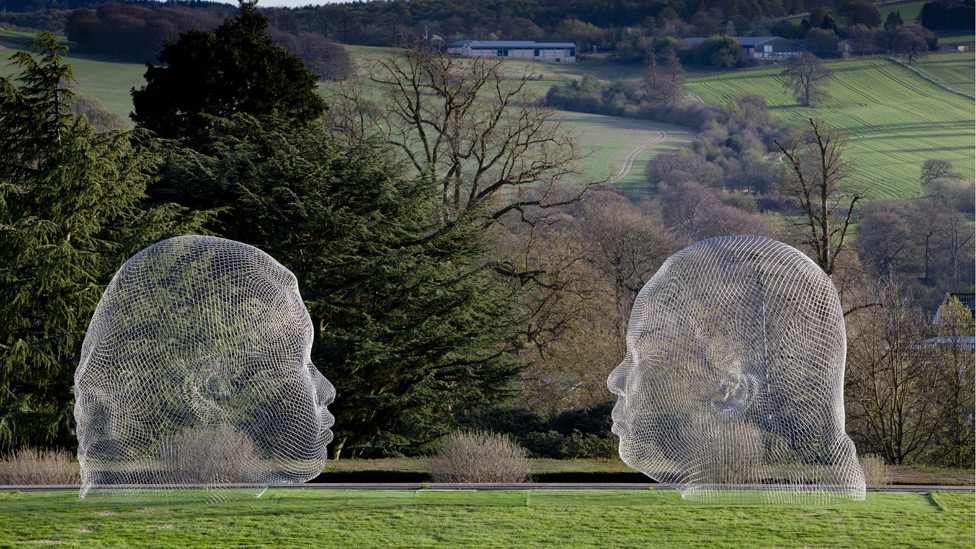
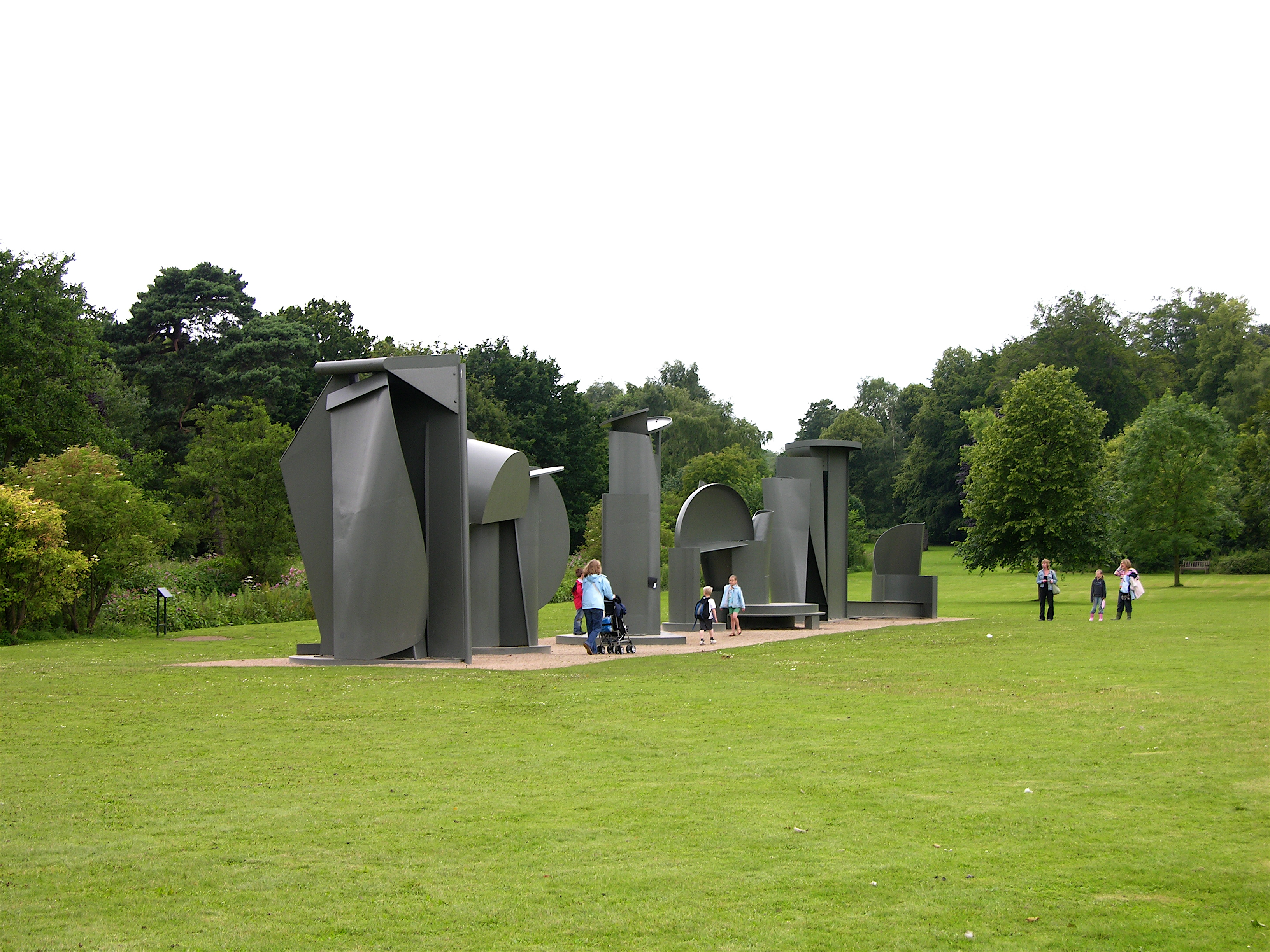
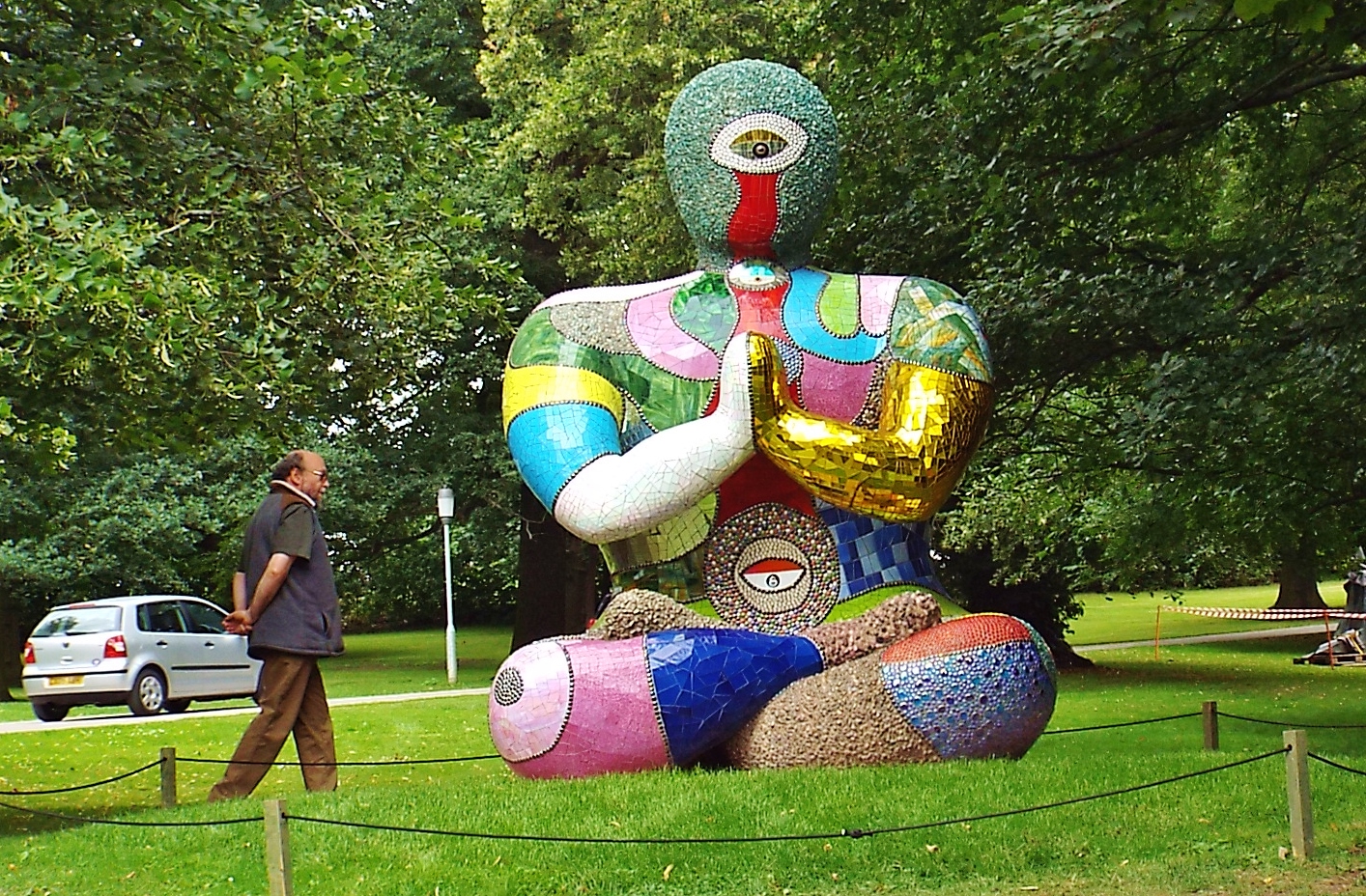
use the sweeping, open vistas of the countryside to display them. Here are some of the pieces at the Yorkshire Sculpture Park:
YSP-4
DSCN2327.JPG
YSP-6

YSP-9

YSP-10

YSP-14

YSP-1
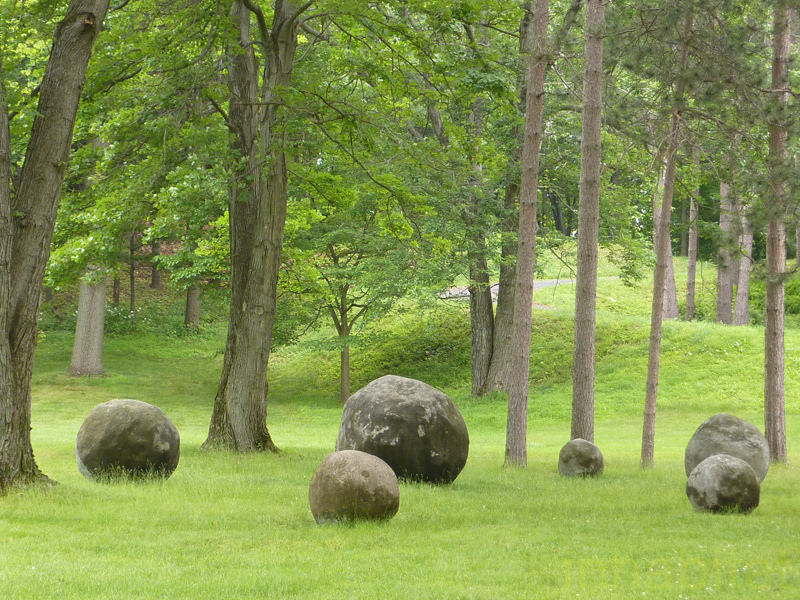
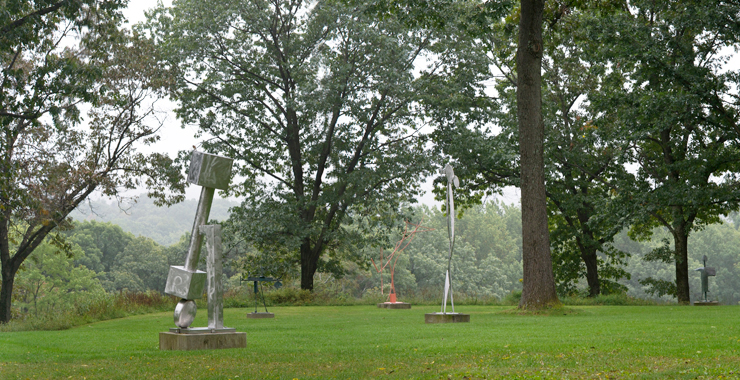
My wife and I agree on many things, and one of them is that modern sculptures are enhanced by being seen in a natural, organic setting rather than in the built urban environment. Personally, I think it has to do with the contrast between the dead surfaces of the sculptures and the much softer, living surfaces of the surrounding landscapes. It sounds a bit fancy, but the dead sculpture comes alive when in contact with organic life.

This was brought home to us very strongly when, 25 years ago, and on the advice of a friend who worked at the Metropolitan Museum of Art, we visited the Storm King Art Centre, which is an hour’s drive north of New York City, near the Hudson River. Here again, a few words of introduction. It’s really the classic American story (as much as the history of the Yorkshire Sculpture Park is the classic British story of modern times – decay of the old order and birth of a new one). A certain Mr. Ogden, after a successful career in the family business, purchased the land and property of Storm King and started collecting. He initially bought small sculptures which he exhibited around the house. At some point, he expanded out into the surrounding landscape, installing much bigger pieces. That’s it, in a nutshell. But the result – for us at least – was epiphanic.

In wonder we wandered along the rides mown through the grass, walking from one towering sculpture to another

SK-1

SK-4

from hilltops, we discovered long views across the surrounding landscape, where sculpture and land merged into one

SK-2

we walked through glades in the woods, each with their own sculpture

SK-8

SK-9

we entered the woods to find smaller, more intimate sculptures scattered under the trees

SK-7

SK-10

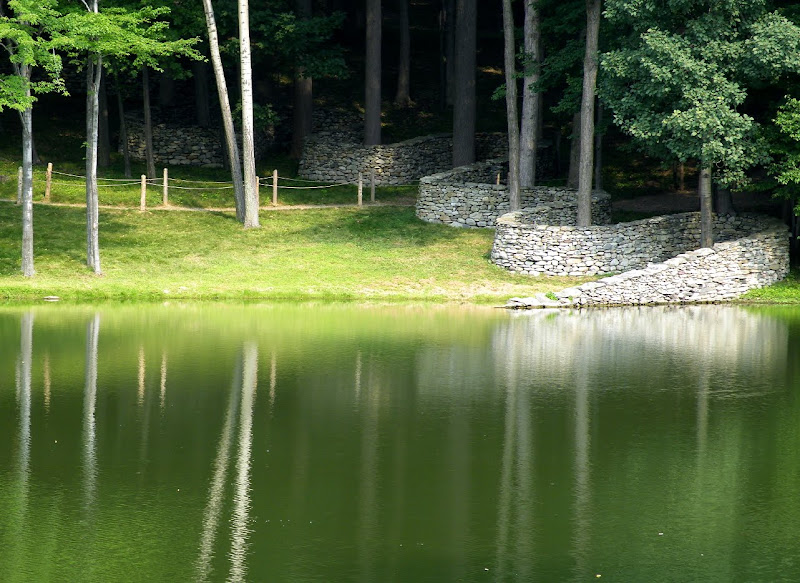
we also found a sculpture-wall meandering through them

SK-5

(better seen in this photo taken during the winter)

SK-14

we turned our steps back to the house, discovering other smaller sculptures set down in more formal gardens around the house.

SONY DSC

SK-11

And finally, we entered the house and fell upon a sculpture which in all these years I have never forgotten: a group of robotic-looking statues with small motors making their jaws work up and down and with a closed-loop recording of voices quietly droning “chatter, chatter, chatter, chatter, chatter, chatter …” on and on, endlessly. Wonderful.  Every time I find myself in one of those meetings where people blather on and on and on I recall this statue group with intense clarity.

So taken were we with Storm King that the very first time we went back to New York after an absence of fifteen years we made sure to find time to go up there. It cast the same spell over us – although sadly the chattering statues had vanished (smashed to smithereens, no doubt, by an employee crazed by their endless droning).

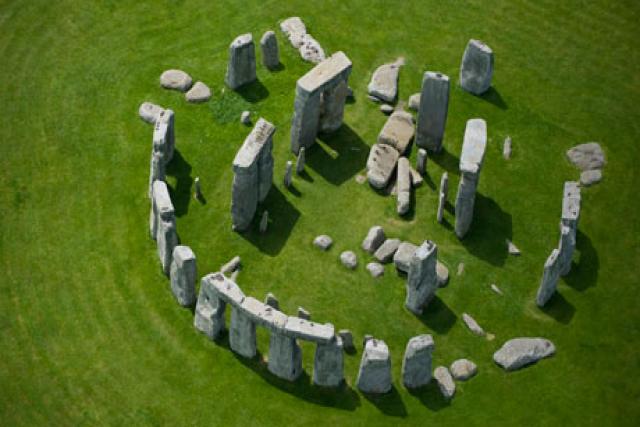
As I contemplate these photos, it occurs to me that many of the megalithic structures scattered across the face of Europe could pass as modern sculptures set down in the surrounding landscape. Stonehenge, the most iconic of all megalithic structures, is probably too much like a ruin to make this comparison
Stonhenge-2
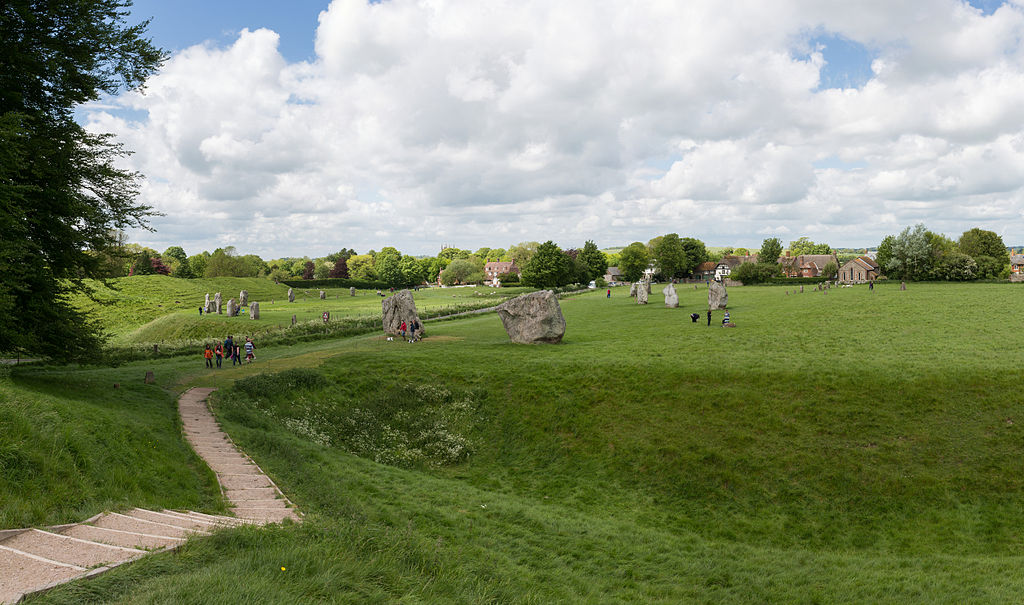
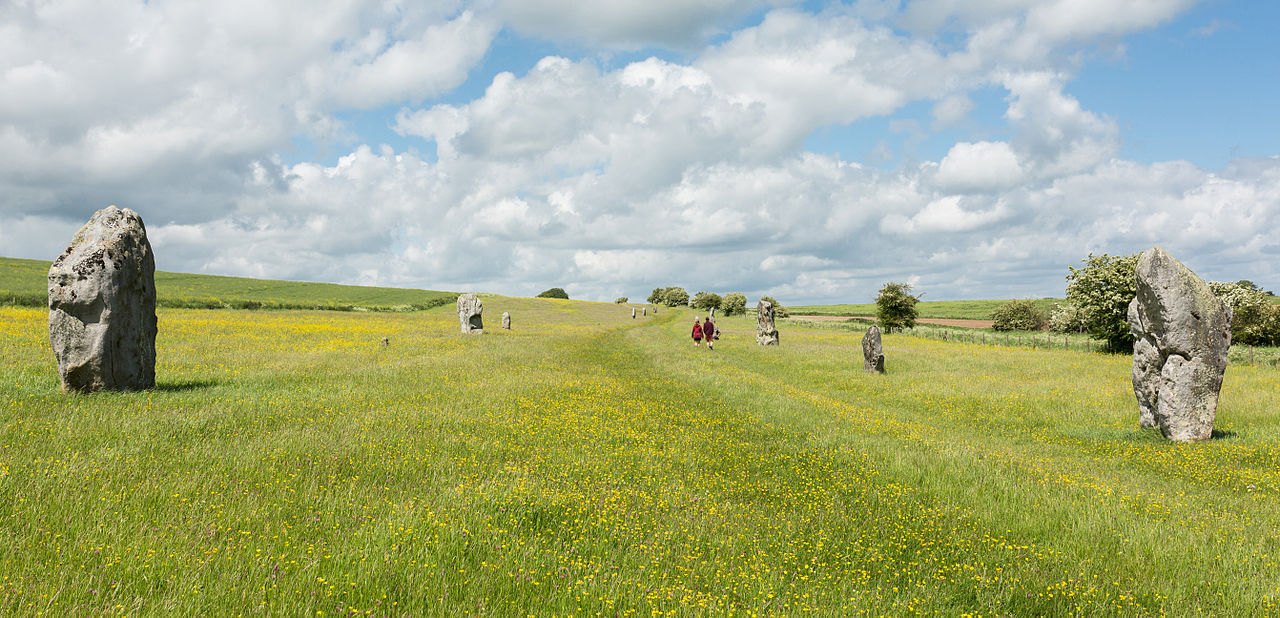
but Avebury, like Stonehenge located in Wiltshire, has something of the abstraction of sculpture parks

Avebury-2

Avebury-1

and how about Carnac, in Brittany?
carnac-1

carnac-2
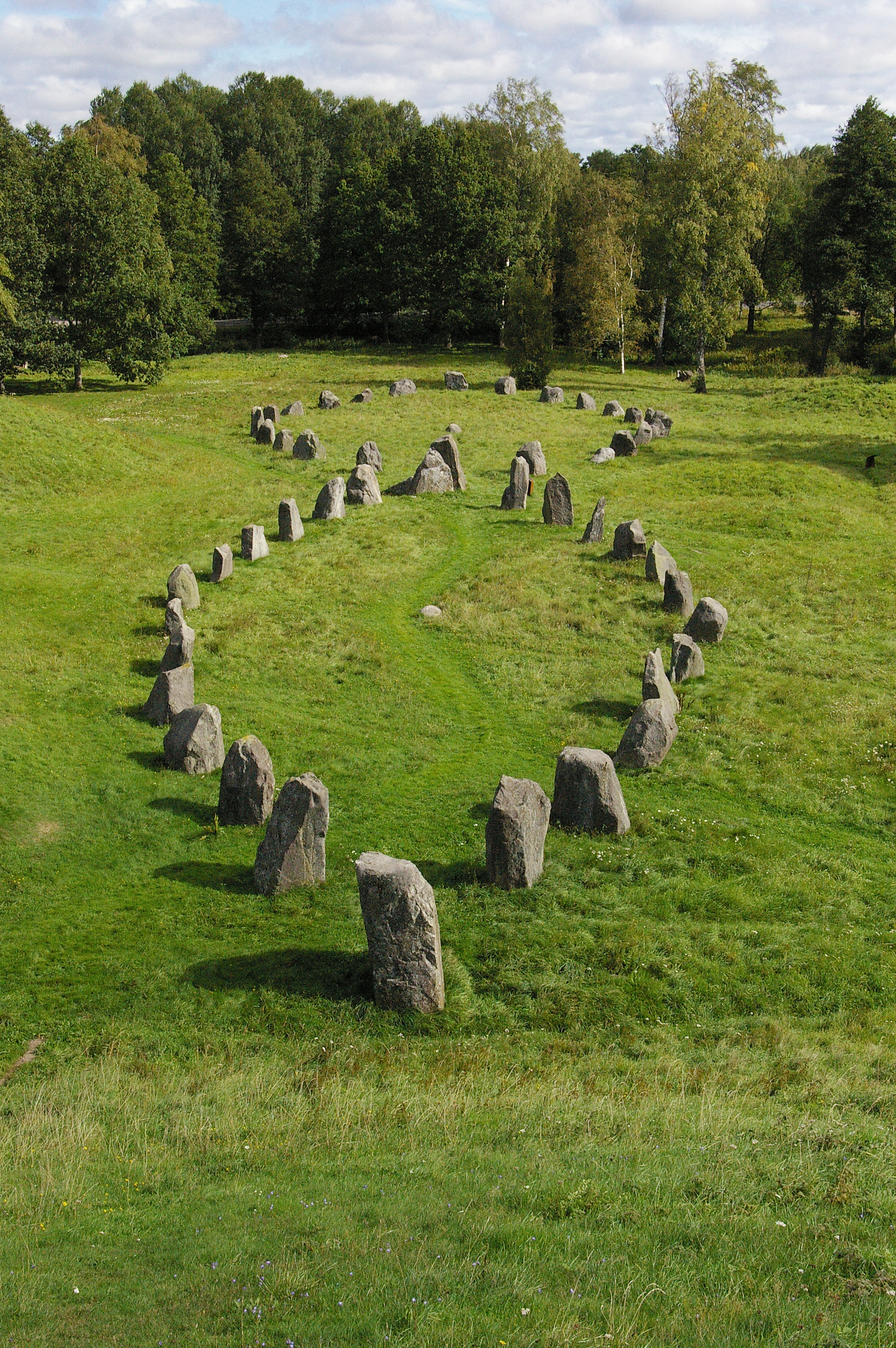
or Badelunda in Sweden?

Badelunda Västmanland

or the Ring of Brodgar, in the Orkney islands?

Ring of Brodgar

And even further afield, although not from the Mesolithic period, we have this intimate collection of upright stones in Toraja, Indonesia

OLYMPUS DIGITAL CAMERA

Of course, the people who built these structures were not building sculpture parks, but I have to think that they too were stirred by the same feeling of connectedness between their standing stones and nature as we have between sculpture and nature. They attributed this feeling to a divine grace in the place, we simply enjoy the feeling.

____________________________

Sculpture in cities-1: http://percivalhenry.files.wordpress.com/2014/03/52af841ee4b0b09acc808041-lost3f3f3f-1387234862071-flamingo.jpg [in http://percivalhenry.wordpress.com/2014/03/20/art-history-martch-madness-first-round-new-york-regional/comment-page-1/%5D
Sculptures in cities-2: http://upload.wikimedia.org/wikipedia/commons/2/26/Juilliard_School-Manhattan-New_york.jpg [in http://commons.wikimedia.org/wiki/File:Juilliard_School-Manhattan-New_york.jpg%5D
Sculpture in cities-3: http://i3.mirror.co.uk/incoming/article740970.ece/alternates/s615/A%20new%20sculpture%20on%20the%20fourth%20plinth%20in%20Trafalgar%20Square,%20central%20London%20The%20work%20by%20sculptor%20Bill%20Woodrow,%20entitled%20%27Regardless%20of%20History%27,%20%20shows%20a%20tree%20resting%20on%20a%20head%20and%20a%20book [in http://www.mirror.co.uk/news/uk-news/love-it-or-hate-it-bronze-rocking-741129%5D
Sculpture in cities-4: http://womenworld.org/image/082012/Paris%20-%20Beaubourg%20and%20Les%20Halles_1.jpg [in http://womenworld.org/travel/paris—around-town—beaubourg-and-les-halles-%28part-1%29.aspx%5D
Sculpture in cities-5: http://www-news.uchicago.edu/releases/06/images/cis/sculpture.jpg [in http://www-news.uchicago.edu/releases/06/060426.cis-photos.shtml%5D
YSP-1: http://www.yorkshireattractions.org/images/cms/attractions_21_3_large.jpg [in http://www.yorkshireattractions.org/visitor-attractions/21/yorkshire-sculpture-park%5D
YSP-2: http://upload.wikimedia.org/wikipedia/commons/0/0a/Yorkshire_Sculpture_Park_Caro_Promenade.jpg [in http://commons.wikimedia.org/wiki/File:Yorkshire_Sculpture_Park_Caro_Promenade.jpg%5D
YSP-3: http://antonyjwaller.files.wordpress.com/2012/06/nik_5931-copy.jpg [in http://antonyjwaller.wordpress.com/travel-articles/yorkshire-and-northern-england/the-yorkshire-sculpture-park/%5D
YSP-4: http://www.sculpture-info.com/upload/1008/image/Yorkshiresculpturepark.jpg [in http://www.sculpture-info.com/news-626/yorkshire-sculpture-park.html%5D
YSP-5: http://2.bp.blogspot.com/-6GgifPCMTc8/UgZKx2yojhI/AAAAAAAACDg/WYBKhXaNWp8/s1600/2+Buddha+and+Rob.JPG [in http://expertslife.blogspot.com/2013/08/picture-of-week-10-august-2013.html%5D
YSP-6: http://www.thomasharveydesign.co.uk/wp-content/uploads/2011/05/YSP6.jpg [in http://www.thomasharveydesign.co.uk/2011/05/09/yorkshire-sculpture-park-wakefield/%5D
YSP-7: http://news.bbcimg.co.uk/media/images/52104000/jpg/_52104252_7cbb7745-313f-43e9-8974-d144adf6c05f.jpg [in http://www.bbc.co.uk/news/entertainment-arts-13034363%5D
SK-1: http://brooklynimbecile.files.wordpress.com/2011/10/img_4256.jpg [in http://brooklynimbecile.com/2011/11/05/weekend-spread-storm-king-art-center/%5D
SK-2: http://3.bp.blogspot.com/-OWDq8YQCBog/UA6M17c9N6I/AAAAAAAAYI4/OqODfTIunKU/s1600/Mountainville_NY_A_Calder_Storm_King_AC_photo_S_Gruber_June_2012_+%2888%29.JPG [in http://publicartandmemory.blogspot.com/2012_07_01_archive.html%5D
SK-3: http://www.greenstrides.com/images-wp/Storm-King.jpg [in http://www.greenstrides.com/2013/07/10/sculpture-parks-can-inspire-your-own-garden-design/%5D
SK-4: http://4.bp.blogspot.com/-4sgNF1ufdU4/U4T1ul7DPRI/AAAAAAAAP8w/JzGsmMOY6No/s1600/Newman.jpg [in http://nycgarden.blogspot.com/2014/06/storm-king.html%5D
SK-5: http://i.vimeocdn.com/video/332835418_1280.jpg [in http://vimeo.com/48015694%5D
SK-6: http://inhabitat.com/nyc/wp-content/blogs.dir/2/files/2011/07/storm-king-boulders.jpg [in http://inhabitat.com/nyc/storm-king-art-center-a-summer-retreat-for-the-artsy-nature-loving-new-yorker/storm-king-boulders/%5D
SK-7: http://faeriemooncreations.blogspot.com/2010_11_01_archive.html [in http://faeriemooncreations.blogspot.com/2010_11_01_archive.html%5D
SK-8: http://4.bp.blogspot.com/_sVe9wO8fJls/S4zMOOgpUZI/AAAAAAAAEDo/IaUESi6KOGQ/s800/goldsw3.jpg [in http://lettuce-eating.blogspot.com/2010_03_01_archive.html%5D
SK-9: http://stormking.weebly.com/uploads/2/3/8/8/23889452/6893557.jpg [in http://stormking.weebly.com/permanent-collection.html%5D
SK-10: http://www.stormking.org/wp-content/uploads/2013/07/smith-lawn1.jpg [in http://www.stormking.org/collection-conversation/%5D
SK-11: http://eof737.files.wordpress.com/2011/09/img_2564.jpg?w=800 [in http://mirthandmotivation.com/2011/09/04/happiness-installation-art-at-storm-king/img_2564/%5D
Stonehenge: http://st-listas.20minutos.es/images/2013-06/362538/4049632_640px.jpg?1370571567 [in http://listas.20minutos.es/lista/maravillas-del-mundo-362538/%5D
Avebury-1: http://en.wikipedia.org/wiki/Avebury#mediaviewer/File:Avebury_Panorama,_Wiltshire,_UK_-_Diliff.jpg [in http://en.wikipedia.org/wiki/Avebury%5D
Avebury-2: http://en.wikipedia.org/wiki/Avebury#mediaviewer/File:Avebury,_West_Kennet_Avenue,_Wiltshire,_UK_-_Diliff.jpg [in http://en.wikipedia.org/wiki/Avebury%5D
Carnac-1: http://weadorefrance.com/es/images/w.800/h.600/c.1/d.guide_photos/sd./i.carnac-brittany-standing-stones-20130325.jpg [in http://weadorefrance.com/es/brittany-bretagne/g.31%5D
Carnac-2: http://media.tinmoi.vn//2012/02/27/4_28_1330310626_92_20120224114942_l6.jpg [in http://www.tktyt1haiduong.edu.vn/?p=888%5D
Badelunda, Sweden: http://upload.wikimedia.org/wikipedia/commons/d/d3/Badelunda_V%C3%A4stmanland_Sweden.jpg [in http://some-landscapes.blogspot.com/2011_10_01_archive.html%5D
Ring of Brodgar, Orkney: http://en.wikipedia.org/wiki/Ring_of_Brodgar#mediaviewer/File:RingofBrodgar.jpg [in http://en.wikipedia.org/wiki/Ring_of_Brodgar%5D
Toraja, Indonesia: http://tribudragon.files.wordpress.com/2013/03/2-tt-6.jpg [in http://tribudragon.wordpress.com/category/indonesia/%5D

CAPERS

Beijing, 7 June 2014

It never ceases to amaze me that there are certain ingredients which one adds to recipes in small quantities but which make a huge difference to the final taste. Spices are the obvious example – although I often wish that the hot spices had never existed – but there are others. Parsley, for instance, or coriander, or anise. Or capers.

Capers are a particular favourite of mine ever since a business trip I made many years ago to Malta. I was there to do an environmental audit of a factory. After a long day of inspecting the wastewater treatment plant, the waste segregation area, the toxic chemicals storage area, and I don’t know what else, my colleagues and I were finally free for dinner. We left the hotel and wandered around, but it was a dead time of the year and there wasn’t much available. We finally came across a modest restaurant, which proclaimed itself to be a fish restaurant. Why not? we said, after all, we were in an island, presumably the fish would be good. And it was, it was! We all ordered Orata al cartoccio, where a bream is cooked – steamed in its own juices, really – in a closed aluminium foil package together with cherry tomatoes, capers, and olives. It’s really a very simple recipe. Having washed and cleaned the bream, you lay it on a big piece of aluminium foil, you place a little rosemary inside the fish, drizzle it with olive oil, place the sliced cherry tomatoes, rinsed capers, and olives around the bream, wet the whole with a little white wine, wrap up the foil and close it well (so that none of the juices escape), and cook it in the oven at 200°C for about 45 minutes. Voilà!

orata pomodorini capperi olive

Simple, but absolutely delicious. The capers in particular impart a taste to the fish’s flesh which even to this day, after all these years, I can summon up at will for my private delectation.

The marvelous effect of the capers was actually quite a surprise to me. I had first come across capers as a young boy, at my English grandmother’s house. At some earlier moment, my elder brother had evinced a love of capers, so every time he came to stay with her she bought a small jar of them. This time, I was in tow so I got to try some. Salty! So salty! How could anyone like these tiny balls of salt? I made sure to steer clear of them after that, pushing them carefully aside if I came across them in a salade Niçoise, for instance. Until that fateful encounter in a modest fish restaurant in Malta. Such is life …

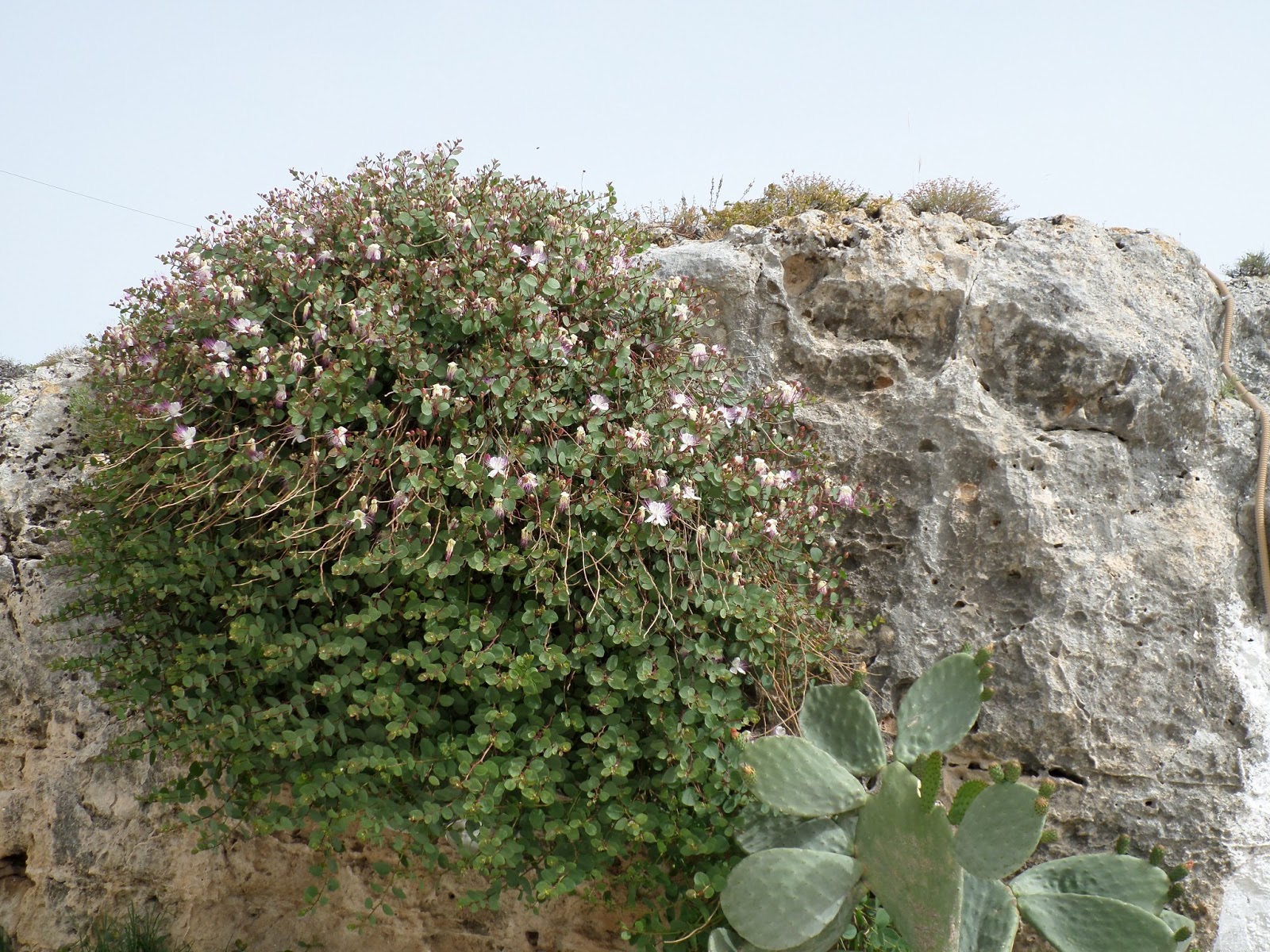
After that gastronomic epiphany in Malta, I feel that I owe it to the caper to write its hagiography, which like all good hagiographies should start from its birth. The caper comes from a bush, the caper bush to be precise, capparis spinosa. The bush is not much to write home about. Here is an example from the island of Salina, one of the Eolian Islands off the north-west coast of Sicily

caper bush-1

and here’s another from near Brindisi in southern Italy

caper bush-2

Both pictures admirably depict the poor, rocky soils and harsh environments that the bush grows well in. They also tell us that you find the bush around the Mediterranean. But that’s not only place you find C. spinosa; the bush has quite a wide range, down through eastern Africa, across central, southern, and southeastern Asia, all the way out to the Pacific Islands and Australia. But as far as I know, and I’m very willing to be corrected, the caper is not used in the local cuisine in any of these areas.

The last picture also tells us that the bush sports flowers. Small, but actually very lovely, with a cluster of long mauve stamens reaching out to the world (this is one of many beautiful photos of the caper flower on the internet; the efforts of my photographic e-friends have turned me quite poetic).

caper flowers-2

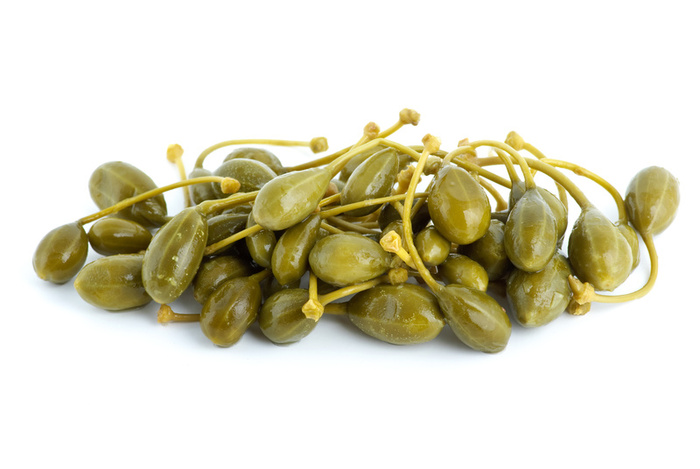
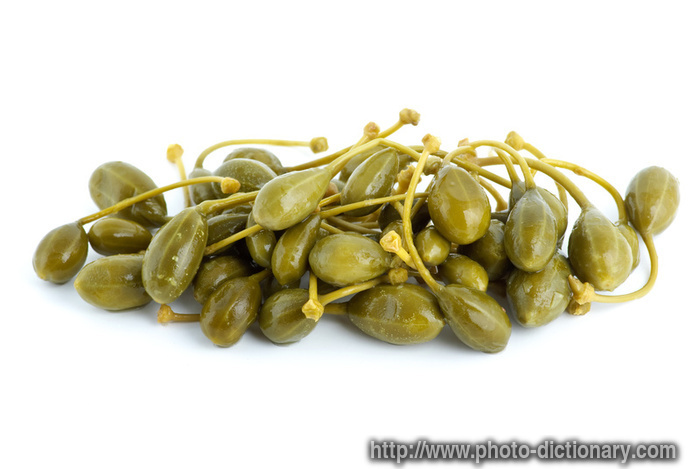
This last picture also modestly introduces us to the hero our story. Because the caper is that green flower bud behind. It gets picked, salted, and pickled for our delight. I think it deserves a picture of its own

caper buds

I have to say, I always marvel at things like this. How did the women in some far-off time think of picking the flower buds of this bush to eat? (I’m sure it was the women; the men were just lazing around the camp fire cracking stupid jokes and farting.) Maybe desperation, to stave off starvation. Or maybe … but I’m getting ahead of myself.

Capers are sold sorted by size. Either because the French got into the game of commercializing capers before anyone else, or because some canny marketer thought French names would sell better, or for some other reason unknown to me, the grades mostly have French names. From smallest to biggest we have: “non-pareil”, incomparable; “surfine”, very delicate (those hideously salty little balls which my grandmother bought for my brother must have been either surfines or non-pareils); “capucine”, which is a little pointed cowl, like the ones worn by Franciscans nuns – looking at the photo below and squinting a little, I suppose you could say that the capers in question look cowl-like; “capote”, which is a rather bigger cowl with a definite point (it is also French slang for a condom for reasons which I’m sure the readers can divine after a little bit of thought); “fine”, delicate (like the oysters). And at the very end of the grades we have “grusas”, which is not a French word. My guess is that it’s Provençal and has a meaning similar to the Spanish “gruesos”, fatty. Of course, the French were not going to use their delicate language for such a coarse member of the caper family. As one could guess from the grading nomenclature, the smallest sizes are considered to be the most desirable; I’m sure it is no coincidence that the smallest sizes come from southern France …

graded capers

Malta brought me my culinary epiphany with the caper. It also introduced me to the caper berry, which I find to be a much more delicious product of the caper bush. My Italian colleague, whom I have had cause to mention in an earlier post as the person who introduced me to durian, was with me on this Maltese environmental audit. Rather than asking the staff of the wastewater treatment plant to see the data on wastewater treatment efficiency he asked them to get him several jars of pickled Maltese caper berries. On the promise of my not revealing this professional faux-pas of his he shared one of the jars with me, which I took home to my wife. We have been hooked ever since.

caper berries-2

As the name suggest, caper berries are the fruit of the caper bush. This photo shows the berry in its natural state.

caper berries-natural state

I understand they are perfectly edible, although I have never seen them sold in a shop. I’ve only eaten the pickled variety. They are much bigger than capers, less salty, more crunchy (because of the seeds they contain) and can be eaten as a snack – and my wife and I have indeed snacked happily and often on them, in front of the TV or other such snack-happy locations.

Coming back to my meditation on how anyone ever came up with the idea of pickling flower buds to eat, I suspect the path was through the berry: step 1 – eat the berries; step 2 – salt the berries to preserve the excedent harvest before they rot; step 3 – hang on, why don’t we try the same thing with the flower buds?

My in-depth research (i.e., Wikipedia) has revealed to me that in Greece and Cyprus they also eat the pickled leaves of the caper bush.

caper leaves

This I have never tried. I read that they are particularly used in salads and fish dishes. A web-site called Good Greek Stuff proclaims that “these tangy cured leaves of the caper plant are less salty than the buds, and lend a citrusy undertone to such foods as Greek country salad, dakos (barley rusks with tomato, olive oil and feta), fish sauces, and cabbage slaws. It gives an astringent, piquant note to herb pestos and pasta dishes. And you’ll be amazed at what it does to the humble spaghetti aglio, olio e peperoncino or how well it works as a garnish to fried squid.”

I have another culinary epiphany awaiting me in some Greek island.
__________________
Orata, pomodorini, capperi, olive: http://www.cucinanonnapapera.it/wp-content/uploads/2011/07/PICT1017.jpg [in http://www.cucinanonnapapera.it/?p=464%5D
Caper bush Salina: http://atasteoftravel.files.wordpress.com/2011/07/20110717-082956.jpg [in http://atasteoftravelblog.com/2011/capers-on-salina/%5D
Caper bush Brindisi: http://2.bp.blogspot.com/-2Nr_U2AWCUs/Uaid3mGYgqI/AAAAAAAAASM/NBQh22nv_Rk/s1600/Caper+Bush+growing+from+Rocks.jpg [in http://lisainitalymay2013.blogspot.com/%5D
Caper flower: http://kojikisans2.files.wordpress.com/2013/01/caper11.jpg?w=1008 [in http://kojikisans2.wordpress.com/%5D
Caper flower buds: http://en.wikipedia.org/wiki/Caper#mediaviewer/File:%E1%83%99%E1%83%90%E1%83%9E%E1%83%90%E1%83%A0%E1%83%98_Capparis_spinosa_Kapernstrauch.JPG [in http://en.wikipedia.org/wiki/Caper%5D
Graded capers: http://www.asofood.com/aso_images/capers.gif [in http://www.asofood.com/capers.html%5D
Caper berries: http://www.photo-dictionary.com/photofiles/list/1401/4818marinated_capers.jpg [in http://www.photo-dictionary.com/phrase/1401/marinated-capers.html%5D
Caper berries-natural state: http://2.bp.blogspot.com/_Okhm7AjHzv8/R1kZdfwxBCI/AAAAAAAAAac/Eu8RWxYi6f4/s320/e-caperberries.jpg [in http://medcookingalaska.blogspot.com/2007/12/recipes-caper-tart-capers-and-eggs.html%5D
Caper leaves: http://eshop-santorini.gr/media/catalog/product/cache/1/image/9df78eab33525d08d6e5fb8d27136e95/k/a/kaparofilla-caper-leaves.jpg [in http://eshop-santorini.gr/index.php/authentic-food-1/more/santorini-wild-capers-1.html%5D

TROUBLES IN THE MEDITERRANEAN

Beijing, 27 May 2014

Ten days ago, this was.

We walked into Camogli from Recco, getting a first glimpse of the little harbour from the road.

Recco-Camogli

We walked down to the harbour, skirted its edge.

camogli port

We passed on to the boardwalk on the other side of the church.  Glancing back, this was the sight which greeted us.

camogli-boardwalk

Our goal was San Rocco, sitting high above Camogli on a steep spur of Monte di Portofino.

san rocco from the sea

We started climbing, slowly, stopping often, huffing and puffing, using one of the old mulattiere, mule trails, which criss-cross the hills around here.

Camogli-San Rocco path-2

We toiled up past rather decrepit houses and semi-abandoned olive groves until we finally reached San Rocco.

There, from the little piazza in front of the church, we had these gorgeous views, south-east towards Punta Chiappa

monte di portofino-1

and north-west towards Genova.

monte di portofino-2

We sank onto the bench and drank in view and sun. And as we sat there, in my mind’s eye I overflew the seaboard of the Mediterranean. Burning, burning, all burning …

Egypt

egypt-2

The West Bank

west bank

Syria

syria

Lebanon

lebanon

Turkey

turkey

Morocco

morocco

Algeria

algeria

Tunisia

Protesters shout slogans during a demonstration to call for the departure of the Islamist-led ruling coalition in Avenue Habib-Bourguiba in central Tunis

and finally Libya

libya

libya-2

from where, amidst all this rage and pain and despair, poor souls are struggling against all odds to cross the Mediterranean and sneak into Europe

pantelleria

a Europe which is itself sinking under its own weight of troubles: Greece of course

Greece Financial Crisis

but also Italy itself

italy

as well as France

France Strike

and Spain

spain

I closed my mind’s eye. Tomorrow, tomorrow, I said to myself, my wife and I would worry about the state of the universe tomorrow. Today, sitting on the bench and enjoying sun and sea, we just let the world go hang.

san rocco-1

____________________________

Recco-Camogli: http://www.mareblucamogli.com/images/Camogli_porto_oggi.jpg?129 [in http://www.mareblucamogli.com/page_31.html%5D
Camogli port: http://blog.marinayachting.it/media/458191_246746435438893_111283799_o.jpg [in http://blog.marinayachting.it/ai1ec_event/13-trofeo-challenge-nicola-dodero/?instance_id=%5D
Camogli-boardwalk: http://www.portofinotrek.com/trek/17-category/da-camogli-san-rocco.jpg [in http://www.portofinotrek.com/trek/17-da-camogli-san-rocco%5D
San Rocco from the sea: http://www.villagoduria.it/media/img/dintorni/s-rocco%20dal%20mare.jpg [in http://www.villagoduria.it/i_dintorni.php?lang=it%5D
Camogli-San Rocco path: http://www.alpioccidentali.it/escursioni/images-esc/Camogli-SanFruttuoso_glicine.JPG [in http://www.alpioccidentali.it/escursioni/Camogli-SanFruttuoso.htm%5D
Camogli San Rocco path-2: http://www.portofinotrek.com/trek/10-246-thickbox/da-camogli-a-san-rocco.jpg [in http://www.portofinotrek.com/trek/10-da-camogli-a-san-rocco.html%5D
San Rocco-1: http://static.panoramio.com/photos/large/3427674.jpg [in http://www.panoramio.com/photo/3427674%5D
Egypt: http://www.cairoportal.com/media/k2/items/cache/296cd9de158e249f3870555c2eeb013a_XL.jpg?t=-62169984000 [in http://www.cairoportal.com/news/9739#.U4NTHXYUZ40%5D
West Bank: http://stat.ks.kidsklik.com/statics/files/2011/07/1309663247638250606.jpg [in http://elmustakeem.blogspot.com/2011/07/sekolah-anak-anak-palestina.html%5D
Syria: http://www.dw.de/image/0,,17607086_303,00.jpg [in http://www.dw.de/syrias-war-economies-add-fuel-to-the-conflict/a-17609218%5D
Lebanon: http://gdb.voanews.com/B5FAA55E-7326-4D3F-B6F4-97DD2C6863FA_w974_n_s.jpg [in http://www.zeriamerikes.com/media/photogallery/june-23-2013-day-in-photos/1687666.html%5D
Turkey: http://82.222.152.134/imgsdisk/2014/05/22/220520141648544381677.jpg [in https://twitter.com/gokmen%5D
Morocco: http://i.cdn.turner.com/cnn/2011/WORLD/africa/02/21/morocco.protests/t1larg.morocco.feb20.gi.afp.jpg [in http://www.cnn.com/2011/WORLD/africa/02/21/morocco.protests/%5D
Algeria: http://l1.yimg.com/bt/api/res/1.2/Z.PSaSbzYDbmat1.7F6nKg–/YXBwaWQ9eW5ld3M7Zmk9ZmlsbDtoPTQyMTtweG9mZj01MDtweW9mZj0wO3E9NzU7dz03NDk-/http://media.zenfs.com/en_us/News/ap_webfeeds/cb75ae006f10880a4e0f6a7067006b93.jpg [in http://news.yahoo.com/algeria-activists-stage-rare-anti-govt-protest-145742769.html%5D
Tunisia: http://revolution-news.com/wp-content/uploads/2013/10/3540ab5d-15a8-49c8-91ff-a9649aea4186_16x9_600x338.jpg [in http://revolution-news.com/category/middle-east/tunisia/%5D
Libya: http://wartime.org.ua/uploads/posts/2012-01/1325936226_vyskova-operacya-v-lvyi-rozkrila-slabku-boyegotovnst-nato-5.jpg [in http://wartime.org.ua/648-vyskova-operacya-v-lvyi-rozkrila-slabku-boyegotovnst-nato.html%5D
Libya-2: http://www.bigpicture.si/wp-content/uploads/2012/02/1241.jpg [in http://www.bigpicture.si/archives/tag/sirija%5D
Pantelleria: http://292fc373eb1b8428f75b-7f75e5eb51943043279413a54aaa858a.r38.cf3.rackcdn.com/world_03_temp-1303281776-4dae8070-620×348.jpg [in http://www.timesofmalta.com/articles/view/20110420/world/Nationalism-comes-of-age-in-anti-immigrant-bailout-Europe.361418%5D
Greece: http://latimesphoto.files.wordpress.com/2011/10/greek-crisis08.jpg [in http://framework.latimes.com/2011/10/19/protest-in-greece/%5D
Italy: http://www.ctvnews.ca/polopoly_fs/1.1773564!/httpImage/image.jpg_gen/derivatives/landscape_960/image.jpg [in http://www.ctvnews.ca/world/anti-austerity-protest-in-rome-italy-turns-violent-1.1773562%5D
France-Marseille: http://static.guim.co.uk/sys-images/Guardian/Pix/pictures/2013/9/10/1378816498459/3befa5d8-0b5b-4ca9-be36-9ef459246334-620×421.jpeg [in http://www.theguardian.com/business/2013/sep/10/french-unions-hold-protests-over-pension-reforms—live%5D
Spain: http://img.rt.com/files/news/1e/1d/30/00/000_dv1422028.si.jpg [in http://rt.com/news/spain-protest-austerity-corruption-347/%5D
San Rocco: http://static.panoramio.com/photos/large/3427674.jpg [in http://www.panoramio.com/photo/3427674%5D

CAPABILITY BROWN

London, 12 May 2014

When I studied history in primary school, it was still taught the old way, by rote. So one learned royal genealogies by heart (“William the Conqueror, William Rufus, Henry I, Stephen, Henry II, Richard I, John Lackland”, etc.) as well as names of battles and the year they were fought (“Battle of Hastings 1066, Battle of Bannockburn 1314, Battle of Crecy 1346, Battle of Agincourt 1415, Battle of Naseby 1645, Battle of Culloden 1746” etc.). It was all very 1066 And All That, which is why I so dote on that book. One especially tricky set of battles to remember were those won by the Glorious Duke of Marlborough, who really stuck it in the eye of the French King, rah-rah (it was especially trying to be half French in these moments of our history classes when the Brits were triumphing over the French). For those of my readers who might have forgotten these battles (or much more probably have never heard of them), we are talking about the Battles of Blenheim, Ramillies, Oudenaarde, and Malplaquet, fought in the years 1704, 1706, 1708, and 1709. To help us remember the names of these battles and their dates, our history teacher taught us an ingenious mnemonic in the form of a telephone number: BROM-4689 (only British readers as old as me will remember that there was a time when UK telephone numbers were a mix of letters and numbers). So now, for the rest of my life I will remember the dates of these four battles, glorious victories for the British, rah-rah. A quick whip through the internet shows me that my history teacher wasn’t the only one who used this mnemonic, which has somewhat deflated the admiration I have had for him all these years.

If I am recounting this old story, it is to explain the emotion which I felt when my wife and I visited Blenheim Palace a few days ago. After all those years of having BROM-4689 uselessly rattling around my brain, I could finally see a concrete output of at least one of these battles, the Battle of Blenheim.  For the Duke of Marlborough was given a modest manor and its grounds by a grateful Queen and a promise of funds from “the nation” (i.e., the taxpayer) to knock down the manor and build a grand new home and garden, worthy of the victor of the glorious Battle of Blenheim, rah-rah. In the event, the Duke and Duchess (because she was heavily involved) got little if any funds from the “grateful nation” and the Duke paid for most of the works from his own pocket. The story of the building’s construction is worthy of an opera, but I will skip over that to focus on the end result, here seen in all its glory from the air

image

image

image

To be honest, I think it’s really only from the air that one can appreciate this ducal pile. My wife and I found that from ground level it’s all rather overpowering. Here’s a shot of the front taken by another visitor. Note the size of the persons compared to the building.

image
We visited the inside, looking respectfully at all the nice things displayed – the portraits of worthy grandees, the tapestries, the long library with its organ, the expensive baubles scattered over various surfaces – but all the time my wife and I kept saying to each other “how did the Dukes keep this place warm and lit?” The bills for the upkeep must have been staggering. And in fact the current Duke has had to do all sorts of things (add a little train, build a butterfly house and a maze) to attract the tourists and get their entry fee. And you can get married there – for a fee. Etc., etc.

What really caught me was the garden. It would, of course. It was designed by Lancelot “Capability” Brown. I love his style, which is so very naturalistic. He creates these undulating fields of grass which sweep up to the house. He scatters clumps or belts of trees, or even individual trees, over these fields. He will often create lakes by invisibly damming small rivers or streams running through the property. His garden at Blenheim Palace has all of these. This is a modern photo

image

But I prefer this old painting

image

For me, Capability Brown’s gardens are the quintessence of the English garden, preferable by far to the strict and sterile geometry of a French garden, of which Blenheim Palace also has an example.

image

By one of those strange twists of Fate which one’s life is filled with, I had first come across Capability Brown at the same time that I was learning BROM-4689. My grandmother had come down for the weekend to visit me in my primary school and she took me to visit Longleat House, another of those stately homes which dot the English countryside, this time belonging to the Marquesses of Bath.

image

As required by the fashion of the times, Longleat had boasted of a very large, formal French garden

image

but luckily good sense had prevailed and the 1st Marquess of Bath (they had been mere Viscounts before that …) had hired Capability Brown to replace the formal gardens with one of his creations.

image

See how Brown’s work fits seamlessly into Britain’s natural landscape.

image

Of course, the Marquesses of Bath have been under the same financial pressure as the Dukes of Marlborough. At Longleat, the Marquesses have adopted the same kind of tourist attractions as the Dukes at Blenheim: little trains, mazes, weddings, and so on. But the Marquesses went one step further and created one of the first Safari Parks in the UK in the grounds of Longleat. So in Capability Brown’s landscape we now find lions, giraffes, zebras, and more.

image

How fallen are the mighty. But what to do, even Dukes and Marquesses (finally) have to make a living like everyone else.

___________________

Blenheim Palace aerial view-1: http://4.bp.blogspot.com/-khCnNCcHPyE/T9bWqchSzrI/AAAAAAABYSY/dPjnMkUU-ME/s1600/011_blenheim-palace_theredlist.jpg (in http://loveisspeed.blogspot.com/2012/06/blenheim-palace-england.html)
Blenheim Palace aerial view-2: http://s1.acorneplc.info/content/img/product/main/visit-to-blenheim-palace-31143824.jpg (in http://www.virginexperiencedays.co.uk/visit-to-blenheim-palace-with-a-deluxe-picnic-for-two)
Blenheim Palace aerial view-3: http://bestvaluetours.co.uk/images/products/gt-bpct-n/xl-p-233-blenheim-palace.jpg (in http://bestvaluetours.co.uk/search-the-cotswolds-and-bleheim-palace-day-tour-129)
Blenheim Palace front door: http://satnavandcider.files.wordpress.com/2012/05/blenheim-palace-front-8973-640×480.jpg (in http://satnavandcider.wordpress.com/2012/05/03/at-blenheim-palace-keep-off-the-gravel/)
Blenheim Palace-gardens-modern photo: https://www.english-heritage.org.uk/content/news/2011/images/blenheim-palace (in https://www.english-heritage.org.uk/about/news/exclusive-members-event-woodstock-literary-festival/)
Blenheim Palace-gardens-old painting: http://upload.wikimedia.org/wikipedia/commons/6/6a/Blenheim_PalaceDE.jpg (in http://en.wikipedia.org/wiki/Blenheim_Palace)
Blenheim Palace-formal gardens: http://3.bp.blogspot.com/-DNgdli09UZA/UQwuWAE-IaI/AAAAAAAAK-s/DfxInZN3z7s/s1600/photo+email.jpg (in http://www.weddingblogdesigner.com/2013/02/bleneim-palace_4.html)
Longleat House: http://www.chch.ox.ac.uk/sites/default/files/images/development/dev2011/longleat-house.jpg (in http://www.chch.ox.ac.uk/development/events/future/2005/7-july-longleat-house-visit)
Longleat old French gardens: http://upload.wikimedia.org/wikipedia/commons/e/e2/Longleat_by_Knyff_edited.JPG (in http://en.wikipedia.org/wiki/Longleat)
Longleat gardens: http://www.writework.com/uploads/3/39734/english-longleat-house-wiltshire-longleat-house-home-lord-ba.jpg (in http://www.writework.com/essay/ao1-investigating-business-actais-and-longleat-aims-and-ob)
Longleat aerial view: http://4.bp.blogspot.com/-MO9gG__FJ7U/T03YIfdx_kI/AAAAAAAAAQc/9U-JgcFxX6Y/s1600/Brown+-+Longleat.001.jpg (in http://www.gardenhistorymatters.com/2012/12/lancelot-brown-is-blogging.html)
Rhinos at Longleat: http://www.millfarmglamping.co.uk/wp-content/uploads/2012/09/longleat-700×401.jpg (in http://www.millfarmglamping.co.uk/in-this-area/longleat/)