LIME GREEN? SPRING BUD MAYBE?

Beijing, 1 July 2014

For reasons which are too long to explain, a few days ago my wife and I moved out of our apartment and into another one not too far away. Suffice to say that renters have little if any protection in China: “you don’t agree to my doubling the rent? Well, the door is over there. Oh, and by the way, I’ll keep the deposit.”

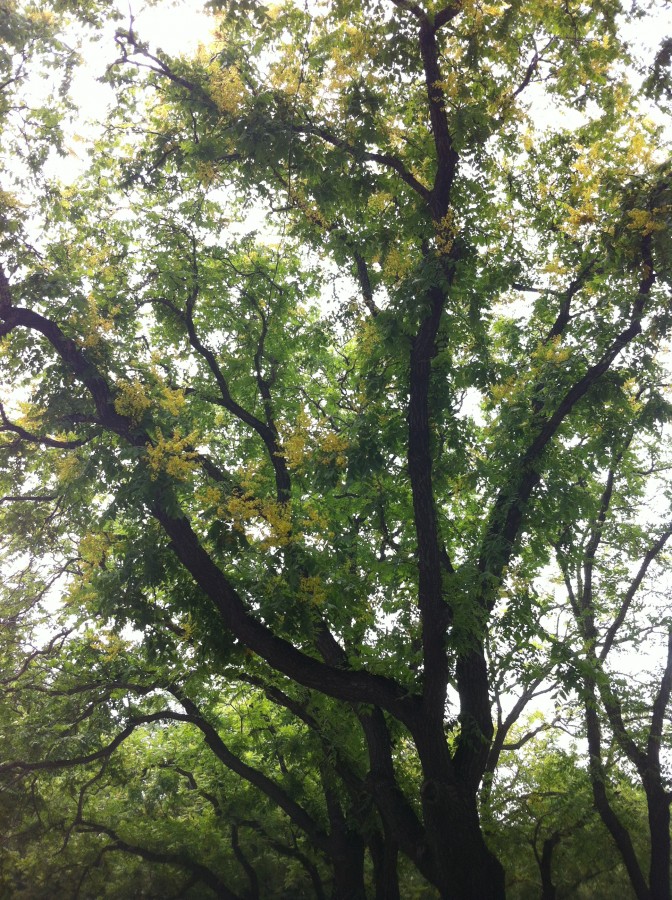
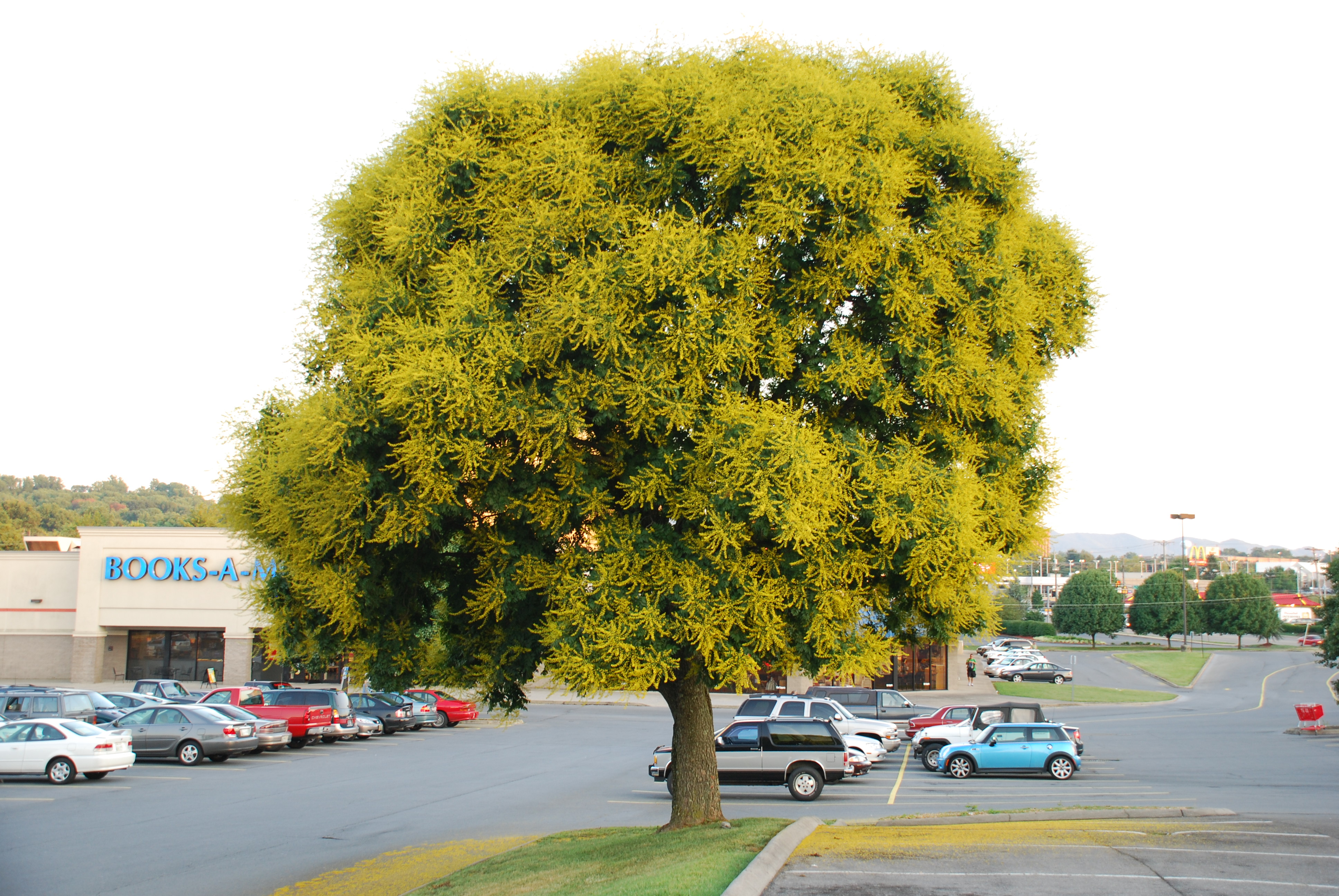
In any event, this forced relocation has meant that I’ve had to walk a new route to and from the office, which takes me under a new set of trees. Every cloud has a silver lining, as they say, which in this case is my discovery of the goldenrain tree, Koelreuteria paniculata, under a row of which I now walk every day. This picture shows nicely the origins of the name. At this time of the year, the tree is covered with bunches of small yellow flowers, which drizzle down on the ground around the tree.

solitary goldenrain tree

In my row of goldenrain trees, planted as they are close to each other – to give shade, which is devoutly to be thanked for at this time of year – I don’t get such an uncluttered view of the trees and their flowers. This is about the best I’ve managed to see.

golden rain tree 009

I also haven’t really been able to see the golden raindrops scattered around on the ground since the street sweepers are very efficient in this part of town. This is all I’ve seen, little piles ready to be picked up

golden rain on ground

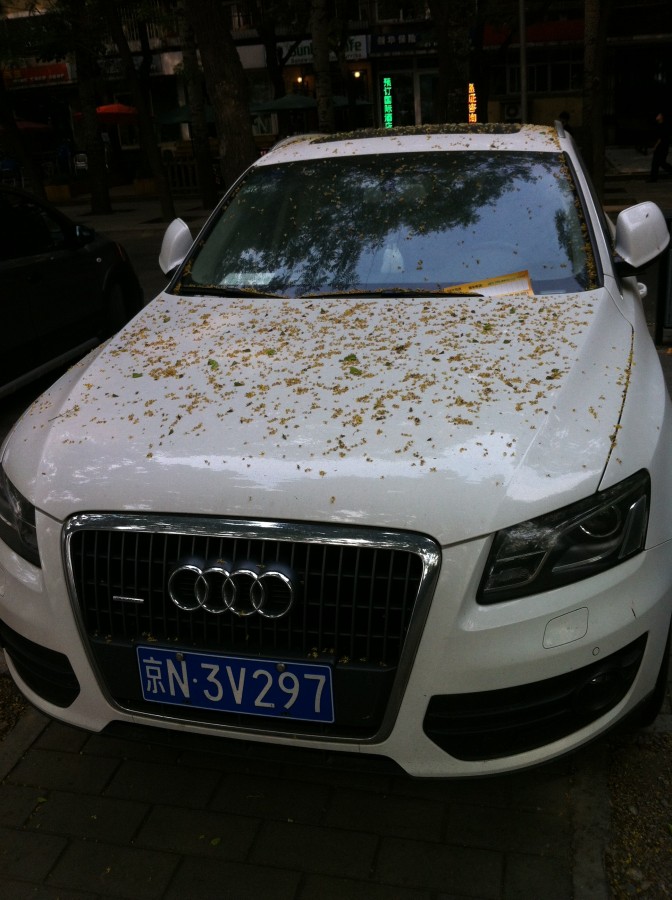
although this car parked under some of the trees shows what the pavement must look like early in the morning.

golden rain on car

Actually, it wasn’t the flowers which attracted my attention. It was the seed pods (the tree seems to move from flower to seed astonishingly quickly). Some of them had fallen onto the pavement

seed pods on ground 006

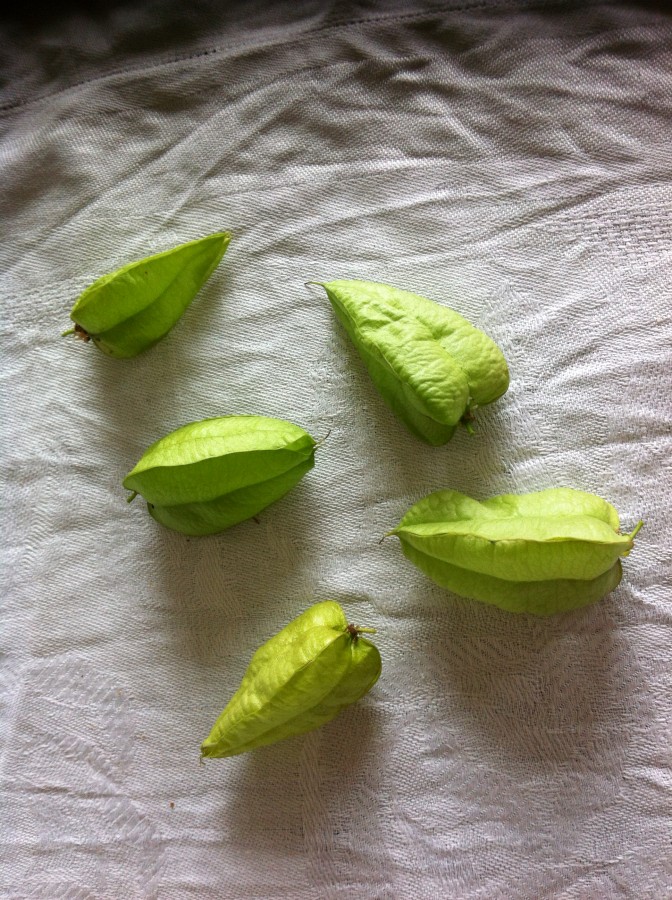
and it was their light, translucent green which drew my eye. I carefully picked up a few – they are very delicate – and took them home. My wife took this in her stride; she is used by now to my bringing home botanical strays. I laid the pods out on our table cloth and took this picture

pods on table - 1 july 001

I’m not sure what to call this green. The clever thingy which in the Word software allows me to have an infinite number of colours for my fonts tells me that in the colour model RGB (whatever that is) it’s about 200 Red, 255 green, and 90 blue. But that’s far too boringly scientific. I would like a name for this green! A search of colour charts for paints, dyes and the like suggests that it could be Lime Green. Or there’s a green called Inchworm, after an inch-long worm of that colour. Or could it be Chartreuse? But that’s too yellow I think. Or maybe Spring Bud; it certainly has something of that tender green which we associate with Spring.

And I really like their shape. A number of websites call it bladder-like. Really, some people have no imagination! Others note a resemblance to Chinese lanterns, which is a much better comparison

green chinese lantern

although I think Chinese lantern makers could profit aesthetically from trying to copy the somewhat rounded pyramidal shape of these seed pods.

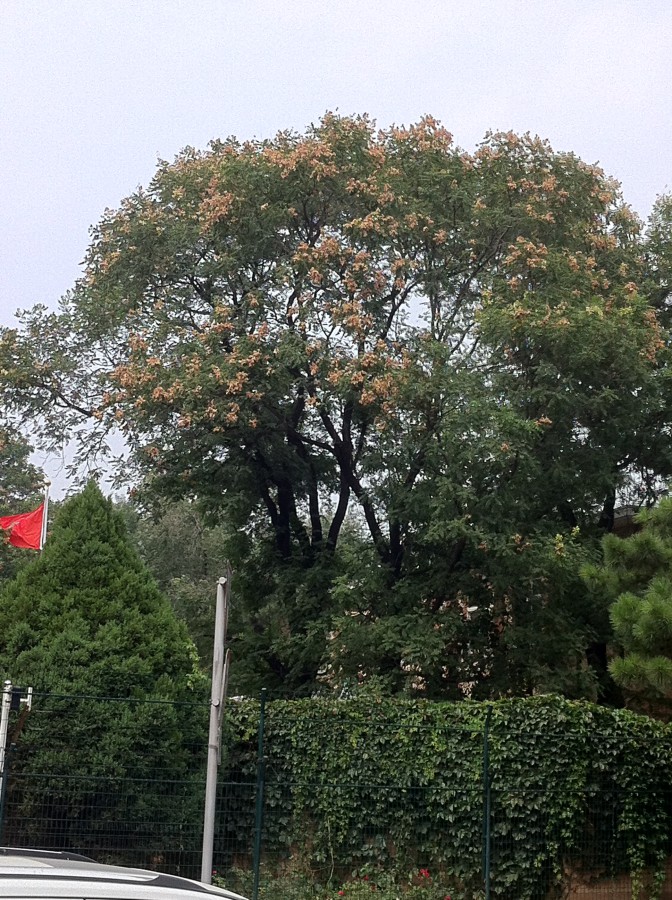
Having had my attention drawn to the pods, I quickly noticed how they clustered thickly about the crown of the trees, giving a frosting of light green on the dark green of the leaves, a delightful effect.

pods on tree - 1 july 002

pods on the tree

I understand that the pods eventually turn brown. It will be interesting to see how this changes the visual pleasure which I currently get from the tree on my daily walk to and from the office (intermittently cursing at my previous landlord).

POSTSCRIPT 1, 10 July 2014

Once you see one, you begin to see them everywhere …

I’m in Budapest at the moment, for reasons which are also too long to explain. Yesterday evening, I was walking across a little park when at its exit I stumbled across a goldenrain tree sheltering locals having a quiet evening drink and chat.

goldenrain trees Budapest 003

Here, it’s an immigrant in a foreign land. The goldenrain tree is native to China and Korea.

POSTSCRIPT 2, 17 August 2014

Well, the pods have turned brown. This is what the trees look like now.

golden rain tree with mature pods 002

I don’t know, I think I prefer the pods in their lime green phase.

______________________

Solitary goldenrain tree: http://www.whatgrowsthere.com/grow/wp-content/uploads/2011/04/Koelreuteria-paniculata-6.jpg [in http://www.whatgrowsthere.com/grow/2011/07/01/goldenrain-tree-sparks-a-july-golden-celebration/%5D
Green Chinese lanterns: http://10kblessingsfengshui.typepad.com/.a/6a00e39336235e8834014e5f344434970c-800wi [in http://10kblessingsfengshui.typepad.com/10000_blessings_feng_shui/2011/02/lighting-lamps-for-the-lantern-festival.html%5D
other pictures: mine

SCULPTURE AND NATURE

Beijing, 15 June 2014

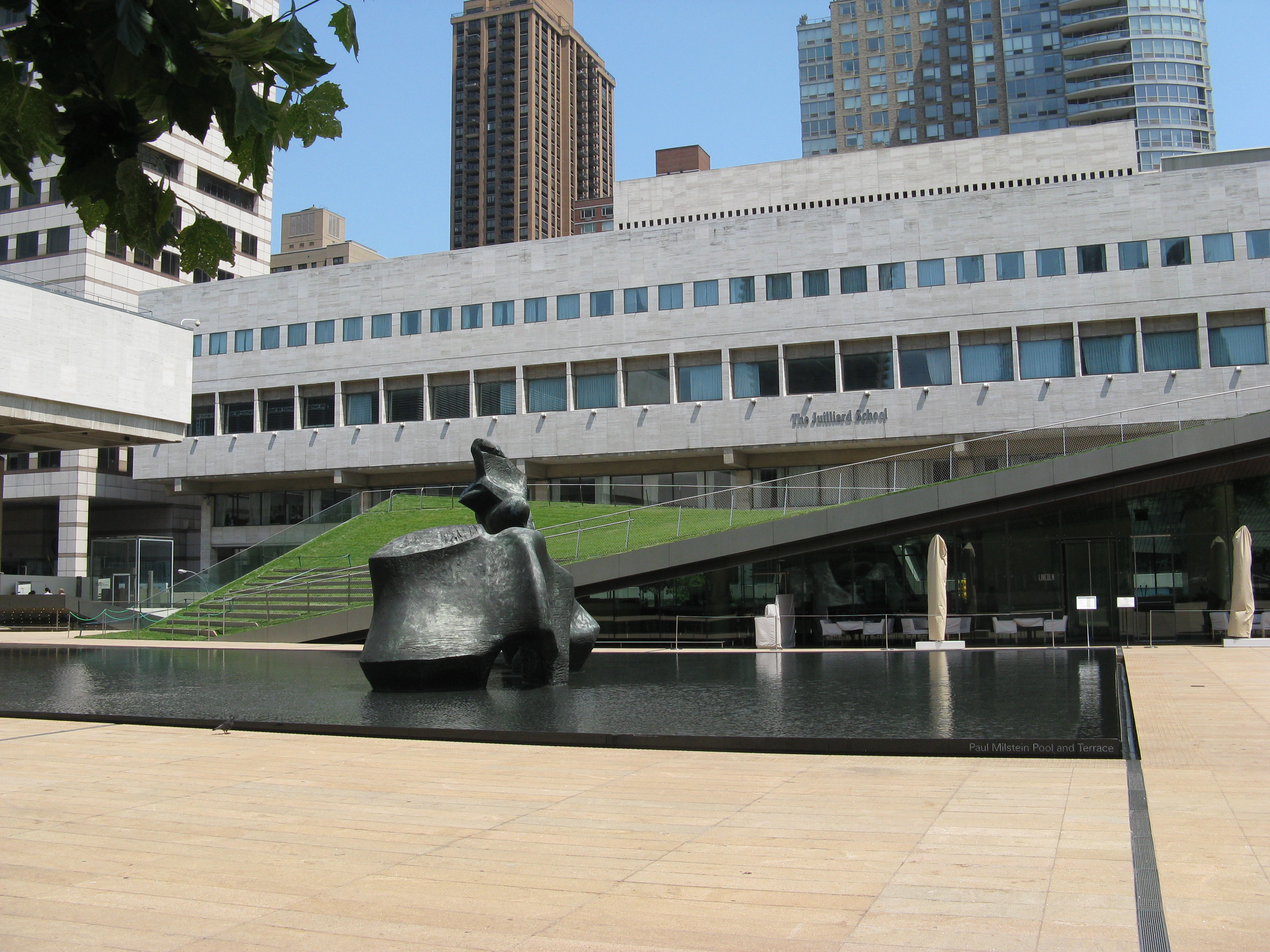
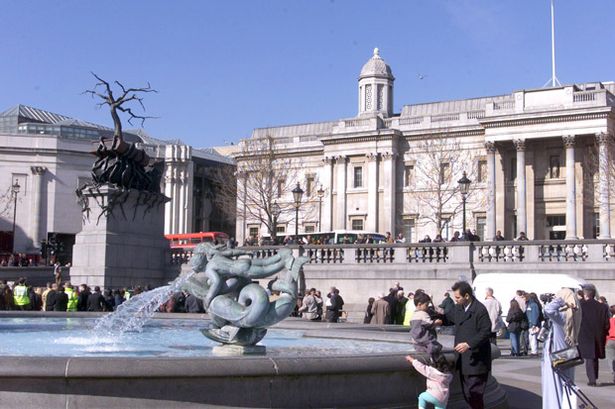
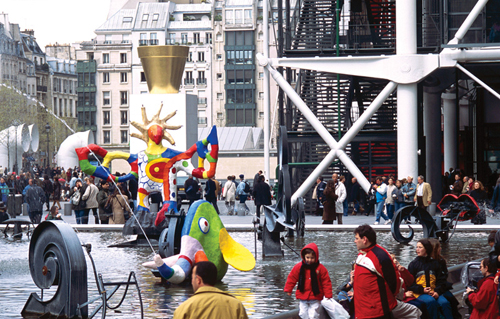
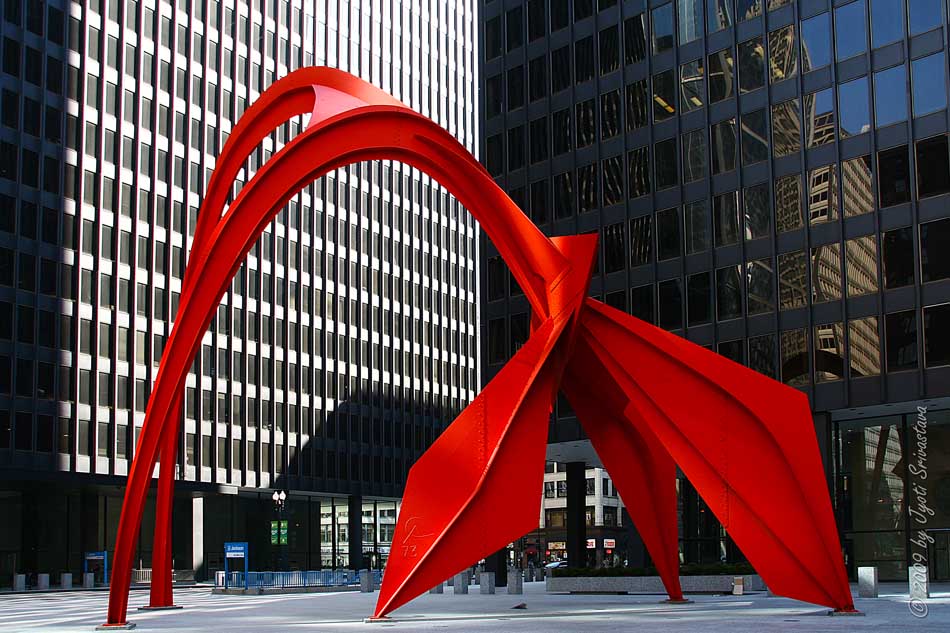
My wife and I were watching TV with one eye the other day when the BBC passed a programme which caught our attention. It was about the Yorkshire Sculpture Park in the north of England. I think a few words of explanation are required for those readers who have never heard of this Park (our situation before watching the BBC programme). It was established back in 1977 in the grounds of a stately home the last of whose aristocratic owners (Viscount Allendale) had sold it to the local council after World War II, no doubt to save his financial skin (I mentioned the financial woes of the UK’s stately homes in an earlier posting of mine). The idea is a simple one: rather than displaying modern sculpture in open spaces in cities like plazas
sculpture in cities-1

sculpture in cities-2

or squares

sculpture in cities-3

sculpture in cities-4

or using the atriums of posh buildings

sculpture in cities-6

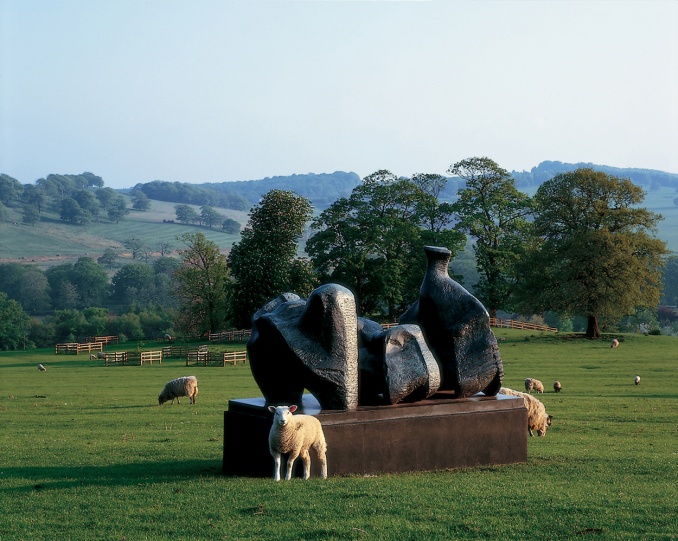
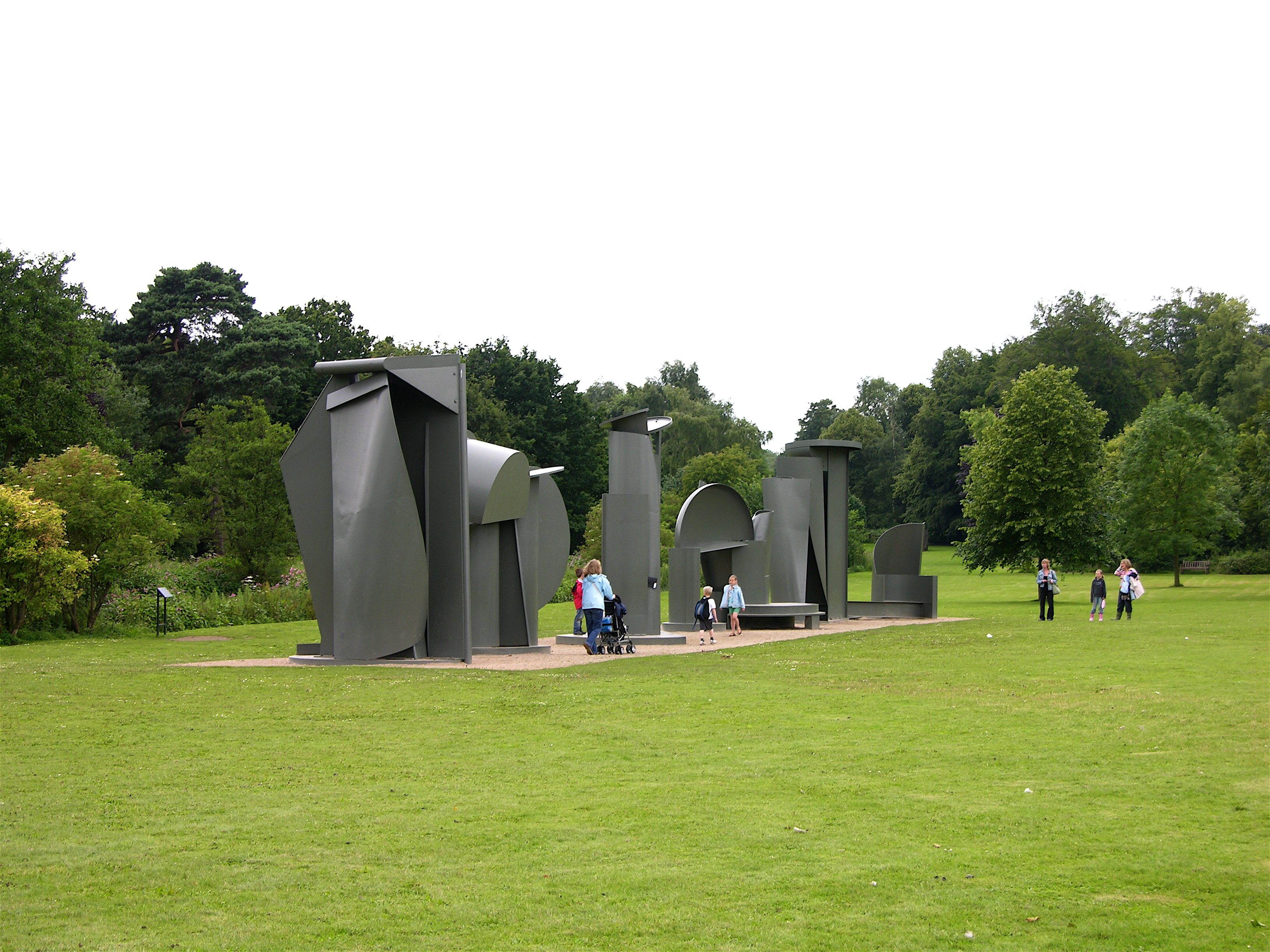
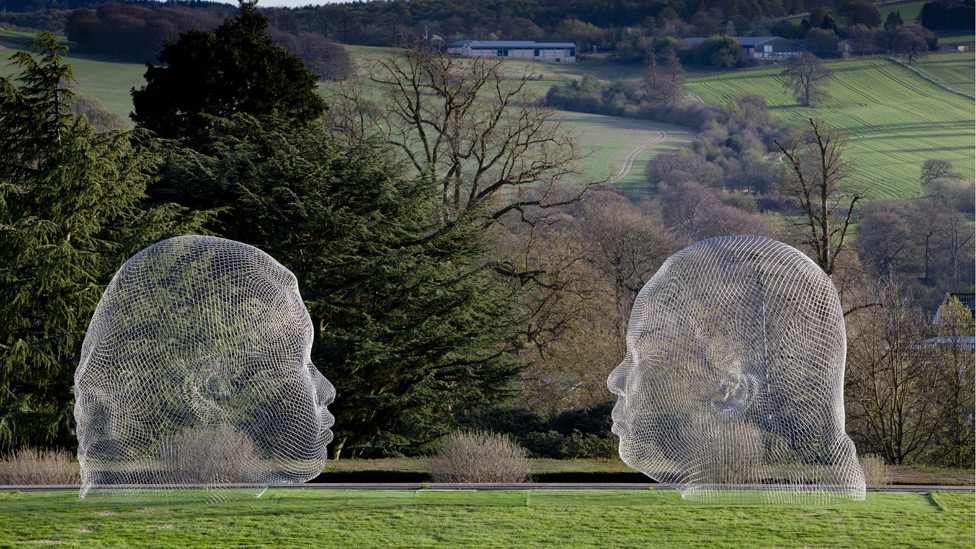
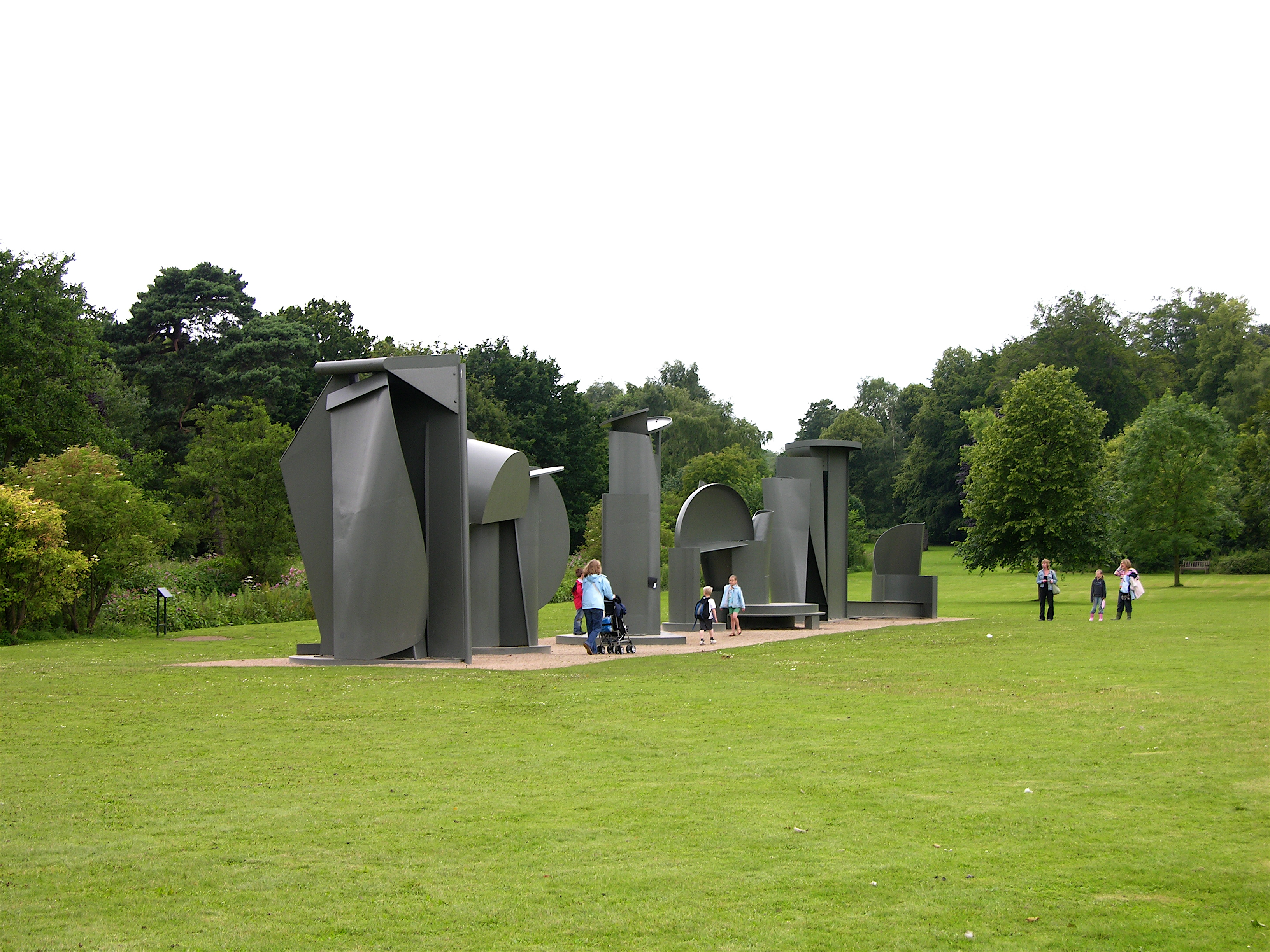
use the sweeping, open vistas of the countryside to display them. Here are some of the pieces at the Yorkshire Sculpture Park:
YSP-4
DSCN2327.JPG
YSP-6

YSP-9

YSP-10

YSP-14

YSP-1
My wife and I agree on many things, and one of them is that modern sculptures are enhanced by being seen in a natural, organic setting rather than in the built urban environment. Personally, I think it has to do with the contrast between the dead surfaces of the sculptures and the much softer, living surfaces of the surrounding landscapes. It sounds a bit fancy, but the dead sculpture comes alive when in contact with organic life.

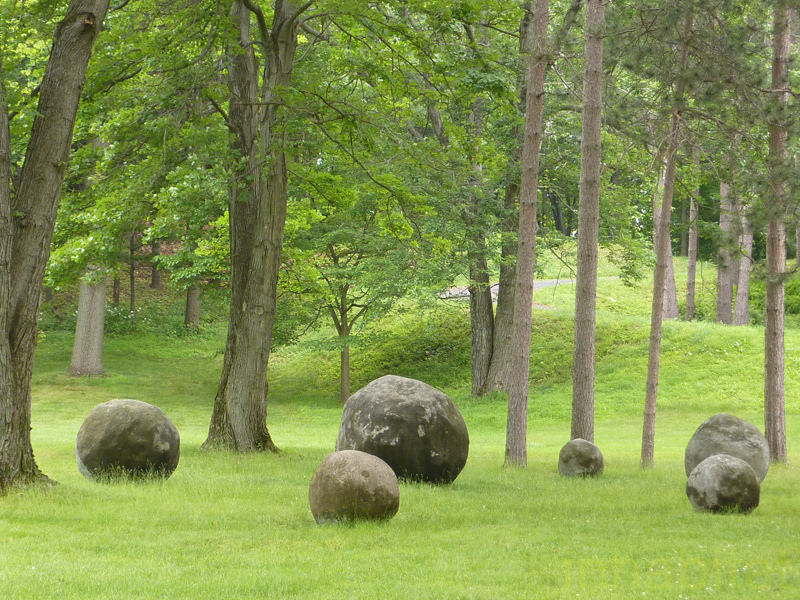
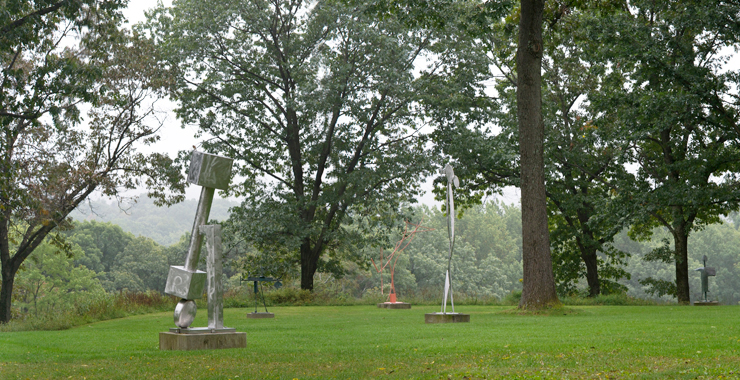
This was brought home to us very strongly when, 25 years ago, and on the advice of a friend who worked at the Metropolitan Museum of Art, we visited the Storm King Art Centre, which is an hour’s drive north of New York City, near the Hudson River. Here again, a few words of introduction. It’s really the classic American story (as much as the history of the Yorkshire Sculpture Park is the classic British story of modern times – decay of the old order and birth of a new one). A certain Mr. Ogden, after a successful career in the family business, purchased the land and property of Storm King and started collecting. He initially bought small sculptures which he exhibited around the house. At some point, he expanded out into the surrounding landscape, installing much bigger pieces. That’s it, in a nutshell. But the result – for us at least – was epiphanic.

In wonder we wandered along the rides mown through the grass, walking from one towering sculpture to another

SK-1

SK-4

from hilltops, we discovered long views across the surrounding landscape, where sculpture and land merged into one

SK-2

we walked through glades in the woods, each with their own sculpture

SK-8

SK-9

we entered the woods to find smaller, more intimate sculptures scattered under the trees

SK-7

SK-10

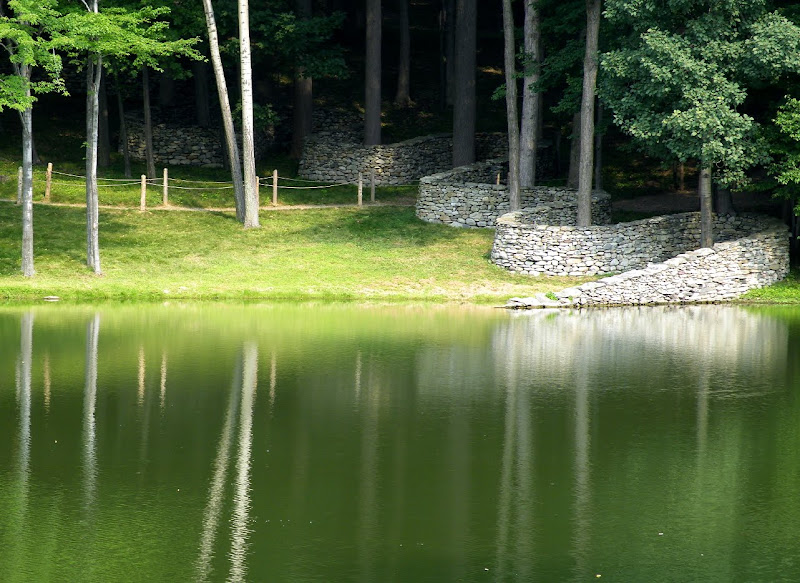
we also found a sculpture-wall meandering through them

SK-5

(better seen in this photo taken during the winter)

SK-14

we turned our steps back to the house, discovering other smaller sculptures set down in more formal gardens around the house.

SONY DSC

SK-11

And finally, we entered the house and fell upon a sculpture which in all these years I have never forgotten: a group of robotic-looking statues with small motors making their jaws work up and down and with a closed-loop recording of voices quietly droning “chatter, chatter, chatter, chatter, chatter, chatter …” on and on, endlessly. Wonderful.  Every time I find myself in one of those meetings where people blather on and on and on I recall this statue group with intense clarity.

So taken were we with Storm King that the very first time we went back to New York after an absence of fifteen years we made sure to find time to go up there. It cast the same spell over us – although sadly the chattering statues had vanished (smashed to smithereens, no doubt, by an employee crazed by their endless droning).

As I contemplate these photos, it occurs to me that many of the megalithic structures scattered across the face of Europe could pass as modern sculptures set down in the surrounding landscape. Stonehenge, the most iconic of all megalithic structures, is probably too much like a ruin to make this comparison
Stonhenge-2
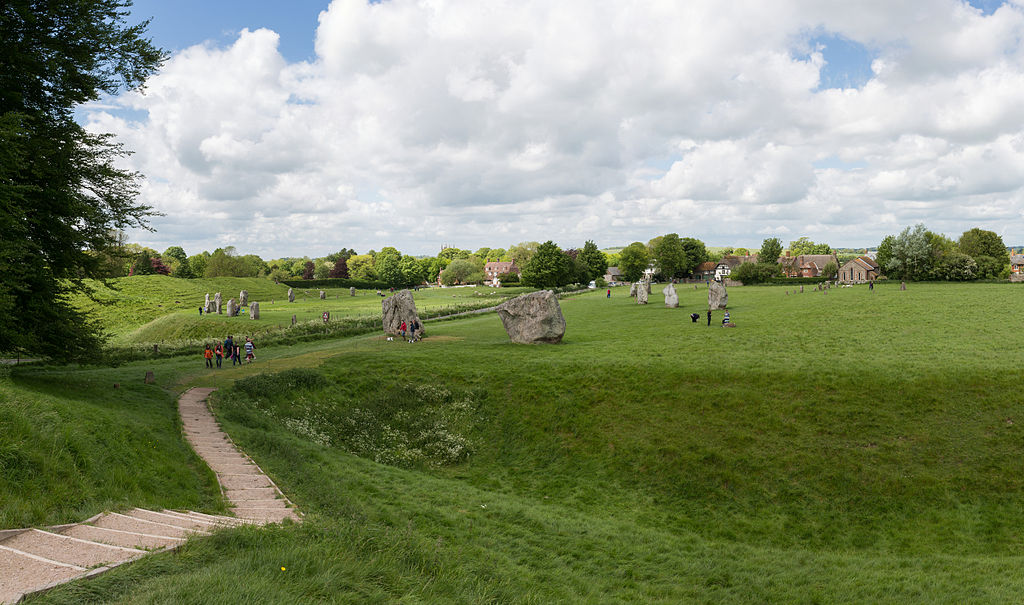
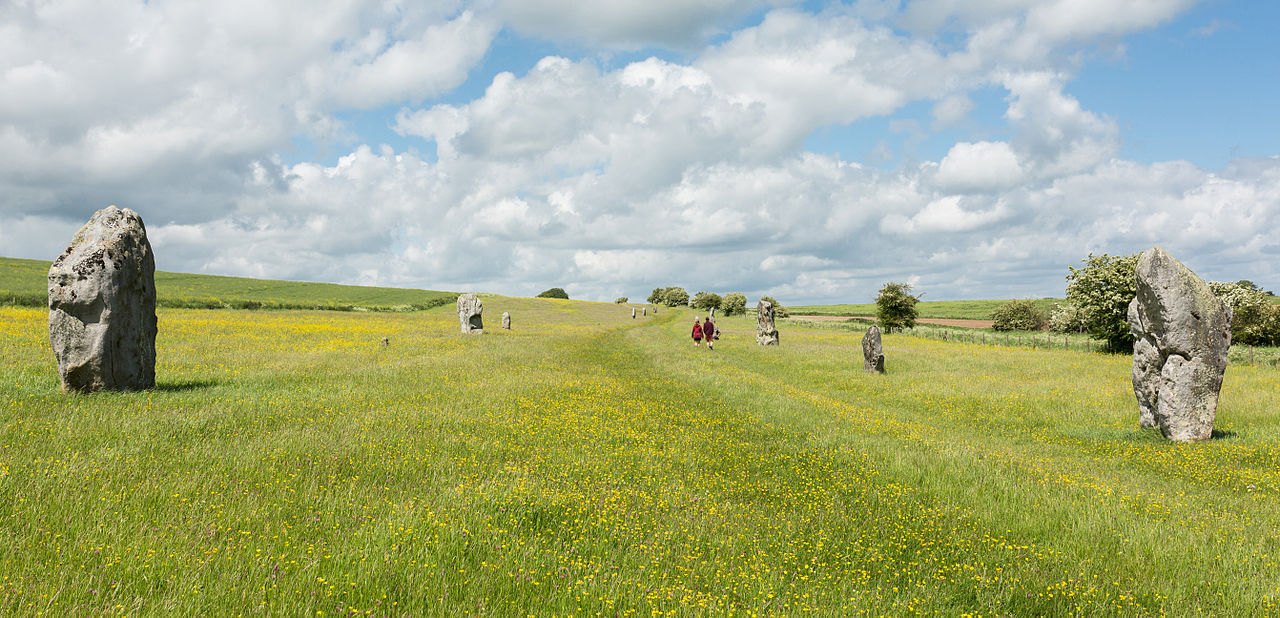
but Avebury, like Stonehenge located in Wiltshire, has something of the abstraction of sculpture parks

Avebury-2

Avebury-1

and how about Carnac, in Brittany?
carnac-1

carnac-2
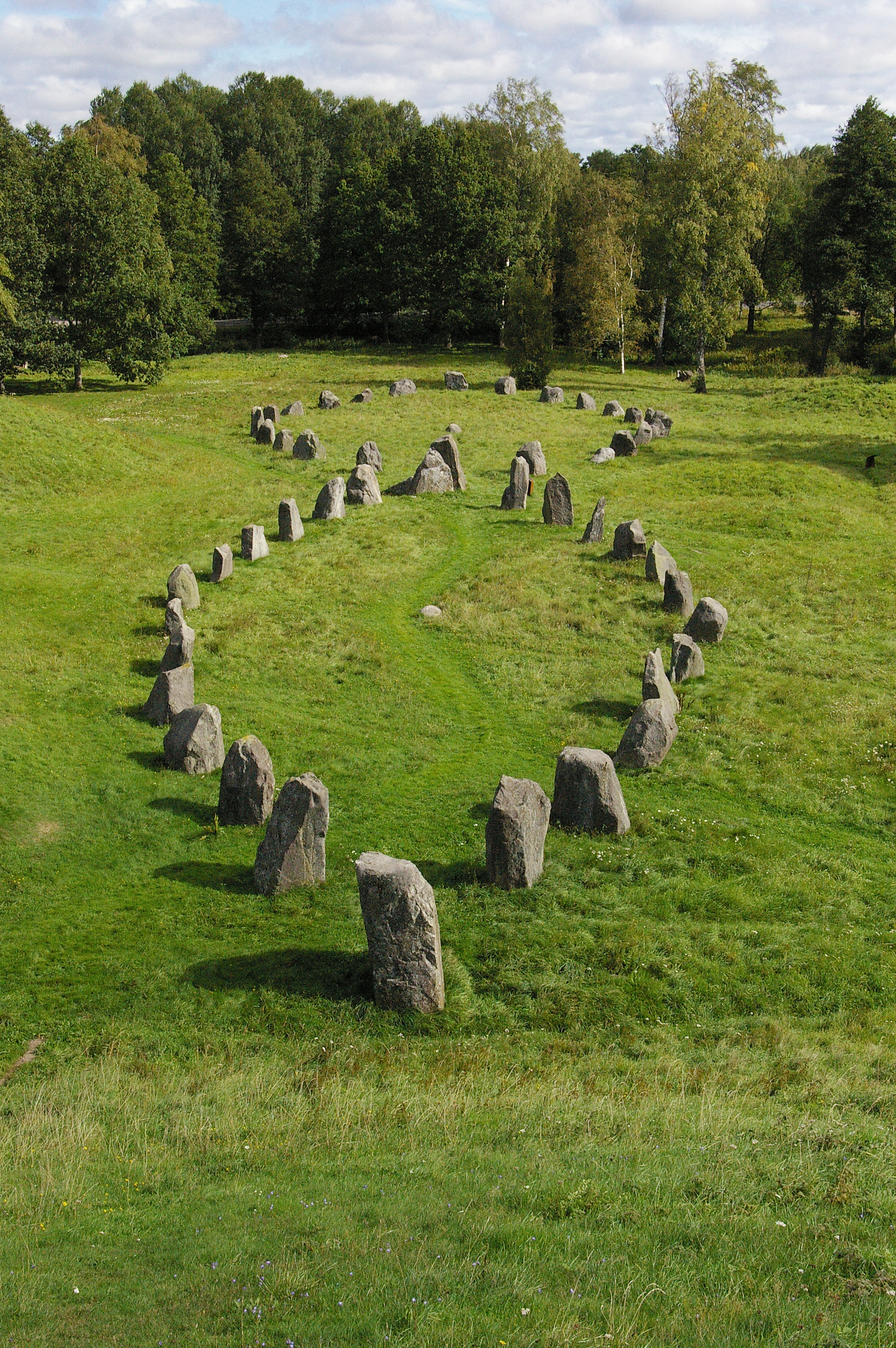
or Badelunda in Sweden?

Badelunda Västmanland

or the Ring of Brodgar, in the Orkney islands?

Ring of Brodgar

And even further afield, although not from the Mesolithic period, we have this intimate collection of upright stones in Toraja, Indonesia

OLYMPUS DIGITAL CAMERA

Of course, the people who built these structures were not building sculpture parks, but I have to think that they too were stirred by the same feeling of connectedness between their standing stones and nature as we have between sculpture and nature. They attributed this feeling to a divine grace in the place, we simply enjoy the feeling.

____________________________

Sculpture in cities-1: http://percivalhenry.files.wordpress.com/2014/03/52af841ee4b0b09acc808041-lost3f3f3f-1387234862071-flamingo.jpg [in http://percivalhenry.wordpress.com/2014/03/20/art-history-martch-madness-first-round-new-york-regional/comment-page-1/%5D
Sculptures in cities-2: http://upload.wikimedia.org/wikipedia/commons/2/26/Juilliard_School-Manhattan-New_york.jpg [in http://commons.wikimedia.org/wiki/File:Juilliard_School-Manhattan-New_york.jpg%5D
Sculpture in cities-3: http://i3.mirror.co.uk/incoming/article740970.ece/alternates/s615/A%20new%20sculpture%20on%20the%20fourth%20plinth%20in%20Trafalgar%20Square,%20central%20London%20The%20work%20by%20sculptor%20Bill%20Woodrow,%20entitled%20%27Regardless%20of%20History%27,%20%20shows%20a%20tree%20resting%20on%20a%20head%20and%20a%20book [in http://www.mirror.co.uk/news/uk-news/love-it-or-hate-it-bronze-rocking-741129%5D
Sculpture in cities-4: http://womenworld.org/image/082012/Paris%20-%20Beaubourg%20and%20Les%20Halles_1.jpg [in http://womenworld.org/travel/paris—around-town—beaubourg-and-les-halles-%28part-1%29.aspx%5D
Sculpture in cities-5: http://www-news.uchicago.edu/releases/06/images/cis/sculpture.jpg [in http://www-news.uchicago.edu/releases/06/060426.cis-photos.shtml%5D
YSP-1: http://www.yorkshireattractions.org/images/cms/attractions_21_3_large.jpg [in http://www.yorkshireattractions.org/visitor-attractions/21/yorkshire-sculpture-park%5D
YSP-2: http://upload.wikimedia.org/wikipedia/commons/0/0a/Yorkshire_Sculpture_Park_Caro_Promenade.jpg [in http://commons.wikimedia.org/wiki/File:Yorkshire_Sculpture_Park_Caro_Promenade.jpg%5D
YSP-3: http://antonyjwaller.files.wordpress.com/2012/06/nik_5931-copy.jpg [in http://antonyjwaller.wordpress.com/travel-articles/yorkshire-and-northern-england/the-yorkshire-sculpture-park/%5D
YSP-4: http://www.sculpture-info.com/upload/1008/image/Yorkshiresculpturepark.jpg [in http://www.sculpture-info.com/news-626/yorkshire-sculpture-park.html%5D
YSP-5: http://2.bp.blogspot.com/-6GgifPCMTc8/UgZKx2yojhI/AAAAAAAACDg/WYBKhXaNWp8/s1600/2+Buddha+and+Rob.JPG [in http://expertslife.blogspot.com/2013/08/picture-of-week-10-august-2013.html%5D
YSP-6: http://www.thomasharveydesign.co.uk/wp-content/uploads/2011/05/YSP6.jpg [in http://www.thomasharveydesign.co.uk/2011/05/09/yorkshire-sculpture-park-wakefield/%5D
YSP-7: http://news.bbcimg.co.uk/media/images/52104000/jpg/_52104252_7cbb7745-313f-43e9-8974-d144adf6c05f.jpg [in http://www.bbc.co.uk/news/entertainment-arts-13034363%5D
SK-1: http://brooklynimbecile.files.wordpress.com/2011/10/img_4256.jpg [in http://brooklynimbecile.com/2011/11/05/weekend-spread-storm-king-art-center/%5D
SK-2: http://3.bp.blogspot.com/-OWDq8YQCBog/UA6M17c9N6I/AAAAAAAAYI4/OqODfTIunKU/s1600/Mountainville_NY_A_Calder_Storm_King_AC_photo_S_Gruber_June_2012_+%2888%29.JPG [in http://publicartandmemory.blogspot.com/2012_07_01_archive.html%5D
SK-3: http://www.greenstrides.com/images-wp/Storm-King.jpg [in http://www.greenstrides.com/2013/07/10/sculpture-parks-can-inspire-your-own-garden-design/%5D
SK-4: http://4.bp.blogspot.com/-4sgNF1ufdU4/U4T1ul7DPRI/AAAAAAAAP8w/JzGsmMOY6No/s1600/Newman.jpg [in http://nycgarden.blogspot.com/2014/06/storm-king.html%5D
SK-5: http://i.vimeocdn.com/video/332835418_1280.jpg [in http://vimeo.com/48015694%5D
SK-6: http://inhabitat.com/nyc/wp-content/blogs.dir/2/files/2011/07/storm-king-boulders.jpg [in http://inhabitat.com/nyc/storm-king-art-center-a-summer-retreat-for-the-artsy-nature-loving-new-yorker/storm-king-boulders/%5D
SK-7: http://faeriemooncreations.blogspot.com/2010_11_01_archive.html [in http://faeriemooncreations.blogspot.com/2010_11_01_archive.html%5D
SK-8: http://4.bp.blogspot.com/_sVe9wO8fJls/S4zMOOgpUZI/AAAAAAAAEDo/IaUESi6KOGQ/s800/goldsw3.jpg [in http://lettuce-eating.blogspot.com/2010_03_01_archive.html%5D
SK-9: http://stormking.weebly.com/uploads/2/3/8/8/23889452/6893557.jpg [in http://stormking.weebly.com/permanent-collection.html%5D
SK-10: http://www.stormking.org/wp-content/uploads/2013/07/smith-lawn1.jpg [in http://www.stormking.org/collection-conversation/%5D
SK-11: http://eof737.files.wordpress.com/2011/09/img_2564.jpg?w=800 [in http://mirthandmotivation.com/2011/09/04/happiness-installation-art-at-storm-king/img_2564/%5D
Stonehenge: http://st-listas.20minutos.es/images/2013-06/362538/4049632_640px.jpg?1370571567 [in http://listas.20minutos.es/lista/maravillas-del-mundo-362538/%5D
Avebury-1: http://en.wikipedia.org/wiki/Avebury#mediaviewer/File:Avebury_Panorama,_Wiltshire,_UK_-_Diliff.jpg [in http://en.wikipedia.org/wiki/Avebury%5D
Avebury-2: http://en.wikipedia.org/wiki/Avebury#mediaviewer/File:Avebury,_West_Kennet_Avenue,_Wiltshire,_UK_-_Diliff.jpg [in http://en.wikipedia.org/wiki/Avebury%5D
Carnac-1: http://weadorefrance.com/es/images/w.800/h.600/c.1/d.guide_photos/sd./i.carnac-brittany-standing-stones-20130325.jpg [in http://weadorefrance.com/es/brittany-bretagne/g.31%5D
Carnac-2: http://media.tinmoi.vn//2012/02/27/4_28_1330310626_92_20120224114942_l6.jpg [in http://www.tktyt1haiduong.edu.vn/?p=888%5D
Badelunda, Sweden: http://upload.wikimedia.org/wikipedia/commons/d/d3/Badelunda_V%C3%A4stmanland_Sweden.jpg [in http://some-landscapes.blogspot.com/2011_10_01_archive.html%5D
Ring of Brodgar, Orkney: http://en.wikipedia.org/wiki/Ring_of_Brodgar#mediaviewer/File:RingofBrodgar.jpg [in http://en.wikipedia.org/wiki/Ring_of_Brodgar%5D
Toraja, Indonesia: http://tribudragon.files.wordpress.com/2013/03/2-tt-6.jpg [in http://tribudragon.wordpress.com/category/indonesia/%5D

CAPERS

Beijing, 7 June 2014

It never ceases to amaze me that there are certain ingredients which one adds to recipes in small quantities but which make a huge difference to the final taste. Spices are the obvious example – although I often wish that the hot spices had never existed – but there are others. Parsley, for instance, or coriander, or anise. Or capers.

Capers are a particular favourite of mine ever since a business trip I made many years ago to Malta. I was there to do an environmental audit of a factory. After a long day of inspecting the wastewater treatment plant, the waste segregation area, the toxic chemicals storage area, and I don’t know what else, my colleagues and I were finally free for dinner. We left the hotel and wandered around, but it was a dead time of the year and there wasn’t much available. We finally came across a modest restaurant, which proclaimed itself to be a fish restaurant. Why not? we said, after all, we were in an island, presumably the fish would be good. And it was, it was! We all ordered Orata al cartoccio, where a bream is cooked – steamed in its own juices, really – in a closed aluminium foil package together with cherry tomatoes, capers, and olives. It’s really a very simple recipe. Having washed and cleaned the bream, you lay it on a big piece of aluminium foil, you place a little rosemary inside the fish, drizzle it with olive oil, place the sliced cherry tomatoes, rinsed capers, and olives around the bream, wet the whole with a little white wine, wrap up the foil and close it well (so that none of the juices escape), and cook it in the oven at 200°C for about 45 minutes. Voilà!

orata pomodorini capperi olive

Simple, but absolutely delicious. The capers in particular impart a taste to the fish’s flesh which even to this day, after all these years, I can summon up at will for my private delectation.

The marvelous effect of the capers was actually quite a surprise to me. I had first come across capers as a young boy, at my English grandmother’s house. At some earlier moment, my elder brother had evinced a love of capers, so every time he came to stay with her she bought a small jar of them. This time, I was in tow so I got to try some. Salty! So salty! How could anyone like these tiny balls of salt? I made sure to steer clear of them after that, pushing them carefully aside if I came across them in a salade Niçoise, for instance. Until that fateful encounter in a modest fish restaurant in Malta. Such is life …

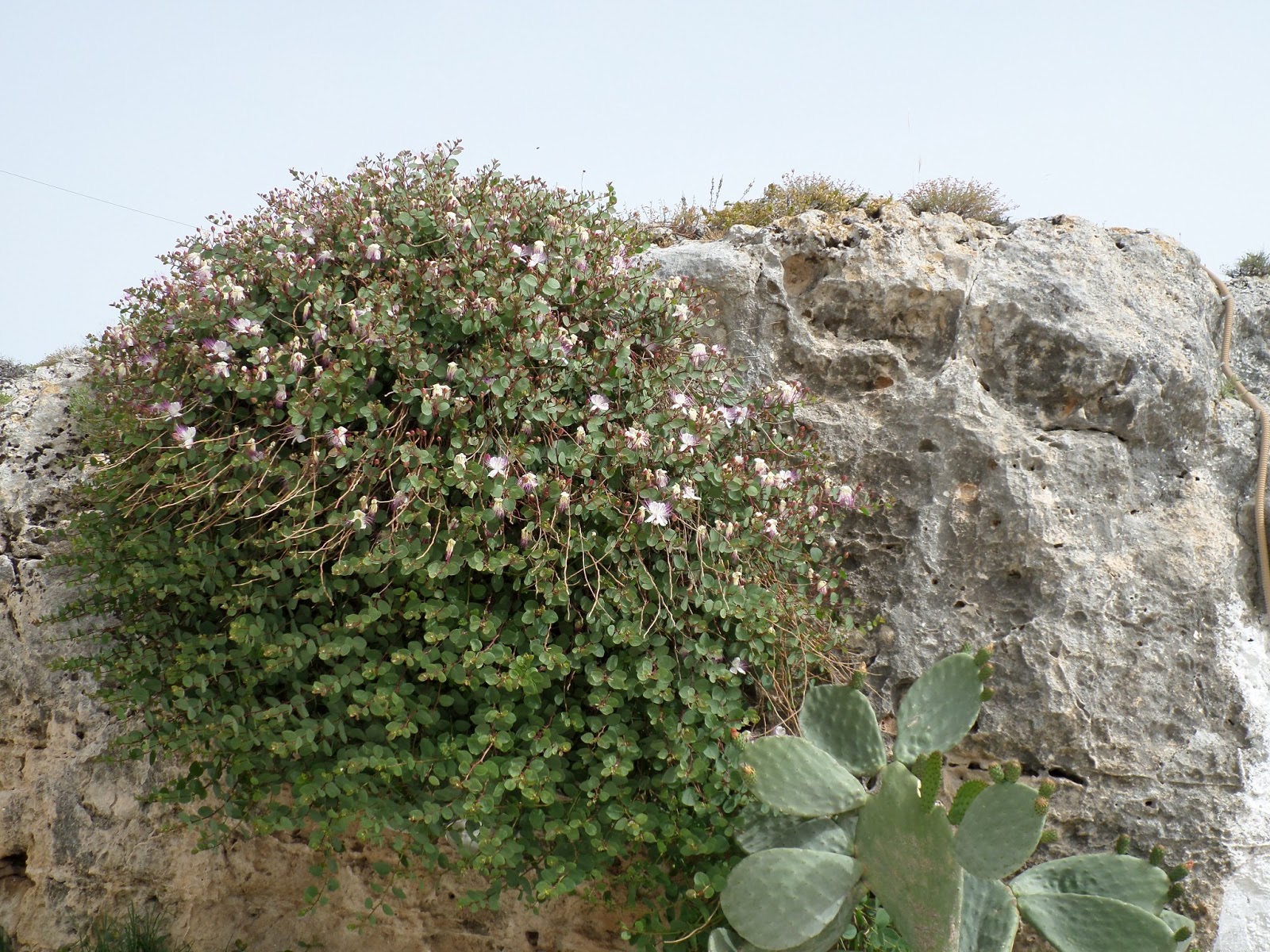
After that gastronomic epiphany in Malta, I feel that I owe it to the caper to write its hagiography, which like all good hagiographies should start from its birth. The caper comes from a bush, the caper bush to be precise, capparis spinosa. The bush is not much to write home about. Here is an example from the island of Salina, one of the Eolian Islands off the north-west coast of Sicily

caper bush-1

and here’s another from near Brindisi in southern Italy

caper bush-2

Both pictures admirably depict the poor, rocky soils and harsh environments that the bush grows well in. They also tell us that you find the bush around the Mediterranean. But that’s not only place you find C. spinosa; the bush has quite a wide range, down through eastern Africa, across central, southern, and southeastern Asia, all the way out to the Pacific Islands and Australia. But as far as I know, and I’m very willing to be corrected, the caper is not used in the local cuisine in any of these areas.

The last picture also tells us that the bush sports flowers. Small, but actually very lovely, with a cluster of long mauve stamens reaching out to the world (this is one of many beautiful photos of the caper flower on the internet; the efforts of my photographic e-friends have turned me quite poetic).

caper flowers-2

This last picture also modestly introduces us to the hero our story. Because the caper is that green flower bud behind. It gets picked, salted, and pickled for our delight. I think it deserves a picture of its own

caper buds

I have to say, I always marvel at things like this. How did the women in some far-off time think of picking the flower buds of this bush to eat? (I’m sure it was the women; the men were just lazing around the camp fire cracking stupid jokes and farting.) Maybe desperation, to stave off starvation. Or maybe … but I’m getting ahead of myself.

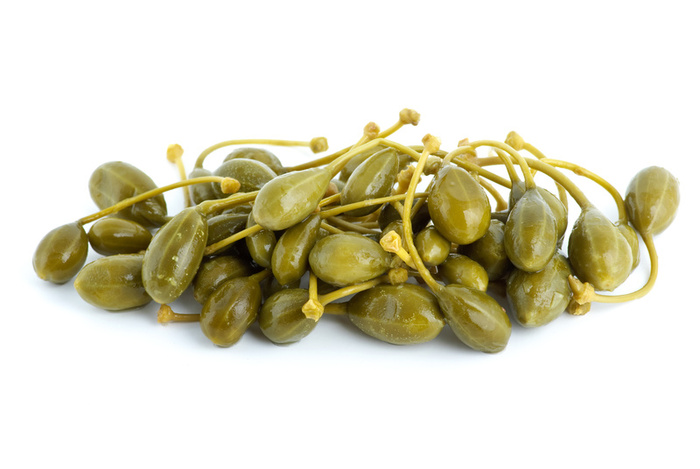
Capers are sold sorted by size. Either because the French got into the game of commercializing capers before anyone else, or because some canny marketer thought French names would sell better, or for some other reason unknown to me, the grades mostly have French names. From smallest to biggest we have: “non-pareil”, incomparable; “surfine”, very delicate (those hideously salty little balls which my grandmother bought for my brother must have been either surfines or non-pareils); “capucine”, which is a little pointed cowl, like the ones worn by Franciscans nuns – looking at the photo below and squinting a little, I suppose you could say that the capers in question look cowl-like; “capote”, which is a rather bigger cowl with a definite point (it is also French slang for a condom for reasons which I’m sure the readers can divine after a little bit of thought); “fine”, delicate (like the oysters). And at the very end of the grades we have “grusas”, which is not a French word. My guess is that it’s Provençal and has a meaning similar to the Spanish “gruesos”, fatty. Of course, the French were not going to use their delicate language for such a coarse member of the caper family. As one could guess from the grading nomenclature, the smallest sizes are considered to be the most desirable; I’m sure it is no coincidence that the smallest sizes come from southern France …

graded capers

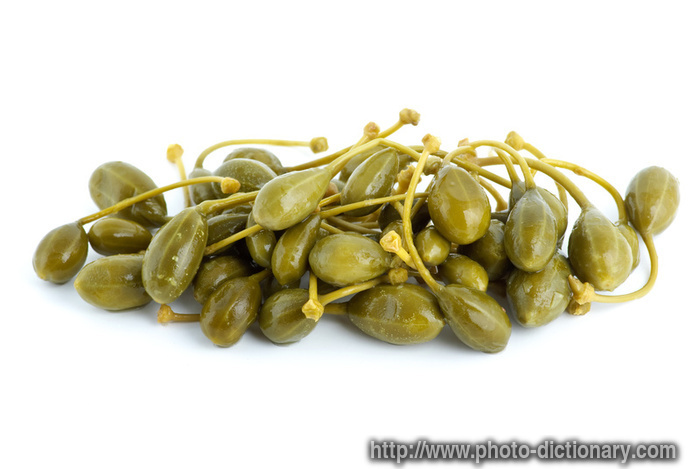
Malta brought me my culinary epiphany with the caper. It also introduced me to the caper berry, which I find to be a much more delicious product of the caper bush. My Italian colleague, whom I have had cause to mention in an earlier post as the person who introduced me to durian, was with me on this Maltese environmental audit. Rather than asking the staff of the wastewater treatment plant to see the data on wastewater treatment efficiency he asked them to get him several jars of pickled Maltese caper berries. On the promise of my not revealing this professional faux-pas of his he shared one of the jars with me, which I took home to my wife. We have been hooked ever since.

caper berries-2

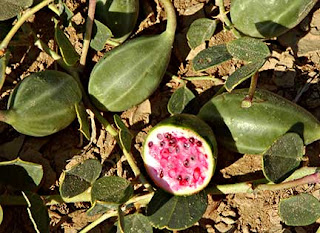
As the name suggest, caper berries are the fruit of the caper bush. This photo shows the berry in its natural state.

caper berries-natural state

I understand they are perfectly edible, although I have never seen them sold in a shop. I’ve only eaten the pickled variety. They are much bigger than capers, less salty, more crunchy (because of the seeds they contain) and can be eaten as a snack – and my wife and I have indeed snacked happily and often on them, in front of the TV or other such snack-happy locations.

Coming back to my meditation on how anyone ever came up with the idea of pickling flower buds to eat, I suspect the path was through the berry: step 1 – eat the berries; step 2 – salt the berries to preserve the excedent harvest before they rot; step 3 – hang on, why don’t we try the same thing with the flower buds?

My in-depth research (i.e., Wikipedia) has revealed to me that in Greece and Cyprus they also eat the pickled leaves of the caper bush.

caper leaves

This I have never tried. I read that they are particularly used in salads and fish dishes. A web-site called Good Greek Stuff proclaims that “these tangy cured leaves of the caper plant are less salty than the buds, and lend a citrusy undertone to such foods as Greek country salad, dakos (barley rusks with tomato, olive oil and feta), fish sauces, and cabbage slaws. It gives an astringent, piquant note to herb pestos and pasta dishes. And you’ll be amazed at what it does to the humble spaghetti aglio, olio e peperoncino or how well it works as a garnish to fried squid.”

I have another culinary epiphany awaiting me in some Greek island.
__________________
Orata, pomodorini, capperi, olive: http://www.cucinanonnapapera.it/wp-content/uploads/2011/07/PICT1017.jpg [in http://www.cucinanonnapapera.it/?p=464%5D
Caper bush Salina: http://atasteoftravel.files.wordpress.com/2011/07/20110717-082956.jpg [in http://atasteoftravelblog.com/2011/capers-on-salina/%5D
Caper bush Brindisi: http://2.bp.blogspot.com/-2Nr_U2AWCUs/Uaid3mGYgqI/AAAAAAAAASM/NBQh22nv_Rk/s1600/Caper+Bush+growing+from+Rocks.jpg [in http://lisainitalymay2013.blogspot.com/%5D
Caper flower: http://kojikisans2.files.wordpress.com/2013/01/caper11.jpg?w=1008 [in http://kojikisans2.wordpress.com/%5D
Caper flower buds: http://en.wikipedia.org/wiki/Caper#mediaviewer/File:%E1%83%99%E1%83%90%E1%83%9E%E1%83%90%E1%83%A0%E1%83%98_Capparis_spinosa_Kapernstrauch.JPG [in http://en.wikipedia.org/wiki/Caper%5D
Graded capers: http://www.asofood.com/aso_images/capers.gif [in http://www.asofood.com/capers.html%5D
Caper berries: http://www.photo-dictionary.com/photofiles/list/1401/4818marinated_capers.jpg [in http://www.photo-dictionary.com/phrase/1401/marinated-capers.html%5D
Caper berries-natural state: http://2.bp.blogspot.com/_Okhm7AjHzv8/R1kZdfwxBCI/AAAAAAAAAac/Eu8RWxYi6f4/s320/e-caperberries.jpg [in http://medcookingalaska.blogspot.com/2007/12/recipes-caper-tart-capers-and-eggs.html%5D
Caper leaves: http://eshop-santorini.gr/media/catalog/product/cache/1/image/9df78eab33525d08d6e5fb8d27136e95/k/a/kaparofilla-caper-leaves.jpg [in http://eshop-santorini.gr/index.php/authentic-food-1/more/santorini-wild-capers-1.html%5D

TROUBLES IN THE MEDITERRANEAN

Beijing, 27 May 2014

Ten days ago, this was.

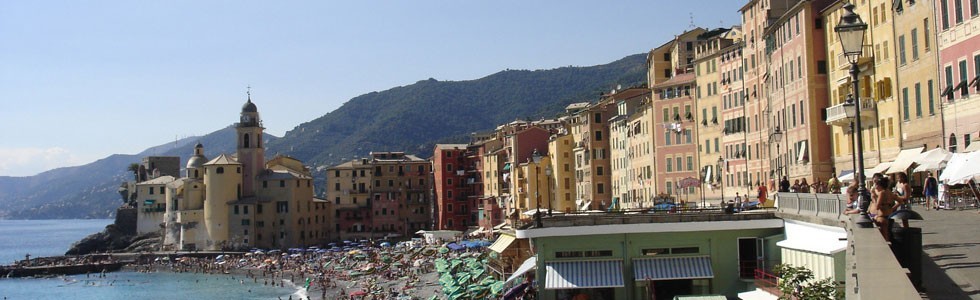
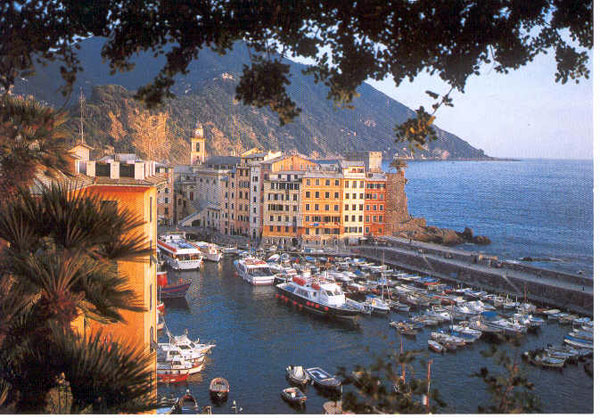
We walked into Camogli from Recco, getting a first glimpse of the little harbour from the road.

Recco-Camogli

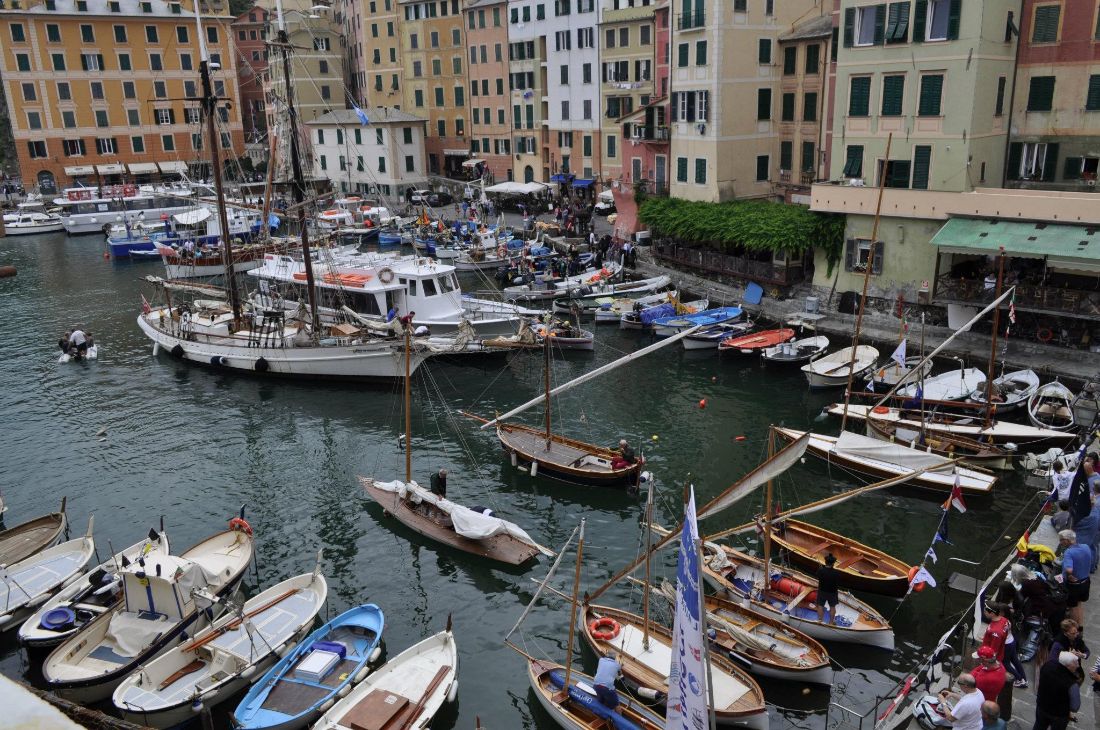
We walked down to the harbour, skirted its edge.

camogli port

We passed on to the boardwalk on the other side of the church.  Glancing back, this was the sight which greeted us.

camogli-boardwalk

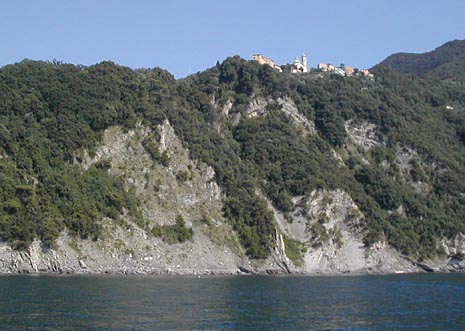
Our goal was San Rocco, sitting high above Camogli on a steep spur of Monte di Portofino.

san rocco from the sea

We started climbing, slowly, stopping often, huffing and puffing, using one of the old mulattiere, mule trails, which criss-cross the hills around here.

Camogli-San Rocco path-2

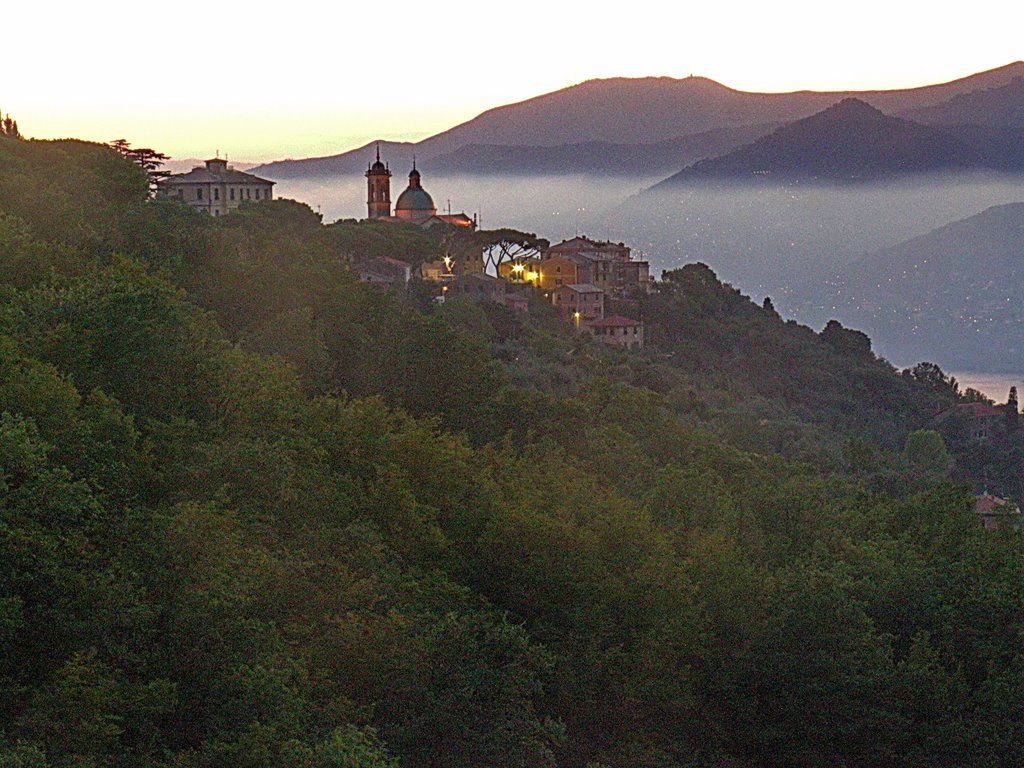
We toiled up past rather decrepit houses and semi-abandoned olive groves until we finally reached San Rocco.

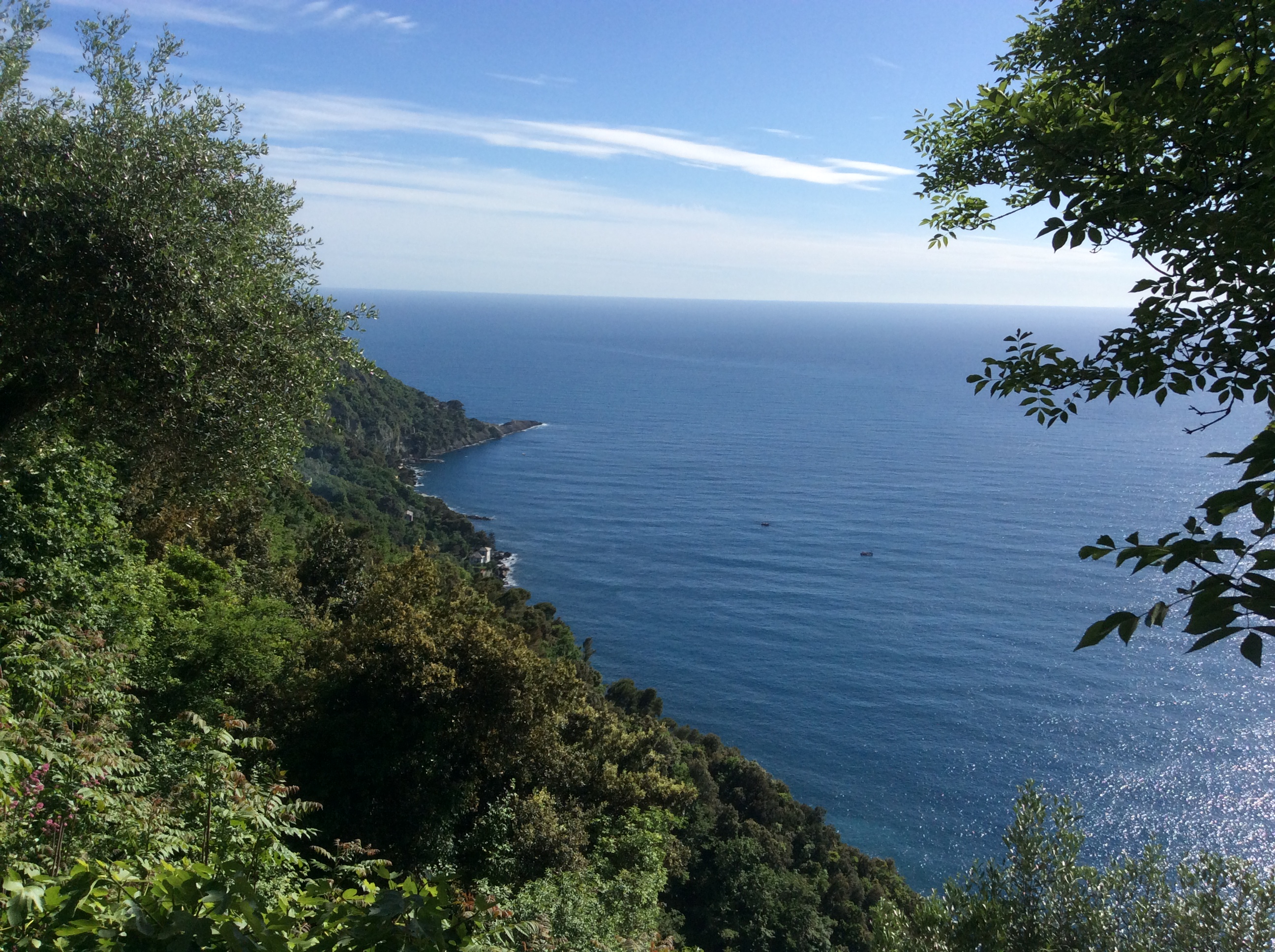
There, from the little piazza in front of the church, we had these gorgeous views, south-east towards Punta Chiappa

monte di portofino-1

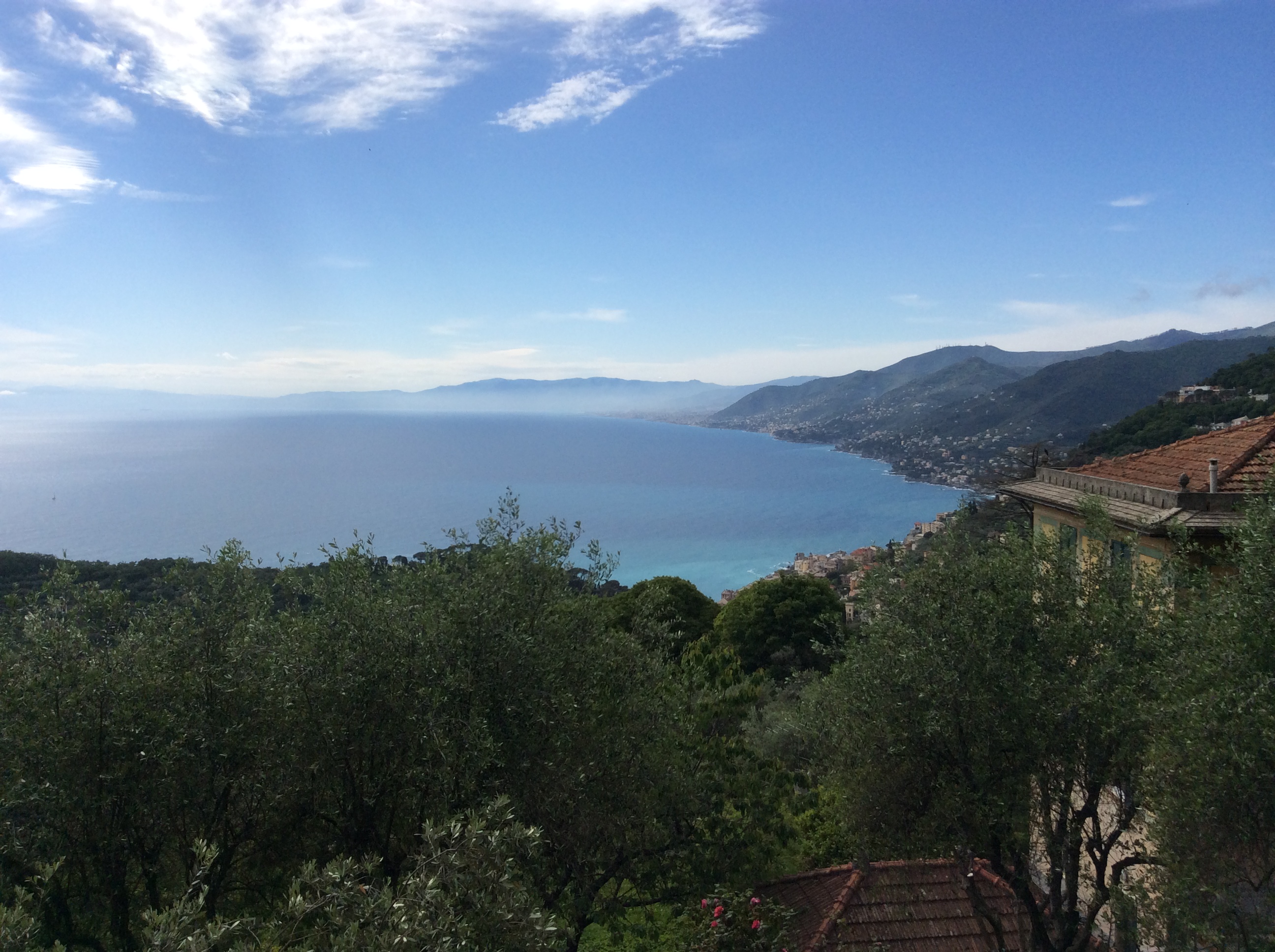
and north-west towards Genova.

monte di portofino-2

We sank onto the bench and drank in view and sun. And as we sat there, in my mind’s eye I overflew the seaboard of the Mediterranean. Burning, burning, all burning …

Egypt

egypt-2

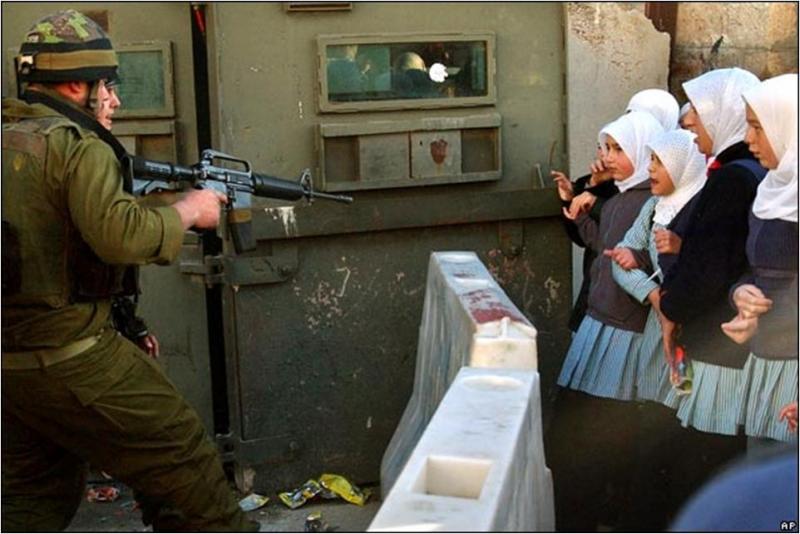
The West Bank

west bank

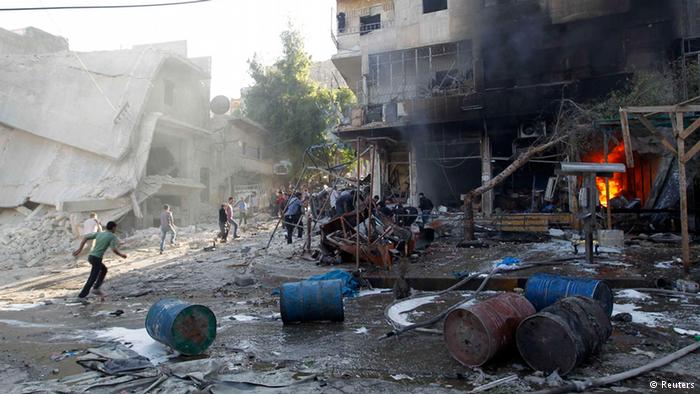
Syria

syria

Lebanon

lebanon

Turkey

turkey

Morocco

morocco

Algeria

algeria

Tunisia

Protesters shout slogans during a demonstration to call for the departure of the Islamist-led ruling coalition in Avenue Habib-Bourguiba in central Tunis

and finally Libya

libya

libya-2

from where, amidst all this rage and pain and despair, poor souls are struggling against all odds to cross the Mediterranean and sneak into Europe

pantelleria

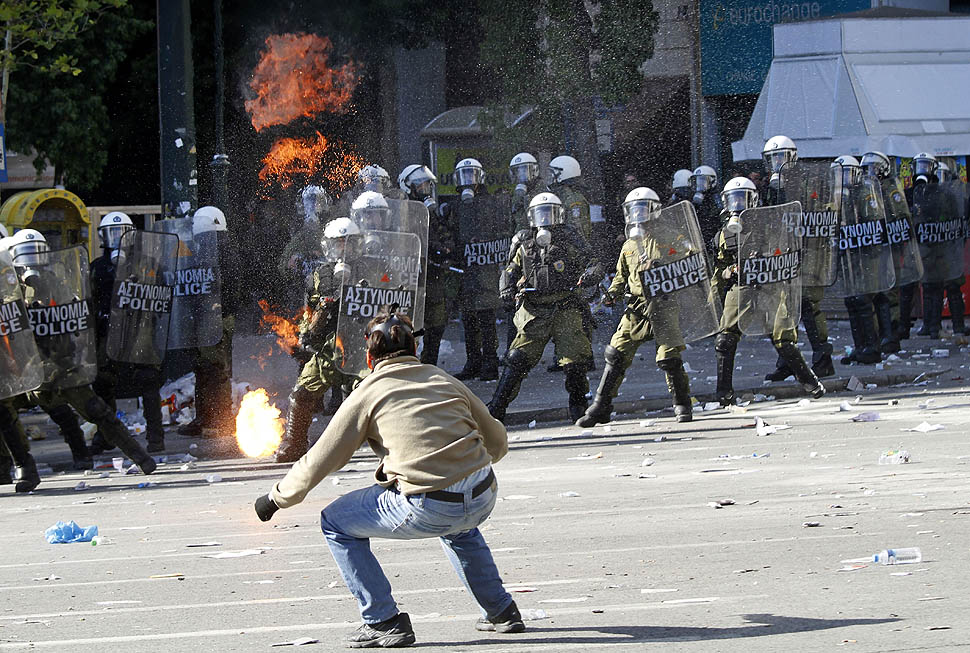
a Europe which is itself sinking under its own weight of troubles: Greece of course

Greece Financial Crisis

but also Italy itself

italy

as well as France

France Strike

and Spain

spain

I closed my mind’s eye. Tomorrow, tomorrow, I said to myself, my wife and I would worry about the state of the universe tomorrow. Today, sitting on the bench and enjoying sun and sea, we just let the world go hang.

san rocco-1

____________________________

Recco-Camogli: http://www.mareblucamogli.com/images/Camogli_porto_oggi.jpg?129 [in http://www.mareblucamogli.com/page_31.html%5D
Camogli port: http://blog.marinayachting.it/media/458191_246746435438893_111283799_o.jpg [in http://blog.marinayachting.it/ai1ec_event/13-trofeo-challenge-nicola-dodero/?instance_id=%5D
Camogli-boardwalk: http://www.portofinotrek.com/trek/17-category/da-camogli-san-rocco.jpg [in http://www.portofinotrek.com/trek/17-da-camogli-san-rocco%5D
San Rocco from the sea: http://www.villagoduria.it/media/img/dintorni/s-rocco%20dal%20mare.jpg [in http://www.villagoduria.it/i_dintorni.php?lang=it%5D
Camogli-San Rocco path: http://www.alpioccidentali.it/escursioni/images-esc/Camogli-SanFruttuoso_glicine.JPG [in http://www.alpioccidentali.it/escursioni/Camogli-SanFruttuoso.htm%5D
Camogli San Rocco path-2: http://www.portofinotrek.com/trek/10-246-thickbox/da-camogli-a-san-rocco.jpg [in http://www.portofinotrek.com/trek/10-da-camogli-a-san-rocco.html%5D
San Rocco-1: http://static.panoramio.com/photos/large/3427674.jpg [in http://www.panoramio.com/photo/3427674%5D
Egypt: http://www.cairoportal.com/media/k2/items/cache/296cd9de158e249f3870555c2eeb013a_XL.jpg?t=-62169984000 [in http://www.cairoportal.com/news/9739#.U4NTHXYUZ40%5D
West Bank: http://stat.ks.kidsklik.com/statics/files/2011/07/1309663247638250606.jpg [in http://elmustakeem.blogspot.com/2011/07/sekolah-anak-anak-palestina.html%5D
Syria: http://www.dw.de/image/0,,17607086_303,00.jpg [in http://www.dw.de/syrias-war-economies-add-fuel-to-the-conflict/a-17609218%5D
Lebanon: http://gdb.voanews.com/B5FAA55E-7326-4D3F-B6F4-97DD2C6863FA_w974_n_s.jpg [in http://www.zeriamerikes.com/media/photogallery/june-23-2013-day-in-photos/1687666.html%5D
Turkey: http://82.222.152.134/imgsdisk/2014/05/22/220520141648544381677.jpg [in https://twitter.com/gokmen%5D

Morocco: http://i.cdn.turner.com/cnn/2011/WORLD/africa/02/21/morocco.protests/t1larg.morocco.feb20.gi.afp.jpg [in http://www.cnn.com/2011/WORLD/africa/02/21/morocco.protests/%5D
Algeria: http://l1.yimg.com/bt/api/res/1.2/Z.PSaSbzYDbmat1.7F6nKg–/YXBwaWQ9eW5ld3M7Zmk9ZmlsbDtoPTQyMTtweG9mZj01MDtweW9mZj0wO3E9NzU7dz03NDk-/http://media.zenfs.com/en_us/News/ap_webfeeds/cb75ae006f10880a4e0f6a7067006b93.jpg [in http://news.yahoo.com/algeria-activists-stage-rare-anti-govt-protest-145742769.html%5D
Tunisia: http://revolution-news.com/wp-content/uploads/2013/10/3540ab5d-15a8-49c8-91ff-a9649aea4186_16x9_600x338.jpg [in http://revolution-news.com/category/middle-east/tunisia/%5D
Libya: http://wartime.org.ua/uploads/posts/2012-01/1325936226_vyskova-operacya-v-lvyi-rozkrila-slabku-boyegotovnst-nato-5.jpg [in http://wartime.org.ua/648-vyskova-operacya-v-lvyi-rozkrila-slabku-boyegotovnst-nato.html%5D
Libya-2: http://www.bigpicture.si/wp-content/uploads/2012/02/1241.jpg [in http://www.bigpicture.si/archives/tag/sirija%5D
Pantelleria: http://292fc373eb1b8428f75b-7f75e5eb51943043279413a54aaa858a.r38.cf3.rackcdn.com/world_03_temp-1303281776-4dae8070-620×348.jpg [in http://www.timesofmalta.com/articles/view/20110420/world/Nationalism-comes-of-age-in-anti-immigrant-bailout-Europe.361418%5D
Greece: http://latimesphoto.files.wordpress.com/2011/10/greek-crisis08.jpg [in http://framework.latimes.com/2011/10/19/protest-in-greece/%5D
Italy: http://www.ctvnews.ca/polopoly_fs/1.1773564!/httpImage/image.jpg_gen/derivatives/landscape_960/image.jpg [in http://www.ctvnews.ca/world/anti-austerity-protest-in-rome-italy-turns-violent-1.1773562%5D
France-Marseille: http://static.guim.co.uk/sys-images/Guardian/Pix/pictures/2013/9/10/1378816498459/3befa5d8-0b5b-4ca9-be36-9ef459246334-620×421.jpeg [in http://www.theguardian.com/business/2013/sep/10/french-unions-hold-protests-over-pension-reforms—live%5D
Spain: http://img.rt.com/files/news/1e/1d/30/00/000_dv1422028.si.jpg [in http://rt.com/news/spain-protest-austerity-corruption-347/%5D
San Rocco: http://static.panoramio.com/photos/large/3427674.jpg [in http://www.panoramio.com/photo/3427674%5D

CAPABILITY BROWN

London, 12 May 2014

When I studied history in primary school, it was still taught the old way, by rote. So one learned royal genealogies by heart (“William the Conqueror, William Rufus, Henry I, Stephen, Henry II, Richard I, John Lackland”, etc.) as well as names of battles and the year they were fought (“Battle of Hastings 1066, Battle of Bannockburn 1314, Battle of Crecy 1346, Battle of Agincourt 1415, Battle of Naseby 1645, Battle of Culloden 1746” etc.). It was all very 1066 And All That, which is why I so dote on that book. One especially tricky set of battles to remember were those won by the Glorious Duke of Marlborough, who really stuck it in the eye of the French King, rah-rah (it was especially trying to be half French in these moments of our history classes when the Brits were triumphing over the French). For those of my readers who might have forgotten these battles (or much more probably have never heard of them), we are talking about the Battles of Blenheim, Ramillies, Oudenaarde, and Malplaquet, fought in the years 1704, 1706, 1708, and 1709. To help us remember the names of these battles and their dates, our history teacher taught us an ingenious mnemonic in the form of a telephone number: BROM-4689 (only British readers as old as me will remember that there was a time when UK telephone numbers were a mix of letters and numbers). So now, for the rest of my life I will remember the dates of these four battles, glorious victories for the British, rah-rah. A quick whip through the internet shows me that my history teacher wasn’t the only one who used this mnemonic, which has somewhat deflated the admiration I have had for him all these years.

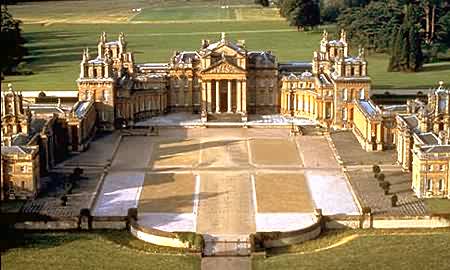
If I am recounting this old story, it is to explain the emotion which I felt when my wife and I visited Blenheim Palace a few days ago. After all those years of having BROM-4689 uselessly rattling around my brain, I could finally see a concrete output of at least one of these battles, the Battle of Blenheim.  For the Duke of Marlborough was given a modest manor and its grounds by a grateful Queen and a promise of funds from “the nation” (i.e., the taxpayer) to knock down the manor and build a grand new home and garden, worthy of the victor of the glorious Battle of Blenheim, rah-rah. In the event, the Duke and Duchess (because she was heavily involved) got little if any funds from the “grateful nation” and the Duke paid for most of the works from his own pocket. The story of the building’s construction is worthy of an opera, but I will skip over that to focus on the end result, here seen in all its glory from the air

image

image

image

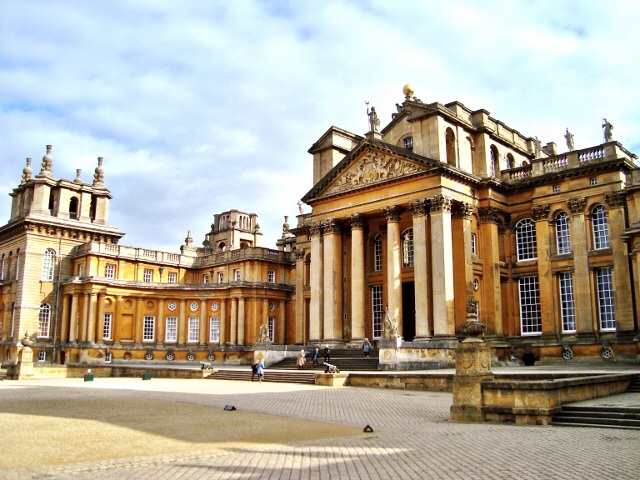
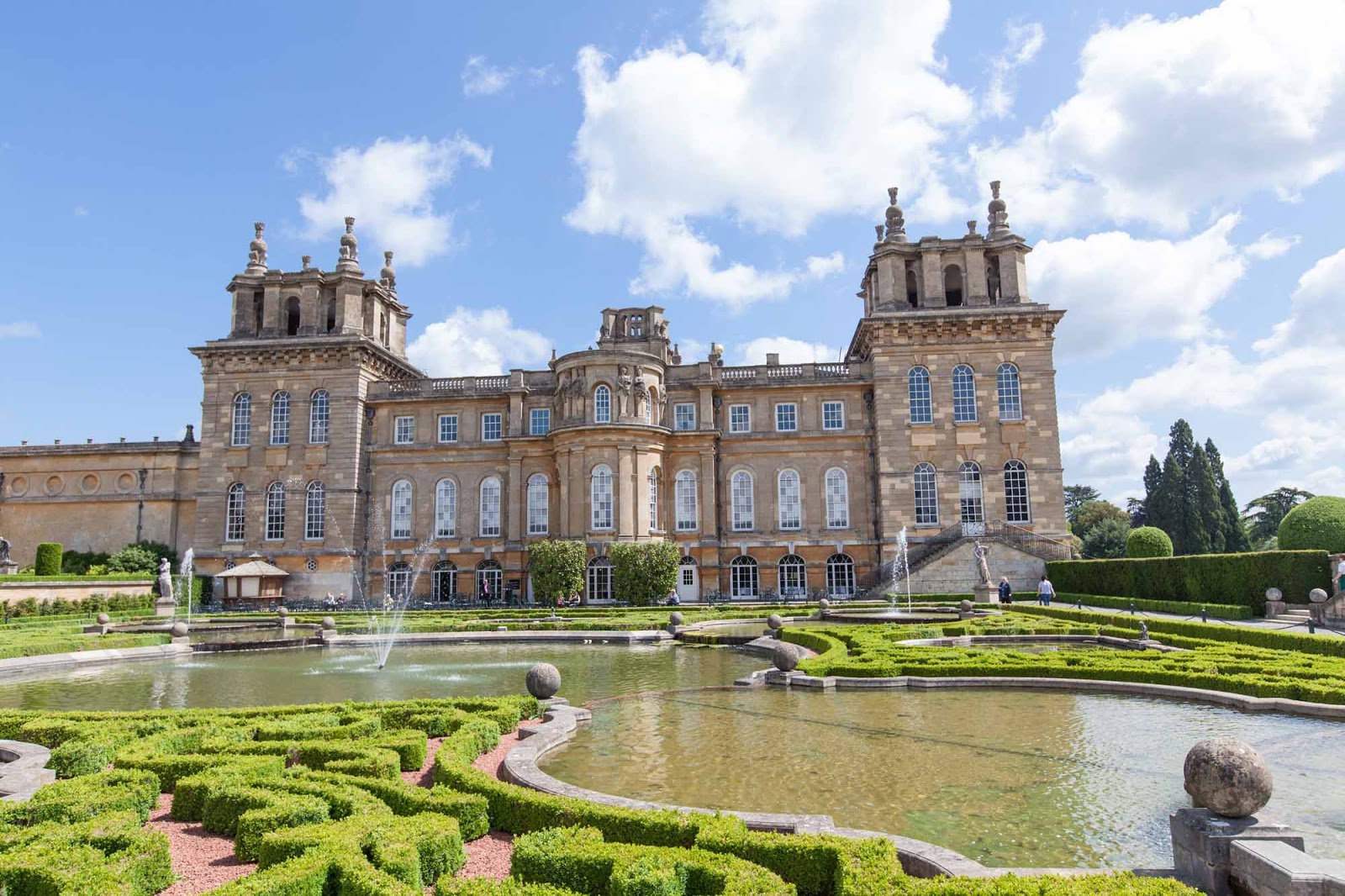
To be honest, I think it’s really only from the air that one can appreciate this ducal pile. My wife and I found that from ground level it’s all rather overpowering. Here’s a shot of the front taken by another visitor. Note the size of the persons compared to the building.

image
We visited the inside, looking respectfully at all the nice things displayed – the portraits of worthy grandees, the tapestries, the long library with its organ, the expensive baubles scattered over various surfaces – but all the time my wife and I kept saying to each other “how did the Dukes keep this place warm and lit?” The bills for the upkeep must have been staggering. And in fact the current Duke has had to do all sorts of things (add a little train, build a butterfly house and a maze) to attract the tourists and get their entry fee. And you can get married there – for a fee. Etc., etc.

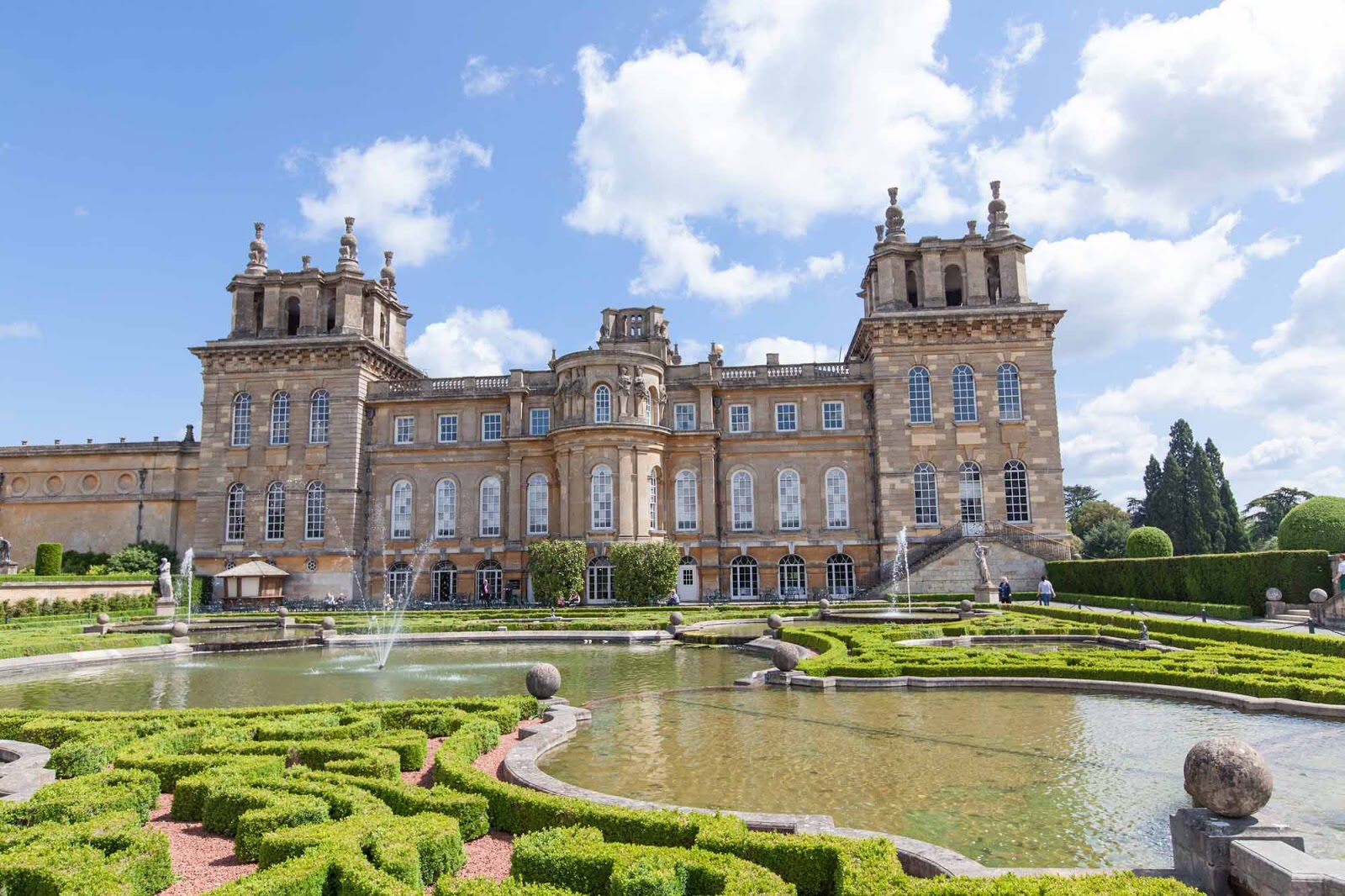
What really caught me was the garden. It would, of course. It was designed by Lancelot “Capability” Brown. I love his style, which is so very naturalistic. He creates these undulating fields of grass which sweep up to the house. He scatters clumps or belts of trees, or even individual trees, over these fields. He will often create lakes by invisibly damming small rivers or streams running through the property. His garden at Blenheim Palace has all of these. This is a modern photo

image

But I prefer this old painting

image

For me, Capability Brown’s gardens are the quintessence of the English garden, preferable by far to the strict and sterile geometry of a French garden, of which Blenheim Palace also has an example.

image

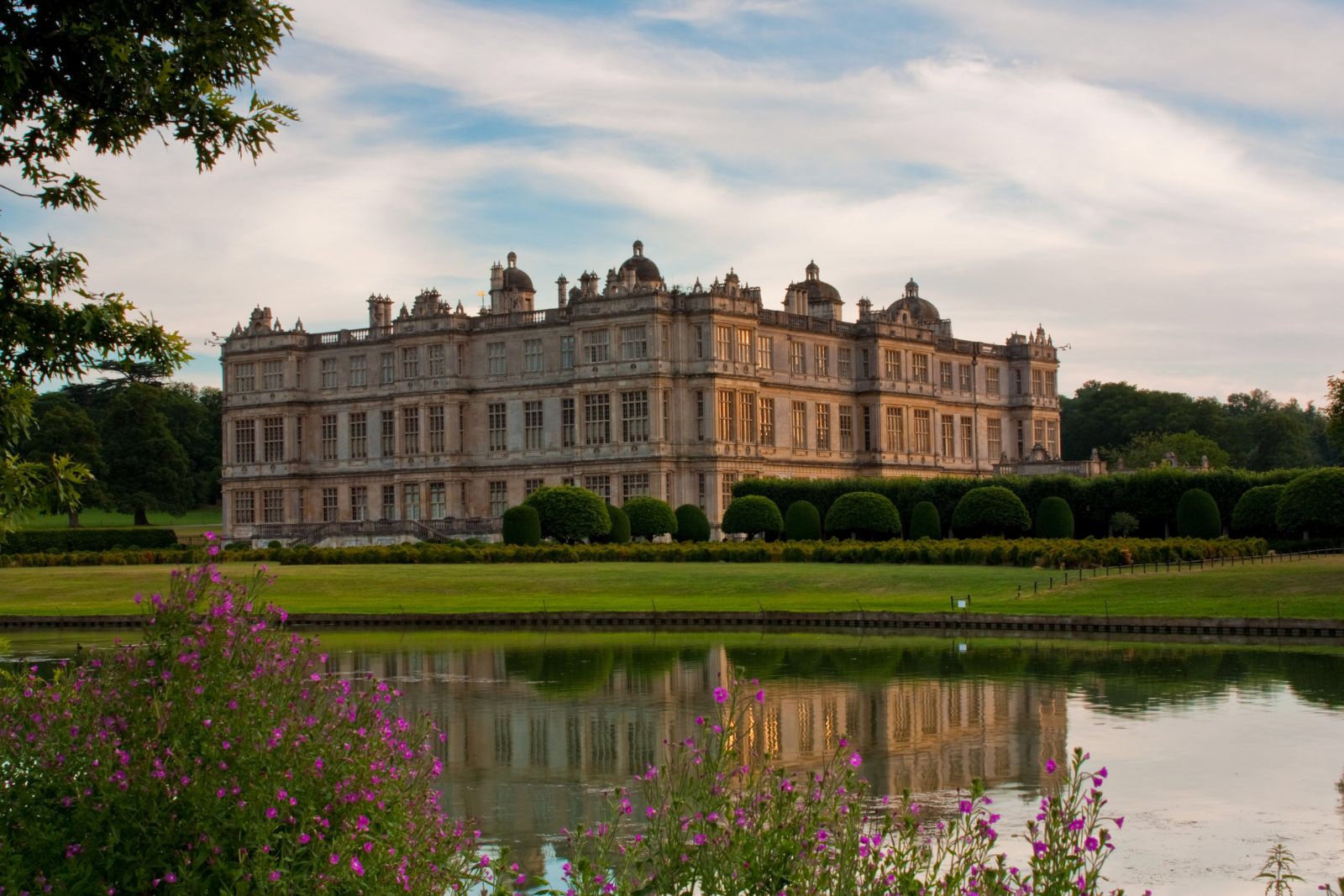
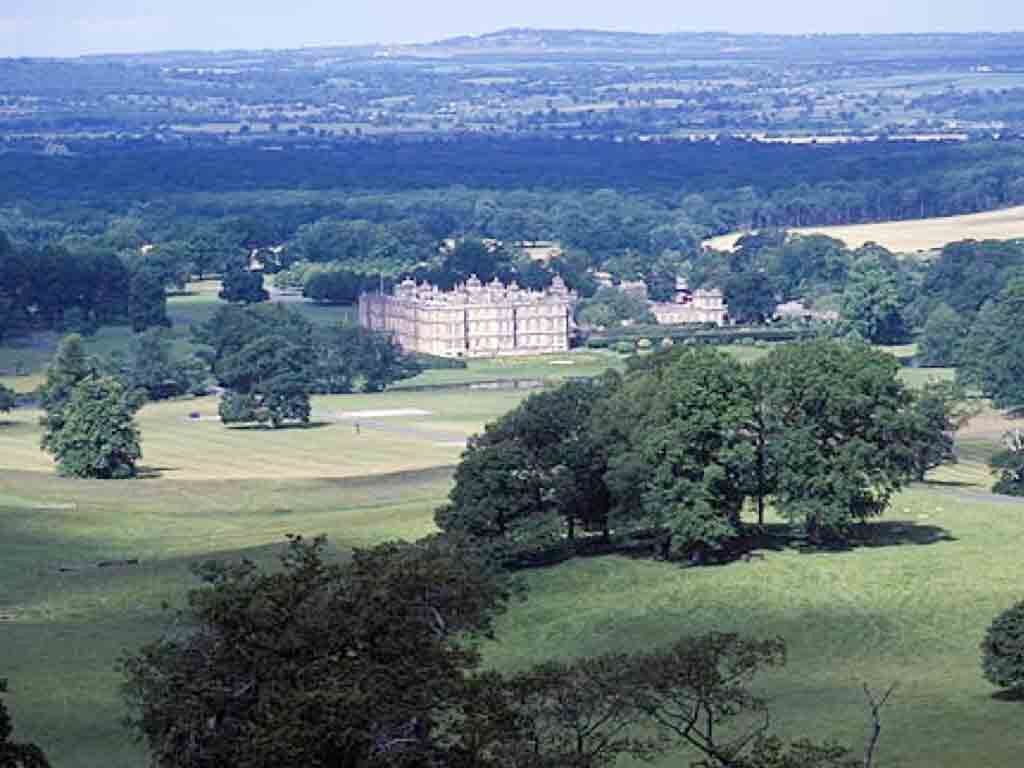
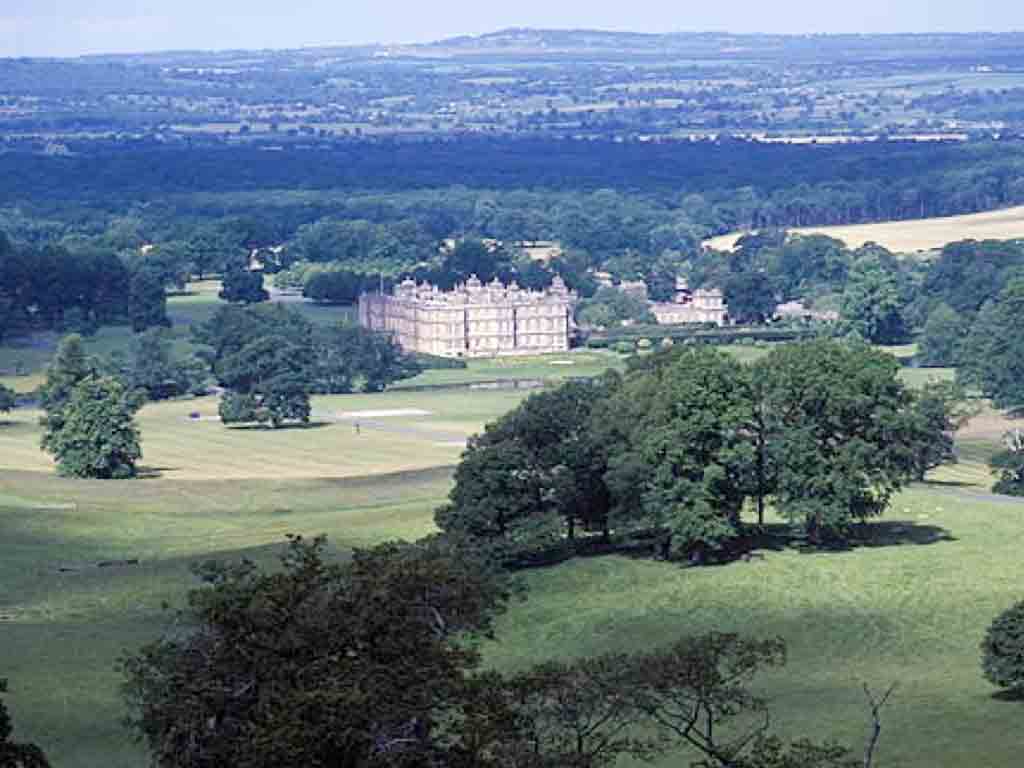
By one of those strange twists of Fate which one’s life is filled with, I had first come across Capability Brown at the same time that I was learning BROM-4689. My grandmother had come down for the weekend to visit me in my primary school and she took me to visit Longleat House, another of those stately homes which dot the English countryside, this time belonging to the Marquesses of Bath.

image

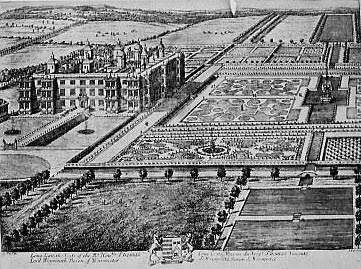
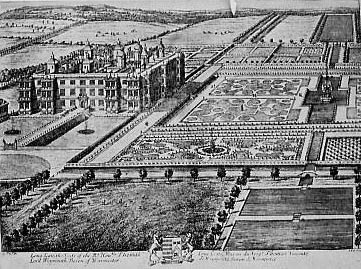
As required by the fashion of the times, Longleat had boasted of a very large, formal French garden

image

but luckily good sense had prevailed and the 1st Marquess of Bath (they had been mere Viscounts before that …) had hired Capability Brown to replace the formal gardens with one of his creations.

image

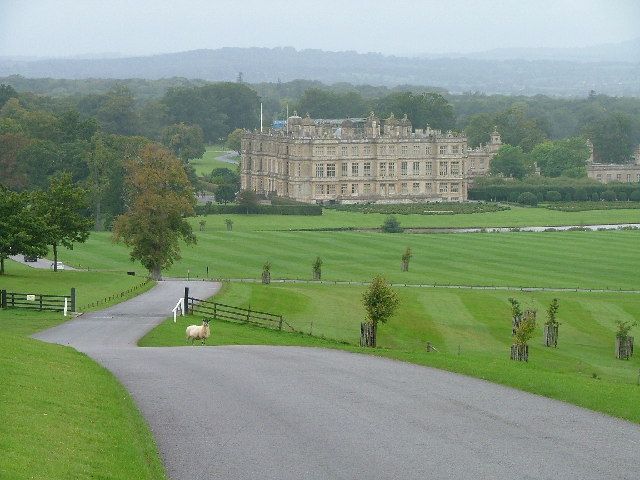
See how Brown’s work fits seamlessly into Britain’s natural landscape.

image

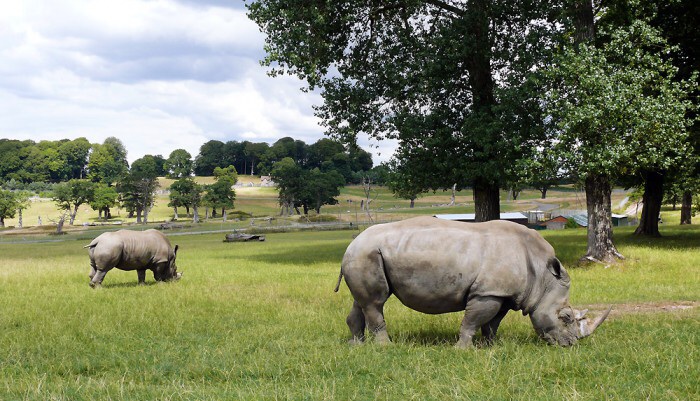
Of course, the Marquesses of Bath have been under the same financial pressure as the Dukes of Marlborough. At Longleat, the Marquesses have adopted the same kind of tourist attractions as the Dukes at Blenheim: little trains, mazes, weddings, and so on. But the Marquesses went one step further and created one of the first Safari Parks in the UK in the grounds of Longleat. So in Capability Brown’s landscape we now find lions, giraffes, zebras, and more.

image

How fallen are the mighty. But what to do, even Dukes and Marquesses (finally) have to make a living like everyone else.

___________________

Blenheim Palace aerial view-1: http://4.bp.blogspot.com/-khCnNCcHPyE/T9bWqchSzrI/AAAAAAABYSY/dPjnMkUU-ME/s1600/011_blenheim-palace_theredlist.jpg (in http://loveisspeed.blogspot.com/2012/06/blenheim-palace-england.html)
Blenheim Palace aerial view-2: http://s1.acorneplc.info/content/img/product/main/visit-to-blenheim-palace-31143824.jpg (in http://www.virginexperiencedays.co.uk/visit-to-blenheim-palace-with-a-deluxe-picnic-for-two)
Blenheim Palace aerial view-3: http://bestvaluetours.co.uk/images/products/gt-bpct-n/xl-p-233-blenheim-palace.jpg (in http://bestvaluetours.co.uk/search-the-cotswolds-and-bleheim-palace-day-tour-129)
Blenheim Palace front door: http://satnavandcider.files.wordpress.com/2012/05/blenheim-palace-front-8973-640×480.jpg (in http://satnavandcider.wordpress.com/2012/05/03/at-blenheim-palace-keep-off-the-gravel/)
Blenheim Palace-gardens-modern photo: https://www.english-heritage.org.uk/content/news/2011/images/blenheim-palace (in https://www.english-heritage.org.uk/about/news/exclusive-members-event-woodstock-literary-festival/)
Blenheim Palace-gardens-old painting: http://upload.wikimedia.org/wikipedia/commons/6/6a/Blenheim_PalaceDE.jpg (in http://en.wikipedia.org/wiki/Blenheim_Palace)
Blenheim Palace-formal gardens: http://3.bp.blogspot.com/-DNgdli09UZA/UQwuWAE-IaI/AAAAAAAAK-s/DfxInZN3z7s/s1600/photo+email.jpg (in http://www.weddingblogdesigner.com/2013/02/bleneim-palace_4.html)
Longleat House: http://www.chch.ox.ac.uk/sites/default/files/images/development/dev2011/longleat-house.jpg (in http://www.chch.ox.ac.uk/development/events/future/2005/7-july-longleat-house-visit)
Longleat old French gardens: http://upload.wikimedia.org/wikipedia/commons/e/e2/Longleat_by_Knyff_edited.JPG (in http://en.wikipedia.org/wiki/Longleat)
Longleat gardens: http://www.writework.com/uploads/3/39734/english-longleat-house-wiltshire-longleat-house-home-lord-ba.jpg (in http://www.writework.com/essay/ao1-investigating-business-actais-and-longleat-aims-and-ob)
Longleat aerial view: http://4.bp.blogspot.com/-MO9gG__FJ7U/T03YIfdx_kI/AAAAAAAAAQc/9U-JgcFxX6Y/s1600/Brown+-+Longleat.001.jpg (in http://www.gardenhistorymatters.com/2012/12/lancelot-brown-is-blogging.html)
Rhinos at Longleat: http://www.millfarmglamping.co.uk/wp-content/uploads/2012/09/longleat-700×401.jpg (in http://www.millfarmglamping.co.uk/in-this-area/longleat/)

BREAKING IN BOOTS ON THE YORKSHIRE MOORS

London, 7 May 2014

My wife and I were on Oxford Street yesterday, where she did one of her favorite things, namely she entered a shoe shop to inspect its contents. In this case, the inspection led to her purchasing two pairs of moccasins. Flushed with this success, she emerged from the shop wearing one of her purchases. After a few hours of further walking around London, the inevitable happened. My wife’s face started taking on a strained look, and she eventually confessed to sore feet. The new shoes, she announced, needed breaking in. I then suggested, in a moment of flippancy, that she should find someone to break in her shoes for her. She waved this off as the flippant suggestion that it was.

And yet … it was not so foolish a suggestion. I, for one, had done exactly this at school. I had broken in a pair of shoes for someone else. Boots, actually.

I should explain.

It was June 1972. My classmates and I had just finished taking our A-levels and we were about to leave school for good. A bunch of us got together and decided to celebrate this rite of passage by crossing the Yorkshire moors (which lay just to the north of our school) from one side to the other, all in one go. This may not sound like much, but actually it was a bit of bravado. We’re talking of a distance of some 60 kilometers, so to do it in one go meant starting at 3 in the morning with the hope of finishing in the late afternoon. I realize now that what we did was the Lyke Wake Walk or some variant of it. This walk runs from the village of Osmotherley, which lies on the western edges of the moors, all the way to the sea which laps at the moors’ eastern border. We started feverish preparations, which brings us to the topic of boots and their breaking-in. I suddenly realized that I had no adequate footgear. Gym shoes were far too light (the heavy running shoes of today did not yet exist), but I didn’t want to buy a pair of walking boots just for this. At the last moment, the younger brother of one of the walking team offered to lend me his brand new boots. By using them I would be doing him the favour of breaking them in. Damned good deal, I thought.

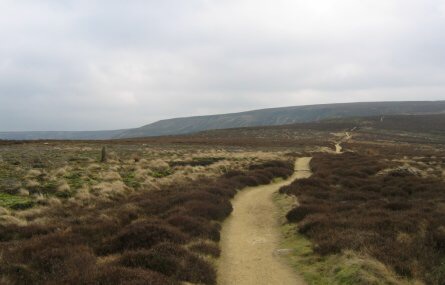
So at 3 am of a Saturday morning, we were dropped off from an old army truck, me in my brand-new borrowed boots, with the escarpment of the moors looming up in front of us in the darkness. Feeling a bit like a bunch of commandos on a special mission to knock out the enemy’s gun positions, we quietly filed up the path which carried us to the top of the escarpment and then started walking across the heather. And we walked.

The sky slowly lightened up until we could see around us. It was really very beautiful, bleak perhaps, certainly remote, but beautiful.

image image

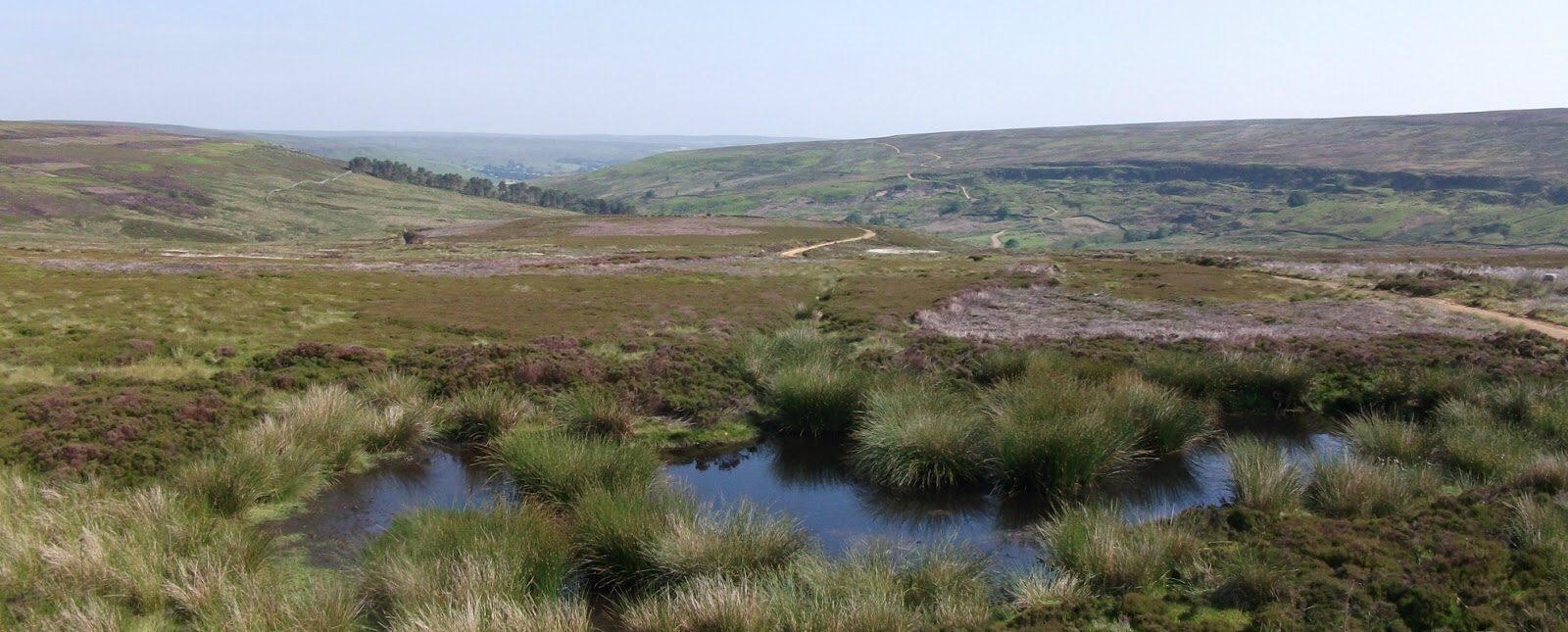
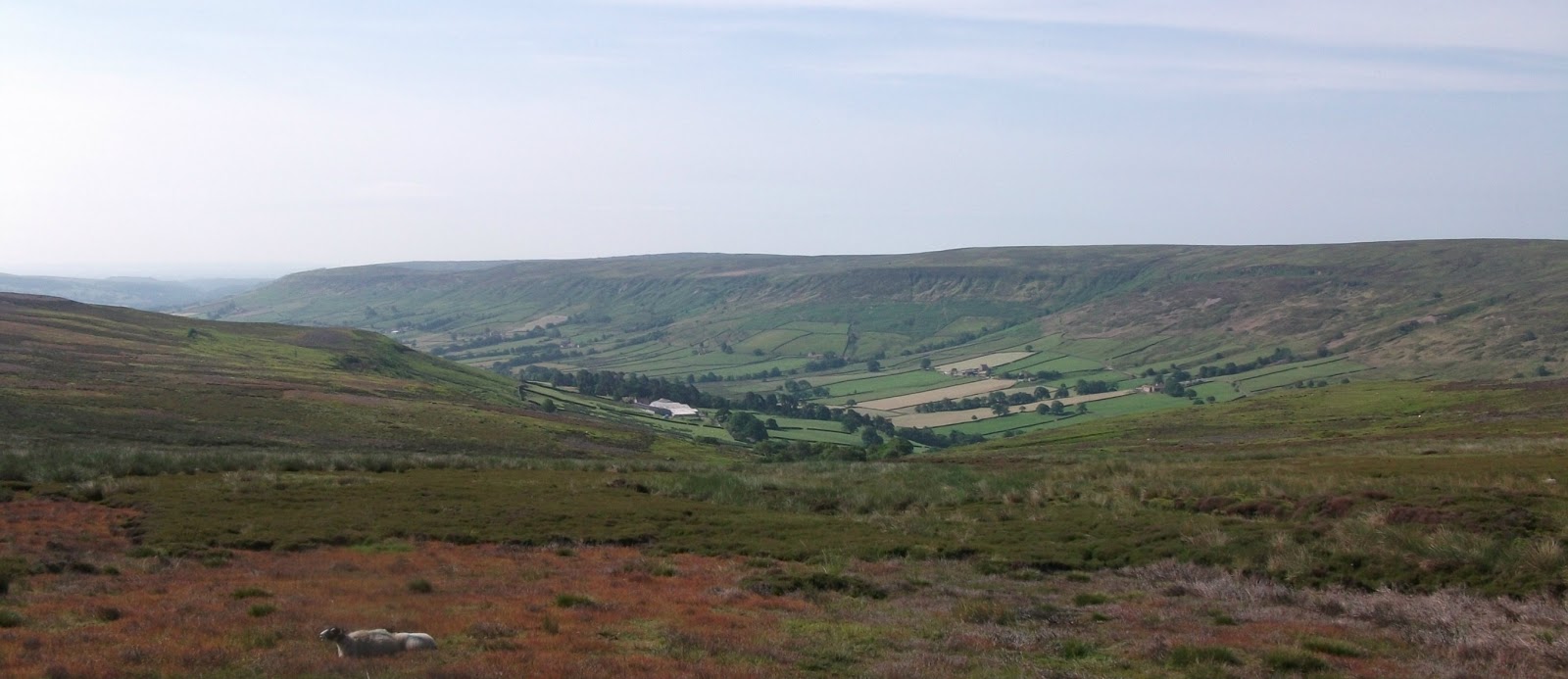
We stopped for breakfast, munching on some sandwiches we had brought with us. A squall swept through, luckily the only one of the day. After which we started walking again, with stunning views around us

image image

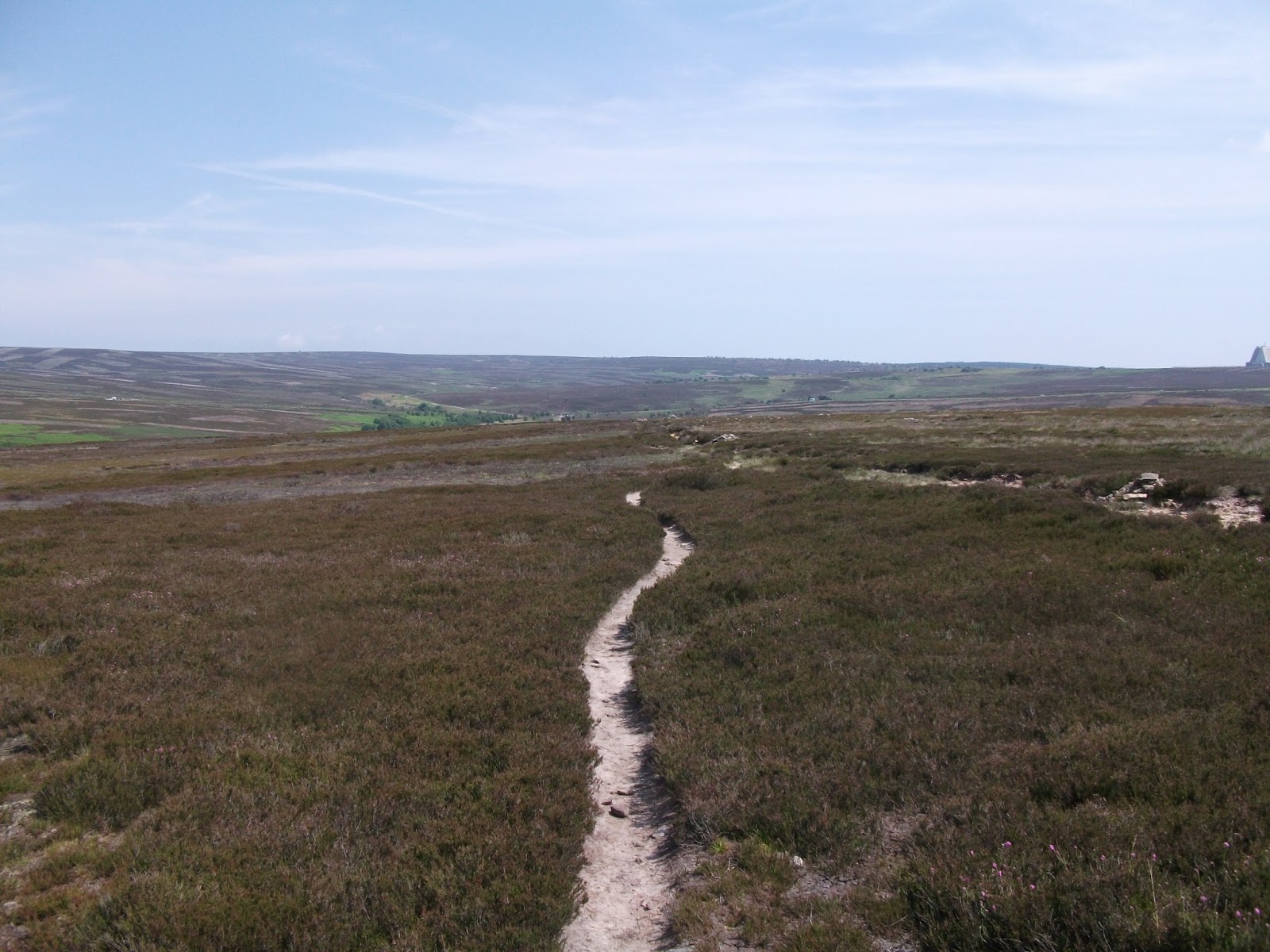
And we walked. And walked. The sun in the meantime slowly climbed to its zenith, the clouds clearing away and leaving a beautiful sunny day in their wake.

image

At lunchtime, we reached a road on which the old army truck was parked, waiting for us. As we each trudged in, we clustered around the truck and took the food and drink being handed out. We sank down on the heather, glad to have an excuse to rest our aching legs a while. Eventually, though, we had to lever ourselves back on to our feet and walk on. And so we walked. And walked.

image

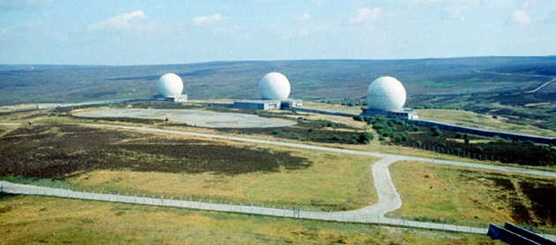
An hour or so later we reached Fylingdales, those strange “golf balls” in the middle of the moors, which are actually part of an RAF radar station.

image

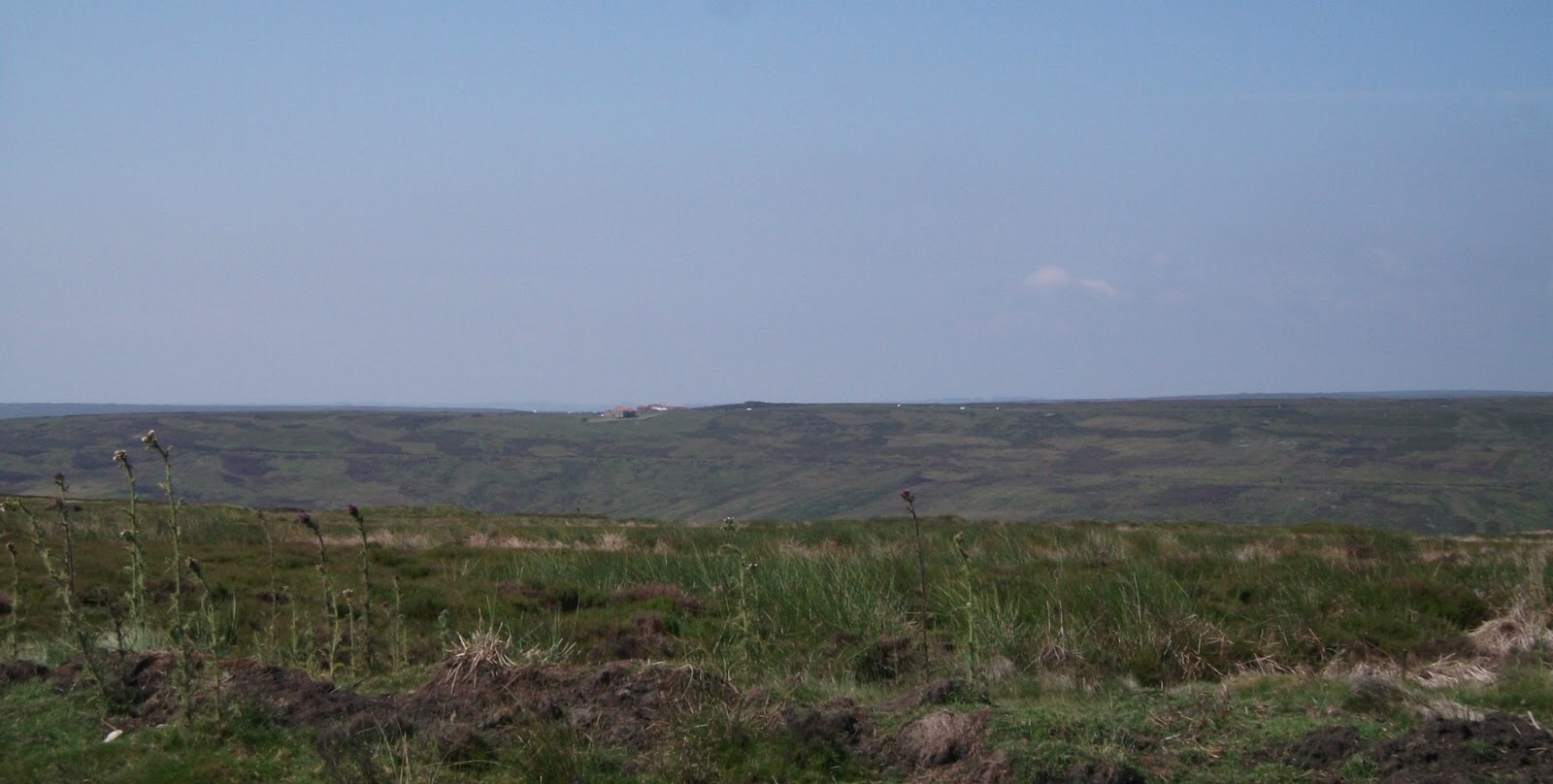
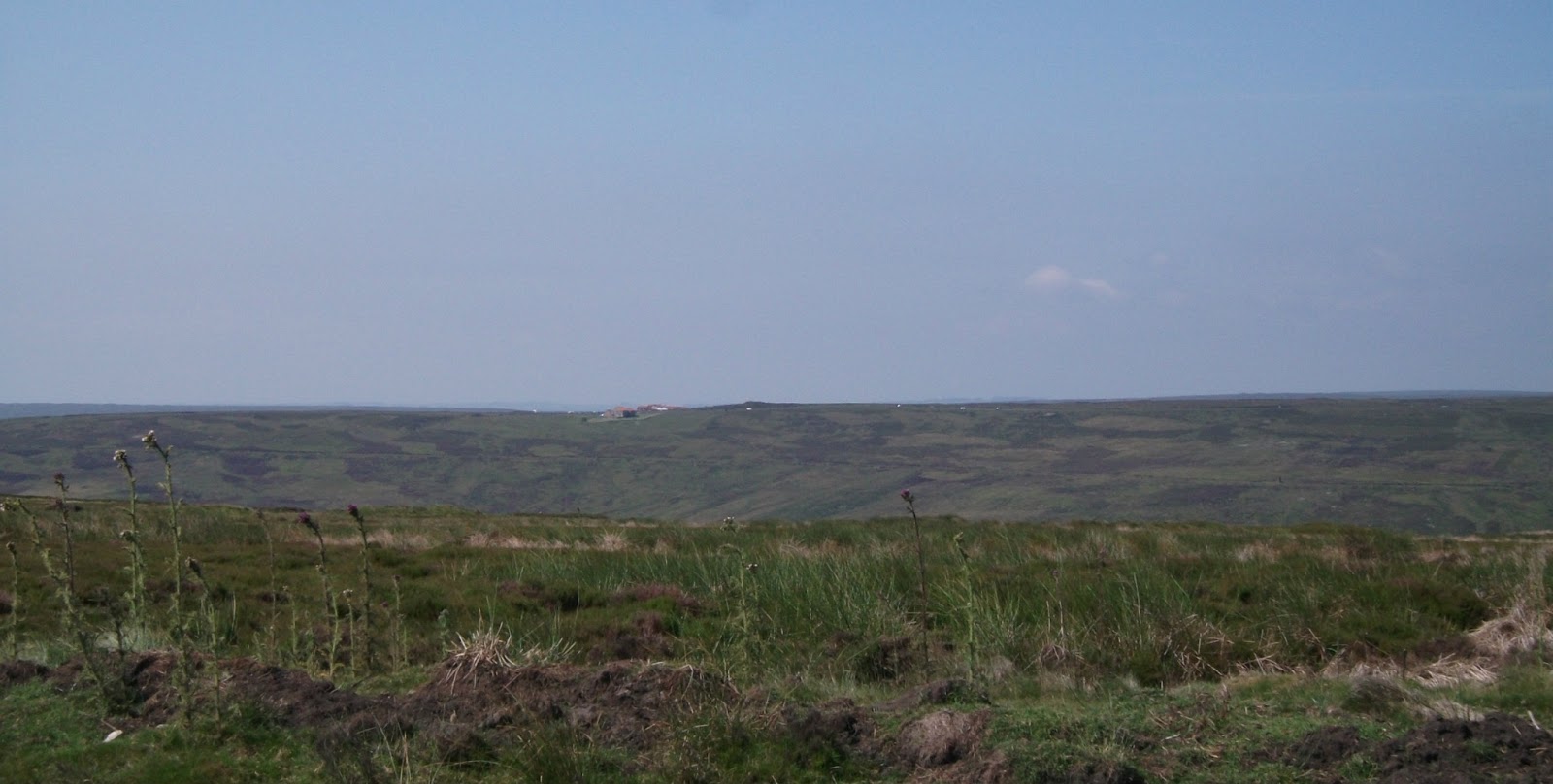
We stopped a moment, with the excuse to admire the balls but really just to be able to stop walking for a bit. But we soon had to push on. The earlier joshing and joking had died away hours ago. We now just walked, oblivious to the beauty around us

image

By this point, the new, being broken-in boots were hurting me so much that I took them off and walked barefoot. How much further, dear God? How much further? My friends began to stumble past me as I shuffled on slower and slower, and they weaved off unsteadily ahead of me through the heather. At last, at last, I crested a rise and there, down on the road, was the old army truck. Thank God, thank God, and thank God!! Still after all these years, I can remember with perfect clarity the exhausted joy of sighting that truck. I sank down in the heather beside it and promptly fell asleep.

And the next day, after I had crawled stiffly out of bed and had had some breakfast, I solemnly handed over the boots to their owner, who was very pleased by the impeccably thorough breaking-in I had given them.

So all of this to say that I’m sure my wife could find a penniless student who would break in her shoes for her, for a price.

_________________

http://www.sub3000.com/balbum/England/37/images/UraCW.jpg [in http://www.sub3000.com/balbum/England/37/Urra.html%5D
http://www.sub3000.com/balbum/England/37/images/uraSummit.jpg [in http://www.sub3000.com/balbum/England/37/Urra.html%5D
http://www.walterthompson.co.uk/images/uploads/lykewake.jpg [in http://www.walterthompson.co.uk/news/article/lyke_wake_walk_2011%5D
http://4.bp.blogspot.com/-nJnaXzkEn04/Uek1cHLm7hI/AAAAAAAACT8/TDpegiXR8F4/s1600/Lyke+Wake+Race+2013+016+small+farndale.jpg [in http://mike-viewfromtherear.blogspot.com/2013/07/lyke-wake-race-13th-july-2013.html%5D
http://4.bp.blogspot.com/-nWhv6e9B5h0/Uek1rONGZ3I/AAAAAAAACUE/yrAlHv5C59I/s1600/Lyke+Wake+Race+2013+017+small+esk+valley+walk.jpg [in http://mike-viewfromtherear.blogspot.com/2013/07/lyke-wake-race-13th-july-2013.html%5D
http://2.bp.blogspot.com/-ok8cGHAg8x4/Ue1JtqkDs5I/AAAAAAAACWw/1XzKPvV8r5s/s1600/Lyke+Wake+Race+2013+037.jpg [in http://mike-viewfromtherear.blogspot.com/2013/07/lyke-wake-race-13th-july-2013.html%5D
http://www.raf.mod.uk/raffylingdales/rafcms/mediafiles/98EEDACF_DEA3_0ABB_4AF9D7034C1B3316.jpg [in http://www.raf.mod.uk/raffylingdales/aboutus/history.cfm%5D
http://2.bp.blogspot.com/-MEwBIIEDv60/Uek4z8Dc7YI/AAAAAAAACUk/2xdScmj96ao/s1600/Lyke+Wake+Race+2013+022+small+lion.jpg [in http://mike-viewfromtherear.blogspot.com/2013/07/lyke-wake-race-13th-july-2013.html%5D

PEKING DUCK LIKE OPIUM

Beijing, 30 April 2014

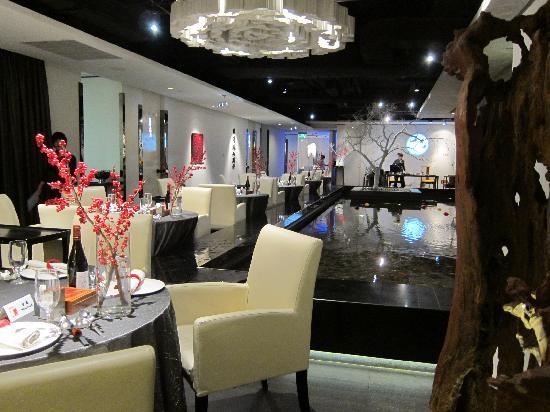
One of the first things my wife and I did when we arrived in Beijing was to eat Peking Duck. Well, not quite the first thing. We waited until the children came a few months later to visit us at Christmas before trying this Beijing delicacy. It was worth the wait. We went to the Dadong restaurant, which in the meantime has grown exponentially into a chain of really quite swanky restaurants scattered throughout the city.

dadong restaurant

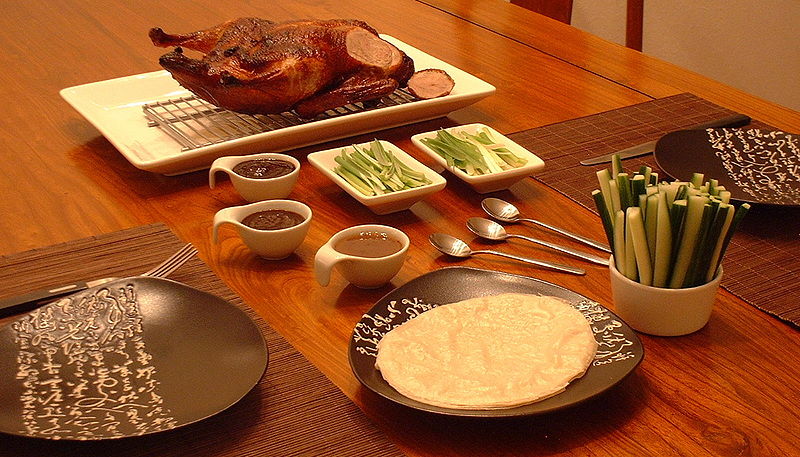
For readers who have not tried this dish, it presents itself so:

Peking Duck complete dish-3

As you can see, we don’t just have duck. Many other ingredients are part of the package. Eating Peking Duck requires one to follow a certain, very specific procedure, to bring together all these ingredients in the right order. Allow me to walk readers through the Standard Operating Procedure (SOP) for eating Peking Duck.

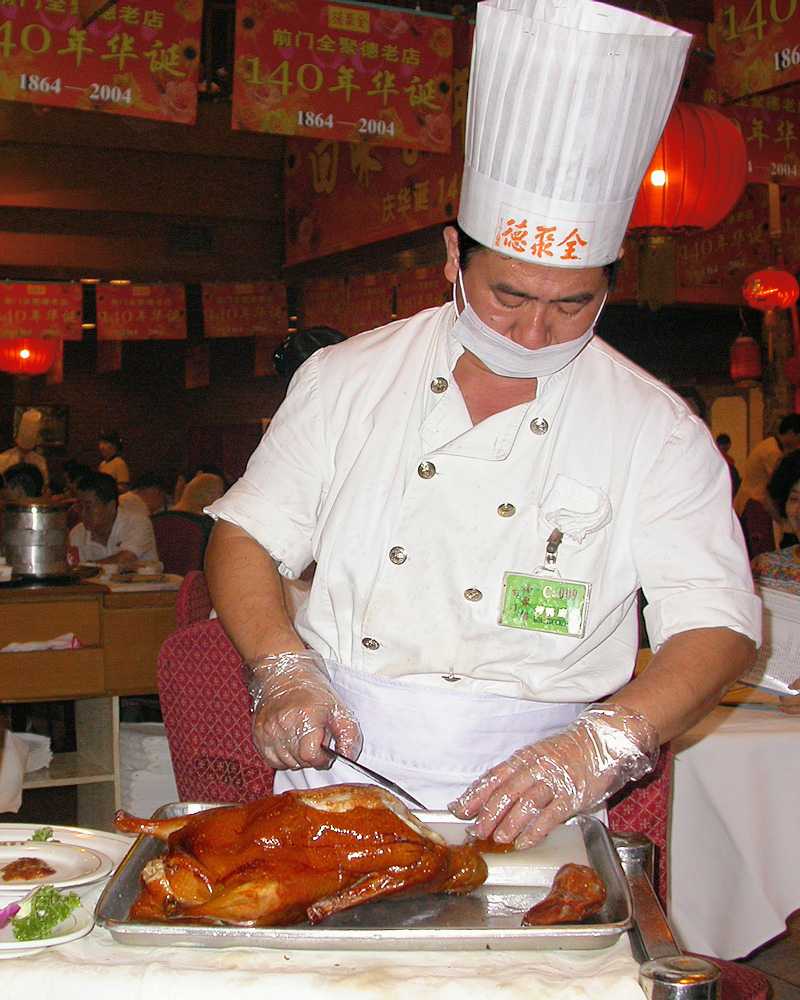
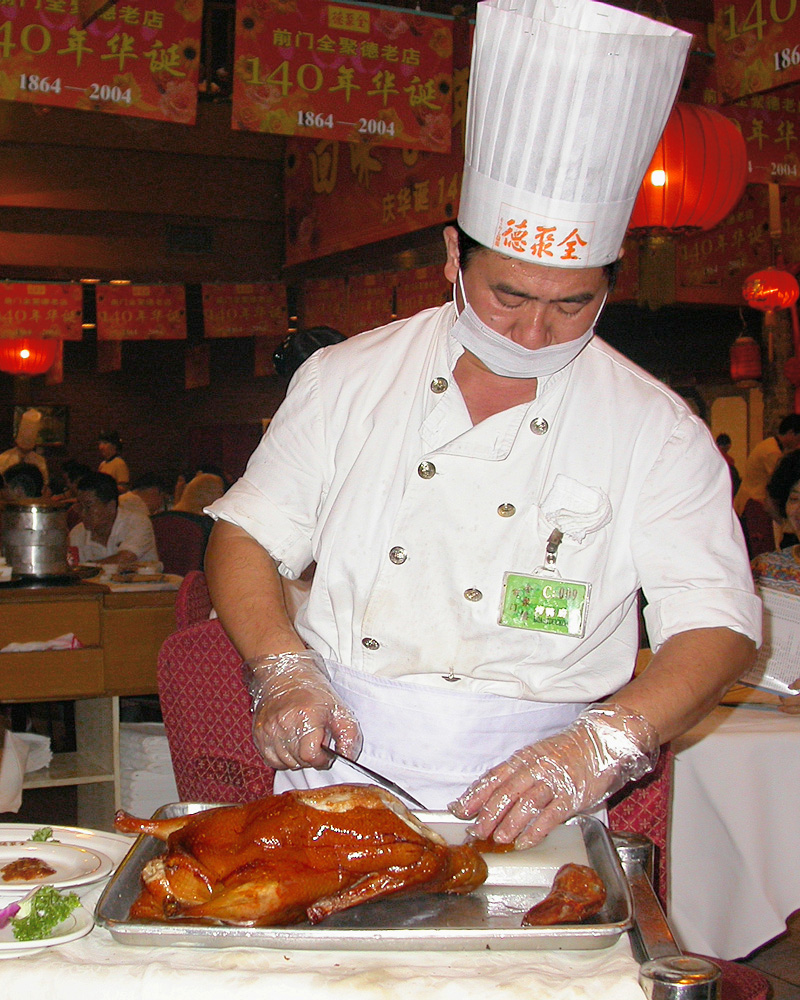
1. Look on respectfully as a chef comes to your table and slices up the bird in front of you.

cook slicing the duck

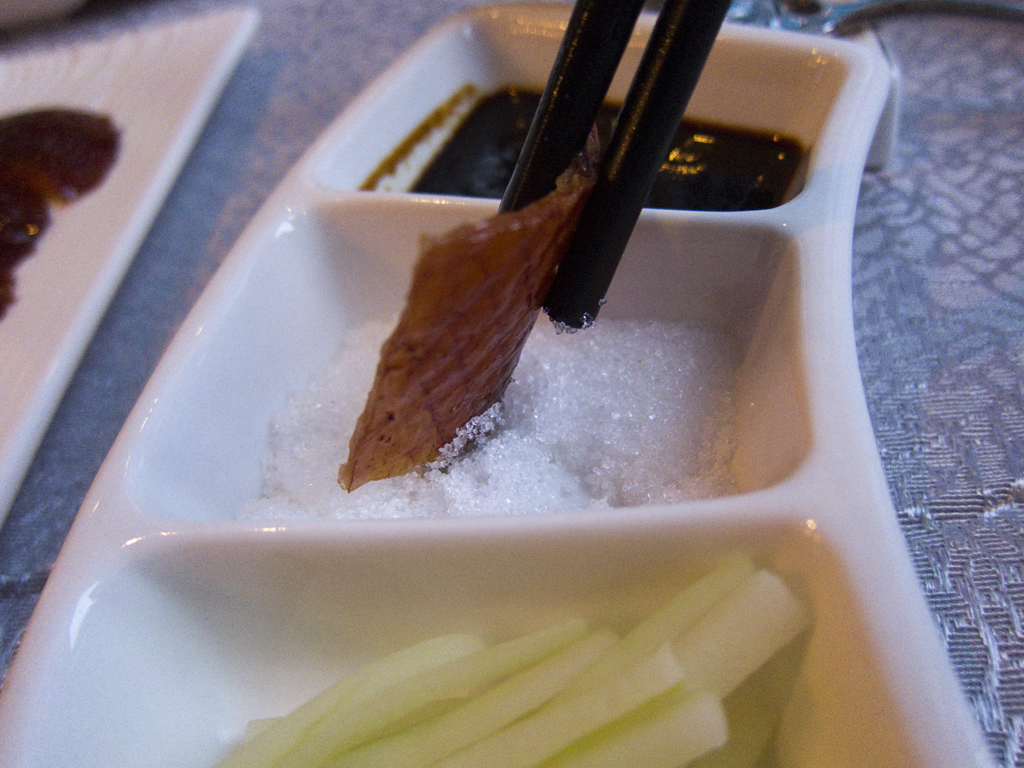
2. Start with the crispy skin. Take a piece or two, dip into sugar, and eat.

dipping skin in sugar

Personally, I find that one piece is enough for me; it’s just too fatty.

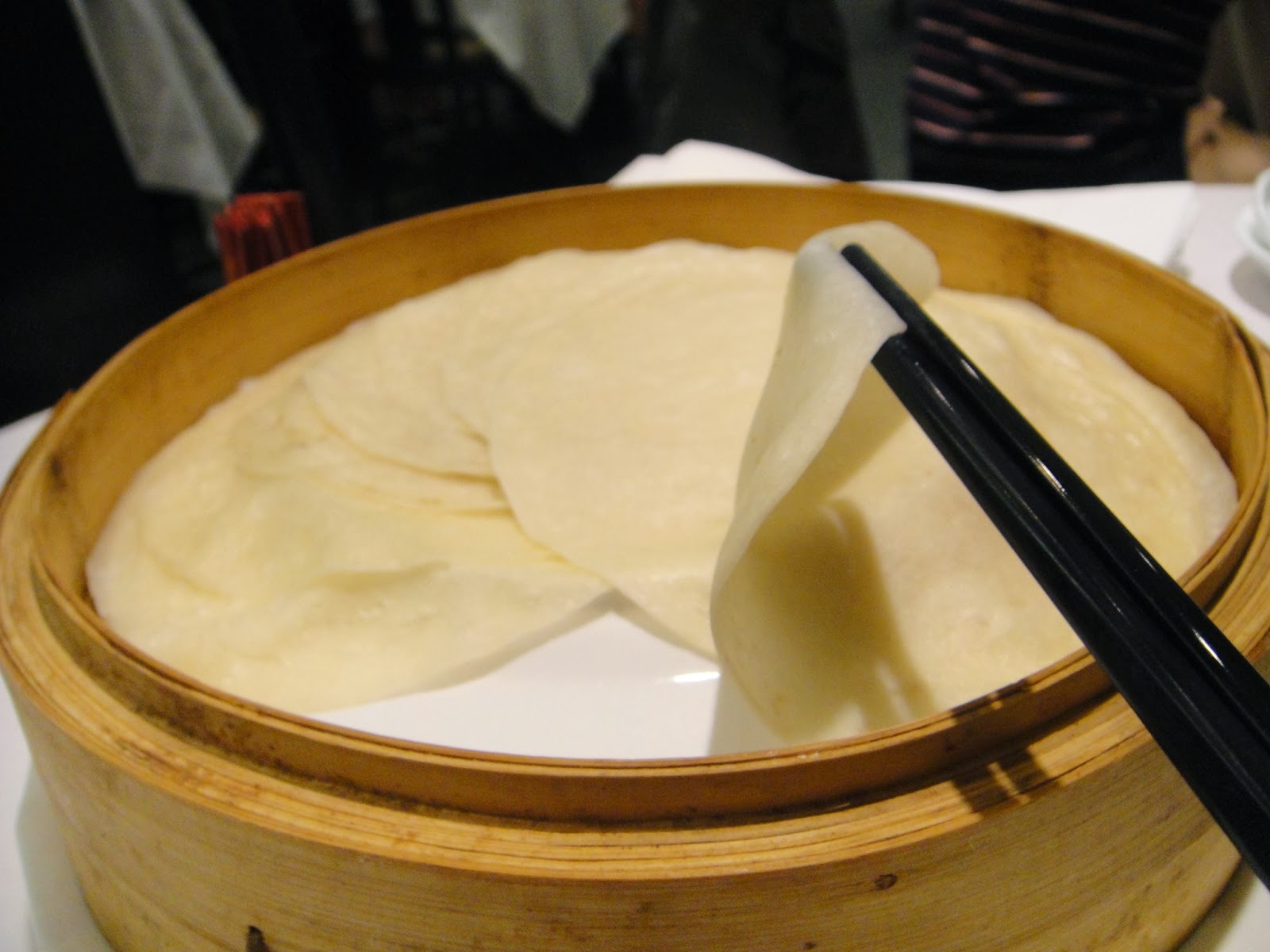
3. Start in on the duck meat proper. Pick up a wafer-thin circular crepe. For neophytes in the use of chopsticks, this can be an immense challenge.
picking up crepes
4. Use the chopsticks to smear dollops of the various sauces onto the bread wrap. The usual menu of sauces include sweet bean sauce or hoisin sauce, which is a thick, pungent sauce usually including soy, red chilies, garlic, vinegar and sugar.
hoisin sauce
5. Place the slices of roast duck on the bed of sauce. A mix of crackling skin and meat is the optimal choice. More sauce can be smeared on the meat if so desired. Place on top of the duck a couple of thinly sliced scallions.

duck and spring onions on crepe

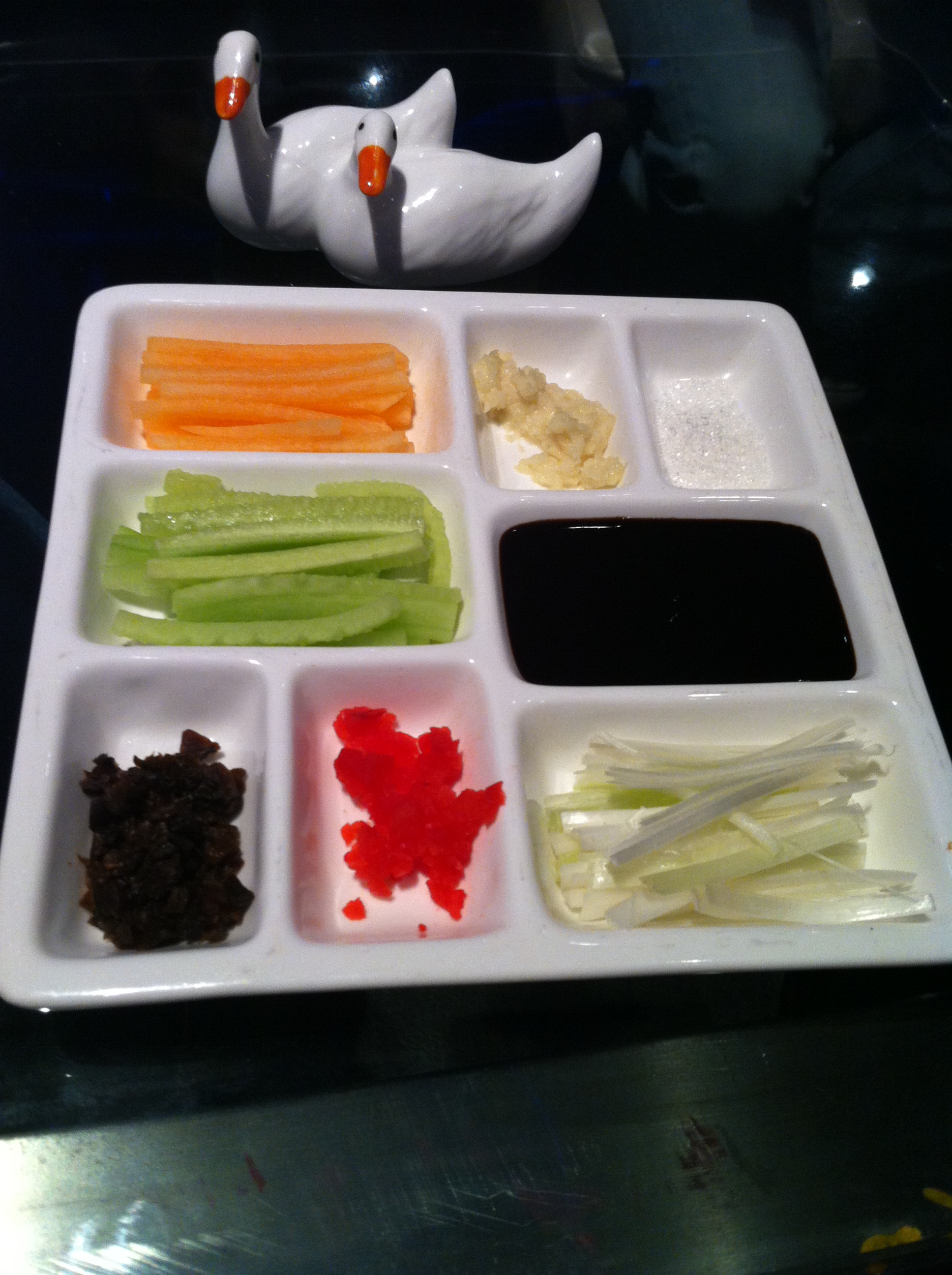
Various other ingredients can also be added: thinly chopped cucumber is popular, at Dadon they also offer thinly chopped melon and some other stuff whose identity is a mystery.

beijing duck ancillaries 002
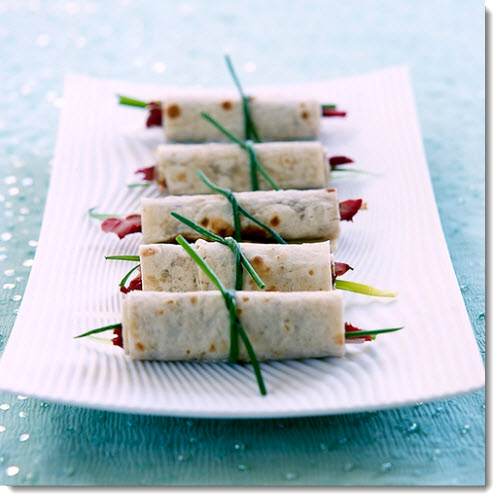
6. Roll the whole into a tubular sandwich.

rolled up crepes

These look far fancier than the ones I produce. It’s rather like comparing the product of someone who has spent a life rolling his own cigarettes to that of the fellow who is just starting out in this bad habit.

7. Eat, making loud noises of appreciation if you have been invited by Chinese hosts, who are always glad to know that you’re liking it.

8. Repeat from step 3 (or step 2 if you have a mind to), making small variations if you wish, until all the duck has been consumed.

9. As a finale, slurp down the duck soup which they will bring, made with all the leftovers of the carved ducks.

duck soup

This must really be one of the most Chinese of dishes. Some even call it China’s national dish (I’m not sure what the Cantonese think of that, but we’ll let it pass).

So it’s a bit of a shock to know that the ducks consumed in China aren’t all that Chinese.

I was informed of this fact last week during a talk in Shanghai by a very respected Academician, who revealed to the stunned audience the whole sorry story.

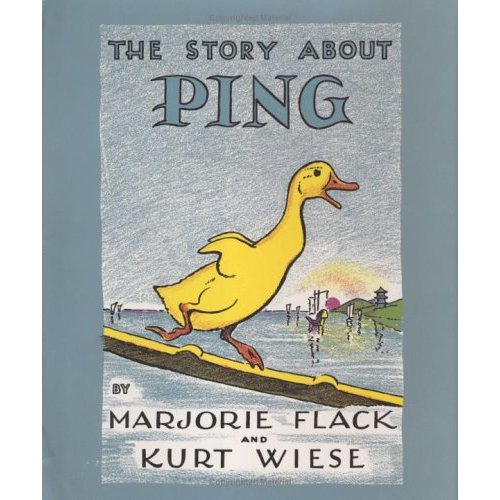
There was a time, before 1873, when the duck was Chinese. It had evolved and prospered on the Grand Canal, where it had grown fat on the grain that fell off the barges going north towards the capital. The Chinese, never ones to leave anything go to waste, had recycled this lost grain by domesticating the ducks and eating them. In Beijing, the SOP described above evolved as the way to consume the ducks. This culture of duck rearing was beautifully captured in the children’s book The Story about Ping, which I loved to read to my children (although I don’t know if they loved hearing me read it …)

the-story-about-ping

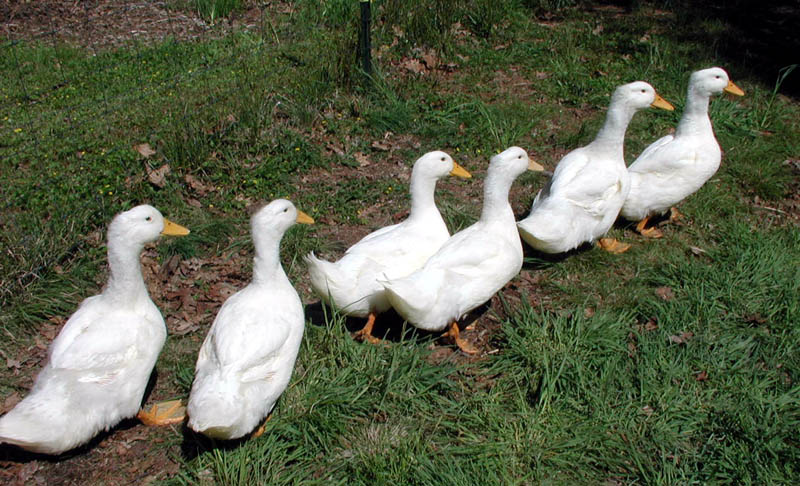
Then, in 1873, 25 of these Pekin ducks (note: no final g on Pekin) were exported to Long Island – most of them didn’t make it, eaten no doubt by the hungry voyagers on the same ship as them. The few that made it through went on to become the progenitors of the most successful domesticated breed of duck in Europe and the US. Those nice white ducks waddling around the farmyards of my youth were in all probability children of Chinese immigrants.

OLYMPUS DIGITAL CAMERA

Except that European and American farmers and agronomists were not content with just taking this Chinese duck and breeding it. They started playing with its DNA through selective breeding to make bigger, fatter, and I know not what.

In the meantime, the Chinese had slipped into anarchy, had been eviscerated by the war imposed on them by the Japanese, and – after the Revolution and the creation of the new China – had gone through the disasters of the Great Leap Forward and Cultural Revolution. So by the time the 1970s rolled in, the original Pekin Duck and its rearing were in as sorry a state as the rest of the country.

Well, the economy picked up and so did the Chinese appetite for Peking Duck. But for some reason, national production remained stagnant, or at least didn’t grow as fast. The result was that China, the biggest exporting country in the world, began to import the Pekin Ducks to turn into Peking Ducks. And began to import them in vast quantities. According to the Respected Academician in Shanghai, 70% of the Peking Ducks which are consumed in China were born and bred … in the UK. In fact, for the most part they come from one farm in Lincolnshire, the Cherry Valley Farm.

Supra

Unbelievable. It’s the opium wars all over again, except that this time the UK is flooding China with Pekin Ducks …

______________________

Dadong restaurant: http://media-cdn.tripadvisor.com/media/photo-s/01/e4/55/6e/beautiful-room.jpg [in http://www.tripadvisor.com/members-citypage/msyolee/g294212%5D
Peking duck-complete dish: http://img.cits.net/images/2011/9/27/151515157efde4e3-d.jpg [in http://www.cits.net/china-guide/china-traditions/peking-roast-duck.html%5D
Cook slicing the duck: http://upload.wikimedia.org/wikipedia/commons/e/e5/Quanjude_roastduck.JPG [in http://en.wikipedia.org/wiki/Peking_duck%5D
Dipping skin in sugar: [in http://theavidphotographer.wordpress.com/tag/paradise-pavilion/%5D
Picking up crepes: http://2.bp.blogspot.com/-T1E6blAnjAY/Up5-R7KL_bI/AAAAAAAAAtw/J3kRodTOSdc/s1600/DSC05471.JPG [in http://missvancouverpiggy.blogspot.com/2013/12/red-star-seafood-vancouver-location.html%5D
Hoisin sauce: http://www.seriouseats.com/images/2012/01/20120116-188016-hoisin-sauce-small.jpg [in http://www.seriouseats.com/2012/01/sauced-hoisin-sauce.html%5D
Duck and spring onions on crepe: http://finedininglovers.cdn.crosscast-system.com/BlogPost/l_1859_pancake-duck-00244258-CUT1.jpg [in http://www.finedininglovers.com/recipes/main-course/peking-duck-recipe-pancakes/%5D
Peking duck ancillaries: our photo
Rolled up crepes: http://www.frugal-cafe.com/public_html/frugal-blog/frugal-cafe-blogzone/wp-content/uploads/2011/01/peking-duck-pancake-rolls-loua-flickr.jpg [in http://www.frugal-cafe.com/public_html/frugal-blog/frugal-cafe-blogzone/2011/01/28/fab-food-friday-fotos-chinese-style-stewed-meatballs-easy-tartlets-twinkie%5D
Duck soup: http://chompchowchew.typepad.com/.a/6a01156f88f5ce970b015431e280cc970c-800wi [in http://chompchowchew.typepad.com/blog/2011/04/peking-duck-house-nyc.html%5D
The story about Ping: http://laughingstars66.files.wordpress.com/2010/05/the-story-about-ping.jpg [in http://www.momto3feistykids.com/2010/05/rowing-story-about-ping.html%5D
Pekin ducks: http://www.rocketroberts.com/farm/images/ducks_in_row.jpg [in http://www.rocketroberts.com/farm/farm.htm%5D
Cherry Hill farm-1: http://upload.wikimedia.org/wikipedia/commons/7/7b/Cherry_Valley_-_geograph.org.uk_-_373257.jpg [in http://commons.wikimedia.org/wiki/File:Cherry_Valley_-_geograph.org.uk_-_373257.jpg%5D

PAULOWNIA BY THE BARRACKS

Beijing, 19 April 2014

When my wife and I first arrived here, we lived in an apartment on the 31st floor of a high-rise. We soon noticed that we could hear regular shouting somewhere in the distance. We consulted with each other. What could we be hearing? Initially, I thought we were witnessing a spontaneous popular demonstration, and I scanned the horizon for signs of smoke, tear gas, armoured police, or other evidence of mayhem. But there was none, and no news on BBC or CNN to this effect. And the shouting was coming regularly, a couple of times a day. My wife then suggested that there must be a stadium somewhere around us and what we were hearing were the fans cheering on their team. But upon further investigation we concluded that the closest stadium was too far away for us to be hearing the shouting. And anyway, as I said, the shouting was quite regular, not just at the weekends or in the evening, which is what you might expect if a stadium was the source of the shouting.

We eventually solved the mystery. But before I tell you what it was all about, I need to take a step back and explain one thing. All of the embassies around here have guards, young lads who from the look of them were probably planting rice not that long ago. Here’s a couple standing tall and proud in front of the UK embassy

guards at UK embassy

Something you quickly learn to do if you live around the embassies is to get out of the way when the change of the guard is taking place. Several times a day you will see a platoon of guards marching along the pavements

guards marching along the pavement

with individual guards peeling off when they reach their assigned embassy. Nothing stops them, not even the traffic. One of the lads will march off into the road and stop the traffic, and the platoon marches over, looking neither left nor right.

guards crossing the road 002

Of course, since, as we all know, every action has an equal and opposite reaction (Newton’s third law), it comes as no surprise that soon after a platoon has marched in one direction, a platoon comes marching back in the opposite direction, consisting of the lads who have been relieved.

And where do they march to? The answer to this question brings us back to our mystery shouting. They are marching back to their barracks. We discovered that we had a barracks discretely tucked away near our apartment. And the noise we were hearing was the lads being led through some sort of periodic cheering exercise, no doubt to build up their soldierly virtues. What do they shout, I wonder? “Death to the capitalist pigs”? “Long live the Politburo”? “Beijing-3, Shanghai-0”? Whatever it is, their lusty voices floated up to us loud and clear on the 31st floor.

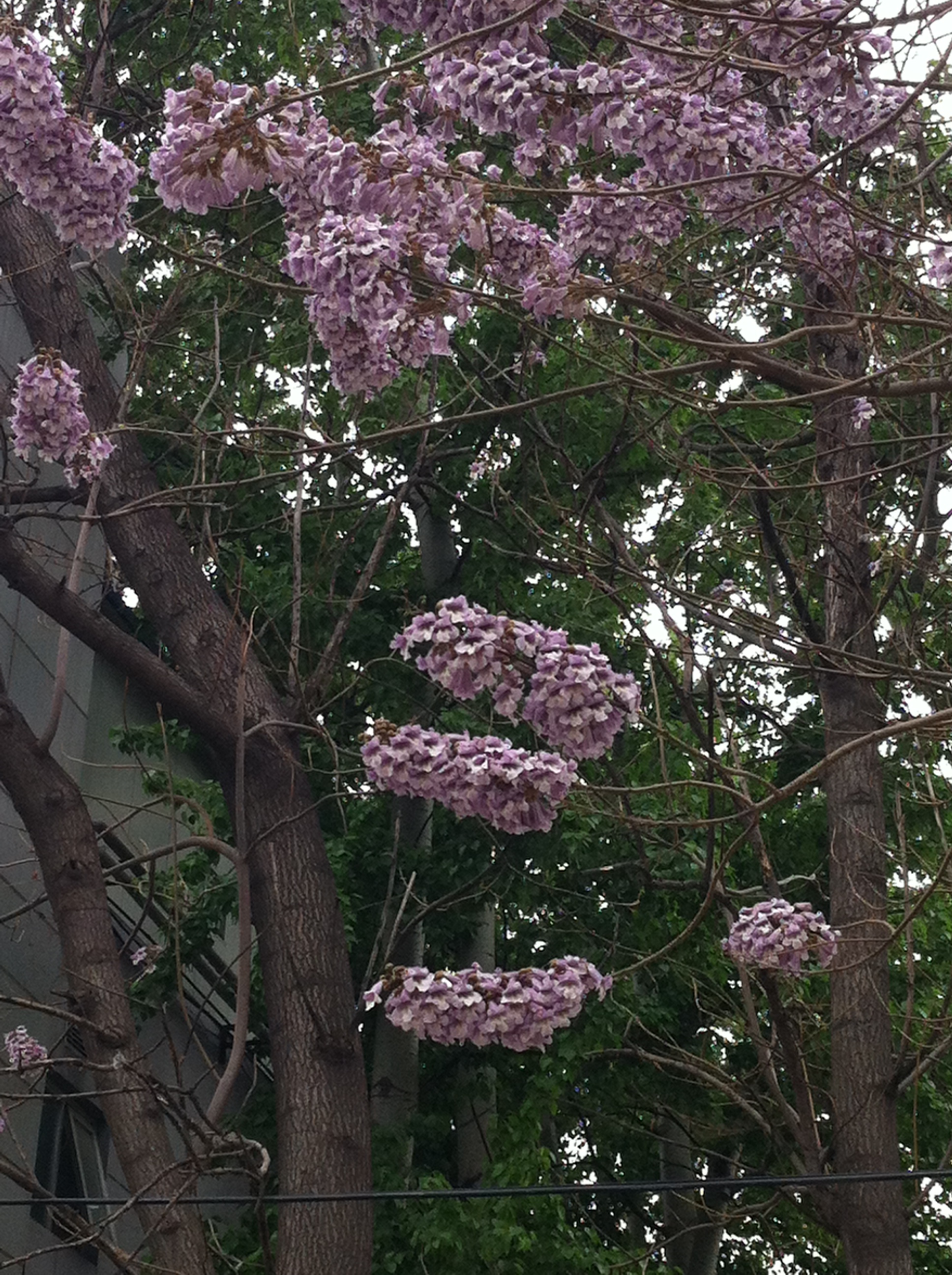
I just said that the barracks is discretely located. One of the things that helps it maintain this discretion is a screen of trees along the inside of the barracks wall which lean gracefully out over the pavement, giving the whole a feeling of a courtyard of a normal housing estate. Some of the trees in question are Paulownias, and at this time of the year, when they are in flower, they are magnificent.

paulownia at the barracks April 2014 002

paulownia at the barracks April 2014 003

paulownia at barracks 001

I throw in for good measure a photo which my wife took of a road we stumbled across just this morning. It was flanked on both sides by Paulownias, all in flower at the moment and, my wife tells me, smelling heavenly (I smelled nothing; the pollution must be getting to my olfactory organs)

paulownia along road FN 003

As usual, I did a bit of research on the tree before writing this post and discovered that it was so named by a Dutch botanist, Siebold, in honour of the-then Queen of the Netherlands, Anna Paulowna, daughter of Tsar Paul I of Russia. The choice of name was not very apt for this lovely tree; the queen was by all accounts rather full of herself. She was arrogant and distant towards the public, she valued pomp, etiquette, and formal ceremonies and rituals, and she felt she had married beneath herself, her husband being a mere kinglet while she was the daughter of a great emperor.

Anna Paulowna

Not at all the kind of person I like. I suppose Siebold was sucking up to royalty by naming the tree after her. But I don’t need to suck up to royalty, so instead I will use its Chinese name, tongmu. Because, apart from anything else, like the wisteria, the magnolia, the weeping willow, the persimmon, and the gingko, about all of which I have written recently, the Paulownia is Chinese – this is getting to be a bit of a habit, this discovering that plants I had come to know and love in Europe are actually Chinese immigrants. It’s also getting to be a habit to discover that the route of immigration was via Japan; it seems that this is where Siebold discovered the plant and brought it back to Europe.

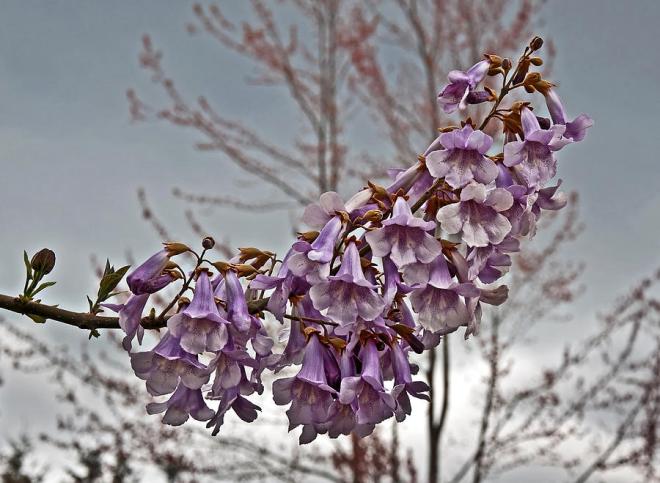
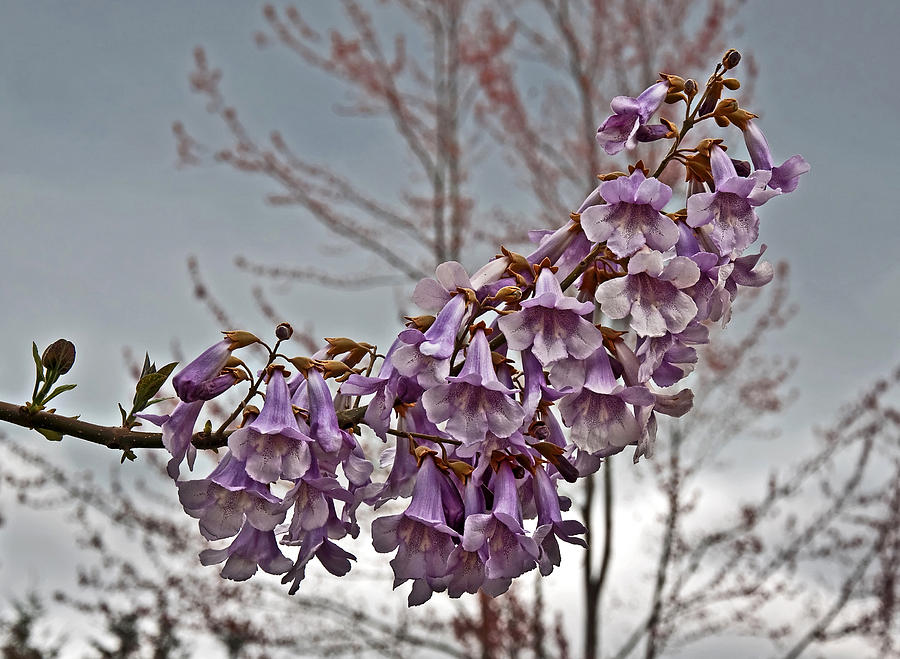
The tongmu is sometimes called the foxglove tree because the flowers, both in their bell-like shape (or finger-glove shape) and in their clustering effect look like foxgloves:


foxglove flower

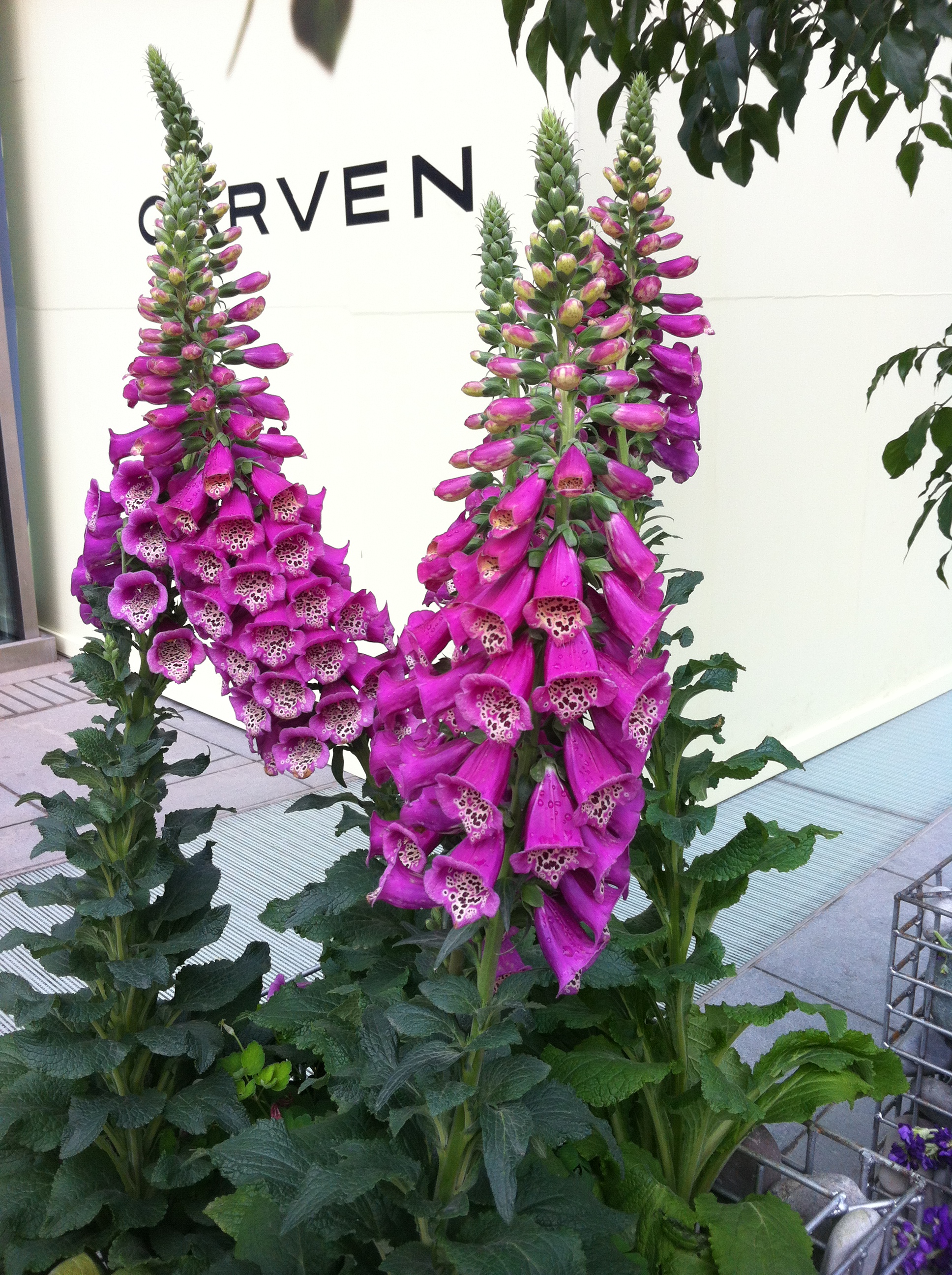
This happy resemblance allows me to conclude with the thought that despite appearances to the contrary the botanical flow has not been all one way. Plants have flowed from Europe to China. This was brought home to me just now when I noticed foxgloves planted – for advertising effect only, I think – in front of a shop at the South Village mall down the road at Sanlitun

foxgloves at sanlitun 001
The foxglove is native to western and southwestern Europe, western and central Asia, northwestern Africa, and Australasia (the last I find odd; there must be a story in there: how did foxgloves end up being native in Australia?)

______________

Guards at UK embassy: http://cdn.24.co.za/files/Cms/General/d/2362/ac78b462d715435cb3207a3c45bb415a.jpg [in http://www.news24.com/Multimedia/World/Margaret-Thatcher-remembered-20130409%5D
Guards marching along pavement: our photo
Guards marching across the road: our photo
Paulownia in flower in front of the barracks-1: our photo
Paulownia in flower in front of the barracks-2: our photo
Paulownia in flower in front of the barracks-3: our photo
Paulownia along the road: our photo
Anna Paulowna: http://upload.wikimedia.org/wikipedia/commons/f/fc/Jan_Baptist_van_der_Hulst_-_Koning_Willem_II_en_familie.jpg [in http://en.wikipedia.org/wiki/Anna_Pavlovna_of_Russia%5D
Paulownia flower: http://images.fineartamerica.com/images-medium-large-5/1-rare-foxglove-tree-paulownia-tomentosa-blooms-valerie-garner.jpg [in http://fineartamerica.com/featured/1-rare-foxglove-tree-paulownia-tomentosa-blooms-valerie-garner.html%5D
Foxglove flower: http://www.plants4less.co.uk/ekmps/shops/plants4less/images/digitalis-purpurea-woodland-foxgloves-purple-225-p.jpg [in http://www.plants4less.co.uk/digitalis-purpurea-woodland-foxgloves-purple-225-p.asp%5D
Foxglove flower in Sanlitun: our photo

WISTERIA

Beijing, 13 April 2014

My French grandmother’s house was … old-fashioned, shall we say. Among its many quirks was the fact that it did not have a flush-toilet. Instead, you eased yourself into this small, cluttered space, and you parked your derriere (your backside) on this beautiful wooden seat to do your besoins (your needs), as the French delicately put it. Once finished, you pulled a lever to open a trap door at the bottom of the porcelain bowl and off went your besoins, helped along with a generous portion of water you poured in from a large enameled metal jug. The exhalations emanating from the opened trap door were sometimes eye-wateringly powerful, and there was always a generally musty smell in the loo. However, the olfactory downsides were more than offset by the beautiful view from the window, framed as it was by the bright green leaves of a wisteria vine which snaked up the outside wall and onto the roof. The view was that much more beautiful in spring when clusters of the wisteria’s light purple flowers thrust themselves at the window. When my mother inherited the house, one of the first things she did was to install a flush toilet. But the wisteria remained. In fact, after my parents retired there my mother encouraged it to spread to other walls nearby, which made it a rare pleasure to go and visit my parents in spring. This is not a photo of the house, but it gives an idea of what would greet my wife and I, with children in tow, after a long drive up from Italy in May.
glycine sur mur-2
Since those moments in my grandmother’s loo, I have always had a weak spot for wisteria. At the right moment of the year, I keep an eager lookout for a sudden froth of light purple flowers popping up over a wall or in the corner of a garden. I have a particularly powerful memory of a bike trip which my wife and I made many years ago along the Loire valley, where between one Renaissance chateau

chateau_amboise

and another

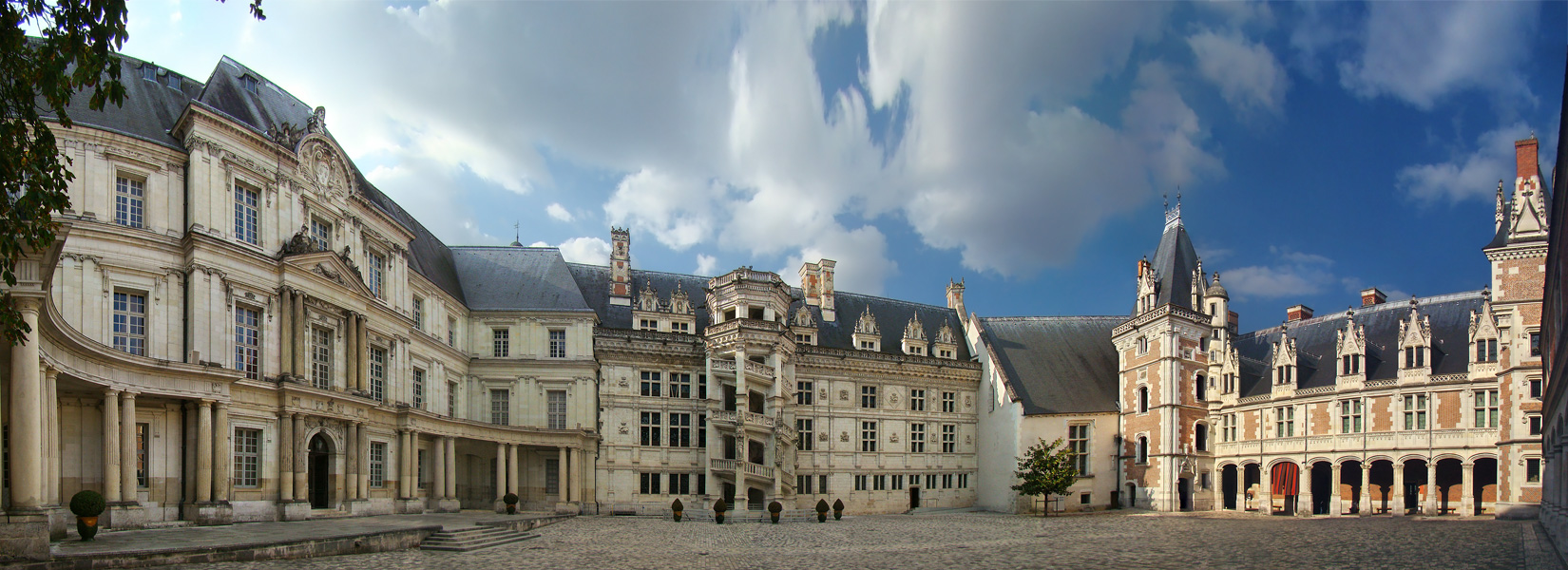
chateau_Blois

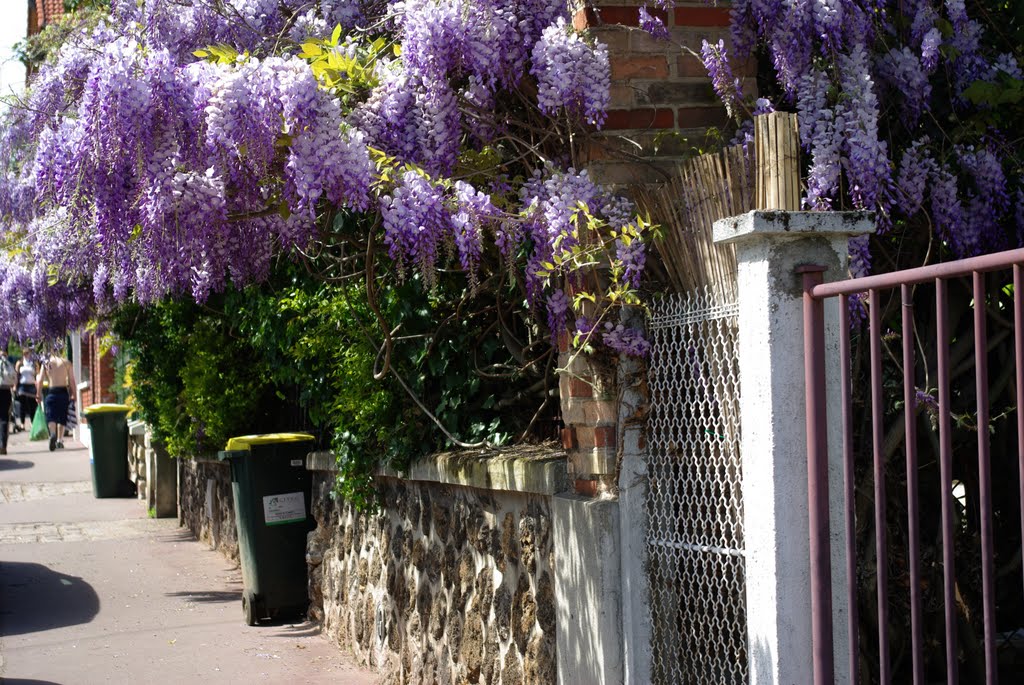
we would run into cascades of wisteria – every garden seemed to have a wisteria.
glycine dans la vallee de la Loire-1

glycine dans la vallee de la Loire-2
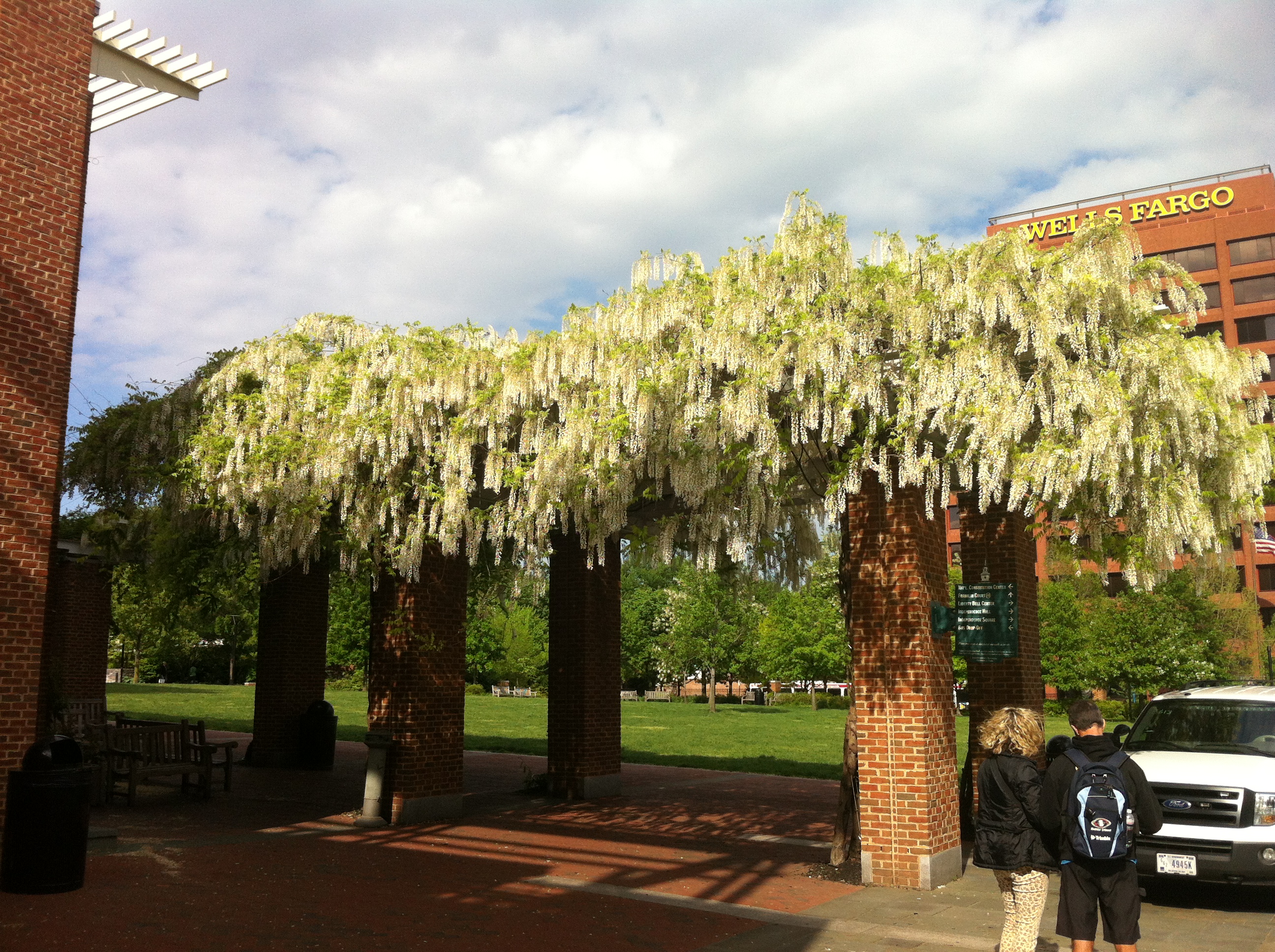
And just last year, when we were in Philadelphia, we stumbled onto a pergola covered by a thick coat of white wisteria, which was a first for me (I’ve mentioned this in an earlier post but I repeat the photo)
white flowers 003
And the neighbours to our rooftop garden in our last apartment in Vienna had planted a wisteria, which coiled and twisted its way onto our side, an intrusion we gladly accepted since it rendered so pleasant those first days in spring when my wife (with a very little help from me) toiled at her garden tubs, planting and repotting, after the long sleep of winter. In fact, jealous at their success, I purchased a modest wisteria plant for our side, with dreams of it eventually smothering our balcony. Alas, it perished miserably that summer while we were away for our holidays.

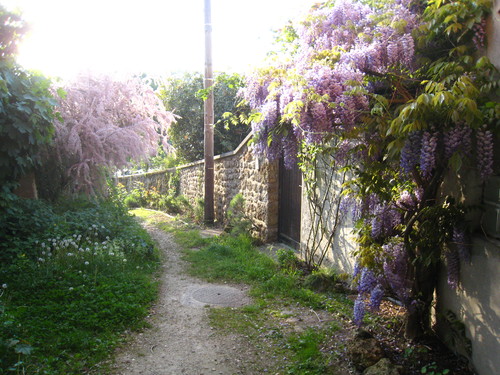
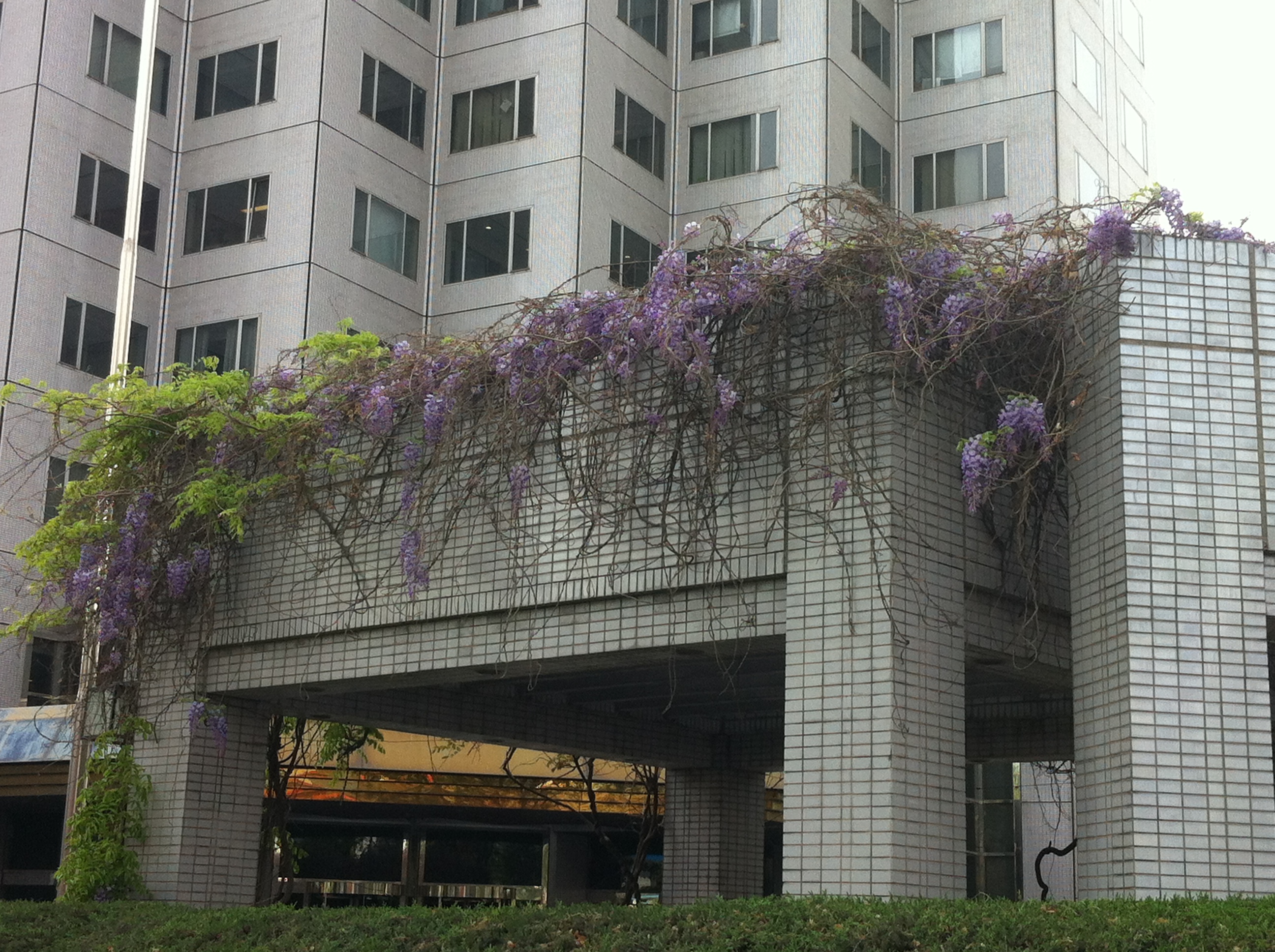
So you can understand my pleasure when I saw that the wisteria across the road from our apartment in Beijing had flowered
wisteria beijing

although I mentally castigated the management of the building for not doing a little pruning.

For the first time in my life, I read up a bit on wisteria. And the first thing I discovered is that wisteria is Chinese! Well, there’s also a Japanese wisteria. And two American wisterias. But no European wisteria! So once again, like the weeping willow which I wrote about in my last post and the magnolia which I wrote about a few posts earlier, Europeans have borrowed a plant from China, or maybe in this case from Japan (but not from the US; American wisteria don’t seem to be gardeners’ favourites, even in the US itself, since their flowers are of more modest size, bloom for less time, and are scentless). When you read these cases, you begin to understand why the poorer countries complain about pharmaceutical and other companies from the richer countries coming and “borrowing” their flora and making a fortune selling them, or their chemical components, back home.

But now I’m left with a tricky question: was the wisteria at my grandmother’s house Chinese or Japanese? The literature tells me that the flower-clusters (racemes in the horticultural lingo) of the Japanese wisteria are longer than those of the Chinese wisteria, but I’m buggered if I remember the length of those racemes nodding at the loo window. And anyway, I’m sure raceme lengths are all averages, so I don’t think this would be a good way for an uneducated plant man like me to distinguish a Chinese wisteria from its Japanese cousin. A far more powerful way of distinguishing the two seems to be the direction of twining which the vine adopts. Chinese wisteria twine clockwise, while Japanese wisteria twine counter-clockwise! (I love it; isn’t that a great way of figuring out where a plant comes from? But why would one twine one way and the other the other? The mysteries of genetics). I must remember to send my sister an email (she inherited the house, did further massive works, but kept the wisteria) and ask her which way the wisteria twines. This will no doubt be the moment she concludes that I have finally lost it …

______________

Wisteria on the house: http://img.over-blog-kiwi.com/0/53/56/12/201305/ob_bbf5590f142c0c0c464830009f54793b_img-8686.JPG [in http://mounic.over-blog.com/lieu-saint-de-provence%5D
Château d’Amboise : http://www.chateau-amboise.com/oktThemes/p-c094-01/images/chateau_amboise_accueil.jpg [in http://www.chateau-amboise.com/en/%5D
Château de Blois : http://upload.wikimedia.org/wikipedia/commons/f/fb/Loire_Cher_Blois1_tango7174.jpg [in ] http://en.wikipedia.org/wiki/Ch%C3%A2teau_de_Blois
Wisteria along the road-1: http://mw2.google.com/mw-panoramio/photos/medium/22548315.jpg [in http://www.panoramio.com/user/701296/tags/Season%20Spring?photo_page=2%5D
Wisteria along the road-2: http://static.panoramio.com/photos/large/34926262.jpg [in http://www.panoramio.com/user/701296/tags/Season%20Spring?photo_page=2%5D
Wisteria in Philadalphia: my photo
Wisteria in Beijing: my photo

PEKING WILLOW

Beijing, 9 April 2014

The somber, funereal tone of my last post seems like a good place to start this one – a tombstone

Weeping Willow on gravestone

This one has a weeping willow on it, a common symbol on tombstones 200 years ago. Its drooping branches symbolize, you’ve guessed it, the weeping of the world at your passage to the next. Here’s another in the same genre from the same period, this time a piece of needlework memorializing the death of three babies.

BT OA FR

And then there were the ballads which used the weeping willow as the symbol of death, lost love, or both:

My heart is sad and I’m in sorrow
For the only one I love
When shall I see him, oh, no, never
Till I meet him in heaven above

Oh, bury me under the weeping willow
Yes, under the weeping willow tree
So he may know where I am sleeping
And perhaps he will weep for me

They told me that he did not love me
I could not believe it was true
Until an angel softly whispered
He has proven untrue to you

Oh, bury me under the weeping willow
Yes, under the weeping willow tree
So he may know where I am sleeping
And perhaps he will weep for me

 Etc. You get the picture.

The weeping willow’s symbolism was used a bit more elegantly in Psalm 137 of the Old Testament, that lyrical lament about the pains of exile, in this case that of the Israelites who had been marched off to Babylon from Jerusalem:

By the rivers of Babylon—
there we sat down and there we wept
when we remembered Zion.
On the willows there
we hung up our harps.
For there our captors
asked us for songs,
and our tormentors asked for mirth, saying,
“Sing us one of the songs of Zion!”

 How could we sing the Lord’s song
in a foreign land?
If I forget you, O Jerusalem,
let my right hand wither!
Let my tongue cling to the roof of my mouth,
if I do not remember you,
if I do not set Jerusalem
above my highest joy.

jewish bible with picture

I’ve left out the last verse where the poet gets vengeful and nasty, talking about taking the babies of their captors and bashing their brains out against the rocks …

But if we brush aside the drooping veil of gloom, we find a really beautiful tree, for the most part sitting elegantly near a body of water, into which its trailing branches will often dip.

weeping willow tree

And such an English tree! (well, you also find them on the continent but we’ll ignore that). Here’s a weeping willow on the edges of a pond in Grantchester, in which, so it is said, the poet Byron swam.

weeping-willow-Grantchester

Here are students punting on the river Cam in Cambridge with some weeping willows languidly brushing the water’s surface.

weeping willows on the River Cam

Here is a 1946 poster from the Great Western Railway, inviting Londoners to take a day out in the Thames Valley, with a weeping willow centre stage beckoning to them.

great western railway-thamesvalley

Talking of the Thames, here is the cover of that most English of children’s books, The Wind in the Willows, where we see our friends Mole, Ratty and Toad on the river Thames, waving to Badger on the shore, the whole discretely framed by weeping willows

the_wind_in_the_willows

And of course there’s Three Men in a Boat, a book about – well, three men in a boat, messing around on the same river Thames (a book much loved by my father-in-law, in passing). Here we have them in that quintessentially English situation, rain, together with that quintessentially English animal, the dog, with some weeping willows in the background.

Three Men in a Boat by Jerome K. Jerome

Yes, all very English.

Except that the weeping willow isn’t English.

It’s Chinese.

Well, half-Chinese.

Yes, the willows, suitably called Peking willows, lining my piece of canal in Beijing

peking willows 004

are the ancestors of all those graceful weeping willows whose photos I have included above. It is they which carry the gene that makes the tree’s branches weep.

Somehow, for some reason, cuttings or seeds from these trees made their way to the west. I have read that they were moved along the Silk Road. Probably, traders from the west were charmed by the trees’ weeping branches and wanted them in their gardens. I’ve looked for pictures of Peking willows planted along the Road. The best I have found is a Peking willow in Istanbul.

Salix_babylonica in Istanbul

Not quite on the Road, which ended on the Mediterranean seaboard at Antioch or Tyre or Sidon, but close enough. And maybe one of the ways which the Peking willow entered Europe, through the Balkans.

Somewhere along the way further to the west, the Peking willow was crossed with another willow, the European white willow.

white willow

The two were crossed because gardeners found that the Peking willow suffered in the more humid climate of Europe. Its gene pool needed bracing up, as it were.

So the weeping willow is half Chinese, half European.

Although my bubble of Englishness has been pricked, I’m glad to report that the weeping willow is nevertheless half brother –  or perhaps half sister – to that most English of artifacts, the cricket bat! Because these are made from the willow of a cross between the white willow and (possibly) the crack willow (the ancestry on the other side is not clear). So this allows me to insert here a picture of that most English of cricketers WG Grace holding a bat, in an ad for that most  English of condiments, Colman’s Mustard

wg grace with bat

Well, while I’m about it, I might as well also clarify another misconception. The willows by the waters of Babylon under which the Israelites wept were not willows, they were Euphrates poplars.

euphrates poplar

______________________

Tombstone with weeping willow: http://4.bp.blogspot.com/-V965riBwMQE/ThW9WsV_6gI/AAAAAAAAAA4/kGf3gW9vaZ0/s1600/%2523%2523%2523Weeping+Willow+St.+Mark%2527s+Luth+Appenzell+%25283%2529.JPG [in http://callmetaphy.blogspot.com/2011/07/symbol-of-weeping-willow-in-gravestone.html%5D
Girls weeping on tomb: http://mansionmusings.files.wordpress.com/2011/04/mourning-picture-detail.jpg [in http://mansionmusings.wordpress.com/2011/04/29/a-mansion-favorite-returns-home-abigail-walker-needlework-mourning-picture-ca-1803/%5D
Jewish psalter: http://upload.wikimedia.org/wikipedia/commons/9/97/Chludov_rivers.jpg [in http://en.wikipedia.org/wiki/Psalm_137%5D
Weeping willow tree: http://www.blogmagazine.org/wp-content/uploads/2012/05/weepingwillow.jpg [in http://www.blogmagazine.org/2012/05/admiring-the-beauty-of-the-weeping-willow/%5D
Weeping willows Grantchester: http://3.bp.blogspot.com/-3Lkrd8FlSCE/UhFK2RfkItI/AAAAAAAAGiM/v5kklmS41GE/s1600/photograph-of-weeping-willow-Byrons-Pool-Grantchester.jpg [in http://ailecphotography.blogspot.com/2013/08/day-18-august-challenge.html%5D
Weeping willows on the river Cam: http://upload.wikimedia.org/wikipedia/commons/d/da/Punting_on_the_River_Cam_-_geograph.org.uk_-_222149.jpg [in http://commons.wikimedia.org/wiki/File:Punting_on_the_River_Cam_-_geograph.org.uk_-_222149.jpg%5D
“The Wind in the Willows”: http://www.usborne.com/images/covers/eng/max_covers/the_wind_in_the_willows.jpg [in http://www.usborne.com/catalogue/book/1~CS~CSP~3249/the-wind-in-the-willows.aspx%5D
“Three Men in a Boat”: http://s3-eu-west-1.amazonaws.com/lookandlearn-preview/A/A008/A008727.jpg [in http://www.lookandlearn.com/history-images/A008727/Three-Men-in-a-Boat-by-Jerome-K-Jerome?img=2&search=Jerome+Klapka+Jerome&bool=phrase%5D
Great Western Railway poster: http://www.southernposters.co.uk/Destinations/Resources/thamesvalleylarg.jpeg [in http://www.southernposters.co.uk/Destinations/thamesvalley1946.html%5D
Peking willow, Beijing: my photo
Peking willow in Istanbul: http://upload.wikimedia.org/wikipedia/commons/thumb/7/75/Salix_babylonica.jpg/800px-Salix_babylonica.jpg [in http://en.wikipedia.org/wiki/Salix_babylonica#Horticultural_selections_and_related_hybrids%5D
White willow: http://bioweb.uwlax.edu/bio203/2011/girard_stev/maintop.jpg [in http://bioweb.uwlax.edu/bio203/2011/girard_stev/facts.htm%5D
Euphrates willow: http://mw2.google.com/mw-panoramio/photos/medium/49589465.jpg [in http://www.panoramio.com/user/1183385/tags/%D7%A0%D7%97%D7%9C%20%D7%A6%D7%99%D7%9F%5D