BREAKING IN BOOTS ON THE YORKSHIRE MOORS

London, 7 May 2014

My wife and I were on Oxford Street yesterday, where she did one of her favorite things, namely she entered a shoe shop to inspect its contents. In this case, the inspection led to her purchasing two pairs of moccasins. Flushed with this success, she emerged from the shop wearing one of her purchases. After a few hours of further walking around London, the inevitable happened. My wife’s face started taking on a strained look, and she eventually confessed to sore feet. The new shoes, she announced, needed breaking in. I then suggested, in a moment of flippancy, that she should find someone to break in her shoes for her. She waved this off as the flippant suggestion that it was.

And yet … it was not so foolish a suggestion. I, for one, had done exactly this at school. I had broken in a pair of shoes for someone else. Boots, actually.

I should explain.

It was June 1972. My classmates and I had just finished taking our A-levels and we were about to leave school for good. A bunch of us got together and decided to celebrate this rite of passage by crossing the Yorkshire moors (which lay just to the north of our school) from one side to the other, all in one go. This may not sound like much, but actually it was a bit of bravado. We’re talking of a distance of some 60 kilometers, so to do it in one go meant starting at 3 in the morning with the hope of finishing in the late afternoon. I realize now that what we did was the Lyke Wake Walk or some variant of it. This walk runs from the village of Osmotherley, which lies on the western edges of the moors, all the way to the sea which laps at the moors’ eastern border. We started feverish preparations, which brings us to the topic of boots and their breaking-in. I suddenly realized that I had no adequate footgear. Gym shoes were far too light (the heavy running shoes of today did not yet exist), but I didn’t want to buy a pair of walking boots just for this. At the last moment, the younger brother of one of the walking team offered to lend me his brand new boots. By using them I would be doing him the favour of breaking them in. Damned good deal, I thought.

So at 3 am of a Saturday morning, we were dropped off from an old army truck, me in my brand-new borrowed boots, with the escarpment of the moors looming up in front of us in the darkness. Feeling a bit like a bunch of commandos on a special mission to knock out the enemy’s gun positions, we quietly filed up the path which carried us to the top of the escarpment and then started walking across the heather. And we walked.

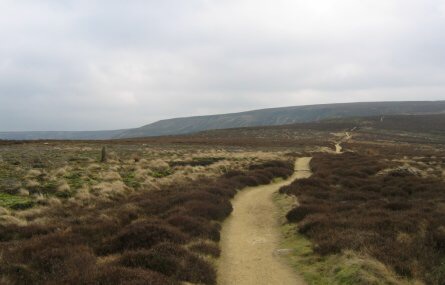
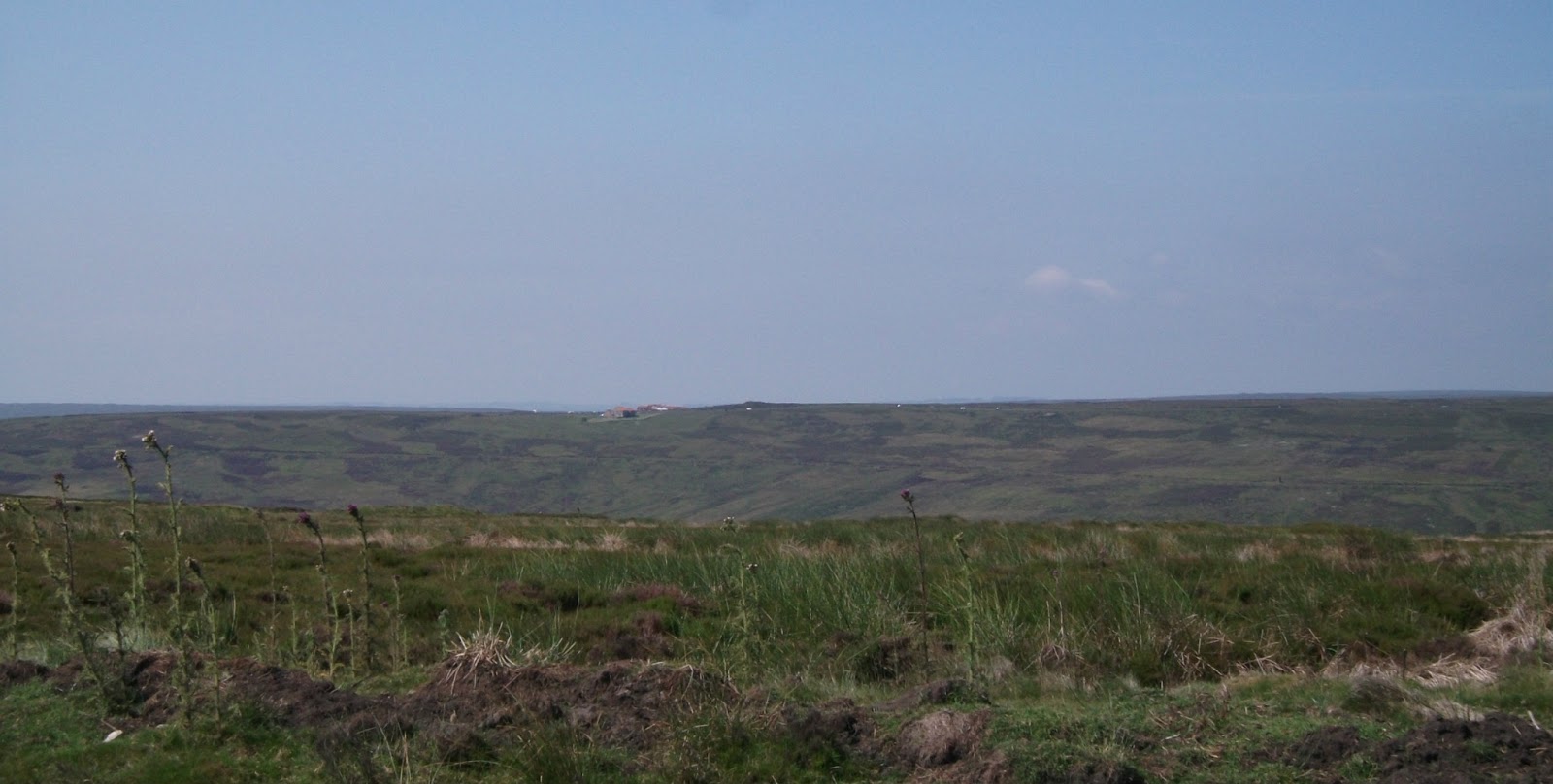
The sky slowly lightened up until we could see around us. It was really very beautiful, bleak perhaps, certainly remote, but beautiful.

image image

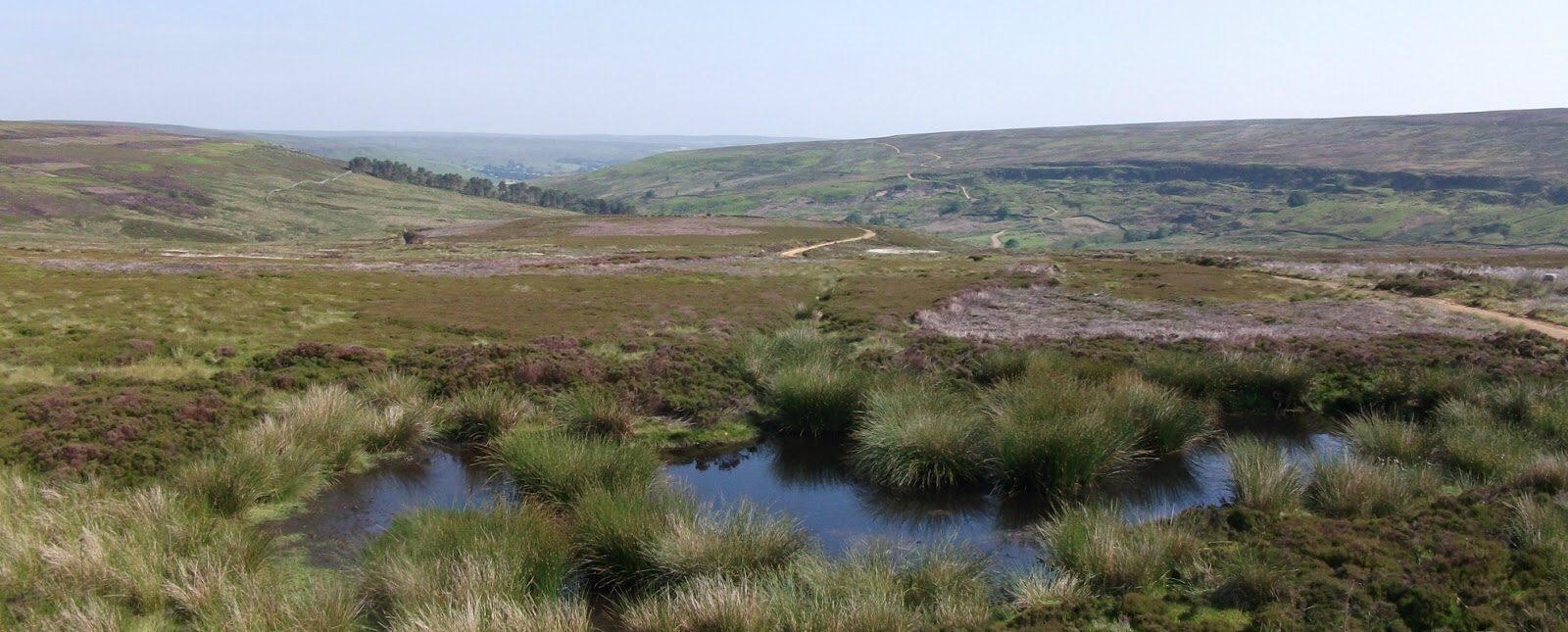
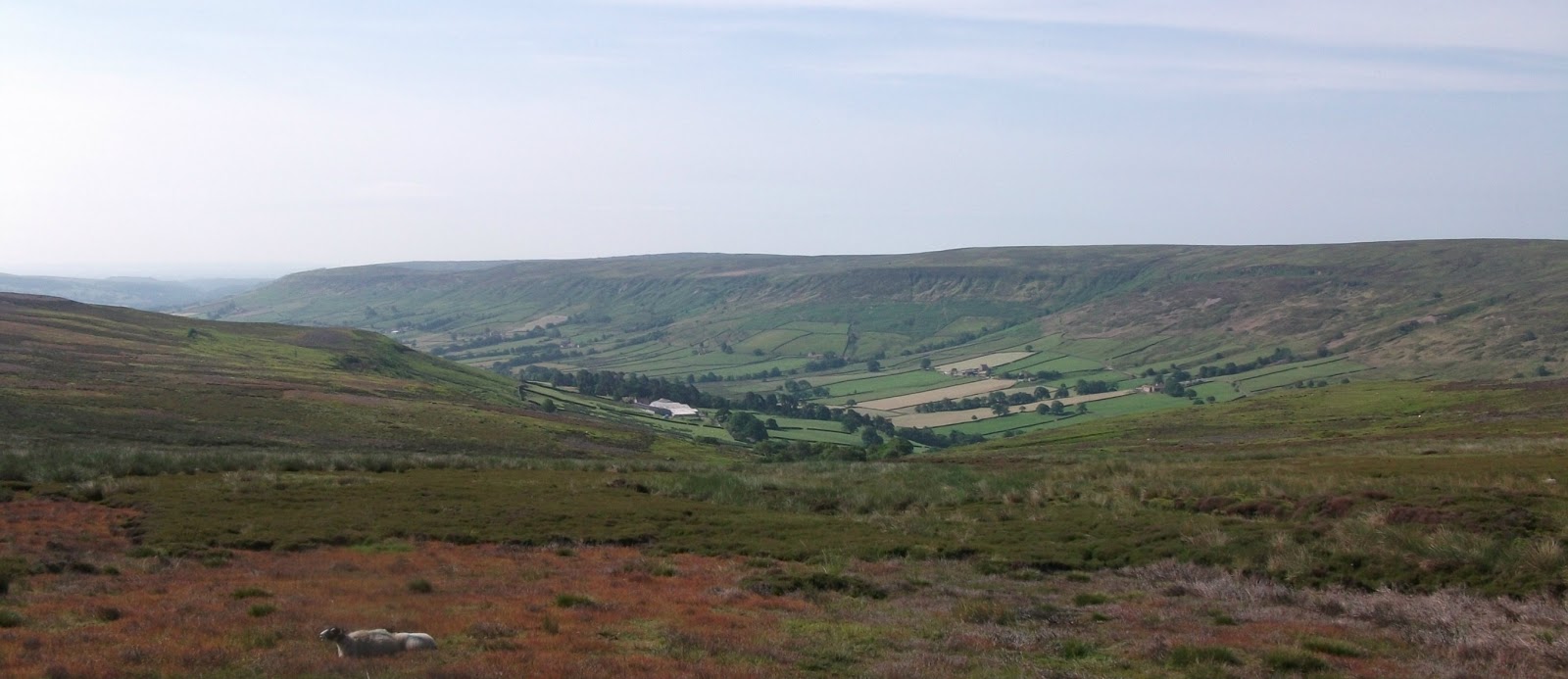
We stopped for breakfast, munching on some sandwiches we had brought with us. A squall swept through, luckily the only one of the day. After which we started walking again, with stunning views around us

image image

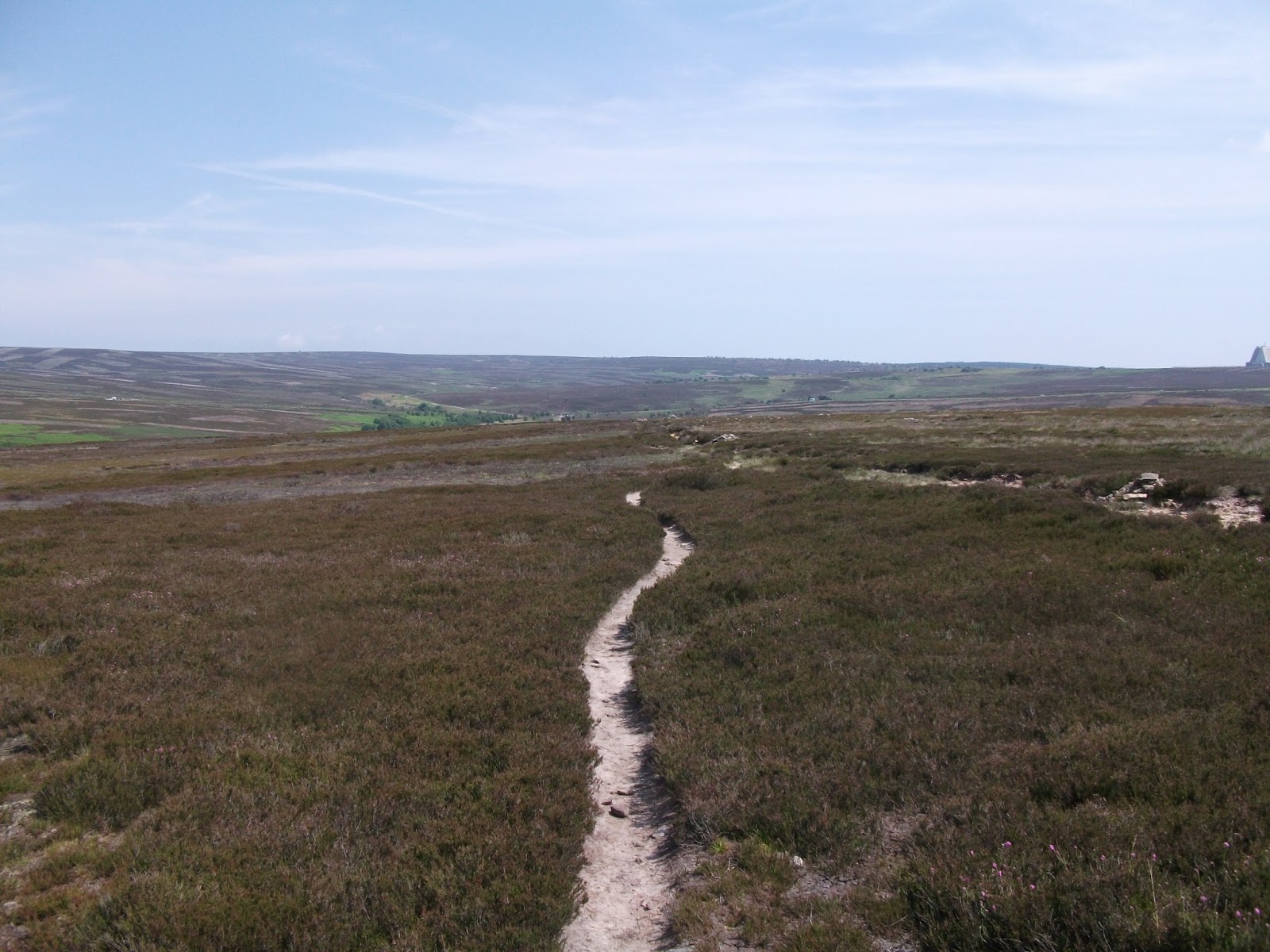
And we walked. And walked. The sun in the meantime slowly climbed to its zenith, the clouds clearing away and leaving a beautiful sunny day in their wake.

image

At lunchtime, we reached a road on which the old army truck was parked, waiting for us. As we each trudged in, we clustered around the truck and took the food and drink being handed out. We sank down on the heather, glad to have an excuse to rest our aching legs a while. Eventually, though, we had to lever ourselves back on to our feet and walk on. And so we walked. And walked.

image

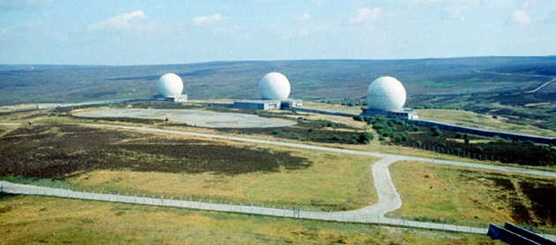
An hour or so later we reached Fylingdales, those strange “golf balls” in the middle of the moors, which are actually part of an RAF radar station.

image

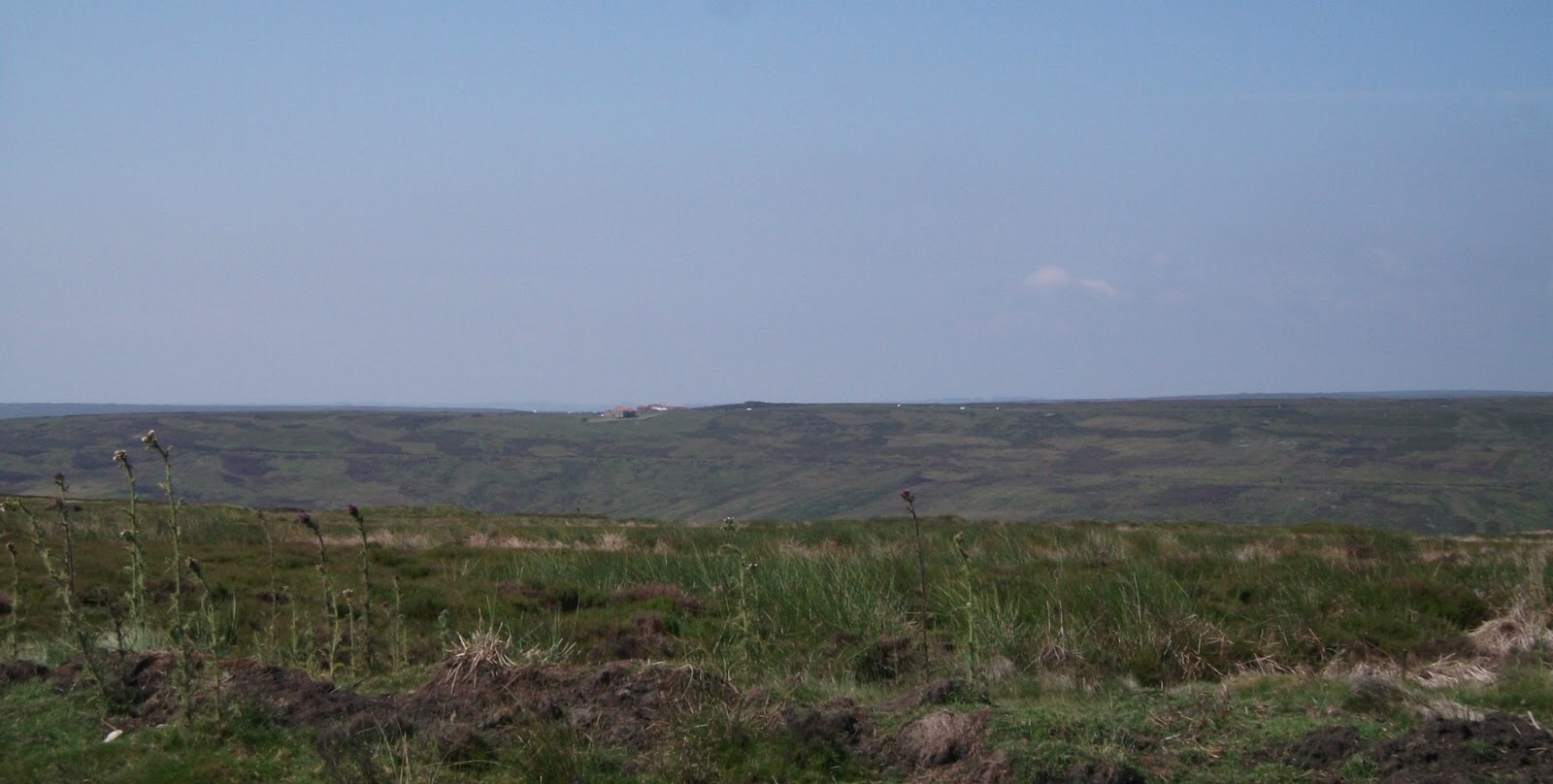
We stopped a moment, with the excuse to admire the balls but really just to be able to stop walking for a bit. But we soon had to push on. The earlier joshing and joking had died away hours ago. We now just walked, oblivious to the beauty around us

image

By this point, the new, being broken-in boots were hurting me so much that I took them off and walked barefoot. How much further, dear God? How much further? My friends began to stumble past me as I shuffled on slower and slower, and they weaved off unsteadily ahead of me through the heather. At last, at last, I crested a rise and there, down on the road, was the old army truck. Thank God, thank God, and thank God!! Still after all these years, I can remember with perfect clarity the exhausted joy of sighting that truck. I sank down in the heather beside it and promptly fell asleep.

And the next day, after I had crawled stiffly out of bed and had had some breakfast, I solemnly handed over the boots to their owner, who was very pleased by the impeccably thorough breaking-in I had given them.

So all of this to say that I’m sure my wife could find a penniless student who would break in her shoes for her, for a price.

_________________

http://www.sub3000.com/balbum/England/37/images/UraCW.jpg [in http://www.sub3000.com/balbum/England/37/Urra.html%5D
http://www.sub3000.com/balbum/England/37/images/uraSummit.jpg [in http://www.sub3000.com/balbum/England/37/Urra.html%5D
http://www.walterthompson.co.uk/images/uploads/lykewake.jpg [in http://www.walterthompson.co.uk/news/article/lyke_wake_walk_2011%5D
http://4.bp.blogspot.com/-nJnaXzkEn04/Uek1cHLm7hI/AAAAAAAACT8/TDpegiXR8F4/s1600/Lyke+Wake+Race+2013+016+small+farndale.jpg [in http://mike-viewfromtherear.blogspot.com/2013/07/lyke-wake-race-13th-july-2013.html%5D
http://4.bp.blogspot.com/-nWhv6e9B5h0/Uek1rONGZ3I/AAAAAAAACUE/yrAlHv5C59I/s1600/Lyke+Wake+Race+2013+017+small+esk+valley+walk.jpg [in http://mike-viewfromtherear.blogspot.com/2013/07/lyke-wake-race-13th-july-2013.html%5D
http://2.bp.blogspot.com/-ok8cGHAg8x4/Ue1JtqkDs5I/AAAAAAAACWw/1XzKPvV8r5s/s1600/Lyke+Wake+Race+2013+037.jpg [in http://mike-viewfromtherear.blogspot.com/2013/07/lyke-wake-race-13th-july-2013.html%5D
http://www.raf.mod.uk/raffylingdales/rafcms/mediafiles/98EEDACF_DEA3_0ABB_4AF9D7034C1B3316.jpg [in http://www.raf.mod.uk/raffylingdales/aboutus/history.cfm%5D
http://2.bp.blogspot.com/-MEwBIIEDv60/Uek4z8Dc7YI/AAAAAAAACUk/2xdScmj96ao/s1600/Lyke+Wake+Race+2013+022+small+lion.jpg [in http://mike-viewfromtherear.blogspot.com/2013/07/lyke-wake-race-13th-july-2013.html%5D

PEKING DUCK LIKE OPIUM

Beijing, 30 April 2014

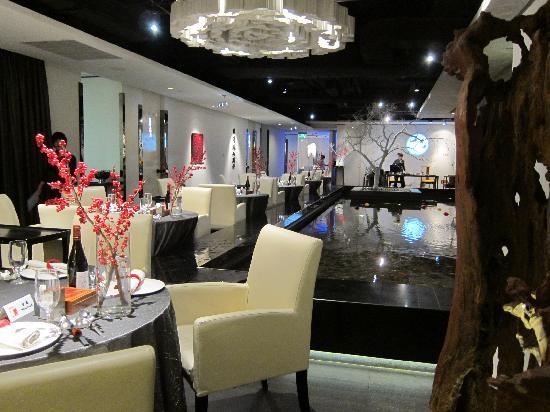
One of the first things my wife and I did when we arrived in Beijing was to eat Peking Duck. Well, not quite the first thing. We waited until the children came a few months later to visit us at Christmas before trying this Beijing delicacy. It was worth the wait. We went to the Dadong restaurant, which in the meantime has grown exponentially into a chain of really quite swanky restaurants scattered throughout the city.

dadong restaurant

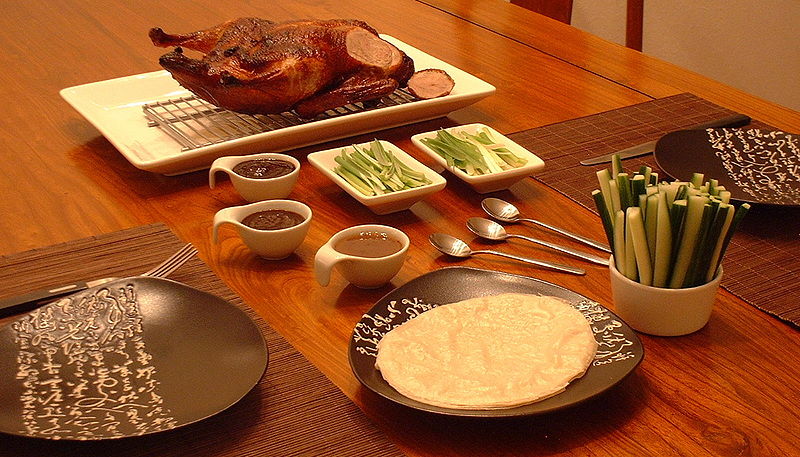
For readers who have not tried this dish, it presents itself so:

Peking Duck complete dish-3

As you can see, we don’t just have duck. Many other ingredients are part of the package. Eating Peking Duck requires one to follow a certain, very specific procedure, to bring together all these ingredients in the right order. Allow me to walk readers through the Standard Operating Procedure (SOP) for eating Peking Duck.

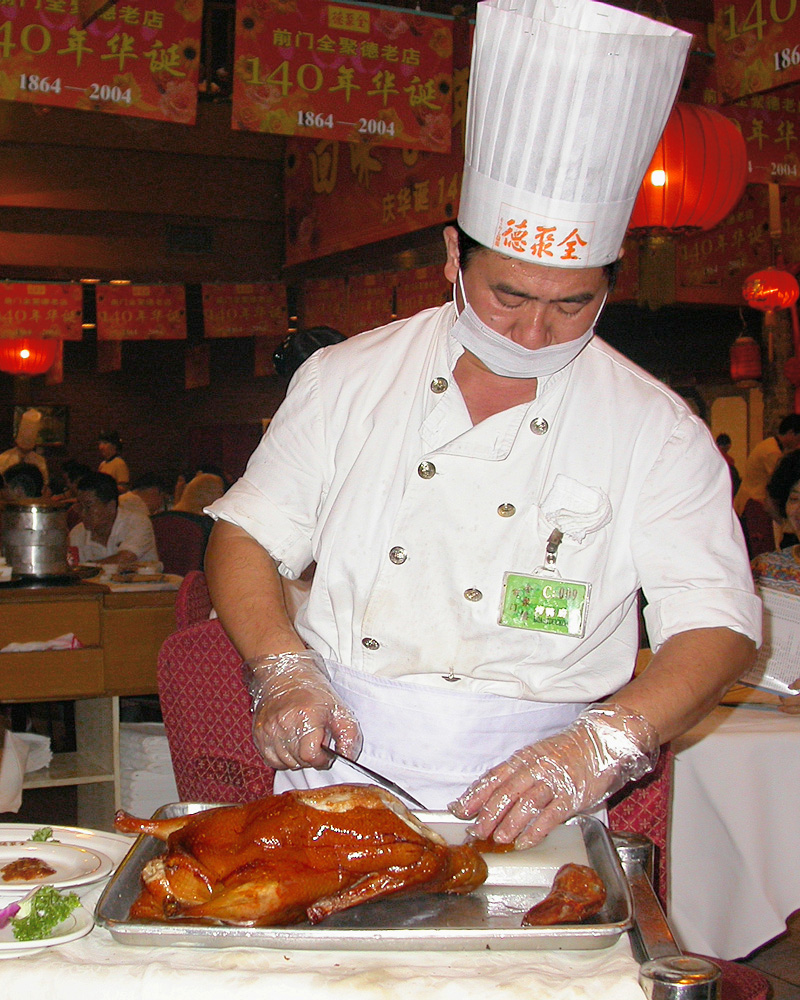
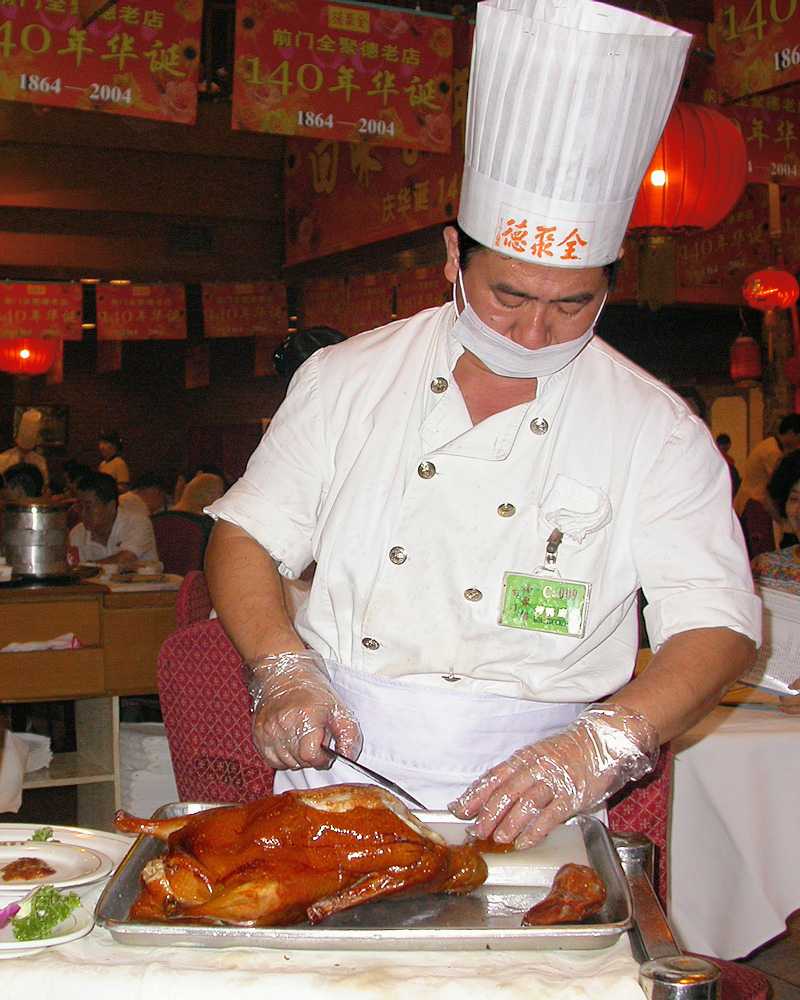
1. Look on respectfully as a chef comes to your table and slices up the bird in front of you.

cook slicing the duck

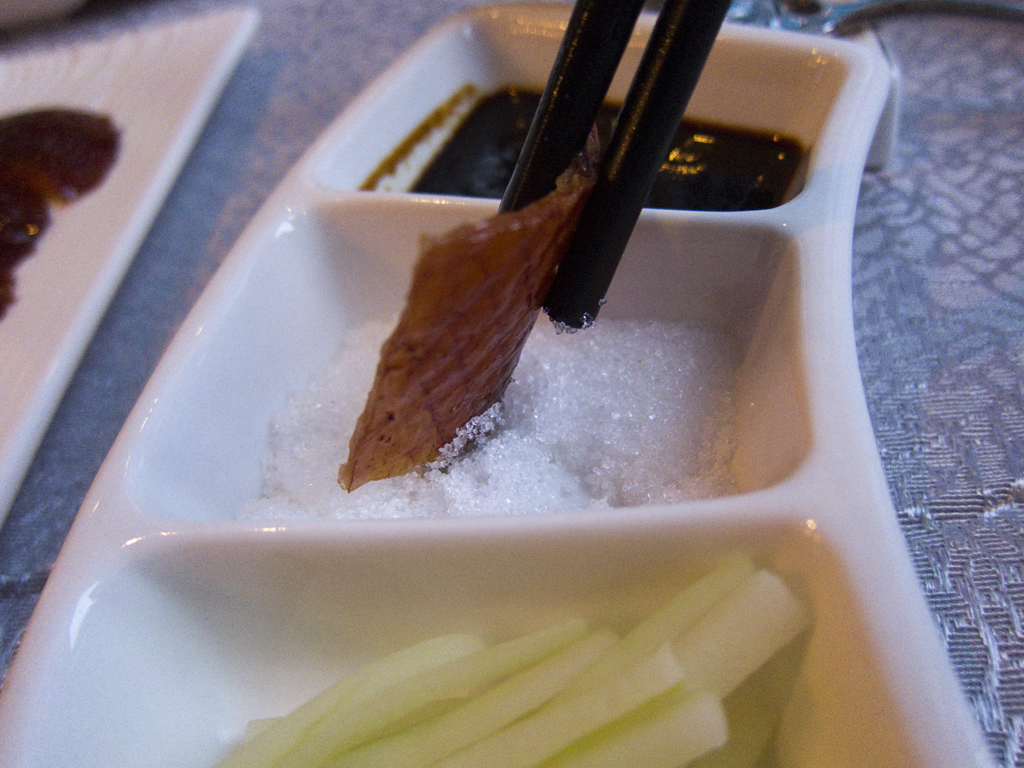
2. Start with the crispy skin. Take a piece or two, dip into sugar, and eat.

dipping skin in sugar

Personally, I find that one piece is enough for me; it’s just too fatty.

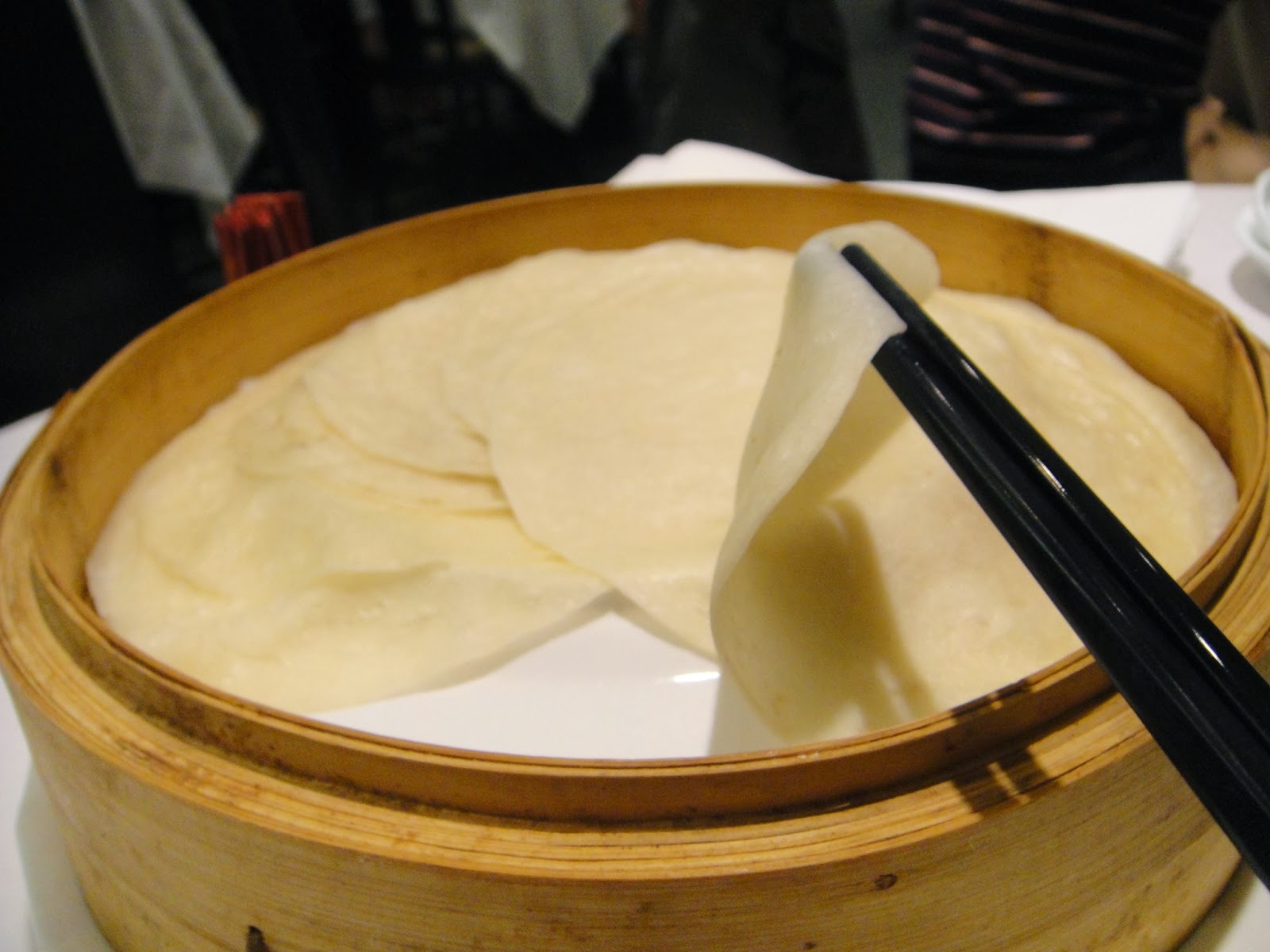
3. Start in on the duck meat proper. Pick up a wafer-thin circular crepe. For neophytes in the use of chopsticks, this can be an immense challenge.
picking up crepes
4. Use the chopsticks to smear dollops of the various sauces onto the bread wrap. The usual menu of sauces include sweet bean sauce or hoisin sauce, which is a thick, pungent sauce usually including soy, red chilies, garlic, vinegar and sugar.
hoisin sauce
5. Place the slices of roast duck on the bed of sauce. A mix of crackling skin and meat is the optimal choice. More sauce can be smeared on the meat if so desired. Place on top of the duck a couple of thinly sliced scallions.

duck and spring onions on crepe

Various other ingredients can also be added: thinly chopped cucumber is popular, at Dadon they also offer thinly chopped melon and some other stuff whose identity is a mystery.

beijing duck ancillaries 002
6. Roll the whole into a tubular sandwich.

rolled up crepes

These look far fancier than the ones I produce. It’s rather like comparing the product of someone who has spent a life rolling his own cigarettes to that of the fellow who is just starting out in this bad habit.

7. Eat, making loud noises of appreciation if you have been invited by Chinese hosts, who are always glad to know that you’re liking it.

8. Repeat from step 3 (or step 2 if you have a mind to), making small variations if you wish, until all the duck has been consumed.

9. As a finale, slurp down the duck soup which they will bring, made with all the leftovers of the carved ducks.

duck soup

This must really be one of the most Chinese of dishes. Some even call it China’s national dish (I’m not sure what the Cantonese think of that, but we’ll let it pass).

So it’s a bit of a shock to know that the ducks consumed in China aren’t all that Chinese.

I was informed of this fact last week during a talk in Shanghai by a very respected Academician, who revealed to the stunned audience the whole sorry story.

There was a time, before 1873, when the duck was Chinese. It had evolved and prospered on the Grand Canal, where it had grown fat on the grain that fell off the barges going north towards the capital. The Chinese, never ones to leave anything go to waste, had recycled this lost grain by domesticating the ducks and eating them. In Beijing, the SOP described above evolved as the way to consume the ducks. This culture of duck rearing was beautifully captured in the children’s book The Story about Ping, which I loved to read to my children (although I don’t know if they loved hearing me read it …)

the-story-about-ping

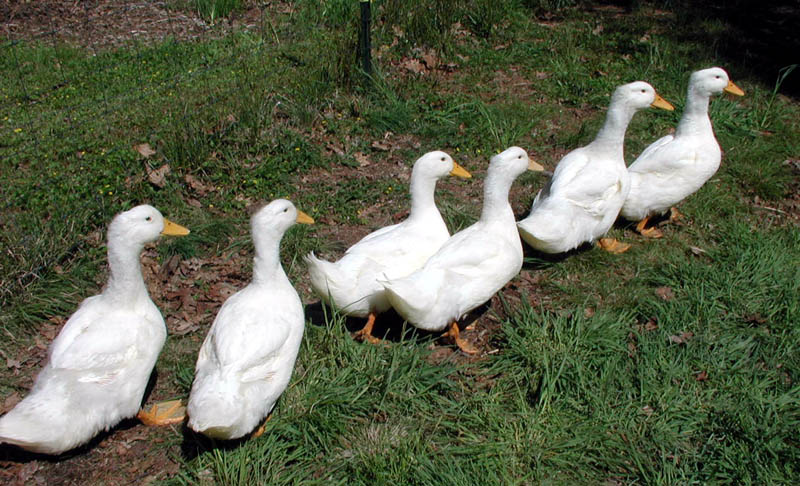
Then, in 1873, 25 of these Pekin ducks (note: no final g on Pekin) were exported to Long Island – most of them didn’t make it, eaten no doubt by the hungry voyagers on the same ship as them. The few that made it through went on to become the progenitors of the most successful domesticated breed of duck in Europe and the US. Those nice white ducks waddling around the farmyards of my youth were in all probability children of Chinese immigrants.

OLYMPUS DIGITAL CAMERA

Except that European and American farmers and agronomists were not content with just taking this Chinese duck and breeding it. They started playing with its DNA through selective breeding to make bigger, fatter, and I know not what.

In the meantime, the Chinese had slipped into anarchy, had been eviscerated by the war imposed on them by the Japanese, and – after the Revolution and the creation of the new China – had gone through the disasters of the Great Leap Forward and Cultural Revolution. So by the time the 1970s rolled in, the original Pekin Duck and its rearing were in as sorry a state as the rest of the country.

Well, the economy picked up and so did the Chinese appetite for Peking Duck. But for some reason, national production remained stagnant, or at least didn’t grow as fast. The result was that China, the biggest exporting country in the world, began to import the Pekin Ducks to turn into Peking Ducks. And began to import them in vast quantities. According to the Respected Academician in Shanghai, 70% of the Peking Ducks which are consumed in China were born and bred … in the UK. In fact, for the most part they come from one farm in Lincolnshire, the Cherry Valley Farm.

Supra

Unbelievable. It’s the opium wars all over again, except that this time the UK is flooding China with Pekin Ducks …

______________________

Dadong restaurant: http://media-cdn.tripadvisor.com/media/photo-s/01/e4/55/6e/beautiful-room.jpg [in http://www.tripadvisor.com/members-citypage/msyolee/g294212%5D
Peking duck-complete dish: http://img.cits.net/images/2011/9/27/151515157efde4e3-d.jpg [in http://www.cits.net/china-guide/china-traditions/peking-roast-duck.html%5D
Cook slicing the duck: http://upload.wikimedia.org/wikipedia/commons/e/e5/Quanjude_roastduck.JPG [in http://en.wikipedia.org/wiki/Peking_duck%5D
Dipping skin in sugar: [in http://theavidphotographer.wordpress.com/tag/paradise-pavilion/%5D
Picking up crepes: http://2.bp.blogspot.com/-T1E6blAnjAY/Up5-R7KL_bI/AAAAAAAAAtw/J3kRodTOSdc/s1600/DSC05471.JPG [in http://missvancouverpiggy.blogspot.com/2013/12/red-star-seafood-vancouver-location.html%5D
Hoisin sauce: http://www.seriouseats.com/images/2012/01/20120116-188016-hoisin-sauce-small.jpg [in http://www.seriouseats.com/2012/01/sauced-hoisin-sauce.html%5D
Duck and spring onions on crepe: http://finedininglovers.cdn.crosscast-system.com/BlogPost/l_1859_pancake-duck-00244258-CUT1.jpg [in http://www.finedininglovers.com/recipes/main-course/peking-duck-recipe-pancakes/%5D
Peking duck ancillaries: our photo
Rolled up crepes: http://www.frugal-cafe.com/public_html/frugal-blog/frugal-cafe-blogzone/wp-content/uploads/2011/01/peking-duck-pancake-rolls-loua-flickr.jpg [in http://www.frugal-cafe.com/public_html/frugal-blog/frugal-cafe-blogzone/2011/01/28/fab-food-friday-fotos-chinese-style-stewed-meatballs-easy-tartlets-twinkie%5D
Duck soup: http://chompchowchew.typepad.com/.a/6a01156f88f5ce970b015431e280cc970c-800wi [in http://chompchowchew.typepad.com/blog/2011/04/peking-duck-house-nyc.html%5D
The story about Ping: http://laughingstars66.files.wordpress.com/2010/05/the-story-about-ping.jpg [in http://www.momto3feistykids.com/2010/05/rowing-story-about-ping.html%5D
Pekin ducks: http://www.rocketroberts.com/farm/images/ducks_in_row.jpg [in http://www.rocketroberts.com/farm/farm.htm%5D
Cherry Hill farm-1: http://upload.wikimedia.org/wikipedia/commons/7/7b/Cherry_Valley_-_geograph.org.uk_-_373257.jpg [in http://commons.wikimedia.org/wiki/File:Cherry_Valley_-_geograph.org.uk_-_373257.jpg%5D

PAULOWNIA BY THE BARRACKS

Beijing, 19 April 2014

When my wife and I first arrived here, we lived in an apartment on the 31st floor of a high-rise. We soon noticed that we could hear regular shouting somewhere in the distance. We consulted with each other. What could we be hearing? Initially, I thought we were witnessing a spontaneous popular demonstration, and I scanned the horizon for signs of smoke, tear gas, armoured police, or other evidence of mayhem. But there was none, and no news on BBC or CNN to this effect. And the shouting was coming regularly, a couple of times a day. My wife then suggested that there must be a stadium somewhere around us and what we were hearing were the fans cheering on their team. But upon further investigation we concluded that the closest stadium was too far away for us to be hearing the shouting. And anyway, as I said, the shouting was quite regular, not just at the weekends or in the evening, which is what you might expect if a stadium was the source of the shouting.

We eventually solved the mystery. But before I tell you what it was all about, I need to take a step back and explain one thing. All of the embassies around here have guards, young lads who from the look of them were probably planting rice not that long ago. Here’s a couple standing tall and proud in front of the UK embassy

guards at UK embassy

Something you quickly learn to do if you live around the embassies is to get out of the way when the change of the guard is taking place. Several times a day you will see a platoon of guards marching along the pavements

guards marching along the pavement

with individual guards peeling off when they reach their assigned embassy. Nothing stops them, not even the traffic. One of the lads will march off into the road and stop the traffic, and the platoon marches over, looking neither left nor right.

guards crossing the road 002

Of course, since, as we all know, every action has an equal and opposite reaction (Newton’s third law), it comes as no surprise that soon after a platoon has marched in one direction, a platoon comes marching back in the opposite direction, consisting of the lads who have been relieved.

And where do they march to? The answer to this question brings us back to our mystery shouting. They are marching back to their barracks. We discovered that we had a barracks discretely tucked away near our apartment. And the noise we were hearing was the lads being led through some sort of periodic cheering exercise, no doubt to build up their soldierly virtues. What do they shout, I wonder? “Death to the capitalist pigs”? “Long live the Politburo”? “Beijing-3, Shanghai-0”? Whatever it is, their lusty voices floated up to us loud and clear on the 31st floor.

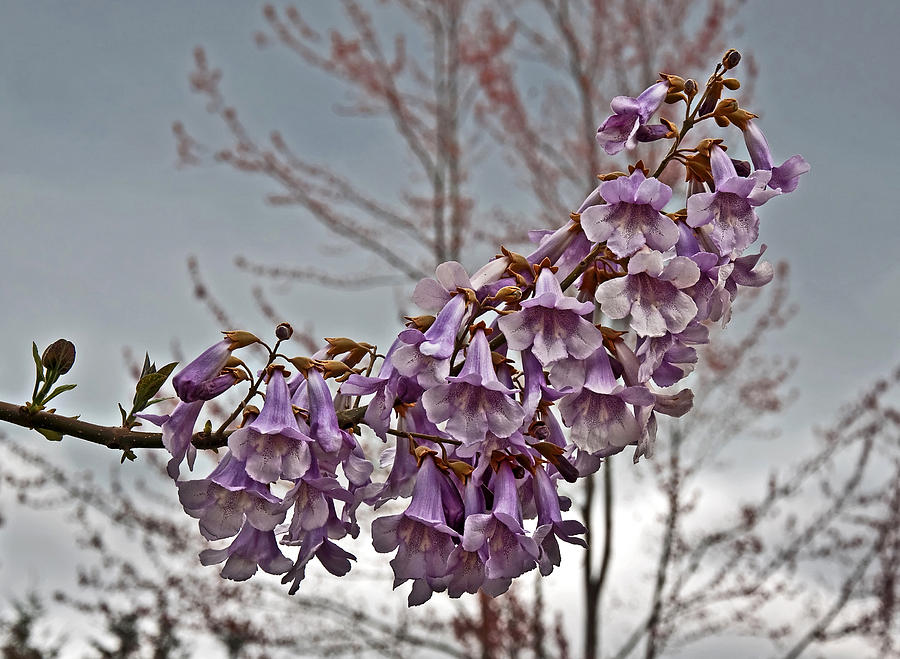
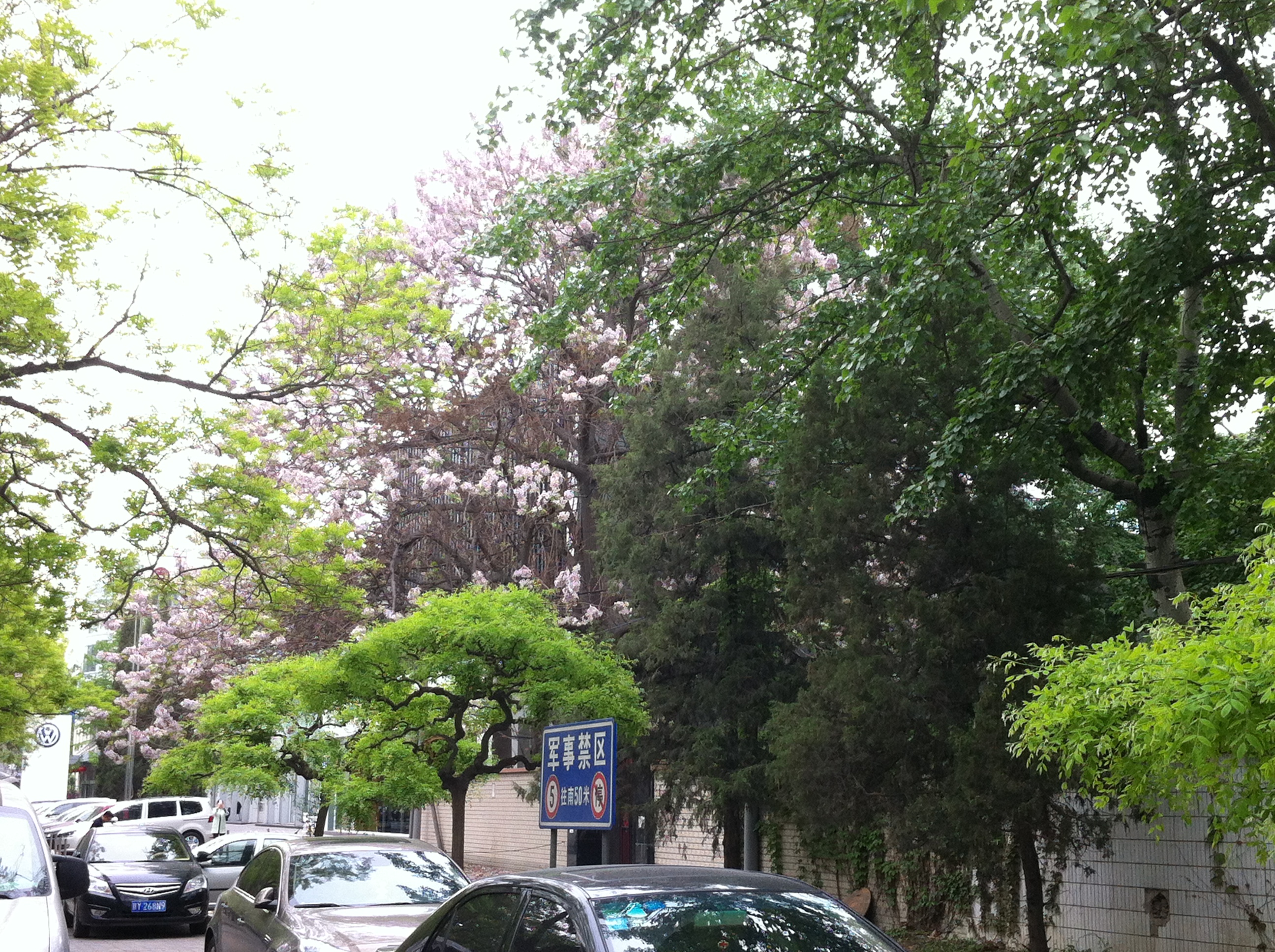
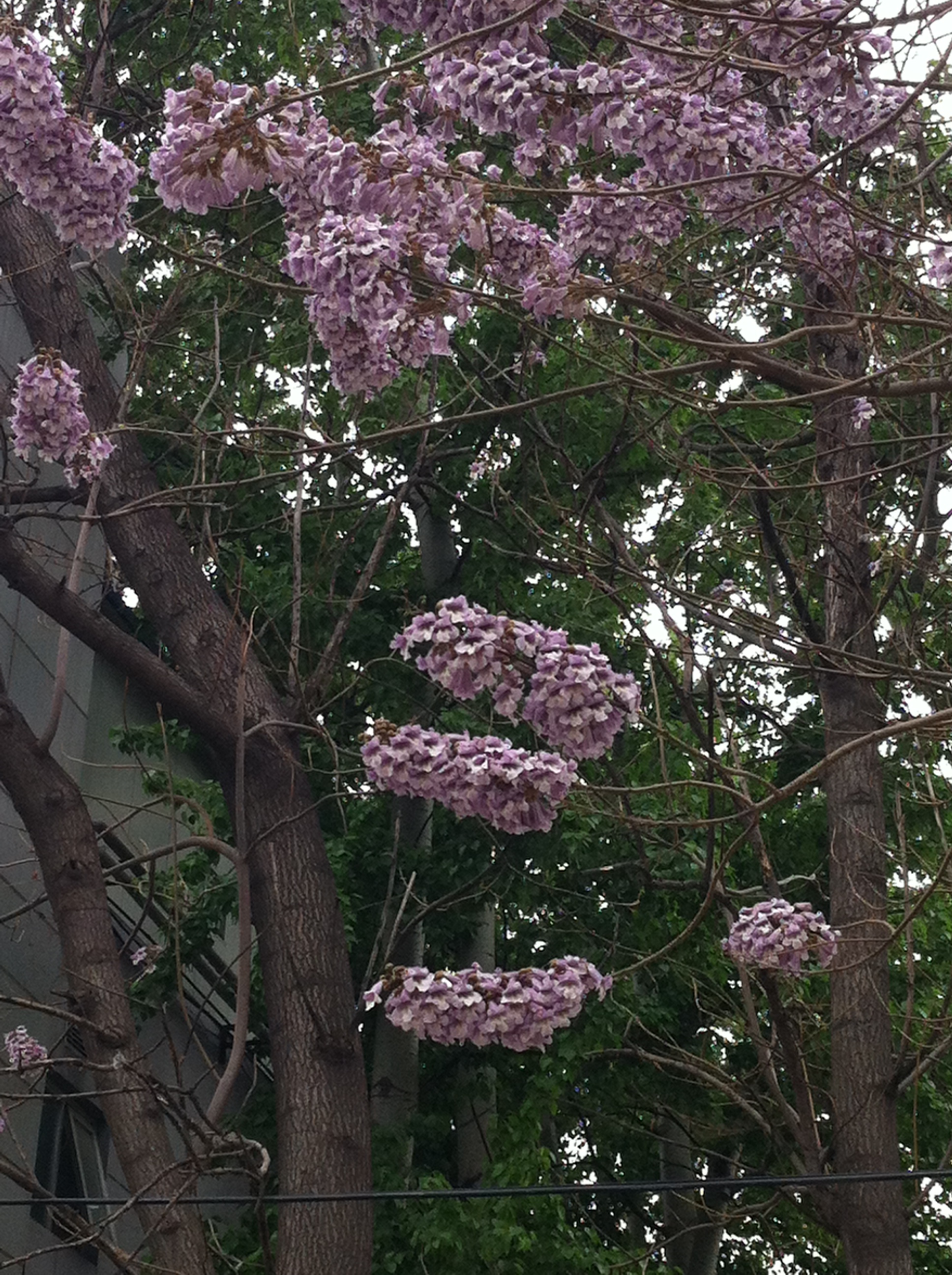
I just said that the barracks is discretely located. One of the things that helps it maintain this discretion is a screen of trees along the inside of the barracks wall which lean gracefully out over the pavement, giving the whole a feeling of a courtyard of a normal housing estate. Some of the trees in question are Paulownias, and at this time of the year, when they are in flower, they are magnificent.

paulownia at the barracks April 2014 002

paulownia at the barracks April 2014 003

paulownia at barracks 001

I throw in for good measure a photo which my wife took of a road we stumbled across just this morning. It was flanked on both sides by Paulownias, all in flower at the moment and, my wife tells me, smelling heavenly (I smelled nothing; the pollution must be getting to my olfactory organs)
paulownia along road FN 003

As usual, I did a bit of research on the tree before writing this post and discovered that it was so named by a Dutch botanist, Siebold, in honour of the-then Queen of the Netherlands, Anna Paulowna, daughter of Tsar Paul I of Russia. The choice of name was not very apt for this lovely tree; the queen was by all accounts rather full of herself. She was arrogant and distant towards the public, she valued pomp, etiquette, and formal ceremonies and rituals, and she felt she had married beneath herself, her husband being a mere kinglet while she was the daughter of a great emperor.

Anna Paulowna

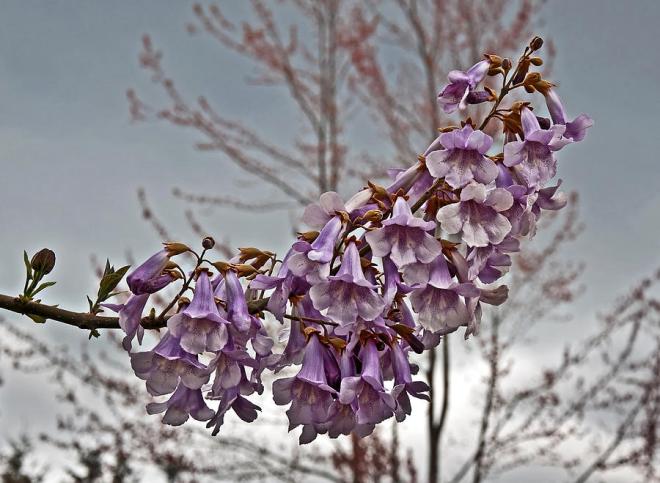
Not at all the kind of person I like. I suppose Siebold was sucking up to royalty by naming the tree after her. But I don’t need to suck up to royalty, so instead I will use its Chinese name, tongmu. Because, apart from anything else, like the wisteria, the magnolia, the weeping willow, the persimmon, and the gingko, about all of which I have written recently, the Paulownia is Chinese – this is getting to be a bit of a habit, this discovering that plants I had come to know and love in Europe are actually Chinese immigrants. It’s also getting to be a habit to discover that the route of immigration was via Japan; it seems that this is where Siebold discovered the plant and brought it back to Europe.

The tongmu is sometimes called the foxglove tree because the flowers, both in their bell-like shape (or finger-glove shape) and in their clustering effect look like foxgloves:


foxglove flower

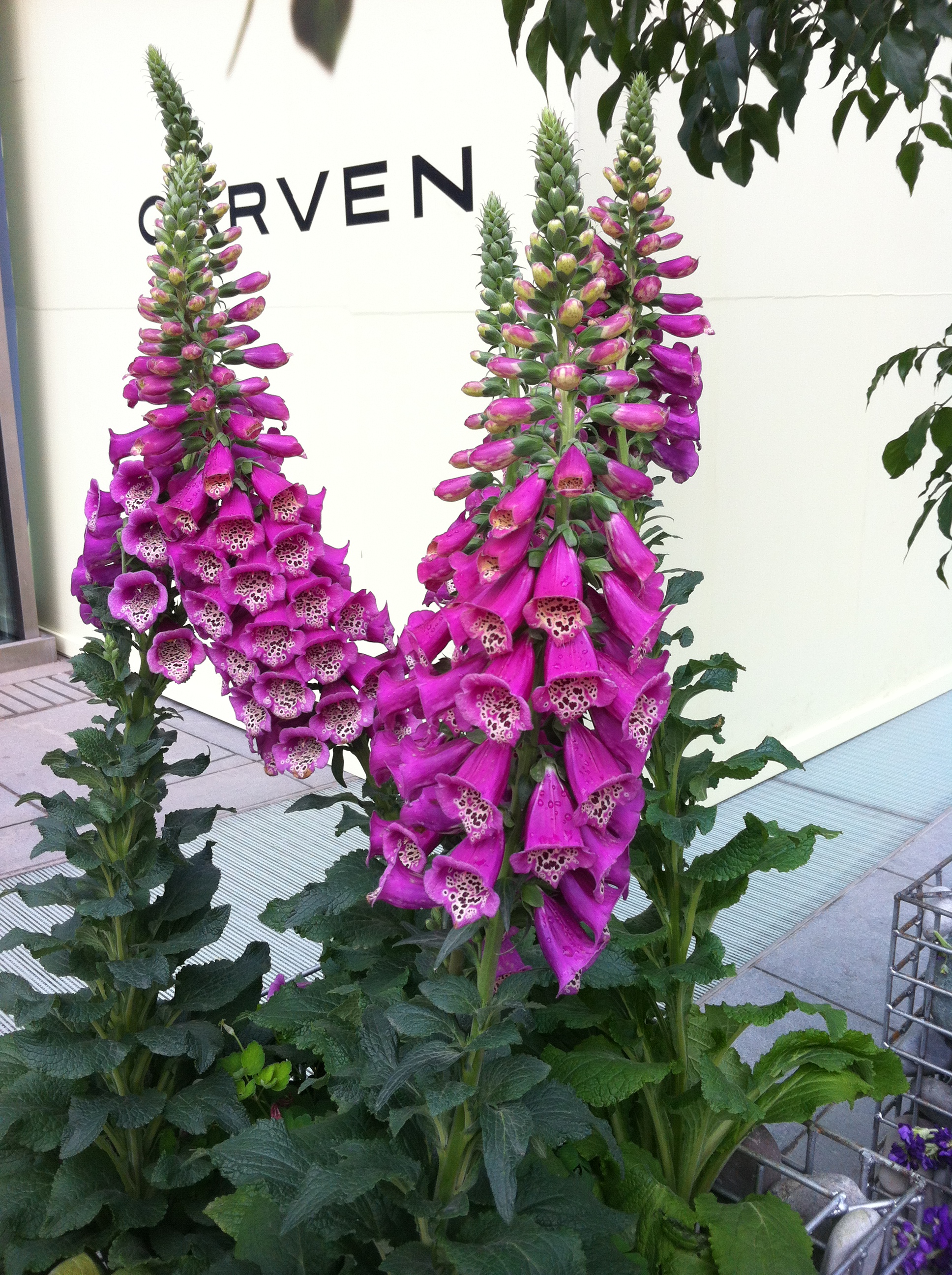
This happy resemblance allows me to conclude with the thought that despite appearances to the contrary the botanical flow has not been all one way. Plants have flowed from Europe to China. This was brought home to me just now when I noticed foxgloves planted – for advertising effect only, I think – in front of a shop at the South Village mall down the road at Sanlitun

foxgloves at sanlitun 001
The foxglove is native to western and southwestern Europe, western and central Asia, northwestern Africa, and Australasia (the last I find odd; there must be a story in there: how did foxgloves end up being native in Australia?)

______________

Guards at UK embassy: http://cdn.24.co.za/files/Cms/General/d/2362/ac78b462d715435cb3207a3c45bb415a.jpg [in http://www.news24.com/Multimedia/World/Margaret-Thatcher-remembered-20130409%5D
Guards marching along pavement: our photo
Guards marching across the road: our photo
Paulownia in flower in front of the barracks-1: our photo
Paulownia in flower in front of the barracks-2: our photo
Paulownia in flower in front of the barracks-3: our photo
Paulownia along the road: our photo
Anna Paulowna: http://upload.wikimedia.org/wikipedia/commons/f/fc/Jan_Baptist_van_der_Hulst_-_Koning_Willem_II_en_familie.jpg [in http://en.wikipedia.org/wiki/Anna_Pavlovna_of_Russia%5D
Paulownia flower: http://images.fineartamerica.com/images-medium-large-5/1-rare-foxglove-tree-paulownia-tomentosa-blooms-valerie-garner.jpg [in http://fineartamerica.com/featured/1-rare-foxglove-tree-paulownia-tomentosa-blooms-valerie-garner.html%5D
Foxglove flower: http://www.plants4less.co.uk/ekmps/shops/plants4less/images/digitalis-purpurea-woodland-foxgloves-purple-225-p.jpg [in http://www.plants4less.co.uk/digitalis-purpurea-woodland-foxgloves-purple-225-p.asp%5D
Foxglove flower in Sanlitun: our photo

WISTERIA

Beijing, 13 April 2014

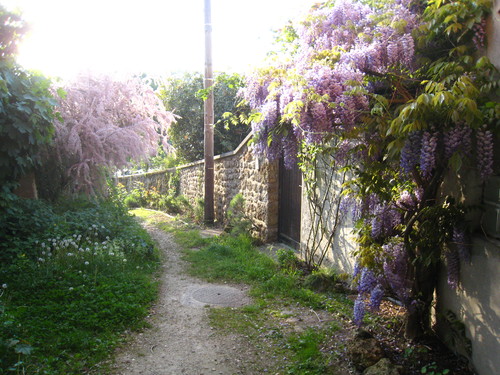
My French grandmother’s house was … old-fashioned, shall we say. Among its many quirks was the fact that it did not have a flush-toilet. Instead, you eased yourself into this small, cluttered space, and you parked your derriere (your backside) on this beautiful wooden seat to do your besoins (your needs), as the French delicately put it. Once finished, you pulled a lever to open a trap door at the bottom of the porcelain bowl and off went your besoins, helped along with a generous portion of water you poured in from a large enameled metal jug. The exhalations emanating from the opened trap door were sometimes eye-wateringly powerful, and there was always a generally musty smell in the loo. However, the olfactory downsides were more than offset by the beautiful view from the window, framed as it was by the bright green leaves of a wisteria vine which snaked up the outside wall and onto the roof. The view was that much more beautiful in spring when clusters of the wisteria’s light purple flowers thrust themselves at the window. When my mother inherited the house, one of the first things she did was to install a flush toilet. But the wisteria remained. In fact, after my parents retired there my mother encouraged it to spread to other walls nearby, which made it a rare pleasure to go and visit my parents in spring. This is not a photo of the house, but it gives an idea of what would greet my wife and I, with children in tow, after a long drive up from Italy in May.
glycine sur mur-2
Since those moments in my grandmother’s loo, I have always had a weak spot for wisteria. At the right moment of the year, I keep an eager lookout for a sudden froth of light purple flowers popping up over a wall or in the corner of a garden. I have a particularly powerful memory of a bike trip which my wife and I made many years ago along the Loire valley, where between one Renaissance chateau

chateau_amboise

and another

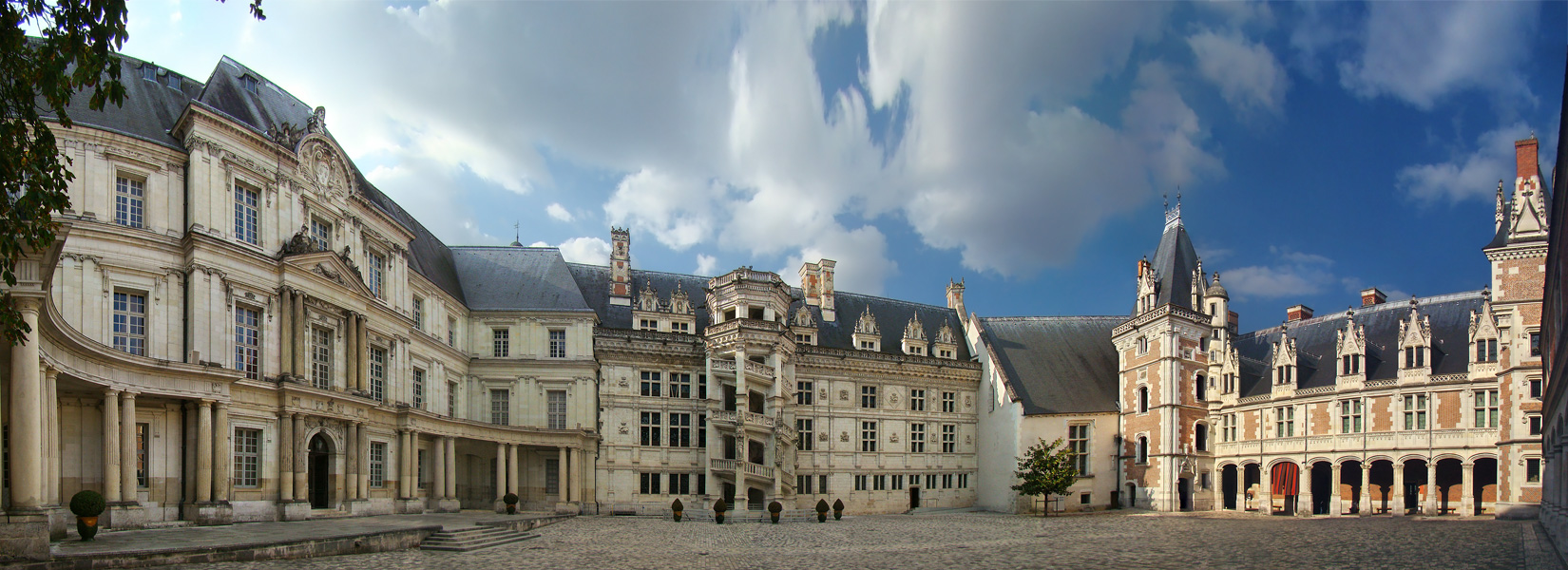
chateau_Blois

we would run into cascades of wisteria – every garden seemed to have a wisteria.
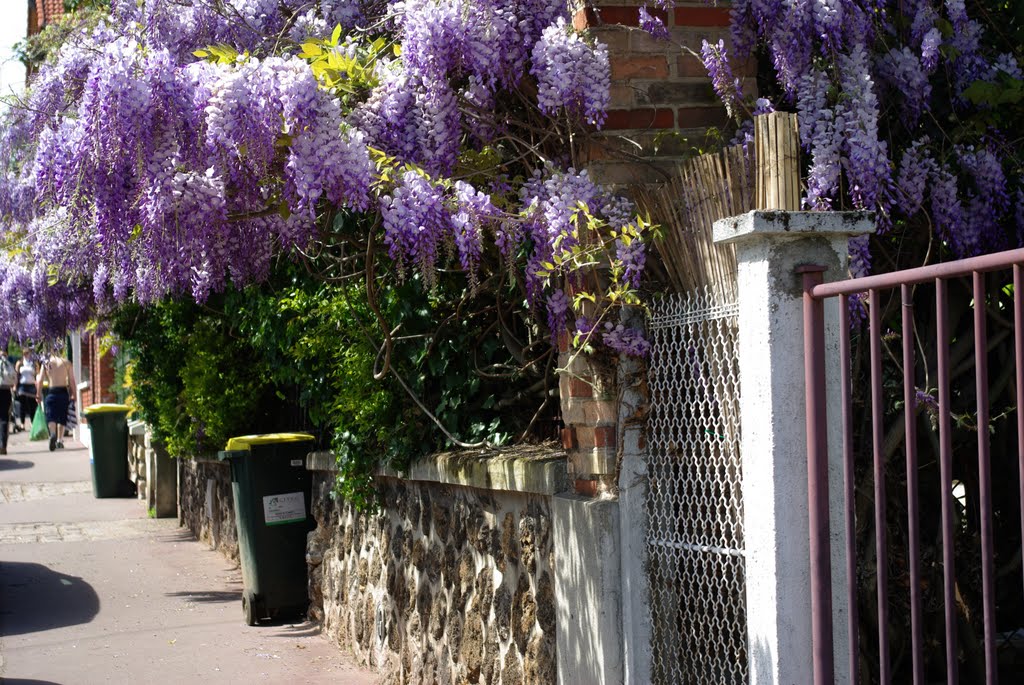
glycine dans la vallee de la Loire-1

glycine dans la vallee de la Loire-2
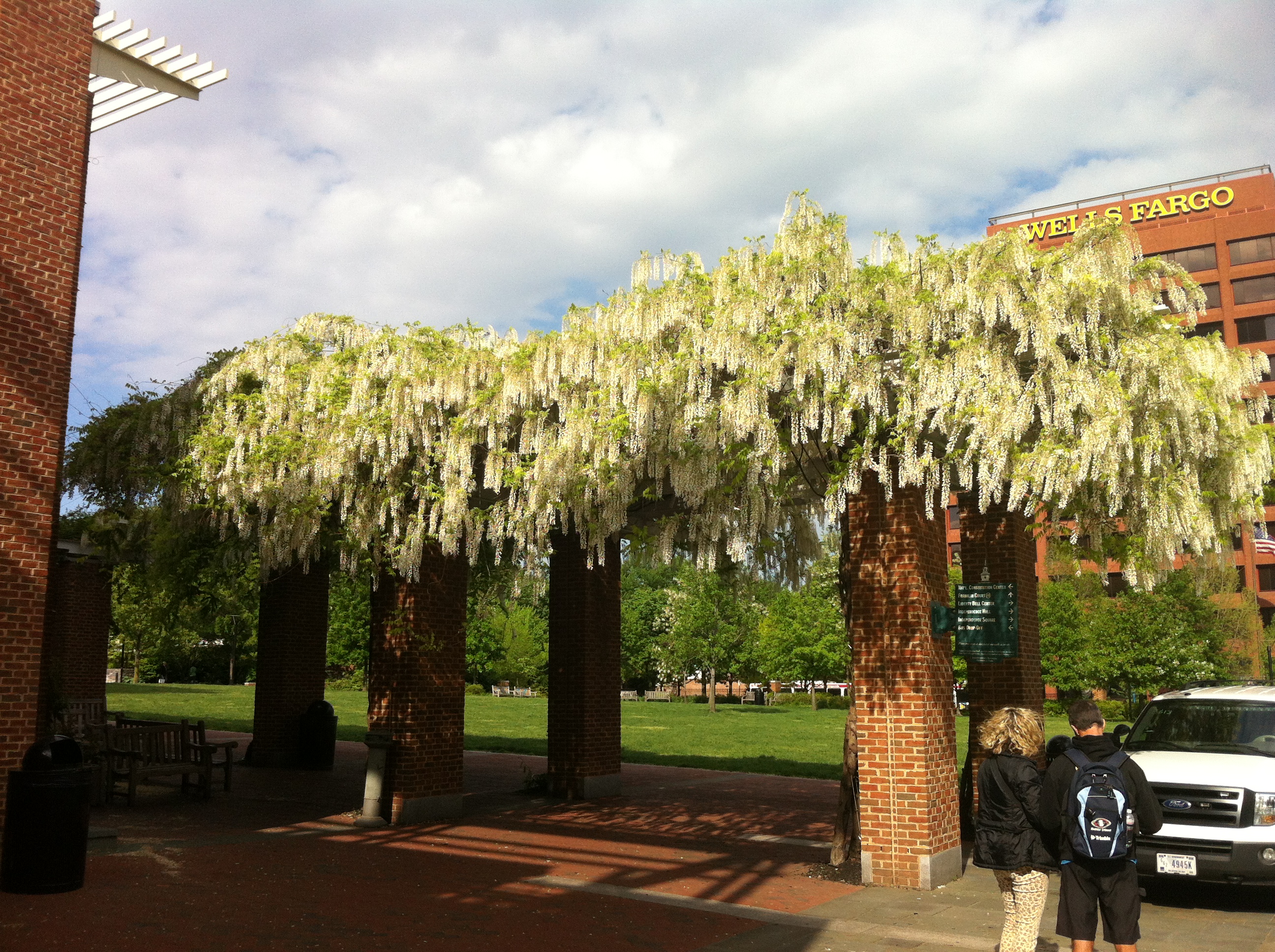
And just last year, when we were in Philadelphia, we stumbled onto a pergola covered by a thick coat of white wisteria, which was a first for me (I’ve mentioned this in an earlier post but I repeat the photo)
white flowers 003
And the neighbours to our rooftop garden in our last apartment in Vienna had planted a wisteria, which coiled and twisted its way onto our side, an intrusion we gladly accepted since it rendered so pleasant those first days in spring when my wife (with a very little help from me) toiled at her garden tubs, planting and repotting, after the long sleep of winter. In fact, jealous at their success, I purchased a modest wisteria plant for our side, with dreams of it eventually smothering our balcony. Alas, it perished miserably that summer while we were away for our holidays.

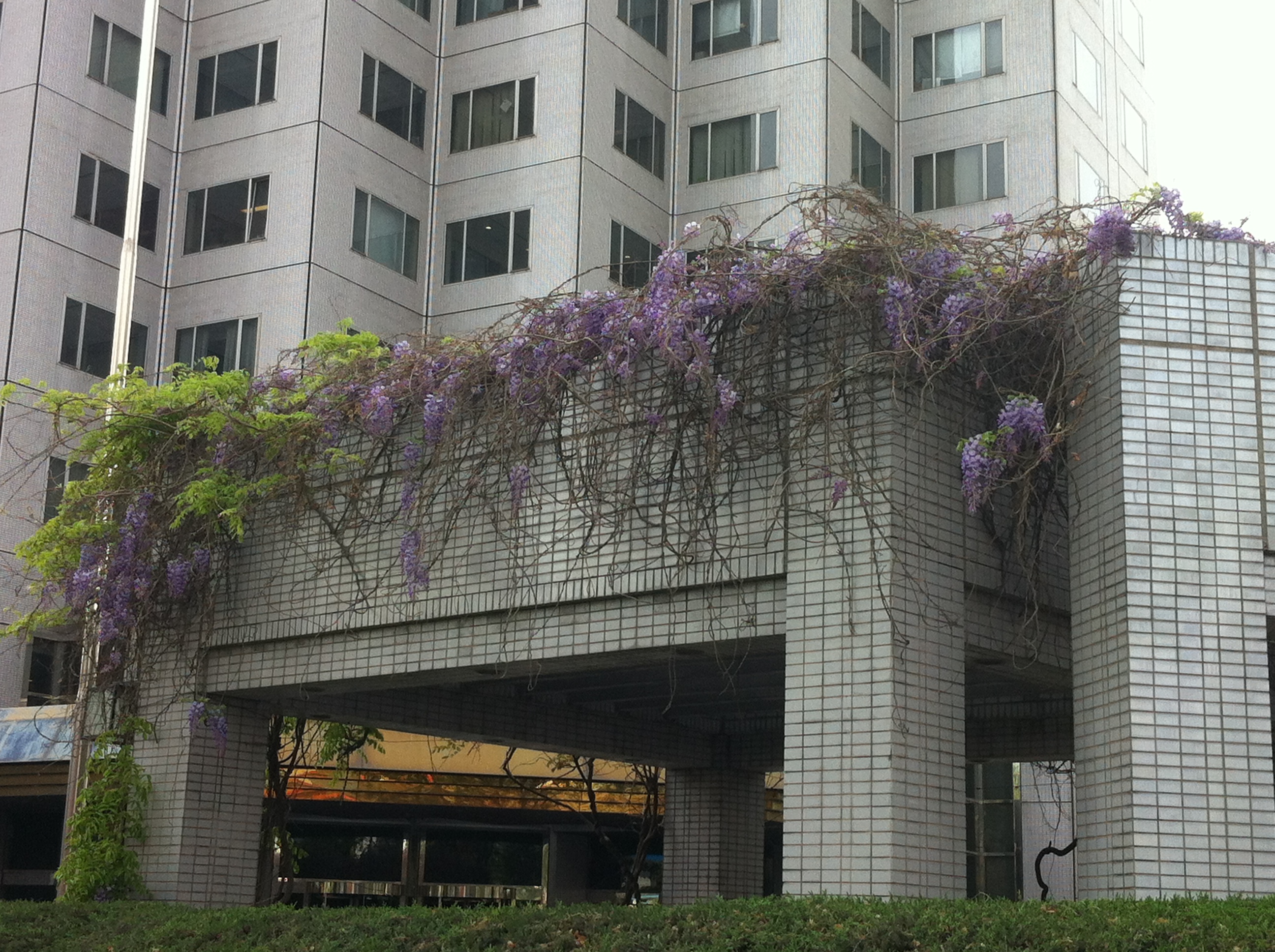
So you can understand my pleasure when I saw that the wisteria across the road from our apartment in Beijing had flowered
wisteria beijing

although I mentally castigated the management of the building for not doing a little pruning.

For the first time in my life, I read up a bit on wisteria. And the first thing I discovered is that wisteria is Chinese! Well, there’s also a Japanese wisteria. And two American wisterias. But no European wisteria! So once again, like the weeping willow which I wrote about in my last post and the magnolia which I wrote about a few posts earlier, Europeans have borrowed a plant from China, or maybe in this case from Japan (but not from the US; American wisteria don’t seem to be gardeners’ favourites, even in the US itself, since their flowers are of more modest size, bloom for less time, and are scentless). When you read these cases, you begin to understand why the poorer countries complain about pharmaceutical and other companies from the richer countries coming and “borrowing” their flora and making a fortune selling them, or their chemical components, back home.

But now I’m left with a tricky question: was the wisteria at my grandmother’s house Chinese or Japanese? The literature tells me that the flower-clusters (racemes in the horticultural lingo) of the Japanese wisteria are longer than those of the Chinese wisteria, but I’m buggered if I remember the length of those racemes nodding at the loo window. And anyway, I’m sure raceme lengths are all averages, so I don’t think this would be a good way for an uneducated plant man like me to distinguish a Chinese wisteria from its Japanese cousin. A far more powerful way of distinguishing the two seems to be the direction of twining which the vine adopts. Chinese wisteria twine clockwise, while Japanese wisteria twine counter-clockwise! (I love it; isn’t that a great way of figuring out where a plant comes from? But why would one twine one way and the other the other? The mysteries of genetics). I must remember to send my sister an email (she inherited the house, did further massive works, but kept the wisteria) and ask her which way the wisteria twines. This will no doubt be the moment she concludes that I have finally lost it …

______________

Wisteria on the house: http://img.over-blog-kiwi.com/0/53/56/12/201305/ob_bbf5590f142c0c0c464830009f54793b_img-8686.JPG [in http://mounic.over-blog.com/lieu-saint-de-provence%5D
Château d’Amboise : http://www.chateau-amboise.com/oktThemes/p-c094-01/images/chateau_amboise_accueil.jpg [in http://www.chateau-amboise.com/en/%5D
Château de Blois : http://upload.wikimedia.org/wikipedia/commons/f/fb/Loire_Cher_Blois1_tango7174.jpg [in ] http://en.wikipedia.org/wiki/Ch%C3%A2teau_de_Blois
Wisteria along the road-1: http://mw2.google.com/mw-panoramio/photos/medium/22548315.jpg [in http://www.panoramio.com/user/701296/tags/Season%20Spring?photo_page=2%5D
Wisteria along the road-2: http://static.panoramio.com/photos/large/34926262.jpg [in http://www.panoramio.com/user/701296/tags/Season%20Spring?photo_page=2%5D
Wisteria in Philadalphia: my photo
Wisteria in Beijing: my photo

PEKING WILLOW

Beijing, 9 April 2014

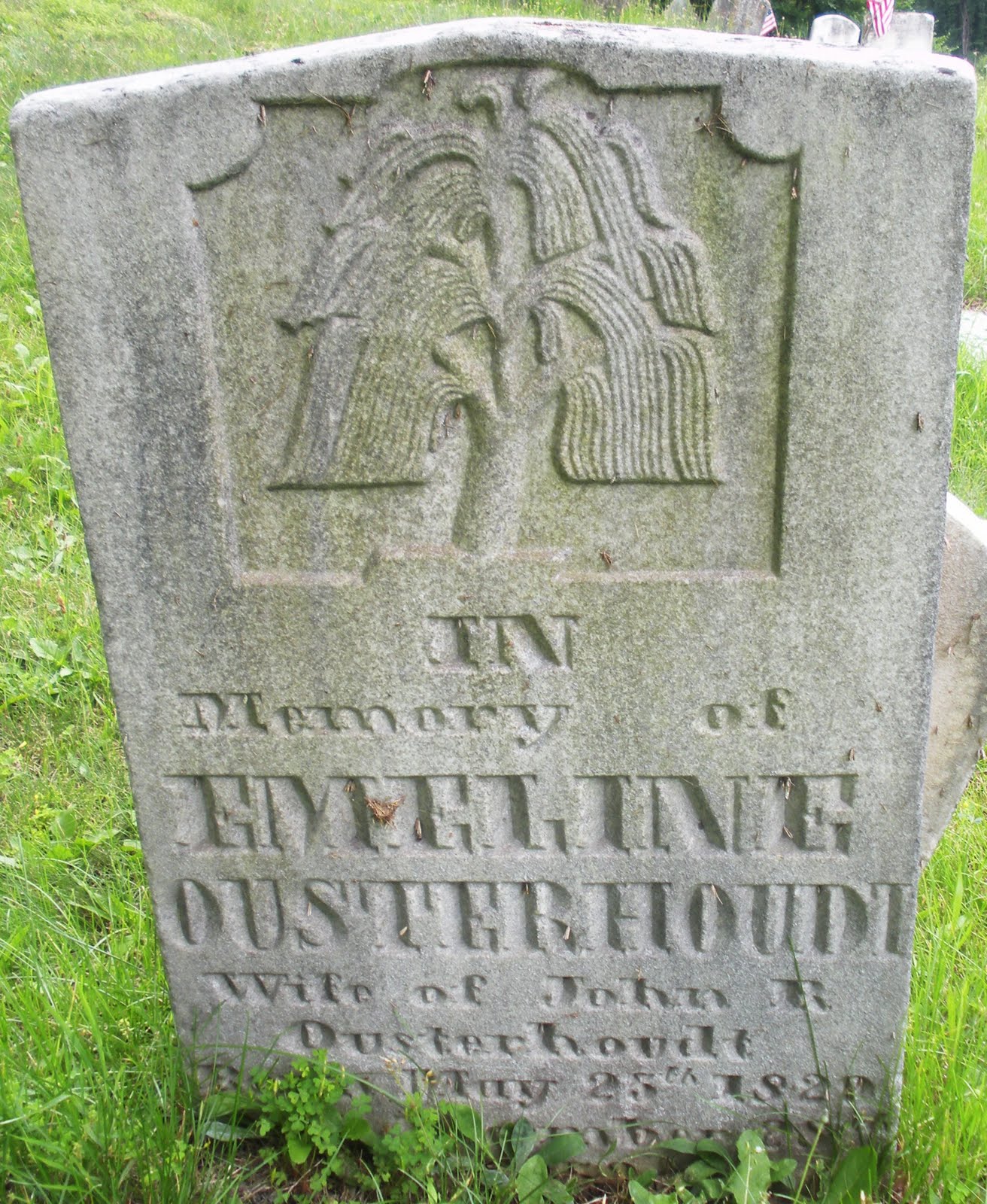
The somber, funereal tone of my last post seems like a good place to start this one – a tombstone

Weeping Willow on gravestone

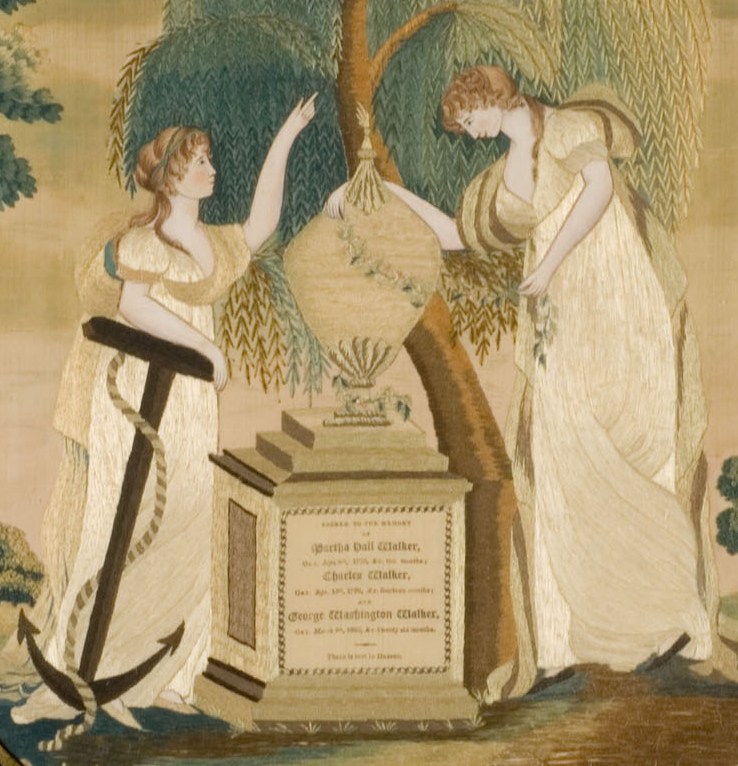
This one has a weeping willow on it, a common symbol on tombstones 200 years ago. Its drooping branches symbolize, you’ve guessed it, the weeping of the world at your passage to the next. Here’s another in the same genre from the same period, this time a piece of needlework memorializing the death of three babies.

BT OA FR

And then there were the ballads which used the weeping willow as the symbol of death, lost love, or both:

My heart is sad and I’m in sorrow
For the only one I love
When shall I see him, oh, no, never
Till I meet him in heaven above

Oh, bury me under the weeping willow
Yes, under the weeping willow tree
So he may know where I am sleeping
And perhaps he will weep for me

They told me that he did not love me
I could not believe it was true
Until an angel softly whispered
He has proven untrue to you

Oh, bury me under the weeping willow
Yes, under the weeping willow tree
So he may know where I am sleeping
And perhaps he will weep for me

 Etc. You get the picture.

The weeping willow’s symbolism was used a bit more elegantly in Psalm 137 of the Old Testament, that lyrical lament about the pains of exile, in this case that of the Israelites who had been marched off to Babylon from Jerusalem:

By the rivers of Babylon—
there we sat down and there we wept
when we remembered Zion.
On the willows there
we hung up our harps.
For there our captors
asked us for songs,
and our tormentors asked for mirth, saying,
“Sing us one of the songs of Zion!”

 How could we sing the Lord’s song
in a foreign land?
If I forget you, O Jerusalem,
let my right hand wither!
Let my tongue cling to the roof of my mouth,
if I do not remember you,
if I do not set Jerusalem
above my highest joy.

jewish bible with picture

I’ve left out the last verse where the poet gets vengeful and nasty, talking about taking the babies of their captors and bashing their brains out against the rocks …

But if we brush aside the drooping veil of gloom, we find a really beautiful tree, for the most part sitting elegantly near a body of water, into which its trailing branches will often dip.

weeping willow tree

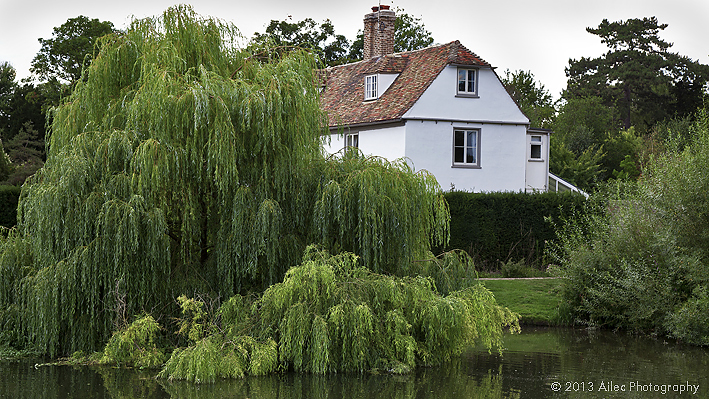
And such an English tree! (well, you also find them on the continent but we’ll ignore that). Here’s a weeping willow on the edges of a pond in Grantchester, in which, so it is said, the poet Byron swam.

weeping-willow-Grantchester

Here are students punting on the river Cam in Cambridge with some weeping willows languidly brushing the water’s surface.

weeping willows on the River Cam

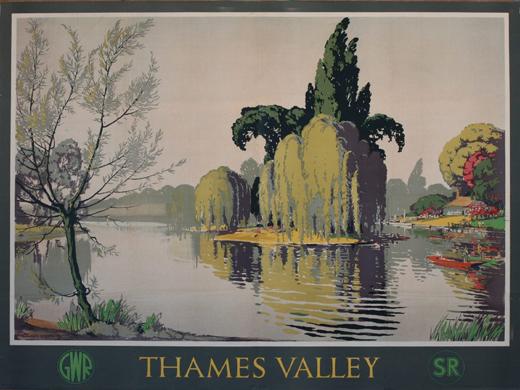
Here is a 1946 poster from the Great Western Railway, inviting Londoners to take a day out in the Thames Valley, with a weeping willow centre stage beckoning to them.

great western railway-thamesvalley

Talking of the Thames, here is the cover of that most English of children’s books, The Wind in the Willows, where we see our friends Mole, Ratty and Toad on the river Thames, waving to Badger on the shore, the whole discretely framed by weeping willows

the_wind_in_the_willows

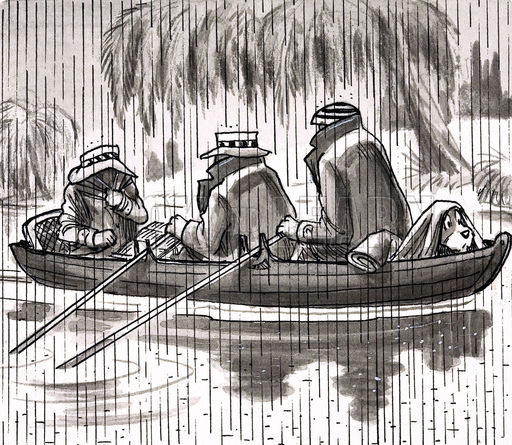
And of course there’s Three Men in a Boat, a book about – well, three men in a boat, messing around on the same river Thames (a book much loved by my father-in-law, in passing). Here we have them in that quintessentially English situation, rain, together with that quintessentially English animal, the dog, with some weeping willows in the background.

Three Men in a Boat by Jerome K. Jerome

Yes, all very English.

Except that the weeping willow isn’t English.

It’s Chinese.

Well, half-Chinese.

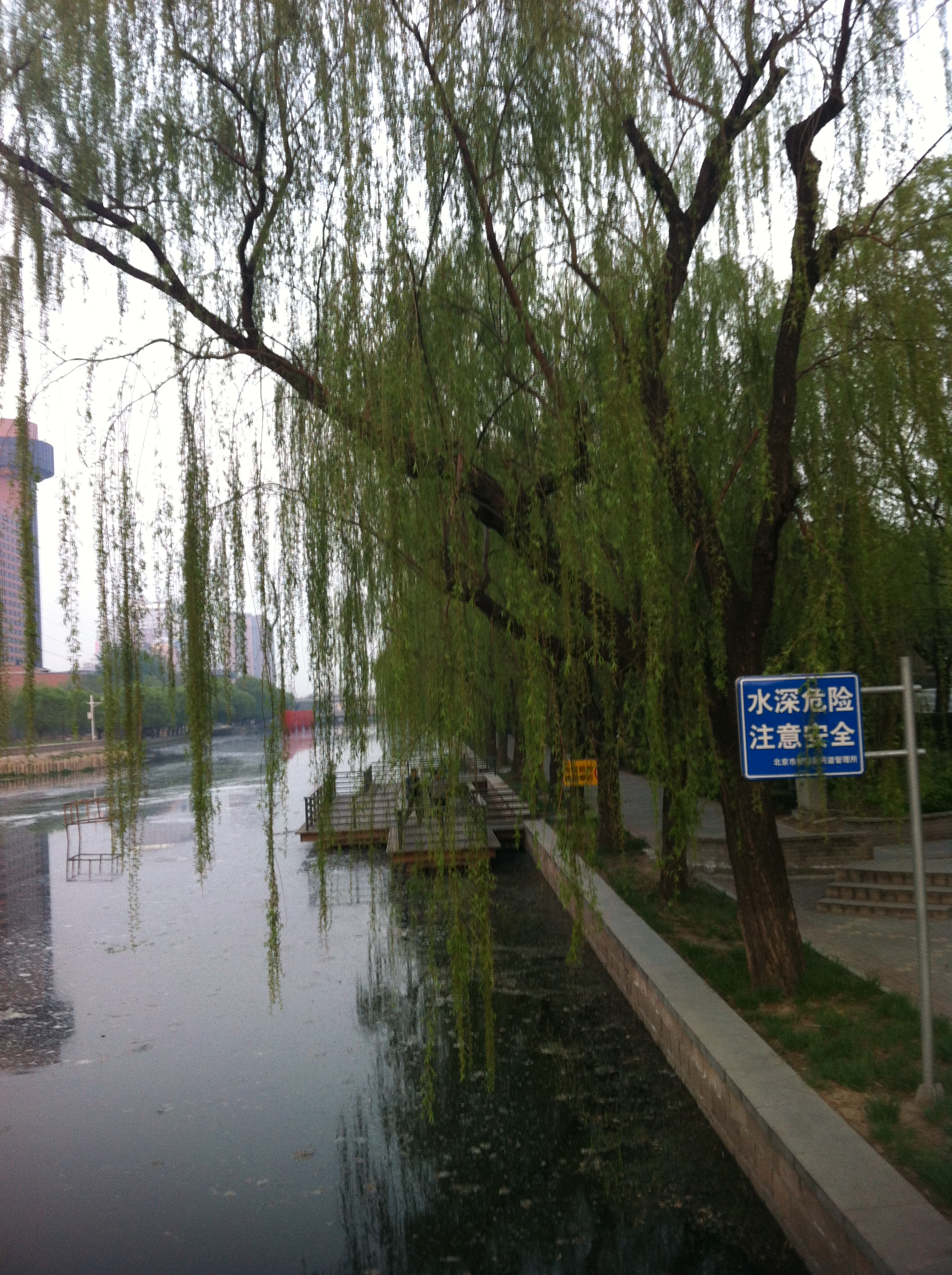
Yes, the willows, suitably called Peking willows, lining my piece of canal in Beijing

peking willows 004

are the ancestors of all those graceful weeping willows whose photos I have included above. It is they which carry the gene that makes the tree’s branches weep.

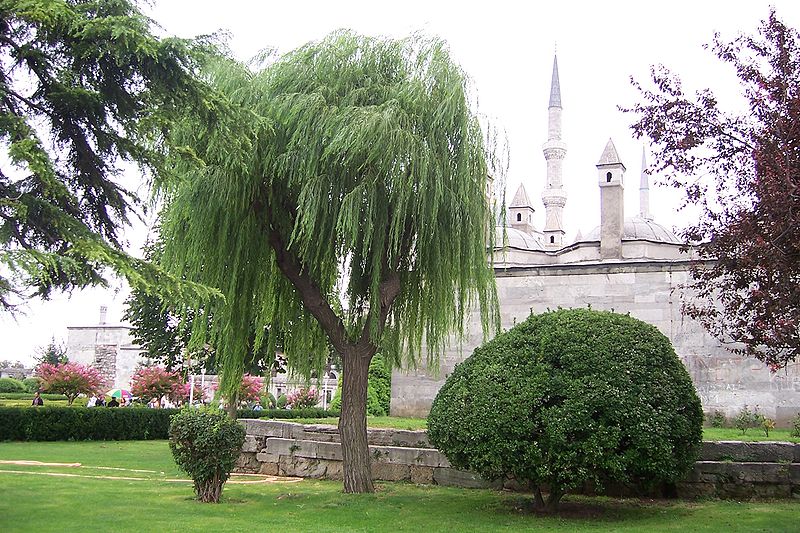
Somehow, for some reason, cuttings or seeds from these trees made their way to the west. I have read that they were moved along the Silk Road. Probably, traders from the west were charmed by the trees’ weeping branches and wanted them in their gardens. I’ve looked for pictures of Peking willows planted along the Road. The best I have found is a Peking willow in Istanbul.

Salix_babylonica in Istanbul

Not quite on the Road, which ended on the Mediterranean seaboard at Antioch or Tyre or Sidon, but close enough. And maybe one of the ways which the Peking willow entered Europe, through the Balkans.

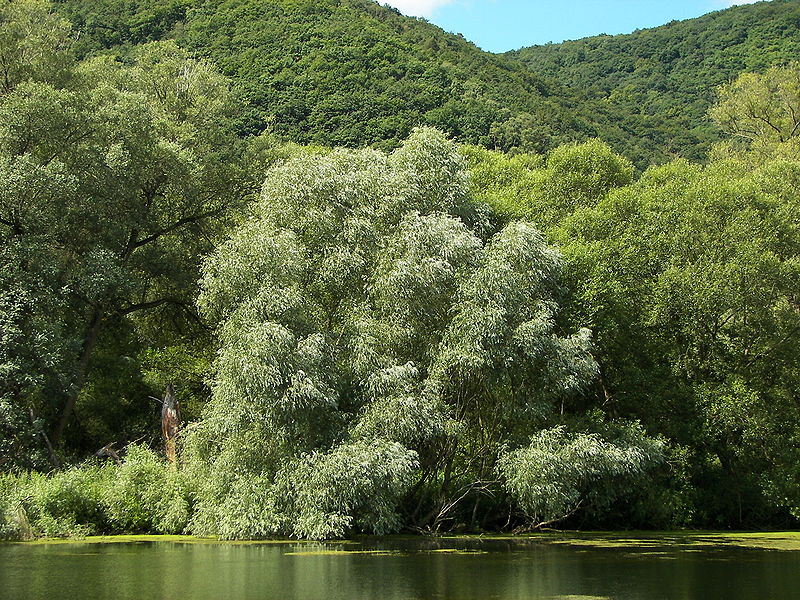
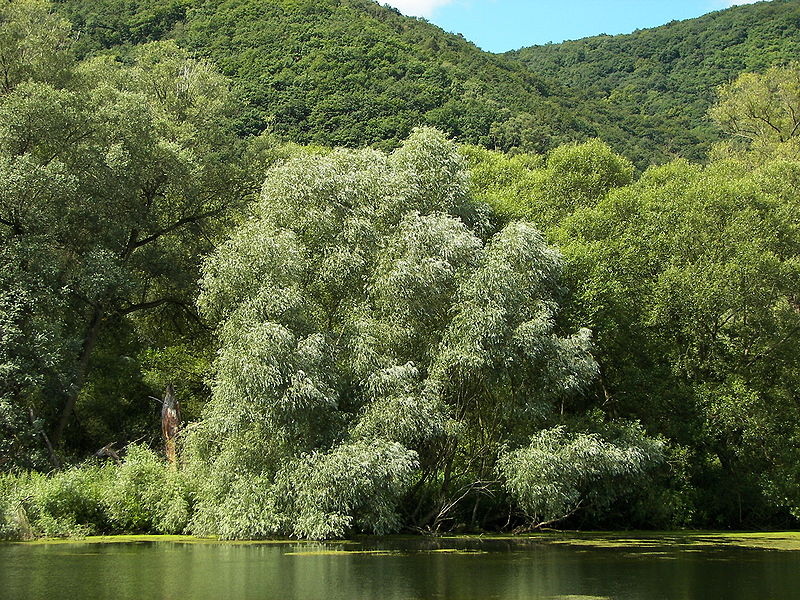
Somewhere along the way further to the west, the Peking willow was crossed with another willow, the European white willow.

white willow

The two were crossed because gardeners found that the Peking willow suffered in the more humid climate of Europe. Its gene pool needed bracing up, as it were.

So the weeping willow is half Chinese, half European.

Although my bubble of Englishness has been pricked, I’m glad to report that the weeping willow is nevertheless half brother –  or perhaps half sister – to that most English of artifacts, the cricket bat! Because these are made from the willow of a cross between the white willow and (possibly) the crack willow (the ancestry on the other side is not clear). So this allows me to insert here a picture of that most English of cricketers WG Grace holding a bat, in an ad for that most  English of condiments, Colman’s Mustard

wg grace with bat

Well, while I’m about it, I might as well also clarify another misconception. The willows by the waters of Babylon under which the Israelites wept were not willows, they were Euphrates poplars.

euphrates poplar

______________________

Tombstone with weeping willow: http://4.bp.blogspot.com/-V965riBwMQE/ThW9WsV_6gI/AAAAAAAAAA4/kGf3gW9vaZ0/s1600/%2523%2523%2523Weeping+Willow+St.+Mark%2527s+Luth+Appenzell+%25283%2529.JPG [in http://callmetaphy.blogspot.com/2011/07/symbol-of-weeping-willow-in-gravestone.html%5D
Girls weeping on tomb: http://mansionmusings.files.wordpress.com/2011/04/mourning-picture-detail.jpg [in http://mansionmusings.wordpress.com/2011/04/29/a-mansion-favorite-returns-home-abigail-walker-needlework-mourning-picture-ca-1803/%5D
Jewish psalter: http://upload.wikimedia.org/wikipedia/commons/9/97/Chludov_rivers.jpg [in http://en.wikipedia.org/wiki/Psalm_137%5D
Weeping willow tree: http://www.blogmagazine.org/wp-content/uploads/2012/05/weepingwillow.jpg [in http://www.blogmagazine.org/2012/05/admiring-the-beauty-of-the-weeping-willow/%5D
Weeping willows Grantchester: http://3.bp.blogspot.com/-3Lkrd8FlSCE/UhFK2RfkItI/AAAAAAAAGiM/v5kklmS41GE/s1600/photograph-of-weeping-willow-Byrons-Pool-Grantchester.jpg [in http://ailecphotography.blogspot.com/2013/08/day-18-august-challenge.html%5D
Weeping willows on the river Cam: http://upload.wikimedia.org/wikipedia/commons/d/da/Punting_on_the_River_Cam_-_geograph.org.uk_-_222149.jpg [in http://commons.wikimedia.org/wiki/File:Punting_on_the_River_Cam_-_geograph.org.uk_-_222149.jpg%5D
“The Wind in the Willows”: http://www.usborne.com/images/covers/eng/max_covers/the_wind_in_the_willows.jpg [in http://www.usborne.com/catalogue/book/1~CS~CSP~3249/the-wind-in-the-willows.aspx%5D
“Three Men in a Boat”: http://s3-eu-west-1.amazonaws.com/lookandlearn-preview/A/A008/A008727.jpg [in http://www.lookandlearn.com/history-images/A008727/Three-Men-in-a-Boat-by-Jerome-K-Jerome?img=2&search=Jerome+Klapka+Jerome&bool=phrase%5D
Great Western Railway poster: http://www.southernposters.co.uk/Destinations/Resources/thamesvalleylarg.jpeg [in http://www.southernposters.co.uk/Destinations/thamesvalley1946.html%5D
Peking willow, Beijing: my photo
Peking willow in Istanbul: http://upload.wikimedia.org/wikipedia/commons/thumb/7/75/Salix_babylonica.jpg/800px-Salix_babylonica.jpg [in http://en.wikipedia.org/wiki/Salix_babylonica#Horticultural_selections_and_related_hybrids%5D
White willow: http://bioweb.uwlax.edu/bio203/2011/girard_stev/maintop.jpg [in http://bioweb.uwlax.edu/bio203/2011/girard_stev/facts.htm%5D
Euphrates willow: http://mw2.google.com/mw-panoramio/photos/medium/49589465.jpg [in http://www.panoramio.com/user/1183385/tags/%D7%A0%D7%97%D7%9C%20%D7%A6%D7%99%D7%9F%5D

MAGNOLIA

Beijing, 4 April 2014

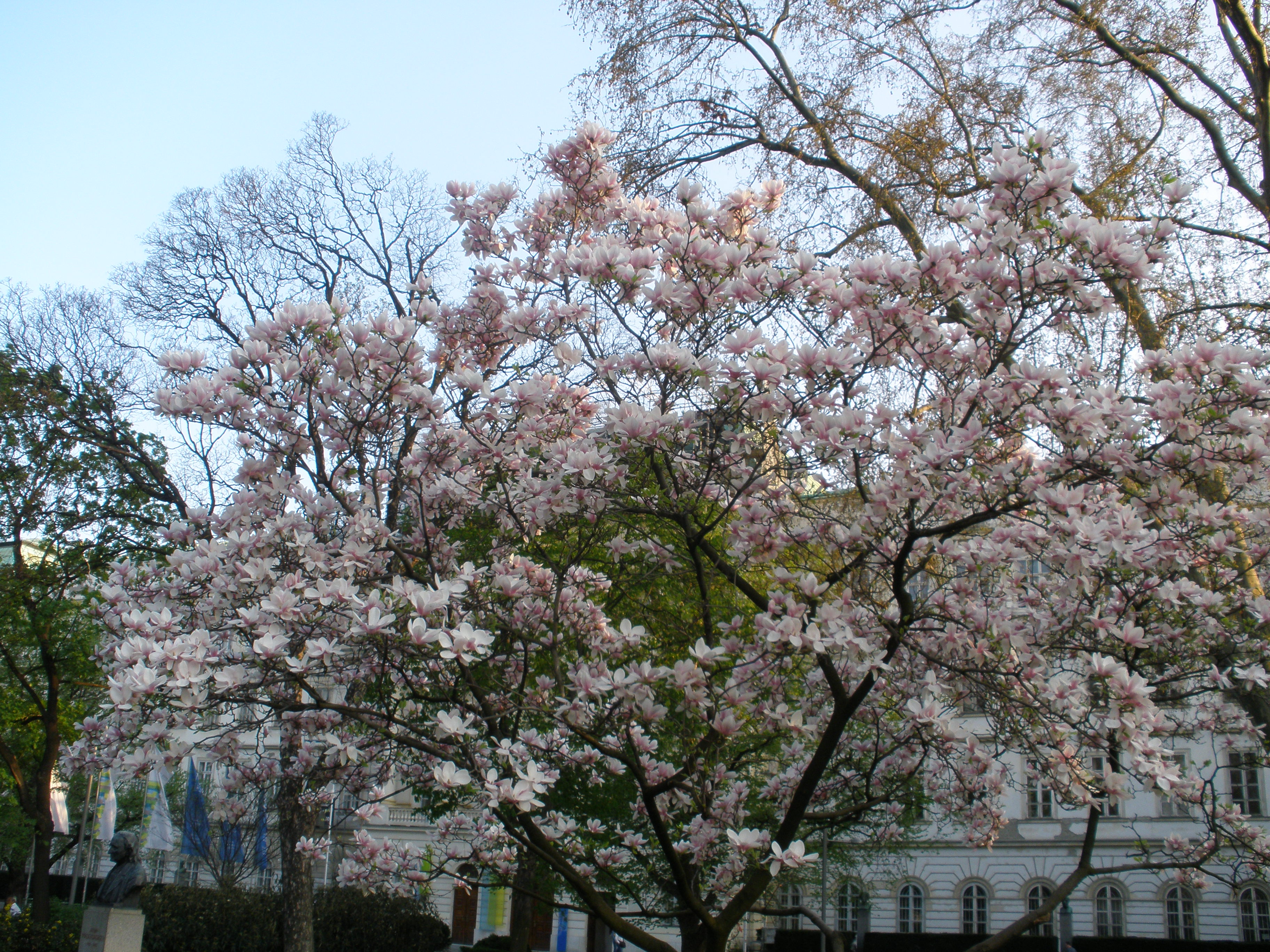
One of my abiding memories of Vienna is the magnolias in flower. I suppose it’s always the case that the first months you spend in a new place imprint themselves more forcefully on your brain’s virtual retina than the remaining years. We arrived in Vienna in February, two months later the magnolias were in bloom. It seemed that every garden and every park had its magnolia tree.
OLYMPUS DIGITAL CAMERA
We would pass one particularly magnificent specimen as we drove the children up to school every day. It was like living in a multiple exposure photo. Every day, as we swept by, we would note its progress, as the buds opened fully, and then the decay, as the flowers wilted and scattered their petals over the pavement.

A month or so later, it was the turn of the city’s multitude of lilac bushes to bloom, another fond memory which I have of Vienna and one about which I have had cause to write an earlier post.

Yes, they were good times.

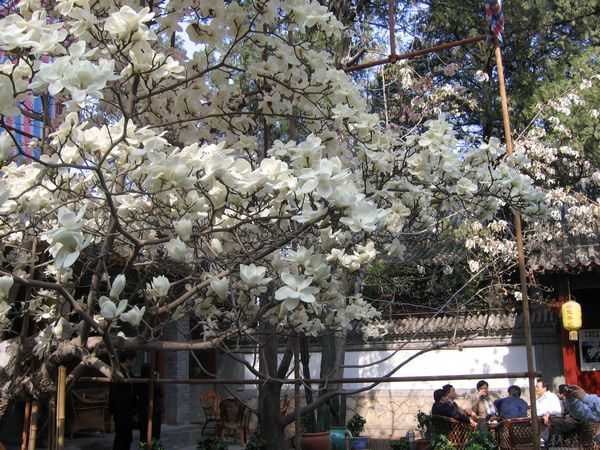
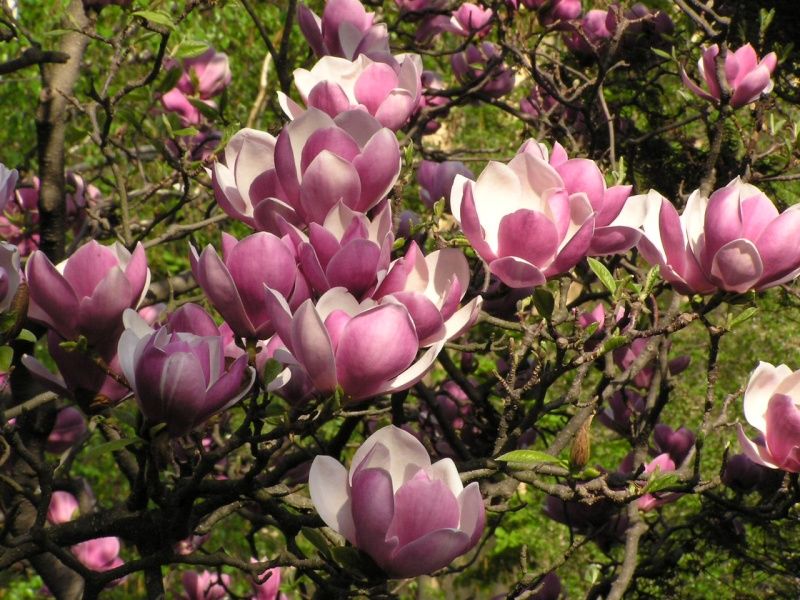
And then, when my wife and I came to Beijing, we found our friends the magnolia trees here, waiting to greet us with their blooms after we emerged from our first Chinese winter. A sight for sore eyes, let me tell you, after all that grey dryness of a Beijing winter. There was a pure white variety
magnolia trees dajue western temple
as well as a pinker type which we were familiar with from Vienna.
Tanzhe western Temple
Then, with the passage of time, I discovered that this tree, which I had, without really thinking about it, assumed was European, was actually Chinese! Actually, it’s a bit more complicated than that. There are nearly hundred different types of magnolia native to China (out of 200-plus native to Asia). The beautiful white magnolia pictured above, which comes from central and eastern China, grabbed the Chinese headlines early on. With its flower rightly regarded as a symbol of purity, it was planted in Buddhist temple gardens and the gardens of the emperors from as early as 600 AD during the Tang dynasty. It is called the Yulan, or jade lily, magnolia; I presume the name refers to the jade-like glossy smoothness of the magnolia’s petals and the sometimes lily-like look of the flower.

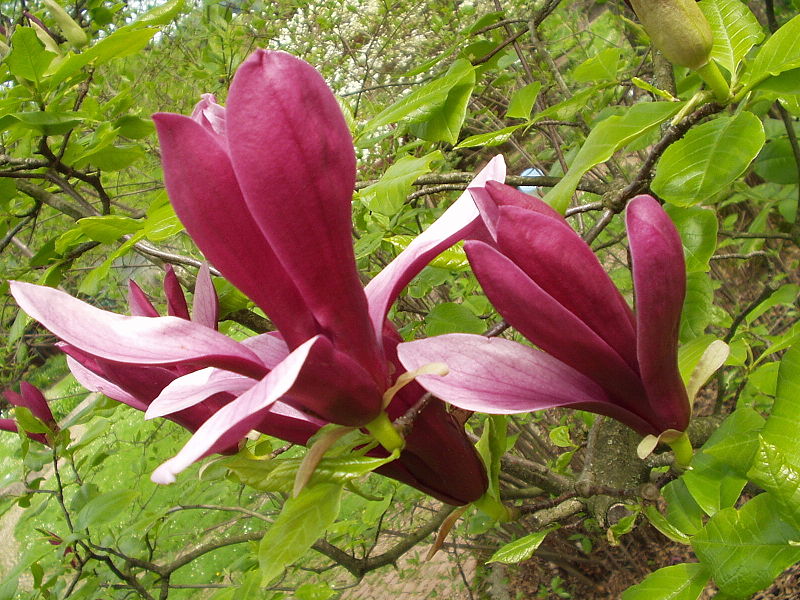
A second magnolia which has also been very popular in China for centuries is the Mulan magnolia which comes from Sichuan and Yunnan provinces.
magnolia lillliflora
Magnolias of course became favourite subjects of the poets, seeing as they spent hours haunting such gardens.

???

Here is the poem Magnolia Slope by Wang Wei, who lived in the 700s AD and is considered “the consummate master of the short imagistic landscape poem that came to typify classical Chinese poetry” (in the words of David Hinton, who made the admirable translation below).

Lotus blossoms adrift out across treetops
flaunt crimson calyces among mountains.

At home beside this stream, quiet, no one
here. Scattered. Scattered open and falling.

As with many things Chinese which were considered the nec plus ultra by the East Asian fashionistas and trend followers of yesteryear, the cultivation of these magnolias was taken up with enthusiasm by the Japanese, from whence – like the Chinese ginkgo tree of which I have written earlier – it made its way to Europe. And there, in 1820, in the grounds of his château of Fromont near Paris, an ex-cavalry officer turned plantsman, Étienne Soulange-Bodin, crossed the Yulan with the Mulan and created the hybrid saucer magnolia.
OLYMPUS DIGITAL CAMERA
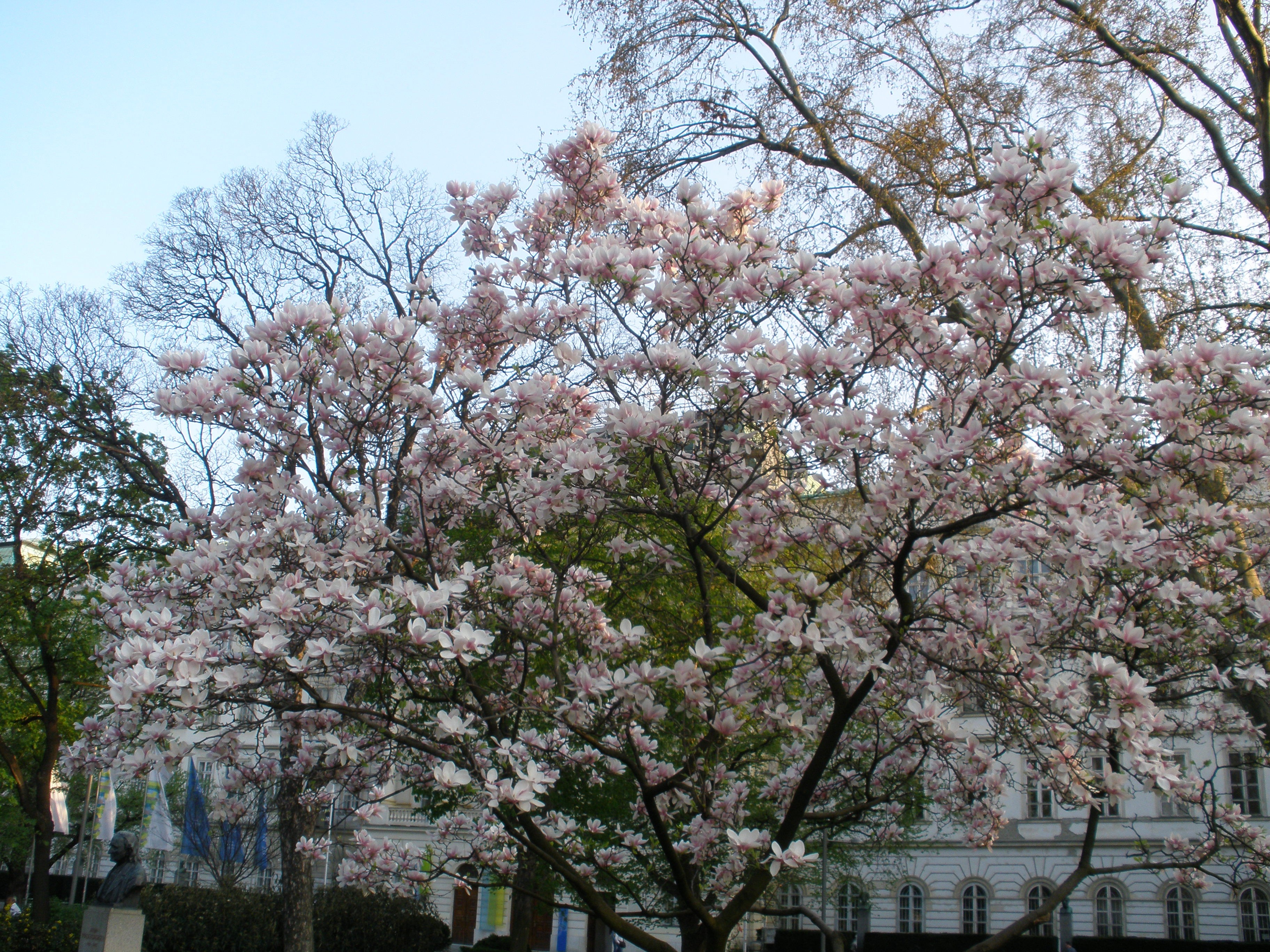
With its large, early-blooming flowers in various shades of white, pink, and purple, this cultivar became immensely popular and spread around Europe (including Austria, no doubt, because I’m sure the Viennese magnolia I described above is one of these), the US, and eventually – I suspect – China, in hundreds of different cultivars as plant breeders continued to play with its gene pool.

Here I have to pause, to consider that other great reservoir of magnolias, the Americas. I said earlier that Asia boasts 200 or more types of magnolias. The Americas are host to another 90 or so. In fact, it was in the Americas, in the Caribbean island of Martinique to be exact, that in the 1690s a French botanist by the name of Charles Plumier discovered and named – in the modern scientific nomenclature; of course it already had a native name, the talauma – the magnolia, after yet another French botanist Pierre Magnol (a lot of French botanists in this story …). I haven’t found a picture of his original drawing of the magnolia which he came across but this one will do as a substitute.
talauma
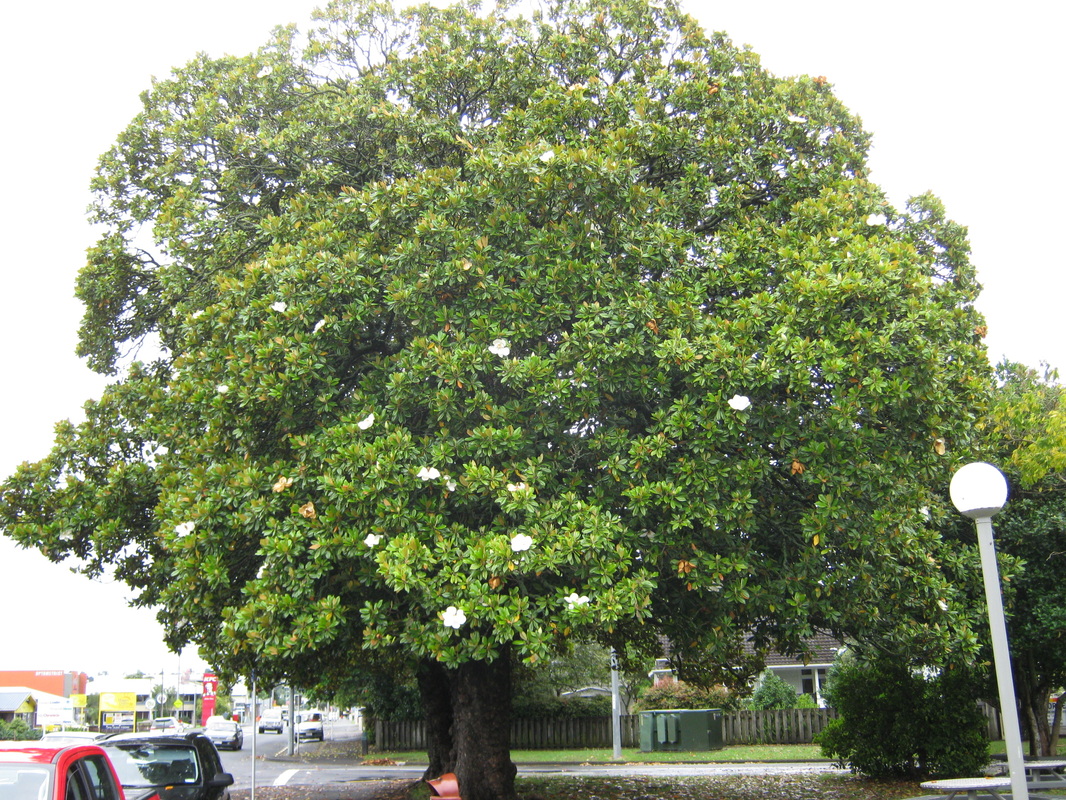
This picture, with its flower surrounded by a thick crown of leaves, sums up nicely a perplexity I had until I did some reading for this post. When we had been in the US, we had come across the southern magnolia, which looked something like this specimen, that is to say, a tree with very thick foliage and a few flowers sprinkled over the whole.
southern magnolia
Very beautiful flowers, by the way.
southern magnolia-flower
I couldn’t relate all this to the magnolias like those above, which are first completely covered with flowers and only get their leaves after the flowers have fallen. Well, the fact is, they are – botanically speaking – part of the same family. It’s just that it’s a very large family (some 300 members all told), and like in all large families distant cousins don’t necessarily resemble each other very much.

Which brings me to my final coda. The magnolia cousins have drifted so far apart because it is an old – very old – genus. It branched off the main tree of trees, if you get my drift, 100 million years or so ago. Fossils of plants identifiably belonging to the Magnoliaceae have been found dating back to 95 million years ago, while a 20 million year-old fossil has been found of the cucumber magnolia, which is native to the Eastern US and has this small flower with lovely yellow hues (in fact, these yellow hues as well as the tree’s cold hardiness have been exploited to create new yellow-flowered hybrid magnolias).
magnolia acuminata
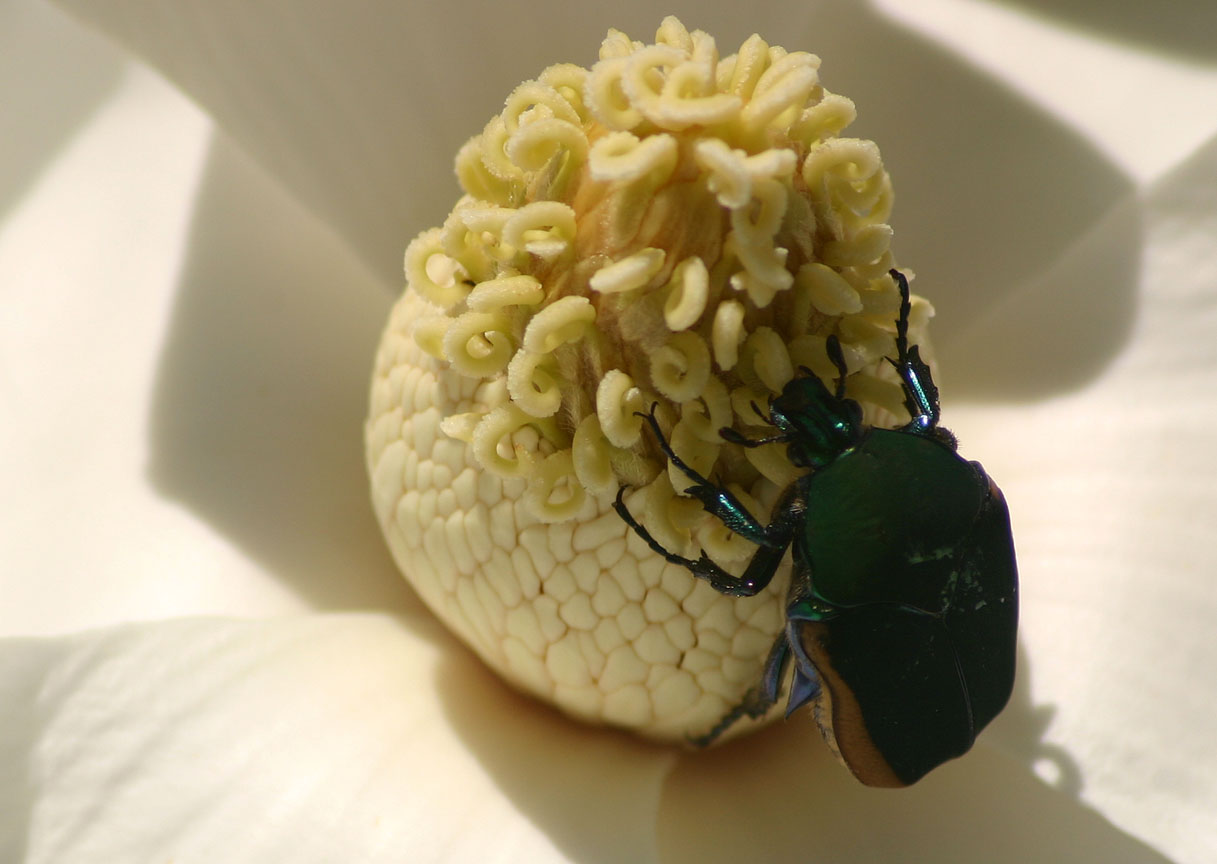
Magnolias are so ancient that they came on the scene as flowering plants before bees, or butterflies, or moths, existed to help along with pollination. So magnolias have evolved to use for pollination the only insects which were around at the time, beetles or flies.
beetle in magnolia-1
And this co-existence with beetles explains the rather leathery petals magnolias have. Compared to bees, beetles are clumsy insects, clomping around all over the flower and with a tendency to snack on the petals as well as the nectar. The leathery petals protect the flowers from these lumbering but necessary partners in the act of procreation.

Oh, and by the way, magnolia flowers don’t actually have petals, they have tepals. And that’s because the flowers are quite primitive, so their sepals and petals are not distinct and differentiated (no idea what that really means, but it sounds impressive).

__________________
Magnolia in Vienna: http://farm3.staticflickr.com/2542/3753020942_3f6c39bb5f_o.jpg [in https://www.flickr.com/%5D
Yulan Magnolia tree in Dajue western temple: http://www.beijingrelocation.com/blog/wp-content/uploads/2013/03/magnolia.jpg [in http://www.beijingrelocation.com/blog/beijing-trees/%5D
Magnolia tree in Tanzhe temple: http://www.travelchina.gov.cn/picture/0/1403261604282295162.png [in http://www.travelchina.gov.cn/art/2014/3/26/art_15_1202.html%5D
Mulan Magnolia: http://upload.wikimedia.org/wikipedia/commons/thumb/d/d6/Magnolienbluete_freiburg.jpg/800px-Magnolienbluete_freiburg.jpg [in http://en.wikipedia.org/wiki/Magnolia_liliiflora%5D
Poet in garden: http://upload.wikimedia.org/wikipedia/commons/1/1a/Wang_Xizhi_by_Qian_Xuan.jpg [in http://en.wikipedia.org/wiki/Chinese_garden%5D
Magnolia soulangeana: http://upload.wikimedia.org/wikipedia/commons/3/3e/Magnolia_x_soulangeana.jpg [in http://en.wikipedia.org/wiki/Saucer_magnolia%5D
Talauma: http://www.plantillustrations.org/illustration.php?id_illustration=90190 [in http://www.plantillustrations.org/epithet.php?epithet=plumieri&lay_out=1&hd=0%5D
Southern magnolia: http://whangareiflora.weebly.com/uploads/8/4/3/9/8439522/6466041_orig.jpg [in http://whangareiflora.weebly.com/exotic-trees.html%5D
Southern magnolia-flower: http://www.magnoliasociety.org/resources/Pictures/images/cultivars/msieboldi8422.JPG [in http://www.magnoliasociety.org/MagnoliaResources%5D
Magnolia acuminata: http://1.bp.blogspot.com/-yf82eYSuRd4/T6gSQGfe2bI/AAAAAAAAAnI/6SgLRh0exIY/s1600/DSCF7584.JPG [in http://welkinweir.blogspot.com/2012/05/may-flowers.html%5D
Beetle in a magnolia: http://blogging.la/wp-content/uploads/2009/06/gjb.jpg [in http://blogging.la/2009/06/28/it-caught-my-eye-the-beetle-the-blossom/%5D

WHAT MASK SHALL WE WEAR TODAY, DEAR?

Beijing, 30 March 2014

We’ve had a bad air day here in Beijing.
smog in Beijing
Actually, we’ve been having a series of bad air days, after a relatively long period of good air days. Due to the change of weather patterns as we move from winter to spring, I imagine.

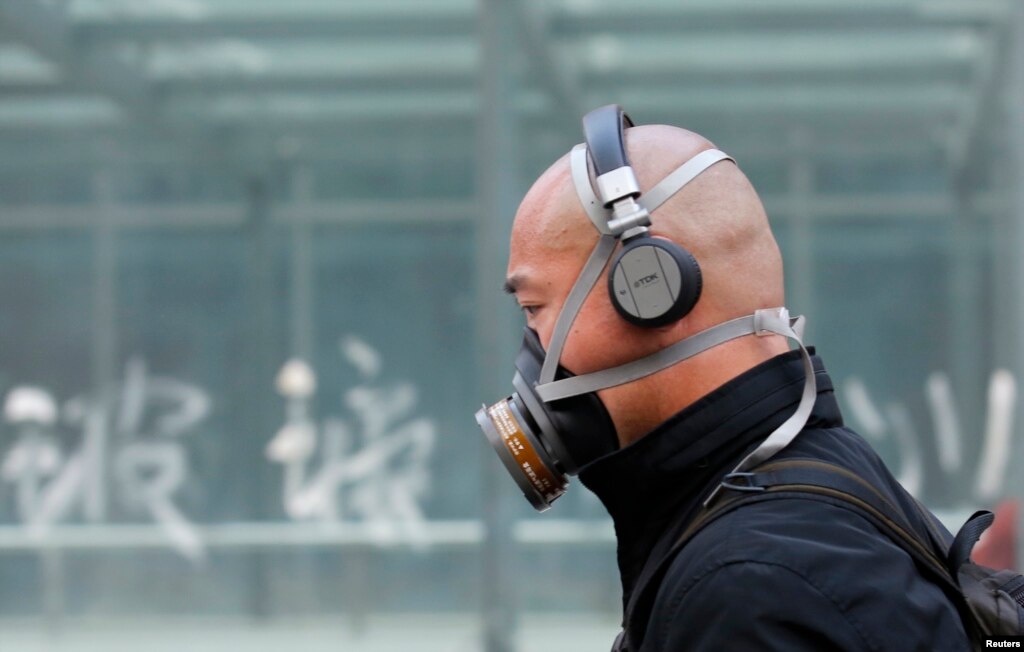
In any event, these days of high particulate levels have led to an efflorescence of masks on the face of pedestrians.
beijingers wearing masks
When my wife and I first arrived here four years ago, the local population stoically accepted the situation. The official government position at the time could be summed up as: “air pollution? what air pollution?” So the masses followed the party line and officially shrugged off the decision by some foreigners to wear protective masks as weak-kneed and effeminate. At most, they would don surgical masks
mask-medical-2
a common enough habit here, although used more as a way to control the spread of the common cold.

Then, about a year ago, with the change in party leadership, the government made it publicly known that actually there was an air pollution problem, and almost overnight Beijingers started wearing protective masks. Such is the power of the party …

My wife and I, though, are made of tougher stuff and have considered all these mask wearers, Chinese and foreigners alike, weak-kneed and effeminate. That is, until now. Because even we, tough nuts though we are, have begun to think that maybe we should also be wearing masks on bad air days, before we get hit with an irreversible case of asthma or worse.

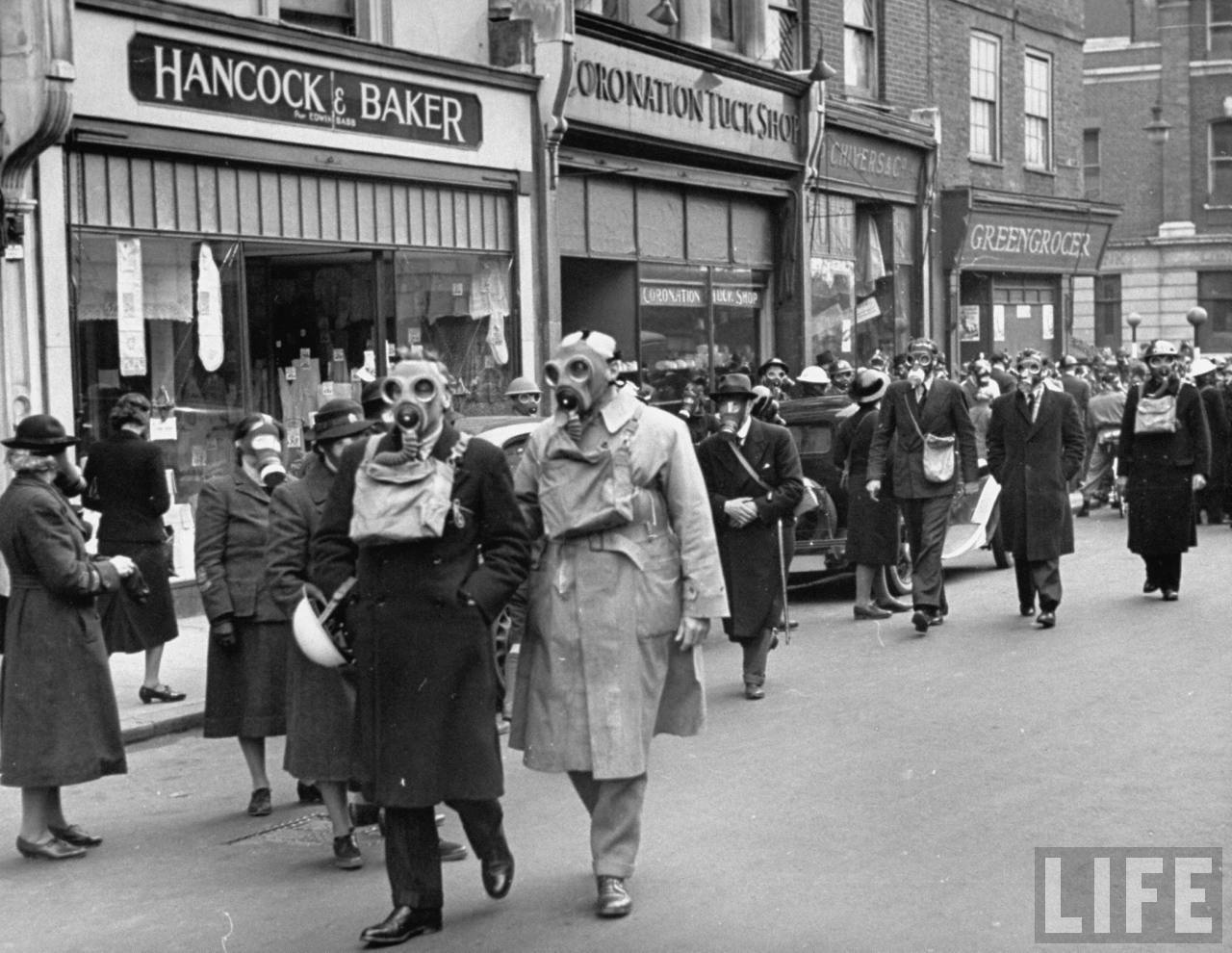
But what masks should we wear? And here, I have to say, aesthetics will play as much a part in our decision as efficacy. Efficacy alone would suggest wearing some sort of gas mask. The problem is, gas masks – at least in their traditional form – are fantastically unaesthetic. Consider this photo, taken in London during the Second World War
gas masks WW2-1
The Londoners in question were taking part in a drill, to make sure they knew how to use their masks in case the Germans dropped gas bombs.

Or how about this one, also from the Second World War, of some bizarre outing in the woods by a bunch of people (scouts?), all kitted up in gas masks
gas masks WW2

Can you imagine us all walking around Beijing looking like this? Already walking around in the smog is depressing enough. Having people looking like this looming out of the fug around you would be enough to give you a serious case of the heebie-jeebies. It would be like meeting a streetful of Edvard Munch’s screamers; one would begin to start screaming oneself.
The Scream lithography
The more modern gas masks have a friendlier design, showing as they do the face of the wearer.
gas mask-modern
I mean, at least you could smile at each other as you pass on the pavement and give each other moral support in this time of trial and tribulation.

But I feel that wearing even such a user-friendly gas mask would really be over the top. After all, we are only being subjected to excessively high particulate levels and not to massive leaks of poisonous gas, which these gas masks were presumably designed to deal with. Good design must be “fit for purpose”, as they say; these gas masks fail on this criterion.

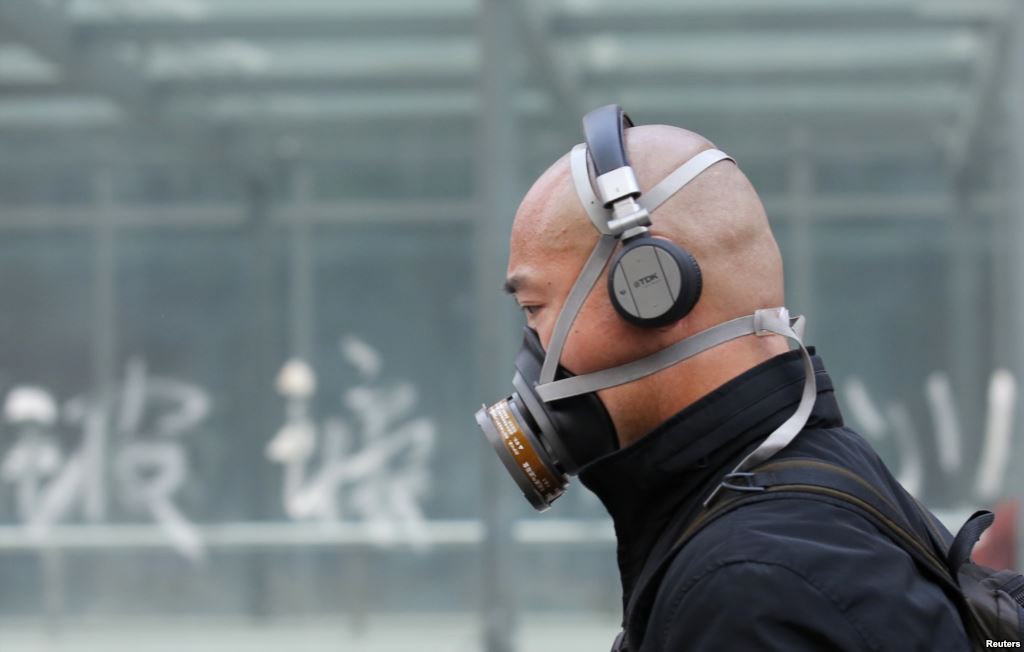
A somewhat pared-down version of these gas masks is available in China, which has the “snout” but not the eye coverings.
mask-1
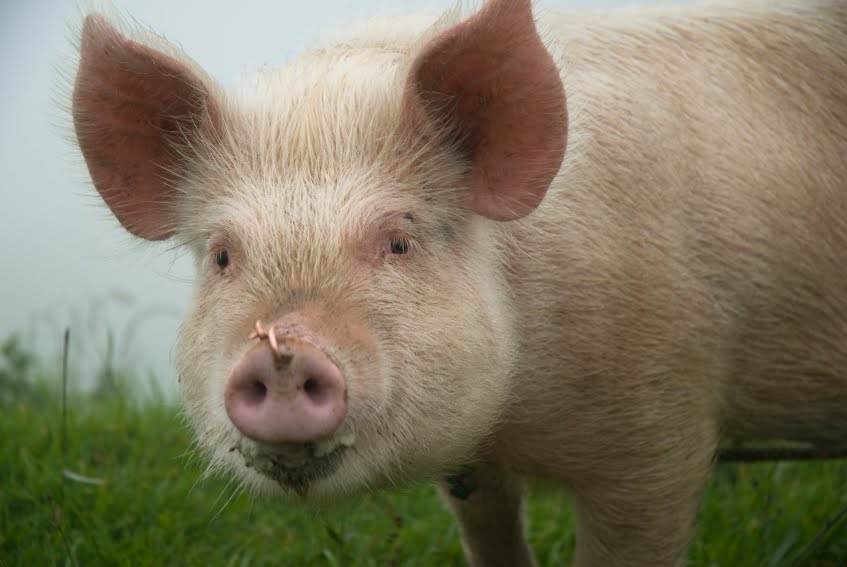
And that is precisely the problem which I have with this particular mask design. It would make the wearer look somewhat porcine
pig snout
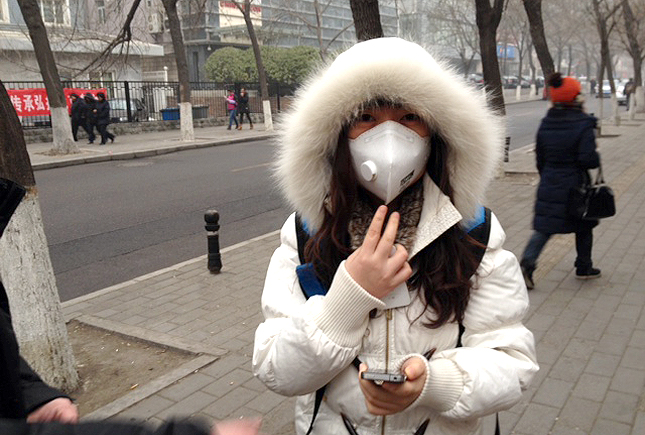
So we need to look further afield for an efficacious but also aesthetically pleasing mask. I have found these on the web and/or seen people wearing them on the street:
mask-2

mask-3

mask-4a

IMG_0374

mask-8a

mask-8
My wife and I have debated the relative merits of these masks. Always assuming that we take the final plunge and buy masks, she would go for the fourth, which gives her space to breathe; she has tried the last mask and found it suffocating. For my part, I would go for the second mask, which I find pretty cool.

Of course, the best would be that NO-ONE has to wear masks. But for that to happen, the party is going to have to take some painful decisions. We will see …

____________________
Smog in Beijing: http://www.csmonitor.com/var/ezflow_site/storage/images/media/content/2013/0114-smog/14755543-1-eng-US/0114-smog_full_600.jpg [in http://www.csmonitor.com/World/Latest-News-Wires/2013/0114/Heavy-smog-in-Beijing-prompts-uncharacteristic-government-transparency-video%5D
Beijingers wearing masks: http://www.thestar.com/content/dam/thestar/news/world/2014/02/24/pollution_soars_in_china_rare_industry_shutdowns_reported/china_smog.jpg.size.xxlarge.letterbox.jpg [in http://www.thestar.com/news/world/2014/02/24/pollution_soars_in_china_rare_industry_shutdowns_reported.html%5D
Mask-medical: http://news.xinhuanet.com/english/china/2013-10/21/132816417_11n.jpg [in http://news.xinhuanet.com/english/china/2013-10/21/c_132816417.htm%5D
Gas masks in WW2-1: http://www.moneyandshit.com/wp-content/uploads/2010/02/partisans-in_World_war2.jpg [in http://www.moneyandshit.com/partisans-in-gas-masks-during-world-war-2n/%5D
Gas masks in WW2-2: http://charlesmccain.com/wp-content/uploads/2013/12/hist_uk_20_ww2_pic_gas_mask_mock_london.jpg [in http://charlesmccain.com/2013/12/2768/%5D
The Scream lithography: http://upload.wikimedia.org/wikipedia/en/5/50/Munch_The_Scream_lithography.png [in http://en.wikipedia.org/wiki/File:Munch_The_Scream_lithography.png%5D
Gas mask-modern: http://img.xxjcy.com/pic/z14f386f-0x0-1/industrial_gas_masks_product_mf27_full_eyepiece_gas_mask.jpg [in http://www.xxjcy.com/manufacturers/z6a4a78/iz28e1a63-mf22a_type_gas_masks.html%5D
Mask-1: http://gdb.voanews.com/B8CC4108-6777-4820-9381-2F5CFE6AB98E_mw1024_mh1024_s_cy7.jpg ] [in http://www.voanews.com/content/study-finds-coal-pollution-cuts-north-china-lifespan-by-five-and-a-half-years/1697648.html%5D
Pig snout: http://kristilowe.files.wordpress.com/2013/09/istock_000012723567small.jpg [in http://kristilowe.com/tag/pig-snout/%5D
Mask-2: http://www.allergyasthmatech.com/ProdImages/model_photo copy[1].jpg [in http://www.allergyasthmatech.com/SP/Air_Pollution_Mask/101_373%5D
Mask-3: http://www.loftwork.jp/~/media/Images/Event/2013/20131218_frog/r_04.ashx?h=402&w=537 [in http://www.loftwork.jp/event/2013/20131218_frogdesign/report1218.aspx%5D
Mask-4: http://www.myredstar.com/wp-content/uploads/2013/02/Totobobo.jpg [in http://www.myredstar.com/smog-living/%5D
Mask-5: http://www.pri.org/sites/default/files/story/gallery/huang.jpg [in http://www.pri.org/stories/2013-11-11/beijingers-don-masks-defend-themselves-against-dirty-air-and-make-fashion%5D
Mask-6: http://www.i-m-s.dk/wp-content/uploads/2013/02/china-air-poll.jpg [in http://www.i-m-s.dk/pollution-finally-a-front-page-story-in-china/%5D
Mask-7: http://www.theworldofchinese.com/wp-content/uploads/2014/02/top5-masks-master.jpg [in http://www.theworldofchinese.com/2014/02/the-top-pollution-busting-face-masks/%5D

BIRDS IN BEIJING

Beijing, 22 March 2014

A few days ago, as I was walking to work along my piece of canal, I saw, sitting on the lower branch of a willow tree, a small bird which I had never seen before. I’m not a birder by any means, but I do appreciate a beautiful or graceful bird when I see one. This bird had a wonderfully variegated plumage, really very handsome. By the shape of its head and bill I was guessing it to be a member of the woodpecker family. Intrigued, I sidled forward to have a better look. The bird cocked its head, kept a wary eye on me, and finally decided I had invaded too much of its private space. With a quick flip of its wings, it was off, dipping and lifting across the waters of the canal. I finally lost sight of it among the willow trees and buildings on the other bank.

The internet is a wonderful thing, really it is. Yes, there are dark corners where bad, nasty people show and say bad, nasty things, but overall it is a great global market square into which you can wander of an evening and, like young Marco Polo sauntering along Venice’s wharves, hear tales fantastical of faraway lands and pick up information from the furthest reaches of the globe. This burst of appreciation for the internet at this particular moment in my tale comes from the fact that at home that evening, on a whim, I typed “birds in beijing” in my search field to see what I could find. And I immediately stumbled onto the site Birding Beijing! I salute its author, Terry Townshend, a Beijing resident like myself and a dedicated birder, who has put together this wonderful site.

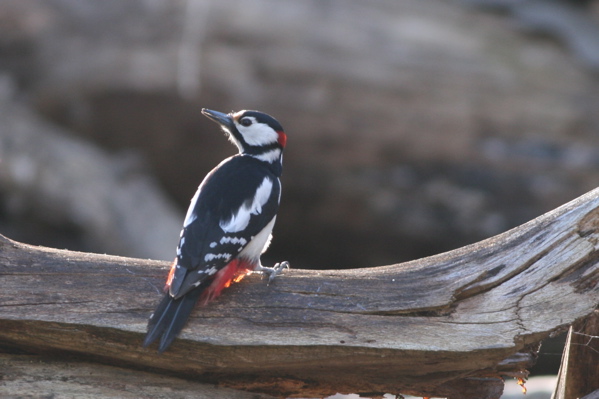
Terry’s site gave me the answer I was looking for. The bird I had seen in the morning was indeed a woodpecker, the great spotted woodpecker (Dendrocopos major) to be precise. This photo is from his site
great-spotted-woodpecker-small-1
Here is another from a UK site

great-spotted-woodpecker-2
which I chose because this woodpecker has a range which stretches all the way from China across Central Asia and Europe to my home country. It gives me an odd sense of comfort, that: part of home in Beijing.

Terry’s site gave me the answer to one more ornithological question which has been nagging me for the last few years, the identity of another bird which I have often seen here. It seemed to me quite like the magpie, although with much more delicate colouring in its feathers. It seemed to fill the same ecological niche, too, as far as I could gather. Well, Terry’s site tells me that it is indeed a magpie! (although a different member of the family, to be sure). It is the azure-winged magpie (Cyanopica cyanus). This photo of it is also from Terry’s site

azure-winged-magpie-1

but this one comes from a Russian orthinological site

azure-winged-magpie-2

which I include because the range of this magpie covers East and North-East Asia (so including Siberia).

I’m not sure “azure” really describes the wonderful shade of blue which this bird sports in its wing and tail feathers. A long hunt through various other internet sites makes me think that cornflower blue might better describe this particular shade of blue. The internet also tells me that this colour was one of the Dutch painter Jan Vermeer’s favourite colours. Is the blue in his painting Girl with a Pearl Earring the same?

Girl_with_a_Pearl_Earring

Perhaps it is a slightly darker shade of blue?

Flush from these two successful identifications, I went through the rest of the bird gallery in Terry’s site, to put a name to what else I’ve seen in Beijing. He mentions the the Eurasian magpie (Pica pica), which I’ve had cause to write about in an earlier posting. It seems more common than the azure-winged magpie; I certainly feel that I see it more often. Terry does not include a picture of this magpie (too common, no doubt), so I add here a photo from another site
Eurasian magpie-2
Terry mentions the Eurasian tree sparrow (Passer montanus). I’ve seen that, of course, who hasn’t?
tree-sparrow
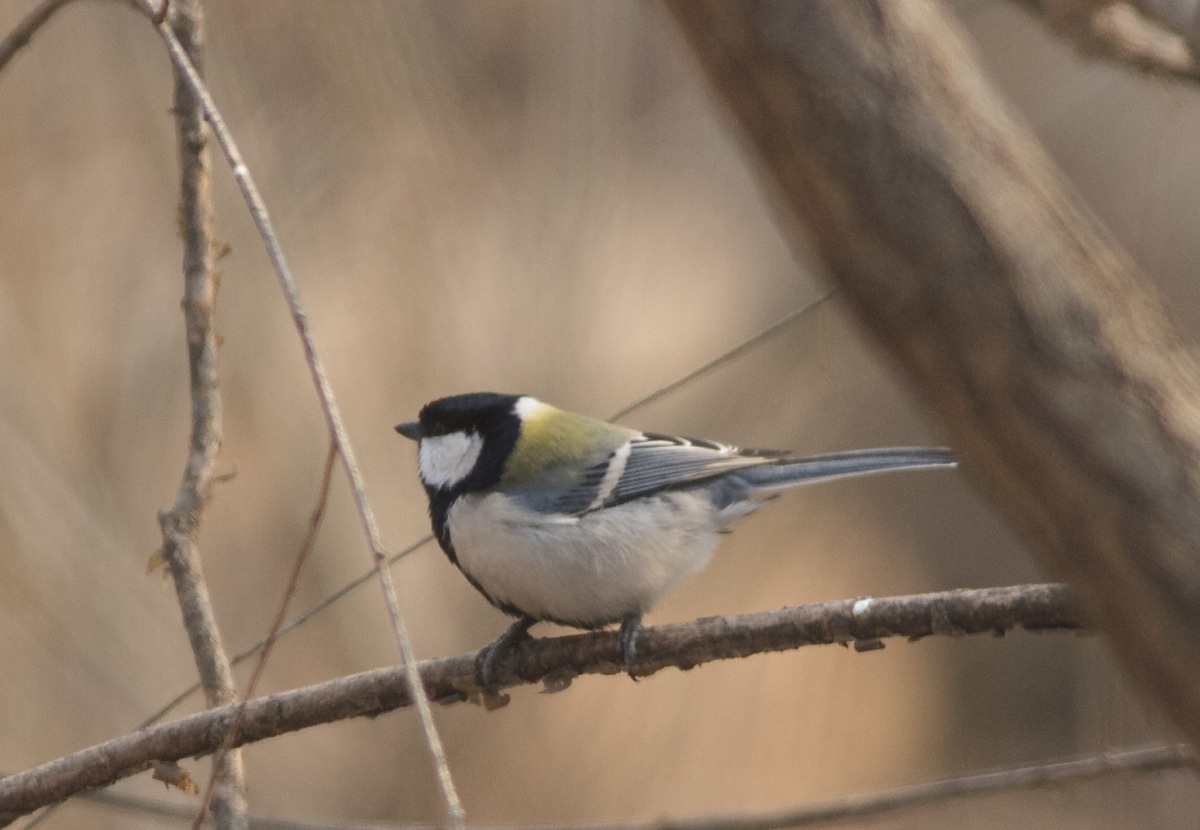
I think I might once have seen another bird he mentions, the eastern great tit (Parus minor)
japanese-tit
I’m almost certain I also saw a Eurasian kestrel (Falco tinnunculus) once. I spotted it during a particularly boring teleconference for which I was a passive participant, sitting at my desk and staring out of the window while the others droned on.  I was glad for the lovely distraction of its diving and swooping around my office building.

kestrel

These wonderful photos move me to cite here three poems about birds which I particularly like:

The Eagle, by Alfred, Lord Tennyson

He clasps the crag with crooked hands;
Close to the sun in lonely lands,
Ring’d with the azure world, he stands.

The wrinkled sea beneath him crawls;
He watches from his mountain walls,
And like a thunderbolt he falls.

The Windhover, by Gerard Manley Hopkins

I caught this morning morning’s minion, king-
  dom of daylight’s dauphin, dapple-dawn-drawn Falcon, in his riding
  Of the rolling level underneath him steady air, and striding
High there, how he rung upon the rein of a wimpling wing
In his ecstasy! then off, off forth on swing,
  As a skate’s heel sweeps smooth on a bow-bend: the hurl and gliding
  Rebuffed the big wind. My heart in hiding
Stirred for a bird,—the achieve of; the mastery of the thing!

Brute beauty and valour and act, oh, air, pride, plume, here
  Buckle! AND the fire that breaks from thee then, a billion
Times told lovelier, more dangerous, O my chevalier!

No wonder of it: shéer plód makes plough down sillion
Shine, and blue-bleak embers, ah my dear,
  Fall, gall themselves, and gash gold-vermillion.

The Darkling Thrush, by Thomas Hardy

I leant upon a coppice gate
    When Frost was spectre-gray,
And Winter’s dregs made desolate
    The weakening eye of day.
The tangled bine-stems scored the sky
    Like strings of broken lyres,
And all mankind that haunted nigh
    Had sought their household fires.

The land’s sharp features seemed to be
    The Century’s corpse outleant,
His crypt the cloudy canopy,
    The wind his death-lament.
The ancient pulse of germ and birth
    Was shrunken hard and dry,
And every spirit upon earth
    Seemed fervourless as I.

At once a voice arose among
    The bleak twigs overhead
In a full-hearted evensong
    Of joy illimited;
An aged thrush, frail, gaunt, and small,
    In blast-beruffled plume,
Had chosen thus to fling his soul
    Upon the growing gloom.

So little cause for carolings
    Of such ecstatic sound
Was written on terrestrial things
    Afar or nigh around,

That I could think there trembled through
    His happy good-night air
Some blessed Hope, whereof he knew
    And I was unaware.

Lovely …

And yet I’m worried. Last Christmas, when we were in New York, we visited the Metropolitan Museum. On our wanderings through the galleries we bumped into four of these hanging on the wall of a corridor:

Peruvian-Featherwork-cape-1

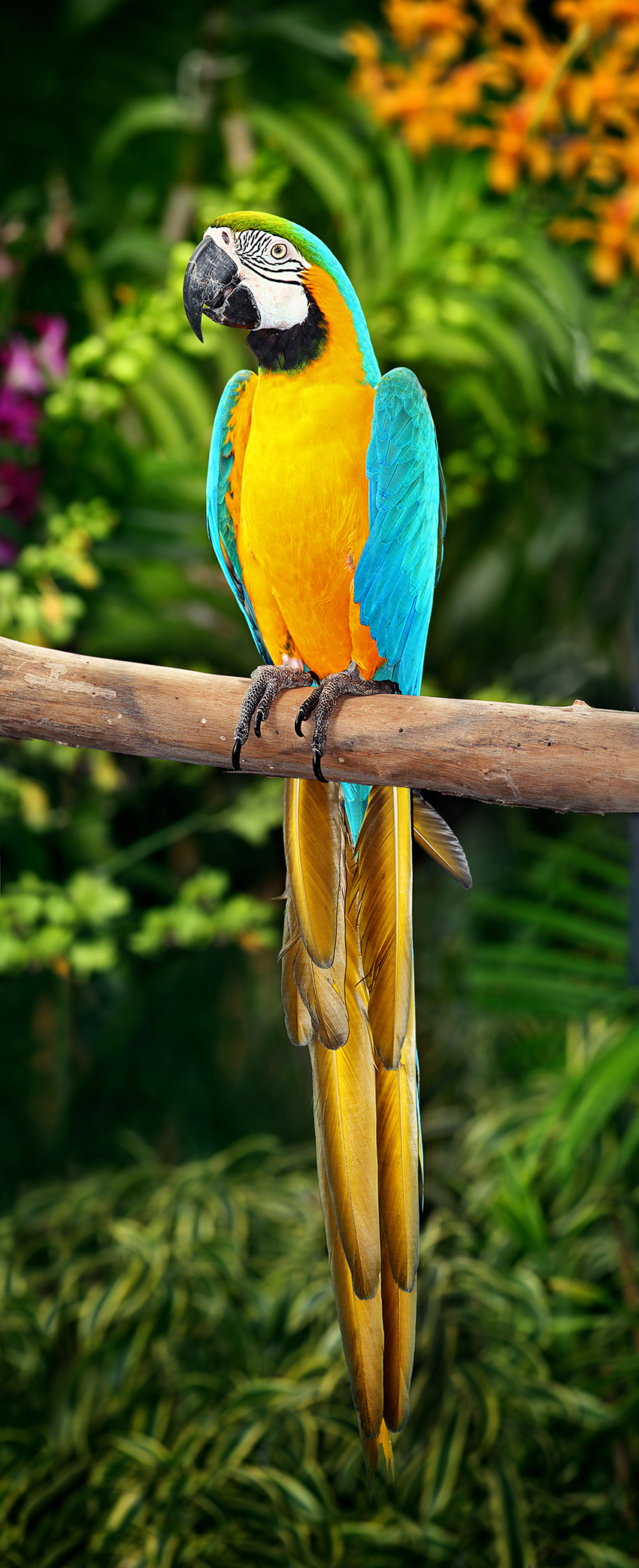
They are capes, from Peru. They are 1,000 years old, made with the feathers of the blue-and-yellow macaw.

Blue-and-yellow Macaw

How many of these magnificent birds were killed to make these capes? Such needless, selfish destruction! Nowadays, it’s not killing for their feathers that’s killing off birds, it’s destruction of their habitat. But it’s still the same: needless, selfish destruction.

____________________

Great spotted woodpecker-1: http://birdingbeijing.files.wordpress.com/2013/03/great-spotted-woodpecker-small-1.jpeg [in http://birdingbeijing.com/birders-guide-to-beijing/a-guide-to-beijings-common-birds/%5D
Great spotted woodpecker-2: http://www.worldbirds.co.uk/images/oakes0/photos/image298.jpg [in http://www.worldbirds.co.uk/lesser_spotted_woodpecker.aspx?key=60%5D
Azure-winged magpie-1: http://birdingbeijing.files.wordpress.com/2013/03/2013-12-28-azure-winged-magpie.jpg [in http://birdingbeijing.com/birders-guide-to-beijing/a-guide-to-beijings-common-birds/%5D
Azure-winged magpie-2: http://onbird.ru/img/photo/golubaya-soroka/golubaya-soroka foto 4 (onbird.ru).jpg [in http://onbird.ru/opredelitel-ptic/golubaya-soroka-584/foto%5D
Girl with a pearl earring: http://upload.wikimedia.org/wikipedia/commons/c/ce/Girl_with_a_Pearl_Earring.jpg [in http://en.wikipedia.org/wiki/Johannes_Vermeer%5D
Eurasian magpie: http://birdsofkazakhstan.com/wp-content/uploads/2010/01/Pica-pica-bactriana-adult-Zhabagly-South-Kazakhstan-province-Kazakhstan-16-September-2009-Rene-Pop2.jpg [in http://birdsofkazakhstan.com/eurasian-magpie-pica-pica/%5D
Tree sparrow: http://birdingbeijing.files.wordpress.com/2013/03/2013-10-03-tree-sparrow.jpg [in http://birdingbeijing.com/birders-guide-to-beijing/a-guide-to-beijings-common-birds/%5D
Japanese tit: http://birdingbeijing.files.wordpress.com/2013/03/2014-01-23-japanese-tit.jpg [in http://birdingbeijing.com/birders-guide-to-beijing/a-guide-to-beijings-common-birds/%5D
Kestrel: http://birdingbeijing.files.wordpress.com/2013/03/2009-09-14-kestrel2.jpg [in http://birdingbeijing.com/birders-guide-to-beijing/a-guide-to-beijings-common-birds/%5D%5D
Peruvian featherwork cape: http://www.thehistoryblog.com/wp-content/uploads/2013/09/470_Peruvian-Featherwork.jpg [in http://www.thehistoryblog.com/archives/27107%5D
Blue and yellow macaw: http://upload.wikimedia.org/wikipedia/commons/6/6d/Blue-and-Yellow-Macaw.jpg [in http://en.wikipedia.org/wiki/Blue-and-yellow_Macaw%5D

SPRING IS IN THE AIR!

Beijing, 20 March 2014

It’s the first day of Spring! The day of the vernal equinox! The moment in the year when, after a slow climb out of the short days and long nights of the winter solstice, night equals day. From now on, the days will get longer and the nights shorter, until the summer solstice in the month of June is reached and the cycle reverses.

equinox

And actually, apart from cold astronomical considerations, today in Beijing it really was a spring day! A beautiful, sunny spring day! When I walked out of the apartment building this morning, the sun shone out of a blue, unclouded sky, but there was a chill in the air. When I left the office as evening drew in, the sky was still an unclouded blue, but now there was a soft breath of warm air on my cheek. Verily, I felt like Boticelli’s Venus stepping off her shell, with the zephyrs blowing over me

birth of venus

although I will admit that she has a considerably better body than mine.

Humming quietly to myself, I made my way home, pausing for a moment under the willow trees on which the zephyr’s warm breath had worked its magic, covering the branches with a light green furze.

greening willows

Nature awakes from its winter sleep. Venus walks the land. Flora, goddess of flowers and Spring, follows in her wake.

primavera

_____________

Equinox: http://www.imd-corp.com/figures/ARIX0020.jpg [in http://www.imd-corp.com/formx_ind_display_flexible_getmethod.php?category=name&fname=%%5D
Birth of Venus: http://www.artble.com/imgs/9/b/3/416525/birth_of_venus.jpg [in http://www.artble.com/artists/sandro_botticelli/paintings/primavera%5D
Greening willows: my picture
Primavera: http://www.artble.com/imgs/6/c/a/616543/primavera.jpg [in http://www.artble.com/artists/sandro_botticelli/paintings/primavera%5D

WORLD HERITAGE SITES – OUR LIST

Beijing, 9 March 2014

I was recently in Dubai with my wife for a long weekend. If you don’t like shopping, which I fervently do not, if you don’t get much of a kick out of visiting the tallest building in the world, which is definitely my case, if you don’t quite see the point of going skiing in a mall, which I certainly don’t, then your to-do list in Dubai is really quite short. On one side of the saltwater creek which wends its way through the middle of the city

Dubai.creek

you can visit gold and spice souqs of dubious antiquity. On the other side, you can visit a small remnant of the old town, saved, so it seems, from the wrecker’s ball by the intercession of Prince Charles with the Sheikh of Dubai. You can follow this up by a visit to the Dubai Museum, housed underneath a quaint little old fort and filled with a rather pathetic set of dioramas showing the old ways of life in the sheikhdom. A 20 minutes’ walk downcreek will bring you to the Sheikhs’ old residence (or rather, a nearly complete reconstruction of it) filled with some old photos of Dubai. You can cross from one side of the creek to the other in supposedly old wooden boats which ply the waterway. And that’s it. Of the four days that my wife and I spent in Dubai, we actually only needed two to visit the city itself. We used one of the days to visit Abu Dhabi (or rather, the planned eco-city district of Masdar) and while I was sitting in a conference my wife used another to visit Al Ain, an oasis town some two hours’ drive from Dubai.

Now don’t get me wrong, it’s really very pleasant to wander around without haste, poking your nose in here and there, snapping photos of this and that, taking long lunch and coffee breaks, and enjoying mild and sunny weather. But what really got my goat was a small exhibition which we stumbled across somewhere in the souqs, which proudly announced that some time this year Dubai expected UNESCO to nominate the creek and its immediate surroundings as a World Heritage Site. Give – me – a – break! The Dubai creek a World Heritage Site?! That’s ridiculous!! For those readers who may not be familiar with this UN programme, I should explain that it implements an international convention, the Convention concerning the Protection of the World Cultural and Natural Heritage, whose purpose is to protect and conserve for present and future generations cultural heritage (monuments, groups of buildings, sites) or natural heritage (natural features, geological formations, natural sites) of outstanding universal value. Please note: outstanding universal value. Those are big, big words. Put another way, the sites which are nominated as World Heritage Sites should be so fantastic that it would be a crime for me and every other citizen in the world not to do everything in our power to protect them for future generations to marvel at. Does that describe Dubai creek? I – don’t – think – so!

I had first entertained serious doubts about the World Heritage Site listings when we went on a family holiday to Finland some ten years ago. I had seen that a church along our itinerary had been listed. Intrigued, I dragged the somewhat unwilling family to visit it (to this day, my children remind me of this and other churches I forced them to visit in Finland). What we were confronted with was a small, rustic church whose three main claims to fame were (a) that it was quite old, (b) that it was made entirely out of wood, and (c) that no nails had been used to make it … this was “outstanding universal value”?? Puh-lease! My cynicism over World Heritage Site listings only deepened over the following years as everywhere I went I came across really quite ordinary sites which had been listed. UNESCO’s convention has obviously been hijacked by the tourism industry and its hacks in Ministries of Tourism to brand national sites and raise tourism revenues. And no doubt political correctness has reared its head. It won’t do for just a few countries to have all the heritage sites of outstanding universal value, every country should be able to claim at least one …

This debasing of the World Heritage Site brand is a pity, because I think there are a number of places around the world which through some magical combination of geometry, colour, light, and siting really do have an outstanding and universal value to all of us in the world and whose preservation truly deserves the concerted attention of the global community. My wife and I put our heads together, and what follows is our list. Its main weakness is that it is based only on places which we have seen – so much of the world for us still to see …

Since Dubai got me going, I’ll start with cityscapes:

– Venice, which must be the most beautiful city in the world

venice-aerial

view from ferry

– Paris, especially the part along the banks of the river Seine running from Notre Dame Cathedral to the Eiffel tower

Paris-Notre Dame

Paris-Eiffel tower

(I find Paris to be at its best at night, when all its buildings are lit up like theatre backdrops)

– Rome, especially the Baroque part of the city

Rome Piazza Navona

where, though, older Roman urban fabric can poke through

Rome Pantheon

– The historic nucleus of Istanbul, on its peninsula jutting out into the Bosphorus

istanbul

– Old Prague

prague

– On a smaller scale, San Gimignano in Tuscany

San Gimignano-1

San Gimignano-2

which can stand for all those wonderful hilltop towns and villages scattered throughout central Italy (Siena, Todi, Gubbio, Assisi, Volterra, Arezzo, Perugia, Urbino, and on and on …)

– I will add Savannah in Georgia. My wife and I stumbled on the city by chance thirty years ago, and we were blown away

Savannah-Georgia

I wonder if I should I add Edinburgh? My wife is doubtful, but the New Town there is really very nice, with a magificent view over the Firth of Forth

edinburgh-3

and there is the dramatic backdrop of Edinburgh castle

edinburgh-2

What about Manhattan?

Manhattan Office Vacancy Rate Drops In Second Quarter

I’m torn. Manhattanites certainly think that the borough has outstanding universal value, non-residents may not be so sure.

After cityscapes we list a series of buildings and complexes that stand out because of the beauty of the buildings themselves, often highlighted by their siting:

– Taj Mahal, which must be one of the most sublime buildings in the world

Taj Mahal

and which can stand in for a series of wonderful Mughal edifices dotted around northern India (Fatehpur Sikri, the Mausoleum of Akbar at Sikandra, the Jama Masjid mosque in Delhi, the mausoleum of Humayun, …)

– Angkor Wat

Angkor-wat-2

with its wonderful faces carved in the temple walls

Angkor-wat-gods

– The rock gardens and temples of Kyoto

Kyoto Tofuukuji rock garden-2

kyoto kinkakuji

kyoto ginkakuji

– The chateaux of the Loire in France, especially Chenonceau

Chateau de Chenonceau

and Azay-le-Rideau

Chateau-Azay-le-Rideau

– The Alhambra palace in Andalusia

SONY DSC

with its typical Arab love of water

Alhambra-2

We don’t just list old buildings. We would add at least two modern buildings:

– the Sydney Opera House

sydney opera house 014

– the east wing of the National Gallery in Washington DC

east wing national gallery

My wife thinks we should also list Labrang, the Tibetan Buddhist monastery-town in Sichuan

labrang

I’m not convinced that it really has outstanding universal value, yet.

I’ll add here a couple of the wonderful garden-parks which were created around some of the grander country houses in the UK in the 18th century.

– Stowe gardens

Stowe-Landscape-Gardens

Stowe gardens-house

– Fountains Abbey and Gardens

fountains abbey

fountains abbey gardens-1

fountains abbey gardens-2

Which brings us naturally to our last list, our choices of natural heritage sites of outstanding universal value. We would start with the canyons in the American west. Rather than list the Grand Canyon, which some might consider the natural choice, we would list some of the smaller canyons:

– Bryce Canyon, especially lovely in winter, which is when we saw it:

bryce canyon

– and Canyon de Chelly

canyon-de-chelly

– We are moved to list here too the Atlas mountains in Morocco. When we first saw them, we were immediately reminded of the canyonlands in the US

Atlas mountains

but what was even better was that the locals were still making their villages from the local clay so that villages seemed to grow out of the landscape

atlas mountains-villages

– From canyons on land to canyons on the sea, and here we found the fjords in New Zealand more striking than those in Norway

New Zealand South Island Fiordland National Park Milford Sound

– From water to none, with the red sand dunes of Namibia

Namibia -Dune 45

– and back to water again, with the Amazon River

Amazon river

– from hotter to cooler, with the high meadows of the Alps in the Trentino in Italy

alps-trentino

– from grass to trees, in this case the truly magnificent sequoias

sequoia-national-park

– and finally back to grass and water, with the Scottish Highlands

scottish-highlands

-o0o-

Well, that’s our list of cultural and natural sites which we would consider to have outstanding universal value. As I said earlier, the list is no doubt incomplete simply because there are still lots of places we haven’t visited. We’d be interested to know how readers feel about this. What sites would they put on their own list?

_______________

Dubai creek: http://www.guiaemdubai.com/wp-content/uploads/2010/07/Dubai.creek_.jpg [in http://www.guiaemdubai.com/dubai-creek/%5D
Venice-aerial view: http://weddinginvenice.net/wp-content/uploads/2008/07/venice.jpg [in http://weddinginvenice.net/blog/aerial-view-of-venice%5D
Venice-worm’s eye view: http://farm9.staticflickr.com/8149/7667954390_2eafc258f6_h.jpg
Paris-Notre Dame: http://upload.wikimedia.org/wikipedia/commons/a/a2/Notre_Dame_de_Paris_by_night_time.jpg [in http://it.wikipedia.org/wiki/Cattedrale_di_Notre-Dame%5D
Paris-Eiffel tower: http://wallpapersus.com/wp-content/uploads/2012/01/eiffel-tower-sunset-architecture-city-cloudy-dusk-famous-river.jpg [in http://wallpapersus.com/eiffel-tower-sunset-architecture-city-cloudy-dusk-famous-river/%5D
Rome Piazza Navona: http://www.bonjouritalie.it/uploaded/images/Piazza_Navona_Evening.jpg [in http://www.bonjouritalie.it/en/news/46/PIAZZA-NAVONA-the-Roman-s-playroom-.html%5D
Rome Pantheon: http://www.dewereldwonderen.nl/wp-content/uploads/2011/09/pantheon-omgeving.jpg [in http://www.dewereldwonderen.nl/andere-wereldwonderen/het-pantheon/%5D
Istanbul: http://i.telegraph.co.uk/multimedia/archive/02012/istanbul-biennial_2012683b.jpg [in http://www.telegraph.co.uk/culture/art/8796386/Istanbul-biennial-art-at-the-crossroads-of-the-world.html%5D
Prague: http://www.discoverwalks.com/prague-walking-tours/wp-content/blogs.dir/5/files/4/not-many-people-can-show-you-this.jpg [in http://www.discoverwalks.com/prague-walking-tours/prague-castle-tour/%5D
San Gimignano-1: http://www.roma-antica.co.uk/custom/San%20Gimignano.jpg
San Gimignano-2: http://www.hotelilponte.com/writable/public/tbl_galleria/grande/v961b38120234375.jpg
Savannah: http://www.shedexpedition.com/wp-content/uploads/2013/06/gingerbread-house-Savannah-Georgia-1899-Carpenter-Gothic.jpg [in http://www.shedexpedition.com/savannah-georgia-best-quality-of-life-and-visitor-experience/%5D
Edinburgh-New Town: http://www.stravaiging.com/photos/albums/places%20in%20Scotland/towns/Edinburgh,%20Midlothian/IMG_9890.jpg [in http://www.stravaiging.com/blog/edinburgh-world-heritage-official-tour/%5D
Edinburgh-castle: http://waimhcongress.org/wp-content/uploads/2013/03/edinburgh_-_calton_hill_nov_12_0.jpg [in http://waimhcongress.org/location/about-edinburgh/%5D
Manhattan: http://www.elikarealestate.com/blog/wp-content/uploads/2014/03/nyc001.jpg [in http://www.elikarealestate.com/blog/manhattan-sales-time-high/%5D
Taj Mahal: http://upload.wikimedia.org/wikipedia/commons/c/c8/Taj_Mahal_in_March_2004.jpg [in http://en.wikipedia.org/wiki/Taj_Mahal%5D
Angkor Wat: http://i.telegraph.co.uk/multimedia/archive/02381/Angkor_wat_2381155b.jpg [in http://www.telegraph.co.uk/news/worldnews/asia/cambodia/9638352/Canals-may-have-sped-up-building-of-wonder-of-the-world-Angkor-Wat.html%5D
Angkor Wat Gods: http://www.urbantravelblog.com/wp-content/uploads/2012/02/Angkor-wat-gods.jpg [in http://www.urbantravelblog.com/photos/angkor-wat%5D
Kyoto Tofukuji rock garden: http://4.bp.blogspot.com/_bWbsTZVSaLw/S8uzFo1o2mI/AAAAAAAAAO4/tq11td38q3I/s1600/april-13+141.jpg [in http://kyotofreeguide-kyotofreeguide.blogspot.com/2010_04_01_archive.html%5D
Kyoto Kinkakuji: http://img.timeinc.net/time/photoessays/2011/travel_kyoto/01_kinkakuji.jpg [in http://content.time.com/time/travel/cityguide/article/0,31489,2049375_2049370_2048907,00.html%5D
Kyoto Gingakuji: http://lookjapan.org/photos/ginkakuji-temple.jpg [in http://lookjapan.org/kyoto.html%5D
Château de Chenonceau: http://upload.wikimedia.org/wikipedia/commons/d/d0/Chateau_de_Chenonceau_2008E.jpg [in http://en.wikipedia.org/wiki/Château_de_Chenonceau%5D
Château Azay-le-Rideau: http://upload.wikimedia.org/wikipedia/commons/thumb/d/d2/Chateau-Azay-le-Rideau-1.jpg/1024px-Chateau-Azay-le-Rudeau-1.jpg [in http://en.wikipedia.org/wiki/Château_d’Azay-le-Rideau%5D
Alhambra: http://upload.wikimedia.org/wikipedia/commons/2/22/Detail_Charles_V_palace_Alhambra_Granada_Spain.jpg [in http://commons.wikimedia.org/wiki/File:Detail_Charles_V_palace_Alhambra_Granada_Spain.jpg%5D
Alhambra-2: http://www.earthalacarte.com/images/destination/1370429824_0!!-!!4.jpg [in http://www.earthalacarte.com/destinations/alhambra/%5D
Sydney Opera House: our photo
East Wing National Gallery: http://www.greatbuildings.com/gbc/images/cid_2880204.jpg [in http://www.greatbuildings.com/buildings/East_Wing_National_Gallery.html
Labrang: http://korihahn.files.wordpress.com/2011/07/dsc_0423.jpg [in http://korihahn.com/2010/11/01/beijing-to-lhasa/%5D
Stowe gardens: http://www.landscapearchitecturedaily.com/wp-content/uploads/2013/04/Stowe-Landscape-Gardens.jpg [in http://www.landscapearchitecturedaily.com/?p=2599%5D
Stowe gardens-House: http://1.bp.blogspot.com/-9CU7qypYuhw/UTi58Pz-zXI/AAAAAAAABjU/t5dzpqANduk/s1600/photo+%286%29.JPG [in http://theelephantandthepirate.blogspot.com/2013/03/day-tripping-stowe-gardens.html%5D
Fountains abbey: http://3.bp.blogspot.com/-yHJdJ-LcSwI/TaSbP30qvOI/AAAAAAAACZQ/Mt-9gkW8Wj4/s1600/Fountains+Abbey+reflected+blg.jpg [in http://saltairedailyphoto.blogspot.com/2011/04/fountains-abbey.html%5D
Fountains abbey gardens-1: http://www.gardenvisit.com/assets/madge/studley_royal_and_fountains_abbey_980_jpg/600x/studley_royal_and_fountains_abbey_980_jpg_600x.jpg -[in http://www.gardenvisit.com/garden/studley_royal_and_fountains_abbey%5D
Fountains abbey gardens-2: http://www.gardenvisit.com/assets/madge/studley_royal_and_fountains_abbey_980a_jpg/600x/studley_royal_and_fountains_abbey_980a_jpg_600x.jpg [in http://www.gardenvisit.com/garden/studley_royal_and_fountains_abbey%5D
Bryce canyon: http://www.mikereyfman.com/Photography-Landscape-Nature/Bryce-Canyon-National-Park-Utah-USA/big/MR0105.jpg [in http://www.mikereyfman.com/photo/photo.php?No=5&Gallery=Bryce-Canyon-National-Park-Utah-USA%5D
Canyon de Chelly: http://believegallup.com/wp-content/uploads/2013/01/canyon-de-chelly.jpg [in http://believegallup.com/canyon-de-chelly/
Atlas Mountains: http://static.panoramio.com/photos/large/81928810.jpg [in http://www.panoramio.com/photo/81928810%5D (Toubkal National Park)
Atlas mountain village: http://www.destinationlemonde.com/images/17/photo1-ag.jpg [in http://www.destinationlemonde.com/images/17/photo1-ag.jpg%5D
Milford Fjord New Zealand: http://globalconnection.com.au/wp-content/uploads/2013/08/Milford_Sound_Fiordland_National_Park_South_Island_New_Zealand.jpg [in http://globalconnection.com.au/product/new-zealand-south-island-post-convention-tour/%5D
Namibia-Dune 45: http://upload.wikimedia.org/wikipedia/commons/5/54/Dune45_Sossusvlei_Namib_Desert_Namibia_Luca_Galuzzi_2004.JPG [in http://en.wikipedia.org/wiki/Dune_45%5D
Amazon River: http://assets.worldwildlife.org/photos/1818/images/story_full_width/meandering_amazon_%28c%29_WWF-Canon__Andre_Bartschi.jpg?1345553423 [in http://worldwildlife.org/tours/the-great-amazon-river-cruise%5D
Alps in Trentino: http://hqscreen.com/wallpapers/l/1280×800/67/alps_italia_italy_trentino_alpi_1280x800_66754.jpg [in http://hqscreen.com/alps-italia-italy-trentino-alpi-wallpaper-66754/%5D
Sequoia national park: https://lh6.googleusercontent.com/-lABhQdL_8II/UwXlmbxPEuI/AAAAAAAArw0/VfGi2Htb0jI/sequoia-national-park2.jpg?imgmax=1600 [in http://www.latheofdreams.com/%5D
Scottish Highlands: http://timeforbritain.files.wordpress.com/2012/01/scottish-highlands1.jpg [in http://timeforbritain.wordpress.com/beautiful-scotland/%5D