LOURDES

Sori, 18 July 2015

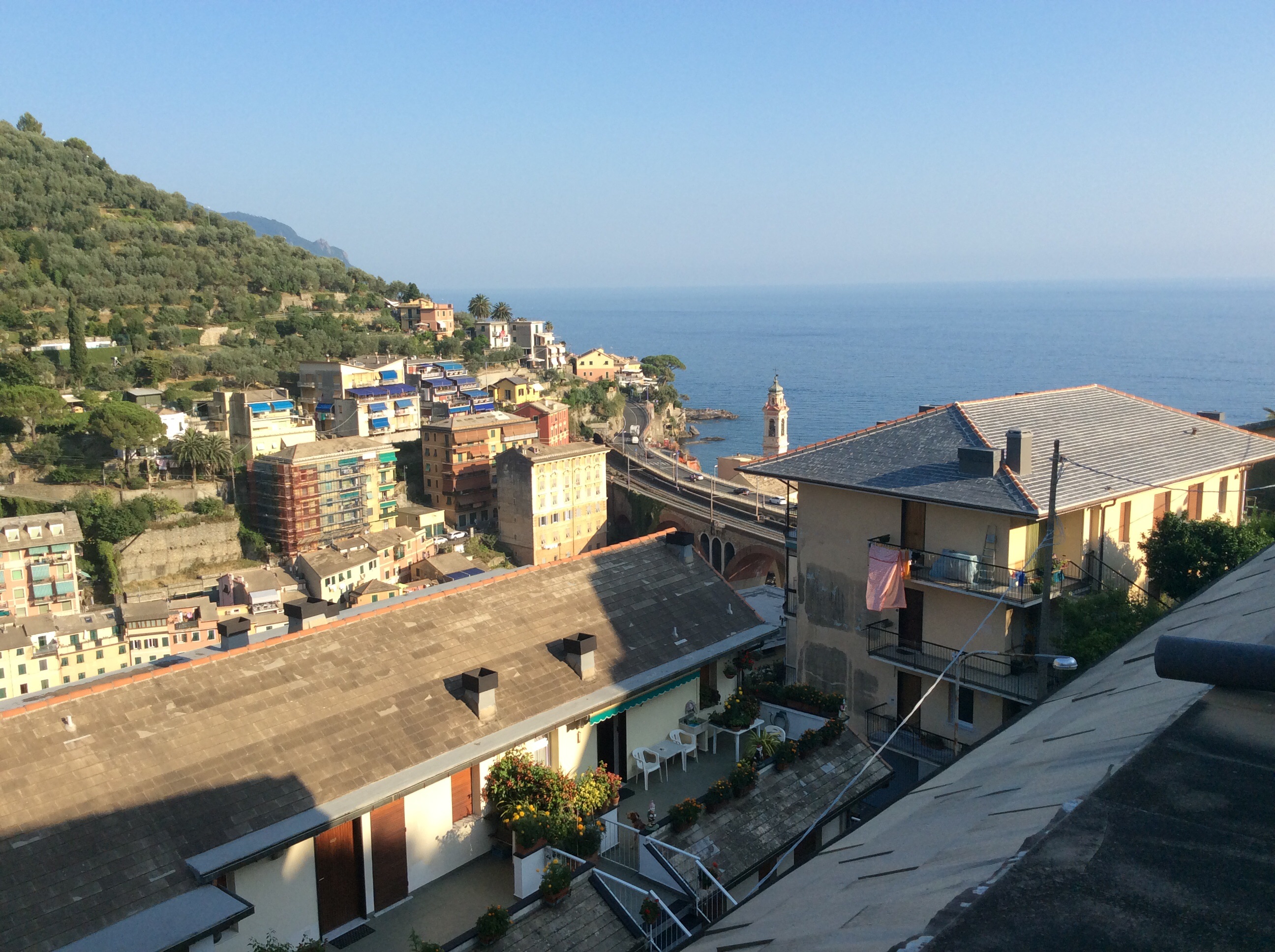
From the balcony of our little apartment in Liguria, if we look a little obliquely to the right we have a view of the sea.

image

Rather than admiring the sea, I invite readers to focus on the campanile of the village church, which we can see just behind the roof of the house in the foreground. At certain times – I haven’t really fixed in my mind when – the campanile’s bells ding out a rather out-of-tune version of the chorus to the Lourdes hymn: “Ave, Ave, Ave Maria. Ave, Ave, Ave Mari-i-a”. For the musically inclined, I attach a music sheet below with the music of the hymn (along with the lines to one of its many, many verses – sixty, I’m told). The music dinged out by the campanile is the last two bars.
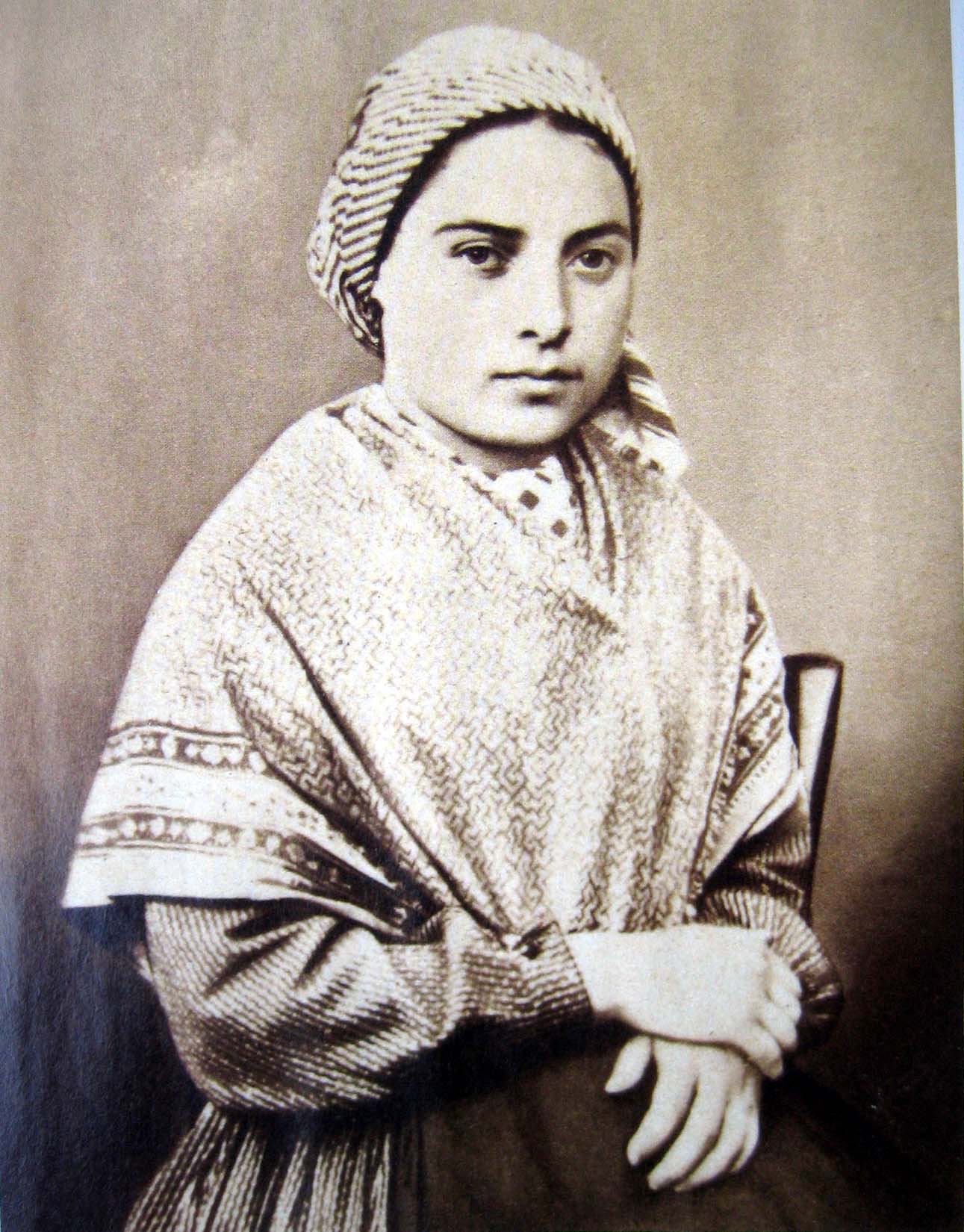
image For those of my readers who are not familiar with the Lourdes hymn, it is the “national anthem”, if I can put it that way, of the pilgrim city of Lourdes, which is located in the lower Pyrenees in France. It is there that in 1858 a 14-year old girl of humble origin, by the name of Bernadeta Sobirós
image
claimed to have seen visions in a grotto by the side of the river of uo petito damizelo (“a small young lady”; Bernadeta spoke Gascon Occitan). She was to have 18 such visions in the grotto, between February and July. In the 16th vision, after repeatedly asking the small young lady who she was, the lady finally replied Qué soï era immaculado councepcioũ (“I am the Immaculate Conception”).

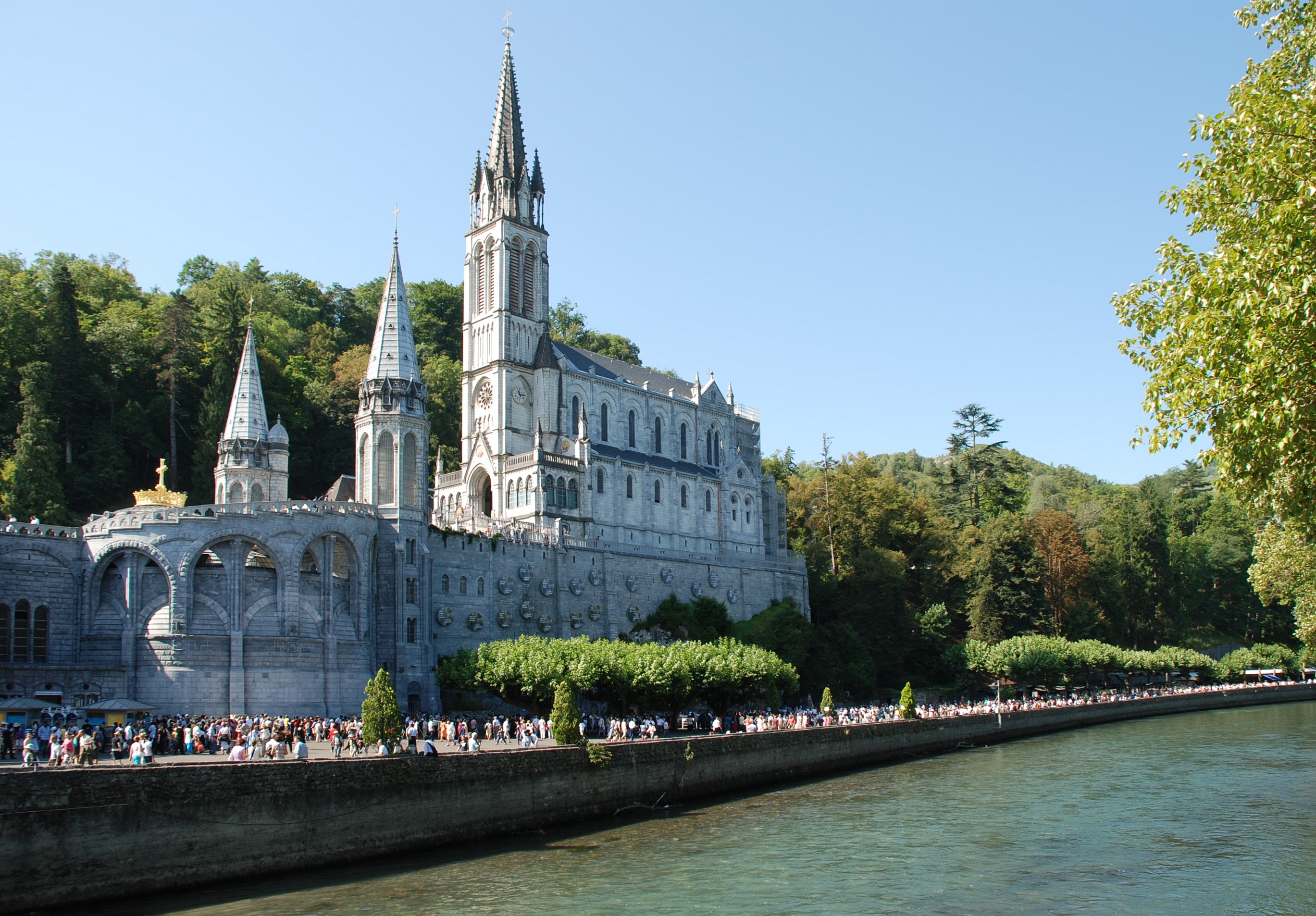
To cut a very long story short, after a good deal of initial skepticism the Catholic Church accepted Bernadeta’s visions as authentic visitations of the Virgin Mary. Pilgrimages began, cures of sick people from the spring water near the grotto were claimed, some of which were accepted by the Church as miraculous, the Lourdes hymn was penned in the 1870s, a large basilica was built
image
along with hospices for the sick, another even larger basilica was later built underground. The town itself got into the act, building hundreds of hotels to house the the ever growing number of visiting pilgrims – six million a year and counting; this, in a town of 15,000 inhabitants (as well, of course, as opening hundreds of shops selling religious tat).

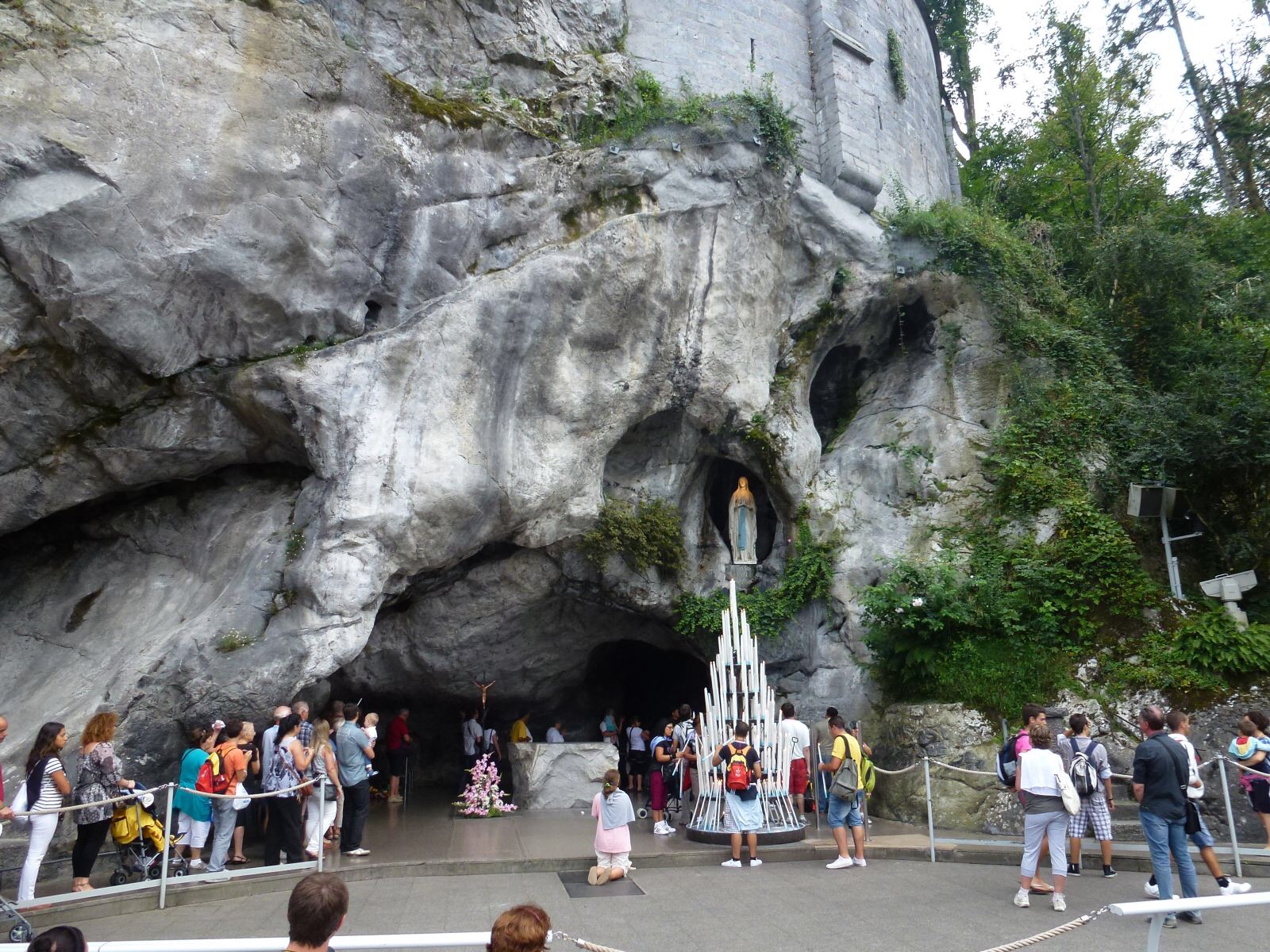
Pilgrims flock to the grotto
image
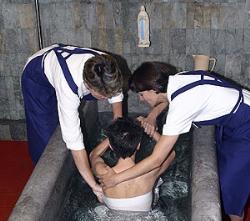
the sick take baths in the grotto’s spring water
image
and everyone joins the daytime and evening processions
image

image

during which the Lourdes hymn, among many others, is sung.

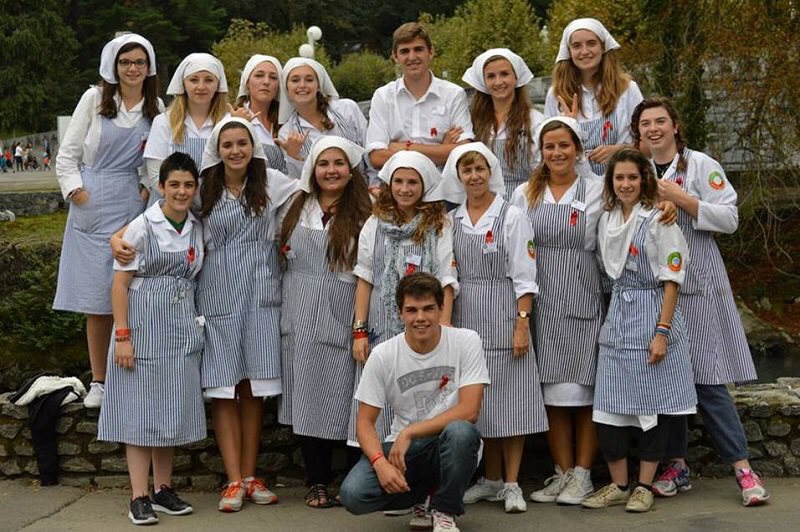
Two summers running, 1972 and 1973, I was one of those pilgrims. My school organized an annual pilgrimage during the summer holidays, and we students were encouraged to take part. They needed our strength and youthfulness to move the sick from place to place: from grotto to baths, from baths to church, from church to hospice; to literally carry into the baths those who could not walk; to do the night watch in the hospices. And I think the sick were helped by being surrounded by the innate cheerfulness of our youth.
image
We were brancardiers, literally stretcher bearers, which I suppose was how the badly sick were moved around in the early days of Lourdes, although nowadays the sick are moved around in those nifty little wheeled chairs shown in the picture above. As a sign of our status, we wore “bretelles”, a sort of harness
image
It was a great honour to be a brancardier. Ordinary pilgrims would look at us admiringly as we walked past, something which at the age of 18 pleased me quite a bit: I was an Important Person! Of course, it meant that any sick person could call us over to help at any time and in any place: the price of fame …

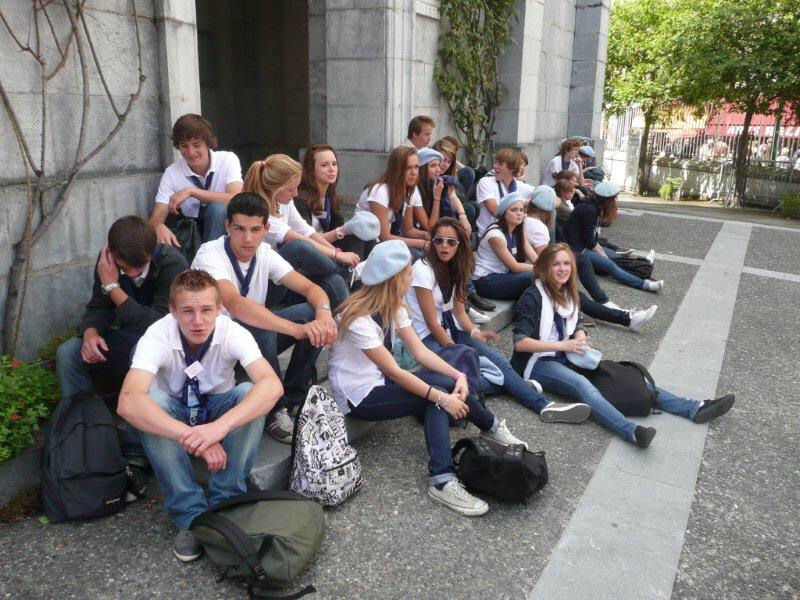
My two pilgrimages were a very intense experience for me, something which I will remember all my life. At the time, I was relatively callow, finding it all great fun like these young people from other pilgrimages did.
image

image
But I find that it marked me deeply. I am unmoved by the miraculous side of Lourdes. I have been too steeped in the natural sciences to believe in miracles. These are simply something we do not yet understand but quite likely will when the sciences have advanced enough. No, to me the real miracle of Lourdes is that it is perhaps the only place on Earth where the sick are centre stage, not on the periphery of our societies which is where they are usually relegated. Lourdes is their place, the rest of us are just guests.
image
So readers can understand why I pause and listen every time I hear the village campanile ring out, even if tinnily, the chorus lines to the Lourdes hymn.

___________________

View of the campanile: my picture
Lourdes hymn music: http://gauterdo.com/ref/aa/ave.maria.de.lourdes.html
Bernadeta Sobirós: https://en.m.wikipedia.org/wiki/Bernadette_Soubirous#/media/File:Bernadette_Soubirous.jpg (in https://en.m.wikipedia.org/wiki/Bernadette_Soubirous#Visions)
Lourdes basilica: https://upload.wikimedia.org/wikipedia/commons/3/33/Lourdes_Basilique_et_gave.jpg (in https://en.m.wikipedia.org/wiki/Our_Lady_of_Lourdes)
Lourdes grotto: https://bundytomadrid.files.wordpress.com/2011/08/grotto1.jpg (in https://bundytomadrid.wordpress.com/2011/08/24/day-2021-burgos-and-lourdes/)
The baths: http://media01.radiovaticana.va/imm/1_0_659979.JPG (in http://www.news.va/en/news/world-day-of-the-sick-a-privileged-moment-of-praye
Lourdes procession during the day: http://www.catholic-convert.com/wp-content/uploads/lourdes.jpg (in http://www.catholic-convert.com/blog/2013/07/30/stay-tuned-wednesday-teresa-tomeo-show-on-lourdes-and-my-video-tour-of-all-of-lourdes/)
Lourdes procession at night: https://fratres.files.wordpress.com/2008/01/procession_1024x768.jpg (in https://fratres.wordpress.com/2008/02/19/place-your-prayer-petitions-here-at-the-grotto-of-lourdes/comment-page-35/)
Brancardiers: http://www.jeune-catholique-moulins.cef.fr/wp-content/uploads/2013/08/L103946_HD0390545.jpg (in http://www.jeune-catholique-moulins.cef.fr/blog/category/lyceens/)
Young man with bretelles: http://pinguisite.chez.com/Image079.jpg (in http://pinguisite.chez.com/lourdes.html)
Brancardiers-2: http://pastorale.stemariebeaucamps.fr/sites/pastorale.stemariebeaucamps.fr/files/images/Lycée/Lourdes/P1030587.jpg (in http://pastorale.stemariebeaucamps.fr/?q=node/71)
Brancardiers-3: http://www.saintjo64.fr/saintjo64WP2013/wp-content/uploads/2014/10/Lourdes2014-1.jpg (in http://www.saintjo64.fr/saintjo64WP2013/actualites/aumonerie/pelerinage-a-lourdes-2014/)
A pilgrimage: http://dioceseofmenevia.org/photos/129_sick_to_lourdes.jpg (in http://dioceseofmenevia.org/news/archive07.htm)

A PAPAL ENCYCLICAL

Bangkok, 2 July 2015

There’s been quite a bit of brouhaha in the press about the new Encyclical which Pope Francis brought out on 18 June, with the title “Laudato Si’: On Care for Our Common Home”. Normally, I would just read what the press has to say and move on. Although I come out of the Catholic tradition, I fell off the Straight- and-Narrow decades ago and it never occurred to me to read any of the Encyclicals brought out by Paul VI or John-Paul II, and certainly none by Benedict XVI, who always struck me as a complete dinosaur. I remember my father reading the Encyclicals, in the original Latin no less (his was probably the last generation of Europeans who were given a serious education in classics; he read Latin and Greek at University). But me, no way, I wasn’t going to read these letters by old, white, celibate men, most of whose views were diametrically opposite mine.

But this Encyclical was different. It was about avoiding a planetary ecological disaster, brought about by climate change and other environmental catastrophes, something which I’ve been wrestling with all my professional life. And it was different from the kind of work I do, which is technical and scientific. It was bringing ethics to bear on the problem, which have been sadly lacking. So I decided that it was time for me to try this rather special form of literature.

Here’s how the Encyclical starts:

  1. “Laudato si’, mi’ Signore” – “Praise be to you, my Lord”. In the words of this beautiful canticle, Saint Francis of Assisi reminds us that our common home is like a sister with whom we share our life and a beautiful mother who opens her arms to embrace us. “Praise be to you, my Lord, through our Sister, Mother Earth, who sustains and governs us, and who produces various fruit with coloured flowers and herbs”.
  2. This sister now cries out to us because of the harm we have inflicted on her by our irresponsible use and abuse of the goods with which God has endowed her. We have come to see ourselves as her lords and masters, entitled to plunder her at will. The violence present in our hearts, wounded by sin, is also reflected in the symptoms of sickness evident in the soil, in the water, in the air and in all forms of life. This is why the earth herself, burdened and laid waste, is among the most abandoned and maltreated of our poor; she “groans in travail” (Rom 8:22). We have forgotten that we ourselves are dust of the earth (cf. Gen 2:7); our very bodies are made up of her elements, we breathe her air and we receive life and refreshment from her waters.

Whoa! Stirring words, pretty different from the stuff I normally read. Thoroughly intrigued, I settled down to read the whole document, all 246 paragraphs of it. Allow me to rapidly summarize its contents for any of my readers who might be too busy or distracted by other things to read it (by the way, the Encyclical has a message for them: “true wisdom, as the fruit of self-examination, dialogue and generous encounter between persons, is not acquired by a mere accumulation of data which eventually leads to overload and confusion, a sort of mental pollution”).

After a review of the state of the planetary environment, whose conclusion can be summed up in this other punchy quote, “the earth, our home, is beginning to look more and more like an immense pile of filth”, the Pope reminds us that our inability to look after our Earth is reflected in our inability to look after our poor: “we should be particularly indignant at the enormous inequalities in our midst, whereby we continue to tolerate some considering themselves more worthy than others. We fail to see that some are mired in desperate and degrading poverty, with no way out, while others have not the faintest idea of what to do with their possessions, vainly showing off their supposed superiority and leaving behind them so much waste which, if it were the case everywhere, would destroy the planet”, to conclude that “a true ecological approach always becomes a social approach; it must integrate questions of justice in debates on the environment, so as to hear both the cry of the earth and the cry of the poor.”

His main conclusion is that both the environmental ills of the planet as well as the ills which bedevil our societies have their roots in excessive consumption by the better-off amongst us.

  • “We all know that it is not possible to sustain the present level of consumption in developed countries and wealthier sectors of society, where the habit of wasting and discarding has reached unprecedented levels.”
  • “To blame population growth instead of extreme and selective consumerism on the part of some, is one way of refusing to face the issues. It is an attempt to legitimize the present model of distribution, where a minority believes that it has the right to consume in a way which can never be universalized, since the planet could not even contain the waste products of such consumption.”
  • “… poor countries … need to acknowledge the scandalous level of consumption in some privileged sectors of their population and to combat corruption more effectively.”
  • “We may well be leaving to coming generations debris, desolation and filth. The pace of consumption, waste and environmental change has so stretched the planet’s capacity that our contemporary lifestyle, unsustainable as it is, can only precipitate catastrophes, such as those which even now periodically occur in different areas of the world.”
  • “.. given the insatiable and irresponsible growth produced over many decades, we need also to think of containing growth by setting some reasonable limits and even retracing our steps before it is too late.”
  • “… a world of exacerbated consumption is at the same time a world which mistreats life in all its forms.”

All music to my ears! For ten years now, I’ve seen that excessive consumption is the key to all our most intractable environmental problems and have been wrestling with what to do about it. We have to do something to reduce the levels of consumption in the richest countries, or more specifically among the world’s richest people (because as the Pope pointed out even the poor countries have hideously rich people).

But to have this happen is a huge, huge political problem. To explain why, let me borrow a photo or two from the photographer Peter Menzel and others who have copied him. Mr. Menzel went around the world photographing families outside their homes with all their stuff piled up around them (anyone wanting to see the whole series should dip into his book “Material World: A Global Family Portrait”). His idea proved so popular that others copied him. This photo, which is of a family in Inner Mongolia
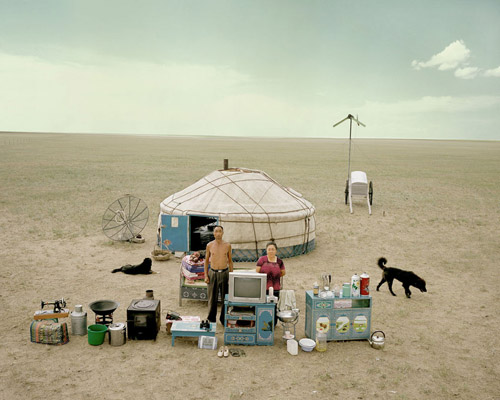
inner mongolian family

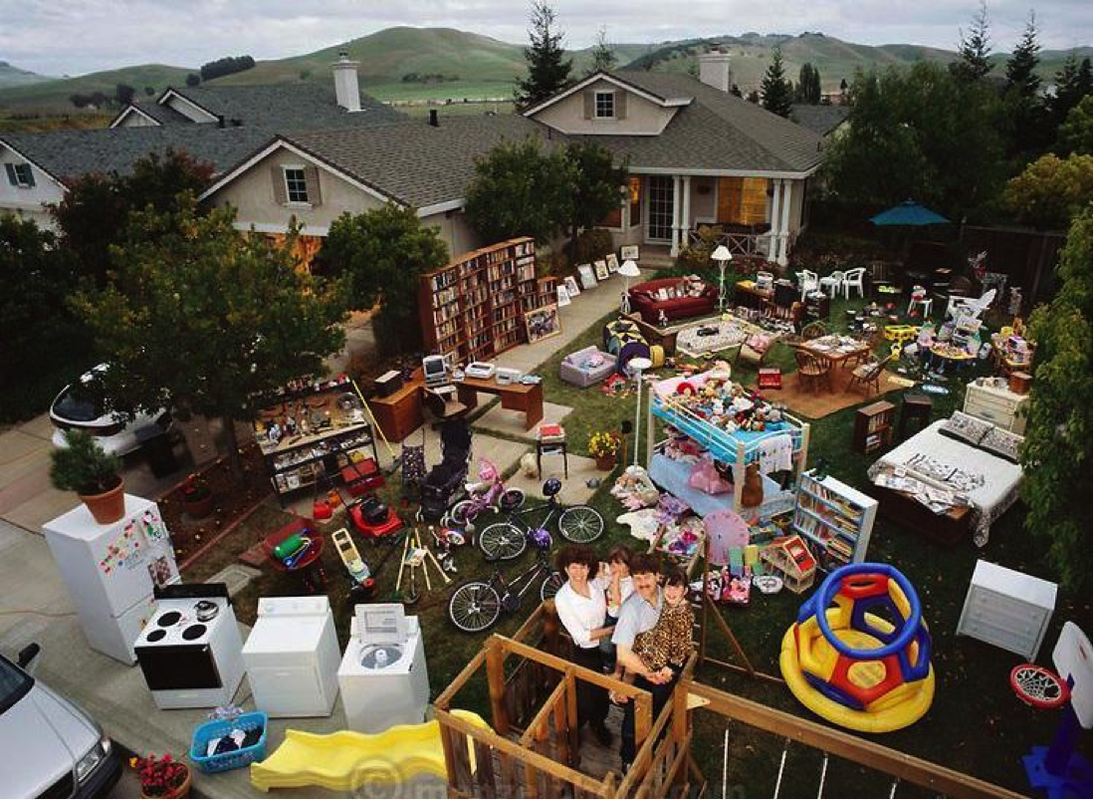
shows a level of stuff-ownership which is typical of millions, if not billions, of families around the world. These families want a materially better life. And why not? There is no reason they should not have it. But if the goal of every family in the world is to end up like this one
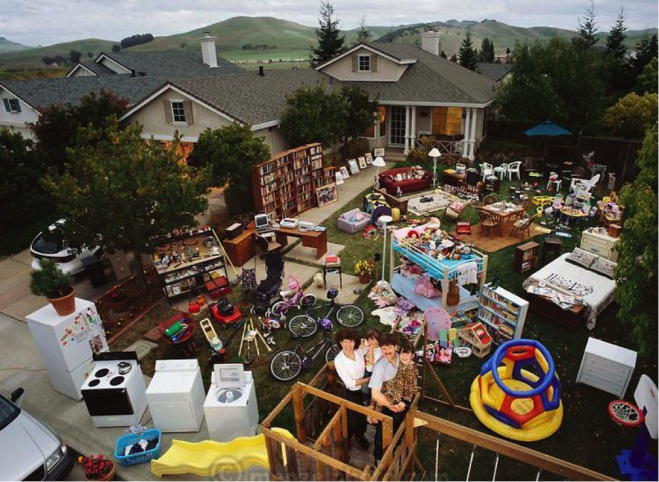
developed family

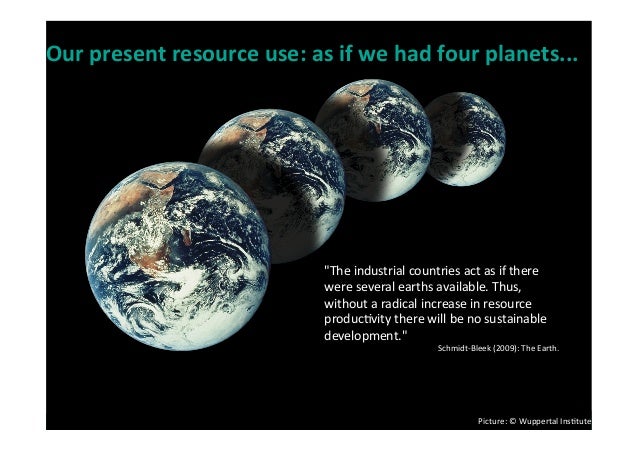
– well, it’s simply not possible, because a lifestyle like this for everyone requires a level of consumption of the world’s resources that would need 4 or more Earths to sustain
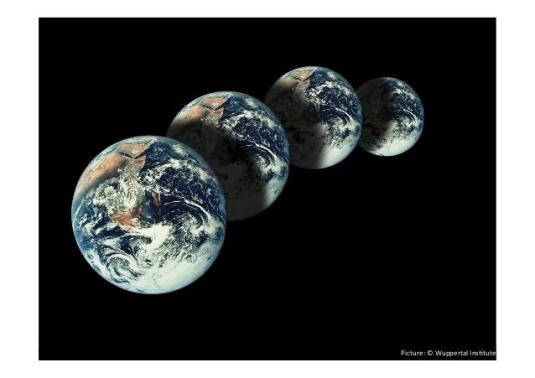
four planets

and, except for those of us who live in a parallel universe, we all know that there is but one planet.

But it’s also not possible to have a world where a few families can live like kings while everyone else has to live like the huddled masses or else the planet goes into meltdown. Somehow, those who currently are over-consuming have to accept to reduce their consumption.

What kind of material sacrifice would be required of these over-consumers? To answer this question, let me use myself as an example. A little while back, curious to see how large my personal environmental footprint might be, I used a footprint calculator offered by the Environmental Protection Agency of the State of Victoria in Australia (there are a number of such calculators on-line; I chose this one because it’s easy to use and I reckon that Southern Australia’s climate is quite similar to Italy’s where I intend to retire – I couldn’t find a good Italian footprint calculator). With an eye to my upcoming retirement, I entered data for myself and my wife on our eating habits, on the home we will live in, and the modes of transport we will be using. To put it in a nutshell, the two of us will live in a 120 sq. metre apartment in an apartment block, whose electricity will partially come from renewable energy. We’ll be having several servings a day of dairy, eggs, fish, or meat products, and a quarter of the food that we’ll eat will be either processed, packaged, or imported. Since we’ll be recycling a lot we’ll throw away less than one 30 litre bin-bag of waste a week. We’ll be using a lot of public transportation, but we’ll still have a small car to potter around town a bit, while twice a year we’ll fly to see the kids in the States. I pushed the last button, and the answer came back … “If everyone lived like you, we would need 3.9 planets” Aarrgh!!!! I was one of those guys greedily overusing the Earth’s resources! I could NOT believe it! I had worked in the environmental field all my professional life, and yet here I was devouring the planet! O-M-G!!

Once the shock wore off, I started doing what scientists call sensitivity analysis: I changed my answers one at a time, to see which changes would give me the biggest reductions. That would give me a menu of changes to our lifestyles which we could adopt, with the goal of bringing that horrible figure of 3.9 down to 1.0 – I think it’s OK to have a lifestyle which, were everyone to have it, would use only 1 planet’s worth of resources.

I won’t weary my readers with a full summary of the results, let me just give the highlights. The biggest reduction in my levels of planetary destruction comes from changes in diet. Having only a few servings a week of dairy, eggs, fish, or meat products, instead of several a day, cuts 1 full planet out of my footprint. That’s great, I knew that meat-eating especially is terribly harmful to the environment. I think we can switch to a strongly vegetarian diet without too much difficulty.

So that’s already 1.0 planet’s worth of reduction.

The other big reduction, though, 1.1 planets’ worth, comes from basically cutting out air travel. No, no, this is not possible, we cannot stop visiting our children! And we can’t just tell the kids to come instead, that would be foisting onto them part of our footprint! What to do? I suppose we could cut our trips to once a year … Alright, let’s say that, so that’s half a planet’s worth of reduction.

That gives us a running total of 1.5 planets’ worth of reduction.

The next biggest reduction, 0.7 planet’s worth, would come if we switched from living in a multi-storey apartment building to a free-standing house without running water. OK, we’re not going to cut off our water, but my take-away here is that saving water has a significant impact on the size of my footprint. We can’t stop drinking, but we’ll ruthlessly chop at our three other big water uses, hot showers, clothes washing, and toilet flushing. We’ll simply shower less, wash our clothes less often, and (ugh!) flush less often. Let’s clock that in at 0.35 planet’s worth.

So, the running total is now 1.85 planets’ worth of reduction.

Next on my list is to switch to a green design residence, which would give me half a planet’s worth of reduction. Well, we can’t change apartments at this point. But we can do things to make the apartment more energy efficient: compact fluorescent bulbs (although they will look totally hideous in the chandelier we have in the living room), double-glazed windows everywhere (more costs …), if possible more insulation on that wall in our bedroom, … I don’t know, there must be other things we can do. Let’s just assume that there are and clock this in at 0.25 planet’s worth.

That gives me a running total of 2.1 planets’ worth of reduction.

What else?

Well, next on the list is simply to cut off the electricity to the apartment, which would give me another half a planet’s worth of reduction. Well, that ain’t gonna happen … But we could reduce our consumption of electricity. The CFLs I’ve already decided to install will help here, as will the reductions in the use of the washing machine. We can mostly wash our dishes by hand, which will reduce the use of the dishwasher (which will also help reduce water use). We could unplug all those gadgets with pilot lights so they aren’t on all the time. I promise not to leave the lights on after leaving a room (a bad habit I have). We could climb the stairs rather than use the elevator (which will be good exercise anyway). I don’t know if they offer this in Italy, but if they do I could ask to have all my electricity booked as coming from renewable energy…. OK, let’s assume 0.25 planet’s worth for all this.

Running total: 2.35 planets’ worth of reduction.

I’m running out of options here, and I still need to chop 0.55 planet’s worth out of our lifestyle!

OK, we can switch to riding bicycles around town and walking even more, so as to reduce our use of public transportation (I have us hardly using a car). Maybe we could squeeze another 0.2 planet’s worth out of our lifestyle in this way.

Running total: 2.55 planets’ worth of reduction.

Let me see, what else? … I’m really scraping the bottom of the barrel here … Well, we could have a third person come and live with us. I choose this option with extreme reluctance. One of the kids would be ideal, but they probably have no desire to come and live with their parents. And anyway, they would need a job in Italy, which in this economic climate is not at all a given. Maybe we could take in a student, preferably one who is studying environmental sciences and who would enthusiastically join in the hunt for things to do to reduce our footprint. One more person in the apartment would give us 0.3 planet’s worth of reduction.

That gives us a grand total of 2.85 planets’ worth of reduction, close enough to the goal of 2.9.

That was hard, really hard! I’m making big sacrifices here. I don’t think eating much more greens will be that bad, but not being able to see the children more than once a year, that will be tough. And having to share the apartment with a stranger does not fill me with joy at all.

And therein lies the huge political problem. This all sounds like an intense diet, and as we all know diets are not greeted with joy but with mournful suffering. Who wants to do them? We need to flip this, we need to make people like me feel happy as they merrily throw out of their lives the mountain of stuff that surrounds them.

This is where the rest of Pope Francis’s Encyclical comes in. In the case of Catholics, it’s easy. He’s telling them that it is their moral duty to change their lifestyles, and he strongly suggests this to other Christians too. But to the others amongst us who are not Christians? I can do no better than quote another chunk of text:

We need to take up an ancient lesson, found in different religious traditions and also in the Bible. It is the conviction that “less is more”. A constant flood of new consumer goods can baffle the heart and prevent us from cherishing each thing and each moment. To be serenely present to each reality, however small it may be, opens us to much greater horizons of understanding and personal fulfilment. Christian spirituality proposes a growth marked by moderation and the capacity to be happy with little. It is a return to that simplicity which allows us to stop and appreciate the small things, to be grateful for the opportunities which life affords us, to be spiritually detached from what we possess, and not to succumb to sadness for what we lack. This implies avoiding the dynamic of dominion and the mere accumulation of pleasures.

Such sobriety, when lived freely and consciously, is liberating. It is not a lesser life or one lived with less intensity. On the contrary, it is a way of living life to the full. In reality, those who enjoy more and live better each moment are those who have given up dipping here and there, always on the look-out for what they do not have. They experience what it means to appreciate each person and each thing, learning familiarity with the simplest things and how to enjoy them. So they are able to shed unsatisfied needs, reducing their obsessiveness and weariness. Even living on little, they can live a lot, above all when they cultivate other pleasures and find satisfaction in fraternal encounters, in service, in developing their gifts, in music and art, in contact with nature, in prayer. Happiness means knowing how to limit some needs which only diminish us, and being open to the many different possibilities which life can offer.

We need to start a huge campaign to persuade people of the rightness of the message “less is more”, and to have them actively wanting to drastically reduce their material needs, of feeling bad, almost sick, if they start accumulating too much. If we don’t change this basic mindset we are doomed. As the Encyclical so rightly says, there is no technical solution to climate change and other severe global environmental problems, there is only an ethical choice.

I hope this piece can be one small part of this campaign.

___________

Inner Mongolian family: http://fast.mediamatic.nl/f/sjnh/image/146/188097-500-400.jpg
Developed country family’s stuff: http://akkermanlc.weebly.com/uploads/1/2/7/5/12751216/4773841_orig.png (in http://akkermanlc.weebly.com/quality-of-life-project.html)
Four planets: http://image.slidesharecdn.com/foodinasustainablematerialfootprint-131011032957-phpapp01/95/food-in-sustainable-consumption-2-638.jpg?cb=1381463878 (in http://www.slideshare.net/lettenmeier/food-in-sustainable-consumption)
SONGKRAN

Bangkok, 15 April 2015

Call me a sourpuss, a killjoy, a party-pooper, even an old fart, but I really cannot find anything positive to say about the Songkran festival which is in full swing at the moment here in Thailand. For those of my readers who may not be familiar with Songkran, it is Thailand’s festival of the new year. Actually, Myanmar, Laos, and Cambodia all celebrate the same festival, even if it has a different name in Myanmar and Cambodia (Thingyan and Chaul Chnam Thmey) – not surprising really, since all these countries follow more or less the same traditional Buddhist calendar.

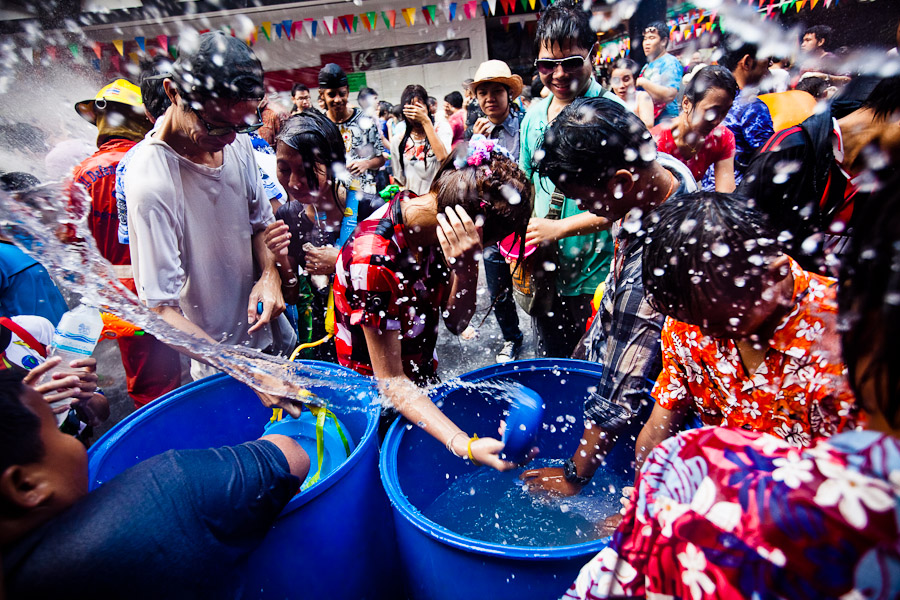
Thais celebrate Songkran by squirting, spraying, and generally throwing water on everyone and everything, in one vast water party.

Songkran water festival in Bangkok, Thailand

water-festival-in-thailand-5

water-festival-in-thailand-4

Songkran in Bangkok, Thailand

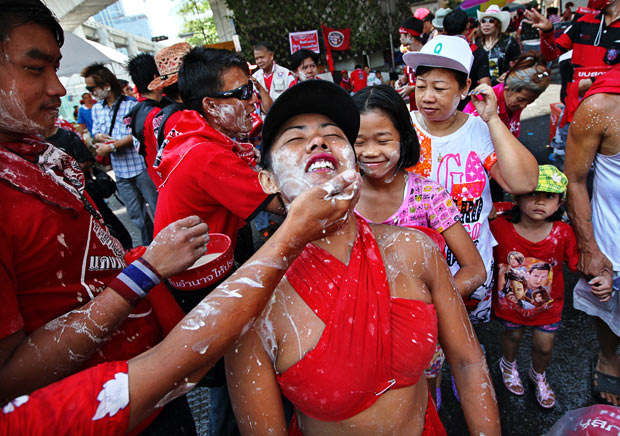
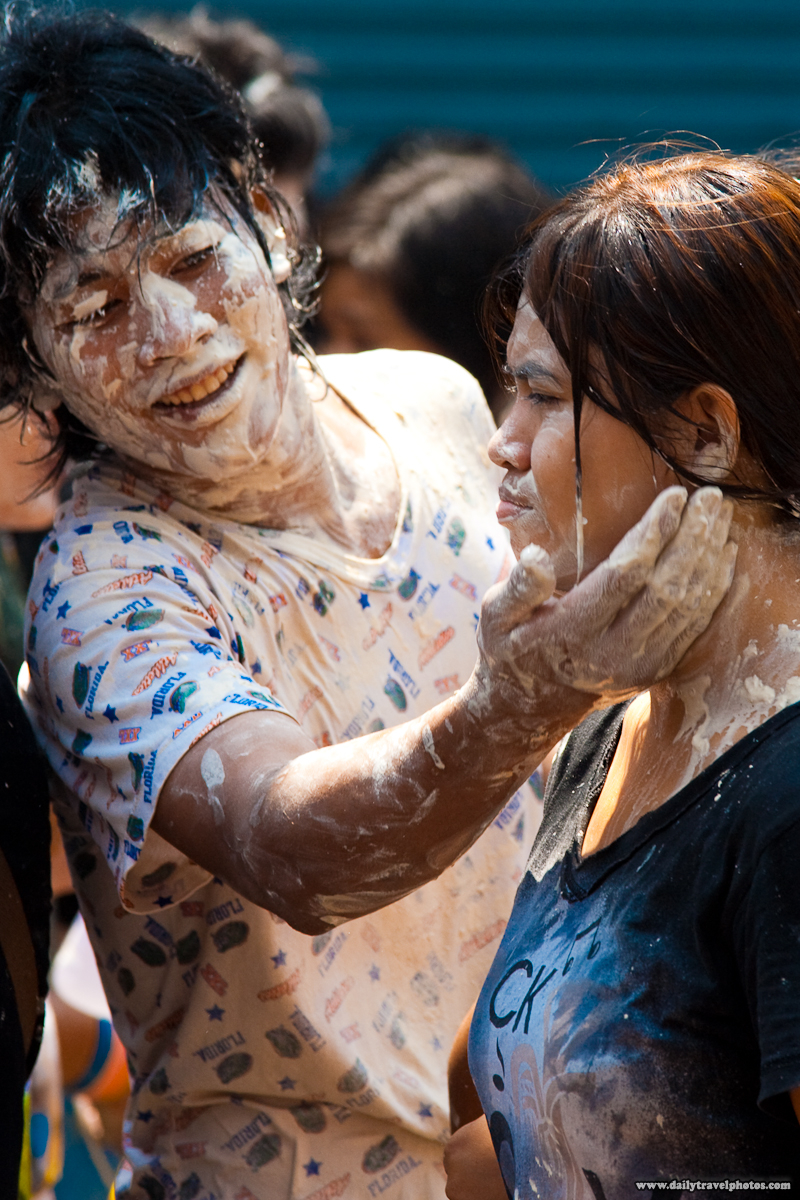
To cap it all, people slather themselves – and others – with a white paste (shades of Myanmar).

white paste on face-1

white paste on face-2

Those who are young, or who have an infantile sense of humour (aïe, my sourpussedness is coming to the surface), find all this hugely entertaining. Shrieks and laughter echo up and down the streets. Clothes are soaked, but no matter, it’s the hottest time of the year, they will dry out in a flash. And off goes another bucket of water!

Of course, for sourpusses like me, who have to get to meetings with officials in nice clothes or have to go to the office to work and who would prefer not to sit in a puddle at their desk, it is a trial to navigate the streets and dodge the pails of water, the hoses, the water guns. And anyway, it’s just so … damned childish to enjoy throwing water at people! (aïe, my party-poopery is coming to the fore: “I grow old, I grow old, I shall wear the bottoms of my trousers rolled”)

What I find really irritating is that all this water throwing is a stupid, facile, totally post-modern corruption of the original festival. Water has a very important role in Thai society, as it does in many cultures. Clean water is the symbol of purity and peace. At the new year, it is used to wash away the dirt of the old year and allow one to start the new year clean and fresh. During the three days of the festival, clean water is poured over statues of the Buddha to clean them. That same water, in some way sanctified by its contact with the Buddha, is sprinkled over family and friends, again as a symbol of cleansing oneself for the year to come. Part of the tradition has younger people sprinkling water on their elders.

In a variation on this last tradition, yesterday in the office my secretary shyly asked me if I would be willing to take part in a ceremony where my colleagues would sprinkle water on my hands, in my role as the head or “elder” of the office. I was glad to, I announced, feeling that this at least gave some meaning to the silly goings-on outside my window. So at the appointed time, my colleagues solemnly – if somewhat self-consciously – processed into my office. A silver bowl filled with clean water strewn with petals was placed on the table, and one by one – eldest first – they came up, knelt in the Thai fashion, and poured a small cup of water over my hands, while wishing me a happy new year. I wished them and their families a happy and prosperous new year in return.

When I came home for lunch, I noticed that a statue of the Buddha had been set up in the lobby, with a bowl of water nearby. Why not? I thought. I might as well go the whole hog. So I offered the statue a traditional if rather awkward namaste and poured a cupful of water over him.

___________________

Water festival-1: http://cdn.c.photoshelter.com/img-get/I0000SR1YiamyV8Y/s/750/750/Water-Festival-in-Bangkok-Thailand-29.jpg (in http://aaronjoelsantos.photoshelter.com/image/I0000SR1YiamyV8Y)
Water festival-2: http://www.chiangmai-alacarte.com/sites/default/files/styles/main_col/public/images/songkran_festival_and_tour_in_chiang_mai_thailand2.jpg?itok=KUnw68jO (in http://detaykibris.com/taylandda-su-bayrami-coskuyla-kutlaniyor-191-olu.html)
Water festival-3: http://www.journeymart.com/gifs/holidays-ideas/festivals/songkran-thailand-water-festival.jpg (in http://www.journeymart.com/holidays-ideas/festivals/songkran-thailands-water-festival.aspx)
Water festival-4: http://cdn.lightgalleries.net/4bd5ec1013294/images/Songkran_Water_Festival_Bangkok-2-1.jpg (in http://www.aaronjoelsantos.com/contents/Stories/Waterworld/image-Songkran_Water_Festival_Bangkok-2/)
White paste on face-1: http://i.telegraph.co.uk/multimedia/archive/01615/red-shirts-white-p_1615328i.jpg (in http://www.telegraph.co.uk/travel/picturegalleries/7586439/Songkran-tourists-and-Thais-splash-each-other-with-water-to-celebrate-new-year-in-Thailand.html)
White paste on face-2: http://www.dailytravelphotos.com/images/2011/110425_songkran_white_powder_paste_faces_thai_festival_day_applied_IMG_9676.jpg (in http://www.dailytravelphotos.com/archive/2011/04/25/)

MY SPIRIT HOUSE

Bangkok, 15 February, 2015

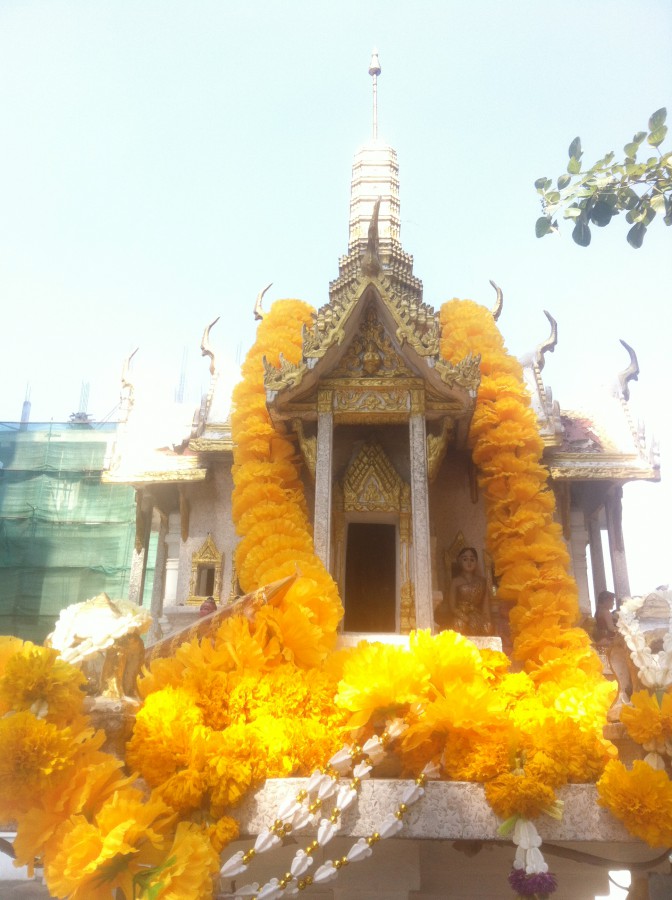
Anyone who has been in Thailand for more than half an hour begins to notice that every building, residential, commercial, governmental, whatever it happens to be, has one or more doll-like houses standing outside it in some corner of the property. To be very visible to one and all, they are set either on a tall pillar or on four somewhat smaller stilts. These, for instance, are the two which grace a corner of the parking lot at our apartment block.
spirit houses-general view-1
spirit house big

spirit house small

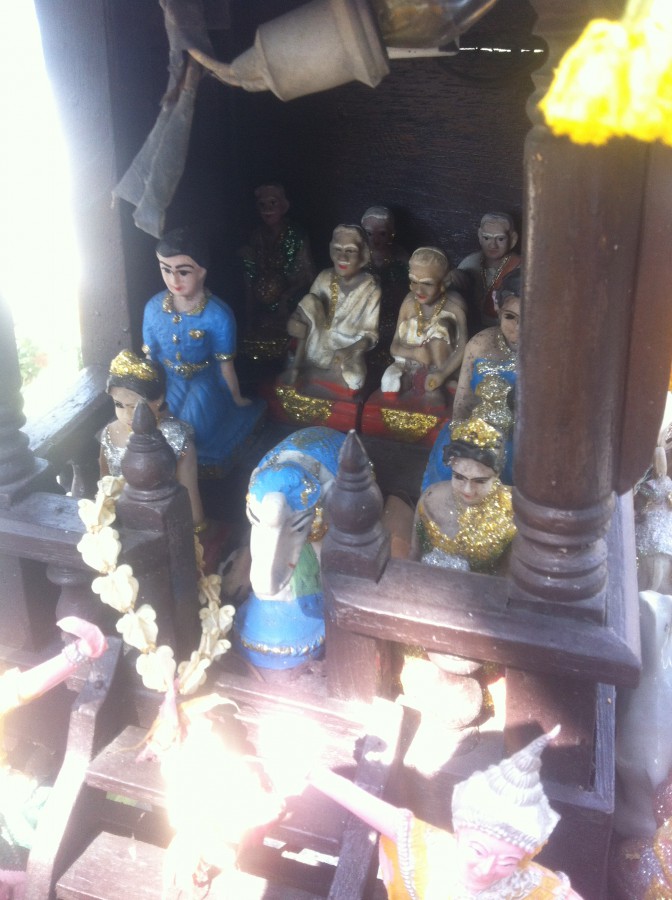
And if, finally rendered curious by constantly coming across them, one decides to have a closer look, you will find that they hold little figurines – old people, dancers, horses, elephants, cars, sometimes a Buddha. This, for instance, is a catalogue of what the bigger of our apartment block’s two little houses contains.

spirit house big-horses
spirit house big-elephants
They will often have votive offerings of food and drink as well as burning incense sticks set out in front of them along with fresh flowers

spirit houses-flowers and incense

many of them will have flower garlands draped over them

spirit house big-garland

and – at night – candles are set out or strings of lights turned on to light them up.

spirit house big-night

Quite charming. In fact, when my wife and I came to Bangkok for the first time some seven years ago, we were quite taken by these little houses and considered buying a DIY kit of one, to put up on the landing in front of the door of our then-apartment in Vienna, to house a small ivory Buddha which I had bought a few years before in Sri Lanka. But it was really too bulky, so we abandoned the idea.

But actually, why are these little houses there in the first place? I should have asked myself that the first time I saw them, before seriously considering putting one in front of my door.

A little bit of reading has informed me these houses are put up to propitiate the spirits of the land. This is a core belief of animism, that spirits reside in all the material manifestations of this world – the land, its streams, rivers, lakes, waterfalls, its trees and other plants, all animals, everything really, even man-made objects like bridges. Animism has deep, deep roots in Thailand – actually, in the whole of South-East Asia, from Myanmar down to Indonesia and across to the Philippines; the tradition of spirit houses, for instance, is found throughout the region apart possibly from the Philippines. The arrival of more rational, complex, sophisticated religions like Hinduism, Buddhism, Islam, or Christianity (or ethical systems like Confucianism in Vietnam), did not make the earlier animistic beliefs disappear, although I’m sure the leaders of these new religions tried hard to stamp them out (and at least in Thailand are still trying to, according to what I’ve read) or to absorb them (which is certainly what Buddhism has tried to do).

The sad thing is that these spirits are not nice beings. The purpose of those cute little houses is actually to make sure that the spirits of the land don’t get mad at you because you’re using their land and decide to burn down your house or give you a heart attack or bring Lord knows what other calamity down on your head. So in the house you’ll put figurines of servants to tend to the local land spirit’s every whim,  you’ll put figurines of dancing girls (geishas might be a better descriptor) to keep him happy, you’ll put horses and elephants (and cars for the more sophisticated urbanized spirits) to make sure he can go for a ride whenever he gets bored of sitting at home and watching the dancing girls gyrate, you’ll give him food and drink to make sure he doesn’t go hungry … Reading all this, it occurs to me that these spirits are really just like the mafia in Sicily: if you don’t pay this man the requested pizzo, or protection money
mafia-man

then unfortunately this will happen to your shop.
burning shop
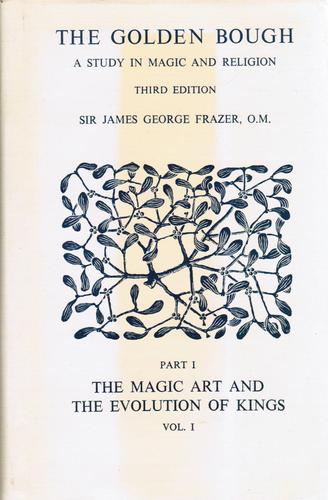
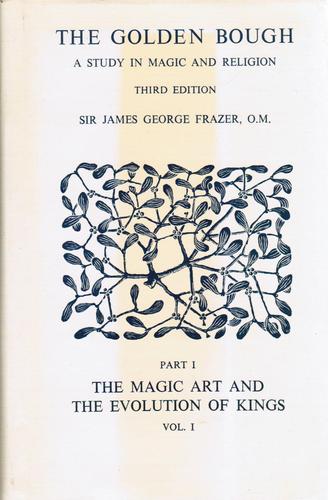
So, these pretty little houses are actually the reflection of a deep existential fear, that all around you are naughty, nasty little spirits who will hurt you if you’re not nice to them. These reflections moved me to dip into “The Golden Bough: A Study in Magic and Religion” by the Scotsman James George Frazer.
Golden_Bough
The book, first published in 1890 and republished several times thereafter, attempts to define the shared elements of religious beliefs, discussing fertility rites, human sacrifice, the “dying god”, the “scapegoat”, and many other symbols and practices. Its thesis is that old religions were fertility cults that revolved around the worship and periodic sacrifice of a sacred king (among other places, his ideas take a central role in T.S. Elliot’s poem, “The Wasteland”, which I have had cause to mention 100 posts ago and which was the reason why I originally read “The Golden Bough”). I’m sure modern anthropologists would dispute Frazer’s basic thesis, but in writing the book Frazer collected accounts from around the world of magical, animistic beliefs, which are fascinating in themselves. Here are three excerpts which he cites from other sources on the belief in spirits in South-East Asia.

“Thus the life of the Thay seems regulated down to its smallest details by custom founded on his belief in the spirits. Spirits perpetually watch him, ready to punish for his negligences, and he is afraid. Fear is for him not only the beginning of wisdom, it is the whole of his wisdom. Love has only a very moderate place in it. Even the respect in which he holds his dead, and the honours which he pays them on various occasions, seem to be dominated by a superstitious fear. It seems that the sacrifices which he offers to them aim rather at averting from himself the evils which he dreads than at honouring worthily the memory of his deceased kinsfolk and at paying them the tribute of his affection and gratitude.”

“Independently of the demons who are in hell, the Siamese recognize another sort of devils diffused in the air: they call them phi; they are, they say, the demons who do harm to men and who appear sometimes in horrible shapes. They put down to these malign spirits all the calamities which happen in this world. If the mother has lost a child, it is the phi who has done the ill turn; if a sick man is given over, it is a phi that is at the bottom of it. To appease him, they invoke him and make him offerings which they hang in desert places.”

“The desire to propitiate the good spirits and exorcise the bad ones is the prevailing influence upon the life of the Laotians. With phis to the right of him, to the left of him, in front of him, behind him, all round him, his mind is haunted with a perpetual desire to make terms with them, and to ensure the assistance of the great Buddha, so that he may preserve both body and soul from the hands of the spirit.”

The first two excerpts, written in 1907 and 1831 respectively, come from books written by French missionaries, the third from a book written by an Englishman in 1884. The first two no doubt had religious axes to grind, wishing to show how the Thai (Siamese being the old name for the Thai) were poor, benighted folk in need of Christian redemption. But even accounting for a certain amount of exaggeration, the picture which these excerpts paint is bleak indeed: a constant, haunting fear at every step.

Of course, before we shake our heads and smile and take another sip of our coffee, we should remind ourselves (as Frazer reminds us in his book) that Europe, just to take my part of the world, was also the home of naughty, nasty little spirits. Anyone like me who had to suffer through Latin and Greek in their education will remember the Roman and Greek nymphs who haunted the sacred groves and streams, and who had to be propitiated. And what about all those leprechauns, and trolls, and sprites, and ogres, who populate children’s books and popular stories? Remember Rumplestiltskin, that nasty little imp who saves the miller’s daughter from the wrath of the king by spinning straw into gold for her, but on condition that she give him her first-born child?
rumplestiltskin
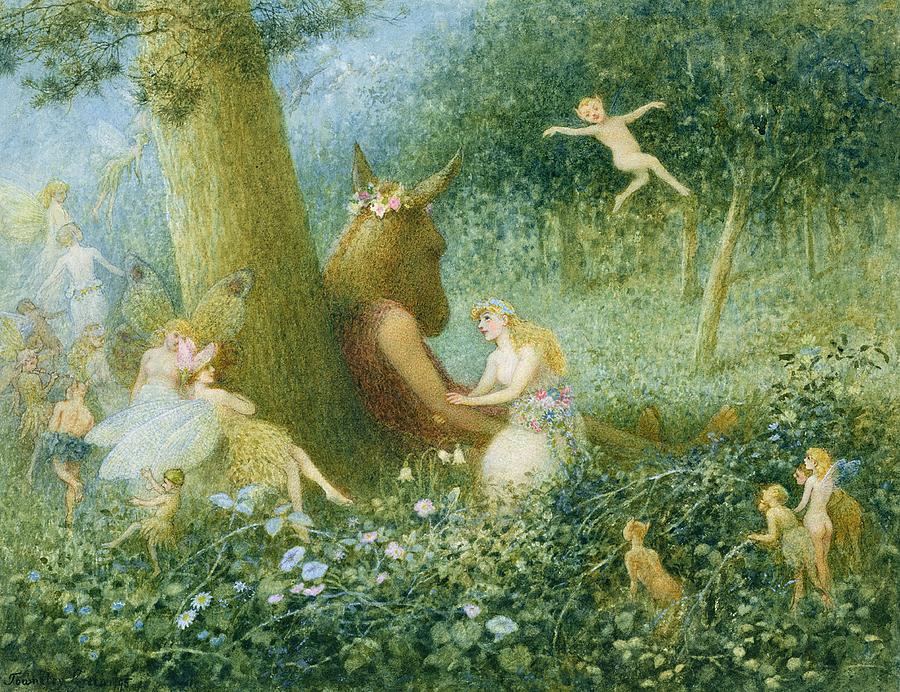
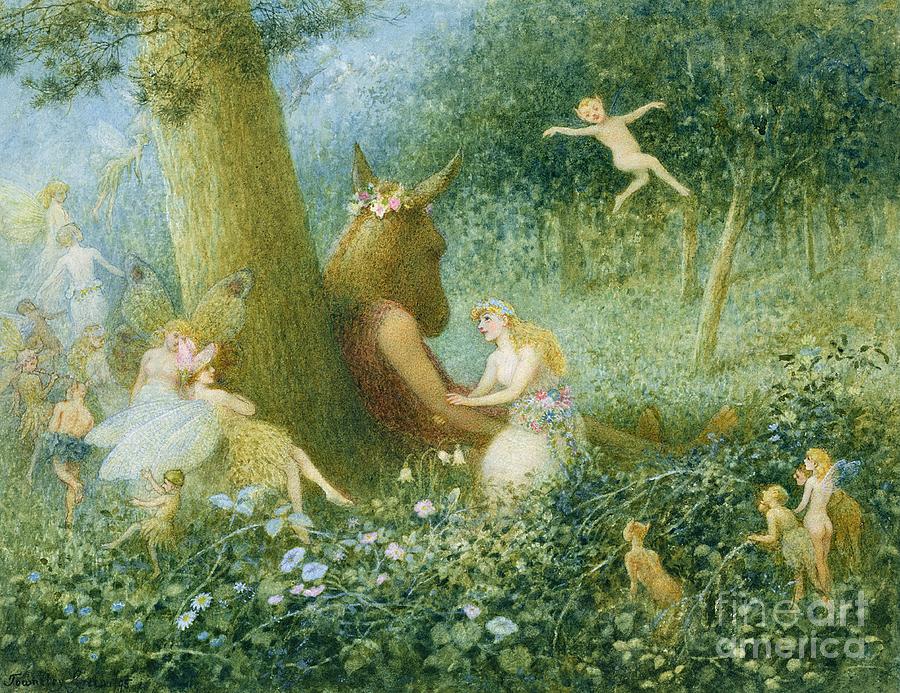
Or that “shrewd and knavish sprite” Puck in Shakespeare’s “A Midsummer Night’s Dream”, who at the behest of his master Oberon, King of the fairies, wreaks mayhem in the Athenian woods?
puck

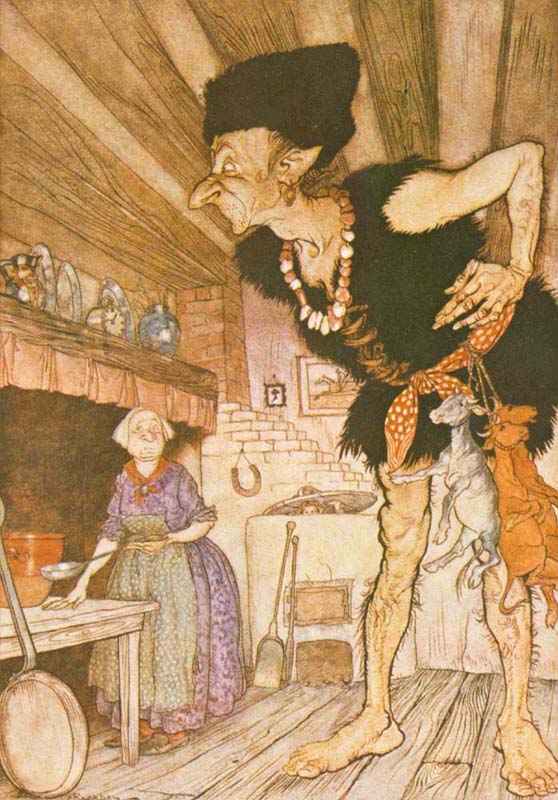
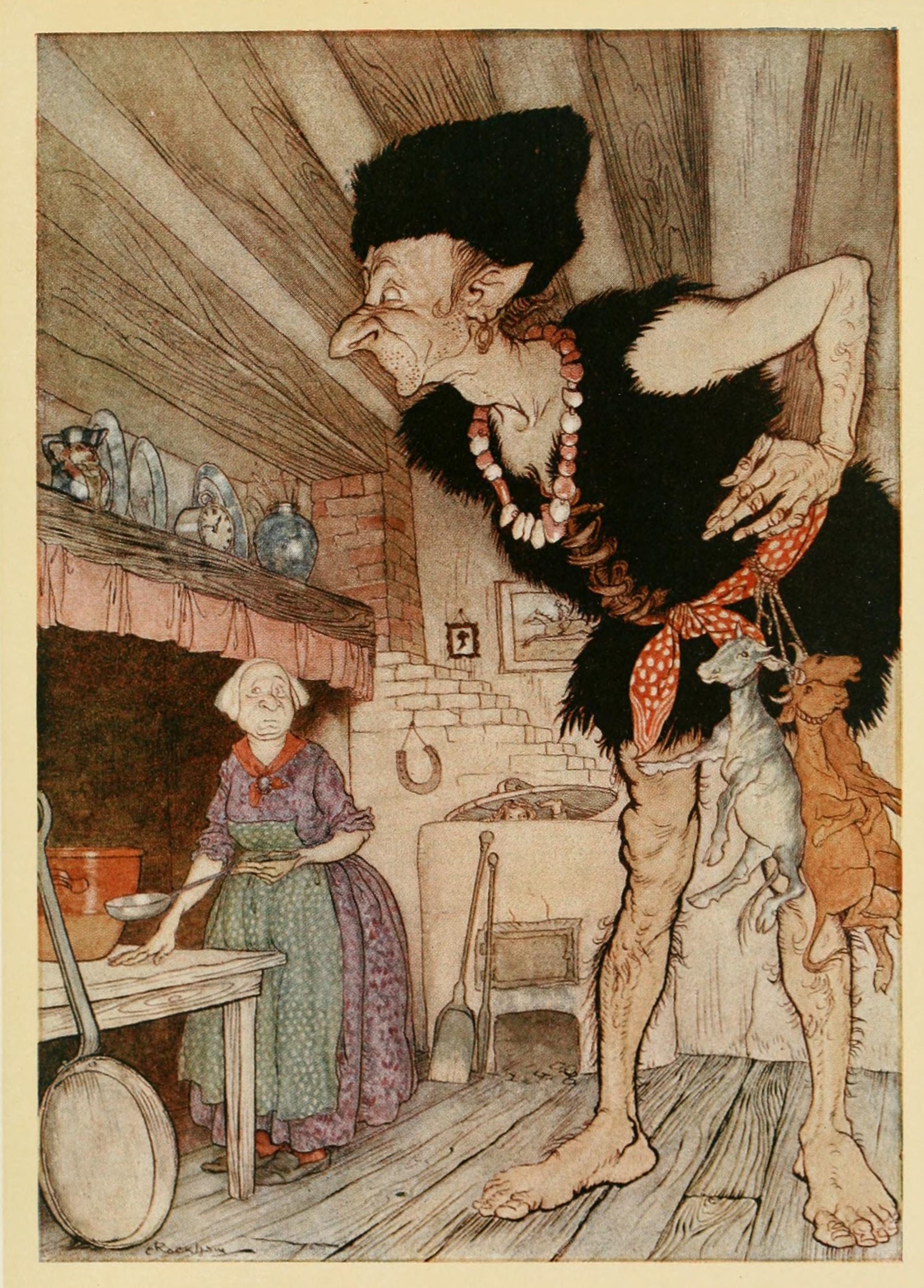
Or the ogre in Jack and the Beanstalk, who on sensing that little Jack is hiding in his house, intones

“Fee-fi-fo-fum!
I smell the blood of an Englishman,
Be he alive, or be he dead,
I’ll grind his bones to make my bread.”
ogre jack and the beanstalk

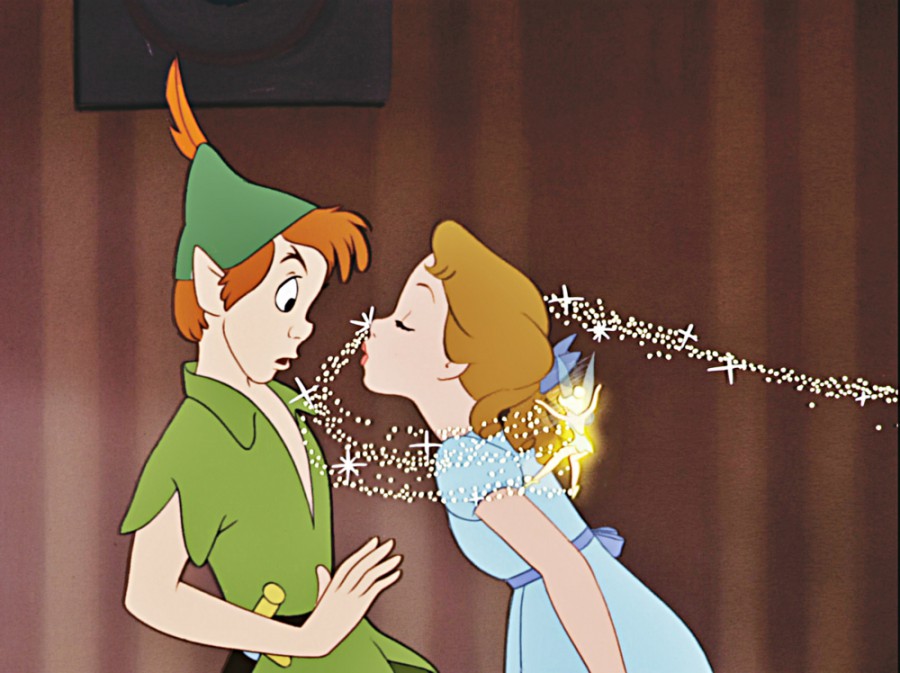
Even Tinkerbell in Disney’s sucrose version of “Peter Pan” is not a particularly nice person.
tinkerbell
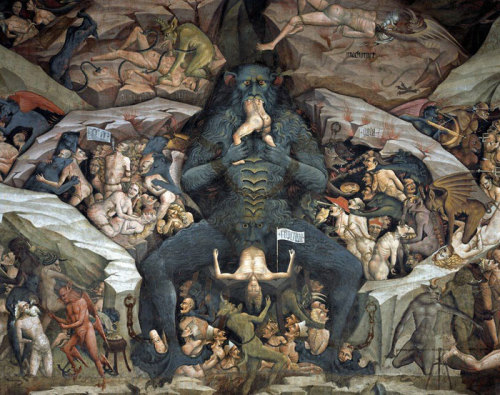
I suppose Christianity managed to reduce the strength of animistic beliefs in Europe – I won’t say stamp out, because otherwise we wouldn’t have the children’s stories – but only to replace them by another existential fear, that of suffering in hell for ever and ever.
hell
Luckily, science has come to the rescue and driven out all the religious claptrap. There is no supernatural world, it tells us, only the natural world around us. And with that, all those spirits disappear in a flash.

But now that I know all this, would I still buy a spirit house kit to assemble on the landing in front of my apartment door in Europe? Do I want to be seen, if only to myself, to believe in naughty, nasty spirits? After giving some thought to the matter, I have concluded that yes, I would, but for a very different reason. One of the houses whose photo I give at the beginning of the post is the house of the ancestral spirits of the place, the spirits – or ghosts I suppose – of the people who lived there before you. In fact this house contains figurines of old people.
spirit house small-old people
Unfortunately, these spirits also require propitiation in Thailand, since they too can turn nasty (jeez louise, what a world view!). But I would use the house differently. I would use it to house the memory of my parents and my wife’s parents. For my parents, I would have a very tall figurine stand in for my father and a very small figurine for my mother, for that indeed is how they were; one of my abiding memories of them is the two dancing together, he very tall, she very small, slowly circling the dance floor. For my wife’s parents, I would have a large figurine stand in for my mother-in-law, for she was indeed of a stout disposition. For my father-in-law, I’m not sure, I hardly knew him. I’ve mentioned before his fondness for wearing a Basque beret, so perhaps a figurine of a man with such a beret would do? But I would leave this for my wife to decide. And I would move the house into the apartment, so that their memory could be with us, rather than left out in the dark like the dog. I feel that this would be a better way of remembering them, of keeping their memory alive, than going on infrequent visits to the graveyard, and a useful complement to looking at old photos and reminiscing. And I would hope that one day my children would also have a spirit house to which they could add little figurines of us once that day arrives. As it surely will.

____________________

Spirit houses: my pictures
Mafia man: https://solo3d.files.wordpress.com/2012/09/mafia-man-by-siamak-roshani-1.jpg (in https://solo3d.wordpress.com/scenes/portraits/mafia-man/)
Burning shop: http://www.newsbiscuit.com/images/845.jpg (in http://www.newsbiscuit.com/2007/09/05/fire-brigade-turned-up-late-to-burning-pizza-shop-as-satirical-statement/)
“The Golden Bough” cover: http://3.bp.blogspot.com/-KNKUm2qVFeo/URmCSeqWMuI/AAAAAAAAMKQ/YNPwXF5oY7s/s1600/The_Golden_Bough.jpg (in http://38is.blogspot.com/2013_02_01_archive.html)
Rumplestitskin: http://www.artsycraftsy.com/goble/wg_rumplestiltskin.jpg (in http://www.artsycraftsy.com/goble/goble_rumplestiltskin.html)
Puck: http://images.fineartamerica.com/images-medium-large/a-midsummer-nights-dream-ht-green.jpg (in http://fineartamerica.com/featured/a-midsummer-nights-dream-ht-green.html)
Ogre in Jack and the Beanstalk: http://upload.wikimedia.org/wikipedia/commons/4/4c/Jack_and_the_Beanstalk_Giant_-_Project_Gutenberg_eText_17034.jpg (in http://en.wikipedia.org/wiki/Jack_and_the_Beanstalk)
Tinkerbell: http://cdn.hellogiggles.com/wp-content/uploads/2015/01/22/Walt-Disney-Screencaps-Peter-Pan-Wendy-Darling-Tinker-Bell-walt-disney-characters-34385876-4326-3237.jpg (in http://hellogiggles.com/real-life-disney-romance/walt-disney-screencaps-peter-pan-wendy-darling-tinker-bell-walt-disney-characters-34385876-4326-3237)
Hell: https://36.media.tumblr.com/20721aba85e8475adb529816d4e40a10/tumblr_n1kmegRkqx1qm5yeno1_500.jpg (in https://www.tumblr.com/search/art%20history%20hell)

MEXICO: MUSEO DE ARTE POPULAR

Bangkok, 10 January, 2015

While in Mexico City over the Christmas break, my wife and I visited two museums, the Palacio de Bellas Artes and the Museo de Arte Popular. The Bellas Artes is the more Worthy of the two, having vast panels by Great Mexican Painters such as Diego Rivera, David Siqueiros, José Orozco, and others. When we visited, it also had some Worthy exhibitions, one of these being on modern art from cubism onwards, which mixed global titans like Picasso and Pollock with Mexicans. I have mentioned in a previous post how so much of the world looks the same everywhere nowadays, especially where clothes are concerned: everyone, everywhere, dresses the same, particularly the young. I was struck by the same sensation in this exhibition of modern art. Everyone’s modern art was the same everywhere: Diego Rivera’s cubism looked just like Braque’s, Frida Kahlo’s surrealism was indistinguishable from Magritte’s, Gunther Gerzso’s abstract expressionism is no different from Willem de Kooning’s or Mark Rothko’s. In a word, there was nothing particularly Mexican about any of the art on show from Mexican artists. Another, depressing, effect of globalization.

So you can imagine my relief when we visited the Museo de Arte Popular (which I think we can translate as the Museum of Folk Art) and saw pieces which were quite typically Mexican, pieces I would not find in a museum of folk or other art in Europe or the US or Japan or even Thailand where we currently live. (In truth, I’m sure I would find similar pieces in the other Latin American countries, but that’s OK; these countries do after all share a fair amount of cultural history, Hispanic and pre-Hispanic).

So it is with pleasure that I can share with readers photos of some of the pieces I most liked. I hope I will be excused their generally poor quality. They are all taken with my iPhone, and in many instances through the glass of the exhibition cases which often created irritating problems of reflections.

I start with that typical form of folk art, ceramics. Here are some pots and a plate I particularly fancied:
image
image
image
with this one being my favorite of the genre
image
There was also a lot of woven rattan and similar objects. I’m not a big fan of this art form, but I do add here a picture of a container made with a mix of bark and fibres, which had a certain attraction
image
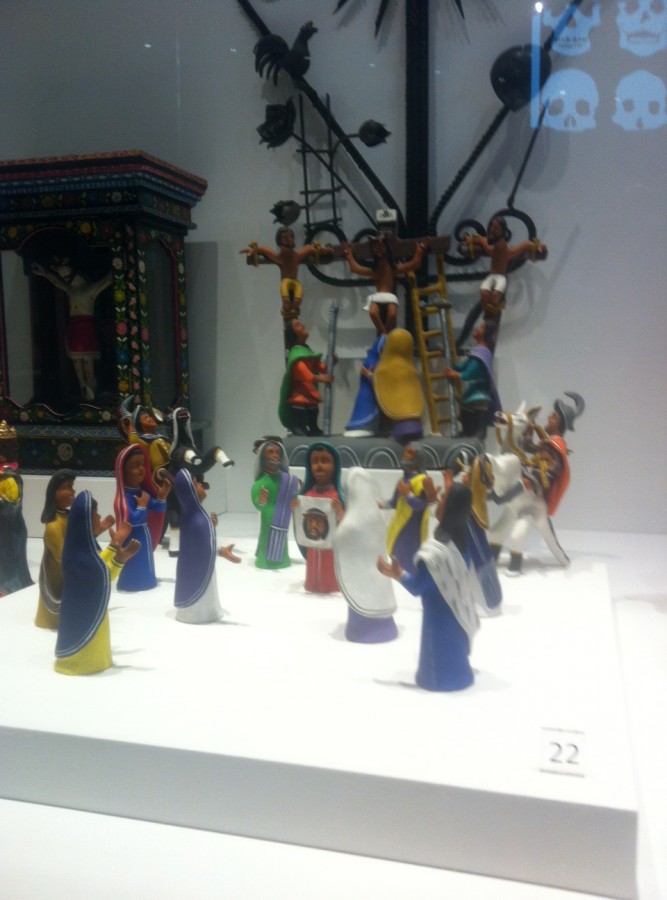
Not particularly Mexican all this, you might argue, so let me continue with a subject very close to the average Mexican’s heart, religion. In the museum collection, it was captured for the most part with that typically Mexican (or perhaps Latin American) fondness for little set scenes. So we have a crucifixion
image
a last supper – but why are they eating watermelon??
image
and a last judgement
image
while the Tree of Life was a very popular motif, made into a lovely candelabra in this example
image
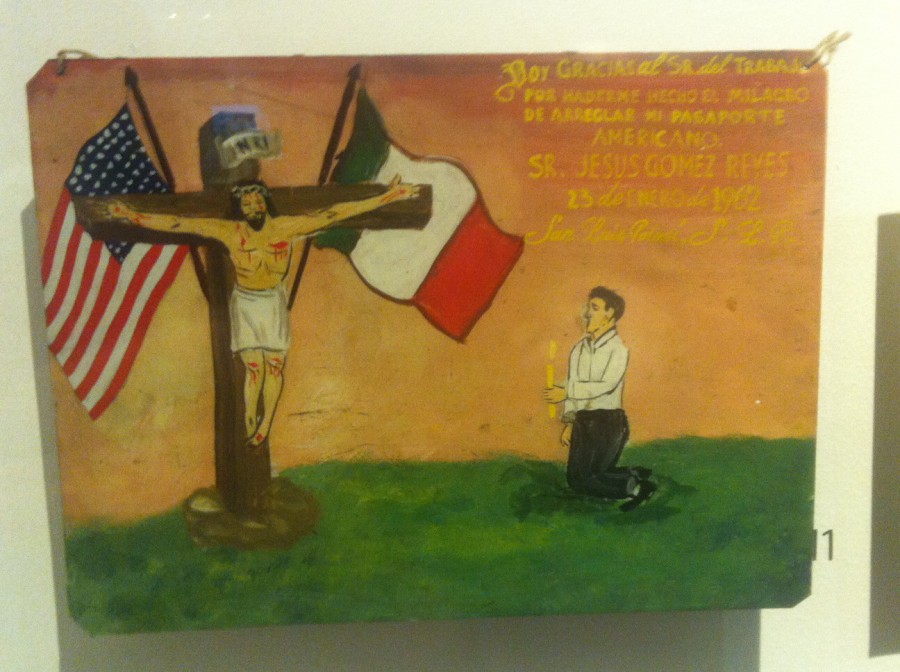
Then there were several examples of ex-votos, that exceedingly popular genre of folk religious painting (and not just in Mexico; Italian churches are littered with them, as are churches in Austria and probably every other Catholic country). Normally, they record a person being saved from some catastrophe or illness, but in this particular case a certain Mr. Jesus Gomez Reyez was thanking the Good Lord for getting his American passport regularized back in 1962, a touching commentary on so many Mexicans’ yearnings to escape to America
image
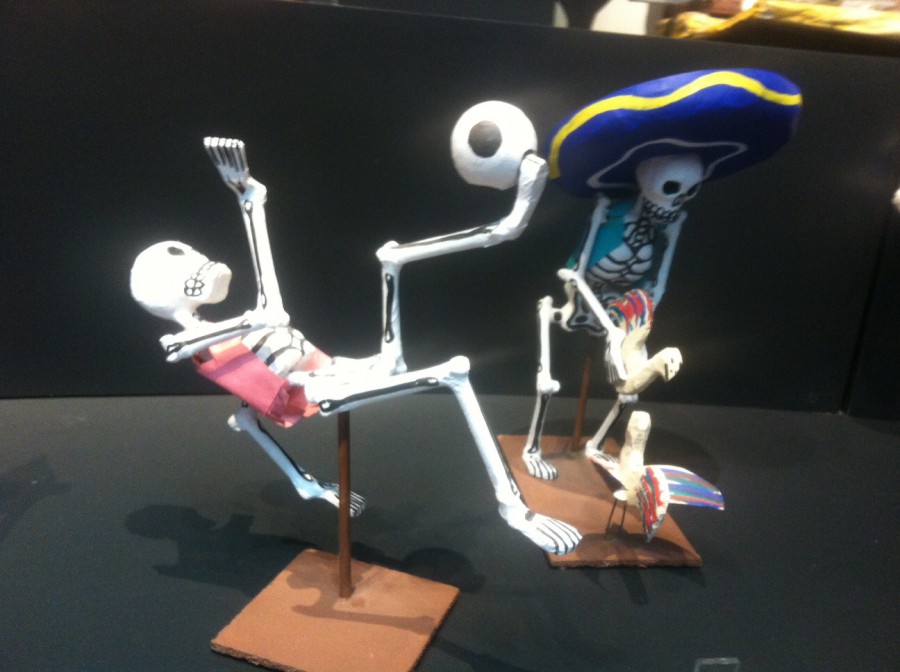
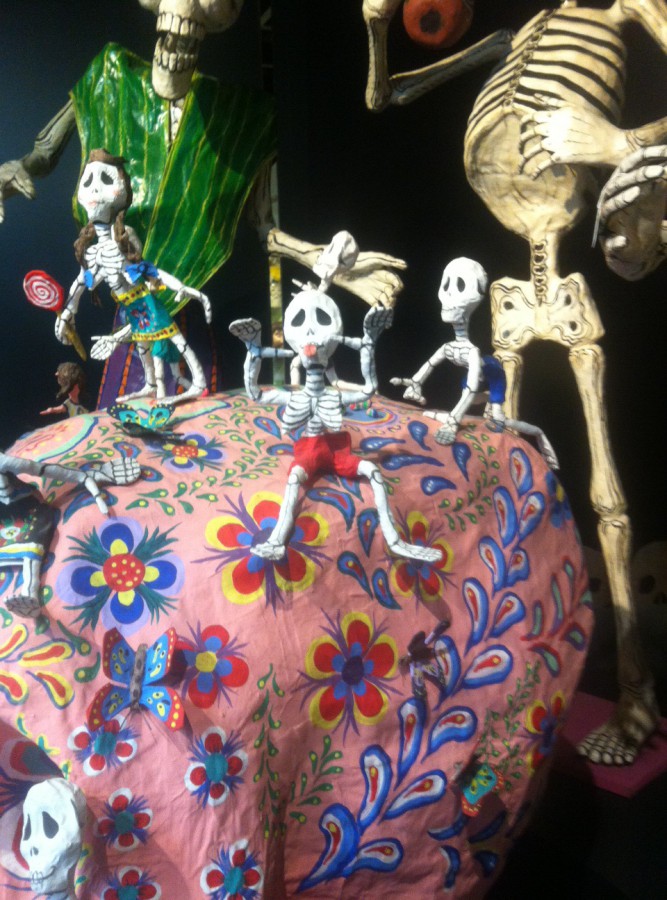
Religion has much to do with death, and the Mexicans have turned death into a high art, especially that most striking vision of the death which awaits us all, the skeleton. The museum has a particularly rich collection of this art form, of which I show a small selection, starting with this wonderful variation on that insipid form of religious art, the statues of saints in churches
image
I must say, despite the grimness of the topic these skeletons are always remarkably cheerful. Here we have a bunch of skeletons thoroughly enjoying a huge meal – echoes of the last supper?
image
another happily kicking a football around
image
yet another, a child’s skeleton, blowing us a raspberry
image

while here we have an earnest swain declaring his undying love to a simpering and blushing maiden
image
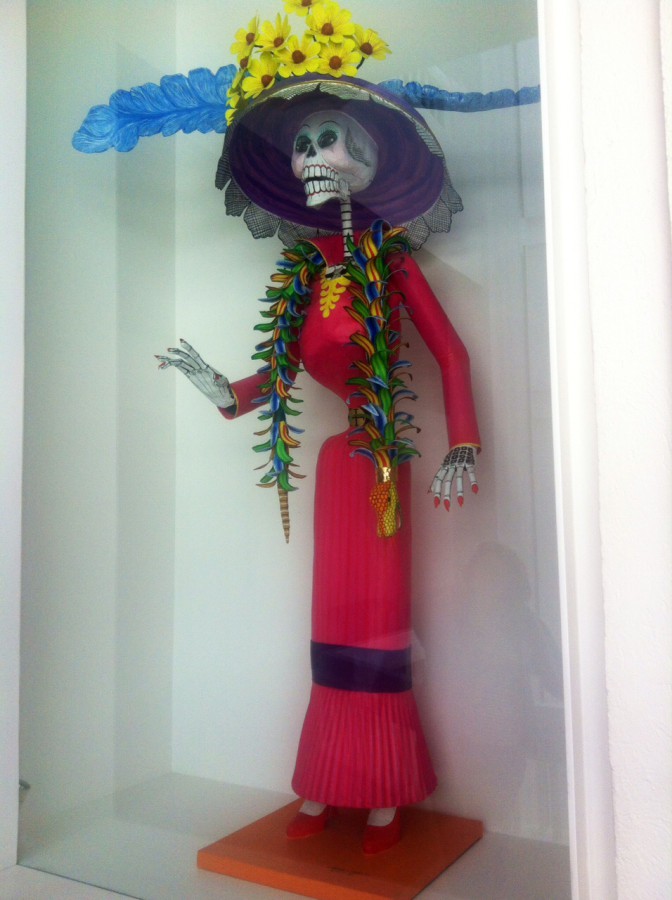
and finally, a very popular character in the skeleton cast of characters, a “Catrina”, a female skeleton dressed to the nines in a 19th Century style
image
We loved these Catrinas so much that we bought a ceramic version and carried it back to Bangkok, where it now stands on our dressing room table.

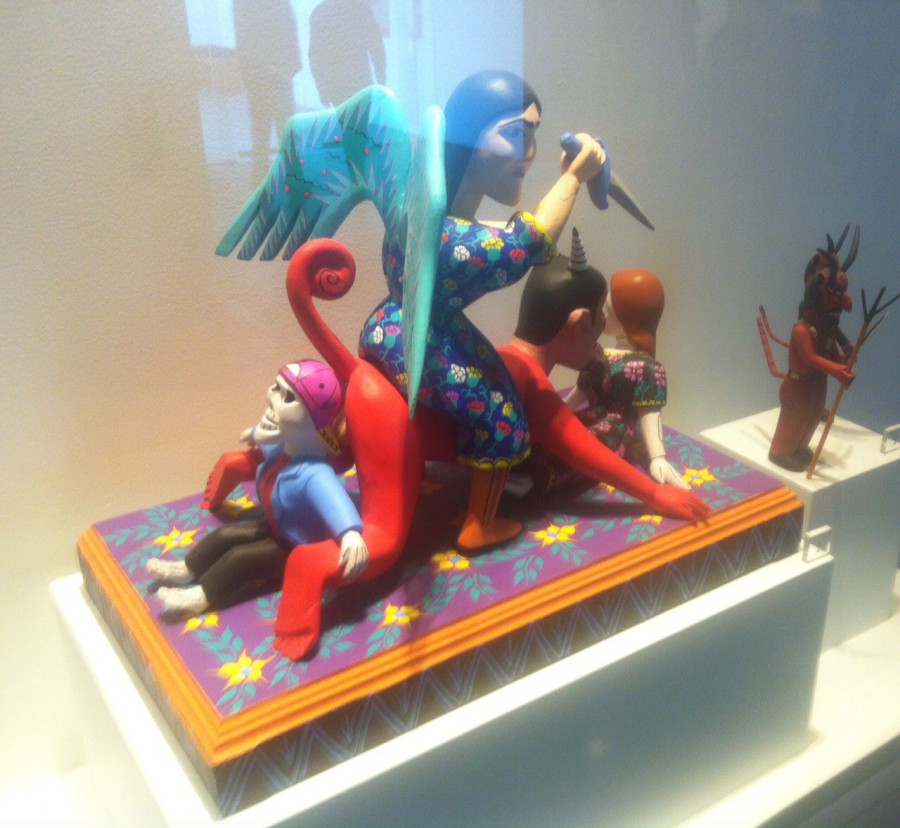
Keeping to the broad religious theme, devils are also a popular topic. I include three, one blowing a raspberry, something which I have never particularly associated with devils (but a common theme it would seem; does blowing raspberries have some deeper meaning in Mexico?)
image
another showing a bunch of devils taking part in a last-supper type of meal – eating watermelon again! (what’s with this business of watermelon?)
image
and a grimmer scene, a devil rapist (I suppose rape is as bad a problem in Mexico as anywhere else).
image

The little scenes which seem such a popular subject spill over into normal, day-to-day life. We have here a seller in the market (watermelon-eating again …)

image

Fairgrounds seem a popular topic, especially Ferris wheels

image
while here we have a grimmer scene from life, a fire. Many escape from the doors of these towers but one person has had to throw himself off the top.
image
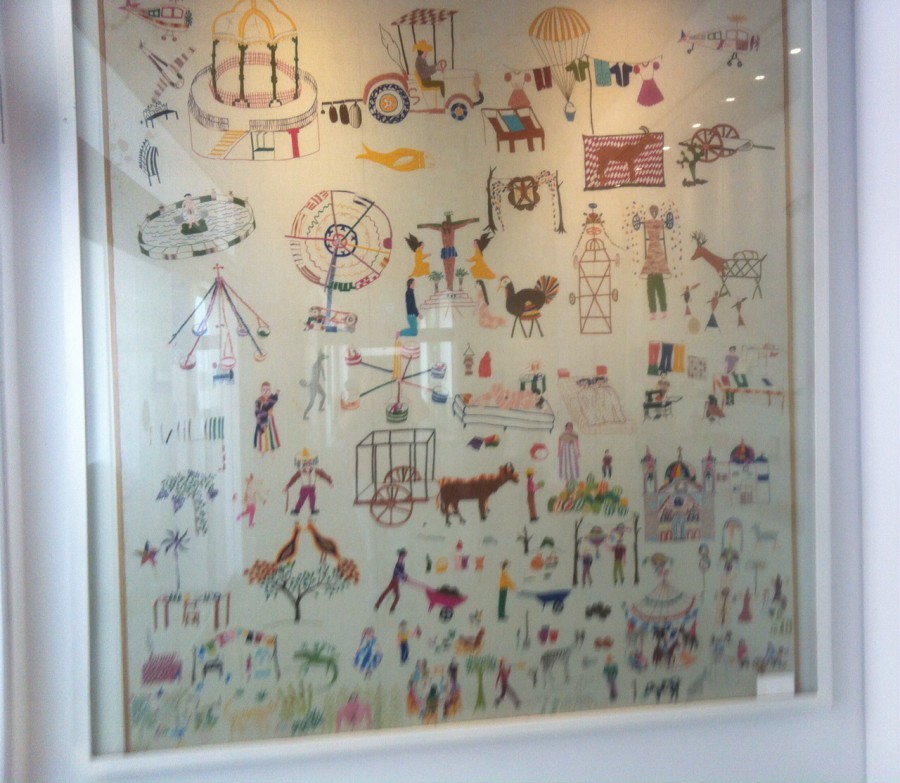
This large needlework piece wonderfully captures the myriad activities of daily life
image
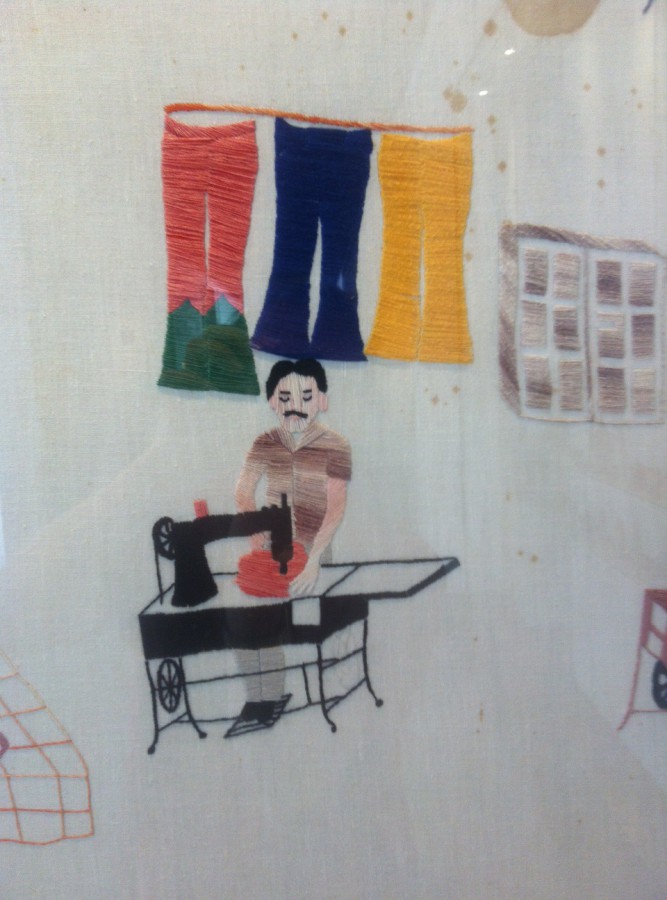
I add one close-up of the many scenes on this piece
image

The final theme is animals, which are a popular subject for folk artists. I feel I should start with a turkey, which was first domesticated in pre-Hispanic Mexico.
image
I continue with a cat, because my wife reminded me that when we were last in Mexico 35 years ago we bought a ceramic cat, which currently faithfully sits in storage in Vienna waiting for our return to Europe.
image
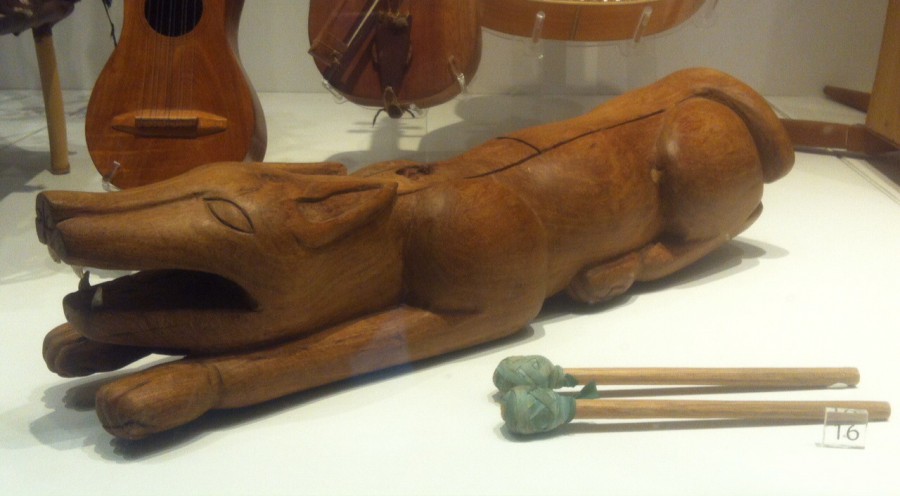
But I also add a dog, in this case in the form of a teponatzle (a type of musical instrument),
image
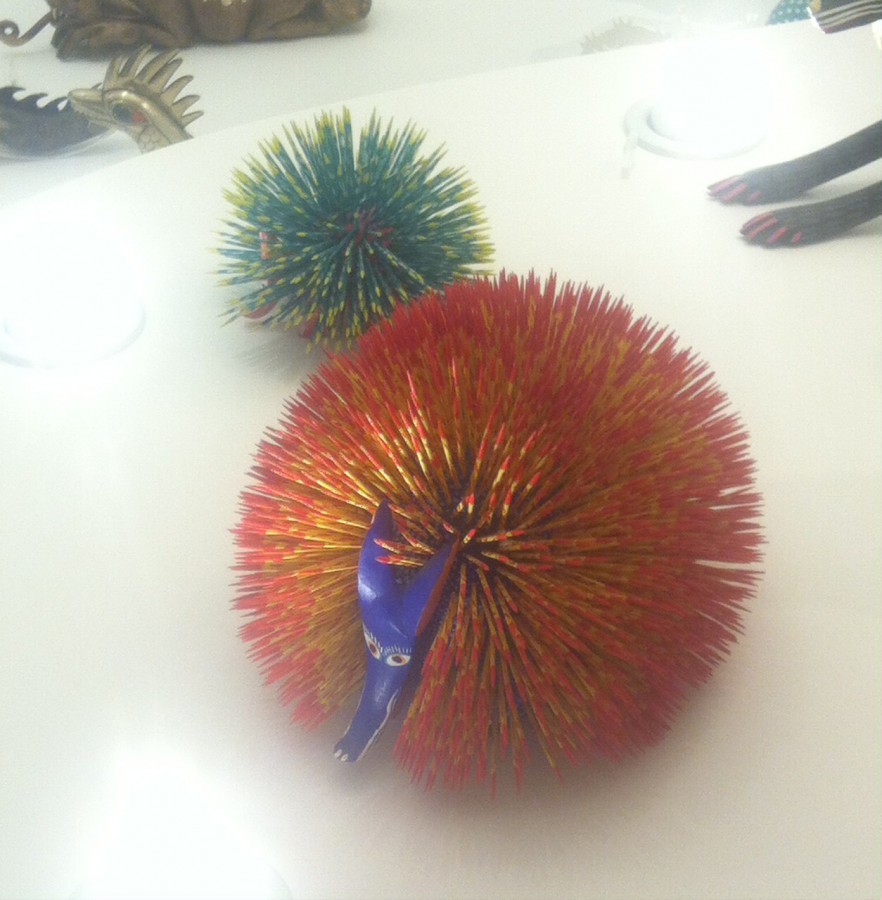
continue with what appears to be a brightly coloured hedgehog
image
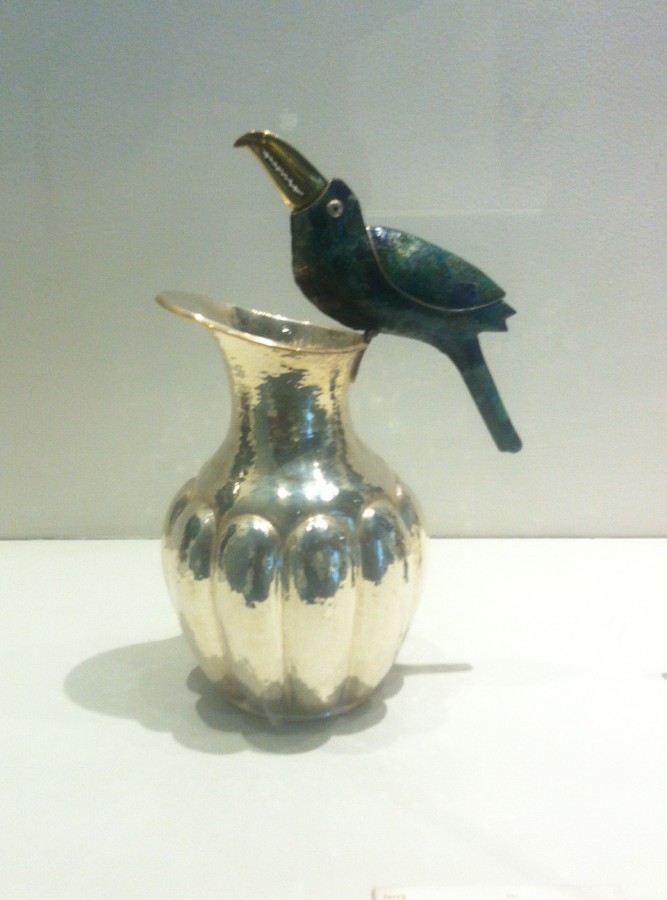
and finish with a couple of birds: what looks like a macaw, fashioned as a handle of a jug
image
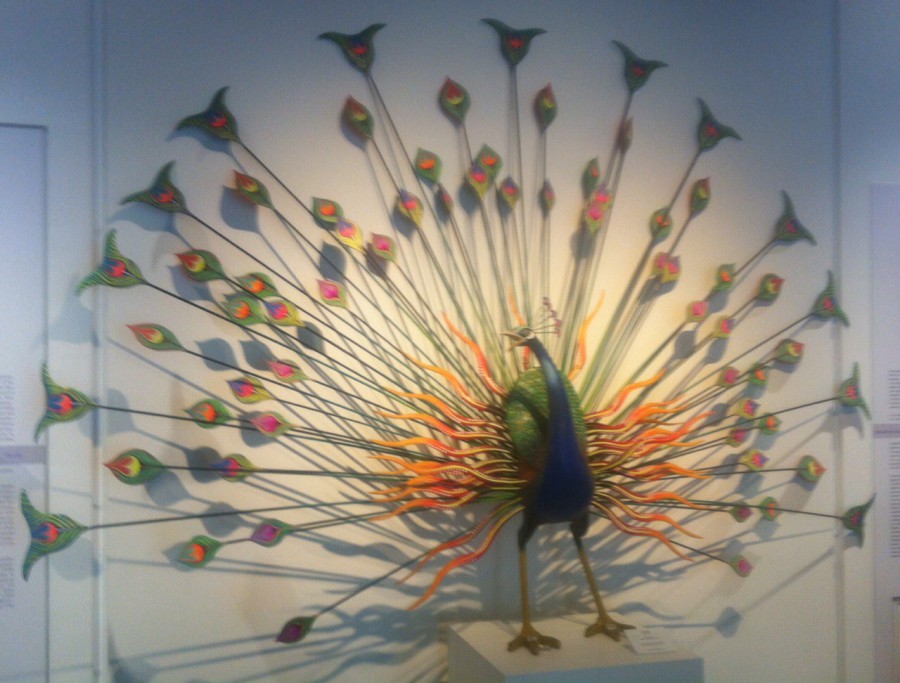
and this truly magnificent peacock
image
On the topic of animals, I feel I have to include a picture of this monster
image
The Mexicans seem to have a great fondness of such monsters, which we saw in a number of places, on a much larger scale, being used as floats of some sort.

Well, I don’t want to give everything away about this museum. I hope I’ve persuaded some readers to visit it if they happen to be in Mexico City: Calle Revillagigedo 11, Cuauhtémoc, very central; open every day except Monday.

___________

pictures: all mine

MEXICO: BASHING THE PIÑATA

Mexico City, 4 January, 2015

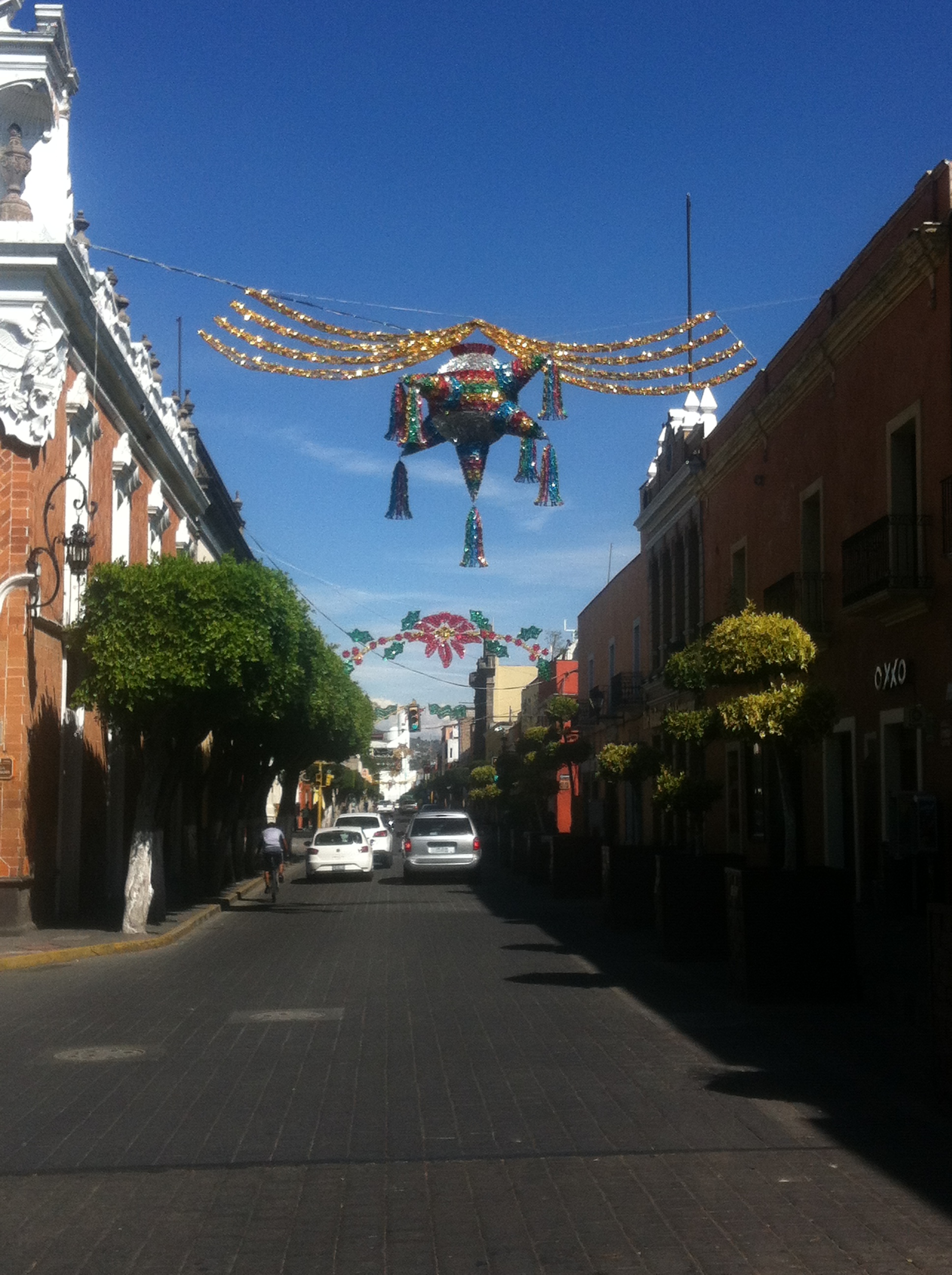
As my wife and I wandered around Mexico City this last week, we were struck by these strange ornaments which we saw hanging in many places. This particular one, for instance, was hanging in a street somewhere

pinata 002

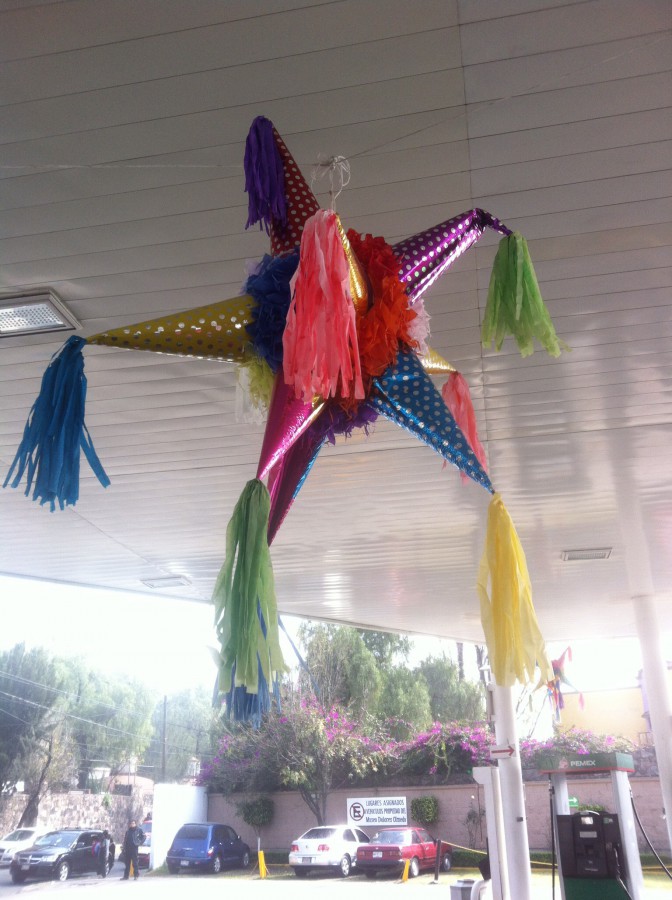
while this one, somewhat incongruously, swung over the cars in a gas station.

image

Intrigued, I asked our son what they were. Piñata, he told us.

Ah. I had never heard of them.

Undeterred, I rolled up my sleeves and did some research (i.e., browsed the web). I am now ready to report my findings.

What we have here is an example of the strategy used by the Catholic church in the early years of the Spanish conquest of Mexico to christianize the local populations. The church adopted, with the necessary adaptations, those local religious traditions which happened to have similarities with Catholic traditions. The thinking was that this would make Catholicism more familiar, more “user friendly” for the local populations, who would therefore convert more readily (and if necessary, a little gentle pressure from the sharp end of a sword could no doubt be used to help along in the decision-making process).

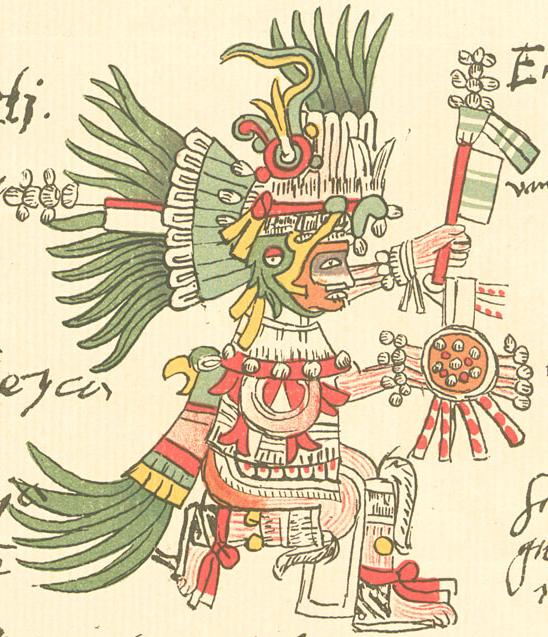
In the case of the piñata, the local religious tradition in question was part of the Aztec festival for their patron god Huitzilopochtli, sun god, god of war, and god of human sacrifice.
image
The whole of the Aztec month of Panquetzaliztli, which ran from 7 to 26 December in today’s calendar, was dedicated to this festival. The people decorated their homes and trees with paper flags, there were ritual races, processions, dances, songs, prayers, and to top it all off there were human sacrifices.

Only one of the festival’s activities is of interest us here. In it, priests would place a clay pot on a pole in front of the statue of the god. The pot was filled with tiny treasures inside and decorated with colorful feathers outside. The pot would be ritually broken with a stick or club, and the treasures would fall to the feet of the statue as an offering.

It so happened that the Spaniards had a very similar custom, the Dance of the Piñata, which took place during Lent. There, too, a decorated clay pot, the piñata, was suspended and during some kind of dance routine got broken with a stick. Quite what the religious significance of this was is unclear to me, nor do I know if there was anything in the pot.

The canny Franciscan monks who were spearheading the conversion efforts in Mexico (along with Dominicans) figured that they could harness this Lenten custom from Old Spain to a new Christmas custom in New Spain and in so doing help to draw away the indigenous people from their old, “pagan”, “idolatrous”, “devil-worshipping”, etc. religion. They also borrowed from a superficially similar Mayan custom. The Mayans had a game rather like blind man’s buff, where a player was blindfolded, perhaps spun around to disorient him, and then left to try and hit and break a suspended clay pot. No doubt his blundering misses made spectators roar with laughter. Again, I don’t know if there was anything in the pot.

The Franciscans used all these threads to weave together a new, fun custom which the indigenous people were encouraged to practice, in the church grounds no doubt, in the run-up to Christmas. A clay pot, filled with sweets and other goodies, and decorated on the outside, was suspended. The “players” were blindfolded, and guided by the onlookers, would try and bash the pot and release the goodies. If successful, everyone would throw themselves on the goodies. But of course the Franciscans gave the whole thing a religious twist, using the new piñata “game” to inculcate in the locals some Christian catechism. Thus, the clay pot represented Satan, with the outer decorations now transmuted into seven colorful cones or horns representing the seven deadly sins (for those of my readers who have momentarily forgotten which these are, we have, in alphabetical order: envy, gluttony, greed, lust, pride, sloth, and wrath). The outside was made beautiful to remind the viewer that evil is tempting, and the goodies inside the pot represented the temptations of wealth and earthly pleasures. Once the game started, it became a morality play for demonstrating the three theological virtues of Faith, Hope, and Charity. The blindfolded players represented Blind Faith, groping their way towards salvation. The piñata now represented Hope. The onlookers looking up at the hanging piñata were actually gazing towards Heaven, yearning for the salvation that would come from the smashing the pot and the triumph of Faith over Evil. The sweets and other goodies that showered forth now suddenly became the rewards of maintaining the Faith. But everyone shared in the goodies, thus symbolizing Charity. After this dose of religion, it seems to me only correct to include this statue of a Franciscan monk having a bash at a piñata.

image

If any of the players impatiently waiting to have a go at smashing the pot understood any of these theological subtleties I take my hat off to them. If my own youthful experience of catechism is anything to go by, I would guess that they quietly let the priest blather on about whatever he wanted to blather on about and then they got down to the serious business of having some fun. These two photos, which I took in the Museo de Arte Popular (about which more later in a future post), capture nicely the fun aspect of this religious game.

image

image

I’m sure it is the jolliness of smashing something and scrambling around for goodies that makes older Mexicans remember piñata with fondness rather than the catalogue of the seven deadly sins and the triumph of Faith over Evil. In fact, at some point it seems to me that the piñata lost much of its religious connotations and simply became a game to play at parties, and at the same time there was a switch from a ceramic pot to hold the goodies to one made of papier-mâché or cardboard – no doubt fond mothers were worried about having their dear ones and those of their neighbors showered with pottery shards during the children’s parties they organized.
image
Indeed, I have this vague memory of a similar game being played at the birthday party of one of my son’s friends years ago in Italy. By the way, for those of you who like me are fond of useless facts, the Spaniards borrowed the piñata from the Italians, where it was called pignatta. And it seems that the ultimate source of the custom was China, although how it got from the Middle Kingdom to Italy is a bit of a mystery to me (my sources suggest Marco Polo, but he gets mentioned whenever no-one has a good idea how things got transmitted from China to Europe).

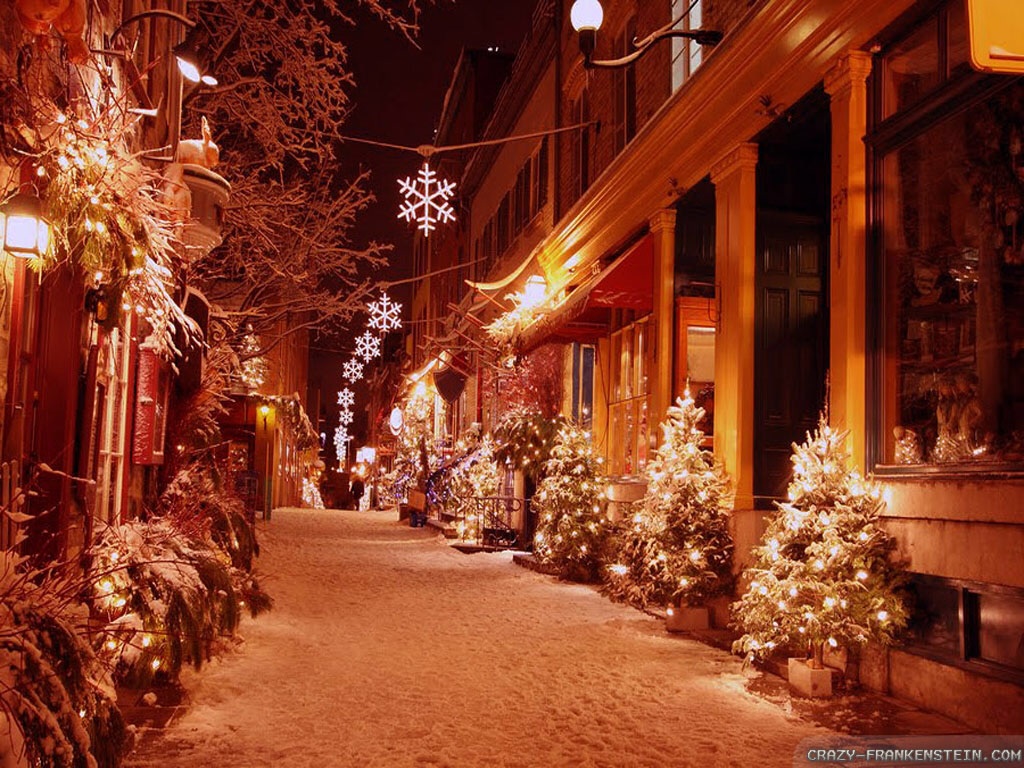
In any event, it now looks like the piñata is morphing into a simple Christmas decoration. I certainly don’t think that all the piñatas we’ve seen hung up are there to be bashed vigorously with a stick. In this new identity they have become the equivalent of those stars which seem such a popular Christmas street decoration.
image
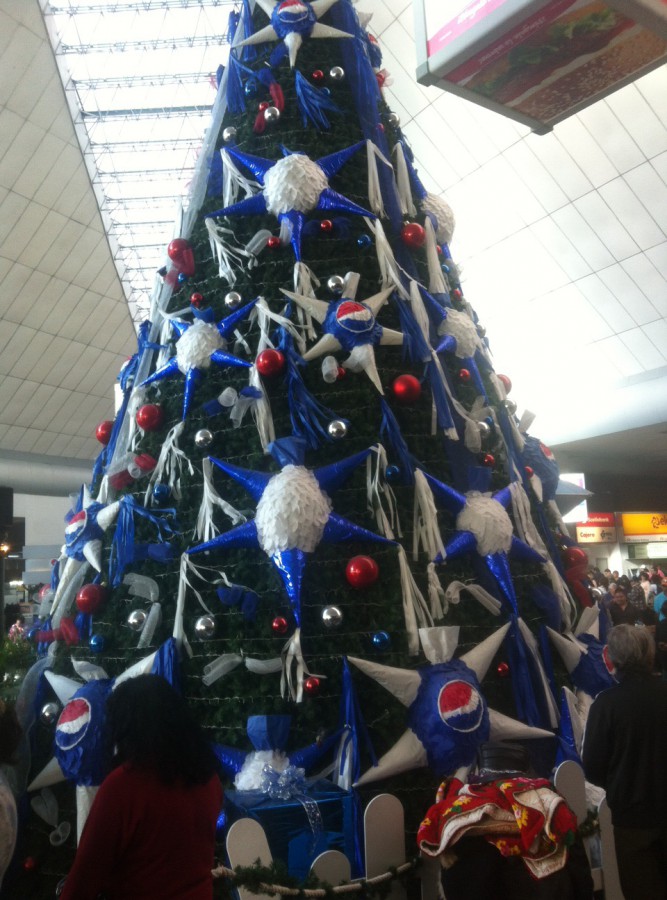
Soon, they will morph once more, becoming tame Christmas tree decorations. Indeed, if this Christmas tree at one of Mexico City’s bus stations is anything to go by, the morphing has started already.
image
From reverent offering to the sun god to cheesy decoration on a Christmas tree, the fall has been long and hard.

_____________

Piñata: my photo
Huitzilpochtli: http://upload.wikimedia.org/wikipedia/commons/c/cb/Huitzilopochtli_telleriano.jpg (in http://en.m.wikipedia.org/wiki/Huitzilopochtli)
Franciscan monk hitting piñata: http://en.m.wikipedia.org/wiki/Piñata#/image/File:MonkPiñataAcolman1.JPG (in http://en.m.wikipedia.org/wiki/Piñata)
pix from the museo de arte popular: mine
Children hitting a piñata: http://en.m.wikipedia.org/wiki/Las_Posadas#/image/File:Las_Posadas_Pinata.jpg (in http://en.m.wikipedia.org/wiki/Las_Posadas)
Christmas street decorations: http://wallpaperest.com/wallpapers/street-outdoor-christmas-decorations_074228.jpg (in http://toplowridersites.com/iphone-5-38528-christmas-christmas-street-decoration-jpg/)
piñata on Christmas tree: my picture

PEKING WILLOW

Beijing, 9 April 2014

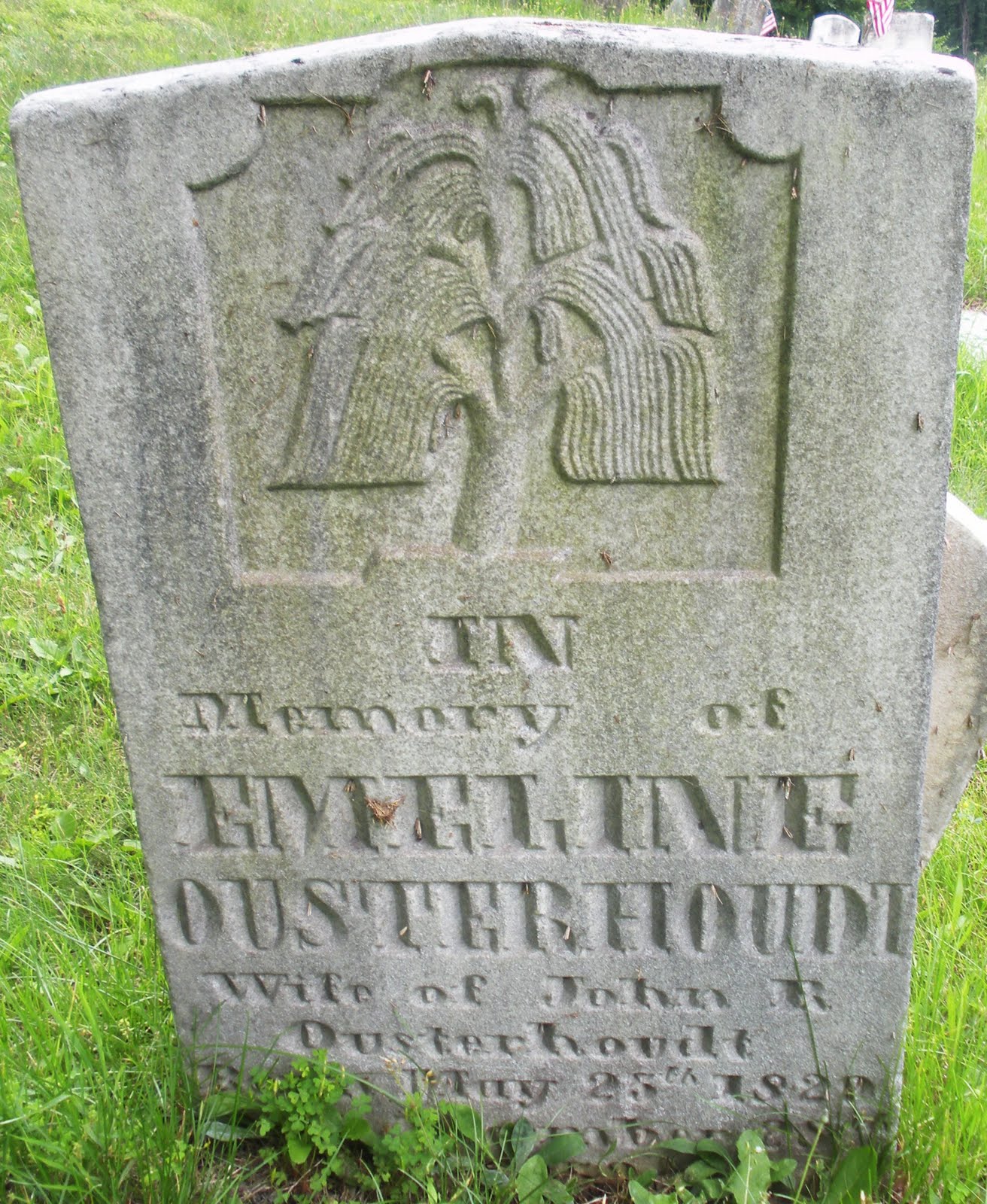
The somber, funereal tone of my last post seems like a good place to start this one – a tombstone

Weeping Willow on gravestone

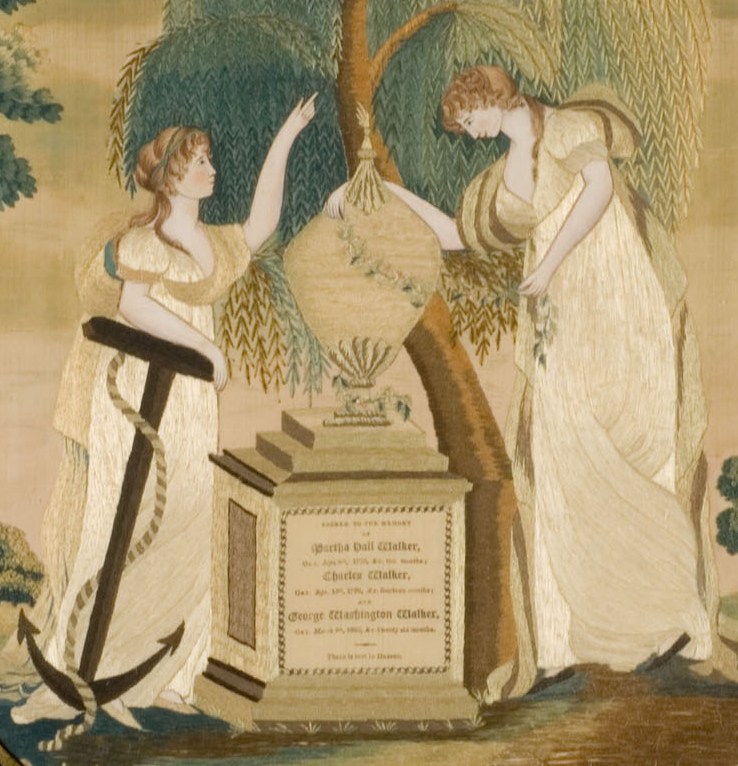
This one has a weeping willow on it, a common symbol on tombstones 200 years ago. Its drooping branches symbolize, you’ve guessed it, the weeping of the world at your passage to the next. Here’s another in the same genre from the same period, this time a piece of needlework memorializing the death of three babies.

BT OA FR

And then there were the ballads which used the weeping willow as the symbol of death, lost love, or both:

My heart is sad and I’m in sorrow
For the only one I love
When shall I see him, oh, no, never
Till I meet him in heaven above

Oh, bury me under the weeping willow
Yes, under the weeping willow tree
So he may know where I am sleeping
And perhaps he will weep for me

They told me that he did not love me
I could not believe it was true
Until an angel softly whispered
He has proven untrue to you

Oh, bury me under the weeping willow
Yes, under the weeping willow tree
So he may know where I am sleeping
And perhaps he will weep for me

 Etc. You get the picture.

The weeping willow’s symbolism was used a bit more elegantly in Psalm 137 of the Old Testament, that lyrical lament about the pains of exile, in this case that of the Israelites who had been marched off to Babylon from Jerusalem:

By the rivers of Babylon—
there we sat down and there we wept
when we remembered Zion.
On the willows there
we hung up our harps.
For there our captors
asked us for songs,
and our tormentors asked for mirth, saying,
“Sing us one of the songs of Zion!”

 How could we sing the Lord’s song
in a foreign land?
If I forget you, O Jerusalem,
let my right hand wither!
Let my tongue cling to the roof of my mouth,
if I do not remember you,
if I do not set Jerusalem
above my highest joy.

jewish bible with picture

I’ve left out the last verse where the poet gets vengeful and nasty, talking about taking the babies of their captors and bashing their brains out against the rocks …

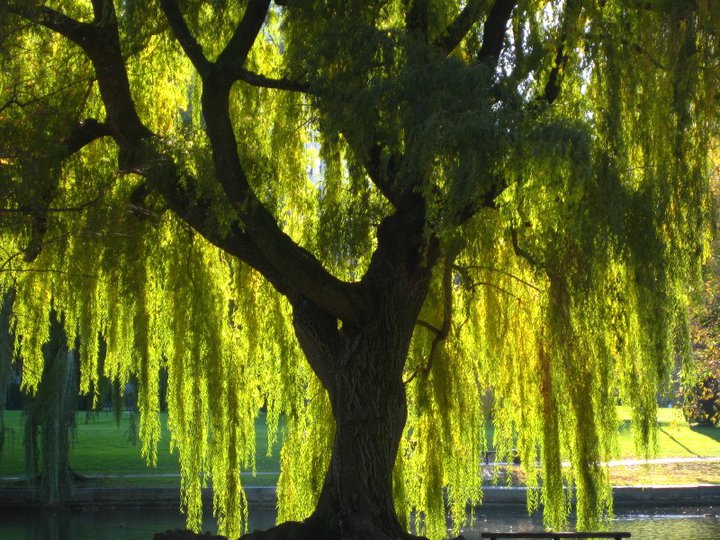
But if we brush aside the drooping veil of gloom, we find a really beautiful tree, for the most part sitting elegantly near a body of water, into which its trailing branches will often dip.

weeping willow tree

And such an English tree! (well, you also find them on the continent but we’ll ignore that). Here’s a weeping willow on the edges of a pond in Grantchester, in which, so it is said, the poet Byron swam.

weeping-willow-Grantchester

Here are students punting on the river Cam in Cambridge with some weeping willows languidly brushing the water’s surface.

weeping willows on the River Cam

Here is a 1946 poster from the Great Western Railway, inviting Londoners to take a day out in the Thames Valley, with a weeping willow centre stage beckoning to them.

great western railway-thamesvalley

Talking of the Thames, here is the cover of that most English of children’s books, The Wind in the Willows, where we see our friends Mole, Ratty and Toad on the river Thames, waving to Badger on the shore, the whole discretely framed by weeping willows

the_wind_in_the_willows

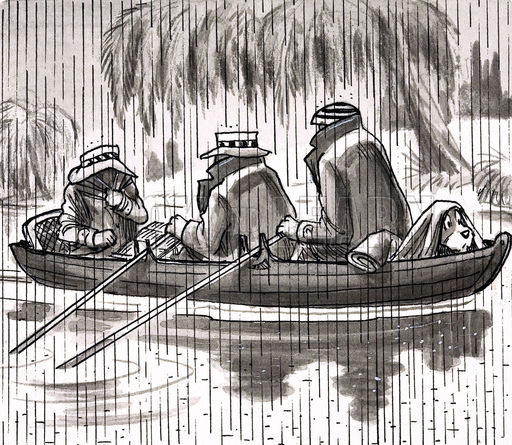
And of course there’s Three Men in a Boat, a book about – well, three men in a boat, messing around on the same river Thames (a book much loved by my father-in-law, in passing). Here we have them in that quintessentially English situation, rain, together with that quintessentially English animal, the dog, with some weeping willows in the background.

Three Men in a Boat by Jerome K. Jerome

Yes, all very English.

Except that the weeping willow isn’t English.

It’s Chinese.

Well, half-Chinese.

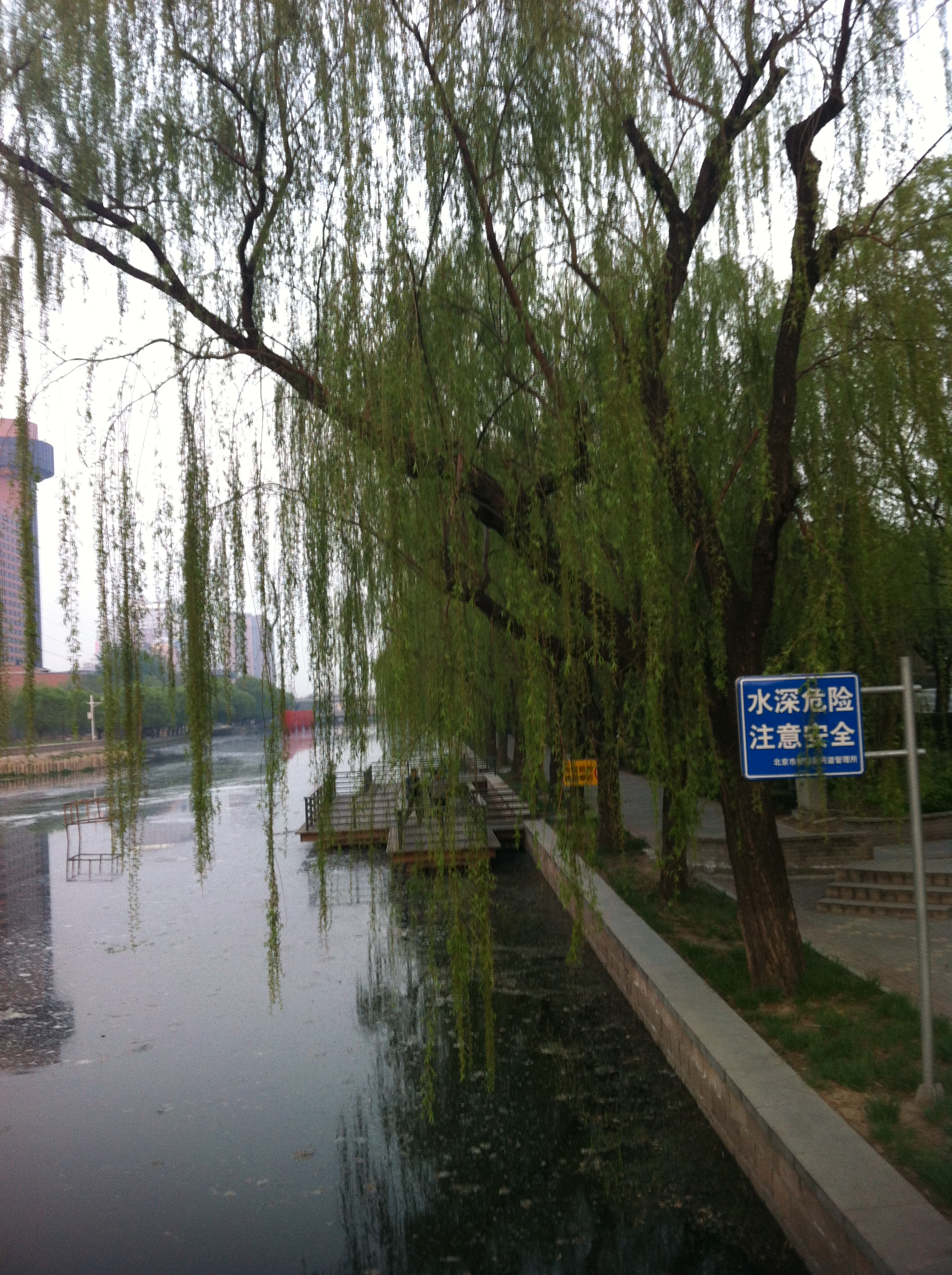
Yes, the willows, suitably called Peking willows, lining my piece of canal in Beijing

peking willows 004

are the ancestors of all those graceful weeping willows whose photos I have included above. It is they which carry the gene that makes the tree’s branches weep.

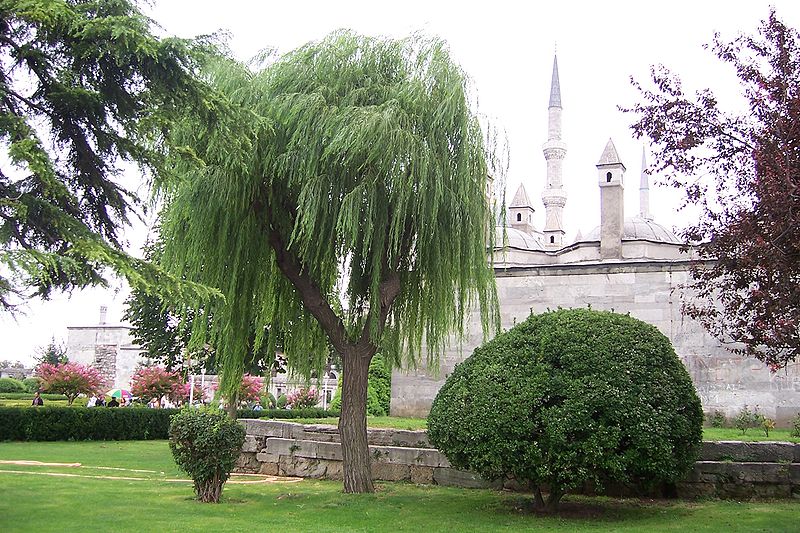
Somehow, for some reason, cuttings or seeds from these trees made their way to the west. I have read that they were moved along the Silk Road. Probably, traders from the west were charmed by the trees’ weeping branches and wanted them in their gardens. I’ve looked for pictures of Peking willows planted along the Road. The best I have found is a Peking willow in Istanbul.

Salix_babylonica in Istanbul

Not quite on the Road, which ended on the Mediterranean seaboard at Antioch or Tyre or Sidon, but close enough. And maybe one of the ways which the Peking willow entered Europe, through the Balkans.

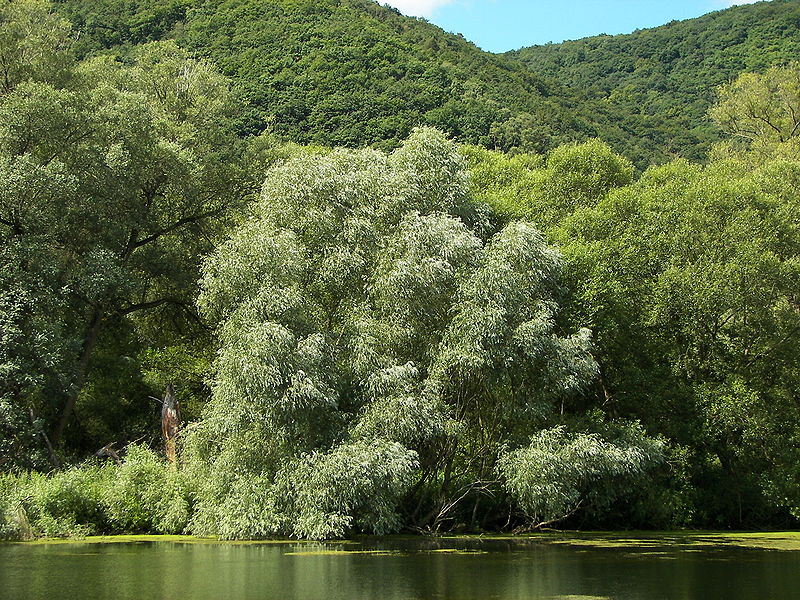
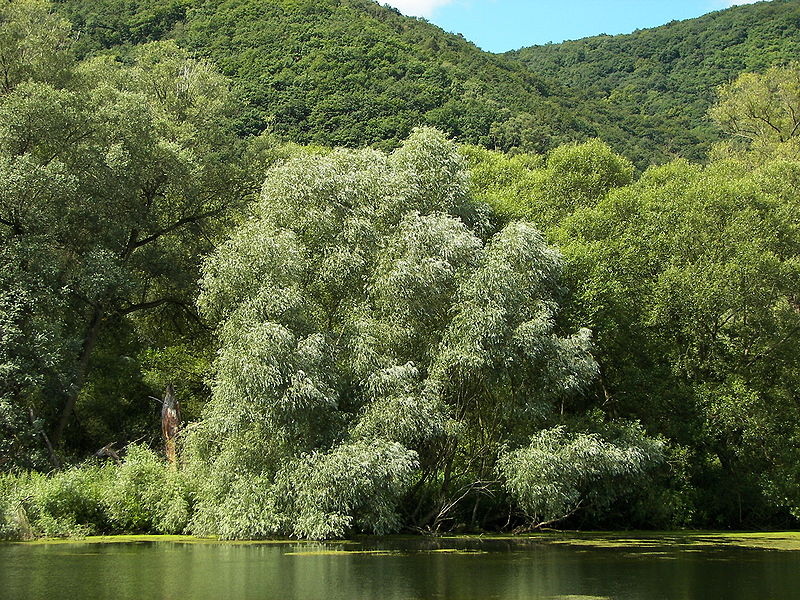
Somewhere along the way further to the west, the Peking willow was crossed with another willow, the European white willow.

white willow

The two were crossed because gardeners found that the Peking willow suffered in the more humid climate of Europe. Its gene pool needed bracing up, as it were.

So the weeping willow is half Chinese, half European.

Although my bubble of Englishness has been pricked, I’m glad to report that the weeping willow is nevertheless half brother –  or perhaps half sister – to that most English of artifacts, the cricket bat! Because these are made from the willow of a cross between the white willow and (possibly) the crack willow (the ancestry on the other side is not clear). So this allows me to insert here a picture of that most English of cricketers WG Grace holding a bat, in an ad for that most  English of condiments, Colman’s Mustard

wg grace with bat

Well, while I’m about it, I might as well also clarify another misconception. The willows by the waters of Babylon under which the Israelites wept were not willows, they were Euphrates poplars.

euphrates poplar

______________________

Tombstone with weeping willow: http://4.bp.blogspot.com/-V965riBwMQE/ThW9WsV_6gI/AAAAAAAAAA4/kGf3gW9vaZ0/s1600/%2523%2523%2523Weeping+Willow+St.+Mark%2527s+Luth+Appenzell+%25283%2529.JPG [in http://callmetaphy.blogspot.com/2011/07/symbol-of-weeping-willow-in-gravestone.html%5D
Girls weeping on tomb: http://mansionmusings.files.wordpress.com/2011/04/mourning-picture-detail.jpg [in http://mansionmusings.wordpress.com/2011/04/29/a-mansion-favorite-returns-home-abigail-walker-needlework-mourning-picture-ca-1803/%5D
Jewish psalter: http://upload.wikimedia.org/wikipedia/commons/9/97/Chludov_rivers.jpg [in http://en.wikipedia.org/wiki/Psalm_137%5D
Weeping willow tree: http://www.blogmagazine.org/wp-content/uploads/2012/05/weepingwillow.jpg [in http://www.blogmagazine.org/2012/05/admiring-the-beauty-of-the-weeping-willow/%5D
Weeping willows Grantchester: http://3.bp.blogspot.com/-3Lkrd8FlSCE/UhFK2RfkItI/AAAAAAAAGiM/v5kklmS41GE/s1600/photograph-of-weeping-willow-Byrons-Pool-Grantchester.jpg [in http://ailecphotography.blogspot.com/2013/08/day-18-august-challenge.html%5D
Weeping willows on the river Cam: http://upload.wikimedia.org/wikipedia/commons/d/da/Punting_on_the_River_Cam_-_geograph.org.uk_-_222149.jpg [in http://commons.wikimedia.org/wiki/File:Punting_on_the_River_Cam_-_geograph.org.uk_-_222149.jpg%5D
“The Wind in the Willows”: http://www.usborne.com/images/covers/eng/max_covers/the_wind_in_the_willows.jpg [in http://www.usborne.com/catalogue/book/1~CS~CSP~3249/the-wind-in-the-willows.aspx%5D
“Three Men in a Boat”: http://s3-eu-west-1.amazonaws.com/lookandlearn-preview/A/A008/A008727.jpg [in http://www.lookandlearn.com/history-images/A008727/Three-Men-in-a-Boat-by-Jerome-K-Jerome?img=2&search=Jerome+Klapka+Jerome&bool=phrase%5D
Great Western Railway poster: http://www.southernposters.co.uk/Destinations/Resources/thamesvalleylarg.jpeg [in http://www.southernposters.co.uk/Destinations/thamesvalley1946.html%5D
Peking willow, Beijing: my photo
Peking willow in Istanbul: http://upload.wikimedia.org/wikipedia/commons/thumb/7/75/Salix_babylonica.jpg/800px-Salix_babylonica.jpg [in http://en.wikipedia.org/wiki/Salix_babylonica#Horticultural_selections_and_related_hybrids%5D
White willow: http://bioweb.uwlax.edu/bio203/2011/girard_stev/maintop.jpg [in http://bioweb.uwlax.edu/bio203/2011/girard_stev/facts.htm%5D
Euphrates willow: http://mw2.google.com/mw-panoramio/photos/medium/49589465.jpg [in http://www.panoramio.com/user/1183385/tags/%D7%A0%D7%97%D7%9C%20%D7%A6%D7%99%D7%9F%5D

TOMB SWEEPING DAY

Beijing, 6 April 2014

I think it must be a universal characteristic of human beings to want to remember their dead. Perhaps it’s part of a refusal, deep down in our psyche, to accept that we die, so remembering the dead is a way to declare defiantly that we too, when we will be among the dead, will not really be dead. Whatever it is, and I’m certainly not competent to explore this side of our collective consciousness, we do have ritual days in our calendars when we are called upon to remember our dearly departed. For us in Western Europe, it’s All Souls’ Day, November 2nd.
All souls day Germany-3
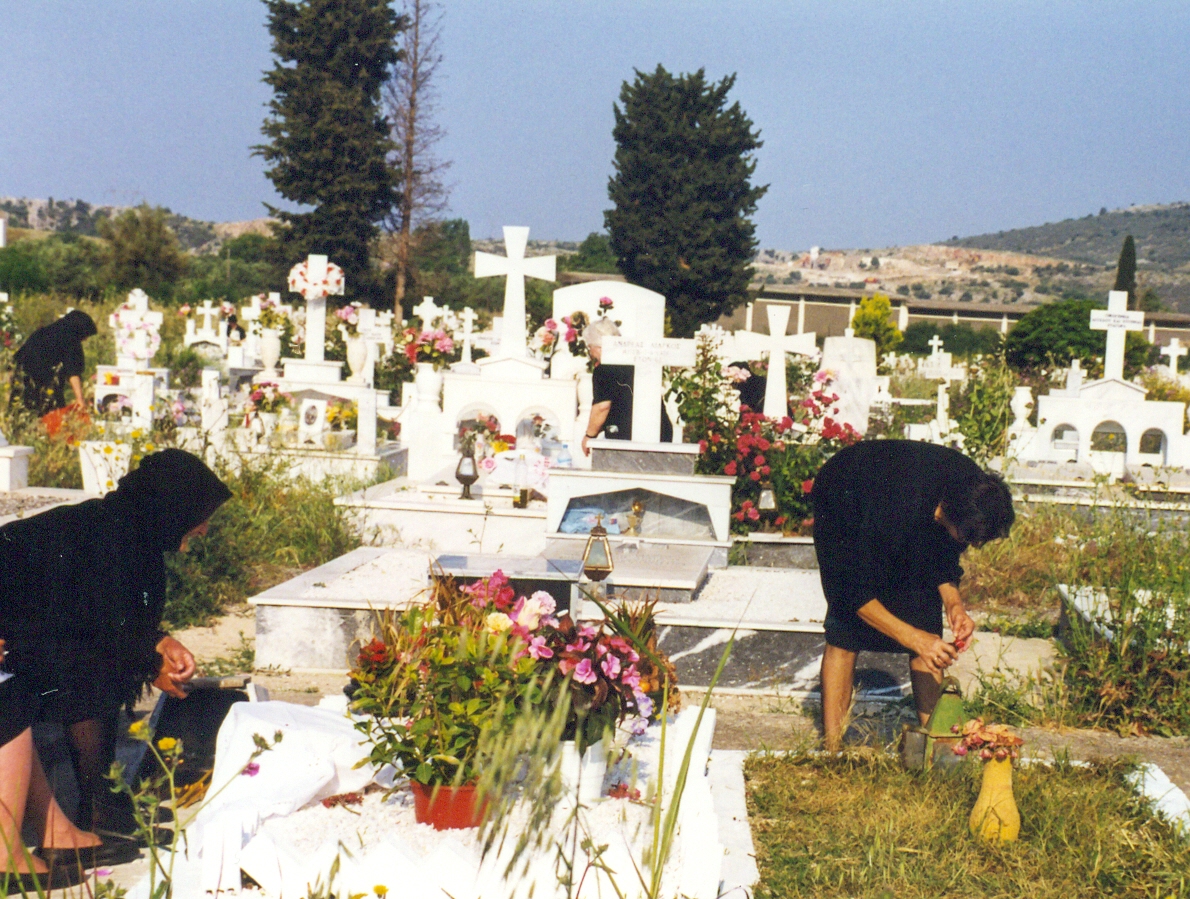
For those following the Christian Orthodox tradition, it’s the Saturday of Souls, commemorated some time in Spring
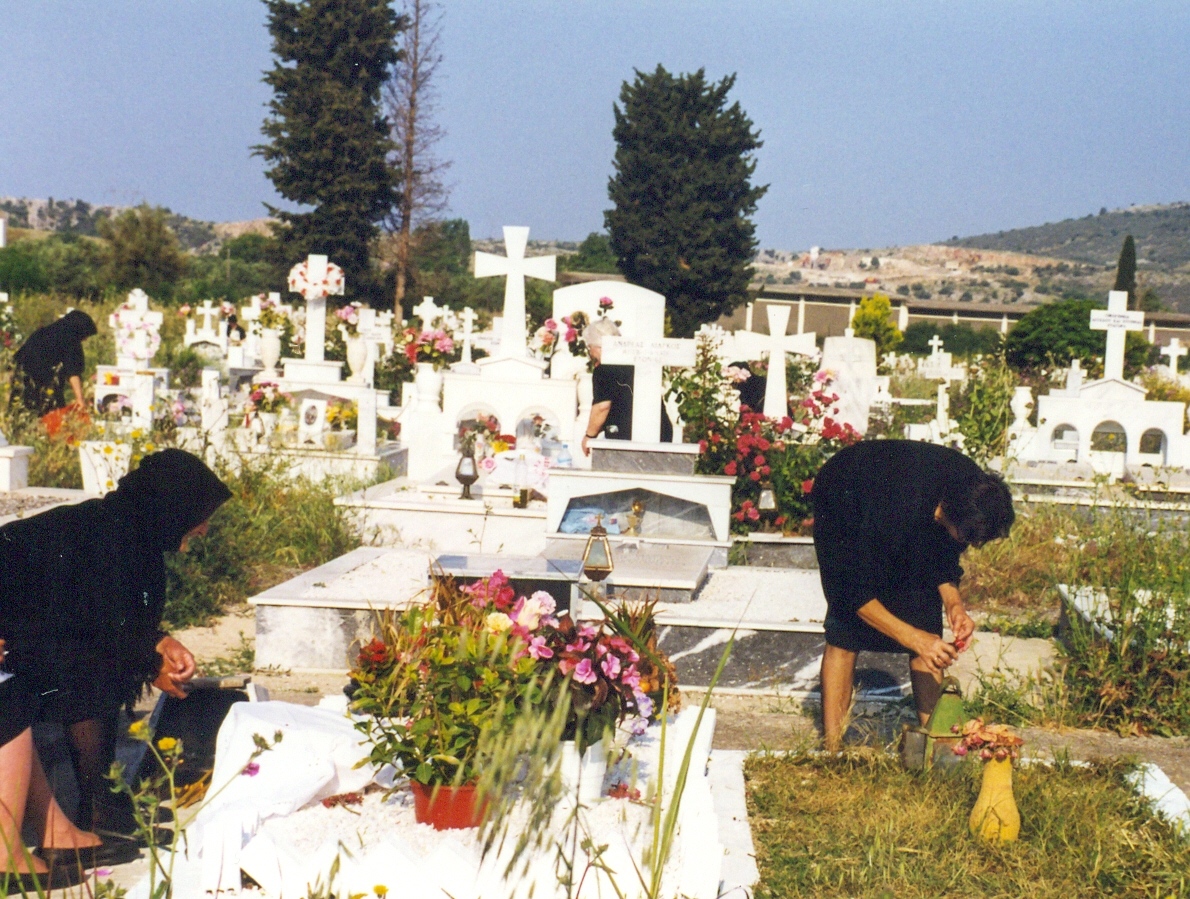
Greek orthodox saturday of souls-2
For the Chinese, it’s the Qingming Festival, or tomb sweeping day. It falls on the 15th day following the Spring equinox, which this year turned out to be yesterday. The pious Beijingers flocked to the tombs of their loved ones, while the rest of us, who don’t have any tombs to sweep in the immediate vicinity, took the day off. My wife and I fall into the latter category, our parents and grandparents lying in peace (I hope) in Italy, France and the UK. Nevertheless, we thought it would be interesting to observe this Chinese festival at first-hand. So we visited a cemetery in the farther reaches of the city, arriving there after a long journey by bus and under the curious stares of the locals.

The cemetery was indeed full of people
tomb sweeping day-1
and it was fascinating to watch what they did. They burned incense
tomb sweeping day-3
As well as leaving normal flowers, they garlanded the graves with paper flowers (I suppose cheaper than real flowers, and certainly a good deal more colourful)
picture 001
They left food on the graves
picture 005
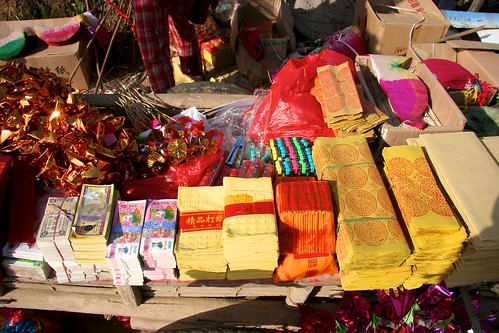
They left money (fake, alas, as we determined after surreptitiously picking up a few notes under the suspicious gaze of one of the gardeners)
tomb sweeping day-5
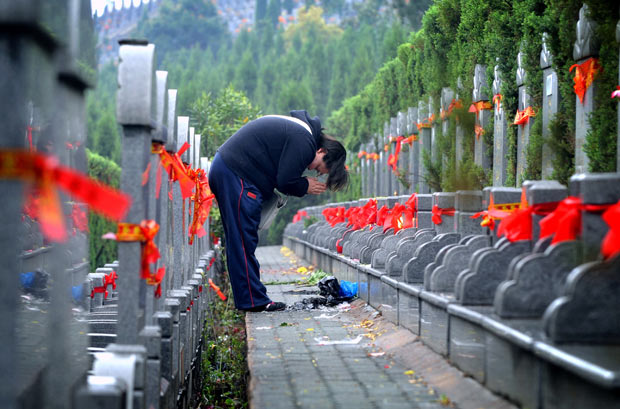
They paid their respects
tomb sweeping day-4-woman bowing
And even in one case we heard an old woman talking to her husband (I presume), I suppose updating him on what had been happening since she had last visited. The loneliness of old age can indeed be hard …

Well, the flowers we could relate to. After all, we do that in Europe too on All Souls Day – although the garlands of fake flowers was new to us.
All souls day Austria-2
We could also sort of understand the incense – I remember piles of incense being burned in the churches of my youth, although I never saw it used on tombs.

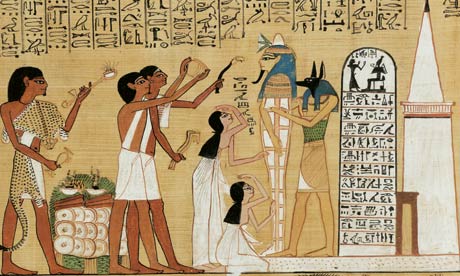
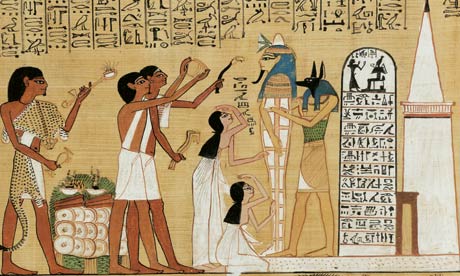
But the food and the money we found really strange. Especially the food. There was something almost animistic about this. It was like the ancient Egyptians who buried their dead with food for the afterlife.
bringing food to the dead egypt
Mind you, it’s not as if we don’t have our own strange cemetery habits. For instance, what I missed were the little candles which we leave on our graves in Europe
All souls day Germany-2-night
But if a Chinese were to ask me what those candles signify I would have to confess to not knowing. To keep away the bad spirits? To help God remember that they are there? To light up the darkness in which they lie?

Something else I missed was the statuary. The tombs we saw were very sober affairs.
picture 012
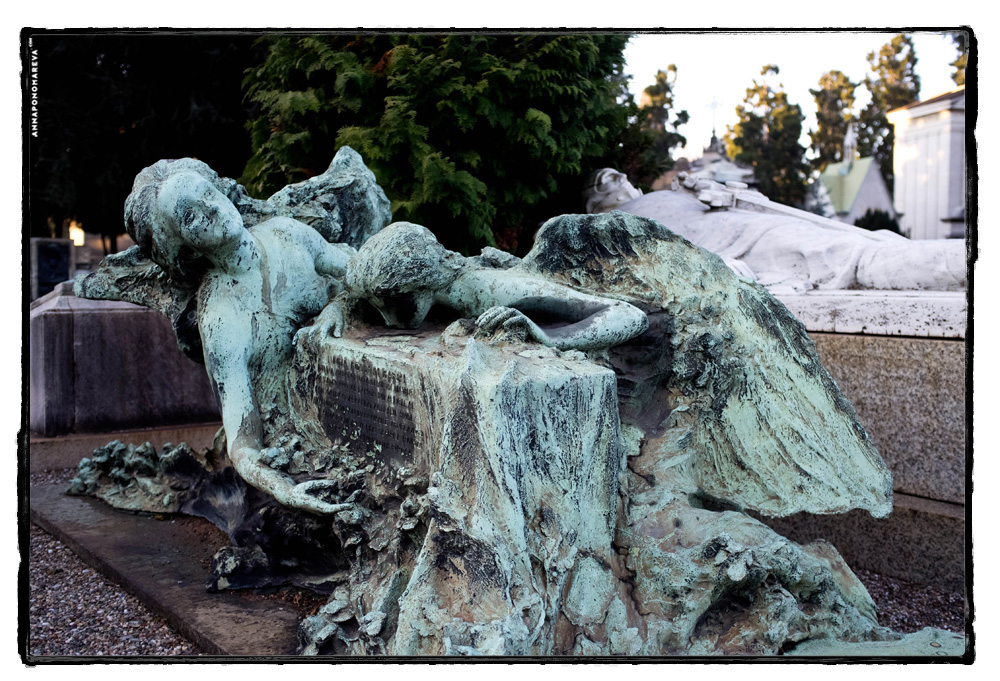
Compare this to the almost baroque constructions I’m familiar with, especially in Italy. Here are a few examples from the cemetery where my wife’s parents are buried
Giorno-dei-morti-Milano
statua monumentale Milano-2
statua monumentale Milano-3
From the style of these examples you might think that this was a habit of the past, but one of the tombs near my father-in-law’s has a life-size statue of a fisherman standing on it.

around nonno's grave 003

I presume the tomb’s incumbent loved fishing. Another close by, sadder to contemplate, is the statue of the young man buried there, whose life was tragically cut short.

around nonno's grave 006

My father-in-law’s tomb itself has a beautiful statuary group of angels singing in the heavenly choir.
angels with trumpets
We are going back to Milan in a few weeks to recuperate it after cremating his remains. My father-in-law has had thirty-five years of peaceful repose and now it is the turn of someone else to lie there: the iron law of increasing populations and decreasing real estate in which to rest the dead. But we’ll have the singing angels by which to remember him – and my mother-in-law, who chose the statuary’s theme. They had a common love of music. We will try to have his ashes relocated next to hers, so that after a separation of thirty-five years they can be together in death as they had been in life.

I wish I could say the same for my parents. Deaths ten years apart and the same real-estate forces which I just alluded to has meant that, after a life together, they were buried in different places. It fills me with melancholy and makes me think of Thomas Hardy’s poem In Death Divided

I shall rot here, with those whom in their day
You never knew,
And alien ones who, ere they chilled to clay,
Met not my view,
Will in your distant grave-place ever neighbour you.

No shade of pinnacle or tree or tower,
While earth endures,
Will fall on my mound and within the hour
Steal on to yours;
One robin never haunt our two green covertures.

Some organ may resound on Sunday noons
By where you lie,
Some other thrill the panes with other tunes
Where moulder I;
No selfsame chords compose our common lullaby.

The simply-cut memorial at my head
Perhaps may take
A Gothic form, and that above your bed
Be Greek in make;
No linking symbol show thereon for our tale’s sake.

And in the monotonous moils of strained, hard-run Humanity,
The eternal tie which binds us twain in one
No eye will see
Stretching across the miles that sever you from me.

I hope that, one day, I can bring them together so that finally one robin can haunt their two green covertures.

___________________________

All Souls Day Germany: http://images.fotocommunity.de/bilder/architektur/friedhoefe/allerheiligen-auf-dem-gratweiner-friedhof-1cf8be4b-d04b-430a-93e0-b3685f0f992f.jpg [in http://www.fotocommunity.de/pc/pc/display/14858389%5D
Greek Orthodox Saturday of souls: http://1.bp.blogspot.com/-Co-zt3nzWXs/T1EaVmrfyRI/AAAAAAAAAVA/M9gA4b1_m2I/s1600/%CF%83%CE%AC%CF%81%CF%89%CF%83%CE%B70003.jpg [in http://fiestaperpetua.blogspot.com/2012/03/blog-post.html%5D
Tomb sweeping day-1: http://www.wildchina.com/blog/wp-content/uploads/2010/04/pb-120404-qingming-da.photoblog900.jpeg [in http://www.wildchina.com/blog/tag/tomb-sweeping-day/%5D
Tomb sweeping day-2: http://www.fashion-bop.com/wp-content/uploads/2010/04/Tomb-Sweeping-Day.jpg [in http://www.fashion-bop.com/fashion-bop-things-about-us/tomb-sweeping-day/%5D
Tomb sweeping day-3: our picture
Tomb sweeping day-4: our picture
Tomb sweeping day-5: http://farm6.static.flickr.com/5193/7044748643_b7415e94a9.jpg [in http://easternjourney.com/2012/04/tomb-sweeping-day-2012/%5D
Tomb sweeping day-6: http://i.telegraph.co.uk/multimedia/archive/01864/Bowing_1864893i.jpg [in http://www.telegraph.co.uk/news/picturegalleries/worldnews/8429441/The-Qingming-festival-The-Chinese-honour-their-ancestors-by-sweeping-their-tombs.html%5D
All Souls Day Austria-flowered graves: http://www.mariazellerland-blog.at/wp-content/gallery/allerheiligen/allerheiligen-mariazell_1501.jpg [in http://www.mariazellerland-blog.at/allerheiligen-und-allerseelen-in-mariazell/allgemein/3588/%5D
Bringing food to the dead in Egypt: http://static.guim.co.uk/sys-images/Guardian/Pix/pictures/2010/10/11/1286794872587/Extra-British-Museum-Book-006.jpg [in http://www.theguardian.com/extra/2010/oct/11/extra-event-british-museum-book-of-the-dead%5D
All Souls Day Germany-night lights: http://images.fotocommunity.de/bilder/specials/mystische-orte/allerheiligen-am-friedhof-1436be22-b4bf-4a77-aba9-500ebdb2f3e7.jpg [in http://www.fotocommunity.de/pc/pc/display/19329266%5D
General view of Chinese cemetery: our photo
Statues cemetery Milan-1: http://www.milanospia.it/wp-content/uploads/2011/10/Giorno-dei-morti.jpg [in http://www.milanospia.it/2011/10/31/ponte-di-ognissanti-al-cimitero-di-milano-diventa-un-business/%5D
Statues cemetery Milan-2: http://farm8.staticflickr.com/7141/6655629153_17775801fa_o.jpg [in http://italia-ru.com/blog/ankh/2012/01/25/cimitero-monumentale-di-milano%5D
Statues cemetery Milan-3: http://milanosotto.files.wordpress.com/2013/08/cimitero-monumentale-scorcio.jpg [in http://milanosotto.wordpress.com/2013/08/13/il-cimitero-monumentale-di-milano-tra-storia-leggende-e-simboli-massonici/%5D
Statues cemetery Milan-4, 5 & 6: our photo

INDONESIA – CALLS TO PRAYER

Beijing, 24 February 2014

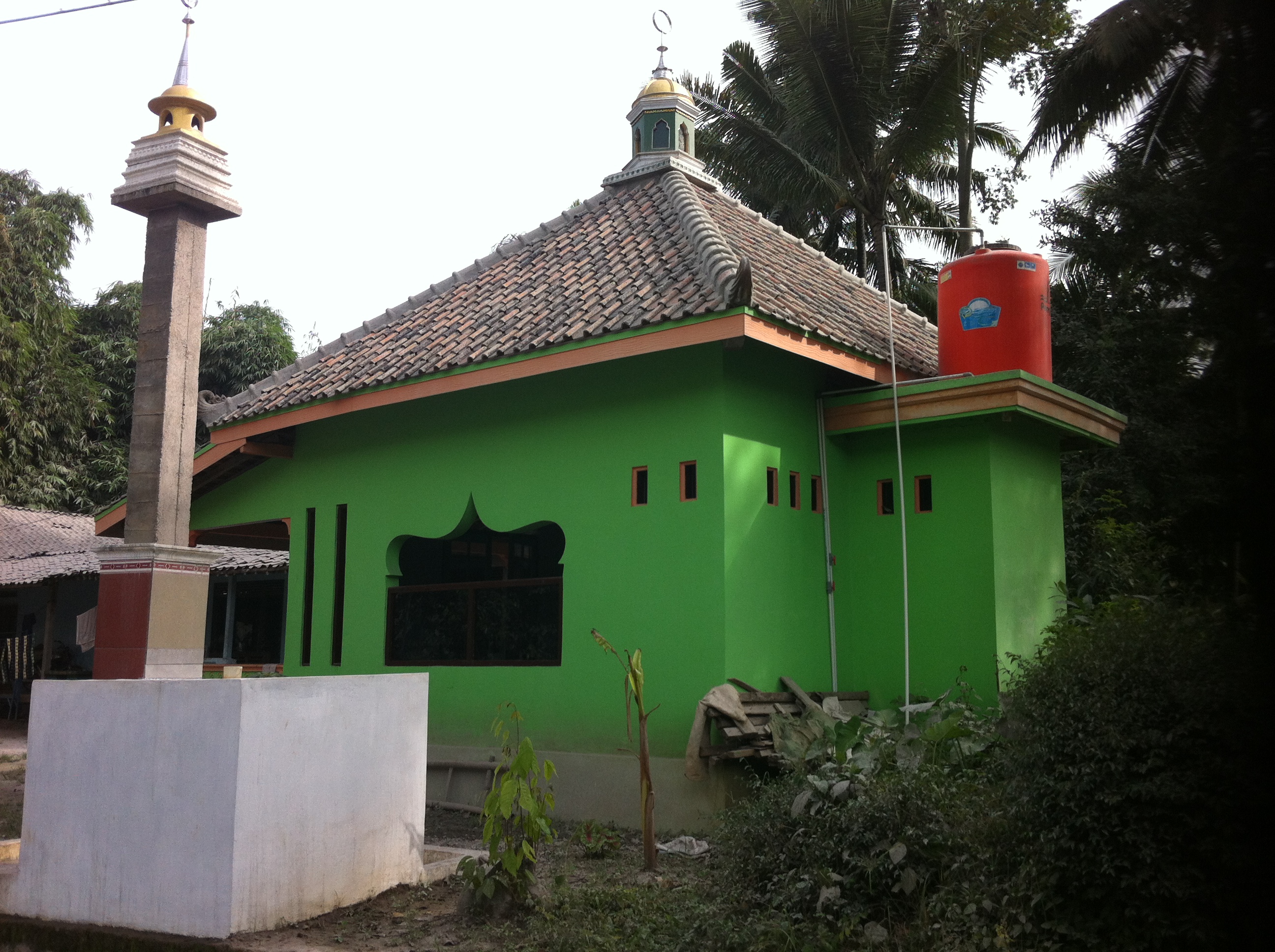
I left us in the last post sitting on the hotel terrace sipping our welcoming drink. We were sitting there again as night drew in. And as night drew in, we began to hear a strange medley of sounds rising from the surrounding villages. It was the calls to evening prayer. The loudspeakers of every village mosque blared out the call – and there seemed to be a lot of mosques in the area …
local mosques 002

local mosques 001

I said it was a strange medley; actually, it was a disagreeable cacophony. Each muezzin started at a slightly different moment, and each chanted a different tune. The result grated on the ears. It was rather like the noise coming from an orchestra when the players are warming up and tuning their instruments before they start. A million miles from a magical moment which my wife and I once shared in Istanbul, in Sultan Ahmet square in front of the Blue Mosque. We were sitting down having a rest when the mosque’s muezzin suddenly started up. He chanted a line or two and paused. And behind us, faintly, we heard the muezzin of Süleymaniye Mosque respond with his couple of lines. To which the muezzin of the Blue Mosque in turn responded. And so they duetted back and forth for fully five minutes while we sat there holding our breath.

Back on the hotel terrace, my wife and I listened until the chanting died away, and then we turned in. After our adventures in getting here, we were glad to go to bed early. We slept like logs – until dawn, when we were awakened by the dawn call to prayer. As I have done so many times in darkened hotel rooms, from Morocco in the far west of the Muslim lands, to Java now in the far east, and at many points in between, I lay there letting the song flow over me:

God is great, God is great.
I bear witness that there is no god but God.
I bear witness that Muhammad is the Messenger of God.
Hasten to prayer.
Hasten to success.
Prayer is better than sleep.
God is great, God is great.
There is no god but God.

And as I always do before drifting back to sleep, I thought to myself what a pity it was that there is no God out there to receive their, or anyone else’s, prayers.

________________

Pics: mine

I, TOO, CHOSE THE NAME OF FRANCIS

19 March 2013

In a previous post, I have admitted to being a lapsed Catholic, to having fallen off the straight-and-narrow when I was a young man. But this does not stop me from taking an interest in moments of high Catholic drama such as papal elections. These are held against one of the world’s most beautiful backdrops (St. Peter’s square in Rome)

st-peters-square

They have quaint customs like black and white smoke to announce the results of ballots (“is it white? is it black?”)

white-smoke

There are all these old, principally white, men wandering around in bright red and purple cassocks, surrounded by toy soldiers dressed in renaissance garb

cardinals-and-swiss-guards

There are the Latin pronouncements (“habemus papam” et cetera).

St. Peters Square, Pope Francesco

So when Benedict XVI made his surprise announcement about retiring, sending the world media into fibrillation (“first pope to retire in 600 years!”), I settled down to enjoy the show. My wife – also a lapsed Catholic although less militant about it than I – joined me on the sofa as we surfed around the international TV stations, dropping in on their twitterings about various aspects of popes, the papacy and papal elections.

I left for a business trip just as the cardinals were processing into the Sistine chapel, sure that they would still be at it when I got back two days later. I mean, there was that election back in the Middle Ages during which the cardinals had been balloting for ages without coming to an agreement; they were finally locked into the chapel by irritated guards and told they would get only bread and water until they had agreed on a candidate. So you can judge my surprise, and disappointment, when my wife announced to me as I walked in the door that the new pope had already been chosen. I had missed the smoke! The blessing from the window! The announcement of the papal name! My wife made sympathetic noises and then dropped a bomb. He had chosen the name Francis!
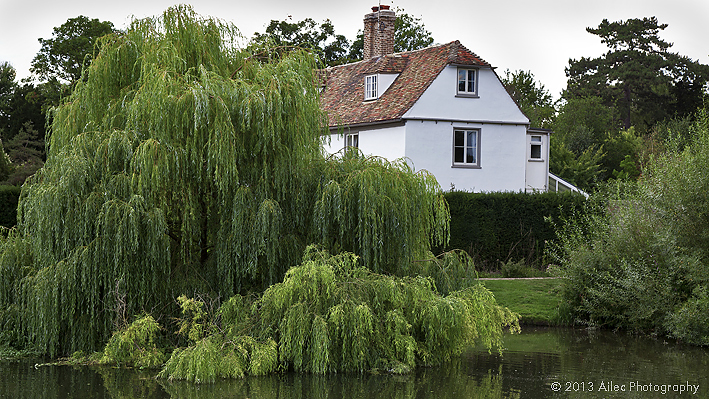
I suppose it can be considered a crime of lèse majesté for me to compare myself to the pope, but I have to tell you that many years ago, in the one time in my life that I got to choose a name for myself, I too had chosen the name Francis.

Before turning away irrevocably from the faith, I had been through all the rituals required of a good Catholic child. I had done my First Confession, my First Communion, and – critically for this story – my Confirmation.  I was 14 when I went through this last ritual, so getting towards an age when I more or less knew what I was doing. On the great day itself, which took place at school, my parents came; they had arranged to be in the country for the event. Our local bishop presided. He sat enthroned before the altar of the school’s church as each one of us (we were a group of some 20 boys) came up before him to be confirmed. My father came up to the altar with me as my sponsor, and stood solemnly behind me as I knelt before the bishop and his hovering acolytes and announced to him the confirmation name I had chosen: Francis.  The bishop read through the ritual words, anointed me, and then it was time to leave the place to the next boy.

Francis doesn’t appear on any official document of mine, but I am particularly proud of it since it is the only name I have ever gotten to choose. My parents chose all the others before I was even born: one to commemorate various fusty old ancestors, one to commemorate my godfather, and one to commemorate a fusty old saint that my mother particularly venerated. But Francis, that was my choice.

Like the pope, I chose Francis in memory of St. Francis of Assisi. I chose him because, as my children might have said some ten years ago, I thought he was a pretty cool dude.  I mean, here was a guy who had had everything – money, intelligence, friends, wit, all the women he could want, doting parents who let him do whatever he wished – and he turned away from it all, to live a life of complete poverty and simplicity, among the poorest of the poor and the outcasts of society. Without really trying to, he gathered around him hundreds and eventually thousands of followers and started a huge movement in Europe striving for a simpler life. In many ways he reminds me of the Buddha.

st-francis-of-assisi

And he wrote a wonderful poem, one of the earliest in the Italian language, or rather in the Umbrian dialect spoken in his native Assisi: the canticle of the sun. Here are a few lines from the original:

Laudato sie, mi Signore cum tucte le Tue creature,
spetialmente messor lo frate Sole,
lo qual è iorno, et allumini noi per lui.
Et ellu è bellu e radiante cum grande splendore:
de Te, Altissimo, porta significatione.

Laudato si, mi Signore, per sora Luna e le stelle:
in celu l’ài formate clarite et pretiose et belle.

Let me continue with a translation:

Be praised, my Lord, through all your creatures,
especially through my lord Brother Sun,
who brings the day; and you give light through him.
And he is beautiful and radiant in all his splendour!
Of you, Most High, he bears the likeness.

Be praised, my Lord, through Sister Moon and the stars;
in the heavens you have made them bright, precious and beautiful.

Be praised, my Lord, through Brothers Wind and Air,
and clouds and storms, and all the weather,
through which you give your creatures sustenance.

Be praised, My Lord, through Sister Water;
she is very useful, and humble, and precious, and pure.

Be praised, my Lord, through Brother Fire,
through whom you brighten the night.
He is beautiful and cheerful, and powerful and strong.

Be praised, my Lord, through our sister Mother Earth,
who feeds us and rules us,
and produces various fruits with coloured flowers and herbs.

It goes on a bit more, but I’ll stop there because these are some of the loveliest lines I know about the environment.

It is said that Francis preached to the birds and talked to the wolves. I take this all with a pinch of salt. But he did love nature passionately, which is really why I chose his name for my confirmation.

I hope the new pope is worthy of the name he chose.

___________________

St. Peter’s Square: http://readytour.ru/images/italy/excurs/6-800.jpg
White smoke: http://l.yimg.com/bt/api/res/1.2/zaEY7ikCWZpTeGB8NMi3pw–/YXBwaWQ9eW5ld3M7Zmk9aW5zZXQ7aD00MjA7cT04NTt3PTYzMA–/http://media.zenfs.com/en_us/News/gettyimages.com/conclave-cardinals-elected-pope-lead-20130313-112050-018.jpg
Cardinals and Swiss Guards: http://www.capuanaweb.insulareport.it/media/k2/items/cache/c230427c303c0684b5582388f5d0dfd7_XL.jpg
Habemus papam: http://timeglobalspin.files.wordpress.com/2013/03/cm_vatican_pope_03_13_13_178.jpg?w=753
St. Francis: http://www.thomryng.com/amateurmonk/wp-content/uploads/2012/10/Francis.jpg