A JOURNEY BY TRAIN

Shanghai, 24 January 2013

The bullet train pulled out of Beijing South Station forty minutes late, starting its five-hour trip to Shanghai. After a gentle canter through the outskirts of Beijing, the train powered off when it reached the countryside, reaching peaks of 300 km/hour – small screens over the doors helpfully clocked the speed. It was quiet in the train, disturbed only by the sudden jerk to the left caused by trains whooshing past in the opposite direction – and by certain passengers talking very loudly on their phones.

After reading a few pages of a dense report, I gave up and stared mournfully out of the window. The weather was cloudy and foggy, throwing a bleak and bleary light over everything. The land was flat, flat as the Po River plain in northern Italy. There was a thin covering of snow, not enough to make the scene beautiful. The field strips were small, reminding me of the fields around Neusidlersee to the south of Vienna. Some had been planted in corn – the stalks were still standing, some had fruit trees, but most were bare of anything. Copses of poplars broke the horizontal monotony. A few villages flashed by, a group of houses huddled together in no particular order, some proudly bearing a solar water heater on their roofs. Often, the country’s modern development would intrude, with bare, broken, worked-over ground waiting for the concrete and asphalt to arrive.

The countryside was empty save for shepherds leading small groups of sheep through the bare fields, particularly the corn fields, where the sheep were stripping the standing stalks of some nourishment. The shepherds were probably Muslim Chinese who had migrated centuries ago from the west of China and are now scattered throughout China’s eastern seaboard. They brought back memories of northern Italy, where you can also see shepherds who have come down from the mountains and are feeding their herds in bare winter fields.

The only other presence was the dead. Countless gravesites dotted the landscape. You can tell a Chinese grave by the way the earth is heaped up in a conical mound over the deceased. Groups of four or five of these mounds were visible at the corner of almost every field, or so it seemed. There was no wall around them like we would have in Europe, nothing to separate them from the world of the living. Often, there would be dark trees, pines perhaps, planted nearby to keep the dead company. They reminded me so much of the cypress trees that flourish in the graveyards of Italy.

Darkness slowly set in and everything outside my window dissolved in the murk. As we started slowing down to pull into our first stop, I sighed, put on my reading glasses, and hauled out the dense report again.

MIT CHAPEL

Beijing, 22 January 2013

Readers of my posts will perhaps know that I have a certain fondness for Chinese porcelain. So it should come as no surprise to them to hear that when I read in the China Daily of an exhibition at the Capital Museum on porcelain I immediately suggested to my wife that we visit it. Which we did this weekend.

The exhibition was of porcelain ordered by the Empress Dowager Cixi (the last real imperial ruler of China). I’m afraid to say that it was a disappointment. The porcelain on show was undoubtedly of the highest quality, but the designs were … well, twee is perhaps the best way to describe them. Lots of canary yellow background, and lavish use of birds and butterflies as motifs.

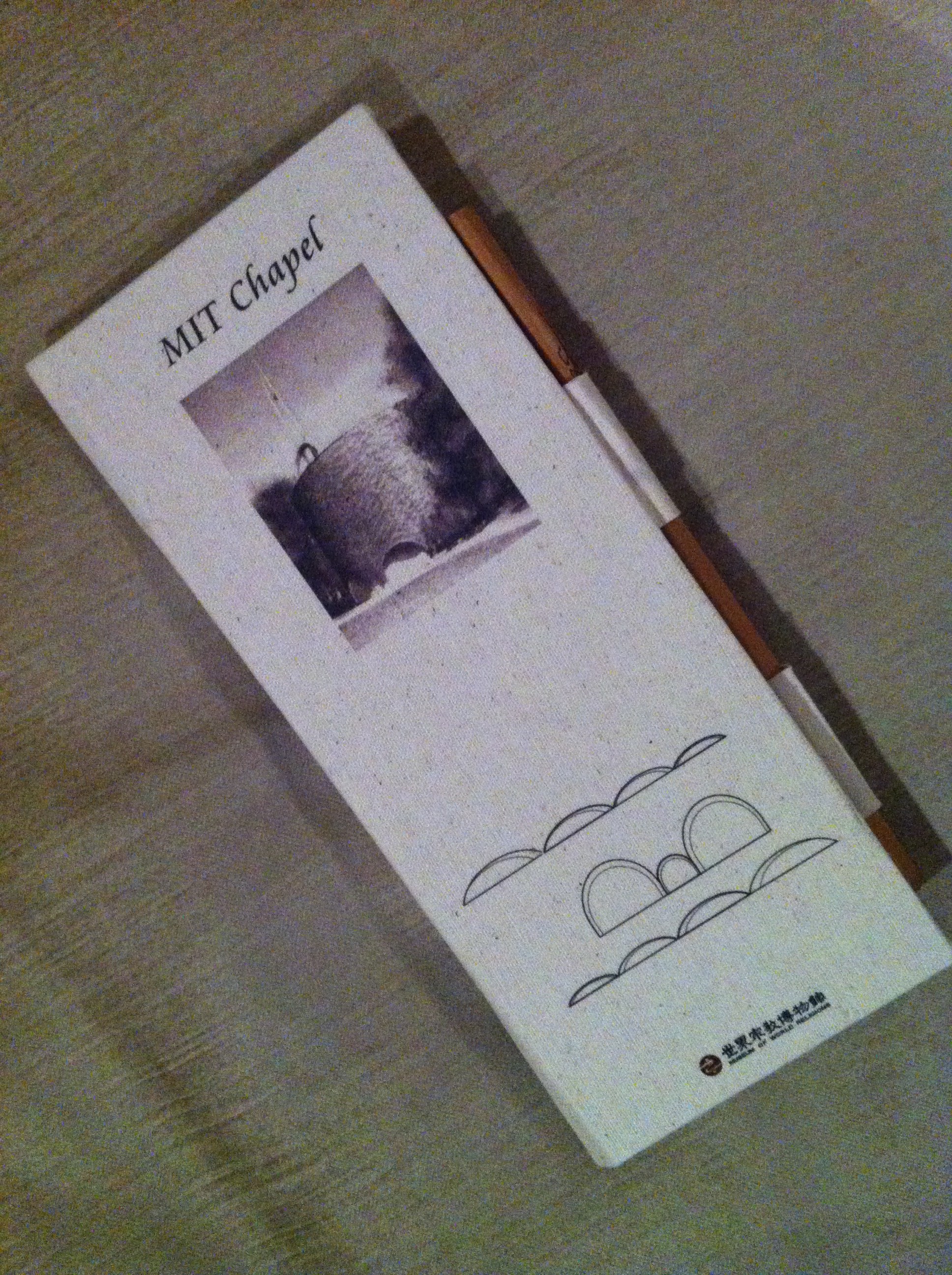
Somewhat disconsolately we went to see what else the museum was offering. There was an exhibition from Taipei, from the Museum of World Religions, and for lack of anything better we visited that. It was nothing special, just a collection of religious memorabilia from various world religions. So we left that exhibition even more disconsolate than before and went to the museum shop. We were running a listless eye over what was on offer when something caught our attention. It was a small something – we were not sure what it was – which, critically, had written on it “MIT chapel”. We had to buy it.

museum purchase 002

I should explain: my wife and I were married in that chapel, I was doing my graduate studies at MIT at the time. It’s a lovely chapel, designed by the Finnish-American architect Eero Saarinen. Probably his most well known works are the old TWA Flight Center at JFK Airport and the Gateway Arch in St. Louis, Missouri. He did many other big works for corporations and governments, but he also did a number of smaller, more intimate works like the MIT chapel.

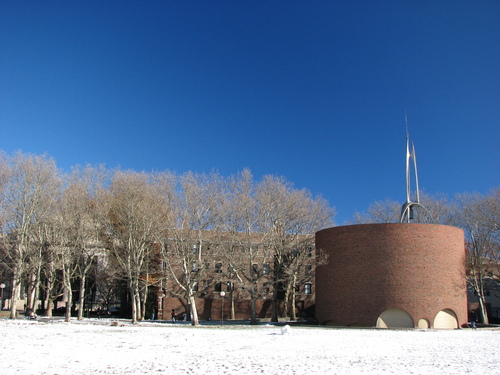
From the outside the chapel doesn’t look like much, just a small circular brick building set down on a lawn and some trees.

MIT_Chapel-2

Snow makes it more interesting.

MIT_Chapel-winter

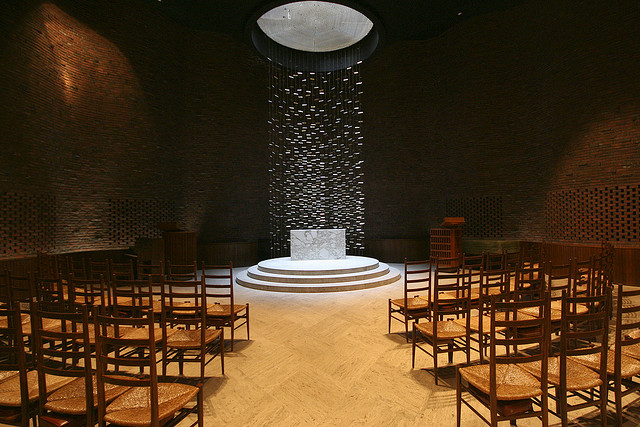
The interior, on the other hand, has a wonderful feel to it. The first thing that strikes you as you enter the chapel is the altar bathed in light streaming down from the skylight above it, while the installation over the altar leaves you very much with the sense of angel dust raining lightly down from on high.

MIT_Chapel-inside-5

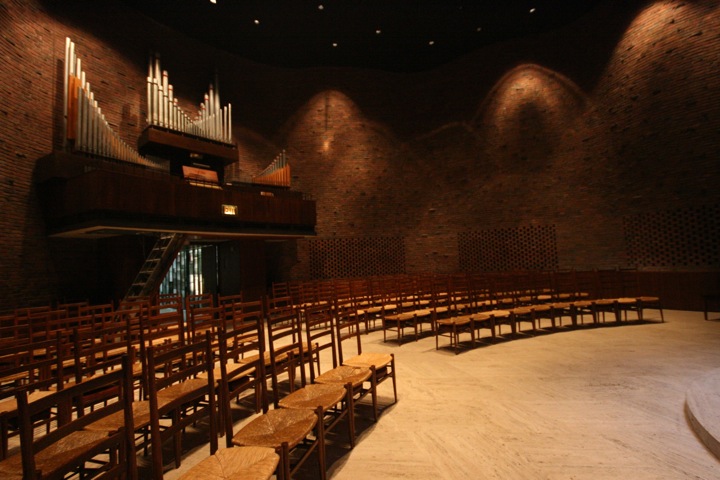
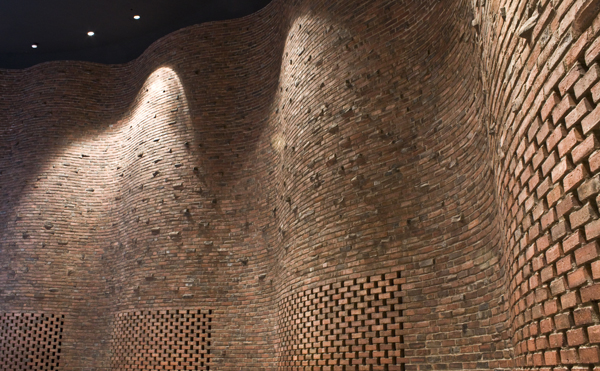
Then there is the wall. Outside, it is a normal circle. Inside, it is wavy and is roughened by bricks sticking slightly out of the wall.  It also holds a regular pattern of bricks that reminds me of the ventilation systems used in brick barns in northern Italy.

MIT_Chapel-inside-4

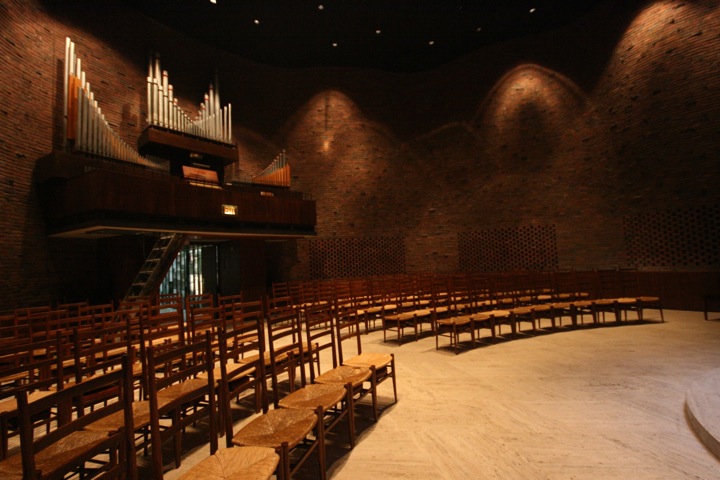
And then there is the organ, small but perfect, in its organ loft.

MIT_Chapel-organ-2

Our friend who volunteered to take the photos failed miserably (he forgot to press some button or other on the camera), so we have very few photos of the wedding. But it is all still fresh in our minds. My wife wore a pink tailleur and I a dove grey suit. She kept that tailleur for many years, while a rapidly increasing girth meant that I had to abandon the suit quite quickly. We had come up with our own vows – the parish priest had grumbled at this, asking why we wanted to abandon the beauty of the traditional vows, but we had insisted. A copy of them slumbers on together with all the rest of our stuff in storage in Vienna – we have carried them with us everywhere we have gone. We had our rings designed by a goldsmith in Milan: double gold bands, which echoed the design of the engagement ring I had given my wife from the same goldsmith. My mother-in-law, who was a great lover of music, chose the organ music (not Mendelssohn’s wedding march …). My parents and a couple of siblings had driven down from Canada, and the rest of the chapel was filled with university friends from MIT and Johns Hopkins, where my wife was doing her graduate studies. After the wedding, we had all gone downtown to a restaurant on Boston Commons for our lunch. No speeches, nothing like that; just good food. Because of timing, we had gone on our honeymoon before the wedding, in the Shenandoah Valley, together with my mother-in-law (I liked her a lot …). Immediately after the wedding, we started classes again.

So I’m sure my readers understand why we just had to buy that article with “MIT chapel” written on it (which, by the way, turned out to be a small case containing a tiny pad of ruled paper, a ruler, and an unsharpened pencil – quite where the connection was with MIT remains a mystery).

________________________

MIT chapel: http://ad009cdnb.archdaily.net/wp-content/uploads/2011/02/1297993341-mit-chapel-wikimedia-commons2-375×500.jpg
MIT chapel-winter: http://mw2.google.com/mw-panoramio/photos/medium/6339334.jpg
MIT chapel inside-altar: http://farm4.staticflickr.com/3383/3478369283_08678cfd7a_z.jpg
MIT chapel inside-wall: http://jmcvey.net/sylva/wp-content/uploads/2010/10/chapel_interior_wall2.jpg
MIT chapel-organ: http://ad009cdnb.archdaily.net/wp-content/uploads/2011/02/1297993330-mit-chapel-caribbeanfreephoto.jpg

CLEAR, PURE, CLEAN, PEACEFUL

Beijing, 18 January 2013

Readers of my posts will know that I walk along a piece of canal on my way to and from the office. During these walks, I watch how the change of seasons are reflected – literally and figuratively – in the waters of the canal and the willows that grow along its edge. This year, winter came flurrying in with a blustery storm in late November which damaged a number of the willows along the canal.

Winter-2012 005

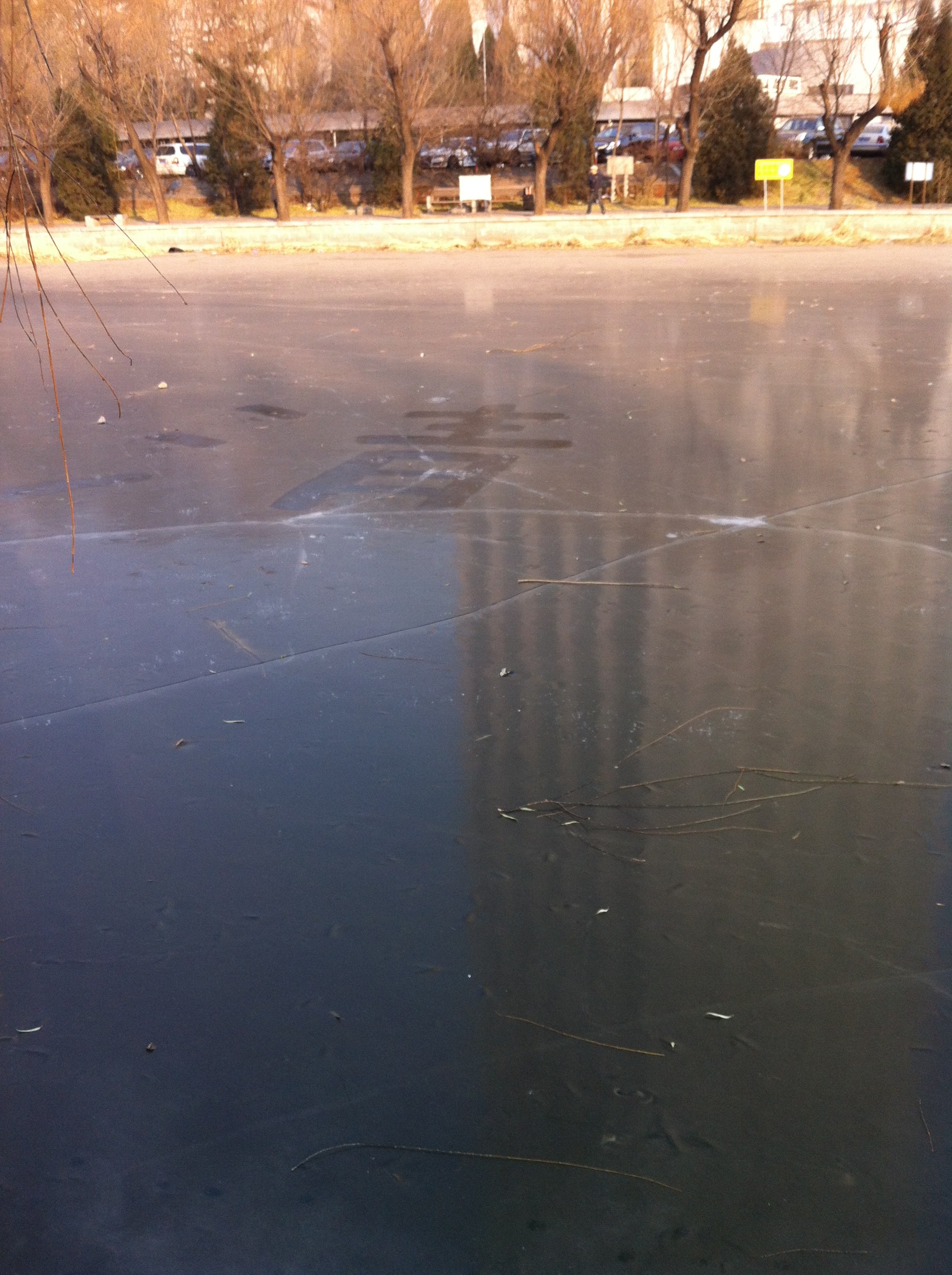
Then came a snowstorm, which left a modest covering of snow and which quickly disappeared. Thereafter, the temperatures plunged and the canal froze over. With no snow, the ice was initially buffed clean by the wind, but the wind soon died down and over a period of a week or so a thin layer of dust settled on the ice’s surface; winter is very dry in Beijing. One morning, as I turned off the bridge to start my walk along the canal, I noticed faintly etched in the dust a Chinese character. I was intrigued. What had been written? A name? Two names, united in love? Or something stupid like “Wash me”? Or worse?! Given my illiteracy in Chinese, I had no idea. So I took a photo.

qing

I showed it to my Chinese secretary. She studied the photo a minute and said “it says, qīng.”

And what does it mean, I asked?

Clear, pure, clean, she told me. Peaceful, also.

Clear, pure, clean, peaceful … The writer must have been feeling good when he wrote it. Was it love? Just a happy moment? Whatever it was, I thank him. Later wind has effaced the character, but every time I walk past the spot I get a warm feeling.

POSTSCRIPT 28/1/13

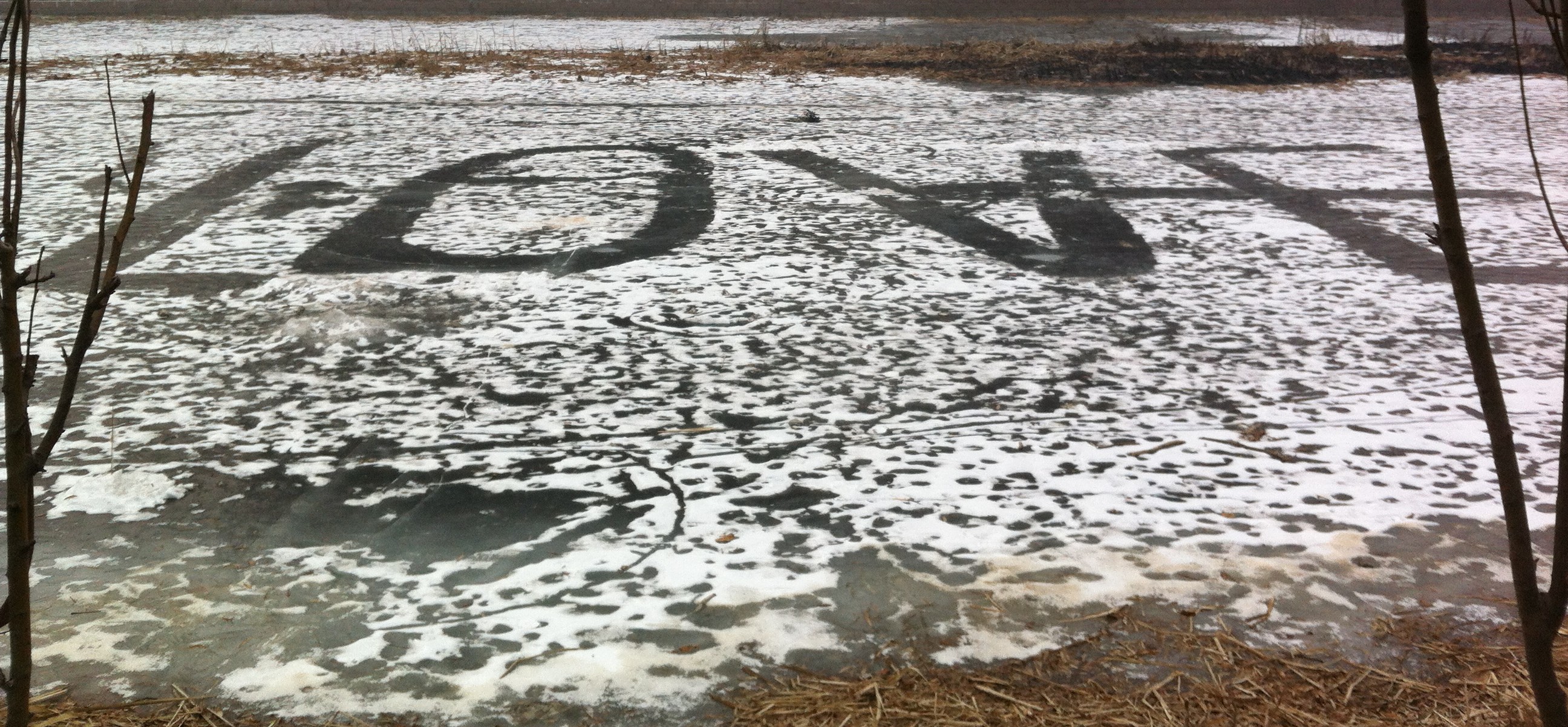
Since writing this, snow has fallen and has covered the canal’s ice with a thin coating of snow.  Someone went out and wrote in the snow. This one I could read:

love 002

MESSAGE IN A BOTTLE

Beijing, 12 January 2013

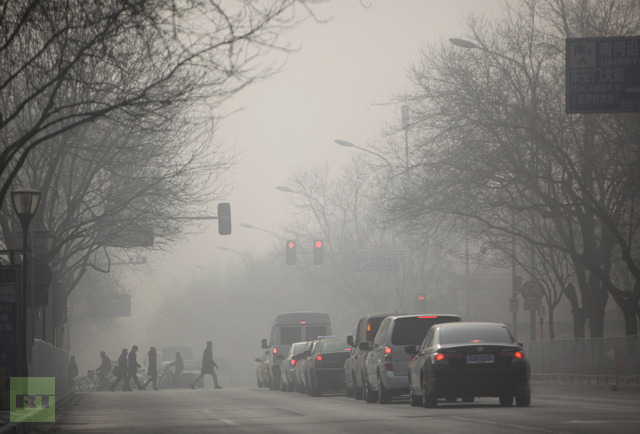
We arrived back in Beijing a few hours ago and found ourselves landing in a real pea soup – perhaps carrot soup would be more appropriate since the colour was a dull red; dust from the Gobi desert had blown in. Visibility was really very bad; my wife and I thanked God and radar for having got the plane down safely. As I write, the sun, which was glaring weakly through the fog when we arrived, has disappeared completely to leave behind a grey miasma.

people-walk-heavily-hazy

Electronic visibility seems just as bad. Our internet connection is still acting up; it’s very difficult to get through the Great Firewall that surrounds China.

Great-Firewall

It started getting bad a month or so before the 18th Congress of the Communist Party. Everyone in the expat community agreed that the Powers that Be were tightening their grip on the electronic chatter to make sure that nothing embarrassing or destabilizing got out (the Bo Xilai case was uppermost in everyone’s minds). Everyone also agreed that surely they would relax their grip after the Party Congress and things would go back to where they were (I won’t say normal). But that didn’t happen. So now the expats are saying that internet will be controlled until March when the new leadership takes over, and then surely after that they will relax their grip.

I’m not so sure. Control is a drug; once you get a taste for it, you can’t give up, you want more. I’m afraid that my little tunnels through the Great Firewall will all be blocked up and that my voice will no longer get through to the outside world. These last few weeks in New York have given me a heady taste of what freedom of speech can be like. I published my posts and researched my materials on the internet with ease and speed, without the constant worry that I would lose the connection and everything would crash.

I don’t want to lose my voice. Paraphrasing Langston Hughes, the African American poet, “now do I wonder at this thing, that I am old but I can sing”.  I want to keep singing, to keep sending out my little messages in their bottles.

message in a bottle

_______________
air pollution Beijing: http://rt.com/files/news/china-pollution-851/people-walk-heavily-hazy.jpg (Reuters / Jason Lee)
cartoon great firewall: http://www.thetelecomblog.com/wp-content/uploads/2012/12/Great-Firewall2.jpg
message in a bottle: http://1.bp.blogspot.com/_-C_ejcKBFWo/TEnq5dYUa3I/AAAAAAAAJbc/DI29YiFyC-Q/s1600/MIAB.jpg

ANGEL VOICES

Beijing, 19 December 2012

It was an official dinner like so many I attend, perhaps more significant than most since it was with our main partner in China. I sat to the right of the banquet’s host, in the position of honour. As usual, I checked nervously what alcohol would be served; it’s either red wine – good – or “Chinese wine”, aka Maotai or Baizhou, which is actually an extremely strong, sickly tasting liquor – very bad; the Chinese profess to love it,  I refer to it outside of Chinese earshot as biofuel. Luckily, it was wine; I could relax. We started with the usual speech by the host and then moved to the first of the toasts. My host and I clinked glasses and bottomed-up, before turning to those around us to toast, our glasses having miraculously refilled in the meantime. The Lazy Mary began to turn as we picked at the various delicacies before us and as more arrived. The host got up and began to toast those at other tables, others got up and toasted the host, and me, and everyone else. I was soon standing up and sitting down like a yo-yo as the various guests arrived thick and fast and made me little speeches to which I had to find a suitable response. As usual, I was beginning to run out of platitudes, and when I found myself saying sillier and sillier things I knew it was time for me to escape and do my rounds of the other tables.

One thing was different at this banquet. The host had invited younger members of his staff with a musical skill to show it off. So we had players of the traditional Chinese flute, of the traditional Chinese violin, and of the guitar strutting their stuff. We also had a singer who sang in the operatic mode O sole mio and some Austrian yodeling song set to Chinese words – the last was a surreal interlude. Initially, we listened appreciatively, but as the guests moved around, toasting with all and sundry and chatting ever more animatedly in small clusters, the players were reduced to background musack. Then, uncharacteristically, the host called us to order and invited us to sit down. Two children took to the floor, the son and daughter of staff members, and they began to sing. It was in that moment that I understood why angels must be children. There is a purity, a crystalline clarity, a simplicity, in a child’s voice as it soars into the upper registers and floats above your head that can bring a hushed, attentive silence to even the most unruly crowd, and will always fill my heart with an intimation of the divine.

two-angels-singing

_____________

http://artemisdreaming.tumblr.com/page/69

LITTLE LAMB

Beijing, 15 December 2012

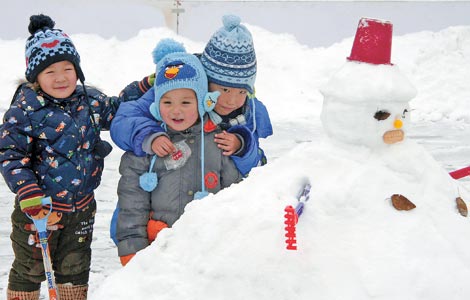
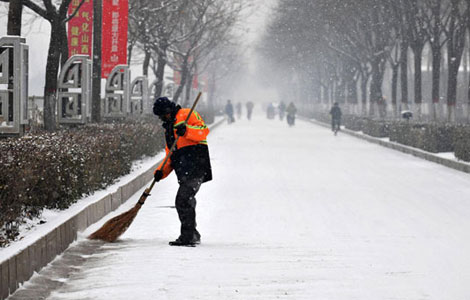
Yesterday, we had the first heavy snowfall of the year in Beijing – there had been some earlier flurries, but no more than that. I don’t want to exaggerate; there wasn’t really a huge amount of snow, which was just as well because Beijing drivers have no idea how to drive in snow and their cars are not equipped for it. But for Beijing it was significant. As the snow began to pile up, people – and not just children – were out on the streets making snowmen and throwing snowballs, while some of the more responsible ones were clearing the pavements; I even saw a snowblower for the first time here!

children and snowman road cleaning

It was all quite picturesque, so I was moved to haul out our old CD “The Essential Carols Collection” which we always played at this time of the year when the children were with us, and gave it a whirl.

carols CD

Out floated those hoary old favourites, “Once in Royal David’s City”, “The Holly and the Ivy”, “Silent Night”, “O Come All Ye Faithful”, and on and on, while the odd tear or two formed in the corner of my eye.

But squeezed in between “O Tannenbaum” and “Ding Dong Merrily on High”, comes John Tavener’s “The Lamb”, an ethereally, achingly beautiful modern carol. Every time I get to this part of the CD, I have stop whatever I’m doing and sit down and just let the music flow through me. Tavener uses the words of William Blake’s The Lamb for the carol:

Little Lamb who made thee
Dost thou know who made thee
Gave thee life and bid thee feed.
By the stream and o’er the mead;
Gave thee clothing of delight,
Softest clothing wooly bright;
Gave thee such a tender voice,
Making all the vales rejoice!
Little Lamb who made thee
Dost thou know who made thee

Little Lamb I’ll tell thee,
Little Lamb I’ll tell thee!
He is called by thy name,
For he calls himself a Lamb:
He is meek and he is mild,
He became a little child:
I a child and thou a lamb,
We are called by his name.
Little Lamb God bless thee.

I always wanted my mother to hear this carol, she loved William Blake. But this will join that long list of regrets, things we wished we had done but left until it was to too late.

_________________

Children with snowman: https://usa.chinadaily.com.cn/

Man sweeping snow in street: https://usa.chinadaily.com.cn

FLY THE FLAG – AS LONG AS IT’S BEAUTIFUL

Beijing, 14 October 2012

Those of you who have read my posts will surely have realized by now that I live cheek by jowl with many of the embassies in Beijing. One of the things that you always see when you walk by embassies is the national flags which they all proudly fly at their gates. After a while, seeing so many flags got me to look at them more closely. Flags drip with history and meaning. Their colours are not chosen by chance, nor are the shapes (the crosses, the stripes, the triangles); these all have historical roots. As for the symbols that litter many flags, they all have some deep national meaning. But that is not what interested me. What I was asking myself was, are they aesthetically appealing? Would I fly them at my gate simply because they looked good fluttering in the breeze?

So I started studying the 203 national flags (there are hundreds if not thousands of other flags, but I decided to stay with my ambassadorial starting point). And I have concluded that there are at maximum five flags which I would find beautiful enough to fly on my front lawn.  I consider the most beautiful to be the Japanese flag.

It is very simple, two colours and one shape. And the colour combination – small circle of red on a large white background – works beautifully. Yes, we know that the circle represents the rising sun and so exemplifies Japan’s name for itself: Nippon, or the Land of the Rising Sun. But who cares? It’s just a beautiful design. Bangladesh has a very similar design, except that the red circle is on a green background. I read that the green symbolizes the greenery of Bangladesh with its vitality and youthfulness, while the red circle represents the rising sun and the blood that the Bangladeshis have shed in order to gain independence. But sorry, that red and green combination doesn’t work for me. Nor does the combination on South Korea’s flag; it too is basically a circle on a white background, but the circle is fussy (it is the yin and yang symbol in blue and red) and it is surrounded by four black symbols which I discovered are trigrams representing fire, water, earth, wood, and metal. All very interesting but it simply makes for a cluttered design.

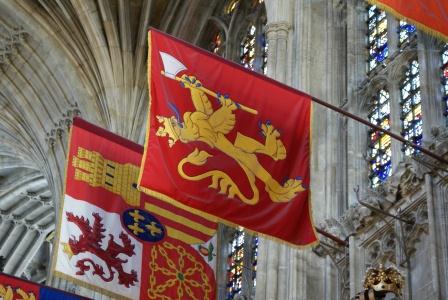
I feel moved here to write in passing about the imperial standard of Japan, another example of simple but beautiful design. My wife and I came across this standard on a visit to Windsor Castle. There, in Saint George’s chapel, hang the standards of all the member of the Knights of the Garter. The Emperor of Japan’s standard is a simple design of a golden chrysanthemum on a light red background.
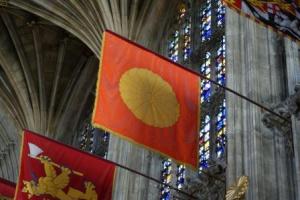
It stands in stark contrast to the fussy heraldic standards hanging all around it.

But I digress. Returning to the topic in hand, after Japan I place Qatar.

The colour combination of this flag – maroon, covering two-thirds of the flag’s area, and white covering the rest – is really very handsome. But I also like it because it is only one of two national flags where the colours meet at a serrated rather than a straight edge. This adds a certain vivacity to the design. I read that the white portion of the flag symbolizes peace and the maroon represents the Kharijite Muslims of Qatar and the bloodshed in Qatar’s many wars (in case any reader is wondering if Qataris have different blood from us all, the flag’s colour was formerly red). As for the serrated edge, it represents Qatar as the ninth member of the ‘reconciled Emirates’ of the Arabian Gulf at the conclusion of the Qatari-British treaty in 1916. So what? It’s just a beautiful design. And thank God they changed the red to maroon. Bahrain has a very similar flag, but it has red rather than maroon. With red, it doesn’t work.

Next on my list is Finland’s flag.

Again, just two colours, a blue cross on a white background. The colour combination works well because, as in the case of Japan, there is only a small amount of blue so the chromatic balance remains good. I read that the blue represents the myriad lakes in Finland and the white the country’s snow. That may be so, but personally I think the flag would be more beautiful if the blue were of a paler hue, although it still works well as it is. Luckily, the cross is also somewhat off-centre. If it the cross had been fully centred (like it is, for instance, in the Swiss flag) the design would have been much more boring. But having an off-centred cross doesn’t necessarily make this design work. The Swedish flag has the same off-centre cross, but in that case – yellow cross on blue background – the overall design doesn’t convince.

Fourth place on my list goes to the flag of the small Himalayan kingdom of Bhutan.

Here again we have two main colors! What is refreshing in this case is that the flag’s field is divided diagonally between the two colours. There is only one other national flag that is so divided, that of Papua New Guinea. The colour combination – saffron yellow and orange – works very nicely (regardless of the fact that they are meant to represent, respectively, the country’s temporal and spiritual powers). Normally, I don’t like symbols on flags, but in this case I rather like the white dragon flying along the flag’s diagonal (by the way, the country’s name in the local dialect means Land of the Dragon). I’m rather fond of dragons anyway, but in this particular case the dragon breaks up what might otherwise be a rather blocky design, and the dragon’s whiteness lightens up the colour scheme (in the earliest version of the flag the dragon was bottle green and was crossing the flag’s field horizontally; the overall effect is awful).

The final flag on my list is Estonia’s.

Normally, I would reject out of hand any three-striped flag. Such flags thickly litter the landscape of national flags.  An astonishing 84 national flags are composed of three stripes, either vertical or horizontal. That’s more than two-thirds of all national flags! Some have a triangular wedge on the left, while others have various symbols sprinkled on them. These variations break up the monotony somewhat, but you really have to ask yourself about flag designers. Couldn’t they dream up something different? I suppose that’s what you get when bureaucrats or politicians become designers.

In any case, the Estonian flag, even if three-striped, works because of the colour combination: equal bars of blue, black and white. Black and white always go well together, and the blue adds a splash of difference. Botswana has the same three colours, but the blue – and a light blue at that – is much more dominant. The flag is OK but no more than that.

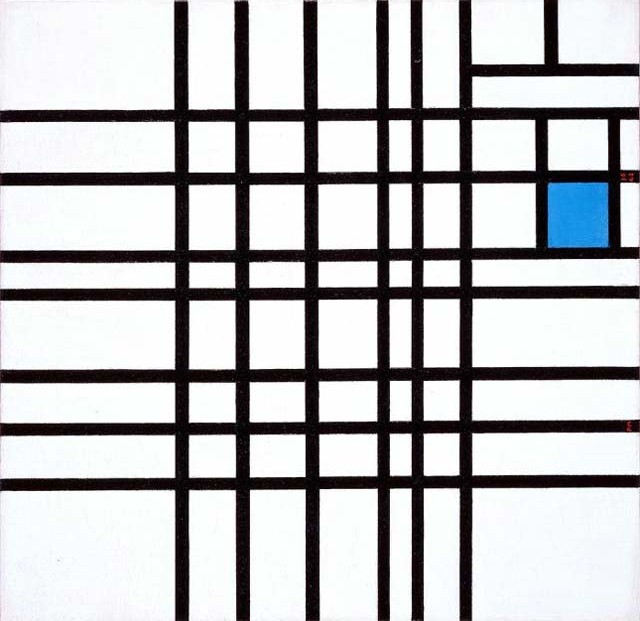
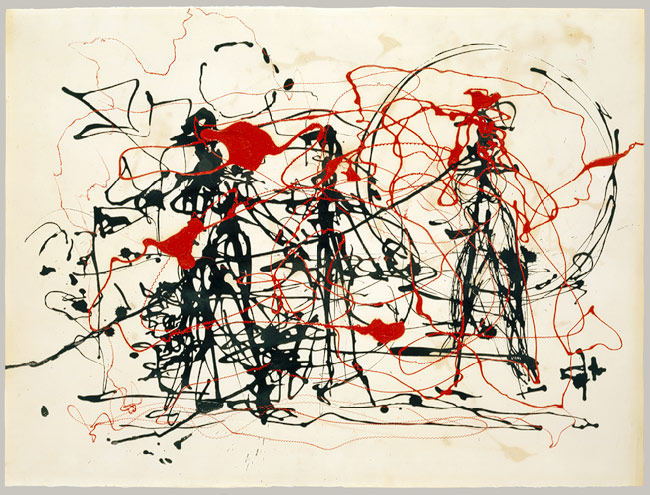
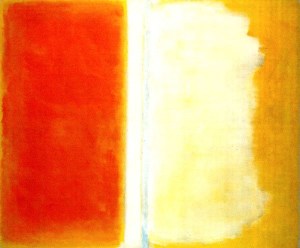
The recent flurry of news about a Rothko painting defaced in the Tate Modern leads me to a final thought. Why don’t governments get modern artists to design their flags? They would make wonderful flags. Here is a Rothko, Mondrian and Pollock “flag”. I think they would look gorgeous.
______
pix, in order of appearance:
http://diamondgirl55.mlblogs.com/tag/yankees/
http://www.stgeorges-windsor.org/worship-and-music/st-georges-chapel-feature/chapel-articles/international-links-at-st-georges.html
http://galmudugtv.com/?attachment_id=1075
http://footage.shutterstock.com/clip-450343-stock-footage-finland-flag-animation-with-real-time-lapse-clouds.html
http://www.flag-images.com/national_flag/download/flag_of_bhutan/
http://footage.shutterstock.com/clip-450310-stock-footage-estonia-flag-animation.html
http://www.wikipaintings.org/en/mark-rothko/no-8-1952
http://artissilentpoetry.tumblr.com/
http://www.metmuseum.org/toah/works-of-art/1982.147.27
A CLUSTER OF MORNING GLORIES

San Francisco, 23 September 2012

We left this morning for San Francisco, to visit our son. We were up early, and since it was a beautiful morning – the sky was a cloudless clear blue – we decided to walk to the station to catch the train to the airport. The walk took us past our local supermarket, the modest housing estates that cluster around it, past the smart office buildings along the Third Ring Road, and finally along a rough semi-constructed path that follows the highway out to the airport until the stairs to the station are reached. The last stretch of our walk reminded us that Beijing is still constructing itself. It is one of those pieces of land that get left behind in urban renewal projects, stuck between new constructions – in this case, the highway on one side, modern office buildings on the other – and are fast going feral. Weeds were growing in abundance along the side of the path and covering the construction rubble underfoot, rogue trees were beginning to push up through the cracks, the fencing along the path was rusting and bent. We picked our way along, weaving to avoid the commuters streaming in to work, with the suitcase stumbling behind us over the rough paving.

Suddenly, there, in the shade of the early morning sun, was a cluster of morning glories flowering on the fence. The plant itself is nothing much to write home about; it has the weak tendril-like stalk of a climbing plant and the leaves are a drear matte green. But the flowers were magnificent – a cool, dark violet colour, almost phosphorescent in its intensity. I’m guessing they were Ipomoea purpurea, the purple or common morning glory. We stopped for a minute to admire them, but we were in a hurry now and had to move on.

As I write this, my mind’s eye suddenly whirls off half a world away and I find myself walking down the main coast road south of Genova, just as it enters the village where we used to spend our summers when the children were young. I am next to the cemetery; the village dead have the best view, out over the coast to the distant promontory. It’s a beautiful summer morning. Down in the cleft where a creek runs off the hills behind me, the morning glories have run amok, covering and smothering everything. But the flowers are open, beautiful in the morning light, cool, dark, violet.

And my mind’s eye whirls off again, this time alighting in the town in Africa where I was born. More than fifty years have passed and the memory is fading. But I see a wall – is it in a park, in a garden? – covered in morning glories, glowing in the morning light, cool – dark – violet.

OLYMPUS DIGITAL CAMERA

_____________

picture: http://georgeswebpage.com/almanac

THOSE MYSTERIOUS RUSSIAN ARTISTS

Beijing, 19 August 2012

When I received an invitation for my wife and I to attend the 15th Beijing Art Expo 2012, I felt a thrill of pleasurable anticipation. The invitation announced that the exhibition would cover 10,000 square metres, with art works from more than 80 galleries and art agencies, from 16 countries and areas. But yesterday afternoon, when we entered the exhibition my heart sank. I recognized that we had visited the exhibition two years ago and had been underwhelmed by what we saw. I feared the same again.

Unfortunately, I was right. The art being shown was either pretentious crap or sucrose. I gritted my teeth and systematically worked my way from booth to booth. Hope springs eternal. But there was absolutely nothing worth looking at. So depressing …

And then I came across two booths which were exhibiting Russian art. This is not actually the first time I’ve come across Russian art being exhibited in Beijing. I find this art quite refreshing. For the most part the paintings are quiet, reflective views of rural life, with vistas of fields, village buildings, and farming folk just doing what they need to do. There are also some townscapes and seascapes. They remind me very much of the early pictures the impressionist painted in the 1860s and early 1870s, before they began to use a brighter palette.

beijing art expo 2012

The intriguing thing is that much of this art was painted in the 1960s, ‘70s and ‘80s, so when the Soviet Union still existed and so when art was closely controlled. Were these officially endorsed artists? But it doesn’t seem very “communist” art. Were they then “alternative artists”? I have to follow up on this. Watch this space.

DON’T LET THEM DISAPPEAR

Beijing, 17 August 2012

I have a fondness for trees. The memories of my life are punctuated by pictures of particularly splendid specimens I have come across: a copper beech in Somerset, a poplar in a suburb somewhere, a grove of beeches in the Vienna woods, the plane trees I mentioned in an earlier posting, an oak tree on the grounds of some historic house, sequoias in California, … When I was a boy, there was nothing I liked better than to climb a tree and be high up amongst its rustling leaves; there was always a feeling of wonderful remoteness up there. I don’t climb trees any more, as much for my dignity as for my stiff limbs, but I do love standing under them looking at the way the sunlight filters through their leaves creating an infinity of green hues – my wife gently mocks me for the tons of photos I have squirreled away of “sunlight through the leaves” – or running my hands over the bark.  And there is nothing so wonderful as being outside at night in the dark and listening to the wind sighing through the trees.

This fondness of mine does not extend to pine trees. Yes, I can admire a lone umbrella pine on a rocky outcrop that plunges into the Mediterranean, but up close pine trees do not excite me in the same way that other trees do. It’s perhaps their generally more somber hue, or because the needles repel the touch rather than encourage it in the way leaves do, or the fact that sunlight doesn’t filter through the needles in the same way. Whatever it is, I am not a fan of pine trees.

This coolness of mine towards the genus pinus has been somewhat modified since my arrival in China, where I discovered, in Beijing’s parks and other public spaces, the pinus bungeana, or lacebark pine. This pine has a truly lovely bark. In the first place, it is smooth, unlike the rough, often heavily fissured, and really quite ugly, bark of the pine trees that I’m familiar with. It is also a bark that peels, like the eucalyptus or the plane tree. But the bark doesn’t hang off in unseemly strips as it can on these trees. It comes off in smaller, rounder, scale-like patches. And what is most wonderful is the colour of the underlying skin: white or pale yellow, green, brown, red-purple. It seems that the initial colour is pale but it darkens upon exposure to light. A grove of them can be a particularly lovely sight.

Picture 003

Spurred by my discovery, I read up on the lacebark pine. It is a native of northeastern and central China, which goes some way to explaining why I had never seen it before coming to this part of the world. It also has two cousins with the same smooth, multi-coloured bark. One is the Chilgoza Pine, or the Pinus gerardiana to give it its formal title, which is native to the northwestern Himalayas: northwest India, Pakistan, eastern Afghanistan.

pinus-Chilgoza-bark-3

Unfortunately, the species is under threat from excessive cutting and intensive grazing. The other cousin, the Qiaojia Pine, or Pinus squamata, is in even worse shape. It is the rarest pine species of the world, considered critically endangered, with only about 20 known trees in a single locality in a remote part of Yunnan province in China.  It was only discovered – by Science at least – thirty years ago, in 1991. I found no picture of the tree, let alone its bark.

I’m always depressed when I hear of species which are in danger of disappearing. Like they say, “extinction is for ever”. In this case, we could be losing some beautiful trees. But that’s a very selfish way of looking at it, based on the thinking that the rest of the world is made for us. Even if we were talking about some revolting insect, it would be a tragedy to lose it. Every species contributes to the fantastically diverse ecosystems around us, which are not only beautiful to look at and be part of but also vital to our own existence. Every loss is the start of a run in the web of life. One day, all those runs will merge into a gaping hole, down which we will all disappear.