POSTS

VIENNA, “WORTH THE TRIP”

Phnom Penh, 7 December 2015

My wife and I have just come back from a trip to Vienna. I had to be there for work, but luckily we also got to stay over a weekend. This allowed us to taste once more the artistic delights of the city. Wonderful, truly wonderful … Enough to give one heart palpitations.

We had first tasted the artistic glories of the city back in March of 1985 (I am certain of the date, because I was in Vienna to witness the signing of the Vienna Convention for the Protection of the Ozone Layer). That time too we had had a weekend to ourselves, which we used to first visit the Kunsthistorisches Museum, Austria’s national Museum of Fine Arts. I have to tell you, we were gobsmacked – that’s the only word – as we walked from room to room and saw one marvel after another hanging on the walls. It was one of those cases of “Really? They have this painting here? Wow …” I just can’t stop myself from showing you some of my favourites; there are many, many more, for all tastes.

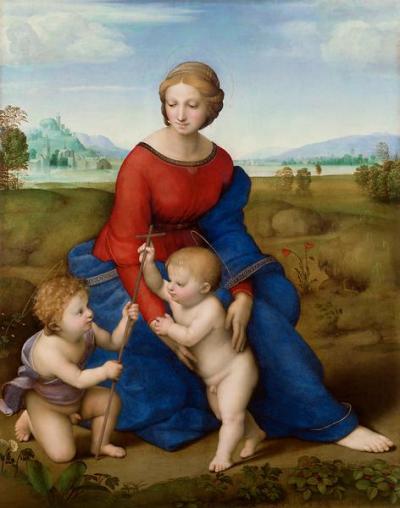
Here’s Raphael’s “Madonna del Prato”
image
Lotto’s “Portrait of a Young Man with a Lamp”
image
Arcimboldo’s “Summer”
image
Canaletto’s “Vienna, seen from the Belvedere”
image
A whole slew of Titians, most of which are of disagreeably sucrose blondes, but which also include this powerful portrait of Johann Frederich, Elector of Saxony
image
Caravaggio’s “Madonna of the Rosary”
image
as well as one of his several versions of “David with the head of Goliath” (another of which I’ve mentioned in an earlier post)
image
A wondrous collection of Peter Bruegel the Elder, of which I throw in only his “Hunters in the Snow (Winter)”

image

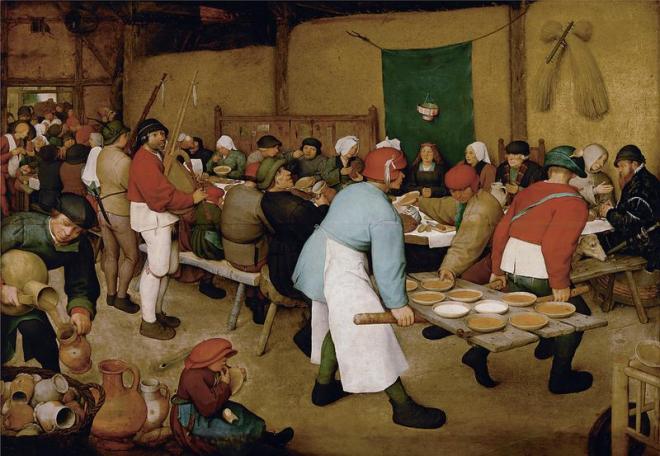
and his “Peasant Wedding”

image

A magisterial self-portrait by Rembrandt
image
Vermeer’s “The Art of Painting”
image
Cranach the Elder’s “Judith with the Head of Holophernes” (although I still prefer the same scene which I came across years ago in the Queen’s Gallery in London)
image
Dürer’s “Kaiser Maximilian I”
image
as well his “Portrait of a Venetian Lady”
image
I stop, otherwise I will bore my readers. But, without wanting to sound too much like an advert for Vienna, I would really urge any of them who are lovers of art but have somehow never made it to Vienna to hurry on over, if only to visit the Kunsthistorisches Museum. As the Michelin Guides would say, it alone “is worth the trip”.

But Vienna has much, much more. That same weekend back in 1985 we discovered Egon Schiele. We saw an exhibition of his paintings somewhere in the Grinzing area of Vienna, and I was just blown away. This particular painting of his, “The Embrace”, has remained imprinted in my memory ever since.
image
The most extensive collection in the world of Egon Schiele’s work is in the Leopold Museum, part of Vienna’s Museums Quartier, MQ. MQ opened when we were living in Vienna, some 20 years after our first visit. Along with the Leopold Museum, MQ houses MUMOK, the Museum Moderner Kunst Stiftung Ludwig Wien. Personally, I always preferred the Leopold Museum; MUMOK was a little too aggressively modern for my tastes. So I suppose it comes as no surprise to hear that after visiting the Kunsthistorisches Museum last week we visited the Leopold. The Egon Schieles are wonderful. This one painting of his, “Seated Male Nude”, can stand in for the whole collection.
image
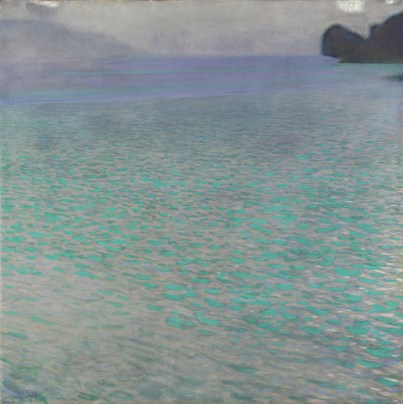
You cannot go to the Leopold just for the Schieles, wonderful as they are. You must visit the whole collection. This is where I discovered a host of Austrian artists from the late 1800s up to World War II: Gustav Klimt of course, but also Richard Gerstl, Koloman Moser, Oskar Kokoschka, Albin Egger-Lienz, Anton Kolig, and many others. The Leopold holds the painting of Gustav Klimt which I adopted as my gravatar for this blog. Those who are interested to see it can visit my Home Page. Here, I will insert another of his paintings in the museum’s collection, a beautiful painting of early morning on Lake Attersee
image
and I add to this, as a stand-in for all the others, a painting by Richard Gerstl, “Semi-Nude Self-Portrait” with its hypnotic eyes.
image
It’s not finished! Vienna also has the Belvedere Museum. We wanted to visit it too last week – they were holding an Exhibition on “The Women of Klimt, Schiele and Kokoschka”, which included Schiele’s “Embrace” – but we ran out of time. The Belvedere has a collection which stretches all the way from the Middle Ages to the present day. It competes strongly with the Ludwig Museum, having an excellent collection of paintings from the late 19th Century to the Second World War (the Klimts and Schieles are not to be missed), but it also has interesting paintings from the Baroque to the Biedermeier period. I will not show any of these, however. Instead, I will throw in a picture of a piece from its Medieval collection, a statue of St. Leonhard, from South Tyrol.
image
I chose this picture because the Belvedere has some beautiful pieces of that most Germanic of art forms, religious sculpture made of wood, originally painted in bright polychrome. The picture also gives me an excuse to cycle back to the Kunsthistorisches Museum. Because that museum is more, much more, than a gallery of paintings! There’s the collection of arms and armour, which one has to visit simply to gawp at the brilliant metalworking skills of past armourers. There’s the collection of historical musical instruments, which my mother-in-law, a lover of music, frothed at the mouth about. And then there’s the collection of sculpture and decorative arts, a disparate collection of artifacts, ranging from the seriously bling to the exquisite. Probably the most well-known piece in this collection is Benvenuto Cellini’s salt cellar, currently famous because it was recently stolen dramatically, only to dramatically reappear, unharmed, a few years later.
image
I prefer, though, this “Vanitas”, made, like St. Leonhard above, of wood and beautifully polychromed.
image
It reminds us that while we may be beautiful now, and well-toned, one day we will be old and sag in all directions (in my case, I’m already at that point, so I suppose the piece reminds me regretfully of what I once was).

I like these two ivory pieces even more. The first shows Gregory the Great feverishly scribbling away (he was a very prolific writer, this Pope), with scribes below him feverishly joining in.
image
The second shows the Ascension of Jesus, with the disciples weeping bitterly below. But rather than having Jesus levitate, which is the way this scene is normally depicted, Jesus is being swept up by God (note His hand), rather like a gymnast being elegantly swept up by a trapeze artist.
image
If readers were to think that it finishes there, they would be wrong! The Kunsthistorisches also runs the Imperial Treasury, another smorgasbord of golden baubles smothered in precious stones. Because of my fondness of cabochon stones, I only show here the Crown of the Holy Roman Emperor, of the 10th-11th Centuries
image
and St. Stephan’s  Purse, actually a reliquary, from the 9th Century.
image
Along with various other items, these were taken in the early 1800s from Aachen, Charlemagne’s original Imperial capital, to keep them from falling into the hands of the revolutionary French, and somehow they never made it back.

I suspect that my readers’ attention might be beginning to drift, so I quickly throw in two other wonders to be found in Vienna. One, located in the Museum für Völkerkunde or the Museum of Ethnology, is the so-called headdress of Montezuma, an exquisite piece from Mexico made of the feathers of quetzals and other birds mounted in a base of gold studded with precious stones.
image
As we once heard from Austria’s Ambassador to Mexico (whose apartment we were renting at the time), the piece is a source of continuing friction between the two countries, Mexico claiming that it was somehow stolen and Austria claiming that it was legitimately purchased (by the Archduke Ferdinand of Austria in at least 1575 and maybe before, i.e., no more than 90 years after Columbus discovered America – how did our good Archduke lay his hands on it?).

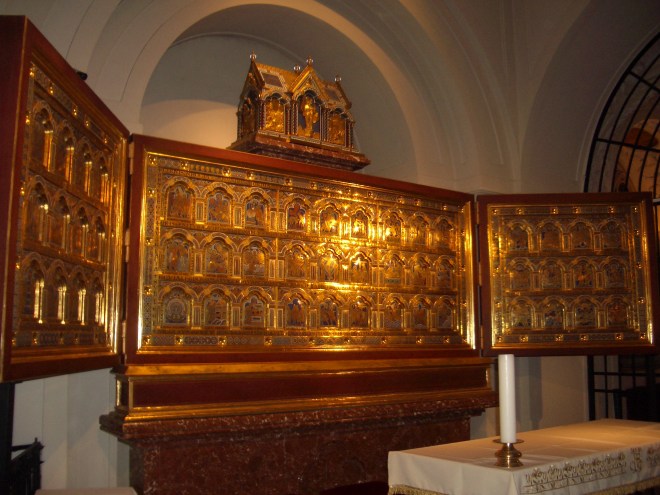
The second piece is actually to be found a little outside Vienna, in the imperial abbey of Klosteneuburg. It is the 12th Century Verdun altar, so called because it was made by Nicholas of Verdun, one of the most famous goldsmiths and enamelists of the Middle Ages.

image

The altar consists of 45 beautifully enameled panels, telling the biblical story. This one, for instance, relates the kiss of Judas (a theme I have mentioned in a previous post, in this case in a painting by Caravaggio).
image
If any of my readers have finished visiting the altar and still feel ready for more, they can always consider visiting the Samlung Essl, a museum of (very) modern art in Klosteneuburg, which, like the MQ, opened while we were living in Vienna. On the other hand, if like me they find this museum’s art too aggressively modern, or if they are simply too tired, they can just head back into town and with a bit of luck they will sight a most interesting piece of art, the municipal incinerator of Spittelau, decorated by the Austrian artist Hundertwasser.
image
I’ve seen many municipal incinerators in my time, and I must say this is definitely one of the prettiest; it certainly helped to gain its acceptance by the local population.

There’s more, much more art to visit in Vienna, but I’ll leave it at that. Like I’ve already said, I don’t want to sound like an advert for Vienna, but really it’s a wonderful destination for lovers of art.

And don’t get me started on the music …

____________
Paintings in the Kunsthistorisches Museum: http://www.khm.at/en/visit/collections/picture-gallery/selected-masterpieces/
Egon Schiele “The Embrace”: http://www.wikiart.org/en/egon-schiele/the-embrace-1917
Egon Schiele “Seated Male Nude”: http://www.leopoldmuseum.org/en/leopoldcollection/masterpieces/35
Gustav Klimt, “Attersee”: http://www.leopoldmuseum.org/en/leopoldcollection/focus/Klimt
Richard Gerstl “Semi-Nude Self-Portrait”: https://commons.m.wikimedia.org/wiki/File:Richard_Gerstl_-_Semi-Nude_Self-Portrait_-_Google_Art_Project.jpg
St. Leonhard, Belvedere: https://www.belvedere.at/en/sammlungen/belvedere
KHM, Collection of Sculpture and Decorative Arts: http://bilddatenbank.khm.at/
Imperial Treasury: http://www.kaiserliche-schatzkammer.at/en/visit/collections/secular-treasury/selected-masterpieces/
Moctezuma’s crown: https://en.m.wikipedia.org/wiki/Montezuma%27s_headdress#/media/File%3AFeather_headdress_Moctezuma_II.JPG (in https://en.m.wikipedia.org/wiki/Montezuma%27s_headdress#)
Verdun altar: https://en.m.wikipedia.org/wiki/Klosterneuburg_Monastery
Verdun altar – detail: http://armourinart.com/248/397/
Spittelau Incinerator: http://www.epd.gov.hk/epd/english/environmentinhk/waste/prob_solutions/WFdev_overseas.html

SWEET POTATOES AND CATAMARANS

Bangkok, 22 November 2015

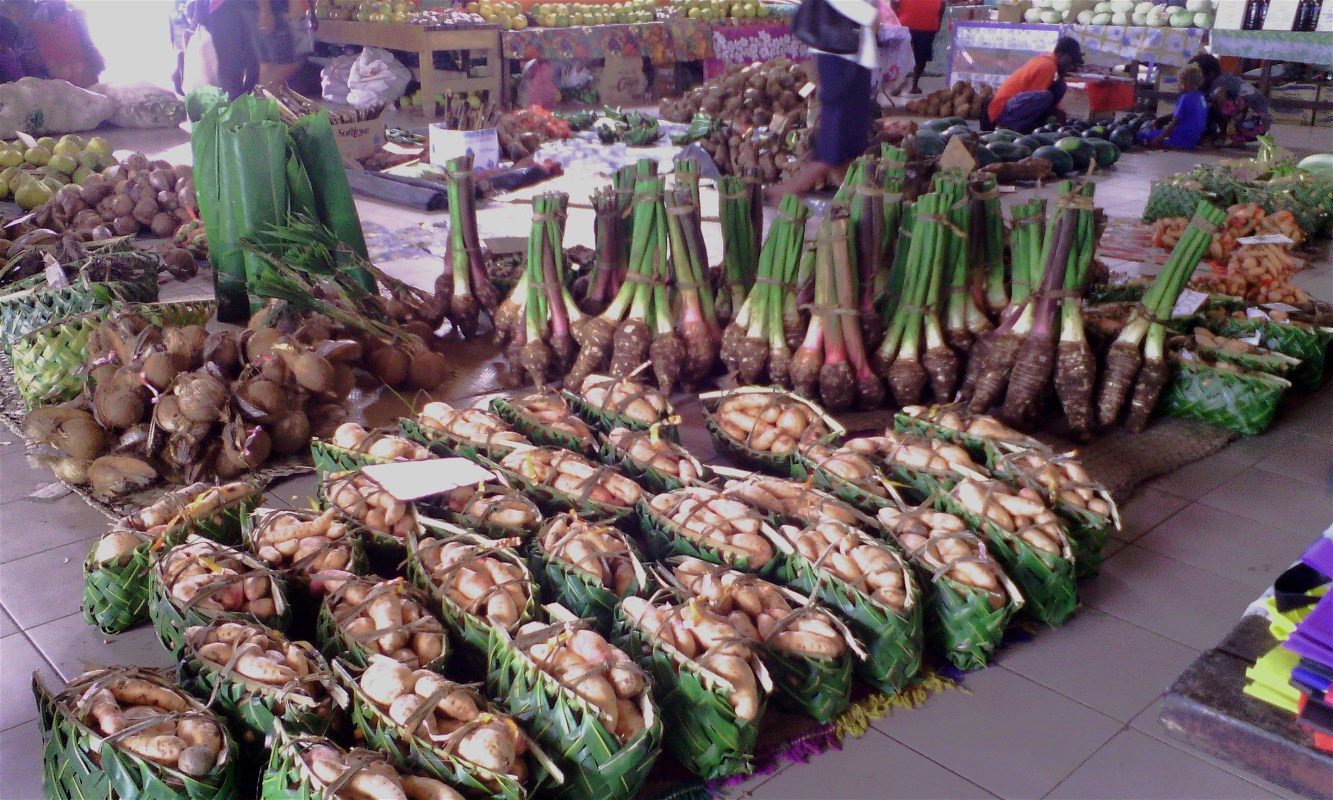
I was in Vanuatu recently, which, for those readers not familiar with the Pacific, is one of those many little island states that dot the Pacific Ocean, like Tuvalu or Palau or Kiribati. I was there on business, for reasons which are too long to explain here. In any event, as is my habit, when I had a little bit of spare time I went down to the local market in the capital, Port Vila, to see what fruits, veggies, and other local delicacies they might be selling.

market port vila

Much of what I saw was familiar, although I don’t think I’ve ever seen taro before (those neat little bunches behind the potatoes)

taro

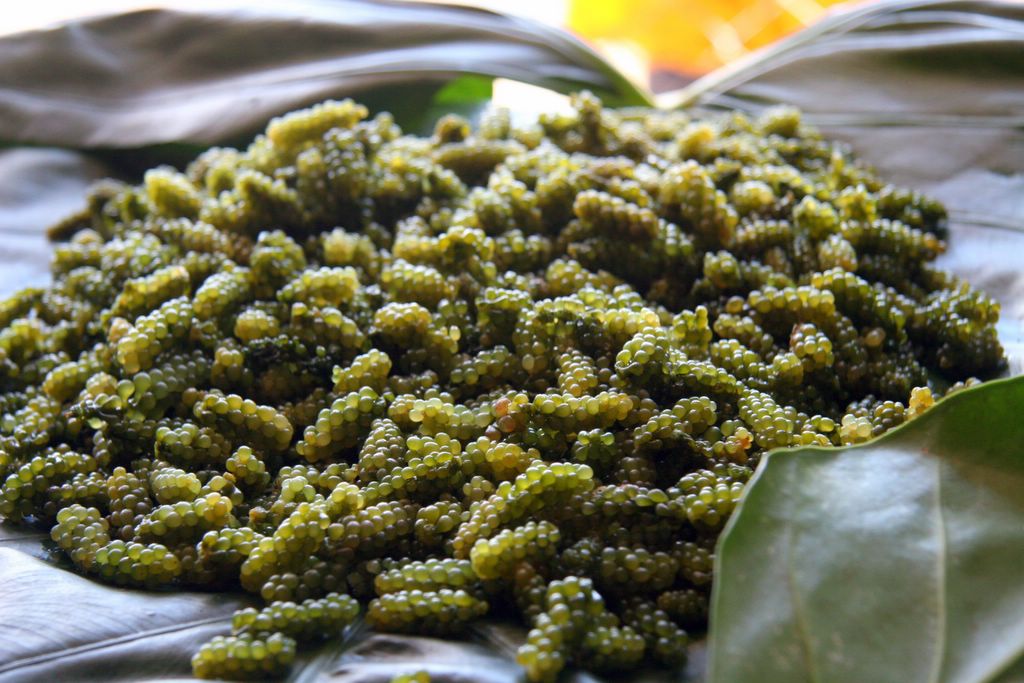
and I’ve definitely never seen sea grapes, which is a kind of seaweed if I’ve understood correctly (no idea how you eat them).

sea grapes

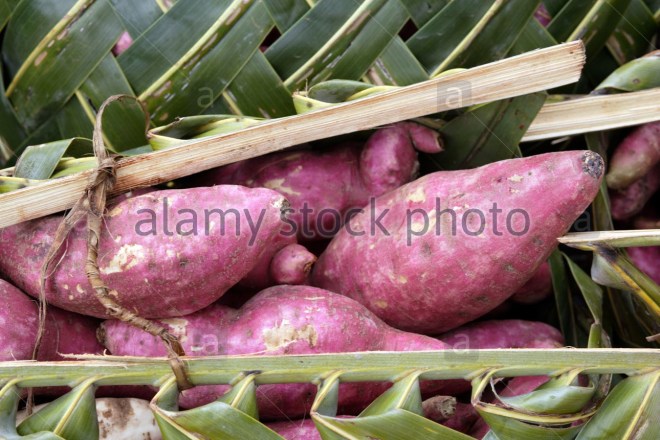
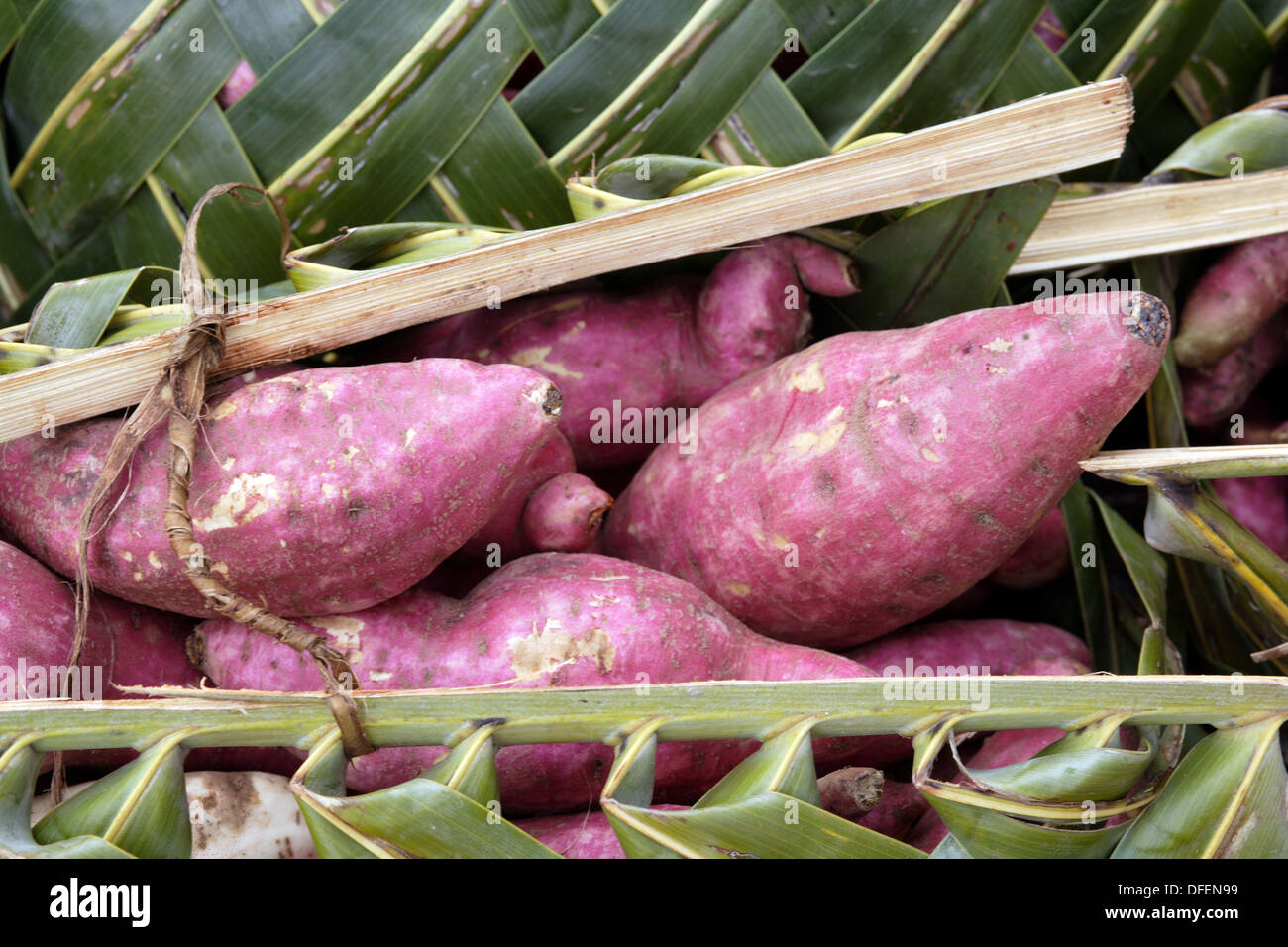
Sweet potatoes fall into the category of the known. Nevertheless, I did pause in front of them and go dreamy.

sweet potato market port vila

It wasn’t so much for the sweet potatoes – I’m not a great fan of this tuber, to be honest – but rather for its story here in the Pacific. Let me explain.

As previous posts attest, I have a great interest in the movement of foodstuffs around the world, so whenever I go to markets I always mentally map how the fruits and vegetables (and sometimes meat) must have originally ended up on the counters before me. True to form, I went through the same exercise in that market in Port Vila. Much of what I was seeing was brought into the Pacific Islands from the West, either brought along for the ride by the original inhabitants of the islands when they migrated out of South-East Asia, or through later regional trade between the Pacific Islands and South-East Asia, or even later through the colonial masters when they took over the islands. But the sweet potato was different. As I’m sure my readers know, the sweet potato originally comes from northern South America and possibly Central America. So how did it make it to the Pacific Islands? Well, it could definitely have come with the Spaniards after they conquered Latin America and set up a long distance trading system between Mexico and the Philippines – and in fact, at least one type of sweet potato was introduced to the Pacific Islands this way. It could also have come from the other direction, via Europe – and this is indeed the way that the Portuguese introduced the sweet potato to this part of the world, mostly to the islands of South-East Asia rather than the Pacific itself, as they sniffed around the area for spices. But there was another route of introduction of the sweet potato to the Pacific Islands, one which is much more fascinating, and this was by the Pacific Islanders themselves, who sailed all the way to South America and brought the sweet potato back with them (and may have left the chicken, although this is much debated). Since I’ve been talking about maps, here’s one which summarizes nicely the spread of the sweet potato in the Pacific:

map of sweet potato spread

The blue line is the Spanish introduction, the yellow line is the Portuguese introduction, and the red line is the introduction by the Polynesians. The evidence for a Polynesian introduction is archaeological (remains of sweet potato in Polynesian tombs datable to a time long before the colonial period), linguistic (as the map shows, there is a definite similarity between the Polynesian/Melanesian name of the sweet potato and its original South American name), and more recently DNA-related, through comparison of gene sequence mappings of the DNA of South American varieties with old specimens kept in European herbariums collected during the first trips of exploration by James Cook, Louis de Bougainville, and others.

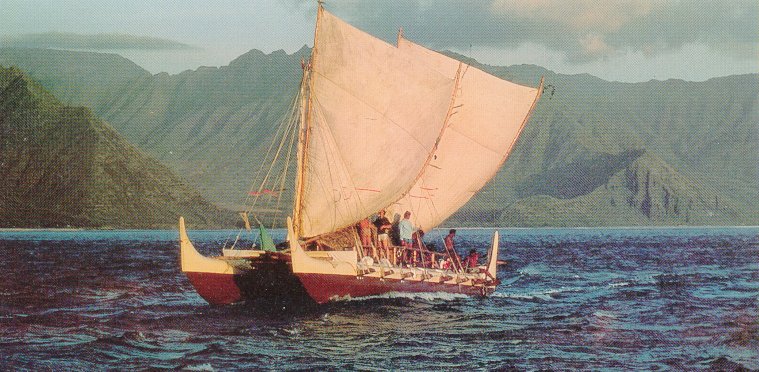
The map also shows the most probable route taken by the Polynesians to reach South America, via Easter Island. But now, let me tell you, East Island is far away from South America. It’s about 3,500 km far away. And on the other side it’s far away from other Pacific Islands. It’s about 3,600 km far away from the islands of French Polynesia, which are the closest biggish islands. Yet, the Polynesians sailed these vast distances – and not on some big comfy ship running on oil and crammed full with the latest navigation equipment but on a boat like this, powered by sail, and where they could only rely on their reading of stars, cloud formations, sea swells, and bird flight patterns to navigate.

polynesian ship

This picture clearly romanticizes the vessel. It must have been a cramped, dangerous voyage. Many times, the ships must have got lost at sea – James Cook writes of coming across a boatful of Polynesians in the middle of nowhere, who had been driven off course by a storm and were asking where they were.

This is a modern version of one of these ships, built in the 1970s,

modern polynesian ship

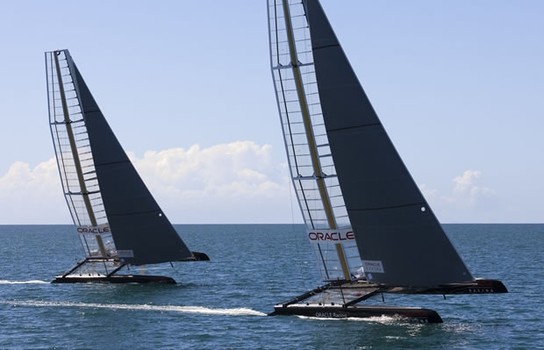
which clearly shows the unique aspect of their design, the use of two hulls. In fact, this design inspired modern ocean-going catamarans and eventually the truly amazing catamarans that now race in the America’s Cup.

image

These beauties can go up to 80 km/hr, but a more typical speed on a modern ocean going catamaran would be 15 km/hr. Doing a little maths here, it would therefore take a modern catamaran about 10 days to sail from Easter Island to South America. So if luck was with them, if the winds stayed steady and did not get too boisterous, if there were no nasty storms to drive them off course, the Polynesians probably would have had to last 10 days-two weeks out in the Pacific before hitting South America, which seems doable. Getting back, though, must have been considerably harder. I mean, on the way there, the Polynesians just had to hit South America, which is kinda big. On the way back, though, they would have had to hit these tiny specks in the ocean, specks which on top of it were much further away – taking the trade winds out of South America would have meant their having to aim for the French Polynesian islands for their first landfall, and these are 8,000 km away, or something like three weeks’ sailing if all went well.

But some Polynesians made it to South America and a few others made it back, with the sweet potato in tow. Because of these very skillful and very courageous sailors, I was looking at sweet potatoes in the market at Port Vila. No wonder I paused and smiled when I saw these not very tasty tubers.

______________

Port Vila market: https://scottmathiasraw.com/wp-content/uploads/2015/02/img_4446.jpg (in https://scottmathiasraw.com/vanuatu-welcomes-australian-raw-food-chef/)
Taro, Port Vila market: http://www.asiapacificnazarene.org/wp-content/uploads/s_Market-food.jpg (in http://www.asiapacificnazarene.org/five-months-post-cyclone-pam-vanuatu-recovering-thank-you-for-your-prayers-and-partnership/)
Sea grapes: http://photos1.blogger.com/img/164/977/1024/IMG_0110.jpg (in http://becksposhnosh.blogspot.com/2005/09/nama.html)
Sweet potato, Port Vila market: http://c8.alamy.com/comp/DFEN99/purple-colored-sweet-potatoes-in-a-basket-made-of-palm-leaves-on-a-DFEN99.jpg (in http://www.alamy.com/stock-photo-purple-colored-sweet-potatoes-in-a-basket-made-of-palm-leaves-on-a-61174997.html)
Map of spread of sweet potato in Pacific: http://www.pnas.org/content/110/6/2205/F1.large.jpg (in http://www.pnas.org/content/110/6/2205/F1.expansion.html)
Polynesian ship: http://cdn.arstechnica.net/wp-content/uploads/2013/01/kane_waa_small10-640×422.jpeg (in http://arstechnica.com/science/2013/01/polynesians-reached-south-america-picked-up-sweet-potatoes-went-home/)
Modern Polynesian ship: http://pvs.kcc.hawaii.edu/images/canoes/hokulea_circa_1975.jpg (in http://pvs.kcc.hawaii.edu/index/founder_and_teachers/nainoa_thompson.html)
America Cup boat: http://www.examiner.com/article/america-s-cup-event-authority-launches-new-sailing-simulation-app

REMEMBERING THE “OTHER RANKS”

Vanuatu, 11 November 2015

At this time when we are commemorating the end of the First World War (“the 11th hour of the 11th day of the 11th month”), I thought I could do my modest part to remember those who fell in that War, by recounting my English grandfather’s role in the conflict. It was not, I hasten to add, a heroic role. In fact, when all is said and done, it was very much less than stellar. But he tried to do his part to the best of his abilities and he regretted for the rest of his life that he was not able to have done more.

Until recently, I didn’t know much about my grandfather’s war record. My grandmother had a standard story which she trotted out to all her grandchildren, to the effect that he was a Captain in the Army, that he had gone to France in 1916 a few months after marrying her, that he had gotten food poisoning almost immediately, that he had been shipped home, and that a few months later he was invalided out of the Army. My father never talked about his father’s war record. The only thing I ever remember him saying was that my grandfather always got depressed at after-dinner sit-arounds in the living room when his peers began to tell stories of their days in the trenches, because he had not been there. That was the sum total of what I knew.

All of that changed a few months ago when, cruising the Internet, I stumbled across a cite to my grandfather’s War Office file, now in the UK’s National Archives. Much intrigued, I asked for, and received, a copy. The story it told, through the dry, matter-of-fact medical board reports, letters, and other bits and pieces which it contained, confirmed my grandmother’s tale. My grandfather went before three medical boards between July and November 1916, he couldn’t shake off the symptoms of whatever nasty bug it was that he had caught in France, and the Army eventually decided to let him go. But the papers in the file also told me some other things. They told me what battalion and regiment he had belonged to: the 11th (Service) Battalion of the South Lancashire Regiment, the St. Helens Battalion, so called because it had been raised in the autumn of 1914 in St. Helens, Lancashire, a gritty coal and heavy industry town not too far from Liverpool. They also told me when he had joined up. One of the pieces of paper in the file was his sign-up sheet, which showed that he had joined up in late October 1914, I suppose as part of that mad rush of volunteers which the first months of the War witnessed. Why he joined up in St. Helens is a bit of a mystery to me. He wasn’t from that part of England, and he was working in Wolverhampton, in the Midlands, when the War broke out. Perhaps it was easier to join up in St Helens than elsewhere; there are tales of huge queues at sign-up stations as literally millions of men tried to all join up at the same time.

In any event, by early October 1914, he was a 2nd Lieutenant in the 11th Battalion, part of Kitchener’s New Army. Of course, the Battalion wasn’t sent immediately to the Front. Since the UK didn’t have military service, unlike just about every other country in the War, very few men had any military training. So the new recruits of the 11th Battalion were subjected to a year of training, after which, in November 1915, they shipped out to the Western Front.

They went without my grandfather. At some point in the intervening year, he had become a Captain, and at the end of September 1915 he was made Commanding Officer of a new Battalion that was created, the 13th (Reserve) Battalion (I discovered this because of a little research done for me by the Lancashire Regiment Museum). Like all Reserve Battalions, it remained based in the UK and had the thankless but very important task of training up new volunteers (or conscripts by the middle of 1916) and of retraining men, who because of wounds or disease, had been taken out of the line for recuperation. My grandfather wasn’t in the new position for very long. By November, the Army had dragged some retired senior offices out of their retirement and they began running the 13th Battalion.

I lose track of my grandfather’s movements at this point. My guess is that he made his way back into the ranks of the 11th Battalion and was on his way to joining them when he fell sick in Rouen, before getting anywhere near the trenches, in the middle of July 1916. And that was the end of his military career. He might have regretted this twist of fate all his life, but I have to say it was lucky for me and my siblings, as well as for my numerous cousins. If my grandfather had made it to the Front, I don’t suppose he would have sired the children he eventually did sire – assuming he would have survived the holocaust of the Western Front in the first place.

If my grandfather had made it to the 11th Battalion in that July of 1916, he would have found himself caught up in the Battle of the Somme, which had already started on 1 July and finally petered out in November. As usual, the casualties were enormous (on the first day of the battle alone the British Army suffered its worst-ever casualties in one day of fighting: 570,000), although after intensive involvement in the first few days of July the Battalion played quite a modest role in the whole wretched affair. I should explain that it was not an infantry Battalion but a pioneer Battalion, which means that it spent most of its time on the Western Front digging trenches, maintaining roads, putting up Nissen huts, that sort of thing. Not a very glamorous job, but a necessary one. Thinking about it, it can’t have been coincidence that a Battalion raised in St. Helens was a pioneer Battalion. Most of the rank-and-file must have been miners since they made up the bulk of the local population, and who better than miners to dig trenches and fill shell craters in roads?

I found out what the Battalion did exactly when I came across the Battalion’s War Diary on the Internet. It gives you a fascinating picture of its day-to-day life at the Front, Company A off to dig this communications trench, Company B to fix that forward road, Company C to help the Royal Engineers do something else. All very humdrum, yet all the while a steady bleeding off of its troops was occurring, one man here, another there, a third the next day, no doubt as individual soldiers got hit by bullets, shrapnel, or other pieces of metal flying around the battlefield. From time to time, the numbers of men “killed in action” or “died of wounds” would spike, as it did in the first few days of the Battle of the Somme, as it did again in the third Battle of Ypres in 1917, and as it did for a final time during the last German offensive in the Spring of 1918, when the Battalion just happened to find itself in the way of the German attempt to punch a hole in the Allied line (it was during these desperate days of trying to hold the line that the Battalion earned its one and only Victoria Cross).

Armies, at least in those days, were made up of lots of rank-and-file commanded by a handful of Officers. So the great majority of the Battalion’s dead were “Other Ranks”, mostly privates, a sprinkling of corporals and lance-corporals, some sergeants, all poor lads who were doing their best under very difficult circumstances and who just happened to be in the wrong place at the wrong time. It wasn’t them who had precipitated this stupid, pointless War, but it was them who bore the brunt of the suffering. So it is them that I remember most particularly today, and not so much the Officer class to which my grandfather belonged.

INVASIVE SPECIES

Bangkok, 25 October 2015

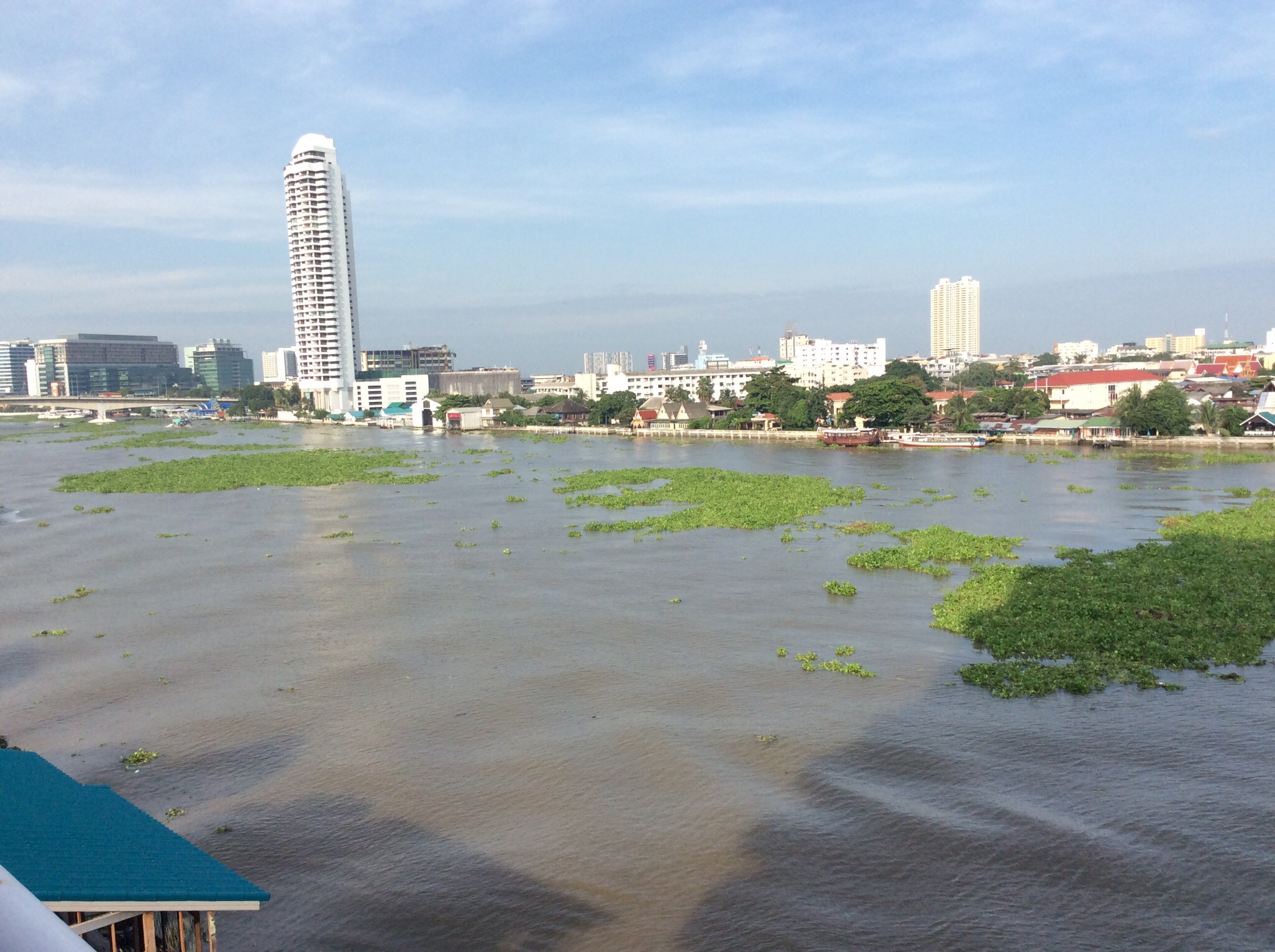
A few weeks ago now, my wife and I were greeted with this site when we came out for breakfast on our balcony overlooking the Chao Phraya River

image

image

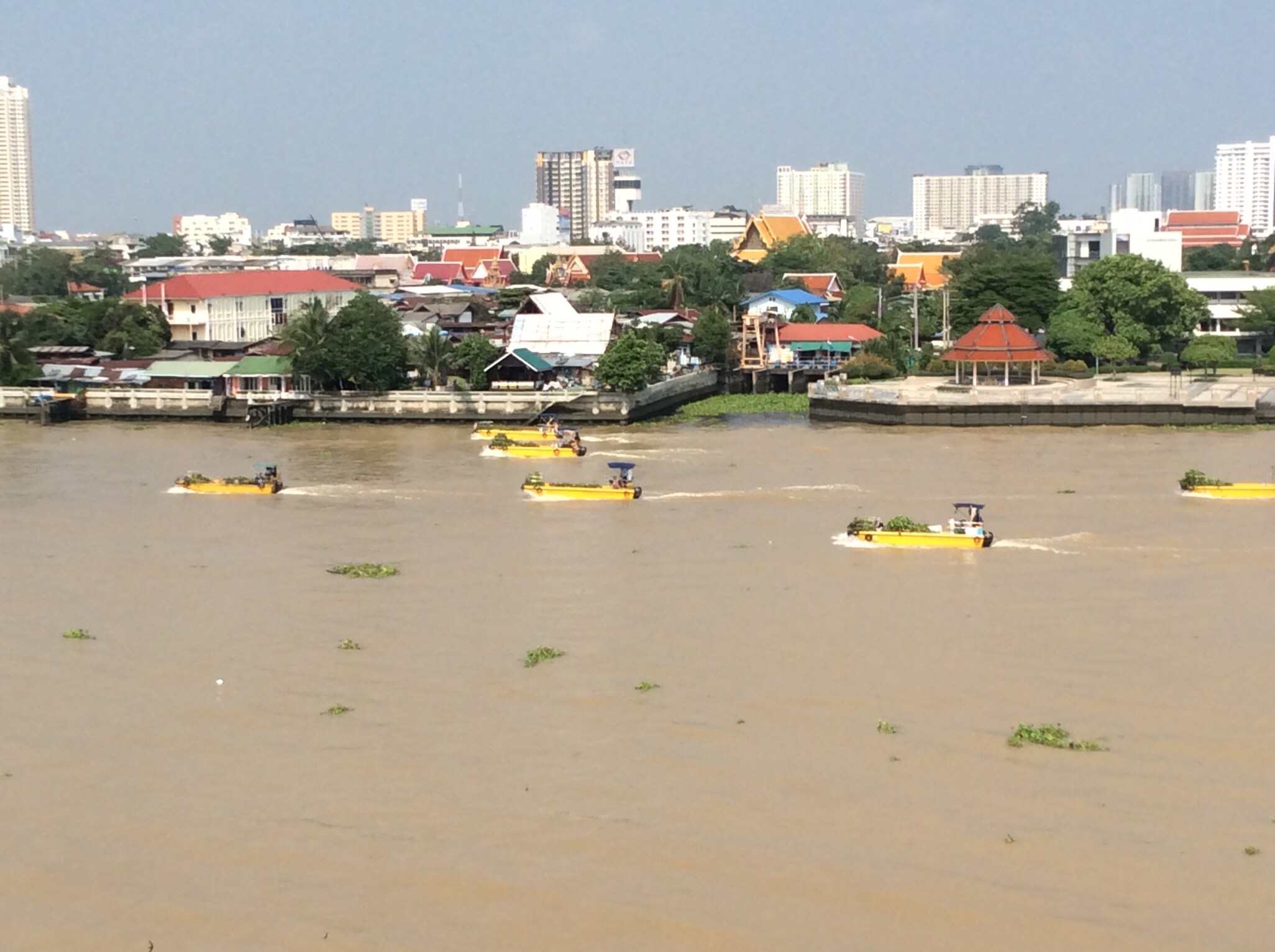
Huge mats – small islands, almost – of water hyacinth were floating by, on their way to the Gulf of Thailand. So big were they that they were interfering with the water buses as they zig-zagged across the river from pier to pier. They had to slowly push their way through the mats, rather like ice-breakers, to reach the piers and let off their passengers. As the days went by the mats got smaller, and now there are only clumps moving to and fro with the tide, some with a white egret perched on them going along for the ride. A flotilla of yellow boats went by yesterday morning loaded up with baskets full of water hyacinth.

image

They must be part of some collection system. Given the amount of the stuff floating in the river, it seems a doomed effort, more a way for the government to give jobs to the boys than to really clear up the river’s water hyacinth problem.

When we first arrived here a year ago, these mats of water hyacinth floating by were one of the things which had struck us about the river. Then, over the months, they had disappeared. We had almost forgotten about them when those huge mats greeted us at breakfast that morning of a few weeks ago. I suppose the seasonal rains had filled canals and reservoirs upstream enough for someone to open dykes and dams to relieve the pressure and in the process clear out the water hyacinths which had been quietly growing there all year.

Water hyacinth has a beautiful flower

Water hyacinth flower

which is why someone (or someones) took it out of its original habitat, the Amazon basin, and carried it off to botanical and private gardens around the world. But from there, the plant somehow made it out into the big wide world and happily colonized waterways which had never known it and had no biological weapons to combat it. It grows very rapidly and soon was choking up waterways, beautifully of course, but still choking the life out of them.

water hyacinth in flower in canal

Water hyacinth is considered an invasive species, that is to say, a species which is not native to a specific location and which has a tendency to spread in that new location to such a degree that it causes damage to the environment, to human health, and/or to the economy. That certainly describes the water hyacinth. It invaded the waterways of Louisiana and Florida in the late 19th Century, choking them up. In Africa, it’s invaded many places. It’s invaded the Nile, all the way from Sudan to Egypt. It invaded Lake Victoria in the 1980s (it was brought to Rwanda by Belgian colonists, who wished to beautify their properties, and then escaped into River Kagera, which led it to the lake). This is Kisumu harbour on the lake.

Kisumu Harbour Lake Victoria

In India, it has invaded the Kerala backwaters.

Kerala Backwaters

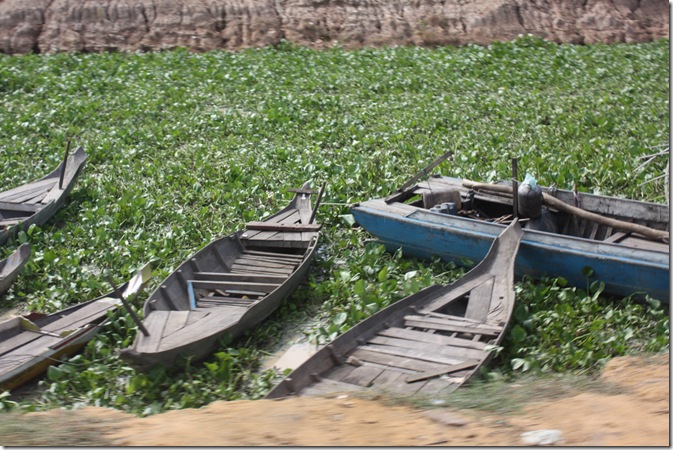
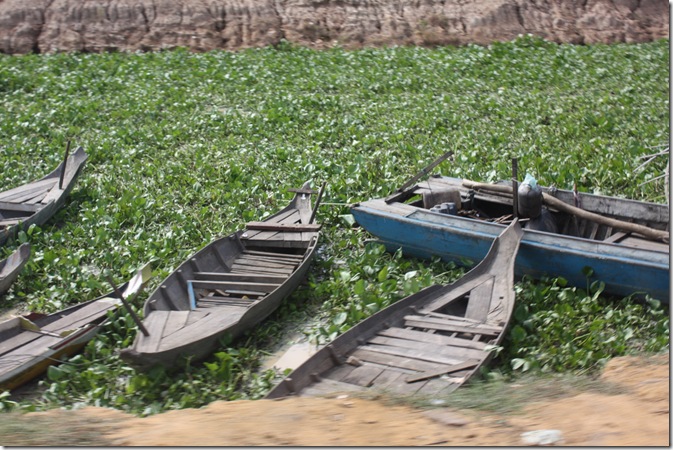
In South-East Asia, apart from the Chao Phraya River and many, many other places, it has invaded Tonlé Sap Lake in Cambodia, a lake with a very unique ecology.

tonle sap

If you don’t control it, water hyacinth will cover lakes and ponds entirely, as these pictures show. This dramatically impacts water flow, it blocks sunlight from reaching native aquatic plants, and it starves the water of oxygen, often killing aquatic species. The mats are also create great places for mosquitos to live, as well as a species of snail known to host a parasitic flatworm which causes schistosomiasis.

I am reminded of a beautiful but evil woman: shall we say Julia Roberts as Snow Queen?

julia roberts evil queenOK, to be gender-neutral let me also suggest a handsome but evil man: shall we say Robert Pattinson as Edward Cullen in Twilight?

Edward Cullen in Twilight

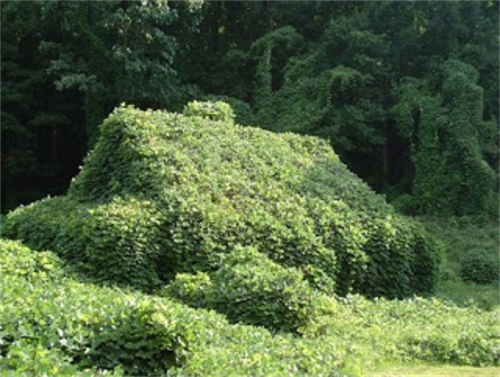
To be fair to water hyacinth, it is not the only invasive species by any manner of means. There must be hundreds if not thousands of species which are considered invasive in some corner of the globe. The International Union for the Conservation of Nature (IUCN) has come up with a list of the 100 worst invasive species, confessing that it had great difficulty in squeezing the list down to a mere hundred (although water hyacinth did make it onto the list). Reading the list is eye-opening and depressing. Let me make a relatively random selection of a few of them. Kudzu, which has been receiving a lot of bad press as an invasive species, is on the list, and if this picture of a house smothered by kudzu is anything to go by, with good reason.

kudzu

Originally from China, it was introduced to Japan, and from there to the US as an ornamental. Then during the 1930s farmers were paid to plant kudzu to combat soil erosion. Then it went crazy.

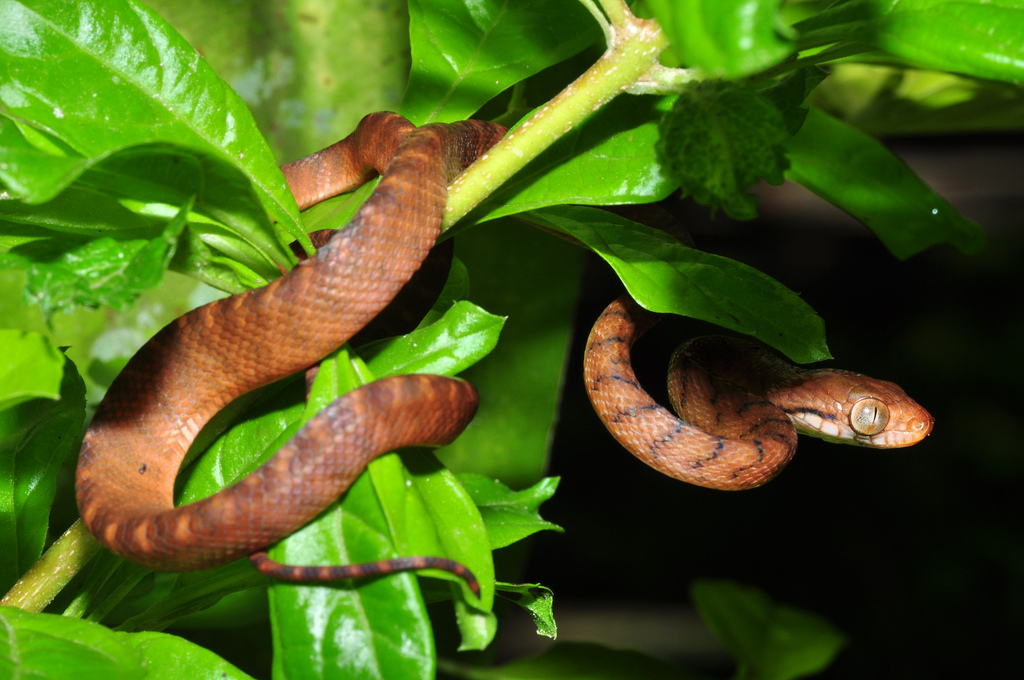
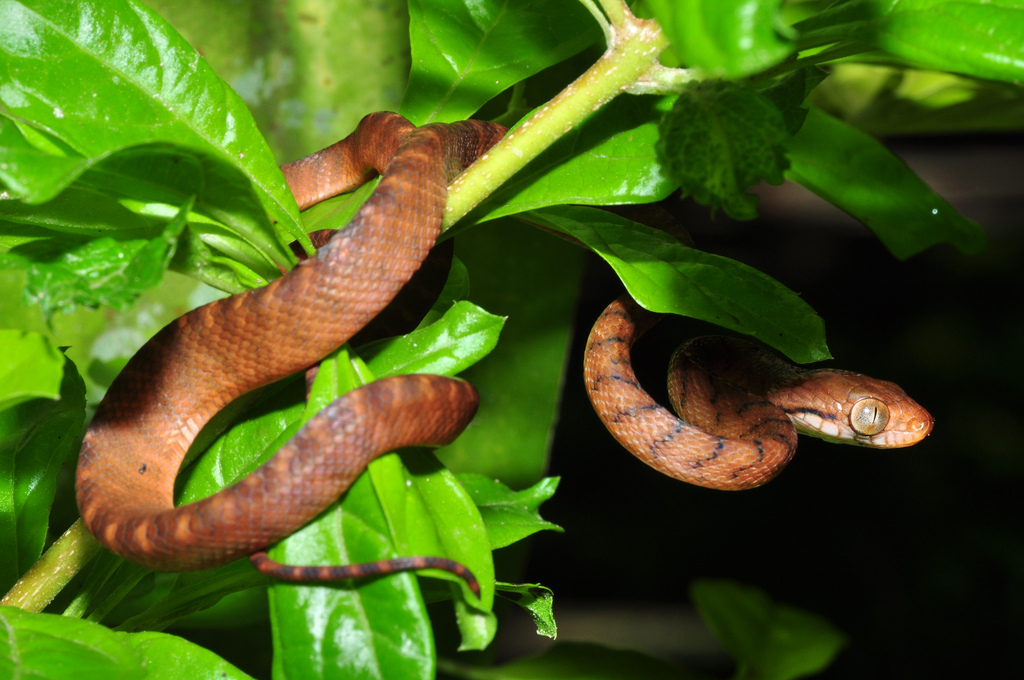
The brown tree snake, which has also received a lot of bad press as an invasive, is on the list too.

brown tree snake

Originally from northern Australia, New Guinea, and some of the nearby islands, it was accidentally introduced into the island of Guam in the late forties-early fifties, maybe by crawling into the landing gear of an aeroplane, maybe as a stowaway on a ship. Once on the island, it went crazy, decimating, and in some cases completely eliminating, certain species of birds and rodents. Since Guam is a big transport node, it’s highly possible that the snake will get carried to other islands in the Pacific.

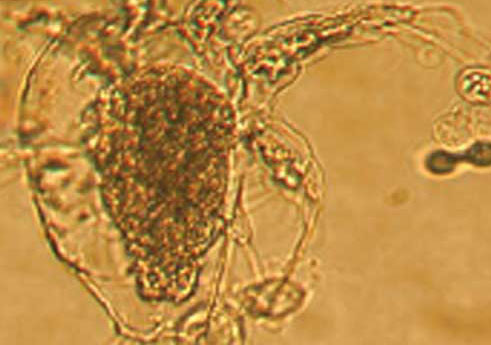
The fungus Batrachochytrium dendrobatidis, or Bd as it is known, is also there.

Batrachochytrium dendrobatidis

This little bugger has been wiping out frog populations all over the world, down to extinction in some cases. Only discovered in 1998, it’s thought that Bd originated in Africa and subsequently spread to other parts of the world by trade in the African clawed frog. Another fungus on the list is Ophiostoma ulmi sensu lato, better known as the fungus that causes Dutch Elm Disease. Originally from Asia, it somehow got into Europe in the early 1900s, probably in a shipment of Asian elm, but it was a mild form and was contained. From the Netherlands, it got into the US in the 1920s, through New York, where it has slowly but surely been killing off the North American elms. A much more virulent strain came back into Europe from the US in the late 1960s, probably in some infected wood, and has been killing off European elms ever since. This view of Salisbury Cathedral, for instance, painted by John Constable in 1820, is no more; the magnificent elms to the left have all died.

john constable salisbury cathedral

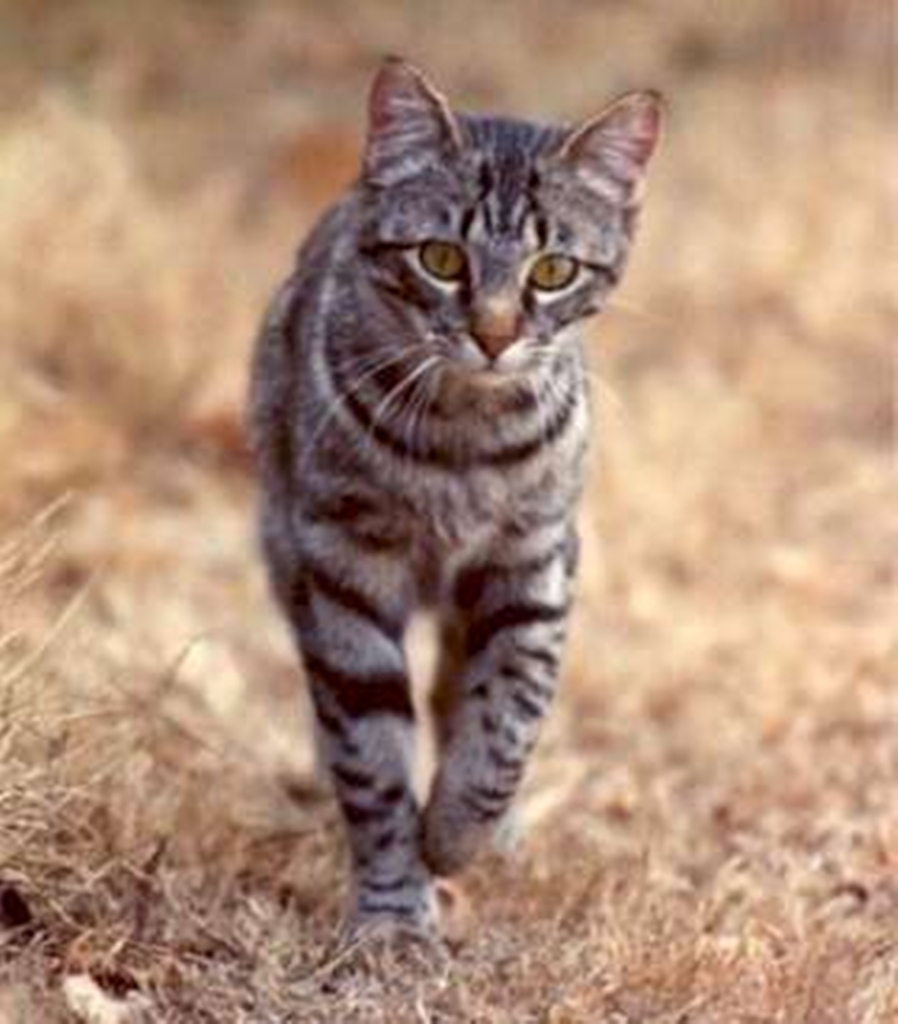
Closer to home, did you know that the cat is an invasive species?

cat

Well, it is in certain parts of the world like New Zealand or Australia, or even the US. European colonists brought them, they have gone feral – or they just hunt for the fun of it – and have decimated, if not obliterated, certain bird species, and continue to do so. It’s so bad that it has made in onto the list of the 100 worst.

Staying with the familiar, the goat – an aggressive “eating machine” – is on the list, as are the rabbit, the red deer, the fox, the starling, and the rainbow trout, all introduced into new habitats by European colonists to make the colonies more like home, and all causing damage to the new ecosystems they found themselves in .

Going small again, I pick a mollusk from the list, the cannibal snail.

cannibal snail

I pick it because it teaches us an important lesson in the fight against invasive species. The snail is an invasive in Hawaii, where it was originally introduced to try to eliminate another invasive species, the giant African land snail. Our friend is a fast and voracious predator, hunting and eating other snails and slugs, which gives it its pretty nickname. So the hope was that it would go after the giant African land snail. But instead, it went after the indigenous O’ahu tree snail species. And it went after them so enthusiastically that many of the species were extinct within a year. This is the risk with introducing a new predator to prey on an invasive species. There are chances that the predator will find other, indigenous, prey more yummy or simply easier to hunt, and you now find yourself with two invasives on your hands rather than one. Stoats, also on the list, fall into this category. Introduced into New Zealand to control the invasive rabbits and hares, it went after the indigenous birds instead, so now New Zealanders are left with trying to get rid of the stoat as well as the rabbit and hare.

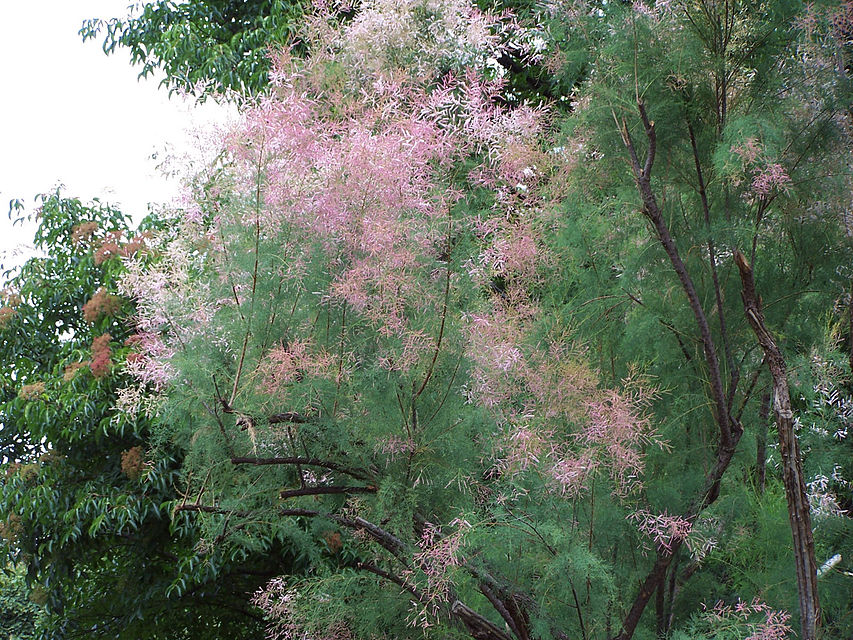
For another plant on the list, the prickly pear, I refer the reader to an earlier post which I wrote about it. I’ll finish with a small tree, the cedar tree.

cedar tree

I add it simply because my French grandmother had one in her garden, and I loved climbing it when I was small. It was OK for her to have it, it is native to Europe and Asia. But when this tree, with its lovely pink flowers and feathery leaves, was introduced into the Southwestern US it was a disaster.

I invite readers to look at the list. It is quite sobering. In fact, as I study it, it occurs to me that there is one horribly invasive species that is not on it: homo sapiens sapiens.

human familyThis species left its original home in Africa 70,000 years ago and slowly spread all over the world. In at least three places, Australia, North America, and much later New Zealand, its arrival seems to have triggered a massive die-off of the bigger indigenous fauna, probably because they didn’t have sufficient defences against its clever hunting habits. About two hundred and fifty years ago, the species started the so-called scientific and industrial revolutions, which have resulted in it now having unprecedented power over all other species. It has, for its amusement or to make money or to protect one of its enslaved species (its agricultural crops and its livestock) from predatory attack or simply by mistake, moved species around the world, creating all the ecological catastrophes I’ve touched on above. And because it is taking living space away from all other species, crowding them out much more effectively than the kudzu pictured above is, it has set off the greatest die-off of species that the planet has seen in the last 66 million years.

I really think it should be on the list. I must write to the IUCN suggesting it.

__________________________

Water hyacinth on the Chao Phraya River: my photos
Water hyacinth flower: https://upload.wikimedia.org/wikipedia/commons/5/56/Common_Water_hyacinth.jpg (in https://en.wikipedia.org/wiki/Eichhornia)
Water hyacinth in flower in canal: http://img.tamtay.vn/files/2008/02/25/dinhkhoa/photos/247869/48c4920a_a019_resize.jpg (in http://blog.tamtay.vn/entry/view/472876/Thang-Sau-Co-loai-ve-dai-dot-trot-vuong-vao-yeu.html)
Kisumu harbor, Lake Victoria: https://en.wikipedia.org/wiki/Eichhornia_crassipes#/media/File:Kenya_Kisumu_Harbour_Hyacinths_1997ke09b21.jpg (in https://en.wikipedia.org/wiki/Eichhornia_crassipes)
Kerala backwaters: https://en.wikipedia.org/wiki/Kerala_backwaters#/media/File:Kerala-Backwaters_Alppuzha.JPG (in https://en.wikipedia.org/wiki/Kerala_backwaters)
Tonlé Sap: http://lh3.ggpht.com/-KcgJUhcsvQU/UE2G1p3L3GI/AAAAAAAAJl8/0bHMUxxUTAg/IMG_3439_thumb2.jpg?imgmax=800 (in http://jemamum.blogspot.com/2012/09/chong-kneas-floating-village-lake-tonle.html)
Julia Roberts snow queen: http://i.dailymail.co.uk/i/pix/2011/10/07/article-2046339-0E455A1E00000578-532_634x832.jpg (in daily mail; exact site is blocked by the Thai Ministry of Information)
Edward Cullen in Twilight: http://celebspics.org/wp-content/uploads/2012/11/05-Twilight%E2%80%99s-Breaking-Dawn-Part-2-The-Complete-Character-Gallery.jpg (in http://celebspics.org/twilights-breaking-dawn-part-2-the-complete-character-gallery/)
Kudzu: http://41.media.tumblr.com/d6bc26739854ba64e2b54c06a1993889/tumblr_ns2cl4QrQZ1r8vrhxo1_500.png (in http://sleepy-times.tumblr.com/)
Brown tree snake: http://islandarks.com.au/files/2013/03/Brown-Tree-Snake-.jpg (in http://islandarks.com.au/tag/brown-tree-snake/)
Batrachochytrium dendrobatidis: http://www.diark.org/img/species_pict/large/Batrachochytrium_dendrobatidis_JAM81/ (in http://www.diark.org/diark/species_list/Batrachochytrium_dendrobatidis_JAM81)
John Constable Salisbury Cathedral: https://en.m.wikipedia.org/wiki/Dutch_elm_disease#/media/File%3ASalisburyCathedral.jpg (in https://en.m.wikipedia.org/wiki/Dutch_elm_disease#Disease_range)
Cat: http://i1251.photobucket.com/albums/hh554/lemabang2008/Desktop%20Wallpaper/Cats%20Wallpaper%202/wildcat.jpg (in https://lemabang.wordpress.com/2012/08/19/desktop-wallpapers-2/)
Cannibal snail: https://en.m.wikipedia.org/wiki/Euglandina_rosea#/media/File%3AEuglandina_rosea.jpg (in https://en.m.wikipedia.org/wiki/Euglandina_rosea)
Cedar tree: https://en.m.wikipedia.org/wiki/Tamarix_ramosissima#/media/File%3ATamarix_ramosissima_a2.jpg (in https://en.m.wikipedia.org/wiki/Tamarix_ramosissima)
Human family: http://thumbs.dreamstime.com/z/family-sitting-garden-together-15588689.jpg (in http://www.dreamstime.com/royalty-free-stock-images-family-sitting-garden-together-image15588689)

A STUDY OF FEET

Bangkok, 19 October 2015

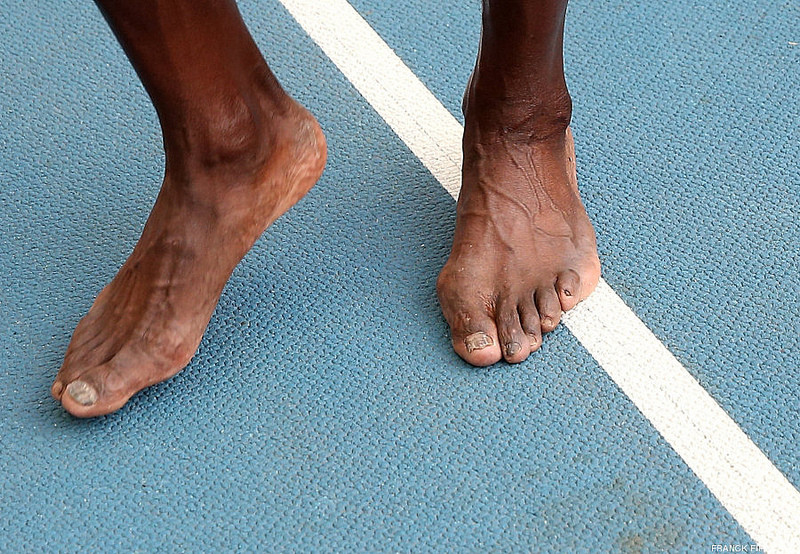
One of the interesting side-effects of living in Bangkok is that I can carry out a comprehensive study of feet. The climate here is such that the wearing of open footwear is exceedingly widespread, so I can examine – surreptitiously, of course – a very large number of feet as I walk around, sit in public places, or – as was the case when I started this post – sit in buses stuck in Bangkok’s perennially dreadful traffic. Since so many foreigners come to Bangkok, the study is very cross-cultural: I study not only the feet of the Thai, but also – judging from the shards of phrases I overhear as the foreigners walk by – Australians, Europeans of all stripes, North Americans, some Latin Americans, quite a number of Middle Easterners, a sprinkling of Africans, and of course Asians from every corner of Asia. I am now ready to report back on the findings of my study.

Let us first set the benchmark against which I can compare the feet I see. This would be a foot in its natural state, that is to say a foot that is perennially shoeless. This photo, which I’ve used before, gives an excellent example. What we have here is a band of Amazonian Indians who are coming into contact with the modern world for the first time. Their astonished and somewhat fearful faces upturned towards the helicopter (I guess) are fascinating, but I would invite the reader to focus on their feet, feet which have never been shod.

amazonian Indian feet

As the readers will quickly agree, these feet are in the state that most human feet have been in for 99.99% of the time we have inhabited this planet.

I throw in here an older photo, taken – no doubt by some amateur anthropologist – to deliberately show a natural foot. And of course it has to be an old photo, because wearing shoes is probably now the norm rather than the exception. Finding a foot nowadays which has never been shod must indeed be hard.

natural and baby feet

Note the way the toes in the natural foot, especially the big toe, are splayed out. A minute’s thought will show that of course this is the way it should be. By spreading out like that, toes are giving the foot a wider footprint and therefore making it easier for the person on top of those feet to balance.

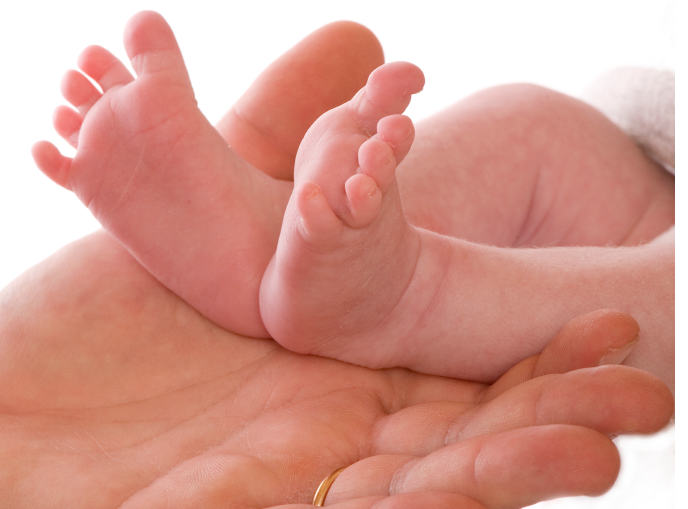
In this photo of a baby’s feet, the reader will notice that they naturally take this splayed form

baby feet

Only later, through imprisonment in shoes, do the toes come closer together

feet with toes close

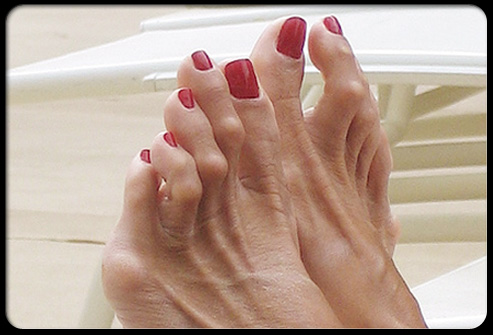
sometimes too close together.

toes too close

I am reminded of TS Eliot’s poem Animula, which tracks the evolution of a person’s soul from birth to adulthood, but which actually describes very well the fate of our feet: “‘Issues from the hand of God, the simple soul’ …Issues from the hand of time, the simple soul … misshapen, lame, unable to fare forward …”.

But back to the matter in hand. Having set the benchmark, I can now report the results of my pseudo-sociological field experiment in the streets and other public spaces of Bangkok.

Generally speaking, the feet of Thai people look in considerably better shape than those of foreigners from “civilized” countries. A good number have quite splayed toes, fruit no doubt of hardly ever wearing shoes at home. In fact, it’s quite common to see their little toes falling off their flip-flops or sandals. Clearly, the basic “chassis design”, if I can put it that way, adopted by shoe manufacturers simply ignores the natural form of the foot with splayed toes. Shoe manufacturers take as their starting point an already somewhat malformed foot. Well they would, wouldn’t they? After all, it is their products which have malformed out feet in the first place. Other Thais have moderately straightened toes, fruit of some level of constriction by shoes.

thai girl's feet

I detect a social element here. It is clear from their dress and occupation that the Thai owners of feet whose toes are splayed come from the poorer strata of society, while those with feet with straight toes come from the richer ones. And I also detect a gender element. Young Thai women show more evidence of constricted toes than do the men. I will come back to this in a minute.

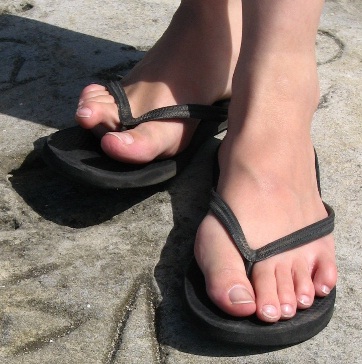
As for the feet of the foreigners, those of people from more developed, richer, more “civilized” countries show toes much more tightly squeezed together

white feet in flip flops

along with more extreme signs of foot distress: bunions

bunions

hammer toes

hammer toes

calluses and corns.

Like in the case of the Thai, women’s feet seem more malformed than men’s. Which gets us of course to the cause of all these foot problems: canons of accepted (feminine) beauty.

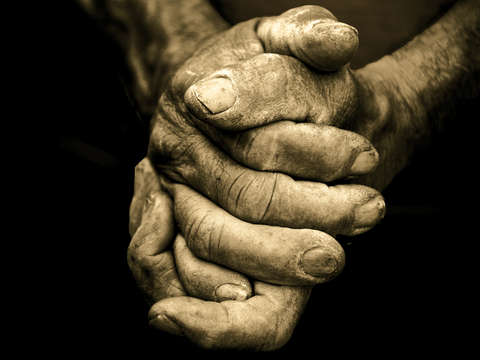
Let’s face it, for hundreds if not thousands of years, there has been this insidious idea that those members of society who are more civilized, more refined – and richer – have delicate (for women) or well proportioned (for men) limbs and features. Hands, of course, have always been a particular object of this odious social creed, because having big hands, and especially having big fingers, meant that you were poor and so did a lot of manual labour.

If you were rich, on the other hand, you could pay people to do your manual labour for you, leaving your hands and fingers slim.

slim hands

With feet, it must have been a little different. Like grand clothes, the fact that you wore shoes showed that you had money to burn, not like that bum on the street who had to run around in his bare feet all day. And of course, slim, petite, shoes (that is to say, narrow, horribly constricting, shoes) showed (or pretended to show, since your feet were actually squashed into the shoe) that you had slim, petite, feet, not broad feet like that bum on the street etc.

Woman's_silk_brocade_shoes_1770s

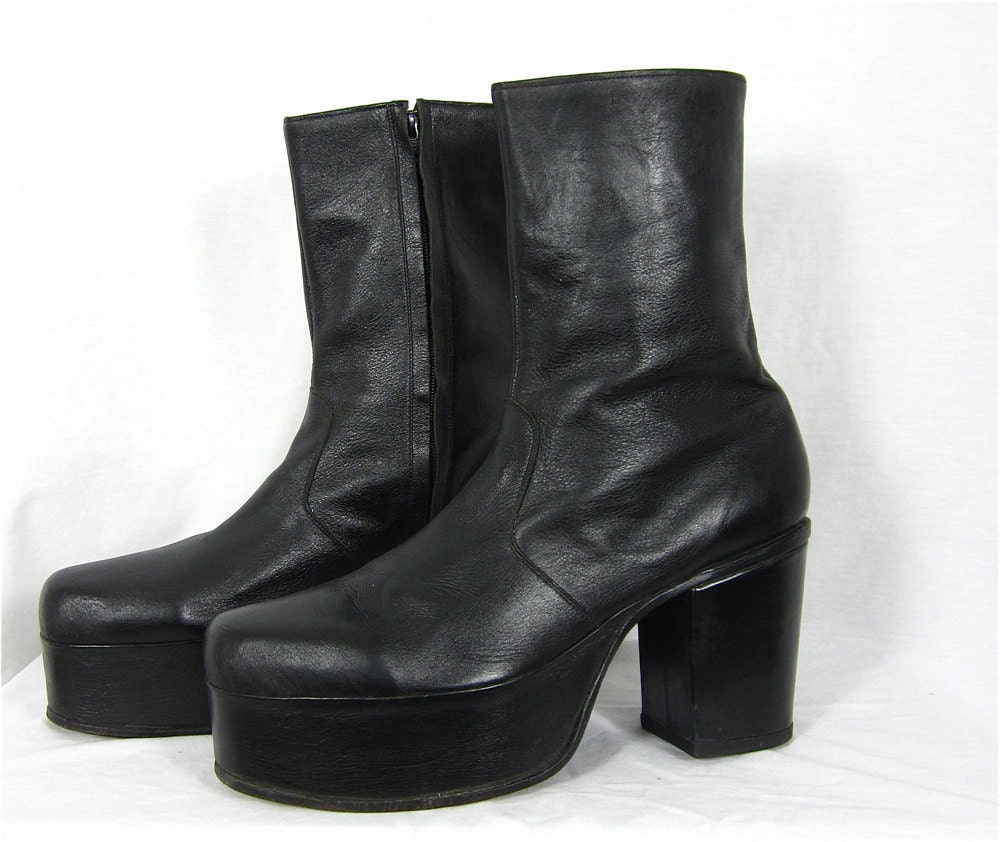
This last pair of shoes, with their modest heels, allows me to segue smoothly into that terrible habit of wearing high-heeled shoes. As we all know, it’s mostly women who wear them, but men do too, depending on the state of fashion. I am ready to reveal at this time that when I was young and foolish I went through a phase of wearing platform boots, one black pair and one brown, which looked like this.

platform shoes

Apart from feeling pretty cool as I walked around Uni, I found a most satisfying side-effect to be that I was taller. No doubt that’s one reason why women do this to their feet

high heels

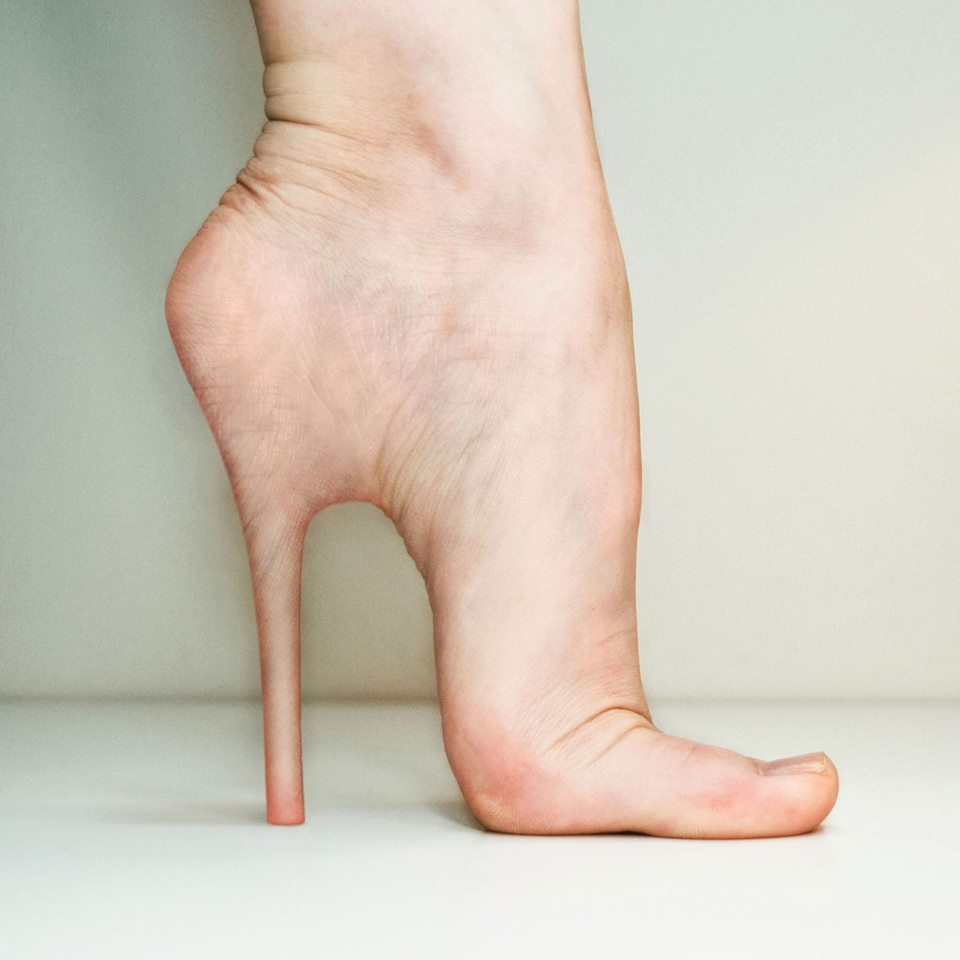
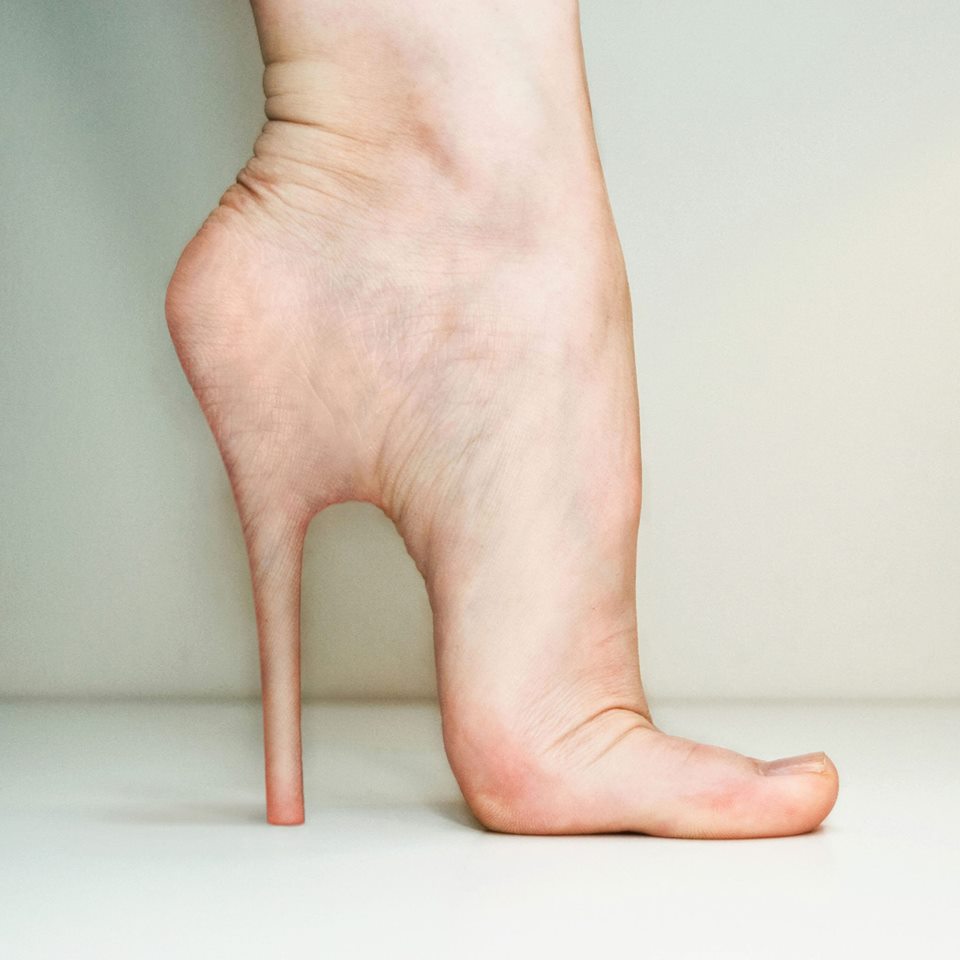
which when you strip away the shoe looks like this.

foot in high heel position

Modest heels I could understand. I mean, I fell for them. But why subject yourself to the pain of excessively high heels, not only a pain that comes today but also a pain that dogs you for years to come? Because men still rule the world, and they like to see the accentuated swish in a woman’s gait caused by walking in high heels, or maybe they like the fact that her legs look longer, or that her feet look smaller, or her toes shorter, when wearing heels. Or maybe it makes women take smaller steps, to avoid falling over (my wife still remembers her father exhorting her to take small steps, because that was more ladylike and refined). Or maybe because it makes men feel strong to see women tottering around on heels, not able to walk very far before complaining of sore feet and needing help.

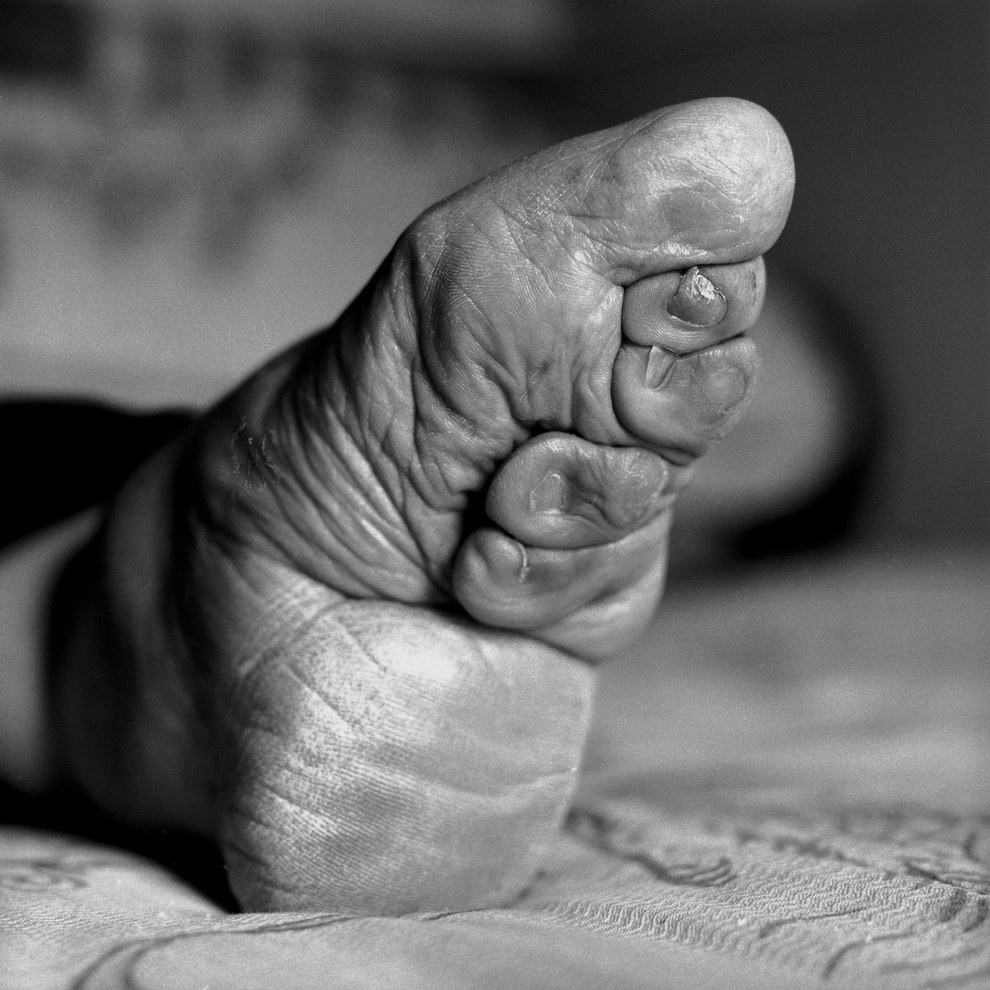
Fanciful? Perhaps. But consider this. For nearly one thousand years, from early in the Song dynasty, about 1000 AD, to the early 20th Century, many Chinese women were subjected to the unbearably painful process of foot binding. To appreciate the full horror of this practice, let me give the readers a quick summary of what girls were subjected to. The process was started when girls were between the ages of 4 and 9, that is, before the arches of their feet had had a chance to develop fully. First, after softening the feet and cutting back the toenails, the toes of each foot were curled under and then pressed with great force into the sole of the foot until – the – toes – broke. But it didn’t finish there. While the broken toes were held tightly against the sole of the foot, the arch of the foot was also broken so that the foot could be drawn down straight with the leg. So you basically smashed the little girl’s feet. Then you started the binding. The idea was to pull the ball of the foot ever closer to the heel, causing the broken foot to fold at the arch, and pressing the toes underneath the sole.

As the readers can imagine, a girl’s broken feet required a great deal of care and attention if she was not to die from this process; it is estimated that 10% of girls died from gangrene and other infections due to foot binding. So their feet were regularly unbound, they were washed, the toes unfolded and checked for injury, and the nails carefully trimmed. The broken feet were also kneaded to soften them and the soles of the girl’s feet beaten to make the joints and broken bones more flexible. Then the poor girl’s broken toes were folded back under and the feet rebound. Every time the feet were rebound, the bindings were pulled even tighter. The ideal was to end up with a “foot” no more than 10 cm long.

The Chinese are nothing if not eminently practical. Recognizing that mothers might well be too sympathetic to their daughters’ pain, it was generally an older female member of the family or a professional foot binder who carried all this out. Oh, and the process was usually started during the winter time since girls’ feet were more likely to be numb from the cold, and therefore the pain would not be as extreme. How nice of them.

This was the result:

crushed bound foot

Chinese lady with bound feet

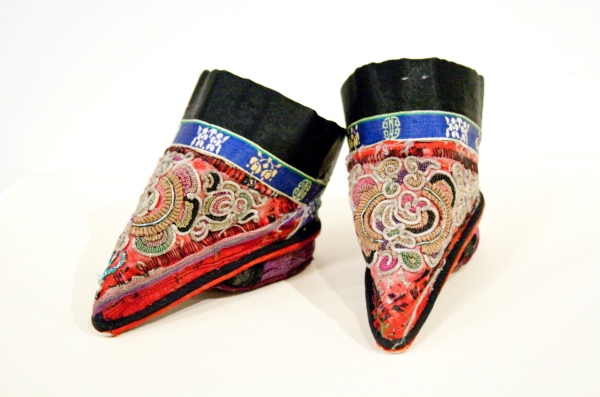
Of course, no-one except the persons caring for the feet ever saw this. What they saw was this, these oh-so dainty little shoes.

Lotus-ShoesAnd why were Chinese women subjected to this horrible procedure for a thousand years? For beauty, of course. Men ruled China (they still do), and crazy as it might sound to the modern reader, men considered bound feet to enhance a woman’s beauty by making her movements more dainty and “ladylike”. As readers can imagine, it was difficult to walk on broken feet. Women with bound feet tended to walk predominantly on their heels. As a result, they walked with a cautious, unsteady gait, taking tiny, swaying steps. And, of course, that most important thing where women were concerned, well bound feet helped her parents contract a good marriage for her. It could also be that it was found to be an effective way of forcing women to be housebound and completely reliant on men. In this view, traditional societies forbid women from leaving the house; the Chinese simply broke their feet.

So what is the moral of all this? Look after your feet! Stop obsessing about narrow, dainty feet. Celebrate splayed toes. Go to the office in flip-flops and take off your shoes the moment you sit at your desk (which is what most Thais do). Put on sandals until the dead of winter; our feet can tolerate quite a lot of cold. Throw away all your high-heeled shoes. And if a man ever asks you to wear high heels, cut him mercilessly out of your life; he is clearly a swine.

_____________________

Amazonian Indian feet: http://birthdayshoes.com/media/blogs/bdayshoes/2013_Photos/.evocache/human_feet_look_like_if_you_never_wear_shoes.jpg/fit-640×540.jpg?mtime=1386261566 (in http://birthdayshoes.com/what-a-natural-human-foot-looks-like-if-you-never-wear-shoes)
Natural human feet: http://origin.ih.constantcontact.com/fs096/1102283092773/img/101.jpg?a=1102864935304 (in http://www.sukiebaxter.com/could-your-feet-be-the-source-of-that-pain-in-your-neck)
Baby feet: http://naturalrunningcenter.com/wp-content/uploads/2012/02/Screen-shot-2012-02-26-at-5.30.11-PM.png (in http://naturalrunningcenter.com/2012/02/27/enhancing-natural-pronation-control-feet-designed-that/
Feet with toes close: http://www.guide2health.net/wp-content/uploads/2012/08/bare-feet.jpg (in http://www.guide2health.net/2012/08/life-long-immunity-to-disease/bare-feet/)
Feet with toes too close: http://i.imgur.com/aURQcnm.jpg (in http://www.inquisitr.com/931111/lebron-james-feet-picture-of-stars-messed-up-toes-goes-viral/)
Thai girl’s feet: http://www.zeefashionstore.com/ProductImage/18391/1.jpg (in http://www.zeefashionstore.com/womenshoes.php?brand=79&section=6)
White feet in flip-flops: http://blog.diagnosticfootspecialists.com/wp-content/uploads/2014/04/flip-flops.jpg (in http://blog.diagnosticfootspecialists.com/)
Bunions: https://upload.wikimedia.org/wikipedia/commons/c/ce/Hallux_Valgus-Aspect_pr%C3%A9_op_d%C3%A9charge.JPG (in https://en.wikipedia.org/wiki/Bunion)
Hammer toes: http://images.medicinenet.com/images/slideshow/diabetes_foot_problems_s13_hammertoes.jpg (in http://www.medicinenet.com/image-collection/hammertoes_picture/picture.htm)
Working hands: https://scpeanutgallery.files.wordpress.com/2015/02/working-hands.jpg (in http://scpeanutgallery.com/2015/02/04/morning-prayer-4-feb-heb-124-7-11-15-mk-61-6-get-a-grip/)
Slim hands: http://hoocher.com/Agnolo_Bronzino/Portrait_of_Lucrezia_Panciatichi_ca_1540.jpg (in http://hoocher.com/Agnolo_Bronzino/Agnolo_Bronzino.htm)
Woman’s shoes 1770: https://upload.wikimedia.org/wikipedia/commons/2/20/Woman’s_silk_brocade_shoes_1770s.jpg (in https://en.wikipedia.org/wiki/1775%E2%80%9395_in_Western_fashion)
Platform boots: http://img3.etsystatic.com/000/0/5381238/il_fullxfull.291560419.jpg (in http://galleryhip.com/platform-shoes-for-men.html)
High heels: http://www.glamour.com/images/fashion/2013/08/heels-w724.jpg (in http://www.glamour.com/fashion/blogs/dressed/2013/08/check-out-this-3d-scan-of-what)
Women in high heel position: http://www.tellwut.com/uploads/media/image/12607e1398914701o270.jpg (in http://katherincruikshank.blogas.lt/tag/hammer-toes)
Crushed bound foot: http://www.buzzfeed.com/hayleycampbell/lotus-feet#.vj027qN6E (in http://www.buzzfeed.com/hayleycampbell/lotus-feet#.eegdQJg3y0)
Chinese lady with bound feet: https://en.wikipedia.org/wiki/Foot_binding#/media/File:A_HIGH_CASTE_LADYS_DAINTY_LILY_FEET.jpg (in https://en.wikipedia.org/wiki/Foot_binding#Variation_in_practice)
Lotus shoes: http://www.top5ives.com/wp-content/uploads/2012/09/Lotus-Shoes.jpg (in http://www.top5ives.com/top-5-most-weird-shoes-in-history/)

WORLD TOUR WITH MINT

Bangkok, 11th October 2015

A little while back, my wife, bored with the usual round of cooking in the tiny, stuffy, hot kitchen of our apartment and longing to spice things up a bit with some change, espied a fresh herb in the vegetable section of our local supermarket which turned out to be mint. She brought it back and for several weeks now, we have been trying chicken à la mint, pork à la mint, fresh mint in green salad, and – the subject of this post – mint in tomato-based sauce for pasta.

Let me interject here that a basic difference between me and my wife is that she is adventurous, ready to try new things, and I am timorous, fearful of the new and comfortable with the true and the tried. This is as true for food as it is for any other sphere of life. I therefore approached these experiments in our usual cuisine with some diffidence if not suspicion. Actually, apart from the fresh mint in green salad, which I forcefully suggested we not try again, it worked rather well. In the case of mint in tomato-based sauce for pasta, it worked really well. The mint added a sweet overtone to the acidity of the tomato which did wonders to the palate. I have graciously allowed this variation on a theme to be added to our culinary repertoire. It’s very easy to prepare, by the way: replace basil leaves with mint, et voilà! (or you can just add the mint to the basil leaves)

A quick whip around the internet shows me that my wife is not the only one to have stumbled onto this use of mint. Martha Stewart, no less, offers a recipe where the tomato sauce contains mint. I throw in a picture from another recipe – readers are going to have to take it on faith that the little green bits in the sauce are finely chopped mint leaves.
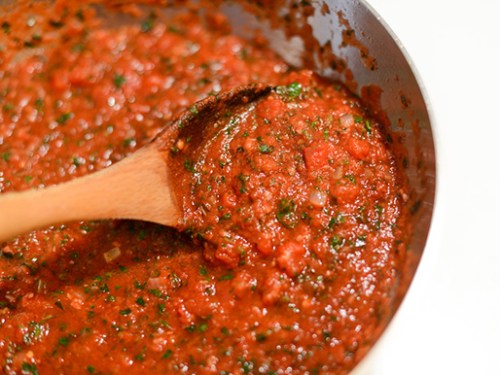
tomato-mint sauce

One thread in these posts of mine has been to salute the humbler ingredients in our food, those which never get much publicity but are actually the ones that make each of our dishes so special. I’ve written on lemongrass recently, and capers and anise a while back (and, at the other end of the spectrum, I’ve written very disapprovingly about the use of hot spices). So I will use this occasion to also sing the praises of mint, reviewing some of its better uses in food.

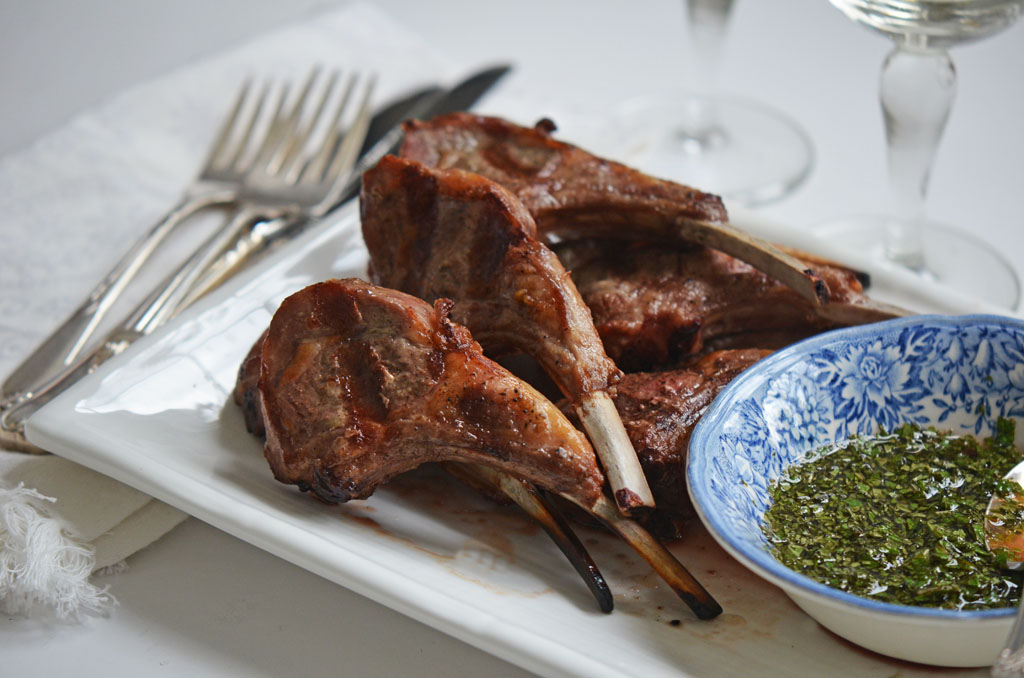
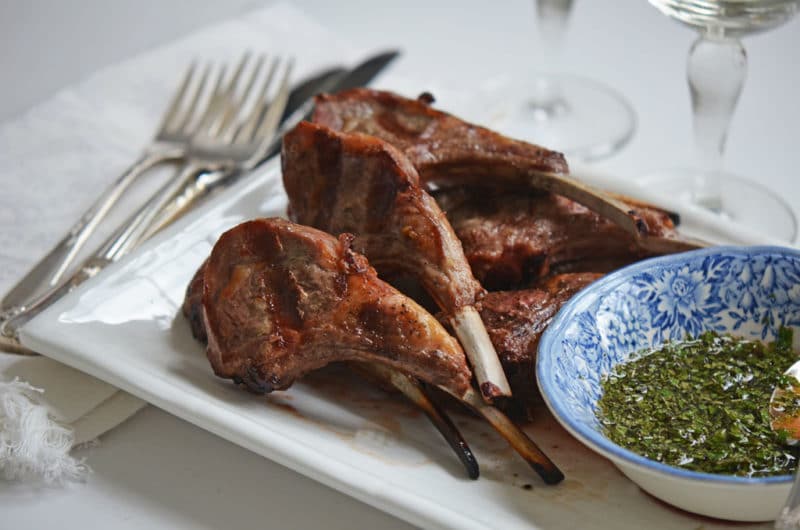
As I usually do, I began surfing around the internet to see what I could find. I was surprised to not come across a huge use of mint, at least in my part of Europe (Western Europe, to use the Cold War parlance). Of course, there is that most English of dishes, mint sauce, a wonderful, wonderful sauce to put on lamb chops. But this dish has already been the subject (or one of the subjects) of a previous post, in which I sing the praises of the sweet-and-salt combination, so I don’t feel I can go on about it again. I will leave readers to refer to that post and move on – but not before throwing in a picture of mint sauce with lamb chops.
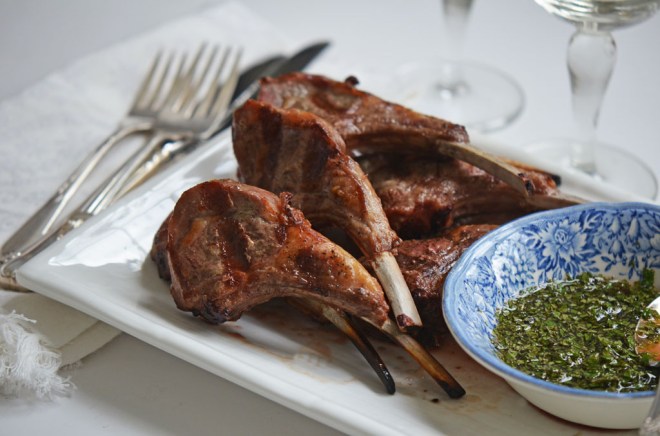
lamb sauce and lamb

In my electronic wanderings, I stumbled across the following dish, which also seems incredibly English – at least, it involves peas, and since peas are in my mind as English as Big Ben or HM the Queen (one of the veggies in every meat and two veggies which I had in my youth seemed to be peas), I include it. We are talking of pea soup with mint (I give thumbnail recipes for this and other dishes that I mention at the end of the post).
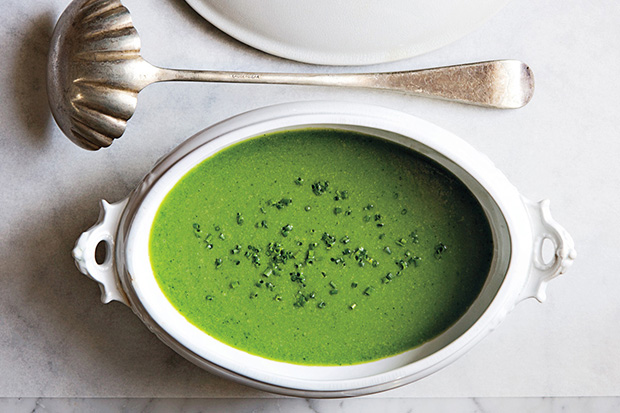
pea and mint soup

I have a feeling that this soup would be good chilled, like gazpacho.

I also want to add here another dish that I came across as I went around raising electronic rocks to see what was hidden below them. It’s actually an eggplant dish from 16th Century Italy. I add it because I think it’s kind of cool to look at what our ancestors were eating. But it’s also an intriguing dish because it looks to be an ancestor of the modern dish we know as eggplant parmigiana. The big difference between the two is the absence of a tomato-based sauce in the old recipe. I suppose this difference reflects the fact that tomatoes were not yet current in Italian cuisine in the 16th Century. Instead, a mix of herbs (mint, sweet marjoram, salad Burnet, parsley, fresh fennel tips), crushed garlic, a couple of spices (cinnamon and cloves), pepper, and salt, are spread over the eggplant, and the whole is splashed with verjuice (I will let readers look that one up, as I had to) and sprinkled with sugar. Then, like eggplant parmigiana, cheese is spread over the whole. Here’s what it looks like, and the thumbnail recipe is at the end.

pomi sdegnosi

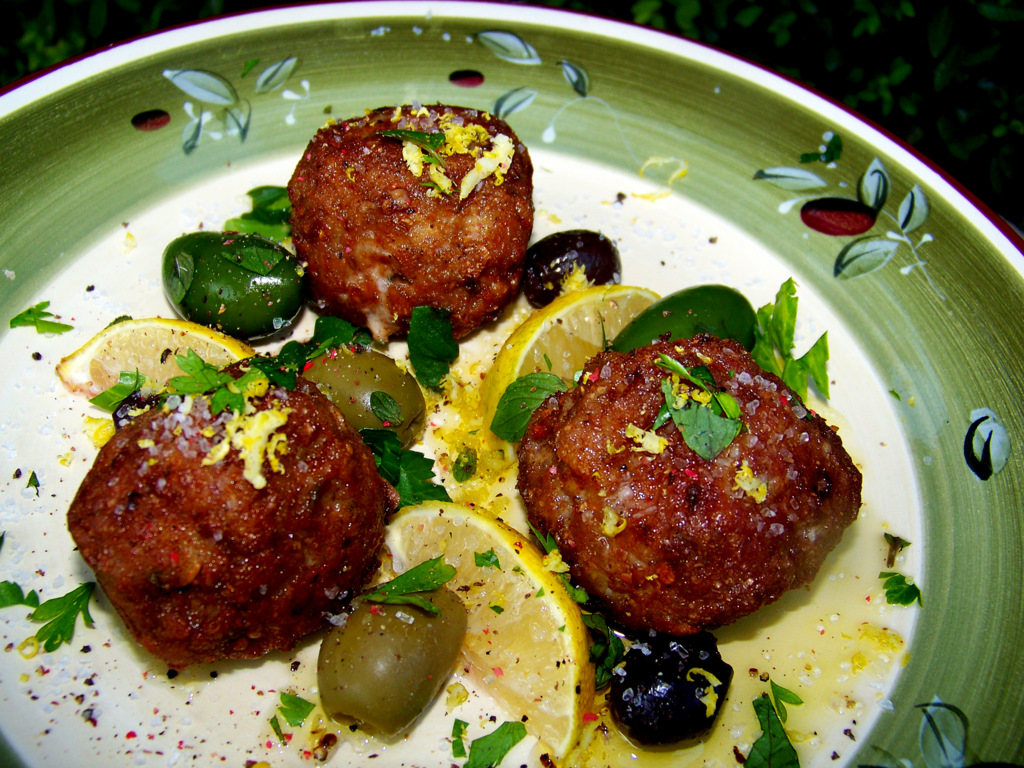
It was at this point that luck came to the rescue. As I was surfing disconsolately around the internet, I came across an interesting article entitled “Mints in Ethnic Cuisines”, written by two ladies from Texas, Madalene Hill and Gwen Barclay. I am indebted to them for much of what follows. It was they, for instance, who taught me that Greek cuisine bucks the (modern?) European trend of using little mint. It seems that Greeks use mint with wild abandon in their cuisine. The two authors mention several dishes in particular: keftedes meatballs, the yoghurt-based tzatziki sauce, the bean stew gigantes plaki, dolmas (stuffed grape vine leaves), hortopita, which is a vegetable and rice pie; even that best known of Greek dishes, moussaka, has mint in it! I give thumbnail recipes of all these dishes at the end, but here I will only post pictures of keftedes meatballs

keftedes

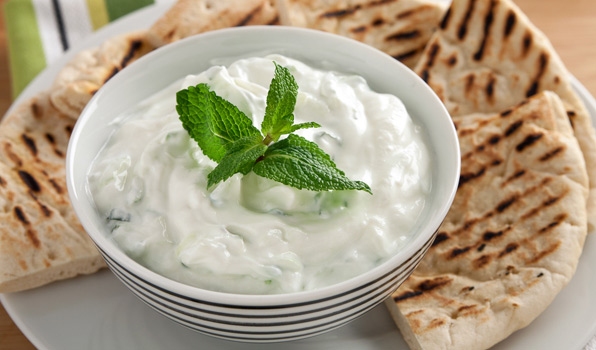
which can be served with the yoghurt-based tzatziki sauce as a dip

Tzatziki

I chose to put pictures of these two dishes with the hope that my wife (and I) can try to make them …

I now leave Europe behind, skimming over the waves of the Aegean Sea to the land of Lebanon, because I want to raise a cheer for that most Lebanese of dishes, tabouleh.
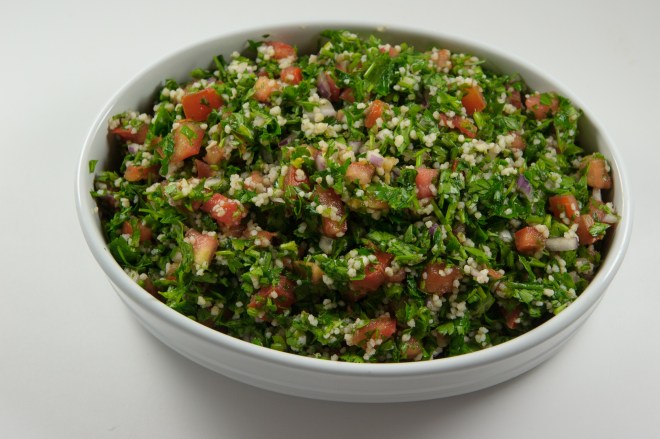
tabouleh

I have very fond memories of eating tabouleh in Beijing – yes, Beijing. There was a little Lebanese restaurant down the road from where we lived, run by a small, tubby Lebanese man with a twinkle in his eye. When Spring came rolling round, it was incredibly pleasant for my wife and I to sit outside the restaurant, under the barely budding trees, in the tepid heat of the midday sun, slowly working our way through a plate of tabouleh. I must say, though, I’m a little surprised that not only chopped parsley but also chopped mint is added. I’m not sure that our tubby Lebanese restaurateur was putting mint in his tabouleh. I will need to hunt down a restaurant which serves tabouleh with both mint and parsley. While I’m at it, I will also see if it serves Arab or Middle-East salad.

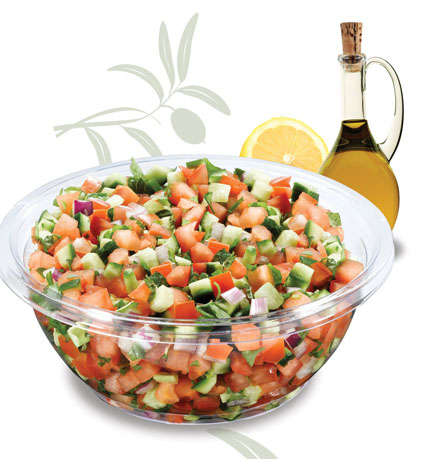
arabic-saladLemon segments, diced cucumber and tomatoes, the whole mixed with chopped onions, mint, and parsley. Sounds sooooo good …

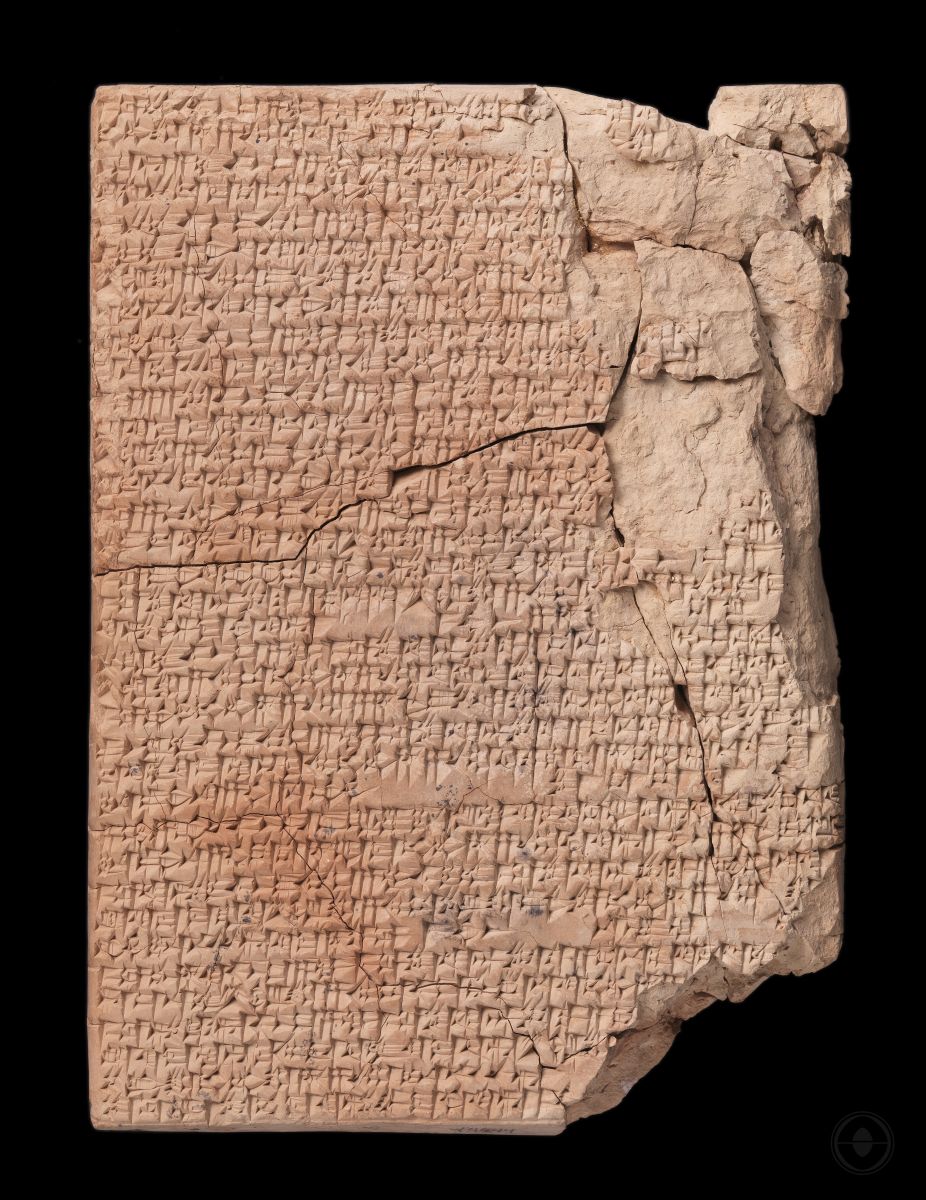
I now want to arc over to the Indian subcontinent, but not before pausing for a minute in modern-day Iraq. I’m actually stopping here for Iraq’s Babylonian past. Like any self-respecting university, Yale University has a collection of cuneiform tablets, some of which, like this one, list recipes.
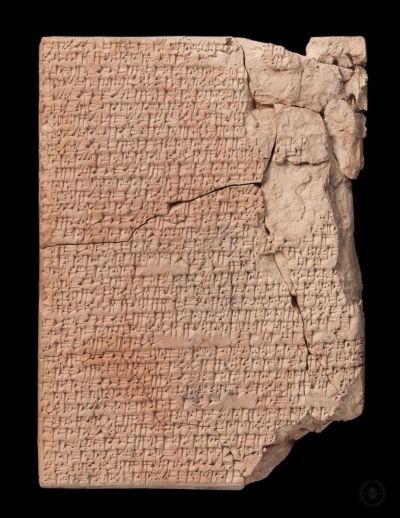
YBC4644

These have been translated by a Frenchman, Jean Botéro (this immediately makes me think of the Egyptologist, Professor Philémon Siclone, in the Tintin album “Les Cigares du Pharaön”
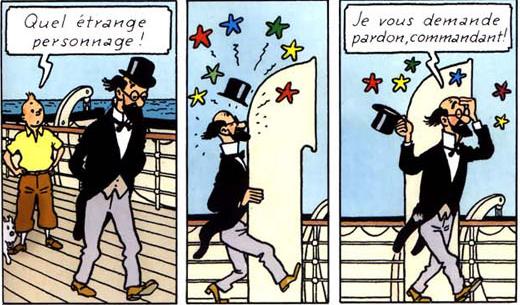
egyptologue-siclone-jpg

but I digress).

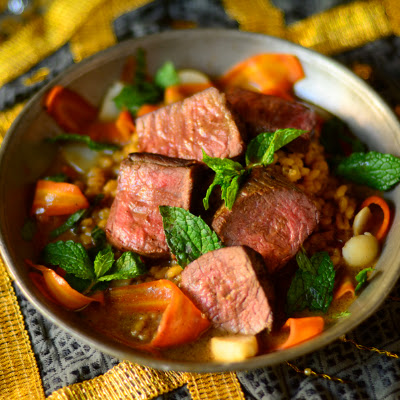
One of these, Recipe XXIII, contains mint, to whit: “Leg (of mutton) (?) meat is used. Prepare water; [add] fat […] samidu, coriander (?), cumin (?), and kanašû. Assemble (all the ingredients in the cooking vessel) and sprinkle with crushed garlic. (After cooking,) blend into the pot šuhutinnû and mint […]” As you can see, words are missing, the translation of some of the ingredients is unknown, and to make matters worse the recipe is exceedingly brief compared to our modern ones, leaving much to the skill – and imagination – of the cook. Nevertheless, Laura Kelley and a band of hardy cooks have been piecing together these telegraphic recipes from 4,000 years ago and trying them out. Many of the results are described on the web site “The Silk Road Gourmet”  I post here the picture of a modern take on Recipe XXIII, after someone concluded that šuhutinnû is probably carrot or possibly parsnip, and samidu is barley:

babylonian lamb and mint

I have added the modern version of the recipe to the thumbnail recipes below, for those who might want to try connecting gastronomically with our remote Babylonian ancestors.

After that pit stop in the fertile crescent, we go on to the Indian subcontinent, the land of chutneys – not so much the fruit-based chutneys which the colonial Brits brought back to the UK, but more vegetable-based chutneys. Here is a chutney, mint-coriander chutney, where mint takes pride of place.

mint-coriander chutney

One of the recipes I perused helpfully informs the reader that this chutney can be served with pakoras, samosas, chaat, chole, or even potato chips.

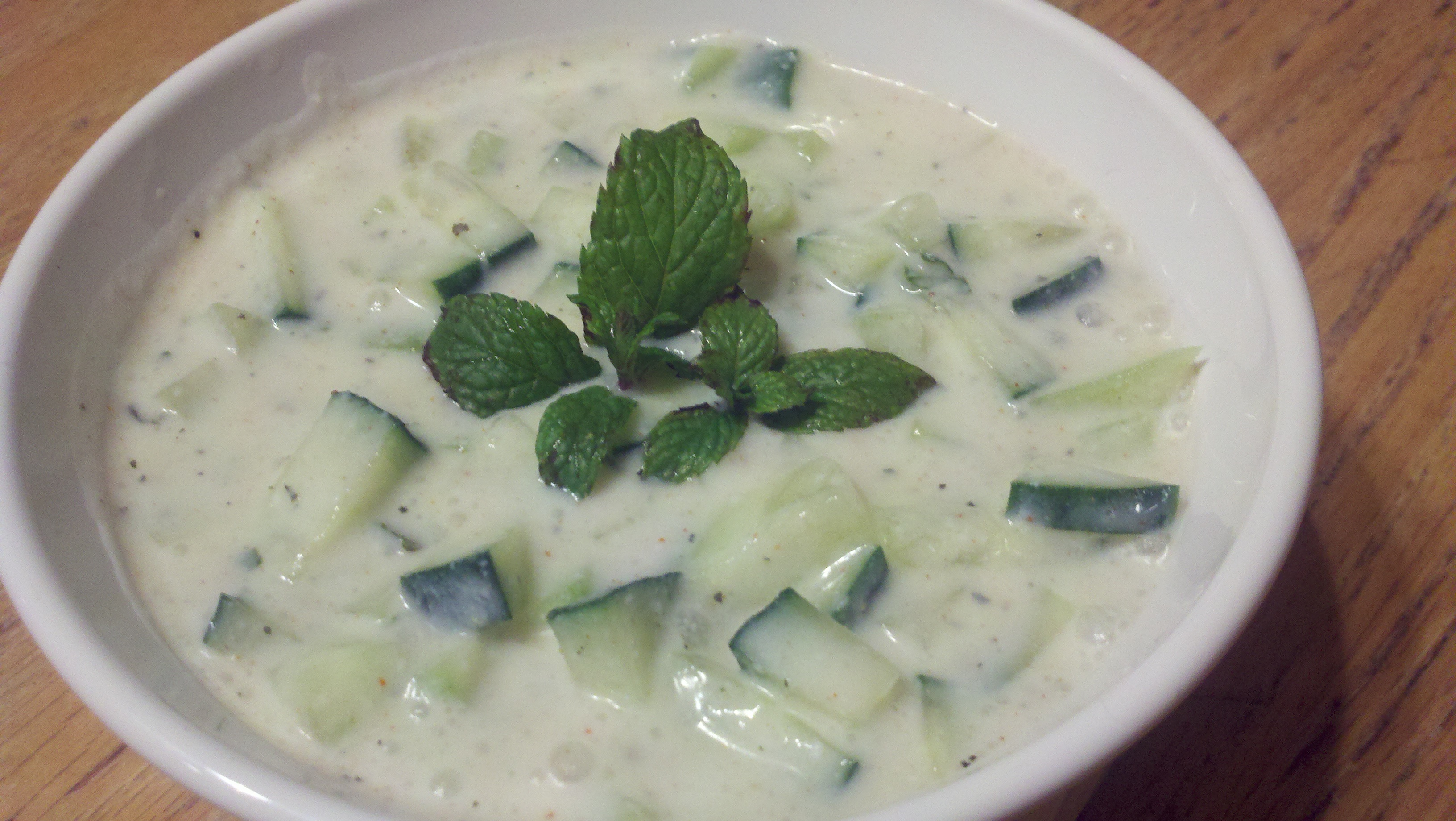
This chutney allows me to segue smoothly into another popular dish from that part of the world, raita, a cold yogurt condiment served to cut the heat of spicy dishes. And here I will throw in a picture of a cucumber-mint raita (with thumbnail recipe at the end).

cucumber-mint raita

Being based on yoghurt (or strictly speaking curds) and looking at how raitas are made, I have to think that they are (perhaps not so) distant cousins of the Greek tzatziki (which itself is part of a broader family of yoghurt-based dishes to be found from the Balkans to the Caucasus). Maybe one day I should write a post on yoghurt …

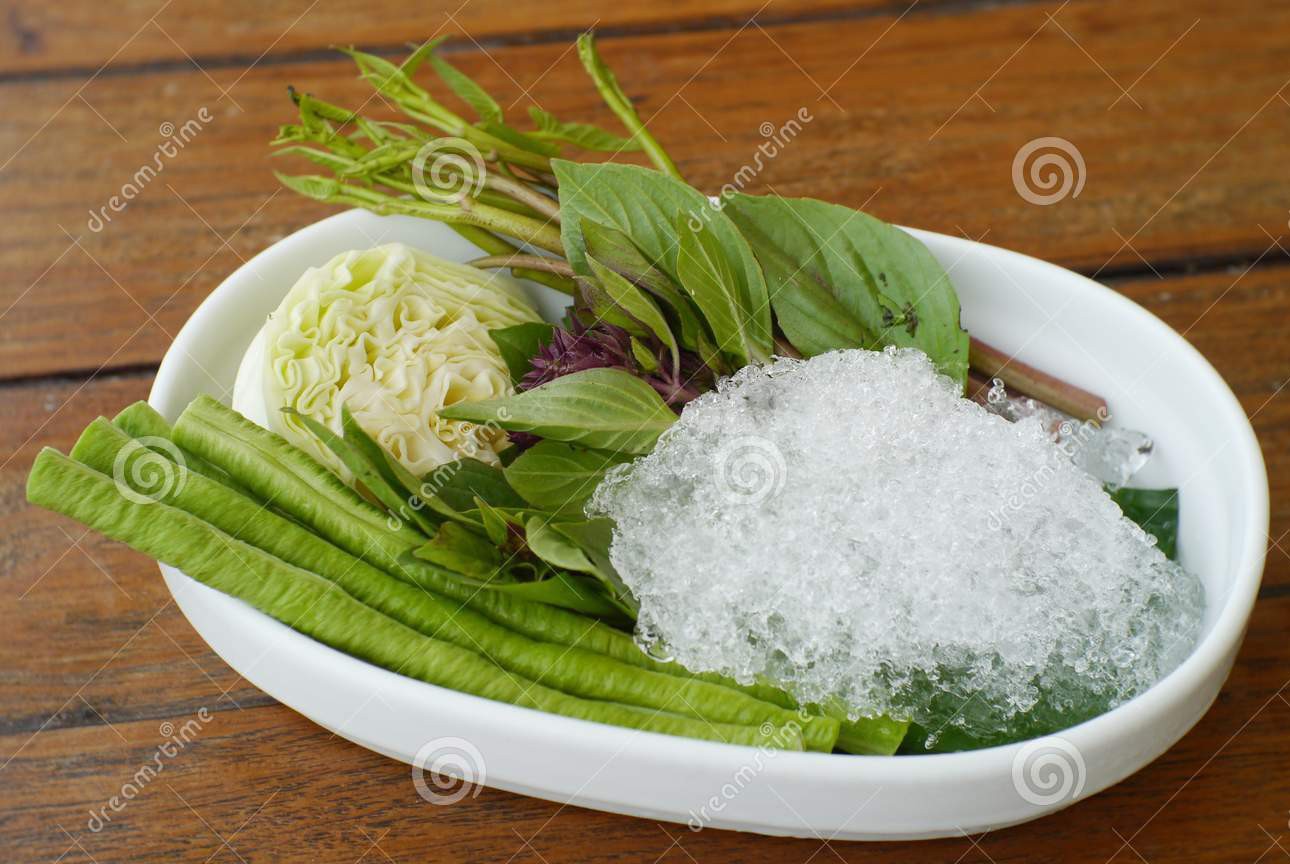
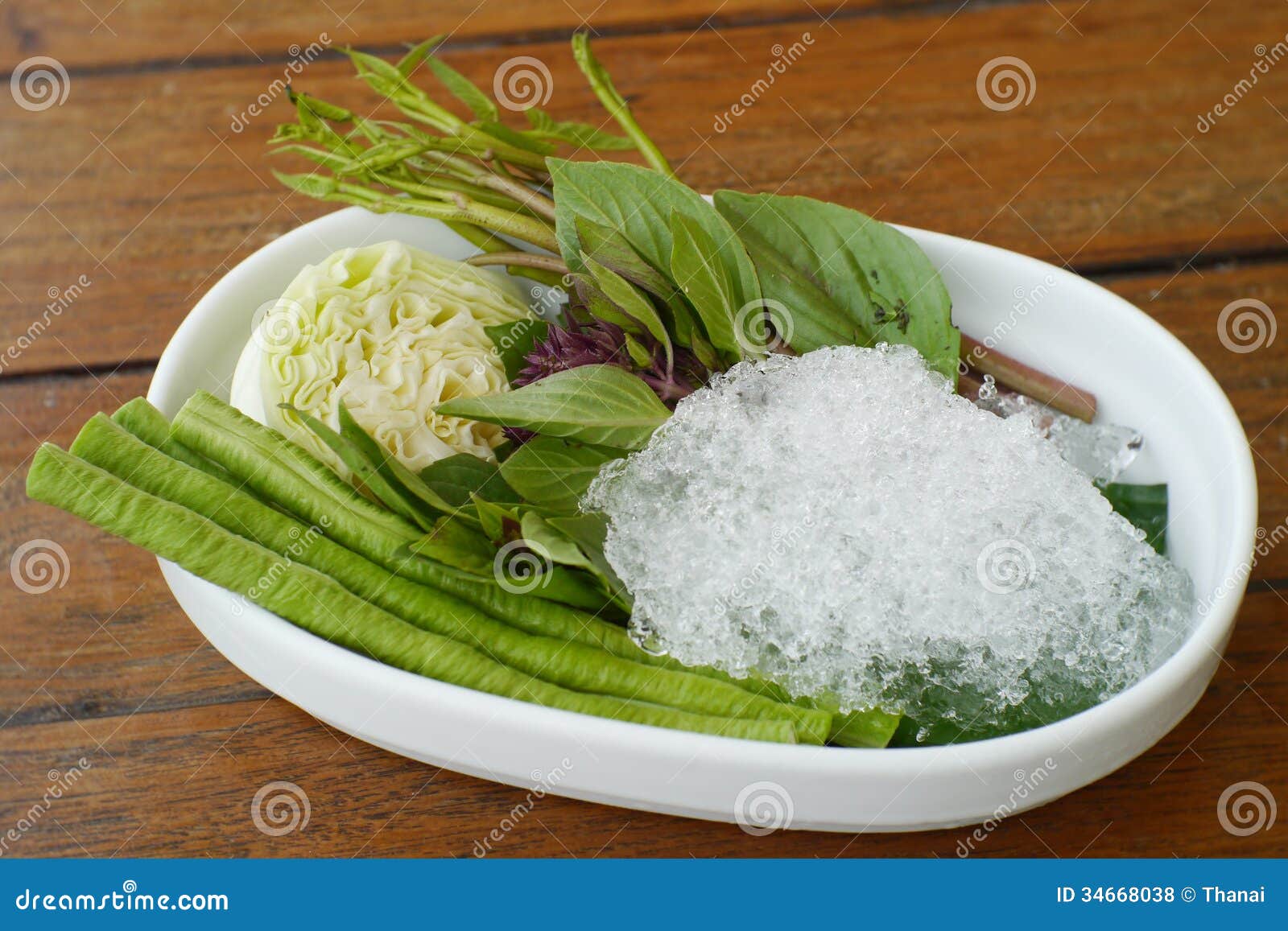
After this, I soar over the Bay of Bengal back to Thailand. Madalene Hill and Gwen Barclay say that mint is a very popular ingredient in Thai cuisine and in South-East Asian cuisine more generally. Certainly, I recently had a taste of a common use of mint here, where it joins a number of fresh vegetables being served as a side dish to be added to noodle dishes or just eaten along with other main dishes.
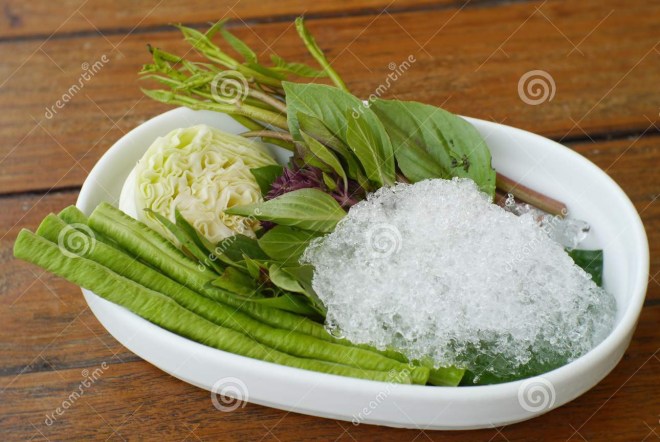
side dish fresh vegetables

We were saying bye-bye to a colleague and had lunch together in the office. The food was ordered from outside. My Thai colleagues informed me that most of the dishes I was trying were from the north of the country. I found it interesting to eat fresh mint leaves with some of the spicier dishes. This side dish of fresh vegetables is also common in Vietnam, and I suspect throughout South-East Asia.

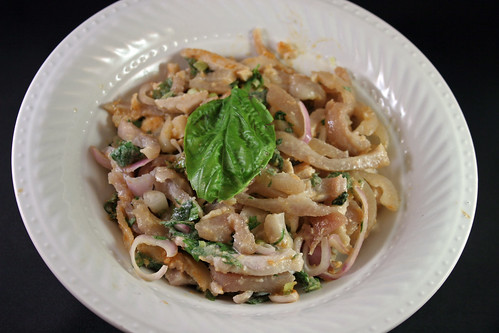
I’ll finish with a dish from Thailand, yam nang mu (pork skin salad). This is actually one of many Thai “salads” in which various cuts of meat or offal are sliced small, seasoned with spicy/sour/sweet sauces, and then mixed with herbs of one variety or another. In this particular case, you season boiled, defatted pork skin (there is a cousin to this dish using pig’s ears) with fish and shrimp sauce, lime juice, sugar, and mix it all with a large amount of mint leaves, some lemongrass, some roasted rice, and a number of other ingredients (thumbnail recipe at the end).

pork skin salad

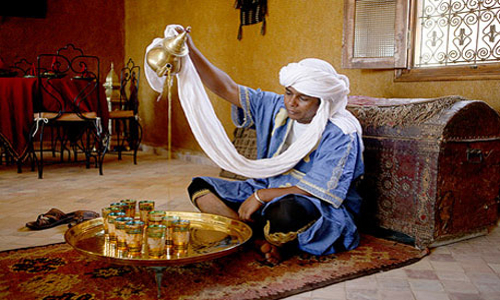
Well, that brings me to the end of my world tour following the trace of mint. There are a lot of dishes which use mint that I’ve not mentioned. I’ve also not touched on the use mint in drinks, for instance Moroccan mint tea with its spectacular pouring technique

moroccan mint tea

or the somewhat more alcoholic mint julep, a favourite of the Kentucky Derby.

mint julep

But I’ll leave these for another day. Right now, my wife is looking at her watch and at the door. Time to go.

THUMBNAIL RECIPES

Pea and mint soup: Soften some onions in a heavy pot over medium heat. Add broth and bring to a boil. Add peas, reduce heat, and simmer gently until tender. Add chopped mint leaves (and parsley if you want). Add more broth. Purée in a blender until smooth. Season with salt and pepper.

Pomi sdegnosi, or braised eggplant: Slice the eggplant lengthwise and let them steep in in lukewarm water for 30 minutes. Rinse. Submerge the eggplant slices in boiling water for about 8 minutes. Remove and drain. Dredge the eggplant slices in flour and layer the bottom of an oiled dish. Chop all of the herbs – fresh mint, marjoram, parsley, salad Burnet, fennel tips – and mix them with minced garlic, spices – cinnamon, cloves, pepper – salt, sugar, and verjuice (for which lemon juice can be substituted). Cover the eggplant with breadcrumbs, drizzle with olive oil, cover with herb/spice mixture and then with provatura cheese (mozzarella, another pulled cheese, can be substituted). Repeat for each layer of eggplant. Bake in the oven for 30 minutes. (Adapted from http://atasteofhistorywithjoycewhite.blogspot.com/2014/08/to-braise-eggplant-historic-food.html)

Keftedes: Combine ground beef, bread dunked in milk, minced onion, minced garlic, finely chopped mint and oregano, some vinegar, some beaten eggs, a small amount of grated nutmeg, salt, and pepper, and mix well. Roll the mixture into balls. Dust the balls with flour. Put them in hot oil in a pan. Brown on all sides.

Tzatziki: Peel cucumbers and dice. To draw out their water, sprinkle them with salt and let them sit for 30 minutes. Drain well. Put them in a blender, along with minced garlic, some lemon juice, some chopped mint (and some chopped dill if you wish), and a little ground black pepper. Process until well blended. Stir the result into Greek yogurt. Salt to taste. Let it stand for at least two hours before serving so flavours can blend.

Gigantes Plaki: Soak gigantes beans (giant butter beans) overnight. Cover with fresh water and bring to the boil. Simmer for a couple of hours until the beans are just tender. In parallel, gently soften chopped onions and garlic for a few minutes. Then stir in some sweet paprika, tinned tomatoes, 100ml water. Salt and pepper. Bring to the boil, then simmer for half an hour. Stir in sea kale or dandelion leaves (or chard as an alternative). Mix the cooked beans with the sauce, adding some more olive oil and chopped mint and parsley. Transfer to a casserole pan, and bake for half an hour or so until the beans are tender and the sauce thickened and bubbling. Can be served hot, warm or at room temperature.

Dolmas: In a little broth, mix ground beef and lamb with uncooked rice, minced onion and garlic, some pine nuts, chopped mint and parsley. Place rinsed grape leaves on a work surface. Place a dollop of the mixture at the center of each leaf. Tuck in the ends and roll tightly toward the leaf point. Layer the wrapped leaves in a large saucepan Cover them with broth mixed with lemon juice. Cook over low heat for three-quarters of an hour.

Moussaka: Place minced lamb, minced onions, crushed garlic, chopped mint and oregano, a couple of bay leaves and a cinnamon stick in a large frying pan and cook over a medium heat for a quarter of an hour. Stir in some flour. Add a glass of wine, canned tomatoes, some tomato purée, and bring to a simmer. Cook for half an hour, until the lamb is tender and the sauce has thickened. Season with salt and freshly ground black pepper to taste. Set aside this meat sauce. Fry eggplant slices for a couple of minutes. Set them aside. Cook potatoes in boiling water for five minutes, then cool under running water. Prepare a white sauce as follows. Melt butter in a saucepan, stir in some flour. Cook for a few seconds, then gradually stir in milk. Add some grated parmesan and grated nutmeg. Simmer the sauce gently for 5 minutes. Season to taste with salt and pepper. Remove from the heat and stir in a beaten egg. Spoon some of the meat sauce into a shallow dish. Cover with a layer of potatoes and a layer of eggplant. Repeat the layers twice more, finishing with the eggplant. Pour over the white sauce to cover the whole in a thick, even layer. Sprinkle with a bit more parmesan. Bake in the oven until deep golden-brown and bubbling.

Hortopita: Peel, seed, and shred some pumpkin. Weight it to drain its liquid. Cook it in a skillet until it wilts and most or all of its liquid has evaporated. Transfer to a bowl. Cook in the same skillet a chopped leek and onion until also wilted. Transfer to the bowl with the pumpkin. Cook chopped chard and spinach until wilted; add to the bowl. Add the herbs – mint, sorrel, hartwort, chervil, dill, fennel leaves, parsley, and oregano – to the bowl. Season to taste with salt and pepper. Roll out a first phyllo dough ball and place it inside an oiled roasting pan. Brush with olive oil. Repeat with the second piece of dough. Spread the filling evenly over the dough. Repeat with a third sheet of dough, placing it over the filling. Brush with olive oil. Roll out the last piece of dough to a slightly smaller piece, and place it over the surface of the pie. Join the bottom and top layers of dough. Brush the top of the pie generously with olive oil. Bake until the pastry is golden and crisp. Remove and serve warm or at room temperature.

Tabouleh: Stir together some bulgur and olive oil. Pour boiling water over, and let stand for a quarter of an hour. Drain well. Toss with finely chopped mint and parsley, a couple of chopped tomatoes, half a cucumber, several tablespoons of lemon and of olive oil. Season with salt and pepper.

Arab salad: Cut segments from half of lemon free from membranes and transfer segments to a cutting board, then squeeze juice from the remaining half a lemon into bowl. Put a couple of tablespoons of lemon juice in a bowl. Add finely chopped segments of lemon. Add salt, pepper, and several tablespoons of olive oil. Whisk to combine. Stir in the remaining ingredients: diced cucumber and tomatoes, finely chopped onion, finely chopped mint and parsley.

Babylonian lamb with barley and mint: Marinate lamb steaks in soy sauce for half an hour. Sauté in oil, along with the trimmings. Remove, leaving the trimmings in the pan. Stir barley into the oil and toast for a few moments. Add cumin, coriander, and chopped garlic. Simmer until the barley is cooked. Place the lamb steaks in the pan and cook the desired degree. Add finely sliced carrots and chopped mint for a few minutes. Remove the lamb and slice. Place the carrots in a serving dish, spoon the barley over carrots, add the sliced lamb, and spoon over with the sauce. (adapted from http://lostpastremembered.blogspot.com/2011/07/onions-onions-everywhere.html)

Mint-coriander chutney: In a blender, grind together chopped mint leaves, chopped coriander, a chopped green chili (personally, I would cut out the chili, but can it be Indian without it?), a piece of ginger, a small amount of cumin, and some lemon juice, until smooth, using a little water if necessary. Salt to taste.

Cucumber-mint raita: Coarsely grate a cucumber. Squeeze dry. Whisk curds (yogurt can substitute), chopped mint, a little cumin, even less cayenne pepper in medium bowl to blend. Add cucumbers and mix well. Season to taste with salt and pepper.

Yam nang mu (Pork skin salad): Boil pork skin until soft. Cool. Remove any fat from the skin. Slice the skin into thin, short slices. Mix well with a large handful of chopped mint leaves, finely minced lemongrass, lime juice, fish sauce, palm sugar, and ground roasted rice.

_______________________________

Tomato-mint sauce: http://www.seriouseats.com/images/2013/03/20130302-242913-tomato-mint-sauce.jpg (in http://www.seriouseats.com/2013/03/sauced-tomato-mint-sauce.html)
Mint sauce and lamb: http://www.maureenabood.com/wp-content/uploads/2012/03/Grilled-chops-platter-POST.jpg (in http://www.maureenabood.com/2012/03/29/grilled-lamb-lollipops-with-fresh-mint-sauce-chine-on/)
Pea and mint soup: http://www.epicurious.com/images/recipesmenus/2013/2013_april/51154900.jpg (in http://www.epicurious.com/recipes/food/views/minty-pea-soup-51154900)
Pomi sdegnosi: http://i.ytimg.com/vi/MgcFEo-S8WI/hqdefault.jpg (in https://www.youtube.com/watch?v=MgcFEo-S8WI)
Keftedes: https://rencooks.files.wordpress.com/2009/11/100_4063.jpg (in http://ediblearia.com/2009/11/05/lamb-keftedes/)
Tzatziki: http://www.cbc.ca/inthekitchen/assets_c/2012/02/Tzatziki4563-thumb-596×350-174210.jpg (in http://www.cbc.ca/inthekitchen/2012/02/tzatziki-sauce.html)
Tabouleh: http://almarahgrill.com/wp-content/uploads/2015/06/tabouleh.jpg (in http://almarahgrill.com/product/tabouleh/)
Arabic salad: http://suzyeats.com/wp-content/uploads/2011/05/arabic-salad.jpg (in http://www.snipview.com/q/Arab_salad)
Cuneiform tablet YBC 4644: http://babylonian-collection.yale.edu/sites/default/files/images/New%20Images/YBC4644_OBV_0004.jpg (in http://babylonian-collection.yale.edu/highlights)
Egyptologist in Tintin: http://s1.e-monsite.com/2009/04/06/06/46230270a-siclone-jpg.jpg (in http://univers-tintin.e-monsite.com/pages/les-personnages/philemon-siclone.html)
Babylonian lamb and mint: http://1.bp.blogspot.com/-h-K2nSXnfys/TiNFcYNVuzI/AAAAAAAACSI/5JHqnYlNzv4/s400/DSC_2266.JPG (in http://lostpastremembered.blogspot.com/2011/07/onions-onions-everywhere.html)
Mint-coriander chutney http://crumbsandtales.com/wp-content/uploads/2013/07/Hari-Green-Chutney-made-with-cilantro-and-mint-21.jpg (in http://crumbsandtales.com/mint-and-coriander-chutney/)
Cucumber-mint raita: https://familynaturally.files.wordpress.com/2012/02/2012-02-26_19-55-59_782.jpg (in https://familynaturally.wordpress.com/2012/02/26/raita-yogurt-with-cucumber-and-mint/)
Side dish fresh vegetables: http://thumbs.dreamstime.com/z/side-dish-vegetable-thai-restaurants-you-see-serves-hot-spicy-food-e-g-som-tam-green-papaya-salad-34668038.jpg (in http://www.dreamstime.com/royalty-free-stock-photos-side-dish-vegetable-thai-restaurants-you-see-serves-hot-spicy-food-e-g-som-tam-green-papaya-salad-image34668038)
Pork skin salad: https://c2.staticflickr.com/4/3038/3047383176_dbdea9103c.jpg (in https://www.flickr.com/photos/jakeslagle/3047383176)
Moroccan mint tea: http://lcmt.topdesert.com/content/photos/travel-guide/authentic-culinary-experiences/pouring-your-mint-tea-without-spilling-a-drop//lowcost-morocco-travel-pouring-your-mint-tea-without-spilling-a-drop1.jpg (in http://lcmt.topdesert.com/index.php?ref=ait-ben-haddou-and-ouarzazate-one-day)
Mint julep: http://ccattache.com/wp-content/uploads/2014/04/k17_18865809.jpg (in http://chuckcowdery.blogspot.com/2015/04/brown-forman-has-kentucky-derby-locked.html)
OTHER SPECIES HAVE RIGHTS TOO

Bangkok, 5 October 2015

For reasons too long to explain, I was recently involved in discussions about the implementation of the Universal Declaration of Human Rights and the several Conventions emanating from that Declaration: the Convention on the Elimination of all Forms of Discrimination against Women, for instance, or the Convention on the Rights of the Child, to name but two. At some point, we got into a vivacious discussion about two issues. The first was the rights of future generations: specifically, do we, today’s generations, have the right to use up all the Earth’s resources and poison the Planet, thus taking away from future generations their right to a dignified life? The answer was fuzzy, the problem being that the Conventions deal only with the rights of existing human beings; the unborn, it would seem, have no rights. But how do we square this with international commitments to sustainable development, whose very definition recognizes the rights of future generations? This conundrum was left unresolved. The second, and to my mind much more fundamental, issue we discussed was the rights of other species: do they have any rights, or are they merely goods and chattel which we humans can dispose of as we wish? The answer was even fuzzier, with the sense in the room being that they did not (yet) have internationally recognized rights, although many countries have enacted legislation recognizing that other species do have certain rights – the prohibitions on cruelty to animals fall into this category.

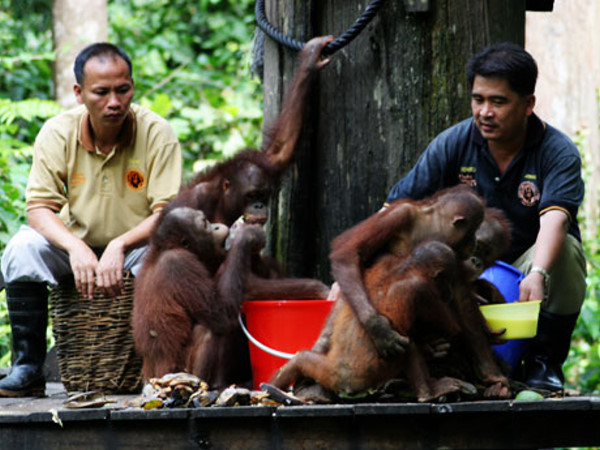
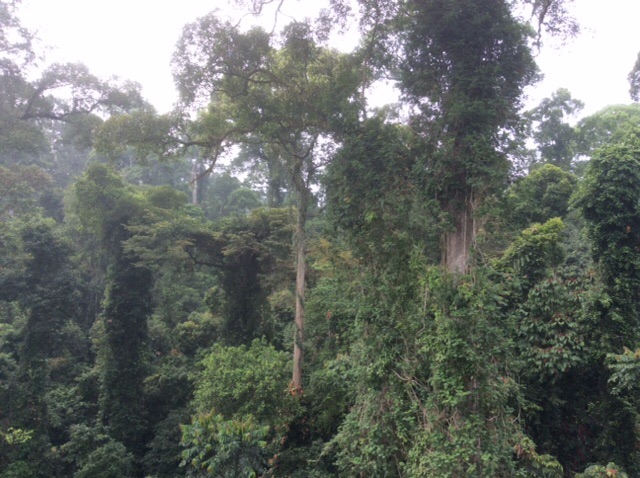
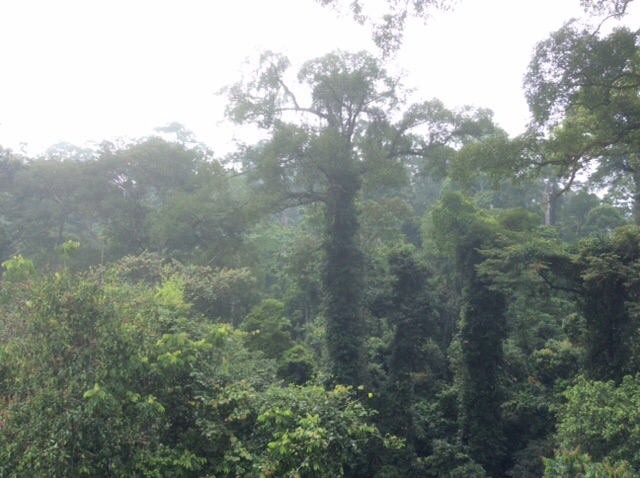
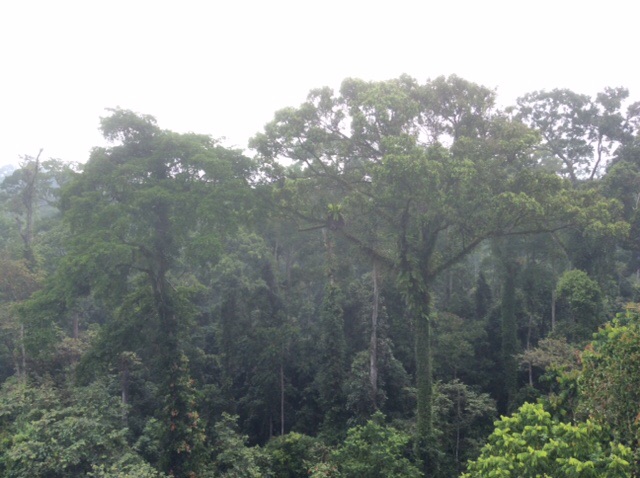
Fast forward to the visit my wife and I made to the Orang Utan Rehabilitation Centre and the Sun Bear Sanctuary in Sepilok, on the last day of our visit to Sabah. Both centres receive a steady stream of orphaned baby apes and bear cubs, whose mothers were either killed deliberately to make pets of their babies or died as a side effect of the steady deforestation going on in this part of the world. They also receive adult bears and apes marooned in vanishing islands of jungle. They do stirling work of trying to reinsert their charges back into the wild, or at least giving them a life of dignity if they cannot go back. They, along with the many other rehabilitation centres around the world doing the same thing with other species, deserve our thanks for this work of love.

But as I sat there, listening to what these centres do and watching their charges on the feeding platforms

or sunning themselves in enclosures
image
I was brought to meditate on that essential question which I had recently debated: do other species have rights, like we do? Specifically, do they have the right to life? Personally, I think they do. Of course, this right, like every right, is not absolute. I mean, if a lion jumps on me, or my wife, or my kids, then I have a right to kill that lion (as I do if it were a member of our own species who attacked us). And to eat, I need to kill species, that’s the way our biology works. This holds true even if I were vegan (carrots, just to take one vegetable, are also a species and so have the same rights as a chicken).

We could go on at length about how rights play out in real life: how about this situation? how about that situation? But the thing is, accepting that other species have rights changes the context of the discussion radically. Just to take the right to life, it’s no longer that it would be nice if we didn’t kill orang utans or sun bears, it’s that we have a duty not to kill them. And if that is the case, then we have to ask ourselves if the people of Sabah have the right, for instance, to undertake large-scale destruction of the orang utan’s and sun bear’s habitat so as to be able to plant oil palm in its place.

But this brings us on a collision course with another right, the right of the people of Sabah “to an adequate standard of living … and to the continuous improvement of living conditions” (I am quoting the International Covenant on Economic, Social and Cultural Rights). Is there a way out? Yes there is, at two levels. First, Sabah has to change its model of economic development; the province’s natural habitat must be viewed as an economic asset and not as a nuisance to be swept aside to make place for other economic activities. Sustainable (but truly sustainable) tourism is one possible way of making money from jungle. Sustainable (but truly sustainable) harvesting of forest products is another. Second, and much more fundamentally, Sabah, like just about every other territory on Earth, has to drastically reduce its human population. There are simply too many of us on this planet. I find the following graph one of the most frightening I know.

It shows the growth in the human population over the last nine thousand years. Note the huge, and hugely rapid, jump in our population since the start of the scientific and industrial revolutions (you have to see it on this scale because this is closer to the scales at which evolution works). The result of this growth has been that we are brutally shoving all the other species on this planet into a corner, a corner which is getting rapidly smaller and smaller. They cannot survive these huge shocks to their ecosystems. At this point, then, the right to life of other species trumps our right to create new human life. Many have criticized the Chinese Government for its one-child policy. But not me. We should all have one-child policies until the human population falls to much more acceptable levels, not more than 1 billion (and better 500 million). Yes, we will have old populations. Yes, we will have a problem of spoiled children, the princelings as the Chinese call them. Yes, we will have deflationary economies. Yes, house prices will drop. But our duty to respect the right to life of all species tells us that these are problems we simply have to accept and deal with.

I suppose I’m not painting a pretty picture of our immediate future, but I think it’s better for our species to suffer a little for a little while in the quest for a longer-term happiness than to go on as we are currently doing, destroying everything, which will ultimately destroy us too – because we actually need jungles and all the species in it for our own survival.

___________________

Orang utan at rehabilitation centre: https://sabahbooking.com/tours?actionType=details&tid=20&lang=zh_CN
Borneo bear: https://commons.wikimedia.org/wiki/File:Sepilok_Sabah_BSBCC-photos-by-Wong-Siew-Te-02.jpg
Population chart: http://aryanism.net/politics/population-and-demographics/

JUNGLE IN BORNEO

Bangkok, 30 September, 2015

I’ve often used the expression “drenched with sweat” in my life, but I’ve never actually been thus drenched. This time, though, on staggering out of the jungle after a six hour trek, my wife and I were were literally soaked through. We couldn’t have been wetter if we’d stood under a shower with all our clothes on.

A bit of background is in order. We were in the Malaysia’s easternmost province of Sabah, on the island of Borneo. We were visiting the Danum Valley Conservation Area, which is in one of the few remaining tracts of primary jungle in the province. We arrived there after driving down from the town of Sandakan, passing mile after mile of oil palm plantations. So dreary! And so depressing to think that beautiful jungle stood there not that long ago. But it’s hard to sell jungle, easy sell palm oil.

Leaving all those oil palms behind us for a few days, we wanted to see some jungle – and maybe, if we were lucky, some orang utans. Danum Valley is one of the few places in Sabah where orang utans still live in the wild, along with pygmy elephants, Sumatran rhinoceroses, clouded leopards, various other species of feline, several species of monkeys, and of course hordes of more humble forms of life, botanical and zoological.

So it was that we attached ourselves to a group of young people, part of that army of gap-yearists*, between-jobbers**, and others, who are all on the move these days across every continent, living cheap, telling tall stories about their travels, and swapping information on the good places to eat, sleep, and have fun along the road. They had hired a ranger from the Danum Valley Field Centre, where we were all staying, to take them on one of the shorter trails. Early the next morning, we took our place in the line which filed across a rickety suspension bridge and set off briskly into the jungle. At first, we commented appreciatively on the surroundings, looked eagerly into the undergrowth for signs of pygmy elephants (they had left dung piles and shattered tree limbs along the track), and inspected fearfully every overhanging leaf for leeches (there had been much excited chatter on the net about the presence of these horrible animals along the trails and we sported a set of bright green leech socks for the occasion). But gradually, in the sauna-like heat of the jungle, as we climbed up and down over successive ridges, our breathing grew raspy, the sweat stains on our clothes grew and coalesced until clothes and stains were one, our speed slowed to a crawl. We neither saw nor cared anymore about what was around us (which in truth was not much; at the very last minute, a macaque monkey was sighted high above us, otherwise a few millipedes and some leeches were the total of our bag). The only thing that mattered was to make sure that we lifted our legs high enough to step over the roots, branches, and other jungle paraphernalia that littered the trail. Some of the group kindly held back so that we didn’t get completely separated from the rest, otherwise we would still be in that jungle stumbling around in a total daze. When we got back to our room, we unsteadily peeled off our sodden clothes, stood for a minute under the shower, and then collapsed onto the bed, lying there in a stupor for a few hours.

So when we heard at dinner that our young friends had booked a ranger for an even longer walk the next day, we smiled and promised to be on hand to wave them off at breakfast. We kept our promise, wishing them a safe journey over our fried eggs. And then, after some more tea, toast and marmalade to fortify us, we ambled slowly back into the jungle to an observation tower, from which we had decided to watch jungle life in peace and tranquillity. Observation tower is a misnomer. It was actually simply an aluminium ladder encased in an iron safety cage, attached to one of the tall, tall trees that dot the jungle.
image
The ladder led to a wooden observation deck at the top and another half way up. It must have been all of 60 meters to the top deck (110 rungs; I counted). One of our young friends, between jobs, had shinned up the ladder as we lay, inert, on our beds the previous afternoon. His last job was as tester of the mechanical soundness of pipelines, and he informed us at dinner that it was his professional opinion that the whole contraption was exceedingly corroded and ready to peel off the tree at any moment.

With these words still ringing in my ears, I commended my soul to Jesus, Mary, and all the Saints, and started climbing, fixedly looking at the bark in front of me and pulling myself up rung by counted rung. My wife followed. We stopped at the mid-level observation deck for a breather before continuing on. Again, fix the bark and pull up rung by counted rung. We made it in one piece. We took a photo down the ladder we had just climbed.
image
Terrifying.

But the view compensated for all the fear and the sweat to get there.
image

image

image
I like being in jungle canopy. At ground level, I find jungle quite monotonous. There are no sweeping vistas through the thick vegetation, and unless you are into insects there is precious little animal life on the jungle floor. Even the plant life is not that interesting, unless you like fungi (are they even plants?). If you happen to spot something in the trees, it’s hard to watch through all the intervening foliage. But in the canopy, or above it as was our case, it’s completely different. You appreciate the grand sweep of the jungle: the tall trees, the Lords of the place, the smaller trees greedily growing towards the light and waiting for their moment of glory when the Lords will be toppled by wind, rain, or sheer old age, the parasitical plants of all descriptions – lianas, vines, ferns – using these trees as their path towards the light, strangling, suffocating, and sucking their life juices from them; flowers, coloured leaves, and fruit peppering the whole. And above and through all this botanical profusion you see the silent flitting of animals. As we stood there, looking out over the canopy, we saw a butterfly which did a long glide past rather than flying drunkenly along as do most butterflies, the bright aquamarine streak of a bird shooting over the canopy (a kingfisher?)
image
several black squirrels, which scurried fearlessly up tree trunks and out along branches
image
and at the end, a troop of red leaf monkeys, who suddenly appeared out of the vines loading down a tree, gracefully jumped over onto the next tree, disappeared into the foliage, and then reappeared further along the canopy.
image
It was time to go. A new prayer, and down we went, rung by rung, all 110 of them.

____________

* young persons, normally school leavers waiting to go on to University, who have decided to take a year off and travel the world. It can also apply to somewhat older persons who have decided to take the year off between undergraduate and graduate schools.
** even older, but still young, persons who have decided that they are fed up with the boring job they have and want to see the world, or have decided to change jobs and want to see the world before they start working again, or simply decide that it’s now or never if they want to see the world.

Dipterocarp: http://images.travelpod.com/tw_slides/ta00/da3/d08/towering-dipterocarp-bilit.jpg (in http://tripwow.tripadvisor.com/slideshow-photo/towering-dipterocarp-by-travelpod-member-dan-melanie-bilit-malaysia.html?sid=14302472&fid=tp-8)
Kingfisher: https://upload.wikimedia.org/wikipedia/commons/a/a6/Ein_Eisvogel_im_Schwebflug.jpg (in https://en.m.wikipedia.org/wiki/Kingfisher)
Black squirrel: https://worldbirdwatching.files.wordpress.com/2013/04/mamilanutria.jpg?w=500&h=374 (in https://worldbirdwatching.wordpress.com)
Red leaf monkeys: http://il2.picdn.net/shutterstock/videos/5039030/thumb/1.jpg?i10c=img.resize(height:160) (in http://www.shutterstock.com/video/clip-5038946-stock-footage-rare-red-or-maroon-leaf-monkey-presbytis-rubicunda-in-the-jungles-of-borneo-this-is-a-beautiful.html)
Other pictures: ours

LET’S CHANGE THE FAO LOGO

Bangkok, 9 September 2015

Fairly often, I walk past the Bangkok office of FAO (the Food and Agricultural Organization, not the Schwartz of the toys), and with time the logo of the Organization, which is placed on the gate of the building, has seeped into my consciousness.

FAO icon

As it’s seeped into my consciousness, I’ve begun to look at it more closely. Let me give you a more formal view of the logo so that we can study it together.

FAO_logo.svg

It’s a simple design, as all good designs should be.

And it’s profoundly colonialist, or at the very least extremely euro-centric.

Let me explain.

What we have here is a stylized head of wheat with a motto in Latin, “Fiat Panis”, “Let There Be Bread”. OK, you may say, so what’s the big deal? FAO is there to eliminate hunger, bread is perhaps the most fundamental of foods (remember Marie-Antoinette’s comment “let them eat cake” when told that the peasants had no bread), and wheat makes bread.

Oh really? The Thais eat bread? And the other South-East Asians? How about the Chinese? The Koreans? The Japanese? Rice reigns supreme here. And while the people of the Indian sub-continent consume bread (naan and roti come to mind), they also consume huge amounts of rice, as well as substantial amounts of sorghum, millet, and maize. Talking of maize, in its birthplace, Mexico, and in much of Central America, it is still the major cereal consumed (think tortillas), while the Spaniards and the Portuguese carried it off to all corners of the globe, so that not only the Indians but the Chinese and many other Asians now also eat large amounts of maize. The same is true of Sub-Sahara Africa – it’s the most consumed cereal in that part of the world, along with millet (many of whose species originated in Africa), sorghum (also originally from Africa), as well as lesser-known grains like teff in the Ethiopian highlands, fonio in the savannah areas of Western Africa, and Africa’s own variety of rice along the rivers of Western Africa. And although the Europeanss who colonized the Americas brought with them the habit of consuming wheat, not only maize but other grains, like qinoa, or its close relative kañiwa, or even amaranth, have hung on.

But FAO, created in the aftermath of World War II, was very much a creation of Europeans and neo-Europeans (the countries in the Americas and Australasia which were colonized by Europeans and whose elites probably ate bread and not tortillas or the local equivalent). Of the 37 original countries who signed up to the FAO when it was created in October 1945, 29 were Europeans or neo-Europeans. Of the remainder, 4 came from the Arab region, also wheat eating. Of the three Asian signatories, India (as we have seen) eats quite a bit of wheat, especially its northern regions where the-then Hindi political elite came from (I’m a bit puzzled that India signed up, though; it was still a British colony). That leaves the Philippines, who no doubt just followed the US lead, and China, represented by the Nationalists who were anxious to keep their friends in the West during their fight to the death with the Communists and so who weren’t going to make a fuss over anything so trivial as a logo (maybe they didn’t even notice it).  As for Liberia, the one lone African signatory (the others all being colonies and therefore not counting as countries), given its history it also no doubt followed the U.S.’s lead.

So wheat it was on the FAO logo. But did they really have to add the Latin motto? Such a super European thing to do! Have something in front of you which looks like a heraldic shield, and slap a Latin motto onto it (it was put there by FAO’s first Director-General, by the way, a Brit; why am I not surprised?). I mean, as a European who had Latin as part of my education (very unwillingly, I should add), I like the motto. It gives an apparent nobility, a timelessness, to a simple message: let me eat. It also reminds me subliminally of my (European) Christian upbringing – I’m old enough to remember Sunday masses in Latin, where of course bread is central to the liturgy. It also reminds me of a line in the New Testament (I wonder if the British Director-General had this in mind when he chose the motto), when Jesus is being tempted in the desert by the devil. At one point, the devil says to him (in the Latin Vulgate version) “Si Filius Dei es, dic lapidi huic ut panis fiat”, “If you are the Son of God, tell this stone to become bread.” Turning stones into bread: a nice description of farming. But all this is very, very elitist, holding meaning to a tiny percentage of the world’s population. It means nothing to the Chinese or Indian farmer, or the campesino in Latin America, or the African subsistence farmer eking out an existence on the edges of life. Yet they are the clients of FAO, not me, white, educated, and urbanite.

So I think we need to redesign FAO’s logo. I’m open to all and any suggestions, but here are my thoughts. First, throw out the motto; let’s keep to the one universal language that we all have, images. Just as an example to encourage us, UNICEF, which has its office next to FAO’s, also has its logo on the gate.

unicef logo

No words, just an image, and of course an absolutely universal image of mother and child. This is what we should aspire to.

My first thought is that the logo should recognize that we all eat lots of different foods all over the world. We can’t have all of them on the logo, but we could have those most eaten. For example, I read that the ten most eaten staple foods in the world are maize, rice, wheat, potatoes, cassava, soybeans, sweet potatoes, yams, sorghum, and plantain. So why not shove all of of them into a cornucopia like this one, so dear to Americans around Thanksgiving and put it on FAO’s logo?cornucopia iconAfter an initial burst of enthusiasm, I hesitate. First of all, I am committing exactly the same sin which I am accusing the original designers of, cultural imperialism. Who, outside of the European and neo-European countries, has ever heard of cornucopias? This was a Roman invention, attributed to several Gods and Goddesses having to do with food and agriculture. Of these, I prefer the Goddess Abundantia, for no other reason than it’s a pretty cool name.

Abundantia

As you can see, she is nestling a cornucopia along her left arm.

Abundantia’s name also happens to show the second big problem with cornucopias. Her name gave us our word “abundance”, and that is indeed the purpose of the cornucopia, to show the overflowing fruits of the earth – that’s why it pops up at Thanksgiving, when everyone is gorging themselves. But abundance is not what 90% of FAO’s clients have. I think it would be rather a slap in their face to flaunt so much abundance.

Why not move away from the fruits of farming to the act of farming itself? And here I’m thinking of the act of ploughing – not completely universal, I grant you, since herdsmen don’t plough, but still pretty symbolic of farming from time immemorial.

egyptian ploughing

Some sort of simplified picture like this could do the trick

hand ploughing-2

although obviously this particular picture carries a lot of European cultural baggage: the horse, the way the man is dressed. But I’m sure a professional designer could come up with something less fixed to a certain time and place. Of course, fitting all of that in a readable form onto a logo might be a challenge. Perhaps the picture should be just the plough itself, something like this.hand ploughAgain, after an initial moment of enthusiasm, I hesitate. I could be accused of wanting farmers to stay in the Stone Age. Why not have a modernist, aspirational logo like a tractor, which no doubt every farmer, sweating away as he ploughs his field with his ox or horse or other beast of burden, would devoutly wish for? Something like this:

tractor logo

But frankly I don’t like tractors much; I have a rather contrasted relationship with this piece of agricultural machinery. So I’ll nix that idea.

After some thought, I suggest we should go for something much simpler, something much more fundamental, something much more basic: this

planting-3aAfter all, once you strip out all the technology, all the sophistication, all those damned tractors, isn’t that what farming is essentially about, nurturing a plant to grow?

_______________________

FAO logo: https://upload.wikimedia.org/wikipedia/commons/thumb/d/db/FAO_logo.svg/2000px-FAO_logo.svg.png (in https://en.wikipedia.org/wiki/Food_and_Agriculture_Organization_of_the_United_Nations)
UNICEF logo: http://www.somalicurrent.com/wp-content/uploads/2014/12/UNicef.png (in http://www.zwallpix.com/unicef-logo.html)
Cornucopia icon: http://www.clker.com/cliparts/1/8/a/5/128509193232136462thanksgiving-cornucopia-large.jpg (in http://www.clker.com/clipart-71521.html)
Statue of Abundantia: http://arachne.uni-koeln.de/images/Abbildungen/FADatenbankabb0488/BA-Museum-Neg-NrBard115_2211,05.jpg (in http://arachne.uni-koeln.de/browser/clarac_index.php?view%5Blayout%5D=clarac_page&clarac%5Bsearch%5D%5BPS_WebseiteID%5D=3125)
Egyptian ploughing: https://upload.wikimedia.org/wikipedia/commons/thumb/9/91/Maler_der_Grabkammer_des_Sennudem_001.jpg/1280px-Maler_der_Grabkammer_des_Sennudem_001.jpg (in https://commons.wikimedia.org/wiki/File:Maler_der_Grabkammer_des_Sennudem_001.jpg)
Hand ploughing: http://image.shutterstock.com/display_pic_with_logo/300715/300715,1243435606,4/stock-photo-farmer-and-horse-drawn-plough-30987703.jpg (in http://www.shutterstock.com/pic-30987703/stock-photo-farmer-and-horse-drawn-plough.html)
Hand plough: http://img.index.hu/imgfrm/4/5/6/4/BIG_0007494564.jpg (in http://forum.index.hu/Article/showArticle?go=99788228&t=9201739)
Tractor logo: Hand ploughing: https://s-media-cache-ak0.pinimg.com/736x/ed/04/8b/ed048bb8cfea5f269418c1476160f152.jpg (in http://janesbrickroad.blogspot.com/2010/07/jacobs-creek.html)
Planting: http://thumb9.shutterstock.com/display_pic_with_logo/2857603/257887916/stock-vector-hand-holding-a-leafy-plant-symbol-for-download-vector-icons-for-video-mobile-apps-web-sites-and-257887916.jpg (in http://www.shutterstock.com/s/planting+seeds/search.html)
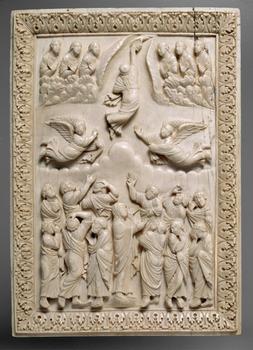
THE WHISPER OF THE SCYTHE’S BLADE

Bangkok, 30th August

God may not play with dice, as Einstein claimed, but the Universe surely does. The bombing at the Erawan shrine here in Bangkok two weeks ago brought that home forcefully. I have never been near the shrine, but my wife passes it quite regularly. In fact, the day of the blast she had passed it just a few hours before. If she had been running late, if earlier activities had got postponed, … A colleague of mine in the office should have been passing the shrine on the Skytrain on her way to the gym just when the bomb went off. But it so happened that that day her little boy was feeling unwell so she decided to cancel at the last minute. If her husband instead had stayed with the boy …

It must be the same with every terror attack. No doubt there were people who for one reason or another were not in the Twin Towers on September 11 when they normally would have been, or were closer to the exit than they normally would have been. Or in all those bomb attacks on markets or bus stations or other crowded places which take place with depressing regularity in Syria, Iraq, Afghanistan, Nigeria, or any other troubled spot on the planet, there must be a host of people who might well have been in the path of the blast, but for some small reason were not. And a host of people who were in the path of the blast who normally would not have been.

The same randomness comes out with painful clarity in War. I always remember a story in the book “The Good War” by Studs Terkel. Terkel wrote oral histories of the American people, based on the stories he collected from ordinary Americans. “The Good War” was a collection of stories from Americans involved in the Second World War in some way. This story was of two young soldiers, buddies in everything since the beaches of Normandy, who found themselves in a fire-fight during the Battle of the Bulge. One dived one way and caught a bullet, the other dived the other way and survived to tell Terkel the tale. He was forever guilty that he had been the lucky one. So many times you hear about this guilt! Men who ran through the hail of bullets and shrapnel of No Man’s Land in the First World War and survived while their comrades fell all around them. Why them?, they wondered afterwards. Why were they the lucky ones? They didn’t deserve it particularly.

Accidents also throw the essential randomness of it all into sharp relief. A few days after the Bangkok blast, a plane at an air show in the UK crashed onto a busy motorway. If those motorists who were killed had been driving a little slower, or a little faster, or had decided to use another route that morning, or had decided to cancel the trip altogether, … The routine accidents of everyday life, the ones that don’t make it to the front page, are no less random. If I had started crossing the street just a bit sooner, I would have been mown down by that tuk-tuk which suddenly made a sharp right. It just so happened that I was blocked for an instant by that other pedestrian who walked in front of me …

Sickness is the same. If that virus coughed out by that person had got wafted that way and not this, I wouldn’t now be sick in bed. Or dying. If that heart arrhythmia had been just a tad faster, or a titch slower, I wouldn’t be alive to marvel at it. If the surgeon’s knife had been a little more extensive the first time, or if that first operation had been one month sooner, the lovely lady we met when we first arrived in Bangkok would not now be dying ten floors above us of metastasized cancer.

And so it goes on throughout life. If I had done this, or not done that, or said it or not said it, or stepped here rather than there, just at that moment, how different things would be now!

Magic has tried to make us believe that we can beat the odds. Hang this amulet around your neck and the spears, or the arrows, or the bullets, will never find you. Religions instead have tried to help us accept the essential randomness of our lives. The Grim Reaper can come to pick you up at any time, so be ready. Be ready. Lead good lives, lead virtuous lives, so that when the knock on the door comes, you will have done everything in your power to go to Heaven than to Hell, to be reborn closer to final Nirvana.

Perhaps such a fatalistic approach is the best. You can be forever on the lookout, dodging and weaving, stepping smartly out of the way of the slings and arrows which life hurls at you, but in the end the dice will finally roll against you. If you have led a good, virtuous life, those who survive you can say, “he was a good man.” What better epitaph can one have than that?