RED WINES FROM SOUTHERN ITALY

Milan, 24 May 2021

In an earlier post, I confessed that the amount of wine my wife and I consumed during the two lockdowns which we have endured over the past year was considerable. In that same post, I said that we focused much of our wine drinking on red wines from the south of Italy – Sicily, Sardinia, Puglia, some Calabria, some Basilicata. I always prefer red wines – white wines give me stomach burns. My wife is quite happy to follow me in my choices, although from time to time she’ll splash out and get herself a bottle of white wine.

I chose to buy wines from southern Italy because I didn’t know them very well, which fed into my general tendency to support the underdog and be contrarian. After sampling a few bottles, I also felt that the red wines of southern Italy had more oomph to them than wines from northern and central Italy – I beg readers not to ask me to translate that into the flowery language of the wine connoisseur because I can’t. As I once confessed in an earlier post, my general method of assessing wines is “mmh! that’s a nice wine!” or “mm … not a good wine”.

Source

Also – and this was important with the tightening of household budgets under lockdown – they were generally cheaper than other Italian wines.

I also felt virtuous in supporting local grape varieties. Not for me the Cabernet Sauvignon, Merlot, Chardonnay, Syrah, Grenache Noir, Sauvignon Blanc, Pinot Noir, and the few others which dominate wine-making worldwide! No sirree, I was going to support the more than 1,500 grape varieties (yes, I kid you not, 1,500) which exist in Italy.

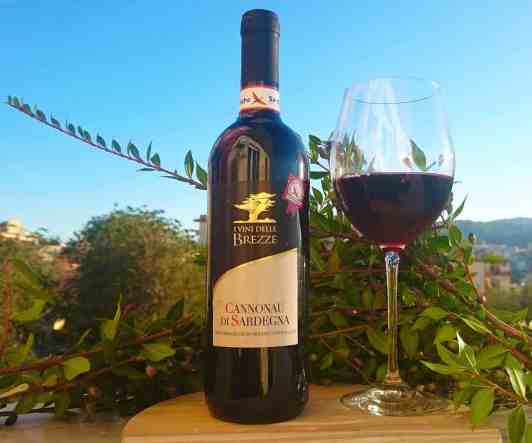
So from Sardinia I was buying wines made with Cannonau grapes (or to be more precise, where the Cannonau made up the largest share; the great majority of Italian wines are blends).

Source

From Sicily, it was wines made with Nero d’Avola grapes.

Source

From Puglia, it was wines made with Primitivo grapes.

Source

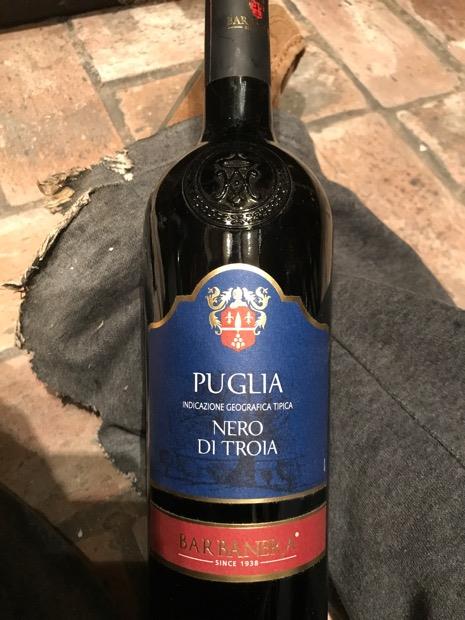
From time to time, though, we branched out into wines made with Nero di Troia grapes.

Source

From Basilicata, it was wines made with Aglianico grapes.

Source

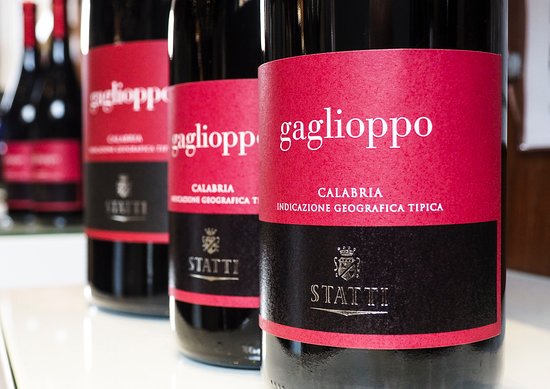
From Calabria, it was wines made with Gaglioppo grapes.

source

(For reasons which are now not clear to me through the haze of history, I chose few if any wines from Campania – a lapse to be rectified in any future lockdowns!)

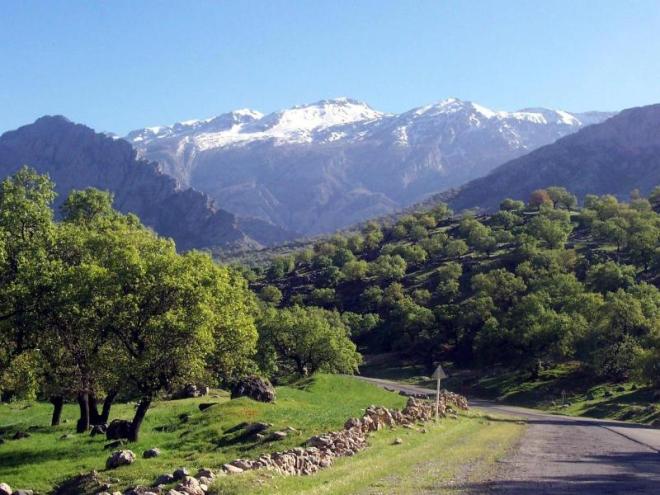
At some point, though, through the wine fumes, I began to wonder how many of these grape varieties really were local. One can make the case that actually no domesticated grape varieties are really autochthonous. Archaeologists tell us that domestication and the related discovery of wine-making took place somewhere in the region between the Black Sea and Iran, between the seventh and the fourth millennia BC. The earliest evidence of domestication has been found in Georgia (the country, not the US state) and of wine production in Iran in the northern Zagros Mountains.

source

Subsequently, domesticated vines and wine-making knowledge spread to other civilizations in the region, first Egypt and Lower Mesopotamia, and then to the Assyrians, Phoenicians and Greeks (at a later period vine and wine-making moved along the Silk Road to China and Japan, but that is a story for another day). The Greeks and the Phoenicians, continues this story, transferred the domesticated grape vine and wine-making technologies further west, to Italy, Spain, and the south of France. The Romans then carried the vine and wine-making further north in Europe to what are more-or-less its northernmost borders today. And then when Europe colonized the rest of the world, the Europeans took their vine and wine-making knowledge with them. So in this view of history, no domesticated grape vines are really autochthonous.

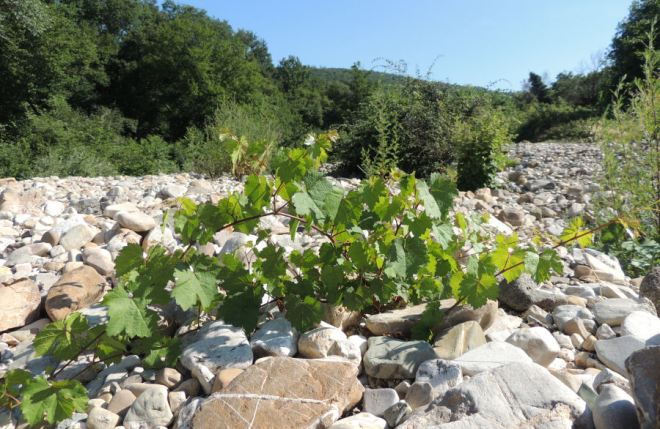
But that’s one Creation Story. Another Creation Story points to the fact that the vine species which was domesticated for wine-making (called, appropriately enough, Vitis vinifera) grows wild from Georgia to Portugal.

Source

So why could wine-making not have been independently discovered in several places?

A third Creation Story, and the one – for what it’s worth – that I feel is most credible, is that wine-making did indeed start in Iran or thereabouts, and cuttings of the domesticated vines were indeed carried westwards. But in their new homes, these vines could well have crossed spontaneously with local wild forms of the vine (or have been made to cross with them by the local viticulturists), thus shaking up their DNA a little and possibly affecting berry size, ripening time, sweetness, and whatever other characteristics viticulturists prized at the time. In this view of history, each locality can have vines which are hybrids of immigrant vines and local ones, which makes them pretty local. And anyway, even if a vine was brought in from somewhere else, if it’s been around in one locality for a long time surely it’s become local? (a bit like all Americans of immigrant stock nevertheless considering themselves locals) And anyway, the grape vine’s DNA is subject to spontaneous mutations (like American immigrants), which over time will distinguish it from its neighbors. All excellent reasons, I think, for declaring that grape vines which have been grown in one locality long enough can be considered autochthonous.

Of course, one could argue that all these Creation Stories are irrelevant because of the American pest phylloxera which devastated vineyards planted with Vitis vinifera in the late 19th Century (we have here a cartoon of the time, whose caption was “The phylloxera, a true gourmet, finds out the best vineyards and attaches itself to the best wines”)

Source

Ever since then, pretty much all commercial vineyards are Frankensteins, with Vitis vinifera grafted onto a root stock of one of the American members of the grape vine family which are resistant to the pest. Under the circumstances, I can hear some people ask, can one really call any commercial vine autochthonous?

I reject this latter argument because first, if I did accept it I wouldn’t have a story to tell, and second, because even with an American rootstock the grapes still express only the DNA of the grafted Vitis vinifera. Just as a person who has had their heart replaced is still expressing their old DNA.

So with all that out of the way, we can now focus on those wines which my wife and I (and not infrequently our son) were imbibing during lockdown, and ask ourselves the question: are the grapes that went into making them local or not? As usual in life, the answer is yes in some cases, no in others.

As one might expect, many of the local vines in southern Italy have their own Creation Stories. The cynic in me suggests that a good number of these were invented to increase a wine’s marketability, although I could well imagine that there is a desire on the part of the local people to have the stories of their vines reflect their own Creation Stories. Thus, many of the Creation Stories reflect the south of Italy’s ancient history as Magna Graecia, that arc of Ancient Greek colonies which stretched from Puglia all the way to Sicily. They suggest that the vines were brought from Greece by these early colonists. Others look to the Phoenicians as the source of their vines; Phoenicians also had colonies in Sicily and further afield. This map shows the situation in about 500 BC.

Source

If these Creation Stories are true, they would place the original migration episodes for the vines in question at some two and a half thousand years ago, quite long enough to claim that they are now fully local. Other Creation Stories suggest instead that the local vines are crosses between local wild stock and immigrant stock. Who can deny that such vines are fully local? Ampelographers have weighed in (these are experts in the study and classification of cultivated varieties of grape). They have given savant judgements on the heredity of countless vines by comparing the shape and colour of their leaves and their grape berries. Wonderful word, ampelographer! It rolls off the tongue like a good wine rolls down the throat. In my next life, I want to be an ampelographer, it must look so cool on a CV.

Anyway, along have come DNA studies, to cut through all the bullshit. We finally have a scientific basis for making judgements about a vine’s genealogy.

Source

And the white-coated scientists in their labs have discovered some very interesting things.

Take Cannonau, the grape variety that is the Sardinian grape par excellence (editorial note: since photos of bunches of grapes get pretty boring pretty quickly, I will instead be throwing in nice photos of the places where the various grapes grow).

Source

DNA studies have shown that actually, it is none other than Garnacha from Spain! (which, by the way, is also none other than Grenache; the French brought the vine from Spain and then frenchified the name) The most likely Creation Story in this case is that the Spaniards brought Garnacha to the island some time during their centuries-long dominion, from 1324 to 1718. Some Sardinians have tried to claim that the move was actually in the other direction, from Sardinia to Spain, but I don’t think that will wash, especially since a number of other “local” Sardinian grape varieties have also turned out to have a Spanish origin. On the one hand, I’m saddened by the fact that although I thought I was supporting a local variety when I bought Cannonaus in fact I wasn’t. On the other hand, I was pleased to learn of this Spanish connection, because I recall thinking, when I first tried Cannonau, that it reminded me of Rioja, and Garnacha grapes are one of the constituent grapes of Rioja.

Skipping to the island of Sicily, what about the Nero d’Avola grape?

source

Well there, I’m happy to say, I have been supporting an autochthonous variety – that is to say, a variety which could well have been introduced several thousands of years ago by the Dorian Greeks who colonized the part Sicily where the town of Avola is located; the town does indeed seem to be the center of this grape’s distribution. The original immigrant grape could actually have been a forefather of today’s Nero d’Avola, since DNA studies have revealed a cousin-like relationship between it and two other ancient Sicilian grapes, Catarratto and Inzolia. As far as I know (although the white-coated scientists publish many of their DNA studies in scientific journals which I don’t have access to), no relationship has (yet) been found between Nero d’Avola and Greek grape vine varieties. It could well be that the forefather has vanished, as old vine varieties were replaced with newer ones; phylloxera also put paid to a large number of varieties.

Vaulting now over to Puglia, in Italy’s heel, we can have a look at the Primitivo grape.

source

And here I must start by admitting that my wine choices were not supporting autochthonous grapes; Primitivo is not an Italian variety. Nevertheless, we have a fascinating story here. DNA studies have shown that actually Primitivo is a Croatian grape variety, more specifically one from the Dalmatian coast. Unfortunately, the devastations of phylloxera mean that there is hardly anything left now of the variety in its homeland – a few vines here and there. We can imagine some adventurous southern Italian sailing across the Adriatic Sea to Dalmatia and bringing cuttings back home. As far as can be judged, this was quite recent, some time in the 18th Century. The grape’s Italian name points to why viticulturists were interested in it – it was an early (“primitive”) ripener.

What makes the Primitivo story really fascinating is that DNA studies have also confirmed that it is pretty much the same as the “Californian” grape Zinfandel! (bar a mutation or two) How a Dalmatian grape variety ended up in southern Italy is not hard to imagine. But how on earth did it end up in California?! The best guess is by quite a circuitous route. Step 1 is that the variety was transferred to the Hapsburgs’ greenhouses in Vienna, when Dalmatia was part of the Austrian Empire. Step 2 is that, as part of a burgeoning global trade in plant species, horticulturalists living on the US’s eastern seaboard requested the Imperial greenhouses to send them cuttings, which they did. They probably also requested cuttings from British greenhouses, which had earlier requested them from the Viennese greenhouses. Step 3 is that one or more of these horticulturalists from the Eastern US joined the gold rush to California but took care to take vine cuttings with them. Presumably, they found that in the end it was more profitable to make wine in California than to pan for gold. (As a quick aside, one of my French cousins many times removed, who came from our family of vignerons in the Beaujolais, did something similar. He joined the gold rush to Australia but ended up making wine; I don’t know if he took cuttings with him or used the vine varieties which others had already brought to Australia. In any event, I have a whole bunch of Franco-Australian cousins whom I have never met)

But let’s get back to Puglia, to consider the Nero di Troia grape variety, which we tried from time to time during lockdown.

Source

DNA studies have shown that this grape has an equally fascinating genealogy – and luckily for me and my determination to support autochthonous grape varieties, I think I can safely say that it is definitely an Italian variety. DNA studies have shown that Nero di Troia’s mother is Bombino bianco, an ancient white grape variety found all along the Adriatic coast but especially in Puglia, while its father is Uva rosa antica, now only found as a very minor variety in the province of Salerno in Campania.

So far, so good. But what makes Nero di Troia more interesting than most varieties is that DNA studies have also shown that it has two full siblings (same father vine, same mother vine): Bombino nero and Impigno. Which just goes to show that grapes are like humans: you and your siblings can have the same parents but you can be quite different from each other.

What’s even more interesting is that comparisons of the DNA profile of the father, Uva rosa antica, to those in DNA libraries have revealed that this minor variety from Salerno is one and the same with another minor variety called Quagliano found only in a few Alpine valleys in Piedmont, in the very north of Italy, which in turn is one and the same with a variety called Bouteillan noir found in Provence, in France. Which just goes to show that there must have been quite a vigorous, though completely informal and unmonitored, trade in vine cuttings throughout southern Europe.

Moving on to Basilicata, the wines we tried from that region during the long months of lockdown were based mostly on the Aglianico grape.

Source

This is definitely one of the grapes where the locals have a Creation Story involving its introduction to the region by the Ancient Greeks through their colonies in Basilicata. Alas, DNA studies have revealed little if any relation to other existing Greek varieties, so if Aglianico was imported to Basilicata the original Greek plantings have all disappeared. Which suggests that perhaps Aglianico is actually a cross between some immigrant vine from somewhere and local wild stock. In any event, I think we can count this one as an autochthon.

Finally, Calabria. The wines we were drinking from this region are mostly made with the Gaglioppo grape.

Source

This is another grape variety that the local inhabitants wish to believe came originally from Greece, through the Ancient Greek colonies on the Calabrian coast. However, DNA studies have clarified that Gaglioppo is a very Italian grape, being a cross of the Sangiovese and Mantonico grapes. The latter is a very typical and ancient Calabrian grape. As for Sangiovese, viticulturists have used this grape to sire a whole series of grape varieties. At least ten are known at the moment, including Gaglioppo. There must have been something about Sangiovese grapes that viticulturists liked; if any ampelographer reads this, please tell me what it was. It doesn’t finish there, because in turn DNA studies have revealed that Sangiovese is itself the product of a cross between the Ciliegiolo and Calabrese Montenuovo grape varieties. Ciliegiolo is an ancient variety from Tuscany. Calabrese Montenuovo, on the other hand, has its origins in Calabria; sadly, it is now an almost-extinct relic. We have here another example of the vigorous trade in vine cuttings, this time up and down the Italian peninsula.

I could go on. For instance, each of these grape varieties is blended with various other grapes, and many of these have had their DNA studied. But I’m running out of steam and I fear that I will soon be losing my readers – there’s a limit to how much information about DNA one can absorb before one’s mind begins to whirl like a double helix.

Source

I leave my readers with a final plea: considering that there are 1,500 varieties of grape in Italy, please ignore any wines made with the Top Ten grape varieties and concentrate on trying out all 1,500 Italian varieties. Cin-cin!

Source

HOW ARE THE MIGHTY FALLEN

Vienna, 9 May 2021

My wife and I went for a hike recently along a section of the Jakobsweg, the Trail of St. James, one of the network of pilgrim trails that lead from all over Europe to Compostela in north-western Spain. This particular Trail of St. James starts in Hungary and leads the pious walker to Vienna. From there, it goes on along the Danube, joins the Jakobsweg coming down from the Czech Republic (parts of which we hiked last year), and then wends its way across the Alps.

The particular section we walked this time took us through the village of Petronell, which lies not too far from the Danube River, downstream of Vienna. It also happens to be quite close to the remains of the old Roman town of Carnuntum, which was in its heyday (about 50 AD to 374 AD) an important hub in Rome’s line of defences along its Danubian border. Just to give readers an idea of its importance, the Emperor Marcus Aurelius used it as his headquarters for three years during his war against the Marcomanni in the early 170s (and wrote part of his Meditations there), Septimius Severus was proclaimed emperor there by his soldiers in 193, while in 308, Diocletian chaired a historic meeting there, with his co-emperors Maximian and Galerius, to resolve the rising tensions within the tetrarchy. Over the centuries, several Legions were stationed at Carnuntum: the 15th Legion “Apollinaris”, the 10th Legion “Gemina”, the 7th Legion “Gemina”, and the 15th Legion “Gemina”. A civilian town sprang up around the Castrum, no doubt aided by the fact that the main branch of the very profitable Amber Road, which I’ve written about in an earlier post, crossed the Danube at Carnuntum and entered the Roman Empire, bringing Baltic amber to Aquileia in what is now north-eastern Italy. The town eventually became the capital of the local Roman province, Pannonia. At its height, it boasted a population of 50,000.

All came to an end for Carnuntum in 374, when the town – already badly damaged by an earthquake in 350 – was put to the sword by a host of “barbarians” who crossed the Danube. By then, the Roman Empire itself was decomposing. Within a century it was all over for its western portion.

The modern trace of the Jakobsweg takes the walker past this mouldering remain of Carnuntum’s greatness.

Source

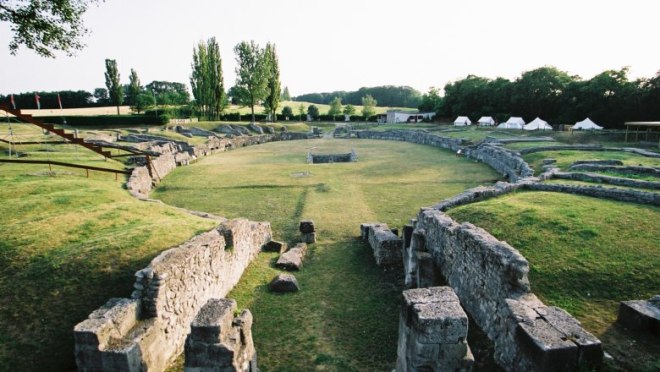
It is the Heidentor, or Heathens’ Gate, a triumphal arch that stood on the outskirts of the town. The information board proudly informs us that it is the largest Roman remain in Austria. Indeed, the other remains in the country hardly poke out above the ground – archaeologists have had to dig them out. Here are other remains of Carnuntum.

Source

These are remains of Vindobona, which is now Vienna

Source

And these are remains of Juvavum, which is now Salzburg

Source

It gives me pause to see so very little left of what was once a great Empire. If you superimpose the Peutinger map, the old Roman map of the Empire’s road system, onto today’s Austria, you can see that the Romans had quite a presence in the country.

Source

Yet hardly a trace of any of this remains now. “How are the mighty fallen!” laments David in the Book of Samuel. And indeed how far has mighty Rome fallen.

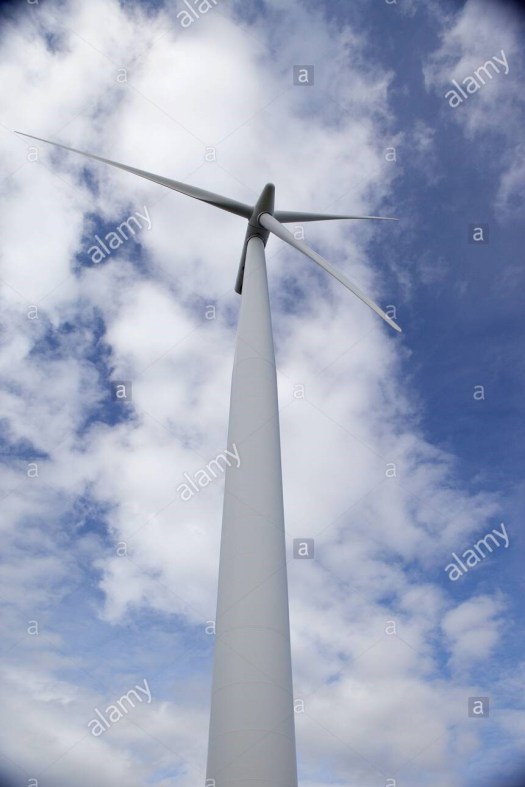
Around the Heidentor is a wind farm.

Source

The windmills, wonders of modern technology, tower over the countryside, their blades slowly turning in the wind.

Source

They are part of our line of defence against the greatest existential threat which our planet faces, climate change. Will we succeed in reining in climate change, I wonder? Or will we fail and see our civilization, like the Western Roman Empire before it, crumble under the strain of the resulting economic dislocations and social disorders? These mighty works of our civilization will eventually come tumbling down – some already have.

Source
Source
Source

Perhaps a thousand years from now, when our civilization will have been forgotten during the dark ages which will follow its collapse, descendants of the few who managed to survive will stumble across the ruins of these windmills, covered in brambles and ivy, and they will stand there marveling, wondering what they were all for.

THE PALM TREES ARE DYING

Sori, 27 April 2021

There is a walk which my wife and I take in Liguria (calling it a hike would be a bit of a stretch), which brings us by easy stages to mid level on the hills dropping into the sea, leading us eventually to the small village of San Bernardo perched atop the old fishing port of Bogliasco, from where we can walk down to Bogliasco itself and catch a bus home (after, perhaps, an ice cream to reward us for the walking).

On the way, we pass a wide terrace, which stands out from the surrounding olive terraces and vegetable patches for the simple reason that it is terribly bare. The little grass it has is clipped to within an inch – what am I saying, a centimetre – of its life. This bareness is due to the terrace’s hosting a number of ruminants – a couple of donkeys and three-four sheep – which graze voraciously on any blade of grass that dares to raise its head.

Until a year or so ago, the terrace also used to host half a dozen magnificent palm trees – very old Canary Island date palms judging by their height and girth. Two years ago, we noticed a sign which proudly proclaimed that the palm trees were part of some EU-funded project, leading us to make cynical comments about the wasteful use of EU largesse. Last year, the palm trees were gone; the ruminants had the terrace to themselves. After more cynical comments about wastage of public monies, we began to wonder.

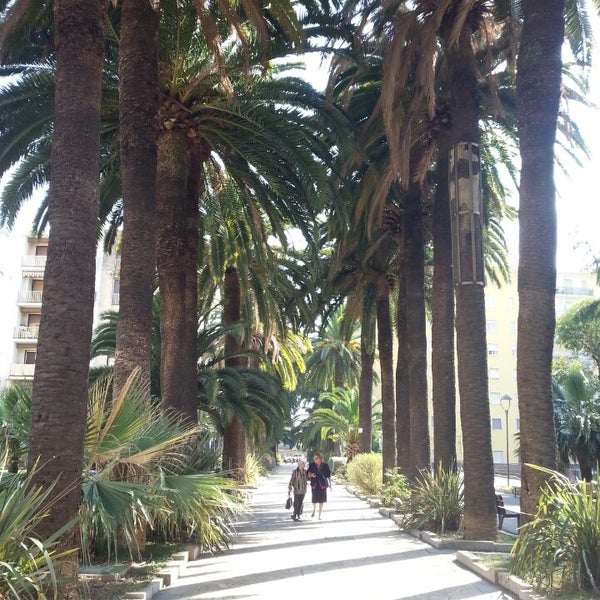
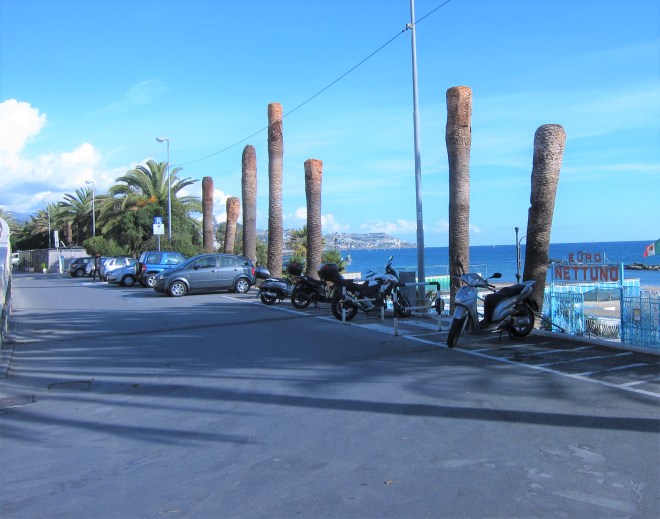
Liguria, like most Italian regions by the sea, has a large population of palm trees. The most common palm tree by far is the Canary Island date palm, and any self-respecting seaside resort will have at least one avenue lined with them, like this one in Taggia, in Liguria.

Source

Many gardens in Liguria, both public and private, will also boast a palm tree or two. Other than the Canary Island date palm, it’s possible to spot, over a garden wall or tucked away in the corner of a park, a whole slew of different palm species: the true date palm, the Chinese windmill palm, the California fan palm, the Mexican fan palm, the Chilean wine palm, and more.

Now, the fact is that in the last year or so during our walks and hikes in Liguria we have been noticing many dead palm trees, either with their fronds dried up and drooping piteously, or with the fronds completely amputated leaving behind a forlorn blackened trunk.

Source
Source

A quick zip around the Internet has shown us that this Great Die-Off of Ligurian palm trees that we have been witnessing is due to this critter.

Source

This is Rhynchophorus ferrugineus, known in English as the red palm weevil. It’s really a very pretty beetle, one which I would be proud to have pinned to the board of a beetles collection if I had such a thing.

Source

But this pretty, pretty beetle has the unfortunate habit of laying its eggs at the base of palm tree fronds, from which larvae hatch, which then burrow down into the trunk to the root of the fronds and live off their lymph, killing them off in the process. The larvae pupate inside the trunks, and when they have metamorphosed into beetles, they crawl out and fly off to find mates and new palm trees to attack. This attack on the fronds is deadly because palm trees, unlike true trees, die when their crown of leaves are killed or are chopped off.

This beetle is originally from tropical Asia, where it attacks many species of palms. But the active international trade in palm trees has brought it to Italy, where it has been overjoyed to find a host of new palm trees to attack. Unfortunately for the palm trees, our beetle friend is not at all finicky about what palm trees it attacks. And it seems to have no complaints about the Italian climate either.

It’s the same old story of invasive species, a topic I’ve covered several times in these posts: the water hyacinth, the prickly pear, the Himalayan balsam, the Jerusalem artichoke, among others. I’m beginning to sound like a broken record, repeating myself over and over again (as I write this, it saddens me to think that only people over the age of 60 will know what I mean, because they might well have owned a vinyl record in their youth and seen how a scratch can lead to the needle jumping backwards and repeating the same piece of music over and over. But I digress.)

Of course, it’s not just Italy which has been attacked by this plague of red palm weevils. Everywhere along the southern rim of Europe, where the climate is mild enough to allow palms to grow, the beetle has arrived and is decimating palm populations. It’s also arrived in the Middle East and North Africa and is decimating their date palm groves.

Source

In this case, there are large, and growing, economic costs attached to this plague – in Italy, palms are merely for show. In fact, I had come across anguished talk of this beetle a year or so ago, when doing some research on date palms for a project I’m involved with in Egypt (the largest producer of dates in the world, in case anyone is interested). It is only now that I have made the connection between the holocaust of palms in Italy and this other massacre of palms in North Africa.

A sighting of the beetle in California was reported back in 2010, but it turned out to be a false alarm. It’s only a matter of time, though, before the beetle arrives in the US, and many of those tall, thin, graceful palm trees my wife and I saw in LA will start dying.

Source

And no other corner of the world where palm trees grow will be spared the red palm weevil’s scourge. Eventually, the pretty red beetle will arrive. We simply live in a world which is far too open to trade; if we and our goods move all around the world so will other species, some of which will turn out to be invasive in their new homes. Simple as that.

As if all this is not depressing enough, Italy’s palm trees are under further attack from another invasive species, a moth this time, which hails from Uruguay and central Argentina. Its formal name is Paysandisia archon, but it’s known in English as the palm moth or palm borer. It too is quite a handsome species.

Source

It attacks palms in more or less the same way as the red palm weevil: it lays its eggs at the base of the palm fronds, the grubs once hatched burrow into the trunk to the root of the fronds, and then they proceed to suck the life out of the fronds. “Luckily” (if that term has any meaning here), this moth has a rather long life cycle, so it’s taking longer to spread through Italy’s palm populations than the red palm weevil (and so is getting less press). But it is spreading, under the radar. Like the red palm weevil, its tastes in palms are quite catholic, so none of the palm species in Italy are spared its attentions.

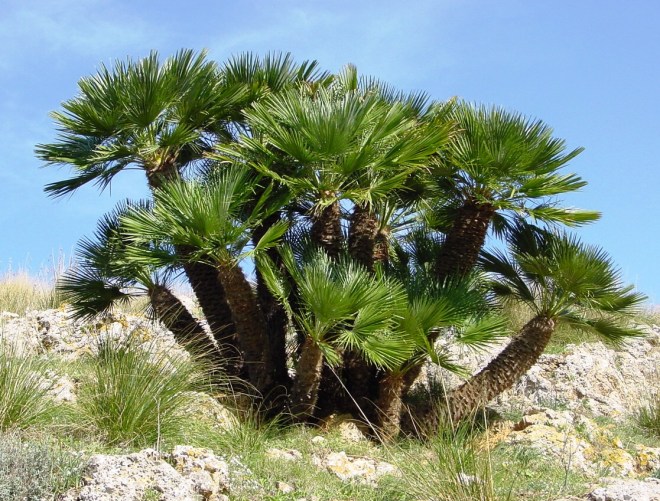
Of course, one could shrug one’s shoulders and point out that this beetle is wiping out plants that are not themselves natural to Italy but were brought here from somewhere else – a punishment for an earlier disregard of Nature’s ecosystems. Unfortunately, though, the beetle also seems to attack Italy’s one and only endemic species of palm, the dwarf fan palm.

Source

As the name suggests and the photo shows, it’s a bit of a runt of a palm. It doesn’t grow more than 2 metres high, and it grows in clumps, so you can’t use it to line a stately avenue of some seaside resort. But it is actually from this part of the world, and it does have its niche and role to play in Italy’s ecosystems. Right now, the red palm weevil seems to prefer the other species of palm available to it in Italy, so it only occasionally attacks the dwarf fan palm. But imagine what will happen once the weevil has killed off most of the other types of palms around: very sensibly, it will turn to the next best thing to keep going, at which point the dwarf fan palm’s days will be numbered – if it hasn’t already disappeared, that is; contrary to the red palm weevil, the palm moth is very partial to the poor little Italian palm.

I’d like to end this post on a somewhat positive note, but right now it looks like we are losing the battle against weevil and moth. The classic modern response of spraying everything in sight with chemical insecticide is not only dangerous but it’s also not clear how well it works. And on top of that, it appears that the weevil at least is becoming resistant to chemical insecticides. Maybe pheromone traps could work. But maybe not. What I’m really nervous about is that some bright spark will go to tropical Asia (for the weevil) or Uruguay and central Argentina (for the moth) and bring back one of these pests’ natural predators, that the predators will be set free to attack weevil and moth, and that they will promptly attack some other easier target they find, thus becoming an invasive species in their own right – this is not science fiction, it’s happened before.

The best thing is just leave species where they are. We all have perfectly lovely local species. Let’s make our surroundings lovely with them and not with species we have brought from some other corner of the globe.

SEAGULLS – LOVE ‘EM AND HATE ‘EM

Sori, 4 April 2021

My wife and I have spent the last month or so on the Ligurian coast, far away – we hope – from the modern pestilence ravaging the bigger cities of northern Italy. Our base is the small seaside village of Sori, which sits at the end of a long and narrow valley that slices up into the range of hills backing the sea. Our apartment is up one side of the valley, with our balcony overlooking the village below and giving us a view of the olive trees tumbling down the steep valley side opposite.

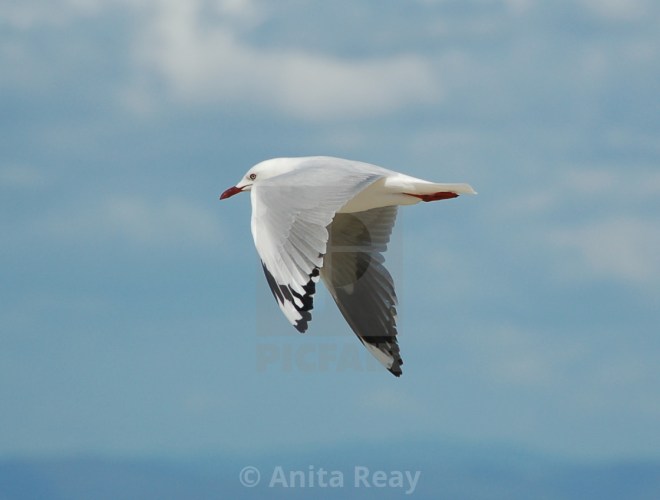
Often now, more often than we remember, as we sit there admiring the view we will see seagulls coming in from the sea, riding up the wind currents on the far side of the valley, banking, and then gliding past our balcony seat back to the lapis-lazuli sea, with perhaps a lazy flap or two of their wings. Once in a while, their flight will be accompanied by the bells ringing out from the village church, as is the case as I write this.

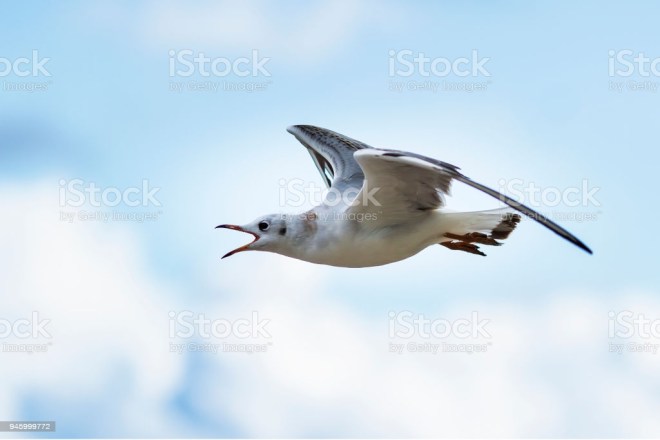
A seagull in flight is a beautiful thing. I’m too busy watching them to take photos, and anyway my iPhone camera is not up to the task. But photographers far more able than I have caught them in flight, as these few photos culled from the net attest.

Source
Source
Source

Sometimes, as the gulls fly by they open their beak – and the love fest is over.

Source

The calls which gulls make are really horrible. A mournful wail is really the only way I can describe it. It can come out as one long sound, or as a string of short sounds, or as both. In fact, I learnt while reading up on gulls that their original name in English was mews, a Germanic word (the German word for gulls is Möwe, for instance, while the Dutch word is meeuw; even the French have used the German root, calling gulls mouette). It’s clearly onomatopoeic – another way of describing the noise gulls make is that they are mewing. For some reason, though, the descendants of the Anglo-Saxon immigrants to the British Isles switched to a form of the Brythonic Celtic name (compare “gull” to the Welsh gwylan, the Cornish guilan, the Breton goelann). I would say a rare example of a victory of the original Celtic immigrants over their later Anglo-Saxon overlords.

The moment gulls mew, I am instantly transported to my youth. I am back in some small English fishing port. It’s cold, it’s windy, it’s probably also raining, the tide is out, the boats are sitting awkwardly on the mud flats. And the water is absolutely bloody freezing.

Source

The photo gives the scene a certain aura of romanticism, but for me there was none. I would always become enveloped in a dark cloud of melancholy in places like this, made all the worse by the mournful mewing of the seagulls flying overhead. I thank God every day that the Hand of Fate led me to escape the British Isles, Celtic, Anglo-Saxon or otherwise, and end up in a part of the world where there are no tides (or hardly any), where the cold is moderate, and where the water gets warm enough by August to tempt me to bathe.

While I’m at it, I might as well get my other beefs with gulls out on the table. First, there’s their eating habits. I read that people call gulls “rats of the sky”. I’m afraid this is an apt description. They’ll basically eat anything, which is why – like rats – they thrive on landfills or waste dumps.

Source

The one time I worked on a landfill, I’d mentally take out my depression of being in such a shit-hole on the flocks of gulls dancing around the mounds of fresh garbage being deposited, mewing and squawking as they fought amongst each other for food scraps. How could they demean themselves to eat that crap?!

And they are really cheeky bastards, quite willing to snatch food from beachgoers.

Source

Kleptoparasites, a scientific name to describe their feeding habits, is a polite way of describing this nasty behavior on their part.

And of course, like other species which feed on the crap which our civilizations spew out (rats, pigeons, cockroaches, to name a few), the gulls are thriving while thousands of other species are collapsing all around us.

My other beef with gulls is their readiness to poop on to you the digested remains of that food they snatched from you – another epithet for gulls is “bags of crap with wings”. Of course, it’s hilarious when it happens to someone else, as exemplified by this moment in the Tintin story “Temple du Soleil”.

Source

But it’s less droll when it happens to you.

But why am I complaining? Gulls are what they are. If we want them to behave nicely, we should behave nicely first and not destroy the planet we all share.

And with that moralistic conclusion, I shall go back to watching the gulls – or mews – soar up the valley, bank, and glide down back past our balcony.

THE GARDENS AT VILLA DURAZZO PALLAVICINI

Sori, 16 March 2021

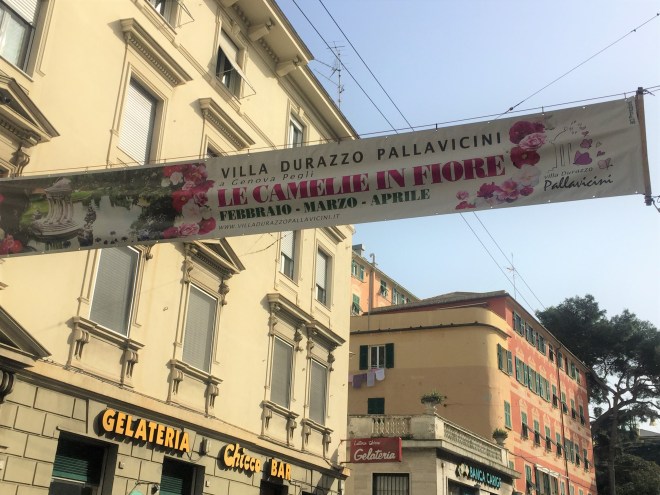
Nearly a month ago, when my wife and I were walking through the local town of Nervi, I happened to notice this banner strung across the street.

my photo

It was an invitation to all and sundry to come and admire the camellia which were flowering in the gardens of the Villa Durazzo Pallavicini in the Genoese suburb of Pegli.

We filed this invite away for possible future use, but it was only a week or so ago that we got around to going. What we discovered was more than just a bunch of camellia in flower – although we did also find that. It turns out that the villa’s gardens, which were laid out in the first half of the 1840s, are quite famous. They were the brainchild of the Marquess Ignazio Pallavicini and were designed for him by a certain Michele Canzio. This Michele Canzio was a man of the arts: an architect, an interior designer, and – important for our story – a set designer for Genova’s opera house, the Carlo Fenice theatre.  The garden he designed for Ignazio Pallavicini was composed of a series of theatre sets made up of little lakes, streams, waterfalls, various buildings of one sort or another, garden furnishings, rare plants, all inserted into general greenery. In fact, a visit to the gardens was quite openly a theatrical event, with visitors invited to wind their way up the steep hill behind the villa through gardens divided into a Prologue and Background followed by three Acts. Each of these in turn were sub-divided into a number of Scenes, with each section and sub-section having a title. So we have:

Prologue and Background
– The Gothic Avenue
– The Classical Avenue

Act I: The Return to Nature
– Scene I: The Hermitage
– Scene II; The Amusement Park
– Scene III: The Old Lake
– Scene IV: The Spring

Act II: The Recovery of History
– Scene I: The Chapel of the Virgin Mary
– Scene II: The Swiss Hut
– Scene III: The Condottiere’s Castle
– Scene IV: The Condottiere’s Mausoleum

Act III: Catharsis
– Scene I: The Inferno
– Scene II: The Large Lake
– Scene III: The Gardens of Flora
– Scene IV: Remembrance

Looking at all that, I have a sense of being trapped in a rather bad knock-off of a Wagnerian opera, with some knight errant wandering the forests of Mittel Europe searching for his Loved One. But what I feel doesn’t matter. It’s what people at the time felt that matters. They loved it. When it opened to the public (for a fee), it was an instant success. It became the centre-piece of a broader plan by Marquess Pallavicini to turn Pegli from a sleepy little fishing village on the far outskirts of Genova into a smart seaside resort where the Great and the Good from all over Europe could come to spend their winters (and later their summers). The Marquess used his political muscle (he was a Senator in the newly-formed Kingdom of Italy) to make sure that the railway being built out from Genova westwards had a stop at Pegli, donating part of his land for the station buildings as well as for an upscale hotel to house the Great and the Good who would be arriving by train and for a smart new municipal building from which the new, modern municipality he was promoting could be run. Other Genoese aristocratic families which had summer villas in the area knew a good thing when they saw it and had their villas turned into luxurious hotels. And the Great and the Good came: the hereditary princes of the German Empire, various members of Italy’s House of Savoy, various literati such as George Sand, Alfred de Musset, August Strindberg, Franz Kafka, Arrigo Boito, among others. All these Great and Good visited the gardens at Villa Durazzo Pallavicini, and where they went so did Europe’s bourgeoisie.

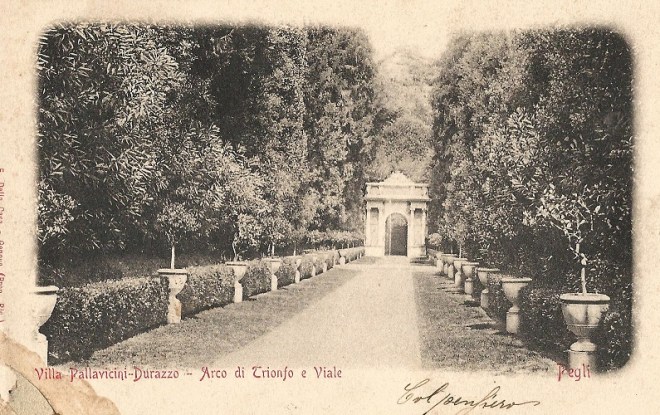
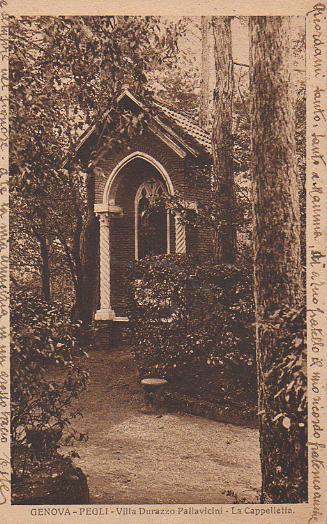
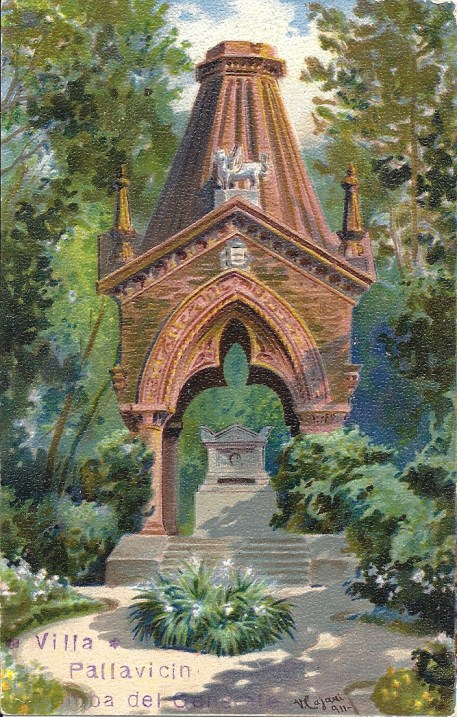
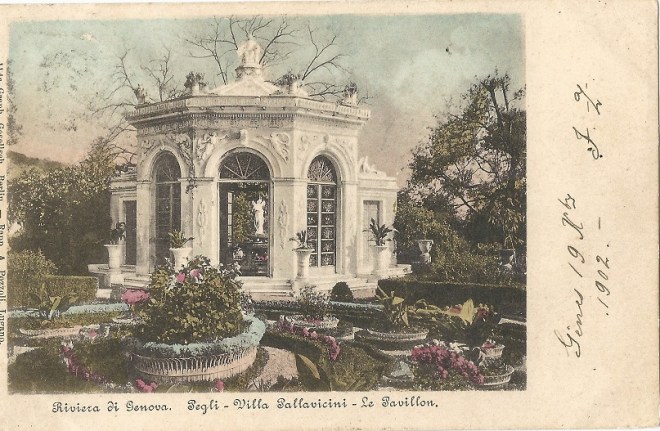
By now readers might be getting a little impatient and asking themselves what these gardens looked like. Let me answer them by showing a series of postcards from the turn of the century. Wonderful things, postcards. People loved to show the folk back home where they had been, and tourist spots like the gardens of the Villa Durazzo Pallavicini were more than glad to oblige. My wife has a large collection of postcards sent by her parents, grandparents, and their friends over the decades, and it’s lovely to sit down of a winter evening and browse through them. But I digress. Here are postcards of the gardens:

The Gothic Avenue

Source

The Classical Avenue

Source

The Hermitage (which Canzio rather cleverly had built on the back of the Triumphal Arch which completed the Classical Avenue)

Source

The Amusement Park (where visitors could take a spin on the carousels)

Source

The Spring

Source

The Chapel of the Virgin Mary

Source

The Condottiere’s Castle

Source

The Condottiere’s Mausoleum

Source

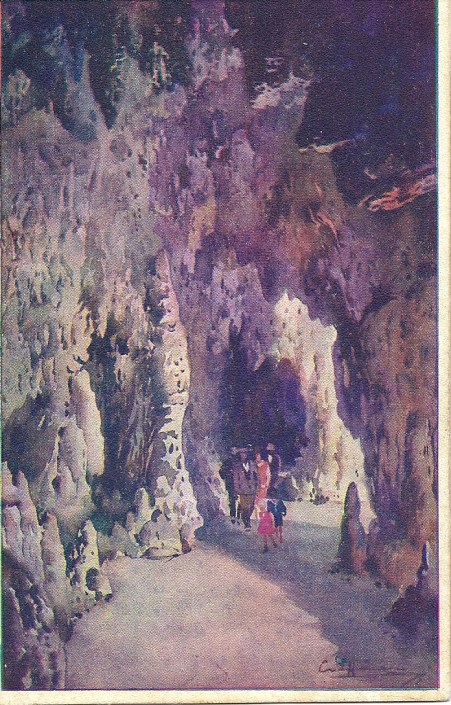
The Inferno (made by taking the stalactites and stalagmites from other caves and placing them here; the environmentalist in me shudders)

Source

You could also visit the Inferno by boat

Source

And finally the Large Lake

Source

as well as the Gardens of Flora

Source

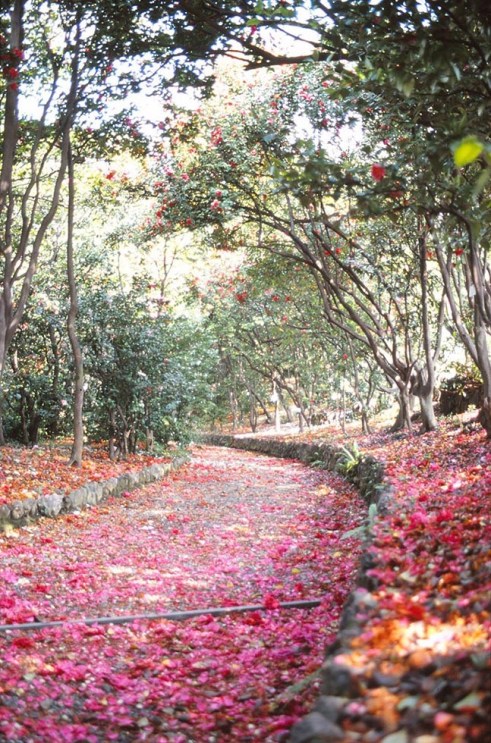
Oh, and perhaps I should add a photo of the camellias, which was what brought us to the gardens originally (although this is not a postcard, since it would seem that postcard makers didn’t see the interest in having postcards of the camellias).

Source

As this photo suggests, we came a little too late, many of the camellias being past their prime. Quite how the camellias fitted into Canzio’s grand operatic scheme is not clear to me, but we can let that pass.

Would I recommend to readers to visit the gardens? I’m not sure I would. It’s not just that the highly artificial nature of the gardens does not chime with modern sensibilities (at least, it doesn’t chime with mine). It’s also that the gardens have suffered heavily from Genova’s modernization over the last century. To explain what I mean, I have to take up the story of Pegli from where I left off a few paragraphs ago.

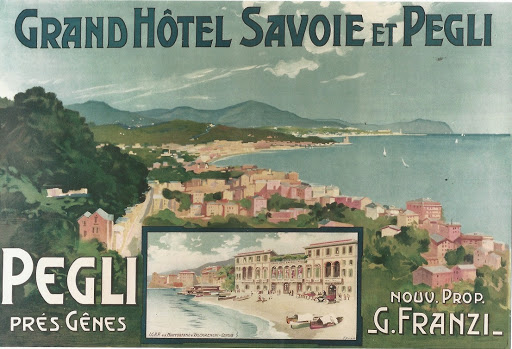
Marquess Pallavicini wanted to turn Pegli into a smart seaside resort, and as we have seen for a while this plan was successful, as this poster from the turn of the century suggests.

Source

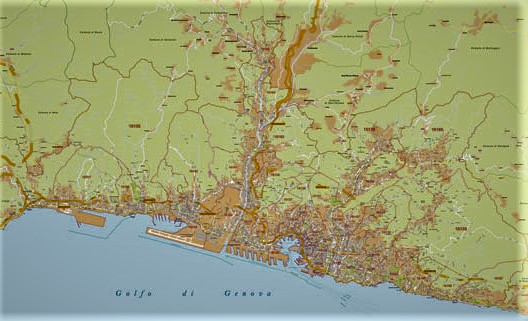
But in the late 19th-early 20th Century, Genova, which we see in the far distance in this poster, was spreading like a cancer along the coast and up the valleys behind it – it was the only way the city could expand in this region where the steep hills drop precipitously into the sea. To show what I mean, here is a map of what Genova looks like today. It’s expanded up and down the coast, swallowing up places like Pegli, and sent tendrils of urbanisation up into the valleys behind.

Source

By 1926, Genova had reached Pegli and gobbled it up. Pegli as a distinct municipality was no more.

Like all modern cities, Genova was also pushing to industrialize, and it was industrializing on the side towards Pegli. In 1915, just before Italy entered the First World War, this was the view the visitor would have had looking towards the villa.

Source

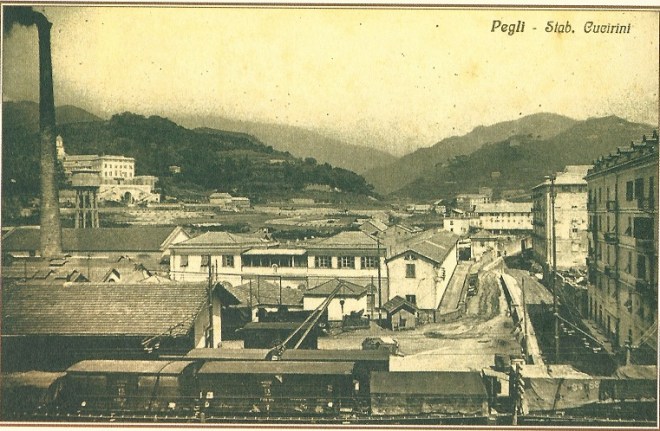
We have the villa standing proud on the edge of the hill, with the gardens climbing the hill behind it. In front of it are orange trees, vineyards, and other fields, all the property of Marquess Pallavicini and his heirs. A decade or so later, we have this large cotton mill down by the rail tracks, with the villa in the middle distance partially blotted out by the belching industrial chimney. There were even bigger industrial plants to the right of this photo. One in particular became a very large steel plant.

Source

By this time, the Great and the Good had packed their bags and were spending their winters and summers elsewhere along the Ligurian coast, or on the adjoining coast in France, the Côte d’Azur. Pegli had just become a grimy suburb of Genova. I suspect that Pallavicini’s heirs saw which way the wind was blowing, because the last owner of the villa and its gardens donated them to the city of Genova in 1928. But at least she did so with the provision that the villa be allocated to some cultural use and that the gardens be kept open to the public (Genova more or less honoured the bargain; one part of the villa has become a museum and the gardens were kept open until the 1960s – more on that in a minute).

The pace of modernization quickened after World War II. And here, to continue the story, I switch back to our visit of the gardens. We had passed through the Prologue and Background and had started onto Act I when we started hearing a low roar, which got stronger and stronger as we progressed. At some point, we reached a Belvedere where we got a beautiful, close-up view of –– the A10 motorway, which runs from Genova to Ventimiglia. This section of the motorway was built in the 1960s.

Source

This screenshot from Google Maps shows just how the motorway smashed its way through the hill under the gardens.

Source

The construction of the tunnel so badly damaged the gardens that they were closed until 1992, when they were reopened to the public after a decade of restoration. Even today, much of Act I of the gardens is blighted by the continuous roar from the motorway.

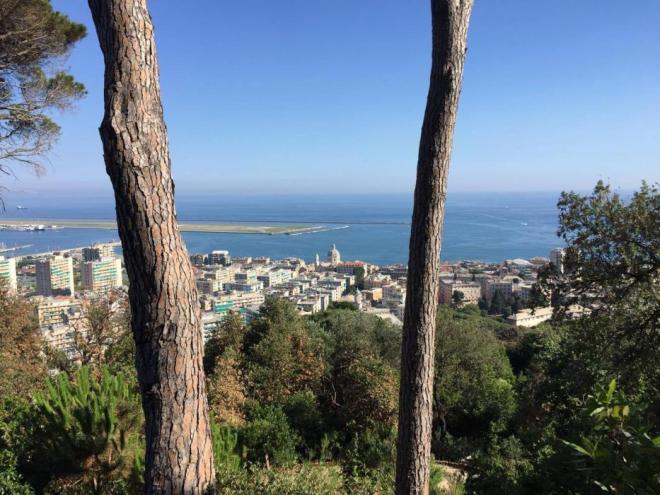
When we had climbed higher, reaching the end of Act I, we began to get splendid views over the sea –– and onto the runway of Genova’s airport.

Source

As the photo shows, the runway is built on the sea, a consequence of the fact, which I’ve already mentioned, that Genova lies at the foot of steep hills that drop straight into the sea – there is no nice flat space nearby where a runway could be built.  After some back and forth, it was decided to build the airport and its runway to the west of Genova, I suspect because this part of the city had already been blighted by industrialization and no-one would complain too much about it. Luckily, the day we visited the gardens no planes landed or took off – Covid-19 induced no doubt – but I presume that on a normal day the noise of planes taking off would add to the noise from the motorway.

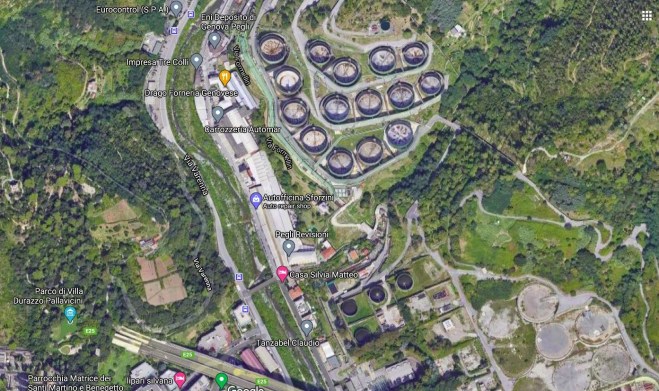
On we climbed, and as we got the end of Act II, and the highest point of the gardens, we could enjoy a new view across the valley running alongside the gardens –– to a series of oil tanks planted on the hill on the other side of the valley. They were painted a sickly green, no doubt to claim they were environmentally-friendly. Unsurprisingly, but unfortunately for me, no-one seems to have posted a photo of these oil tanks taken from the gardens, so the best I can do is to show another satellite photo from Google Maps.

Source

The tanks are that group of circles, and to locate the gardens please follow the motorway as it punches its way through the hill.

The presence of oil tanks there are the consequence of another decision, taken in the early 1960s, to have Genova’s oil terminal built close to the airport (so another pleasant sight from the gardens must no doubt be the periodic arrival of oil tankers coming in to offload their cargo). The oil pipelines snake over the hills from the terminal to these tanks, where the oil is stored prior to further onward delivery to the north of Italy.

After enjoying these sights, we wended our way down through Act III of the gardens and on down to the exit. When we arrived back at the villa we went out on its ample terrace to admire the view –– and got a close-up of people’s clothes drying on their balconies. In the 1960s and ’70s, those pleasant fields of orange trees, vineyards and other crops which used to lie at the foot of the villa, and which I show above in that postcard from 1915, had been cemented over to make way for cheap housing. Here we have a view of that housing, and at the end of the avenue we can see the villa.

Source

No “green belt” was kept between the housing and the villa. The apartment blocks come right up to the gates of the villa.

So, like I say, I don’t think I will be recommending a visit to these gardens to anyone. I feel sorry for the enthusiastic volunteers who manned (and womanned) the gardens, I respect the spending of public moneys to restore the gardens, seen as a great example of garden design from the Romantic age, but the garden’s context has been so ruined as to blight any visit to the gardens.


SPRING IS HERE!

Sori, 8 March 2021

“Spring his here” crooned Frank Sinatra. And indeed – at least in the little corner of the Northern Hemisphere on which my wife and I are currently perched – Spring is here! Frank  then goes on to lament the lack of love in his life, but that is not our problem. My wife and I can just focus on the flowers exploding into life all around us, humming soulfully a tune or two as we do so.

As usual in Liguria, mimosa was the first to burst onto the scene, with joyous sprays of canary yellow.

Those are fading now, their place being taken by crocuses (high up in the hills)

my photo

various fruit trees

my photo
My photo

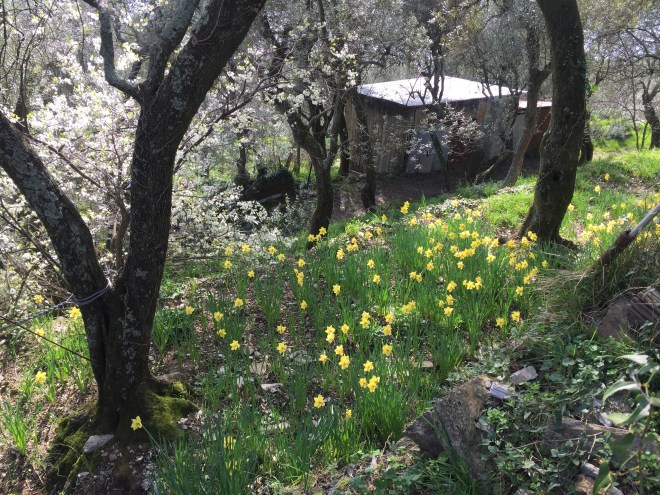
and of course daffodils! Gardens and public parks have a sprinkling, but my eye was really caught by this bevy of them planted in a corner of an olive-tree terrace.

my photo

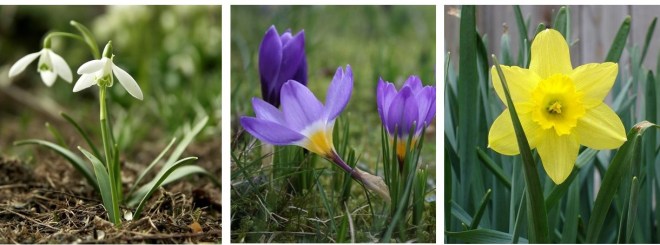
It’s been decades now since I’ve lived in the UK, but first impressions on the young mind are indelible (as opposed to impressions on the old mind which I find to be distressingly delible). My spending the Springs of my youth in rural Somerset, in that prep school which I mentioned in a recent post, has meant that in my mind’s eye Spring will always be that triumvirate of flowers: the snowdrop, the crocus, and the daffodil, which someone at the school had planted in various corners of the school grounds.
Later, when I moved on to my public school (in Brito-speak, a private boarding school for boys (in my time) aged between 13 and 18), my soul was stirred during my first Spring there by bunches of daffodils which sprang out of the lawn in front of my House.

Source

That same Spring, just off the path which led down from the House to the main school buildings, I discovered a group of narcissi, those cousins of the daffodil, scattered down a slope.

Source

I was enchanted.

Alas, I quickly learned that showing a delight in flowers would definitely put me in the uncool category at school. I risked being compared to Fotherington-Thomas in the book “Down with Skool”. Molesworth, the purported author of the book, has this to say about Fotherington-Thomas: “you kno he say Hullo clouds hullo sky he is a girlie and love the scents and sounds of nature … he is uterly wet and a sissy” (Molesworth’s spelling is also quite erratic). This gallery of drawings in the book of Fotherington-Thomas, by the great Ronald Searle, says it all.
At the age of 13-14, that was definitely not where I wanted to be! And so I buried my uncool delight in daffodils and other flowers of Spring under deep layers of teenager cynicism and world-weariness. A few years later, when I got to know it, I could only secretly thrill to Wordsworth’s poem “Daffodils”.

I wandered lonely as a cloud
That floats on high o’er vales and hills,
When all at once I saw a crowd,
A host, of golden daffodils;
Beside the lake, beneath the trees,
Fluttering and dancing in the breeze.

Continuous as the stars that shine
And twinkle on the milky way,
They stretched in never-ending line
Along the margin of a bay:
Ten thousand saw I at a glance,
Tossing their heads in sprightly dance.

The waves beside them danced; but they
Out-did the sparkling waves in glee:
A poet could not but be gay,
In such a jocund company:
I gazed—and gazed—but little thought
What wealth the show to me had brought:

For oft, when on my couch I lie
In vacant or in pensive mood,
They flash upon that inward eye
Which is the bliss of solitude;
And then my heart with pleasure fills,
And dances with the daffodils.

But now that I am old and venerable, and my foibles and oddities are tolerated (“don’t worry about him, he’s just an old fart”), I can openly advertise my delight in the flowers of Spring. I can, like the Great Poet, lie on my couch and let my heart with pleasure fill and dance with the daffodils and all the flowers that Spring brings us.

Source


BITTER CAMPARI

Milan, 26 February 2021

Two weeks ago, my wife and I had decided to go up to Lake Como for a hike. We got ourselves all prepared, we arrived in good time at the train station … only to discover that the railway workers had gone on a half-day strike!

We were floored. It was such a beautiful day! The sun was shining, not a cloud in the sky, we couldn’t let it go to waste! I suggested we do instead a long urban hike through Milan and its suburbs. My wife immediately upped the ante and suggested we walk all the way to Monza. After a moment’s hesitation (“Monza? How far is that!?” Answer: a mere 16 km), I agreed and used Google Maps to find us a route.

It was … an interesting walk, shall we say, taking us as it did past the hulking remains of Milan’s industrial past mixed in with what must have once been smart villas owned by the owners of those same industrial remains; past areas which still showed vestiges of an agricultural past but which now were just dead lands squeezed between train lines and highways; past cheap suburban housing erected in haste in the 1960s and ’70s for all those people who commute to Milan and back every day.

I may one day include this walk in a more general musing about industrial decay in the developed countries. But all I want to say today is that along the way, quite by chance – as I say, I merely followed Google Map’s suggested route – we passed the old factory where, once upon a time (in the early decades of the 20th Century, to be precise) the Italian alcoholic drink Campari was made. (As the photo shows, the building is now enveloped in a massive modern building)

Source

I made a mental note and carried on walking. Then, a few days later, when my wife and I finally did make it to Lake Como, we came across this fountain, erected in the 1930s, which, as readers can see, also acted as a promotion of Campari.

My photo

I knew immediately that these two chance encounters with Campari within a few days of each other were A Sign. It was clear that I had to write a post about that most Italian of alcoholic drinks! But also a post about a company which did not become one of the hulking ruins that my wife and I walked by on the road to Monza but managed to turn itself into a hulking multinational.

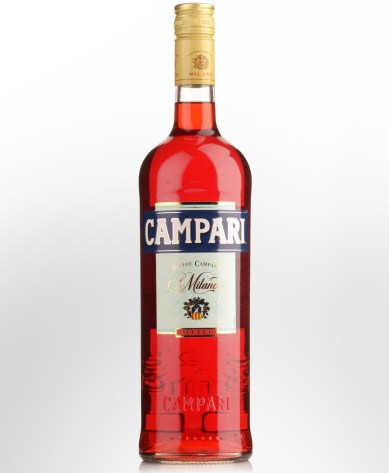
For those of my readers who might have been living in a parallel universe all their lives and never heard of Campari, I start with some basics. First, the look of the drink:

Source

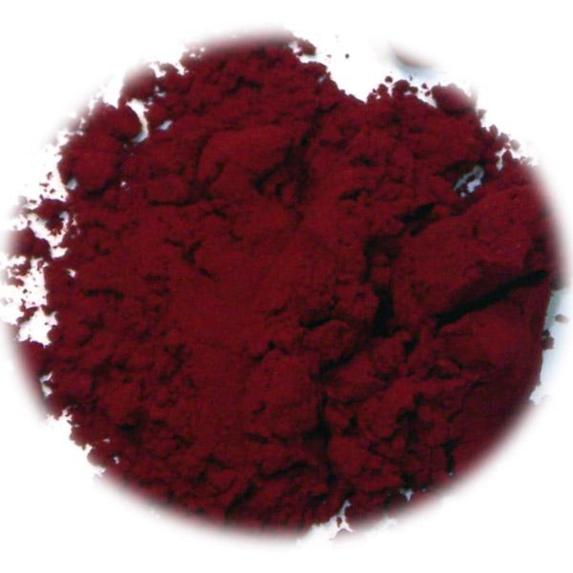
As readers can see, it is incredibly red, almost scarlet, in colour. This is achieved by adding cochineal to the recipe (at least, in the original; Lord knows what artificial colourant they use nowadays) – cochineal is the protective carapace of a tiny insect that lives on prickly pears (I only mention this irrelevant fact because it allows me to make a link to a previous post I wrote about prickly pears). Here is a pile of carapaces.

Source

And here is a pile of the colourant extracted from these carapaces.

Source

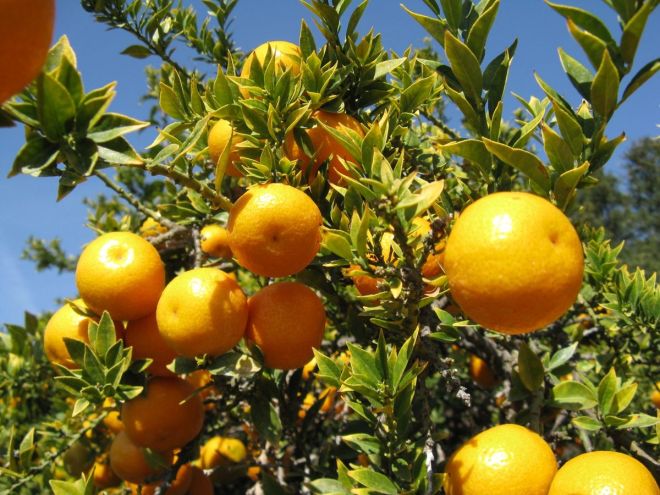
As for the other ingredients, we have pure ethanol of course – it wouldn’t be an alcoholic drink without it. We have water – drinking undiluted ethanol would be undrinkable and probably illegal. For taste, we have “bitter herbs” not further specified – as I’ve discovered with other herb-infused drinks, the identity of these “herbs” is always a tightly held secret (although one article I read claimed that during the writer’s visit to Campari’s modern bottling plant outside Milan he was told that two of the herbs used were rhubarb and ginseng). We also have chinotto, a sour citrus fruit closely allied to the bitter orange.

Source

Those two sets of ingredients make for a bitter taste, and in fact Campari’s proper name is Bitter Campari. Finally, we have the bark of the cascarilla, a plant that is a member of the Croton family and is native to the Caribbean.

Source

The cascarilla adds to the bitterness but is also a so-called stomachic, something that is supposed to stimulate the taste buds, thus producing reflex secretion of gastric juices, which in turn increases appetite. This is why, rather than being considered a digestif, to be drunk after a meal as an aid to digestion, Campari was touted right from the start as an aperitif to drink before starting the meal; it got your stomach ready for what you were about to eat. I’m not sure if there is any real science behind this claim (or behind similar claims that digestifs aid digestion, for that matter), but in the old days it surely gave men (always men, of course) a good excuse to pop into the local bar and have a drink (or two) before they wended their way – perhaps a little unsteadily – home for lunch or dinner (and then they could wend their way back to the bar for a digestif or two – nice life!).

That’s the basic product. But how do you drink it? Not neat, that’s for sure (maybe there are people who drink it so, but they are weird). Nowadays, of course, when every barman – sorry, barperson – between Milan and San Francisco to the west and Sydney to the east wants to distinguish themselves from every other barperson, there are a variety of concoctions available in bars which include Campari: the Milano Torino (Campari and red Vermouth in equal parts – explanation of nomenclature: Campari was invented in Milan, Vermouth in Turin), the Negroni (Campari, red Vermouth, gin), the Americano (same as the Negroni but replacing the gin with soda water), Negroni sbagliato [Negroni gone wrong] (same as the Negroni but replacing the gin with a sparkling white wine), the Cinque a Zero [5-0] (8 parts white wine, 2 parts Campari), the Pirlo con Campari [Wanker with Campari] (white wine, sparkling water, Campari), the Garibaldi (Campari and orange juice), the Anita (Campari and bitter orange juice – explanation of nomenclature: Anita was Garibaldi’s wife), etc., etc., etc. But the real – the original – the only – way to drink Campari is with a shot of cold soda water: no more, no less. Anything else is just froth and noise.

Source

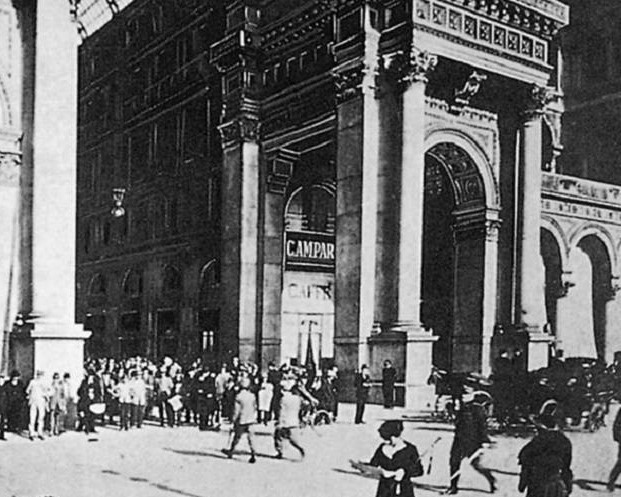
That’s the way the originator of Campari, Gaspare Campari, used to serve it, in the 1860s and beyond, in the bar he owned on Piazza Duomo in Milan, at the corner with the Galleria Vittorio Emanuele II. The bar was, appropriately enough, called Caffè Campari. Here’s a photo of it in a later period.

Source

Interesting fellow, Gaspare. Born in 1828 into a family of humble agricultural workers in the province of Pavia, he had a passion for the black arts of distillation. In a different era, I could imagine him ending up as a rural alchemist or sorcerer. Instead, in the 1840s he went off to Turin and learned how to distill properly and make cordials, liqueurs, digestifs, aperitifs, and other alcoholic elixirs. He kept inventing various alcoholic concoctions all his life, giving them colourful names: Elixir for a Long Life, Oil of Rhum, Rose Liqueur, and so on. But with his bright red concoction he hit a sweet spot among his Milanese customers. Originally, he called it Bitter as Used in Holland (in reference to the apparent Dutch fondness for bitter cordials), but it became so popular and so tied to his bar that it became known as Mr. Campari’s Bitter. From there, it was but a short hop, skip and a jump to it simply becoming Bitter Campari.

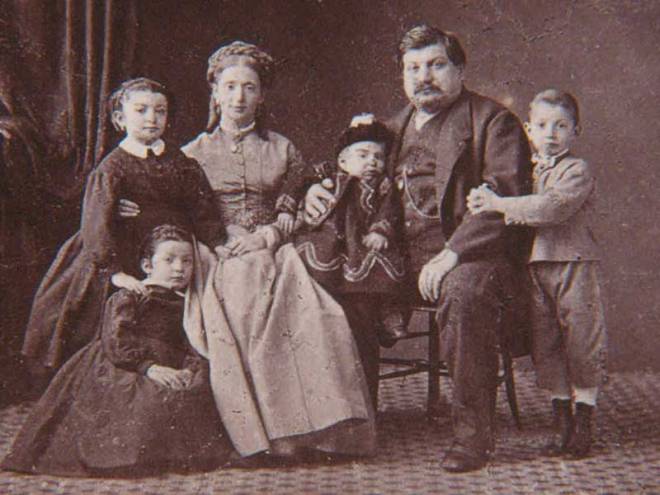
I don’t know if Gaspare was just lucky or if he had an instinctive understanding of marketing – I want to believe the latter – but his decision to open a bar in Milan’s spanking new, swanky Galleria was a stroke of marketing genius. His bar became the hang-out of the Milanese chatterati, ensuring a bourgeois respectability for his bright red concoction. The business boomed. Here we have a picture of him in his prime, with his family.

Source

Unfortunately, Gaspare died in the early 1880s when he was in his mid-50s. Without probably meaning to, he had taken the first small steps towards creating an industrial product. While he was first and foremost a caffe owner, he also bottled and sold his beverages. But this was very much an artisanal affair: he had a room behind the bar where he did his “production” and bottling.

It was his son Davide who turned the company into a real industrial business. After taking over after the death of his father, he started by decoupling the production activities from the bar. He built a modern production plant – the one my wife and I walked past – in the outskirts of Milan, selling the products through multiple outlets and not just the bar. He ran the production side, leaving the running of the bar to his younger brother Guido.

Not that the bar was not a good business. It continued to be a mainstay in the lives of Milan’s bourgeoisie. It even was honoured in 1910 by being the backdrop of a painting by the futurist artist Umberto Boccioni, Rissa in Galleria, Fight in the Galleria.

Source

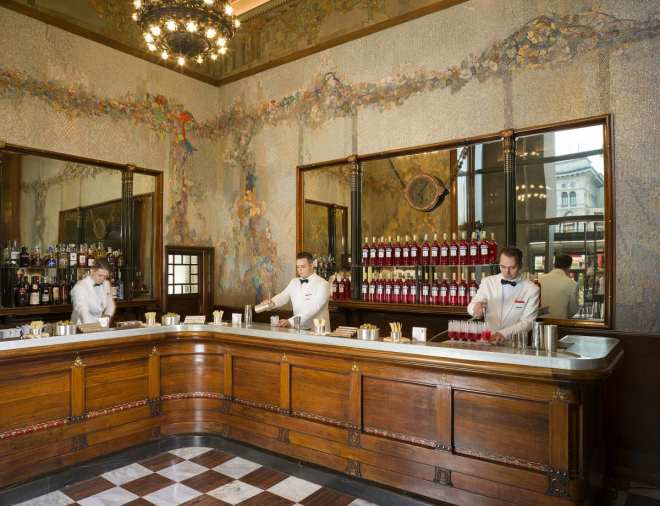
And Davide even expanded the bar business. In 1915, he opened a new bar, opposite the Caffè Campari on the other side of the Galleria, which he called the Camparino (the little Campari). It still exists. It’s a lovely little bar, decked out in what was then the latest fashion in interior design.

Source

But about five years after opening the Camparino, Davide decided to sell off both bars and focus the business on making the Campari products. This was where the real money was.

Davide’s next step was to focus the company’s production on its best selling products and shed the rest. This meant dropping all those fancifully-named products his father had created and concentrating on just Bitter Campari and one other popular product, a raspberry-based cordial. After that, he only created one more new product, the Campari Soda, which came onto the market in 1932. It was really a clever knock-off of Bitter Campari, being simply a ready-made mix of Bitter Campari and soda water. A touch of genius was to get a famous futurist artist, Fortunato Depero, to design the bottle. Depero did such a good job that the bottle became iconic and is still in use today.

Source

Davide also started a global expansion of the company, opening production plants in France and Argentina (in the latter case, no doubt to serve the large Italian immigrant population there pining for products from the Old Country).

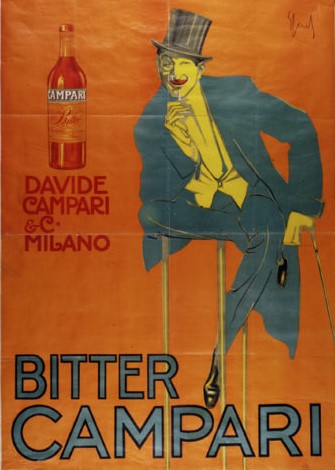
Finally, Davide invested heavily in advertising (Gaspare had never used advertising to promote his liquid wares). He had understood that for a product like Campari for which there was no need, but only desire, advertising was key to increase the product’s desirability and therefore its sales. He started with some fairly standard advertising.

Source

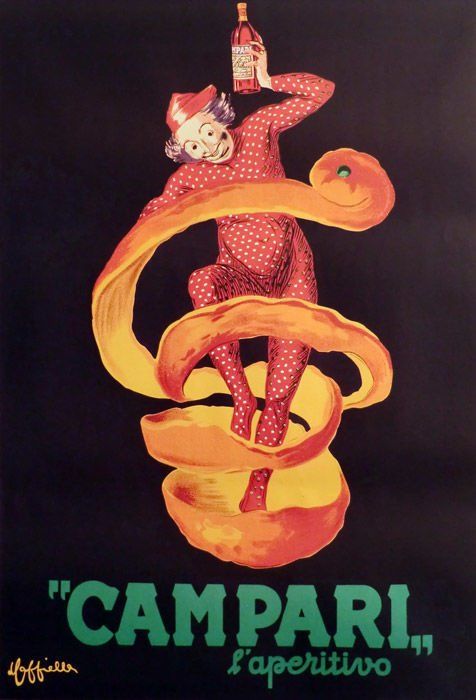
But he went on to use some of the biggest names in the advertising business. Leonetto Cappiello created this poster for Campari, which is still very well known.

Source

Fortunato Depero – he who designed the bottle for Campari Soda – came up with various proposals, this painting being the one I like best (its title is “Squisito al Selz”, “delicious with soda water”).

Source

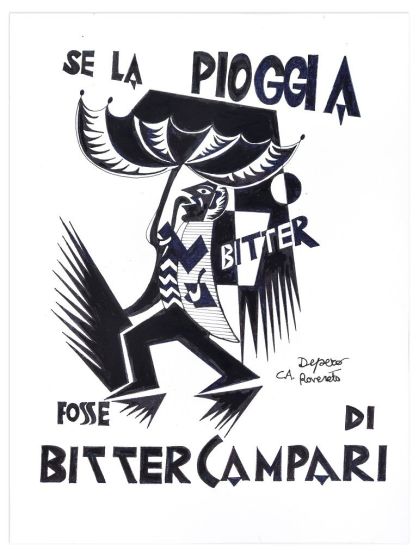
But it seems that Davide preferred using Depero’s style in black and white advertizing in newspapers, like this one (the joke is in what’s written: “If the rain were Bitter Campari”).

Source

In the same black-and-white vein, Ugo Mochi produced a series of posters. This example brings together in one place a number of individual posters he made for Campari.

Source

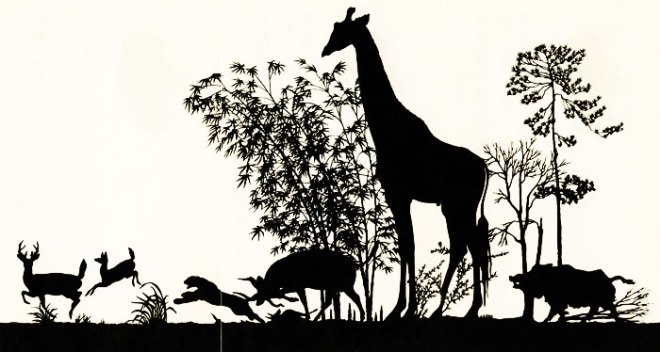
In his more serious (but perhaps less remunerative) moments, Mochi, who was known as the Poet of the Shadows, was an illustrator of animals, like in this example.

Source

In the same mode of elegance as Mochi, we have this poster by Enrico Sacchetti.

Source

While in a very sensual mode, we have this poster by Marcello Dudovich.

Source

I’m actually surprised this poster was allowed by the censorship authorities (we’re talking 1904), but they let it through (perhaps the censorship committee had been at the Campari bottle a little too much before they started their work).

Davide died in 1936, when he was just shy of 70. He and his wife had had no children, so the company was taken over by his younger brother Guido, a sister, and a nephew – as in all good family businesses, the business stayed in the family. They – and later generations – kept following Davide’s business strategy, not really trying anything new, and the company ticked along. So there’s really nothing new to report, not even in the advertising field. Finally, in 1982, the last of the Campari family sold out to two of the company’s senior managers, one of whom – Domenico Garavoglia – came out on top (how the second fellow was eliminated I have failed to establish). It is his son, Luca Garavoglio, who now runs the company.

Actually, he doesn’t run a company, he runs an empire. Like the poet, Luca came to two roads in the wood. It was the 1990s, and the growth strategy for companies in the food and drinks sector (and in the consumer products sector more generally) was to snap up well-known – and profitable – brands and create vast income flows by the savvy management of this stable of brands. Luca was faced with a choice. Either he could continue Davide’s strategy of concentrating on just one product, with the almost mathematical certainty that Campari would be bought up and become just one more brand in someone else’s stable of brands. Or he could start snapping up brands himself and manage his own stable of brands. He chose the latter road in the wood, and his decision paid off handsomely.  Luca is a billionaire and Campari currently owns 38 brands; I list here a few, the ones I am personally familiar with: Aperol, Grand Marnier, Cynar, Cinzano Vermouth, Bisquit, Glen Grant, and Crodino – in addition to, of course, Campari Bitter and Campari Soda.

Is this a good turn of events? Well, on the one hand Campari still exists, it’s not a concrete shell on the road to Monza, with broken windows and weeds growing in the old carpark. On the other hand, it exists only as a soulless multinational, buying and selling brands like kids swap in the school playground the images they find in their breakfast cereal packages. It’s no longer an Italian company – its headquarters have been moved to the Netherlands – it no longer has any real roots in the culture from which it sprang. I have already mourned this loss of local identity in an earlier post on mustard, which I think is especially critical where food is concerned. I mourn it again here.  Foods – and drinks – come from a “terroir”, as the French call it; if their link to that terroir is severed, they are merely an artificiality, a compendium of chemicals. And we are all the poorer for that.

A PUDGY CHERUB AS A WEATHERVANE

Sori, 14 February 2021

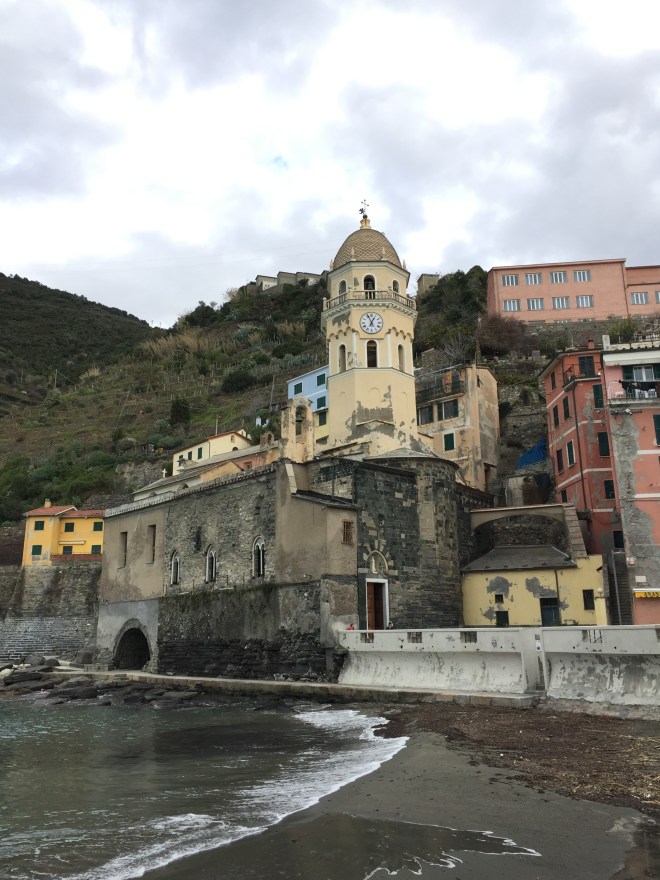
As my wife and I were walking down into Vernazza on our latest hike along the trail which links together the Cinque Terre, I noticed this on the steeple of the village church.

my photo

I suspect it’s a little difficult for readers to see what I mean, so I throw in this close-up photo of the steeple.

my photo

“This” is a weathervane. As I’m sure many of my readers will know, in the pre-modern world, where weather satellites didn’t exist and TV channels didn’t give you weather forecasts every hour on the hour, the function of weathervanes was to tell people which way the wind was blowing, a pretty good indicator of what the weather was going to be like. And of course peering at weathervanes went along with some of the weather-related sayings people were fond of quoting, like this one about the winds:
“When the wind is in the east, it’s good for neither man nor beast.
When the wind is in the north, the old folk should not venture forth.
When the wind is in the south, it blows the bait in the fishes’ mouth.
When the wind is in the west, it is of all the winds the best.”

I can imagine some great-great-great grandfather of mine looking up at the weathervane on the barn and saying “Aah, wind today’s from the north. Like they say, ‘old folk shouldn’t venture forth’”, no doubt using this as a good excuse to wend his way to the village pub to fritter his time (and money) away.

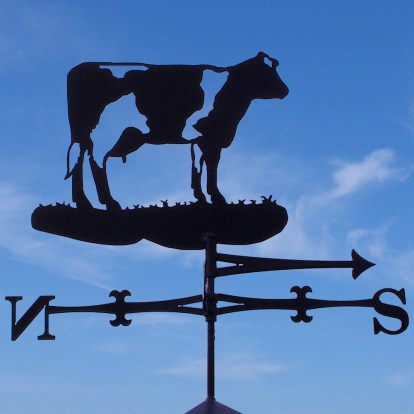
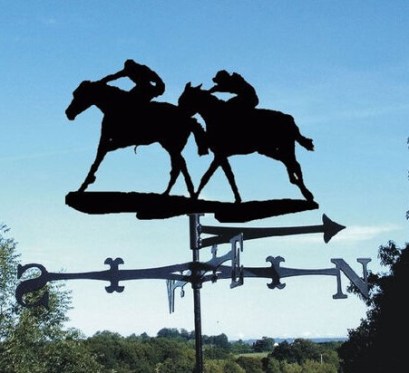
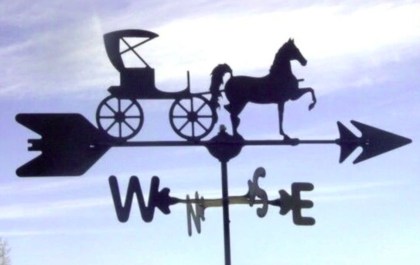
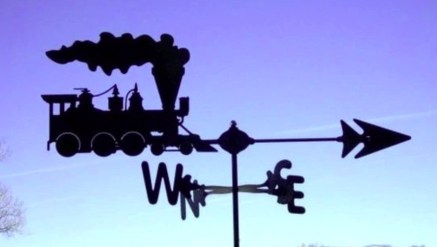
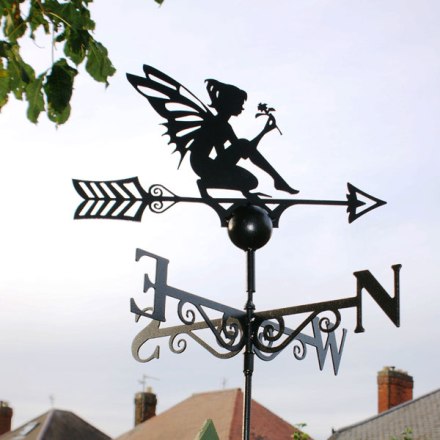
But weathervanes are also excellent examples of how we human beings transform functional objects into art. Take that weathervane on Vernazza’s church. If readers look again at my photo, they’ll see that the weathervane-maker turned the sail, which a weathervane needs if it is to work, into a rather pudgy angel. The things which weathervane-makers have turned the sail into, and continue to turn them into (this is by no means a dead art), are endless. I throw in here, in no particular order, some of the designs which have caught my fancy.

Source
Source
Source
Source
Source
Source
Source
Source
Source
Source
Source

The eventual owners of weathervanes will often choose designs that comment on something: their profession, their beliefs, their interests, the times they live in, even the racehorses they have bet on … No doubt it was in that spirit that Pope Nicholas I, way back in the 9th century, ordered that the rooster be the emblem used on weathervanes placed on Christian churches. It seems that Pope Nicolas was harking back to a comment made by Pope Gregory the Great even further back in time, in the 6th Century. Gregory had decreed that the rooster was the most suitable emblem of Christianity, being the emblem of St Peter – he is referring to the story in the Gospel where Jesus predicted that Peter would deny him three times before the rooster crowed at dawn, here captured in a painting by Francesco Rosa in San Zachariah church in Venice.

Source

Personally, I find this a rather strange reason to choose the rooster as an emblem on churches, referencing as it does a moment of shameful betrayal by the man who was to become the first Pope. I rather think that Popes Gregory and Nicolas were doing something which Christians had been doing since the dawn of their religion, putting a Christian gloss on what were actually thriving pagan traditions (“if you can’t beat them, join them”). For the Goths and no doubt other “barbarians”, the rooster, crowing as it does at dawn, was an emblem of the sun. What better emblem to put on churches! Wasn’t Jesus (apparently) born at the winter solstice, when the sun is reborn?

In any event, from the 9th Century on, rooster-themed weathervanes became the norm on Christian churches (which no doubt explains why, in English, another name for the weathervane is the weathercock). The oldest surviving weathervane in Europe – from the 9th Century – is a rooster which, until 1891, graced the Church of Saints Faustino and Giovita in the city of Brescia.

Source

And the Bayeux tapestry, my favourite tapestry and one I’ve mentioned several times in these posts, clearly shows a man installing a rooster weathervane on Westminster Abbey (the scene is actually about the burial of King Edward the Confessor; I presume the nuns who made the tapestry were adding local colour).

Source

Now, I’m sure that at this point my alert readers are saying, “Hang on a minute, why does the weathervane on that church in Vernazza have an angel and not a rooster, then?” Well, it seems that at some point the Church authorities relaxed the rooster rule somewhat. Other emblems were possible, although normally ones which were linked to the saint or saints to which the church was dedicated. In the case of the church in Vernazza, it is dedicated to Saint Margaret of Antioch. A quick zip around the Internet tells me that a weathervane emblem connected to her (completely apocryphal) life could be a dragon: one of the more dramatic moments in her life was that she was swallowed by the Devil in the form of a dragon. Dragons are popular emblems for weathervanes. Here’s a nice example.

Source

Or the emblem could be a hammer. She is often depicted, especially in Orthodox icons, as hammering the Devil – once no doubt she had been regurgitated alive by him. My wife and I saw a great example of such an icon in a museum in Athens a few years ago (for some reason, the Orthodox call her Marina rather than Margaret).

My photo

Here’s a nice example of a hammer, although it’s put together with a saw (“hammer and saw”).

Source

But no, we have an angel. OK, I guess angels are pretty saintly and so a good emblem for a church – as long as they look serious, like this emblem (for some reason, most of the weathervanes have the angel blowing a horn).

Source

But no, if readers go back to my original photo, they will see that the weathervane-maker seems to have made more of a cherub. Raphael painted the most iconic of cherubs.

Source

And here we have a nice weathervane example (also tooting a horn; it seems that angelic figures are expected to be horn players).

Source

The example on Vernazza’s church doesn’t seem nearly as cute. As far as I can make out, the cherub there has gone to seed; a cherub who has spent rather too much of his lockdown time eating and drinking and not enough time working out in his living room.

my photo

I’m not sure how the weathervane-maker got this pretty non-religious weathervane past the parish priest. Perhaps the weathervane-maker was the parish priest. Or perhaps the parish priest was a jolly fellow who liked a good laugh. I have in mind someone like don Camillo as played by Fernandel.

Source

The parish priest must also have calculated that his bishop would never come to this Godforsaken village during his tenure – until quite recently it was pretty difficult to get to Vernazza and the other Cinque Terre; you either walked over the hills or you took a fishing boat, neither of which I see any self-respecting bishop doing.

I don’t suppose we’ll ever know the backstory on this weathervane. In the meantime, I’ve gone back in my mind’s eye to see where I might have come across weathervanes in my life. Only one episode comes back to me, from my days at prep school (in British vernacular this being a boarding school for primary-school-age children). As I ascertained after a quick zip around the Internet, the school still exists. The only change I can see is that it has gone co-ed in the intervening years, an excellent thing. The school has taken over a building with venerable origins, as this picture of the main lawn attests.

Source

But the main reason for my putting in this photo is that discrete weathervane on that small tower in the centre of the photo. I throw in here an enlargement.

Source

It’s a rather boring weathervane, taking the shape of a flag (the first instruments used to figure out which way the wind was blowing were no doubt flags; indeed, the English word “vane” is derived from the Old English word fana, meaning flag). Nevertheless, I know that weathervane well. One year, my dormitory gave onto the roof covering the gallery (those windows we see to the left of the base of the tower). I was a naughty boy and friends with other naughty boys. We would regularly sneak out of the dormitory window at night onto that roof and go for a walk, just for the dare. Sometimes, that weathervane would be silhouetted against the moon. I see it still … aahh, the good old days!

One other memory I have of weathervanes is their figurative use in cartoons, especially political cartoons. As we all know too well, politicians are notorious for going “whichever way the wind blows” (a popular wind-related saying). Cartoonists have always had a field day with weathervanes, using them to show politicians who chop and change their opinions, “trimming their sails” to prevailing opinion (another popular wind-related saying). I remember a British cartoon mocking the British Prime Minister Harold MacMillan for acting like a weathervane over the independence of British colonies in Africa. I couldn’t find that particular one on the Internet. But political cartoonists have been busy with the weathervane metaphor in the intervening years. Here are some recent examples.

Source
Source
Source
Source

For some reason, the use of weathervanes seems to be especially popular among American cartoonists. Could it be that the extensive use of interest groups in American politics makes American politicians chop and change their opinions more frequently – and, given the pervasiveness of TV news teams, the evidence of their chopping and changing is more obviously there for everyone to see?

Politicians are of course sensitive to the charge of behaving like weathervanes. Quebecan politicians are so sensitive to the charge that the provincial Assembly has banned the use of the term, considering it a slur. I never knew politicians were quite that thin-skinned …

Well, that still leaves the mystery of my pudgy angel. Maybe, next time my wife and I are in Vernazza, I’ll drop into the church and try to find an answer.

My photo

If I find one I will report back.

PASSITO WINES, BOTRYTISED WINES, ICE WINES

Milan, 7 February 2021

One of the things which my wife and I agree went up during our first Covid lockdown last spring was our consumption of wine. Those long evenings when we couldn’t go out anywhere tended to encourage larger suppers accompanied by copious servings of wine, servings which were repeated when we had finished eating and had settled down for our evening’s entertainment – old TV series which we found on YouTube. When we got out of lockdown, our wine consumption went back down to normal. But when we went into our second lockdown, the wine consumption went up again. What to do, we have to pass the time as pleasantly as possible.

We get our wines from the two or three local mini-markets which are close at hand. I make a bee-line for the sections devoted to red wines from the south of Italy – Sicily, Sardinia, Puglia, some Calabria, some Basilicata. I always prefer red wines – white wines give me stomach burns – and I find that that red wines from the south of the country have more depth and body to them than the better-known reds from northern Italy; they are considerably cheaper, too. My wife is quite happy to follow me in my choices, although from time to time she’ll splash out and get herself a bottle of white wine. One day, I will write a post about southern Italian red wines, but today I want to write about something quite different.

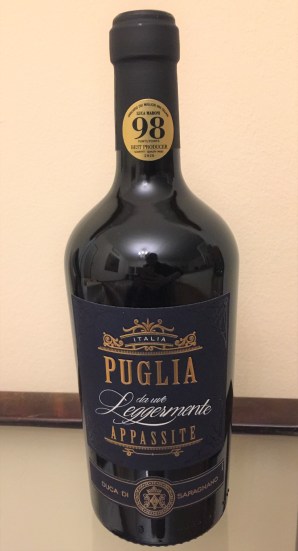
A few weeks ago, as I was scouring the shelves of one of the mini-markets, looking for a wine we hadn’t tried, I came across this:

my photo

“This” is a bottle of red wine from Puglia, with a classification of Indicazione Geografica Tipica, i.e., pretty good but not up there among the stars. Nothing out of the ordinary so far. But what caught my attention was the phrase on the label da uve leggermente appassite: “from grapes that have been slightly dried”. I vaguely knew about the “passito” method of making wine, which meant that the grapes have been dried out before being crushed and pressed. After polishing off the bottle with my wife (more on this later), I decided to do a bit of research on the “passito” method (which for the most part consisted of reading a bunch of Wikipedia articles). I can now happily share my newfound knowledge with those of my readers who, like me, are not super experts on wine (those who are super experts had better just skip to the end).

The first thing I discovered is that “appassimento” (the procedure of drying grapes and making them “passiti”) is actually one of three procedures which are used in grape-growing regions with the primary purpose of concentrating the sugars in the grapes. And the reason for concentrating the sugars is to be able to make strong, sweet wines, usually drunk with desserts (hence often being called “dessert wines” in English).

“Appassimento” is the most obvious, and therefore the oldest, of these three procedures: there is evidence of sweet wines being made this way already 6,000 years ago in Cyprus. There are various ways of carrying out “appassimento”. One is simply to leave the grapes on the vine longer than you normally would, so that they overripen and have higher than normal sugar levels; they also tend to lose water and shrivel, which also increases sugar concentrations. Canny wine-makers can play with the amount of “appassimento” they allow. They can have just a bit of “appassimento” (which is probably how the Puglia wine I mentioned earlier was made).

Source

Or they can go the whole hog and choose extreme “appassimento”.

Source

Of course, the longer wine-makers wait, the greater the risk that something will go wrong (bad weather, mould, etc.). But the more interesting can be the flavours so generated. A variant to this approach is to leave the grape bunches on the vine but twist their stem, to “strangle” them as it were. If I understood correctly, this hastens the “appassimento” process, so that you can avoid the risks but enjoy the advantages – having your cake and eating it.

You can also harvest the grapes at the normal time but then let them dry in the sun.

Source

Or, if you’re not too sure of the weather, you can do it inside.

Source

Wines made this way are called straw wines (vin de paille in the original French), because the grape bunches were originally laid down on straw to dry out.

As readers can imagine, all this works better in places with lots of sun, which is no doubt one of the reasons why Cyprus holds the prize for the earliest use of the procedure.

Let me at this point throw in some examples of sweet wines made this way. Since my investigations were started with an Italian wine, I’ll give Italy pride of place, while recognizing that all of the southern European countries, as well as the New World wine-making countries, make this kind of wine. Even in Italy, there are numerous such wines, so I’ll just mention a couple, chosen for the completely banal reason that they are from lovely places. Thus, we have the various Vinsanti from Tuscany.

Source

And then we have Malvasia delle Lipari passito, made in the small islands of Lipari and Eolie off the coast of Sicily.

Source

In the second procedure used to concentrate sugars in grapes, you allow your grapes to be attacked by a fungus, the Botrytis cinerea. The fungus shrivels the grapes and increases sugar concentrations, thus allowing wine-makers to make a sweet wine. For rendering this useful service, the fungus has been named the “noble rot”.

Source

For the noble rot to work properly, you need specific humidity conditions at specific times of the day at specific times of the year, so there are only a few places in the world where you can use this procedure. And you have to be damned careful that the fungus doesn’t run riot in your vineyards, otherwise you get another form of the fungus, “grey rot”, which completely ruins your harvest. It seems that Hungarian winemakers were the earliest to figure out how to harness Botrytis cinerea to make sweet wines, having done so by the 16th Century.

You really have to ask yourself how anyone – Hungarian or otherwise – figured this procedure out. My assumption is that when one year some wine makers found themselves with a harvest of grapes on their hands which had been attacked by the fungus, rather than just throw the grapes away they decided to go ahead and make wine anyway, reasoning that even a bad wine was better than none at all, and were pleasantly surprised by the result.

As examples of what are, sensibly enough, called botrytised wines, I’ll mention Tokaji from Hungary, because that seems to be the granddaddy of this kind of wine.

Source

And I’ll mention Sauternes from the Bordeaux region of France, perhaps the most famous of the botrytised wines.

Source

The third and final procedure is used to make so-called ice wines. Here, you leave the grapes on the vines until January/February. The precise time you pick the grapes crucially depends on the outside temperature: picking must take place the first time the temperature drops to -7°C, which normally means picking the grapes at night, picking them quickly, and pressing them immediately.

Source

What is happening is that the water in the grapes is turned to ice but not the sugars. When you press the grapes, the iced water stays with the must, and the resulting grape juice has very high levels of sugars. The procedure is a relative newbie: it was only discovered at the very end of the 18th Century, in Germany.

As an example of an ice wine, I’ll mention Canadian ice wines.

Source

This may seem a surprising choice, but it allows me to slip in a mention of what is probably the greatest environmental disaster staring us in the face: climate change. Because of climate change, it is getting more and more difficult to make ice wine reliably in the northernmost wine-growing regions of Europe where the procedure was first developed, because it is becoming rarer and rarer for the temperatures there to drop sufficiently low. But because temperatures still drop reliably every year to -7°C in Canada, its wine regions, particularly those in Ontario, have stepped into the breach and have become the world’s major producers of ice wine.

Readers will no doubt have noticed that all the examples I have given so far are of white wines, and indeed most of the wines made in these three ways are white, using grape varieties like muscat, malvasia, and riesling. But – as my discovery in the mini-market shows – some red wines are also made this way. Since, as I pointed out earlier, I’m more of a fan of red wines than white wines, I want to finish this post by fighting for the red corner, and will do so by mentioning three red wines, all from northern Italy, and all passito wines.

Two come from the Valpolicella region, which lies north of Verona and east of Lake Garda – in this photo, you can see the lake in the distance.

Source

The first of the two red passito wines from here is Recioto della Valpolicella. This, like most passito wines, is a sweet wine, and indeed this photo suggests its use as a dessert wine.

Source

Perhaps at this point I should reveal that I’m not a great fan of sweet wines. I don’t deny that they can be very tasty, but I feel that somehow – and I’m sure this is just a ridiculous prejudice – sweet wines are not serious. This prejudice of mine is most extreme when it comes to red wines; I’ve signaled this already in an earlier post about sparkling Italian red wines, most of which are sweet. To my mind, for red wines to be serious they must be dry. So it comes as a relief for me to able to introduce the second wine from Valpolicella, the Amarone della Valpolicella.

Source

This is a dry wine. Its name signals this, Amarone being derived from the Italian word “amaro”, which means bitter or sour. The wine is not really bitter or sour; it probably refers to the fact that this wine originally came from batches of Recioto della Valpolicella where the fermentation hadn’t stopped and so the sugars had all been turned into alcohol: so from sweet to sour.

Which leads me naturally to my final red passito wine, another dry wine, the Sfursat. This comes from the Valtellina valley in upper Lombardy, upstream of Lake Como (and of the hike along the Sentiero del Viandante which my wife and I did last year).

Source

Let me throw in here a photo of grapes drying in readiness to become sfursat.

Source

And here is a photo of a bottle of sfursat, which gives me an excuse to have a photo of that inescapable part of the wine world, a wine cellar.

Source

At this point, I have to make another revelation. Neither my wife nor I have ever tried any of these three wines. But now we have an excuse to try some different wines during lockdown! (we’ll have to accept to fork out considerably more cash than we are used to, though, but hey! no pain, no gain).

And what about the Puglia wine that started this whole post? As I poured it into our glass wines I was half afraid that it would be sweet, but no, it turned out to be a dry wine, which was a relief. As we sipped it, we felt that the intense and bright red colour of the wine, characterized by delicate purplish hues, was the perfect expression of its complex and fruity bouquet. Balsamic notes of blackberries, spirited cherries and plum jam were smartly dressed by elegant sweet spicy scents. It was warm, round, and with a good balance of tannins … OK, I confess, I just copied all that last bit from the label on the back. As I commented in a post written years ago, I’m always impressed by the bullshit wine merchants come up with. My wife and I, we just went mmm, yummy! And the next day, I bought another couple of bottles.

WALKING ALONG MILAN’S MARTESANA CANAL

Milan, 18 January 2021

In these times of Covid restrictions, my wife and I have been exploring hikes closer to home, hikes which allow us to more or less stay within the limits of the commune of Milan, or at least not stray too far outside of it. The latest such hike we’ve done has taken us along one of the old canals which radiate out from Milan, the Naviglio della Martesana. I fear we might have exceeded the legal limit of where we could go. In our defence, the designations of which Covid tier Milan is in has been changing from day to day, making it quite hard to know just how far we are allowed to travel outside of Milan. I trust my readers will not snitch on us!

In any event, the hike was some 30 km long, undertaken over several days, and took us from the north-east of Milan out to the river Adda, which drains lake Como. It’s not a physically challenging hike. Following a canal means no brutal climbs or descents, and the path is paved the whole way – the path is actually a bicycle path, and the only real challenge is to keep out of the way of bicyclists who race along at high speeds, their riders no doubt dreaming of fame and glory in the Tour de France or Giro d’Italia.

First, a little bit of history. Building of the canal started in 1460, under Francesco Sforza, the first of the Sforza dynasty to rule over the Duchy of Milan.

Source

The canal took its waters from the river Adda (which at the time was the Duchy’s eastern frontier with Venice) and carried them over the flat plain that lies between the river Adda and Milan, passing various towns and crossing various rivers along the way. At first, it finished several kilometres to the north of the city, emptying into the river Seveso, but then in 1496 Francesco’s son, Galeazzo Maria, extended it with a short new canal, the Naviglio di San Marco, and joined it up with the series of canals which encircled Milan, the Cerchia dei Navigli.

Source

This map shows the track of the canal.

Source

Alert readers will have noticed the trace of the canal is not all that straight, it zigs and zags a bit. The topography certainly didn’t require this – there was no need to go around hills and such like. The land between the river Adda and Milan is as flat as a pancake, so by rights – to reduce construction costs – the canal should have been a straight line between river and city. But all the landowners on that flat plain wanted the canal to come their way so that they could use the water to irrigate their fields. And the towns that dotted the plain wanted the canal as a source of water and to keep their moats topped up. All these different groups brought pressure to bear on the canal’s planners, so the canal ended up winding this way and that way across the plain as those who had the most influence pulled the canal towards them. Which is just as well for me and my wife; walking along a dead straight canal would have been very monotonous.

There were also quarrels right from the start about which uses of the canal should get priority. As we’ve seen, the landowners wanted to use it for irrigation. But a good number of them also wanted to use its energy to drive watermills, as did the towns. And the landowners also wanted the canal as a means of transportation to bring their (mainly) agricultural goods to market. For their part, the rulers of Milan were more interested in the canal as a means of transportation to move goods and so promote the city’s and the Duchy’s economy. They also wanted it to be part of their defensive system against the dratted Venetians to the East. Irrigation tended to drop the level of water in the canal, which was a problem for navigation since the boats wouldn’t have enough draft as well as for the mills because the flow wouldn’t be strong enough to drive the wheels. But maintaining enough draft and a swift enough flow meant cutting back on irrigation, which was bad for the crops. Tempers flared, lawsuits were filed, and no doubt swords were drawn. In the end, though, a modus vivendi was arrived at, and from the 1580s onwards irrigation coexisted more or less peacefully with other uses of the canal’s waters.

At some point, the Milanese aristocracy discovered the delights of the countryside and many built villas along the canal, reachable by boat from their houses in town. So we have this painting from 1790 of one of these villas in Crescenzago (now on the outskirts of Milan), showing also the normal traffic along the canal.

Source

And we have here a painting from 1834 of the Milanese extension of the canal, the Naviglio San Marco, just before it joined the Cerchia dei Navigli.

Source

Then the industrial revolution came along. New means of transportation competed with canals, first railways then roads. The Martesana canal steadily lost out to these upstarts and was only able to remain competitive when heavy lifting was required: sand, stone, coal, wood. Here we have one of those loads being moved along the canal (shown in the-then new medium of photography).

Source

In the meantime, exploding populations meant that villages along the canal grew and became urbanized, as shown in this photo of the same Crescenzago which was the subject of my first painting above.

Source

These growing villages bled into each other, smothering the farmland that once lay between them, with the ones closer to Milan being in turn submerged by the expansion of that city, eventually becoming its outer suburbs. Much of the growth around Milan was driven by the factories which established themselves on its periphery. A good number of them were located along the Martesana canal and Milan’s other canals, as this photo shows.

Source

In 1929, the demand for road space to ease vehicle congestion in Milan (along, it must be said, with a need to deal with public health concerns) meant that the Cerchia dei Navigli was covered over, along with the Naviglio San Marco.

Source

In the late 1950s, the authorities overseeing the canal bowed to reality and decreed that the canal would no longer be used for transportation, only irrigation. Finally, in 1968, after the municipal authorities had concluded that the covers of the Cerchia dei Navigli and the Naviglio San Marco were in danger of collapsing, they decided to simply fill these in and reroute the waters of the Martesana canal into an overflow canal. This went around the inner core of the city and emptied into the dried-up bed of the Seveso river south of the city. The authorities also decided that more space was needed for Milan’s burgeoning car population and so covered another section several kilometers long at the canal’s end and turned this into a wide avenue, via Melchiorre Gioia.

And so out in the countryside, irrigation had finally won the centuries-long arguments about irrigation vs. navigation, while in Milan itself the canal had become a relic of a bygone era, slowly falling apart and becoming for all intents and purposes an open drain.

Luckily, as I’ve also mentioned in a much earlier post about an abandoned railway line, good sense eventually prevailed. Led by Milan, in the 1980s the communes through which the canal passed got their act together. They cleaned up the canal’s towpath and turned it into a cycle path, and generally encouraged their citizens to use the canal as a park. That’s where things stood when my wife and I embarked on our hike along the canal.

We started where the canal’s waters disappear under via Melchiorre Gioia.

my photo

We turned our backs on the city and started walking out towards the distant Adda river. One of the old houses which had graced the canal in its heyday greeted us. As part of the urban renewal which accompanied the upgrading of the canal in the 1980s, its owners had renovated it and painted it a welcoming yellow.

my photo

But already, hulking over this old building, we could see the blocks of flats put up during the 1960s and 70s as the city expanded outwards at breakneck speed. It was a harbinger of things to come, as we walked for kilometres through a jumble of old and abandoned, old but renewed, shining new, and new but already showing signs of wear and tear. Even though drawn in 1945, this cartoon captures beautifully the chaos of today’s urban reality which the old canal now threads its way through.
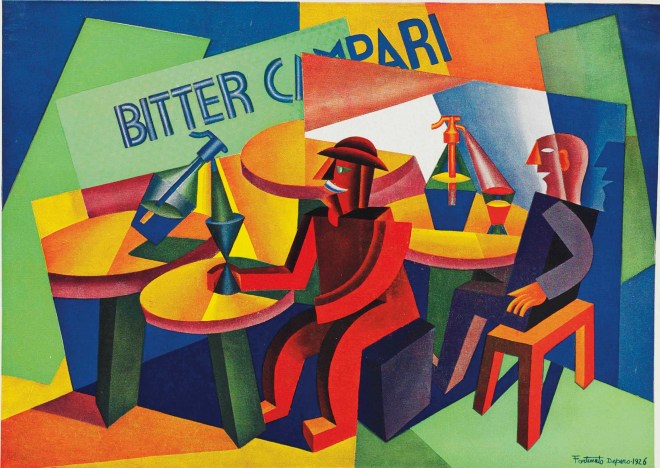
Source

Here we have one railway bridge after another spanning the canal.
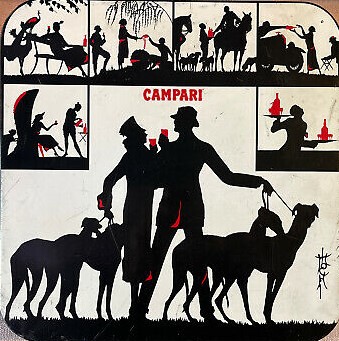
my photo

New blocks of flats giving onto the canal.

my photo

The jumble of tiny gardens which people have carved out of spaces along the canal.

my photo
my photo

Industrial chimneys, relics of factories which once abutted the canal.

my photo

in the next case being recycled into a new use as a pole on which to fix transmitters of the newest means of communication, mobile phones.

my photo

Old houses which have been lucky enough to be renovated

my photo
my photo

Others which are struggling against the odds.

my photo

As befits an urban backwater, and as the last photo attests, graffiti on every wall. Most of it the usual ugly, mindless initials, but some eye-catching:

– an impossibly elaborate flower turning into a person on the arch of a railway bridge

my photo

– an amusing reminder that we are walking along a bicycle path

my photo

– a swirl of brightness

my photo

– square upon square of colour

my photo

The first of the villas which used to grace the canal’s edge

my photo

once surrounded by countryside, but now hemmed in and overshadowed by ugly modernity

my photo

The walls again, but this time carriers of messages, most of the lovesick type:

– “I love you Vale”

my photo

but sometimes in a more reflective, philosophical tone, which seemed apt in this urban chaos we were walking through:

– “What a shitty life”

my photo

and a line from Bob Marley and the Wailers’ 1973 song, the aptly titled “Concrete Jungle”

my photo

Finally, on the outskirts of Milan, the first encounter with the countryside, but an encounter showing it to be beleaguered and under threat from the urban sprawl at our backs:

– An example of one of the many crumbling ruins of farmhouses which dot the Italian countryside, victims to rural flight over the last sixty years

my photo

– the use of the countryside as a place to flytip our urban wastes

my photo

We passed under the ring motorway which is effectively the border of Milan. Had we broken out of the concrete jungle? Alas not. The housing continued. We passed the broken down gate of what must once have been the water gate of a fine villa but which now gives onto an ugly, messy, nondescript yard; the villa itself has vanished.

my photo

Spanking new, neat and tidy blocks of flats, but in places which the French call quartiers dortoirs, dormitory districts, places with no shops, no amenities, nothing – just places where commuters can sleep before heading back into town to work.

my photo

But a more rural feel began to creep in.

Cottages along the waterfront.

my photo

And finally, after some 15 kilometres of walking, some real fields! With the snow-capped mountains glistening on the horizon.

my photo

One of the irrigation channels fed by the canal, the water cascading away.

My photo

The last villa we passed, and the most imposing of them all, the Villa Alari.

my photo

Its history is a metaphor for the canal’s history as a whole. It was built at the beginning of the 18th Century on a magnificent scale, as this print shows.


Source

So magnificent was it that the Austrian Governor of Lombardy, Archduke Ferdinand, rented it over several summers and even negotiated, without success, to buy it (his mother, the Empress Maria Theresa, nixed the idea, considering the asking price too high). After passing down through the Alari family and, by marriage, into a branch of the Visconti family, it was donated by its last Visconti owner in 1944 to the Brothers Hospitallers of Saint John of God in Milan. By then, it had lost the lands around it and with them its magnificent gardens. The Brothers first used the villa as a psychiatric hospital and then as a nursing home. In 2007, they palmed it off onto the municipality, which must be asking itself what the hell to do with the building.

Another of those large farm complexes which dot the plains of the River Po and which, like so many others, has been pretty much abandoned (it was so large it needed two photos to capture it).

my photos

In the distance, the new housing complexes of today, feeding their inhabitants to Milan via an extension of one of the city’s subway lines – one of the new forms of transportation which took the place of the canal.

One of the few remaining locks on the canal, which are sadly firmly and irrevocably shut.

my photo

One last look across a ploughed field at the mountains, closer now, their snow glistening in the sun.

my photo

And we finally arrived in Cassano d’Adda, perched on the river, where we took the train back to Milan.