POSTS

A WALK UNDER THE STRAWBERRY TREES

Milan, 12 December 2018

A couple of days ago, when we were down at the sea in Liguria, my wife and I went for a walk on the Monte di Portofino, one of our favourite places to go walking. I’ve written earlier about other walks on this mountain, and it’s always a joy to go back and sample the different paths which wind around the mountain which stands at the centre of this promontory jutting out into the sea.

One of the pleasures of walking there, apart from having the sea ever-present in the background, is experiencing the different biomes that co-exist on the mountain. On the slopes to the north-east, where the conditions are generally shadier, cooler and more humid, a mixed forest grows with oak trees dominating and the undergrowth mostly consisting of ferns, brambles, and ivy.

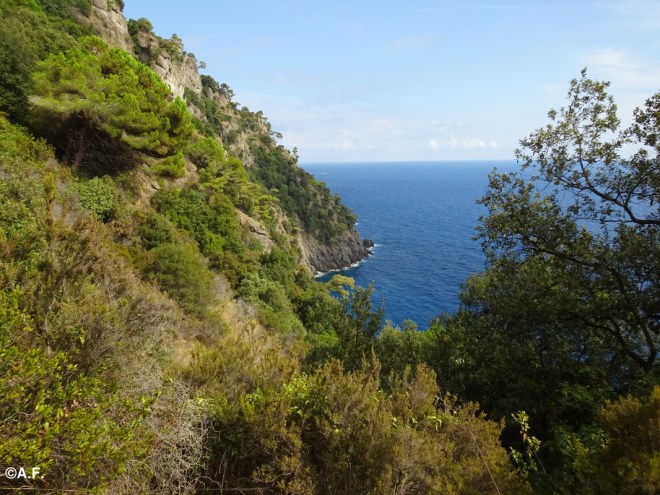
On the southwestern slopes, on the other hand, which give onto the sea, and where the conditions are generally hotter and dryer, and the soils poorer and rockier, a Mediterranean maquis of low, scrubby bushes and trees predominates.

Within short spaces, as the paths twist and turn around the mountain, one can pass from a landscape which would not be out of place in the UK to one which could not be anywhere but on the Mediterranean.

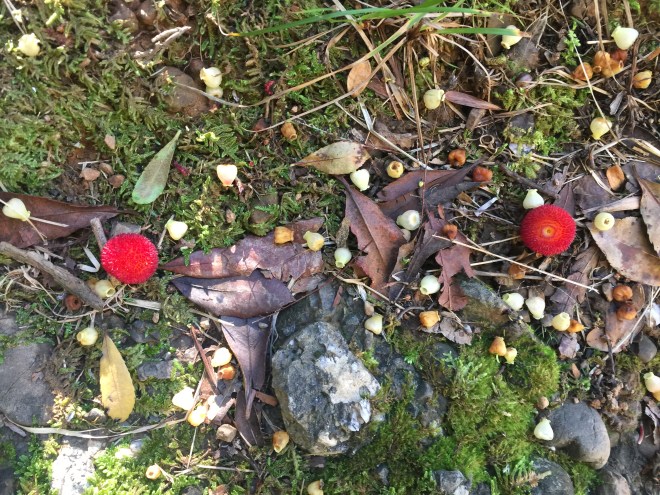
It was as we began to traverse the first of the Mediterranean maquis biomes that I noticed these small, very red fruits lying along the path, sometimes very thickly.

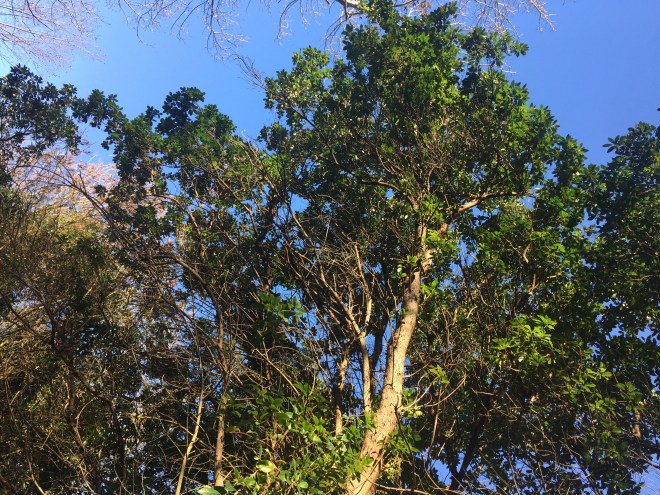
They were dropping off trees like this.

The fruits were an intense red and looked a little like strawberries.

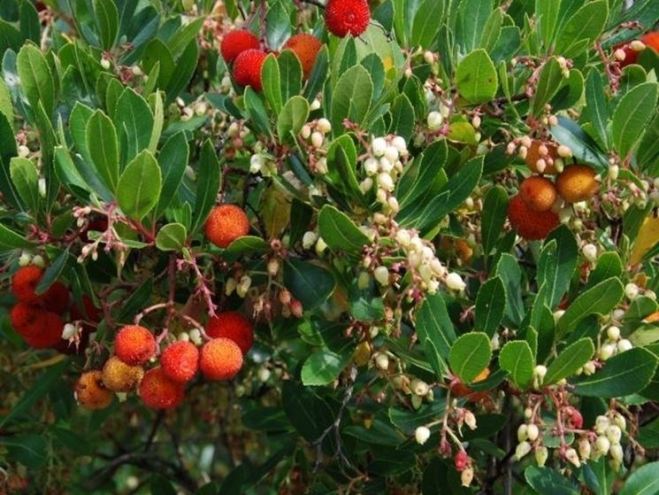
This is what they look like on the tree.

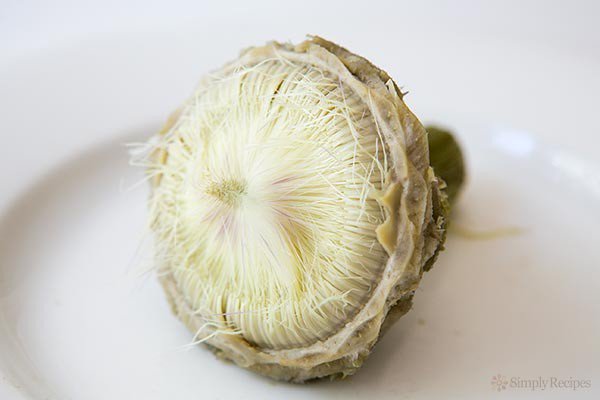
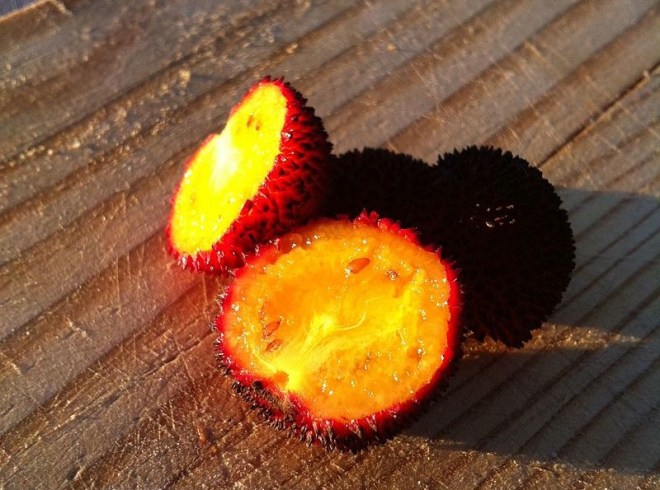
When you open them, they have a lovely golden interior.
I asked my wife what these fruit were. Corbezzole, she replied, with the tree being the corbezzolo. Well, that didn’t help me much, so I checked what the English names are. Internet informed me that the tree is called the strawberry tree. Given the look of the fruit, that certainly makes sense, although what is the fruit of the tree then called? Just “fruit of the strawberry tree”, it seems, or “strawberry fruit”, which is a bit unsatisfactory. But then this is not a problem of nomenclature which the British have to face because the tree doesn’t grow naturally in the UK. As this map shows, its favourite haunts are the rim of the Mediterranean, with an extension along the southwestern Atlantic coast of France.

So I shall adopt the Italian name here and simply call the fruits corbezzole.

I asked my wife if corbezzole were edible, and she replied that her mother used to eat them. Thus comforted, I plucked two off a tree and tried them. I found them somewhat granular and not particularly sweet. I then tried two which had dropped off their tree. I still found them granular, but now they were sweeter, although the sweetness was weak and evanescent. They were also rather mushy, rather like persimmon which I’ve written about earlier. Pliny the Elder mentioned the strawberry tree in his Natural History, and his comment on the fruit was “The fruit is held in no esteem, and this is the reason for its name being that a person will only eat one” (the fruit’s Latin name is unedo, a shortening “unum edo”, “I eat one”; boy, those Romans were real jokers!). On the basis of the four corbezzole I ate as we walked along, I side with Pliny on this one.

I suspect that the corbezzole’s weakly sweet taste explains why I have never seen them being sold in a supermarket or a greengrocer’s shop in Italy. I can’t see people getting terribly excited about the taste. That being said, patient selection over centuries could no doubt have led to a more enduringly sweet fruit, much as it has with many of the other fruit we happily munch on. But here I think another factor comes into play: the incredible softness of the corbezzole when ripe. They are so soft that it is almost impossible to hold them without damaging them. Their softness also means that they are quite mushy to chew on, which I’m sure many people don’t appreciate much.

This softness and mushiness means that a way people commonly use corbezzole is to make jams: just mash it all up and no-one will notice the mushiness.

This seems to be a strictly homemade product; I could find no mention of a commercial jam on the internet. For any of my readers who are interested in making this jam, here is a thumbnail recipe. Put the corbezzole in a pan, crush them a little, bring the pan to a boil, boil for 10 minutes. The corbezzole should have become a puree by now. Pass the puree through a fine sieve, to get rid of all those little granules. Put the puree back into the pan, add sugar (1 gm for every 4 of puree), add cinnamon if you want, heat the mix, stirring continuously, until it’s thickened sufficiently.

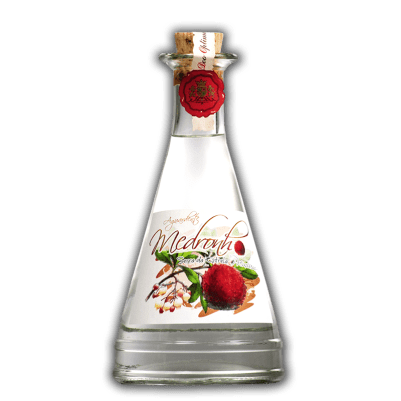
Various people living in the Mediterranean region have also made alcoholic drinks with corbezzole. One of the better known is the Portuguese fruit brandy Aguardente de Medronhos (so called because the fruit is called medronho in Portuguese). Should any readers be interested in making this particular fruit brandy, here are some brief instructions. Collect 7 to 10 kilos of fruit (that will make make one litre of brandy). Put them into a barrel and let them ferment for 2-3 months, making sure to always keep them humid. Using a copper alambique, heat the fermented mess over a low fire. The distillate is your Aguardente de Medronhos. You’ve made a good batch if you can smell the fruit after you have put a little of the Aguardente on your skin and let the alcohol evaporate off.

I don’t get to say much about Albania in my posts, so I want to make pitch here for the Albanians’ equivalent fruit brandy, raki kocimareje (kocimare being the Albanian name for the fruit). Unfortunately, I could find no photo of it on the internet, even in the Albanian pages of Wikipedia. Nevertheless, I urge my readers to support the Albanian economy by buying this firewater whenever they have the occasion.

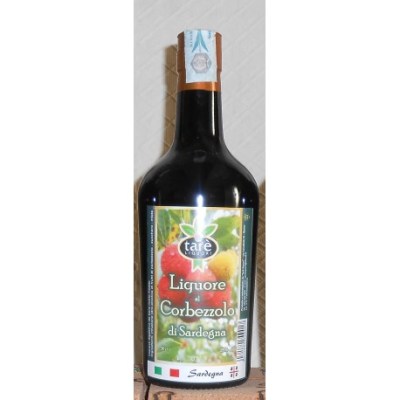
Another approach is to marinate the corbezzole in alcohol. Here’s a recipe from Sardinia, which includes lemon rind and cloves. Put the corbezzole, the lemon rind (just the yellow part!) and cloves in a container. Cover with alcohol. Leave in a cool, dark place for a month to steep. Prepare a syrup of sugar and water. Strain the contents of the container. Add the syrup. Let the mix stand, in a cool, dark place as before, for two weeks. Strain again. Bottle. (I shall ask our Sardinian cleaner if she is familiar with this concoction; she once brought us a bottle of her own home-made limoncello).

Of course, if readers want to try any of these recipes, or if they just want to taste the fruit, they will need to head out to their nearest patch of Mediterranean maquis to find it. And they have to go some time between late October and mid December. For instance, if they had been in the region of Ancona on 28 October last, the feast day of Saints Simon and Jude, they could have joined the worthy citizens of that city on their annual hike out to the nearby Monte Conero, a mountain which, rather like Monte di Portofino, juts out into the sea, in this case the Adriatic Sea.

The mountain is rich in strawberry trees (so rich that its name derives from the Greek name for the corbezzola, kòmaros, while the coat of arms of nearby Ancona sports an arm holding a branch of the tree with fruit).

Nowadays, this is just a hike like any other, with the difference that there is a bit of corbezzole picking. But there was a time when the Anconese would spend the day not only gathering and eating corbezzole, but also wrapping young branches of the tree around their heads, singing lustily, and generally behaving in a rather Bacchanalian way. I suspect we see here the remains of an old Pagan feast dressed up in Christian clothing.

Alternatively, my readers could go to Killarney or Lough Gill on Ireland’s western coast.

In those two spots, relict populations of strawberry trees have hung on. There was a time, some 5 to 8,000 years ago, when temperatures in Europe were higher than today and the strawberry tree’s range extended into northern Europe. But then, as temperatures dropped, the tree retreated southward, leaving behind these two embattled outposts.

Wherever they decide to go, corbezzole-pickers will find themselves faced with an interesting puzzle: trees covered with both flowers and fruit.

I was certainly puzzled, because I’m used to fruit trees flowering in Spring and fruiting in late Summer, early Autumn. I have since learned that the strawberry tree does it differently. It flowers in late Autumn, with the fruit then developing from a pollinated flower. But the fruit takes its own sweet time to develop, arriving at maturation a full year later, just when the next batch of flowers bursts forth. I’m sure there is a very clever biological reason why the strawberry tree has chosen this cycle, but I haven’t yet managed to find it out. If there are any readers out there who know, I’ll be very happy to hear from them.

The flowers are really quite charming, coming in clusters of small, white, bell-shaped flowers.

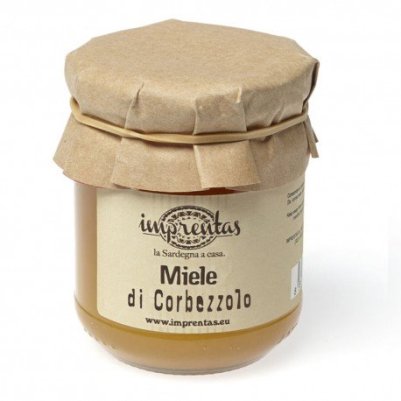
Bees love the flowers and will home in on them – if they happen to still be around in this late period of the year; bees will not leave their hives if temperatures drop below 5-10°C. If they are around, they will make honey from the corbezzole nectar they gather.
This honey has a certain reputation, simply because of its rarity: some years you get it, some years you don’t. But our friend Pliny the Elder was not terribly enthusiastic about the honey, writing that it has a rather bitter taste. In case any of my readers are beginning to think that Pliny is a bit of a sourpuss, I should say that others echo his sentiment. In this case, I can only report what I have read, since I have no independent experience of eating the honey.

The fact that both (white) flowers and (red) fruit are present simultaneously on an evergreen tree meant that Italian patriots imbued the tree with great symbolic importance in the decades leading up to the country’s unification in the 1860s. For red, white, and green were the colours of Italy’s tricolour flag of unification!

Patriotic poets in particular wove the tree into poems which were thinly veiled proclamations of the coming unification of Italy which they ardently hoped was imminent. I won’t bore readers with their purple prose. At the risk of being flippant, I much prefer another edible symbol of the Italian tricolour. It is reported that some years after unification a canny pizza maker in Naples realized that his pizza, made with (red) tomatoes, (white) mozzarella, and (green) basil, proclaimed the colors of the new Italian flag and so he named it Pizza Margherita, after the wife of Victor Emmanuel I, first king of unified Italy.

I don’t know if it’s the patriotic overtones or simply because the pizza is so yummy, but Pizza Margherita has remained a constant in the average Italian’s life.

But back to the strawberry tree. I read with sadness and anger that the delegates of the world’s nations cannot agree on a text committing everyone to limiting global temperature rise to no more than 1.5°C. I might weep, but strawberry trees will no doubt be rubbing their woody hands together at the thought that higher temperatures will allow them to march back north again and recapture the lands that were once theirs.

_____________________________

Monte di Portofino: https://www.tripadvisor.it/Attraction_Review-g187827-d2356844-Reviews-Parco_Naturale_Regionale_di_Portofino-Santa_Margherita_Ligure_Italian_Riviera_Lig.html
Forest, Monte di Portofino: http://www.parcoportofino.com/parcodiportofino/it/eventdetail.page?contentId=EVN12955#.XBAxoHRKhPY
Mediterranean maquis, Monte di Portofino: https://montiliguri.weebly.com/promontorio-di-portofino.html
Corbezzole on the ground: our photo
Strawberry tree: our photo
Close-up of corbezzole on the ground: my photo
Close-up of corbezzole on the tree: https://it.m.wikipedia.org/wiki/Arbutus_unedo
Corbezzola interior: https://en.wikipedia.org/wiki/Arbutus_unedo
Range of the strawberry tree: https://en.wikipedia.org/wiki/Arbutus_unedo
Corbezzola jam: https://blog.giallozafferano.it/giusy89/marmellata-di-corbezzoli/
Aguardiente de Medronho: https://www.uvinum.it/acquavite/aguardente-de-medronho-premium-50cl
Sardinian corbezzole liqueur: https://www.lacambusadeisapori.com/tare-50-cl/526-liquore-di-corbezzolo-artigianale-di-sardegna-confezione-medium.html
Monte Conero: http://www.marchemaraviglia.it/struttura/71/hotel-monteconero
Ancona coat of arms: https://it.m.wikipedia.org/wiki/Arbutus_unedo
Strawberry trees on Lough Killarney: https://www.mindenpictures.com/search/preview/strawberry-tree-arbutus-unedo-habit-growing-beside-lough-killarney-county/0_80146177.html
Strawberry tree fruit and flower: https://www.giardinaggio.org/giardino/piante-da-giardino/corbezzolo-pianta.asp
Strawberry tree flowers: https://it.m.wikipedia.org/wiki/Arbutus_unedo
Corbezzolo honey: https://www.imprentas.eu/it/miele-sardo-e-confetture/158-miele-di-corbezzolo.html
Italian Tricolour: https://www.tempostretto.it/news/risorgimento-tavola-rotonda-messina-sicilia-dopo-unit-d-italia.html
Pizza Margherita: https://www.groupon.it/deals/taverna-del-cuore-6

WILD GEESE AND GREAT POET

Milan, 7 December 2018

I wrote in the previous post about my wife and I visiting a museum dedicated to the Japanese woodblock artist Utagawa Hiroshige, in preparation for our walk along the Nakasendo Way. That same museum also happened to be holding an exhibition dedicated to Katushika Hokusai. Many of Hokusai’s woodblock prints were of course on show, and it was certainly a pleasure to be given the opportunity to study and admire them up close.

But actually it’s a painting of Hokusai’s that has remained with me in the intervening weeks. I sneak in here a photo that I took of it – I’m not sure I was allowed to take photos and I looked around stealthily before whipping out my phone and snapping this shot. I have cropped the photo to eliminate the silk wall hanging in which it is incorporated; I want the reader to focus on the painting, and I find its silken frame a distraction to the eye.

Its title is Wild Geese and Great Poet, and indeed we see a man of certain means sitting on the ground, his elbow resting on that typical Japanese arm rest, the kyousoku. His head rests on his hand, and he is watching with a look of wistful melancholy at a flock of geese flying away into the distance.

I immediately felt that there was a story being told here. I saw the drawing in of winter, with the geese flying south from Siberia to overwinter in Japan, and of the poet meditating on the drawing in of his own life as old age beckons: the kind of pessimistic thinking which I enjoy, especially now that I am a pensioner, and which makes my wife roll her eyes and sigh loudly. I felt that Hokusai was surely taking his cue from a Japanese or possibly Chinese poem on the subject, and I resolved to track the poem down.

Well, five weeks have passed, and I can’t say that I have yet found the poem in question. Everyone agrees that flying geese were often used as symbols of the passage of the seasons and of time in Japanese and Chinese poetry, but one particular poem where the writer uses this imagery to meditate on his approaching old age I have not found. Fearing that the task I have set myself will meander on inconclusively before petering out ignominiously, I have resolved to stop here, draw a line under my research, and report back on the results of my increasingly dispirited internet surfing.

The best fit I have found is a poem from the Songs of Chu, an anthology of Chinese poems which tradition says were written in the late 200s BCE, during the Warring States period. This particular poem is attributed to the poet Song Yu. I read into this poem a story, so typical of Imperial China, of the bureaucrat who has somehow fallen foul of his master, has lost his position, and is now wandering the land, an exile, wondering if he will ever get his old life back.

Alas for the breath of autumn!
Wan and drear: flower and leaf fluttering fall and turn to decay;
Sad, forlorn: as when on journey far one climbs a hill and looks down on water to speed a returning friend;
Empty and vast: the skies are high and the air is cold;
Still and deep: the streams have drunk full and the waters are clear.

Heartsick and sighing sore: for the cold draws on and strikes into a man;
Distraught and disappointed: leaving the old and to new places turning;
Afflicted; the Emperor’s servant has lost his office and his heart rebels;
Desolate: on his long journey he rests with never a friend;
Melancholy: he nurses a private sorrow.

The fluttering swallows leave on their homeward journey;
The forlorn cicada makes no sound;
The wild geese call as they travel southwards;
The partridge chatters with a mournful cry.

Alone he waits for the dawn to come, unsleeping;
Mourning with the cricket, the midnight traveler.
His time draws on apace: already half is gone
Yet still he languishes, nothing accomplished.

As for the Japanese side, the best I’ve managed to find is a number of haiku. Here is one from the Manyōshū, a collection of Japanese poems compiled sometime after 759 AD.

The inlet of Okura is echoing;
To the fields of Fushimi
The wild geese are passing.

This one instead is by Matsuo Bashō, master haiku composer whom I mentioned in my previous post and who lived in the second half of the 1600s.

The sea darkening –
The voices of the wild geese
Crying, whirling, white.

And finally, there is this haiku, written in 1953 by Takaha Shugyo

Wild geese pass
Revealing
The whole of heaven

A certain continuity is revealed, I think, over this nearly 1,000 year period.

Well, since it was a visit to a museum dedicated to Hiroshige that led me to the painting by Hokusai, I feel it is only fair that I should finish with a woodblock print by Hiroshige, Full Moon at Takanawa, where geese are the star players.
_____________

Hokusai, Wild Geese and Great Poet: my photo
Hiroshige, Full Moon at Takanawa: https://www.musubi.it/en/biblioteca/haiku/477-mp-haiku?showall=1

THE NAKASENDO WAY

Milan, 24 November 2018

I have a weakness for Japanese woodblock prints, that art form which we in the West tend to associate with Katsushika Hokusai. I mean, who hasn’t seen somewhere, in some form, his Great Wave off Kanagawa?

or his Fine Wind, Clear Morning?
Or even his Kajikazawa in Kai Province

So when my wife and I were preparing for the week-long walk we undertook along the Nakasendo Way in Japan a few weeks ago it was with pleasure that I read that another artist well known for his woodblock prints, Utagawa Hiroshige, had, together with yet another artist, Keisai Eisen, made a series of prints specifically about this highway, The Sixty-nine Stations of the Kisokaido.

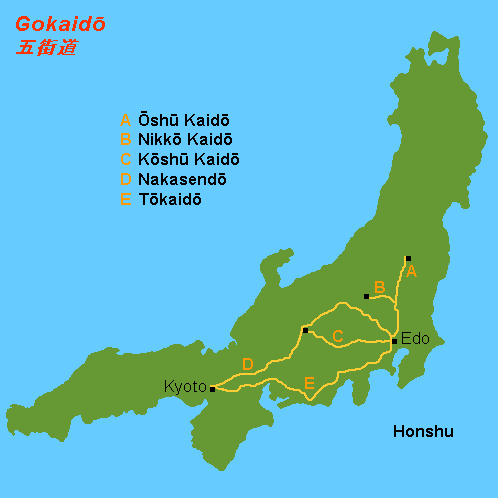
I should perhaps step back and explain to readers what the Nakasendo Way is. In Japan, as everywhere else where there has been a history of centralized government, rulers were anxious to build and maintain highways between important points in the country to ensure better control. The Japanese shogunate maintained a network of five such highways, all radiating out of the capital Edo (now Tokyo), with a series of officially-approved post towns along each route where the weary traveler could rest for the night, and change horses and obtain porters for the next stage of the journey.

Two of these highways led to Kyoto. One we could call the low road, because it ran along the coast (E in the map), and the other we could call the high road since it threaded its way through the Japanese Alps, a block of mountains standing between Edo/Tokyo and Kyoto (C and D in the map). The latter is the Nakasendo Way.

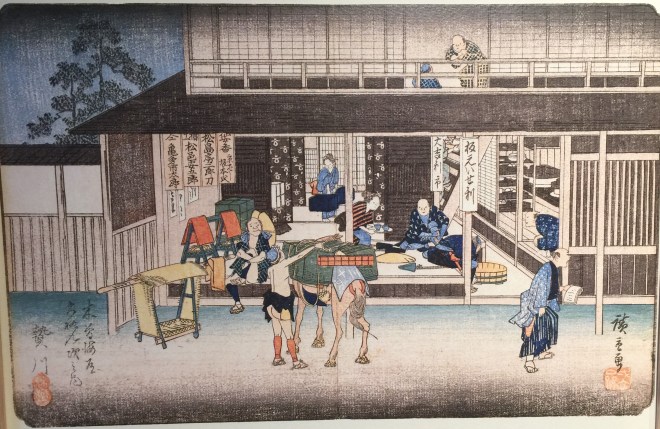
This print by Hiroshige, which shows a view across rice paddies of the post town of Nakatsugawa, gives a sense of what the road must have looked like in the shogunate period.

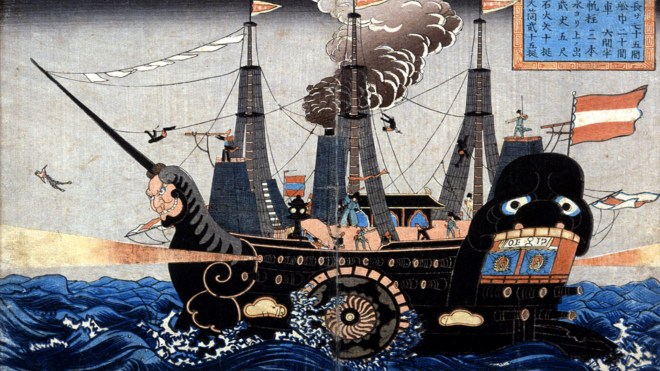
The prints were prepared in the late 1830s, early 1840s, in the dying days of the shogunate. Some ten years later, in 1853, Commodore Matthew Perry entered Tokyo Bay with his black ships and forced the country to open up.

This was the start of the cataclysmic changes which led to modern Japan. Much of the Nakasendo Way was wiped out in the country’s ensuing rush to modernity. This map, which overlays the trace of the Nakasendo Way on a modern map of Japan, shows the problem.

Many of the modern roads followed the course of the old road and thereby obliterated long stretches of it when they were built, while Japan’s skyrocketing population meant that every post town expanded way beyond its original limits, further obliterating the old road, and the calls for modern housing meant many of the old inns, shops, and houses in the post towns were razed to the ground to make way for brick and concrete.

If I write all this, it is because I had hoped to be able to match up at least some of views along our walk with Hiroshige’s and Eisen’s prints. We read that the portion of the Nakasendo Way which we were going to walk along, from Oi to Karuizawa, was the most unspoiled. So when, on the first day of our walk, my wife and I visited a museum dedicated to Hiroshige, I took photos of all the prints covering our section of the walk, in the pleasurable anticipation that at least at a few points along the way I would be able to stop and say “Ooh look, see how it’s changed since Hiroshige’s/Eisen’s time!”

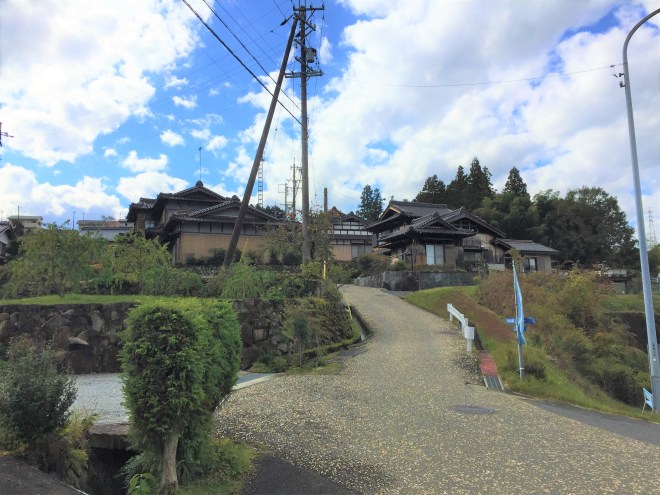
Alas, it was not to be. We didn’t see a single view which I could relate in any way to any of the two men’s prints. Partly it was because so much has changed in the built environment along the route. Partly it was because the organizers of the walk actually made us do large chunks off the Nakasendo Way proper so that we wouldn’t be walking along modern roads and highways. But partly it was because, as I came to realize, the two artists were not interested in giving the viewer faithful renderings of places along the road; rather, they wanted to record the sensations of being a traveler on the road.

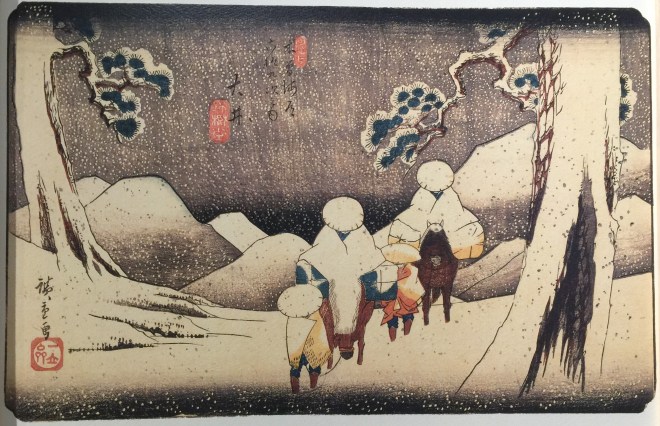
With that in mind, let me give the readers a sense of what my wife and I saw as we hiked along highway and byway from Oi to Karuizawa. We started in Oi on a beautiful day, not at all like the day Hiroshige chose for his print of Oi, where we see luckless travelers tramping along through deep snow.

Our guidance notes informed us that nowadays the trace of the Nakasendo Way is marked by the road sporting a special top of asphalt mixed with little yellow stones.

Following this trace (which in truth we really only had for the first day or two) made me feel a bit like Dorothy and her friends on the Yellow Brick Road.

Following our speckled roadway, we passed through the old post towns of Nakatsugawa and Ochiai. These were once two distinct post towns but now have expanded outwards and bled into each other, so it is difficult to know where one ends and the other begins. I have already inserted Hiroshige’s print of Nakasendo. Here is his print for Ochiai.

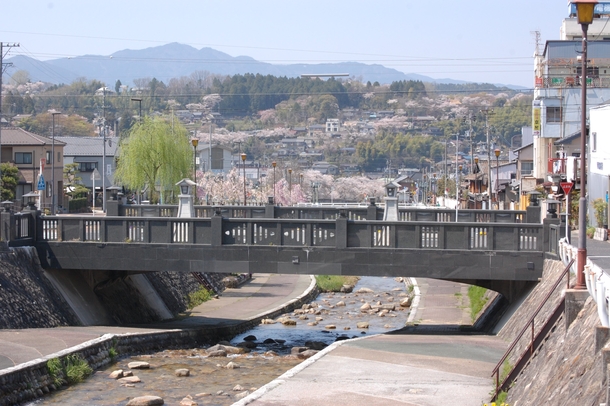
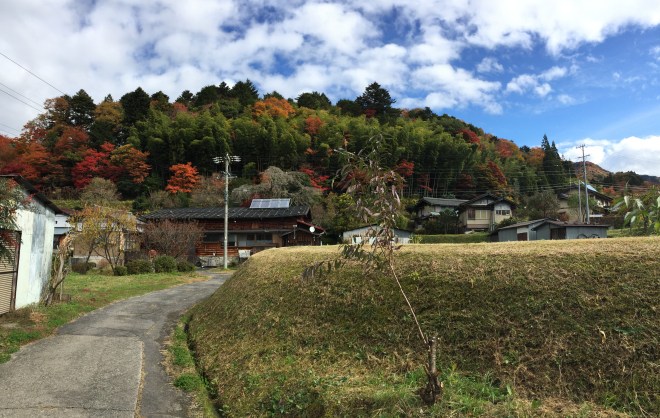
The two can be compared to this photo of the modern town of Nakatsugawa.
It’s a little hard not to feel a sense of loss.

At the exit of Ochiai, we crossed a bridge from which we had this perspective of a waterfall.

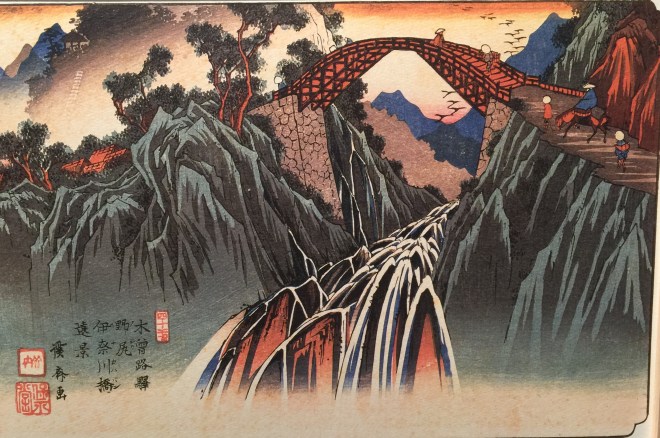
Charming – but not as dramatic as this print by  Eisen of the river at Nojiri
Something has been lost in the taming of nature.

Thereafter, we climbed steadily up towards Magome Pass, along an old piece of flagged roadway through a pine forest

before stopping for the night at an inn.

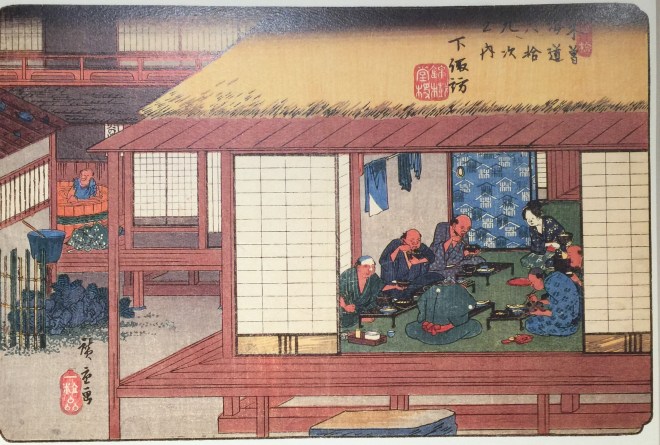
As in all the inns we stayed at, we were invited to wash off the aches and pains of the journey in the common hot tub and change into yukatas for dinner – something travelers had been doing along the Nakasendo Way for centuries, as this print by Hiroshige attests (note the man at the back soaking in the tub).

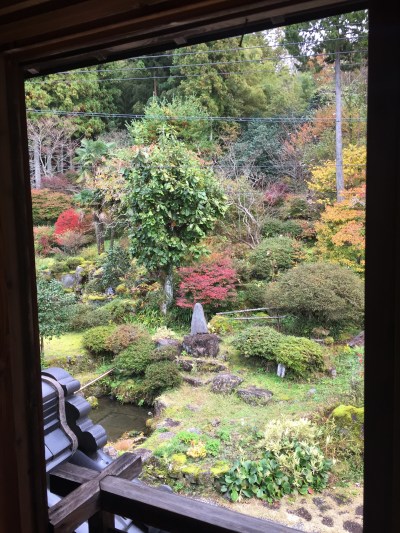
From the window of our room – strictly tatami, and no en-suite bathroom – we had a view of the inn’s garden.

I was reminded of a haiku by the master poet Matsuo Bashō

furu ike ya
kawazu tobikomu
mizu no oto

an ancient pond
a frog jumps in
the splash of water

Bashō traveled the old highways of Japan in the late 1600s and composed haiku along the way. Two seem particularly apposite for this autumn walk of ours:

No one travels along
this way but I
this autumn evening

Autumn evening: on a withered bough
A solitary crow is sitting now.

The next morning, the weather had turned bad and we left the inn under the rain.

With all our modern gear, we had it much better than some of the poor travelers depicted by Hiroshige tramping along under the rain

or running for shelter in a downpour.

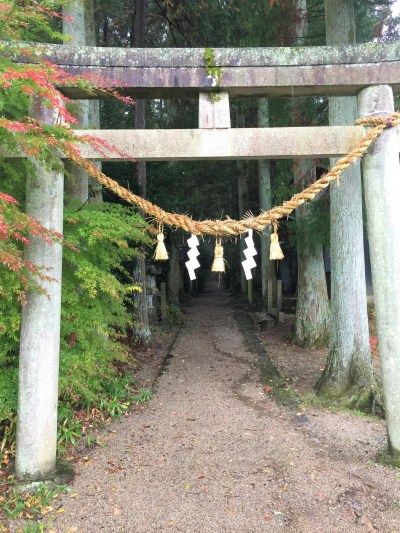
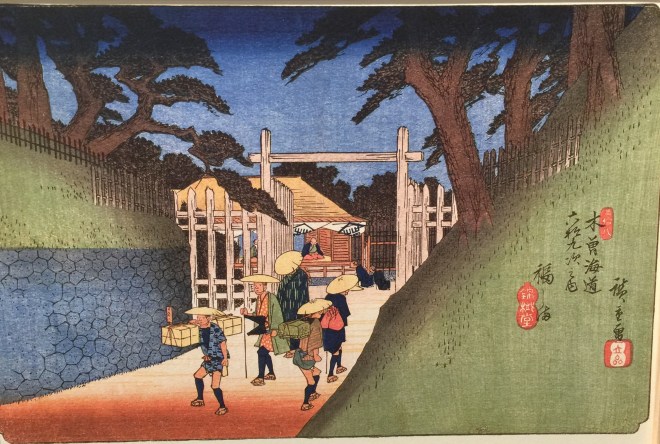
We passed a Shinto shrine buried deep in the trees, whose entrance was guarded by a torii gate.

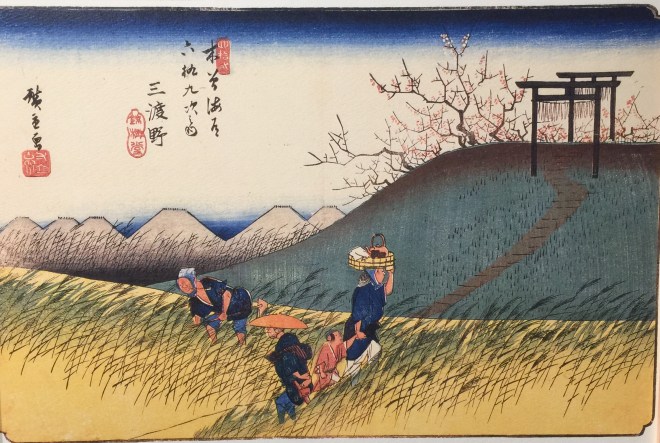
The same timeIess torii gate worked its way into one of Hiroshige’s prints.

The happy peasants are not so timeless, it seems. We saw no-one, throughout our entire walk, working in the fields.

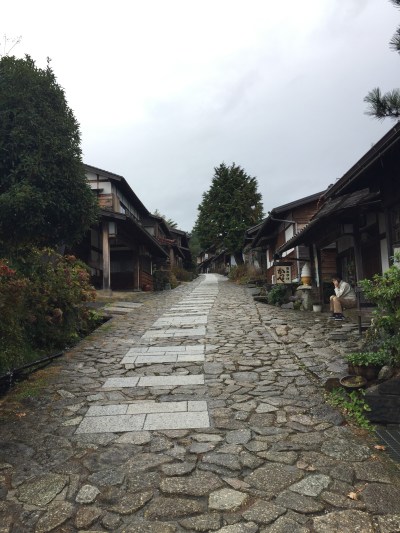
We arrived in the old post town of Magome which, our guidance notes observed, is one of the better preserved post towns. And we arrived early enough to avoid the hordes of tourists which normally flood the place.


Magome is the birthplace of the novelist Shimazaki Toson. One of his most famous novels, Before the Dawn, is set in Magome at the time of the wrenching change from the Tokugawa shogunate to Meiji Restoration. As one review puts it, “Shimazaki shows that the Tokugawa shogunate, for all its repressiveness, had much to commend it; that the restoration, for all its successes, created a great deal of frustration and disillusion.” I must confess to having never read the book, but now that I’ve walked the Walk and seen all the changes that Japan’s opening up has wrought I think it’s time for me to do so.

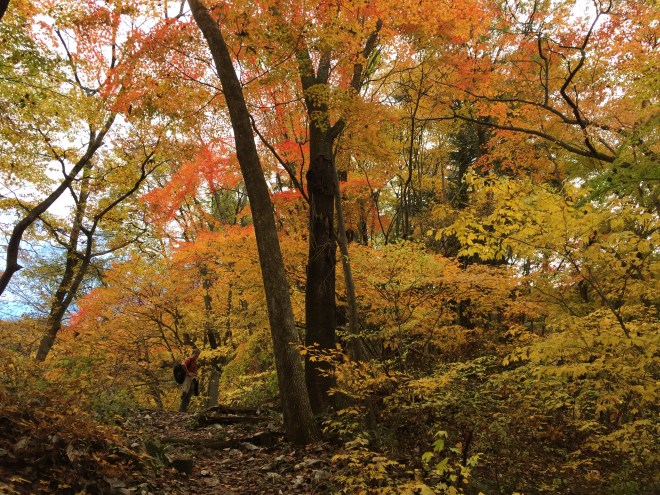
We now began the walk up to Magome Pass. The higher altitudes were finally bringing the autumns colours to us.


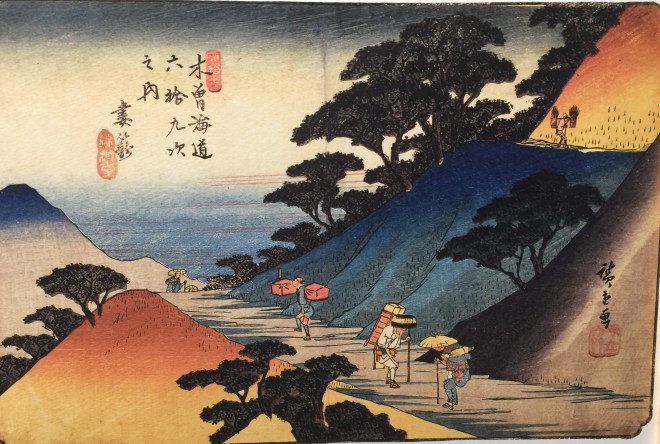
The Magome Pass is nothing today but a tricky point where the walker has to be careful in crossing the road so as not to end up as roadkill.  But Eisen and Hiroshige each presented the pass as backbreaking work for those carrying heavy loads along the route.


As we walked down the other side, carrying just a small rucksack

I could not but reflect that our lives had been made much easier by the modern road: while we walked, the bulk of our luggage was being transferred from inn to inn by car.

We soon came across an old tea house, which has been serving weary travelers tea on their way up to, or down from, the Pass since time immemorial.

Hiroshige preserved one such stopping-off place in one of his prints.

Local volunteers keep the tea house going, offering tea (and, our guidance notes informed us, sometimes songs) to the walker who is willing to tarry a while, which we willingly did.

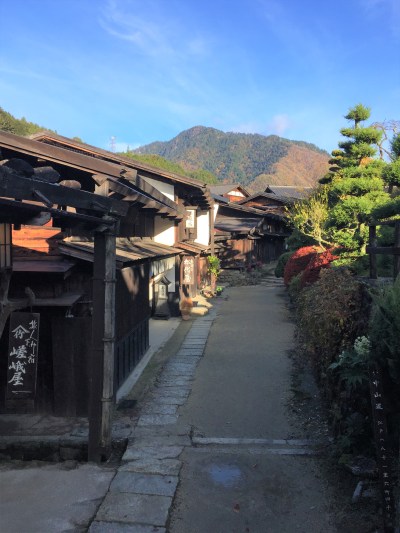
After a cup of tea, we were on our way again, reaching our inn on the outskirts of the old post town of Tsumago. As we saw later that afternoon, Tsumago was another post town which has elected to preserve itself for the tourist trade.


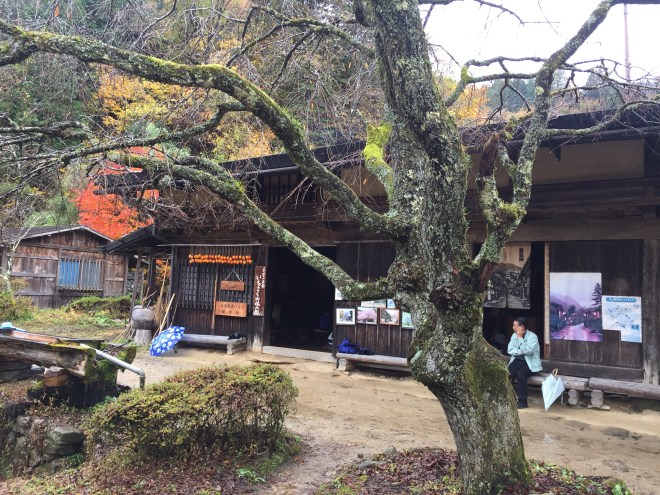
The only thing that struck me about the place was the strange habit which the locals had of hanging persimmons, ripe now all over Japan, outside their houses to dry. If nothing else, it made for a pretty photo.

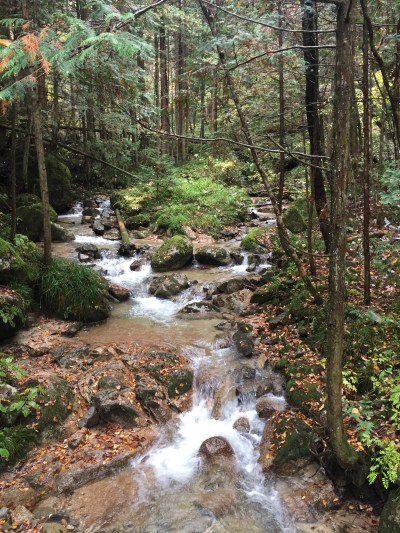
After Tsumago, our walking deviated from the Nakasendo Way. The next day, on our walk from Tsumago to Kiso-Fukushima, we took an alternative route through the mountains, which in the old days was used when rock slides and other hazards blocked the normal route. Gone was the speckled roadway. It was rougher, wilder, and altogether more beautiful.


This brought us to Nojiri, from where, with a bow to modernity, we took a train to Kiso-Fukushima. Our entry to the town was this.

This is how the town’s entry looked like in Hiroshige’s time.

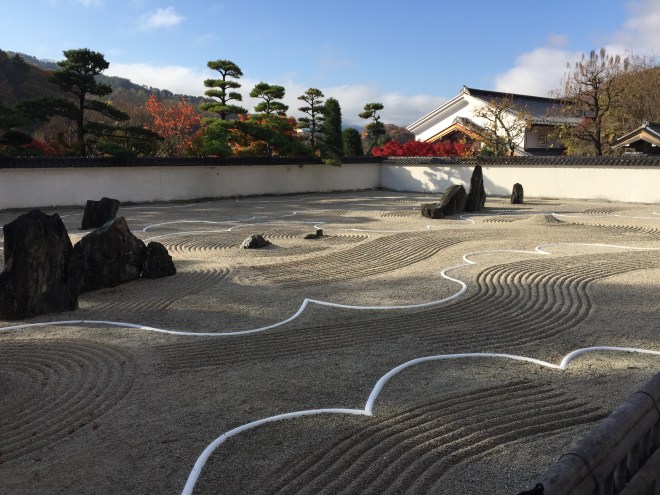
After an evening session in the inn’s Onsen (that Japanese institution of public bathing in mineral waters channeled from hot springs) and a good sleep, we started our next day with a visit to Kiso-Fukushima’s Zen rock garden, reputed to be the biggest in Japan. As an aficionado of rock gardens, I couldn’t miss it.

Well, as they say “bigger is not necessarily better”. I’m not sure I approve of that use of white lines in the design.

Here again, we strayed off the Nakasendo Way, taking the old Hida Way, a salt and medicinal herb trade route. We started at the Karasawa no taki falls.

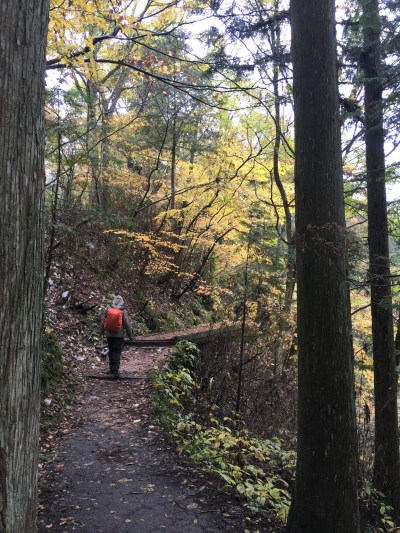
We climbed up through some beautiful forest

to the Jizo Pass. It was marked by a little statue which someone had thoughtfully covered with a hat and a bib to keep it warm during the winter.

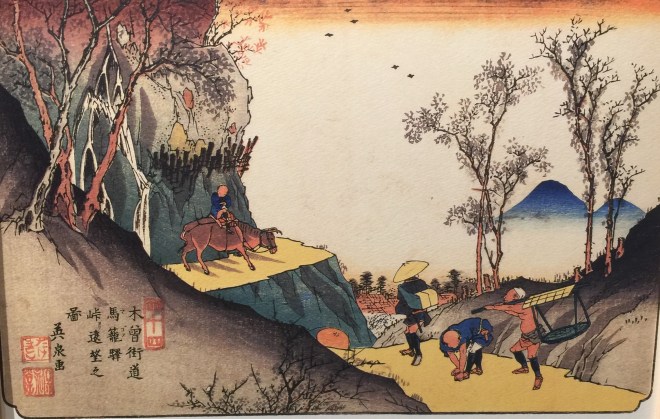
Just before heading down the other side, I gave a thought to those other travelers which Eisen had depicted also taking a break at the top of a pass.

After a lunch in beautiful sunshine gazing out at Mount Ontake in the distance (a volcano, I have since learned, which blew its top not too long ago)

we headed out for our afternoon walk over Nishino-toge pass, about which I have no memory and no photos – I must have been tired.

And so to our final day of walking, which saw us coming back to Kiso-Fukushima by bus, take a train to Yabuhara, and from there walk to the old post town of Narai. The walk took us to the top of Torii-toge Pass

and from there down to Narai. Narai is one long street of well preserved houses.


I could see no relation whatever with Eisen’s print of Narai

although what I saw rather reminded me of his print of another post town, Sakamoto.

A final reminder, if ever I needed one, that my initial dream of matching woodblock prints by either men to what I was seeing on the ground was an exercise doomed to failure.

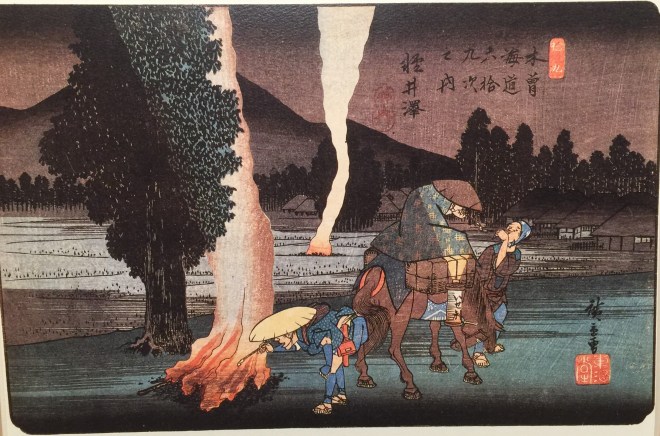
After a late lunch, we hurried to the station to catch a series of trains to our final destination, the old post town of Karuizawa. As in Hiroshige’s print of Karuizawa

we arrived in darkness, although we enjoyed a slap-up meal at our inn rather than smoking what looks to me suspiciously like opium pipes. Perhaps the poor buggers didn’t have the cash for a good nosh.

The next day, we took that super-modern form of transportation, the bullet train, and headed to Osaka to catch our plane back home. My wife and I have already agreed that next year, if we go back to Japan, we will do another walk. The question is where.

________________________________

Photos: all ours, except:

Hokusai, Great Wave off Kanagawa: https://en.wikipedia.org/wiki/The_Great_Wave_off_Kanagawa
Hokusai, Fine Wind Clear Morning: https://en.wikipedia.org/wiki/Fine_Wind,_Clear_Morning
Hokusai, Kajikazawa in Kai Province: https://www.metmuseum.org/art/collection/search/39656
Edo five routes: https://en.wikipedia.org/wiki/Edo_Five_Routes
Perry’s ship enters Tokyo Bay: https://medium.com/tomorrow-in-progress/when-black-ships-bring-the-future-9c7456050fcc
Nakasendo route on modern map: https://sites.google.com/site/kisokaido/presentation-nakasendo-kisokaido
Yellow Brick Road: http://fortune.com/2018/11/08/wizard-of-oz-script-auction/
Modern Nakatsugawa: https://photorator.com/photo/57577/spring-day-nakatsugawa-japan-
Kiso-Fuskushima station: https://en.wikipedia.org/wiki/Kiso-Fukushima_Station
Karasawa no Taki falls: https://www.getaway.co.za/travel-ideas/walking-through-japan/

MUSINGS ON CLIMATE CHANGE

Milan, 14 November 2018

I recently finished the three-week course which I give annually at Kyoto University, on sustainable industrial development – or rather, lack thereof. Summarizing rapidly, my thesis is that current patterns of industrial development, indeed current patterns of economic development as a whole, are fundamentally unsustainable, and that if we don’t change course soon climate change as well as various other attacks on our planetary ecosystems will lead to their collapse and this to the collapse of our civilizations. The rest of the course outlines how we might change direction.

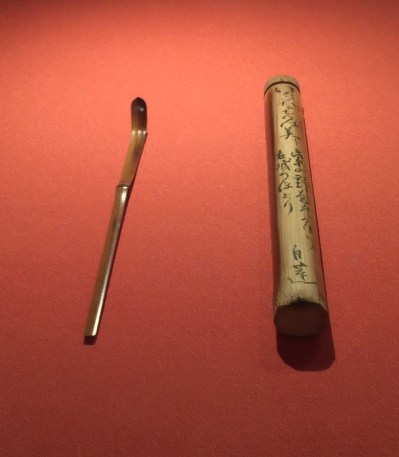
For the students it’s an intensive course, but for me it’s not so intensive: two three-hour classes a week, plus a bit here and there. So I and my wife, who always accompanies me on these trips, have a lot of spare time on our hands. In past years, we’ve visited the city’s museums but none of the exhibitions this year grabbed our attention. The only exception was the Miho museum, which we had discovered last year. It had a strange (well, to us strange) exhibition, obsessively focused on bamboo tea scoops, used in the traditional Japanese tea ceremony to scoop powdered green tea out of its holder and transfer it to the pot of hot water. We see one here together with its bamboo holder.

Seeing one or two tea scoops is OK, but after the sixth or seventh my interest began to pall; yet this exhibition must have had a hundred of the things. Nevertheless, the building itself and the permanent exhibition was definitely worth another visit. I refer interested readers to an earlier post of mine on this museum.

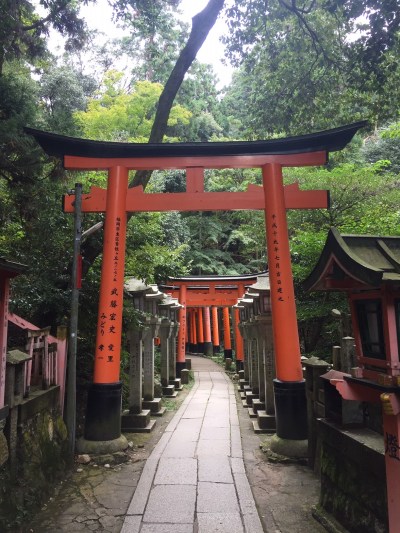
We’ve also visited all the temples in and around Kyoto (and one year even took in the temples at nearby Nara), so by now we’re pretty much templed out. The only exception this year, because it continues to fascinate, was the Fushimi Inari shrine with its long avenues of torii gates snaking their way up and down the hill at whose feet the shrine stands.


Climbing up through all those torii gates was also useful exercise for us, helping as it did to maintain our fitness in readiness for the week-long walk we were booked in to do after I’d finished my course (and which, with a bit of luck, will be the subject of a future post).

In fact, walking the hills ringing Kyoto became the focus of much of our attention this year. Through serendipity we discovered a network of trails in those hills, and in the days I wasn’t teaching we would set off to explore them. They were quite hard going, their navigation not made easier by the many trees which this summer’s severe typhoons had brought crashing down over the trails. The typhoons were unusually severe this year in Kyoto, as was the summer in general; the climate change I was talking to my students about is making summers hotter and extreme weather events all the more extreme.


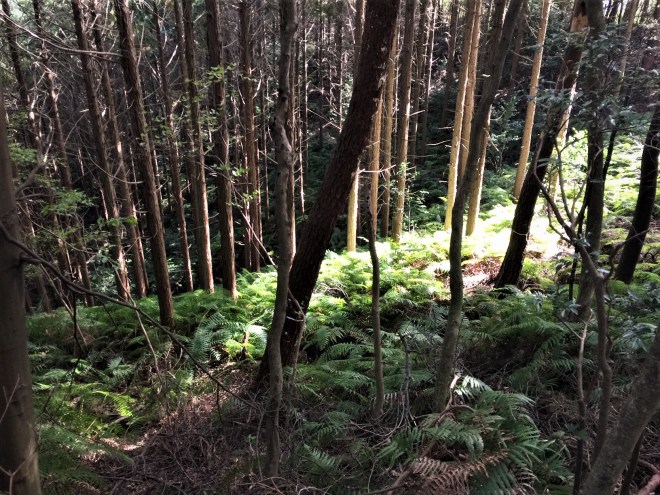
Luckily, many sections of the trails were easier on the legs, and it was on one of these sections, as we rounded a corner, that we suddenly found ourselves on the edge a steep wooded slope carpeted by intensely green ferns.


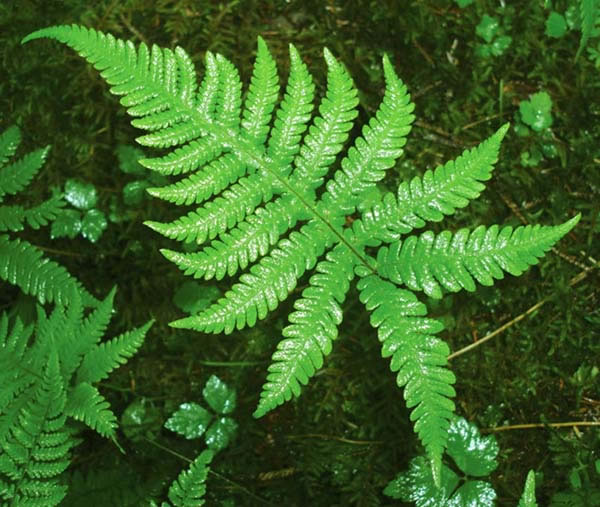
I have a great fondness for ferns. Partly it’s because of their innate elegance.

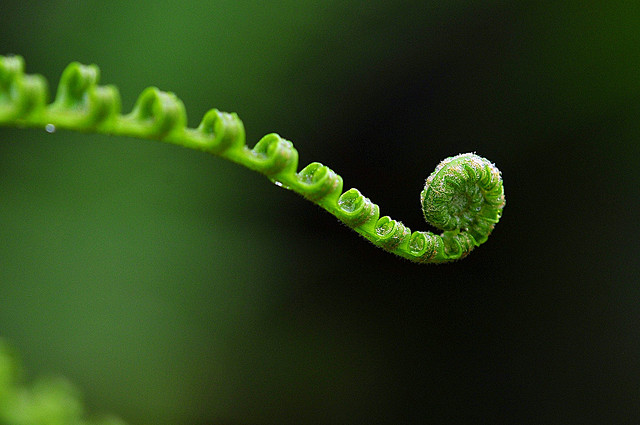
Partly it’s because of the beauty of young ferns as they uncoil.

Partly it’s because of their great age; as I have written in previous posts, I have a soft spot for those very ancient species which have survived to the present time.

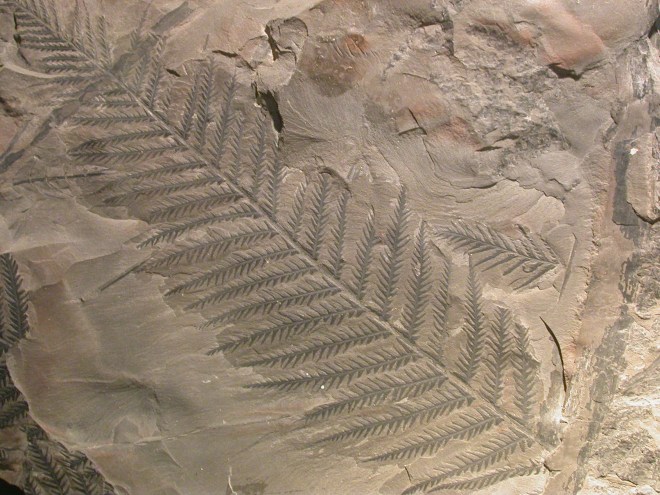
Ferns first appear in the fossil record during the Carboniferous period, some 300 million years ago. The first evidence of ferns related to several modern families appeared in the Triassic period, some 250 million years ago. The great fern radiation occurred 70 million years ago in the late Cretaceous period, when many modern families of ferns first appeared. I should point out that in all these periods, CO2 levels were far higher than they are now. No doubt when that climate change I was talking to my students about, induced by rapidly increasing levels of CO2, brings our civilizations to their knees and wipes us out as a species ferns will once more conquer the world. Who laughs last laughs longest.

________________________________

Pictures: all ours, except:
fern elegance: https://www.fs.fed.us/wildflowers/beauty/ferns/structure.shtml
fern uncoiling: https://www.bestphotosworld.com/15-lovely-unfurling-ferns/
fossil fern: http://www.tiedyedfreaks.org/ace/natural/natural.html

THE PAIN THAT NEVER PASSED

Milan, 11 November 2018

Exactly a hundred years ago today, the First World War ended. Some 10 million soldiers and 6 million civilians had been killed by the time the guns fell silent. May they rest in peace wherever they lie, in marked graves which circle the battlefields, or in some spot “known only to God”.

On previous anniversaries, I have written about the soldiers who fought and died in this war. Today, though, it seems more appropriate to commemorate those for whom the pain did not end on that 11th day of November in 1918, for whom the pain never ended.

23 million soldiers were wounded in the war.

For many their wounds healed, leaving only scars to carry to the grave. As Robert Graves wrote in the opening lines of his poem Recalling War, written some twenty years after the war ended,

Entrance and exit wounds are silvered clean,
The track aches only when the rain reminds.

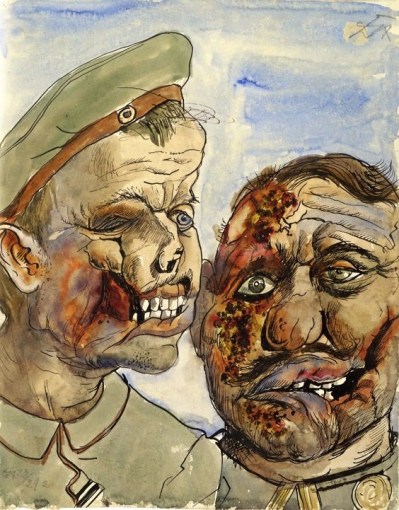
But some men were so badly mutilated that they could never lead a normal life again. The German artist Otto Dix turned his unflinching gaze on these smashed men, forcefully reminding his viewers of their shattered existence and challenging them (challenging us all) not to turn away.


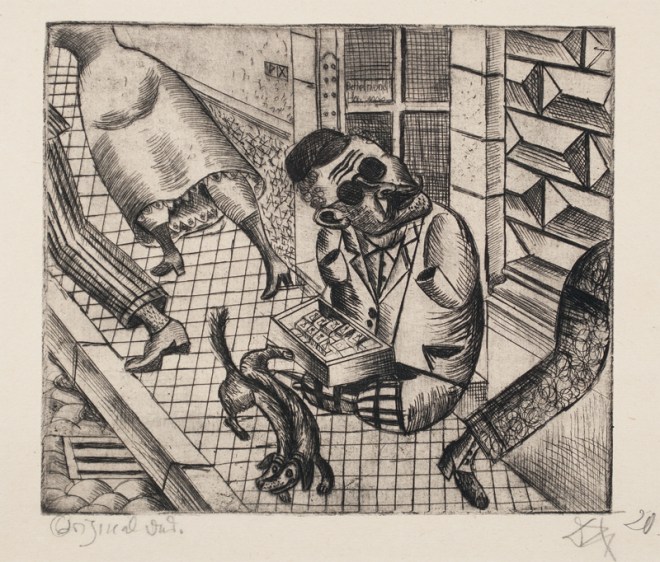
But turn away they – we – did, forcing these men to eke out an existence on the edges of society, like this match seller drawn by Dix.

Or like the barrow puller memorialized by the French poet Marcel Sauvage in his poem Le châtiment, The Punishment. (I give here my modest efforts at translation)

In the street
Cars
On the cobbles, like hard rattles
Taxis flying by
Red, their backs smoking
Heavy lorries
Houses trembling.
Tram lines under trolley wheels
Screeching …
On the pavements
Passersby moving, moving
The city screams
The city: Paris

A car raced along
Rich.
A barrow
Pulled by a pack animal
A man
A man in sweat
Barred its road
A Gentleman leaned out
Of that rich car,
A rich old man.
He shouted at the poor man
Poor devil caught up
In the swirl of the street:
“Idiot
You deserve to be run over …”

I looked at the man
Who dragged the barrow
He said nothing, did nothing.
He had a peg leg
Was dragging a heavy barrow
Was sweating
Pinned on the lapel of his dirty jacket
A military cross
A war medal.
He was yesterday’s hero
A martyr who was sweating
Frightened, resigned
In the swirl of the street
A pack animal
In the swirl of the street
The rich man should have run him over
That poor man –
– there

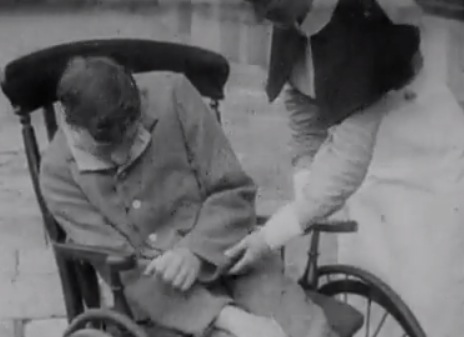
Some 65 million troops were mobilized for the war. Many may not have been wounded but they carried home psychological scars from the horrors they had witnessed, suffering from what today we wrap up in the scientific-sounding term Post Traumatic Stress Disorders. My grandmother would often tell me of her cousin Ernest. He came out of three years of fighting on the Western Front physically unscathed. But his mind was shot. He couldn’t hold a job down, he began drinking heavily, he quarreled with everyone. He died at the age of 44. Some descended even further into a hell they could never escape from.

Wilfred Owen caught those who were quite smashed in the mind in his poem Mental Cases.

Who are these? Why sit they here in twilight?
Wherefore rock they, purgatorial shadows,
Drooping tongues from jays that slob their relish,
Baring teeth that leer like skulls’ teeth wicked?
Stroke on stroke of pain,- but what slow panic,
Gouged these chasms round their fretted sockets?
Ever from their hair and through their hands’ palms
Misery swelters. Surely we have perished
Sleeping, and walk hell; but who these hellish?

-These are men whose minds the Dead have ravished.
Memory fingers in their hair of murders,
Multitudinous murders they once witnessed.
Wading sloughs of flesh these helpless wander,
Treading blood from lungs that had loved laughter.
Always they must see these things and hear them,
Batter of guns and shatter of flying muscles,
Carnage incomparable, and human squander
Rucked too thick for these men’s extrication.

Therefore still their eyeballs shrink tormented
Back into their brains, because on their sense
Sunlight seems a blood-smear; night comes blood-black;
Dawn breaks open like a wound that bleeds afresh.
-Thus their heads wear this hilarious, hideous,
Awful falseness of set-smiling corpses.
-Thus their hands are plucking at each other;
Picking at the rope-knouts of their scourging;
Snatching after us who smote them, brother,
Pawing us who dealt them war and madness.

But the lives of many non-combatants were broken too, by the death of a son or husband or lover or father, leaving inside of them a void that was never to be filled. The poet Vera Brittain expressed this never-ending sorrow in her poem Perhaps, in which she talks to her fiancé, killed in 1915 at the age of 20 by a sniper.

Perhaps some day the sun will shine again,
And I shall see that still the skies are blue,
And feel once more I do not live in vain,
Although bereft of you.

Perhaps the golden meadows at my feet
Will make the sunny hours of spring seem gay,
And I shall find the white May-blossoms sweet,
Though you have passed away.

Perhaps the summer woods will shimmer bright,
And crimson roses once again be fair,
And autumn harvest fields a rich delight,
Although you are not there.

Perhaps some day I shall not shrink in pain
To see the passing of the dying year,
And listen to Christmas songs again,
Although you cannot hear.

But though kind Time may many joys renew,
There is one greatest joy I shall not know
Again, because my heart for loss of you
Was broken, long ago.

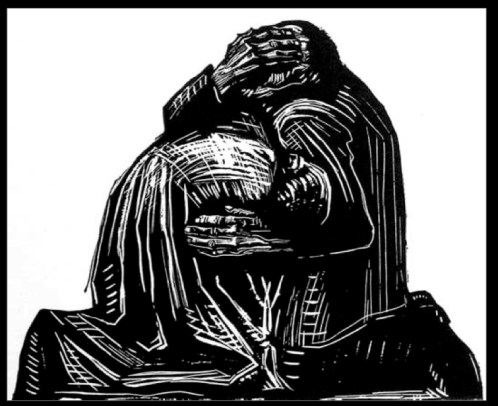
The German artist Käthe Kollwitz captured the desperation of parents who lost a son in the war in this woodcut. They lost their son Peter in the early months of the war, in October 1914, in Flanders.

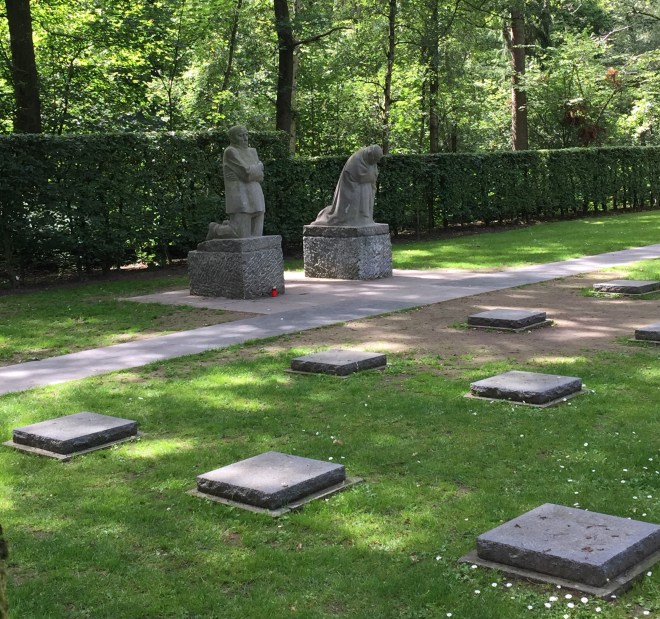
Her desperation passed but not the pain. Some twenty years after the war she carved two kneeling statues, of her husband Karl and herself, which are now in the German military cemetery of Vladslo, in Belgium, where Peter is buried.

Karl is holding himself tight, as if afraid of showing too much emotion, sorrowfully gazing down at the tomb holding the remains of his son and 19 other soldiers.

Käthe is bowed over, holding her hand to her face, grief stricken.

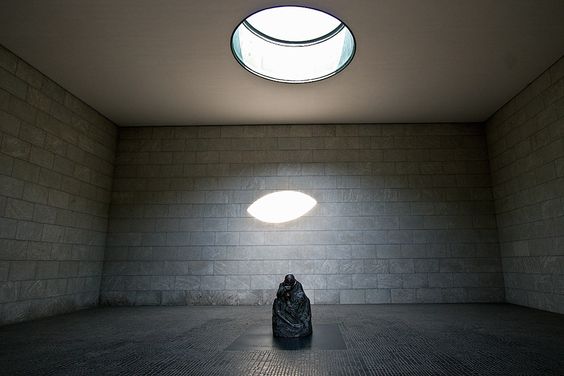
Another statue she made, of a Pietà, became the model for the statue which now adorns the Central Memorial of the Federal Republic of Germany for the Victims of War and Dictatorship, in the Neue Wache in Berlin. Here, we see the mother cradling her boy, who seems, almost childlike, to be retreating into the comfort of her embrace.

This statue sits in the bare space of the Neue Wache. It is one of the most moving monuments to those who have died in war that I know.

Brittain and Kollwitz could use their art to voice their grief. A multitude of others were tongue-tied, because they could not give form to their grief or because their upbringing barred them from showing it. My great uncle and his wife lost their son Max in April 1915, during an attack on German positions near Ypres. He was just 23. His body was never found. My grandmother used to tell me that Max’s parents never recovered from his death. Yet, in the printed family history that we all received, all that my great uncle could write of this terrible blow to him and his wife was “He is much missed by his family and by Catherine Peake, to whom he was engaged. A fine looking young man, with a pleasant and charming manner, Maxwell showed promise of a brilliant future.”

The same bottled-up grief comes through on this simple plaque which we saw on our visit to Verdun. It was set up on the side of the road known as the Chemin des Dames, which was at the centre of a huge French offensive in 1917.

It reads, “Jean Dauly, 350th Infantry Regiment. Killed on 6 May 1917 in the little wood across the way, aged 20. Missed by his mother, by all his family, and by his friends. Pray for him”. Again that word “missed” … such a small word for such a terrible agony, especially if the body could not be found so there was no grave to mourn over. As the sister of Private Richard Pick wrote in her brother’s In Memoriam printed in the Grantham Journal in 1917,

The unknown grave is the bitterest blow,
None but an aching heart can know.

Sometimes the agony of loss was so great that minds became unhinged. In his book Goodbye to All That, about his experiences of fighting on the Western Front, Robert Graves recounts how he went down to Kent to visit a wounded friend of his who was staying in the family home while recovering. He writes, “His elder brother had been killed in the Dardanelles, and his mother kept his bedroom exactly as he had left it, with the sheets aired, his linen always freshly laundered, and flowers and cigarettes by his bedside.” Although Graves does not say it explicitly, one is led to understand that the mother spent her evenings trying to connect with her son through scéances with the spirits.

Violet, Viscountess Milner lost her beloved son George at the age of 18. He was killed during the retreat from Mons in September 1914. She coped by erecting a monument near where he fell and making annual visits to his grave, and befriending the local villagers.

But her grief was endless. As she noted in her diary on the twentieth anniversary of George’s death: “the sorrow, the loss, the pain, are as great today as in 1914.”

I pray – I pray – that my wife and I will never have to face the agony of losing our son – or daughter – to a war.

I leave readers with an excerpt from the poem Antwerp by Ford Madox Ford.

This is Charing Cross;
It is midnight;
There is a great crowd
And no light.
A great crowd, all black that hardly whispers aloud.
Surely, that is a dead woman – a dead mother!
She has a dead face;
She is dressed all in black;
She wanders to the bookstall and back,
At the back of the crowd;
And back again and again back,
She sways and wanders.

This is Charing Cross;
It is one o’clock.
There is still a great cloud, and very little light;
Immense shafts of shadows over the black crowd
That hardly whispers aloud. . .
And now! . . That is another dead mother,
And there is another and another and another. . .
And little children, all in black,
All with dead faces, waiting in all the waiting-places,
Wandering from the doors of the waiting-room
In the dim gloom.
These are the women of Flanders.
They await the lost.
They await the lost that shall never leave the dock;
They await the lost that shall never again come by the train
To the embraces of all these women with dead faces;
They await the lost who lie dead in trench and barrier and foss,
In the dark of the night.
This is Charing Cross; it is past one of the clock;
There is very little light.

There is so much pain.

_____________________

Walking wounded: http://elsovh.hu/english/page/20/
Otto Dix, Two Soldiers: https://hanslodge.com/file/two-soldiers-by-Otto-Dix.htm
Otto Dix, Prostitute and disabled war veteran: http://www.trebuchet-magazine.com/aftermath-art-in-troubled-times/
Otto Dix, The Match Seller: http://www.germanexpressionismleicester.org/leicesters-collection/artists-and-artworks/otto-dix/match-seller/
Shell shock victim: http://ww1centenary.oucs.ox.ac.uk/body-and-mind/shell-shock-on-film/
Käthe Kollwitz Pietà, Berlin: http://blogueresdesantmarti.net/index.php/etiqueta/dones-escultores/
Neue Wache: https://www.pinterest.com/pin/545991154801328984/
Monument to Jean Dauly: http://www.mairie-chateau-thierry.net/1418/labase/dosmonumEpineChevregnymai17.pdf
Monument to George Cecil: http://www.webmatters.net/cwgc/guards_villerscotterets.htm

OH NO, IT’S HALLOWEEN AGAIN!

Kyoto, 31 October 2018

Halloween is upon us once again! Time to don the costumes of ghosts, goblins, zombies, skeletons, witches, and other assorted weirdos which we’ve been storing in our wardrobes since last year, and roam the streets drinking booze and checking out each other’s costumes!

Time to light the candles in those pumpkins which we’ve been patiently carving into hideous faces (or we just bought ready-made in plastic at the local store) and plonk them down in front of our door!

A dim and distorted reflection indeed of the beliefs of our ancestors that this was the night when for a short while the thin membrane separating the world of the living from the world of the dead became permeable, allowing the spirits of the dead to roam the land.

A time not to be out and about, risking to be set upon by evil spirits. A time to stay safe at home with your family.

Our ancestors also thought that, born as they were at that moment when real world and spirit world temporarily connected, Halloween babies had the ability in later life to commune with the spirits. When, 32 years ago, I wrote to our friends telling them that our son had been born in the early hours of 31st October, I jovially added that I looked forward to him having a successful career as a medium. Somewhat like Whoopi Goldberg in the film Ghost, although she initially was frightened stiff by her gift.

As of this writing, our son has shown no such gift although he has done well enough in other ways.

I am no believer in spirits – I am, as I have said in other posts, a child of the Scientific Revolution and the rationalism that came with it – but I do find it sad that what was for our ancestors an important and holy feast day has degenerated into a twee happening fueled by companies egging us on to consume.

Even the Japanese are getting into the act! Here in Kyoto we are constantly coming across the same Halloween-related consumeristic crap that we see now from Seattle to Budapest and beyond.

Halloween, it seems, is following in the steps of Christmas and going global: any excuse is good to get us out of the house and do some shopping.

Better by far that we just stay at home and enjoy each other’s company over a glass of wine. That’s certainly what my wife and I intend to do.

___________________________

Halloween party: https://sf.funcheap.com/marin-singles-halloween-costume-party-san-rafael/
Jack-o-lanterns: http://www.maniacpumpkincarvers.com/jackolanterns/
Medieval living and dead: http://www.medievalists.net/2013/10/the-medieval-walking-dead/
Whoopi Goldberg: https://www.youtube.com/watch?v=PsI5bREF20Y
Halloween shopping: http://www.halloween-online.com/articles/halloween-articles-budgeting.html
Holiday shopping: https://me.me/i/fox-10-holiday-countdown-days-until-halloween-400-days-until-2900508

KYOTO CITY BUS DRIVERS

Kyoto, 25 October 2018

In a previous post I mentioned in passing the wonderful delivery used years ago by an anonymous Amtrak employee when announcing the departure of trains from Penn Station in New York. Here, I want to come back to this theme, the delivery of messages on public transport, but this time the place is Kyoto and the transport in question the city’s buses.

Anyone who travels around by bus in this city cannot possibly have failed to notice the rather particular cadences used by bus drivers to announce upcoming stops, to thank you when you get off the bus, and to announce I know not what else (my knowledge of Japanese being limited to literally four words).

I think the Japanese already have a tendency to elongate the last syllable of the last word they pronounce, rather like the Czechs and Slovaks, but Kyoto bus drivers draw out that last syllable to an extreme. It’s as if a London bus driver were to say “Next stop: Trafalgar Squaaaaaaaaare” or “Coming up: Piccadilly Circuuuuuusssss” and “Watch your step getting off the buuuuussssss”. And it’s all said in such calm, caressing tones! As readers can see from the photo above, the bus driver wears a mic linked to the bus’s PA system, so he doesn’t have to raise his voice (it always seems to be men who drive Kyoto buses). He can just murmur quietly and breathily into his mic. My wife and I sit and listen (with some amusement, I have to say) as the driver’s litany of messages rolls out over us. We quite forget to admire the passing views, especially the tourists dressed up in kimonos and montsukis for the day.

The same cannot be said of the canned announcements on the buses, always by women. I don’t know what it is, but when Japanese women have to make public pronouncements they seem invariably to opt for a register in the higher octaves. I suppose they are adopting that childlike tone which seems to be the approved tone for women in this still very patriarchal society. I remember once meeting the wife of a Japanese colleague who spoke English to me in a high, squeaky voice but whose voice dropped an octave or so when she spoke to her husband. Those same squeaky tones emanate from Kyoto buses’ PA systems, announcing chirpily what stops will be next and various other information of public interest. Every time I hear that voice (and there seems to be only one voice used by the whole of the Kyoto bus system), I cannot help but think of the girly characters that populate Japanese cartoons, the ones with the impossibly big eyes and a suspiciously Caucasian look.

Women of Japan, arise! You have nothing to lose but the chains which tie you to ridiculous and outdated role models! Drop your voices an octave! And drive Kyoto buses, for God’s sake!

Well, having got that off my chest, let me go back to listening to the soothing tones of our bus driver. I should tape him, I’m sure playing his voice back in a loop at night as white noise would make me sleep very well.

_____________________________________________

Kyoto city bus:
https://commons.wikimedia.org/wiki/ File:Kyoto_City_Bus_200_Ka_1519.jpg
Kyoto city bus driver: https://www.alamy.com/stock-photo-kyoto-bus-driver-with-white-gloves-in-japan-133175829.html
Street scene Kyoto:
https://lexiskobe.com/2016/03/04/%E3%83%AC%E3%82%AF%E3%82%B7%E3%82%B9%E3%82%B8%E3%83%A3%E3%83%91%
E3%83%B3%E3%81%AE%E7%95%99%E5%AD%A6%E7%94%9F%E3%81%8C%E3%83%A2%E3%83%87%E3%83%AB%E3%81%AB%E3%81%AA%E3%82%8A%E3%81%BE%E3%81%97%E3%81%9F/lexis-japan-kimono-kyoto-3/
Girl cartoon character: http://www.nijisenmon.com/1070592288

MUSINGS ON BRAMBLES

Kyoto, 15 October 2018

As I struggle with jet lag on our annual trip to Kyoto and watch the night sky pale into day, my mind wanders to a previous post that I wrote about stinging nettles. I mentioned there in passing that brambles are also a bitch because of their thorns. And now my tired brain latches onto brambles.

Wicked little bastards those thorns are, capable of slicing with ease through clothing, never mind more delicate tissues like your skin. Look at the damned things!

Talking of which, there was a story doing the rounds of Medieval England which offered an intriguing alternative to the standard narrative of the start of the universal war between Good and Evil. As we all know, that war started with Satan daring to claim that he was the equal of God. Thereupon, in majestic rage, God, through the good offices of his Archangel Michael, threw Satan and his horde out of Heaven – a most dramatic rendition of which scene my wife and I recently came across in Antwerp Cathedral.

The standard story has Satan and his devils all falling into Hell. As John Milton put it so memorably in his opening lines of Paradise Lost

                             Him the Almighty Power
Hurled headlong flaming from the ethereal sky
With hideous ruin and combustion down
To bottomless perdition, there to dwell
In adamantine chains and penal fire,
Who durst defy the Omnipotent to arms.

In Medieval England instead, they had the poor devils land in bramble bushes, presumably as a pit stop on their way down to their eventual hellish destination. The pain was such that every year, on Michaelmas Day, the feast day of their nemesis the Archangel Michael, the devils would go round all the bramble bushes in England and spit, pee, and fart on the blackberries. I sense that on their satanic rounds, the devils would have looked something like this.

Now, there was actually a moral to this story, to whit: one should not eat blackberries off the bush after Michaelmas Day. A very sensible suggestion, I would say; who would want to pick and eat blackberries after they had been so treated? The precise date when this interdict should come into effect is the subject of some confusion. When the story started on its rounds, England followed the old Julian calendar, in which Michaelmas Day fell on 10th October (in today’s Gregorian calendar). In the Gregorian calendar, though, Michaelmas Day falls on 27th September. The key question is: have the devils continued to follow the Julian calendar or did they switch to the Gregorian calendar like everyone else? While my readers ponder over this conundrum, I should note that, like many fanciful stories from our past, a good scientific reason exists for eschewing blackberry eating after end-September, early-October: the damper autumnal weather encourages the growth of molds on blackberries, grey botrytis cinerea in particular, the eating of which could be perilous for the health of the eater.

It’s typical of devils that they would try to spoil the one fun thing there is about brambles, which is collecting ripe blackberries. Luckily, this is done – or should be done – late-August, early-September, before the devils get around to their nasty business. This summer, when my wife and I were walking the Vienna woods,we got few occasions to pick blackberries; there simply weren’t that many growing along the paths we took. But I still remember my siblings and I going blackberrying some fifty years ago. We would head out to the bramble bushes lining the small country lane which passed by my French grandmother’s house, each of us with a container, slowly moving down the bushes and picking the darkest, juiciest berries. This young girl epitomizes that perilous and sometimes painful search for juicy goodness among the thorns.

She at least managed to come home, with purple fingers (and probably purple mouth), with her finds.

We never seemed to come home with any; eating them on the spot was simply too irresistible, and we would troop home with nothing to show for our work but purple mouths and hands, much to the irritation of our grandmother who had been planning to conserve our blackberries for the winter. My memory fails me at this point but no doubt we would be sent off to the bramble bushes again, with strict orders to bring back the blackberries this time.

Seamus Heaney, the Irish poet and Nobel Laureate for literature, captured well the joys of blackberrying in his poem Blackberry picking, although he speaks too of the heartbreak of his treasured finds going moldy, no doubt with the help of the devils.

Late August, given heavy rain and sun
For a full week, the blackberries would ripen.
At first, just one, a glossy purple clot
Among others, red, green, hard as a knot.
You ate that first one and its flesh was sweet
Like thickened wine: summer’s blood was in it
Leaving stains upon the tongue and lust for
Picking. Then red ones inked up and that hunger
Sent us out with milk cans, pea tins, jam-pots
Where briars scratched and wet grass bleached our boots.
Round hayfields, cornfields and potato-drills
We trekked and picked until the cans were full
Until the tinkling bottom had been covered
With green ones, and on top big dark blobs burned
Like a plate of eyes. Our hands were peppered
With thorn pricks, our palms sticky as Bluebeard’s.
We hoarded the fresh berries in the byre.
But when the bath was filled we found a fur,
A rat-grey fungus, glutting on our cache.
The juice was stinking too. Once off the bush
The fruit fermented, the sweet flesh would turn sour.
I always felt like crying. It wasn’t fair
That all the lovely canfuls smelt of rot.
Each year I hoped they’d keep, knew they would not.

Luckily, by the beginning of last century the terrors of the supernatural had been tamed by science, so that Cicely Mary Barker, in her collection of seasonal flower fairies, was able to transform the nasty devils of the past into this very twee Bramble Fairy.

The fairy was accompanied by an equally twee little poem.

My berries cluster black and thick
For rich and poor alike to pick.

I’ll tear your dress and cling, and tease,
And scratch your hands and arms and knees.

I’ll stain your fingers and your face,
And then I’ll laugh at your disgrace

But when the bramble-jelly’s made
You’ll find your troubles well repaid.

Twee it might be, but the poem’s last lines point us to the next step in the blackberry adventure, namely the eating of them in various yummy forms.

In my opinion, one can do no better than eat blackberries fresh with a dollop or two – or three – of whipped cream.

I’m sure my wife would agree. She once spent a Wimbledon championship selling strawberries and whipped cream to those going in to watch the tennis, and since she no doubt scarfed down a portion of her product when the manager wasn’t looking she will testify to the deliciousness of the cream-berry combination.

The English, however, also swear by the blackberry-apple combination, cooked together in a pie. The ideal is to use windfall apples, so slightly tart, with fully ripe blackberries; the tart-sweet combination which results cannot be beaten, I am assured in article after article.

I’m moved to throw in here a brief recipe for this delicious dish. Start by making the dough for the pie. Put 250g of plain flour into a large mixing bowl with a small pinch of salt. Cut 75g of butter and 75g of lard into small chunks and rub into the flour using thumb and fingertips. Add no more than a couple of tablespoons of cold water. You want a dough that is firm enough to roll but soft enough to demand careful lifting. Set aside in the fridge, covered with a tea towel, for 30 minutes.

In the meantime, preheat the oven to 180°C. Peel, core and quarter 6 Bramley apples, cutting them into thick slices or chunks. Put 20g butter and 100g caster sugar into a saucepan and, when the butter has melted, add the apples. Slowly cook for 15 minutes with a lid on. Then add 150g blackberries, stir and cook for 5 more minutes with the lid off.

Meanwhile, remove the pastry from the fridge. Cut the pastry in half and roll one of the pieces out until it’s just under 1cm thick. Butter a shallow 25cm pie dish and line with the pastry, trimming off any excess round the edges.

Tip the cooled apples and blackberries into a sieve, reserving all the juices, then put the fruit into the lined pie dish, mounding it in the middle. Spoon over half the reserved juices. Roll out the second piece of pastry and lay it over the top of the pie. Trim the edges as before and crimp them together with your fingers. Make a couple of slashes in the top of the pastry. Place the pie on the bottom of the preheated oven for 55 to 60 minutes, until golden brown and crisp.

In these troubled times of Brexit, when there are those Little Englanders who would question the UK’s belonging to a wider European culture, I feel that I should point out that this pie is not uniquely English. Already some 450-500 years ago, the Dutch painter Willem Heda lovingly painted a half-eaten apple and blackberry pie (unfortunately, my wife and I did not see this particular painting during our trip this summer to the Netherlands).

I feel I must include here a variation on the pie theme, the blackberry-apple crumble, only because my Aunt Frances used to make the most sublime crumble, whose magnificence I remember even now, more than half a century after the fact.
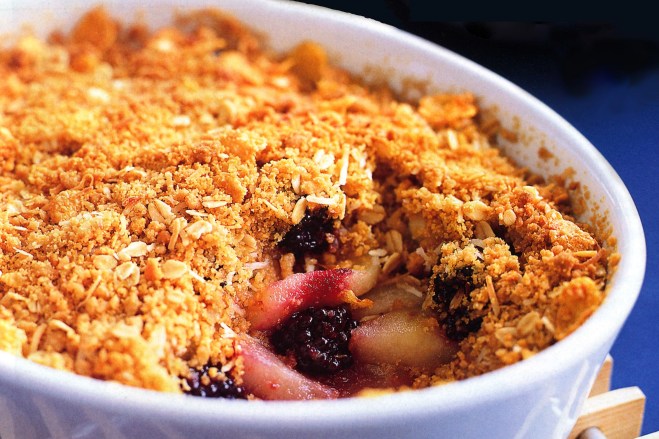
Once again, pre-heat the oven to 180°C. To make the crumble, tip 120g plain flour and 60g caster sugar into a large bowl. Cut 60g unsalted butter into chunks, then rub into the flour using your thumb and fingertips to make a light breadcrumb texture. Do not overwork it or the crumble will become heavy. Sprinkle the mixture evenly over a baking sheet and bake for 15 mins or until lightly coloured. Meanwhile, prepare and cook the apple-blackberry compote as before. Spoon the warm fruit into an ovenproof gratin dish, top with the crumble mix, then reheat in the oven for 5-10 mins.

Since the Bramble Fairy speaks about bramble jelly, and since something like it was the reason my grandmother sent us out to collect blackberries, I feel I should mention this preserve too.

Staying with the apple-blackberry combination, I give here a recipe which contains apples. But the purpose of the apples is different. It is to naturally add pectin to the mix so as to make a firmer jelly.

Put 2 cooking apples, washed, cored, and diced, and 450ml of water in a large saucepan. Bring to the boil, then simmer over a low heat for 20-25 minutes or until the fruit is completely soft. Tip the soft fruit and juice into a jelly bag (which has been previously boiled to sterilize) and leave to drip for 8 hours or until all the juice has been released. Prepare the jam jars by washing in hot soapy water and leaving to dry and warm in a cool oven for 10-15 minutes. Measure the juice. For every 600ml weigh out 450g sugar. Put the juice and sugar back into the clean pan, heat over a low heat until all the sugar has dissolved. Bring to the boil and simmer for 10-15 minutes or until setting point is reached. Skim away any scum from the top of the jelly and fill the jam jars to the brim. Cover, seal and label. Store in a cool, dark place until required.

It goes without saying that the juice of blackberries can be drunk too, in many forms. I will only mention one of these, blackberry wine, and only because I once made the closely related elderberry wine at school, with a couple of friends. More on this later. Let me focus first on the making of blackberry wine. If any of my readers want to try this, they can use the following recipe which I lifted from Wikihow.

To make 6 bottles of wine:
– 4½-6 lbs of fresh blackberries
– 2½ lbs of sugar
– 7 pints water
– 1 package yeast (red wine yeast is recommended)

Crush the berries by hand in a sterile plastic bucket. Pour in 2 pints of cooled distilled water and mix well. Leave the mixture for two hours.

Boil ⅓ of the sugar with 3 pints water for one minute. Allow the syrup to cool. Add the yeast to 4 oz of warm (not boiling) water and let it stand for 10 minutes. Pour the cooled syrup into the berries. Add the yeast. Make sure the mixture has properly cooled, as a hot temperature will kill the yeast. Cover the bucket with a clean cloth and leave in a warm place for seven days.

Strain the pulp through fine muslin or another fine straining device, wringing the material dry. Pour the strained liquid into a gallon jug. Boil a second ⅓ of the sugar in 1 pint water. Allow it to cool before adding it to the jug. Plug the top of jug with cotton wool and stretch a pin-pricked balloon to the neck. This allows CO2 to escape and protects the wine from oxidization and outside contamination (the demijohn in the photo has a much more sophisticated stopper for the same purpose).

Let the wine sit for ten days. Siphon or rack the wine to a container. Sterilize the jug, then return the wine. Boil the remaining ⅓ of the sugar in the last pint of water, allowing to cool before adding to the wine. Plug the jug with the cotton wool and balloon and leave until the wine has stopped fermenting. The wine will stop bubbling when fermentation has stopped.

Siphon the wine as before. Sterilize the wine bottles and add a funnel. Pour the wine into the bottles, filling each bottle to the neck. Cork and store the bottles.
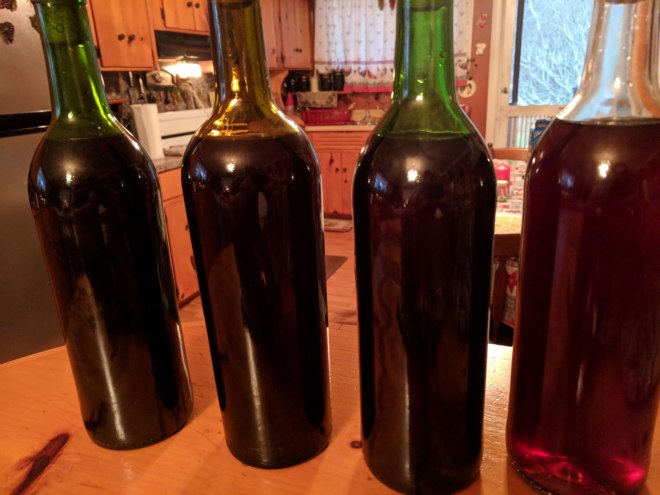
Cheers!

Reading this, I realize why our attempt at making elderberry wine fifty years ago was such a miserable failure. Readers should first understand that what we were doing – making an alcoholic drink – was strictly prohibited, so we were exceedingly furtive in everything we did. With this premise, let me describe the steps we went through. As I recall, we mashed the elderberries with water and yeast, a packet of which we bought down in the village (Lord knows what the lady behind the counter thought we were doing with the yeast; she was too polite to ask). I don’t remember parking the resulting liquid somewhere warm to ferment, we simply put the mash into (unsterilized) bottles that we purloined from somewhere; did we even strain out the solids? I have my doubts. Our most pressing problem was where to hide the bottles while the juice was fermenting into (we dreamed) wine. Our first idea was to put them in a sack and haul this to the top of a leafy tree where it was well hidden. But we had forgotten that trees lose their leaves in Autumn. So readers can imagine our horror when our sack became increasingly visible – from the Housemaster’s room, no less – as the leaves dropped off. We hastily brought the sack down one evening and buried it in a little wood behind our House. Later, when we reckoned the fermentation must be over, we furtively dug up the sack. Two out of the three bottles had exploded. We took the remaining bottle into the toilet and drank it. Of course, we pretended to be drunk, although in truth the potion we had concocted had little if any effect on us; the levels of alcohol in it must have been miserably low. And the taste was distinctly blah. I’ve had it in for elderberries ever since.

Unsurprisingly, we humans have been eating blackberries for thousands of years. Swiss archaeologists have discovered the presence of blackberries in a site 5,000 years old while the Haralskaer woman was found to have eaten blackberries before she was ceremonially strangled and dumped in a Danish peat bog 2,500 years ago.

As usual, our ancestors not only ate the fruit but believed that the rest of the plant had medicinal properties of one form or another. As a son of the scientific revolution, I have grave doubts about the purported therapeutic value of berries (ripe or unripe), leaves, and flowers, when no rigorous scientific testing has ever been carried out to support the claims. However, there is one medicinal property which I will report, simply because two widely divergent sources, who could not possibly have known of each other’s existence, mention it. The first is a book of herbal remedies, the Juliana Anicia Codex, prepared in the early 6th Century in Constantinople by the Greek Dioscorides, and which is now – through the twists and turns of fate that make up history – lodged in Austria’s National Library in Vienna. This is the page in the book dedicated to the bramble.
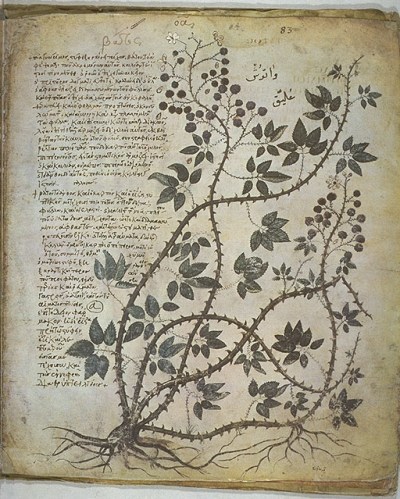
The text relates, among other things: “The leaves are chewed to strengthen the gums ”. For their part, the Cherokee Indians in North America would chew on fresh bramble leaves to treat bleeding gums. The same claim by Byzantine Greeks and Cherokee Indians? That seems too much to be a mere coincidence. When the world has gone to hell in a handbasket because we were not able to control our emissions of greenhouse gases, and when my gums begin to bleed because there will be no more dentists to go to for my annual check-ups, I will remember this claim and chew on bramble leaves.

On that pessimistic note, I will take my leave of my readers with a poem by the Chinese poet Li Qingzhao. She lived through a period of societal breakdown, when the Song Dynasty was defeated by the nomadic Jurchens in the early 12th Century and retreated southward to create an impoverished rump of its empire, known to us as the Southern Song, around the city of Hangzhou. Li Qingzhao reflected on this period of decline and decay in her later poems. I choose this particular poem, her Tz’u Song No. 1, because it happens to mention blackberry flowers and blackberry wine.

Fragrant grass beside the pond
green shade over the hall
a clear cold comes through
the window curtains
crescent moon beyond the golden bars
and a flute sounds
as if someone were coming
but alone on my mat with a cup
gazing sadly into nothingness
I want to call back
the blackberry flowers
that have fallen
though pear blossoms remain
for in that distant year
I came to love their fresh fragrance
scenting my sleeve
as we culled petals over the fire
when as far as the eye could see
were dragon boats on the river
graceful horses and gay carts
when I did not fear the mad winds
and violent rain
as we drank to good fortune
with warm blackberry wine
now I cannot conceive
how to retrieve that time.

_______________________

Blackberry thorns: http://iuniana.hangdrum.info
Frans Floris, “Fall of the Rebel Angels”: https://commons.wikimedia.org/wiki/ File:Fall_of_rebel_Angels_(Frans_Floris)_September_2015-1a.jpg
Devil: https://www.etsy.com/sg-en/listing/517991225/the-devil-ceramic-decal-devil-ceramic
Blackberry fairy: https://flowerfairies.com/the-blackberry-fairy/
Blackberry picking: https://spiralspun.com/2013/10/29/blackberry-picking-one-of-lifes-simple-pleasures/
Jug of blackberries: https://spiralspun.com/2013/10/29/blackberry-picking-one-of-lifes-simple-pleasures/
Blackberries with whipped cream: https://depositphotos.com/80606340/stock-photo-fresh-blackberries-with-whipped-cream.html
Apple and blackberry pie: https://www.thespruceeats.com/british-apple-and-blackberry-pie-recipe-434894
Willem Claesz. Heda, Still Life with a Fruit Pie: https://www.masterart.com/artworks/502/willem-heda-still-life-with-a-blackberry-pie
Apple and blackberry crumble: https://www.taste.com.au/recipes/apple-blackberry-crumble/837e5613-3708-42f2-8835-dcd9dd3b3876
Blackberry jelly: https://www.bbc.com/food/recipes/bramblejelly_13698
Demijohn of blackberry wine: https://www.pinterest.com/pin/371476669246000245/
Bottled blackberry wine: http://justintadlock.com/archives/2018/01/27/bottled-blackberry-wine
Glass of blackberry wine: https://www.pinterest.pt/pin/573294227542445354/
Haraldskaer woman: http://legendsandlore.blogspot.com/2006/01/haraldskaer-woman.html

ODD STATUES

Milan, 3 October 2018

When my wife and I are in Vienna, we very often walk down our road into the centre of the city. It is a very pleasant walk, down a historical high street with little shops lining it, in the shade of linden trees much of the way. At about the halfway point, we pass a very nice little square, with a café-restaurant on one side and a fountain in the middle. In the summer, when the weather is good, the restaurant puts tables out in the square around the fountain.

It is this fountain that interests us here. At first glance, it looks quite unremarkable. It seems a typical product of its time, which is late 19th Century. It is composed of three statues, two of which spout water. The composition illustrates some tale, which I suppose was once well known in Vienna, of a bright young girl called Elspeth who through some cleverness or other managed to outwit two infamous robbers. So, we have Elspeth, Goddess-like, standing on a column

while at her feet crouch the two robbers with their hands tied behind their back, looking disconsolate and spouting water from their mouths.

So far, so good. But actually there is something definitely odd about the composition. The pose of one of the robbers is such that it looks like he’s vomiting the water he’s spouting. Already that is a bit strange, but it takes on a surreal quality when you see people merrily eating and drinking at the tables while the statue behind them seems to be puking his guts out.

We’ve been walking past this fountain very often over the last several years, and its oddness strikes me afresh every time we pass (who knows, though? maybe I’m the only person who finds it odd). This frequent mental pause, this little stone in my mental shoe, has had the effect of making me start to think about other odd statues which I have seen over my lifetime. And I’m thinking here of statues where the oddity is unintentional; I’m not interested in statues such as this one where the oddity is very, in-your-face, intentional.

Well, there are these odd statues which my wife and I came across in Salzburg during a little trip we made there during this past summer. They are statues of pickles, or gherkins if you prefer.

The fact that anyone would spend his or her time making statues of pickles is odd enough. What I found even odder was the way the pickle statues were aligned with a very normal statue of Schiller in the middle distance.

But it seems that this was the point. The blurb which accompanied the statues helpfully explained:

A gherkin is a gherkin is a gherkin – or then again, perhaps not? …. “I find the diversity of forms, which by virtue of their uniqueness are inexhaustible, compelling” explains Erwin Wurm [the sculptor] “Although individually different,  each gherkin is immediately identifiable as a gherkin, and generically classifiable as such … analogous to man”. The forms are as different as gherkins and people tend to be: tall and short, thick and thin, rough and smooth, slender and stocky. By scaling his gherkins up to human dimensions and by creating the impression that they are sprouting from the tarmac, Wurm confers upon them the status of creatures, possessed of an intrinsic individuality. The artist leaves his work open to interpretation, hovering as it does between critical irony and playful teasing.

Indeed … Well, my take on the composition is that it looked very Star-Wars like. I could imagine that after a long journey through intergalactic space I was being brought into the presence of the (human-looking) ruler of some distant planet, whose court consisted of pickle-like creatures. In my mind’s eye, I can see them wave gently as I walk past on my way to pay my respects to the ruler, creaking a little perhaps and perhaps oozing some pickling liquid, murmuring in some incomprehensible far-galaxy language as I pass them. I would guess that they stay upright as a result of having suckers on their base. But how would they move around, I wonder?

Leaving this rather feverish daydream and coming back to earth, how about this statue?

It is of a young man, naked but for some sort of loin cloth, purposefully striding along. Its oddness comes from its location, which is in the vestibule of Milan’s main post office. The inference is clear. When he was installed, which must have been some time during the Fascist era, he was meant to be representing those thousands of postmen who stepped out every morning to do their rounds. It’s already odd enough that he’s nearly starkers. I’ve never seen any postman doing his rounds in the state in which Adam found himself in the Garden of Eden. But apart from that, the statue clashed mightily with the dominant image I had of postmen in the mid-1970s, which is when I first saw it. That image was shaped by the husband of the lady who looked after my French grandmother and who lived in one part of her house. He was the postman for the surrounding rural district. He looked something like this.

I would see him ride off on his bike early in the morning. I would also sometimes spy him delivering his letters, which invariably seemed to involve a chat, a Gauloise cigarette (unfiltered), and a glass of red plonk. By the time he wobbled home in the early afternoon, his face would be several shades redder than when he left. He would proceed to have lunch and demolish another half bottle of plonk, at which point he would put his head on his arms and pass out.

But I think first prize for oddity goes to a statue I saw on my first ever trip to Italy. I was traveling with a rail pass and staying in youth hostels. The youth hostel in Rome was near the headquarters of the Italian Olympic Committee. In the early 1930s, during the first decade of Fascism, a stadium had been built next to the headquarters, where Italian athletes could strut their stuff for the Committee. To make it look suitably Roman and imperial, the Italian provinces had been invited to send in statues in white Carrara marble of men intent on various athletic pursuits. Some sixty such statues duly arrived and were placed around the stadium in Hellenic style. I would look over these statues as I went by on my way to and from the youth hostel. There was one which struck me in particular, representing the noble sport of skiing.

Who on earth, I would ask myself bemusedly, would ever go skiing naked?? Because, of course, as befitted statues echoing their worthy Greek and Roman predecessors, most of them were carved strictly in the buff. I don’t remember now any of the other statues but in preparing this post I looked at some of them and found a couple which are nearly as odd:
The Naked Mountaineer

The Naked Footballer

The Naked Tennis Player

Somehow, I find that these statues represent beautifully Italy’s Fascist era: a time of bombast and chest-thumping which, though, was all rather comical.

That is what I have to date in my gallery of statuary oddities. But I will keep a weather eye out for other specimens. If readers have any suggestions to make, I will be more than happy to hear about them.

____________________________

Photos: mine, except for:

Silly statue: http://forumodua.com/showthread.php?t=318155&page=56
French postman: http://kenhtruyen.info/?i=Ann%C3%A9es+1970+en+France++Wikip%C3%A9dia
Naked skier: http://roma-nonpertutti.com/en/article/66/foro-italico-an-enclave-of-the-cult-of-mussolini-and-his-empire
Naked mountaineer: http://stadio.dei.marmi.dalbiez.eu/Stadio%20dei%20Marmi%202006.htm
Naked footballer: https://www.pinterest.at/?show_error=true
Naked tennis player: https://www.gettyimages.co.nz/search/2/image?events=50786504&family=editorial&sort=best

AUTUMN CROCUSES

Milan, 1 October 2018

We’ve had a hot, hot summer this year in Vienna, with very little rain. It seemed as if the summer was never going to end. But then, quite suddenly, it did. We had three days of heavy rain in the first week of September and summer’s back was broken. Temperatures tumbled overnight, as they can in this part of the world, by 10-15 degrees. The rains passed, the sun shone again, but now there was an autumnal chill in the air.

This weather pattern has been a godsend to mushroom pickers. I had lunch with an old colleague a week or so after the rains. He and his wife are dedicated mushroom pickers. As we tucked into our Wiener schnitzels, he told me that this year it was like manna from heaven: mushrooms were popping up everywhere. They had picked and pickled enough steinpilze to last them through to next September, he exclaimed, with a dreamy look in his eye. For those of my readers who are also into eating mushrooms, steinpilze are penny buns in English, although nowadays I suspect many people know them by their Italian name porcini. I throw in a picture of this delicacy in its natural state.

Even my wife and I, who like the occasional mushroom but are definitely not aficionados, had noticed on our last walks in the Vienna woods a sudden profusion of mushrooms everywhere we looked. But since neither of us would know a steinpilz from a eierschwammerl (chanterelle in English – actually French, but the Brits seem to have adopted the name), we did not dare to collect any: stories from our youth of whole families wiped out from eating the wrong mushrooms continue to resonate.

What my wife and I really noticed on our late-September walks were the Autumn crocuses. The Vienna woods are dotted with meadows large and small.

I think most of them were created for a very utilitarian purpose. During the hunting season, they allowed a clear shot of any poor beast which made the mistake of breaking cover, and in fact many of the meadows have a hide at one end.

But at this time of the year, a good number of the meadows are speckled with Autumn crocuses. We came across a particularly lovely display on a walk we did behind Klosterneuburg, the little town on the Danube to the north of Vienna clustered around its venerable monastery. We climbed the ridge which abuts the town, pausing to catch our breath, admire the surrounding vineyards, and take this photo of the monastery below us.

We then walked a long way along the ridge, on the suitably named Lange Gasse, Long Lane.

We ambled on through some woods, and then suddenly found ourselves in this meadow. It was carpeted with Autumn crocuses.

Crocuses are really lovely little flowers, so delicate, so tender. A much better photographer than I posted this close-up photo of an Autumn crocus, which shows off to perfection its subtle traits.

When I was growing up in the UK, Spring crocuses were my delight, beautiful in and of themselves but also a harbinger of the Spring and daffodils to come, banishing the grey cold of Winter. But in Vienna, it is the Autumn crocus which dominates, a last extravagant splurge by Nature before Winter starts closing in.

Like the birds whose inner clock tells them in August that it is time to fly south

the Autumn crocuses told my wife and I that the moment had come for us to migrate down to Italy. And so we have packed our bags, flown across the Alps, and are now ensconced in Milan for the winter.

___________________________

Steinpilze: https://apollo.tvnet.lv/5095184/senu-trakums
Meadow in wood: https://www.bundesforste.at/nc/produkte-leistungen/jagd/jagdreviere/detail.html?tx_jagd_dfb%5Brevier%5D=3&tx_jagd_dfb%5Baction%5D=show&tx_jagd_dfb%5Bcontroller%5D=Revier&cHash=36e512ac3435f6026d5490ce7c4e6882
Klosterneuburg: our pic
Lange Gasse: our pic
Autumn crocuses in a meadow: our pic
Autumn crocus close up: https://www.gardeningexpress.co.uk/colchicum-autumnale-autumn-crocus
Birds heading south: http://www.nhpr.org/post/heading-south-bird-migration-and-human-impact#stream/0