POSTS

SKITTERING WATER STRIDERS

Beijing, 17 August 2013

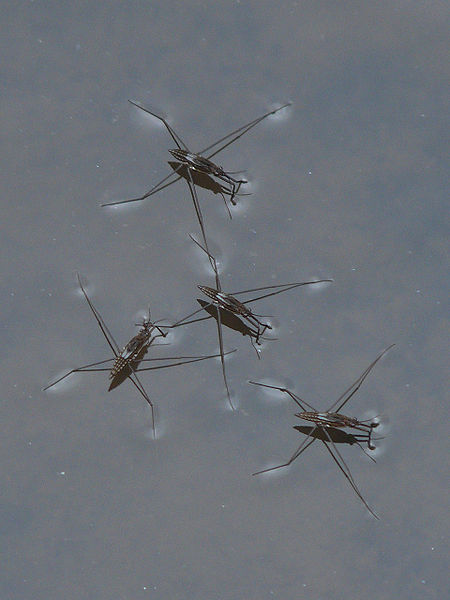
It was flowers in the Spring. It is insects in the high summer. Because this posting, following on from my previous two on dragonflies and crickets, will be on water striders. I began to notice them a week or so ago, on my daily crossings of my piece of canal to and from work. As is my habit, I was looking over the water to see what was new, when a sudden, evanescent dimpling of the water surface caught my eye. Then there was another, and then another … No doubt about it, the water striders were out and about, skittering across the water’s skin.

water-spider-8-several

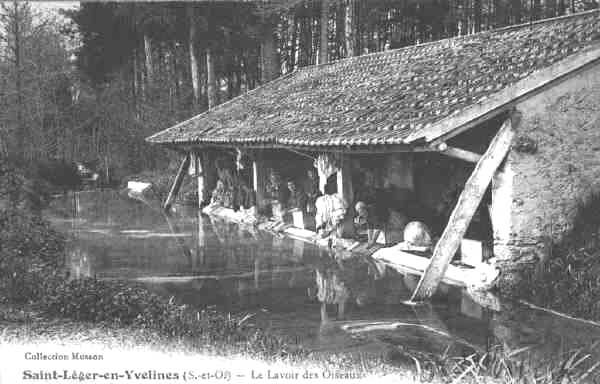
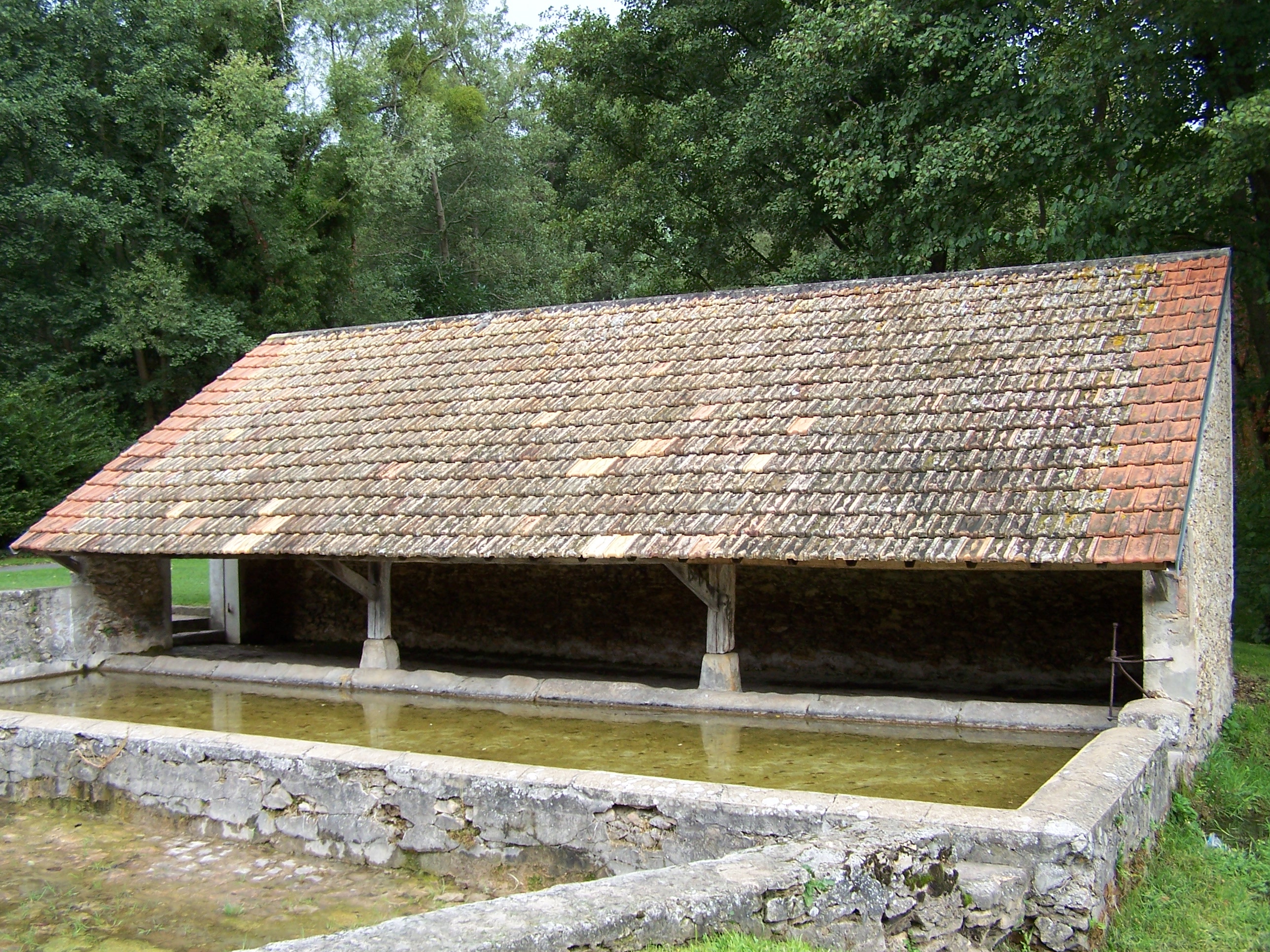
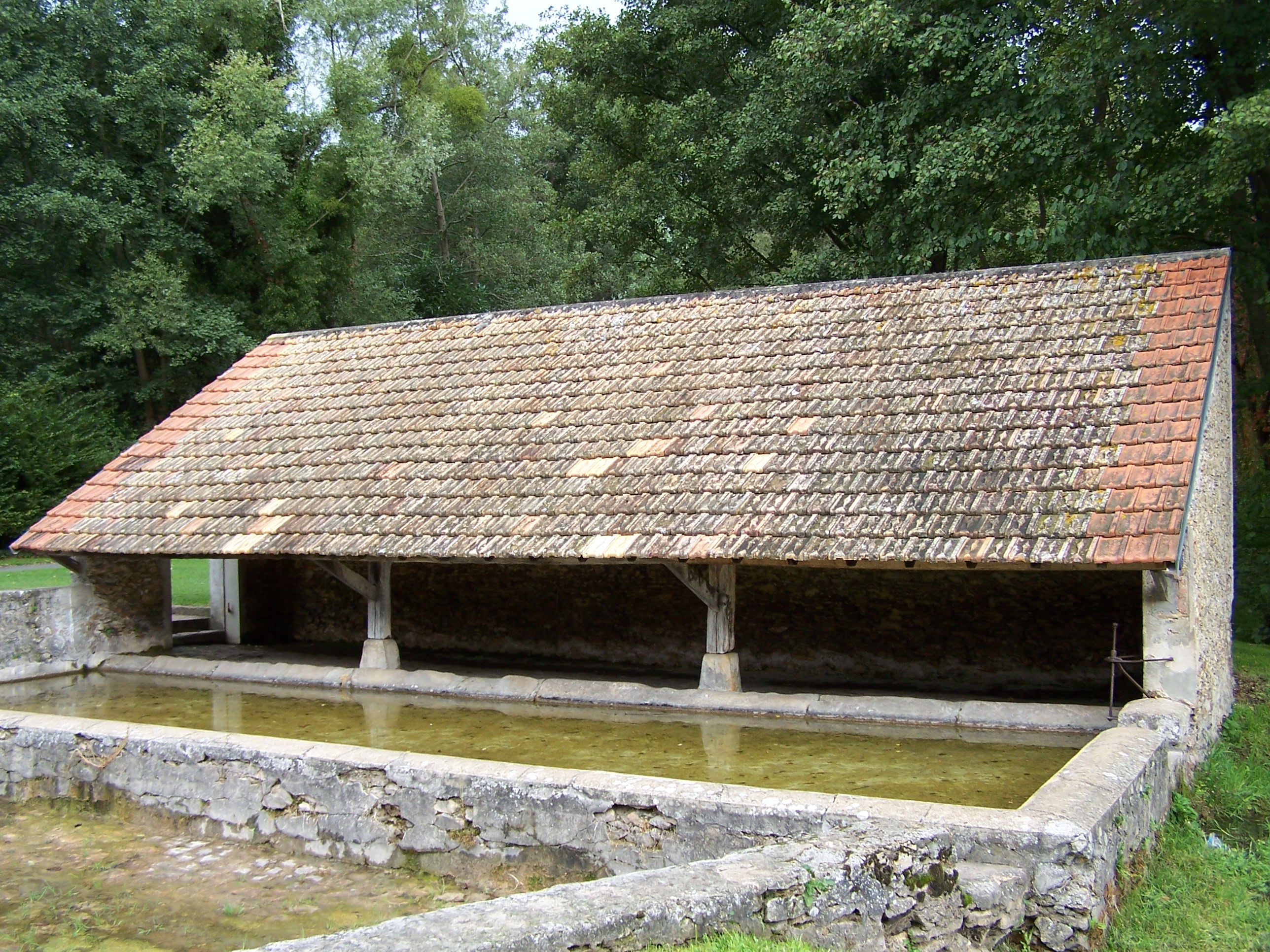
I love these insects, they are part of my childhood. During those long summer holidays which my family spent in France with my grandmother – golden-hued in my memory – I spent a lot of time with my cousins biking across the countryside. In those days, there were still a lot of lavoirs, washing stations, dotted across the countryside. They were places where the women (no men, of course …) used to come to wash the family’s clothes.

lavoir-1

They were located along a stream. Sometimes, a basin would be built alongside the stream, fed by it and discharging back into it.

lavoir-6

But just as often, the women washed directly in the stream; if necessary, a small dam was thrown across the stream to create a pool of still water for washing.

lavoir-3

By the time my cousins and I were biking around, the lavoirs were hardly used any more. The march of the washing machine across the landscape was underway. But the infrastructure was still largely intact. We would often stop at the lavoirs, for a rest, to splash our faces, wash our bikes if needs be – and to watch the water striders. The pools of still water which had been created for the washerwomen were very much to the striders’ liking, so they haunted these spots. With the casual cruelty of little boys, we would take a poke at the striders, watching them skim away across the water’s surface. We were fascinated by their ability to stand on water (it’s not for nothing that another name for these insects is Jesus bugs).

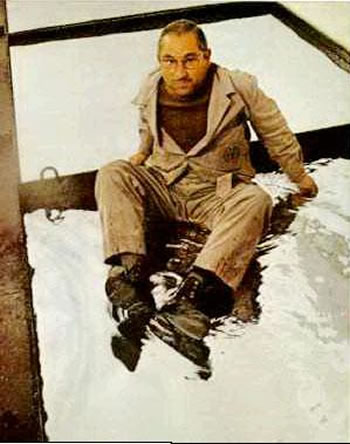
I’ve been boning up on water striders, primarily to understand how it is that they can stand on water. I won’t bore you with the details, but it has to do with being light, spreading this light weight over a number of legs, and having a lot of hairs on those legs. This is enough for them not to break through the water tension. Who wouldn’t like to be able to walk on water? With our weight, we can only walk – or at least sit – on mercury.

man floating on mercury

I remember being fascinated by this photo when I saw it years ago in an article in the National Geographic on mercury. Now, with everything I know about the awful effects of mercury on people, it makes me shudder profoundly.

In passing, I’ve also learnt how water striders feed.  When an insect falls into the water, the strider senses its struggles through small vibrations and ripples in the water surface. It darts across to the poor thing, pierces it, and injects saliva. The enzymes in the saliva digest the victim’s tissues. The strider then sucks up the partially digested broth.

Now that I’ve totally grossed out my wife and any other normal readers, I put in this nice close-up picture.

Pond Skater Portrait

Enjoy!

______________________________

Water spiders: http://upload.wikimedia.org/wikipedia/commons/thumb/a/a5/Amenbo_06f5520sx.jpg/450px-Amenbo_06f5520sx.jpg
Lavoir-historical: http://www.stleger.info/les72StLeger/region4/78.cpa/78.foret/78—oiseauxlavoir2.jpg
Lavoir-indirect: http://4.bp.blogspot.com/_55S9JjX9Ot8/TO5NK1GMXsI/AAAAAAAAAZc/EZEjKoTSze4/s1600/lavoir-beaune.jpg
Lavoir-direct: http://upload.wikimedia.org/wikipedia/commons/1/17/Bullion_Lavoir_de_Moutiers.JPG
Man floating on mercury: http://i.imgur.com/DfTbR.jpg
Water spider-closeup: http://img.burrard-lucas.com/united_kingdom/full/pond_skater.jpg

CHIRPING CRICKETS

Beijing, 16 August 2013

Another phenomenon of this hot and muggy season is the crickets. Every tree, every bush, every blade of grass seems to host a multitude of crickets chirping like crazy. “Chirping” does not adequately describe the thunderous noise the crickets are making. Indeed, last weekend, when my wife and I were walking along a tree-shaded street, the noise in the foliage above our heads was so loud that we both instinctively looked up, half expecting to see a giant, four-foot cricket come tumbling down onto our heads.

A little navigation around my favourite fact-checking site – Wikipedia – has informed me that only male crickets chirp – or stridulate if one wants to be formally correct. They do so for one of four reasons: to attract females (“fairly loud”); to court a nearby female (“very quiet”); to chase off other males hanging around (“aggressive”); and to celebrate a bout of successful copulation (noise levels not defined). Since the noise they are currently making is so deafening, I presume we are witnessing either the first or the third of these stridulatory chants (I sort of assume – by extension of human behaviour – that post-copulatory stridulation will be merely a contented buzz). Not surprising, really, since Wikipedia informs me that crickets mate in the late summer. I presume that every male cricket in Beijing is currently hot under the collar and on the prowl.

Wikipedia has also corrected a fundamental misunderstanding on my part. I had always thought that crickets chirp – sorry, stridulate – by rubbing their legs together. Not so! They rub their wings together. One wing has a large vein – the “stridulatory organ” – which runs along the bottom of it and is covered with teeth. By rubbing the other wing along the teeth, our friend Cricket gets his chirp. And by holding his wings up and open when he does this, he gets a loudspeaker effect. Very clever.

I am moved at this point to insert a few photos of crickets, even though I know that my wife will not appreciate them much. Creepy-crawlies are not her thing and these close-ups of crickets make them out to be quite creepy-crawly.

green_cricket

?????????????????

I suppose one of the things that foreigners – or at least Western foreigners – in China find odd is the important role which crickets have played, and continue to play,  in China as pets.  To be honest, I personally find it very strange that anyone would want a cricket as a pet. Don’t get me wrong, I find it admirable for people to have small pets – I think it’s ridiculous, even cruel, to have large dogs as pets in a crowded city, for instance – but I think mice is about the smallest one should reasonably go. Having an insect as a pet seems frankly contrarian, especially since their life expectancy is low to very low: for instance, an adult cricket lives about a month before it kicks the bucket, shuffles off its mortal coil, runs down the curtain, and joins the choir invisible (as John Cleese memorably put it in the Monty Python skit about the dead Norwegian parrot).

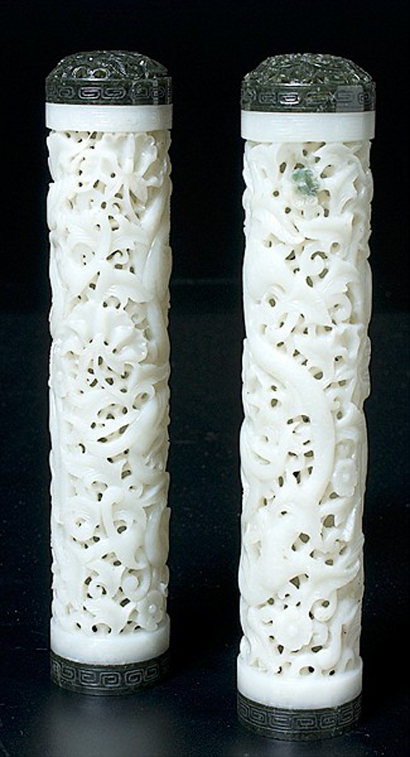
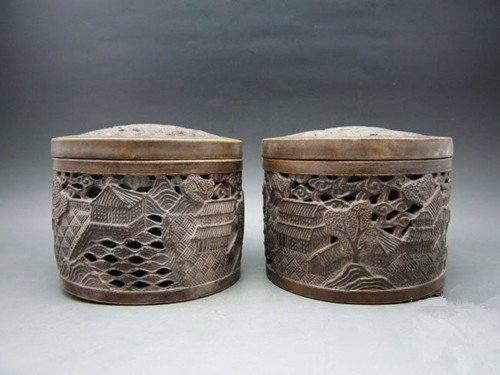
But important they have been. Over the centuries, Chinese have lovingly built cages for their cricket pets, using materials which go from the most precious to the most humble:

Jade:

cricket cage-3-jade

Ivory:

cricket cage-9-ivory

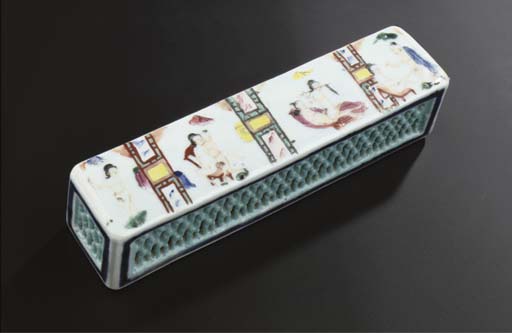
Ceramic (this particular version has some rather naughty pictures on it):

cricket cage-12-ceramic

Ox bone:

cricket cage-6-ox bone

Metal:

cricket cage-11-zicha

Bamboo:

cricket cage-1-bamboo

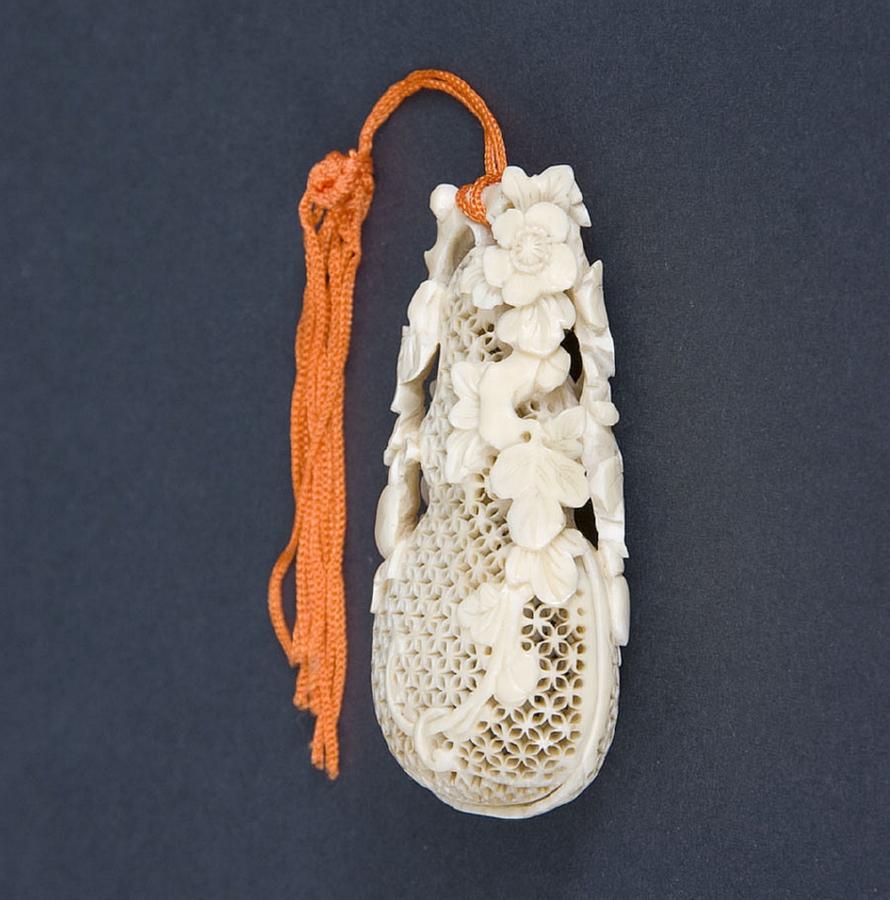
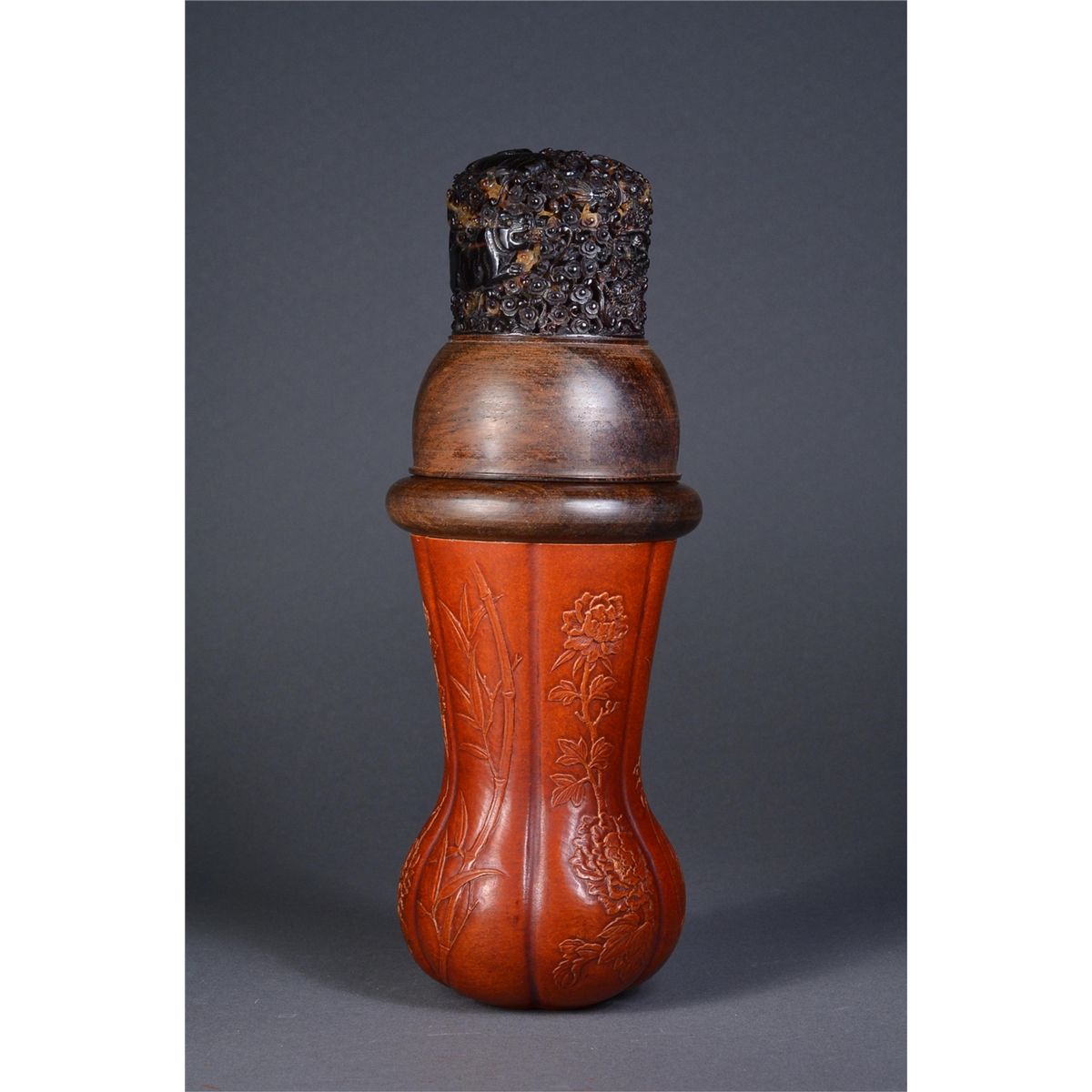
There was even a cottage industry – controlled by the Emperor’s household, presumably because it was so lucrative – in growing special gourds to be used as cricket cages:

cricket cage-10-gourd

And of course crickets have graced Chinese scrolls:

scroll with cricket-1

scroll with cricket-3

The extraordinary thing is that crickets still play a role in Chinese life. Here is a picture I took outside some pet shops in Shanghai. This is a string of cricket cages, made of humble raffia or something similar

cricket cages Shanghai 001

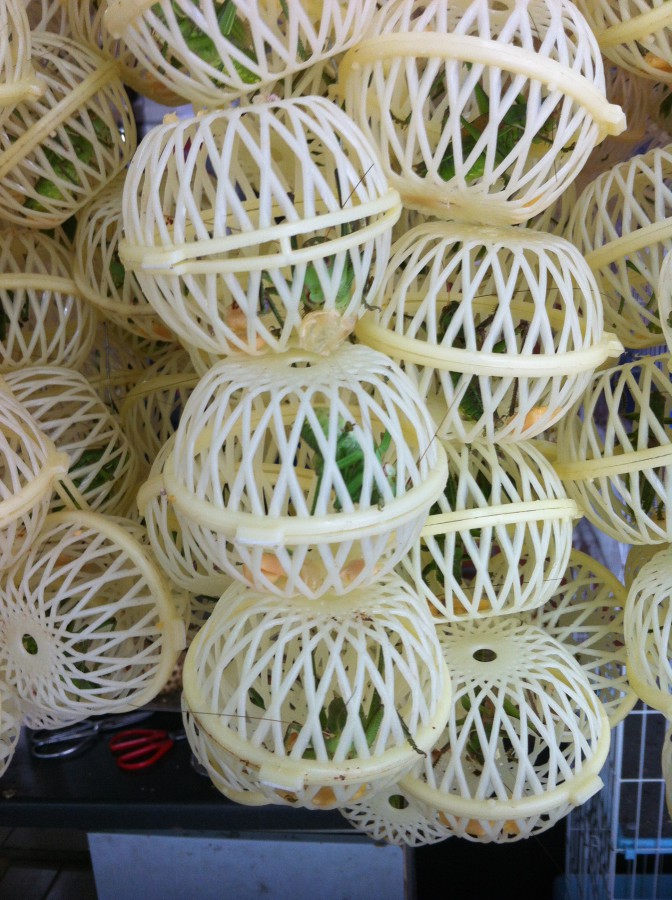
while this is a close-up of another string, in even humbler plastic, where you can see the crickets inside, waiting for their new masters.

cricket cages Shanghai 002

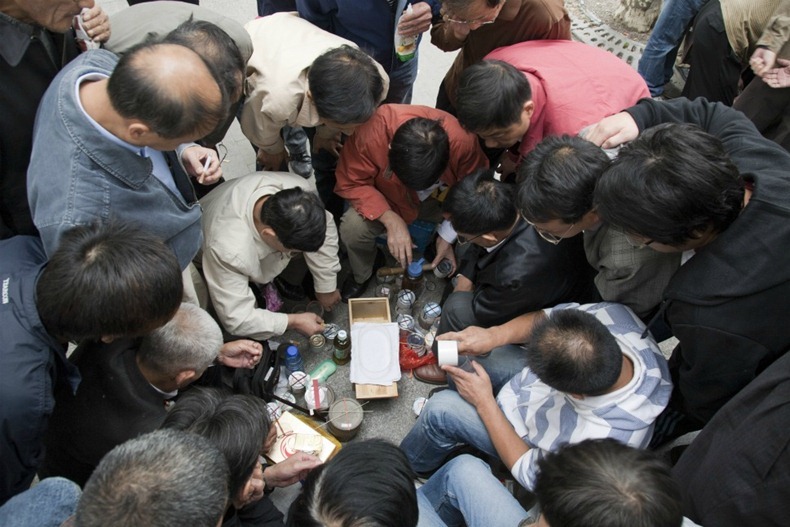
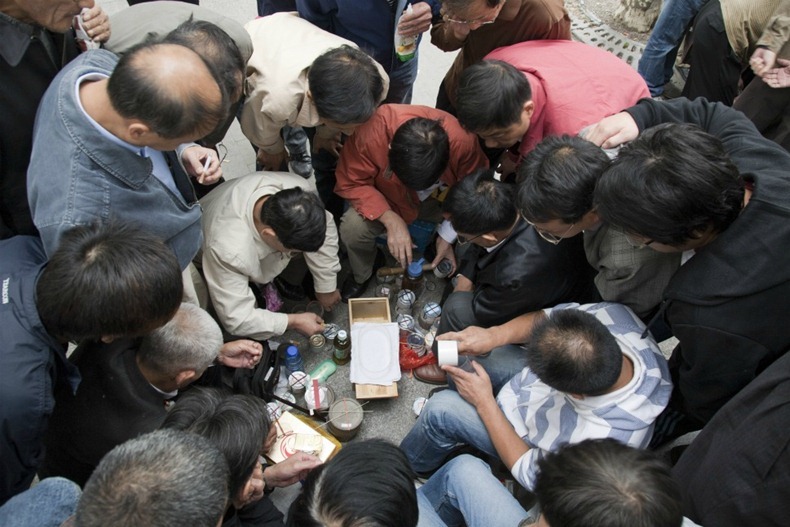
The Chinese even used crickets to hold cricket fights.  They still do.

cricket fighting

This I have not seen yet. I wonder if English bookies could get into this game.

english bookies-2

And with that, I wish you goodnight through the most famous cricket of all, Jiminy Cricket:

Jiminy Cricket

_____________________________

Green cricket: http://ezwebrus.com/wallpapers/insect/green_cricket.jpg
Brown cricket: http://www.marketwallpapers.com/wallpapers/1/wallpaper-3107.jpg
Cricket cages-jade: http://www.paulfrasercollectibles.com/upload/public/docimages/Image/h/j/p/Chinese-jade-cricket-cages-410.jpg
Cricket cage-9: http://img.carters.com.au/134198.jpg
Cricket cage-ceramic: http://www.christies.com/lotfinderimages/d48014/d4801435x.jpg
Cricket cage-ox-bone: http://image.made-in-china.com/2f0j00cvyQhwERqtga/Rare-Fantastic-Ox-Bone-Tiger-Design-Cricket-Cage.jpg
Cricket cage-metal: http://p2.la-img.com/1567/36700/15356320_1_l.jpg
Cricket cage-bamboo: http://www.asiantreasuries.com/cricket%20cage%20%282%29.jpg
Cricket cage-gourd: http://media.liveauctiongroup.net/i/11138/11502127_1.jpg?v=8CE71FC734C5BE0
Scroll with cricket-1: http://p2.la-img.com/1311/38039/16205516_1_l.jpg
Scroll with cricket-3: http://p2.la-img.com/179/30164/11744435_1_l.jpg
Cricket fighting: http://lh5.ggpht.com/-AVooPylAFsg/TrqrCxFnkwI/AAAAAAAARjY/A13FdWkEFfE/cricket-fighting-14%25255B3%25255D.jpg?imgmax=800
English bookies: http://www.teara.govt.nz/files/38947-ap.jpg
Jiminy Cricket: http://www.waouo.com/wp-content/uploads/2013/06/jiminycricket-236×576.jpg

DRAGONFLY SWARMS

Beijing, 14 August 2013

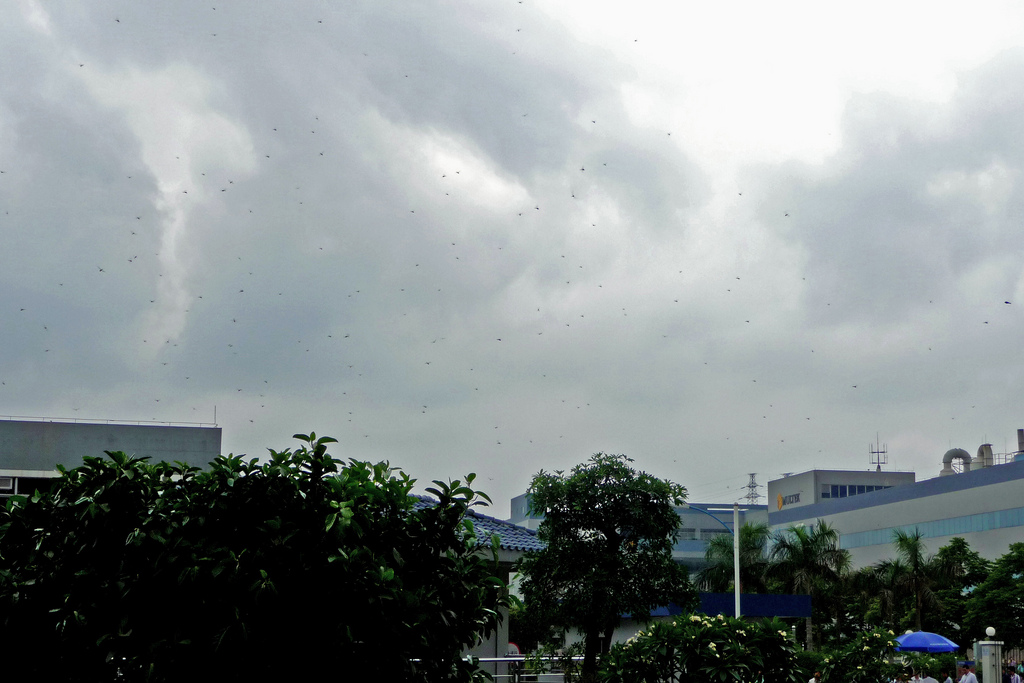
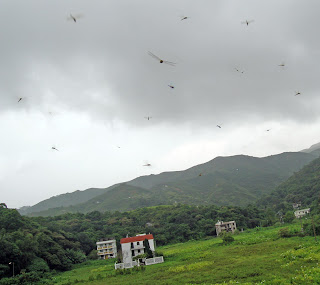
As we swelter in the heat and humidity of a Beijing August, my wife and I have noticed over the last week or so a singular natural phenomenon: the appearance of swarms of dragonflies. They are particularly thick around my piece of canal, which I suppose is not surprising since their larvae are aquatic. Neither my wife nor I have ever seen dragonfly swarms in Europe, so we are fascinated by this phenomenon. I tried taking photos with my iPhone but it was a miserable failure. My wife looked at the photos and said, “Sorry, where are the dragonflies?” The swarms are invisible. So I’ve borrowed a few photos taken by people who clearly knew how to go about it (even then, in the first one you really have to look hard to see the dragonflies).

swarm of dragonflies-4

swarm of dragonflies-1

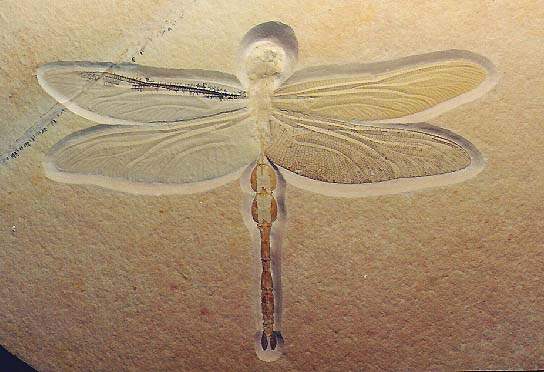
I like dragonflies. They look so awkwardly designed, the kind of thing a kid would put together with a meccano set (does anyone under the age of 50 know what that is?): a bumbling insect, with a big head attached to a thin, thin body, the whole pushed around by those funny double wings. But let me tell you, they are survivors! They’ve been around for 300 million years or so. And the design must be pretty good, because it hasn’t changed much over those millions of years. Look at these fossil dragonflies.

dragonfly fossil-1

dragonfly fossil-2

With a bit of luck, they will still be around when we’ve disappeared off the face of the earth.

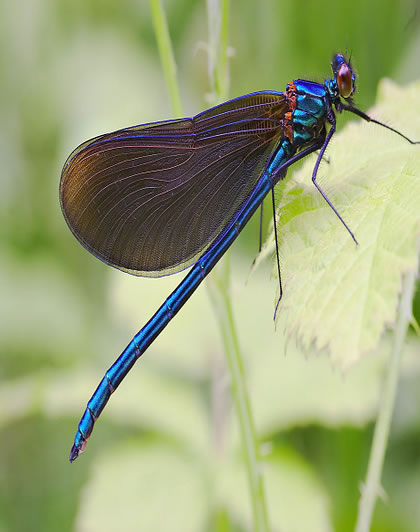
I suppose the number of species is also a good indicator of success, and here dragonflies also do pretty well: some 6,000 different species, from every continent (except the Antarctic, of course). The species we are seeing here don’t look anything special, but take a look at these photos. There are some really lovely specimens.

beautiful dragonfly-1

beautiful dragonfly-2

beautiful dragonfly-3

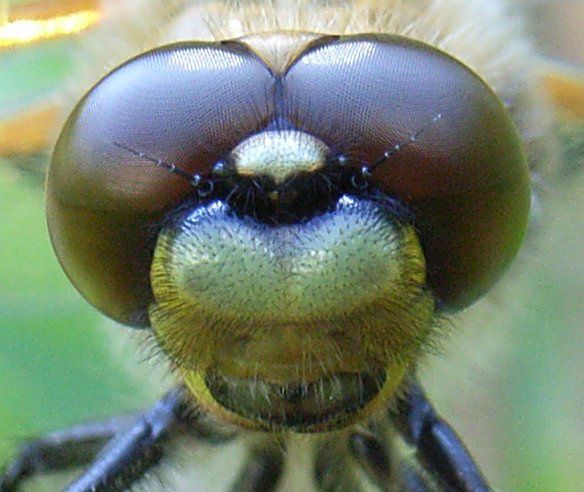
I can’t resist throwing in some close-ups

dragonfly closeup-2

Look at those eyes!

dragonfly closeup-1

My English grandfather, who was a scientist and an expert on high-powered microscopes, took beautiful black and white photographs of insects. I found them by chance in a shoe box in my grandmother’s house. I asked to have them. I took them to school. Somewhere along the line, I lost them – all those changes of addresses …

I’m glad to report that a Serious English Poet (whose poems were included in the magisterial Oxford Book of English Verse, no less) also liked dragonflies. Walter Savage Landor wrote this poem some time in the late 1700’s when a dragonfly landed on the page of his book:

Life (priest and poet say) is but a dream;
I wish no happier one than to be laid
Beneath a cool syringa’s scented shade,
Or wavy willow, by the running stream,
Brimful of moral, where the dragon-fly,
Wanders as careless and content as I.
Thanks for this fancy, insect king,
Of purple crest and filmy wing,
Who with indifference givest up
The water-lily’s golden cup,
To come again and overlook
What I am writing in my book.
Believe me, most who read the line
Will read with hornier eyes than thine;
And yet their souls shall live for ever,
And thine drop dead into the river!
God pardon them, O insect king,
Who fancy so unjust a thing!

Well, I can’t argue with the Poet’s point. Either all living things have souls or none do.

There’s one thing, though, in all this that worries me. It is said that dragonfly swarms prefigure earthquakes. In fact, there is a Chinese film, Aftershock, which starts in late July 1967 with swarms of dragonflies and segues into the destruction of the city of Tangshan. A magnitude 7.8 earthquake. A quarter of a million deaths. So I keep looking around me nervously, waiting for things to start shaking.

_____________________

Swarm of dragonflies-1: http://www.flickr.com/photos/dcmaster/3534906552/sizes/l/in/photostream/
Swarm of dragonflies-2: http://2.bp.blogspot.com/_bto9jE_yKYY/TNn-8Eg-EuI/AAAAAAAAAY0/cWleFwXL82I/s320/100903-dragonflies.jpg
Dragonfly fossil-1: http://www.bernstein.naturkundemuseum-bw.de/odonata/isophleb.htm
Dragonfly fossil-2: http://www.bernstein.naturkundemuseum-bw.de/odonata/cymato.jpg
Beautiful dragonfly-1: http://www.dragonfly-site.com/graphics/pictures-17.jpg
Beautiful dragonfly-2: http://www.dragonfly-site.com/graphics/pictures-18.jpg
Beautiful dragonfly-3: http://rateeveryanimal.com/wp-content/uploads/2013/07/Dragonfly-pink.jpg
Dragonfly closeup-1: http://jcgator1.files.wordpress.com/2012/08/dragonfly-stare.jpg
Dragonfly closeup-2: http://img.over-blog-kiwi.com/0/01/15/99/201211/ob_cdf5ef5226bf6ca6c7789ee543e3da5e_image-0.jpg

WINE IN MY BLOOD

Beijing, 11 August 2013

Last weekend, I was reading a really interesting article in the Sunday edition of the Financial Times. It was about winemaking in Georgia (the country, not the American state), which archaeologists tell us has been in the winemaking business for 8,000 years or so. But what really struck me in the article was the following paragraph:

“The result is a width, a tannic grip and a textural depth that no conventionally made white wine will ever have. The wines’ aromas and flavours are singular too. Their acidity is muted, since they have all been through the acid-softening malolactic fermentation, while contact with the other matter in the jar, especially the yeast deposits, rounds the flavours further. In place of the fresh fruits that so many white wines suggest, these evoke dried fruits, mushrooms, straw, nuts and umami. They have less of an oxidative tang than their colours suggest; indeed, their articulation is often understated and quiet, though orchestral in its allusive range. They are meditative wines, sumptuous and subtle.”

I’m always awed by this kind of writing about wines. Whenever I drink a good wine, all that comes to my mind is “Mmm, that’s good!”

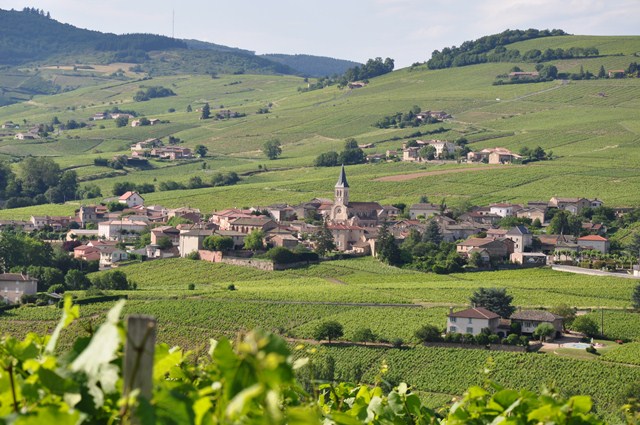
I feel it shouldn’t be so. I mean, wine courses through my veins. My maternal grandparents, whom I have referred to in earlier posts, were both descended from families of vignerons, winemakers, who lived in these small villages in the Beaujolais.

Julienas

Jullie

We know that this is where they came from because my father, a passionate amateur genealogist, spent a number of summers in the 1950s ferreting around in the local archives and tracking down the generations one after another. It was a joke in the family that the villagers would see my father hove into view on a bicycle, whitened by the dust on the roads – they weren’t asphalted in those days – and announce in French, but with a very English accent, that they were his cousins.

But back to the matter in hand. Really, I’m just a vigneron with a thin icing of education. So I should be able to talk for hours on end about the orchestral and allusive range of the wine I’m drinking, pointing out the evocations of mushrooms and raspberries and nuts and whatever else. But all that ever comes to mind is “Mmm, that’s yummy! Pour me another glass.”

And the worst of it all – but don’t spread this around – is that I don’t really like Beaujolais. I much prefer Spanish wines.

winesfromspain

___________________________

Julienas: http://beaujolaisandbeyond.co.uk/images/uploads/appellations/Julienas.jpg
Jullié: http://photos.itea.fr/photos/gites69/G/photo10/1606.jpg
Wines from Spain: http://alegriaonline.files.wordpress.com/2013/04/winesfromspain.gif

TATTOOS: DO I OR DON’T I?

Beijing, 10 August 2013

Call me old-fashioned, but I don’t really get this new fashion of tattooing – or inking, as the new lingo has it. When I was young, it was only the “Working Class” who sported tatts, and even then it was the more rootless among them who indulged: the sailors, the soldiers, the truck drivers, the criminals.

tattooed sailors

But more and more now, especially when summer rolls around and people disrobe, allowing views of parts of their anatomy which they cover the rest of the year, I am struck by how many, primarily young, people are tattooed. This happened to me again in Italy just a few weeks ago when my wife and I were on holiday there. Walking around the streets and on the beach, I was struck by the number of tattoos that flashed casually into view, worn by people who were manifestly not from one of the professional categories I’ve just listed.

tatuaggio in strada-2

tatuaggio spiaggia

Consider the stats. According to a survey quoted in an article in the Guardian, in the UK’s over-60s (the age group of which, alas!, I am nearly part) a little less than 10% have a tattoo, whereas in the 16-44 year-old group it’s nearly 30% – men and women combined. In the US, the figure climbs to 40% in this last age group. Tattooing is, as they say, going mainstream.

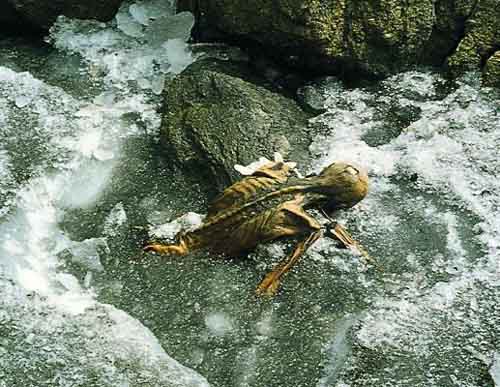
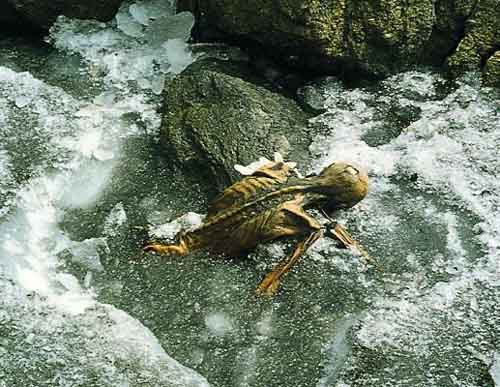
Of course, tattooing does have an honourable history. Our poor friend Ötzi, the Neolithic man found frozen to death in a glacier high in the Alps

otzi iceman

carried 57 tattoos, no less. They were mostly simple lines and dots, like these ones along his spine

otzi tattoo

and he probably had them done for some therapeutic value.

That was 5,000 years ago. 2,500 years ago, a Scythian chief who was buried in the permafrost was sporting considerably more elaborate designs on his arm.

Scythian_tatoo

while British children who didn’t stare out of the window while the history teacher droned on and on will know that when Julius Caesar made his military foray into the British Isles in 54 BC, he found people who liked to paint, perhaps to tattoo, themselves blue: “All the Britons dye themselves with woad, which occasions a bluish color, and thereby have a more terrible appearance in the fight” JC tells us in his book Gallic Wars. So this is what my ancestors looked like …

ancient-britons_box_front_web

For a history nerd like myself, it’s also fascinating to know that Ahmad ibn Fadlan, a 10th-century Arab who travelled up the River Volga and met the Vikings in their kingdom of Rus, described them as tattooed from “fingernails to neck”

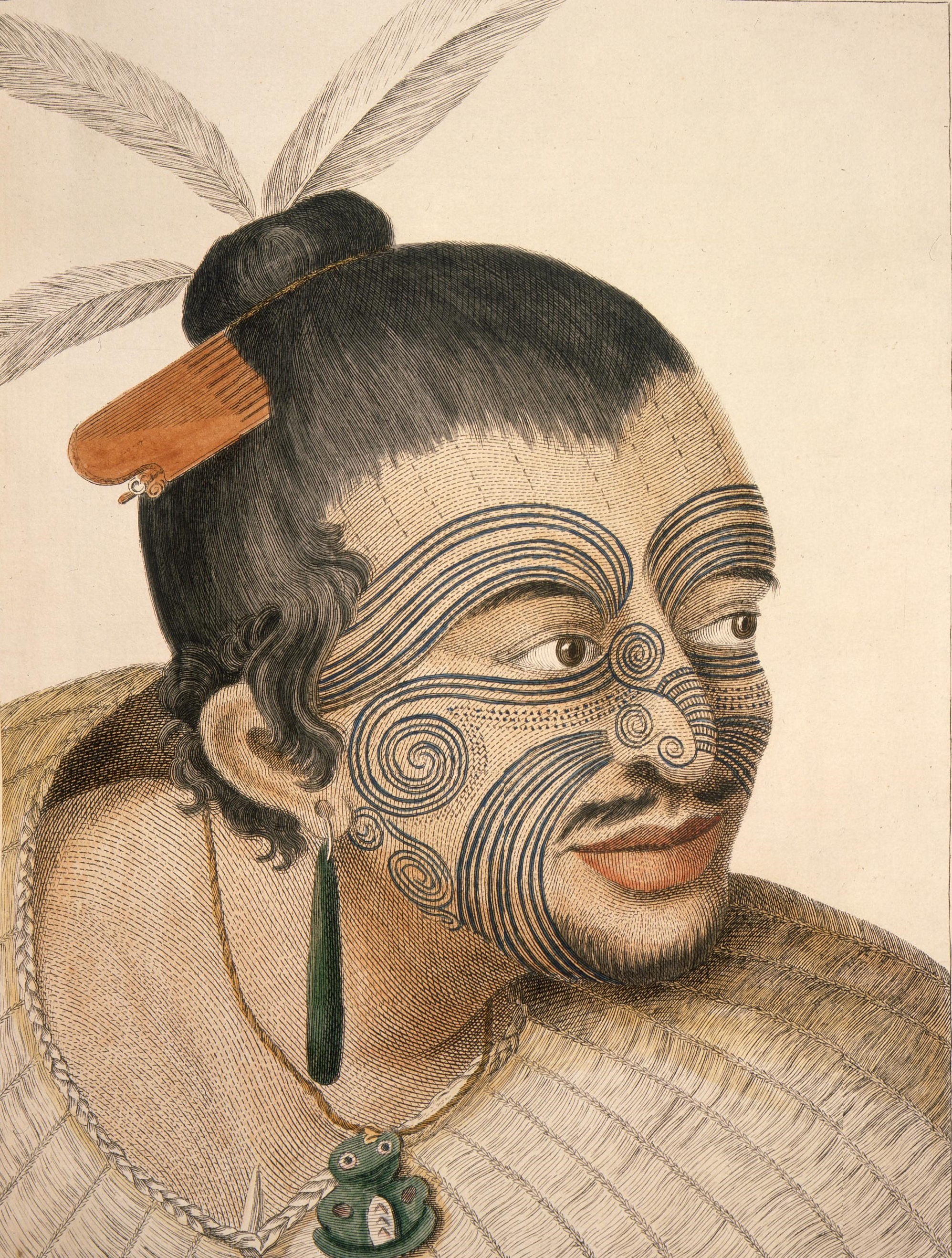
The usual spoilsports, the Christians, came along and banned the practice of tattooing in Europe, seeing it as a pagan practice (to be fair, the Jews had prohibited it even earlier). So in Europe at least, tattooing died out until the late 1700’s, when James Cook – and his sailors – discovered New Zealand and the tattooed Maoris, and reintroduced the practice (more history nerdism: the English word “tattoo” was actually introduced by James Cook, who was anglicising the Polynesian word “tatau”). Here is a picture of a Maori chief from Cook’s period:

Maori Chief 1784

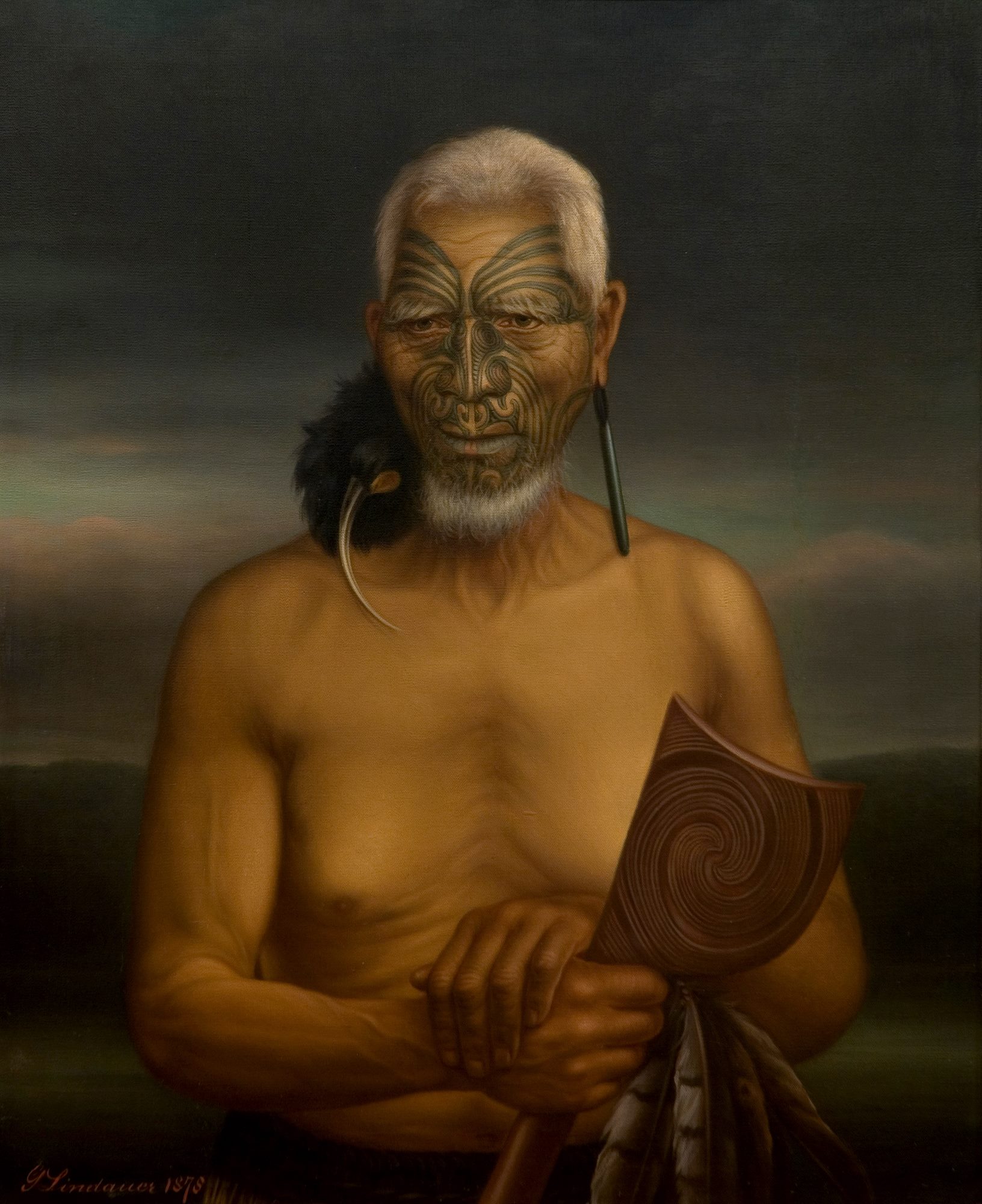
and a later one of another Maori chief, when the practice was dying out among them:

Tukukino maori-2

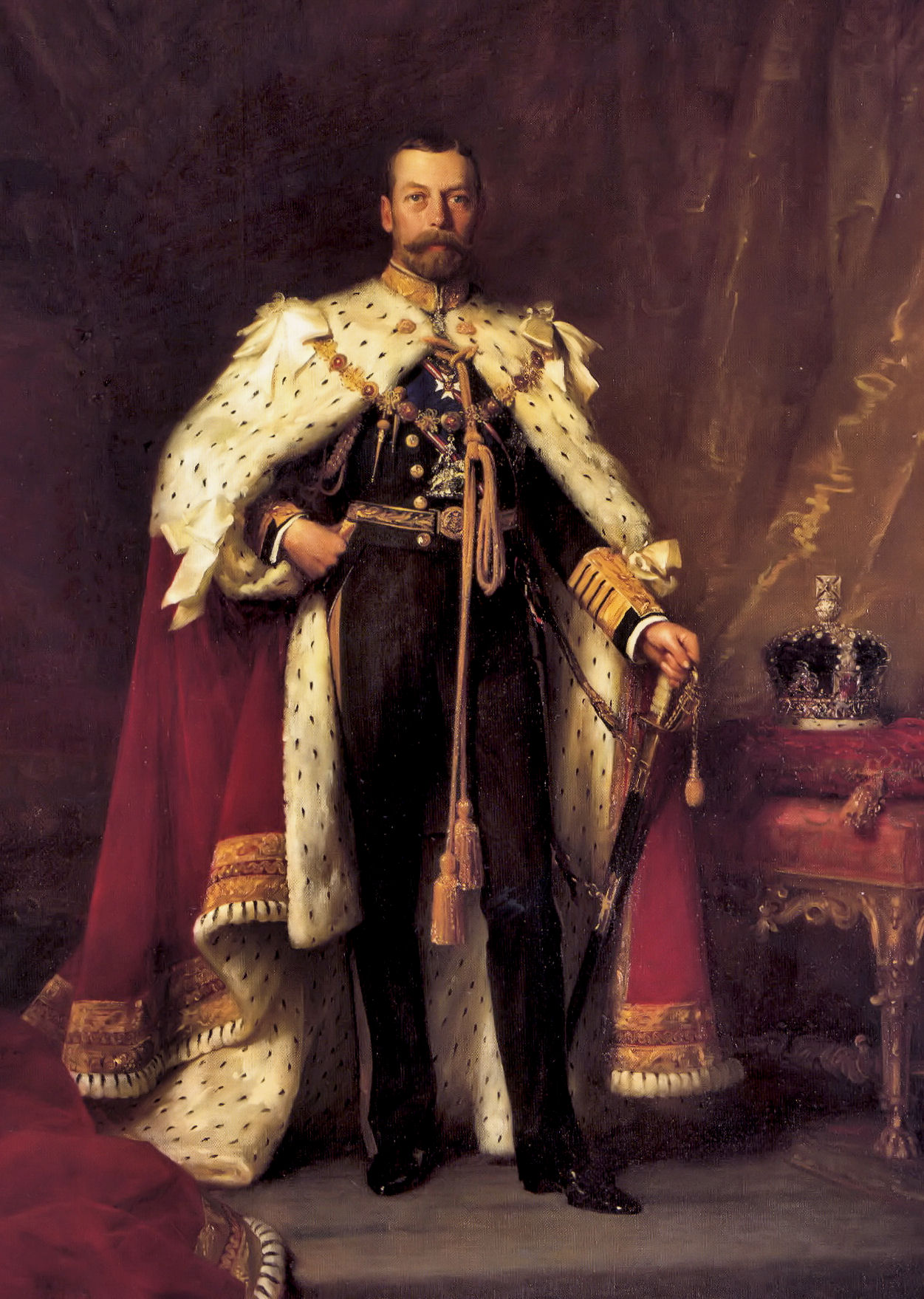
Not surprisingly, given the source of the reintroduction, sailors were at the vanguard of tattooing among the working class – by the late 1800s, 90% of the British navy was tattooed – but I have been astonished to discover that European royalty also had a penchant for getting inked. The very staid King George V

George V

sported tattoos of the cross of Jerusalem and a dragon, while two of his sons and a bunch of wannabe European royals followed suit. Even the British aristocracy was into the game. It seems that they liked to congregate in the drawing room after dinner and, over the port and cigars, show off their tattoos to each other.

So actually it was only us prim and proper Middle Classes who didn’t have tattoos …

OK, let’s step back now from the social class stuff which so permeates discussions of tattooing, and let’s ask ourselves these questions: Are tattoos pleasant to the eye? Does tattooing enhance a person’s beauty?

Let’s immediately forget about the little dolphins below the ankle (David Cameron’s wife) or the little sharks on the foot (Martha Swire, the Cathay Pacific heiress), or the little kittens on the bum (Emma Parker Bowles, niece of the other Parker Bowles), or the little stars spangled down the back (Rihanna)

rihanna_tattoo10

These are just cute pictures. I don’t see how having them tattooed permanently on you enhances the look of your skin or of you in general, especially if the onlooker cannot, or can hardly, see them. I mean, I can’t ask the PM’s wife to lift her leg, or Emma Parker Bowles to drop her pants, so that I can take a better gander at their dolphins and kittens, now, can I? And if I can’t do that, why bother having them? I am looking at this from the perspective of beauty … titillating your lover is another issue.

Actually, I have a problem with the idea of tattooing any kind of picture on one’s skin. Look at this photo of Angelina Jolie:

Anglina-Jolie

Does it enhance Ms Jolie to have those pictures on her? Do those pictures look better on her skin than on a wall? Personally I think not, in both cases. Her arms just look dirty to me and the pictures do not get better by being on the curved surface of her arm.

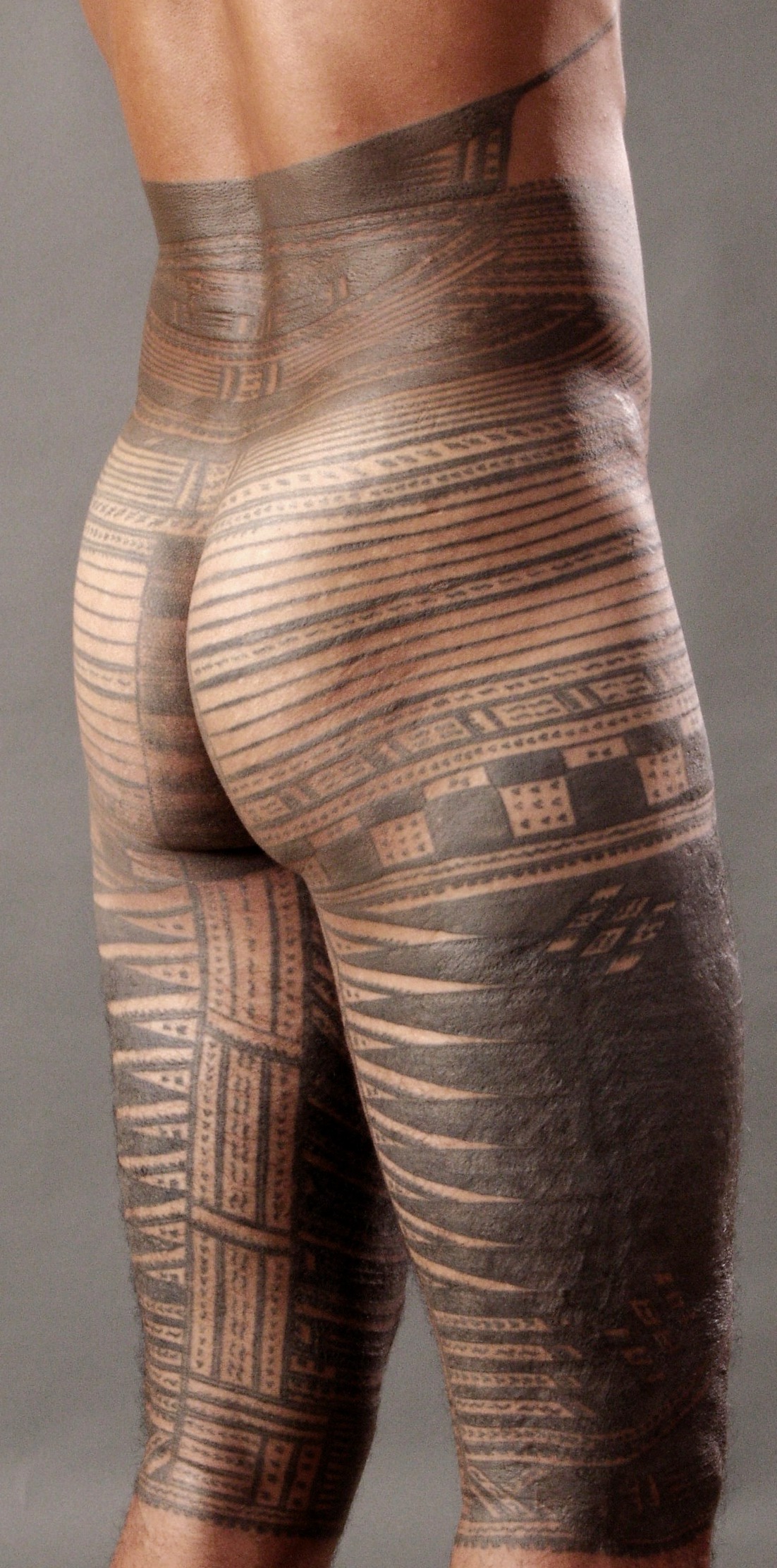
So let’s focus on abstract designs, which is what the Maoris had on their faces, and the Samoans had on their nether regions:

Traditional_Samoan_Tattoo_-_back

Here’s a couple of photos of abstract designs, all on men I have to say, although I can’t see why they wouldn’t work on women:

Tattoo Designs-1

Tattoo Designs-2

Tattoo Designs-3

tattoo designs-4

tattoo designs-5

I really don’t like those heavy sleeves in the first picture (as you can see, I am picking up the language of the tattoo parlour), they just make the arms look dirty. As for the others, I guess they aren’t too bad, even allowing for the fine pecs, or whatever those muscles are called, which the models have in abundance. But do they really make the men (in this case) look more handsome? I’m not convinced; those are really strong, in-your-face colours and thick lines. Maybe thinner lines in more discrete colours, a fainter blue or red? Perhaps the Ancient Britons’ woad will make a come-back …

But at the end of the day (and this post), I really have to ask myself, if you don’t live in Samoa or some other nice South Sea island where you can go around all day more or less without any clothes on, so that your next-door neighbours can admire your designs as you walk by; if you live instead in coldish Europe where you’re covered in clothes all day, and where if you take them off in public they bundle you off to the nearest psychiatric hospital, what’s the point?

And why don’t we do it the way the Indians and others do it at weddings? Use henna, draw beautiful designs on yourself which are ephemeral

henna hands

and try out other designs at the next beach party: beach party, because you can take – most of – your clothes off and parade your new fancy designs which can be in more places than just your hands.

Just a thought.

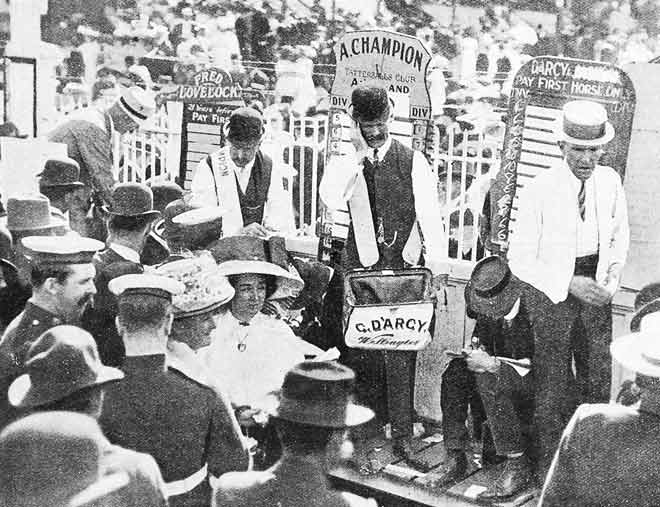
And finally, with all due respect to the Maoris, please don’t touch your face. In 330 AD, the Roman Emperor Constantine the Great banned the practice of tattooing the faces of convicts, gladiators, and soldiers because, he said, the human face reflected “the image of divine beauty, and should not be defiled.” I couldn’t agree more.

______________________________

Tatooed sailors yesteryear: http://www.akirabodyart.com/images/content/1/c20_0040-sailors-tattoo-web.jpg
Tattoo on a street: http://www.rosesfanees.it/wp-content/uploads/2013/06/IMG_3571.jpg
Tattoo on a beach: http://2.bp.blogspot.com/_0GG_6fSKfBI/TITqWrghiOI/AAAAAAAAAYQ/m2JEHxwIVzo/s400/tatuaggio_2.jpg
Ötzi iceman: http://www.age-of-the-sage.org/archaeology/otzi_iceman_2.jpg
Ötzi tattoo: http://www.freetattoodesigns.org/images/tattoo-history.jpg
Scythian tattoo: https://upload.wikimedia.org/wikipedia/en/a/a6/Scythian_tatoo.jpg
Maori Chief 1784: https://upload.wikimedia.org/wikipedia/commons/d/d4/MaoriChief1784.jpg
Maori Tutukino: https://upload.wikimedia.org/wikipedia/commons/4/45/Tukukino%2C_by_Lindauer.jpg
George V: http://upload.wikimedia.org/wikipedia/commons/e/ee/George_V_of_the_united_Kingdom.jpg
Rihanna’s back tattoo: http://cdn04.cdnwp.thefrisky.com/wp-content/uploads/2012/09/10/rihanna_tattoo10.jpg
Angelina Jolie’s tattoos: http://www.tattoodesignsidea.com/wp-content/uploads/2013/05/Anglina-Jolie-Tattoo-Designs.jpg
Traditional Samoan tattoos: https://upload.wikimedia.org/wikipedia/commons/9/99/Traditional_Samoan_Tattoo_-_back.jpg
Tattoo design-1: http://photovide.com/wp-content/uploads/2013/01/Tattoo-Designs-07.jpg
Tattoo design-2: http://cooltattooidea.com/wp-content/uploads/2013/07/pics-of-tattoo-designs-sz6ztmti.jpg
Tattoo design-3: http://www.lotonuu.com/images/samoan-tattoos/samoan-body-Tattoo10.jpg
Tattoo design-4: http://samoantshirts.com/images/tattoo/samoan%20tattoos.jpg
Tattoo design-5: http://tattoodesignsmag.com/wp-content/uploads/2013/03/Best-Tribal-Tattoo-Designs.jpg
Hennaed hands: http://www.inkuphoto.com/wp-content/uploads/2012/07/nj-wedding-photographer-nyc-wedding-photographer-boston-wedding-photographer-indian-hindu-sikh-inku.jpg

BIRTHDAY MARGARITAS

Beijing, 4 August 2013

It was my birthday a few days ago: one year closer to my sixtieth year, that age which impelled me to start this blog; one year closer to my retirement and the end of my professional life. As the years go by, I remember ever more insistently a line from the last chapters of the book The Ocelot, by Giuseppe Tomasi di Lampedusa. The book’s melancholy hero Don Corbera, Prince of Salina, has always seen his life as a stream that is flowing, flowing away. Now, old and sick and terribly, terribly tired, he muses that the stream has become a river, flowing ever more swiftly past. A few pages later he is dead.

Yes indeed, I think to myself on every birthday now, life does seem to whizz by ever faster as I grow older.

My wife was having none of these gloomy thoughts and philosophical musings! She arranged for a wonderful lunch in a restaurant located in an old temple buried in the maze of lanes behind Beijing’s Drum and Bell Towers.

Bell Tower

It is one of the city’s fancier restaurants, with a menu to match. To start, my wife had (I quote from the menu) “chilled asparagus soup, salmon tartar, sour cream”, while I opted for “cream soup of mussels, saffron, white wine, vegetable julienne”.  For the main course, we both chose “assorted seafood, bouillabaisse jus, aioli”. We topped it all off with a selection of cheese. The whole accompanied by a glass of French rosé wine for my wife and a glass of Spanish red wine for me. Delicious. But definitely not filling. As is the case with such restaurants, portion size was in inverse proportion to the final bill.

temple restaurant-2

temple restaurant-1

Having then spent the rest of the afternoon in the office pretending to work, I met my wife somewhere close to the Kempinski Hotel and she took me to a fancy bar for a drink. Having scanned the drinks list, we unanimously plumped for a margarita. The waitress anxiously informed us that since it was Happy Hour – buy one, get one free – we would actually get four if we ordered two. She wanted to make sure that we were aware of this. We confirmed that this was indeed the outcome we desired.

margarita

Marvelous drink, the margarita! The sweetness of the Cointreau hits the tartness of the lime juice, only discovered after breaking through the salt coating the glass’s rim; the whole covering the powerful kick of the tequila. We discovered the drink some twenty-five years ago when we were in New Mexico for a holiday. As we sat in the bar of the hotel in Santa Fe wondering idly what to drink, the barman suggested a margarita. Why not, we said. We have never looked back. Everywhere we have been, the margarita has followed us like a faithful old friend, turning up on the drinks list of just about every bar we have ever been to since.

As we drank our – four – margaritas on the terrace of the bar, we watched the evening slowly draw in over Beijing. It was a beautifully clear evening, following a beautifully clear day. Feeling a tad hungry, we ordered two bowls of noodles. After which, hand in hand, we walked slowly back home.

_________________

Bell tower: http://www.thechinaguide.com/drum_tower/Drum_Bell_Tower_Beijing_07.jpg
A starter: http://old.cityweekend.com.cn/files/images/image-20120224-0h1d4tf09s9jmtfv1bib.JPG
A main course: http://cwstatic.cityweekend.com.cn/files/images/2011/12/16/image-20111216-fyrz2miltyybbz6hjzlh.jpg
Margarita: http://images.nationalgeographic.com/wpf/media-live/photos/000/224/cache/margarita-drink-beach_22442_600x450.jpg

MY ART COLLECTION

Beijing, 3 August 2013

I was in Vienna a few weeks ago – it is always good to show your face from time to time in Headquarters to remind your colleagues that you still exist – and my wife accompanied me because we had decided to go on vacation at the same time. Since we had a free morning, we decided to visit the Leopold Museum.

The museum is part of a very nice urban recovery scheme which the Austrian government undertook some ten-fifteen years ago. There being no imperial horses to house anymore, the old imperial stables had fallen on hard times. So the city decided to turn the stables into a Museums Quarter, made a deal to purchase the art collection of a certain Rudolf Leopold, and built two art museums on the premises, one for his modern art

Leopold Museum

and one for his contemporary art

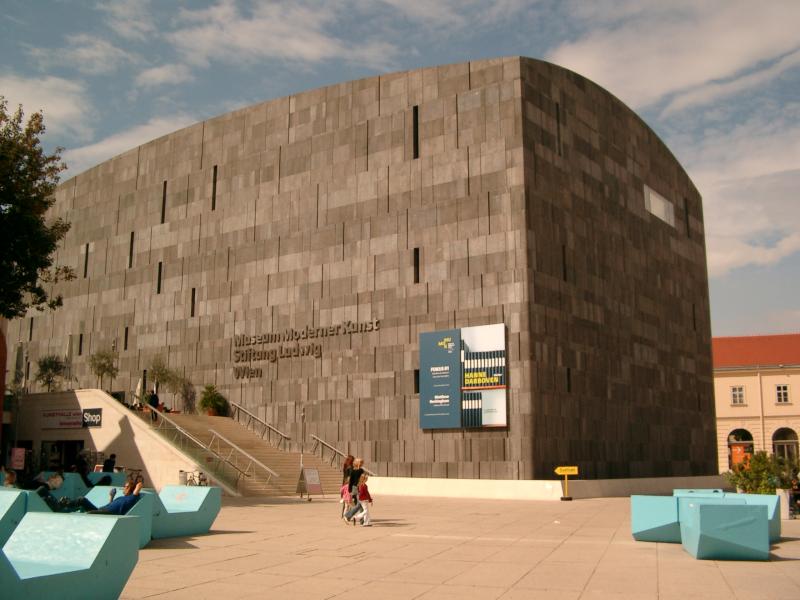
MUMOK

(is there a deeper meaning to the colour scheme of the museums’ cladding?)

For those readers who plan to visit Vienna, the Quarter is just across the road from the Kunsthistorisches Museum, the country’s premier museum of fine arts, which houses the old imperial collection. This is a truly fantastic collection, which alone is worth a visit to Austria. One of my favourites there is Caravaggio’s “Madonna of the Rosary”.

caravaggio

As for the Leopold Museum, it has a great collection of early 20th Century Austrian, German and Central European art. I particularly like its collection of Egon Schieles. The very first time my wife and I went to Vienna, back in the early 80s, we stumbled on Mr. Leopold’s collection, hung at that time in a cramped house somewhere in the outskirts of Vienna. His Schieles knocked my socks off as they say. I particularly remember this one.

Egon Schiele

With the art from these fantastic collections almost spilling out onto the pavements of Vienna (and I haven’t even mentioned the Belvedere or the Albertina or the smaller collections), it’s not surprising that it is here that I started my own – very, very modest – art collection. The spark that lit the fuse was the Dorotheum.

Dorotheum

Wonderful, wonderful place, the Dorotheum. It’s an auction house, but the marvelous thing about it is that it has two whole floors where the price is fixed and you can buy the articles on the spot. Which is great, because auctions make me nervous; I only went to one auction at the Dorotheum – where Mr. Leopold was present, by the way – and the speed with which the prices levitated (on a particularly nice painting by a Hungarian artist) gave me palpitations. These two floors have more the feel of a jumble sale, full of horrible stuff, but where you feel – you know – that the piece of your dreams is just behind that dreadful cabinet in the corner. And in the spirit of a jumble sale the prices in these parts of the Dorotheum are – relatively speaking – affordable.

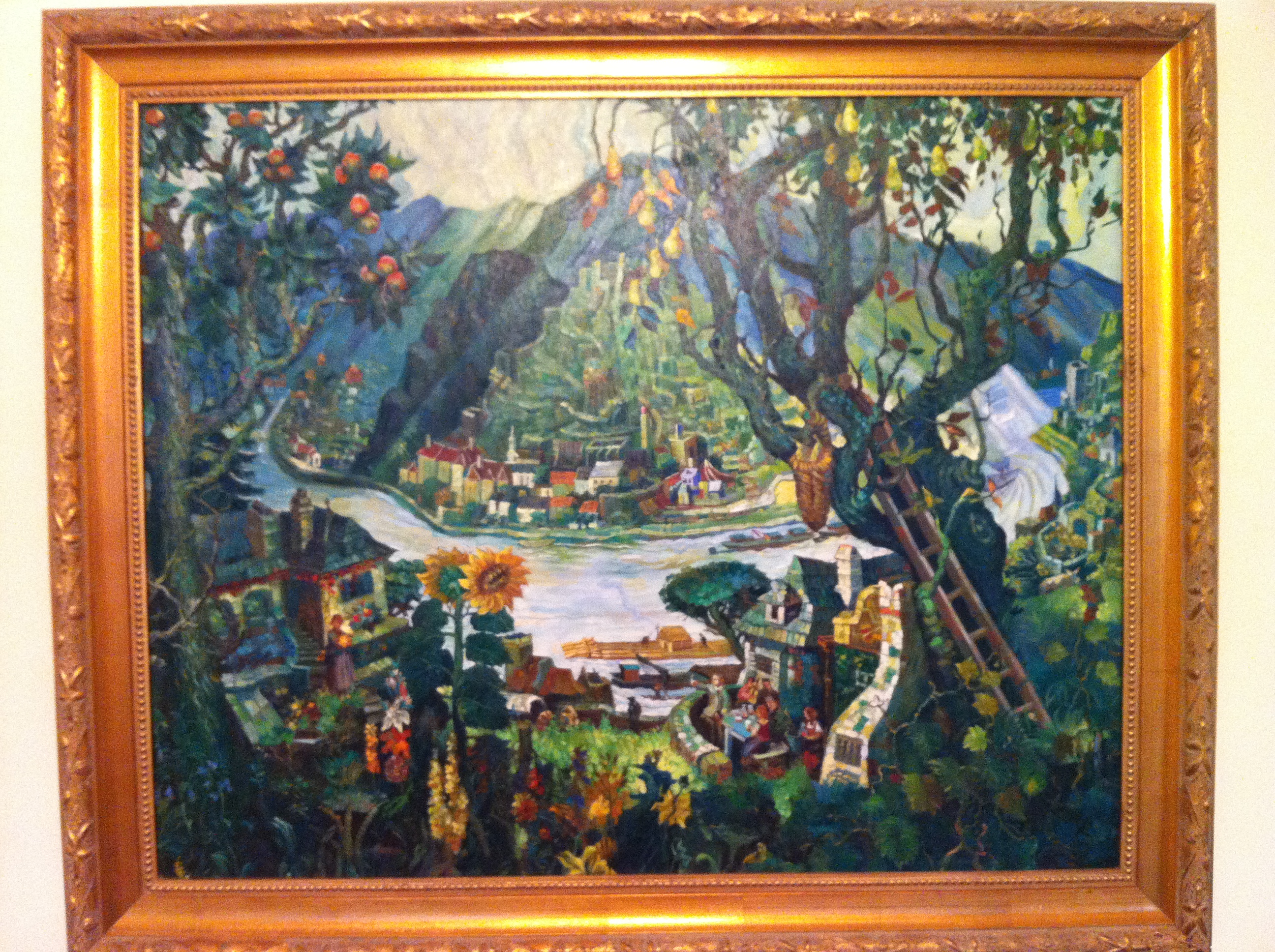
My first piece of art was hanging in a corner, in the dead end of a section dedicated to carpets.

general photos 002

When I first spied it behind the carpets, it was woebegone, sagging in the middle, dust covering its frame. But it cried out to me: “Take me! Take me!” That riot of flowers and fruit against that cubist-type background of mountains! That river, with the small town on its bank! The happy people! It had to be mine!! But the price made me hesitate – it was 400 euros or thereabouts. And it would need fixing and cleaning. I dithered and dathered, I went back a few times, I was like one tormented. Eventually, my wife took over and gently pushed me towards the purchase.

They say that the first murder is the most difficult; after that, it gets easier and easier. I think it’s the same with the purchase of art. In relatively short order after that, I purchased, always at the Dorotheum, this gouache, a naïf view of the Seine in early 19th century Paris:

general photos 004

(the apparent sun in the background is actually my camera’s flash)

This aquarelle, an 18th Century view of Kashmir:

general photos 005

(same comment about my camera’s flash)

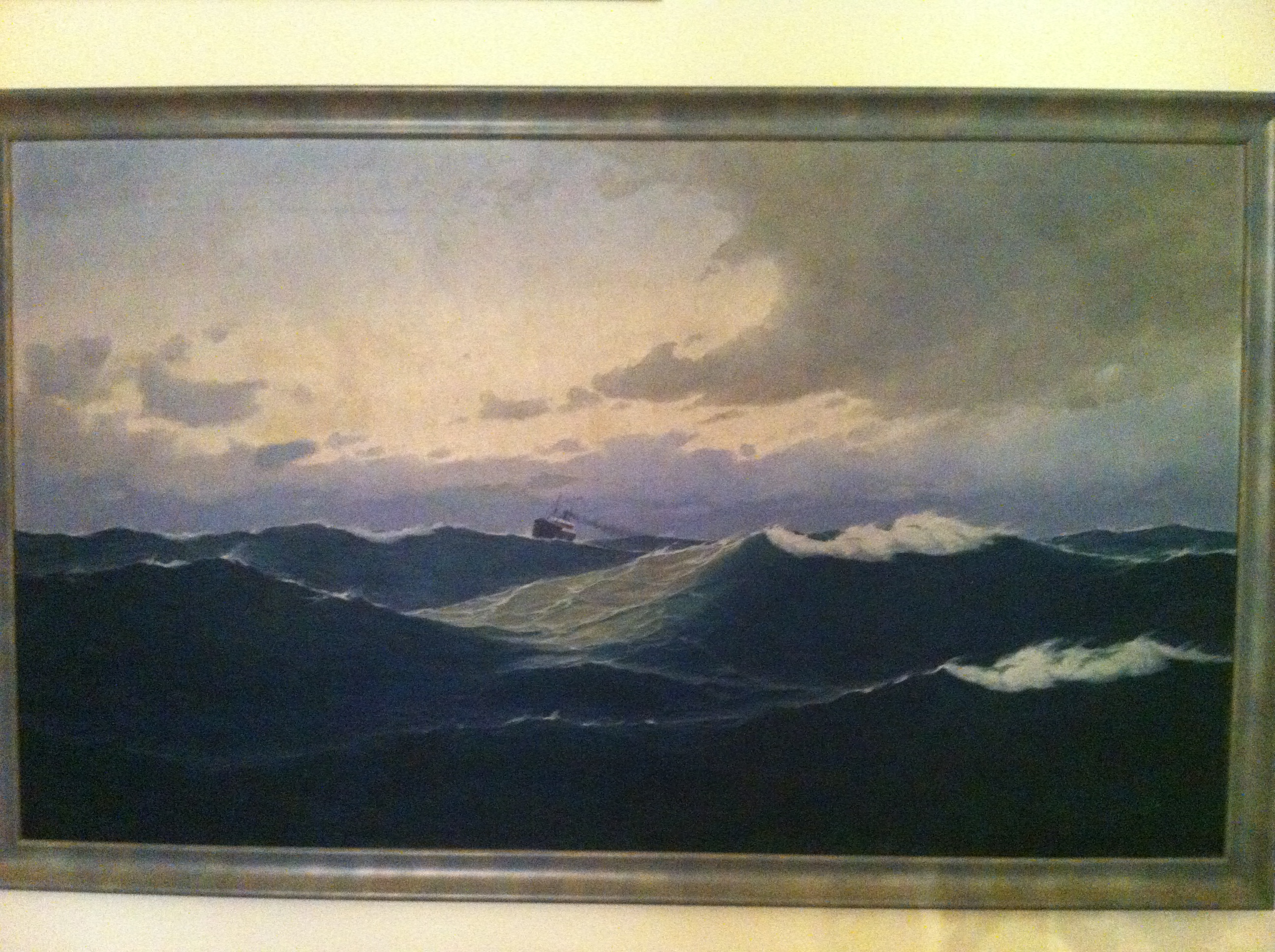
This oil painting, of a tramp ship ploughing its way through the waves:

general photos 009

(I bought it because it reminded me powerfully of the poem “Cargoes” by John Masefield, whose last verse is:
“Dirty British coaster with a salt-caked smoke stack,
Butting through the Channel in the mad March days,
With a cargo of Tyne coal,
Road-rails, pig-lead,
Firewood, iron-ware, and cheap tin trays”)

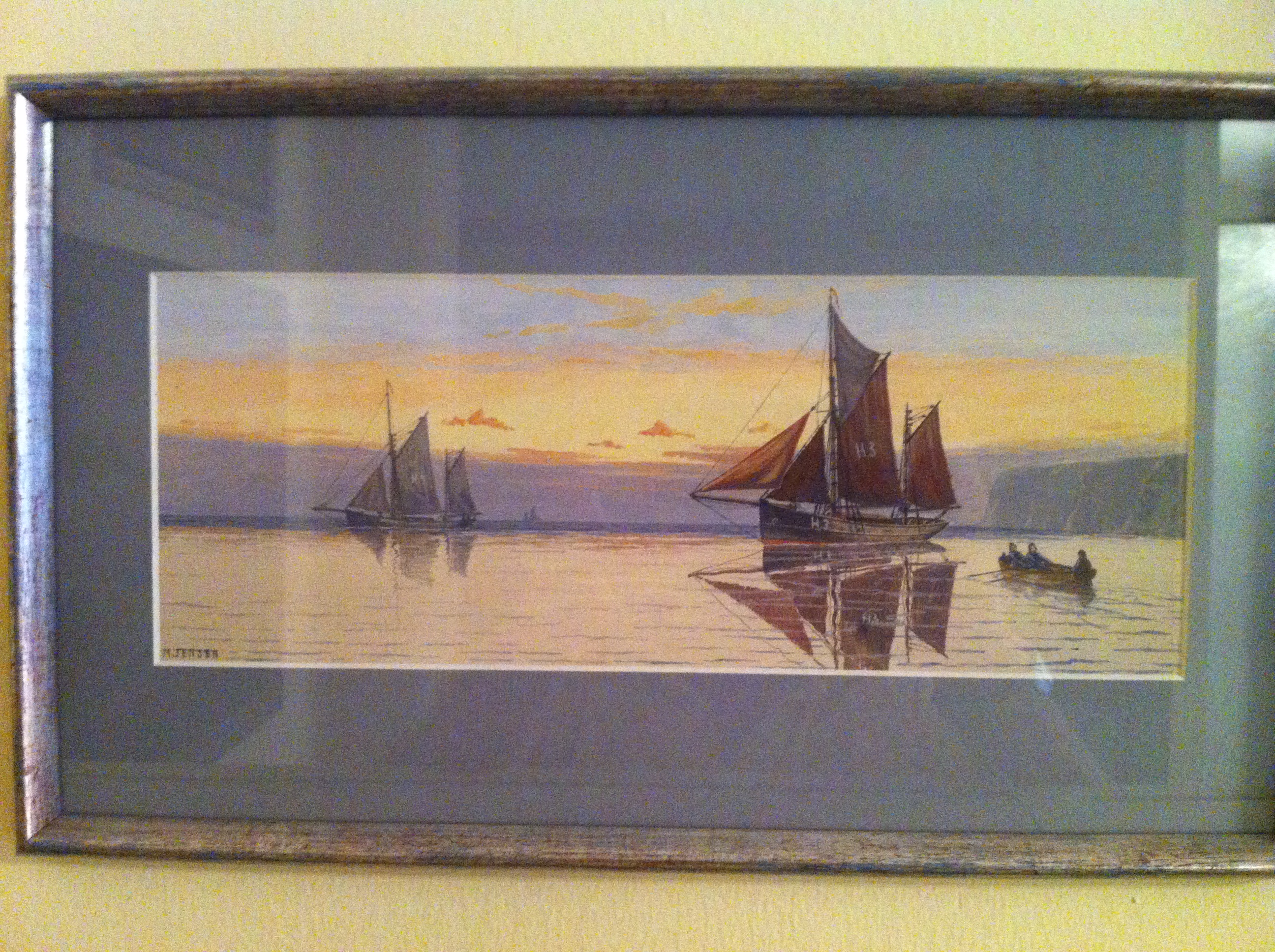
This aquarelle, by the same artist, of fishing boats off the coast of Britain:

general photos 010

This print, of a barn half buried in the snows of Upper Austria:

general photos 008

It was just as well that we left for China. My wife was becoming anxious about how the art was slowly invading the walls of our apartment; she has always preferred bare white walls and generally uncluttered internal vistas. I could not bear to have these sitting in the dark of a warehouse in Vienna waiting for us to come back. We took them all down to Milan, where they hang in our apartment. I took the photos above a few weeks ago, when we passed through.

The wonderful thing about these pieces is that they have allowed me to also unfurl my passion for history, giving me an excuse to dig around into their past. For instance, the Dorotheum claimed that the first painting was a view of Dürnstein, north of Vienna on the Danube (and in whose Castle Richard I was kept prisoner for a while). But after revisiting the place, I am convinced that this is not so; the banks of the river are not that steep on both sides. The picture framer who cleaned and fixed the painting was also not convinced of the appellation. He thought it was the upper Moselle River; a visit there is on my to-do list. As for the gouache, it was sold to me by the Dorotheum as an urban landscape in northern Belgium. Not so! For reasons which I won’t go into here but have to do with research I did on that shop on the right hand side of the painting, I am convinced that it is a view of the Seine River in Paris, looking upstream from Pont Notre-Dame, one of the bridges linking the Île de la Cité with the Right Bank. For its part, the view of Kashmir was, according to the Dorotheum, a view from western China (which is why I bought it; I already knew then that I would be going to China). Research on my part quickly showed me that actually it is a well-known view of a rope bridge near Srinagar. Really, the Dorotheum is doing some very sloppy work here – but it’s more fun for me.

With the Dorotheum no longer just a few subway stops away, the collecting passion has slowed – the apartments are smaller too. We have bought a piece or two, which when we take them back will remind us of our stay in China, rather like those old English colonels who came back from the Empire with bits and bobs of native paraphernalia, which they would proudly display in their retirement home at Bournemouth.

__________________________

Leopold Museum: http://de.academic.ru/pictures/dewiki/76/Leopold_Museum_%28Vienna%29.jpg
MUMOK: http://upload.wikimedia.org/wikipedia/commons/e/eb/Museum_Moderner_Kunst_Stiftung_Ludwig_Wien.jpg
Caravaggio: http://www.christusrex.org/www2/art/images/carav18.jpg
Egon Schiele: http://kellypahl.files.wordpress.com/2011/11/2.jpg
Dorotheum: http://static3.kleinezeitung.at/system/galleries_520x335/upload/3/6/3/2430195/dorotheum030810apa726.jpg
the rest are my pictures

KARAOKE ON THE GRASSLANDS

Beijing, 31 July 2013

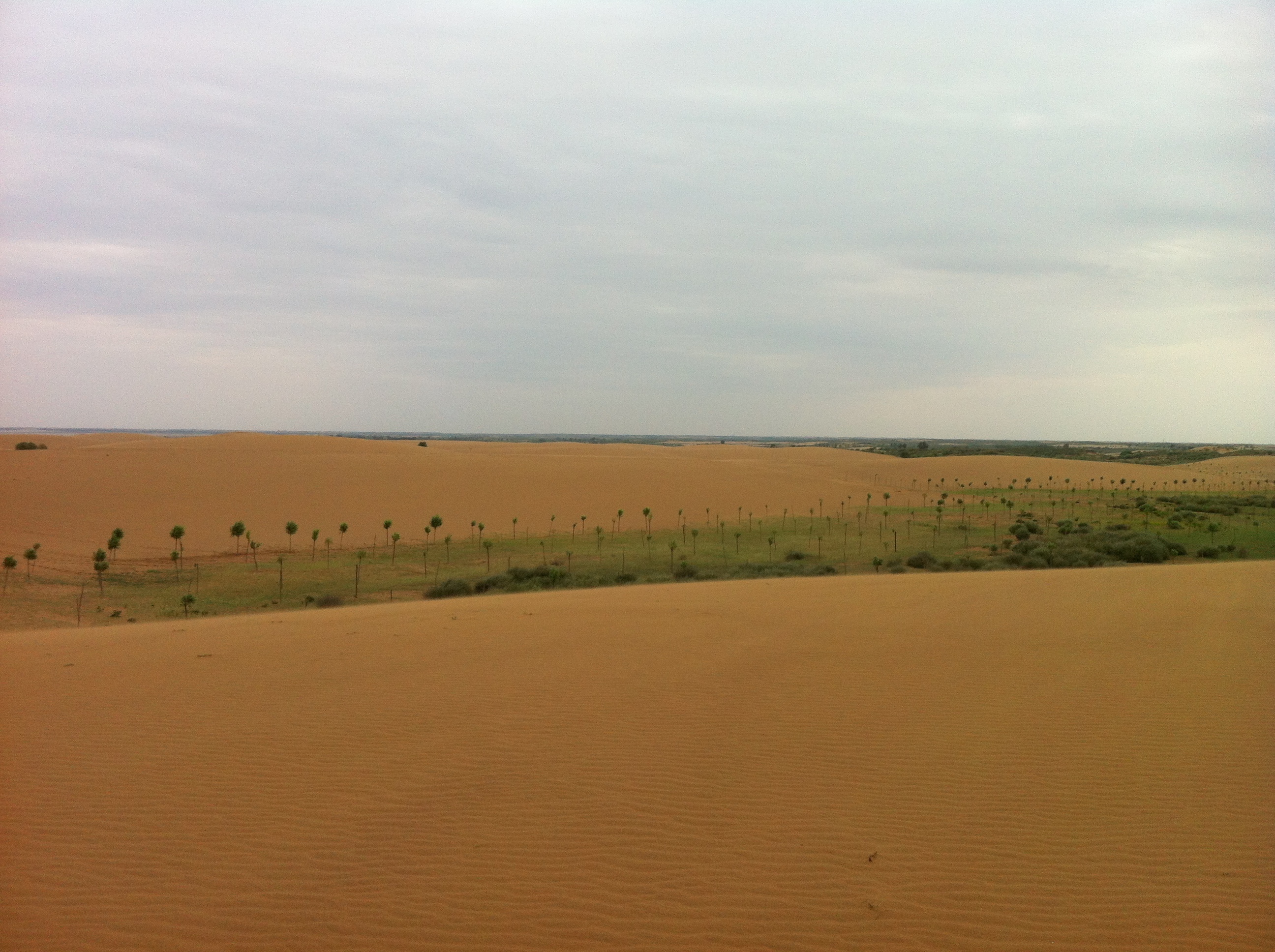
Well not really the grasslands. We were more where the grasslands of Inner Mongolia meet one of the province’s deserts, whose dunes are gradually invading the grasslands.

mission 001

The government has been struggling for decades to stop the dunes in their tracks. It has had some success, but only some. We were visiting a man who was trying something new. He wanted to make a sustainable business of desert-control (something which the government is incapable of). He was contracting local farmers to plant sand willow bushes on the dunes, paying them to coppice the willows every three-four years, burning the resulting biomass in a small power plant, and selling the electricity to the local grid. Finally, with a small portion of the carbon dioxide emissions he was growing Spirulina in ponds around the power plant to sell as a food supplement.

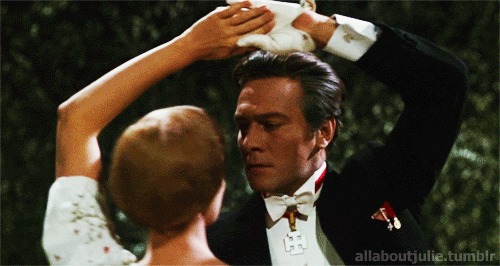
Very impressive. But actually what I want to write about today is the cultural highlight of the trip, the evening’s karaoke session. After the usual banquet, with its toasts and pledges of eternal friendship, we were all ushered downstairs into the hotel’s rec room. It actually wasn’t clear to either me or my colleague what was going on until an English-speaking member of the company staff brightly informed us that we were going to have a karaoke session. My colleague looked at me. This is not what we had signed on for. But what to do, you have to follow local practice. So putting a brave face on it, we followed everyone into the room and took our seats facing the screen. What would we be invited to sing, we timidly asked? “Edelweiss”, we were informed. Well at least I roughly knew that song. The first couple of songs were Chinese – popular ones, by the smiles and nods around the room – and were belted out, first by the General Manager and then by the Deputy General Manager (I felt that the GM looked somewhat peeved with the DGM’s performance; was it somewhat better than his?). Then came our turn. My hands gripping the mike were slightly sweaty. Julie Andrews and Christopher Plummer, dressed to the nines in their Austrian costumes from “The Sound of Music”, danced onto the screen, the music swelled, the words appeared helpfully on the screen, and it was all systems go.

sound of music

In all modesty, I think our performance was quite creditable. My colleague and I managed to follow the verses more or less in tune and in time, and I was able to give a satisfying Frank Sinatra-like croon to the chorus. We certainly got enthusiastic applause at the end – perhaps in the manner that parents energetically clap at performances in kindergartens, to encourage the little ones. This gave us the courage to accept to do another song later in the evening. Here, my colleague took the lead. He knew the song, while I had no idea of either tune or words and just hummed along helpfully. Shortly afterwards, the session wound down and we all stumbled off to our rooms.

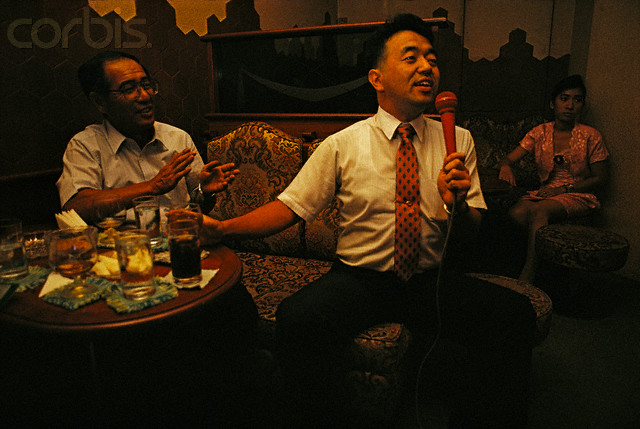
It’s a rum thing, this karaoke. I remember back in the 70s when it first appeared on our radar screens in the West as another Japanese export, along with Sony walkmans. I remember how we tittered at these pictures of staid, middle-aged Japanese businessmen singing what we were told were pop love songs, somewhat out of tune. I mean really, did these people feel no embarrassment?

Japanese Businessmen in Karaoke Bar

We might have tittered, but karaoke swept through the rest of Asia, becoming all the rage. My first (and until Inner Mongolia, my only) encounter with karaoke had been in the 90s, in Malaysia. There too our hosts had declared what fun it would be to spend an evening karaoking and dragged me and two very reluctant English colleagues off to a karaoke bar. We got away with singing Beatles songs – “Michelle, Ma Belle” went down particularly well with our hosts, as I recall. And as far as I can make out, karaoke is now making serious inroads everywhere else in the world. The film “Duets”, with that wonderful, wonderful actor Paul Giamatti who plays a stressed-out businessman going AWOL from job and family and becoming a karaoke devotee, is surely showing us that the desire for singing our hearts out in front of others is spreading.

paul giamatti-1

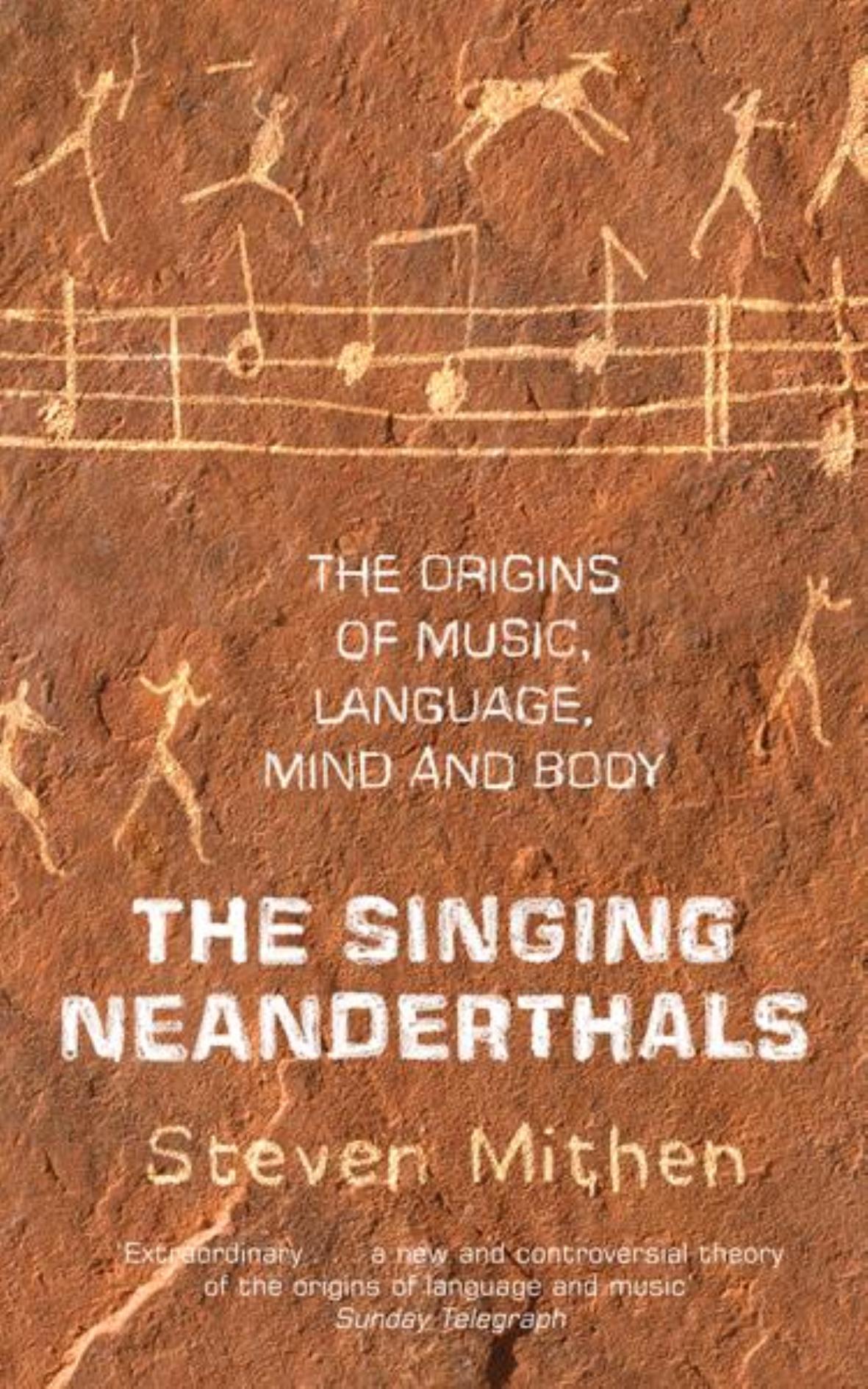
What is it that makes people willing to bare their souls through singing? Well, music – like sex, delicious food and (alas!) certain drugs – increases the levels of dopamine in our brains, which we feel as pleasure. So when we sing we increase our pleasure levels, and hopefully those of others around us (if we don’t sing too awfully …). And why would music have this effect? Because probably it thereby helped our ancestors to share emotions, to work together, in a word to bond. And that helped us to survive. Those readers who are interested in all this should read “The Singing Neanderthals: The Origins of Music, Language, Mind and Body” by Steven Mithen. Great book.

singing neanderthals

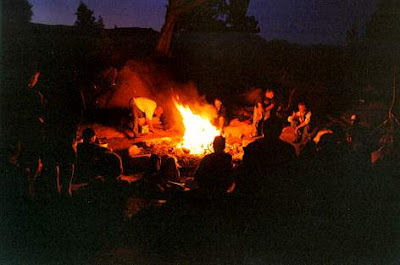
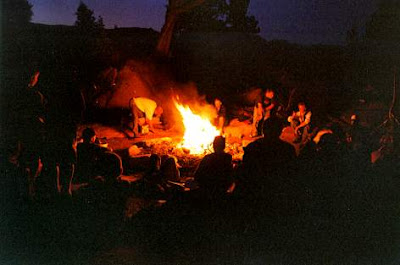
So I suppose this explains why I liked singing around the campfire in the Scouts, the closest I have ever got to living like a Cro-Magnon man …

bot scout campfire

.. why the massed choir which I heard singing Carmina Burana decades ago at York University brought out goosebumps all over my body …

carmina burana choir

… and why my heart is torn from its place every time Violetta in Verdi’s “La Traviata” sings to the loss of her love, whom she is giving back to his father and to bourgeois respectability.

la traviata

__________________________

Sand dunes of Inner Mongolia: my picture
Sound of music: http://24.media.tumblr.com/tumblr_mdtx7kdI111qc1i8lo1_500.gif
Japanese businessmen karaoking: http://www.corbisimages.com/images/Corbis-42-15959733.jpg?size=67&uid=b4af3e21-08c3-4b08-be43-4e83d45b134a
Paul Giamatti-1: http://images.dailyfill.com/7f3ed4d25d034a68_9ea55287e2c98de4_o.jpg
Singing Neanderthals: http://www.hachette.com.au/cover/large/9780753820513.jpg
Boy scouts campfire: http://4.bp.blogspot.com/-aMXEdTSATSU/UAbGYL5LNgI/AAAAAAAAFAE/7TPQ72FLd5k/s400/campfire.jpg
Carmina burana choir: http://sz-n.com/wp-content/uploads/2013/06/0192-e1370696994658.jpg
La Traviata: http://upload.wikimedia.org/wikipedia/commons/f/f7/La_Traviata_-_Giorgio_Germont,_Violetta_Valerie_und_Annina.jpg

DOG DAYS IN BEIJING

Beijing, 27 July 2013

It’s already dog days in Beijing, with the mercury climbing into the high 30s Centigrade. This weather brings out these strange extraterrestrial beings onto the roads

Hot Weather Lands In Nanjing

which on closer inspection turn out to be women riding cycles while wearing special UV-protective sun visors and covering every bit of exposed skin.

sun visor-1

As for the pavements, they host the somewhat odd spectacle of women sheltering below umbrellas under cloudless skies.

chinese women umbrellas-1

The reason is the same in all cases: the desire to protect delicately pale skins from suntan. Chinese women have a fetish for pale skins, not only shunning the sun but also spending large sums on products which claim to whiten their complexion.

skin whitener-2

The purpose, of course, even if these women don’t realize it, is to distinguish themselves from their sisters toiling in the fields under the broiling sun and getting a tough, leathery skin for their pains – the peasants, in a word. Despite communist-era claims to the contrary

propaganda poster-3

every Chinese knows that life as a peasant is not particularly pleasant

rural woman-1

which is why China’s rural people escape to the cities the moment they have half a chance, and why city folk look down on their rural cousins.

We who come from cultures which have been worshipping the sun for at least sixty years and have proclaimed far and wide the beauty of a tanned skin

sun tan lotion ad-1

can titter at this Chinese phobia of a darkened skin, which sometimes really goes to extraordinary lengths

facekini

But we should remember that before this sun-loving period of ours our genteel women also avoided the sun, for much the same reason. I am indebted to the blog “It’s About Time”, in a section devoted to parasols in Western art (from which I also got some of the photos below), for the following quote from Randle Cotgrave’s 1614 Dictionary of the French and English Tongues, where the French word ombrelle is translated “An umbrello; a (fashion of) round and broad fanne, wherewith the Indians (and from them our great ones) preserve themselves from the heat of a scorching sunne; and hence any little shadow, fanne, or thing, wherewith women hide their faces from the sunne.” Like the Chinese women I see on the Beijing streets today, for centuries our great ladies liked to walk outside screened from the sun, as these paintings from different periods attest:

Fragonard:

00 Fragonard with parasol

Copley:

00 Copley with parasol

Goya:

00 Goya with parasol

Manet:

00 Manet with Parasol 1881

Monet:

00 Monet with-a-Parasol

Renoir (I had the luck to see this particular painting at the Met in New York a few months ago):

00 Renoir-2 with-parasol

Seurat:

00 Seurat with parasol

Valloton:

00 Vallotton with parasol

the American painter Mars:

00 Mars-twenties-with parasols

Are we so right to love a tan? Of course, the snobbish element of having a pale complexion is to be abhorred, but I’m not sure tanning is such a wonderful idea either. I must admit to being biased on this topic; I have a fair skin which burns rather than tans and I’ve always disliked being in the sun. But the rise in skin cancer incidences and deaths is vertiginous in many of those countries where people routinely cook themselves on a beach all summer. It is made that much worse by the thinning of the ozone layer, which is allowing in far more harmful UV than used to be the case. Which explains this public health ad from Australia, one of the hardest-hit countries: many people with fair skin, a strong outdoors culture, and located far south where the ozone layer is thinnest.

australian ad-1

The Slip Slop Slap campaign is another attempt by the Australian government to combat skin cancer:

australian ad-3

Looking at that, it seems to me that maybe our Chinese sisters aren’t so wrong in their sun shunning antics after all.

_____________________

woman with sun visor-1: http://s1.djyimg.com/i6/5100409191528.jpg
woman with sun visor-2: http://images.nationalgeographic.com/wpf/media-live/photos/000/123/cache/fashion-shanghai-motorcycle_12361_600x450.jpg
Chinese women under umbrellas: http://blog.chinatraveldepot.com/wp-content/uploads/2012/07/103-1024×768.jpg
Skin whitener ad: http://gaia.adage.com/images/bin/image/large/Nivea91008b.jpg?1221045176
Propaganda poster: http://chineseposters.net/images/e11-992.jpg
Rural woman: http://chinadigitaltimes.net/wp-content/uploads/2008/10/13china01-6501.jpg
Sun tan lotion ad: http://file.vintageadbrowser.com/l-2sxa9y5hxoogx7.jpg
Facekini: http://www.ecouterre.com/wp-content/uploads/2012/08/qingdao-china-sun-protection-mask-facekini-2-537×402.jpg
Fragonard: http://farm3.static.flickr.com/2475/4438032996_d685b495fb.jpg
Copley: http://2.bp.blogspot.com/-7FFaKUq3lgs/Th6koRKMutI/AAAAAAAArNs/2WRM4y4ZwUs/s640/p%2B1763%2Bc%2BJohn%2BSingleton%2BCopley%2B1738-1815%2BMary%2BTappan%2BMrs%2BBenjamin%2BPickman%2BYale%2B%25282%2529.jpg
Goya: http://www.aparences.net/wp-content/uploads/goya-parasol-vert.jpg
Manet: http://1.bp.blogspot.com/_CvDCiEFbNy8/TGlqCaT0tMI/AAAAAAAAWls/cEdFU0kuto4/s1600/p+%C3%89douard+Manet+%281832-1883%29+Woman+with+a+Parasol+1881..jpg
Monet: http://www.chinaoilpaintinggallery.com/oilpainting/Claude-Monet/The-Walk-Woman-with-a-Parasol.jpg
Renoir: http://www.renoirgallery.com/paintings/large/renoir-lise-with-parasol.jpg
Seurat: http://farm5.staticflickr.com/4037/4367819565_d255f31c2d_z.jpg?zz=1
Vallotton: http://2.bp.blogspot.com/_CvDCiEFbNy8/TH8YPdMzVyI/AAAAAAAAXno/iOmadhyVbOI/s1600/F%C3%A9lix+Vallotton.+%281865+-+1925%29.+On+the+Beach+Sur+la+plage.+1899..jpg
Mars: http://3.bp.blogspot.com/_CvDCiEFbNy8/TJezx5Y-UgI/AAAAAAAAY1g/HY7j9dPmqIg/s1600/Ethel+Mars+%281876+%E2%80%93+1956%29+Nice.jpg
Australian ad-1: http://www.abc.net.au/reslib/200812/r320709_1428893.jpg
Australian ad-2: http://lavaleandherworld.files.wordpress.com/2013/02/slip-slop-slap-legenda.jpg?w=600

100th ANNIVERSARY

Beijing, 21 July 2013

I am astonished to discover that this is my 100th posting! It seems only yesterday that, rather like a kid on his first day at school, I was nervously writing my first posting. This milestone deserves to be celebrated in some way. And what better way could there be than by singing the praises of the written word?

In my very first posting, which I entitled Manifesto (and which later became my “About” page, once I’d understood better how all this blog thing worked), I explained why, as I neared my 60th birthday, I had finally decided to take up the pen (electronic in this case) and write.

My decision to write actually flowed from my habit of reading. I’ve always loved to read. I still remember the day I got really hooked. I was maybe six, possibly seven. I was bored, and as is usual in these cases was bothering my elder siblings, who were all reading. In exasperation, one of my sisters gave me a book and ordered me to read it. I complied a trifle sulkily, but before I knew it I was drawn in – sucked in! – by the story. I still remember the book; it was from the Secret Seven series by Enid Blyton, about seven very English children who sluith around solving various mysteries (I’m amazed to see that these stories are still popular!)

secret-seven-adventure

For most of the next decade or so I read only fiction, but then I lost interest with the excuse that I lacked time.  I took up the habit again in my mid-twenties and I haven’t looked back. The contents of my modest library are packed away in Vienna, waiting to see the light of day again, but in my mind’s eye I can still walk slowly, pleasurably, along my bookcases packed with the books which have marked the passing of my adult life. My library always started with a section which I suppose would be called English Literature in a public library, so in my head my hand is now brushing over the spine of the novel “House of Spirits” by Isabelle Allende, which was the first of her novels I read and which led me – and my wife – to read many of her other novels (OK, strictly speaking these are not English literature, but since I read them in English that’s where I put them). They reconciled me with fiction after a long rift I had with the genre.

isabelle allende house of spirits

My eye is then drawn to the shelves dedicated to detective stories (since those memorable Secret Seven days, I’ve always had a weakness for “yellows” as Italians call them), where my hand falls on “A Morbid Taste for Bones”, the first in the series about Cadfael, the Benedictine monk from the great Abbey of Shrewsbury during the reign of King Stephen.

a morbid taste for bones

I picked up the first out of curiosity at the British bookshop in Milan but it led me, fascinated and hooked, to the next one, which led me in turn to the next one, and on and on like Adriadne’s thread, until one day I had read them all – they always reminded me so much of my school days in a Benedictine Abbey school.

In my library, where space as much as logic has determined where books are placed (my wife has resisted the wholesale takeover of our successive apartments by books), the detective stories are followed by poetry. Here, I pick out the poems of T.S. Eliot, the first poet I came to appreciate, at age 16, during a class at school on English poetry, run by a wonderfully eccentric schoolmaster. The poem he introduced us to was, of course, “The Waste Land”.

wasteland

I always place “The Waste Land” next to the poems by Wilfred Owen and the other First World War poets. I feel that this poem’s sorrowful elegies of times past marry well with the anger that pulses through the war poems, an anger at the sheer futility and waste of that war.  I picked up this particular compendium of WWI poetry in a bookstore on Oxford Street, during a short visit to London.

first world war poetry

The English Lit section finishes with the plays I have acted in and the many more I would have liked to act in (“Mourning Becomes Electra” by Eugene O’Neill definitely falls into the latter category; it is a constant wound in my soul that I have never seen this play acted, yet alone acted in it myself).

mourning becomes electra

After English Lit in my library comes History: my passion – if I had not chosen to do sciences in high school, I would  have done history.   Among my many, many history books, I eye with particular fondness “The Pursuit of Power” by William McNeill,  which is a magnificent synthesis of military, technological, and social history over an arc of a thousand years.

pursuit of power

My hand then brushes over “Guns, Germs and Steel” by Jared Diamond, which (I am summarizing here!) tried to answer the question “Why was it European ships that sailed west and discovered the Americas and not the other way around?”. This book gave me the same shock of intellectual stimulation as McNeill’s book did when I first read it.

Guns Germs SteelI quickly jump to a shelf dedicated to histories of War, where I pick out  “The Face of Battle”, by the British war historian John Keegan, a fascinating analysis about how the field of battle has changed over time. I bought this book on impulse in a Barnes & Noble bookshop in New York 25 years ago and I liked it so much that over the succeeding years I read every single book Keegan wrote.

The-Face-of-Battle

History is followed by Other Social Sciences – politics, sociology, economics, and such like – where my hand brushes briefly over Henry Kissinger’s two volumes on his years in the White House.

white house years

I pass on quickly to the Science section, where I stop in front of my small collection of books on the biological sciences and evolution especially. My favourites are the collected essays on natural history by Stephen Jay Gould, whose warm, wisecracking style I find so quintessentially American, and the books by his “competitor” Richard Dawkins, whose coldly lucid style I find so quintessentially English.

Pandas ThumbBlind_Watchmaker

My science books are followed by my books on religion; why not? science has challenged (and in my view defeated) religion. And here my hand falls on “The Faces of Jesus” by Geza Vermès.

changing faces of Jesus

This was one of those books which takes your breath away by its ability to blow old ideas out of the window. It led me to buy several of his books, to explore who the real Jesus probably was once you get behind all the layers of Christian piety.

And finally, squeezed in at the end of my bookshelves, are books on art, cookery books, travel guides …

In China, I have continued the habit of buying books, nosing out where books in English can be found. We came with nearly no books (two compendia of English poetry, a book on Caravaggio, a book or two on Chinese history), now we don’t know where to put all the books that are piling up in drifts throughout the apartment.

Yet, during all this reading I have always felt a point of guilt: I was passively receiving these written words without writing anything back. Oh, I wrote a lot, but it was all dry, sterile stuff which I had to do for work; at the best of times clear, precise analysis, at the worst of times bureaucratese of the highest order. And so I started this blog. What a liberation it has been! I feel that I have finally gained my voice, that after all the croaking I’ve done I can finally sing (to paraphrase some lines from the African-American poet Langston Hughes, “now do I wonder at this thing, that I am old and yet can sing”). Of course, I don’t pretend to be writing great literature. These postings are just scribblings. My wife urges me to write a book, but I don’t think I can go beyond these brief notes. I am a sprinter, I tell her, I can only run 100 metres, I’m not a marathon runner. Still, the pleasure I derive from this writing is immense – and I hope my few readers derive some pleasure from reading these posts.

Yet, amidst all this pleasure, I have a sense that all is not well in the world of the written word. I see with dismay that bookshops are closing one after another as if hit by some sort of plague, and those that remain often survive by selling rubbish. To some degree, it is simply a change in venue. The written word is migrating from the printed page to an electronic format – am I not writing somewhere in an electronic cloud? For sure, newspapers have already almost vanished to be replaced by their electronic namesakes. Even books are taking this path. A younger colleague of mine urged me to switch to a Kindle; he even gave me his to handle, rather as you would drape a snake around someone’s shoulders to show how nice they really are. But I recoil from this electronicization of books. I want my books the old way, printed on paper, the way Gutenberg started it 500 years ago.

gutenberg

I sense, though, that the malaise with books goes deeper than a simple migration to the electronic cloud. I truly wonder if books will survive at all. The book I am currently reading, “The Swerve” by Stephen Greenblatt, tells me that books have disappeared before.

the swerve

Greenblatt is writing about the near-miraculous recovery in the 1400’s, from some dark corner of a library in a European monastery, of a mouldering 8th Century copy of the poem “De Rerum Natura” by  the Roman poet Lucretius, written in the first decades BCE. But in telling this story he also tells of the time when books disappeared from the Roman Empire as the Empire slowly collapsed in on itself and Christianity spread. It had seemed to the Roman intelligentsia that books would be there for ever, and then one day they were gone. Many Roman writers we know only by name; none of their works have survived. To a book lover like me, it is a story that sends a shiver down the spine.

Those of my generation may remember a film of the 1960’s, Fahrenheit 451. The story is set in modern times, in a society which has banned books and where firemen are there to burn down houses containing books and not put out fires burning down houses. Through various twists and turns, the hero goes from being part of the system of suppression as a fireman to joining a resistance movement whose members live in the forests and keep books alive by each learning a few books by heart to pass on to younger generations, waiting for the time when books will be accepted again.

Fahrenheit 451

I don’t think that the next time books disappear it will be because society is hostile to them, or because society is collapsing. It will simply be through a collective bout of attention deficiency disorder as our electronic toys spin a web of confusion around our minds. Who will need books when you can slip on a pair of super-cool glasses and take part in a 3-D story peopled by electronic characters and set in electronic simulations of paradises on Earth?

I hope I’m not alive to see that day.

_____________

Secret Seven: http://www.enidblytonsociety.co.uk/author/covers/secret-seven-adventure.jpg
House of Spirits: http://swanyart.com/cms/wp-content/uploads/2013/05/houseofspirits.jpg
A Morbid Taste for Bones: http://www.hachettebookgroup.com/_b2c/media/cache/44/a4/44a4f75b43b0f8f64547b5fb88d3d63b.jpg
Waste Land: http://www.whitmorerarebooks.com/pictures/464.JPG
First World War poetry: http://ethershop.umwblogs.org/files/2011/10/poetry.jpg
Mourning Becomes Electra: http://t2.gstatic.com/images?q=tbn:ANd9GcQiKE5e4yBs1a08Z3wtMqkMnkbgAmpbLeajHmGMMCFt-_hTQ-hj
Pursuit of Power: http://www.bibliovault.org/thumbs/978-0-226-56158-5-frontcover.jpg
Guns, Germs and Steel: http://www.beyondone.org/images/image/GunsGermsSteel.jpg
Face of Battle: http://www.jamesaitcheson.com/wp-content/uploads/2013/01/The-Face-of-Battle.jpg
White House Years: http://i.ebayimg.com/00/s/NDgwWDMyNQ==/$%28KGrHqF,!osE8Vffrj3DBPOp0ebETg~~60_35.JPG?set_id=8800005007
Panda’s Thumb: http://www.ateism.nu/images/The%20Pandas%20Thumb%20by%20Stephen%20Jay%20Gould.jpg
Blind Watchmaker: http://upload.wikimedia.org/wikipedia/uk/thumb/f/f8/Blind_Watchmaker.jpg/240px-Blind_Watchmaker.jpg
The Changing Faces of Jesus: http://img2.imagesbn.com/p/9780142196021_p0_v1_s260x420.jpg [in http://www.barnesandnoble.com/w/the-changing-faces-of-jesus-geza-vermes/1004427856?ean=9780142196021%5D
Gutenberg: http://www.mainlesson.com/books/bachman/inventors/zpage206.gif
The Swerve: http://media.npr.org/assets/bakertaylor/covers/t/the-swerve/9780393064476_custom-90f41678e2d9b3883ed17ae22fff5d2273ca209e-s6-c30.jpg
Fahrenheit 451: http://upload.wikimedia.org/wikipedia/en/f/f0/Fahrenheit451B.jpg