POSTS

STINKY TOFU

Beijing, 15 June 2013

My postings are meant to be about things beautiful or pleasurable. But sometimes, to truly appreciate beauty or pleasure one has to experience the absolute opposite, just as to appreciate Good one has to experience Evil. And so my post today is about stinky tofu.

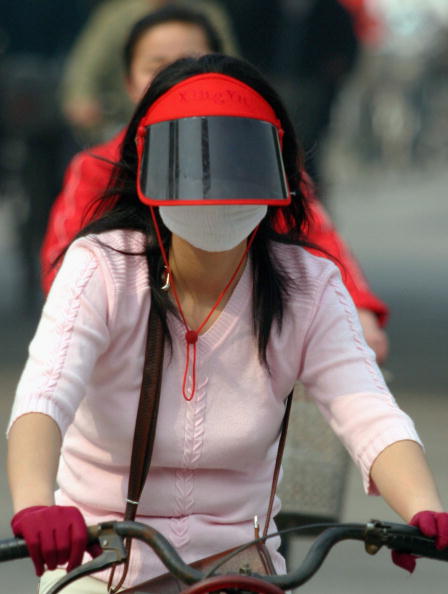
Any reader who has walked a street in Asia, as my wife and I did here in Beijing last night, where hawkers are selling stinky tofu

hawker selling stinky tofu

and been subjected to the particularly awful stench of this foodstuff

At_a_Stinky_Tofu_Stall

will understand immediately my choice of it as the extreme opposite of all that is beautiful and pleasurable.

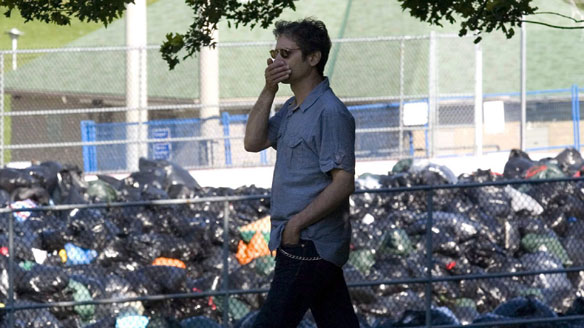
For those of you who have never wandered unwittingly into a drift of stinky tofu odour, though, how can I describe its reek? A similarity to rotting garbage has been suggested by some.

rotting garbage-2

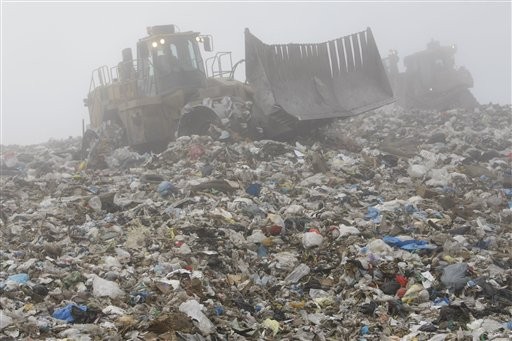
I can assure you, however, from the height of my one and only experience of working in a landfill, that landfilled garbage smells quite nice compared to stinky tofu; in its later stages the rotting process produces certain organic acids, which offset the smells of putrefaction.

Garbage to Gas

That being said, I will admit that freshly rotting garbage, especially when left standing on a city street on a hot summer day, can be quite dreadful. My poor wife suffered terribly from this in her third month of her first pregnancy as we walked to work in the mornings.

Others have suggested similarities to wet socks or smelly feet.

smelly-feet

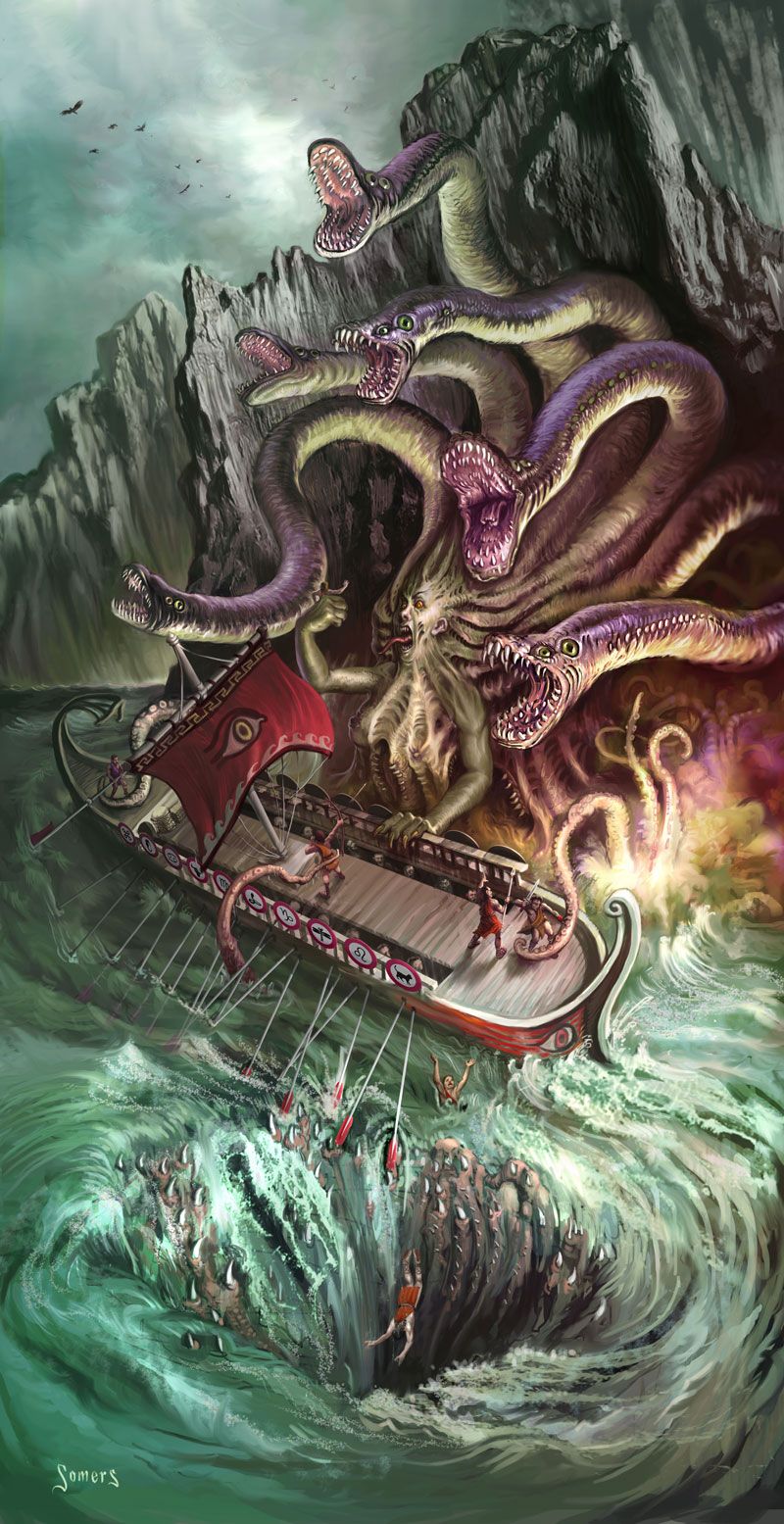
It is certainly true that this is a smell which can be quite dreadful. I have one memory in particular of stinking feet which is etched into my brain for ever more. One Easter holiday, my English grandmother took me on a bus tour of Spain (I mentioned another tour she took me on, aboard a cruise ship, in an earlier post). One afternoon, in some town I now no longer remember, four of us were visiting a church. A local came up and offered to be our guide. Being too polite to refuse, we submitted.  There followed one of the most dreadful 20 minutes I have ever had to pass. The man spoke rather quietly so we had to lean in to understand. But on leaning in we encountered a powerful stink coming from his malodorous feet. If, to escape this, we leaned in still further, we encountered a powerful stench of garlic emanating from his mouth. And so we swayed unhappily back and forth between the Scylla of his feet and the Charybdis of his mouth for 20 long, long minutes.

Scylla-and-Charybdis

Awful …

Yet others have suggested strong resemblances to the smell of faecal matter. It is true that some of the public toilets I have been forced to use in China have had certain olfactory similarities to stinky tofu, although in defence of China’s public toilets, our experiences with them have generally been positive.

china-public toilets

And sometimes the stench from street drains here in China can be incredibly strong. There is one in particular in front of a Ministry which I often have to visit that has exceedingly powerful exhalations, and the drain opening is located precisely where I get out of the car to enter the building.  I rather fancy that the Ministry keeps it that way to chase off the swarm of petitioners who haunt every Ministry in Beijing, looking for the justice which they cannot get back in their home towns. And perhaps to chase me off too.

And then there is the smell of rotting meat, which can be particularly disagreeable. Luckily, I have never had the misfortune of stumbling across a decomposing corpse like my grandmothers’ cousins must have done in the trenches of the Western Front, although I do have a memory many years ago of coming across a dead and decomposing rabbit in a field. That was quite disagreeable enough, and unfortunately I am reminded of it every time I visit our local supermarket. I don’t know what the problem is with the building’s ventilation but the fact of the matter is that the meat and fish sections smell really rancid.

chinese supermarket-2

We never, ever buy meat or fish there. On a side-note, from my rare outings to other supermarkets here it seems to me that Chinese supermarkets generally have a problem with ventilation. At least, I hope it’s that and not the quality of the food.

Some commentators have suggested a similarity between some of the smellier cheeses and stinky tofu.

smelly cheese

Certain cheeses do indeed have awesomely powerful aromas, and I have mentioned some in previous posts, but none I have ever come across reach the levels of stinky tofu.

Indeed, in my opinion none of the smells I have so far reviewed, awful as they are, reach the heights of olfactory horror of stinky tofu. The incredible thing is, there are people who actually like to eat the stuff! Aficionados claim  that while the smell is pretty powerfully horrible the taste is sublime.

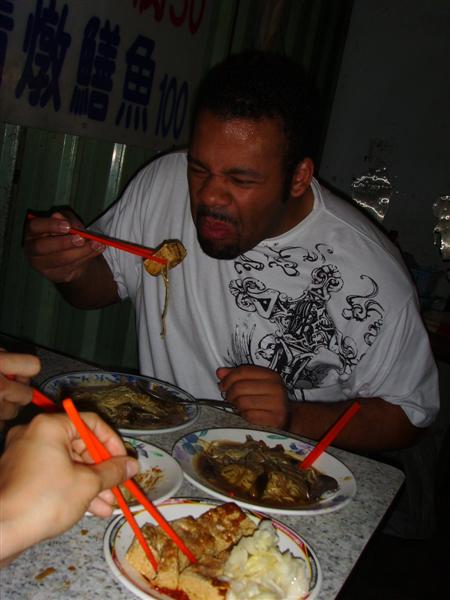
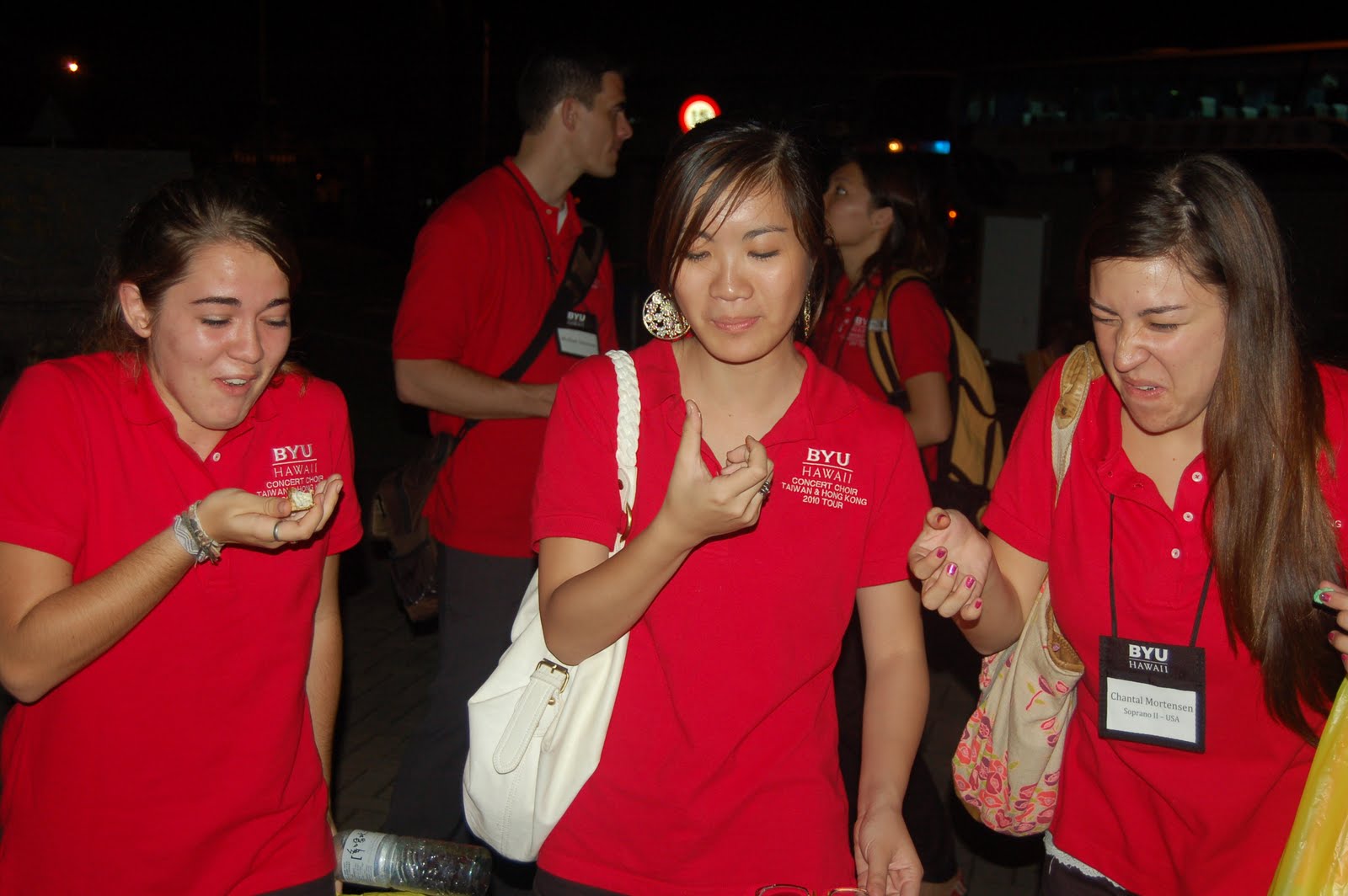
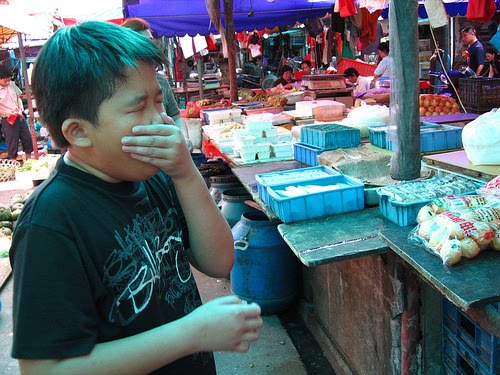
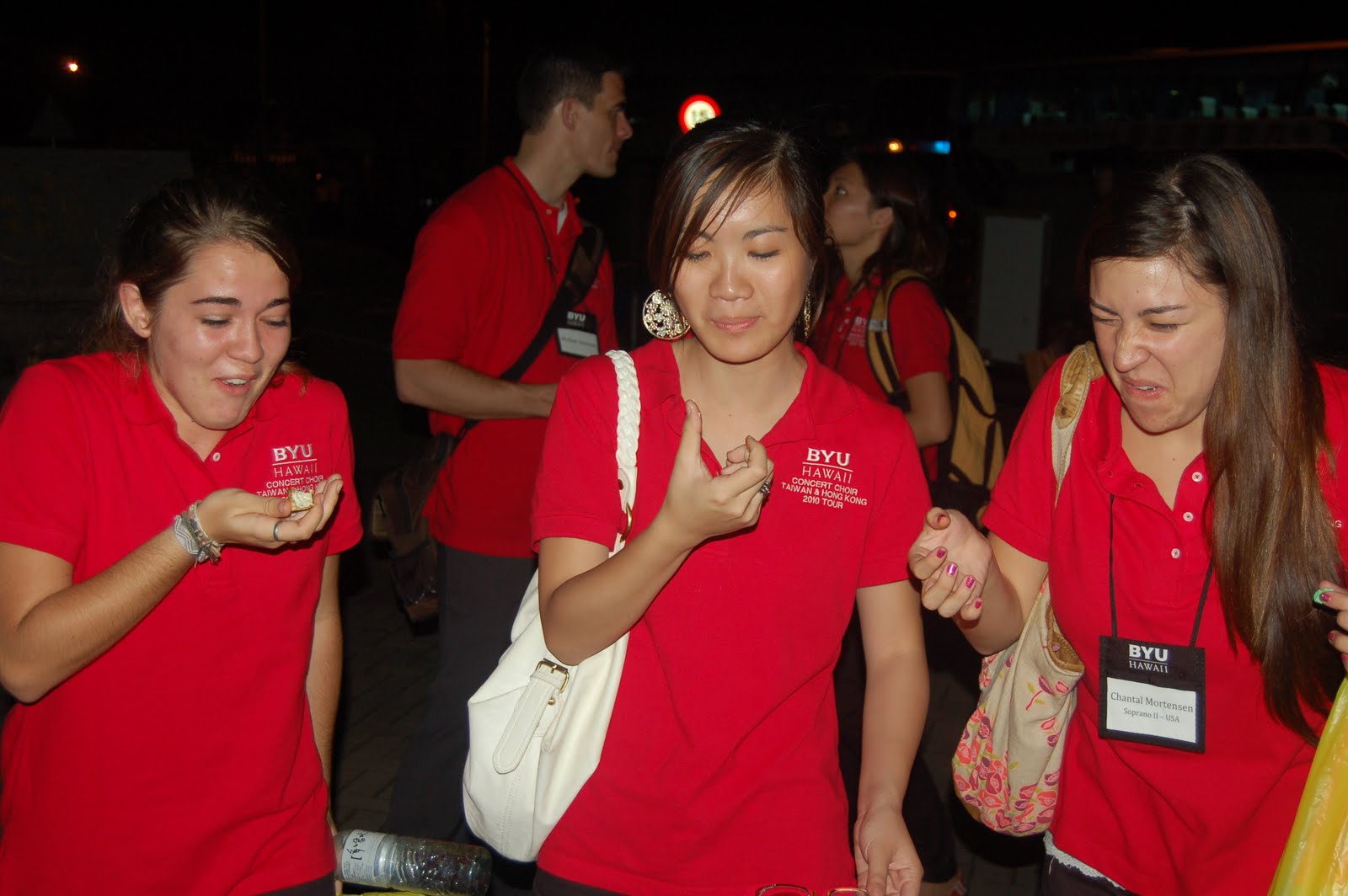
But I look at these people trying to eat it

eating stinky tofu-3

eating stinky tofu-4

and I know that this is a claim I will never, ever, EVER, test.

_________________________________

Hawker selling stinky tofu: http://www.wiredmash.com/wp-content/uploads/2012/11/shilin-7773.jpg
At a stinky tofu stall: http://1.bp.blogspot.com/_dcySoOkPBTo/TFGvcdR0XXI/AAAAAAAAALE/c3nWQkiA8IY/s1600/At_a_Stinky_Tofu_Stall.jpeg
Rotting garbage: http://www.cbc.ca/gfx/images/news/photos/2009/07/30/w-toronto-strike-cp-7088271.jpg
Landfill garbage: http://cdn2-b.examiner.com/sites/default/files/styles/image_content_width/hash/ad/d4/add4a119570bcadddc356d36f902ffd2.jpg?itok=ZrYbfrYD
Smelly feet: http://www.personal.psu.edu/afr3/blogs/siowfa12/smelly-feet.jpg
Scylla and Charybdis: http://cghub.com/forum/attachment.php?attachmentid=46899&d=1305261655
Public toilets: http://www.scmp.com/sites/default/files/styles/980w/public/2013/02/22/china-toilets_bej03_4751449.jpg?itok=ZVuaWtvO
Chinese supermarket: http://images.travelpod.com/tripwow/photos/ta-00a1-9098-55fc/walmart-smoked-meat-section-yueyang-china+1152_12839097171-tpfil02aw-10357.jpg
Smelly cheese: http://blu.stb.s-msn.com/i/9E/6C3E59DD72C77E4D299AA65F3C3A71.jpg
Eating stinky tofu-1: http://themightyafro.com/cms/wp-content/uploads/2009/06/stinky-medium.jpg
Eating stinky tofu-2: http://aningredientaday.files.wordpress.com/2012/07/stinky.jpg
Eating stinky tofu-3: http://2.bp.blogspot.com/_bvgGOKjWg6U/TFPYpiF-oPI/AAAAAAAACBo/F6guzJeZ8Xg/s1600/12+Stinky+Tofu5.JPG

SICILY THE LOVELY, SICILY THE DAMNED

Beijing, 12 June 2013

Two weeks ago, when I walked into the apartment in the evening, back from a business trip, my wife announced triumphantly that she had discovered a treasure trove on Youtube, shows from a series on Italian TV that we never even knew existed: Commissario Montalbano.

Readers will be forgiven if they look blank at this announcement. I will allow that Montalbano is not (yet) a household name. Yet my wife’s announcement filled me with great excitement. The detective stories written by the Sicilian-born writer Andrea Camilleri about Salvo Montalbano, Inspector of police in some modest township in western Sicily, have gripped me ever since I stumbled across one of them some six years ago. I read them in the original, which I must say is not easy. Already reading in Italian is slightly more difficult for me than reading in English, and Camilleri writes in an Italian which has been heavily saturated with Sicilian dialect. The first time I ventured into one of Camilleri’s books I was reading like a child of 5 for the first ten pages or so until I got the hang of it and could stop asking my wife every ten seconds what this word or that word meant. It’s still tough going, but the dialect really helps to drop you into Sicily.

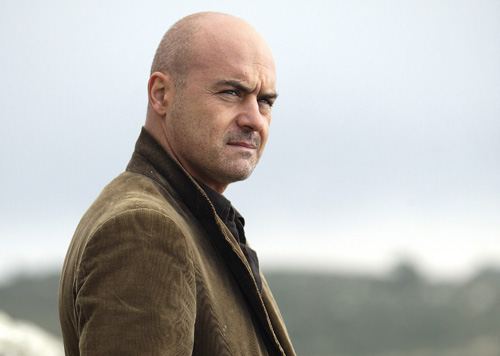
Well that evening, after dinner, we settled down on the couch, poured ourselves a glass of wine, opened Youtube, chose one of the shows, and started to watch. For me, there was an initial moment of discomfort; when you have read so many stories about the same characters you create an image of them in your mind’s eye, and I was finding it difficult to adjust to this being Commissario Montalbano:

Commissario-Montalbano

(too handsome!), this being his two main collaborators, Mimí and Fazio:

mimi-e-fazio

(too tall the first, too handsome the second), and this being the klutz of the office, Cattaré:

catarella

(too much of a clown)

(I also have a very distinct picture in my mind of Smiley, Le Carré’s master spy hero – the spitting image of my Latin teacher at school. But I digress)

Quickly, though, I was drawn into the stories and forgot to mentally tut-tut over the faces of the protagonists, and we have now eased into a nightly ritual of hauling out the computer after dinner, pouring ourselves a generous glass of wine, and watching a Montalbano.

I have always thought that this series of detective stories, inserted as they are so deeply into the Sicilian reality, would have little echo outside Italy. Imagine, then, our astonishment when a few days ago (this coincidence of dates must have some cosmic meaning …) my wife read out an article at breakfast from the Guardian newspaper commenting on the popularity of the Italian Montalbano TV series in the UK. The article also commented on the number of Brits doing Montalbano-themed visits to Sicily! I was gobsmacked. When we did a little bit of web surfing, we discovered that actually people from all over the world love Montalbano (much of this coming from comments left on TripAdvisor about Montalbano’s house, which some canny Sicilian has turned into a Bed and Breakfast).

Is it just that we all love a good yarn well told, and a good detective story has all the makings of a good yarn? Is it the Italianness of the character which attracts people? The relative exoticness of the locations? Something else?

As far as I’m concerned, my attachment to Montalbano goes far beyond the thrill of the detective story. It goes even beyond the characters, marvelous as they are. Through Salvo Montalbano, Camilleri depicts wonderfully well that spirit of contrariness which is very definitely part of the human landscape of southern Italy.  The TV show captures this trait of Montalbano’s nicely, as it does the subtle intelligence and cynical sense of humor – such Italian traits! – which Camilleri gives to his creation. And of course Camilleri injects wondrous descriptions of Sicilian food by making Montalbano a gourmet, something which we see a little of in the TV series by having Montalbano spend a fair amount of time sitting at restaurant tables (but we discovered a web-site which lovingly lists the recipes of all the dishes which Montalbano eats!). My only real disappointment with Montalbano’s TV character (apart from him not looking like I imagine he should) is that I haven’t yet seen Salvo Montalbano’s love of the written word (which is, of course, Camilleri’s). Camilleri has peppered the books with his hero’s musings on various works of literature. I love this about him since I also like to muse (muse to excess, my wife might add) on literature.

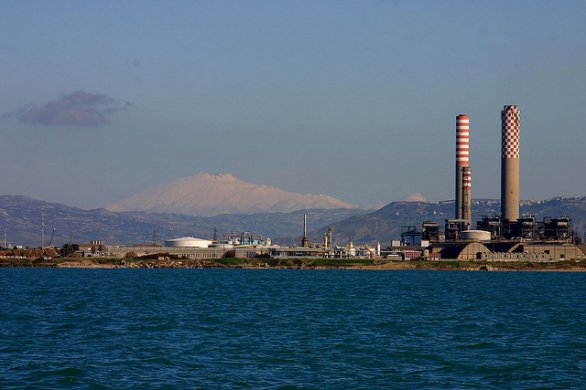
But what actually draws me most to these detective stories is the melancholy view of Sicily which permeates them. Sicily the beautiful, damned by the gods and abandoned to its fate. So much my feeling of the island! Camilleri shows it mostly by building in a constant, extensive, subliminal presence of the Mafia – truly like a cancer in the island’s body politic – and exposing the total corruption – moral more than monetary – of the island’s political class. I saw it instead through my work. Fate had it that I had to spend most of my time in Sicily in collapsing industrial zones, built in the 1950s and ’60s. These came into existence as part of a political discourse which claimed to be bringing modernity and wealth to the south of the country by implanting heavy industry there: oil refineries, petrochemicals, agro-chemicals, iron and steel, non-ferrous refining … you name it, there was one somewhere in the Mezzogiorno. It was a stupid idea right from the start. The south had neither the infrastructure nor the industrial culture to digest these huge industrial complexes dumped on them: “cathedrals in the desert”, the Italians aptly named them. This is a refinery in the south of Sicily, with Mt. Etna in the back:

raffineria gela

And the actual implementation of the government’s plans made it all so much worse. Corruption was rampant, with every level involved in planning and construction decisions taking its cut. Many companies only located in the south to take advantage of the government’s tax holidays; it made no economic sense for them otherwise. The moment the holidays were over they upped stakes and moved on, leaving the State to hold the baby. The Government couldn’t afford politically the loss of jobs, so many of these industries were nationalized, which made them even more inefficient and drew in even more corruption (and the Mafia). The Trade Unions fought to remove the only advantage the south had, cheaper labour than the north, by insisting on equal pay for equal work. And then came globalization, which was the kiss of death. It now made even less sense to have these kinds of industries in the south. So I was a small part of a larger strategy by the government to quietly sell off – often in fire sales – the miserable remnants of these industries. The Sicilians I spoke to were so angry, so bitter, so sad about the whole thing. Huge investments by the government, which would never come again, which could have raised the island out of its chronic poverty, but which had just been frittered away … Poor Sicily.

______________

Montalbano: http://www.blogtivvu.com/wp-content/uploads/2011/03/Commissario-Montalbano.jpg
Mimí and Fazio: http://static.televisionando.it/televisionando/fotogallery/625X0/66329/mimi-e-fazio-fidi-collaboratori-di-salvo-montalbano.jpg
Catarella: http://www.ilbrigante.it/wp-content/uploads/2010/04/angelo-russo_preview.jpg
Refinery in Gela: http://static.blogo.it/ecoblog/IverticidellaRaffineriadiGelaSpaindagatiperomissionedicautelecontrodisastri.jpg

GONE FISHING

Beijing, 8 June 2013

Readers of my posts will no doubt have noticed that I often refer to a piece of canal which runs close by our apartment and along which I walk every day as I go to and from the office. I like my piece of canal, especially during the summer when along the banks the weeping willows have leaved and the water irises stand tall, while the lotuses on the artificial island in the middle of the stream are unfurling.

irises May 2013 004

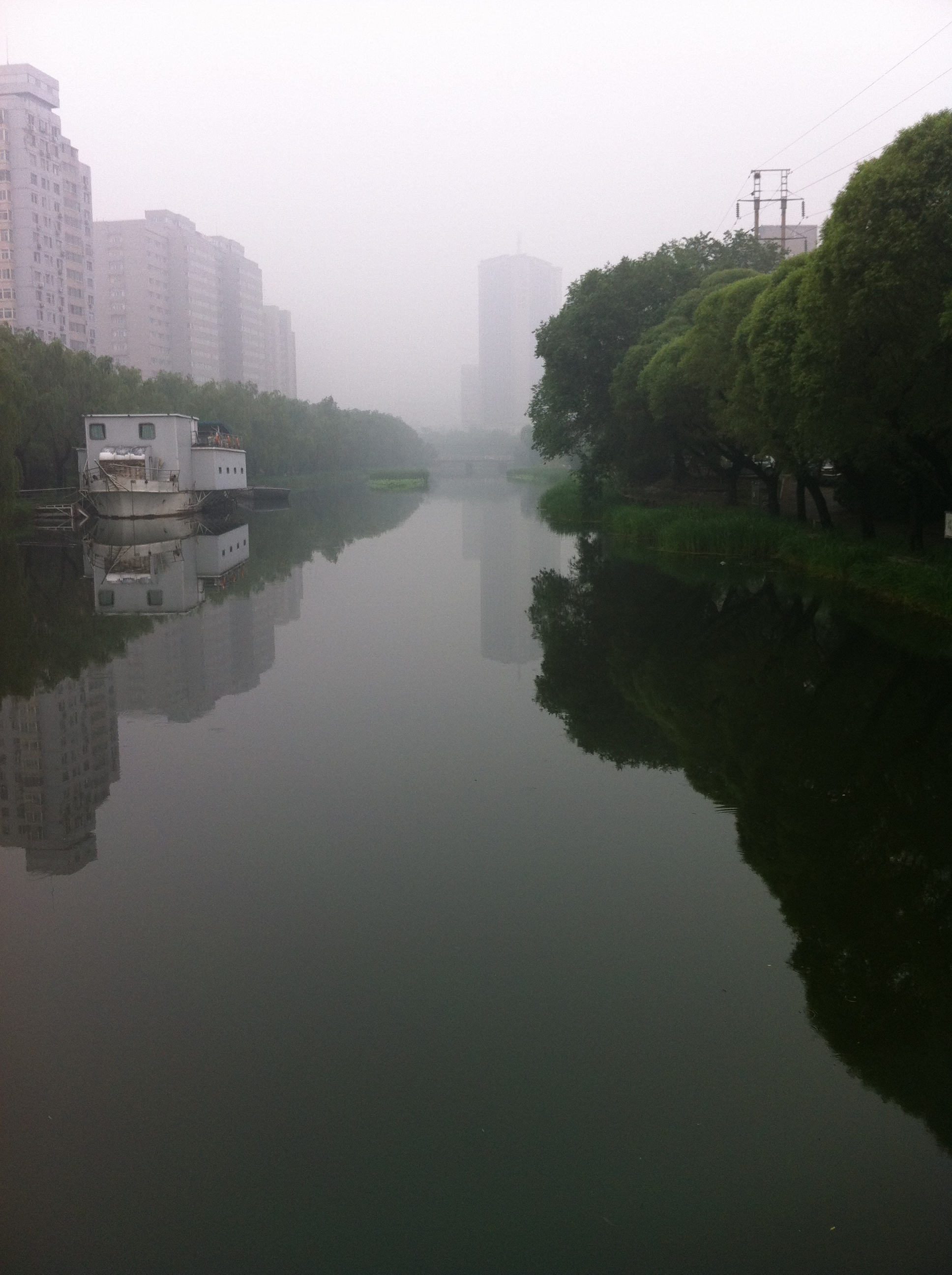
Closing my eyes a little and squinting a bit, I could almost imagine that I am on a placid river running through a quiet wooded landscape rather than in the middle of a highly urbanized setting. This view of the canal today, where to a great degree the fog blots out the buildings,  gives an idea of what I mean.

misty canal 002

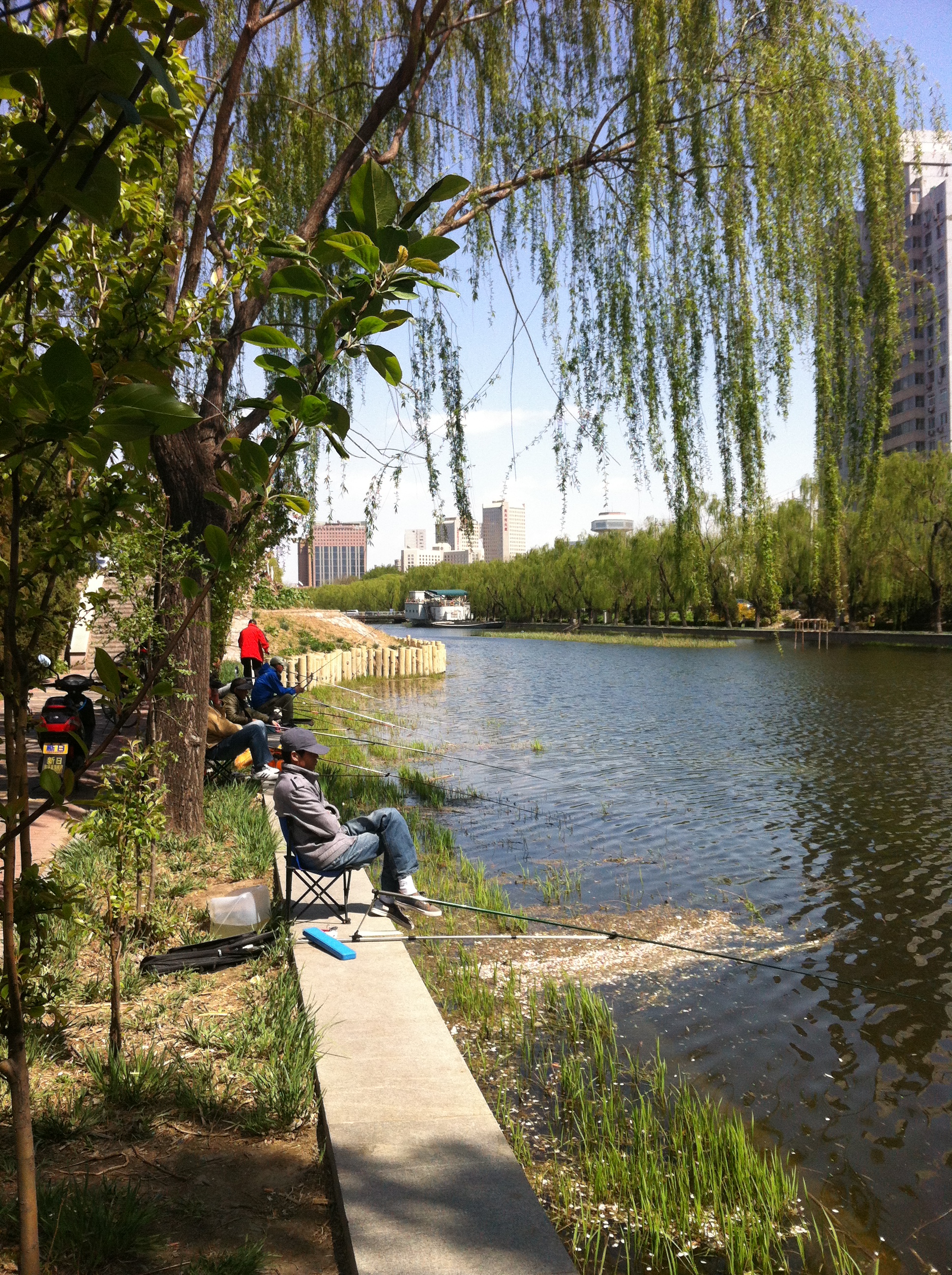
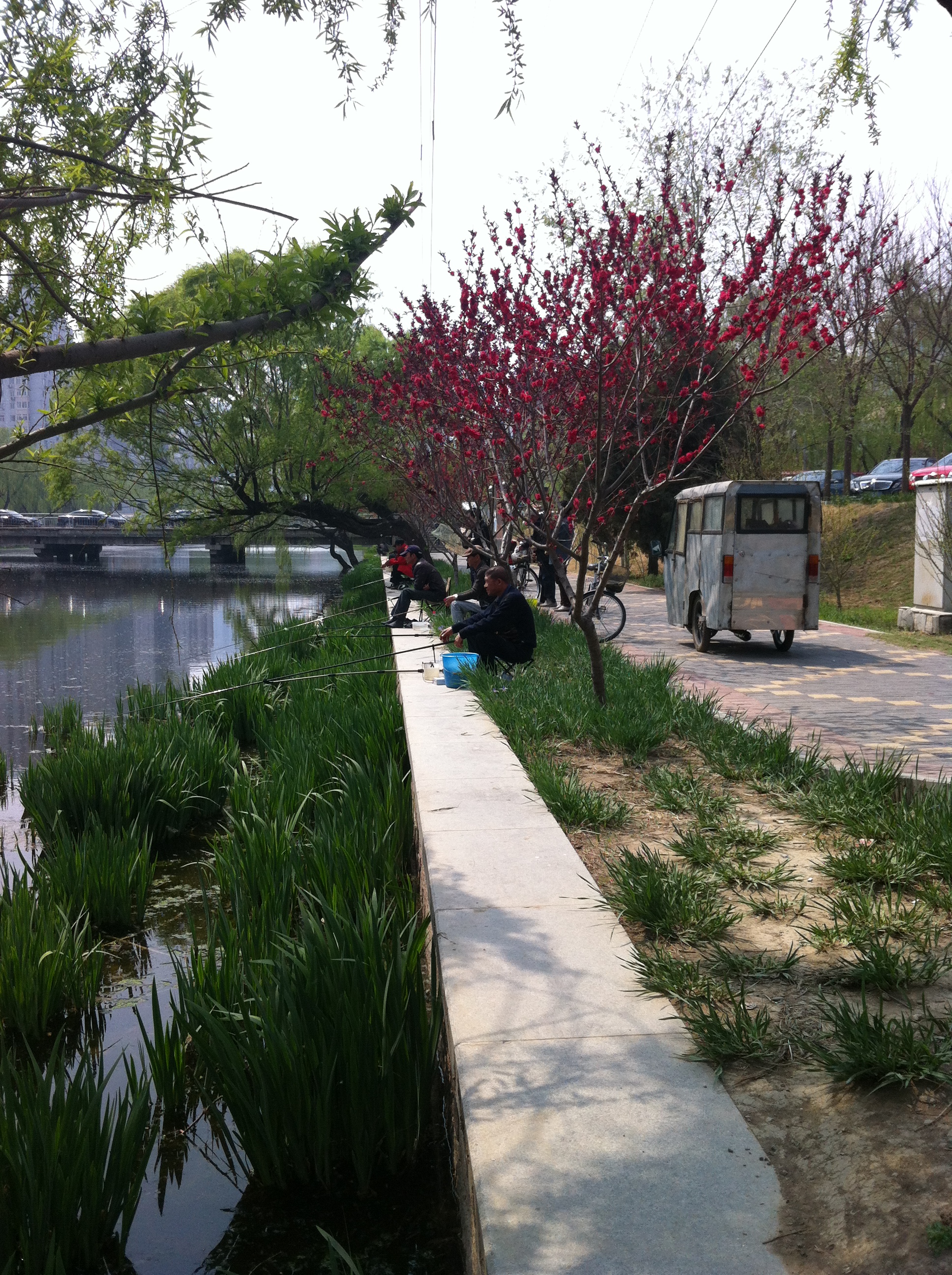
Fishermen also like it. The moment the ice melts and the trees start flowering, they filter out of the surrounding urban jungle and start settling down along the banks.

fishermen 002

fishermen 003

They sport what look to my eyes like state-of-the-art fishing rods (no stick, string, and safety pin for them), nets to hold their haul, and various pieces of fishing tackle.

fishermen 013

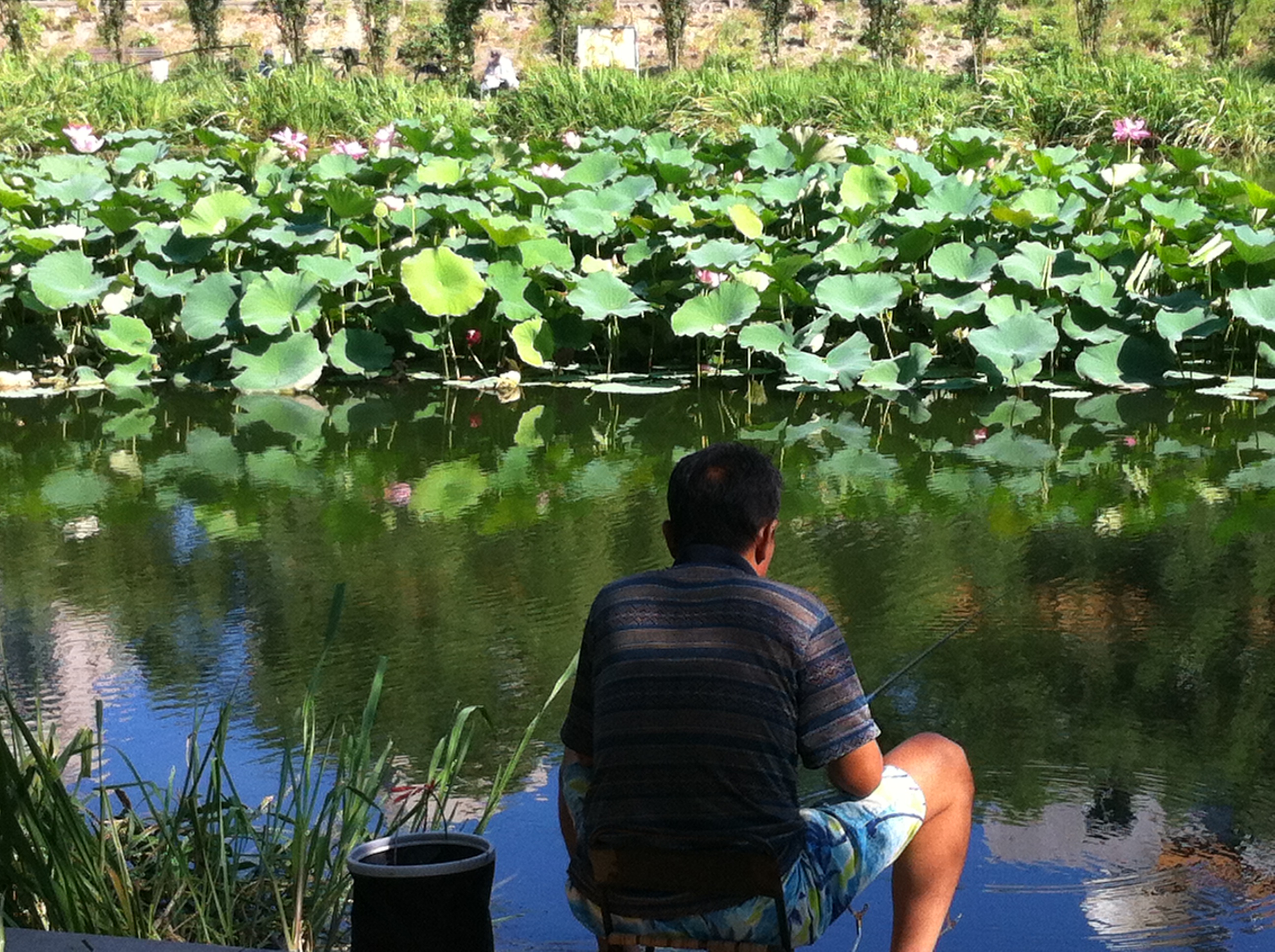
And there they sit all summer and well into the autumn, staring out into the middle distance, waiting for a nibble on the end of their lines.

fishermen 010

fishermen 011

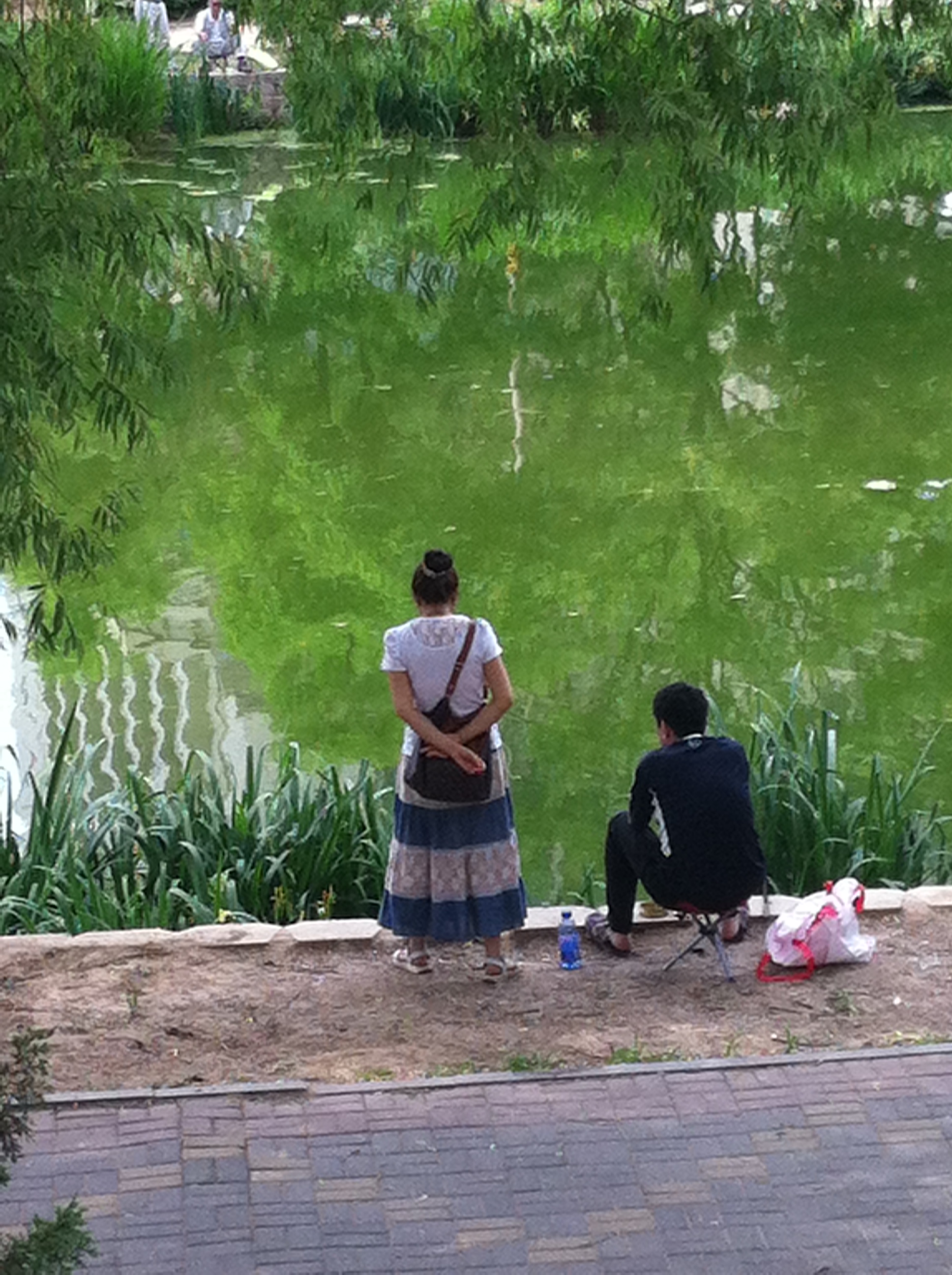
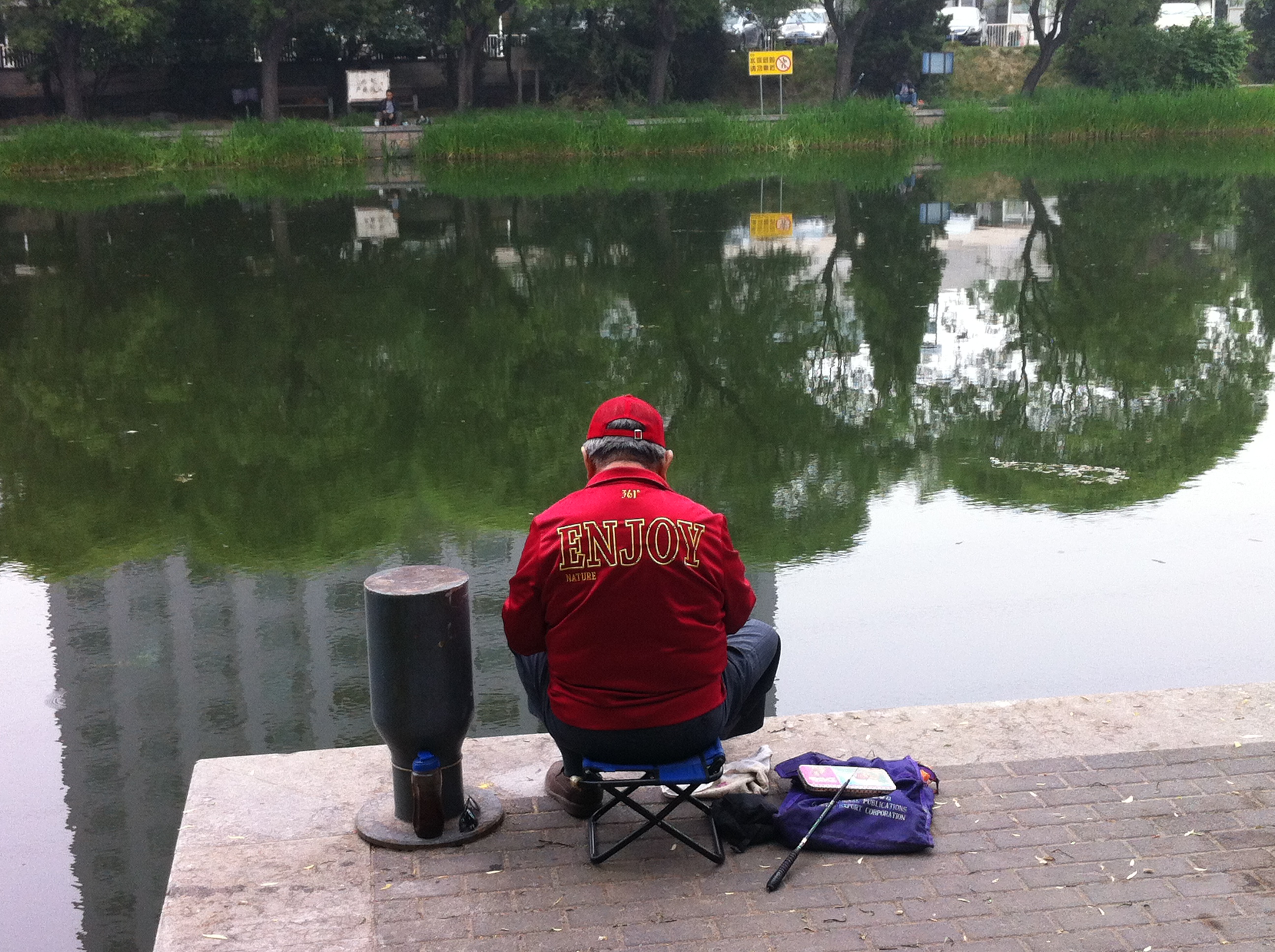
What are they thinking about, I always wonder, as I walk briskly by aiming to arrive in the office on time. Really, what do fishermen think about all day?  This has always been a mystery to me. And what are these particular fishermen catching, for Lord’s sake? The few times I’ve seen a fish on the end of their lines, they were small and malingering. I fervently hope they don’t take them home to the wife to cook.  I should clarify that as my pictures show the overwhelming majority of my fisherpersons are men. I got quite excited one morning when I spotted a woman, and I guess this other woman I saw a week or so ago thought it was better to be with her man than alone at home.

fishermen 009

I am no fisherman; I suppose that much is clear. In fact, I have only ever fished once in my life. I was 14 going 15, and I was on a canoe trip on Lake of the Woods in Canada.

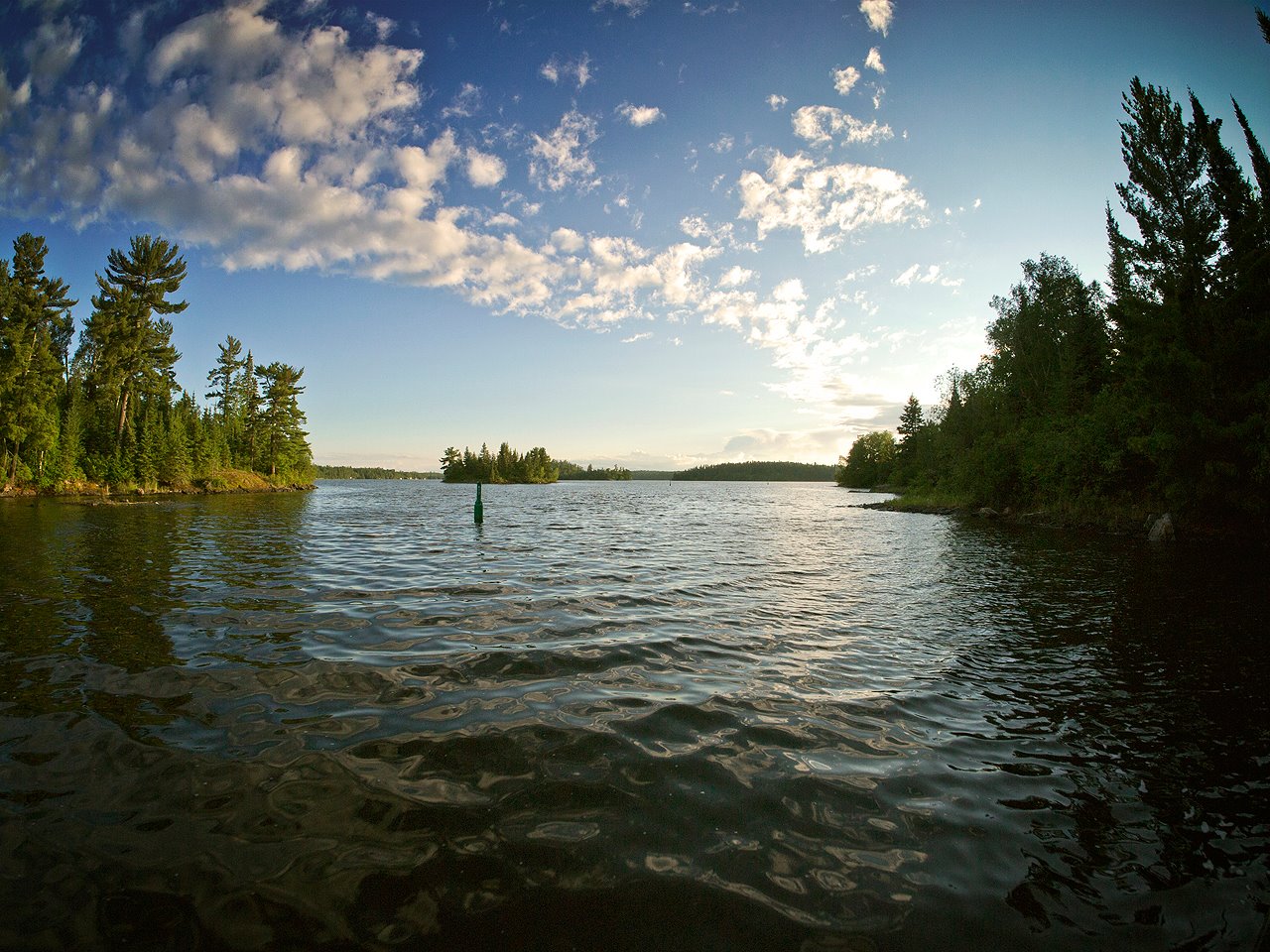
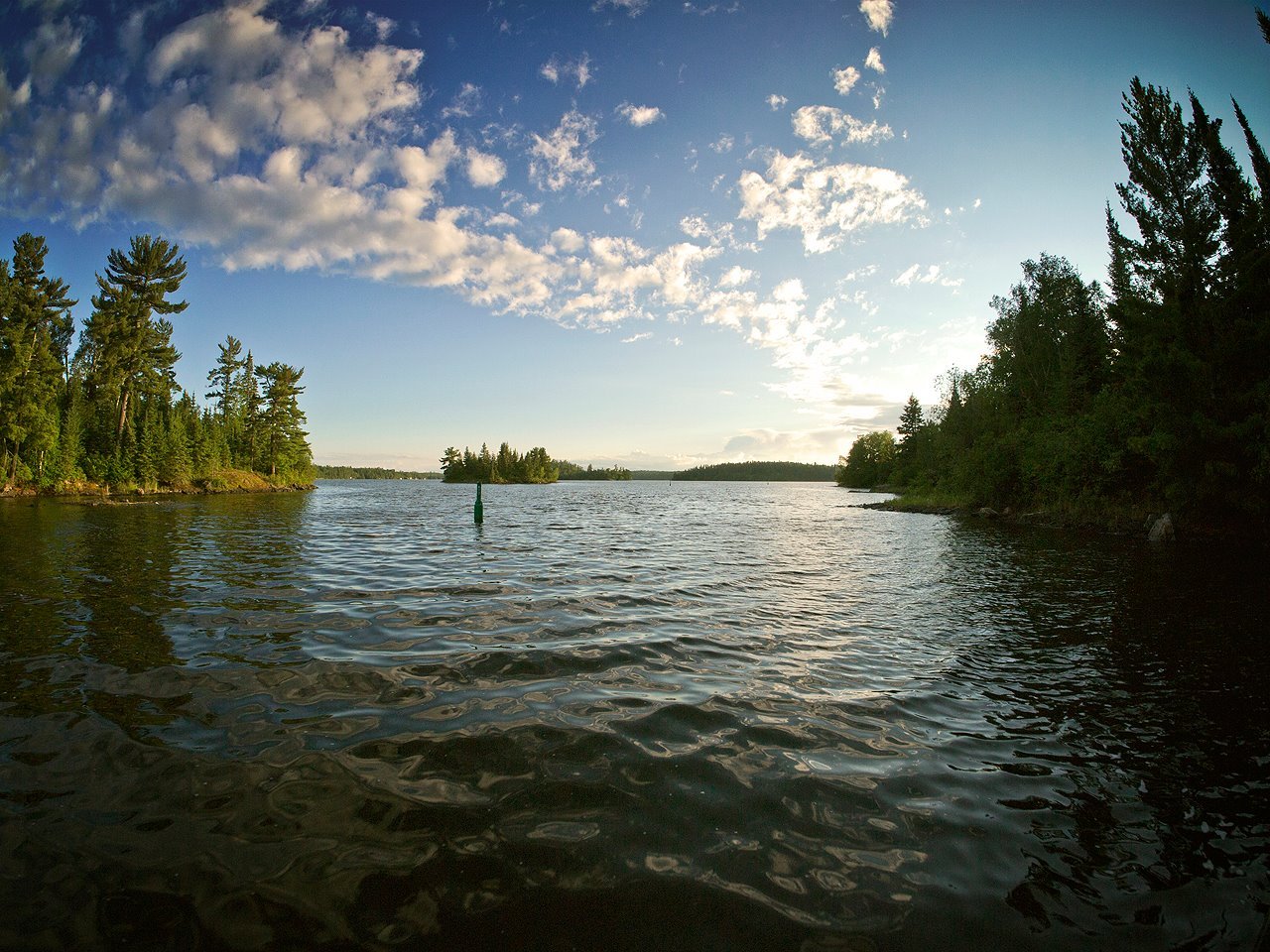
lake of the woods

I remember the date very well; it was when Apollo 11 landed on the moon. Me and my travel companion, Steve, must have been the only people in the whole of North America not sitting in front of a TV that day. After a hard morning’s paddling and looking over some Native American rock paintings,

rock paintings

Steve decided to give me a taste of the sport. He hauled out his fishing rod, set me up, and gave me a short lesson in its use. We then sat there for a while – not long, thank goodness – until I got a bite. My fish fought a bit, but after a while I hauled it in. It was a large pike, or so I have thought all these years. It certainly looked like one. But my internet surfing for this posting has convinced me that I caught a muskellunge (or muskie to the experienced fisherman – you see how quickly I catch on to the jargon …), which actually does belong to the pike family.  I suppose my catch was no more than a metre long but in my mind’s eye it has grown over the years to an enormous length. Steve took a photo, with me holding the muskie a trifle nervously but still sporting a smug smile on my face. Where is that photo? Sitting in a shoe box under a bed somewhere, perhaps, or now that both my parents are dead it is probably buried in a landfill in some foreign land. For all intents and purposes, gone. But here is a photo, which seems very similar to mine in my mind’s eye, except that we were sitting in a canoe while this gentleman is standing in a rather swank boat

Muskie on Lake of the Woods

Well, I suppose that will be the only time I ever sit behind a rod staring into the middle distance thinking about … what?

fishermen 008

___________________

Lake of the woods: http://25.media.tumblr.com/tumblr_m5tjkqKB7h1r1ghhbo1_1280.jpg
rock painting: http://www.canoenorthwestontario.ca/sscimages/history/IMG_4260_1.jpg
Muskie: http://harrishillresort.com/files/images/49%20inch%20Muskie%20on%20Lake%20of%20the%20Woods.JPG
the rest: mine

SQUATTING AND CHAIRS

2 June 2013

On our last visit to Hong Kong, my wife and I wandered into an antiques shop to poke around among the offerings. The owner, an ethnic Chinese, struck up a conversation with us. After discovering that I came from the UK, she lit up and became positively garrulous. It turned out that her son was completing a Masters at Oxford University, and she described, lovingly and in great detail, a trip she had recently made to the UK to see him. It soon became clear that she regretted Hong Kong no longer being British. In short order, her misty-eyed regrets over the UK leaving turned into a rant against the “Mainlanders”, Chinese from mainland China. This is a common topic of converstation in Hong Kong, where many of its ethnically Chinese residents determinedly stress that they are different from the Mainlanders. This determination is becoming fiercer as Mainlanders come in ever larger numbers to Hong Kong to gawp, buy, and generally get in the way. For this lady, there were two things which symbolized all the differences between Her and Them. She proceeded to tick them off on her fingers with disdain: “they spit, and they squat”.

I think we can all agree that the generalized Chinese habit of spitting is really quite revolting, particularly when it is preceded by a noisy hawking of the throat and – most disgusting of all – a blowing of the nose without a handkerchief. And it is true to say that you see very little of this in Hong Kong.

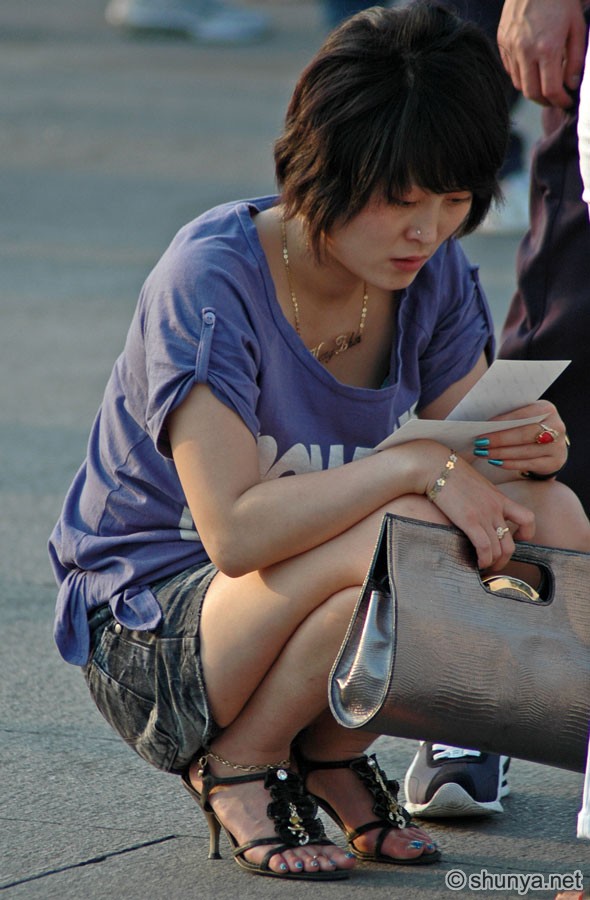
Our interlocutor’s hostility to the prevalent Chinese habit of squatting is more interesting. Everywhere in China – on pavements, in malls, at bus stops, in railway stations; anywhere, really, where people stand and wait – you will see people who have dropped down onto their haunches for a rest

squatting men beijing-wangfujing

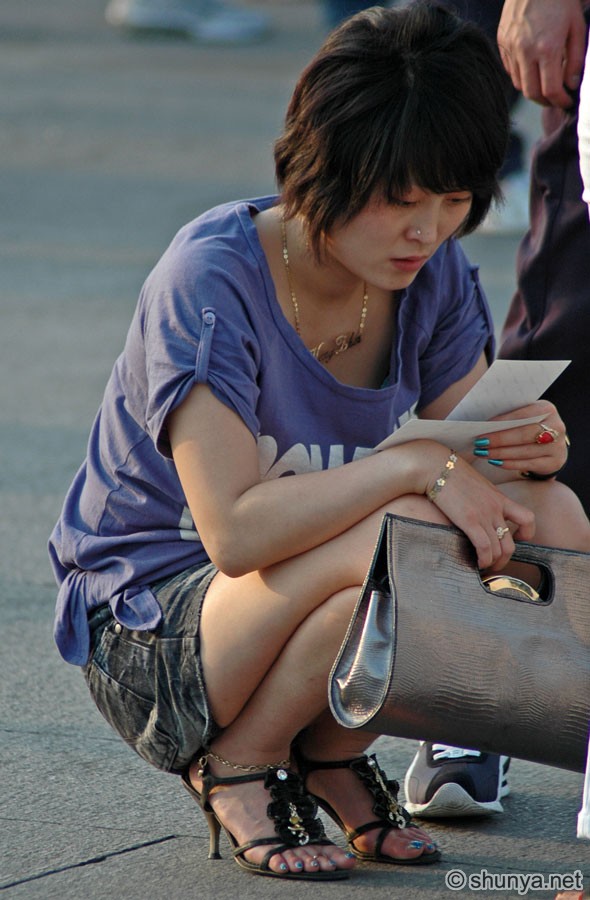
reading, more often than not these days, their text messages.

squatting woman-5

I have to say that I also find this habit disquieting. It seems such a … humiliating posture, is the only way I can describe it. Every time I see people squatting, I scold them mentally: “Get up, get up! You are not a slave!”

And yet … when you think about it, in a world where chairs didn’t exist, which must have been 99.9% of the time that we have been human beings, it was really quite natural for us to drop down  onto our haunches when we were tired of standing and when there wasn’t a nice log or large stone to sit on. So I’ve come to the conclusion that I think the way I do about squatting because of the chair.

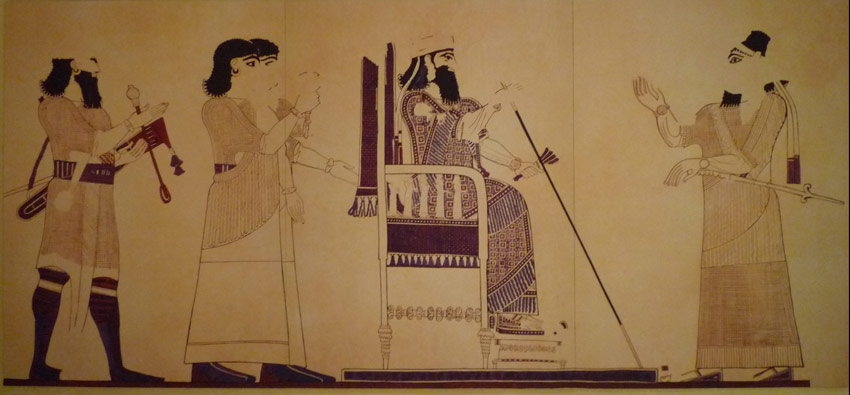
The chair, or rather the throne, was obviously an instrument used by Kings and Emperors, from the earliest times, to overawe their subjects. Here we have an Assyrian emperor lording it over some subject of his

throne-assyrian throne

And the temple of Abu Simbel in Egypt must surely be the epitome of rulers lording it over their lands while sitting on thrones

throne-abu simbel

Shelley’s poem Ozymandias, which I quoted in an earlier post, comes to mind when I look at these statues.

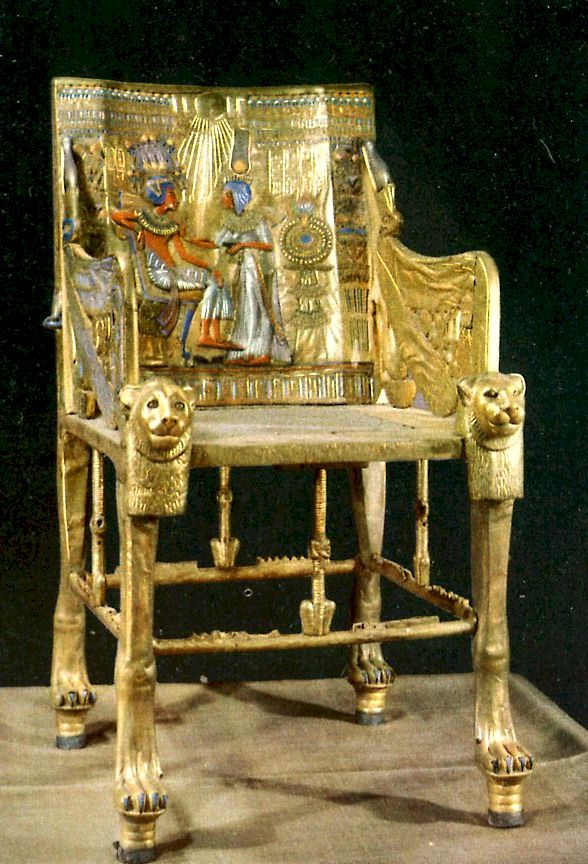
Egypt’s dry desert air, in which buried things do not rot, allows us to contemplate today a real Egyptian throne, this one from King Tut’s tomb (“Tutankhamun, King of Upper and Lower Egypt, Lord of the forms of Re, Strong bull, Perfect of birth, He whose beneficent laws pacify the two lands, He who wears the crowns, who satisfies the gods” to you, mere mortal, and don’t you forget it …):

throne-king tut-1

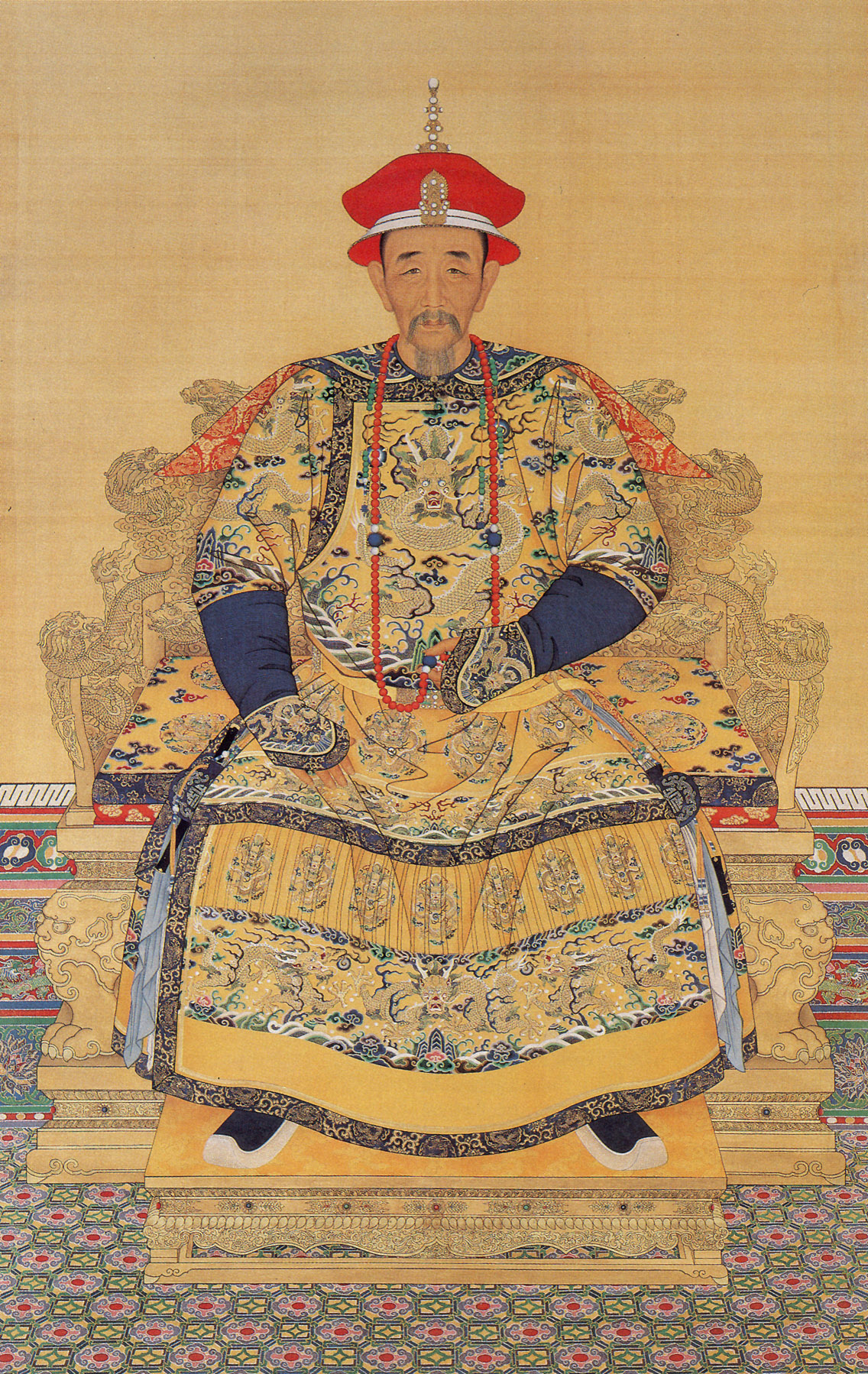
Even in more modern times have thrones played their part in elevating the splendour of the sitter, as in this case of the Qing emperor Kangxi

throne-Qing Emperor Kangxi

And of course Chinese emperors, along with many copy-cat Asian emperors, liked to have their subjects not just squat in front of them but to really debase themselves by kowtowing:

kowtowing before the emperor

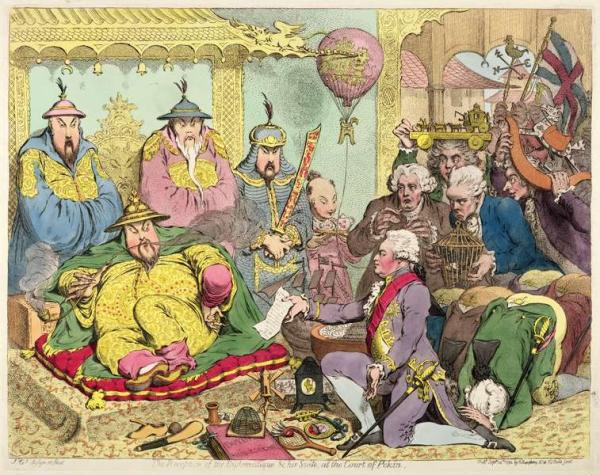
Which led to the famous diplomatic incident of 1793, when, Lord Macartney, King George III’s envoy to the Chinese Emperor, refused to kowtow but did accept to get down on one knee as he would have before his King:

kowtowing before the emperor-English ambassador

Even more recently, thrones have played their part to prop up monarchies. The last Shah of Iran, for instance, was fond of using the Naderi throne to impart some sheen to his tawdry reign.

throne-peacock throne-Shah in front

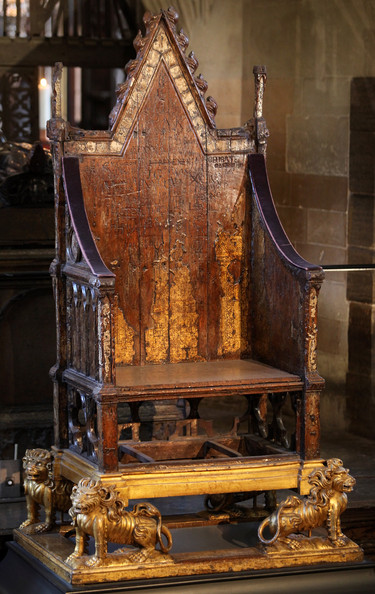
And of course we in the UK have our venerable King Edward’s Chair in which all English, and then British, monarchs (bar two) have been crowned since 1308 – by the way, King Edward I commissioned the chair to house the Stone of Scone after he stole it (a.k.a. war booty) from the Scots.

throne-king edwards

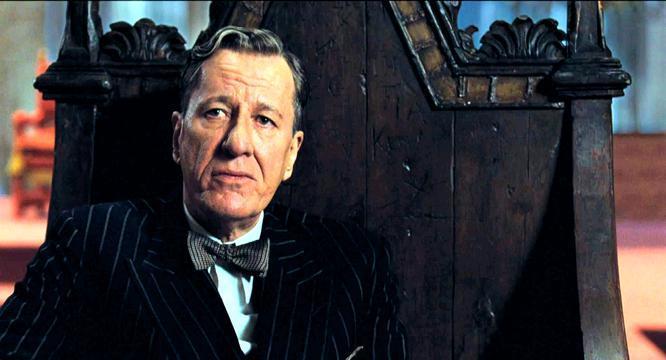
Those of us who have the seen the film The King’s Speech will recognize the throne, which appears at some point in the story and whose portentous humbug is mercifully taken down a peg or two by the egalitarian Australian speech therapist Lionel Logue (played by that wonderful actor Geoffrey Rush), who slouches around in it provoking a burst of monarchist anger from King George VI:

throne-king edwards-Geoffrey Rush in it

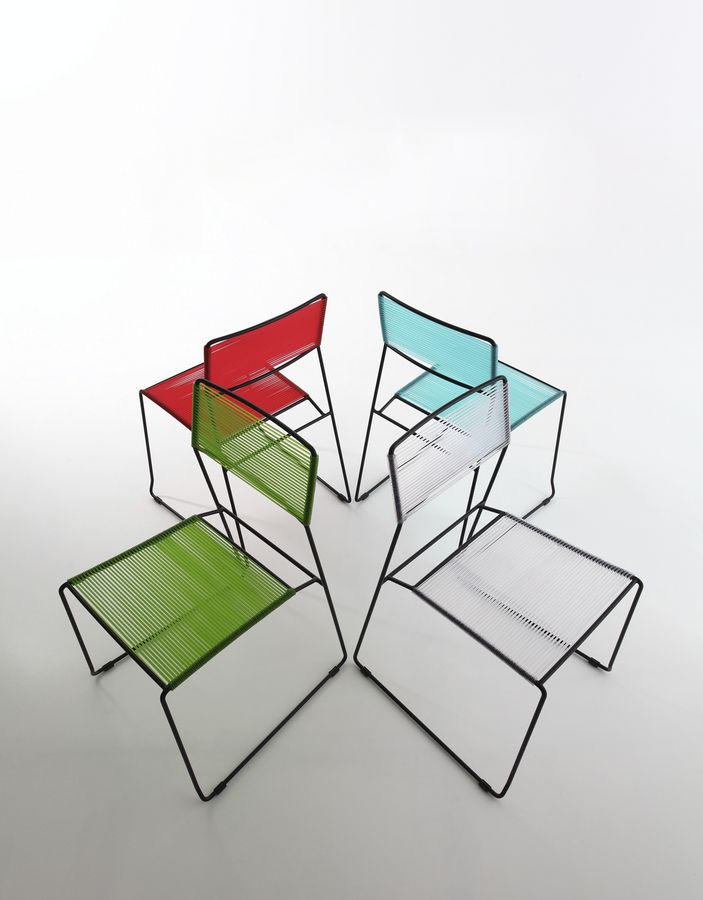
Luckily, Lionel Logue’s egalitarian comments about the chair in question was preceded a century or so ago (not more, I suspect) by a move to make the chair a product of mass consumption, which meant that I (but probably not the Chinese of my generation) have spent my whole life sitting on chairs and not squatting on the ground. I try to remember the chairs of my childhood but fail. A chair’s a chair, some of you might say, it’s a functional object. True, but even functionality for the masses can be beautiful. It took my wife to introduce me to Italian furniture design and to make me realize that a chair could be both beautiful and functional. The moment we could – in the early 1980s – we bought ourselves a set of dining chairs. My wife has scoured the internet for photos of the model of our chairs but has found none. This photo of the spaghetti chair is the closest I can find:

chair-sled based-spaghetti

I designed and put together a dining room table to go with our chairs, the only thing I have ever designed in my life. All slumber in a warehouse in Vienna, awaiting our return to Europe.

Later, when we were living in New York, we came across Shaker chairs (and other furniture) during a weekend trip in upstate New York which took us to an old Shaker colony. Beautiful things.

chair-shaker-2

We would have bought some reproductions if we hadn’t already had our chairs – and if they hadn’t been so expensive.

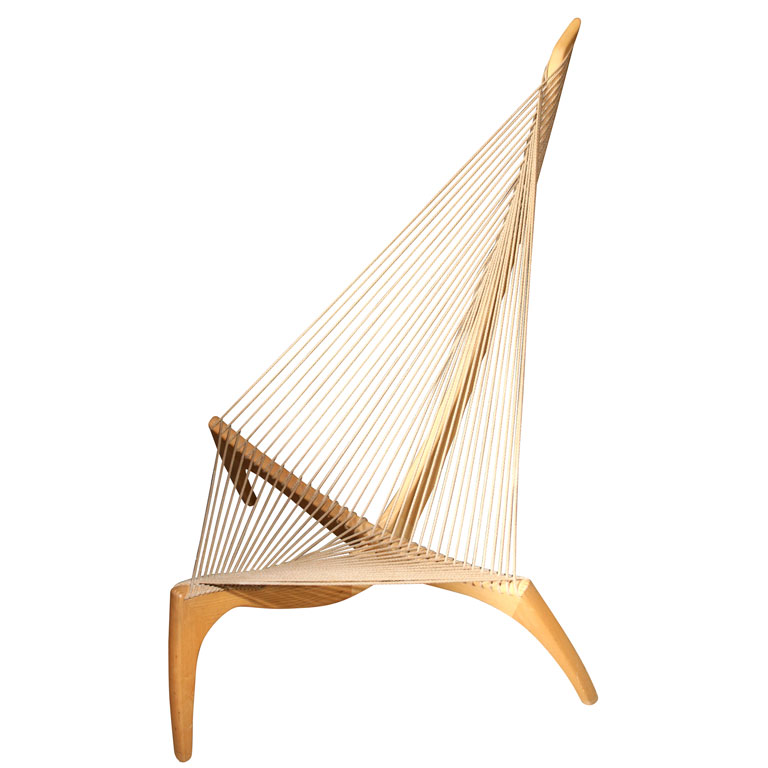
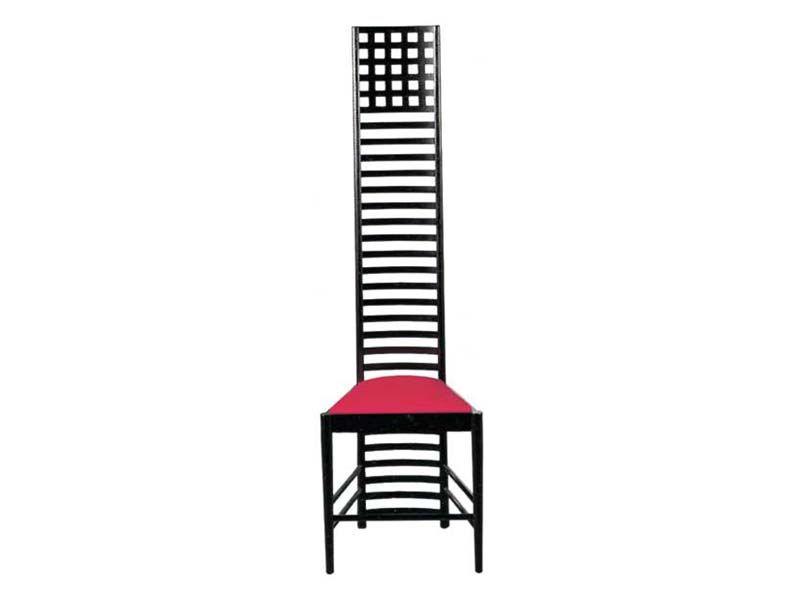
Over the years, we’ve seen some “trophy” chairs (chairs which don’t just sit quietly around a dining room table) which we wouldn’t have minded buying, if the price had been right (and if we’d had the space).

The Danish harp chair:

chair-danish harp chair

The Mondrian chair (this would have been more my choice than my wife’s):

Chair-Mondrian chair

Chairs designed by the Glaswegian architect, designer and artist Charles Mackintosh (again, my choice I think):

chair-Mackintosh chair

Here in China, chairs from the Ming period:

chair-ming-1

The reader will have noted by now that our tastes in chairs (indeed, all furniture) lean towards the simple and clean line …

I suppose that with consumption on the rise in China, the habit of squatting will disappear, as will – I fervently hope and pray – the habit of spitting.  In the meantime, I will continue to mentally exhort my fellow Beijingers to stand up straight and proud every time I see them squatting on the ground.

_________________________

Squatting men: http://mattchalmighty.files.wordpress.com/2012/10/beijing-wangfujing-men-squatting-large.jpg
Squatting woman: http://www.shunya.net/Pictures/China/Beijing/BeijingWoman.jpg
Assyrian throne: http://www.ucl.ac.uk/sargon/images/essentials/kings/sh5-til-barsip-large.jpg
Abu Simbel: http://famouswonders.com/wp-content/uploads/2009/04/abu-simbel.jpg
King Tut throne: http://comeseeegypt.com/images/tutthrone.jpg
Qing Emperor Kangxi: http://upload.wikimedia.org/wikipedia/en/1/12/China,Qing,Emperor,Kangxi,Painting,Color.jpg
Kowtowing before the emperor: http://www.mitchellteachers.org/WorldHistory/AncientChinaCurriculum/Images/legendaryemperors/ImperialRobesOfficialsPayingRespect_large.jpg
English ambassador Lord Macartney before the Emperor: http://images.printsplace.co.uk/Content/Images/Products/92648/89219/Reception_of_the_Diplomatique_and_his_Suite_at_the_Court_of_Pekin__c_1793__1.jpg
Shah of Iran in front of peacock throne: http://filelibrary.myaasite.com/Content/26/26343/29921747.jpg
King Edward’s Chair: http://www2.pictures.zimbio.com/gi/Visitors+Look+Coronation+Chair+Westminster+Wk0GK7SFdXnl.jpg
Geoffrey Rush sitting in King Edward’s Chair: http://v020o.popscreen.com/eGhxd3hrMTI=_o_st-edwards-chair.jpg
Spaghetti chair with sled base: http://img.archiexpo.com/images_ae/photo-g/commercial-contemporary-sled-base-stacking-chair-50648-3267845.jpg
Shaker chair: http://www.jkrantiques.com/_images//ShakerCounterChairWeb.jpg
Danish harp chair: http://shard1.1stdibs.us.com//archives/upload/1stdibsA/071607_sb/arensojoldHD/19/xHudJuly07_398.jpg
Mondrian chair: http://www.dorotheum.com/fileadmin/user_upload/bilder/Presse/Gallery_of_Highlights/Rietveldstuhl.jpg
Mackintosh chair: http://1.bp.blogspot.com/-_ZjHHv_Nzls/UOP0yApjC4I/AAAAAAAAAI0/yTahn5EI7q0/s1600/1.Charles_Rennie_Mackintosh_Hillhouse_Chair_rfd.jpg
Ming chair: http://www.easterncurio.com/easten%20curio/Afurniture/ItemForOn-Selling/A1S152101.jpg

HOLLYHOCKS BY THE WASTEWATER TREATMENT PLANT

30 May 2013

I’m in Zhenjiang at the moment. Readers will be forgiven if they have no idea where that is. Neither did I till I had to come here and decided to look it up on a map. It’s on the Yangtze River, between Nanjing and Shanghai. As far as I can make out, its main claim to historical fame is that it lies at the point of juncture of the Yangtze and the Grand Canal as the latter wends its way northwards to Beijing from Hangzhou.

But I am not here to visit the city’s historic sites, of which – as in most places in China – there are very few left and what there is left is being turned into a made-over tourist spot. I am here to discuss with the management of the largest industrial zones how we could assist them to make their factories greener. As part of the discussions, we were taken to visit a couple of factories which had already taken some steps to reduce their environmental impacts. One of them was a huge – ginormous – paper factory. We were first taken to see the paper-making line, which was absolutely gigantic – the biggest in the world, we were proudly informed. Just to give the reader an idea, the rolls of paper which come off the end of the line for further processing each weigh 130 tonnes.

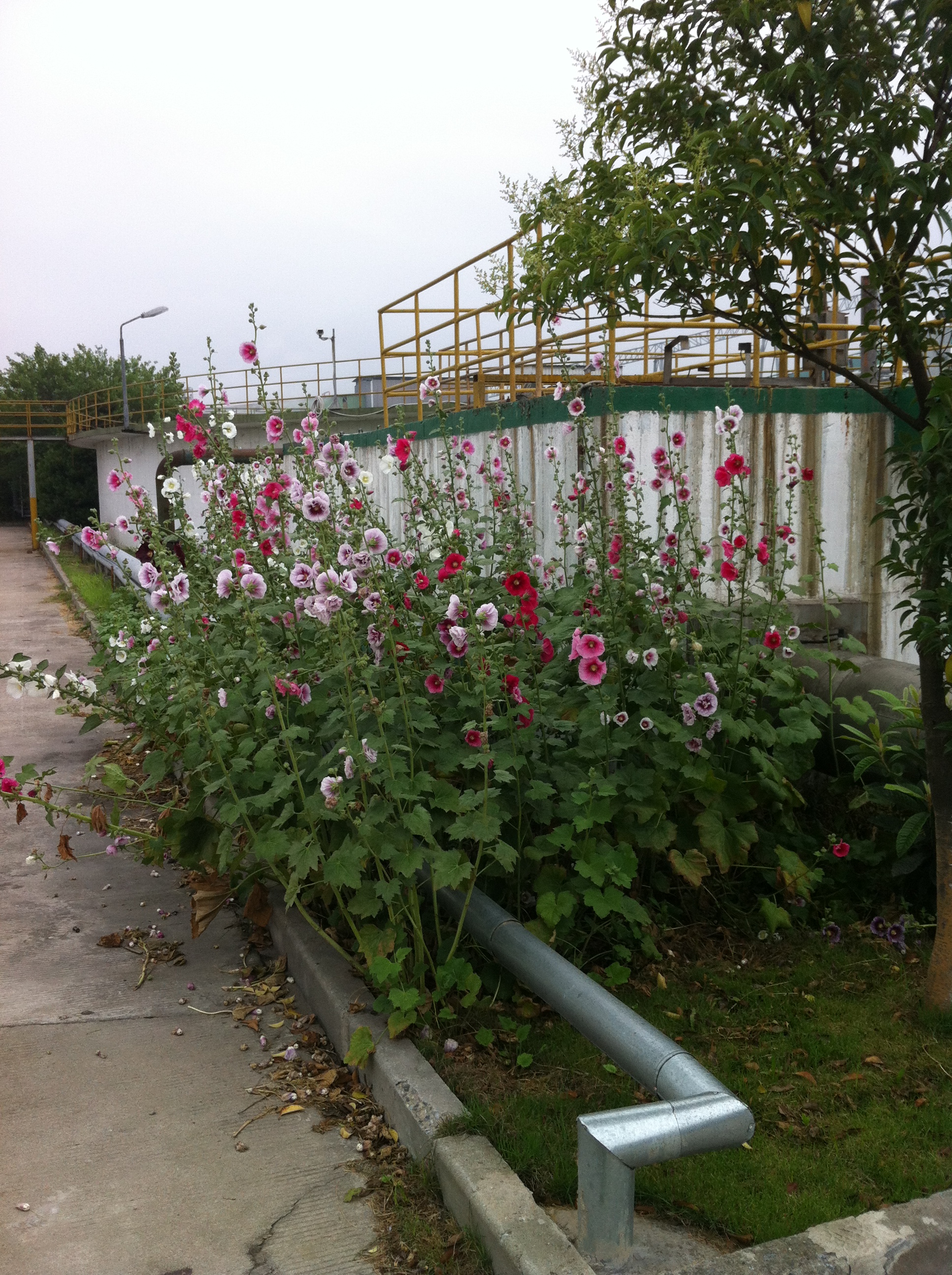
After trying to take in this mind-boggling piece of equipment, we were whisked off to the wastewater treatment plant, part of which has a reverse osmosis line – as part of their greening efforts, the factory recycles much of its wastewater after thoroughly cleaning it and then polishing it with reverse osmosis. We were invited to taste the water coming out of the line, which I did, gingerly, half expecting to keel over. But I survived, and no doubt exhilarated by this close brush with death, I found these hollyhocks, which greeted us at the exit of the building, quite magnificent (you will notice part of the wastewater treatment plant behind them).

Zhjenjiang

As I exclaimed over them and took photos, a French consultant who was with us asked me what they were called in English. I told him and then asked for their name in French. Rose trémière, he replied. Rose trémière … We stood there admiring the flowers and wondering idly where the name came from. Later that evening, I looked it up. It’s a corruption of the name Rose d’Outremer, the rose from overseas. It seems that it was imported into Europe from the Middle East some time in the 1500s, perhaps after the last Crusades. But at least part of its DNA comes from China, where there are paintings of the flower from the 9th Century. As for the English name, it’s from Middle English holihoc:  holi holy + hoc mallow.

You learn something new every day.

PS:

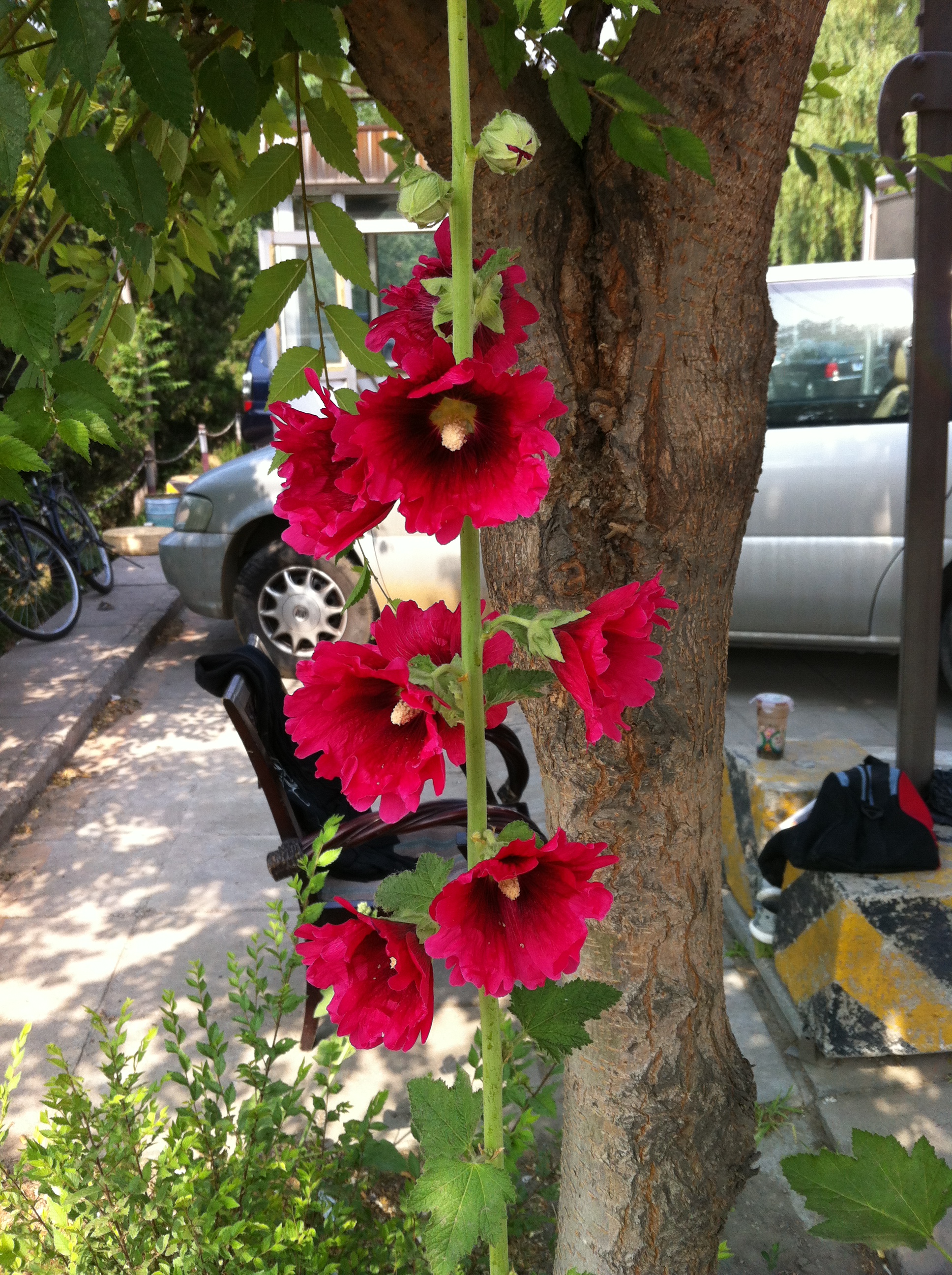
The day after I posted this, and back in Beijing, I came across this lone hollyhock on my way to work. It was sheltering under a tree next to my piece of canal. Fate.

hollyhocks-beijing

A CELEBRATION OF THE HUMAN FACE

Beijing, 25 May 2013

Many, many (many…) years ago, as a fresh-faced engineering undergraduate, I was introduced to the concept of the Random Walk. My memory is hazy now, but as I recall it had something to do with a way of modelling the behaviour of molecules in a gas. The idea was that molecules could be considered as little ping pong balls taking random paths as they whizzed around colliding with each other chaotically.

If I bring this up, it is because during the visit which my wife and I made two weeks ago to the Metropolitan Museum in New York I rather felt that we had unwittingly gone on a random walk of our own. I should explain that whenever we are in New York we always try to slip in a visit to the Met. It is really the most wonderful museum, with an amazingly extensive collection. We normally just go along and wander around in a rather purposeless way, but this time I decided to be slightly more ordered about it. I checked on the museum’s web site to see what exhibitions were on and drew up a list of those which sounded interesting. My list included, in no particular order, “Impressionism, Fashion, and Modernity”, “The Roof Garden Commission: Imran Qureshi”, “PUNK: Chaos to Couture”, “Photography and the American Civil War”, “African Art, New York, and the Avant-Garde”, “Street”, “Cambodian Rattan: The Sculptures of Sopheap Pich”, “Objects from the Kharga Oasis”, “Plain or Fancy? Restraint and Exuberance in the Decorative Arts”. A rich diversity, I think you will agree. Once arrived, we decided to visit these various exhibitions as the fancy took us, interspersed by two visits to the cafeteria. The result was that we criss-crossed the museum quite randomly, finding ourselves walking unwittingly through many different parts of the permanent collections and bumping into admirable pieces along the way.

So it was that at one moment early on in our random walk we found ourselves in the Cypriot Antiquities section – not a section I would normally have ever thought of visiting. And there, I suddenly found myself nose to nose with this statue.

faces at the met 001

He was someone from the 4th Century BC, I learned from the label, but my immediate thought was “Good Lord, it could be one of my children’s friends”, and suddenly the 24 centuries which separated us disappeared. This was no longer a piece of art to be studied respectfully but someone I could have known and passed the time of day with. In some muddled way, I decided there and then that as we walked the various corridors of the museum, I would take photos of some of the more interesting faces we came across, as a testimony to all that humanity lying just below the surface of paint and wood and stone and paper that surrounded us. Here is my resulting photo album, shown in the random order that I came across them:

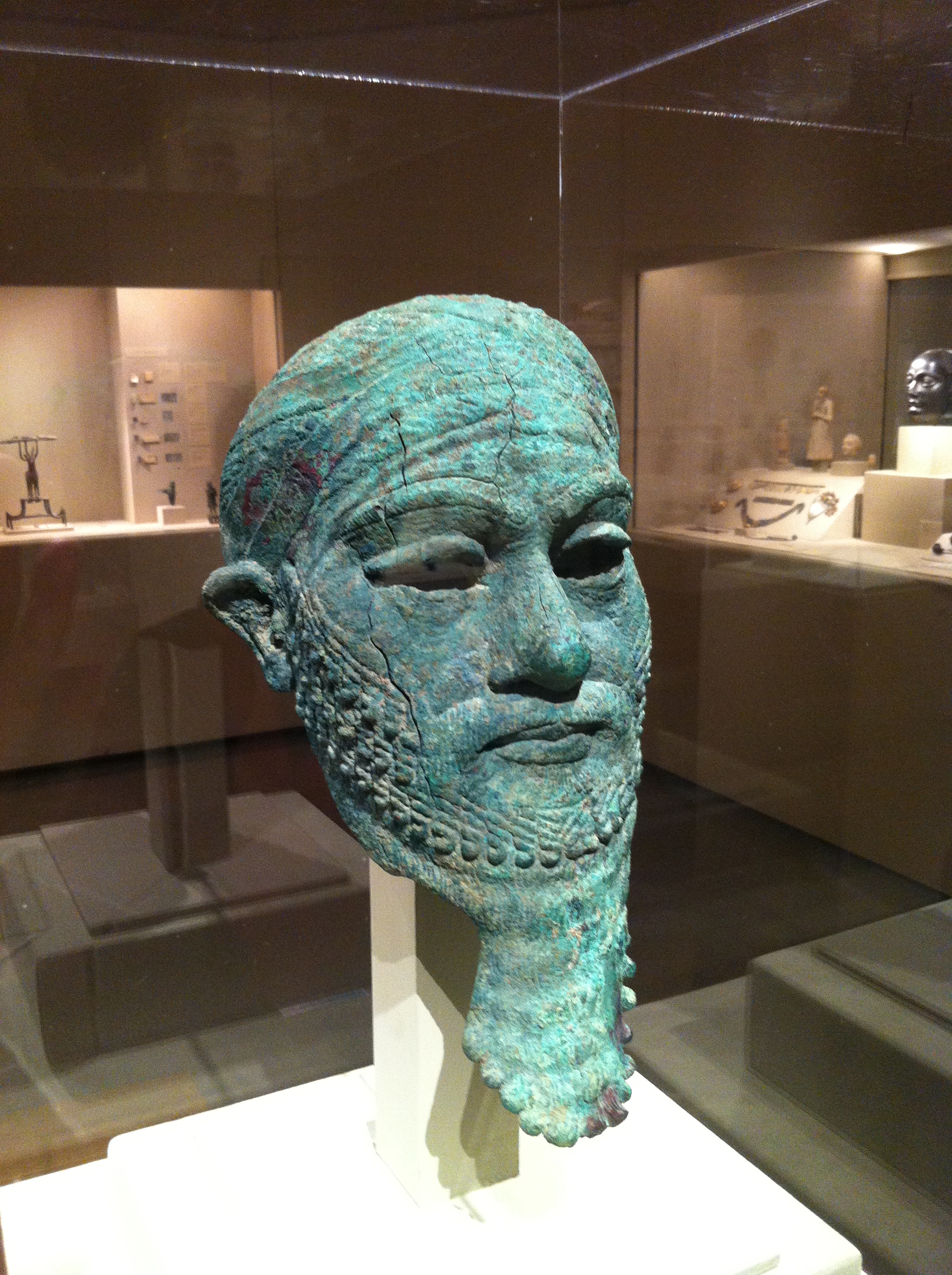
A ruler from the area of Iran, 40 centuries ago. This one gave me goose-bumps because I have a copy of it buried in my warehoused stuff in Vienna.

faces at the met 004

A governor, by the name of Gudea, of the city of Lagash in Mesopotamia (I like the way he holds his hands):

faces at the met 010

Our random walk is bringing us into East Asia.

A bodhisattva from Shanxi province. A mere 15 centuries separate us. Is it unfair to say that he looks rather self-satisfied?

faces at the met 012

We jump forward 15 centuries, give or take, with this timid Korean scholar from the early 20th century:

faces at the met 016

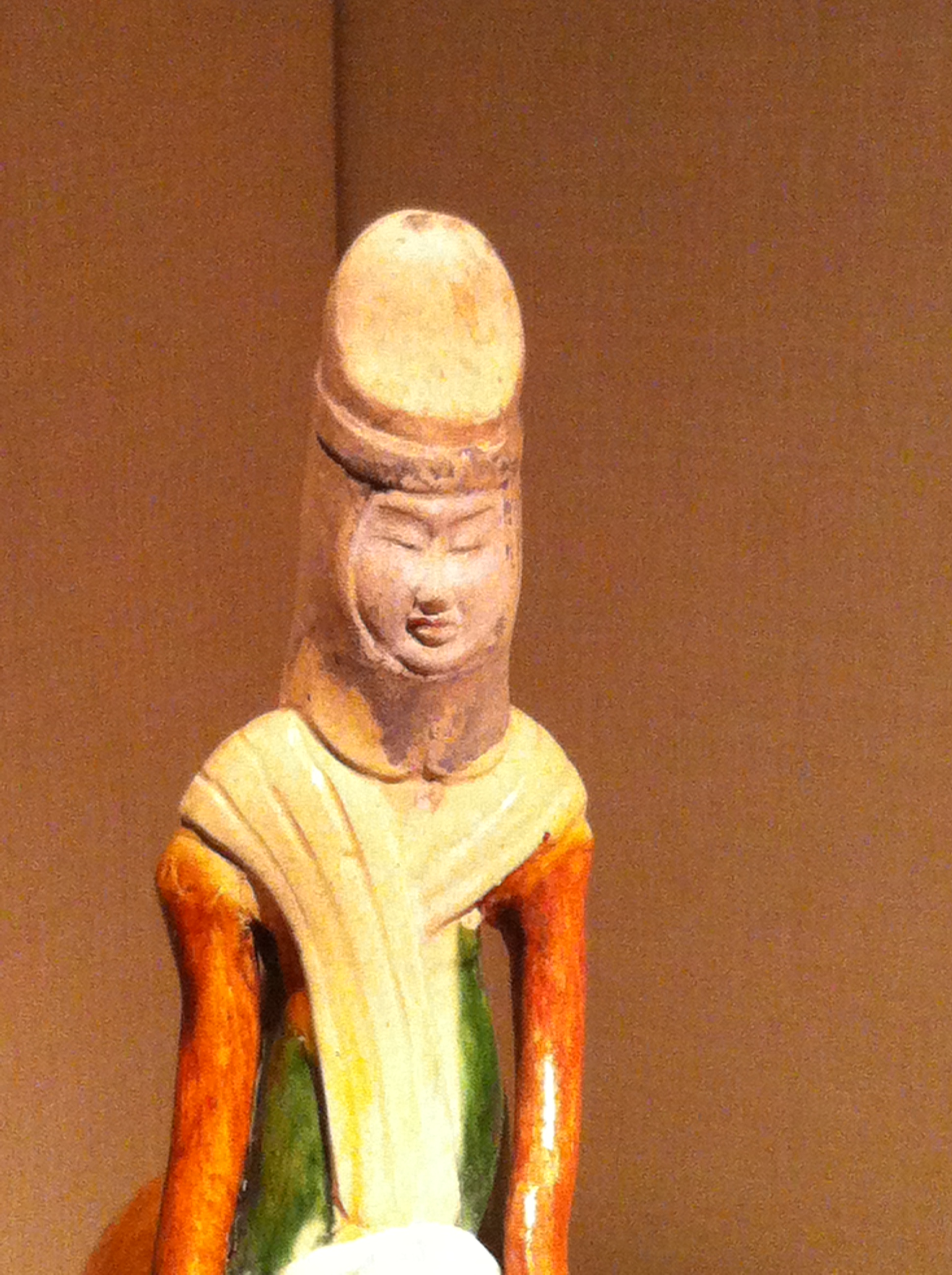
A female horse rider, from the western reaches of the Tang Empire I would guess from her clothes, and very tired after a long journey I would think from the expression on her face.  13 centuries separate us.

faces at the met 020

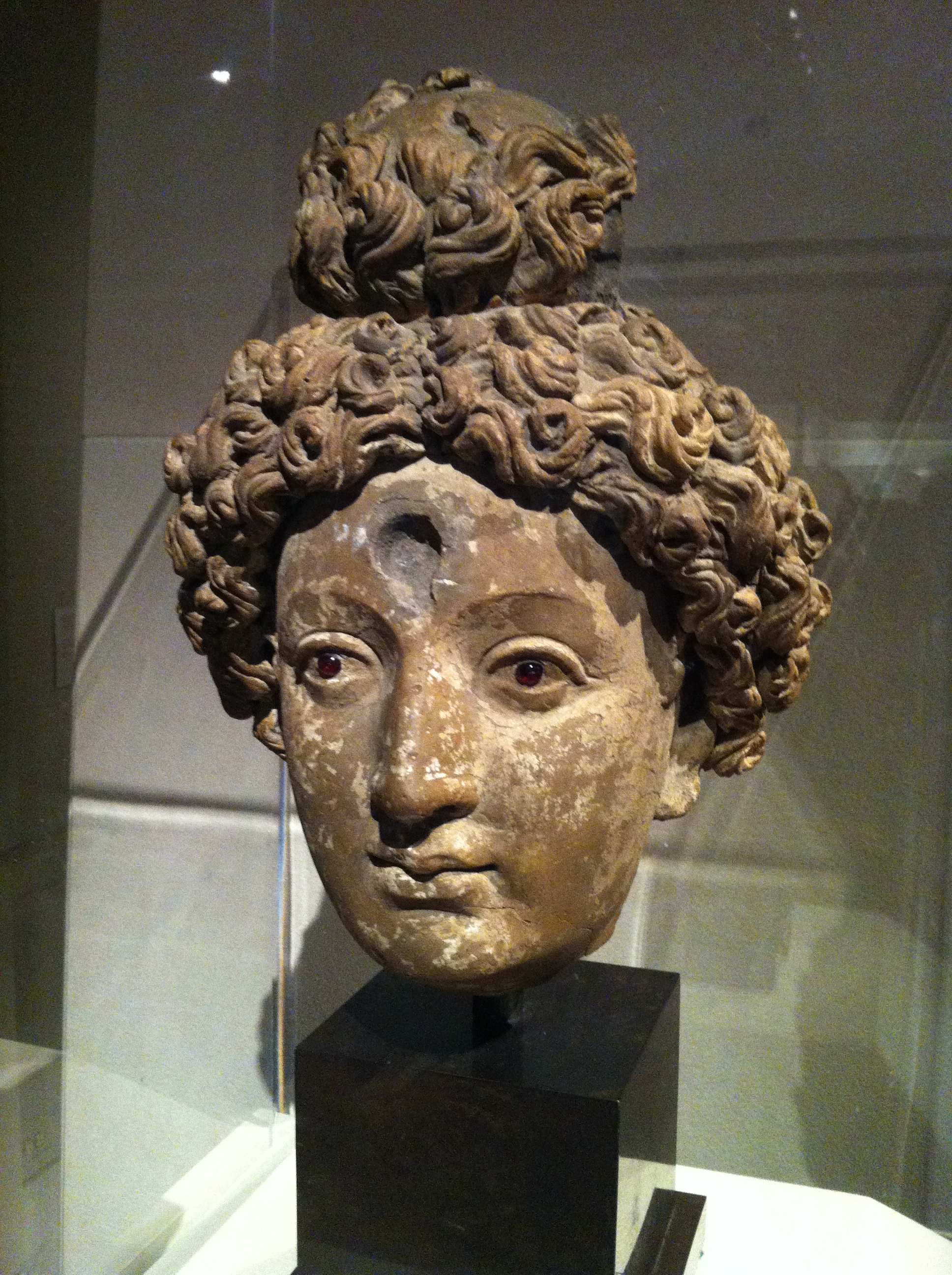
A buddha from the area of Afghanistan when it was still buddhist, 15 centuries ago. Are we seeing the Greek influence which came from this area being conquered by Alexander the Great?

faces at the met 025

Those cupid lips! A bodhisattva from Shanxi province, 14 centuries back.

faces at the met 027

Our random walk is making us transition brutally to Medieval Europe.

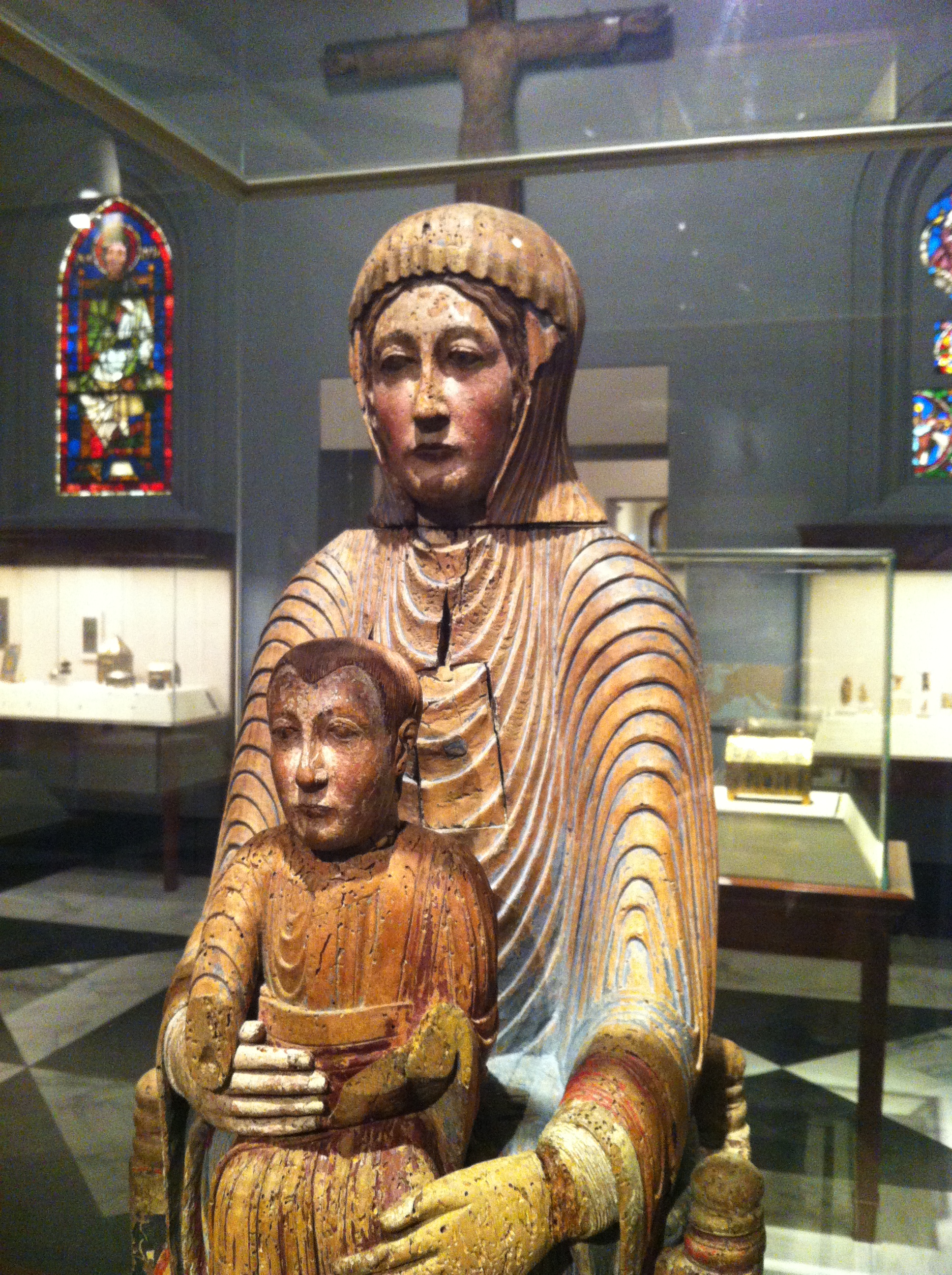
A brooding Virgin Mary from 10 centuries ago.

faces at the met 078

A stern-looking saint (Saint Yrieix … who is that?), a face from 10 centuries ago.

faces at the met 030

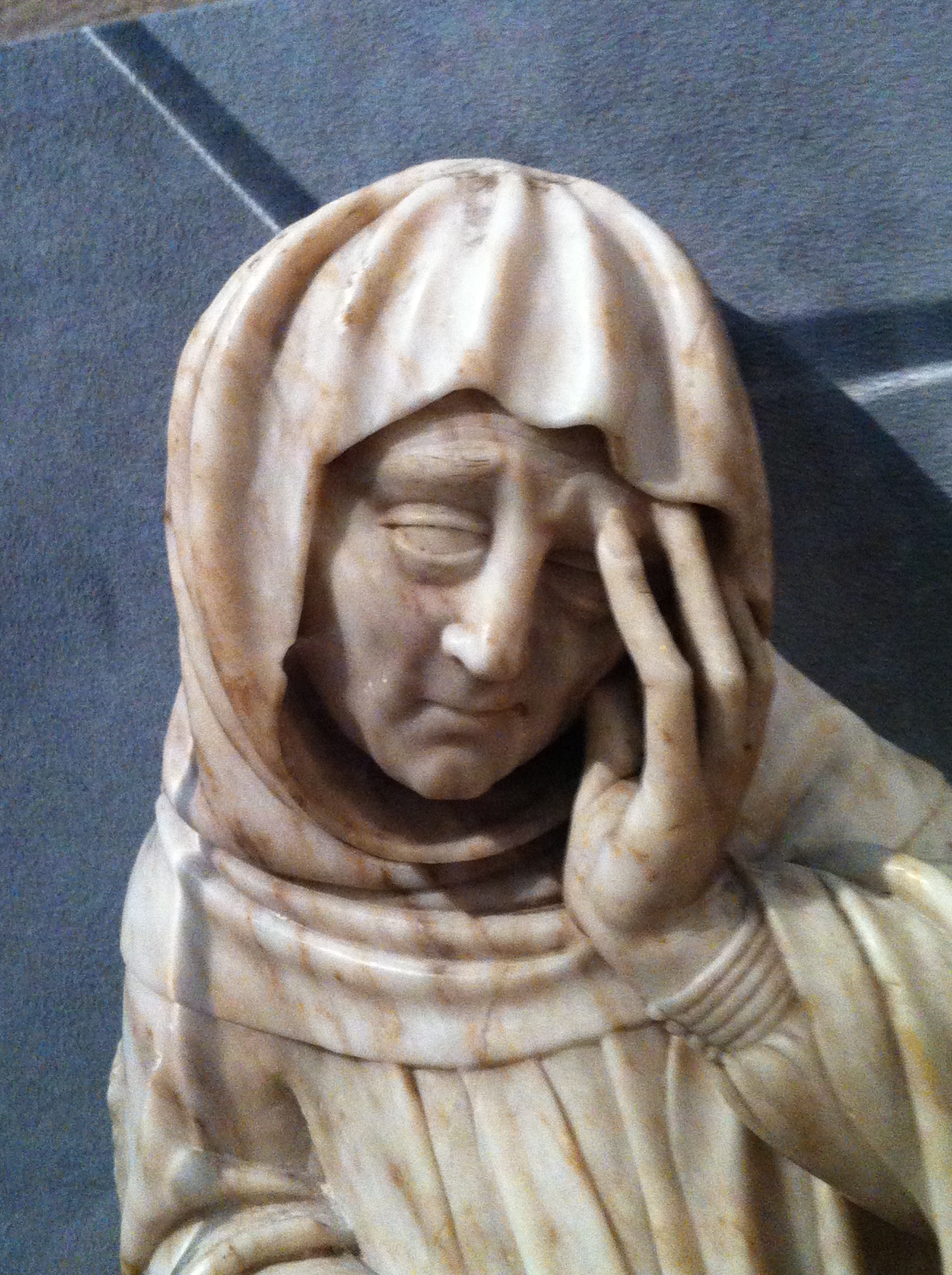
A mourning Virgin Mary at the crucifixion from 6 centuries ago

faces at the met 032

Her mourning is German, sober and contained. This Virgin’s mourning, from the same period, is more Mediterranean. She is Spanish.

faces at the met 038

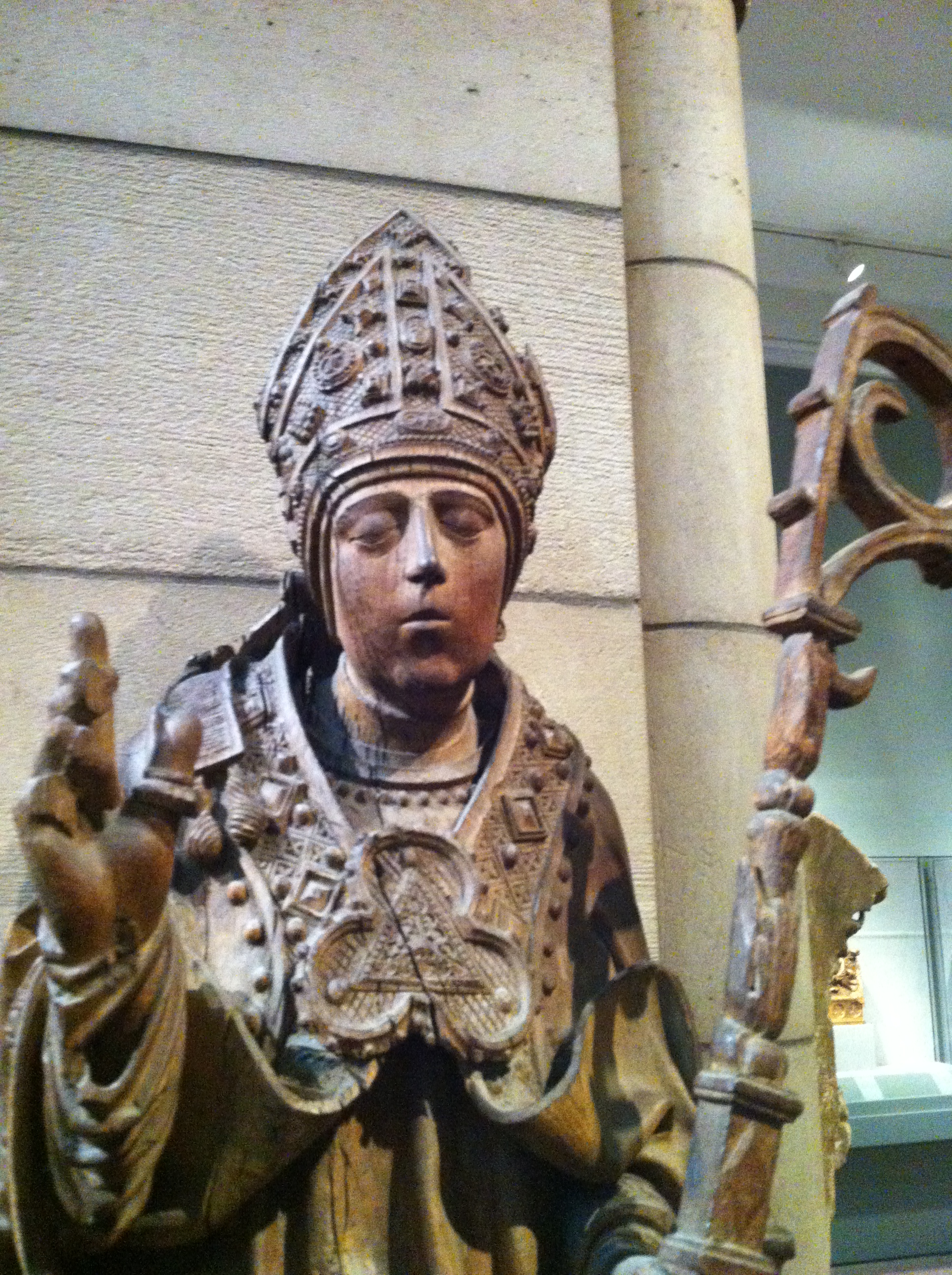
A rather foolish-looking bishop from 6 centuries ago.

faces at the met 034

The random walk is now taking us through the print and photo section.

A woman from the 1890s.

faces at the met 040

A woman from the 1930s. It’s a Pollock, which is intriguing.

faces at the met 042

Another woman from the 1930s, on the Paris boulevards.

faces at the met 047

We are suddenly back in the Cypriot section, although in a different room.

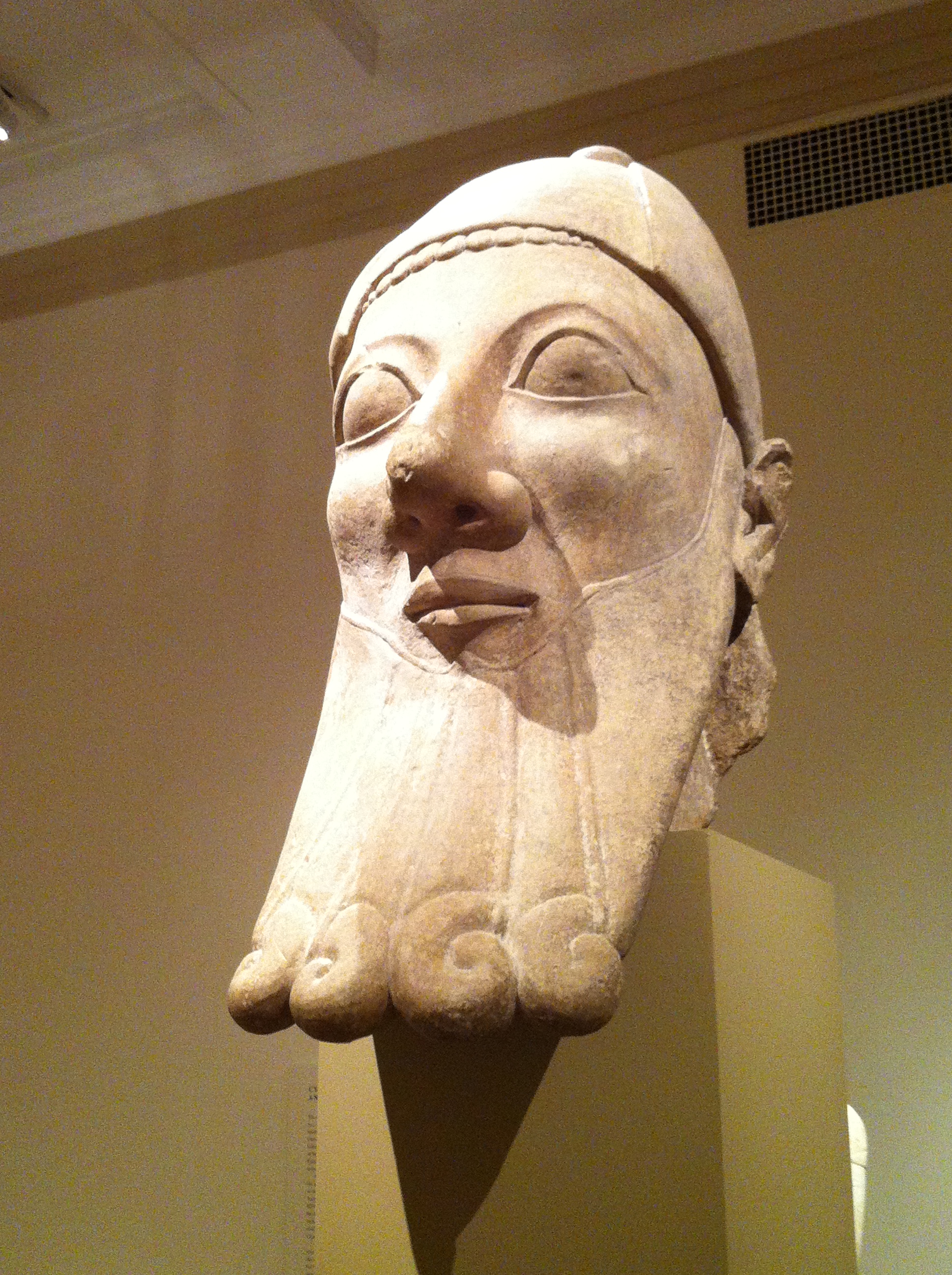
A man with a wonderful beard, from 27 centuries ago.

faces at the met 056

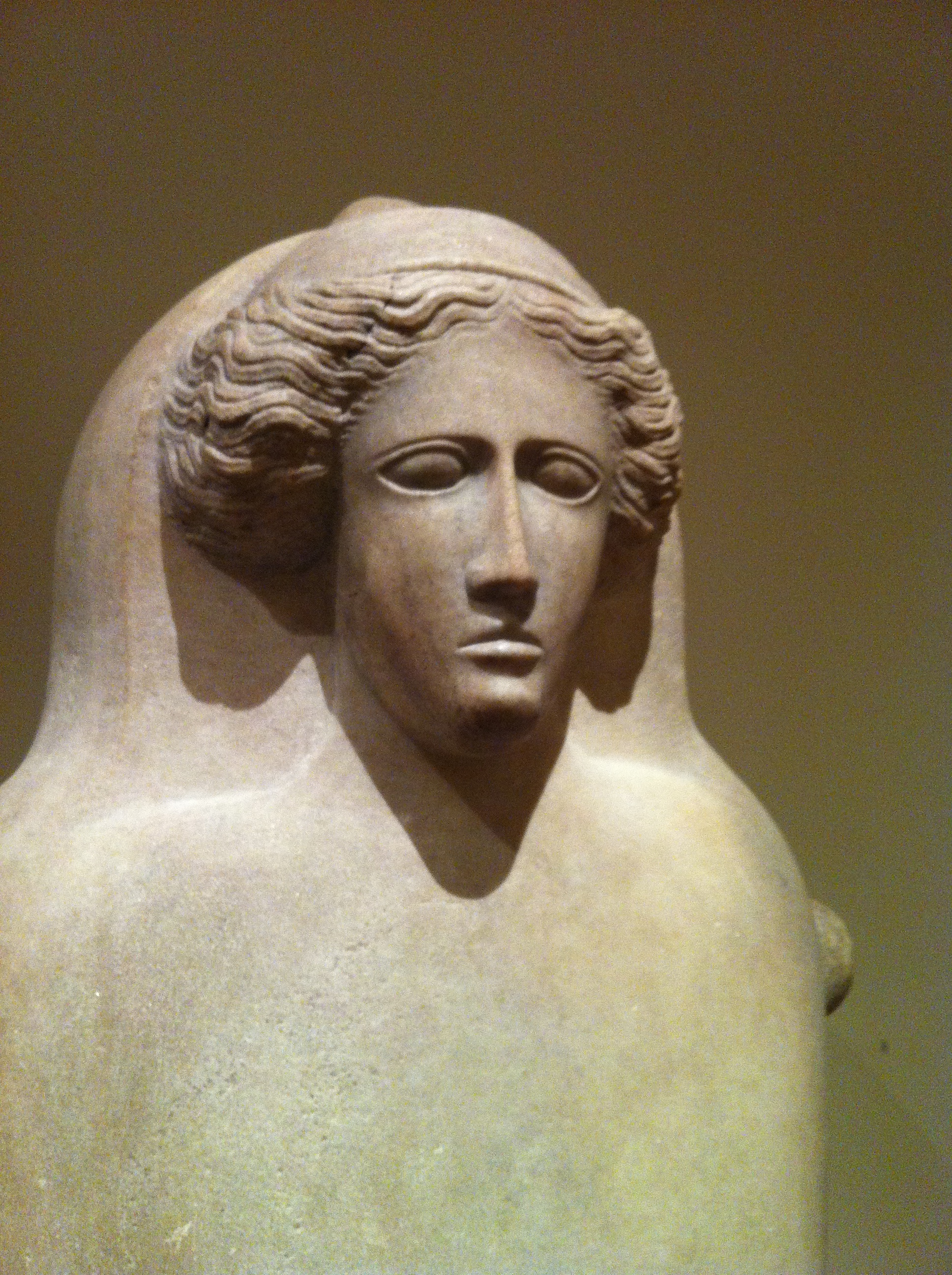
A woman staring death in the face, from a little later.

faces at the met 062

And now our random walk is bringing us to meso-America.

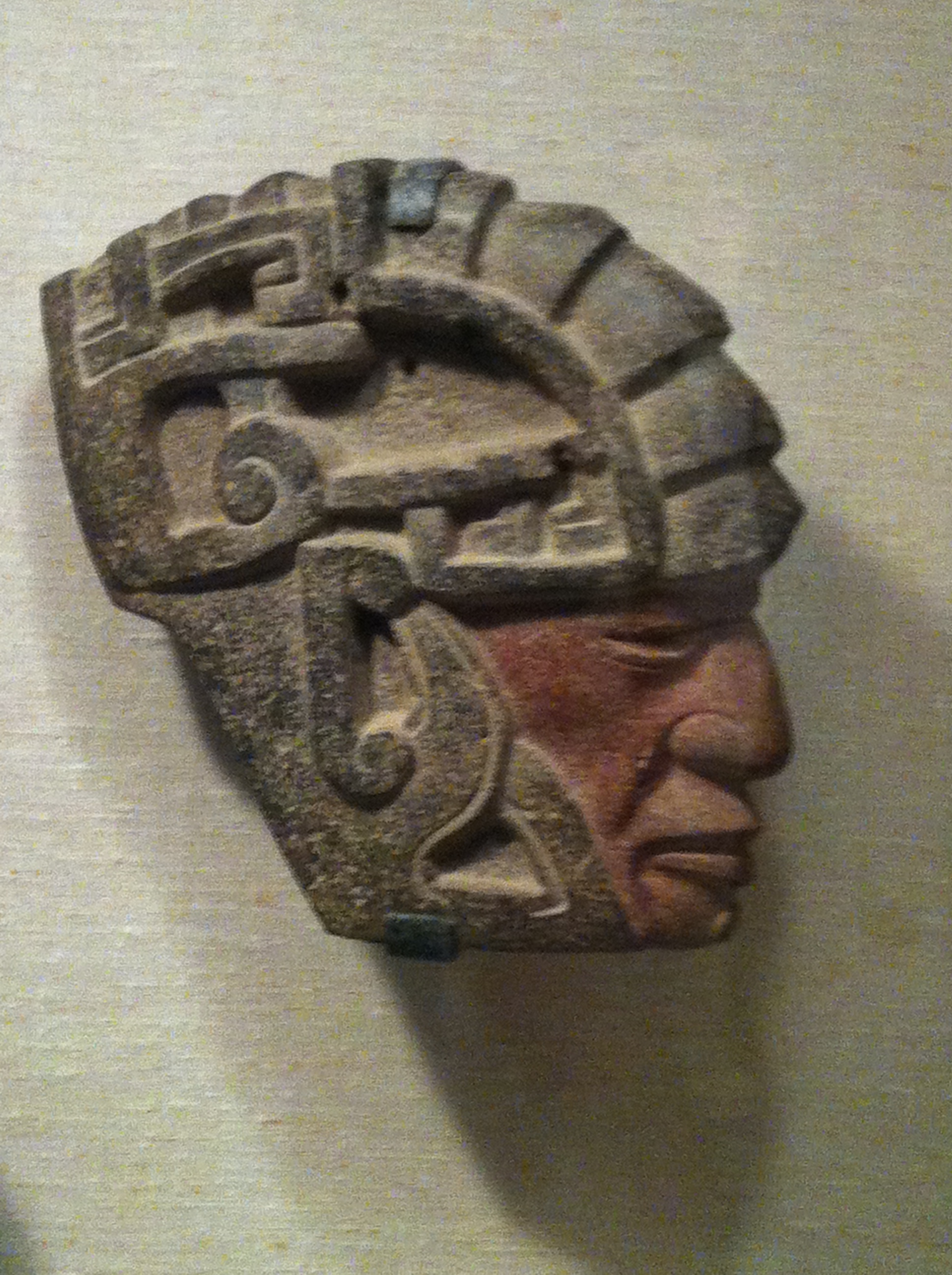
A pensive face from Mexico, 14 centuries ago.

faces at the met 066

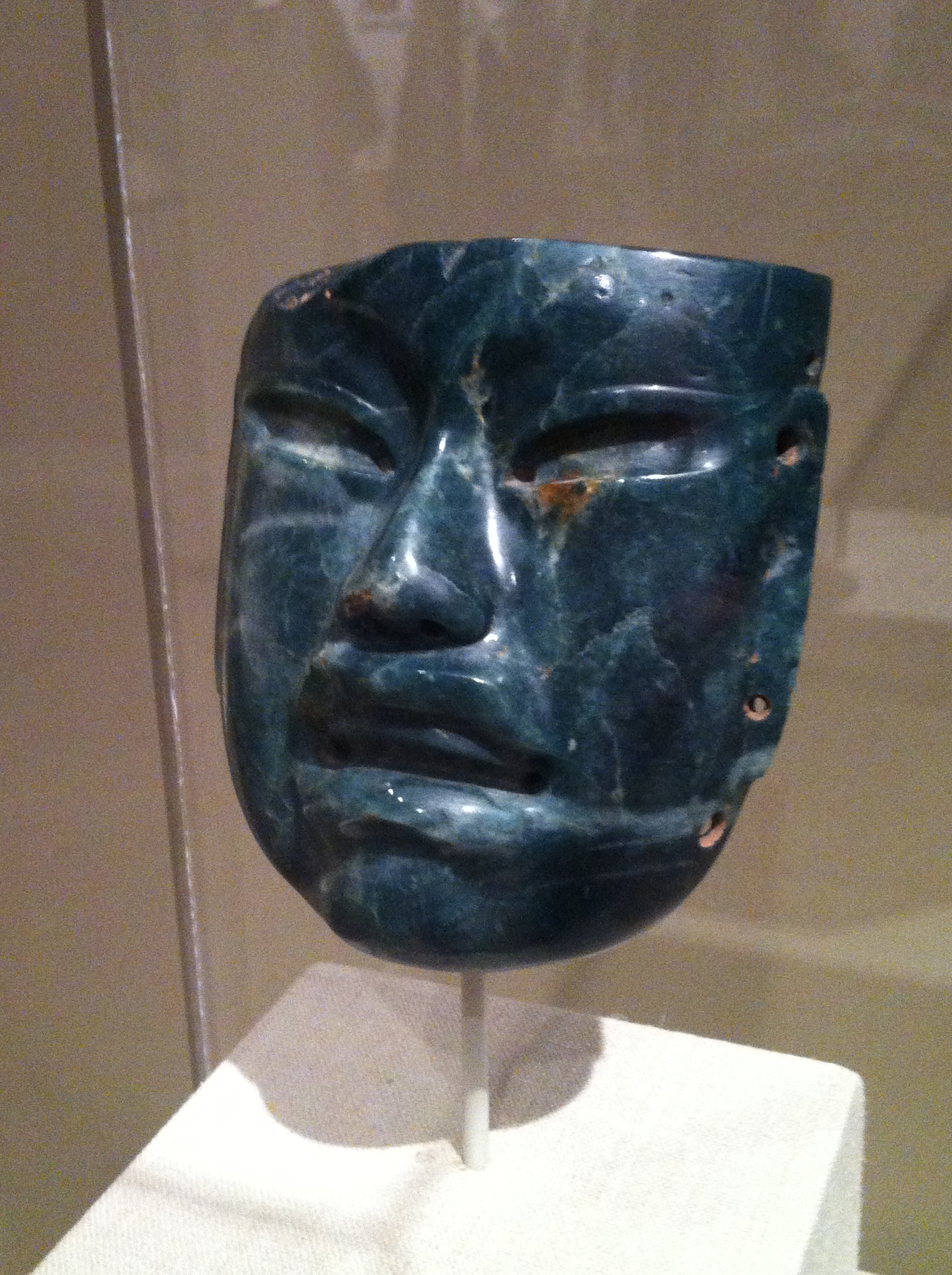
An anguished face from 30 centuries ago, from Mexico again.

faces at the met 074

Suddenly, we lurch into Africa.

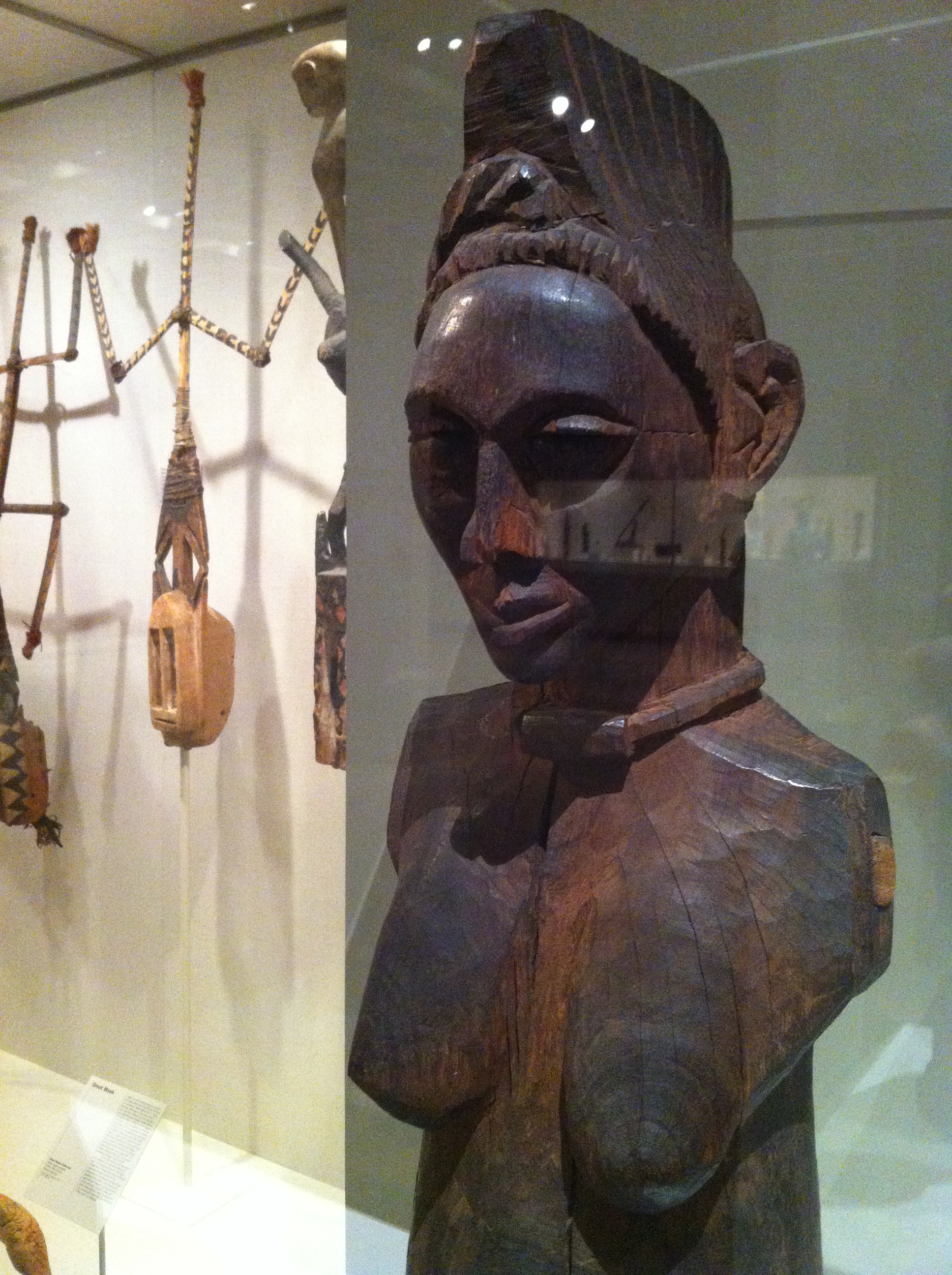
A West African woman, from a century ago.

faces at the met 070

A South African woman from just a few decades ago.

faces at the met 068

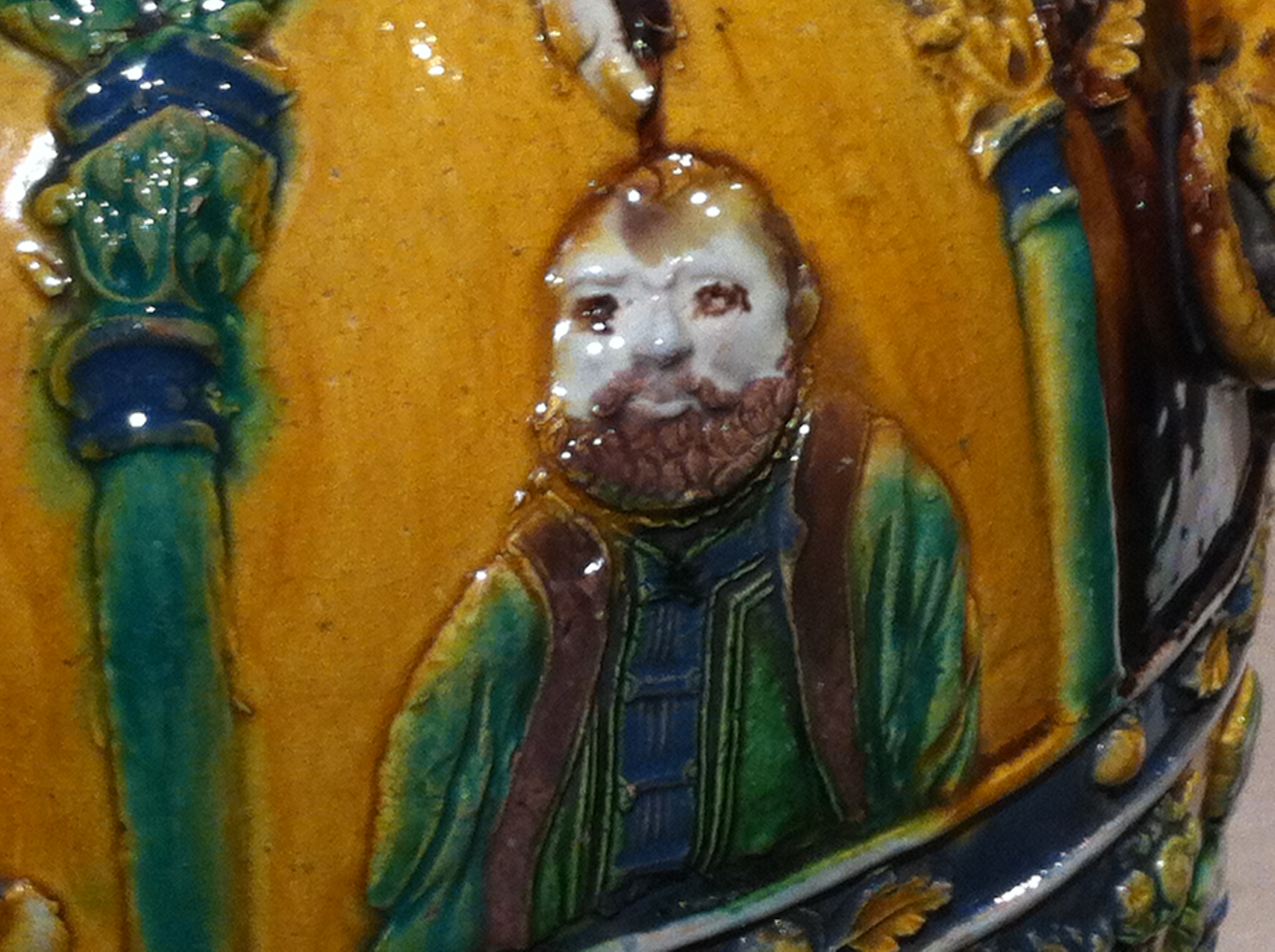
And finally as we are making for the exit, a small face on a German jug of the 16th Century catches my eye and camera.

faces at the met 076

_________________

Pictures: all mine

A SYMPHONY OF WHITE

Beijing, 16 May 2013

My wife and I are in the US at the moment for our son’s graduation. We were down in Philadelphia over the weekend, together with our daughter, proudly present at the Great Moment.

graduation caps thrown in air

My wife and I had visited Philadelphia some 30 years ago, together with my mother-in-law, on our before-the-marriage honeymoon (I have referred to this in an earlier post). But we didn’t remember much, so we decided to go and visit the old part of town again.

It was all very pretty and peaceful; the streets in the old part of Philadelphia are really very pleasant to stroll along. As we walked, we came across some white roses planted along the pavement, separating it from a parking lot. These were not the sculpted creations one finds in carefully tended gardens but were more the blowsy type found on wild bushes.

white flowers 002

And they smelled heavenly!

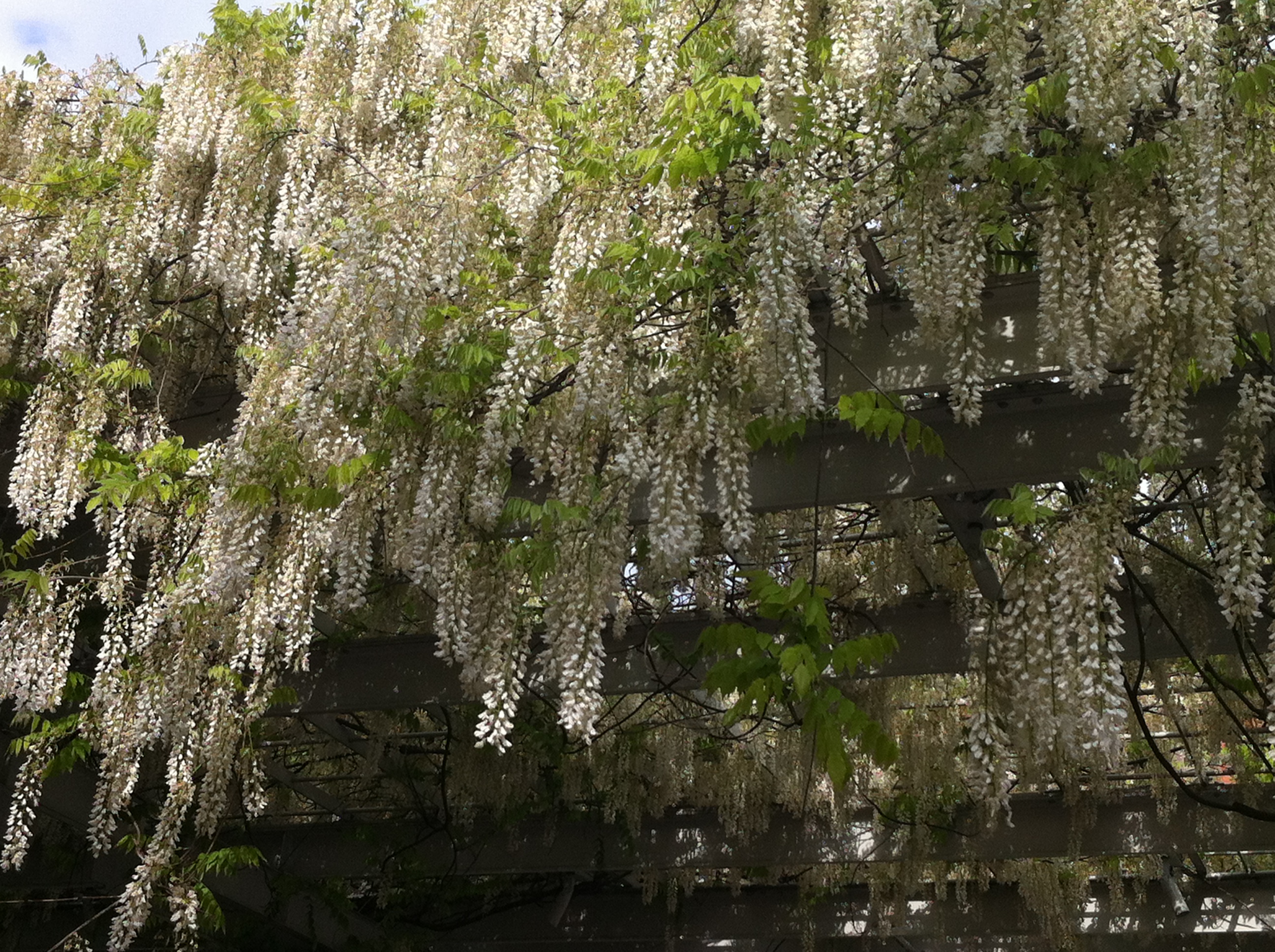
A little later, when we arrived at the visitors’ centre, we stumbled into a magnificent trellis of white wisteria.

white flowers 004

I decided there and then to spend the rest of our visit to the US photographing all the white flowers we would come across, first in Philadelphia and then in New York where we would be staying a few extra days with our daughter. Here is the album of what we found:

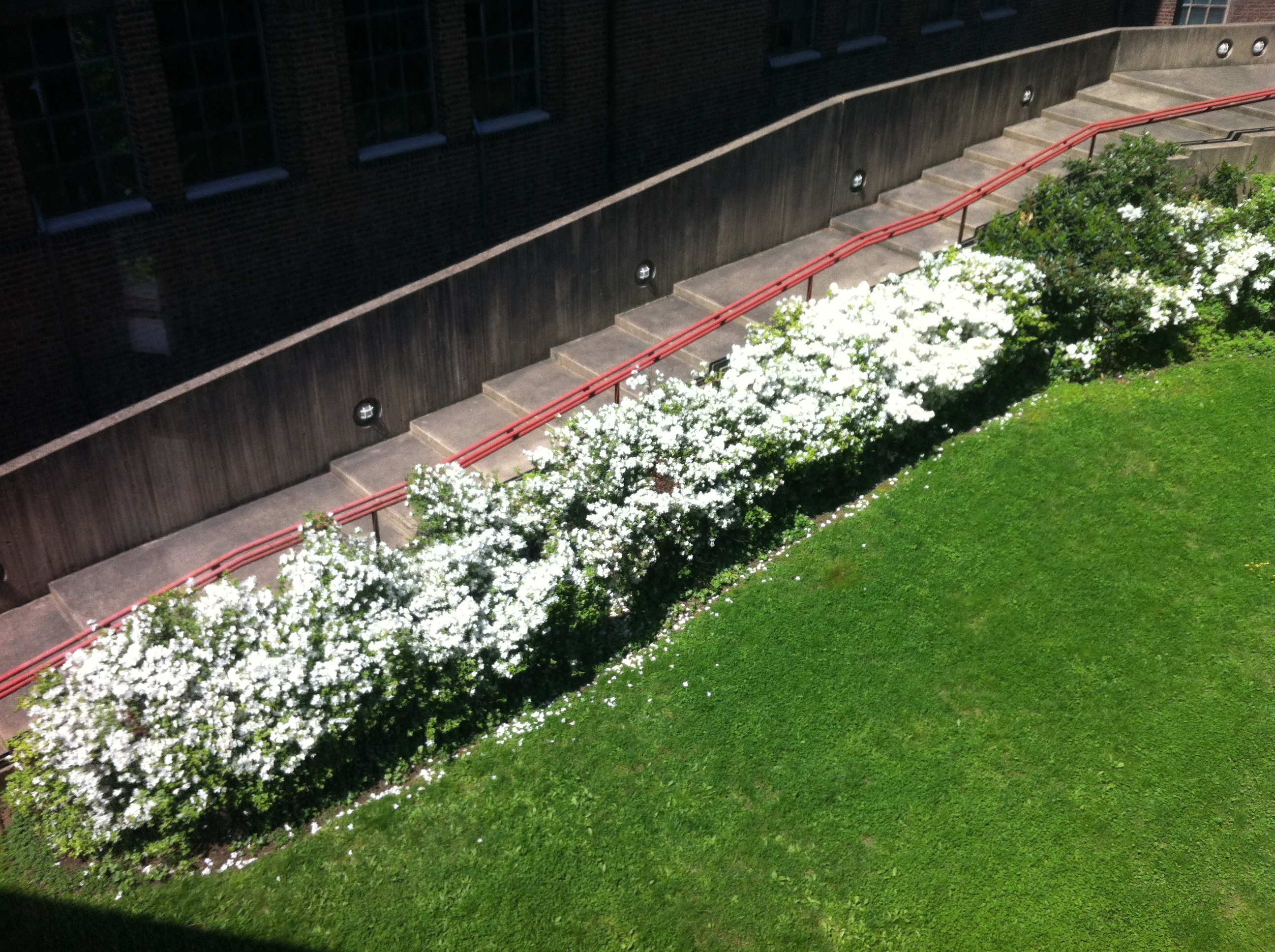
White rhododendron in the courtyard of the museum at the University of Pennsylvania

white flowers 008

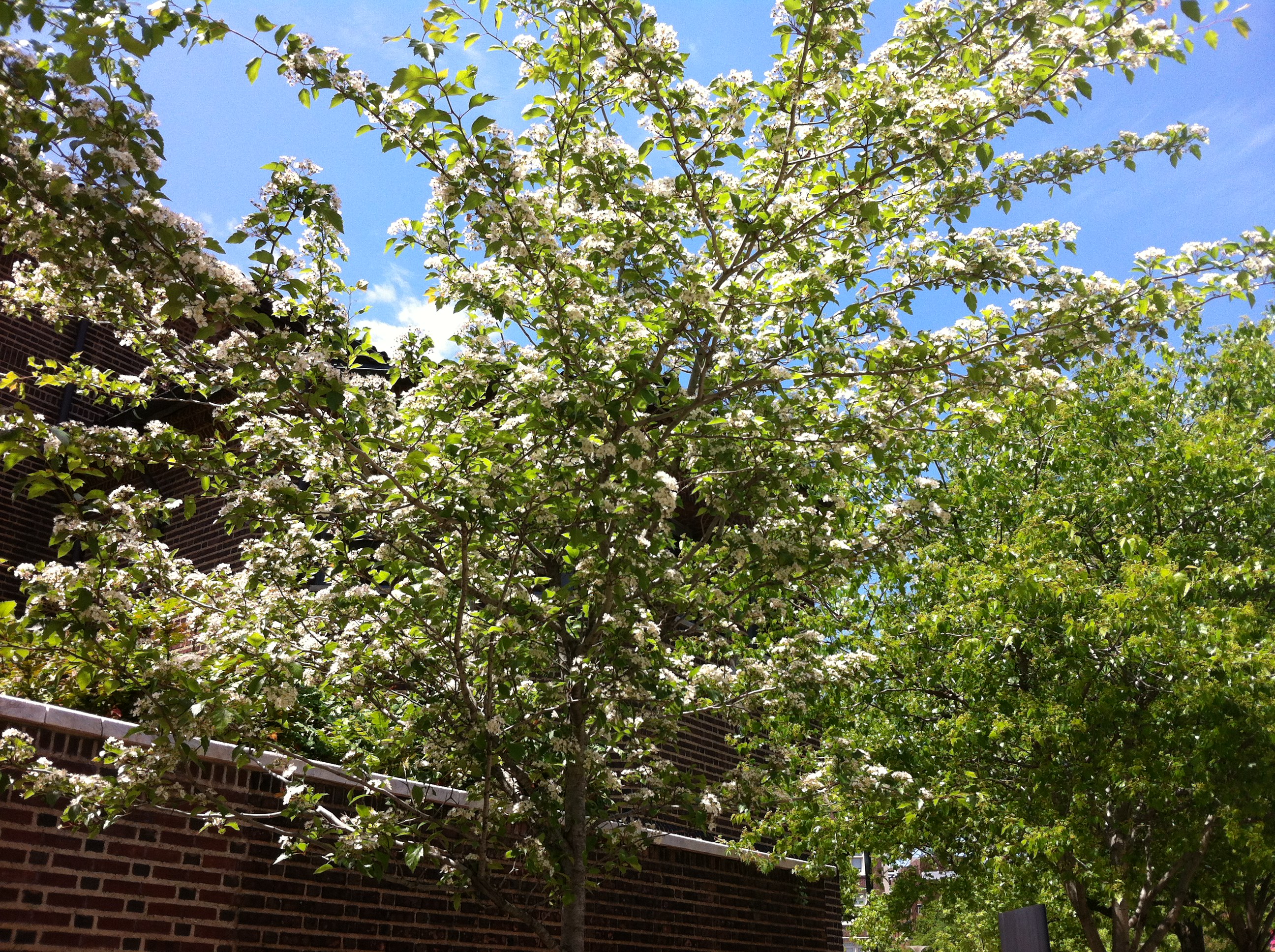
A white-flowered tree along a street in Philadelphia

white flowers 009

Another white-flowered tree on the lower east side of New York

white flowers 011

Some laggard narcissi on the upper east side

white flowers 014

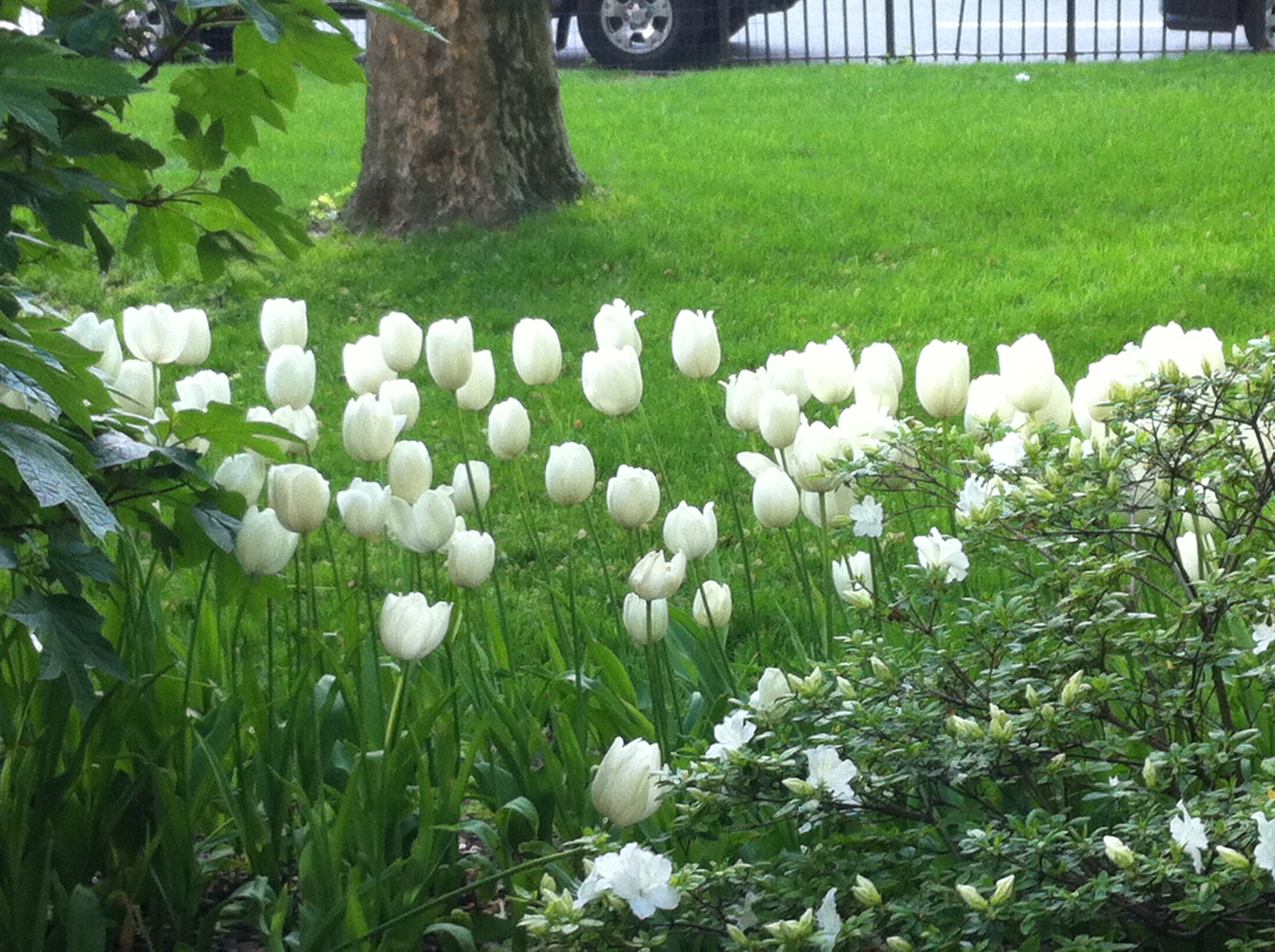
A smorgasbord of white in Central Park, starting with white tulips

white flowers 015

then white pansies

white flowers 021

then three flowers whose names I don’t know

white flowers 028

white flowers 029

white flowers 030

a white chestnut at the exit of the park

white flowers 034

white irises around a statue of the Virgin Mary on the corner of a church not too far from the park.

white flowers 035

white daisies of some sort on the High Line (the last time we were here was the dead season)

white flowers 036

and finally white dieffenbachia, seen just before catching the shuttle to Newark airport

white flowers 037

_____________

graduation caps in air: http://www.plantijn.be/images/plantijn2/container1103/images/iStock_000004407014.jpg

other pictures: mine

DREAM JOURNEY: PART I

Beijing, 8 May 2013

May is a good time to be in the Mediterranean. The weather is good, the temperatures not too high, the vegetation still green, and the flowers blooming. I feel restless, I want to be there. But it cannot be; the rent must be paid, as must the gas and electricity, not to mention the food, the occasional bottle of wine and other sundries. I must earn my living.

The internet is a wonderful thing though. Sitting on my living room couch in the evenings, navigating with my little black mouse and clicking my way through hundreds of internet pages, I can visit all the places I want to be in but cannot. So I have decided.  Riding the surf of the web, my wife and I will take a trip I have long wanted to make: a visit to a string of sites around the northern rim of the Mediterranean which are known for their early Christian mosaics. In an earlier post I have alluded to my fascination with this art form.

It’s time to start. As I sit in front of my computer screen, I have to first wrestle with the question of what car my wife and I will travel in on this virtual trip we are about to make. With the freedom that comes from a trip in my imagination – no cost considerations, no considerations of practicality (is the boot big enough?) – I first think of taking a Smart; I like its cheerfully odd shape and I have never driven one.

Smart-Car

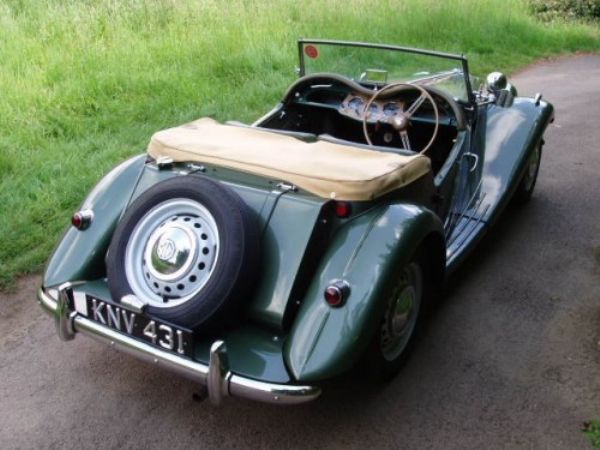
But on further consideration, I plump for an MG convertible, and specifically a model which is as old as we are.

MG car

In my imagination we can have the roof down and enjoy the sun on our faces and the wind in our hair (although the only time we ever drove such a car in the real world it started raining and we had no idea how to put the roof back in position).

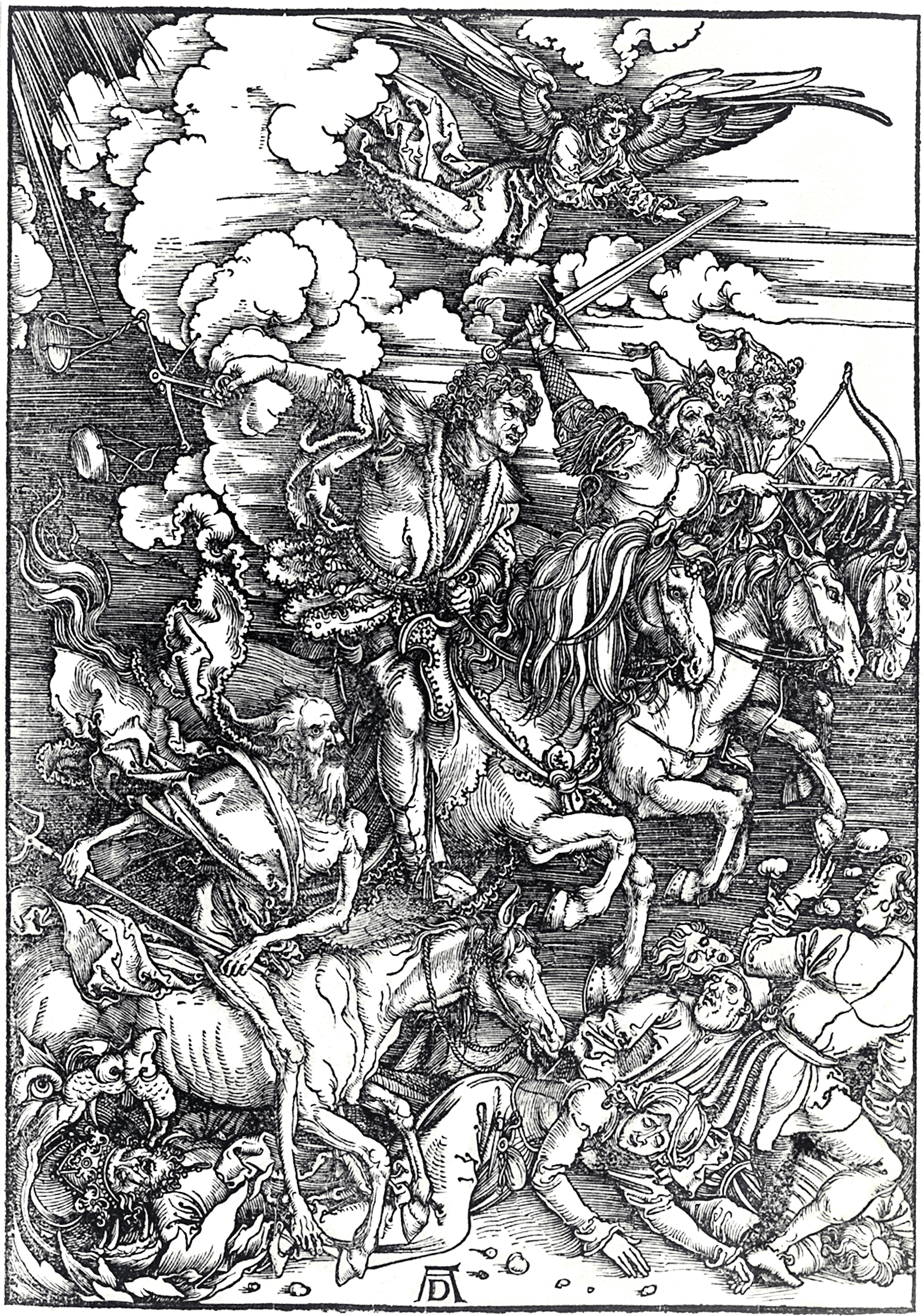
So here we are, comfortably ensconced in our little MG. Where do we start our journey? I pick Ravenna, because the city has one of the finest collections of early mosaics still extant. Actually, it’s a small miracle that there are any mosaics left at all, either in Ravenna or anywhere else. Over the millennium and a half that separates us from their creation, they have suffered from the ravages of religion: from outright hostility towards their symbolic potency, to their neglect through changes in artistic fashion. They have suffered from natural catastrophes like earthquakes and fires. And last but not least, they have suffered from the four horsemen of the Apocalypse – Conquest, War, Famine, and Death – sweeping repeatedly across the face of the land; every time the horsemen passed, not only did people die but the beautiful things they had created were destroyed. You only have to see what is happening to Syria’s irreplaceable cultural heritage in this time of civil war to know what I mean.
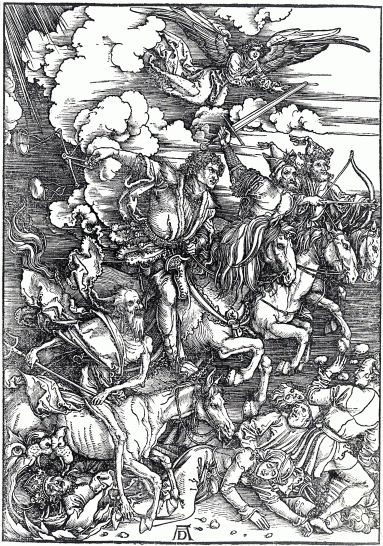
4-horsemen-apocalypse-1-durer

Ravenna sadly exemplifies what I’ve just described. It became the capital of the Western Roman Empire in 402 AD, when everything was beginning to fall apart there. In 490, it was put under siege for three years and finally captured by the Ostrogothic King Theoderic. In 540, it was captured by the Byzantines after a war with the Ostrogoths. In 751, it was captured by the Longobards after a long war of attrition between them and the Byzantines. In 774, to thank Charlemagne for taking Ravenna away from the Longobards and giving it to him, Pope Adrian I allowed Charlemagne to take away anything he liked from the city to enrich his capital in Aachen. Lord knows how much Ravenna lost, but it must have been a lot. Over the following centuries, lordship over Ravenna swapped hands many times as the papacy’s claim to Ravenna was contested by local families. Finally, in 1275 a local family, the De Polenta, made Ravenna their long-lasting seigniory, which gave the city some stability for nearly 200 years. Then from 1440 to 1527, Venice ruled Ravenna, although in 1512, during one phase of the Italian wars, Ravenna was sacked by the French. Thereafter, Ravenna again became part of the Papal States and stayed there, except for a short interlude during the French Revolution and Napoleonic Empire, until 1859, when it became part of the new Italian State. After that, apart from some bombing by the Austrians during the First World War, Ravenna knew peace. Truly, it is a minor miracle that we have any mosaics left after all this mayhem. And I haven’t even included the natural disasters which the city suffered along the way.

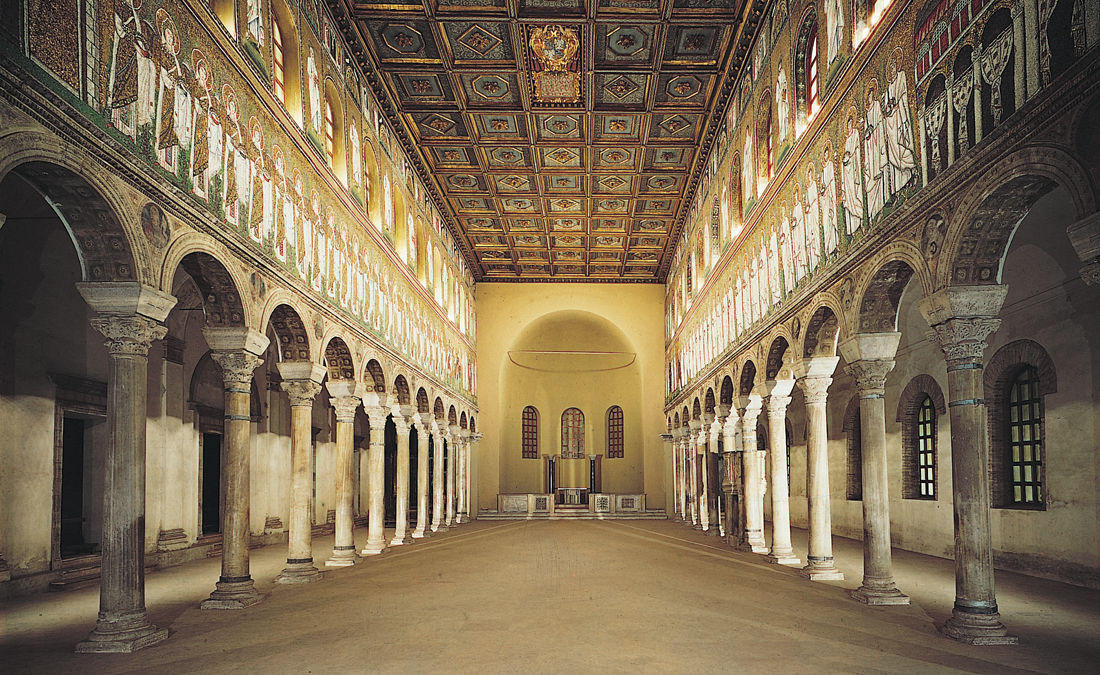
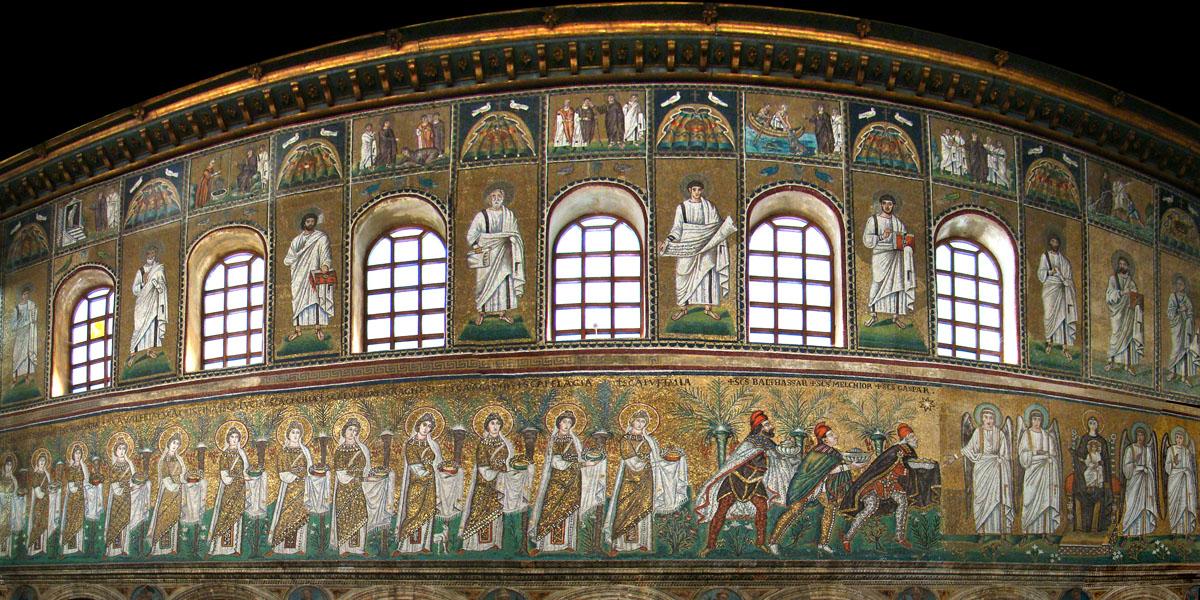
It’s time to start our journey and visit some of what is left. After clicking around a bit, I choose for us to drive up and park in front of the church of Sant’Apollinare Nuovo, where the mosaics date from the 6th Century. Here’s what greets us when we enter the church.

sant'apollinare nuovo-2

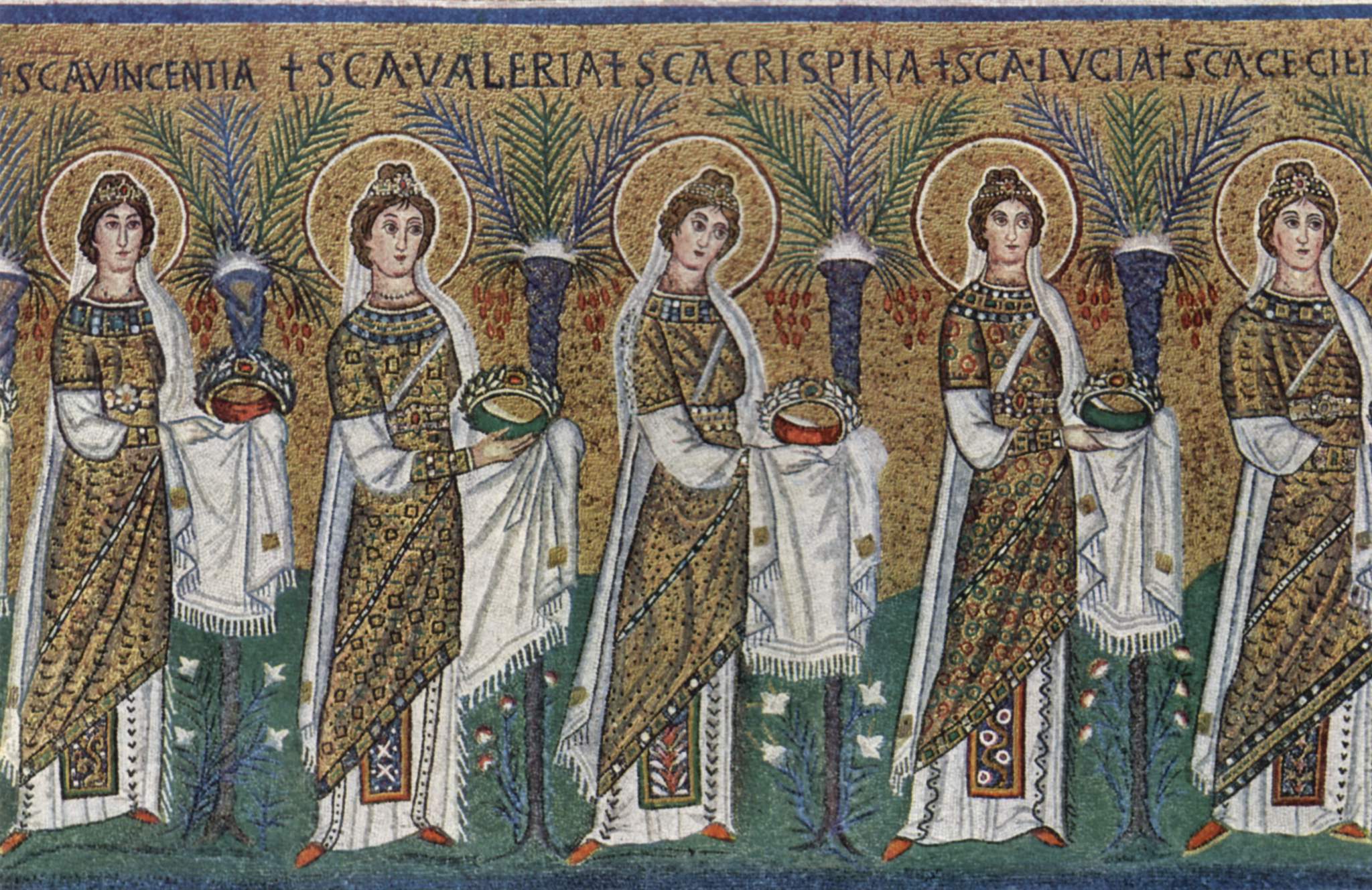
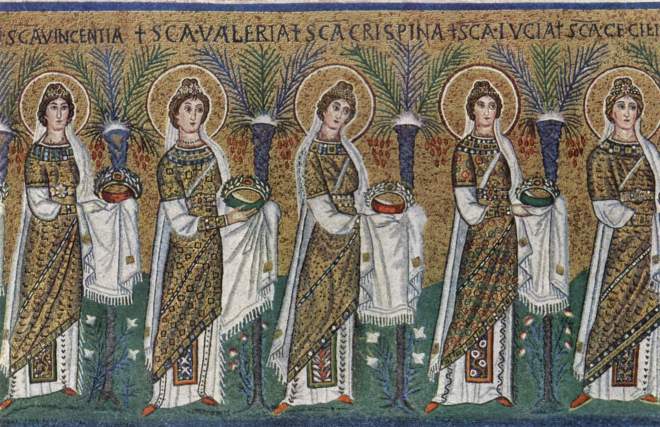
On either wall of the nave, runs a line of men and women, saints and martyrs, processing solemnly towards the altar.  My wife and I prefer to focus on the women principally because among them is the martyr who has our daughter’s name. It gives us a comforting sense of connection.
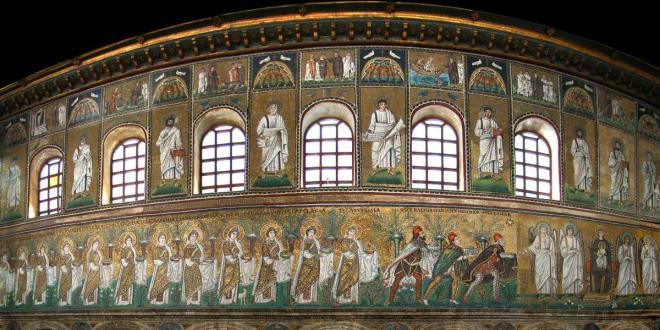
sant'apollinare nuovo-5

sant'apollinare nuovo-4

Originally, the two lines were processing towards a scene of stately splendour in the apse. But it is gone, victim to a desire to modernize; it was removed during renovations in the 16th Century. The apse itself was so badly damaged by Austrian bombing during the First World War that it had to be rebuilt.

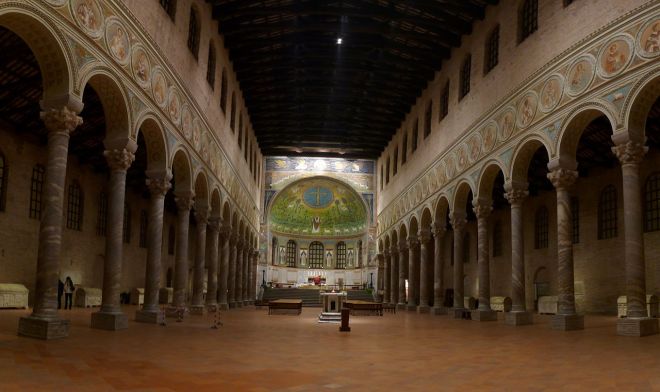
Time to move on to the church of Sant’Apollinare in Classe, and in a couple of clicks we’re there. With much the same layout as the other Sant’Apollinare, and with mosaics from the same period, it is its mirror image: the mosaics in the nave have disappeared, victim to the depredations of the Venetians in the 15th Century, but the apse glows with a magnificent mosaic, where the colour of grass dominates: a green and pleasant land for the Christian faithful.
sant'apollinare in classe-3

sant'apollinare in classe-1

This great expanse of mosaic colour makes me decide to visit the Mausoleum of Galla Placidia. So with a click, a hop and a jump we’ve gone from church to mausoleum and are gazing up at the wonderfully dark blue ceiling

mausoleum galla placidia-2

There are other early mosaics in Ravenna, but it’s time to leave. We’ll see them another time.

Next stop: Venice.

As I gaze at Google Map trying to choose which road to take, I decide all of a sudden that it would be in keeping to follow the trace of the old Roman roads. To do this, I will rely on the Peutinger map. This is the only existing example of a Roman map of the Empire’s road network. It now resides in the Austrian National Library. It is actually a 13th Century copy, made by an anonymous monk in Colmar in Alsace, of what was probably a 5th Century original, itself a distant descendant of the original made by one Marcus Vipsanius Agrippa for the Emperor Augustus in the last years BC. It is so rare that it has been placed on UNESCO’s Memory of the World Register. This photo shows one section of the map, showing Italy from Rome to Sicily

peutinger map segment IV

Actually, I find the map very difficult to read; it is not to scale, it is not oriented the way modern maps are, and many of the place names mean nothing to me. So it is with considerable relief that I discover that someone has transcribed the Peutinger map onto a modern map. Studying this map, I decide we will follow the trace of the old Via Popillia, which once connected Rimini with Adria and the Via Annia. My intermediary objective is Fusina, just south of Mestre. I’m driving there because in this trip of my imagination I want to enter Venice the way it was meant to be entered before they built the causeway, by sea. And Fusina is the only place where you can catch a ferry into Venice from the mainland.

So we motor up to Fusina, and in my zeal to follow the trace of the old Roman road (I can already see my wife tapping her fingers impatiently at these signs of anal behaviour on my part) we do so through a complicated series of back roads which take us through a number of small towns and villages and finally along the SP (Strada Provinciale) 53, with us cutting down to the right at some point to get to Fusina. In my defence, the coastline between Ravenna and Venice has changed a lot since Roman times; the silt brought down by the River Po and a number of other rivers in this area has pushed the coastline out quite a distance. As a result, the road network in the area has changed considerably over the centuries. In any event, we’ve arrived; by the way, the website I just used informs me that we have travelled about LXXV Milia Passuum (75 thousand paces, or 75 Roman miles), which in Roman times would have taken us about VI dies (6 days) to walk. We park the car and wait for the next ferry; the timetable available online helpfully informs me that there is a ferry every hour on the hour, so I don’t suppose we need wait too long. No doubt there is a bar where we can sit down and have a cappuccino.

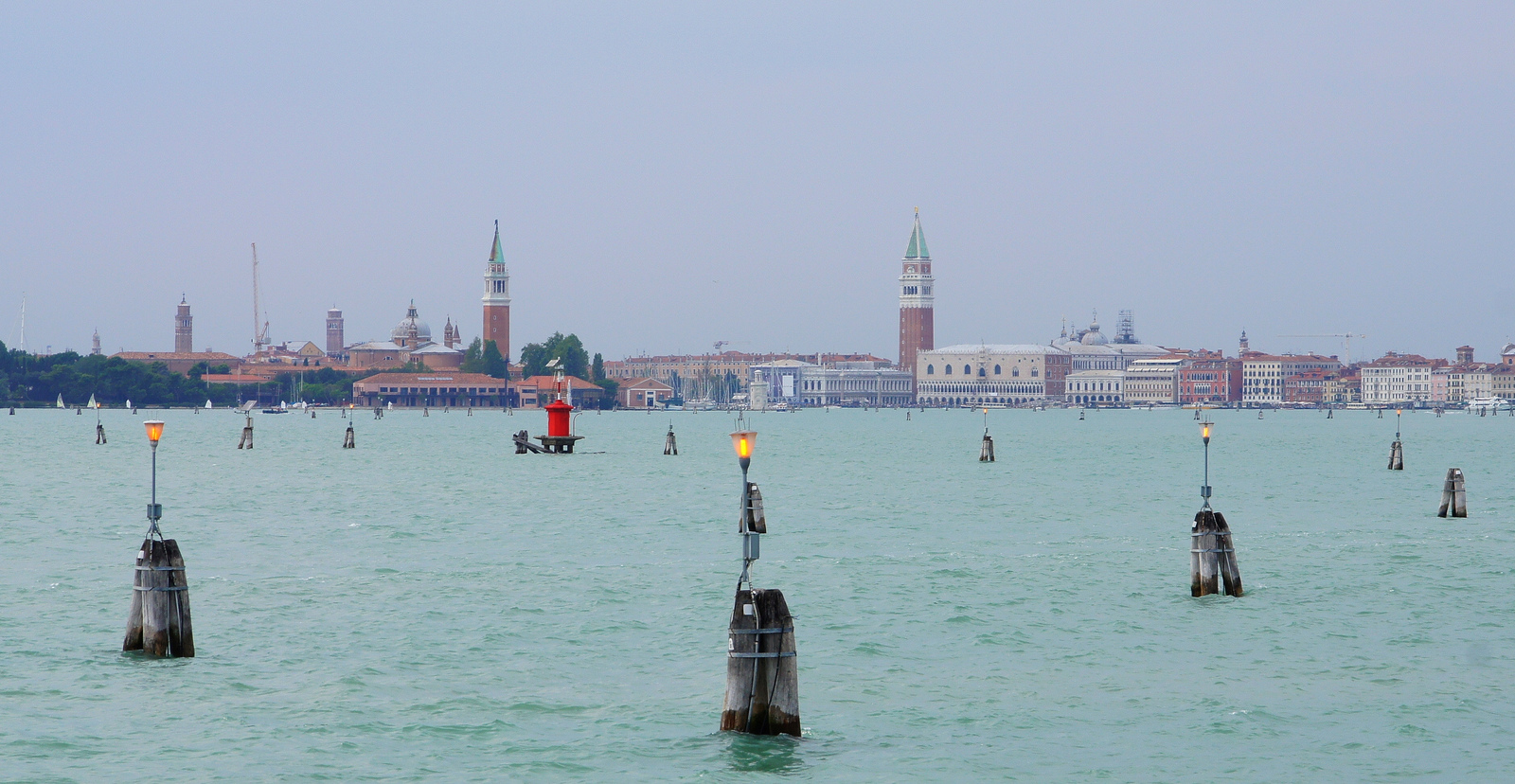
With a click we are on the ferry heading across the lagoon. As we get closer, we see this incomparable picture of Venice before us.

view from ferry

All too soon, it is time to get off at Zattere, to the south of the Canal Grande. We start threading our way through Venice’s maze of alleyways, crossing the Canal Grande at the Ponte dell’Accademia, and then after a sharp right in Campo Santo Stefano walking on to Piazza San Marco. Here, I stop and reveal to the reader that Venice is not actually our destination; we are going instead to the small island of Torcello to the north of the main island. It is true that the Basilica of San Marco is full of mosaics, but most of them are relatively modern, pale copies of the paintings of the time – and the church is always so horribly crowded with tourists! So we turn left in Piazza San Marco and head up to the north side of the island, to Fondamente Nova, where the municipality’s website helpfully informs me that I should catch the N9 aquatic bus. In my mind’s eye, when it arrives the bus is crowded with people going to the small nearby island of San Michele, the city’s graveyard. My wife and I squeeze on, and we wait patiently until after the stop at the graveyard and possibly also the following stop at Murano to be able to sit down. Then there’s a stop in the island of Burano before we finally get to Torcello.

Torcello was a place of refuge in the troubled centuries after the collapse of the Western Roman Empire. It was here and in the other islands of the Venetian lagoon that people came to escape from the depredations of the passing waves of various barbarian tribes. Until the 12th Century or so, it was a vibrant place with a significant population, but gradual silting of this part of the lagoon not only killed off the island’s more important economic activities but brought malaria to its inhabitants. So everyone left for Venice itself and now hardly anyone lives here. It is very peaceful, with just the church surrounded by vineyards.

Torcello Aerial view

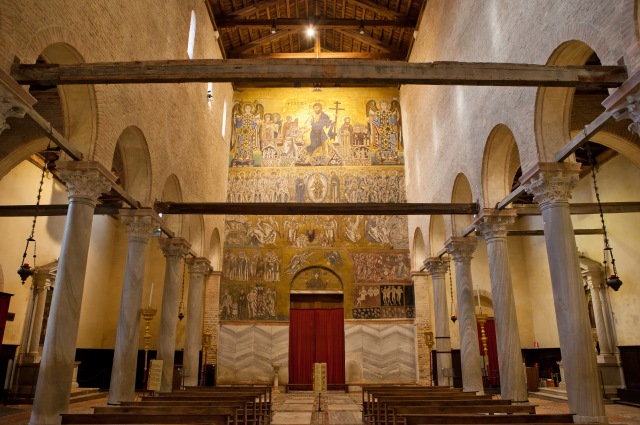
This abandonment might well have saved the mosaics which we are about to see. We walk up the path from the aquatic bus stop to the church, go in, and find this in front of us

torcello-8-front

And turning around, this behind us

torcello-6-back wall

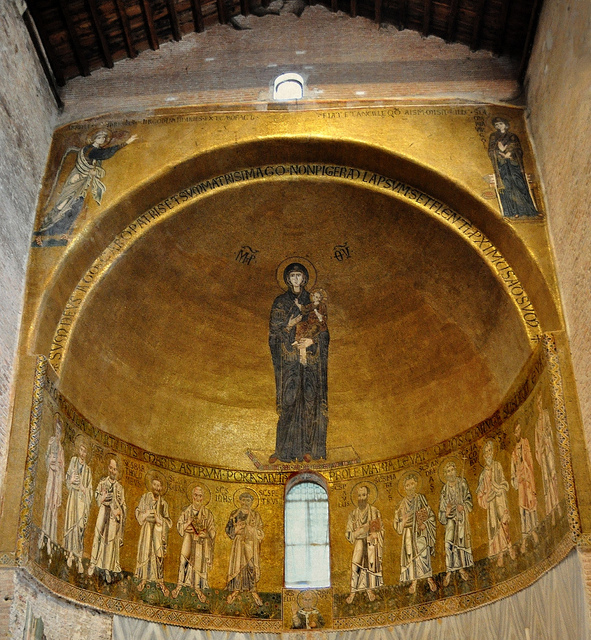
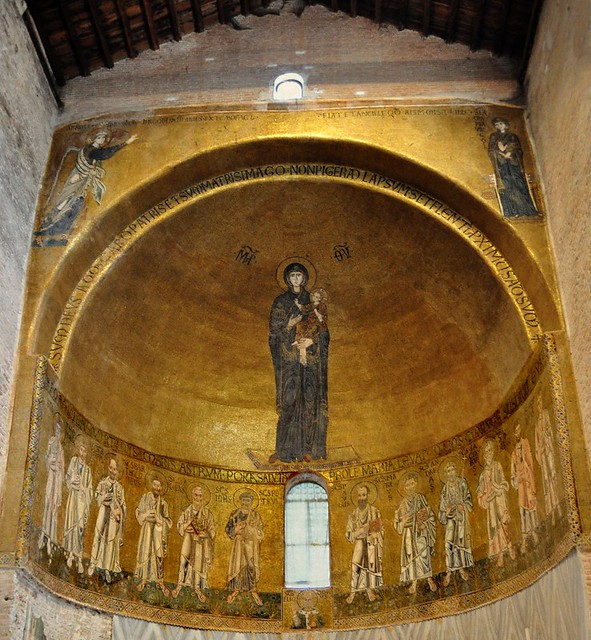
We have leapt forward some six centuries from Ravenna, with these mosaics being from the 11th and 12th Centuries. The style has changed, from one which in Ravenna still echoed the Roman styles to one which is much closer to that rigid style we call “Byzantine” as well as to what was later to become the medieval style. We walk forward to get closer to the mosaic in the apse, which is of the Virgin Mary with the infant Jesus.

torcello-5

I love this mosaic, with its gentle Madonna floating in a huge field of gold. I still remember well the impact it had on me the first time I saw it, a decade ago, on a late Autumn afternoon. The memory of that gentle face in its sea of gold has stayed with me ever since.

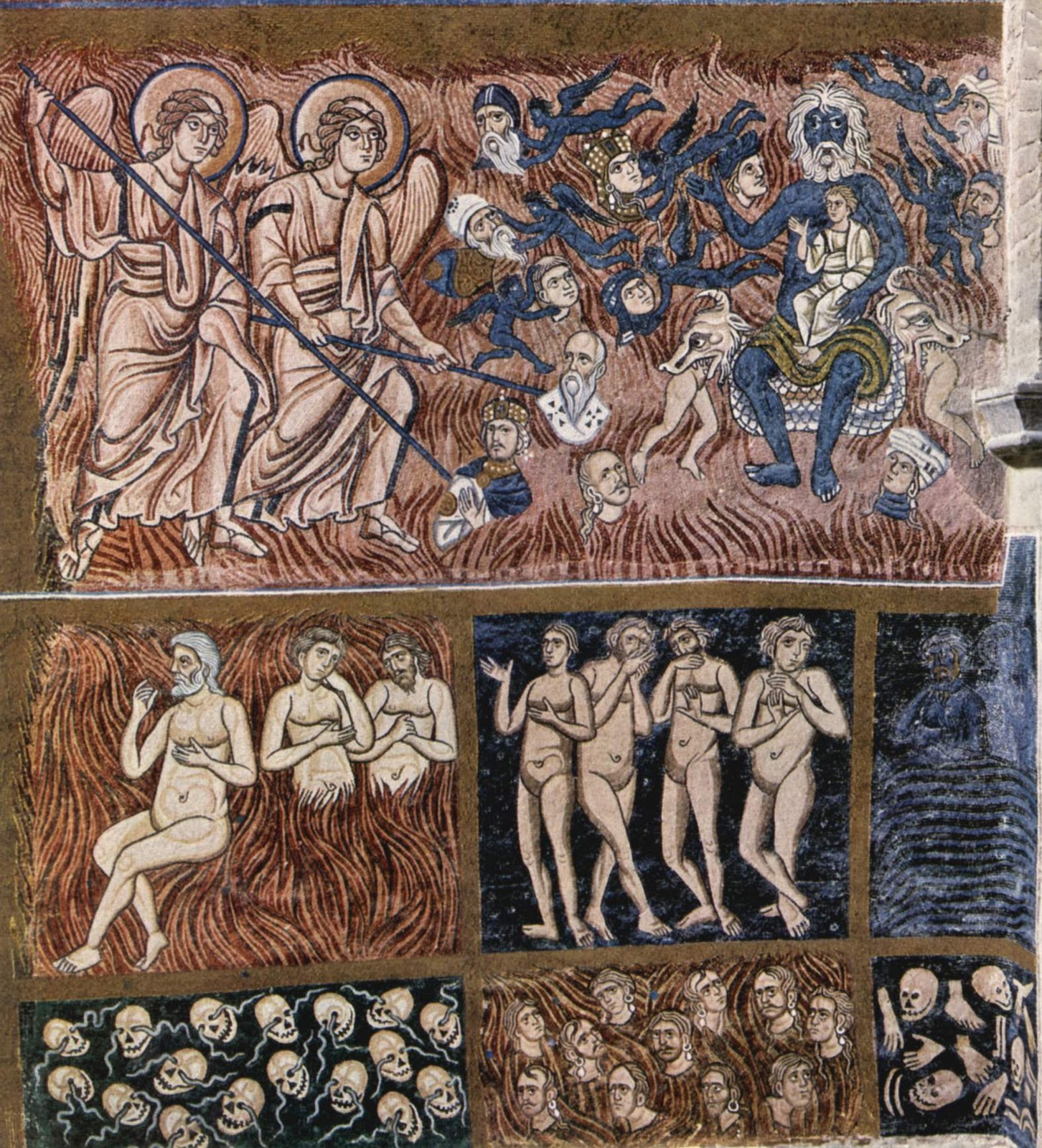
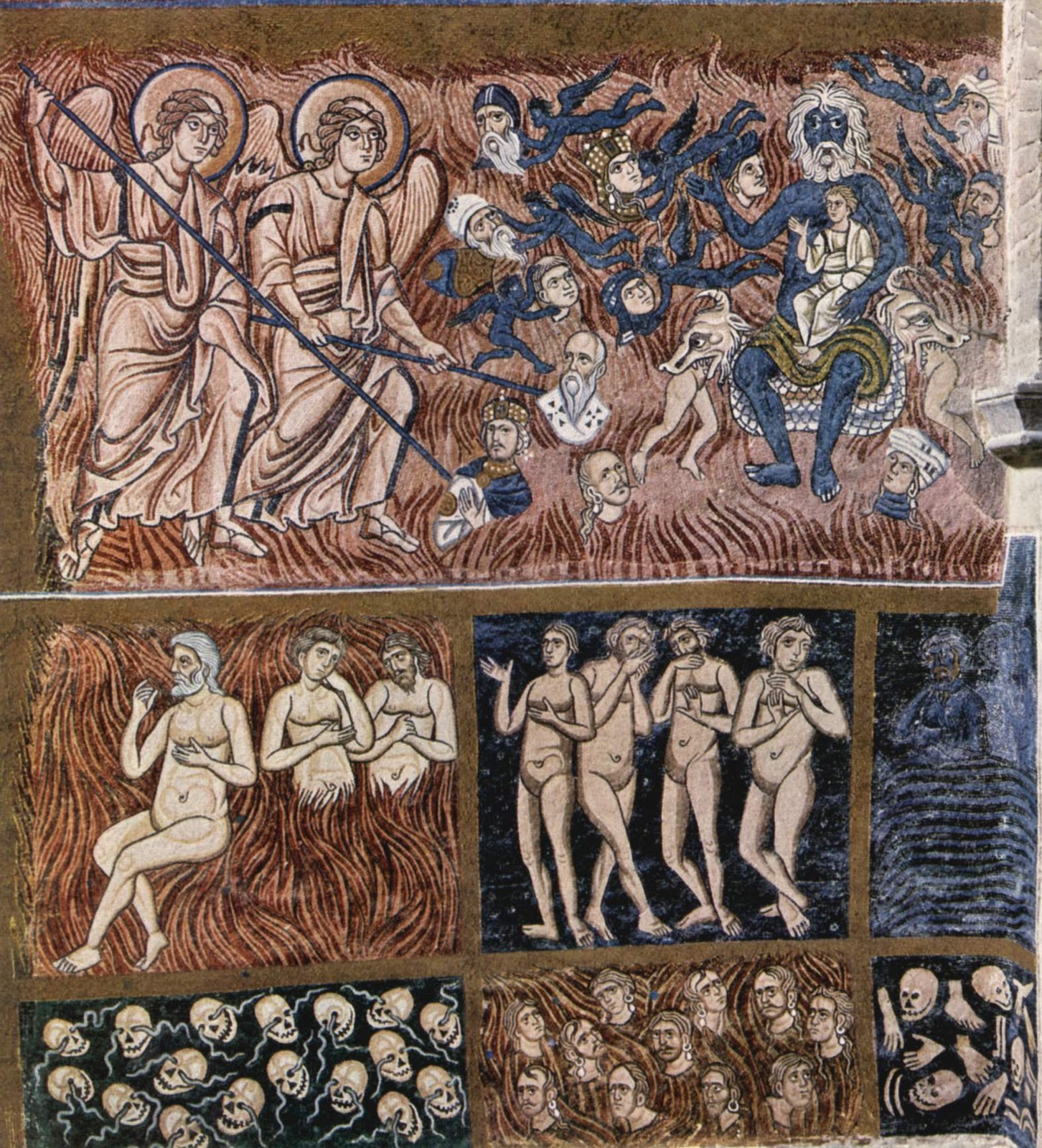
The mosaic on the back wall, a Last Judgement, is also spectacular, no doubt about it, but it doesn’t hold me as much. There are the usual scenes of naughty people being punished for their sins

Torcello-9-Last Judgment detail

The Middle Ages had a morbid fascination for this kind of stuff. But I find it all rather puerile. It always reminds me of the scary stories we used to tell each other in the dormitories at school after lights out, to give ourselves a delicious thrill of fright.

Onwards!

With a click of my mouse, my wife and I are back in Fusina, driving out of the car park in the little MG. We are now heading to Aquileia (79 Roman miles; 6 days’ marching). True to my promise to myself to follow the old Roman roads, I want to pick up the Via Annia, a major Roman road which linked Padova with Aquileia. We pick our way across the main road into Venice along the causeway and take the SS (Strada Statale) 14, which pretty much follows the trace of Via Annia. We bowl along, with the sun in our faces and the wind in our hair, passing Venice’s airport, and maybe catching sight to our right of Torcello’s tall campanile in the distance. We pass through Concordia Saggitaria, where we meet the Via Postumia, which ran across the whole of northern Italy from Genova to Aquileia, and on to Cervignano del Friuli. At Cervignano, we turn right onto the SR (Strada Regionale) 352 and a few Roman miles later arrive in Aquileia.

Poor Aquileia. During the Roman period it was an important city, guarding the eastern marches of Italy, which was the core of the Empire. A look at a map shows that any tribe from Central and Eastern Europe and beyond necessarily had to pass this way to enter the Italian lands, whether with peaceful intentions or not. When the Empire had its borders along the Danube River, Aquileia was the gateway to the rougher provinces of Illyricum, Dacia and Thrace that backed the frontier. As such, it was the starting-point of several important roads leading to this north-eastern portion of the Empire.

As the Empire’s western half collapsed and its borders were breached, the tribes did come, along those roads so helpfully built by the Romans. And the roads led to Aquileia, which was such a tempting target. It was first besieged by Alaric and his Visigoths in 401, who attacked it again and sacked it in 408 on his way to sacking Rome. Then it was attacked by Attila and his Huns in 452, who so utterly destroyed it that it was afterwards hard to recognize the original site. It rose again, a pale shadow of its former self, but was once more destroyed, by the Longobards this time, in 590. Today, it is just a quiet little village.

Aquileia’s loss was Venice’s gain. After each barbarian invasion, more of its inhabitants, along with those of smaller towns around it, fled to safety in the lagoon’s islands nearby, and so laid the foundations of Venice, but also of Torcello which we just visited, and of other lagoon towns.

We have come to visit the Basilica. From the outside it has all the look of a Romanesque church, and indeed it was built in 1031.

Basilica exterior

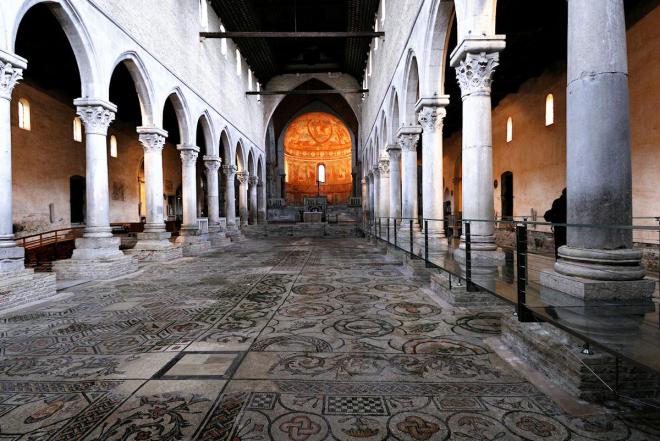
But when you go in, you find yourself in front of a vast mosaic floor, which quite takes your breath away
basilica floor-5

basilica floor-6

It was laid down in the 4th Century in a building which was destroyed by Attila’s Huns and around which a new church was built six centuries later. In fact, the builders covered up the mosaic with a new floor, and it wasn’t until 1909, when this floor was removed, that the mosaics once more saw the light of day. The subjects depicted include symbolic subjects, portraits of donors, scenes from the Gospels and dedicatory inscriptions. I show just one detail of it.

basilica floor-particular

These are even earlier than the mosaics we saw in Ravenna, and the Roman influence is clear. We could almost be looking at the mosaic floor of some vast Roman villa.

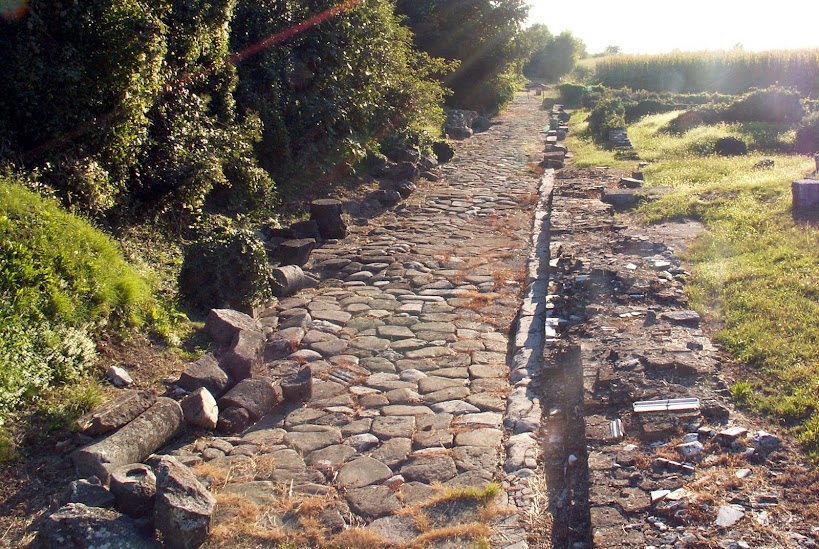
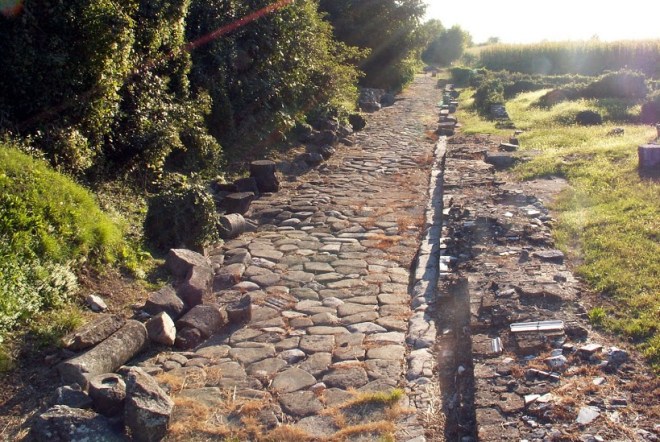
After admiring the mosaic floor and visiting other mosaics in the baptistery, my wife and I leave and walk around the ruins of the Roman town. As I click around, I am in a melancholy mood. So much destroyed, and for no purpose. We see the remains of one of the Roman roads that led out of the city.
roman road-3

The road beckons. After a rest, we’ll continue our journey north-eastward, from whence came the tribes which destroyed Aquileia.

(Readers who are curious to know how this dream trip continues can hyperlink here to the next leg of the journey)

______________________

Smart car: http://www.kinghdwallpaper.com/wp-content/uploads/2013/03/Smart-Car.jpg
MG car: http://www.msmclassifieds.co.uk/autoclass/stock-images/fliw8myjsf/oilhekvry4/fb173nj5q1.jpg
4 horsemen apocalypse-Durer: http://mcalmont.files.wordpress.com/2013/01/dur_4horse.gif
Sant’Apollinare Nuovo-1: http://apah.lakegeneva.badger.groupfusion.net/modules/groups/homepagefiles/49961-87537-58717-18.jpg
Sant’Apollinare Nuovo-2: http://classconnection.s3.amazonaws.com/256/flashcards/1016256/jpg/22early_christian_and_byzantine_%28student%291351736386614.jpg
Sant’Apollinare Nuovo-3: http://upload.wikimedia.org/wikipedia/commons/f/fd/Meister_von_San_Apollinare_Nuovo_in_Ravenna_002.jpg
Sant’Apollinare in Classe-1: http://upload.wikimedia.org/wikipedia/commons/thumb/f/fd/Sant%27Apollinare_in_Classe,_Ravenna.jpg/1280px-Sant%27Apollinare_in_Classe,_Ravenna.jpg
Sant’Apollinare in Classe-2: http://pixdaus.com/files/items/pics/9/49/73949_68edee7b4d49d43caa20681b9709f5bd_large.jpg
Mausoleum Galla Placidia: http://www.cittadarte.emilia-romagna.it/images/galleries/ravennaintro/ra-mausoleo-galla-placidia-mosaico-volta-celeste.jpg
Peutinger map segment: http://libweb5.princeton.edu/visual_materials/maps/websites/thematic-maps/qualitative/peutinger-table-map-1619.jpg
View from the ferry: http://farm9.staticflickr.com/8149/7667954390_2eafc258f6_h.jpg
Torcello aerial view: http://www.venicenews.info/Resource/TorcelloAerial.jpg
Torcello-1-front: http://venezia.myblog.it/media/00/00/1215490241.jpg
Torcello-2-backwall: http://d1ezg6ep0f8pmf.cloudfront.net/images/slides/a2/8812-torcello-cathedral-nave-looking-west.jpg
Torcello-3: http://farm7.staticflickr.com/6094/6362159351_0d3fe8a136_z.jpg
Torcello-4-last judgement detail: http://4.bp.blogspot.com/-wKvqFMTU-O8/TuyBuW4hnqI/AAAAAAAAAg8/-L3J_V80UC4/s1600/Last+Judgment+Torcello+Tweede+plaatje.jpg
Aquileia Basilica exterior: http://upload.wikimedia.org/wikipedia/commons/8/87/Basilica_Aquileia_1.JPG
Aquileia Basilica floor-1: http://img11.rajce.idnes.cz/d1102/7/7156/7156708_b33224f9e53bf0956558a717bbf58ec8/images/Aquileia_-_Basilica.jpg
Aquileia Basilica floor-2: http://static.turistipercaso.it/image/f/friuli/friuli_qhjf9.T0.jpg
Aquileia Basilica floor particular: https://upload.wikimedia.org/wikipedia/commons/thumb/8/8c/Aquileia,_storia_di_giona,_pavimento_della_basilica,_1a_met%C3%A0_del_IV_secolo.jpg/800px-Aquileia,_storia_di_giona,_pavimento_della_basilica,_1a_met%C3%A0_del_IV_secolo.jpg
Aquileia Roman Road: https://lh5.googleusercontent.com/-QkR-yVgM57g/SOy7HQQg_OI/AAAAAAAAYB4/7b6E9opcEuo/w819-h549/Aquileia+-+Roman+road.jpg
PINEAPPLE

Beijing, 4 May 2013

Spring is also pineapple time in Beijing. Actually, pineapples play the function of daffodils here. They are the harbinger of Spring. Their arrival tells you that help is on the way, that the temperatures will soon be going up and you can soon start shedding your heavy clothes.

All of a sudden, in lateish March, a swarm of people, mostly migrant workers as far as I can tell, appear on every street corner with a mobile table top. Here is a photo of the young lad who has staked out the corner just south of the bridge over the canal, which I cross every day to go to work.

pineapple seller 002

The pineapple sellers use the tables to prepare their pineapples for sale. Because they don’t just sell you a pineapple – if you want that, go to your local supermarket. They will peel their pineapples, carve out the eyes (I take the term from potatoes; that is the closest equivalent I can think of)

pineapple peeled

and sell them to you so prepared, lovely little yellow sculptures with whorls etched deeply into their surfaces.

pineapple unprepared and prepared

Pineapple prepared-01

In this last photo, the pineapple is shown off in a posh display case. In Beijing, as the sharp-eyed reader will observe in the first photo, the pineapple sellers normally put their product in cheap plastic bags – often yellow, which accentuates the yellowness of the pineapple’s flesh; a clever little piece of marketing. If you want, the sellers will go one step further and cut the pineapple up so that you can eat it as you walk along (they will thoughtfully provide you a thin, sharpened stick with which to spear the pineapple chunks).

My first meeting with the pineapple, when I was young, was out of a can, cored and cut into circular slices.

I have since learned that before the advent of large-scale refrigeration infrastructure, canning was the only way of transporting pineapple over long distances because pineapple doesn’t ripen if harvested green. A worthy reason, no doubt, but I was not impressed. I found canned pineapple cloyingly sweet and suspiciously soft. At some point, I discovered fresh pineapple; I think it was early in our marriage, when my wife brought one back from the supermarket. What a revelation! Firm flesh, sweetness with a slightly acidic taste which left a tingle in the mouth … a completely different experience. Since then, I have not touched the canned variety if I can possible avoid it.

I read that pineapple canning was developed in Hawaii. Which clicks a memory of a film, seen late at night on the TV and with Charlton Heston as the main protagonist. A delve through IMDb reveals that the film in question was The Hawaiians.

The Hawaiians movie poster

Apart from vaguely recalling that the film had to do with the development of the pineapple industry in Hawaii, I remember two scenes quite well. One is a visit by Heston to an island used as a leper colony; anyone who has read the bible cannot but be aware of the terrible plight meted out to lepers, and I was shocked by the idea that still in the 19th Century people could just be abandoned on an island because they had leprosy. The second scene I remember is the heroine, a Chinese woman who had emigrated to Hawaii and whose common-law husband it was who had been banished to the leper island, standing at his grave recounting to him news of the family. I found that very touching – and saw the same scene being re-enacted just a month or so ago, when we visited a local cemetery during the tomb sweeping holiday!

Hawaii may have developed the industry but it no longer leads it. As in all things now, China is among the largest producers of pineapples in the world, growing some 1.5 million tonnes a year (for those readers who are, like me, interested in useless information, Thailand is currently the biggest producer, standing at 2.6 million tonnes annually). Here is a picture of a pineapple field in Guandong province.

pineapples in Guandong

The fruits look suspiciously bright, due no doubt to the photo having been doctored. Which – in a country of where watermelons have been known to explode in the fields because of overuse of growth-enhancing chemicals – made me wonder if the pineapple fruit itself is doctored. A little search confirmed my worst suspicions! Stuff called gibberellic acid is used to “enhance fruit growth”. Gibberellic acid! The name itself is a horror, whose ingestion I have no doubt will reduce me to a gibbering wreck. And it’s no good that an official review by the US Environmental Protection Agency soothingly concludes that “the uses of Gibberellic Acids, as currently registered, will not cause unreasonable risk to humans or the environment”. The weasel words are there: “as currently registered”. Here, where farmers just chuck stuff on their fields with wild abandon, that is a meaningless cautionary clause. This Gibberellic acid is a hormone! Lord knows what will happen to me now …

What is the world coming to, that you can’t eat anything without the nagging doubt in your mind that if you don’t die you will turn into some sort of extraterrestrial being?

______________________________

Pineapple seller: my picture
Pineapple peeled: http://jblankenagel.net/IMGP1648.JPG
Pineapple unprepared and prepared: http://us.123rf.com/400wm/400/400/sapsiwai/sapsiwai0512/sapsiwai051200027/286517-ananas-entier-au-dos-et-sculpte-dans-l-avant.jpg
Pineapple prepared-01: http://en.wikipedia.org/wiki/File:Pineapple_prepared_01.jpg
Canned pineapple: http://agriseafood.webs.com/Canned-Pineapple.jpg
The Hawaiians movie poster: http://upload.wikimedia.org/wikipedia/en/f/f3/Poster_of_the_movie_The_Hawaiians.jpg
Pineapples in Guandong: http://www.chinapictorial.com.cn/en/destination/images/attachement/jpg/site133/20120705/00247e701cc9115f7f8455.JPG

FLYING FLUFF

Beijing, 1 May 2013

These last few days we have been suffering from an unpleasant side-effect of Spring: airborne white fluff, which trees around here are shedding in huge quantities in their eagerness to mate and to seed. The fluff drifts down, floats along on the breeze, is whirled about by passing cars, eddies in big clumps around your feet, and – most disagreeably – gets into your eyes, nose and mouth. Yesterday morning, it was so thick that looking up into the sky it seemed to be snowing.

pollen 008

while a few days ago currents in the canal and wind interacted to create a thick layer of fluff along the far bank.

pollen on canal 002

This is the offending tree, photographed in a quiet side street

poplars-Beijing 011

a poplar, a member of the aptly-named cottonwoods, whose more mature specimens carry these very distinctive diamond shapes on their lower bark.

pollen 013

And this is where the fluff is from:

cotton on tree-1

I first became aware of this tree in Vienna, not so much because of white fluff flying around, of which there was a fair amount at this time of the year, but because of some really magnificent specimens growing in the gardens of the posher, greener parts of town. So posh and so exclusive that I have found no photos on the web.

But actually, where the tree really came into its own was down by the Danube, in the last vestiges of the river’s wetlands which land use planners and river engineers of the 19th Century had left alone.

poplars on the Danube-1

Not surprising, really. The tree loves a wet, marshy soil. Which explains why there are so many poplars around Milan and in the Po River plain generally, which is a pretty soggy place. And in Milan, the problem of flying white fluff was truly awful. These pictures are not from Milan but are from that part of the country and give a good sense of the horror of it.

Italian-image-1

Italian-image-3

It’s the poplar’s love of wet soil that makes me wonder what it’s doing here in Beijing. I mean, this city is semi-desertic; lack of water is a constant and growing problem. Yet, there are huge plantations of the tree around the city, part of the reforestation campaigns that the government is so fond of as a way of minimizing the dust storms to which this city is periodically subject. Wise policies no doubt, but surely they could have found a more suitable tree?

____________________________

pix of sky, canal, and poplar tree: mine
Fluff on tree: http://www.naturamediterraneo.com/Public/data7/ciuppy/5.jpg_200941622240_5.jpg
Poplars on the Danube: http://www.quax.at/sites/default/files/images/nationalpark_donau_auen_976_Donauufer2_Baumgartner.jpg
Italian-image-1: http://upload.wikimedia.org/wikipedia/commons/thumb/9/9f/Fioritura_pioppi.JPG/1280px-Fioritura_pioppi.JPG
Italian-image-2: http://www.parmatoday.it/~media/base/19828483952093/curiosita-fioritura-pioppi-1.jpg