POSTS

CLEAR, PURE, CLEAN, PEACEFUL

Beijing, 18 January 2013

Readers of my posts will know that I walk along a piece of canal on my way to and from the office. During these walks, I watch how the change of seasons are reflected – literally and figuratively – in the waters of the canal and the willows that grow along its edge. This year, winter came flurrying in with a blustery storm in late November which damaged a number of the willows along the canal.

Winter-2012 005

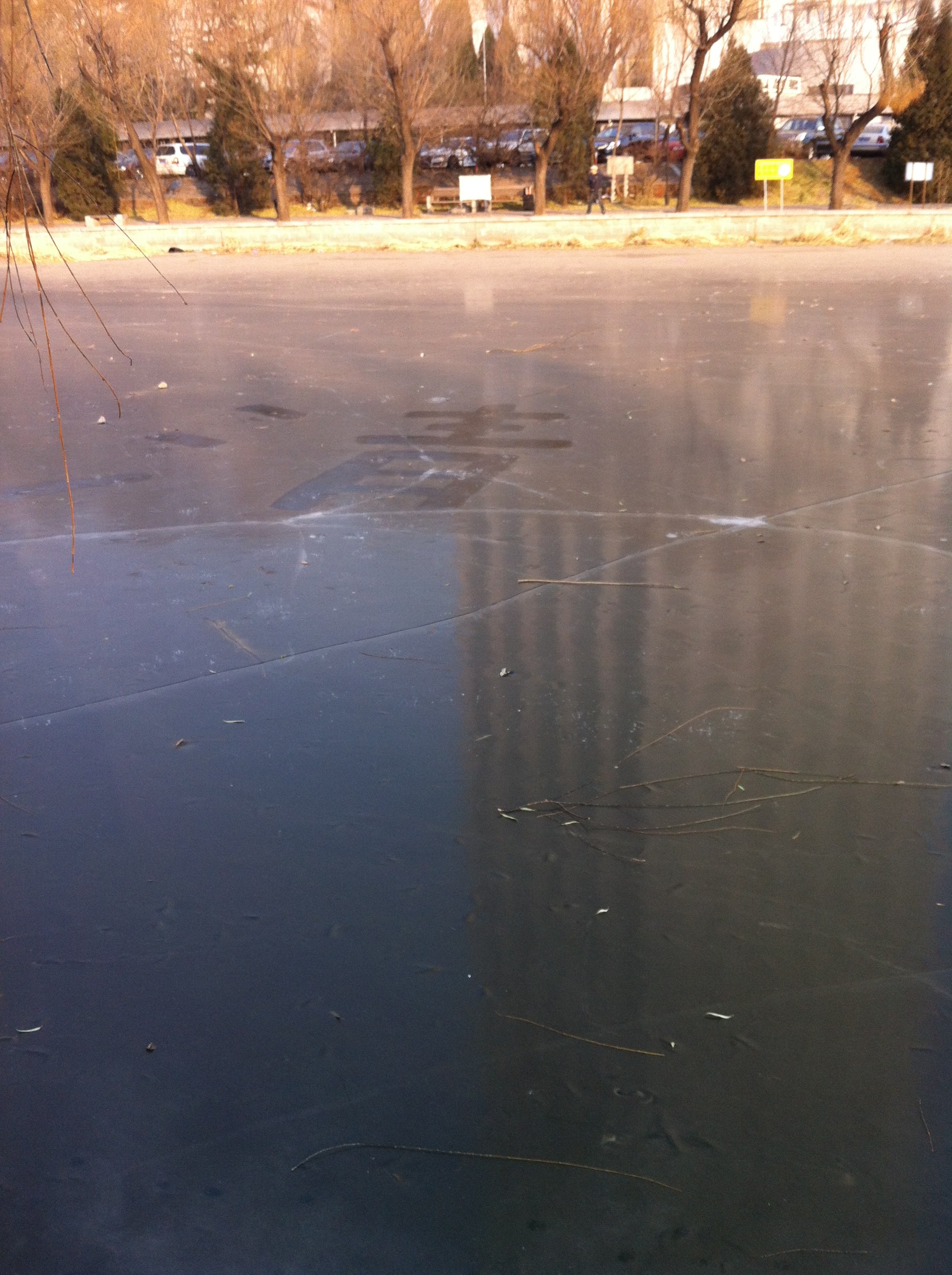
Then came a snowstorm, which left a modest covering of snow and which quickly disappeared. Thereafter, the temperatures plunged and the canal froze over. With no snow, the ice was initially buffed clean by the wind, but the wind soon died down and over a period of a week or so a thin layer of dust settled on the ice’s surface; winter is very dry in Beijing. One morning, as I turned off the bridge to start my walk along the canal, I noticed faintly etched in the dust a Chinese character. I was intrigued. What had been written? A name? Two names, united in love? Or something stupid like “Wash me”? Or worse?! Given my illiteracy in Chinese, I had no idea. So I took a photo.

qing

I showed it to my Chinese secretary. She studied the photo a minute and said “it says, qīng.”

And what does it mean, I asked?

Clear, pure, clean, she told me. Peaceful, also.

Clear, pure, clean, peaceful … The writer must have been feeling good when he wrote it. Was it love? Just a happy moment? Whatever it was, I thank him. Later wind has effaced the character, but every time I walk past the spot I get a warm feeling.

POSTSCRIPT 28/1/13

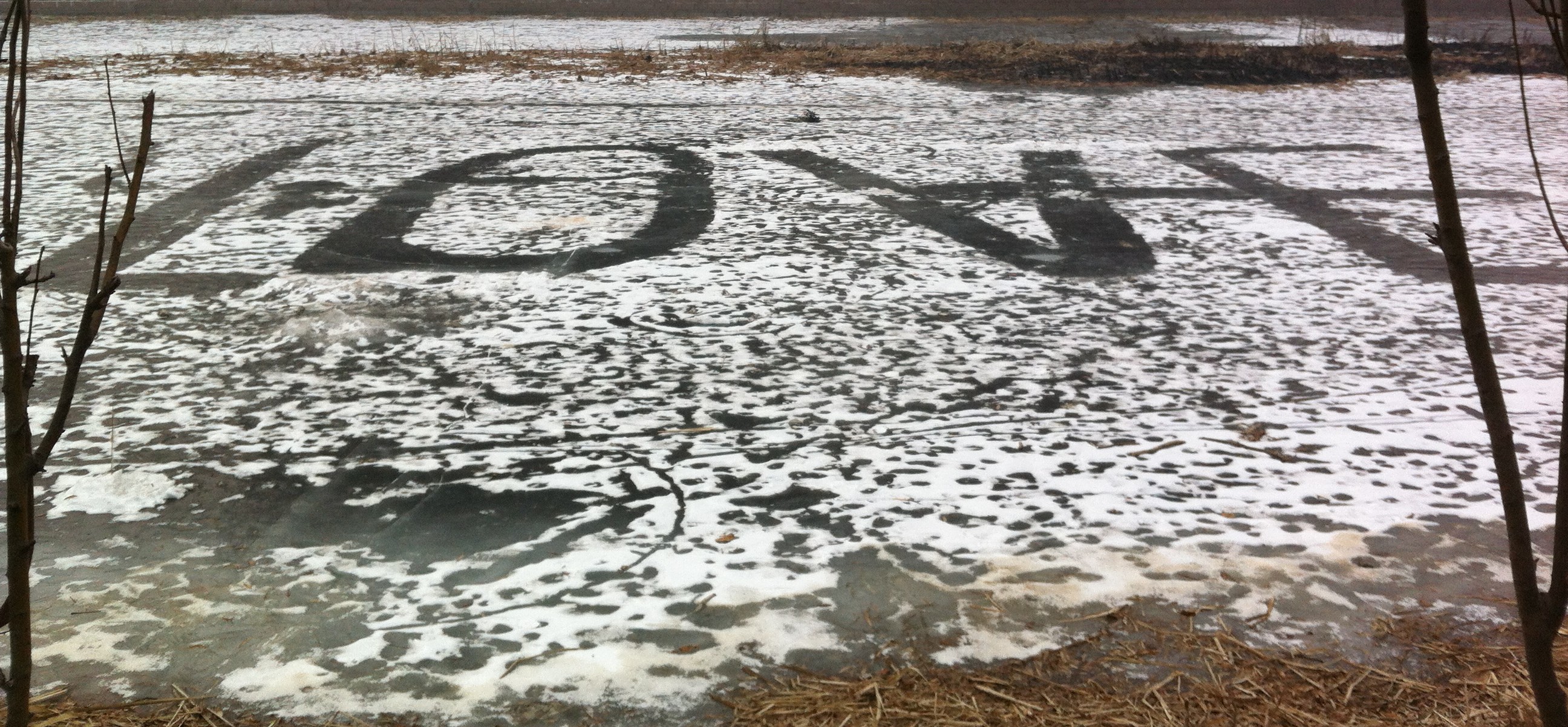
Since writing this, snow has fallen and has covered the canal’s ice with a thin coating of snow.  Someone went out and wrote in the snow. This one I could read:

love 002

RIVER POEMS

Beijing, 17 January 2013

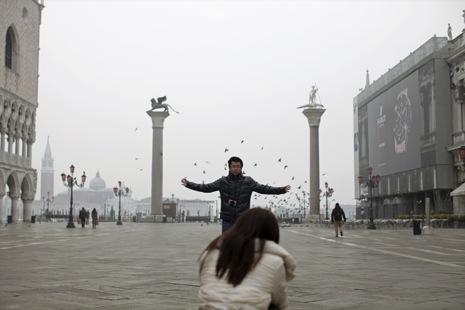
There are only a few weeks to go to the Chinese New Year and the Chinese newspapers are full of articles on people’s plans for the festive period and on the country’s transportation infrastructure bracing itself for the onslaught of Chinese who will be travelling home or – more frequently now as they get richer and move into the middle classes – travelling abroad for package tour holidays. As I read, I was reminded of a wonderful piece in the New Yorker written by the magazine’s Man in Beijing, Evan Osnos. Two Chinese New Years ago, Osnos decided to join one of these package tours, the “Classic European,” a bus tour visiting five countries in ten days.  It’s a sympathetically amusing article and I would urge any of my readers with an interest in social trends in China to read it. It can be accessed at http://www.newyorker.com/reporting/2011/04/18/110418fa_fact_osnos. Here is a photo from the article.

chinese tourists-8

Osnos’s piece reminded me rather of a 1969 film, If It’s Tuesday, This Must Be Belgium, a romantic comedy about a group of American tourists doing a bus tour of nine European countries in 18 days.

If_It's_Tuesday

Osnos mentions in passing a sub-trend in Chinese tourism, that of Chinese lovers of poetry who go on a pilgrimage to Cambridge (the Cambridge in the UK) to gaze reverently at a clump of willow trees growing on the banks of the River Cam. The reason for all this is a poem which is wildly popular in China: 再别康桥 “Saying Goodbye to Cambridge Again”. It was written by Xu Zhimo, a famous romantic poet of the early twentieth-century.
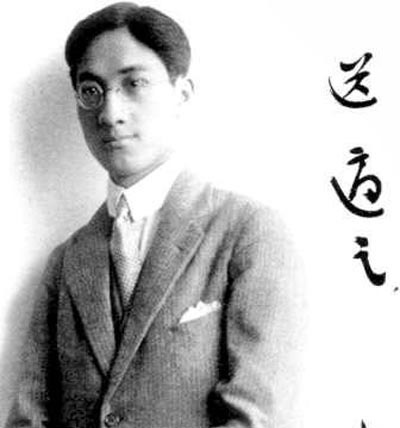
Xu Zhimo

Xu travelled in the West for a number of years. He spent a year in Cambridge in 1921 and on a second trip there in 1928 wrote the poem. He died a few years later in a plane crash in China.

I don’t read (or speak) Chinese, so I’m afraid the poem in its original form is closed to me. However, there is what seems to be a standard translation (every Chinese website that I looked at carried the same one) which is really quite pleasant on the ear. But before I quote it here, I am moved to first cite the poem in its pinyin form (without tonal marks, which I find confusing and quite unhelpful since I don’t hear the language’s tones), to give other Chinese-illiterate readers like myself a small taste of its rhythm and rhyme.

Qingqing de wo zou le, zhengru wo qingqing de lai;
wo qinqing de zhaoshou, zuobie xi tian de yuncai.

Na hepan de jin liu, shi xiyang zhong de xinniang;
boguang li de yan ying, zai wo de xintou dangyang.

Ruanni shang de qing xing, youyou de zai shuidi zhaoyao;
zai Kang he rou bo li, wo ganxin zuo yi tiao shuicao!

Na yu yin xia de yi tan, bus hi qingquan,
shi tianshang hong rousi zai fu zao jian, chendianzhe caihong shide meng.

Xunmeng? Cheng yi zhi chang gao, xiang qingcao gen qing chu man su,
manzai yi chuan xing hui, zai xing hui banlan li fangge.

Dan wo buneng fangge, qiaoqiao shi bieli de shengxiao;
xiachong ye wei wo chenmo, chenmo shi jinwan de Kangqiao.

Qiaqiao de wo zou le, zhengru wo qiaoqiao de lai;
wo hui yi hui yixiu, bu daizou yi pian yuncai.

And now for the translation:

Very quietly I take my leave
As quietly as I came here
Quietly I wave good-bye
To the rosy clouds in the western sky

The golden willows by the riverside
Are young brides in the setting sun
Their reflections on the shimmering waves
Always linger in the depth of my heart

The floating heart growing in the sludge
Sways leisurely under the water
In the gentle waves of Cambridge
I would be a water plant!

That pool under the shade of elm trees
Holds not water but the rainbow from the sky
Shattered to pieces among the duckweeds
Is the sediment of a rainbow-like dream

To seek a dream? Just to pole a boat upstream
To where the green grass is more verdant
Or to have the boat fully loaded with starlight
And sing aloud in the splendour of starlight

But I cannot sing aloud
Quietness is my farewell music
Even summer insects keep silence for me
Silent is Cambridge tonight

Very quietly I take my leave
As quietly as I came here
Gently I flick my sleeves
Not even a wisp of cloud will I bring away

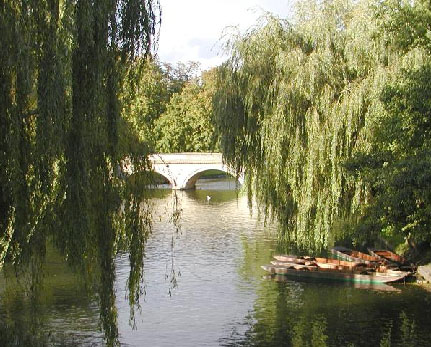
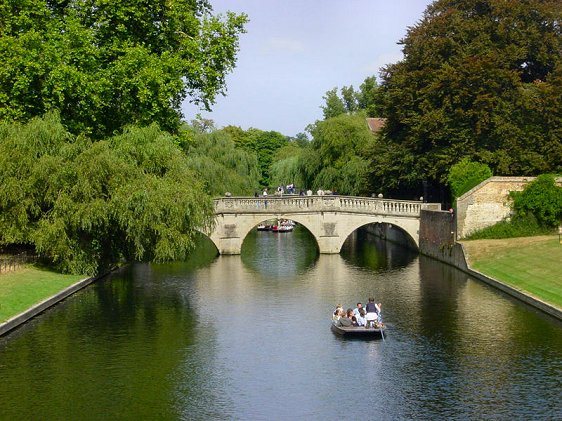
I can’t resist adding a few pictures here of the river Cam. It is a river that flows quietly through Cambridge, as quietly as the poem itself flows across the page.

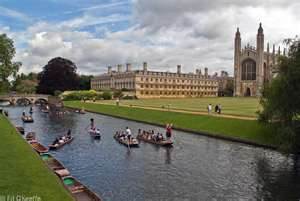
Cam with willows

Henry VIII chapel and Cam

Cam-1

I came across the text of the poem for the first time through an English Lit class I held with a Chinese student (class is a big word; it was more a pleasant discussion around English literature every Saturday morning, over a cup of hot sweet soya milk). After we had gone through a few English poems he brought me this translation of  “Saying Goodbye to Cambridge Again”. I was touched and wanted to give him in return an English poem with a river as its theme. But what?

I went on a search and came across the poem “The River” by Sara Teasdale.

sara-teasdale

Teasdale, an American poet, was more or less a contemporary of Xu. She died in 1933.

I came from the sunny valleys
And sought for the open sea,
For I thought in its gray expanses
My peace would come to me.

I came at last to the ocean
And found it wild and black,
And I cried to the windless valleys,
“Be kind and take me back!”

But the thirsty tide ran inland,
And the salt waves drank of me,
And I who was fresh as the rainfall
Am bitter as the sea.

I had never heard of Teasdale, and a look at her other poems did not impress me, but this poem, at this time in my life, spoke to me. Who doesn’t reach my age and sometimes wish he could slough off the pessimism which comes with the passing years and be young again, fresh and optimistic?

____________________________

Chinese tourists: http://www.newyorker.com/online/blogs/books/assets_c/2011/04/110418_osnoschinese01_p465-thumb-465×310-68686.jpg
Film poster: http://upload.wikimedia.org/wikipedia/en/9/9f/If_It%27s_Tuesday.jpeg
Xu Zhimo: http://cfile25.uf.tistory.com/image/1768563E4F8F1F6C23B5BE
Cam with willows: http://www.baihuisoft.com/Uploads/201179154340875.jpg
Henry VIII chapel and Cam: http://ts1.mm.bing.net/th?id=H.4921582377371804&pid=1.9
Cam and Clare college: http://anyluckypeny.files.wordpress.com/2012/05/clare-college-bridge-university-of-cambridge.jpg?w=870
Sara Teasdale: http://www.poetryfoundation.org/uploads/authors/sara-teasdale/448x/sara-teasdale.jpg

MY MESSAGE IN A BOTTLE

Beijing, 16 January 2013

My previous posting on a message in a bottle has reminded me of a story that happened to me a year or so ago. It all started when out of the blue I received an email from a woman who was quite unknown to me. After telling me that she had got my email address off the Internet, she cited me an address in Edinburgh and one in Canada, and asked me if I had ever lived there. It so happened that the Edinburgh address was where my wife and I had lived in our last two years as students at University, while the Canadian address was that of my parents.

I didn’t know what to make of this email. How had this complete stranger found my old addresses? I looked her up on the Internet and discovered that she was British, so some sort of connection with my past was possible. But she was obviously at least ten years younger than me, possibly more, so it wasn’t someone I had known in the past whose name had changed, nor was it someone with whom I could have had a common acquaintance of my generation. So who was she? Was this some kind of scam? Was some murky story in my past coming back to haunt me? But what murky story could that possibly be? I’m not a very murky person.

After a few weeks of mulling it over – I was on holidays at the time – I decided that I couldn’t resist the temptation to know more. So I wrote back to her, warily admitting that I had indeed lived at those addresses and so I was probably the person she was looking for. I then politely asked her what this was all about.

She got back to me quickly, thanking me effusively for replying. She then explained the background. One day, she and her boyfriend were browsing around in a used books store in Royal Tunbridge Wells in the south of England. For those of you, like me, who have never been to this pretty little town, I append here a picture.

Royal Tunbridge Wells

In the store, she told me, she had stumbled across a small book in the front of which a piece of paper had been slipped with my name and the addresses in Edinburgh and Canada written on it – as well as the fateful phrase “please forward if possible”. My correspondent was electrified by that last phrase. She felt that fate had sent her a message-in-a-bottle and she decided there and then that she was going to track me down and hand over the book.

So the hand-over took place through my daughter in London. No doubt my correspondent was highly pleased with herself. But I was left with an even deeper mystery. Who had wanted to give me this book? And why?

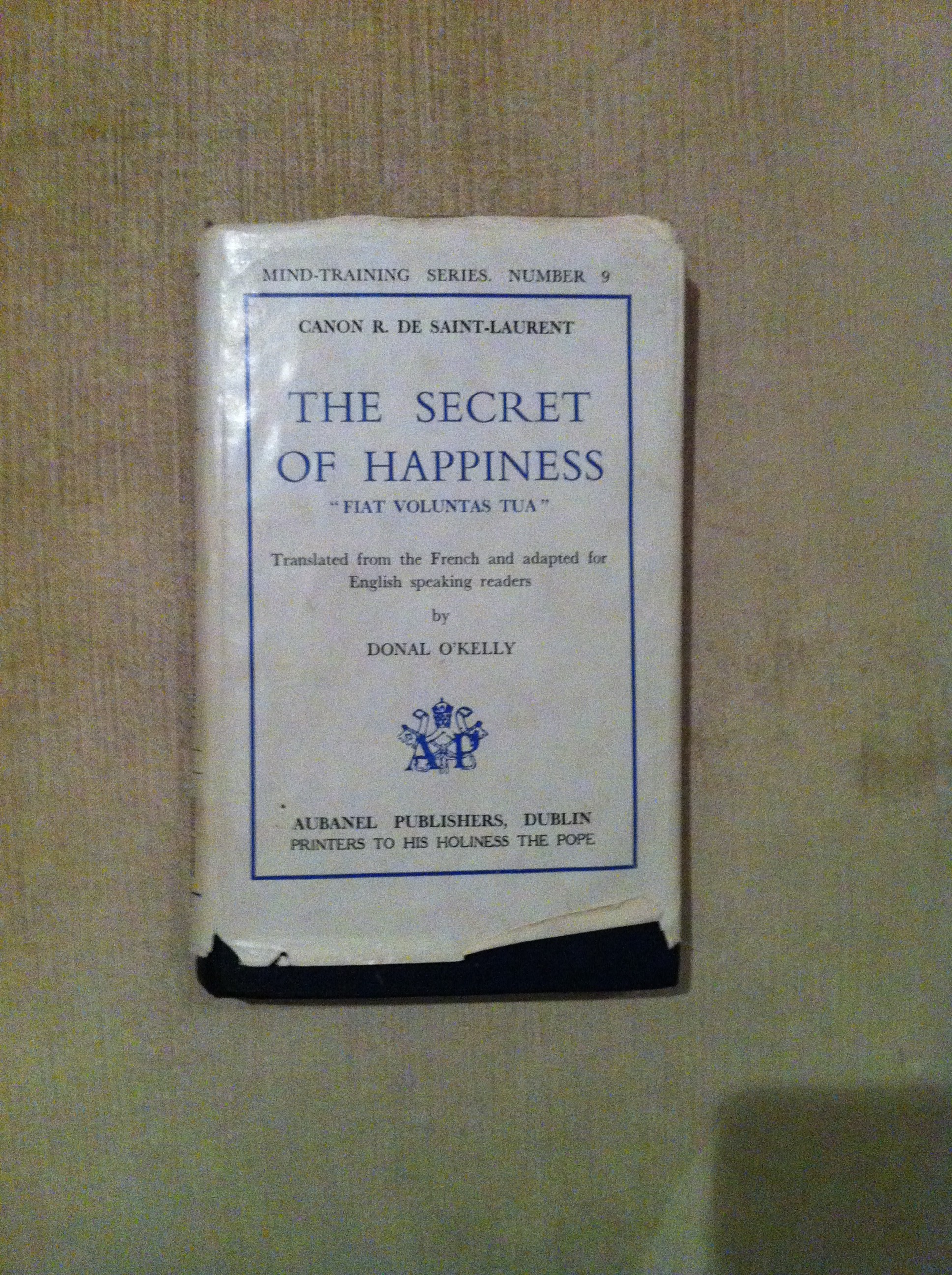
The book is quite special. It is entitled “The Secret of Happiness” and subtitled “Fiat Voluntas Tua”, or Thy Will be Done.  It is a rigorously Catholic self-help book, written originally in French by a certain Canon Raymond de Saint-Laurent, and published in English by Aubanel Publishers, Dublin, “Printers to His Holiness the Pope”, in 1951.

book cover 002

According to the book’s back cover, the reverend Canon was the author of many such books with titles like “A Cure for Shyness: Causes, Consequences and Remedies”, Self-Control: Ways of Curing Yourself from Being Emotive, Expansive and Impulsive”, and “Optimism: How to Acquire Mental Poise”.

Who had thought I would be interested in this book, or that it would help me? I’ve never needed help to be happy.

The book itself gives no clues other than the inserted note. There are no names written in it, no dedications, no marginalia. In fact, the book looks unread. Not surprising really. I flipped through a couple of pages, it’s enough to send the most hardened insomniac into a deep Rip van Winkle-like sleep.

Casting around for possible suspects, I first thought of my mother. She had from time to time during my boyhood sent me pious books to read, but mostly on the lives of worthy saints, presumably as exemplars for me of a better life. I also vaguely recall that in my puberty she once gave me a book on Sex, written by a Jesuit priest. All I remember from it is an affirmation that after heavy petting it was quite normal for girls to have backaches … But I quickly eliminated my mother. The writing on the note wasn’t hers, she hadn’t lived in the UK since the book was published, and why would she put her own address in Canada?

I then thought of an Aunt, sister of my father, who lived to the south of London and in the general direction of Royal Tunbridge Wells. She was a very religious person, High Church of England – only my father had converted – so she might have owned this book. And she did always send us books for Christmas. Perhaps when she died and the contents of her house were dispersed this book somehow ended up in a used books store in Royal Tunbridge Wells. But this scenario didn’t seen likely. The type of books she sent us was detective stories and the like; I really couldn’t see her wanting to send me this book.  Nevertheless, in order to pursue all lines of enquiry, I sent a scan of the note to one of her children to see if he thought it was her handwriting. He replied in the negative.

Given the religious nature of the book, I then thought of my godparents. I eliminated my godmother immediately. She was French, a dentist in Haute Savoie. I had met her a few times, and she had never struck me as the type of Catholic who reads books like this. And why would the book have ended up in Royal Tunbridge Wells? My godfather made for a better candidate. He was English and lived in the south of England somewhere, so it’s imaginable that books dispersed after he died ended up in Royal Tunbridge Wells. From the diary my father kept at school and university, which I had recuperated from a dusty shelf after he died, I discovered that my godfather had been very instrumental in encouraging my father to convert to Catholicism when at University, so I knew he was a strong Catholic. But we were never close; I had only met him once. Could it be that as a last act of his godfathering he thought of sending me this book? There is no way of finding out. He’s dead and I don’t know any of his children, to whom I could have sent the note to check the handwriting.

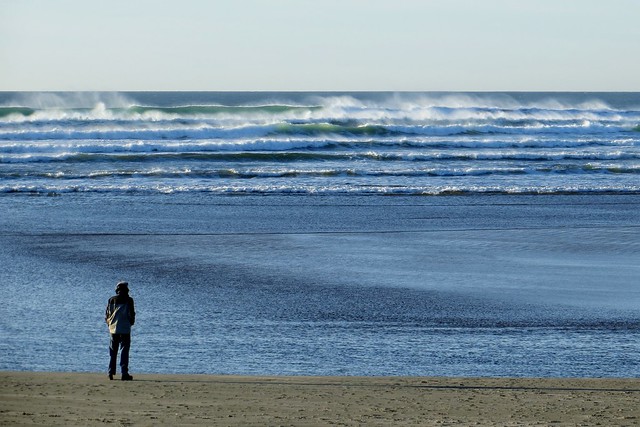
And so the leads have all gone cold, and I am left with the unsolved mystery. I stand on the metaphorical beach holding in my hands the message that arrived to me in a bottle. I will spend the rest of my life scanning the horizon, wondering where the message came from and why it was sent to me.

man standing on a beach-2

And saddest of all, although I love reading books I will never read this one, because it is a type of book that I would never, ever, read!

_____________________

Royal Tunbridge Wells: http://farm9.staticflickr.com/8078/8367015396_c8c90646e0_z.jpg
book cover: my picture
Man staring out to sea: http://farm9.staticflickr.com/8078/8367015396_c8c90646e0_z.jpg

9/11 MEMORIAL, NEW YORK

Beijing, 13 January 2013

They say that those of us who were alive at the time remember where we were and what we were doing when we heard about Jack Kennedy’s assassination. That is certainly true for me; I was in bed in my dormitory at boarding school with lights out when one of the older boys burst in announcing the news. The same holds for me when it comes to the attack on the twin towers of the World Trade Center in New York. I had recently come back from lunch and was working without much enthusiasm on a document when a colleague came running down the hall shouting out the news to all of us.

Since then, every time my wife and I go back to New York, we always take a trip down to ground zero, to see how things have changed. So it was this time that on the last day of our latest stay in New York, after an earlier false start (we hadn’t understood that you need to book on-line), my wife and I managed to visit the 9/11 Memorial. After collecting the tickets, finding the entrance, threading our way through an active construction site, past numerous security checks – more numerous than at an airport – we finally arrived in the area of the memorial itself.

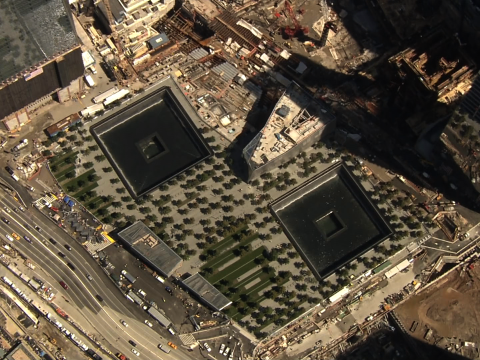
It is a somberly moving monument. First, there is the location of the two square fountains that make up the design. They have been inserted into the footprints of the two towers, thus serving as an eternal reminder of the latter’s disappearance.

aerial view-3

Then there is the design of the fountains. The water doesn’t spray up in noisy, joyous jets as is normally the case for fountains, but instead falls from the rims of the fountains, continuous lines of tears, into the dark pool far below

memorial 004

from where it disappears down into a central, apparently bottomless void, the hole left in the city’s and the in country’s heart.

memorial 006

And all around the fountains’ rims, from where the water-tears flow, are inscribed the names of those who died in the attack on the towers, as well as in the attack on the Pentagon and in the airplanes that were used as the weapons.

memorial 007

Truly moving indeed.

memorial 010

_______________________

Aerial view: http://i.i.com.com/cnwk.1d/i/tim/2011/09/10/rmitchell911memorial_480x360.png

other pictures: mine

MESSAGE IN A BOTTLE

Beijing, 12 January 2013

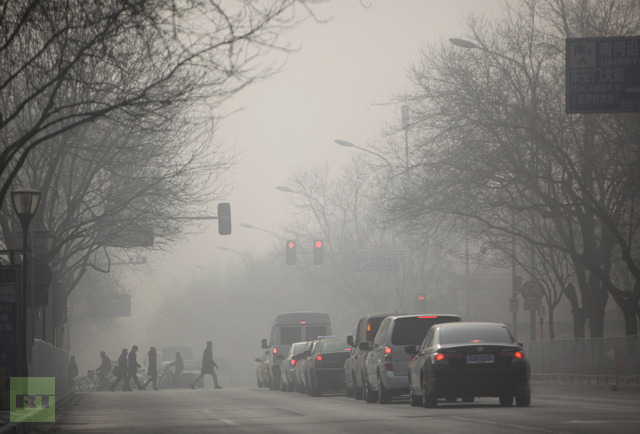
We arrived back in Beijing a few hours ago and found ourselves landing in a real pea soup – perhaps carrot soup would be more appropriate since the colour was a dull red; dust from the Gobi desert had blown in. Visibility was really very bad; my wife and I thanked God and radar for having got the plane down safely. As I write, the sun, which was glaring weakly through the fog when we arrived, has disappeared completely to leave behind a grey miasma.

people-walk-heavily-hazy

Electronic visibility seems just as bad. Our internet connection is still acting up; it’s very difficult to get through the Great Firewall that surrounds China.

Great-Firewall

It started getting bad a month or so before the 18th Congress of the Communist Party. Everyone in the expat community agreed that the Powers that Be were tightening their grip on the electronic chatter to make sure that nothing embarrassing or destabilizing got out (the Bo Xilai case was uppermost in everyone’s minds). Everyone also agreed that surely they would relax their grip after the Party Congress and things would go back to where they were (I won’t say normal). But that didn’t happen. So now the expats are saying that internet will be controlled until March when the new leadership takes over, and then surely after that they will relax their grip.

I’m not so sure. Control is a drug; once you get a taste for it, you can’t give up, you want more. I’m afraid that my little tunnels through the Great Firewall will all be blocked up and that my voice will no longer get through to the outside world. These last few weeks in New York have given me a heady taste of what freedom of speech can be like. I published my posts and researched my materials on the internet with ease and speed, without the constant worry that I would lose the connection and everything would crash.

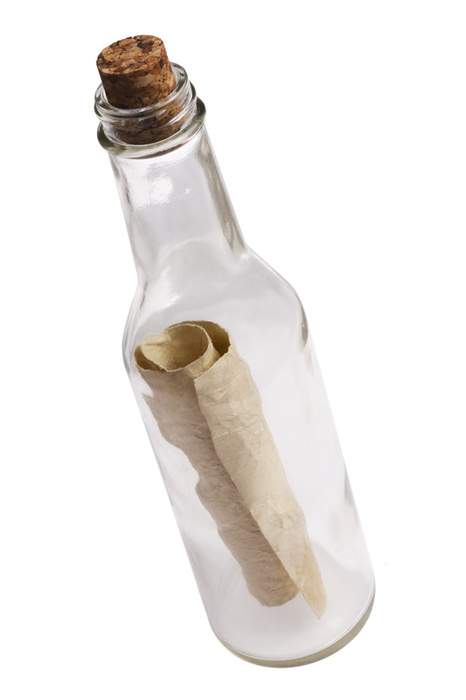
I don’t want to lose my voice. Paraphrasing Langston Hughes, the African American poet, “now do I wonder at this thing, that I am old but I can sing”.  I want to keep singing, to keep sending out my little messages in their bottles.

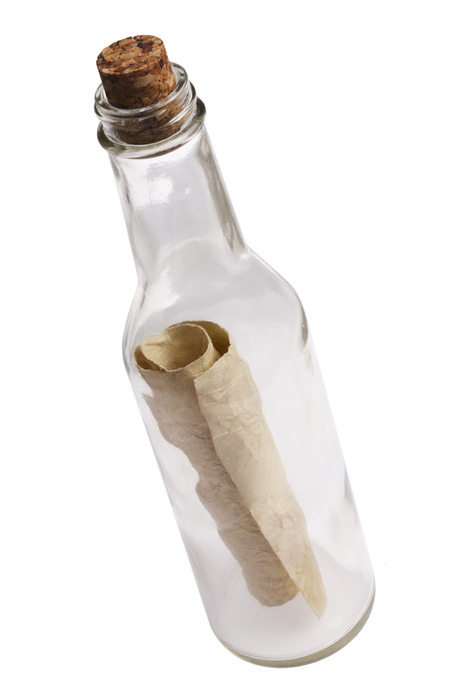
message in a bottle

_______________
air pollution Beijing: http://rt.com/files/news/china-pollution-851/people-walk-heavily-hazy.jpg (Reuters / Jason Lee)
cartoon great firewall: http://www.thetelecomblog.com/wp-content/uploads/2012/12/Great-Firewall2.jpg
message in a bottle: http://1.bp.blogspot.com/_-C_ejcKBFWo/TEnq5dYUa3I/AAAAAAAAJbc/DI29YiFyC-Q/s1600/MIAB.jpg

ST. MARY’S GARDEN

New York, 7 January 2013

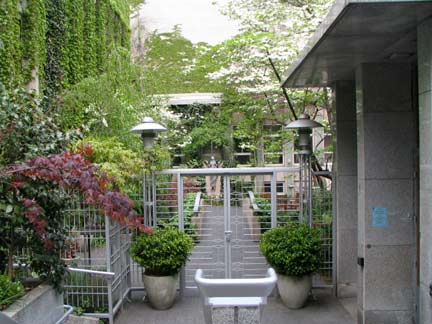
Several years ago, I had to be in New York for a period of two weeks to cover an international meeting. It was early May, a good time to be in the city. The weather is normally nice and it’s not too hot yet. The first morning, I left early to give myself plenty of time to deal with the wearisome entry procedures. My walk to the meeting took me along 47th Street. As I was walking between First and Second Avenues, I spied to my left the entrance to a little garden, open to the public.

mary's garden-2

Intrigued, I checked my watch and decided I had sufficient time to take a quick look. What I found was achingly lovely: a little pool with the quiet gurgle of a fountain to the side, a small bridge spanning the pool

mary's garden-1

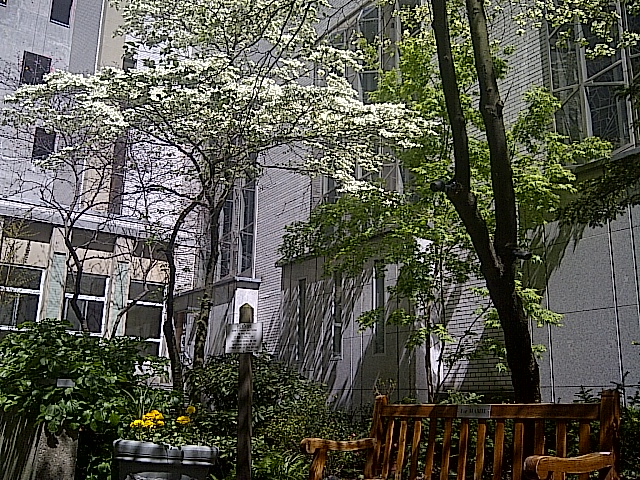
leading to three benches, and planted beds around the pool. Most magnificent of all, arching over the whole, were three dogwood trees. They were in full bloom, and the soft whiteness of their flowers, tinged with spring green, permeated the whole space. I was left without breath and sat for five minutes to absorb it all. Of a sudden, I started out of my reverie, checked my watch again, and hurried off to my meeting.

The garden must be little known, because I was unable to find any photos of it on the web other than the two above. So I later sent my daughter to take photos when the dogwood trees were in flower. Here is a sample.

IMG-20130503-01859

IMG-20130503-01863

IMG-20130503-01864

I went back several times during the next two weeks, to reflect and to rest, watching the dogwood flowers begin to fade. I learned the garden’s name – St. Mary’s garden – and that it was attached to the small church next door, the Church of the Holy Family. I brought my wife there when she joined me in the second week. We sat on one of the benches and held hands.

When yesterday I found myself by chance close by, I could not resist visiting the garden again. Given the season, it was drearer.

garden-winter 002

But it still had a dreamy quiet; the fountain gurgled softly, and a bird sang in the dogwood trees. As I sat there, a fragment of the Litany of the Blessed Virgin Mary floated up out of my boyhood memories, heard murmured by old women in dark, empty churches at the time of the Angelus:

Mystical rose,
Tower of David,
Tower of ivory,
House of gold,
Ark of the covenant,
Gate of heaven,
Morning star,
Health of the sick,
Refuge of sinners,
Comforter of the afflicted …

And then another memory fragment floated to my the surface of my mind, lines from the end of T.S. Eliot’s poem Ash Wednesday:

Blessed sister, holy mother, spirit of the fountain, spirit of the garden,
Suffer us not to mock ourselves with falsehood
Teach us to care and not to care
Teach us to sit still …

And I sat still.

_________________
Mary’s garden-1: http://www.dkimages.com/discover/previews/739/151269.JPG
Mary’s garden-2: http://forgotten-ny.com/wp-content/gallery/streetscenes_chip_07/11-holyfamily-grotto.jpg
Dogwood in bloom-1: my daughter
Dogwood in bloom-2: my daughter
Dogwood petals in the pool: my daughter
garden in winter: my picture

LIGURIA, A CORNER OF PARADISE

New York, 4 January 2013

Like I said in an earlier posting it’s great to be with the kids, and Manhattan is certainly a fun place to ring in the new year, but it has meant that we haven’t followed our usual pattern of spending Christmas and New Year in Italy. Normally, we would all congregate in Milan, pass Christmas there, and then head for Liguria. Milan is quite depressing at year-end; it’s grey and cold and wet, and everyone’s left for somewhere else. But Liguria, especially our little bit of it just south of Genova, is lovely. The crowds of beach tourists have vanished, but the days are still mostly sunny, the temperature is mild, the sea is blue

coast and sky-1

the bougainvillea is still flowering

bougainvillea

the church’s campanile is awash in festive colours

campanile

… It’s a corner of paradise.

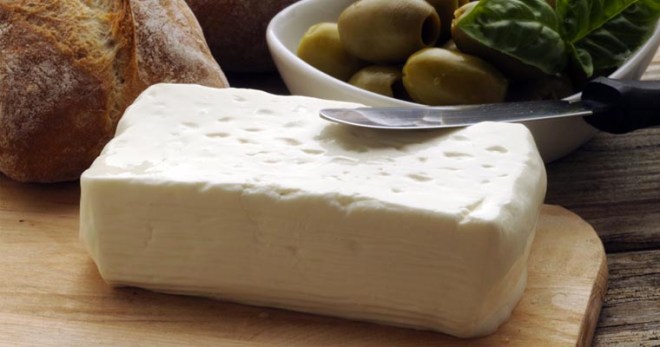
When we get off the bus, our routine is always the same. We walk up to the apartment, drop off the bags, and then head down to the village centre for dinner. There is a restaurant there that we always go to, where we order its specialty: focaccia al formaggio. For the uninitiated, this is a mass of melted soft cheese held very slightly between two very thin strips of flatbread.

Fotofocaccia01

The cheese is held so slightly by the flatbread that it is an art to pick up a piece and bring it to one’s mouth without half the cheese ending up on your lap. For the first couple of times, it’s safer to use a knife and fork.

Described like this, it doesn’t sound like much, but I can assure you that focaccia al formaggio is absolutely delicious, so famous now in Europe that the local authorities have applied for, and received, the EU certification of Protected Designation of Origin; in other words, no-one else, anywhere, can claim to make focaccia al formaggio.

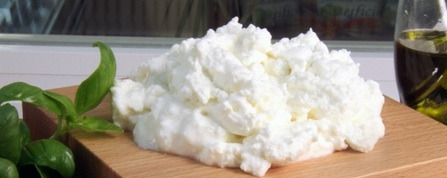
The key to a good focaccia al formaggio is of course the cheese. Originally, the locals used a highly local cheese, prescinsêua (as it is known in Genoese dialect).

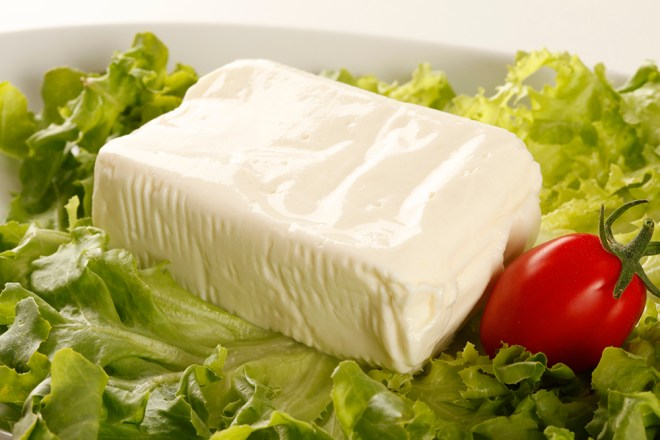
Unfortunately, high demand for the focaccia over the last several decades has outstripped the meagre supply of this cheese. Local restaurateurs have therefore switched to stracchino, a very similar cheese from Lombardy.

Luckily, it was generally agreed that stracchino makes an even better focaccia. However, its use is currently creating a bit of a crisis. The obtention of the EU certificate was seen as vital to protecting the brand; however, the certificate requires the use of local ingredients, and as any Italian will tell you a Lombard cheese is definitely not local to Liguria. So makers of focaccia al formaggio are now switching to crescenza, a cheese made in a valley behind Genova.

But aficionados are whispering that the resulting focaccia is not so good. We await the unfolding of this drama with baited breath.

Feeling a little homesick, we tried to make focaccia al formaggio for the first time ever over the weekend.  Our daughter did a massive search for stracchino and eventually tracked some down in a shop in the upper east seventies. We thought we were home and dry. That’s when we discovered that how you make the flatbread is equally important. It must be very thin; ours wasn’t thin enough and we ended up with a strange sandwich of two biscuits with clumps of unmelted stracchino in between. We are also still discussing if the oven wasn’t hot enough.

Hope springs eternal. We will try again, but not any time soon. Perhaps we will be back in Italy next year and can simply eat it as we always have, at our favourite restaurant in Liguria.

_________________
Coast and sky: http://www.liguriawebtv.it/wp-content/uploads/portofino1.jpg
Bougainvillea: http://mw2.google.com/mw-panoramio/photos/medium/15661912.jpg
Campanile: http://www.google.it/imgres?hl=it&tbo=d&biw=1280&bih=658&tbm=isch&tbnid=flpKDAD7z-P6TM:&imgrefurl=http://www.panoramio.com/user/741959/tags/campanili&docid=iq3aXsUhbs36HM&imgurl=http://mw2.google.com/mw-panoramio/photos/small/7332810.jpg&w=180&h=240&ei=DyHmUIODCqXv0QHUo4DwCw&zoom=1&iact=hc&vpx=1079&vpy=127&dur=33&hovh=192&hovw=144&tx=130&ty=122&sig=104429032764427195966&page=1&tbnh=138&tbnw=107&start=0&ndsp=22&ved=1t:429,r:6,s:0,i:103
Focaccia col formaggio: http://www.ansa.it/webimages/foto_large/2012/3/15/1331830684301_Focacciadirecco.jpg
prescinsêua: https://www.facarospauls.com/apps/italian-food-decoder/11169/prescinseua
stracchino: http://www.carionifood.com/it/cat0_17049_16985/formaggi/formaggi-senza-lattosio/p530877-stracchino-senza-lattosio.php
crescenza: http://www.misya.info/ingrediente/crescenza
Edo Bar: https://www.tripadvisor.it/Restaurant_Review-g1807548-d1173493-Reviews-Edobar-Sori_Italian_Riviera_Liguria.html

LA MICHELINE CHUGGING ACROSS THE COUNTRYSIDE

New York, 2 January 2013

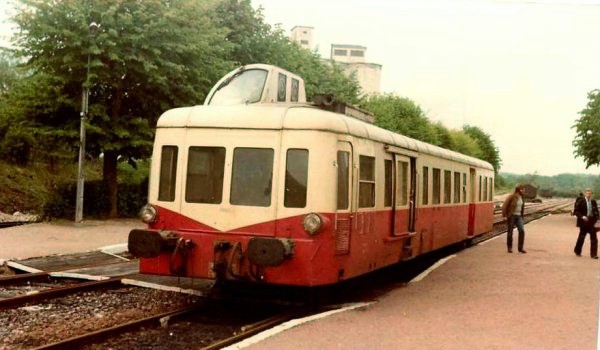
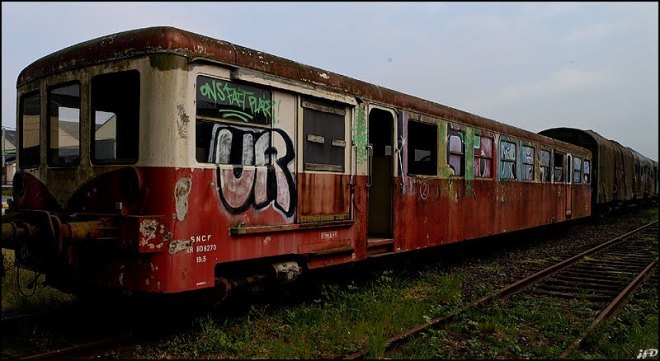
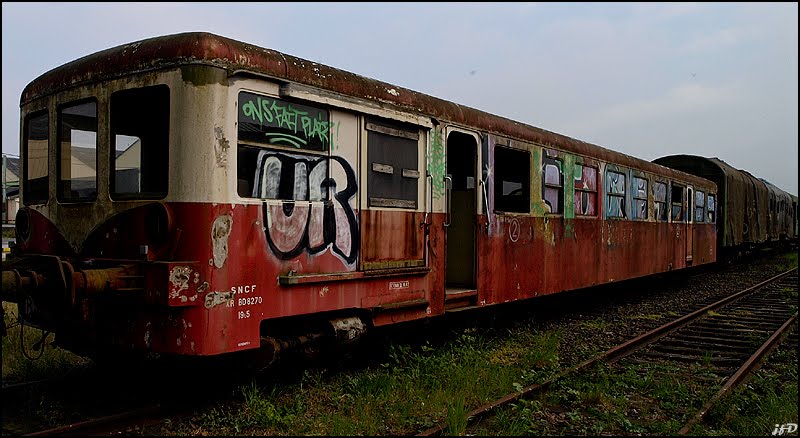
Down at the end of my French grandmother’s property ran a little train, the Micheline we called it. It was a rinky-dink train, one carriage (on rare occasions two), which chugged along at a venerable speed across the countryside from one market town to another, winding its way through vineyards and meadows, stopping at toy-town stations where stationmasters with moustaches, who smoked filterless gauloises and no doubt drank un petit rouge corsé in evenings, would agitate green flags and blow shrill whistles to let the Micheline continue on. This photo captures the rural idyll nicely.

micheline

I used to accompany my grandmother on her visits to town. We would walk down a long alley flanked first by peach and apple trees and then by black locusts, down to the end of the property where there was a big iron gate, which swung ponderously open; from there, it was a short five-minute walk to the station. In came the Micheline

micheline-5

I would help my grandmother in, the stationmaster would agitate his flag and blow his whistle, and off we went.

My mother used to tell me that during the Second World War, people were sent to my grandmother by the French Resistance for her to hide for a while; they would quietly slip in with the Micheline. My memory is instead of two old ladies, two sisters, Tante Chlothilde and Tante Marcelle, coming to visit via the train. They were first cousins to my grandmother. Both of them being widows, they always wore black. We would first see the Micheline chug by, then some ten minutes later two black silhouettes would be sighted slowly walking up the long alley. My grandmother would then walk down to greet them, speaking very loudly because one of the sisters was as deaf as a post.

Well, things changed. The road network got better, buses took over, and the line was finally closed down. I suppose the Michelines were retired like this one was

micheline-3

The rails were pulled up, and the weeds took over.

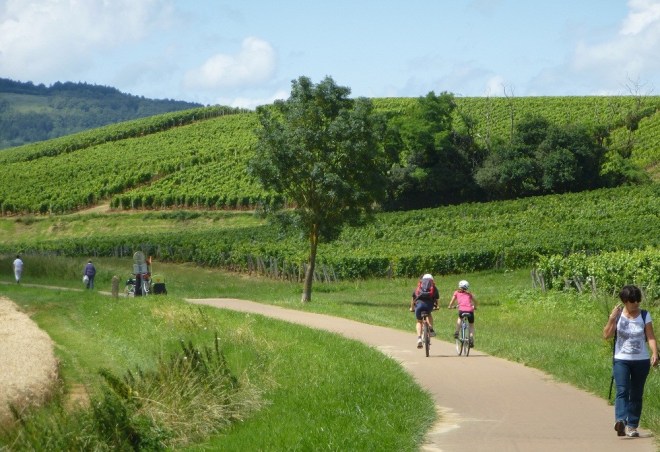
After a long period of neglect, the municipalities got their collective acts together and turned the railway line into a “Green Way”, for people to walk and cycle along. So now we have a quiet, carless, path that allows us to enjoy some of the most beautiful countryside on Earth (I admit, I’m biased).

voie-verte-1

voie-verte-3

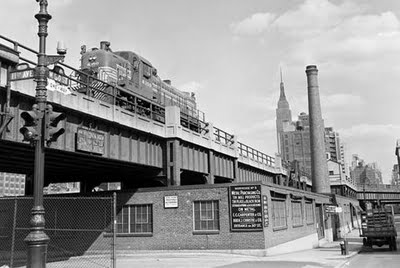
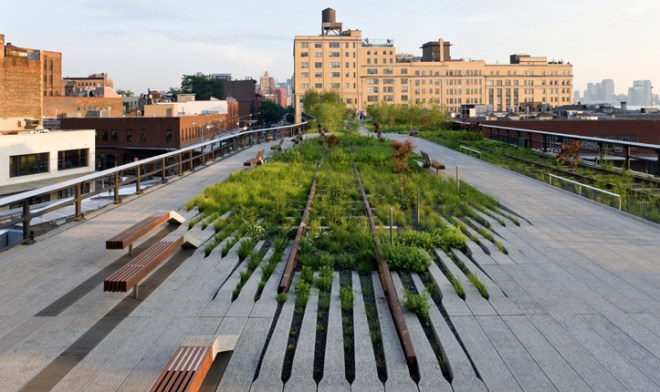
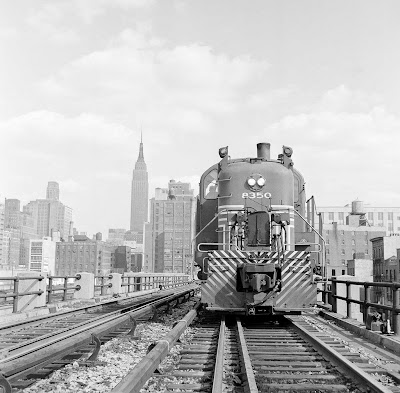
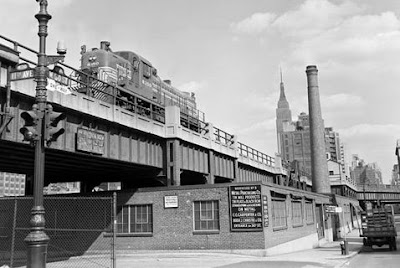
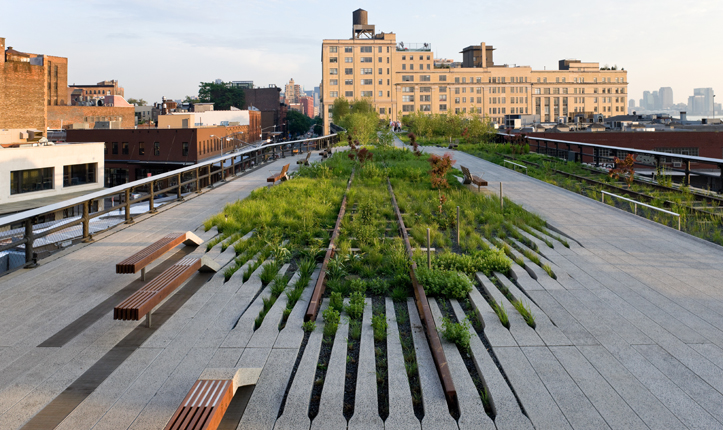
All of this came back to me yesterday while my wife and I strolled along the High Line in Manhattan. We are talking of a very different context – urban rather than rural, large-scale rather than small-scale – but the historical trajectory is the same: a rail line that was once a vital artery of the city

high-line-old-1

high-line-old-2

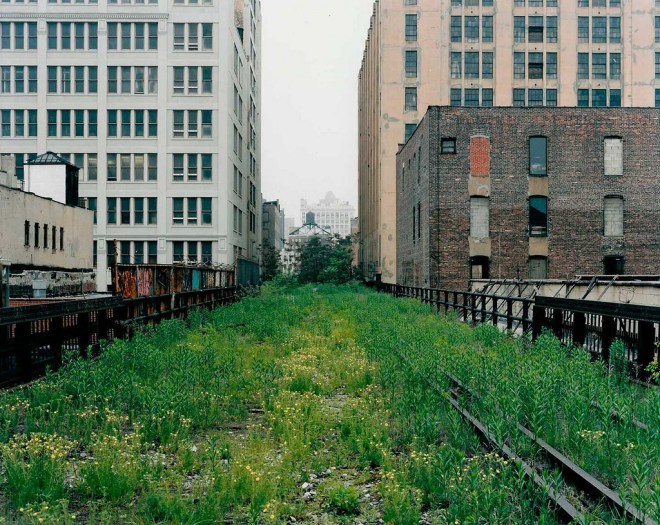
falls victim to roads and trucks and is finally abandoned. It becomes derelict, overgrown by weeds

high-line-5

and is threatened with demolition. But good sense eventually prevails and the elevated line is turned into an elevated garden.

high-line-2

high-line-4

high-line-1

high-line-6

Magic.

____________

Micheline-1: http://www.google.fr/imgres?q=micheline+train&num=10&hl=fr&tbo=d&biw=1280&bih=683&tbm=isch&tbnid=QbpsYHDZWoAGgM:&imgrefurl=http://www.worldofstock.com/stock-photos/france-ardeche-mirabel-village-surroundings-local-micheline/TRT1500&docid=307ZNJAoHh-JTM&imgurl=http://www.worldofstock.com/slides/TRT1500.jpg&w=500&h=332&ei=hIXjUMDvFuXQ0wGh84HQCg&zoom=1&iact=rc&dur=684&sig=113446295457090783361&page=1&tbnh=140&tbnw=202&start=0&ndsp=22&ved=1t:429,r:10,s:0,i:118&tx=96&ty=67

Micheline-2: http://c1.img.v4.skyrock.net/1729/16641729/pics/3080416001_1_3_WEG0CElV.jpg

Micheline-3: Micheline-3: http://1.bp.blogspot.com/-C8L1231bJ-o/TbhQHR6dc_I/AAAAAAAAEAQ/FvpTQts0R0I/s1600/micheline01-1.jpg

Green Way-1: http://www.sortiramacon.com/media/news/voie-verte-velo.jpg

Green Way-2: http://www.velo-ravel.net/2009/2009-08-17_Bourgogne_sud_files/image020.jpg

High line 1-historical: http://1.bp.blogspot.com/-X8IIsMIF7GY/TmlooRzMZ9I/AAAAAAAAF9M/_PpGNN3xJEU/s400/Highline_train.jpg

High line 2-historical: http://4.bp.blogspot.com/-0FEWcWopww8/TmlooMh8vlI/AAAAAAAAF9E/SuXL4wcu6To/s400/HIghline_historical.jpg

High line derelict: http://2.bp.blogspot.com/-iD76YXAA-Uw/TffNNuz4gXI/AAAAAAAAAYU/KWHnUGbYjPU/s1600/High+Line+2.jpg

High line 1: http://www.asla.org/sustainablelandscapes/images/highline/Highline_6.jpg

High line 2: http://4.bp.blogspot.com/-usnFjgnfQc4/TffNIgAV6xI/AAAAAAAAAYQ/XMQA0bZJAb4/s1600/High+Line.jpg
High line 3: http://www3.pictures.gi.zimbio.com/New+York+New+High+Line+Park+Opens+Public+3B45D1SYEJcl.jpg

High line 4: http://1.bp.blogspot.com/-WbybGegkYX0/Tmlon5yO-1I/AAAAAAAAF88/LyBQFC8kMpo/s1600/Highline_above.jpg

MY PSYCHEDELIC TIES

New York, 1 January 2013

My last post has brought back a memory from when I was a teenager. I went to a boarding school that was located some twenty miles from the nearest major train station, so at the beginning and end of each term buses would bring us to and from the station. The bus ride back to school at the beginning of the term was a staid affair, everyone quietly talking or just meditating. The bus ride back home at the end of term was an altogether more riotous event. Bawdy rugby songs were sung at high volume, starting from the back of the bus where the bad boys sat, and what in a different era were called “off-colour” jokes were retold loudly and with relish. This album cover conveys the general idea, although we did keep our clothes on.

rugby songs

One element of the journey home was that we would all wear the loudest possible ties. I should explain that while we did not wear uniforms as such at our school, sports jackets were de rigeur along with a tie. Not just any old tie; a black tie. All of us, all term, wore a black tie.

black-tie-2

The only exceptions were school and house monitors as well as the sporty types who won their cricket, rugby or other colours for exceptional gamesmanship.  We had many theories about why we all had to wear ties of such a lugubrious colour; the one I remember has to do with commemorating the deaths of several boys in a fire decades ago in one of the school houses (no girls; this was a boys’ school).

Whatever the reason, on the last day of term we threw off that horrible black tie and marched onto the bus each with a tie louder and – given the times – more psychedelic than the last. These photos give an idea of the sudden blast of colour we offered each other:

sixties-ties-3

sixties-ties-2

Getting onto the bus was to take part in a fashion cat walk, with comments about each tie and loud cheers for the brightest. We all came back to school with a secret hoard of bright ties, from which we selected one to parade that last morning in front of our peers. And then off we went, singing our bawdy rugby songs.

What happened to my psychedelic ties? Gone, I think, with other mementos of my youth when my sister, tired of seeing me not collect that suitcase which I had asked her to store in her attic, threw it and its contents out.

suitcase in trash

So goes life.

____________________
Rugby songs album: http://farm4.static.flickr.com/3126/3086393712_13bffb7baa.jpg
Black-tie: http://100days100ties.files.wordpress.com/2011/01/black-tie.jpg
Sixties-ties-1: http://img.ehowcdn.com/article-new/ehow/images/a06/q3/of/men_s-fashion-60s-1.1-800×800.jpg
Sixties-ties-2: http://t1.gstatic.com/images?q=tbn:ANd9GcSLL3ymfg76pRMQkN79f7YMTuTYx8Ftz4I_Srr46O7eIhIHs48IAxr5HDgs
Suitcase in a trash can: http://hilariousnyc.com/wp-content/uploads/2010/12/Suitcase-Trash-Can.jpg

A COLOURFUL MAN IMPRISONED IN A GREY MAN, WILDLY SIGNALLING TO BE LET OUT

New York, 31 December 2012

A few weeks ago, I was watching a French TV show in Beijing called Nicolas Le Floch. This is a detective series set in France in the late 1700’s. It’s really quite amusing to see the detective genre unfolding in such an incongruous setting. But actually I mention the show for an altogether different reason: as I followed the tortuous plot, I was struck en route by how colourful the men’s clothes were in that period, as this still from one of the shows attests

floch-colourful clothes

Just to make the point, I throw in a few photos of portrait paintings from the period:

17thC-1

17thC-2

17thC-3

17thC-4

And to top it all, in France at least the men wore make-up! This still is of Le Floch’s boss, the chief of police:

floch-made-up-man

Quite a change from Inspector Japp of the Poirot series …

inspector japp

This blaze of bright men’s clothing made me reflect on the dullness of my own wardrobe. All my official clothes – those I wear for work – are of subdued colouration: grey or discrete browns, greens and dark blues. The vast majority of my shirts are white, with one or two blue ones. The only way I can exhibit my love of colour in an official setting is through my ties, of which I have collected a large assortment over my career. Even the clothes I wear in my private life are modest in their colouration; I can boast of a few brightly coloured T-shirts and that’s it.

I merely reflect the sartorial conventions of our times. Today’s serious men do not wear colours, as these pictures of the powerful bear out.

The new Chinese leadership (although note the discrete dash of colour in the ties):

Politburo

A lineup of the G8:

G8: TUTTI LEADER A COPPITO, VERTICE L'AQUILA

A lineup of the EU heads of state:

EU

Why this greyness, this dullness, this soberness? I am no historian of fashion, but I am sure that the answer lies in this: serious men, the thinking goes, do not wear colours. Brightly coloured clothes denote ditziness, frivolity and general silliness. A man in brightly coloured clothes cannot possibly balance a budget or write a piece of legislation or do any of those other serious things required of him. I mean, can you imagine these men running a company or a government? Please!

red suit

light blue suit

indian colourful jacket

coloured clothes

The only time I can think of in my lifetime when men went around in clothes vaguely resembling those of the eighteenth century was the 1960s when flower power burst upon the scene:

carnaby street-1

carnaby street-2

These two suits come from the Victoria and Albert’s collections:

sixties-suit-2

sixties-suit-4

But the people who wore these clothes were completely unserious people, people who were into drugs, sex, and rock and roll, as the album covers of the time amply demonstrate:

beatles-sgt pepper album cover

beatles-yellow submarine

rolling stones

Jimi Hendrix

PinkFloyd-album-piperatthegatesofdawn

So I suppose in my lifetime, if I want to be taken seriously, which I do, I will be condemned to wearing dull coloured clothes, with only a dash of colour in my ties. I will, paraphrasing Cyril Connolly’s famous phrase, be a colourful man imprisoned in a grey man, wildly signalling to be let out.

___________________
Floch colourful clothes: http://images.allocine.fr/r_640_600/b_1_d6d6d6/medias/nmedia/18/81/96/02/19955662.JPG
18thC-1: http://i47.tinypic.com/2j4tvl0.jpg
18thC-2: http://i47.tinypic.com/mwz14n.jpg
18thC-3: http://i48.tinypic.com/atp6l2.jpg
18thC-4: http://i50.tinypic.com/e6q1d1.jpg
Floch made-up face: http://cdn.static.ovimg.com/episode/3270971.jpg
Inspector Japp: http://ic.pics.livejournal.com/phantomphan1990/11963571/118817/118817_original.gif
Politburo: http://l2.yimg.com/bt/api/res/1.2/afKIpJHhH4TpWmLewt8S6A–/YXBwaWQ9eW5ld3M7Zmk9aW5zZXQ7aD0xMDI0O3E9Nzk7dz0xNjYw/http://media.zenfs.com/en_us/News/Reuters/2012-11-15T044703Z_283609896_GM1E8BF0ZB101_RTRMADP_3_CHINA-CONGRESS.JPG
G8: http://www.google.com/imgres?q=G8+photo&hl=en&tbo=d&biw=1280&bih=683&tbm=isch&tbnid=SPoOXwx3iorBWM:&imgrefurl=http://www.g8italia2009.it/G8/Home/Media/Foto/G8-G8_Layout_locale-1199882116809_1246708086733.htm&docid=_9F5adpgS1UWjM&imgurl=http://www.g8italia2009.it/static/G8_Foto/_MB24968.jpg&w=3000&h=1870&ei=z1rgUM6-LNO40AHFtIC4Ag&zoom=1&iact=hc&vpx=161&vpy=295&dur=8059&hovh=177&hovw=284&tx=173&ty=111&sig=109352013111727269517&page=1&tbnh=141&tbnw=215&start=0&ndsp=24&ved=1t:429,r:7,s:0,i:108
EU: http://i.dailymail.co.uk/i/pix/2012/05/24/article-2149193-13413A49000005DC-413_634x252.jpg
Red suit: http://kontraplan.com/site/wp-content/uploads/2012/04/Lanvin-Mens-SS12-Collection-kontraPLAN-magazine-6.jpg
Light blue suit: http://www.thestyleking.com/wp-content/uploads/2011/07/Coloured-Suits.jpg
Indian colourful jacket: http://timesofindia.indiatimes.com/photo/10019988.cms
Coloured clothes: http://4.bp.blogspot.com/-QuyZgxyFQ70/T-xNoZ-tloI/AAAAAAABK3M/5orvLpQt_0o/s1600/Milan+Mens+Fashion+Week+Salvatore+Ferragamo+Spring:Summer+2013+Runway+Show_0143.JPG
Carnaby street-1: http://media.vam.ac.uk/media/website/uploads/images/2006BE8980_carnaby_street.jpg
Carnaby street-2: http://farm3.staticflickr.com/2082/2128638387_ae4fb5b36a_z.jpg?zz=1
Sixties suit VA-2: http://media.vam.ac.uk/media/thira/collection_images/2006AW/2006AW4489_jpg_ds.jpg
Sixties suit VA-4: http://media.vam.ac.uk/media/thira/collection_images/2006AB/2006AB6007_jpg_ds.jpg
Sgt Pepper album cover: http://greatalbumcovers.files.wordpress.com/2012/02/album-covers-bealtes-1.jpg
Yellow submarine album cover: http://3.bp.blogspot.com/-YgGhq-2XQ8E/T9kztOsJPwI/AAAAAAAAC4k/VeHN6M72Tqg/s1600/The+Beatles+-+Yellow+Submarine.jpg
Rolling stones: http://pokingsmot.net/wp-content/uploads/2012/02/The-Rolling-Stones-Their-Satanic-Majesties-Request-Album-Art-468×411.jpg
Jimi Hendrix: http://www.rockstargallery.net/wp-content/uploads/2011/12/Hendrix-AYE-Front-Cover.jpg
Pink Floyd: http://upload.wikimedia.org/wikipedia/en/3/3c/PinkFloyd-album-piperatthegatesofdawn_300.jpg