POSTS

SCARFING DOWN ITALIAN NIBBLES

Milan, 20 October 2016

I was with an old colleague in Turin at the beginning of last week, and he was telling me that he had visited the city several times over the last few years to attend the annual Slow Food festival. I made a mental note to attend the next one with my wife. It must have been that thought which made me accept with alacrity my wife’s proposal to go to an exhibition of Italian small-scale food producers, which was taking place in Milan over the weekend. Its title was “Milano Golosa”, which can be translated either as Greedy Milan or as Gourmand Milan. I prefer to think that we were gourmands, although I can understand it if, after reading this post, readers conclude that we were greedy.

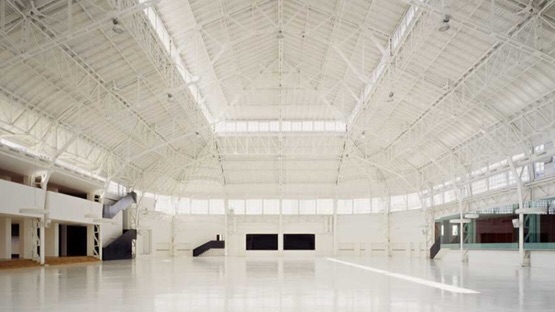
The exhibition was being held in the Palazzo del Ghiaccio, the Ice Palace, a rather grand name for what used to be the city’s premier ice rink. Just visiting the building was a trip down memory lane for my wife. She told me with a reminiscent smile that she had been taken there many a time by her grandfather. While she skated around the rink, he sat on the bleachers reading his newspaper – no doubt the universal pastime of grandfathers supervising grandchildren in parks and other public spaces. At some point in the last forty years, its use as an ice rink was abandoned. The bleachers were removed along with the rink proper, and the building was turned into an exhibition space. It is actually quite a nice building, of the 19th Century train station type, and the empty space looks gorgeous in that typically Italian good design style.
image
When we entered the space, though, it was bisected by four or five rows of little booths, each taken by an Italian food or wine producer (there was one food producer from the islands of São Tomé and Príncipe, off the west coast of Africa, but that was a definite outlier). They came from all over Italy, from Sicily in the south all the way up into the high alpine valleys in the north, and from Sardinia in the west to the Marches in the east.
image
For the vulgar weekend visitors like us, who were not there for professional reasons, the deal was this. You paid 10 euros to get in (5 more if you wanted to drink wine, which we didn’t), and then you tried to eat as many nibbles as possible at all of the booths to cover your initial investment. You could do your eating quite shamelessly, just grabbing the nibbles being made available and heading off to the next booth, or you could pretend to be knowledgeable and stand there trying to make intelligent comments about the nibbles you were scarfing down with enthusiasm. I started with the latter strategy, pretending to write notes on my phone (of the type “good cake!”, “good cheese!”), but eventually abandoned all pretense of knowledge and just wolfed down the nibbles. I was rather reminded of the trailer which my wife and I have been seeing of an upcoming French film, “Saint Amour”, which as far as I can make out is the story of a large pub crawl from one French wine festival to another.
image
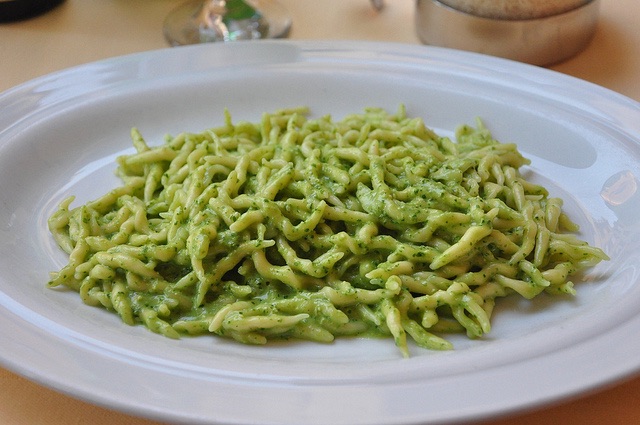
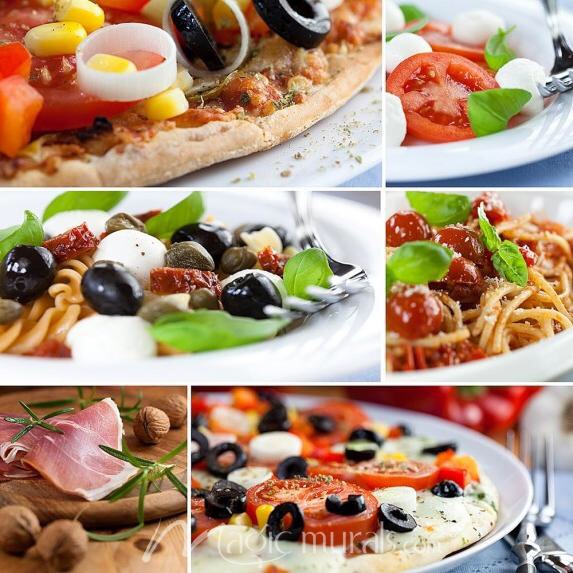
For all of this rank amateurism on my part, I could still appreciate that the nibbles were delicious. Many of the classical Italian products were present: raw ham, cooked ham, salamis of various types, bologna, cooked meats in aspic; hard cheeses like parmesan, soft cheeses like stracchino or crescenza, middling soft and middling hard cheeses whose names now escape me; olive oils of all descriptions, as well as the olives themselves, balsamic vinegars; tomatoes, of course, of all shapes and sizes, beans of all shapes and sizes; pastas of varying lengths and geometries, breads made from a variety of grains, but also bread sticks, fat and short and long and thin; numerous spreads to put on the bread (one in particular, from Sicily and based on sea urchin and a fish whose name meant nothing to me, remains in my taste memory bank); sweet dishes in profusion: panettone, panforte, amaretti dolci, chocolates containing varying levels of coca. And I’m sure I’ve missed things. A veritable smorgasbord! Or perhaps the Italian equivalent to a Chinese banquet, where one picks at a little bit of this and at a little bit of that as the Lazy Mary slowly turns before you. I think we got our ten euros’ worth, staggering out after a couple of hours of busy nibbling. We shelled out some more cash to buy a small bottle of olive oil from the province of Bari and a mozzarella from the province of Naples, both of which we picked up as we wended our way from booth to booth. I can report that at dinner that night the oil went very nicely with the mozzarella, as well as with the salad of green beans I had on the side.

Ah, Italian food!
image

______________
Palazzo del Ghiaccio: http://www.meetingecongressi.com/it/struttura/milano/451/palazzo_del_ghiaccio.htm
Milano Golosa: http://www.ansa.it/canale_terraegusto/notizie/fiere_eventi/2015/09/23/torna-milano-golosa-dal-3-al-5-ottobre-al-palaghiaccio_0867b0e5-db5c-4477-b80a-3e372b3979c1.html
Saint Amour poster: http://www.allocine.fr/film/fichefilm_gen_cfilm=235769.html
Italian food: https://www.magicmurals.com/italian-food-collage.html

HORSERADISH

Turin, 12 October 2016

I’ve just had a yummy lunch at Vienna airport, which is a bit surprising since airport eateries are not known for quality. It was nothing special; actually, it was very ordinary for this part of the world (this part of the world being Austria). It was two sausages of the frankfurter variety (although longer and thinner than the classic frankfurter), a bread roll, a dollop of mustard, and some grated horseradish. Voilà!

What really made the dish for me was the horseradish. It was the first time I ate horseradish like this, and I found that its slightly sweet tartness calmed the excesses of the mustard.

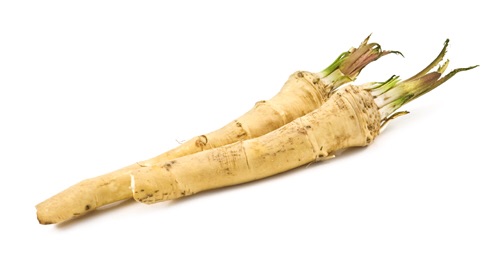
I have to confess to being a great fan of horseradish, although I joined this particular fan club latish in life: I only discovered the culinary delights of the root once I moved to Austria, when I was already over 40. For those of my readers who (like me) have never seen a horseradish in the flesh (as it were), I throw in a picture.
image
It’s rather surprising that I came to horseradish so late, because it’s actually quite popular in the UK. A common way of eating it is to mix it with vinegar and use it as a condiment with meat or fish. This commercial offering looks very fancy.

Fancy or plain, I never partook; the closest I ever got was lamb with a vinegar-based mint sauce, the glories of which I have extolled in an earlier post. I’m guessing that the British picked up the habit from the Germans: Wikipedia informs me that a certain John Gerrard, in his Herball, or Generall Historie of Plantes of 1597, writes that “the Horse Radish stamped with a little vinegar put thereto, is commonly used among the Germans for sauce to eat fish with and such like meats as we do mustard.” I wonder if, rather than classic mustard, John Gerrard meant Tewksebury mustard (another British condiment which I have never tried). It seems that the British, since at least the Middle Ages, have been fond of this blend of mustard and grated horseradish. No less a person than Shakespeare mentions it in Henry IV Part II, where he has Falstaff say of Poins: “his wit’s as thick as Tewkesbury Mustard”. Here’s a modern version, sold by the ASDA supermarket chain, so it can’t be too fancy a condiment.
image
Just to close the circle, a very similar horseradish-mustard blend, called Krensenf, is popular in Austria. I suppose the cook in my airport eatery was expecting me to make my own blend before slathering it onto the frankfurter. Ignorant at that moment of Krensenf, I just blended it in my mouth.

I haven’t mentioned in what dish I first discovered horseradish. It was that great, that glorious, Austrian dish, Tafelspitz. It’s actually a very simple dish: boiled beef, served with boiled root vegetables (carrots, parsnips, celeriac) and re-fried boiled potatoes.
image
To my mind, what elevates it above similar dishes, like pot au feu in France or bollito misto in Italy, is the sauce into which you dip your morsels of meat: it must be a blend of thickish apple sauce and grated horseradish. The horseradish wakes up what is otherwise a rather bland apple sauce, and this jazzed-up sauce wakes up the otherwise slightly bland meat, to the delight of one’s taste buds. I see that this mixing of sweet with horseradish seems quite popular. Several parts of Eastern Europe (which seems to be the original home of the horseradish, by the way) mix it with beet roots, as do the Ashkhenazi Jews, who often use it as a condiment for gefillte fish. Another recipe from Franconia in southern Germany blends horseradish with lingonberries.

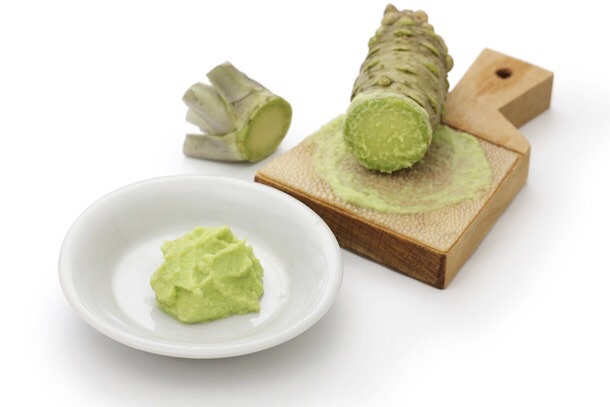
No discussion of horseradish is complete without a mention of wasabi, that wonderful green paste which, together with ginger, accompanies sushi and sashimi.
image
I’m not particularly keen on the ginger, but wasabi is a must for me – whenever my wife and I eat sushi or sashimi, she gives me her wasabi and I give her my ginger, which she loves; it’s a deal made in heaven. As anyone who has eaten both horseradish and wasabi will know, there is a definite relationship; the tastes are too similar for it to be coincidental. In fact, the two plants are close botanical cousins; the picture above shows the greenish root which is the source of wasabi. But here I have to reveal a mournful truth. In this era of globalized cuisine, where sushi bars seem to be sprouting up everywhere, when we eat wasabi we are nearly always eating horseradish paste mixed with green colourant. The wasabi plant is difficult to grow, so production cannot keep up with demand, hence the substitution. Sad in a way. An Italian friend of mine was recently telling me of a similar case, for a foodstuff I am particularly fond of, bresaola, which has also become a global food-star. In principle, bresaola should be made from cattle reared in the Valtellina, in the Italian Alps. But cattle production in this really quite small Alpine valley cannot possibly keep up with demand, so cattle is shipped in from Brazil to be processed in the Valtellina and stamped “bresaola”.

My wife and I are going to Japan in November. Let’s see if we can find a place which serves real wasabi.

_______________

Horseradish: http://www.herbalextractsplus.com/horseradish-root.html
Horseradish and vinegar: http://www.handmade-treats.co.uk/shop/horseradish-vinegar/
Tewksebury mustard: https://groceries.asda.com/product/mustard/asda-extra-special-tewkesbury-mustard/80755029
Tafelspitz: http://www.lecker.de/tafelspitz-19222.html
Wasabi: http://www.seriouseats.com/2014/03/pantry-essentials-all-about-wasabi.html

POINTILLISM

Vienna, 1 October 2016

The Albertina Museum in Vienna is currently holding an exhibition on pointillism and its reverberations in later art. My wife and I decided to visit it, as a treat for successfully becoming residents of Austria and for finding our apartment in good shape after our tenants had handed it over. We were glad we went. Never had we been exposed to this many Pointillists in one go; the larger collections of Impressionists and Post-Impressionists we have seen generally have just a few pointillist paintings sprinkled into the mix. Not only were there paintings by Seurat, the originator of the technique, Signac, his best-known follower, and other French Pointillists, there were also a roomful or two of Belgian and Dutch Pointillists whom we had never heard of. There was also a whole section devoted to pointillist portraits; pointillism was never a style I had connected with portraiture. There were some examples of late pointillism, by then renamed divisionism, where the earlier dots were replaced by longer and broader paint strokes. And then the final room had a brace of Van Goghs, some Matisses, a couple of Picassos and Mondrians, and a few other odds and ends, to show how divisionism had affected later artists.

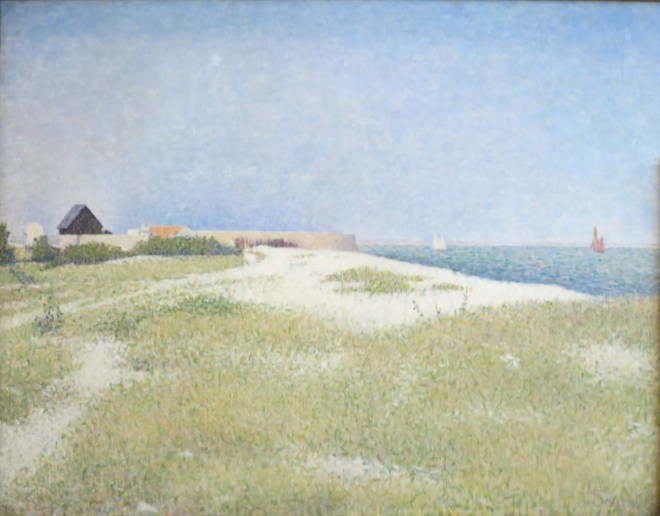
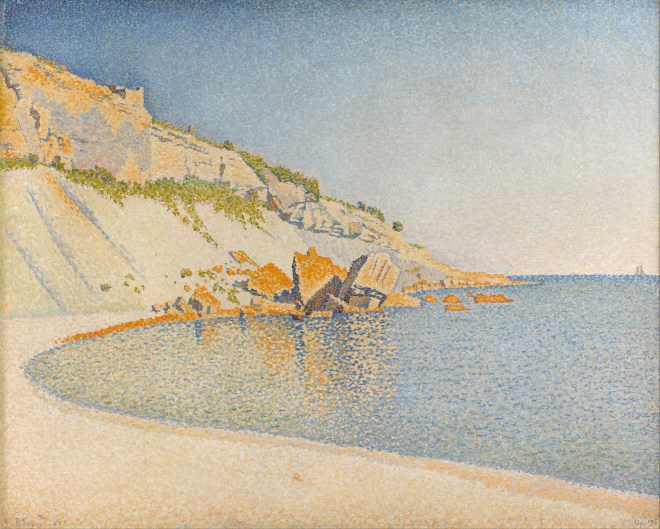
All exceedingly interesting. And yet … my wife and I both had the same reaction to the show. After an initial burst of enthusiasm, doubts set in. The effect of seeing so many pointillist paintings together was to have a chocolate-box sensation. The paintings were all preternaturally bright, the skies of the many landscapes were a uniformly blank cerulean blue, and the other colours seemed to all veer towards the pastel. Here’s a couple of pointillist paintings that exemplify what we found before us. The first is by Seurat, the second by Signac.
image
image
All this in large doses eventually becomes rather sickly. There was also an eerie stillness in many of the paintings, perhaps because by their nature pointillist works were carefully and patiently crafted in the studio. This stillness, emptiness almost, is obvious in what is probably the most famous pointillist painting, Sunday Afternoon on the Island of La Grande Jatte, which shows what should be a scene full of life and movement but gives the impression of being peopled by mannequins put there for the occasion.
image
It seems that after an initial burst of enthusiasm contemporary painters also turned away from pointillism, but more because creating these paintings took so much time. Certainly Van Gogh was never convinced by pointillism, although he experimented with it a bit, because it eliminated any spontaneity in painting.

A footnote to the exhibition: many of the paintings were on loan from the Kröller-Müller Museum in Otterlo, the Netherlands. I had never heard of this museum (as for my wife, after an initial bout of amnesia, on seeing pictures of the museum she suddenly remembered visiting it more than forty years ago). Yet this museum has, among other things, the second largest collection of Van Goghs in the world. The collection was put together by Helene Kröller-Müller in the first decades of the last century. She was born into a wealthy German industrialist family and married a Dutch mining and shipping tycoon, a combination which made her the richest woman in the Netherlands.
image
She used her money wisely to put together a great collection of what was then modern art. Towards the end of her life she donated it to the Dutch state.

When I read such stories, I sigh and wish my father had been a tycoon. I would have loved to spend inherited millions putting together an art collection. Maybe in my next life.
__________

Seurat: https://en.m.wikipedia.org/wiki/Georges_Seurat
Signac: https://en.m.wikipedia.org/wiki/Paul_Signac
A Sunday Afternoon on the Island of la Grande Jatte: https://en.m.wikipedia.org/wiki/Île_de_la_Jatte
Helene Kröller-Müller: http://www.betergeven.nl/over-filantropie/filantropen-in-beeld/helene-kroller-muller/

SAINT RADEGUND

Vienna, 19th September 2016

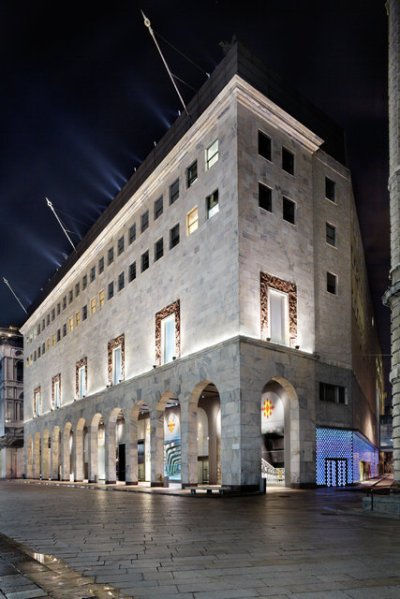
There is a small street which gives on to Piazza Duomo in Milan, which goes by the name of via Santa Radegonda. It’s a very modest, narrow, little street, really quite boring. Its main claim to fame is that it runs alongside the posh department store La Rinascente.

image
But I like the street, for the quite frivolous reason that I like the name. Radegonda, Radegund in the original German: now that’s a girl’s name with some whoomph to it! Not like Amelia, or Olivia, or Emily, which are currently some of the most popular names for little British girls.

This particular Radegund was a 6th Century princess from Thuringia, in what is now central Germany. Her life story was as colourful as her name. Her father, Berachtar, was one of three kings in Thuringia. Her uncle, Hermanfrid, one of the other Thuringian kings, killed her father in battle, took over his part of the Thuringian lands, and while he was at it took Radegund into his household. Hermanfrid then made a deal with the Frankish king, Theuderic, to share sovereignty of the whole of Thuringia, subject to material aid from Theuderic. Having sealed the deal, Hermanfrid attacked, defeated, and killed the third king of Thuringia, his brother Baderic. He then promptly reneged on his agreement with Theuderic. Not surprisingly, Theuderic sought revenge of this perfidy. Together with his brother Chlothar, he defeated Hermanfrid and took over Thuringia. In the ensuing carve-up, Clothar took charge of Radegund and brought her back to Gaul. All this happened before Radegund was 11, by the way.

Clothar packed Radegund off to one of his villas until she was of a more marriageable age. When she was 19 or so, he married her himself. No doubt it made his claims to Thuringia stronger to have her as his wife. She joined Clothar’s five other wives – Guntheuca, Chunsina, Ingund, Aregund, and Wuldetrada – in what may, or may not, have been a cozy concubinage. In any event, she bore Clothar no children.

By the time Radegund was 30, her only remaining brother was the last surviving male member of the Thuringian royal family. Presumably to head off any pesky competing claims to the Thuringian lands, Clothar had him murdered. At which point, either because she feared for her own life or because she was fed up with all this mayhem, Radegund fled and sought the protection of the Church, eventually founding, when she was about 40, a nunnery in Poitiers. Initially, Clothar tried to get her back but eventually left her alone and focused on expanding his lands at the expense of all those around him, including his brothers (although he had the grace not to kill them to obtain his ends, good manners which did not extend to their sons). By the time he died, he was master of a kingdom stretching from the Pyrenees to Thuringia, and from Brittany to French-speaking Switzerland.

All these Franks and Thuringians may have been a lying, traitorous, murderous lot, but they had wonderful names. This all rather reminds me of my Favourite History Book, 1066 And All That, my copy of which recently came to light, among many a delighted cry on my part, from the storage box in which it has been lying these last seven years.
image
In that book, we are reminded that Anglo-Saxon England was peopled with persons carrying wonderful names:

“Wave of Egg-Kings

Soon after this event Egg-Kings were found on the thrones of all these kingdoms, such as Eggberd, Eggbreth, Eggfroth, etc. None of them, however, succeeded in becoming memorable except in so far as it is difficult to forget such names as Eggbirth, Eggbred, Eggbeard, Eggfish, etc. Nor is it even remembered by what kind of Eggdeath they perished.”

The authors were exaggerating, but not by much.

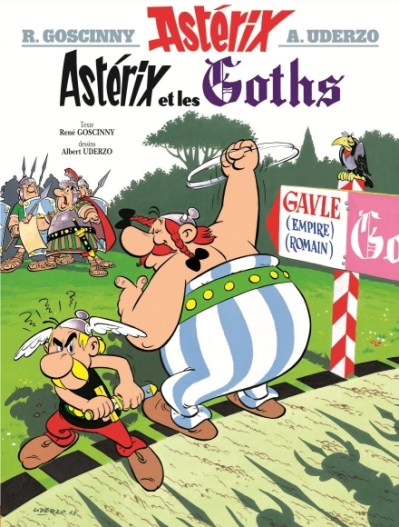
The murderous goings-on around Radegund also remind me of that other Great Source of Early European History, Asterix. In the album Astérix chez les Goths
image
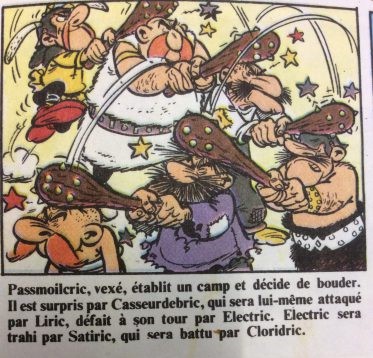
the endemic fighting among the Germanic tribes is well captured.

(Please note the authors’ take on Gothic names – they exaggerate but not by much)

But I digress, and I think my wife feels I’m letting my childish side get the upper hand here. Let us focus on the saintly Radegund. Already when queen, she was noted for her almsgiving. Once a nun, she cared for the local lepers and other infirm of Poitiers. She was also known for eating nothing but legumes and green vegetables: no fish, no eggs, not even fruit. I’m sure the vegans of today would approve (although even they might find her decision to forswear fruit a trifle extreme) but to the meat-eating Germanic elites, who spent much of their time hunting, this must have been pretty weird. Here is the most ancient representation of this saintly lady that I found, from a 10th-11th Century manuscript in the Municipal library of Poitiers, where we see Radegund getting herself to the nunnery (to misquote Hamlet).
image
As far as I can make out, though, her main claim to religious fame, at least in the Dark and Middle Ages, is that the Byzantine Emperor Justin II gave her a fragment of the True Cross. I hasten to add that he did not do so because he was much taken by Radegund’s saintliness. It was, I’m afraid, a purely political maneuver. Justin wanted to wrest control of the north of Italy from the barbarian Lombards, but for this he needed the help of the (equally barbarian) Franks. The relic, given to an ex-wife of the Frankish king who, though, was still on friendly terms with said king, was the bribe, or, to put it more kindly, the bait. Whatever the reason, the relic which Justin handed over to Radegund was a Really Good relic, and any Medieval religious institution with a Really Good relic was sitting on a goldmine as the pilgrims poured in and spent their money locally. This no doubt was the happy fate of Poitiers, helped along by the fact that Radegund was widely believed to have the gift of healing. Indeed, several miracles around her tomb greatly helped to increase the pilgrim traffic. The result was the building of a church which is a combination of Romanesque and Angevin Gothic styles.
image
Sadly, the vicissitudes of history, and more specifically a sack by Huguenots in the 16th Century and the ravages of the French Revolution, combined with some heavy-handed restoration in the 19th Century, has scarred the original splendour.

The pilgrim traffic to Poitiers had the happy side-effect of carrying Radegund’s name far and wide as the pilgrims returned home, and new churches and other religious institutions sprang up all over Europe dedicated to her name. This was certainly the case in Milan, where on the site on which now stands that temple to consumerism, La Rinascente, there once stood a nunnery dedicated to Santa Radegonda. No trace of this nunnery remains today save in the name of that modest, narrow, little street which I like so much.

I give just one further example of the many places in Europe which adopted her name, and that is the small village of Sankt Radegund in Upper Austria. In the next few years, readers will see a new film come out, with the title “Radegund”. It is the story of Franz Jägerstätter, a native of Sankt Radegund, who was the only one in his village to vote against the Anschlüss and was courageous enough to be a conscientious objector during World War II.
image
My readers will no doubt convene that this was a dangerous thing to declare oneself to be under the Nazi regime, and in fact Jägerstätter ended up being guillotined in 1943, for the crime of “undermining military morale”. The recent (German) Pope, Benedict XVI, had Jägerstätter beatified: a more appropriate saint for our age, I think.
image
Yesterday afternoon, I noticed that behind Milan’s Duomo there is a small road called via Santa Tecla. What an interesting name! I wonder who she was?

__________________
La Rinascente: http://www.nytimes.com/2014/12/25/fashion/in-milan-with-handbags-and-tongs-under-one-roof.html?_r=0
Clothar I: http://www.pearltrees.com/sirius84/francs-merovingiens/id9615614/item93489971
“1066 And All That”: http://rogerandfrances.eu/books/1066-and-all-that
“Asterix chez les Goths”: http://www.asterix.com/the-collection/albums/asterix-and-the-goths.html
Goths fighting: my photo
Radegund entering nunnery: https://en.m.wikipedia.org/wiki/Radegund
Eglise Sainte-Radégonde, Poitiers: https://www.poitiers.fr/c__244_788__Poitiers_capitale_romane.html
Franz Jägerstätter: http://voiceseducation.org/content/franz-jagerstatter-austrian-world-war-ii-resistance
Icon with Franz Jägerstätter: https://en.m.wikipedia.org/wiki/Franz_Jägerstätter

RINGING BELLS

Milan, 13 September 2016

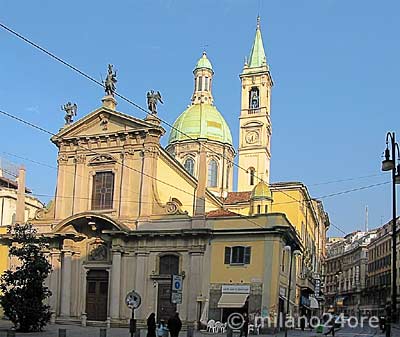
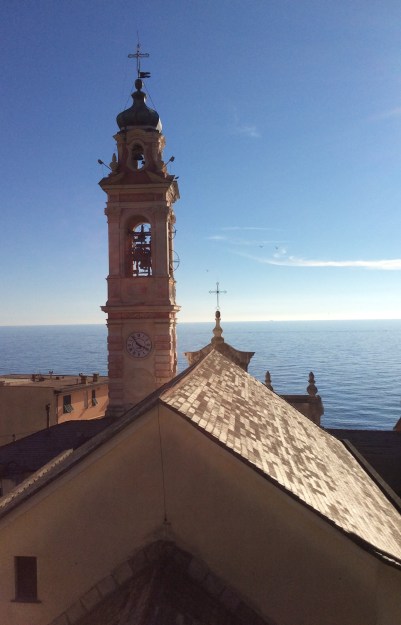
It wasn’t until our first Sunday back in Milan that I realized what it was we had been missing all those years we had spent in China and Thailand: church bells. The carillon that pealed out from the campanile of the nearby Church of San Giorgio
image
for morning mass startled my senses, and I found myself actually listening. Probably Italians, after a lifetime of hearing church bells, simply shut them out: “church bells? what church bells?”

It’s not as if the soundscapes of the cities we have lived in these last seven years have been very different from what we were used to in Europe. Like for everything nowadays, there was a depressing uniformity.  The noise of traffic predominated; given China’s building craze, construction noises came a close second in Beijing. The one typically Chinese noise which we often heard in Beijing was the machine-gun sound of strings of firecrackers going off to celebrate the opening of a new business.
image
Since the economy was doing nicely, this happened quite often. The noise of firecrackers grew to a huge crescendo as the Chinese New Year rolled around.

image

We were always in awe of the massive amounts of firepower, in the form of firecrackers, fireworks, and other noise-making products, being sold on the streets in the days leading up to the New Year.
image
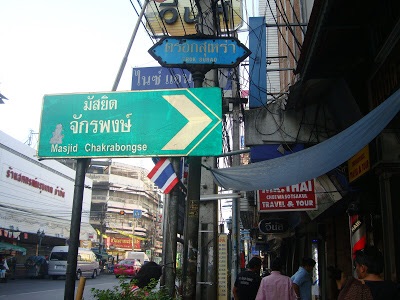
Bangkok was more interesting, noise-wise. From our balcony, as we admired the view over the Chao Phraya river, we would often hear the local muezzin calling the faithful to prayer from the minaret of a nearby mosque. Muslims are a more-or-less tolerated minority in Thailand and as a consequence tend to be very discreet. The Muslim community in our area was no exception. So discreet were they that I never located the minaret and its associated mosque. Was it this one, I wonder? I saw the sign once or twice but never went down the narrow lane to investigate.
image
These calls to prayer were counterbalanced by the morning chanting from the Buddhist monks in the temple across the river.
image
In Thailand’s current politically charged atmosphere, where an aggressive Buddhism is emerging, one has to wonder if the loudspeaker-enhanced chanting was not calculated to remind the local Muslims of who was in charge, just in case they had forgotten.

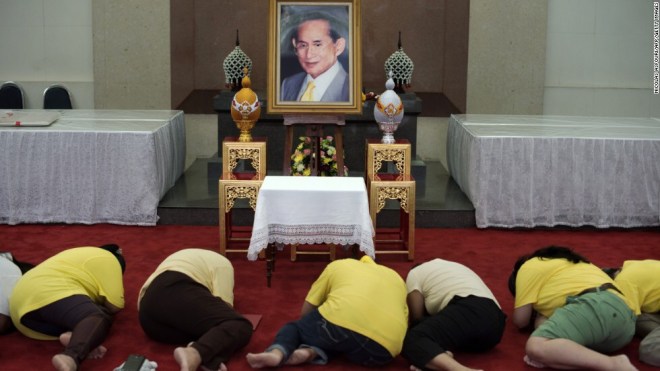
There was also a period when a government institution across the river would blare out the royal anthem twice a day, at 8 am and 6 pm, to remind the populace to venerate their king.
image
Mercifully, from one day to the next, the loudspeakers fell silent. We never figured out why. But we were thankful for the respite.

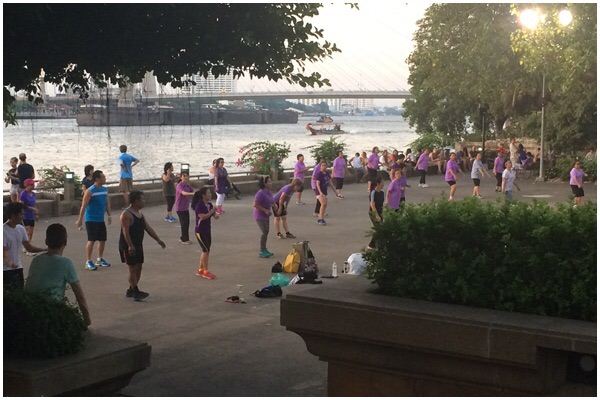
Noises from the new religion of our time, fitness, would assail our ears in the early evening, as an aerobic class would start up in the nearby park at Phra Sumen fort, with the disco music booming out over the river, interspersed with the trainer’s shouted instructions and encouragement.

image
Memories, all memories now. From now on, our soundscapes will be made up, at least in part, of church bells. Christianity may be fading in Europe, but the bells will remain. They will be ringing out the hours of the day and night (even as I write this, the nearby church bells are striking seven pm). They will call the few remaining faithful to Mass on Sundays. They will toll somberly for our brethren who have departed from this world (“Cold it is, my beloved, since your funeral bell was toll’d: / Cold it is, O my King, how cold alone on the wold!”). I may even witness once more, in a Catholic nation somewhere, the bells of a whole city ringing peel after peel in a mad cacophony to speed the soul of a dead Pope on its way; I heard this in Vienna when Pope John Paul II died.

Yes, these sounds are part of my Christian heritage to which I return after many years of absence.

_______________________
San Giorgio: http://www.milano24ore.net/cityinfo/churches/church_of_san_giorgio.php
Fire crackers: http://yourenotfromaroundhere.com/blog/firecrackers-evil-spirit-beijing-china/
Chinese New Year: http://chinesenewyearblog.com/cny-fireworks-victoria-harbor-hong-kong/
Sellers of fireworks: http://iainmasterton.photoshelter.com/image/I0000OGZzPAzdPPM
Mosque Masjid chakrabongse?: http://zlynn17.blogspot.it/2010/02/halal-food-in-banglamphoo.html
Buddhist monks chanting: https://monotonundminimal.wordpress.com/2011/07/28/day-240-bling-bling-bangkok/
Thais venerating the king: http://edition.cnn.com/2014/10/06/world/asia/thailand-king-bhumibol-gallbladder/
Aerobic class Phra Sumen Park: http://www.iamwannee.com/a-nice-walking-path-from-tha-phra-chan-to-tha-phra-athit/

TAMARIND IN THE KITCHEN

Milan, 5 September 2016

So my wife and I have finally left Thailand, after having spent two years there – we lifted off one last time from Bangkok international airport six days ago.

What memories of things typically Thai do I take with me?

Well, there’s tamarind.

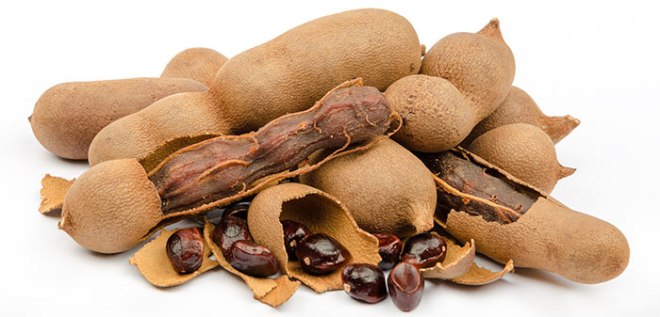
Readers may find that a little odd, but tamarind is actually a very common ingredient in Thai cuisine. In fact, it was animatedly discussed at the goodbye party my staff gave me. It’s a fruit I had never actually come across until I arrived in Thailand. I had heard of it, but it existed as an exotica on the far periphery of my knowledge, rather like those strange beings which Medieval Europeans imagined lived on the far edges of the world.
image
I was introduced to tamarind by the kind lady who brought me my morning coffee in the office. She was in the habit of also bringing me any of the fruits which Thai colleagues had brought in for sharing. I was conversant with the other fruits she served with my coffee, but this large pod-like thing had me stumped.
image
I had to go down the hall to ask colleagues explanations of what it was and how to eat it (split open the brittle shell, extract the pasty fruit from its stringy support and eat, making sure not to crack your teeth on the small, very hard seeds buried inside the sticky pulp).
image
Thai cooks will extract the pasty fruit and use it as an ingredient in many of their dishes. I mention only two here, Pad Thai and Kaeng Som.

As probably every foreigner knows, since every foreigner coming to Thailand seems to eat it, Pad Thai is at base a dish of rice noodles, these having then been stir-fried with a whole bunch of things: shrimp, both fresh and dried (other meats are used but it’s not very Thai), shrimp paste in oil, soybean sprouts, firm tofu, chopped peanuts, scrambled egg, sliced shallots, sliced Chinese chives, sliced preserved radishes, minced garlic, sliced chilies, and I don’t know what else. What foreigners probably don’t know, because it’s not obvious in the final dish placed before them, is that a tamarind-based sauce has also been added to the mix during the stir-fry. This sauce is a blend of sour-sweet tamarind paste, salty fish sauce, spicy chili sauce, and sweet palm sugar; the particular balance to strike between these four tastes gives rise to much passionate debate in the Thai recipe world.

My wife was particularly fond of Pad Thai, but it is as popular with Thais as it is with foreigners. In our wanderings around Bangkok, we discovered a Pad Thai joint a little south of the Golden Mount, where the people patiently waiting in the long lines outside (which we quickly joined) were primarily Thai.

image
Pad Thai may seem very typically Thai, but actually in its present form it is quite a recent dish, having been invented only in the 1930s as a move by the-then military dictator to promote Thai nationalism. I suspect that Kaeng Som has a much longer culinary pedigree, since it has speciated, with every region of Thailand having its own variant. The variant I describe here is from Central Thailand, this being dominant in Bangkok. It seems that every street food stall sells Kaeng Som, although cognoscenti mutter that this is rat’s piss (my words) compared to the Real Thing. I wouldn’t know; I avoided street food stalls like the plague, desirous of avoiding seriously upset stomachs and consequent absences from work.

Kaeng Som is really a curry base to which you then add other ingredients. You will first grind and pound together, preferably in a stone mortar, chilies, salt, shrimp paste, sliced shallots, and meat of a freshwater fish stripped off the bones, until you have a smooth paste. You will add this to a simmering fish stock (preferably made with the remains of the fish), followed by tamarind paste, fish sauce, and palm sugar. Once again, the sour-salt-spicy-sweet tastes have been brought together, and you will fuss around at this point trying to get the “right” balance.

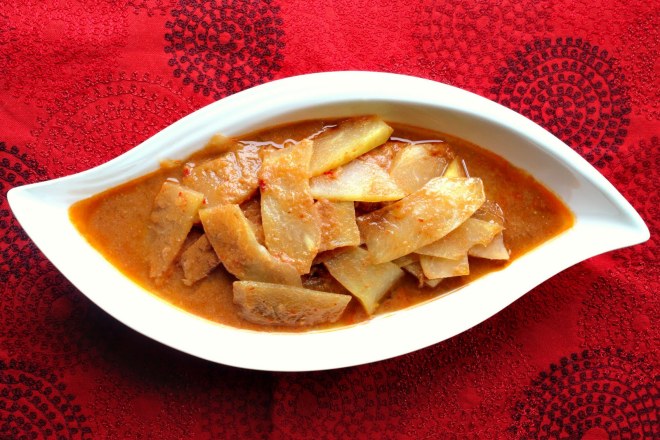
Now you are ready to add the remaining ingredients. Vegetables dominate, and it seems that Kaeng Som will marry well with a large number of different vegetables. I report, in no particular order, the suggestions given in the blog of Thai cuisine SheSimmers: morning glory, water mimosa, summer squash, cauliflower, green beans, daikon, Napa cabbage, green papaya, chayote, and watermelon rinds. This last interests me greatly, since I have always wondered, as I have thrown away the rinds after a good watermelon binge, what if anything could be done with them in the kitchen. I now have an answer. The same blog warns against the use of certain other vegetables: eggplants, broccoli, Brussels sprouts, starchy root vegetables, and green leafy vegetables such as collard greens. Vegetables as an added ingredient seem quite enough, but if you want you can also add shrimps or pieces of fish.
image
At this point, I have to confess to one major unpleasant memory I bring back from Thailand, and that is the (super-)abundant use of chilies in Thai cuisine. As I have reported elsewhere, I very much dislike chili and its ‘hot’ spicy cousins. This has been a major difficulty for me in eating – and enjoying – these or any other Thai dishes. I have also reported elsewhere how I made another popular Thai dish, Tom Yum soup, without chili and found that for me at least it worked perfectly well. If I can find a source of tamarind paste in Milan, I can try making Kaeng Som without the chilies and see what it’s like.

My dislike of hot spices also cuts me off from properly enjoying the use of tamarind in Indian cuisine. The use of tamarind is very popular in India, where the tree is widespread. Unfortunately, every Indian recipe using tamarind also seems to use chilies or something equally spicy. So I guess I will have to make do with Lea & Perrins’s Worcestershire sauce, a small bottle of which graces the condiments section in our kitchen in Milan; as every aficionado of L&P sauce knows, it contains tamarind extract.
image
Legend also has it that this sauce has its roots in India. It is said that Messrs Lea and Perrins, pharmacists in Worcester, created their sauce back in the 1830s on the basis of a recipe brought back from Bengal by a certain Lord Sandys, a nobleman of the county. Although I suspect that this story is a bunch of bull, I’m quite happy to believe it, because it allows me to pretend that I am enjoying an Indian sauce, suitably adapted to English tastes, in particular with the use of chilies eliminated. This is yet more support for my argument that chilies are simply not necessary in cooking.

I think I’ve said it before, but it’s worth repeating. I really should spearhead a movement to eliminate chili and its evil cousins from the kitchen. Now that I’m retired and have time on my hands, this is my chance to walk the talk. Chili growers beware!

___________________________
Monpods and others: https://sfcdt.wordpress.com/2010/08/page/2/
Unshelled tamarind: http://nutritiousfoods.blogspot.it/2014/10/why-dr-mantena-satyanarayana-raju-says.html
Shelled tamarind: http://lxia.dvrlists.com/tamarind/
Pad Thai: https://en.m.wikipedia.org/wiki/Pad_Thai
Pad Thai restaurant: https://ohmyfoodcoma.wordpress.com/2015/05/31/legendary-pad-thai-at-bangkoks-thip-samai/
Kaeng Som: http://shesimmers.com/2011/06/thai-sour-curry-kaeng-som-แกงส้ม.html
Lea & Perrins sauce: https://en.m.wikipedia.org/wiki/Lea_%26_Perrins

WE’RE HOME

Milan, 31 August 2016

We touched down at Milan’s Malpensa airport around 8:30 this morning. It was a beautiful day, not too hot. We took the train into Milan, passing first the town of Saronno, home of the eponymous liqueur

then Garbagnate, home of the Galbusera brand of biscuit.


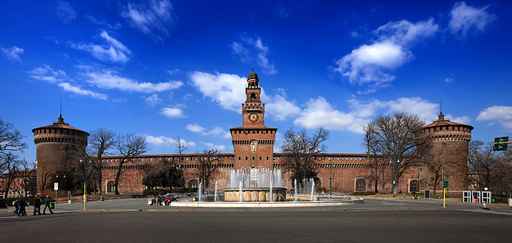
After a few more towns, we pulled into Cadorna station, which lies in the shadow of Milan’s castle.

image
We decided to walk home, so we wheeled our suitcases out, past the strange sculpture in the station square which finally, several years ago, I figured out was a needle and thread – a reference, no doubt, to the city’s place in the fashion world.

image
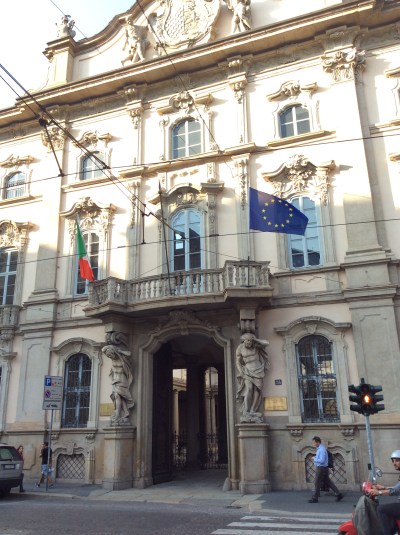
We made our way through back roads to Corso Magenta. We stopped for a well-deserved cappuccino in a caffé there. While we sipped, we admired the Baroque Palazzo Litta on the other side of the Corso.

I’ve always had a fondness for the two giants holding up the massive front door, so obviously suffering from the strain.


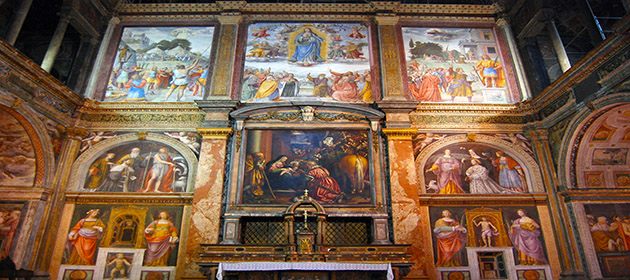
On we went down the Corso, past the Church of San Maurizio, which has magnificent 16th Century frescoes painted by Bernardino Luini and his school
image
before we turned right and threaded our way through the back roads again, past the mouldering ruins of the palace built by the 3rd century Roman Emperor Maximian

image
on past a disused church which is now a museum dedicated to the 20th century artist Francesco Messina

image
until we came to our road.

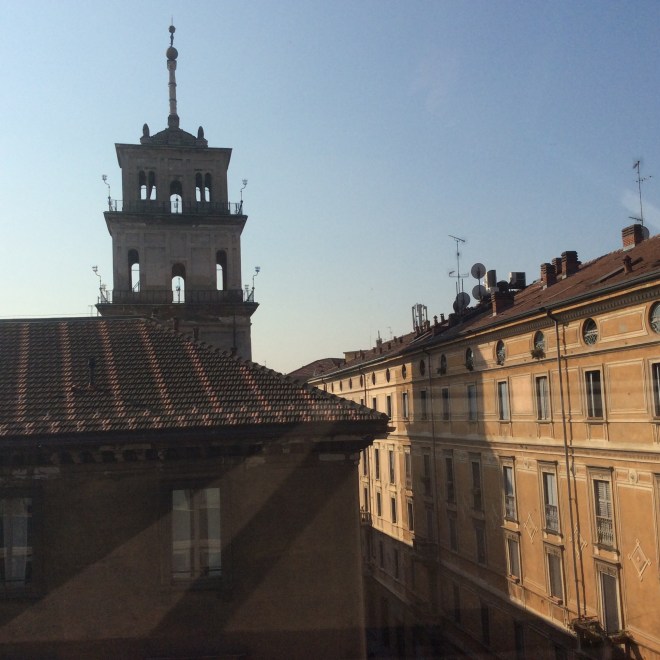
We chatted briefly with the doorman about the family as he handed us a large wad of post, accumulated since our last flying visit six months ago. We squeezed the luggage into the small elevator, manhandled it all through the apartment door, flung open the windows, and gazed over at the tower of the Palazzo Stampa-Soncino across the road.


image
After eighteen years away, it was good to finally be back home.

______________________
Liquore di Saronno: https://it.m.wikipedia.org/wiki/Liquore_amaretto
Biscotti Galbusera: http://www.galbusera.it/prodotti/senza-zuccheri-aggiunti/frollini
Castello Sforzesco, Milan: http://www.conilsud.it/2014/come-raggiungerci/
Sculpture, Piazza Cadorna: http://www.solotravel.it/29032011/piazzale-cadorna-a-milano-tra-design-e-modernita/6334
Palazzo Litta: my photo
Two statues, Palazzo Litta: my photo
Frescoes, church of San Maurizio: http://www.donnecultura.eu/?tag=chiese-di-milano
Remains Imperial Palace of Maximian: http://flickeflu.com/photos/40993657@N06/interesting
Sculpture, Francesco Messina: https://www.pinterest.com/pin/309059593155732010/
Tower, Palazzo Stampa Soncino: my photo

AMBER AND ITS ROAD

Bangkok, 15 August 2016

I’ve just finished a fascinating book about the peopling of Europe, entitled Ancestral Journeys: The Peopling of Europe from the First Venturers to the Vikings, by Jean Manco. The book describes the various waves of people who have settled Europe, peacefully or not, from 40,000 BC to 1,000 AD.

One thread in the rich tapestry of the peopling of Europe is the trade networks which sprang up as neighbouring tribes traded whatever useful or interesting resources they controlled inside their territories. The really high-value resources could in this way travel very long distances from their point of origin, as people passed them on – at ever-increasing value, no doubt – to people further away from the original source. In an earlier post, I’ve mentioned the Stone Age long-distance trade in obsidian, which made excellent, sharp arrowheads. Gold, the subject of my next-to previous post, was also traded over long distances. Amber was another such material.

In the early days of Europe’s history, by far the richest source of amber was the Baltic coast of Poland (it probably still is), where nuggets of amber would wash up on the beach, broken off from the amber deposits on the sea bottom.
image
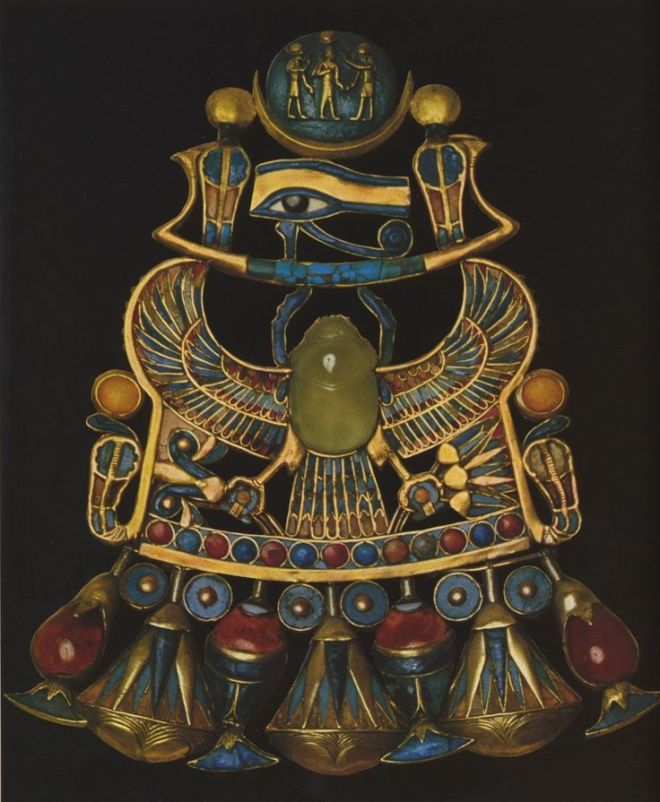
The biggest market for amber, on the other hand, and from time immemorial, were the civilizations around the Mediterranean Sea and in the Middle East. Tutunkhamun’s breast ornament contains pieces of Baltic amber, for instance
image
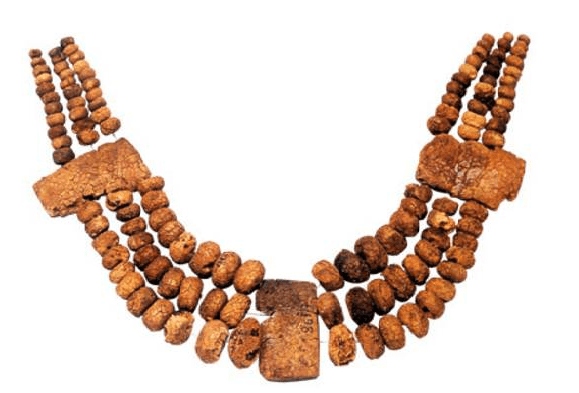
while Heinrich Schliemann found necklace beads of Baltic amber in the Mycenaean tombs he excavated.

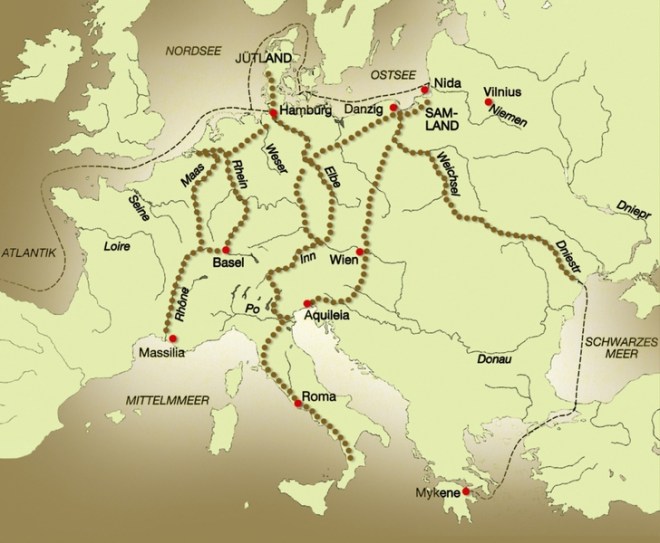
Thus sprang up several “amber roads”, trade routes which brought Baltic (and other Northern European) amber south.
image
The one that most interests me is the amber road which led from the general region of Gdansk down to the Roman provincial capital of Carnuntum on the Danube River (the Danube became the Roman Empire’s frontier in 9 BC), on down along the network of Roman roads to Aquileia in North-Eastern Italy, the terminus. This map shows, more or less, a detailed trace of this amber road.
image
I say “more or less” because while the route taken by the amber after the Danube River crossing is pretty clear – it followed the Roman roads down to the Italian peninsula – how it got to the Danube River from the Baltic coast is less so. There were just tracks through the forests and around the bogs in this part of Europe, and I’m sure every Germanic trader followed his fancy, depending on what else he was buying or selling along the way, as well as what the weather was like and who was fighting who. There seem to have been a few fixed points on the itinerary: Wroclaw (Breslau in German; the British historian Norman Davies, in collaboration with Roger Moorehouse, has written a fascinating biography of this city, Microcosm: Portrait of a Central European City), the Moravian Gate (a pass between the Carpathian and Sudeten mountains, used since remotest antiquity as a passageway), and the Morava River which flows into the Danube just across from Carnuntum.

Once the raw amber arrived in Aquileia, it was turned over to workshops which turned it into desirable luxury products. Aquileia’s amber products were famous not just in the Italic heartlands but throughout the Roman world. In his Natural History, Pliny the Elder – rather dismissively, it seems to me – says they were in demand among women only. He also says that amber was thought to have protective properties for illnesses of the throat, which might explain why so many of the amber products found in the Italian peninsula are pendants.

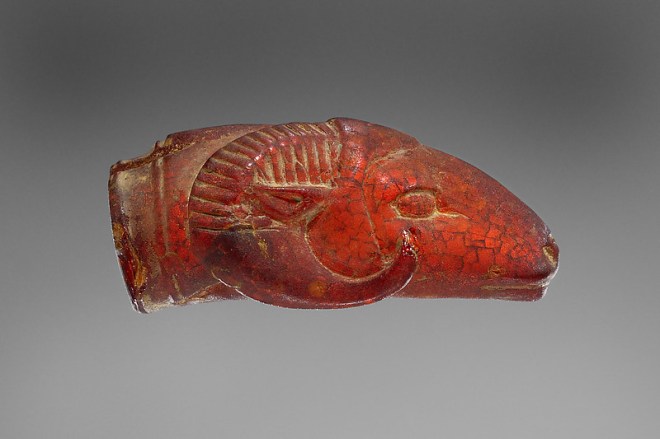
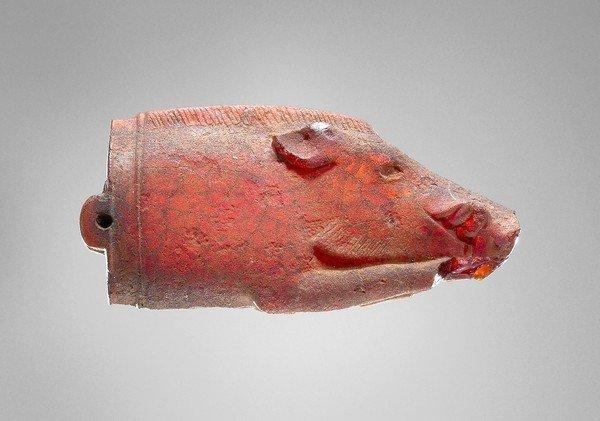
I have to say I’m not a big fan of amber, at least as used in modern jewelry. But I must admit that some of the amber pieces made in the Italian peninsula, both before its domination by Rome and after, are really very lovely. Here, in no particular order, are some pieces whose photos I found on the net. The first two are pre-Roman (Italic and Etruscan, respectively, to be precise)
image
image
while the remainder are from the Roman period; a number of them, if not all, were made in Aquileia’s workshops. This is Dionysius
image
while this must be Pan.
image
This is a perfume bottle
image
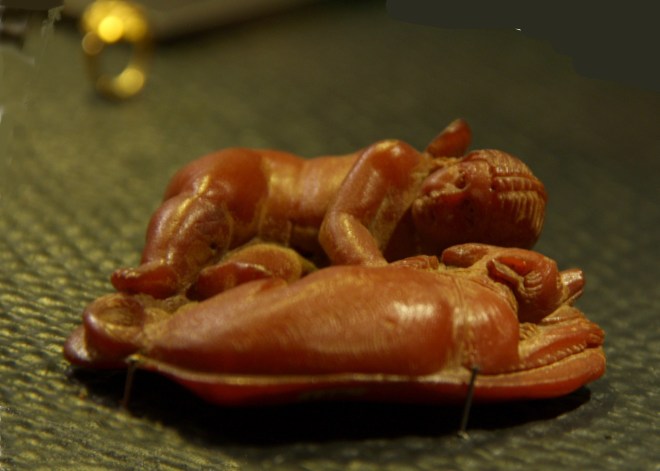
while this little set-piece is “Eros and a bitch”.
image
Lovely little pieces …

Let me go back a step now and explain my interest in this particular amber road. Or rather interests, for there are several. I first got to know about it, and the ancient amber trade in general, when my wife and I lived in Vienna. It so happens that Vienna is located close to Carnuntum. It always tickled me pink to think that Vienna, which gives itself such airs as the capital of the (defunct) Austro-Hungarian Empire, was once upon a time no more than a minor garrison town called Vindobona on the far edges of the much mightier Roman Empire. I’m sure officers and soldiers alike in little Vindobona looked with envy at their more powerful neighbour Carnunutum, which not only had the rich amber trade passing through it but also was the capital of the province. So many more important things went on there! The Emperor Marcus Aurelius chose Carnuntum as his base for three years during one of the periodic Roman campaigns against Germanic tribes across the Danube River (he also wrote part of his famous Meditations there, a copy of which graces my bookshelves). Another Emperor, Septimius Severus, was also based in Carnuntum when governor of Pannonia, and he was proclaimed Emperor there by his troops. Carnuntum hosted a historic meeting between the Emperor Diocletian and his co-emperors Maximian and Galerius, to solve rising tensions within the tetrarchy. Among other things, the meeting led to freedom of religion for the Roman Empire. And on, and on.

In contrast, like in all garrison towns, probably nothing much ever happened in Vindobona (although Marcus Aurelius’s death there in 180 AD must have caused a ripple of excitement). W.H. Auden caught well the tedium of garrison life on the Empire’s frontier for the ordinary soldier, in his poem Roman Wall Blues. The poem is about another of the Empire’s frontiers, Hadrian’s Wall, but I’m sure the tedium was the same, whichever frontier you were assigned to.

Over the heather the wet wind blows,
I’ve lice in my tunic and a cold in my nose.

The rain comes pattering out of the sky,
I’m a Wall soldier, I don’t know why.

The mist creeps over the hard grey stone,
My girl’s in Tungria; I sleep alone.

Aulus goes hanging around her place,
I don’t like his manners, I don’t like his face.

Piso’s a Christian, he worships a fish;
There’d be no kissing if he had his wish.

She gave me a ring but I diced it away;
I want my girl and I want my pay.

When I’m a veteran with only one eye
I shall do nothing but look at the sky.

But I suppose Vienna had the last laugh. It still exists, whereas Carnuntum is now but a very modest pile of ruins, having been systematically sacked by Germanic tribes in the 4th Century (I suppose in a way the Germanic tribes had the last laugh too, after all the denigration they received from the Romans). Sic transit gloria mundi, as I am ever fond of repeating: “thus passes the glory of the world”.

This particular amber road also caught my attention because it gave me an alternative route to the ones we always took to go back to my wife’s home town of Milan: either head south out of Vienna over the mountains to Graz and then over more mountains to Klagenfurt and Villach, slip through the Alps at the Tarvisio pass, then speed past Udine down to Venice, whence turn right and make for Milan; or, head west out of Vienna towards Linz, then Salzburg, and then into Bavaria, turn left at the River Inn and enter Austria again, at Innsbruck turn left again and climb up to the Brenner pass, down the other side to zip by Bolzano and Trento, exit from the Alps at Verona, and turn right there to head for Milan. Now my wife and I could take a lower road (a considerable benefit when traveling in winter, when both the other routes can be unpleasant), as well as one steeped in history. Travelling along the ghosts of old Roman roads (all of which disappeared long ago) we would head south past the tip of Lake Neusidler, shared by Austria and Hungary, to Šopron and then Szombalethy, both in Hungary, on to Ptuj, Celje, and Lubljana in Slovenia, to finally slip through the Julian Alps at Gorizia and on to Aquileia, where we would need to finally get on the A4 motorway and speed on to Milan!

Great idea, except for one slight problem – time. There is no speedy highway linking all these towns, so it would take far longer to get to Milan. Since we were working, we couldn’t afford the time; we were always time-starved. But that will all change in a mere two weeks’ time, when I retire! Then, we will have all the time in the world, and I am determined to finally follow in the footsteps of the legions and pass through what were once the Roman towns of Scarbantia, Savariensum, Poetovium, Celeia, and Emona. There’s not much Roman left in them, though. Like Carnuntum, and like the terminal point Aquileia (of whose total destruction I wrote about in an earlier post), they were all thoroughly sacked and resacked by Germanic, Gothic, Hun, Lombard, Slav, or Hungarian war parties (or some combination of these) during the period of the “Barbarian Invasions” or the “Migration of the Peoples”, the Völkerwanderung (take your pick, depending on your ideological point of view).

I always feel a point of melancholy when faced with these moments of destruction in history. And it’s not just in the remote past. On the northern end of this amber road, tremendous destruction, of places but also of people, was wreaked a mere 70 or so years ago as first, German troops swept through on their way to enacting Hitler’s policy of lebensraum, expanding the living space of the Aryan, Germanic people at the expense of Slavic people, and then again, as the Soviet troops fought their way back to Berlin. Along with many other Polish cities, Gdansk, Wroclaw, Poznan, all sitting astride the amber route, were almost totally destroyed, their Jewish populations annihilated, their Polish populations much depleted, their industrial infrastructure stripped away. What a waste … so much human creativity swept away by the animal desire to destroy.

_________________
Raw amber on a Baltic beach: https://en.m.wikipedia.org/wiki/Baltic_amber#/media/File%3ABaltic_beach_sand_containing_amber.jpg
Tutunkhamun’s breast ornament: https://hu.pinterest.com/pin/249598004324238999/
Amber necklace, Mycenae: https://sites.google.com/site/ambranathistplinio/home/etimologia-e-proprieta
Amber routes map: http://www.ambergallery.lt/en/disp.php?itm=en_museums_3%2Fen_museums_3_9
Amber road through Carnuntum: https://en.m.wikipedia.org/wiki/Amber_Road
Ram’s head, Italic, 500-400 BC: http://museumcatalogues.getty.edu/amber/intro/16/
Boar’s head, Etruscan, 525-480 BC: http://articles.latimes.com/2013/jan/19/entertainment/la-et-getty-ambers-20130119
Mask of Dionysius, Roman, 1st C AD: http://amberregina.blogspot.com/2011_03_01_archive.html
Perfume bottle, Roman, Aquileia workshop, 2nd C AD: http://www.antiquitiesexperts.com/rome138.html
Eros and bitch, Roman: https://commons.m.wikimedia.org/wiki/File:1128_-_Archaeological_Museum,_Udine_-_Ancient_Roman_amber_Eros_and_bitch_-_Photo_by_Giovanni_Dall%27Orto,_May_29_2015.jpg

BLOODY WIRES!

Bangkok, 10 August 2016

There was a time, not that long ago it seems to me, when we did not have all these electronic gizmos lying around the house. Now we suffocate in them. Between the two of us, my wife and I have two phones, one smart and one not smart at all, two tablets, one portable computer, one thingy that gives my wife her wifi (I use my phone’s hot spot), one power pack, one flat-screen TV, and one radio-cum-CD player. I’ll also throw in our two electric toothbrushes. I’m sure we are quite modest in our e-outlay. For instance, neither of us has ever had an iPod or equivalent blasting music in our ears through those tiny ear phones which are squeezed into your ears and guaranteed to make them ache after five minutes (mine certainly do). Nor have we ever had a game console with which to pulverize, mutilate, and generally annihilate the human race. Nevertheless, even with this very modest e-inventory, we suffer from a terrible problems: wires.

The biggest problem with all these e-products is that their batteries need recharging. So our living room floor is festooned with electric wires snaking this way and that, plugged into every available socket. In fact, since we don’t have that many sockets, we have to use several power strips, which add more wires to the confusion. And the worst of is that, since all these damned products seem to need recharging all the damned time, we drag a handful of wires and one or two power strips behind us when we move from the table to the couch.
image
I have to say, when I’m dragging my wires and their attached e-products around I feel like Marley’s ghost when he comes to frighten the bejeezus out of Scrooge on Christmas Eve.
image
“The bells ceased as they had begun, together. They were succeeded by a clanking noise, deep down below; as if some person were dragging a heavy chain over the casks in the wine merchant’s cellar. … The cellar-door flew open with a booming sound, and then he heard the noise much louder, on the floors below; then coming up the stairs; then coming straight towards his door. … “It’s humbug still!” said Scrooge. “I won’t believe it.” His colour changed though, when, without a pause, it came on through the heavy door, and passed into the room before his eyes. … The same face: the very same. Marley in his pigtail, usual waistcoat, tights and boots; … The chain he drew was clasped about his middle. It was long, and wound about him like a tail; and it was made (for Scrooge observed it closely) of cash-boxes, keys, padlocks, ledgers, deeds, and heavy purses wrought in steel.”

Well, as you might imagine, I am not the only one to be irritated by this bloody nuisance of wires. Some of my readers may well feel the same wire-induced irritation. And of course the private sector, ever alert to new markets, has moved in. Companies have designed wireless chargers, which use induction coils to produce an electromagnetic field, which in turn can charge batteries. Don’t ask me anything more; I never understood electro stuff. Luckily, these new products can look pretty cool
image
although I do note that while there may be no wire between charger and e-product, there must be a wire between charger and wall socket – otherwise, how does it get the electricity which it so generously passes to the mobile, tablet, or what have you?

So other companies have come up with the idea of inserting the wireless charger into products which already have wires. Clever, no? For instance, take my favourite furniture shop, IKEA. “Our range of wireless chargers blend in beautifully with your home” their catalogue proclaims, “and can be placed where you need them the most. All without having to chase after outlets or hide messy cables.” Words after my heart! See, for instance, this clever lamp, which has a charger built into its base. And which has won some design award to boot.
image
IKEA has various other lamps as well as what I take to be bedside tables with these built-in chargers.
image
In case my readers suspect me of having shares in IKEA, I hastily add that there are many other furniture companies out there offering similar solutions. My crystal ball tells me that this is the future.

But then there is one thing that’s worrying me. Aren’t all these wireless chargers using the same technology as microwave ovens? Like I said, I don’t understand all this electro stuff, but it seems to me to be more or less the same. In which case, a houseful of wireless chargers will slowly be cooking us. My phone is already cooking my brain.

image

______________________
Marley’s ghost, by Alec Guinness: http://dickensblog.typepad.com/dickensblog/2013/07/picspam-sir-alec-guinness-dickensian.html
RIGGAD lamp: http://www.ikea.com/us/en/catalog/categories/departments/wireless_charging/
Other furniture with chargers: http://www.ikea.com/us/en/catalog/categories/departments/wireless_charging/
Phone cooking brain: http://www.popsci.com/science/article/2010-02/disconnected

GOLD

Mandalay, 3 August 2016

A few weeks ago, I read of the death of an Indian money-lender, murdered by a couple of people to whom he owed money. It was a banal and sordid murder, no different from the hundreds of banal and sordid murders which occur every day the world over. If this particular one was splashed all over the front pages of many newspapers, it was because the unfortunate victim had earlier shot to global fame for purchasing … a shirt made of gold (an idea, I have to say, which I find pretty bling).
image
Ah, gold! That lovely, soft, malleable metal, which never rusts, which glows yellow like the sun. Which has been lusted after by so many through the ages. It sent the Conquistadors sailing half way round the globe to an unknown world, not to understand it but to rip the gold out of its heart.

image
It has sent hundred of thousands running to the ends of the world to feverishly pan it out of water or to hack it out of the ground
image
a gold fever which even today strikes men (but also now women).


But gold has also inspired artisans for at least six thousand years to make beautiful, beautiful objects. It is these lovely creations which I wish to celebrate today, not the ugly side of gold.

Given where this post started, my first inclination was to search on the Internet for examples of powerful potentates from the past who were discovered by archaeologists buried in shirts or tunics of gold. Alas, I found none, whether because my surfing skills are not up to the task or because even kings of old found this idea really too bling, or because archaeologists simply haven’t stumbled across such cases yet. The closest I got to it was jade burial suits used during China’s Han dynasty by members of the royal family; in some cases, the jade pieces of the suit were sewn together with gold wire.
image
But as I surfed the internet, looking for gold shirts from faraway times, I stumbled across a treasure hoard of ancient gold pieces, some found buried with kings, princes, and their consorts, others buried for safekeeping by their owners who, for some reason, never returned to reclaim them. For instance, I was completely smitten by some of the gold work that archaeologists have found in various Scythian royal tombs in Southern Russia, Ukraine, and the Caucasus region more generally. Look at this pectoral, from the 4th C BC!
image
Here’s a detail – see how fine the work is!
image
Or how about these two vessels, also from the 4th C BC. They were apparently a pair, with this one
image
sitting on top of the other.
image
Or this bowl, from more or less the same period.
image
Or this comb, from slightly earlier, late 4th C BC, early 5th C BC.
image
The articles I’ve read about these pieces suggest that they were not actually made by the Scythians but by Greeks, living perhaps in the Crimean region. Fair enough, but this Scythian deer plaque, from the 7th C BC, was surely locally made
image
as was this belt buckle from the same period.
image
Thracian kings, it seems, were also desirous to be surrounded by fine gold objects. Consider, for instance, Bulgaria’s Panagyurishte gold treasure, thought to have been owned by King Seuthes III and buried to hide them from marauding Celts or Macedonians. I show three pieces from the hoard, all from the 3rd or 4th C BC: two rhytons, or drinking horns
image
image
and a plate.
image
Again, the detail on these pieces is exquisite.

Mention of marauding Celts makes me look in the direction of the Northern European lands, where Celts were also known to hurriedly bury hoards of gold objects at the sound of approaching marauders. This beautiful spiral torc from 1st-4th C BC
image
was part of a cache of torcs found near Stirling in Scotland. This 70 BC torc instead was part of a hoard discovered at Snettisham in Norfolk, England.
image
This necklace, on the other hand, is a copy of a 6th-7th C BC original that was buried in Lorup, Germany.
image
I have to say, while I greatly admire the artistry that went into the Thracian and Scythian pieces, I instinctively empathize with the geometric simplicity of these Celtic pieces. “Keep It Simple, Stupid!” has always been my motto.

But that didn’t stop me from whistling when I saw some of the pieces that were made in what is now Iran. Look at this 8th-10th C BC cup, for instance, with its row of wild goats walking primly around it.
image
This must have been a popular design, because this cup from a later period (4th-5th C BC) has instead lions or tigers walking round it.
image
This 4th-5th C BC drinking cup holds its own to the two Thracian rhytons I show above
image
while this 3rd-4th C BC Janus-faced cup is a marvel to behold.
image

There are many, many other beautiful ancient gold objects out there, but I have to bring this little essay to a close. Let me finish with the oldest gold objects so far found. These are datable to the period 4,200-4,600 BC, and come from a necropolis in Varna, now Bulgaria’s largest city on the Black Sea. Compared to the pieces I show above, the objects in these tombs are quite modest in their design. What caught my attention was this reconstruction of one of the burials in the necropolis.
image
I suppose the man to whom this skeleton belonged was a grandee, and was laid to rest surrounded by all his worldly riches. But as I gaze at this skeleton, I cannot help but remember the dialogue between Hamlet and Horatio in the graveyard. After musing over Yorick’s skull (“Alas, poor Yorick! I knew him, Horatio, a fellow of infinite jest, of most excellent fancy …”), Hamlet turns to Horatio.

Hamlet: Prithee, Horatio, tell me one thing.

Horatio: What’s that, my lord?

Hamlet: Dost thou think Alexander looked o’ this fashion i’ the earth?

Horatio: E’en so.

Hamlet: And smelt so? pah!

Puts down the skull

Horatio: E’en so, my lord.

Hamlet: To what base uses we may return, Horatio! Why may
not imagination trace the noble dust of Alexander,
till he find it stopping a bung-hole?

Horatio: ‘Twere to consider too curiously, to consider.

Hamlet: No, faith, not a jot; but to follow him thither with
modesty enough, and likelihood to lead it: as
thus: Alexander died, Alexander was buried,
Alexander returneth into dust; the dust is earth; of
earth we make loam; and why of that loam, whereto he
was converted, might they not stop a beer-barrel?
Imperious Caesar, dead and turn’d to clay,
Might stop a hole to keep the wind away;
O, that that earth, which kept the world in awe,
Should patch a wall to expel the winter flaw!

___________________
India’s “gold man”: http://www.bbc.com/news/world-asia-india-36804209
“Conquista de Mexico”, Diego Rivera: http://www.abc.es/fotonoticias/fotos-espana/20150428/mural-diego-rivera-sobre-162891744561.html
Gold prospectors, Klondike: http://www.discovery.com/tv-shows/gold-rush/photos/klondike-gold-rush-pictures/
Modern gold prospectors, Colombia: http://www.jansochor.com/photo-blog/gold-mining-colombia
Jade burial suit: https://hu.pinterest.com/pin/454159943647748843/
Scythian pectoral, Ukraine, 4th C BC: http://www.craftycristian.com/tag/artifact/
Scythian pectoral-detail: https://en.m.wikipedia.org/wiki/Scythians
Scythian vessel-top, 4th C BC: http://phys.org/news/2015-06-archeologists-gold-artifacts-scythian-grave.html
Scythian vessel-bottom, 4th C BC: http://www.archaeology.org/issues/220-1607/features/4560-rites-of-the-scythians
Scythian bowl, 2nd half 4th C BC: http://www.metmuseum.org/exhibitions/listings/2000/golden-deer/photo-gallery
Scythian gold comb, Ukraine, late 5th-early 4th BC: http://museum-of-artifacts.eu/post/100759193962/scythian-golden-comb-5th-century-bc
Scythian deer, end 7th C BC: http://www.metmuseum.org/exhibitions/listings/2000/golden-deer/photo-gallery
Scythian belt buckle, 7th C BC: https://en.m.wikipedia.org/wiki/Scythians#/media/File%3AGold_scythian_belt_title_from_Mingachevir%2C_Azerbaijan.JPG
Thracian drinking horn-goat: https://www.pinterest.com/pin/174444185537354589/
Thracian drinking horn-deer: https://www.pinterest.com/pin/492510909227090261/
Ancient Greek plate (phiale): http://www.artlex.com/ArtLex/g/gold.html
Spiral torc, Scotland, 300-100 BC: http://www.nms.ac.uk/explore/stories/scottish-history-and-archaeology/iron-age-gold-torcs/
Celtic torc, Snettisham hoard: http://www.geograph.org.uk/photo/2395380
Ancient wire necklace (copy), Lorup hoard, Germany, late Bronze Age, 700-600 BC: http://www.ancientwire.com/spiralnecklace.htm
Achaemenid cup-wild goats, 1000-1200 BC: http://www.metmuseum.org/art/collection/search/325511?high=on&rpp=50&pg=22&rndkey=20120709&ft=*&pos=1095
Achaemenid gold cup, Kalardasht, 800 BC: https://commons.m.wikimedia.org/wiki/File:Gold_cup_kalardasht.jpg
Achaemenid drinking cup: http://www.daftarche.com/تاریخ،-فرهنگ،-همبود-13/persian-mythology-543-چاپ/برگه-3.html
Achaemenid Janus cup: http://www.iransara.info/main-previous%20post.htm
Varna man: http://edition.cnn.com/interactive/2015/07/style/gold/