POSTS

SONGKRAN

Bangkok, 15 April 2015

Call me a sourpuss, a killjoy, a party-pooper, even an old fart, but I really cannot find anything positive to say about the Songkran festival which is in full swing at the moment here in Thailand. For those of my readers who may not be familiar with Songkran, it is Thailand’s festival of the new year. Actually, Myanmar, Laos, and Cambodia all celebrate the same festival, even if it has a different name in Myanmar and Cambodia (Thingyan and Chaul Chnam Thmey) – not surprising really, since all these countries follow more or less the same traditional Buddhist calendar.

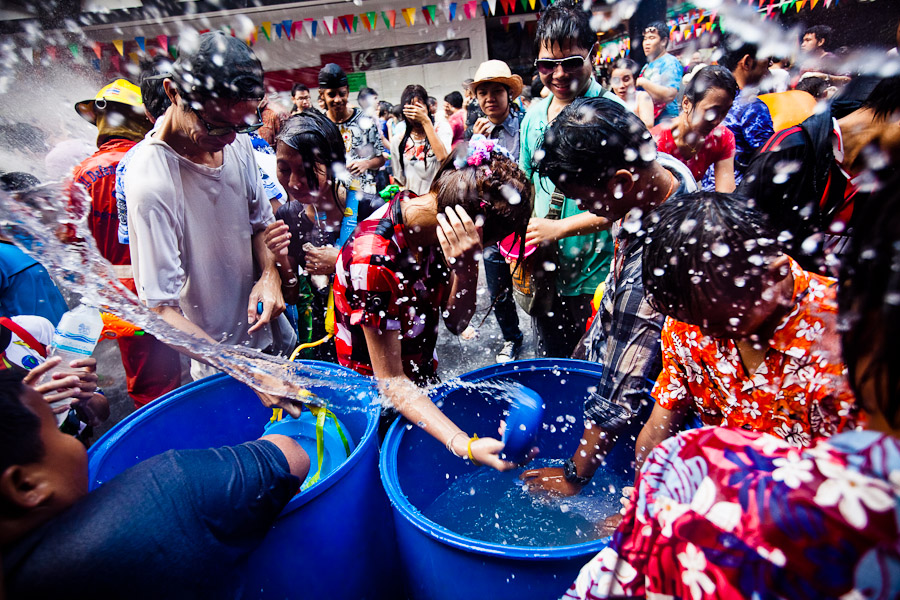
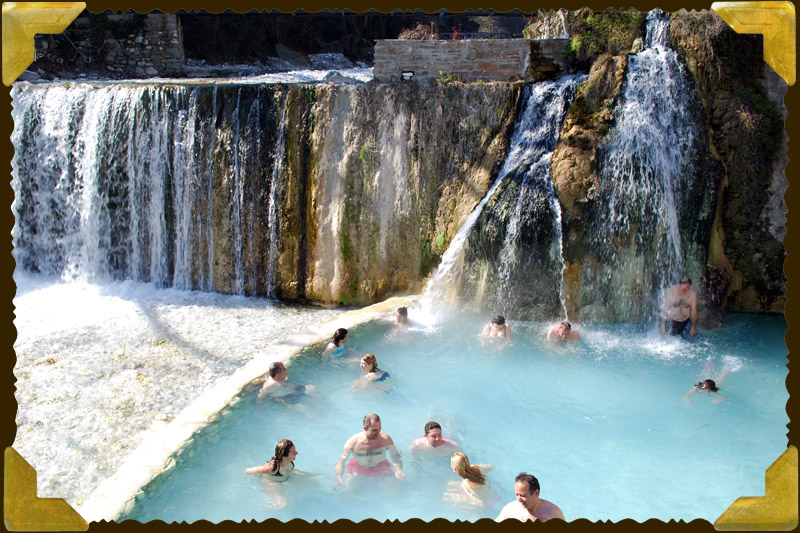
Thais celebrate Songkran by squirting, spraying, and generally throwing water on everyone and everything, in one vast water party.

Songkran water festival in Bangkok, Thailand

water-festival-in-thailand-5

water-festival-in-thailand-4

Songkran in Bangkok, Thailand

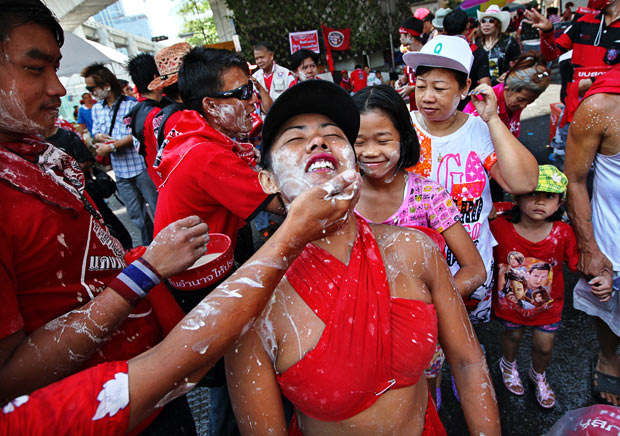
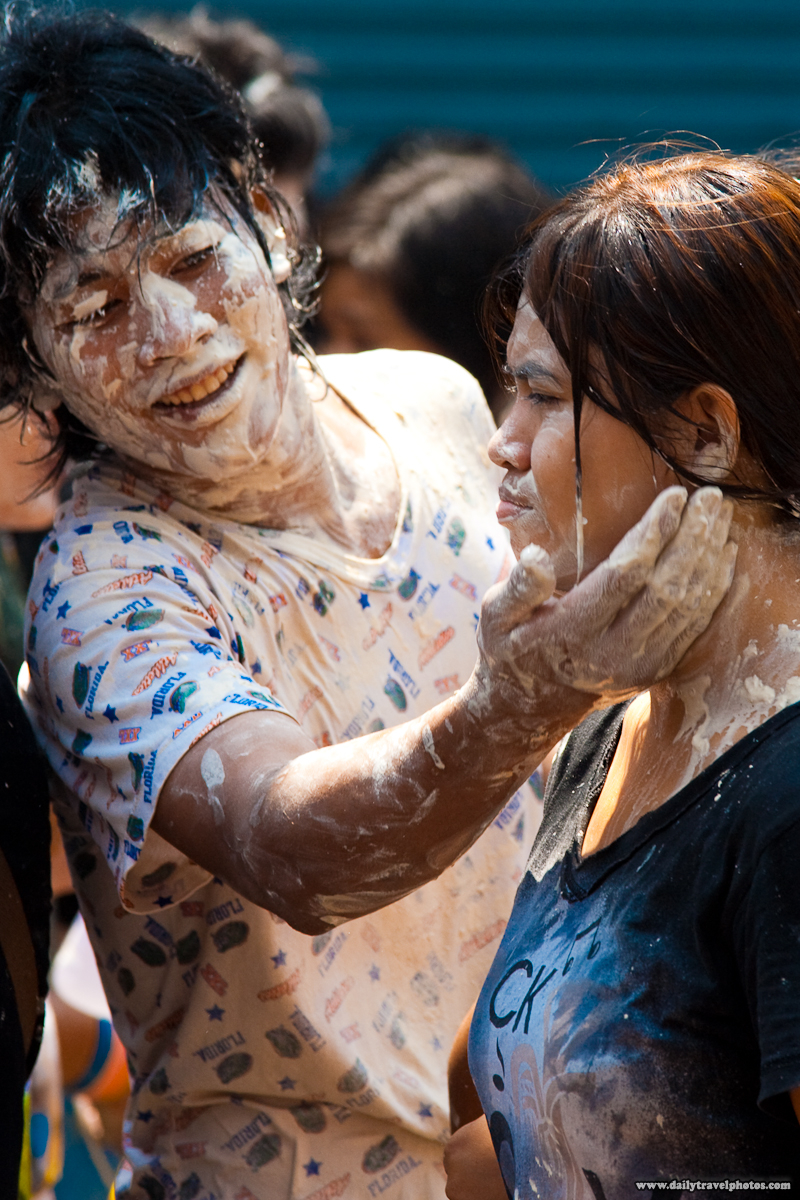
To cap it all, people slather themselves – and others – with a white paste (shades of Myanmar).

white paste on face-1

white paste on face-2

Those who are young, or who have an infantile sense of humour (aïe, my sourpussedness is coming to the surface), find all this hugely entertaining. Shrieks and laughter echo up and down the streets. Clothes are soaked, but no matter, it’s the hottest time of the year, they will dry out in a flash. And off goes another bucket of water!

Of course, for sourpusses like me, who have to get to meetings with officials in nice clothes or have to go to the office to work and who would prefer not to sit in a puddle at their desk, it is a trial to navigate the streets and dodge the pails of water, the hoses, the water guns. And anyway, it’s just so … damned childish to enjoy throwing water at people! (aïe, my party-poopery is coming to the fore: “I grow old, I grow old, I shall wear the bottoms of my trousers rolled”)

What I find really irritating is that all this water throwing is a stupid, facile, totally post-modern corruption of the original festival. Water has a very important role in Thai society, as it does in many cultures. Clean water is the symbol of purity and peace. At the new year, it is used to wash away the dirt of the old year and allow one to start the new year clean and fresh. During the three days of the festival, clean water is poured over statues of the Buddha to clean them. That same water, in some way sanctified by its contact with the Buddha, is sprinkled over family and friends, again as a symbol of cleansing oneself for the year to come. Part of the tradition has younger people sprinkling water on their elders.

In a variation on this last tradition, yesterday in the office my secretary shyly asked me if I would be willing to take part in a ceremony where my colleagues would sprinkle water on my hands, in my role as the head or “elder” of the office. I was glad to, I announced, feeling that this at least gave some meaning to the silly goings-on outside my window. So at the appointed time, my colleagues solemnly – if somewhat self-consciously – processed into my office. A silver bowl filled with clean water strewn with petals was placed on the table, and one by one – eldest first – they came up, knelt in the Thai fashion, and poured a small cup of water over my hands, while wishing me a happy new year. I wished them and their families a happy and prosperous new year in return.

When I came home for lunch, I noticed that a statue of the Buddha had been set up in the lobby, with a bowl of water nearby. Why not? I thought. I might as well go the whole hog. So I offered the statue a traditional if rather awkward namaste and poured a cupful of water over him.

___________________

Water festival-1: http://cdn.c.photoshelter.com/img-get/I0000SR1YiamyV8Y/s/750/750/Water-Festival-in-Bangkok-Thailand-29.jpg (in http://aaronjoelsantos.photoshelter.com/image/I0000SR1YiamyV8Y)
Water festival-2: http://www.chiangmai-alacarte.com/sites/default/files/styles/main_col/public/images/songkran_festival_and_tour_in_chiang_mai_thailand2.jpg?itok=KUnw68jO (in http://detaykibris.com/taylandda-su-bayrami-coskuyla-kutlaniyor-191-olu.html)
Water festival-3: http://www.journeymart.com/gifs/holidays-ideas/festivals/songkran-thailand-water-festival.jpg (in http://www.journeymart.com/holidays-ideas/festivals/songkran-thailands-water-festival.aspx)
Water festival-4: http://cdn.lightgalleries.net/4bd5ec1013294/images/Songkran_Water_Festival_Bangkok-2-1.jpg (in http://www.aaronjoelsantos.com/contents/Stories/Waterworld/image-Songkran_Water_Festival_Bangkok-2/)
White paste on face-1: http://i.telegraph.co.uk/multimedia/archive/01615/red-shirts-white-p_1615328i.jpg (in http://www.telegraph.co.uk/travel/picturegalleries/7586439/Songkran-tourists-and-Thais-splash-each-other-with-water-to-celebrate-new-year-in-Thailand.html)
White paste on face-2: http://www.dailytravelphotos.com/images/2011/110425_songkran_white_powder_paste_faces_thai_festival_day_applied_IMG_9676.jpg (in http://www.dailytravelphotos.com/archive/2011/04/25/)

SOUNDSCAPES OF BRITAIN

Bangkok, 12 April 2015

When we moved into our apartment here in Bangkok, we found that a previous tenant had left a wind chime hanging on the balcony, in front of the living room, ready to tinkle with every passing breeze – and since many breezes pass up and down the river which flows by our building, it tinkled quite a lot.

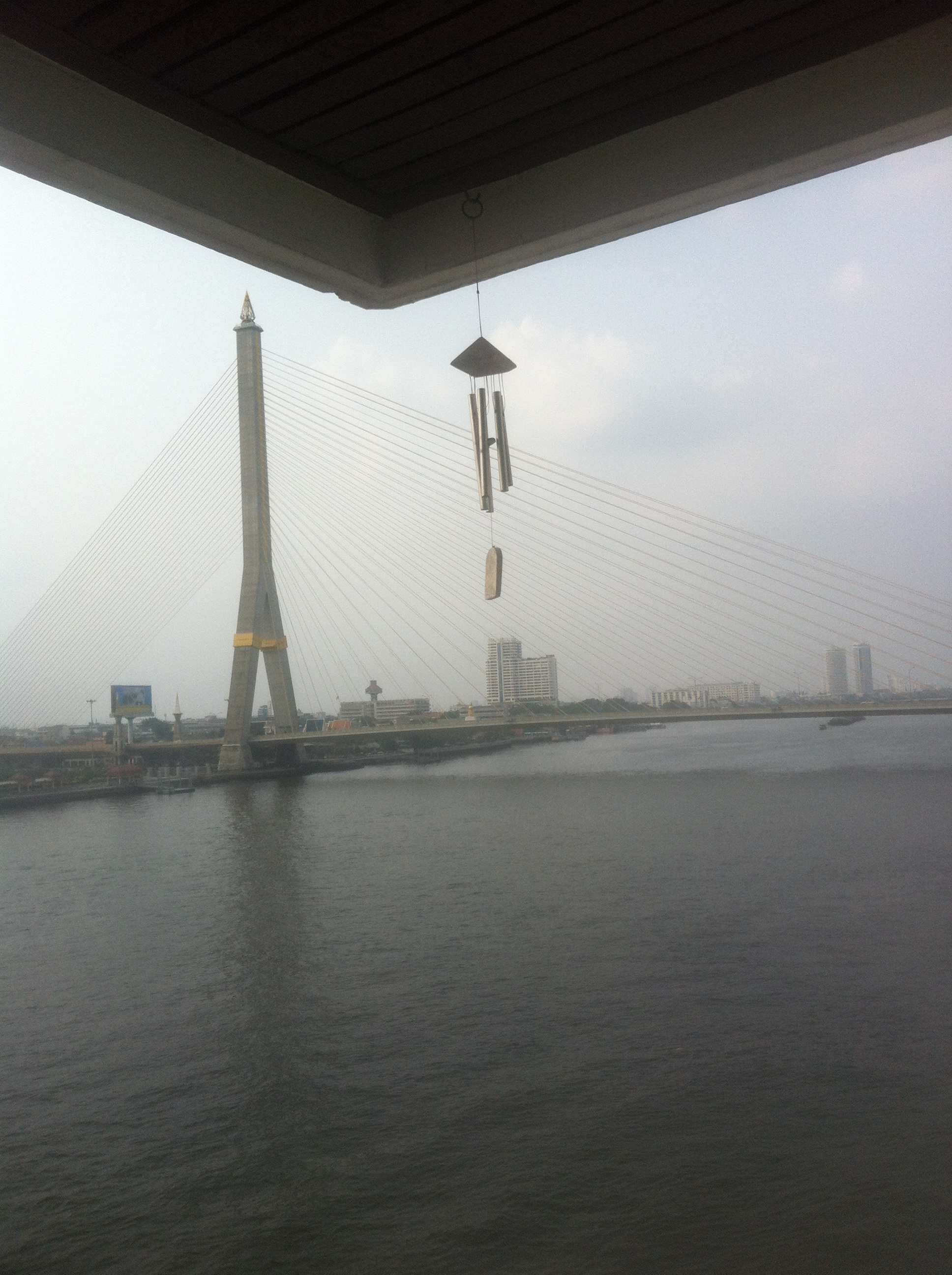
I was charmed, my wife less so. It is true that its more-or-less constant tinkling became rather intrusive to our life in the living room. My wife was for removing it completely. As a compromise, I moved it to the end of the balcony, keeping company to the King Rama VII Bridge (about which I’ve written earlier). From there, its chimes would be less sonically importunate, and it might, I hoped, keep the pesky pigeons from resting on the balcony railing.
wind chime bangkok 001
The former worked, the latter didn’t; true to form, the pigeons simply ignore the chimes and continue to land – and poop – on the railing.

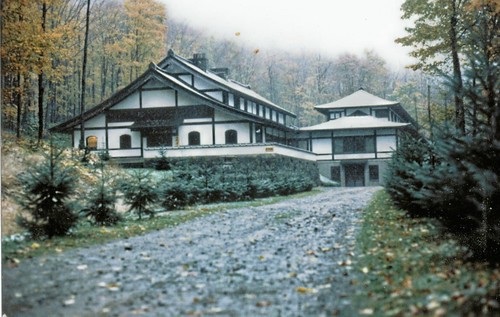
My wife and I had first come across wind chimes some 35 years ago, during a visit we made to a Buddhist temple situated in the Catskill mountains to the north of New York City. We were spending a few days in the Catskills, getting our small children out of the city and into some fresh air. By chance, during a drive around the countryside, we came across a sign indicating the way to the temple. Intrigued, we followed the sign and found ourselves with this before us.
buddhist temple catskills
A very nice (American) Buddhist nun took us on a tour, and afterwards, while wandering around the temple’s outhouses, we came across the wind chime, tinkling quietly in the wind.

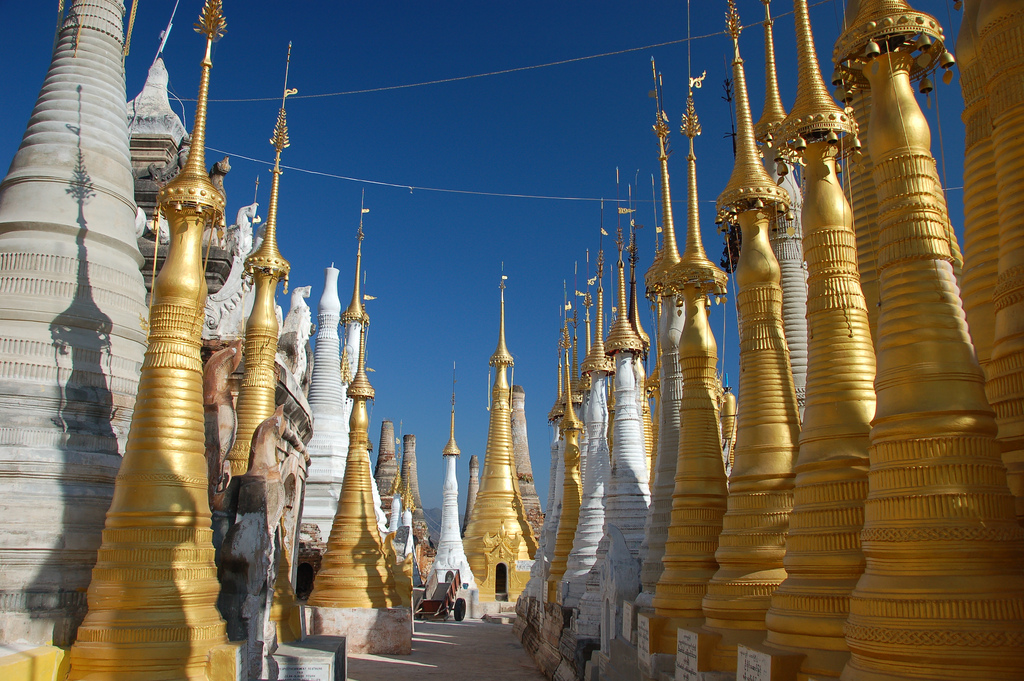
We recently came across a more religious version of wind chimes in Myanmar, where almost universally stupas are topped with a complicated crown that includes, among other things, a circle of little bells at its base which nod with every passing breeze.
07-kakku 007
In consequence, our visits to the stupa forests around Inle lake were accompanied by an almost constant quiet background tinkle whose level rose and fell as breezes snaked their way languidly between the stupas. Their purpose, I read, is to ward off evil spirits. This seems to be the primary raison-d’être of wind chimes in this part of the world, another example of something beautiful inspired by fear. Sad, really.

As I read around for this post, I discovered that a certain set of wind chimes – at Mizusawa railway station in Ōshū, Japan, to be precise – were one of the 100 soundscapes of Japan officially designated as such by the Ministry of Environment. Soundscapes! Now, that is something I had never heard of. And my research – and consequently this post – went off on a tangent. I’ve been like a dog who while following the scent of a fox, suddenly comes across the scent of a boar and races off in a different direction.

Soundscapes, I read, are sounds that “describe a place, a sonic identity, a sonic memory, but always a sound that is pertinent to a place”.  I’ve scanned the list of official 100 soundscapes of Japan (chosen, by the way, very democratically from a pool of candidates created after the Ministry of Environment called on the citizenry to submit their favourite soundscapes). Apart from the wind chimes in Mizusawa station, I see drift ice in the Sea of Okhotsk, the Japanese crane sanctuary in Tsurui, singing frogs and wild birds of the Hirose River, ship whistles for the New Year at Yokohama Port, reed fields at the mouth of the Kitakami River, pinewoods sighing in the wind in Noshiro, the approach to Kawasaki Daishi Temple, a cicada chorus in Honda-no-Mori Forest, sand eel fishing at Tarumi port, and on and on. Any reader who is interested in the whole list can go to the Wikipedia entry.

Wow … 100 soundscapes that somehow define a country … Well, I guess Mynamarians might choose the tinkle of bells in their stupa forests as one of their soundscapes. But I can’t decide their soundscapes for them. As an Englishman, though (OK, half an Englishman but let’s not quibble), I could have a go at choosing some soundscapes for the UK.

So what sounds define the UK? Well, the national psyche is very much defined by its being an island, so soundscapes of the sea are an obvious choice. There’s the sound of the water itself: the quiet hiss of seawater running over a shingle beach like the one my grandmother used to take us grandchildren to in Norfolk, or the splintering of waves against sea-cliffs which my wife and I heard in the Orkneys, or even the howl of the wind racing inland on the back of a big winter storm. But there’s also the cries of the innumerable seabirds and other wildlife which inhabit the UK’s coasts. And then there are the human-related noises linked to the sea: the sharp orders of the skipper followed by the thunderous clap of sails resetting on a sail boat as it turns about, the blast of a siren and the churning of water as a ship moves out of port, the lugubrious sound of a fog horn, but also the chatter on a crowded beach on a summer’s day.

Staying with water, rain is also definitely part of the British psyche, so a soundscape of falling rain seems called for: not the hard, dense tropical rain we have here in Bangkok, but a softer rain that goes on and on (and on …). And then there is the sound of all those brooks and streams which criss-cross the country as they hurry down over rock and fallen log: I have a particularly vivid sonic memory from my childhood of the brook which bordered our school’s playing fields.

Talking of playing fields, these evoke for me countless sonic memories: the crack of cricket bat against ball (such an English sound! although Americans may have a cousin in baseball’s bat against ball), the thud of foot against ball, the encouraging cheers of onlookers, which in football and other commercially organized sporting events has now swelled into the chanting of the stadium (this must be one of the few truly international soundscapes), and, strangely enough because I’m not really into horses, the thunder of hooves on soft turf as race horses come round the bend into the final straight. Horse racing also evokes in me a very specific sonic memory of the TV commentator: “and it’s Blue Blazes in the lead!, and Desperate Straights is coming hard up on the inside!!, but Blue Blazes is holding the lead!!!, …” and so the voice would continue to rise to a crescendo until the finishing line was crossed, when it would fall away to normal levels. Probably not specifically an English soundscape but to me always a memory of my English youth: Saturday afternoon in front of the telly.

Going back to nature, wind is a constant in the British Isles, so we must have wind soundscapes in the collection: trees soughing in the wind; wind rustling grass, sedges, heather; the dry clacking of leafless branch on leafless branch in a strong wind. Trees lead me to birds, which hold a special place in the British heart. A dawn chorus in summer would be a definite entry, but so could the songs of any number of birds. I would definitely want to have a lake soundscape with a loon calling out – I have such a strong childhood memory of that.

The Japanese Ministry held its competition for the 100 soundscapes of Japan as a way of reminding the Japanese of their country’s natural sounds. I have sympathy for that: we are so surrounded in our daily, highly urbanized, lives with a cacophony of artificial sounds that we no longer hear Nature. But still, there are soundscapes made up of man-made sounds which so “describe a place, a sonic identity, a sonic memory”, to requote the definition, that they cannot be left out from this compendium of national sounds which I am sketching out. My personal entries would be two. One is the sound which London Underground trains make when they are halted, waiting to go. The electric engine goes into some sort of standby mode, emitting a very particular sound which I have never heard anywhere else. When I hear that noise, I know I’m back in London. The second such sound is from the diesel engine of the old double decker buses. These emitted a particular throaty rasp which I would immediately recognize anywhere. Alas, I think this soundscape now belongs to history. Today’s double deckers must have a newer engine, for I hear that throaty rasp no longer.

I cannot finish my list without mentioning the UK’s regional accents. I’ve always loved the wide variety of accents you find in the UK. It just fascinates me that the same language can be pronounced in so many different ways. I don’t know if regional accents count as soundscapes, but you certainly can’t find a more British sound than a Yorkshire accent, or a Somerset accent, or a Welsh accent, or one of the Scottish accents, just to cite the ones I am most familiar with. Whenever I hear a British regional accent on the streets or in the shopping malls of Bangkok, I turn around and smile. That’s home …

My wife has been telling me that we should think of spending six months in the UK after I retire. I’m inclined to agree. It would allow me to reconnect not only with the sights but also the sounds of my once-native land.

___________________________

Buddhist temple Catskills: https://c1.staticflickr.com/3/2162/2092854607_e6f4aa3d32.jpg (in https://www.flickr.com/photos/shoshin-seishu/2092854607/)

Other photos: mine

PAINTED CHEEKS

Bangkok, 5 April 2015

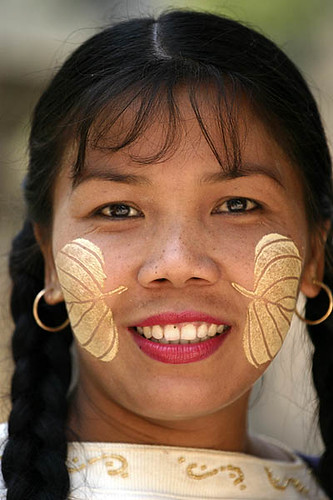
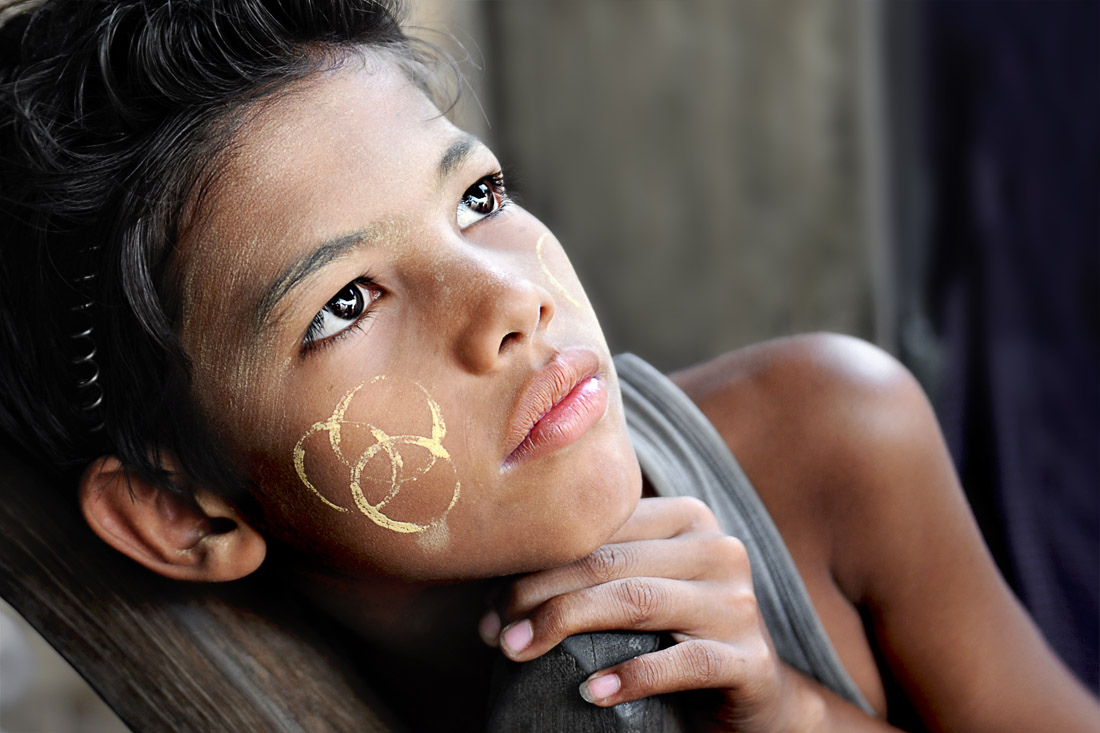
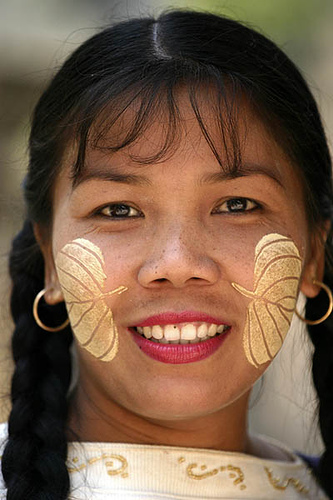
Picking up on the theme of my last post, the application of cosmetics to certain parts of the face (eyebrows in that case), I feel that I should also comment on one fashion statement which I have come across in this part of the world and which, contrary to the fashion of strong eyebrows that seems to be sweeping the world, I hardly see being adopted any time soon away from its place of birth. The part of the world in question is Myanmar, and the fashion statement in question is the daubing by women (but not only) of their cheeks with a beige-coloured paste.
Yangon, Burma, Myanmar. Streets.It really is something that foreigners cannot fail to notice the moment they arrive in Myanmar, and indeed the internet is full of comments along the lines of “what on earth is that stuff on the women’s faces?”  The last time my wife and I were in the country, I finally got around to asking what this stuff was exactly. Thanatka, I was told (or thanat-ka, or thanaka, or thanakha; transliteration of Burmese words into English is quite approximate, rather like Shakespeare spelling his own name in three or four different ways – but I digress). Our hotel had a little exhibition on thanatka in the lobby, which frankly didn’t explain anything at all. Time to scour the internet, and as is normally the case Wikipedia threw up some useful material.

First, the why: why are women (and children to some degree) putting thanatka on? The answer seems to be primarily for beauty, rather like Amerindians paint their faces as decoration.
amerindian with painted faceIndeed, while the photo which starts this post has the lady in question just giving herself a brushstroke’s worth of thanatka on each cheek, others seem far more creative. Painted leaves seem popular (although I wonder if this is simply catering to the tourist trade?)
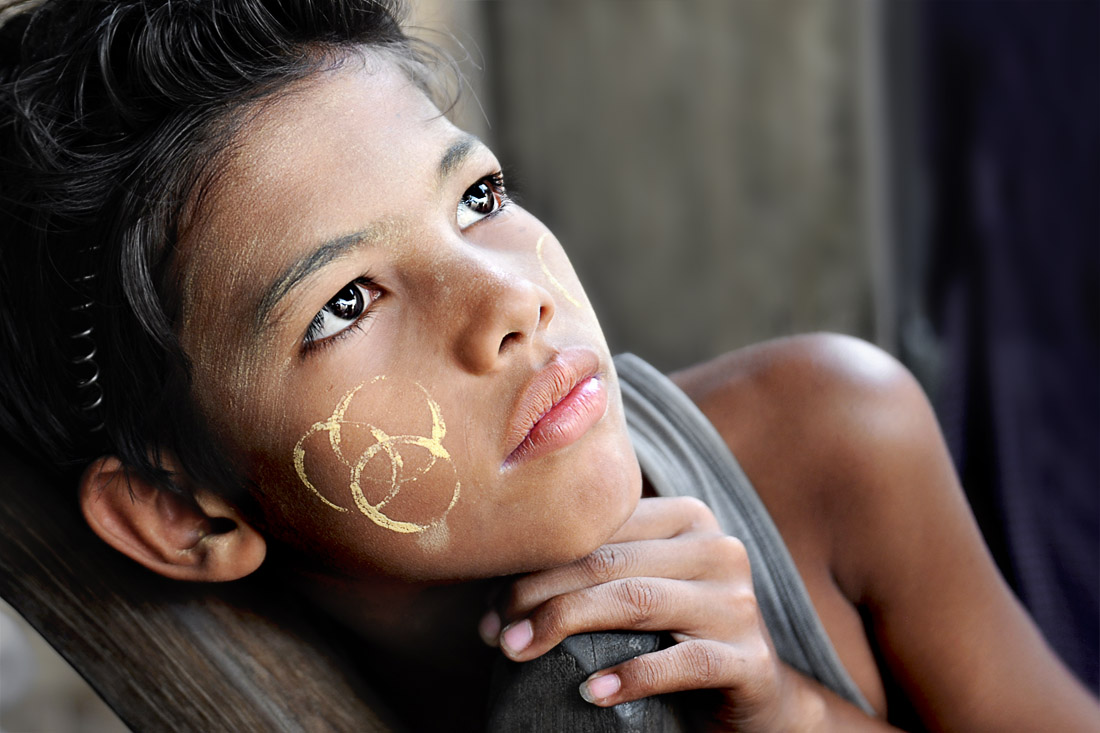
painted leaveswhile simple whorls
whorlsor circles also appear frequently in the cannon.
circlesIt seems that thanatka is not only about beauty. It is also said to provide protection from sunburn. But then I would have thought that application to the whole face would be more appropriate, the way I slathered sunscreen on every piece of my exposed skin during our recent trip to Myanmar. Claims are also made that it removes acne, and there are “before and after” photos to that effect on the net – although, rather strangely, of white people only. It is also claimed to have anti-fungal properties, although luckily there are no “before and after” pictures of that.

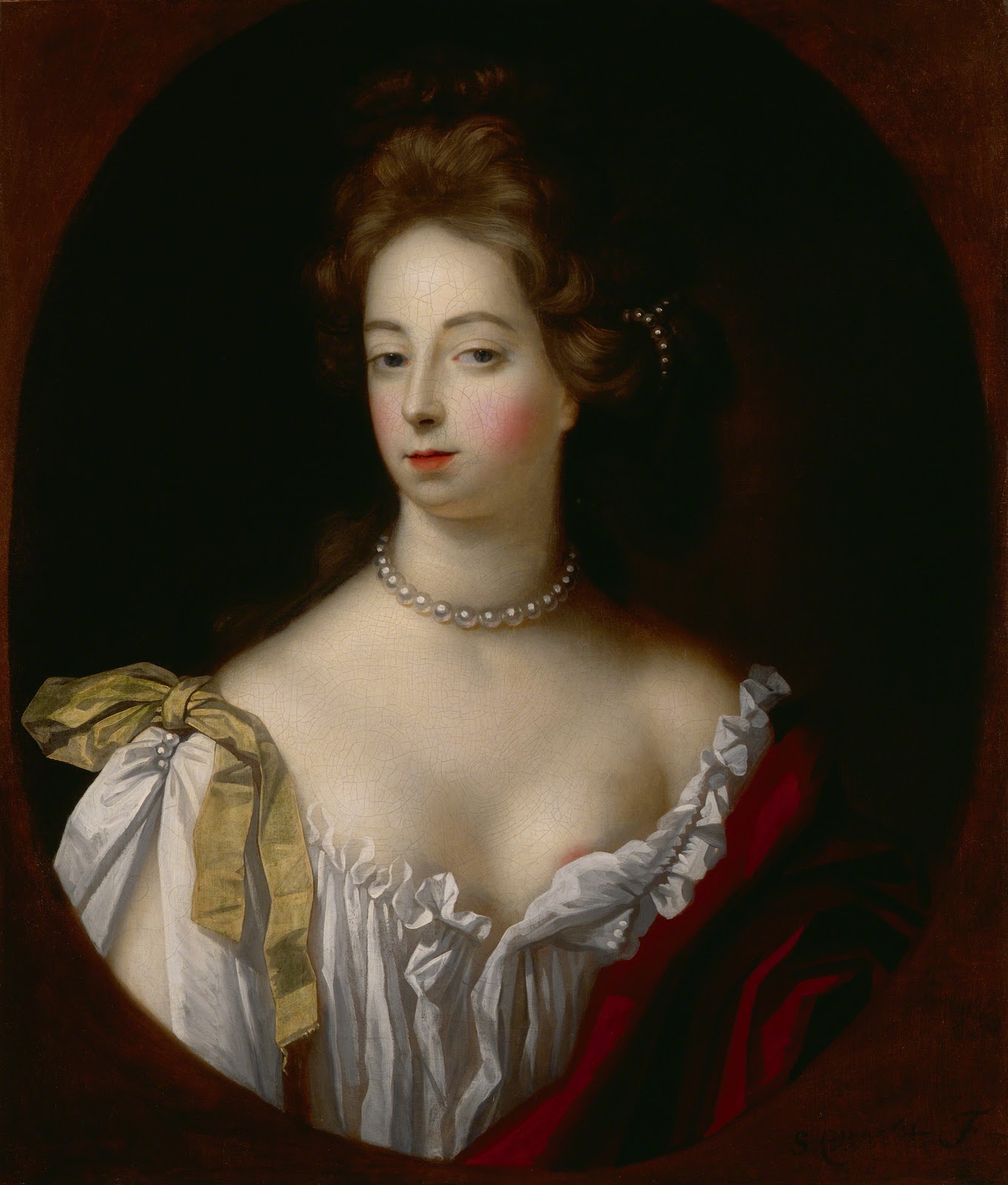
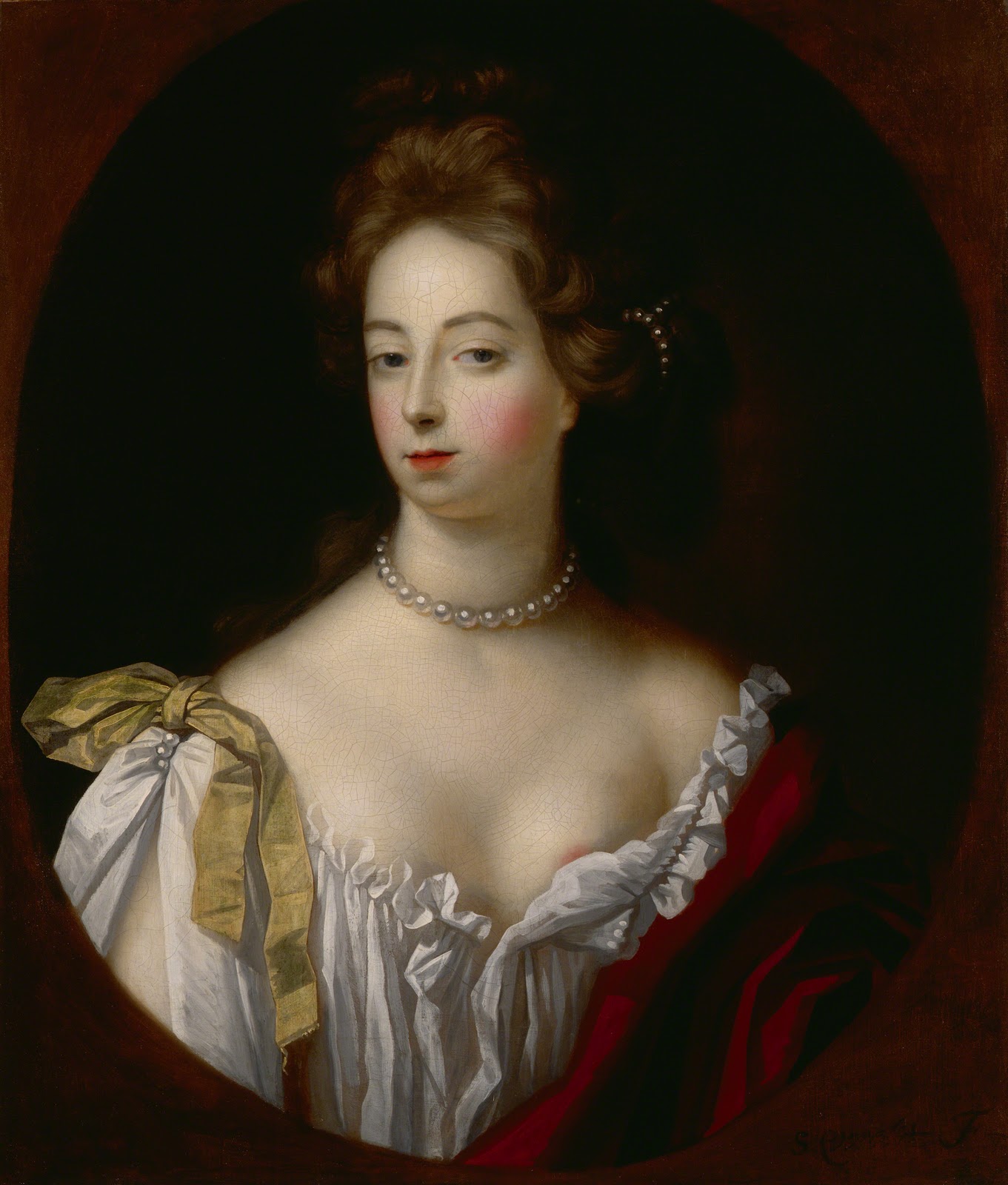
“Beauty is in the eye of the beholder”, they say, and I have to assume that Myanmar men find this wash of beige on their women’s cheeks attractive. After all, Myanmar women have been pasting themselves in this way for at least 700 years. Personally, though, I find it difficult to see anything beautiful in the habit. Every time I see one of these ladies, my instinctive reaction is to think “Ooh, they need to wash their faces”.  Of course, it’s not as if European women don’t paint (or powder) their faces. Rouging one’s cheeks is a fashion that goes back centuries, as attested by all those portrait paintings hanging in various museums of Europe of aristocratic ladies or royal mistresses (or both) with nicely rouged cheeks. For instance, this slightly racy painting of Nell Gwynn, mistress to Charles II of England, shows her with lovely red cheeks (and strong eyebrows, I am pleased to see, given my last post!)
nell gwynn(as I mentioned in an earlier post, there was a time when European aristocratic men also liberally rouged their cheeks)

The fashion statement has continued. For instance, I still remember from my youth those little powder cases which every woman had in their handbag, and which they would whip out from time to time to rouge their cheeks or generally give their face a powdering over.
powder caseAnd as far as I can make out, the fashion still goes strong. Women with cosmetically highlighted cheeks are a dime a dozen on any street in the world (except Myanmar …), although the powder case has given way to other delivery mechanisms.

But there is a difference, no? These women were and are highlighting the natural colouring of their cheeks. Myanmar women, on the other hand, are just daubing themselves. I wonder if the original idea was not simply to make the skin look paler, that universal obsession of women in all Asian countries.

Now for the what: what exactly is thanatka? It is an exceedingly natural cosmetic, made from grinding the bark, wood, or roots of a tree together with a small amount of water.
thanatka preparation 003As modernism marches through the country, a Myanmar lady can go to her supermarket and buy a jar of ready-made product. But she can also still go out and buy the wood (with this particular seller advertising her wares)
wood for saleas well as the stone grinder, and make it at home. No doubt the artisanal aspects of the trade will die out soon.

I finish by saluting the humble trees at the start of the chain: the thanatka tree (a species of Murraya)
thanakta treewith these particular individuals standing in front of some venerable temple, as well as the theethee tree (Limonia acidissima)
theethee treeI just hope that in the rush to slather their faces with paste, the Myanmarians are not chopping these trees down with wild abandon, thus denuding the landscape in the process. Beauty, however defined, is not worth that.

________________________

Woman with painted cheeks: http://www.ellensenisi.com/wp-content/uploads/AN-SEA_2655.jpg (in http://www.ellensenisi.com/2014/blog/burma-post-2/)
Woman Amerindian: http://s13.postimg.org/xu96358hju/24_Matses_Woman_Painted.jpg (in http://www.forumbiodiversity.com/showthread.php/36659-White-Dominican-VS-White-Puerto-Rican/page64)
Thanatka painted leaves: https://c1.staticflickr.com/3/2289/1557809911_2eafe27e17.jpg (in https://www.flickr.com/photos/peace-on-earth_org/1557809911/)
Thanatka whorls: http://www.birmanieresponsable.com/wp-content/uploads/2014/08/thanaka-beauté-birmanie.jpg (in http://www.birmanieresponsable.com/thanaka-beaute-birmane/)
Thanatka circles: http://davidlazarphoto.com/amp/wp-content/uploads/2012/07/19-David-Lazar-Thanaka-Circles.jpg (in http://davidlazarphoto.com/galleries/visions-of-myanmar/19-david-lazar-thanaka-circles/)
Nell Gwynn: http://3.bp.blogspot.com/-bw3i2CA0H8s/TqCFCy51a5I/AAAAAAAABCI/HkYzk9PmrtQ/s1600/NPG_536_883_EleanorNellGwy.jpg (in http://historicalideals.tumblr.com)
Woman with powder case: http://www.cosmeticsandskin.com/companies.images/1951-yardley.jpg (in http://www.cosmeticsandskin.com/companies/yardley.php)
Thanatka preparation: http://www.southeastasiabackpacker.com/wpsite/wp-content/uploads/2012/09/Thanaka-bark.jpg?4928e4 (in http://www.southeastasiabackpacker.com/20-tips-for-travellers-to-myanmar-burma)
Thanatka wood: http://www.ecoburma.com/wp-content/uploads/2013/08/Th1.jpg (in http://www.ecoburma.com/2013/08/photo-essay-thanaka-the-make-up-of-burma/)
Murraya tree: http://image.slidesharecdn.com/myanmar23bagan-140117021821-phpapp02/95/myanmar23-bagan-47-638.jpg?cb=1389946826 (in http://www.slideshare.net/mobile/michaelasanda/myanmar23-bagan)
Theethee tree: http://en.m.wikipedia.org/wiki/Limonia_acidissima#/media/File:Wood-apple_tree.JPG (in http://en.m.wikipedia.org/wiki/Limonia_acidissima)

THICK EYEBROWS

Bangkok, 29 March 2015

In an earlier post, in which I wrote about a short trip my wife and I made to Dubai, I mentioned that we had visited the Sheikh Mohammed Centre for Cultural Understanding. What I didn’t mention – because not pertinent to the subject of that post – was that our guide had exceedingly strong, straight eyebrows. I tried not to stare at her too insistently because that is rude, and I would imagine that staring at women in Muslim countries can also be a dangerous habit. But I did find it quite striking. My surreptitious peeking allowed me to conclude that this was not a gift of nature but a gift of the cosmetics industry. Something like mascara had been applied to our guide’s eyebrows. They looked something like this, although our guide wasn’t quite as glamorous as this lady.
middle eastern lady
In any event, as our guide talked about this, that, and the other, I wondered to myself if this was some sort of new fashion statement in the Middle East. After the tour was over, I was pleased to hear that my wife had also noticed it; I wasn’t imagining things, then.

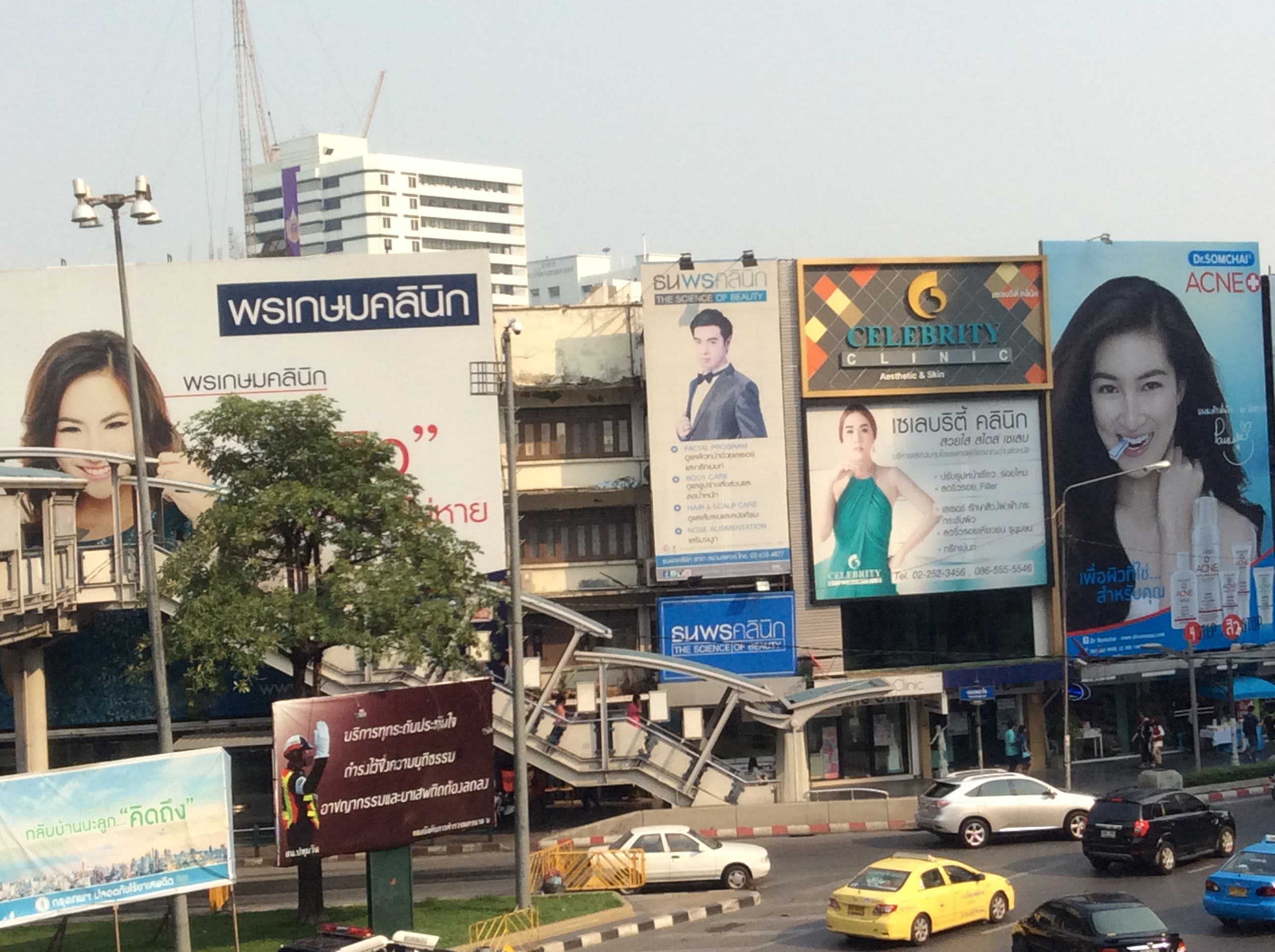
Our trip completed, we went back to Beijing and I forgot about the eyebrows thing. But I was suddenly confronted again with this fashion statement the moment we arrived in Bangkok. It seemed that every young woman in the city had these exaggeratedly strong eyebrows. I’ve not found a photo on the internet and I haven’t dared to openly take a photo myself of one of these young women, but I guess that advertising on the street is a good indicator of trends. Here’s a photo that I took of billboards in one of the smarter shopping areas of a Bangkok.
bangkok billboard-1
What my internet searches did show up is that the Thai consider such eyebrows to be Korean eyebrows, and this photo of a Korean lady actually nicely captures what I am confronted with every day on the streets of Bangkok.
korean lady
Whose eyebrows the Koreans believe these are is unknown to me – certainly not Japanese; the web-site from which I borrowed the photo above makes a distinction between Korean and Japanese eyebrows, the latter being more arched if I understood correctly. My daughter, who knows more about these things than I do, puts a famous model as the ultimate source.That sounds reasonable. In the old days, Queens and their aristocratic hangers-on were arbiters of fashion; in this more democratic age of ours, models are.

bangkok billboard-3

(the comment below suggests that the model Cara Delevingne is the Ultimate Source – no doubt those below the age of 30 know who this Ms. Delevingne is, and no doubt she is as rich as Queens once used to be)

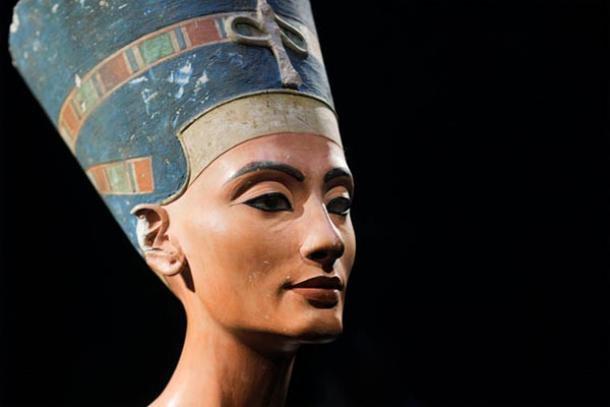
Talking of Queens, my trawls through the internet also snagged a couple of sites which discussed the history of female eyebrow fashion, one starting from as far back as Nefertiti, who was Queen of Egypt three thousand years ago, and who – if this bust of her in a Berlin museum is to be believed – seems to have favoured more pronounced eyebrows.
queen nefertiti
My own recollection of female eyebrow fashion starts with a time when quite a number of women favoured instead pencil-thin eyebrows, the time in question being, I suppose, the fifties and sixties (although as this photo shows, these eyebrows were already popular several decades earlier).
greta garbo
My wife, I have to say, was among this group when I first met her. Luckily, I managed to dissuade her from continuing the habit, and she has spent the rest of our marriage sporting a fine set of no-nonsense eyebrows.

My wife’s abandonment of pencil-thinness coincided with a general return to thicker eyebrows, but sculpting of the eyebrow was still common. I still remember how much chatter was generated in the late seventies-early eighties by the young Brooke Shields’s thick, apparently unsculpted, eyebrows.
brooke shields
They caused quite some emulation for a while (any reader who is younger than 30 and therefore who probably has never heard of Brooke Shields can go the Wikipedia site on her to read more). I feel that what I am seeing now on the streets of Bangkok is really that style, helped along with a pencil or, if I am to believe the internet, some sort of felt pen. Well, styles go in and out of fashion like Swiss trains go in and out of Alpine tunnels. But I hope never to live to see pencil-thinness again.

_________________

Middle-eastern lady with drawn in eyebrows: http://machicon-akihabara.info/2017mimage-middle-eastern-eye-makeup.awp
Billboards in Bangkok: my photos
Korean eyebrows: http://www.tunwalai.com/story/19251/got7-%E2%84%ACad-mafia-%E0%B9%81%E0%B8%AB%E0%B8%81%E0%B8%81%E0%B8%8E%E0%B8%A3%E0%B8%B1%E0%B8%81-%E0%B8%97%E0%B8%94%E0%B8%AA%E0%B8%AD%E0%B8%9A%E0%B9%83%E0%B8%88%E0%B8%A5%E0%B8%B9%E0%B8%81%E0%B8%8A%E0%B8%B2%E0%B8%A2%E0%B8%A1%E0%B8%B2%E0%B9%80%E0%B8%9F%E0%B8%B5%E0%B8%A2-mb
Queen Nefertiti: http://keywordsuggest.org/gallery/18971.html
Pencil thin eyebrows: http://anastil.blogspot.it/
Brooke Shields: https://fashionista.com/2010/10/the-power-brow-is-here-to-stay-we-round-up-the-best-and-boldest

BEAUTIFUL BRIDGES

Bangkok, 19 March 2015

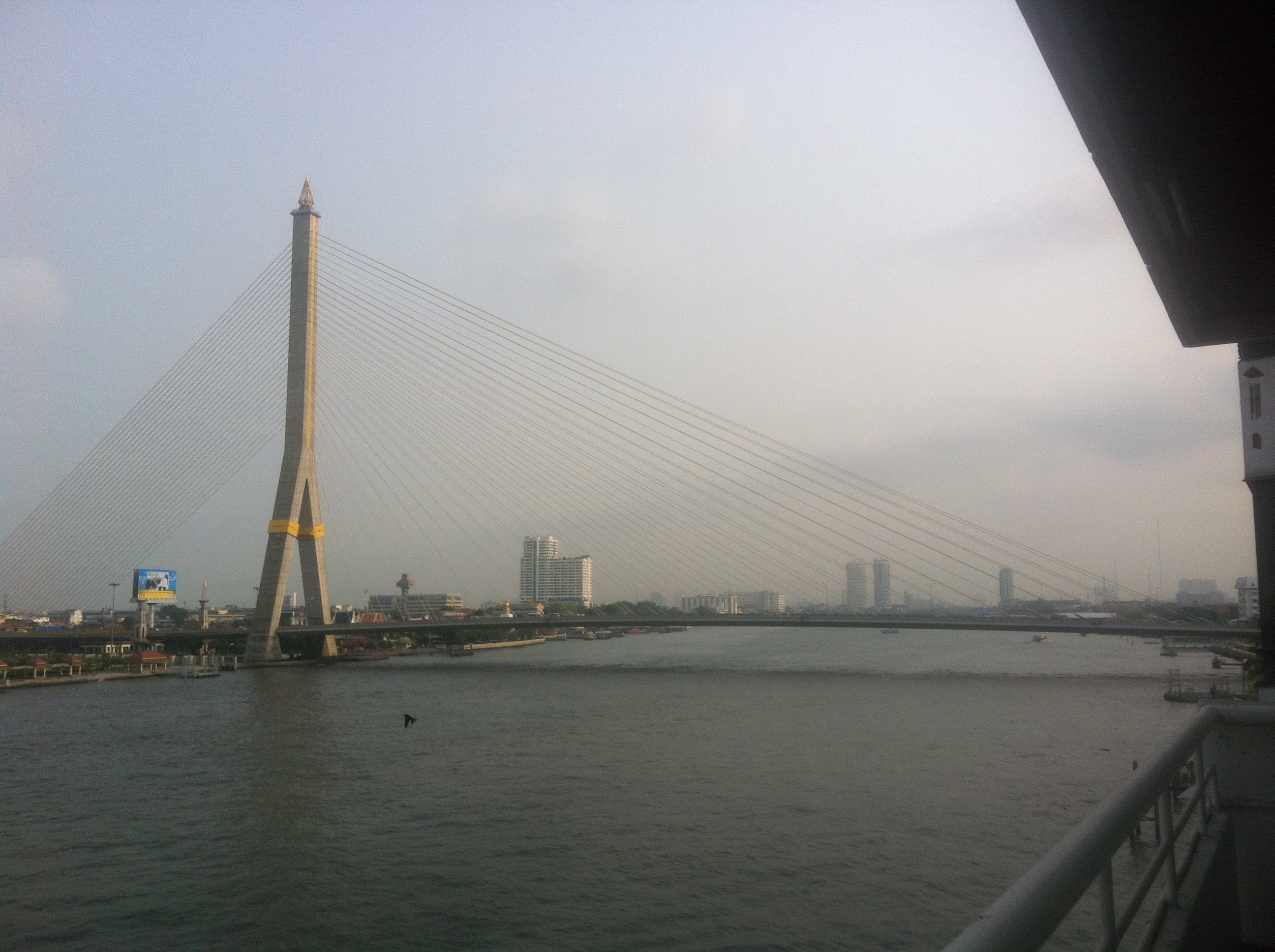
Every morning, when my wife and I have breakfast on the balcony, I am faced with this.

Rama VIII bridge

“This” is Rama VII Bridge, which crosses the Chao Phraya River, linking Thonburi with the more central parts of Bangkok. It was opened in 2002.

I don’t like this bridge. I don’t exactly know why. After discussions with my wife, I have come to the conclusion that I find the number of cables excessive, the colour scheme – sickly yellow on grey concrete – quite off-putting, and that conical thing on top of the bridge’s single pylon – seemingly a lotus bud – faintly ridiculous.

My meditations on what I didn’t like about the bridge led me to ask myself what I did like in bridges. After surfing through any number of sites claiming to list the 10, or 20, or 30, most beautiful bridges in the world, I have concluded that what gets me going in a bridge’s design is the play between simple geometric forms. Not any forms, mind you: the circle – or rather the semicircle – and its interplay with the line, preferably curved, is the best. And balance is required.

Let me start with the semicircle and shallow trianglesemicircle and triangleor shallow parabolasemicircle and wide parabola(Please excuse my rather basic sketches. I’m not an expert in the use of Paint)

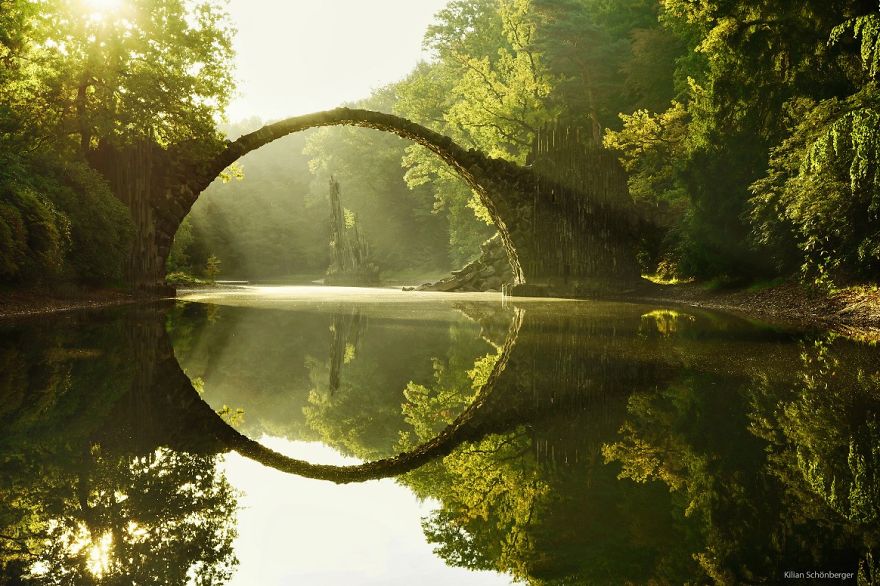
The most beautiful bridge in this class must be the Rakotz Brücke in Germany

rakotz bridge

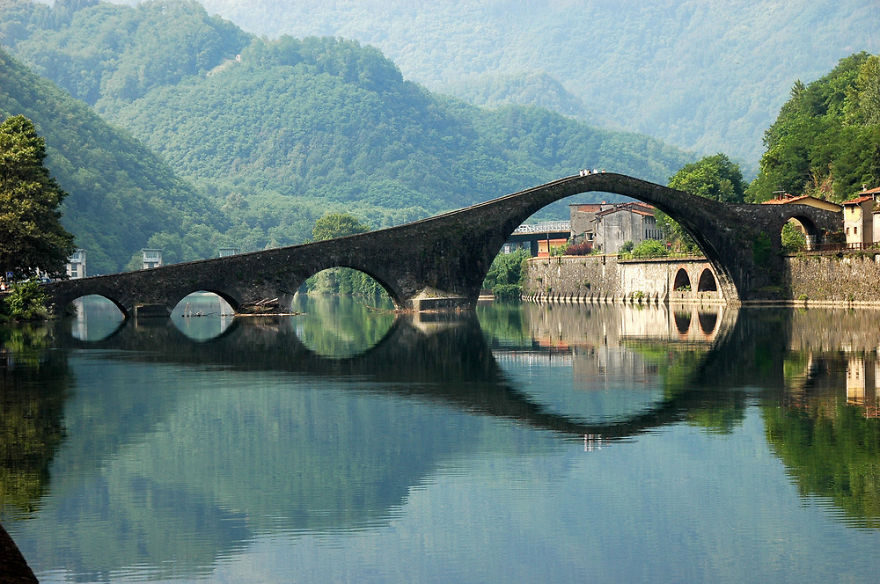
But this bridge, the Ponte della Maddalena in Italy, is a near second.

ponte del diavolo

I particularly like the three little skips which the bridge makes before it makes the final jump across the river. And it’s a real bridge, built to bring people and their goods and animals from one side to the other, rather than the Rackotz Brücke, which was just built for show.

I really feel I should add a picture of the Mostar Bridge.

mostar bridge

It looks a bit heavy, especially because of the building accretions on either end. But the bridge itself is a very nice example of the semi-circle-plus-triangle genre, and the white stone it is made of is really lovely. It’s also highly symbolic of the wars in ex-Yugoslavia. The bridge is in what is now the country of Bosnia-Herzegovina. During the wars, it was fought over repeatedly, and this beautiful bridge was among the many old buildings in the city which were destroyed. After the wars, it was rebuilt exactly as it has been, a triumph of hope over hate.

The Chinese also liked to build such bridges. They call them moon bridges. This one, the Jade Belt Bridge in the Summer Palace Park in Beijing, must be the best-known of this type.

jade belt bridge

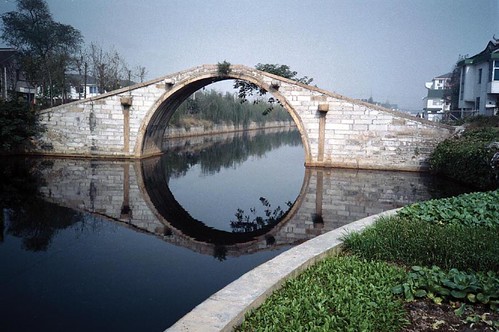
But like the Rakotz Brücke it’s just for show. I prefer this bridge, the Liija Bridge, thrown over a canal in Jiangsu province, because it is a real working bridge – or at least it was.

liija bridge

Alas, in this day and age where the car reigns supreme over our roads, humped bridges like these are not “user friendly”. That curved line needs to be straightened so that cars can cross without a second thought.semicircle and lineA very pretty bridge in this class, opened in 1932, is Bixby Creek Bridge on California State Road 1 through the Big Sur, although the semicircle has become a parabola, no doubt to make the bridge stronger.

Bixby Bridge

I guess we must have passed over it 20 years ago – without a second thought – when we drove down this road from San Francisco to Los Angeles on a wonderful summer holiday we had with the kids … But I digress.

A lovely bridge in the same class, opened only six years ago, is the Hoover Dam Bypass Bridge, which spans the Colorado River.

Hoover Dam bypass bridge

I normally dislike bridges or anything else made of metal trusses. They look so much like the clunky awkward things I used to make with my Meccano set when I was young: all engineering and no beauty. But this train viaduct, the Garabit Viaduct in France, opened in 1884, has great visual appeal.

garabit viaduct

It may come as no surprise to the reader to know that the bridge was built by Gustave Eiffel, he of the Eiffel tower in Paris (I think the family resemblance between the two constructions is obvious).

That straight line sitting atop the parabola can also float downwards and lie across it, like so, with the parabola getting shallower.

parabola cut by lineThis bridge, the Lupu Bridge in Shanghai, is a nice example of the type.

Lupu Bridge

The line can float all the way down

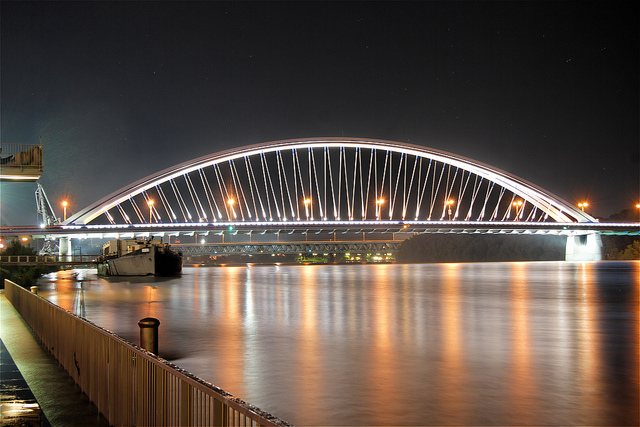
parabola on lineas it has with this bridge, the Apollo Bridge in Slovakia’s capital, Bratislava.

apollo-bridge Bratislava

Now that the line has floated all the way down we can flip the parabola, like so

suspensionand we have the suspension bridge!

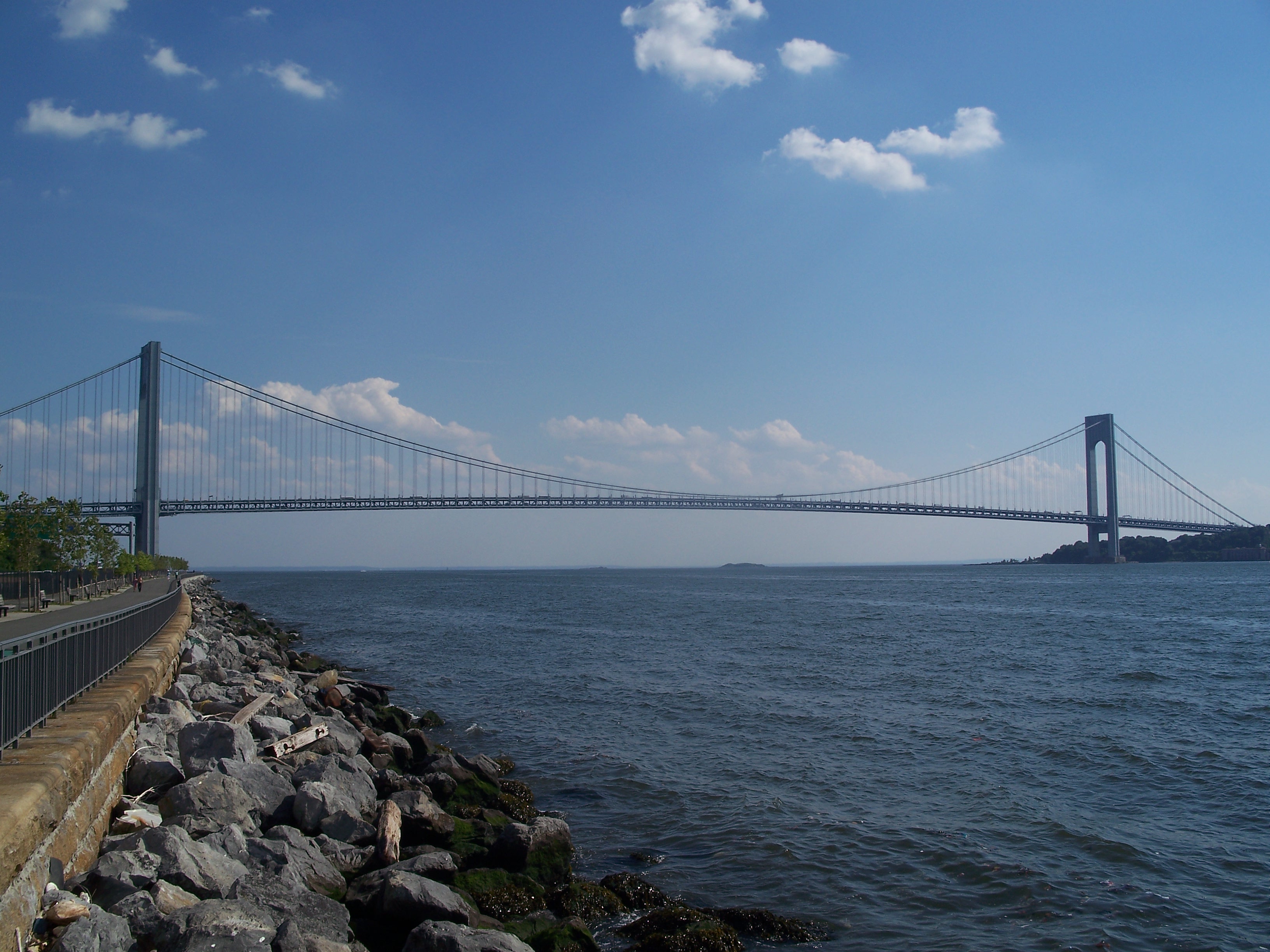
I have a very soft spot for suspension bridges, as I’ve mentioned in a previous post. It has something to do with the sheer etherealness of these bridges, the feeling they give of just a few strands thrown over a wide, empty, normally watery space. My favourite in this class has to be the Verazzano Narrows Bridge in New York.

Verazzano Narrows Bridge

Many people – and many web sites – say the Golden Gate Bridge is a beautiful suspension bridge. But I’ve always found it clunky, and I have to say I dislike its colour scheme.

I also want to throw in a picture of the Humber Bridge in northern England. It seems to be the most stripped down of all suspension-bridge designs I’ve ever seen. I can hardly believe it stays up.

Humber Bridge

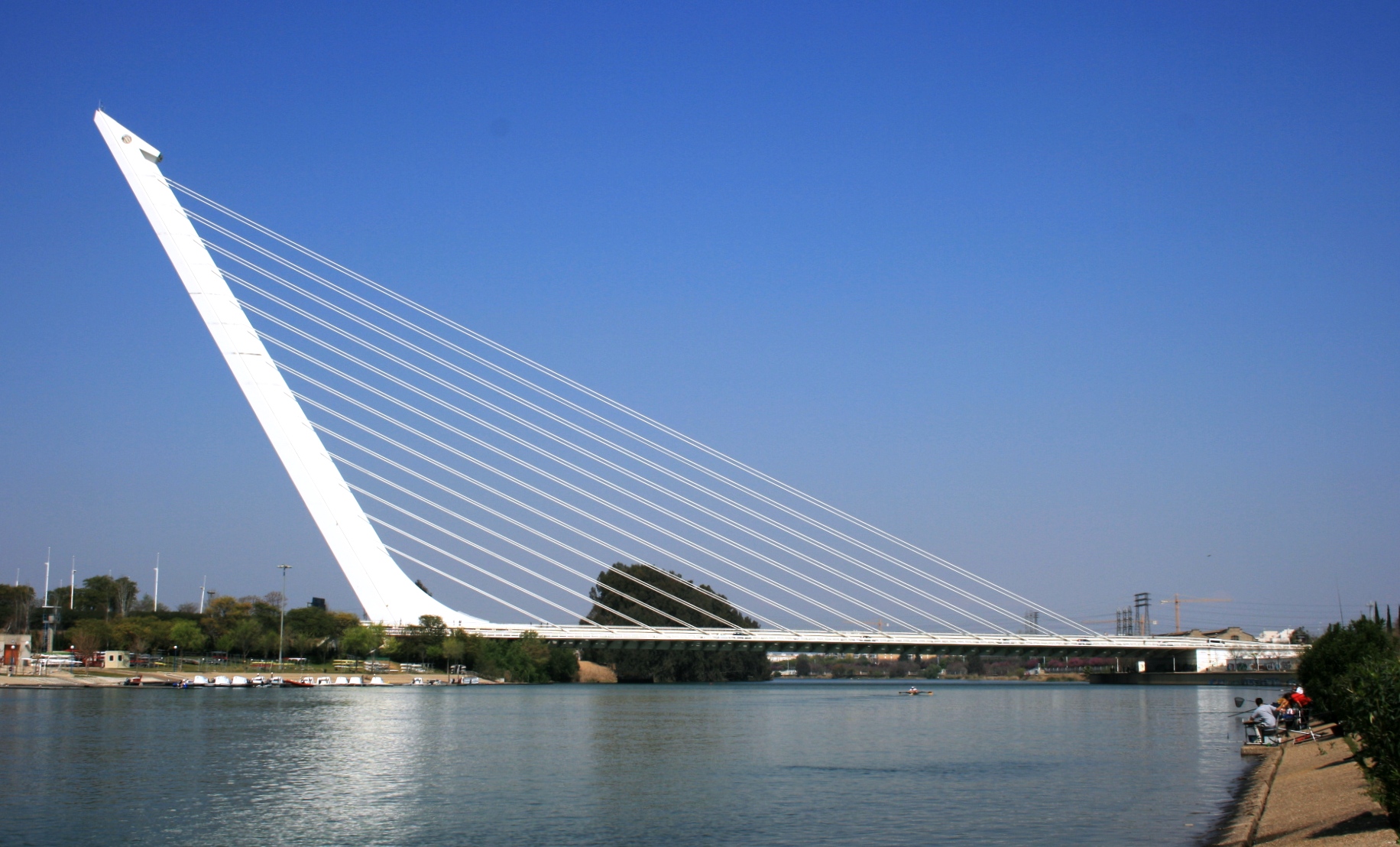
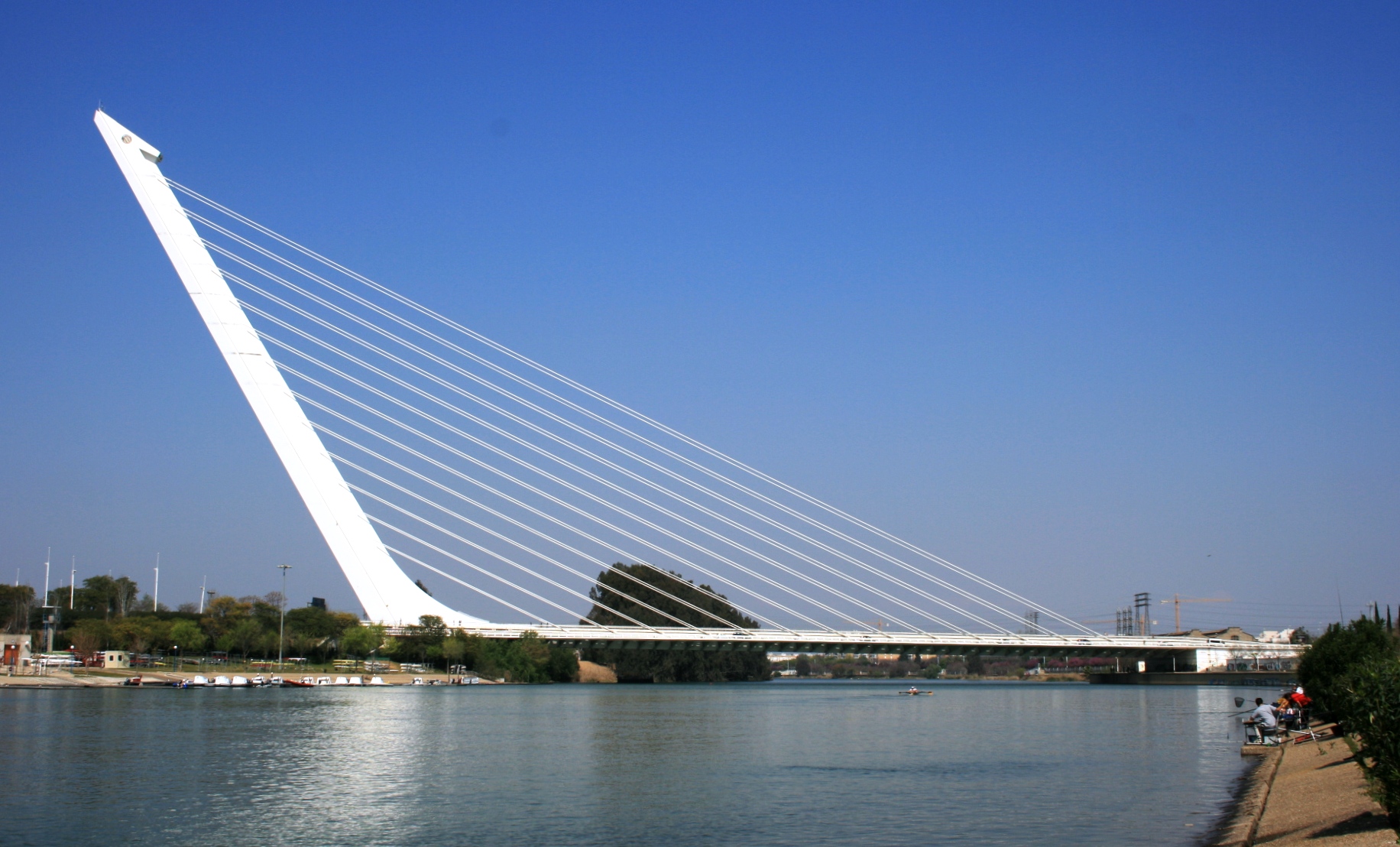
And now I have to come full circle, as it were, back to the King Rama VII Bridge with which I started this post. I’ve learned as I’ve researched on bridges that the fundamentally triangular design of this bridgetrianglesis popular in many modern bridge designs. Studying these, I have grudgingly come to the conclusion that the design is not bad looking as long as equal-sided triangles are used. Looking back at the picture which started this post, the reader will see that in the case of the King Rama VII Bridge, the triangle is not equal-sided, which gives me a displeasing sense of imbalance; I add this to my list of dislikes about the bridge. Imbalance is also the reason why I do not like the Puente del Alamillo in Seville, Spain, even though this is a great favourite in posts dedicated to beautiful bridges.

Puente del Alamillo

All that straining backwards makes me feel quite exhausted.

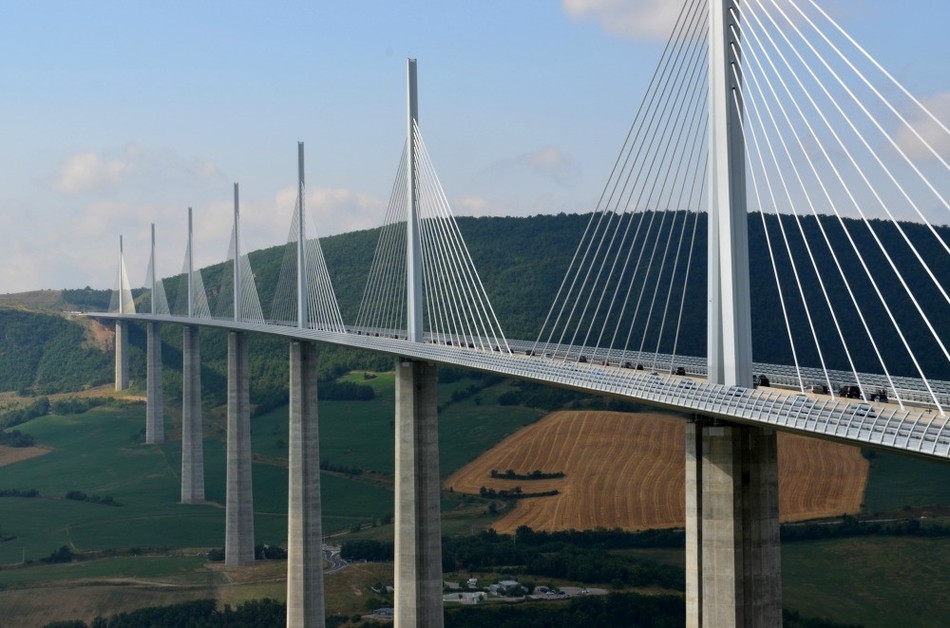
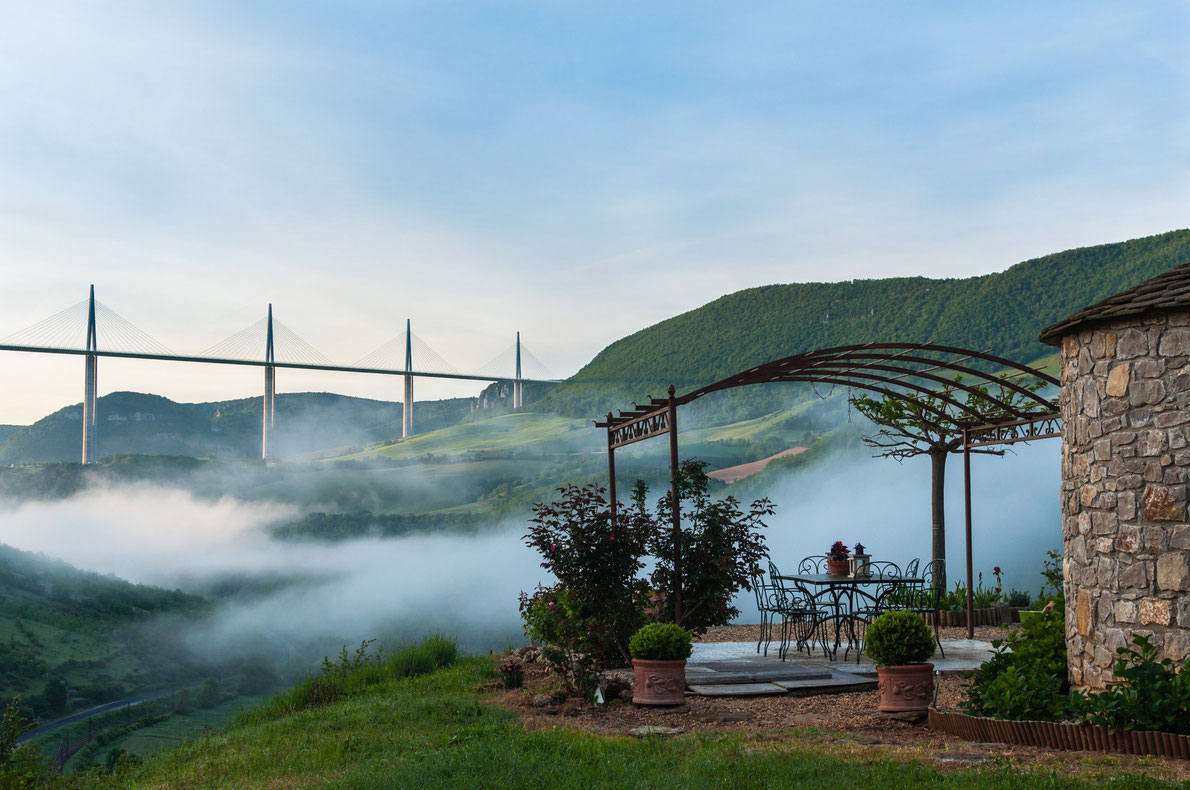
After these harrumphs of disapproval, it’s time for me to throw in a few pictures of bridges that are stars in this class. The Millau viaduct, which soars over the river Tarn in southern France, must surely be the superstar in the category

millau viaduct

but I think this bridge, the Cooper River Bridge in South Carolina, is just as graceful on a more modest scale.

cooper river bridge

Well, that was a pleasant tour of the internet. I must say, it’s nice to see that those painful classes of geometry which I endured when I was young have finally come in useful after 50 years.

____________________

Rakotz Bridge: http://static.boredpanda.com/blog/wp-content/uploads/2014/10/old-bridges-26__880.jpg (in http://www.boredpanda.com/old-mysterious-bridges/#post5)
Ponte della Maddalena: http://static.boredpanda.com/blog/wp-content/uploads/2014/10/Il-Famoso-Ponte-del-Diavolo-Fiume-Serchio-Lucca-a21756847__880.jpg [in http://www.boredpanda.com/ponte-del-diavolo-sul-serchio-garfagnana-italia/%5D
Mostar Bridge: http://9.thumbs.scribol.com/10/sites/default/files/images/800px-StariMost22jpg.jpg?v=1 (in http://scribol.com/anthropology-and-history/13-most-beautiful-bridges-on-earth)
Jade Belt Bridge: http://upload.wikimedia.org/wikipedia/commons/thumb/e/e1/Gaoliang_Bridge.JPG/800px-Gaoliang_Bridge.JPG (in http://en.wikipedia.org/wiki/Jade_Belt_Bridge)
Liija Bridge: https://c1.staticflickr.com/1/107/292647611_8f55820571.jpg (in https://www.flickr.com/photos/bridgink/292647611/)
Bixby Bridge: http://www.scotttanseyphoto.com/img/panorama/cacoastaerialsmanmade/Bixby-Bridge.jpg (in http://www.scotttanseyphoto.com/CalCoastAerialsManmade.html)
Hoover dam bypass bridge: http://www.dealba.net/wp-content/uploads/2012/05/Hoover_C-FHWA-003-1978_cc.jpg (in http://www.dealba.net/industries-served/media-outreach/hoover-dam-bypass-bridge/)
Garabit Viaduct: http://u.jimdo.com/www70/o/sa6549607c78f5c11/img/id3aa3a1f81738f2e/1416666799/std/copyright-whisky-co.jpg (in http://www.europeanbestdestinations.com/top/most-beautiful-bridges-in-europe/)
Lupu Bridge: http://www.globalsalesgrowth.com/wp-content/uploads/2013/02/Lupu-Bridge.jpg (in http://www.globalsalesgrowth.com/shanghais-lupu-bridge)
Apollo Bridge Bratislava: http://www.52insk.com/wp-content/uploads/2011/04/apollo-bridge-by-Karol-Vaclavik.jpg (in http://www.52insk.com/2011/first-slovak-state/)
Verrazano Narrows Bridge: http://michaelminn.net/newyork/infrastructure/verrazanno-narrows_bridge/2008-07-25_16-38-30.jpg (in http://michaelminn.net/newyork/infrastructure/verrazanno-narrows_bridge/)
Humber Bridge: http://upload.wikimedia.org/wikipedia/commons/4/4b/Humber_Bridge.jpg (in http://commons.wikimedia.org/wiki/File:Humber_Bridge.jpg)
Puente del Alamillo: http://upload.wikimedia.org/wikipedia/commons/a/a1/Puente_del_Alamillo_en_Sevilla.jpg (in http://commons.wikimedia.org/wiki/File:Puente_del_Alamillo_en_Sevilla.jpg)
Millau viaduct: http://u.jimdo.com/www70/o/sa6549607c78f5c11/img/i7521c17c35fcc549/1417528244/std/cpakmoi.jpg (in http://www.europeanbestdestinations.com/top/most-beautiful-bridges-in-europe/)
Cooper River bridge: http://library.sc.edu/blogs/mirc/files/2012/07/New-CRB.jpg (in http://library.sc.edu/blogs/mirc/feature-video-july-24th-old-cooper-river-bridge/)
All other photos are mine

MEMORIES, MEMORIES

Bangkok, 14 March 2015

I don’t know why, but yesterday the tune of a song which my mother used to sing popped unbidden into my head. As I hummed along, I was trying to remember the words. Snatches came back but there were frustratingly large holes. I decided it was now or never: either I dredged up the words today or they would be lost to me forever. Well, my memory is shot, but there is the internet. As I have had cause to mention before, the internet really is a wonderful thing. There is a lot of rubbish, but there is also a veritable treasure trove of stuff ready to be mined, put there by devoted souls. In this case, the devoted soul turned out to be Google, for after trying out a few key words and remembered phrases of the song, I finally found a book from 1843 entitled “Chants et Chansons Populaires de la France”, which Google had scanned as part of its Google Books initiative. There, tucked in among lots and lots of songs that I had never heard of, was mine.

The authors of the book are vague about the date of the song, but I reckon from some words it uses that it was written in the sixteenth century or thereabouts. Its title is “La Vieille”, which can be loosely translated “The Old Crone”, and it is a deliciously malicious take on the foolish desire of some old people to stay young and on the power of money. In a few words, the song tells us of an eighty-year old woman who wants not only to join the young people in their dance but also to be coupled with the youngest and handsomest man there. Not surprisingly, he tells her to go away, adding that she is far too poor for him. After she intimates that she is actually very rich, our young man immediately changes his mind and calls her back to the dance. In fact, he rushes her off to a notary public to be married and no doubt to make sure that a will is prepared leaving all her wealth to him.

la vieille 001

He then takes her back to the dance, where she dances so energetically

la vieille 002

that she expires.

Unceremoniously, her young husband and his friends look in his dead wife’s mouth, no doubt searching for her gold teeth, but find only three teeth, “une qui branle, une qui hoche, une qui s’envole au vent”, one which moves, one which wobbles, and one which is ready to blow away on the wind. They then look in her pockets and find only three small coins: “Ah, la vieille, la vieille, la vieille, avait trompé son gallant”, the song concludes; ah, the old crone had fooled her young paramour. Anyone who is interested in the original words can find them at the end of this post (although in the interests of brevity I’ve cut the repetitions of which the song is full).

My mother loved to sing, and had a really quite beautiful voice (whereas when my father – blessed be his memory – sang, it resembled the croaking of a crow). By the time I knew my mother – that is, by the time I was old enough to judge her – she was of course a decorous middle-aged matron, but also one who had had to endure the slings and arrows of life’s misfortunes. So, apart from the hymns in Church which she delivered with gusto, the songs she sang tended to be soulful and mournful. Edith Piaf was a favourite: “Ils sont arrivés se tenant par la main, l’air émerveillé de deux chérubins”, “they arrived holding hands, with the look of wonder of two cherubs”. But then they were found dead, together, in the hotel room they had rented to make love for the last time. There was another, a haunting lament, about a wife waiting for her husband knight to return from the wars so that she can announce to him that she is with child. He comes back, but only to die in the same bed where the child was conceived, of his wounds. There was also “A la claire fontaine”, which is a somewhat trite song about lost love, but has a beautifully quiet melody.

But when my mother sang “La Vieille”, a mischievous glint would come into her eye and I could see the young, cheeky girl which, in the autobiography that she wrote for us children, she confessed to having once been. The same glint would come into her eye whenever she told droll stories of her family. There were the two brothers, for instance, great-uncles, who were “of the left”, and fervent anticlericals (we are talking of the great anticlerical moment in French history during the late 19th Century). Every Good Friday, they would take a table at the window of a restaurant close by the cathedral and make sure to be eating heartily and mightily when the poor souls came out of Church hungry from their Lenten fasting. One of these same brothers indicated in his will that when he died he wished to be buried in a simple pine coffin like a man of the people. But his daughters, whom I have mentioned before, were having none of that. They found their father embarrassing enough in life, they were not going to be embarrassed by him in death in front of their bourgeois friends. He was buried in a sumptuous coffin, and with a church ceremony to boot. Then there was the uncle, Oncle Jacques, who had been a dashing rake in his youth. Why, he had even been a daredevil pilot, this at a time when it was lucky if planes stayed together in the air. A somewhat older woman, Renée, had fallen hard for him, and in a standard tactic announced that she was pregnant, a pregnancy which mysteriously vanished when he did the Right Thing and married her. In the event, the marriage held and they did eventually have children. But Tante Renée shed many a bitter tear during the marriage over Oncle Jacque’s serial infidelities. This last set of stories were delivered the day before Oncle Jacques and Tante Renée came to make one of their annual visits to my grandmother, using the little train which I’ve mentioned in an earlier post. I still have a memory of the pair, arriving in the garden to effusive welcomes after the walk up the long alleyway from the train station. Tante Renée was hideously made up with pink powder, bright red lipstick, and rinsed hair, and as she bent over to give me a peck on the cheek I was drowned in the overpowering scent of a very sweet perfume. Oncle Jacques, on the other hand, stood there looking distinguished in his old age and with a mischievous glint in his eye.

Ah, memories, memories. Come, let’s finish with the refrain from another old French song, this one about the capture of an English ship by a smaller French ship in the early 1800’s during the Napoleonic wars:

Buvons un coup, buvons en deux
À la santé des amoureux
À la santé du Roi de France
Et MERDE au Roi d’Angleterre
Qui nous a déclaré la guerre.

Let’s drink a cup, let’s drink two
To the health of all lovers
To the health of the King of France
And BUGGER the King of England
Who went and declared war on us.

____________

photos: taken by me from https://books.google.co.th/books?id=2N7F5Gqine0C&dq=chanson+qui+avait+quatre+vingt+ans+l’autre+qui+s’envole+au+vent&source=gbs_navlink_s

-o0o-

LA VIEILLE

A Paris dans une ronde
Composée de jeunes gens
Il se trouva une vieille
Agée de quatre-vingt ans!

Elle choisit le plus jeune
Qui était le plus galant
“Va-t-en, va-t-en bonne vieille
Tu n’as pas assez d’argent!”

“Si vous saviez c’qu’a la vieille
Vous n’en diriez pas autant”
“Dis nous donc ce qu’a la vieille?”
“Elle a dix tonneaux d’argent”

“Reviens, reviens bonne vieille
Marions-nous promptement!”
On la conduit au notaire
“Mariez-moi cette enfant”

“Cette enfant”, dit le notaire
“Elle a bien quatre-vingt ans”
Aujourd’hui le marriage
Et demain l’enterrement

On fit tant sauter la vieille
Qu’elle est morte en sautillant

On regarda dans sa bouche
Elle n’avait que trois dents
Une qui branle, une qui hoche
Une qui s’envole au vent

On regarda dans sa poche
Elle n’avait que trois liards d’argent
Ah la vieille, la vieille, la vieille
Avait trompé le galant!

What follows is a quick-and-dirty translation:

In Paris, at a round dance
Composed of young people
Arrived an old crone
Of the venerable age of eighty

She approached the youngest man
Who was also the most handsome
“Leave me be, you old crone
You’re far too poor for me!”

“If you knew what the old crone has
You wouldn’t say as much”
“Tell us then how much she has”
“She owns ten barrels-full of money”

“Come back, come back, you old dear
Let us marry forthwith!”
They took her to the notary
“Marry me to this child”

“This child”‘ intoned the notary
“Is not a day younger than eighty”
Today the marriage
Tomorrow the burial

They made the old crone dance so hard
That she died mid-hop

They looked in her mouth
She had but three teeth
One which moved, one which wobbled
One which blew away on the wind

They looked in her pockets
They found but three farthings
Ah the old, old crone
She had fooled her handsome boy!


MYANMAR: A FOREST OF STUPAS

Bangkok, 8 March 2015

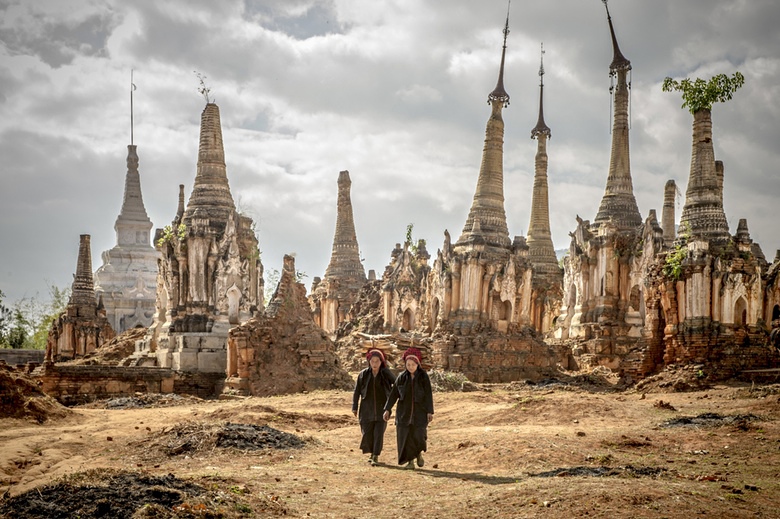
It was this photo that brought us to Myanmar.
Shwe Indein Pagoda, Inle Lake, Burma
My wife said, “We are going to Myanmar, and we are going here!”

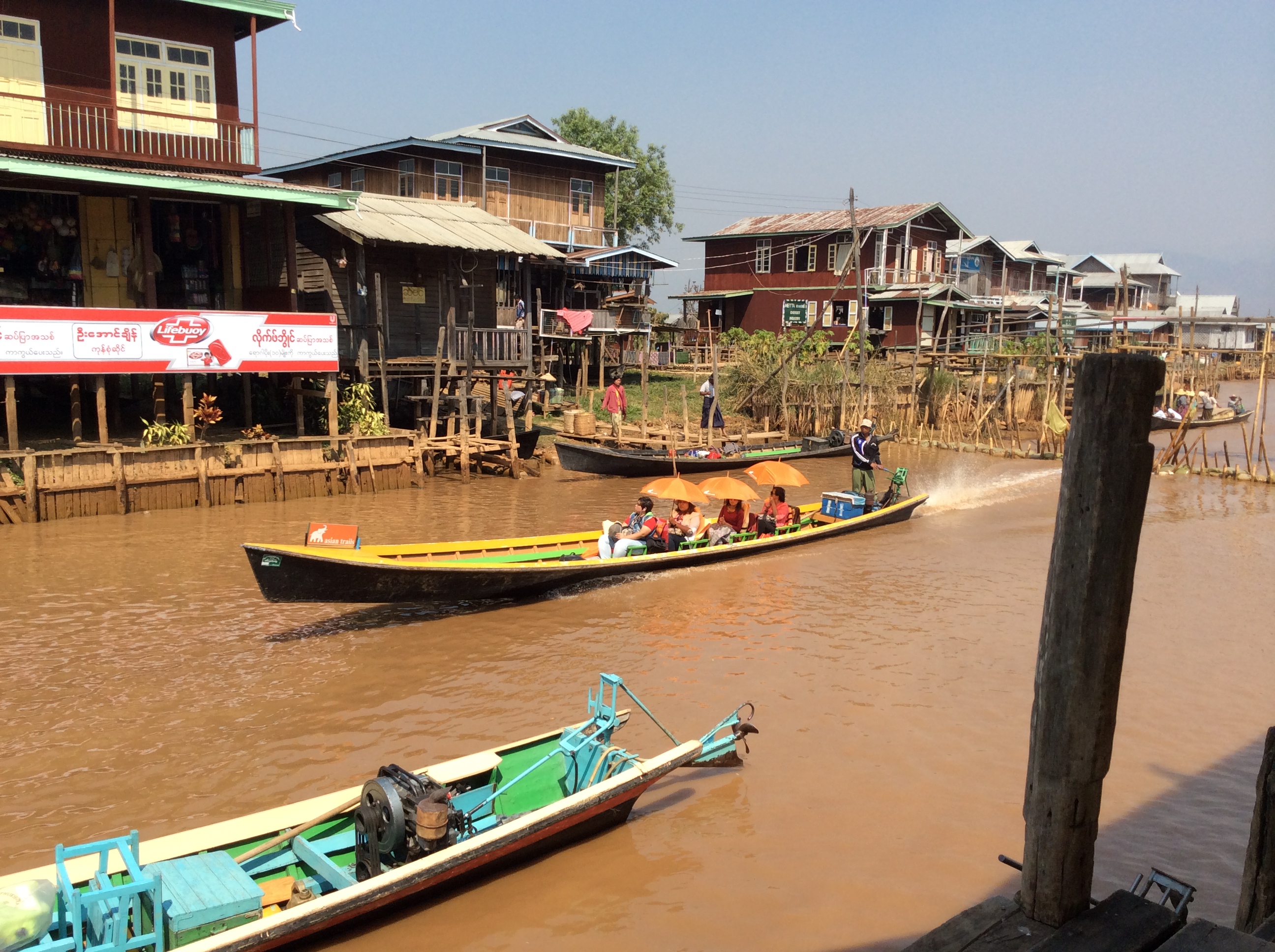
“Here” was Inn Dein, a village on the edge of Inle Lake, in Shan State, which is why we found ourselves staying at a hotel on the lake

06-inle lake-inn dein-flav 003

ready to take one of these boats to the village.
06-inle lake-day 3 006
In truth, our travel was a little different that day, because Inn Dein is actually on the old edge of the lake. Over the last fifty years or so, that edge has been creeping forward as farmers have created floating gardens on the lake’s edge

06-inle lake-day 2-flav 021

which after a while have become solid land, leading the farmers to create yet more floating gardens further out. So to get to Inn Dein, we had to travel up a shallow canal, the artificial continuation of the stream that runs through the village, which meant our travel was more like this.

06-inle lake-day 1 002

After we disembarked, we crossed Inn Dein’s one and only bridge and soon found ourselves wandering through a field of neglected, mouldering stupas.
06-inle lake-inn dein 007

06-inle lake-inn dein 009

06-inle lake-inn dein-flav 049

To some still clung fragments of their original ornamentation

06-inle lake-inn dein-flav 041

06-inle lake-inn dein 025

06-inle lake-inn dein-flav 043

while others housed Buddhas in varying states of repair.

06-inle lake-inn dein-flav 042

06-inle lake-inn dein-flav 052

06-inle lake-inn dein 008

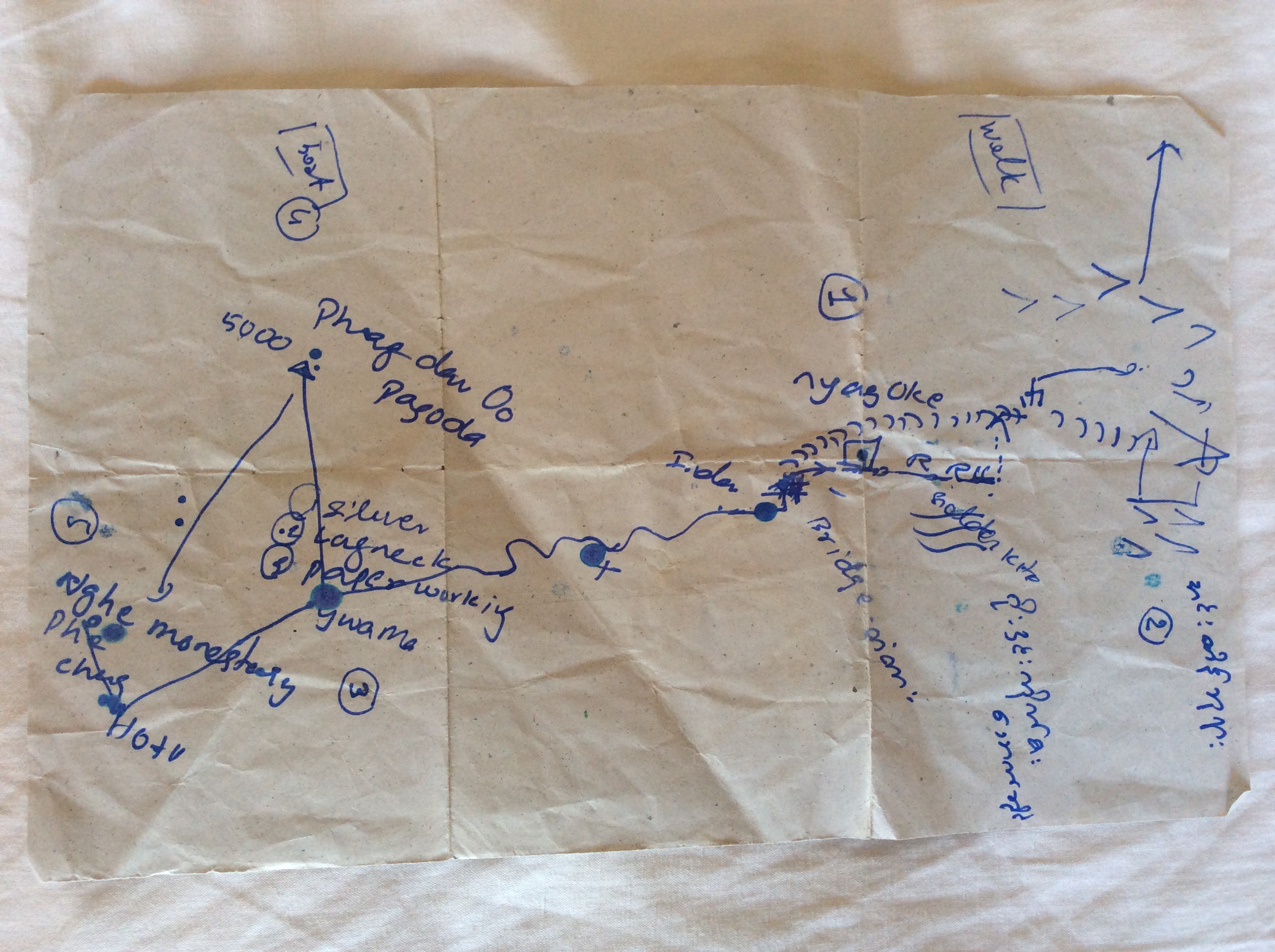
Though beautiful in their neglect, my wife and I agreed that this was not where the photo which had brought us here was taken. So we started walking up the hill behind the village, following the hand-drawn map we had been given at the hotel.
hand drawn map
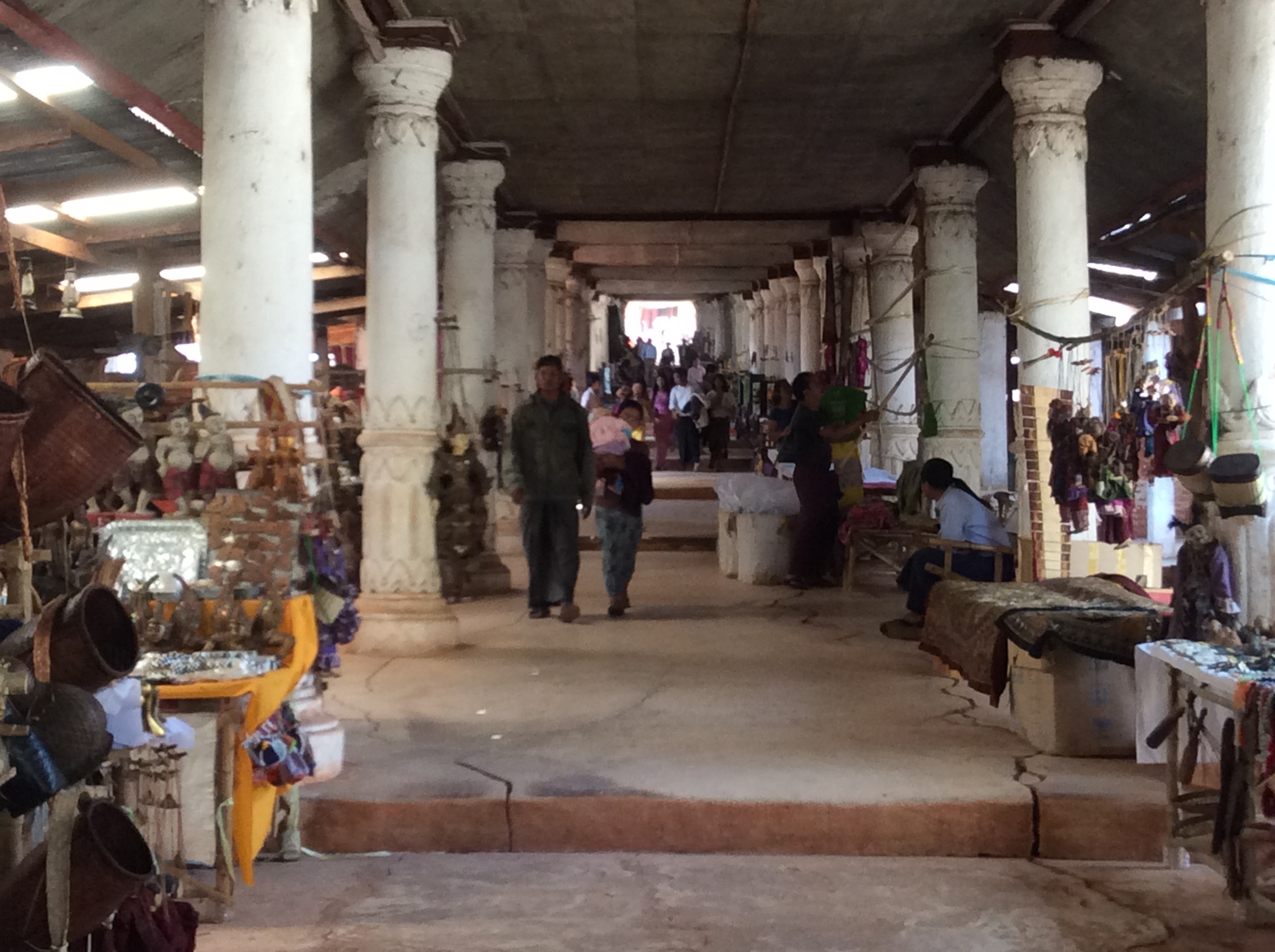
To get out of the sun’s glare, we ducked into a covered walkway that leads up the hill. It was cooler but it exposed us to stall after stall of hideous tourist tat.
06-inle lake-inn dein-flav 058
To console ourselves, I reminded my wife of a similar covered walkway which we had seen in Bologna in Italy, which leads up to the Sanctuary of Saint Luke on a nearby hill.
bologna santuario di S.Luca
No doubt, I told her, when in the old days pilgrims wended their way up the walkway to the Sanctuary (nowadays only tourists do so), there were similar stalls along the side selling hideous religious tat.

When we reached the top, we were greeted by a veritable forest of stupas.
06-inle lake-inn dein 040
The first were mouldering away as romantically as the ones down the hill
06-inle lake-inn dein-flav 071

06-inle lake-inn dein-flav 069

with some of the decoration clinging on

06-inle lake-inn dein-flav 070
Very beautiful, but not, we agreed once more, the place where the original photo which brought us here had been taken.

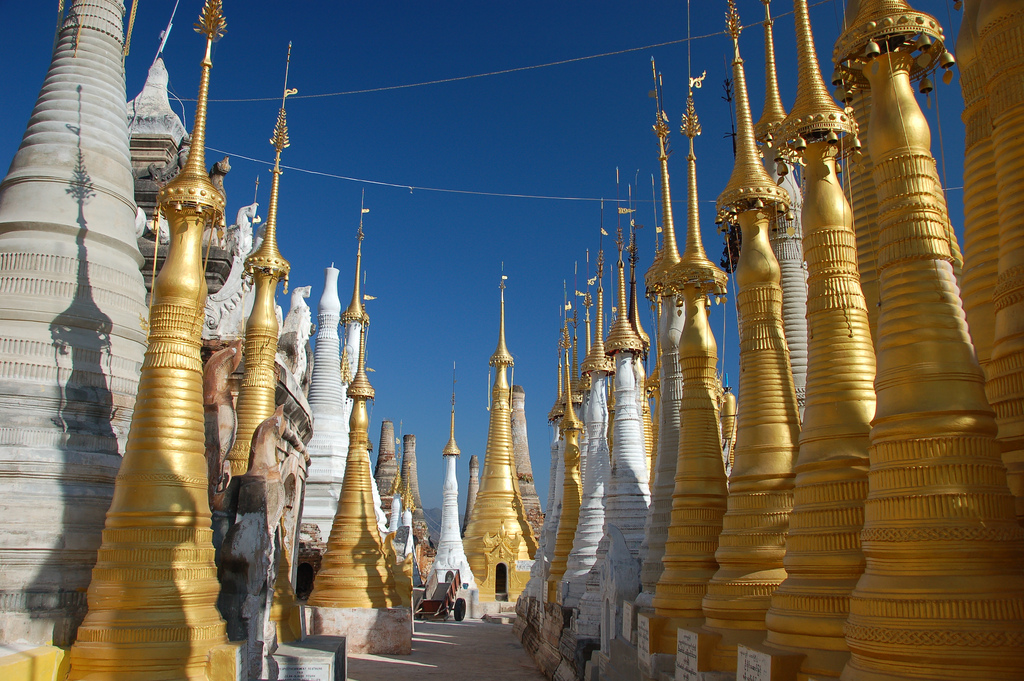
We began to walk up the hill, and soon found ourselves only among renovated stupas. My wife and I had mixed feelings about this wave of renovation that had washed over the hill. The decaying stupas are impossibly romantic, but we can understand that to devout Buddhists it must be dismaying to see such neglect. I suppose the only criticism we have (but it is a large criticism) is that it would have been good to renovate the stupas to their original form, something which quite obviously is not the case. We were so unenthusiastic about these renovated stupas that neither of us took a single photo of them, so what follows comes care of the internet.
Shwe Inn Thein stupas at Indein, Inle Lake
After threading our way, disconsolate, through the packed crowd of renovated stupas, we climbed a nearby hill to get an overview of the stupa forest.
06-inle lake-inn dein 070
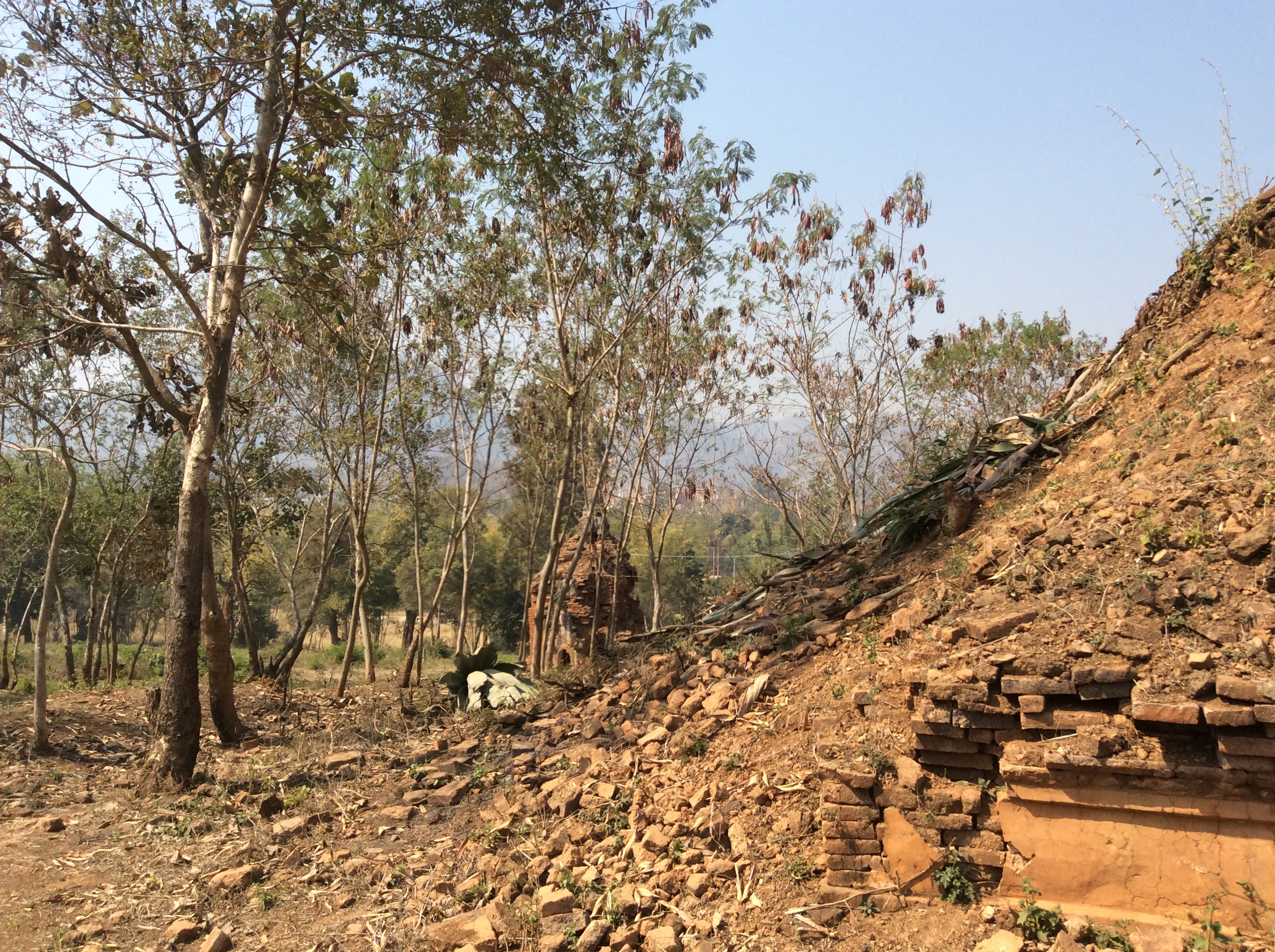
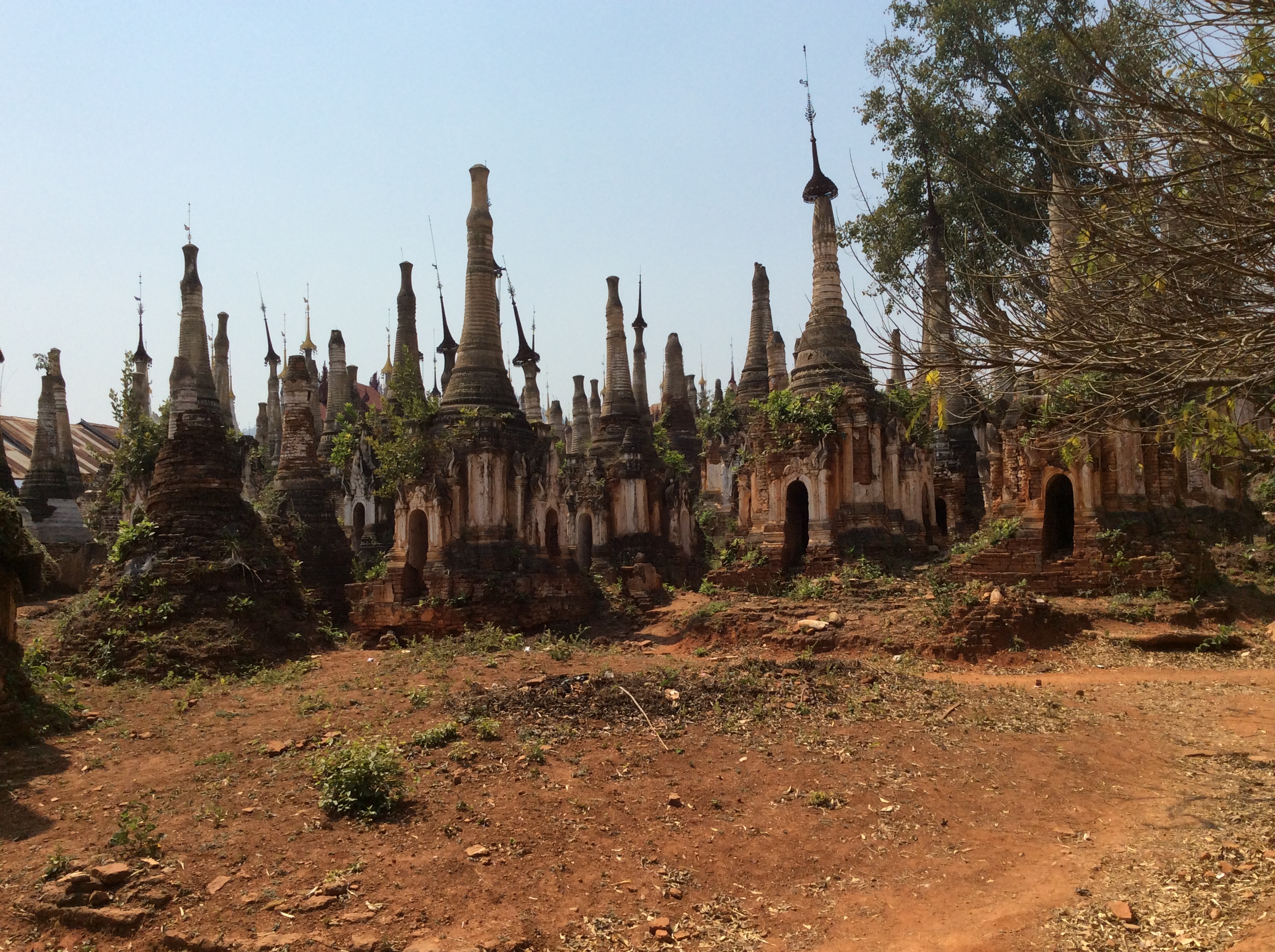
Even from here we could not really understand from where the fateful photo had been taken. So we went back down, walked through the temple at the centre of the forest, and visited the stupas on the other side. These were once again pleasingly decrepit, so we pleasurably ambled our way down the hill through them, picking our way over broken brick and stucco and around bushes and weeds which had taken root in the brick dust.
06-inle lake-inn dein 075
When we broke out of the forest and turned around, there at last we saw the view which had brought us here. Finally …

06-inle lake-inn dein-flav 086a

_____________________

Bologna Santuario san Luca: http://www.laltraitaliatour.it/main2/images/stories/foto_viaggi/centro/tour_cuore_italia/bologna%20santuario%20di%20S.Luca%20panorama%20%28Small%29.jpg (in http://www.laltraitaliatour.it/main2/index.php?option=com_content&view=article&id=100%3Agran-tour-nel-cuore-dellitalia&catid=53%3Aviaggi-centro-italia&lang=en)
Renovated stupas: http://kiplingandclark.com/wp-content/uploads/2014/03/4013943890_7ab483e2b5_b.jpg (in http://kiplingandclark.com/itineraries/myanmar-laos-cambodia-private-tour/)
All other photos: ours

MYANMAR: MRAUK U

Yangon, 7 March 2015

In 1430, King Saw Mon founded a new capital at Mrauk U, in what is now the State of Rakhine, for a Kingdom of Arrakan of which he was the first ruler. Mrauk U lay at the head of several navigable tributaries of the Kaladan River, and so could command the trade routes in the Bay of Bengal, on which the kingdom’s wealth was founded. It became a transit point for goods such as rice, ivory, elephants, tree sap and deer hide from Burma, and of cotton, slaves, horses, cowrie, spices and textiles from Bengal, India, Persia and Arabia. It also lay at the edges of a broad plain, where abundant rice could be grown to feed the city’s population. The area was dotted throughout with hillocks, ideal for capping with splendid pagodas which earned their founders much merit, but also for acting as watchtowers in strong defensive walls which linked hillocks together and could keep the kingdom’s jealous or rapacious neighbours at bay. It was, in all senses, a happy choice for the new kingdom’s capital.

Exactly two hundred years after the city’s founding, a Portuguese monk, Fray Sebastian Manrique, who was to live in India for forty years, visited Mrauk U, as part of an official mission. In a book he wrote about his time in Asia, “Itinerario de las missiones del India Oriental”, he dedicated several chapters to his visit to Mrauk U. “This great city”, he starts, “stands in a lovely valley, some fifteen leagues wide, wholly enclosed by high rocky mountains, which serve as natural fortifications”. The city was bisected by a network of waterways linked to the nearby river, which were “the principal means of traffic, both public and private”. Most of the houses were thatched bamboo and wood structures, held together by “Bengal cane, as we call it in Portugal”. Even the palaces “are made of these reedy materials”. The size and ornamentation of the houses, and not their materials of construction, were what proclaimed the station and wealth of their owners. Inside, wall mats were hung “of the finest texture and of many colours”. No doubt, the richer and more important the owner, the finer and more elaborate the wall mats. The better houses and the palaces also had rooms of wood “ornamented with carving, gilt mouldings, and enamel work in various tints”. Some of the palaces went one further, having rooms of sandalwood and other aromatic woods. One of the richer palaces included a “House of Gold”, a pavilion decorated from floor to ceiling with gold, which housed golden statues, dishes and other vessels. The royal palace boasted a ceremonial hall, with a golden roof “ornamented with flowers of different colours”, supported by thirty gilded wooden pillars. The monks didn’t do too badly for themselves either. A number of the temples and monasteries in which they lived were as sumptuous as the palaces, richly endowed as they were by their wealthy and important founders, who were seeking thereby to gain merit. Most of the temples were “pyramidal in shape”, with a spire that ended in a gilt metal globe on which small bells hung that tinkled in the wind (I presume the good Friar was referring to the stupas, which sit at the centre of temple complexes). The temples’ interiors were decorated with “frescoes done in gold and colours”. Several years later, he again visited Mrauk U on an official mission, and this time he was lucky to be there when the king was crowned. He described in breathless detail all the pomp and ceremony which accompanied the crowning. This print, by the Dutchman Wouter Schouten, gives an idea of what Mrauk U looked like at this time.

mrauk u old print

The happy times did not last. Warfare between the local kingdoms was endemic, as each king tried to grow at the expense of his neighbours. In one of these local wars, King Bodawpaya of the neighbouring kingdom of Burma got the upper hand, helped along, it must be said, by vicious internecine struggles, all worthy of a Shakespearean history play, that were being played out between Arrakanese kings and their impatient heir-apparents, and between them and various usurpers. In 1784, the Burmese army attacked

war elephants

and eventually took the city, razing it to the ground. They took care, though, not to destroy the stupas and associated temples; the soldiers did not want to lose merit. But they stripped them and the rest of the city of all the movable loot they could lay their hands on. What part of the population they did not kill, they enslaved. And so, laden with vast quantities of booty and 20,000 slaves, King Bodawpaya and his army returned home to celebrate, leaving death and desolation behind them. The kingdom of Arrakan and its capital city were no more.

The site was too good to abandon completely. Gradually, people moved back into the city and partially repopulated it. But now it was just a small market town, with the modest lives and modest dreams and modest destiny of such towns. Its citizens lived out their lives in the shadow of monuments from Mrauk U’s royal past, which slowly crumbled away and were overgrown by vegetation.

But Mrauk U’s glorious past was not completely forgotten. Echoes of its history were passed down. Now that Myanmar has come out of its self-imposed isolation from the outside world, and the world has accepted the country back into the community of nations, Mrauk U has become a tourist destination. Not like Bagan, which hosts the ruins of another vanished kingdom, nor like Inle Lake, another popular tourist destination, nor even like the capital Yangon. A much more modest destination, because it has little tourist infrastructure and is hard to get to: seven hours by private boat from Sittwe, several more by the public boat; six hours by car on a spine-crushing road, several more by public bus. But a trickle of tourists do make it through.

We have just been part of that trickle. We hired bicycles, a wonderful way to move around this town whose dimensions are small and whose traffic is contained, and we slowly criss-crossed it, riding down potholed roads, side streets of beaten earth

02-mrauk u-flav 016

half-finished roads on which toiled labour gangs of women

02-mrauk u-flav 059

even across desiccated paddy fields when the half-finished roads were impassible

03-chin villages-flav 001

observing all the very rural life that passed us by. Most of the houses are still made of wood and “reedy materials”

02-mrauk u-flav 050

but from the few modern houses we saw brick and concrete are clearly now the building materials of choice for the wealthy. The network of waterways are still being used, although now sadly choked with plastic and other debris of modern life.

02-mrauk u-flav 052

Bicycles and motor bikes are the mode of transport of choice

02-mrauk u-flav 078

with two-seater bicycle rickshaws playing the role of local taxi

02-mrauk u-flav 067

and ten-seater tuk-tuks playing that of local buses (ten seats is a nominal number; the drivers seemed to be able to squeeze twice that number into them).

03-chin villages-flav 003

As in all ages and in all places, the wealthier disdain these proletarian forms of transport, although they now favour four-wheel drive cars with tinted windows rather than the palanquins and elephants of old. On the edges of town (which were reached after no more than ten minutes by bike from the town centre – and we rode slowly), chickens, pigs, and the odd cow join the human melée. And everywhere, young girls and women (never men and very rarely boys) are walking slowly to or from the wells and reservoirs which dot the town, ferrying the households’ water, no doubt as they had been doing nearly four hundred years ago when Friar Manrique criss-crossed the town – such a waste of women’s time! And the water they were collecting fitted no definition of “drinking water” that I know of.

02-mrauk u-flav 025

The town has schools, but all in a shocking state of decrepitude

02-mrauk u-flav 048

and in any case many children were put to work in various trades: child labour seems the norm here, not the exception. This country’s military dictators have much, much to answer for.

And so it was that we rode and we observed, and we meditated on what we observed, until the next stupa, or temple, or ordination hall from Mrauk U’s past loomed out in front of us. We visited many during our two days, but I will mention only three. The first is Mro U-hnauk Phara
02-mrauk u-flav 037
because it was the first temple we visited, but also because we were intrigued by the very ornate edifice constructed out of galvanized corrugated iron sheets that preceded the ancient stupa.

02-mrauk u-flav 038

The materials of construction may be humble but the designs are really quite complex. We got used to seeing these structures in front of many of the stupas in town. Both my wife and I immediately remarked on how much these constructions reminded us of the stavkirke in Norway.
Borgund_stavkirke
The second site I will mention is Koe Thaung temple, which sits out in the middle of paddy fields a little way out of town.
koe thaung temple
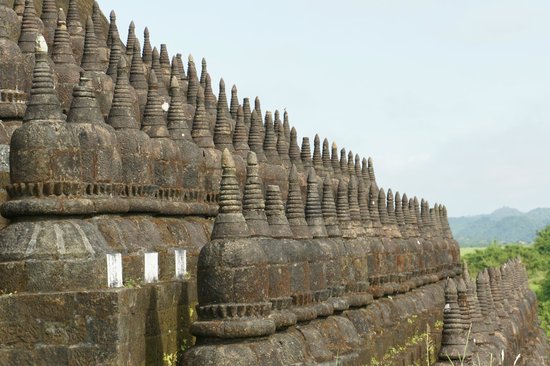
Its design is said to be based on Borobudur in Indonesia. We wouldn’t know, not having been able to visit Borobudur because of a volcanic eruption. But Koe Thaung certainly has charm, what with the serried ranks of stupas lining its terraces

koe-thaung-temple-stupas

and the hundreds of Buddhas, each with a different face, lining the galleries that encircle the edifice.

02-mrauk u-flav 107

When the rice paddies around the temple are planted and green, it must be very beautiful.

The third is actually a grouping of temples and stupas, all situated in a large open space. From the vantage point of the high terrace of one of these, I could see most of the group laid out before me.

02-mrauk u-flav 228

Immediately ahead is the Laymyekhna, with the four Buddhas in its internal gallery facing the four cardinal points, and its attendant Nyidaw Phara. Just behind it the Htukkanthein, a fortress-monastery.  At the base of the hill in the background, is the Shite-thaung temple, the most important religious edifice of the old city and known for its three encircling galleries with Buddhas and friezes.  This is where the coronation during Friar Manrique’s second visit took place. Over to the left is the Ratanabon Temple.

But what also struck me was the apparent indifference of the townsfolk to these venerable monuments. The open space was turned over to the growing of rice and vegetables. There was constant traffic along the roads and tracks which crossed the space as people went about their business. There were goats and cows cropping the grass around the edifices. And I was suddenly reminded of those paintings from the 17th and 18th Centuries, which were also recording the remains of a fallen city, ancient Rome in this case, mouldering slowly away as a new city lived its life around them
Roman forum Claude Lorrain
This particular painting, by Claude Lorrain, is a view of the Forum, with the arch of Septimus Severus in the left foreground, the three remaining columns of the Temple of Castor and Pollux in the middle ground, the arch of Titus in the background, and at the very back the Colosseum. And all around these ruins, the Romans are leading their lives.

Now I don’t want to make too much of a parallel between Rome and Mrauk U. Rome had been a huge city, many times bigger than Mrauk U had ever been. It had also held sway over a much larger territory than Mrauk U had ever done. On the other hand, the collapse of Rome, although over a longer period, was probably as total as Mrauk U’s. Medieval Rome, and perhaps even Baroque Rome, was probably no bigger than Mrauk U is today and just as backward. If it hadn’t been for the Pope, there are good chances that Rome would have disappeared. The Pope kept Europe’s attention on the town, while the pilgrims were a handy source of income, along, later, with the sons of Europe’s aristocracy. They flocked to Rome in the 18th and 19th Centuries because it was the thing for an educated young man to do, and paintings like the one above were produced for them by the hundreds.  Rome was also lucky to have become the capital of the newly unified Italy, which brought it the power (and wealth) of national government. In contrast, Mrauk U seems to have been forgotten by all once its last king fell. If the new government of Myanmar can ensure that Mrauk U shares in the country’s upcoming economic development, then it has the chance to become a prosperous little town.

__________

Mrauk U old print: http://upload.wikimedia.org/wikipedia/commons/0/0c/Vista_de_Mrauk-U,_ou_Arrakan_%28cidade_de_Arrac%C3%A3o%29_no_primeiro_plano_o_bairro_portugu%C3%AAs.jpg (in http://commons.wikimedia.org/wiki/File:Vista_de_Mrauk-U,_ou_Arrakan_%28cidade_de_Arrac%C3%A3o%29_no_primeiro_plano_o_bairro_portugu%C3%AAs.jpg)
War elephants fighting: http://ic2.pbase.com/o6/93/329493/1/131322898.yAQdtZvd.BKKAug10128.jpg (in http://www.alternatehistory.com/discussion/showthread.php?t=240558)
Stavkirke: http://upload.wikimedia.org/wikipedia/commons/b/bb/Borgund_stavkirke.JPG (in http://no.wikipedia.org/wiki/Borgund_stavkirke)
Koe Thaung Temple: http://www.vietnamjettravel.com/images/products/20147141754135.jpg (in http://www.vietnamjettravel.com/voyage-birmanie/a-travers-la-birmanie-de-yangon-a-mrauk-u.79.html)
Koe Thaung temple stupas: http://media-cdn.tripadvisor.com/media/photo-s/04/ab/0c/d1/koe-thaung-temple.jpg (in http://www.tripadvisor.com/LocationPhotoDirectLink-g1390118-d2557685-i78318801-Koe_Thaung_Temple-Mrauk_U_Rakhine_State.html)
Claude Lorrain view of the Roman Forum: http://upload.wikimedia.org/wikipedia/commons/b/ba/Claude_-_The_Campo_Vaccino,_Rome_-_Google_Art_Project.jpg (in http://commons.wikimedia.org/wiki/File:Claude_-_The_Campo_Vaccino,_Rome_-_Google_Art_Project.jpg)
All other photos by my wife

MYANMAR: A JOURNEY

Yangon, 7 March, 2015

We slipped our moorings at half past three in the afternoon, two hours late – the flight from Yangon to Sittwe had left very late. As we drove from the airport to the jetty, our guide told us apologetically that the tide was running out now. This, coupled with the strong current down the Kaladan River, meant we were facing a seven-hour journey up to Mrauk U – if the boat’s engine didn’t break down on the way. Accepting the inevitable, we settled down on the boat’s small focsle, as far away as possible from the engine, which was knocking hard and strong, while the boat chugged its way down the busy creek. It was a beautiful afternoon, cloudless, slightly hazy, not too hot; it was going to be a good ride.

We exited the creek into the mouth of the river, so big that at first we thought we had entered the sea. Surprised, we looked around us as the boat turned northward and started following the shore closely, skirting small fishing boats and their nets. Out to sea, some islets, or maybe headlands, lay humped on the horizon, while to our left extended a grassy plain

01-sittwe-mrauk u 008

on which stood a few small lean-to’s for the fishermen and some fishing boats, sitting upright, waiting to be dragged down to the shore.

01-sittwe-mrauk u 003

We waited for something more riverlike to appear. And gradually, without us noticing it, a low bank crept up on our right, far away in the distance. And so we realized that we had finally entered the Kaladan River. But such a wide river! The far bank kept following us, but always at a respectful distance.

The boat continued crawling up the shore, no doubt to keep out of the strong currents. A flock of birds, sand martins perhaps, dived and swooped close to the water’s surface, flashing from brown to white and back to brown as they rolled and wheeled in tight formation, before settling on the mud of the river bank. Another flock of birds flapped quietly over us in formation, homing in on some faraway destination.

01-sittwe-mrauk u-flav 017

Now and then, a boat would pass us or we would pass one

01-sittwe-mrauk u-flav 020

otherwise we had the river in all its wideness to ourselves. The same flat deserted plain kept us company to our left, but by now the grass had narrowed to a strip of emerald green along the shoreline, backed by a vast expanse of dry paddy fields, dotted with rice-hay ricks.

04-mrauk u-sittwe 013

The flatness was broken now and again by a tall tree standing guard over the landscape.

01-sittwe-mrauk u 012

For a brief moment – but only a very brief moment – I imagined ourselves to be chugging along some river in the Netherlands, scanning the flat Dutch farmland. But then a range of small hills hove into sight, with two of them topped by gold-covered stupas and the image of Holland faded.

pagodas

As we approached, the sun began to set, slowly at first and then ever quicker, reddening the stupas’ gold to copper.

04-mrauk u-sittwe 003

At last, the sun sank below the horizon, leaving us in the moon’s company. She had been waiting quietly for her moment. She was waxing crescent, having reached her dark point a week before. Although only a small sliver was shining down on us, we could make out the ghostly outline of the rest of her lying in that sliver, “the new moone wi’ the auld moone in her arme” as the Scottish ballad puts it.

image

We sat there, enjoying her company, but she was already a spent force when she became visible to us. She stayed with us for just an hour before she too sank below the horizon.

Venus, the star of the evening, had been keeping the moon company, along with some of the brighter stars, but now, with the extinction of the last bright light in the sky, the full panoply of stars was able to appear in all its glory. Such a spectacle! The sky’s dome was studded with stars, some bright, some dim, some big, some small, some quarters of the sky were dense with stars, others were pools of darkness. And arcing across the sky from end to end was the Milky Way

image

created by the drops of milk, so the Ancient Greeks averred, that sprayed from the breast of the Goddess Hera when she snatched it away from baby Hercules’s mouth, who was suckling her while she slept, put there surreptitiously by Zeus.

milky way tintoretto

We sat entranced. How rarely we see the stars now! The strong lights of our modern life block out all but the brightest stars. Neither my wife nor I know our constellations at all well, but we could make out the three stars in Orion’s Belt

image

part of a much larger set of stars denoting Orion fighting the heavenly bull in the constellation Taurus

OrionLower on the horizon, we could make out the Great Plough, or Great Wagon (Carro Maggiore) to my Italian wife (and Big Dipper to my American friends).

image

As we pointed and guessed, the Milky Way wheeled this way and that above our heads: the boat was turning strongly now as the river began to meander.

As the river meandered, so did our talk. We talked about the Big Bang, which scientists say occurred some 14 billion years ago. They tell us a fascinating story about what happened afterwards. After a mere microsecond, the first protons and neutrons were being formed. A few minutes later, they began to coalesce into nuclei. Four hundred thousand years later, these combined with electrons to create the first hydrogen atoms. But it was only 150 million years later that the first stars began to form. And it was only 10 billion years later that the process of life creation began on this Earth, eventually leading to my wife and I sitting on the focsle of this boat, gazing at these stars. Scientists tell us that these stars are still rushing away from each other as the Universe continues to expand. What will happen next? Will we see the Big Crunch, where the Universe’s expansion will finally come juddering to a halt and then everything will hurtle back together again? It seems not; current observations suggest that the Universe’s expansion will continue or even accelerate. So will we see the Big Rip, where the Universe expands faster and faster, finally ripping galaxies, stars, and even atoms apart? Or will we see the Big Freeze, where expansion continues more moderately but existing stars burn out, no new ones are created, and the Universe goes dark and very cold? Or something else?

Nearer at home, we talked of our star, the sun. Scientists have a story for its future too. Over the next five billion years or so, they tell us, after it has burned all its hydrogen, our sun will grow into a Red Giant, making the Earth so hot in the process as to become uninhabitable. Then it will suffer a helium flash and collapse inward on itself. After it has stabilized, it will start to consume its helium for several billion years more before starting to expand again. But this time, the expansion will be unstable. At some point, it will shed its outer envelope as a planetary nebula while the core will collapse brutally to become a White Dwarf. It will survive as a White Dwarf for several trillion years before becoming a Black Dwarf. And so, sitting on that little focsle, with our backs against the cabin wall and our eyes on the sky, we followed in the footsteps of our distant ancestors, who for hundreds of thousands of years had gazed up at the stars and weaved beautiful stories to explain them.

Back on Earth, at river level, all was now inky black. No light shone from the shore. From time to time, we would see blinking red lights from fishing boats working the night shift. Once, a strong torch sprang to life ahead of us sweeping the waters, and suddenly a sea-going fishing boat loomed out of the darkness beside us. I dozed on and off, while my wife kept a look-out on the focsle, staring at the stars. At last, a faint glare of light ahead signaled Mrauk U. The wide, wide river had narrowed to a creek, trees were reaching out to us from either bank. The captain throttled the motor and the boat nosed into the jetty, where we could make out the car waiting to take us to our hotel.

_____________

Pagodas: https://www.flickr.com/photos/40867816@N07/4454825335 (in http://flickrhivemind.net/Tags/rakhiang/Interesting)
Old moon in new moon’s arms: http://www.lunarland.com/images/Earthshine.jpg (in http://www.lunarland.com/earthshine-and-the-moon)
http://upload.wikimedia.org/wikipedia/commons/5/51/Night-sky-milky-way-galaxy-astrophotography_-_West_Virginia_-_ForestWander.jpg (in http://feedback.arma3.com/view.php?id=12717)
Tintoretto’s Milky Way: http://www.ianridpath.com/startales/image/milkyway.JPG (in http://www.ianridpath.com/startales/milkyway.htm)
Orion: http://www.scienceinthebible.net/KNOWLEDGE_BIBLE/bigdipper_december.jpg (in http://www.scienceinthebible.net/KNOWLEDGE_BIBLE/NoteChildren2B.htm)
Mythical Orion: http://www.ianridpath.com/startales/image/Orion2.jpg (in http://www.ianridpath.com/startales/orion.htm)
all other photos: ours

MY SPIRIT HOUSE

Bangkok, 15 February, 2015

Anyone who has been in Thailand for more than half an hour begins to notice that every building, residential, commercial, governmental, whatever it happens to be, has one or more doll-like houses standing outside it in some corner of the property. To be very visible to one and all, they are set either on a tall pillar or on four somewhat smaller stilts. These, for instance, are the two which grace a corner of the parking lot at our apartment block.
spirit houses-general view-1
spirit house big

spirit house small

And if, finally rendered curious by constantly coming across them, one decides to have a closer look, you will find that they hold little figurines – old people, dancers, horses, elephants, cars, sometimes a Buddha. This, for instance, is a catalogue of what the bigger of our apartment block’s two little houses contains.

spirit house big-horses
spirit house big-elephants
They will often have votive offerings of food and drink as well as burning incense sticks set out in front of them along with fresh flowers

spirit houses-flowers and incense

many of them will have flower garlands draped over them

spirit house big-garland

and – at night – candles are set out or strings of lights turned on to light them up.

spirit house big-night

Quite charming. In fact, when my wife and I came to Bangkok for the first time some seven years ago, we were quite taken by these little houses and considered buying a DIY kit of one, to put up on the landing in front of the door of our then-apartment in Vienna, to house a small ivory Buddha which I had bought a few years before in Sri Lanka. But it was really too bulky, so we abandoned the idea.

But actually, why are these little houses there in the first place? I should have asked myself that the first time I saw them, before seriously considering putting one in front of my door.

A little bit of reading has informed me these houses are put up to propitiate the spirits of the land. This is a core belief of animism, that spirits reside in all the material manifestations of this world – the land, its streams, rivers, lakes, waterfalls, its trees and other plants, all animals, everything really, even man-made objects like bridges. Animism has deep, deep roots in Thailand – actually, in the whole of South-East Asia, from Myanmar down to Indonesia and across to the Philippines; the tradition of spirit houses, for instance, is found throughout the region apart possibly from the Philippines. The arrival of more rational, complex, sophisticated religions like Hinduism, Buddhism, Islam, or Christianity (or ethical systems like Confucianism in Vietnam), did not make the earlier animistic beliefs disappear, although I’m sure the leaders of these new religions tried hard to stamp them out (and at least in Thailand are still trying to, according to what I’ve read) or to absorb them (which is certainly what Buddhism has tried to do).

The sad thing is that these spirits are not nice beings. The purpose of those cute little houses is actually to make sure that the spirits of the land don’t get mad at you because you’re using their land and decide to burn down your house or give you a heart attack or bring Lord knows what other calamity down on your head. So in the house you’ll put figurines of servants to tend to the local land spirit’s every whim,  you’ll put figurines of dancing girls (geishas might be a better descriptor) to keep him happy, you’ll put horses and elephants (and cars for the more sophisticated urbanized spirits) to make sure he can go for a ride whenever he gets bored of sitting at home and watching the dancing girls gyrate, you’ll give him food and drink to make sure he doesn’t go hungry … Reading all this, it occurs to me that these spirits are really just like the mafia in Sicily: if you don’t pay this man the requested pizzo, or protection money
mafia-man

then unfortunately this will happen to your shop.
burning shop
So, these pretty little houses are actually the reflection of a deep existential fear, that all around you are naughty, nasty little spirits who will hurt you if you’re not nice to them. These reflections moved me to dip into “The Golden Bough: A Study in Magic and Religion” by the Scotsman James George Frazer.
Golden_Bough
The book, first published in 1890 and republished several times thereafter, attempts to define the shared elements of religious beliefs, discussing fertility rites, human sacrifice, the “dying god”, the “scapegoat”, and many other symbols and practices. Its thesis is that old religions were fertility cults that revolved around the worship and periodic sacrifice of a sacred king (among other places, his ideas take a central role in T.S. Elliot’s poem, “The Wasteland”, which I have had cause to mention 100 posts ago and which was the reason why I originally read “The Golden Bough”). I’m sure modern anthropologists would dispute Frazer’s basic thesis, but in writing the book Frazer collected accounts from around the world of magical, animistic beliefs, which are fascinating in themselves. Here are three excerpts which he cites from other sources on the belief in spirits in South-East Asia.

“Thus the life of the Thay seems regulated down to its smallest details by custom founded on his belief in the spirits. Spirits perpetually watch him, ready to punish for his negligences, and he is afraid. Fear is for him not only the beginning of wisdom, it is the whole of his wisdom. Love has only a very moderate place in it. Even the respect in which he holds his dead, and the honours which he pays them on various occasions, seem to be dominated by a superstitious fear. It seems that the sacrifices which he offers to them aim rather at averting from himself the evils which he dreads than at honouring worthily the memory of his deceased kinsfolk and at paying them the tribute of his affection and gratitude.”

“Independently of the demons who are in hell, the Siamese recognize another sort of devils diffused in the air: they call them phi; they are, they say, the demons who do harm to men and who appear sometimes in horrible shapes. They put down to these malign spirits all the calamities which happen in this world. If the mother has lost a child, it is the phi who has done the ill turn; if a sick man is given over, it is a phi that is at the bottom of it. To appease him, they invoke him and make him offerings which they hang in desert places.”

“The desire to propitiate the good spirits and exorcise the bad ones is the prevailing influence upon the life of the Laotians. With phis to the right of him, to the left of him, in front of him, behind him, all round him, his mind is haunted with a perpetual desire to make terms with them, and to ensure the assistance of the great Buddha, so that he may preserve both body and soul from the hands of the spirit.”

The first two excerpts, written in 1907 and 1831 respectively, come from books written by French missionaries, the third from a book written by an Englishman in 1884. The first two no doubt had religious axes to grind, wishing to show how the Thai (Siamese being the old name for the Thai) were poor, benighted folk in need of Christian redemption. But even accounting for a certain amount of exaggeration, the picture which these excerpts paint is bleak indeed: a constant, haunting fear at every step.

Of course, before we shake our heads and smile and take another sip of our coffee, we should remind ourselves (as Frazer reminds us in his book) that Europe, just to take my part of the world, was also the home of naughty, nasty little spirits. Anyone like me who had to suffer through Latin and Greek in their education will remember the Roman and Greek nymphs who haunted the sacred groves and streams, and who had to be propitiated. And what about all those leprechauns, and trolls, and sprites, and ogres, who populate children’s books and popular stories? Remember Rumplestiltskin, that nasty little imp who saves the miller’s daughter from the wrath of the king by spinning straw into gold for her, but on condition that she give him her first-born child?
rumplestiltskin
Or that “shrewd and knavish sprite” Puck in Shakespeare’s “A Midsummer Night’s Dream”, who at the behest of his master Oberon, King of the fairies, wreaks mayhem in the Athenian woods?
puck

Or the ogre in Jack and the Beanstalk, who on sensing that little Jack is hiding in his house, intones

“Fee-fi-fo-fum!
I smell the blood of an Englishman,
Be he alive, or be he dead,
I’ll grind his bones to make my bread.”
ogre jack and the beanstalk

Even Tinkerbell in Disney’s sucrose version of “Peter Pan” is not a particularly nice person.
tinkerbell
I suppose Christianity managed to reduce the strength of animistic beliefs in Europe – I won’t say stamp out, because otherwise we wouldn’t have the children’s stories – but only to replace them by another existential fear, that of suffering in hell for ever and ever.
hell
Luckily, science has come to the rescue and driven out all the religious claptrap. There is no supernatural world, it tells us, only the natural world around us. And with that, all those spirits disappear in a flash.

But now that I know all this, would I still buy a spirit house kit to assemble on the landing in front of my apartment door in Europe? Do I want to be seen, if only to myself, to believe in naughty, nasty spirits? After giving some thought to the matter, I have concluded that yes, I would, but for a very different reason. One of the houses whose photo I give at the beginning of the post is the house of the ancestral spirits of the place, the spirits – or ghosts I suppose – of the people who lived there before you. In fact this house contains figurines of old people.
spirit house small-old people
Unfortunately, these spirits also require propitiation in Thailand, since they too can turn nasty (jeez louise, what a world view!). But I would use the house differently. I would use it to house the memory of my parents and my wife’s parents. For my parents, I would have a very tall figurine stand in for my father and a very small figurine for my mother, for that indeed is how they were; one of my abiding memories of them is the two dancing together, he very tall, she very small, slowly circling the dance floor. For my wife’s parents, I would have a large figurine stand in for my mother-in-law, for she was indeed of a stout disposition. For my father-in-law, I’m not sure, I hardly knew him. I’ve mentioned before his fondness for wearing a Basque beret, so perhaps a figurine of a man with such a beret would do? But I would leave this for my wife to decide. And I would move the house into the apartment, so that their memory could be with us, rather than left out in the dark like the dog. I feel that this would be a better way of remembering them, of keeping their memory alive, than going on infrequent visits to the graveyard, and a useful complement to looking at old photos and reminiscing. And I would hope that one day my children would also have a spirit house to which they could add little figurines of us once that day arrives. As it surely will.

____________________

Spirit houses: my pictures
Mafia man: https://solo3d.files.wordpress.com/2012/09/mafia-man-by-siamak-roshani-1.jpg (in https://solo3d.wordpress.com/scenes/portraits/mafia-man/)
Burning shop: http://www.newsbiscuit.com/images/845.jpg (in http://www.newsbiscuit.com/2007/09/05/fire-brigade-turned-up-late-to-burning-pizza-shop-as-satirical-statement/)
“The Golden Bough” cover: http://3.bp.blogspot.com/-KNKUm2qVFeo/URmCSeqWMuI/AAAAAAAAMKQ/YNPwXF5oY7s/s1600/The_Golden_Bough.jpg (in http://38is.blogspot.com/2013_02_01_archive.html)
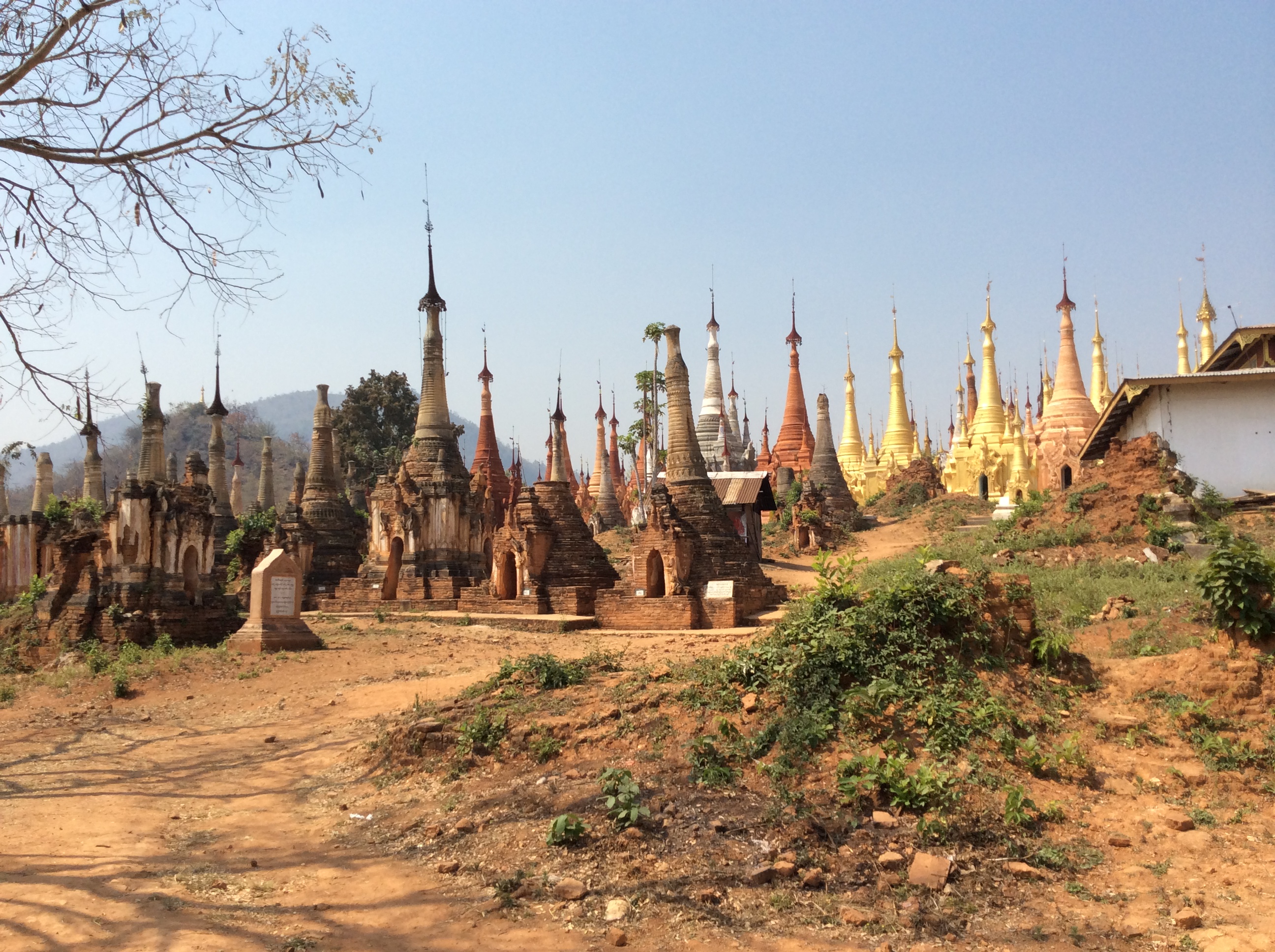
Rumplestitskin: http://www.artsycraftsy.com/goble/wg_rumplestiltskin.jpg (in http://www.artsycraftsy.com/goble/goble_rumplestiltskin.html)
Puck: http://images.fineartamerica.com/images-medium-large/a-midsummer-nights-dream-ht-green.jpg (in http://fineartamerica.com/featured/a-midsummer-nights-dream-ht-green.html)
Ogre in Jack and the Beanstalk: http://upload.wikimedia.org/wikipedia/commons/4/4c/Jack_and_the_Beanstalk_Giant_-_Project_Gutenberg_eText_17034.jpg (in http://en.wikipedia.org/wiki/Jack_and_the_Beanstalk)
Tinkerbell: http://cdn.hellogiggles.com/wp-content/uploads/2015/01/22/Walt-Disney-Screencaps-Peter-Pan-Wendy-Darling-Tinker-Bell-walt-disney-characters-34385876-4326-3237.jpg (in http://hellogiggles.com/real-life-disney-romance/walt-disney-screencaps-peter-pan-wendy-darling-tinker-bell-walt-disney-characters-34385876-4326-3237)
Hell: https://36.media.tumblr.com/20721aba85e8475adb529816d4e40a10/tumblr_n1kmegRkqx1qm5yeno1_500.jpg (in https://www.tumblr.com/search/art%20history%20hell)